<?xml version="1.0" encoding="UTF-8" ?>
<rss version="2.0" xmlns:atom="http://www.w3.org/2005/Atom" xmlns:content="http://purl.org/rss/1.0/modules/content/" xmlns:webfeeds="http://webfeeds.org/rss/1.0" xmlns:media="http://search.yahoo.com/mrss/">
    <channel>
        <title>Sketch.Nono.MA</title>
        <link>https://sketch.nono.ma</link>
        <description><![CDATA[Essays and sketches by Nono Martínez Alonso.]]></description>
        <atom:link href="https://sketch.nono.ma" rel="self"></atom:link>
                                                                <language>en</language>
        <lastBuildDate>Tue, 25 Aug 2026 03:50:00 -0400</lastBuildDate>
                        <item>
            <title><![CDATA[Water drops]]></title>
            <socialTitle><![CDATA[💧 Sketches: Water drops · Gotas de agua]]></socialTitle>
            <emojis><![CDATA[💧]]></emojis>
                        <link>https://sketch.nono.ma/water-drops</link>
            <guid isPermaLink="true">https://sketch.nono.ma/water-drops</guid>
            <description><![CDATA[What do habits and water drops have in common? A single drop of water has great potential. Set a glass to capture a drop and come back after a while. Water…]]></description>
                        <content:encoded><![CDATA[<p><em>What do habits and water drops have in common?</em></p>
<p>A single drop of water has great potential.</p>
<p>Set a glass to capture a drop and come back after a while.
Water accumulates slowly when you're looking, but if you forget about it long enough, you'll come back to a full glass.</p>
<p>Move the glass to the side, and every drop falls off the glass.
No matter how much time passes, you'll always come back to an empty glass.</p>
<p>Everything adds as long as you take action, and effort accumulates the most when it presents a challenge.
Like adding zero to a given amount, exerting no effort leaves you at the same spot.</p>
]]></content:encoded>
            <content:plain_en><![CDATA[What do habits and water drops have in common?

A single drop of water has great potential.

Set a glass to capture a drop and come back after a while.
Water accumulates slowly when you're looking, but if you forget about it long enough, you'll come back to a full glass.

Move the glass to the side, and every drop falls off the glass.
No matter how much time passes, you'll always come back to an empty glass.

Everything adds as long as you take action, and effort accumulates the most when it presents a challenge.
Like adding zero to a given amount, exerting no effort leaves you at the same spot.
]]></content:plain_en>
                        <content:plain_es><![CDATA[¿Qué tienen en común los hábitos diarios con las gotas de agua?

Una gota de agua tiene un gran potencial.

Coloca un vaso en el lugar adecuado y vuelve al cabo de un rato.
El agua se acumula lentamente mientras estás mirando, pero si te olvidas del vaso lo suficiente, lo encontrarás lleno.

Todo suma, siempre y cuando hagas algo; el esfuerzo produce mejores resultados si te desafías a ti mismo.
Igual que si sumas cero a cualquier cantidad, sin esfuerzo te quedas en el mismo sitio desde el que partiste.
]]></content:plain_es>
                                    <dc:creator xmlns:dc="http://purl.org/dc/elements/1.1/">Nono Martínez Alonso</dc:creator>
            <pubDate>2026-08-25 03:50:00 -0400</pubDate>
                        <enclosure
                        url="https://nono.ma/img/u/sketch-251024-water-bottle-bezoya.jpg" 
                        type="image/jpeg" 
                        />
                                    <media:content
                        url="https://nono.ma/img/u/sketch-251024-water-bottle-bezoya.jpg" 
                        medium="image" 
                        />
                                    <media:square
                        url="https://nono.imgix.net/img/u/sketch-251024-water-bottle-bezoya.jpg?ar=1%3A1&amp;fit=clamp&amp;h=2048&amp;ixlib=php-3.3.1&amp;w=2048" 
                        type="image/jpeg" 
                        height="2048" 
                        width="2048" 
                        />
                        
                                                                                </item>
                        <item>
            <title><![CDATA[The right direction]]></title>
            <socialTitle><![CDATA[🚲 Sketches: The right direction · La dirección correcta]]></socialTitle>
            <emojis><![CDATA[🚲]]></emojis>
                        <link>https://sketch.nono.ma/the-right-direction</link>
            <guid isPermaLink="true">https://sketch.nono.ma/the-right-direction</guid>
            <description><![CDATA[When AI can do anything for you, what matters is what you ask for. You can go super fast, in multiple directions, at the same time. But that's useless if…]]></description>
                        <content:encoded><![CDATA[<p>When AI can do <em>anything</em> for you, what matters is what you ask for.</p>
<p>You can go super fast, in multiple directions, at the same time.</p>
<p>But that's useless if none of those directions are where you need to go.</p>
<p>That said, moving fast may help you figure out where you need to go.
And that's why it can be useful, at the very beginning, to diverge and explore, then converge on the right destination.</p>
]]></content:encoded>
            <content:plain_en><![CDATA[When AI can do anything for you, what matters is what you ask for.

You can go super fast, in multiple directions, at the same time.

But that's useless if none of those directions are where you need to go.

That said, moving fast may help you figure out where you need to go.
And that's why it can be useful, at the very beginning, to diverge and explore, then converge on the right destination.
]]></content:plain_en>
                        <content:plain_es><![CDATA[Cuando la inteligencia artificial puede hacerlo todo por ti, lo que importa es lo que preguntas.

Puedes ir súper rápido en múltiples direcciones al mismo tiempo.

Pero es inútil si ninguna de esas direcciones es adonde tienes que ir.

Aun así, avanzar rápido puede ayudarte a averiguar hacia dónde ir.
Y por eso puede ser útil, al principio, explorar para encontrar la dirección correcta.
]]></content:plain_es>
                                    <dc:creator xmlns:dc="http://purl.org/dc/elements/1.1/">Nono Martínez Alonso</dc:creator>
            <pubDate>2026-04-14 03:50:00 -0400</pubDate>
                        <enclosure
                        url="https://nono.imgix.net/img/u/sketch-251225-montegolf-manuels-red-bike.jpg?ixlib=php-3.3.1" 
                        type="image/jpeg" 
                        />
                                    <media:content
                        url="https://nono.imgix.net/img/u/sketch-251225-montegolf-manuels-red-bike.jpg?ixlib=php-3.3.1" 
                        medium="image" 
                        />
                                    <media:square
                        url="https://nono.imgix.net/img/u/sketch-251225-montegolf-manuels-red-bike.jpg?ar=1%3A1&amp;fit=clamp&amp;h=2048&amp;ixlib=php-3.3.1&amp;w=2048" 
                        type="image/jpeg" 
                        height="2048" 
                        width="2048" 
                        />
                        
                                                                                </item>
                        <item>
            <title><![CDATA[So, what changed?]]></title>
            <socialTitle><![CDATA[Sketches: So, what changed? · Entonces, ¿qué cambió?]]></socialTitle>
            <emojis><![CDATA[]]></emojis>
                        <link>https://sketch.nono.ma/so-what-changed</link>
            <guid isPermaLink="true">https://sketch.nono.ma/so-what-changed</guid>
            <description><![CDATA[I recently shared that I haven't been producing as much content as I used to. But I didn't mention why I gave up habits I had been honing for years. So, what…]]></description>
                        <content:encoded><![CDATA[<p>I recently <a target="_blank" class="is-external" href="https://sketch.nono.ma/hello-im-back">shared</a> that I haven't been producing as much content as I used to.
But I didn't mention why I <a target="_blank" class="is-external" href="https://sketch.nono.ma/its-okay-to-give-up">gave up habits</a> I had been honing for years.</p>
<p><em>So, what changed?</em></p>
<br />
<p>In 2023, I left Autodesk to join a startup<sup id="fnref:startupmotif"><a class="footnote-ref" href="#fn:startupmotif" role="doc-noteref">1</a></sup>, traveling abroad for work for more than thirty days and spending a decent amount of time planning our wedding and doing a light house renovation.</p>
<p>I still had time to produce content, but I could feel the energy and pace decreasing.
I prioritized family and friends, with whom I'd gather to sing, jam, and play boardgames.</p>
<p>In 2024, we had a baby (!).</p>
<p>If you have kids, you know why I'm not producing as much as I used to.
If you don't, it's not that I don't have the time, but that I would rather spend it with family, hanging out with friends, or sleeping.</p>
<p>I haven't released any podcast episodes since June 2024.
I haven't streamed or uploaded videos for almost two years.
I missed twenty Tuesday posts over the past months (that I'm taking the freedom to backfill).
And I didn't manage to sketch every single day, or as much as I used to, while traveling.
But that's okay.</p>
<p>It took time to accept this is my new normal. Yet this allowed me to recalibrate, adjust to new constraints, and slowly start building new habits, with a different mindset, giving myself leeway.</p>
<div class="footnotes" role="doc-endnotes"><br /><ol><li class="footnote" id="fn:startupmotif" role="doc-endnote"><p><a target="_blank" class="is-external" href="https://motif.io">Motif</a> is a next-generation platform designed for the AEC industry.&nbsp;<a class="footnote-backref" rev="footnote" href="#fnref:startupmotif" role="doc-backlink">↩</a></p></li></ol></div>
]]></content:encoded>
            <content:plain_en><![CDATA[I recently shared that I haven't been producing as much content as I used to.
But I didn't mention why I gave up habits I had been honing for years.

So, what changed?

In 2023, I left Autodesk to join a startup, traveling abroad for work for more than thirty days and spending a decent amount of time planning our wedding and doing a light house renovation.

I still had time to produce content, but I could feel the energy and pace decreasing.
I prioritized family and friends, with whom I'd gather to sing, jam, and play boardgames.

In 2024, we had a baby (!).

If you have kids, you know why I'm not producing as much as I used to.
If you don't, it's not that I don't have the time, but that I would rather spend it with family, hanging out with friends, or sleeping.

I haven't released any podcast episodes since June 2024.
I haven't streamed or uploaded videos for almost two years.
I missed twenty Tuesday posts over the past months (that I'm taking the freedom to backfill).
And I didn't manage to sketch every single day, or as much as I used to, while traveling.
But that's okay.

It took time to accept this is my new normal. Yet this allowed me to recalibrate, adjust to new constraints, and slowly start building new habits, with a different mindset, giving myself leeway.
Motif is a next-generation platform designed for the AEC industry. ↩
]]></content:plain_en>
                        <content:plain_es><![CDATA[Recientemente compartí que no he estado produciendo tanto contenido como antes.
Pero no mencioné por qué abandoné hábitos que había estado puliendo durante años.

Entonces, ¿qué cambió?

En 2023, dejé Autodesk para unirme a una startup, viajando al extranjero por trabajo durante más de treinta días y dedicando bastante tiempo a planificar nuestra boda y a realizar una pequeña reforma en casa.

Seguía teniendo tiempo para producir contenido, pero notaba cómo, poco a poco, tenía menos ganas.
Priorizaba a la familia y a los amigos, con quienes me reunía para cantar, improvisar y jugar a juegos de mesa.

En 2024, tuvimos un bebé (!).

Si tienes hijos, sabes por qué no estoy produciendo tanto como antes.
Si no los tienes, no es que no tenga tiempo, sino que prefiero dedicarlo a la familia, a pasar el rato con amigos o a dormir.

No he publicado ningún episodio del pódcast desde junio de 2024.
No he hecho directos ni subido vídeos desde hace casi dos años.
Me salté veinte publicaciones de los martes en los últimos meses (que me estoy dando la libertad de recuperar).
Y no conseguí dibujar todos los días, ni tanto como antes mientras viajaba.
Pero está bien.

Me llevó tiempo aceptar que esta es mi nueva normalidad. Y, sin embargo, eso me permitió recalibrar, adaptarme a nuevas limitaciones y empezar poco a poco a construir nuevos hábitos, con una mentalidad diferente, dándome margen.
Motif es una plataforma de nueva generación diseñada para la industria AEC (arquitectura, ingeniería y construcción). ↩
]]></content:plain_es>
                                    <dc:creator xmlns:dc="http://purl.org/dc/elements/1.1/">Nono Martínez Alonso</dc:creator>
            <pubDate>2026-02-17 03:50:00 -0500</pubDate>
                        <enclosure
                        url="https://nono.imgix.net/img/u/sketch-251114-manuel-sleeping-huskisson-nsw-australia-1843.jpg?ixlib=php-3.3.1" 
                        type="image/jpeg" 
                        />
                                    <media:content
                        url="https://nono.imgix.net/img/u/sketch-251114-manuel-sleeping-huskisson-nsw-australia-1843.jpg?ixlib=php-3.3.1" 
                        medium="image" 
                        />
                                    <media:square
                        url="https://nono.imgix.net/img/u/sketch-251114-manuel-sleeping-huskisson-nsw-australia-1843.jpg?ar=1%3A1&amp;fit=clamp&amp;h=2048&amp;ixlib=php-3.3.1&amp;w=2048" 
                        type="image/jpeg" 
                        height="2048" 
                        width="2048" 
                        />
                        
                                                                                </item>
                        <item>
            <title><![CDATA[Hello, I'm back!]]></title>
            <socialTitle><![CDATA[👶🏻 Sketches: Hello, I'm back! · ¡Hola, he vuelto!]]></socialTitle>
            <emojis><![CDATA[👶🏻]]></emojis>
                        <link>https://sketch.nono.ma/hello-im-back</link>
            <guid isPermaLink="true">https://sketch.nono.ma/hello-im-back</guid>
            <description><![CDATA[Hello, world! I'm back. I didn't go anywhere, really, but you may wonder why I haven't been as active lately as I used to be. Over the past years, I have…]]></description>
                        <content:encoded><![CDATA[<p><em>Hello, world!</em> I'm back.</p>
<p>I didn't go anywhere, really, but you may wonder why I haven't been as active lately as I used to be.</p>
<p>Over the past years, I have produced a lot of content: a monthly podcast episode, a weekly livestream and video uploads, a weekly sketch-and-story newsletter, a daily drawing, and 200 words a day.<sup id="fnref:200-words-journal"><a class="footnote-ref" href="#fn:200-words-journal" role="doc-noteref">1</a></sup>
For a period, I meditated for at least ten minutes and read five Readwise quotes daily.
And there are many other habits that require maintenance that I insisted on keeping up with.</p>
<p>I had the time and was willing to invest it in those things, so why not keep going?
Well, that was my intention, and it was hard to give up many of those things.</p>
<p><em>So, what changed?</em>
You may ask.</p>
<p>I'll tell you next week.</p>
<div class="footnotes" role="doc-endnotes"><br /><ol><li class="footnote" id="fn:200-words-journal" role="doc-endnote"><p>I wrote (and still do) two hundred words everyday in my personal journal, which I use to source most of my posts.&nbsp;<a class="footnote-backref" rev="footnote" href="#fnref:200-words-journal" role="doc-backlink">↩</a></p></li></ol></div>
]]></content:encoded>
            <content:plain_en><![CDATA[Hello, world! I'm back.

I didn't go anywhere, really, but you may wonder why I haven't been as active lately as I used to be.

Over the past years, I have produced a lot of content: a monthly podcast episode, a weekly livestream and video uploads, a weekly sketch-and-story newsletter, a daily drawing, and 200 words a day.
For a period, I meditated for at least ten minutes and read five Readwise quotes daily.
And there are many other habits that require maintenance that I insisted on keeping up with.

I had the time and was willing to invest it in those things, so why not keep going?
Well, that was my intention, and it was hard to give up many of those things.

So, what changed?
You may ask.

I'll tell you next week.
I wrote (and still do) two hundred words everyday in my personal journal, which I use to source most of my posts. ↩
]]></content:plain_en>
                        <content:plain_es><![CDATA[¡Hola, mundo! He vuelto.

En realidad, no me he ido a ningún sitio, pero puede que te preguntes por qué no he estado tan activo últimamente como solía.

Durante los últimos años, he producido mucho contenido: un episodio mensual del pódcast, un directo en YouTube y vídeos semanales, un post semanal con un dibujo y un relato, un dibujo diario y doscientas palabras al día.
Durante un tiempo, meditaba al menos diez minutos y leía cinco citas de Readwise a diario.
Y hay muchos otros hábitos que se van haciendo bola con los que insistí en seguir adelante.

Tenía tiempo y estaba dispuesto a invertirlo en esas cosas, así que ¿por qué no seguir?
Esa era mi intención, pero era imposible y no fue fácil dejar atrás muchas de esas cosas.

Entonces, ¿qué cambió?
Puedes preguntarte.

Te lo cuento la semana que viene.
Escribía (y aún lo hago) doscientas palabras al día en mi diario personal, del cual saco la mayoría de mis publicaciones. ↩
]]></content:plain_es>
                                    <dc:creator xmlns:dc="http://purl.org/dc/elements/1.1/">Nono Martínez Alonso</dc:creator>
            <pubDate>2026-02-10 03:50:00 -0500</pubDate>
                        <enclosure
                        url="https://nono.imgix.net/img/u/sketch-251127-montegolf-manuel-0530-am-knees-playing-pajamas.jpg?ixlib=php-3.3.1" 
                        type="image/jpeg" 
                        />
                                    <media:content
                        url="https://nono.imgix.net/img/u/sketch-251127-montegolf-manuel-0530-am-knees-playing-pajamas.jpg?ixlib=php-3.3.1" 
                        medium="image" 
                        />
                                    <media:square
                        url="https://nono.imgix.net/img/u/sketch-251127-montegolf-manuel-0530-am-knees-playing-pajamas.jpg?ar=1%3A1&amp;fit=clamp&amp;h=2048&amp;ixlib=php-3.3.1&amp;w=2048" 
                        type="image/jpeg" 
                        height="2048" 
                        width="2048" 
                        />
                        
                                                                                </item>
                        <item>
            <title><![CDATA[The importance of the artifact]]></title>
            <socialTitle><![CDATA[🧸 Sketches: The importance of the artifact · La importancia del «artefacto»]]></socialTitle>
            <emojis><![CDATA[🧸]]></emojis>
                        <link>https://sketch.nono.ma/the-importance-of-the-artifact</link>
            <guid isPermaLink="true">https://sketch.nono.ma/the-importance-of-the-artifact</guid>
            <description><![CDATA[The artifacts of your creative process signal and celebrate what you did. A piece of writing flourishes when it's published, printed, shared, and read,…]]></description>
                        <content:encoded><![CDATA[<p>The artifacts of your creative process signal and celebrate what you did.</p>
<p>A piece of writing flourishes when it's published, printed, shared, and read, highlighting the process that took you there.</p>
<p>The <em>raison d'être</em> of a piece of art (an artifact in and of itself) is to inspire and change the viewer, but also to transform the artist who made it.</p>
<p>Not all creative processes will yield an artifact; the artifact may result from numerous sessions over time.</p>
<p>An artifact can be digital or physical: an app, a book, a painting, a story, an object, a document, a sketch.</p>
<p>And, while the artifact is important to celebrate, there's no need to obsess over the outcome.
We're not celebrating the outcome but the process that got us here.</p>
]]></content:encoded>
            <content:plain_en><![CDATA[The artifacts of your creative process signal and celebrate what you did.

A piece of writing flourishes when it's published, printed, shared, and read, highlighting the process that took you there.

The raison d'être of a piece of art (an artifact in and of itself) is to inspire and change the viewer, but also to transform the artist who made it.

Not all creative processes will yield an artifact; the artifact may result from numerous sessions over time.

An artifact can be digital or physical: an app, a book, a painting, a story, an object, a document, a sketch.

And, while the artifact is important to celebrate, there's no need to obsess over the outcome.
We're not celebrating the outcome but the process that got us here.
]]></content:plain_en>
                        <content:plain_es><![CDATA[El resultado de tu proceso creativo —el «artefacto»— enfatiza y celebra lo que has hecho.

Un escrito cobra vida cuando se publica, se imprime, se comparte y se lee.

La «raison d'être» de una obra de arte (un artefacto en sí mismo) es inspirar y transformar al espectador, pero también al artista que la creó.

No todos los procesos creativos producen un artefacto —puede ser el resultado de numerosas sesiones a lo largo del tiempo—.

Un artefacto puede ser digital o físico; una aplicación, un libro, una pintura, una historia, un objeto, un documento, un boceto.

Sin embargo, no hay que obsesionarse con el resultado, ya que no es lo que celebramos.
Celebramos el proceso que nos llevó hasta aquí.
]]></content:plain_es>
                                    <dc:creator xmlns:dc="http://purl.org/dc/elements/1.1/">Nono Martínez Alonso</dc:creator>
            <pubDate>2026-01-13 03:50:00 -0500</pubDate>
                        <enclosure
                        url="https://nono.imgix.net/img/u/sketch-250314-beech-wood-toy-by-ale-gonzalez.jpg?ixlib=php-3.3.1" 
                        type="image/jpeg" 
                        />
                                    <media:content
                        url="https://nono.imgix.net/img/u/sketch-250314-beech-wood-toy-by-ale-gonzalez.jpg?ixlib=php-3.3.1" 
                        medium="image" 
                        />
                                    <media:square
                        url="https://nono.imgix.net/img/u/sketch-250314-beech-wood-toy-by-ale-gonzalez.jpg?ar=1%3A1&amp;fit=clamp&amp;h=2048&amp;ixlib=php-3.3.1&amp;w=2048" 
                        type="image/jpeg" 
                        height="2048" 
                        width="2048" 
                        />
                        
                                                                                </item>
                        <item>
            <title><![CDATA[Capture ideas on the fly]]></title>
            <socialTitle><![CDATA[✈️ Sketches: Capture ideas on the fly · Captura las ideas al vuelo]]></socialTitle>
            <emojis><![CDATA[✈️]]></emojis>
                        <link>https://sketch.nono.ma/capture-on-the-fly</link>
            <guid isPermaLink="true">https://sketch.nono.ma/capture-on-the-fly</guid>
            <description><![CDATA[Ideas come and go, and if you don't catch them when they come up, they may be gone for good. You may never come up with the same idea again, the same…]]></description>
                        <content:encoded><![CDATA[<p>Ideas come and go, and if you don't catch them when they come up, they may be gone for good.
You may never come up with the same idea again, the same thought.</p>
<p>It helps to have ways to capture your ideas on the fly—doodling in a sketchbook, jotting down notes in a notebook, or recording a voice memo on your phone, for instance.</p>
<p>Eventually, most ideas tend to come back, though, especially the ones related to your current situation and circumstances.
An alternative strategy, in fact, is only to capture ideas that recurrently make it into your head.</p>
]]></content:encoded>
            <content:plain_en><![CDATA[Ideas come and go, and if you don't catch them when they come up, they may be gone for good.
You may never come up with the same idea again, the same thought.

It helps to have ways to capture your ideas on the fly—doodling in a sketchbook, jotting down notes in a notebook, or recording a voice memo on your phone, for instance.

Eventually, most ideas tend to come back, though, especially the ones related to your current situation and circumstances.
An alternative strategy, in fact, is only to capture ideas that recurrently make it into your head.
]]></content:plain_en>
                        <content:plain_es><![CDATA[Las ideas vienen y van, y si no las anotas cuando te vienen a la cabeza, puede que no vuelvan.

Ayuda tener maneras de capturar tus ideas al vuelo —garabatear en un cuaderno de bocetos, anotar en una libreta o grabar una nota de voz en el móvil, por ejemplo—.

Sin embargo, con el tiempo, la mayoría de las ideas suelen volver, sobre todo las relacionadas con tu situación y circunstancias actuales.
Una estrategia alternativa, de hecho, consiste en capturar solo aquellas ideas que reaparecen una y otra vez en tu cabeza.
]]></content:plain_es>
                                    <dc:creator xmlns:dc="http://purl.org/dc/elements/1.1/">Nono Martínez Alonso</dc:creator>
            <pubDate>2025-12-16 03:50:00 -0500</pubDate>
                        <enclosure
                        url="https://nono.imgix.net/img/u/sketch-190614-malaga-airport-plane-terminal-c.jpg?ixlib=php-3.3.1" 
                        type="image/jpeg" 
                        />
                                    <media:content
                        url="https://nono.imgix.net/img/u/sketch-190614-malaga-airport-plane-terminal-c.jpg?ixlib=php-3.3.1" 
                        medium="image" 
                        />
                                    <media:square
                        url="https://nono.imgix.net/img/u/sketch-190614-malaga-airport-plane-terminal-c.jpg?ar=1%3A1&amp;fit=clamp&amp;h=2048&amp;ixlib=php-3.3.1&amp;w=2048" 
                        type="image/jpeg" 
                        height="2048" 
                        width="2048" 
                        />
                        
                                                                                </item>
                        <item>
            <title><![CDATA[Travel sketching tools]]></title>
            <socialTitle><![CDATA[🖌️ Sketches: Travel sketching tools · Materiales de dibujo de viaje]]></socialTitle>
            <emojis><![CDATA[🖌️]]></emojis>
                        <link>https://sketch.nono.ma/travel-sketching-tools</link>
            <guid isPermaLink="true">https://sketch.nono.ma/travel-sketching-tools</guid>
            <description><![CDATA[In preparation for our family trip to Australia, I ordered sketching materials online from Bellas Artes Piera (Barcelona). I bought two hardbound, 150–gram,…]]></description>
                        <content:encoded><![CDATA[<p>In preparation for our family trip to Australia, I ordered sketching materials online from <em>Bellas Artes Piera</em> (Barcelona).</p>
<p>I bought two hardbound, 150–gram, white-paper <em>Alpha Series Stillman &amp; Birn</em> sketchbooks, which have become my go-to <a href="https://nono.ma/the-new-sketchbook">sketchbooks</a><sup id="fnref:travel-sketching-tools-luis-liz-en"><a class="footnote-ref" href="#fn:travel-sketching-tools-luis-liz-en" role="doc-noteref">1</a></sup> ever since I tried them out.
I'm trying their 10.2 × 15.2 cm (4 × 6 in) size for the first time, which is easy to pack, in addition to the 22.9 × 15.2 cm (9 × 6 in) I've been using for the past four years.</p>
<p>I also ordered a set of Sakura Pigma Micron <a href="https://nono.ma/05-micron-fiber-pen">felt tip pens</a>—003, 005, 01, and 03.
The thin tips of 003 and 005 Microns provide line thicknesses of 0.15 mm and 0.20 mm, respectively, which allow for careful detail and line work, whereas the thicker 03 Microns (0.35 mm) work well for infills and outlines.
It's important to note that the thinner the tip, the more it wears out, and I go through multiple 003s and 005s before the 03 needs replacement.</p>
<p>I'll bring my Russian White Nights twelve-pan <a href="https://nono.ma/white-nights-watercolors">watercolors</a> and Japanese <em>Pentel Aquash Mini</em> <a target="_blank" class="is-external" href="https://geni.us/pentel-mini">water brush</a>, which let me add color to my drawings in any situation.</p>
<p>These are my current tools. Which are yours?</p>
<div class="footnotes" role="doc-endnotes"><br /><ol><li class="footnote" id="fn:travel-sketching-tools-luis-liz-en" role="doc-endnote"><p>I first heard from <em>Stillman &amp; Birn</em> sketchbooks from <a target="_blank" class="is-external" href="https://luisruiz.es">Luis Ruiz</a> and recently learned that <a target="_blank" class="is-external" href="https://lizsteel.com">Liz Steel</a> also uses them.&nbsp;<a class="footnote-backref" rev="footnote" href="#fnref:travel-sketching-tools-luis-liz-en" role="doc-backlink">↩</a></p></li></ol></div>
]]></content:encoded>
            <content:plain_en><![CDATA[In preparation for our family trip to Australia, I ordered sketching materials online from Bellas Artes Piera (Barcelona).

I bought two hardbound, 150–gram, white-paper Alpha Series Stillman & Birn sketchbooks, which have become my go-to sketchbooks ever since I tried them out.
I'm trying their 10.2 × 15.2 cm (4 × 6 in) size for the first time, which is easy to pack, in addition to the 22.9 × 15.2 cm (9 × 6 in) I've been using for the past four years.

I also ordered a set of Sakura Pigma Micron felt tip pens—003, 005, 01, and 03.
The thin tips of 003 and 005 Microns provide line thicknesses of 0.15 mm and 0.20 mm, respectively, which allow for careful detail and line work, whereas the thicker 03 Microns (0.35 mm) work well for infills and outlines.
It's important to note that the thinner the tip, the more it wears out, and I go through multiple 003s and 005s before the 03 needs replacement.

I'll bring my Russian White Nights twelve-pan watercolors and Japanese Pentel Aquash Mini water brush, which let me add color to my drawings in any situation.

These are my current tools. Which are yours?
I first heard from Stillman & Birn sketchbooks from Luis Ruiz and recently learned that Liz Steel also uses them. ↩
]]></content:plain_en>
                        <content:plain_es><![CDATA[En preparación para nuestro viaje a Sídney, Australia, pedí materiales de dibujo online a Bellas Artes Piera (Barcelona).

Compré dos cuadernos de tapa dura, de papel blanco de 150 gramos, Alpha Series Stillman & Birn, que se han convertido en mis cuadernos de referencia desde que los probé por primera vez.
Voy a probar por primera vez el tamaño de 10,2 × 15,2 cm (4 × 6 pulgadas), que es fácil de transportar, además del de 22,9 × 15,2 cm (9 × 6 pulgadas) que llevo usando los últimos cuatro años.

También pedí un juego de bolígrafos Sakura Pigma Micron—003, 005, 01 y 03.
Las puntas finas de los Micron 003 y 005 ofrecen grosores de línea de 0,15 mm y 0,20 mm, respectivamente, lo que permite trabajar con detalle y precisión, mientras que los Micron 03 más gruesos (0,35 mm) funcionan bien para rellenos y contornos.
Es importante tener en cuenta que cuanto más fina es la punta, más se desgasta y suelo gastar varios 003 y 005 antes de tener que reemplazar el 03.

Me llevaré mis acuarelas rusas White Nights de doce godets y un pincel con depósito de agua japonés Pentel Aquash Mini, que me permiten añadir color a mis dibujos en cualquier situación.

Estas son mis herramientas. ¿Cuáles son las tuyas?
Descubrí los cuadernos Stillman & Birn gracias a Luis Ruiz y, hace poco, supe que también los usa Liz Steel. ↩
]]></content:plain_es>
                                    <dc:creator xmlns:dc="http://purl.org/dc/elements/1.1/">Nono Martínez Alonso</dc:creator>
            <pubDate>2025-11-18 03:50:00 -0500</pubDate>
                        <enclosure
                        url="https://nono.imgix.net/img/u/sketch-251104-pentel-aquash-mini-brush.jpg?ixlib=php-3.3.1" 
                        type="image/jpeg" 
                        />
                                    <media:content
                        url="https://nono.imgix.net/img/u/sketch-251104-pentel-aquash-mini-brush.jpg?ixlib=php-3.3.1" 
                        medium="image" 
                        />
                                    <media:square
                        url="https://nono.imgix.net/img/u/sketch-251104-pentel-aquash-mini-brush.jpg?ar=1%3A1&amp;fit=clamp&amp;h=2048&amp;ixlib=php-3.3.1&amp;w=2048" 
                        type="image/jpeg" 
                        height="2048" 
                        width="2048" 
                        />
                        
                                                                                </item>
                        <item>
            <title><![CDATA[Move, do, think]]></title>
            <socialTitle><![CDATA[🦶🏻 Sketches: Move, do, think · Moverse, hacer, pensar]]></socialTitle>
            <emojis><![CDATA[🦶🏻]]></emojis>
                        <link>https://sketch.nono.ma/move-do-think</link>
            <guid isPermaLink="true">https://sketch.nono.ma/move-do-think</guid>
            <description><![CDATA[Moving beats idle. Doing beats consuming. Thinking beats believing. ]]></description>
                        <content:encoded><![CDATA[<p>Moving beats idle.<br />
Doing beats consuming.<br />
Thinking beats believing.</p>
]]></content:encoded>
            <content:plain_en><![CDATA[Moving beats idle.
Doing beats consuming.
Thinking beats believing.
]]></content:plain_en>
                        <content:plain_es><![CDATA[Moverse es mejor que quedarse quieto.
Hacer es mejor que consumir.
Pensar es mejor que creer.
]]></content:plain_es>
                                    <dc:creator xmlns:dc="http://purl.org/dc/elements/1.1/">Nono Martínez Alonso</dc:creator>
            <pubDate>2025-11-11 03:50:00 -0500</pubDate>
                        <enclosure
                        url="https://nono.imgix.net/img/u/sketch-251026-nonos-legs-montegolf.jpg?ixlib=php-3.3.1" 
                        type="image/jpeg" 
                        />
                                    <media:content
                        url="https://nono.imgix.net/img/u/sketch-251026-nonos-legs-montegolf.jpg?ixlib=php-3.3.1" 
                        medium="image" 
                        />
                                    <media:square
                        url="https://nono.imgix.net/img/u/sketch-251026-nonos-legs-montegolf.jpg?ar=1%3A1&amp;fit=clamp&amp;h=2048&amp;ixlib=php-3.3.1&amp;w=2048" 
                        type="image/jpeg" 
                        height="2048" 
                        width="2048" 
                        />
                        
                                                                                </item>
                        <item>
            <title><![CDATA[Why draw every day?]]></title>
            <socialTitle><![CDATA[🖊️ Sketches: Why draw every day? · ¿Por qué dibujar todos los días?]]></socialTitle>
            <emojis><![CDATA[🖊️]]></emojis>
                        <link>https://sketch.nono.ma/why-draw-every-day</link>
            <guid isPermaLink="true">https://sketch.nono.ma/why-draw-every-day</guid>
            <description><![CDATA[Because it increases your likelihood of producing drawings you're happy with. Because drawing skill improves with practice. Because your ability to see and…]]></description>
                        <content:encoded><![CDATA[<p>Because it increases your likelihood of producing drawings you're happy with.</p>
<p>Because drawing skill improves with practice.</p>
<p>Because your ability to see and capture the world around you gets better the more you do it.</p>
<p>Because you won't feel pressured to perform at your best, you'll try again tomorrow.</p>
<p>Because recurrent activities become habits that ground us and reinforce our identity.</p>
]]></content:encoded>
            <content:plain_en><![CDATA[Because it increases your likelihood of producing drawings you're happy with.

Because drawing skill improves with practice.

Because your ability to see and capture the world around you gets better the more you do it.

Because you won't feel pressured to perform at your best, you'll try again tomorrow.

Because recurrent activities become habits that ground us and reinforce our identity.
]]></content:plain_en>
                        <content:plain_es><![CDATA[Porque aumentas la probabilidad de hacer dibujos con los que estés contento.

Porque la habilidad de dibujar mejora con la práctica.

Porque la capacidad de ver y captar el mundo que te rodea mejora cuanto más lo haces.

Porque no sentirás la presión de hacerlo lo mejor posible, volverás a intentarlo mañana.

Porque las actividades que repetimos se convierten en hábitos que nos arraigan y refuerzan nuestra identidad.
]]></content:plain_es>
                                    <dc:creator xmlns:dc="http://purl.org/dc/elements/1.1/">Nono Martínez Alonso</dc:creator>
            <pubDate>2025-11-04 03:50:00 -0500</pubDate>
                        <enclosure
                        url="https://nono.imgix.net/img/u/sketch-251022-muji-pen-case-with-muji-pen-and-sakura-pigma-microns.jpg?ixlib=php-3.3.1" 
                        type="image/jpeg" 
                        />
                                    <media:content
                        url="https://nono.imgix.net/img/u/sketch-251022-muji-pen-case-with-muji-pen-and-sakura-pigma-microns.jpg?ixlib=php-3.3.1" 
                        medium="image" 
                        />
                                    <media:square
                        url="https://nono.imgix.net/img/u/sketch-251022-muji-pen-case-with-muji-pen-and-sakura-pigma-microns.jpg?ar=1%3A1&amp;fit=clamp&amp;h=2048&amp;ixlib=php-3.3.1&amp;w=2048" 
                        type="image/jpeg" 
                        height="2048" 
                        width="2048" 
                        />
                        
                                                                                </item>
                        <item>
            <title><![CDATA[Reset]]></title>
            <socialTitle><![CDATA[Sketches: Reset · Reset]]></socialTitle>
            <emojis><![CDATA[]]></emojis>
                        <link>https://sketch.nono.ma/reset</link>
            <guid isPermaLink="true">https://sketch.nono.ma/reset</guid>
            <description><![CDATA[The summer break was hectic, fun, and refreshing. I didn't sit at my desk and halted my daily routines and habits, except for the ones I can do on my phone…]]></description>
                        <content:encoded><![CDATA[<p>The summer break was hectic, fun, and refreshing.</p>
<p>I didn't sit at my desk and halted my daily routines and habits, except for the ones I can do on my phone and sketchbook: writing and sketching to comply with my two-hundred-word and one-sketch-a-day minimum.</p>
<p>I always overestimate what I'll accomplish on vacation in terms of my personal creative projects, and I barely get anything done.</p>
<p>I wrote and sketched, but skipped a few weekly posts, which should be up soon.
I'll be <a target="_blank" class="is-external" href="https://sketch.nono.ma/all-caught-up">all caught up</a>.<sup id="fnref:reset-podcast-videos"><a class="footnote-ref" href="#fn:reset-podcast-videos" role="doc-noteref">1</a></sup></p>
<p>Being away from the keyboard for weeks feels like hitting the reset button.</p>
<div class="footnotes" role="doc-endnotes"><br /><ol><li class="footnote" id="fn:reset-podcast-videos" role="doc-endnote"><p>The podcast and YouTube channel will have to wait a bit longer.&nbsp;<a class="footnote-backref" rev="footnote" href="#fnref:reset-podcast-videos" role="doc-backlink">↩</a></p></li></ol></div>
]]></content:encoded>
            <content:plain_en><![CDATA[The summer break was hectic, fun, and refreshing.

I didn't sit at my desk and halted my daily routines and habits, except for the ones I can do on my phone and sketchbook: writing and sketching to comply with my two-hundred-word and one-sketch-a-day minimum.

I always overestimate what I'll accomplish on vacation in terms of my personal creative projects, and I barely get anything done.

I wrote and sketched, but skipped a few weekly posts, which should be up soon.
I'll be all caught up.

Being away from the keyboard for weeks feels like hitting the reset button.
The podcast and YouTube channel will have to wait a bit longer. ↩
]]></content:plain_en>
                        <content:plain_es><![CDATA[No hemos parado este verano.

Hacía tiempo que no pasaba tanto tiempo sin sentarme en mi escritorio, dejando de lado ciertas rutinas y hábitos diarios.
Solo he mantenido lo que puedo hacer en el iPhone y en mi sketchbook: escribir y dibujar, al menos doscientas palabras y un sketch al día.

Siempre soy optimista al pensar todo lo que me va a dar tiempo a hacer durante las vacaciones, sobre todo en lo que respecta a mis proyectos creativos personales —al final apenas consigo hacer nada en comparación a lo que hago el resto del año—.

Tengo pendientes varios posts semanales para tener todo al día que deberían estar listos pronto.

Pasar semanas sin teclear es como darle al botón de reinicio.
El pódcast y el canal de YouTube tendrán que esperar un poco más. =) ↩
]]></content:plain_es>
                                    <dc:creator xmlns:dc="http://purl.org/dc/elements/1.1/">Nono Martínez Alonso</dc:creator>
            <pubDate>2025-09-02 03:50:00 -0400</pubDate>
                        <enclosure
                        url="https://nono.imgix.net/img/u/sketch-250731-water-lime-iced-glass.jpg?ixlib=php-3.3.1" 
                        type="image/jpeg" 
                        />
                                    <media:content
                        url="https://nono.imgix.net/img/u/sketch-250731-water-lime-iced-glass.jpg?ixlib=php-3.3.1" 
                        medium="image" 
                        />
                                    <media:square
                        url="https://nono.imgix.net/img/u/sketch-250731-water-lime-iced-glass.jpg?ar=1%3A1&amp;fit=clamp&amp;h=2048&amp;ixlib=php-3.3.1&amp;w=2048" 
                        type="image/jpeg" 
                        height="2048" 
                        width="2048" 
                        />
                        
                                                                                </item>
                        <item>
            <title><![CDATA[Doing less, less doing]]></title>
            <socialTitle><![CDATA[Sketches: Doing less, less doing · Hacer menos, menos hacer]]></socialTitle>
            <emojis><![CDATA[]]></emojis>
                        <link>https://sketch.nono.ma/less-doing</link>
            <guid isPermaLink="true">https://sketch.nono.ma/less-doing</guid>
            <description><![CDATA[Doing less leads to less doing. That's why it's better to draw every day, even if some days you feel you're cheating or almost skipping because you're not…]]></description>
                        <content:encoded><![CDATA[<p><em>Doing less</em> leads to <em>less doing</em>.</p>
<p>That's why it's better to draw every day, even if some days you feel you're cheating or almost skipping because you're not giving your one hundred percent.</p>
<p>That's why you won't draw at all if you skip a few days, and will end up skipping weeks, if not months, risking losing the habit.</p>
<p>The opposite is also true.</p>
<p><em>Doing more</em> leads to <em>more doing</em>.</p>
<p>And that's where we have to drill, on doing more of what we want.</p>
<p>In the long run, it's crucial to prioritize the practice and process over the immediate outcome.</p>
<p>After all, there won't be a better or worse outcome if you stop doing.</p>
]]></content:encoded>
            <content:plain_en><![CDATA[Doing less leads to less doing.

That's why it's better to draw every day, even if some days you feel you're cheating or almost skipping because you're not giving your one hundred percent.

That's why you won't draw at all if you skip a few days, and will end up skipping weeks, if not months, risking losing the habit.

The opposite is also true.

Doing more leads to more doing.

And that's where we have to drill, on doing more of what we want.

In the long run, it's crucial to prioritize the practice and process over the immediate outcome.

After all, there won't be a better or worse outcome if you stop doing.
]]></content:plain_en>
                        <content:plain_es><![CDATA[Hacer menos lleva a hacer menos.

Por eso es mejor dibujar todos los días, incluso si algunos días sientes que estás haciendo trampa o casi saltándotelo porque no estás dando el cien por cien.

Por eso no dibujarás nada si te saltas unos cuantos días, y acabarás saltándote semanas, si no meses, con el riesgo de perder el hábito.

Lo contrario también es cierto.

Hacer más lleva a hacer más.

Y ahí es donde tenemos que insistir: en hacer más de lo que queremos.

A largo plazo, es fundamental dar prioridad a la práctica y al proceso por encima del resultado inmediato.

Al fin y al cabo, no habrá un resultado mejor ni peor si dejas de hacer.
]]></content:plain_es>
                                    <dc:creator xmlns:dc="http://purl.org/dc/elements/1.1/">Nono Martínez Alonso</dc:creator>
            <pubDate>2025-08-05 03:50:00 -0400</pubDate>
                        <enclosure
                        url="https://nono.imgix.net/img/u/sketch-250607-macbook-pro-charger.jpg?ixlib=php-3.3.1" 
                        type="image/jpeg" 
                        />
                                    <media:content
                        url="https://nono.imgix.net/img/u/sketch-250607-macbook-pro-charger.jpg?ixlib=php-3.3.1" 
                        medium="image" 
                        />
                                    <media:square
                        url="https://nono.imgix.net/img/u/sketch-250607-macbook-pro-charger.jpg?ar=1%3A1&amp;fit=clamp&amp;h=2048&amp;ixlib=php-3.3.1&amp;w=2048" 
                        type="image/jpeg" 
                        height="2048" 
                        width="2048" 
                        />
                        
                                                                                </item>
                        <item>
            <title><![CDATA[Raise the bar]]></title>
            <socialTitle><![CDATA[Sketches: Raise the bar · Sube el listón]]></socialTitle>
            <emojis><![CDATA[]]></emojis>
                        <link>https://sketch.nono.ma/raise-the-bar</link>
            <guid isPermaLink="true">https://sketch.nono.ma/raise-the-bar</guid>
            <description><![CDATA[Everything is relative to a reference point. Set the bar low and you're high. Set it high and you're low. The sweet spot is a slightly raised bar you can…]]></description>
                        <content:encoded><![CDATA[<p>Everything is relative to a reference point.</p>
<p>Set the bar low and you're high.</p>
<p>Set it high and you're low.</p>
<p>The sweet spot is a slightly raised bar you can reach with reasonable effort.</p>
<p>Push yourself, reach up there, and then raise the bar again.</p>
]]></content:encoded>
            <content:plain_en><![CDATA[Everything is relative to a reference point.

Set the bar low and you're high.

Set it high and you're low.

The sweet spot is a slightly raised bar you can reach with reasonable effort.

Push yourself, reach up there, and then raise the bar again.
]]></content:plain_en>
                        <content:plain_es><![CDATA[Todo es relativo a un punto de referencia.

Pon el listón bajo y estarás alto.

Ponlo alto y estarás bajo.

El punto óptimo es un listón ligeramente elevado al que puedas llegar con un esfuerzo razonable.

Esfuérzate, llega hasta ahí y luego vuelve a subir el listón.
]]></content:plain_es>
                                    <dc:creator xmlns:dc="http://purl.org/dc/elements/1.1/">Nono Martínez Alonso</dc:creator>
            <pubDate>2025-07-29 03:50:00 -0400</pubDate>
                        <enclosure
                        url="https://nono.imgix.net/img/u/sketch-250903-weights-decathlon-2kgs.jpg?ixlib=php-3.3.1" 
                        type="image/jpeg" 
                        />
                                    <media:content
                        url="https://nono.imgix.net/img/u/sketch-250903-weights-decathlon-2kgs.jpg?ixlib=php-3.3.1" 
                        medium="image" 
                        />
                                    <media:square
                        url="https://nono.imgix.net/img/u/sketch-250903-weights-decathlon-2kgs.jpg?ar=1%3A1&amp;fit=clamp&amp;h=2048&amp;ixlib=php-3.3.1&amp;w=2048" 
                        type="image/jpeg" 
                        height="2048" 
                        width="2048" 
                        />
                        
                                                                                </item>
                        <item>
            <title><![CDATA[The power of sketching]]></title>
            <socialTitle><![CDATA[📸 Sketches: The power of sketching · El poder de dibujar]]></socialTitle>
            <emojis><![CDATA[📸]]></emojis>
                        <link>https://sketch.nono.ma/the-power-of-sketching</link>
            <guid isPermaLink="true">https://sketch.nono.ma/the-power-of-sketching</guid>
            <description><![CDATA[The power of sketching continues to surprise me. Always from reality, I draw what's in front of me—portraying three dimensions into two and paying attention…]]></description>
                        <content:encoded><![CDATA[<p>The power of sketching continues to surprise me.</p>
<p>Always from reality, I draw what's in front of me—portraying three dimensions into two and paying attention to detail.</p>
<p>&quot;You can compare sketching to taking an Instagram photo for [several] minutes,&quot;<sup id="fnref:time-place-and-people"><a class="footnote-ref" href="#fn:time-place-and-people" role="doc-noteref">1</a></sup>
I said in a 2019 essay.</p>
<p>You capture people, places, and objects in ever-changing contexts.</p>
<p>The key difference between taking pictures and sketching is <em>attention</em>.</p>
<p><em>Click.</em></p>
<p>By offloading the capture of reality to a camera, you don't think much about it.
The machine does the job, translating light into millions of pixels.</p>
<p><em>Click.</em></p>
<p>Using your sight and hands to capture reality requires not only skill but thinking, analysis, and abstraction.</p>
<p><em>Click.</em></p>
<p>The camera takes it all—we select the aspects of reality that make it into our sheet.</p>
<p>We decide what we pay attention to.</p>
<div class="footnotes" role="doc-endnotes"><br /><ol><li class="footnote" id="fn:time-place-and-people" role="doc-endnote"><p><em><a target="_blank" class="is-external" href="https://sketch.nono.ma/time-place-and-people">Time, place, and people</a></em>. July 9, 2019. The second essay of my <em>Sketches &amp; Stories</em> series.&nbsp;<a class="footnote-backref" rev="footnote" href="#fnref:time-place-and-people" role="doc-backlink">↩</a></p></li></ol></div>
]]></content:encoded>
            <content:plain_en><![CDATA[The power of sketching continues to surprise me.

Always from reality, I draw what's in front of me—portraying three dimensions into two and paying attention to detail.

"You can compare sketching to taking an Instagram photo for [several] minutes,"
I said in a 2019 essay.

You capture people, places, and objects in ever-changing contexts.

The key difference between taking pictures and sketching is attention.

Click.

By offloading the capture of reality to a camera, you don't think much about it.
The machine does the job, translating light into millions of pixels.

Click.

Using your sight and hands to capture reality requires not only skill but thinking, analysis, and abstraction.

Click.

The camera takes it all—we select the aspects of reality that make it into our sheet.

We decide what we pay attention to.
Time, place, and people. July 9, 2019. The second essay of my Sketches & Stories series. ↩
]]></content:plain_en>
                        <content:plain_es><![CDATA[El poder de dibujar sigue sorprendiéndome.

Siempre de la realidad, dibujo lo que tengo delante —representando tres dimensiones en dos y prestando atención al detalle—.

«Puedes comparar dibujar con hacer una foto de Instagram durante [varios] minutos», dije en un escrito de 2019.

Capturas personas, lugares y objetos en contextos en constante cambio.

La diferencia clave entre hacer fotos y dibujar es la atención.

Clic.

Al delegar la captura de la realidad a una cámara, no piensas demasiado.
La máquina hace el trabajo y traduce la luz en millones de píxeles.

Clic.

Usar la vista y las manos para capturar la realidad requiere no solo habilidad, sino también pensamiento, análisis y abstracción.

Clic.

La cámara lo ve todo—nosotros seleccionamos los aspectos de la realidad que trasladamos al papel.

Decidimos a qué prestamos atención.
Tiempo, lugar y personas. 9 de julio de 2019. El segundo ensayo de mi serie Sketches & Stories. ↩
]]></content:plain_es>
                                    <dc:creator xmlns:dc="http://purl.org/dc/elements/1.1/">Nono Martínez Alonso</dc:creator>
            <pubDate>2025-07-22 03:50:00 -0400</pubDate>
                        <enclosure
                        url="https://nono.imgix.net/img/u/sketch-250131-camera-diana-f-plus.jpg?ixlib=php-3.3.1" 
                        type="image/jpeg" 
                        />
                                    <media:content
                        url="https://nono.imgix.net/img/u/sketch-250131-camera-diana-f-plus.jpg?ixlib=php-3.3.1" 
                        medium="image" 
                        />
                                    <media:square
                        url="https://nono.imgix.net/img/u/sketch-250131-camera-diana-f-plus.jpg?ar=1%3A1&amp;fit=clamp&amp;h=2048&amp;ixlib=php-3.3.1&amp;w=2048" 
                        type="image/jpeg" 
                        height="2048" 
                        width="2048" 
                        />
                        
                                                                                </item>
                        <item>
            <title><![CDATA[The magic trick]]></title>
            <socialTitle><![CDATA[🎾 Sketches: The magic trick · El truco de magia]]></socialTitle>
            <emojis><![CDATA[🎾]]></emojis>
                        <link>https://sketch.nono.ma/the-magic-trick</link>
            <guid isPermaLink="true">https://sketch.nono.ma/the-magic-trick</guid>
            <description><![CDATA[Carlitos Alcaraz lost the Wimbledon final against a sharp and strong Jannik Sinner, in revenge for Alcaraz's insane turnaround against Sinner in the Roland…]]></description>
                        <content:encoded><![CDATA[<p>Carlitos Alcaraz lost the Wimbledon final against a sharp and strong Jannik Sinner, in revenge for Alcaraz's insane turnaround against Sinner in the Roland Garros final.</p>
<p>From the inside, practice is incredibly demanding—a strict and repetitive routine that takes discipline and patience.</p>
<p>From the outside, skill appears to be a natural gift, and it's hard to imagine the time, effort, and sacrifice pros put in to perform at an elite level.</p>
<p>&quot;Sometimes magic is just someone spending more time on something than anyone else might reasonably expect.&quot;<sup id="fnref:magic-raymod-joseph-teller"><a class="footnote-ref" href="#fn:magic-raymod-joseph-teller" role="doc-noteref">1</a></sup></p>
<p>All we see is the magic trick.</p>
<div class="footnotes" role="doc-endnotes"><br /><ol><li class="footnote" id="fn:magic-raymod-joseph-teller" role="doc-endnote"><p>This quote is attributed to magician Raymond Joseph Teller.&nbsp;<a class="footnote-backref" rev="footnote" href="#fnref:magic-raymod-joseph-teller" role="doc-backlink">↩</a></p></li></ol></div>
]]></content:encoded>
            <content:plain_en><![CDATA[Carlitos Alcaraz lost the Wimbledon final against a sharp and strong Jannik Sinner, in revenge for Alcaraz's insane turnaround against Sinner in the Roland Garros final.

From the inside, practice is incredibly demanding—a strict and repetitive routine that takes discipline and patience.

From the outside, skill appears to be a natural gift, and it's hard to imagine the time, effort, and sacrifice pros put in to perform at an elite level.

"Sometimes magic is just someone spending more time on something than anyone else might reasonably expect."

All we see is the magic trick.
This quote is attributed to magician Raymond Joseph Teller. ↩
]]></content:plain_en>
                        <content:plain_es><![CDATA[Carlitos Alcaraz perdió la final de Wimbledon contra Jannik Sinner, en venganza por la increíble remontada de Alcaraz en la final de Roland Garros.

Desde dentro, la práctica es increíblemente exigente —una rutina estricta y repetitiva que requiere disciplina y paciencia—.

Desde fuera, parece un don natural, y cuesta imaginar el tiempo, esfuerzo y sacrificio que los profesionales invierten para rendir a un nivel de élite.

"A veces, la magia no es más que alguien dedicando más tiempo a algo del que cualquier otra persona consideraría razonable."

Lo único que vemos es el truco de magia.
Esta cita se atribuye al mago Raymond Joseph Teller. ↩
]]></content:plain_es>
                                    <dc:creator xmlns:dc="http://purl.org/dc/elements/1.1/">Nono Martínez Alonso</dc:creator>
            <pubDate>2025-07-15 03:50:00 -0400</pubDate>
                        <enclosure
                        url="https://nono.imgix.net/img/u/sketch-250608-tv-roland-garros-2025-final-alcaraz-sinner.jpg?ixlib=php-3.3.1" 
                        type="image/jpeg" 
                        />
                                    <media:content
                        url="https://nono.imgix.net/img/u/sketch-250608-tv-roland-garros-2025-final-alcaraz-sinner.jpg?ixlib=php-3.3.1" 
                        medium="image" 
                        />
                                    <media:square
                        url="https://nono.imgix.net/img/u/sketch-250608-tv-roland-garros-2025-final-alcaraz-sinner.jpg?ar=1%3A1&amp;fit=clamp&amp;h=2048&amp;ixlib=php-3.3.1&amp;w=2048" 
                        type="image/jpeg" 
                        height="2048" 
                        width="2048" 
                        />
                        
                                                                                </item>
                        <item>
            <title><![CDATA[Ideas are cheap]]></title>
            <socialTitle><![CDATA[🪙 Sketches: Ideas are cheap · Las ideas son baratas]]></socialTitle>
            <emojis><![CDATA[🪙]]></emojis>
                        <link>https://sketch.nono.ma/ideas-are-cheap</link>
            <guid isPermaLink="true">https://sketch.nono.ma/ideas-are-cheap</guid>
            <description><![CDATA[No matter how inspired you are, you need to sit down and do the work. Ideas are cheap—execution is not. ]]></description>
                        <content:encoded><![CDATA[<p>No matter how inspired you are, you need to sit down and do the work.</p>
<p>Ideas are cheap—execution is not.</p>
]]></content:encoded>
            <content:plain_en><![CDATA[No matter how inspired you are, you need to sit down and do the work.

Ideas are cheap—execution is not.
]]></content:plain_en>
                        <content:plain_es><![CDATA[Da igual lo inspirado que estés, tienes que sentarte y hacer el trabajo.

Las ideas son baratas; ejecutarlas no lo es.
]]></content:plain_es>
                                    <dc:creator xmlns:dc="http://purl.org/dc/elements/1.1/">Nono Martínez Alonso</dc:creator>
            <pubDate>2025-07-08 03:50:00 -0400</pubDate>
                        <enclosure
                        url="https://nono.imgix.net/img/u/sketch-230206-twenty-cent-euro-coin-backface.jpg?ixlib=php-3.3.1" 
                        type="image/jpeg" 
                        />
                                    <media:content
                        url="https://nono.imgix.net/img/u/sketch-230206-twenty-cent-euro-coin-backface.jpg?ixlib=php-3.3.1" 
                        medium="image" 
                        />
                                    <media:square
                        url="https://nono.imgix.net/img/u/sketch-230206-twenty-cent-euro-coin-backface.jpg?ar=1%3A1&amp;fit=clamp&amp;h=2048&amp;ixlib=php-3.3.1&amp;w=2048" 
                        type="image/jpeg" 
                        height="2048" 
                        width="2048" 
                        />
                        
                                                                                </item>
                        <item>
            <title><![CDATA[Newsletterversary VI]]></title>
            <socialTitle><![CDATA[🕯️ Sketches: Newsletterversary VI · Newsletter-año VI]]></socialTitle>
            <emojis><![CDATA[🕯️]]></emojis>
                        <link>https://sketch.nono.ma/newsletterversary-vi</link>
            <guid isPermaLink="true">https://sketch.nono.ma/newsletterversary-vi</guid>
            <description><![CDATA[Today, I'm celebrating the sixth anniversary of my publication, which has resulted in 314 weekly sketches and mini-essays being published over the past six…]]></description>
                        <content:encoded><![CDATA[<p>Today, I'm celebrating the sixth anniversary of my publication, which has resulted in 314 weekly sketches and mini-essays being published over the past six years.<sup id="fnref:newsletterversary-v-weeks-days"><a class="footnote-ref" href="#fn:newsletterversary-v-weeks-days" role="doc-noteref">1</a></sup></p>
<p>Frank Harmon’s <em><a target="_blank" class="is-external" href="https://nativeplaces.org">Native Places</a></em> blog is one of my greatest inspirations for this project.
The formula is simple: pair a sketch with a mini-essay, share it online, and repeat.</p>
<p>I send this newsletter once a week, but I sketch and write every single day.</p>
<p>Every year, I have a different feeling about what I do here.</p>
<p>I’m figuring it out.
But I enjoy every bit of it and will continue writing, drawing, and publishing for years. (I encourage you to discover the power of writing: start with <a target="_blank" class="is-external" href="https://sketch.nono.ma/one-word-per-day">one word per day</a>.)</p>
<br />
<p>I'd love to hear your thoughts, feedback, comments, and suggestions, and invite you to write a comment, reply, <a target="_blank" class="is-external" href="https://www.speakpipe.com/nono">send me a voice note</a>, or <a target="_blank" class="is-external" href="https://nono.ma/contact/form">send me a private message</a>.</p>
<p>Thank you, as always, for pushing me to keep going.</p>
<br />
<p>Happy newsletterversary.</p>
<br />
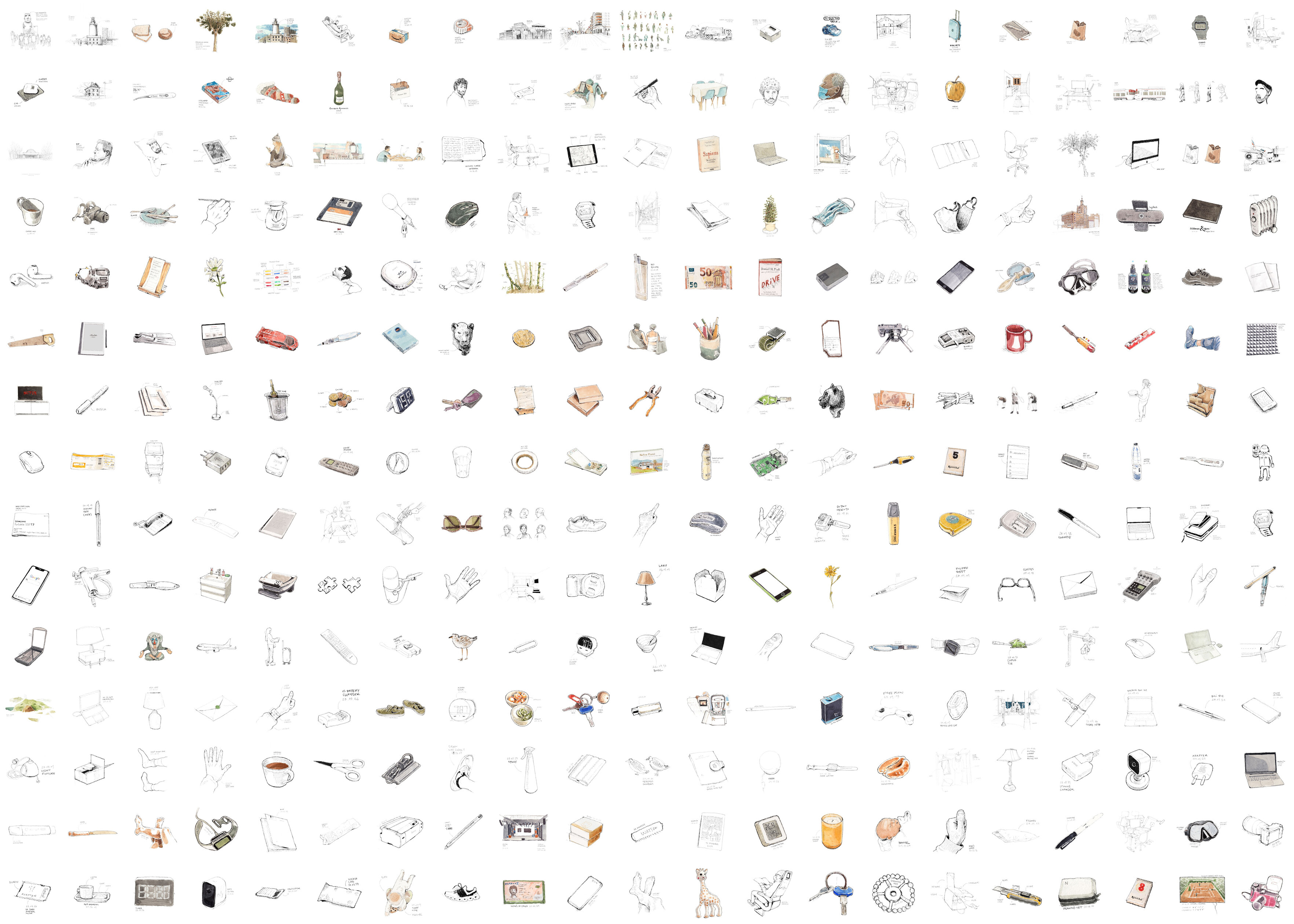
<img width="100%" src="https://nono.imgix.net/img/u/post-newsletterversary-vi-sketch-nono-ma-montage.jpg" alt="314 hand sketches by Nono Martínez Alonso." />
<div class="footnotes" role="doc-endnotes"><br /><ol><li class="footnote" id="fn:newsletterversary-v-weeks-days" role="doc-endnote"><p>313 weeks between July 2, 2025, and <a href="https://nono.ma/out-of-context">my first sketch and mini-essay</a> on July 2, 2019.&nbsp;<a class="footnote-backref" rev="footnote" href="#fnref:newsletterversary-v-weeks-days" role="doc-backlink">↩</a></p></li></ol></div>
]]></content:encoded>
            <content:plain_en><![CDATA[Today, I'm celebrating the sixth anniversary of my publication, which has resulted in 314 weekly sketches and mini-essays being published over the past six years.

Frank Harmon’s Native Places blog is one of my greatest inspirations for this project.
The formula is simple: pair a sketch with a mini-essay, share it online, and repeat.

I send this newsletter once a week, but I sketch and write every single day.

Every year, I have a different feeling about what I do here.

I’m figuring it out.
But I enjoy every bit of it and will continue writing, drawing, and publishing for years. (I encourage you to discover the power of writing: start with one word per day.)

I'd love to hear your thoughts, feedback, comments, and suggestions, and invite you to write a comment, reply, send me a voice note, or send me a private message.

Thank you, as always, for pushing me to keep going.

Happy newsletterversary.

313 weeks between July 2, 2025, and my first sketch and mini-essay on July 2, 2019. ↩
]]></content:plain_en>
                        <content:plain_es><![CDATA[Hoy celebro, con retraso, el quinto aniversario de esta publicación tras 262 dibujos y escritos semanales publicados a lo largo de cinco años.

El blog de Frank —Native Places— fue una de mis mayores inspiraciones para empezar este proyecto.
La fórmula es sencilla: empareja un dibujo con un mini-ensayo, compártelo online y repite.

Envío este newsletter una vez a la semana, pero dibujo y escribo todos los días.

Todavía estoy intentando averiguar cómo funciona, pero disfruto cada momento y continuaré escribiendo, dibujando y publicando durante años. (Te animo a descubrir el poder de la escritura por ti mismo: puedes empezar con una palabra al día.)

Me encantaría saber qué piensas, si tienes alguna sugerencia e invitarte a escribir un comentario, enviarme una nota de voz o un mensaje privado.

Gracias, una vez más, por animarme a seguir adelante de una forma u otra.

Feliz newsletter-año.


Han pasado 262 semanas (1826 días) entre el dos de julio de 2024 y mi primer dibujo y mini-ensayo el dos de julio de 2019. ↩
]]></content:plain_es>
                                    <dc:creator xmlns:dc="http://purl.org/dc/elements/1.1/">Nono Martínez Alonso</dc:creator>
            <pubDate>2025-07-01 03:50:00 -0400</pubDate>
                        <enclosure
                        url="https://nono.imgix.net/img/u/sketch-240630-flowers-in-a-bottle.jpg?ixlib=php-3.3.1" 
                        type="image/jpeg" 
                        />
                                    <media:content
                        url="https://nono.imgix.net/img/u/sketch-240630-flowers-in-a-bottle.jpg?ixlib=php-3.3.1" 
                        medium="image" 
                        />
                                    <media:square
                        url="https://nono.imgix.net/img/u/sketch-240630-flowers-in-a-bottle.jpg?ar=1%3A1&amp;fit=clamp&amp;h=2048&amp;ixlib=php-3.3.1&amp;w=2048" 
                        type="image/jpeg" 
                        height="2048" 
                        width="2048" 
                        />
                        
                                                                                </item>
                        <item>
            <title><![CDATA[Math machine]]></title>
            <socialTitle><![CDATA[🀄️ Sketches: Math machine · Máquina de mates]]></socialTitle>
            <emojis><![CDATA[🀄️]]></emojis>
                        <link>https://sketch.nono.ma/math-machine</link>
            <guid isPermaLink="true">https://sketch.nono.ma/math-machine</guid>
            <description><![CDATA[Sebastian Gutierrez, in an article titled Math Machine, explains a series of benefits that kids gain from having a notebook dedicated to learning math: kids…]]></description>
                        <content:encoded><![CDATA[<p>Sebastian Gutierrez, in an article titled <a target="_blank" class="is-external" href="https://kidswholovemath.substack.com/p/math-machine"><em>Math Machine</em></a>, explains a series of benefits that kids gain from having a notebook dedicated to learning math: kids can refer to previous learnings, inspect what worked and what didn't, and get a sense of progress by seeing what they've gone through.</p>
<p>Here are my favorite recommendations from the article.</p>
<ul>
<li>Use medium-sized notebooks with a medium thickness (not too few, not too many pages)</li>
<li>Single-spaced, lined pages work best; avoid dotted or gridded notebooks</li>
<li>Numbered pages are great for indexing</li>
<li>Reserve one or two pages at the beginning for an index—reference pages by number and add relevant formulas</li>
<li>Parents should keep their own notebooks to avoid writing in the kids' notebooks</li>
<li>Name each notebook—by naming it, kids can hold power over the notebook itself and the math within, and it's also fun</li>
<li>Customizing notebooks helps kids like them more—the notebook's name, the kids' name, stickers, drawings, and other personalizations</li>
<li>It's great for a parent to be able to go back and see how their kid wrote six months in the past, how they've evolved, etc.</li>
</ul>
<p><em>Math Machine</em> is the name one of the author's kids gave to his math notebook.</p>
]]></content:encoded>
            <content:plain_en><![CDATA[Sebastian Gutierrez, in an article titled Math Machine, explains a series of benefits that kids gain from having a notebook dedicated to learning math: kids can refer to previous learnings, inspect what worked and what didn't, and get a sense of progress by seeing what they've gone through.

Here are my favorite recommendations from the article.

Use medium-sized notebooks with a medium thickness (not too few, not too many pages)
Single-spaced, lined pages work best; avoid dotted or gridded notebooks
Numbered pages are great for indexing
Reserve one or two pages at the beginning for an index—reference pages by number and add relevant formulas
Parents should keep their own notebooks to avoid writing in the kids' notebooks
Name each notebook—by naming it, kids can hold power over the notebook itself and the math within, and it's also fun
Customizing notebooks helps kids like them more—the notebook's name, the kids' name, stickers, drawings, and other personalizations
It's great for a parent to be able to go back and see how their kid wrote six months in the past, how they've evolved, etc.

Math Machine is the name one of the author's kids gave to his math notebook.
]]></content:plain_en>
                        <content:plain_es><![CDATA[Sebastian Gutierrez, en un artículo titulado Math Machine (Máquina de mates), explica una serie de beneficios que los niños obtienen al tener un cuaderno dedicado a aprender matemáticas: pueden consultar lo que han aprendido, ver qué ha funcionado y qué no y visualizar su progreso al tener todo lo que han hecho en un mismo sitio.

Aquí están mis recomendaciones favoritas del artículo.

Utilizar cuadernos de tamaño medio y grosor medio (ni con muy pocas ni con demasiadas páginas)
Las páginas con renglones a espacio simple funcionan mejor; evitar cuadernos con puntos o cuadriculados
Las páginas numeradas son ideales para crear un índice
Reservar una o dos páginas al principio para un índice donde referenciar páginas por número y añadir fórmulas relevantes
Los padres deberían tener sus propios cuadernos para evitar escribir en los cuadernos de los niños
Ponerle nombre a cada cuaderno: al nombrarlo, los niños adquieren «poder» sobre el cuaderno y las matemáticas que contiene, y además es divertido
Personalizar los cuadernos ayuda a que a los niños les gusten más: el nombre del cuaderno, el nombre del niño, pegatinas, dibujos y otras personalizaciones
Es genial que un padre pueda volver atrás y ver cómo escribía su hijo hace seis meses, cómo ha evolucionado, etc.

Math Machine es el nombre que uno de los hijos del autor le puso a su cuaderno de matemáticas.
]]></content:plain_es>
                                    <dc:creator xmlns:dc="http://purl.org/dc/elements/1.1/">Nono Martínez Alonso</dc:creator>
            <pubDate>2025-06-24 03:50:00 -0400</pubDate>
                        <enclosure
                        url="https://nono.imgix.net/img/u/sketch-210110-panaderos-rummikub-board-game-piece-red.jpg?ixlib=php-3.3.1" 
                        type="image/jpeg" 
                        />
                                    <media:content
                        url="https://nono.imgix.net/img/u/sketch-210110-panaderos-rummikub-board-game-piece-red.jpg?ixlib=php-3.3.1" 
                        medium="image" 
                        />
                                    <media:square
                        url="https://nono.imgix.net/img/u/sketch-210110-panaderos-rummikub-board-game-piece-red.jpg?ar=1%3A1&amp;fit=clamp&amp;h=2048&amp;ixlib=php-3.3.1&amp;w=2048" 
                        type="image/jpeg" 
                        height="2048" 
                        width="2048" 
                        />
                        
                                                                                </item>
                        <item>
            <title><![CDATA[Minimize the friction]]></title>
            <socialTitle><![CDATA[Sketches: Minimize the friction · Minimiza la fricción]]></socialTitle>
            <emojis><![CDATA[]]></emojis>
                        <link>https://sketch.nono.ma/minimize-the-friction</link>
            <guid isPermaLink="true">https://sketch.nono.ma/minimize-the-friction</guid>
            <description><![CDATA[ Creative friction is the barrier between you and your practice—forms of resistance that morph depending on your specific practice or craft. I've found that…]]></description>
                        <content:encoded><![CDATA[<!-- What is creative friction? -->
<p>Creative friction is the barrier between you and your practice—forms of resistance that morph depending on your specific <em>practice</em> or <em>craft</em>.</p>
<p>I've found that to reduce friction and create a smooth experience, one must identify the shapes those barriers take and develop strategies to minimize their effect.</p>
<!-- My daily sketching practice -->
<p>One of my practices is daily sketching.</p>
<p>I can't sketch without my tools.
Having a sketchbook, pens, and watercolors always at hand reduces friction.
I keep medium and large sketchbooks by my desk and in the living room, then bring a small sketching kit when I travel.</p>
<p>Time is often tight, and complex scenes can be daunting.
Picking easy subjects to sketch quickly reduces friction.
I can rejoice in drawing multiple subjects and more challenging scenes when I have time to spare.</p>
<p>We lean into what's easy and are great at making excuses to skip our practice.
The answer is making our lives easier, even if it means duplicating your tool set to increase availability or lowering your standards to ensure daily practice.</p>
<!-- Beat the resistance -->
<p>Create a minimal-friction system, start doing without overthinking, and focus on doing, even if only for a few minutes daily, rather than making a considerable effort once a week, for example.
Long dedicated sessions can come later.</p>
<p>Just as skipping once makes it easier to skip twice, engaging in your craft once makes you more likely to start a habit.</p>
<p>Play and don't get serious until you find yourself spending serious amounts of time on your craft.</p>
<p>Beat the resistance.
Minimize <a href="https://nono.ma/where-is-the-creative-friction">creative friction</a>.</p>
]]></content:encoded>
            <content:plain_en><![CDATA[
Creative friction is the barrier between you and your practice—forms of resistance that morph depending on your specific practice or craft.

I've found that to reduce friction and create a smooth experience, one must identify the shapes those barriers take and develop strategies to minimize their effect.

One of my practices is daily sketching.

I can't sketch without my tools.
Having a sketchbook, pens, and watercolors always at hand reduces friction.
I keep medium and large sketchbooks by my desk and in the living room, then bring a small sketching kit when I travel.

Time is often tight, and complex scenes can be daunting.
Picking easy subjects to sketch quickly reduces friction.
I can rejoice in drawing multiple subjects and more challenging scenes when I have time to spare.

We lean into what's easy and are great at making excuses to skip our practice.
The answer is making our lives easier, even if it means duplicating your tool set to increase availability or lowering your standards to ensure daily practice.

Create a minimal-friction system, start doing without overthinking, and focus on doing, even if only for a few minutes daily, rather than making a considerable effort once a week, for example.
Long dedicated sessions can come later.

Just as skipping once makes it easier to skip twice, engaging in your craft once makes you more likely to start a habit.

Play and don't get serious until you find yourself spending serious amounts of time on your craft.

Beat the resistance.
Minimize creative friction.
]]></content:plain_en>
                        <content:plain_es><![CDATA[
La fricción creativa es la barrera entre tú y tu práctica: formas de resistencia que cambian según tu práctica u oficio específicos.

He comprobado que, para reducir la fricción y crear una experiencia fluida, uno debe identificar las formas que toman esas "barreras" y desarrollar estrategias para minimizar su efecto.

Una de mis prácticas es el dibujo diario.

No puedo dibujar sin mis materiales.
Tener siempre a mano un cuaderno de bocetos, bolígrafos y acuarelas reduce la fricción.
Guardo cuadernos medianos y grandes junto a mi escritorio y en el salón, y llevo un kit pequeño de dibujo cuando viajo.

A menudo el tiempo es escaso, y las escenas complejas pueden intimidar.
Elegir temas sencillos para dibujar rápidamente reduce la fricción.
Puedo disfrutar dibujando múltiples cosas y escenas con más detalle cuando dispongo de tiempo.

Nos inclinamos hacia lo fácil y somos expertos en buscar excusas para saltarnos nuestra práctica.
La respuesta está en hacernos la vida más sencilla, aunque eso signifique duplicar tu set de materiales para aumentar su disponibilidad o bajar tus estándares para asegurar la práctica diaria.

Crea un sistema de mínima fricción, empieza, no le des muchas vueltas y céntrate en hacer, aunque sea solo unos minutos al día, en lugar de hacer un gran esfuerzo una vez a la semana, por ejemplo.
Las sesiones largas y dedicadas pueden venir más adelante.

Así como saltarte un día facilita saltarte dos, hacerlo una vez hace más probable que inicies un hábito.

Juega y no te pongas serio hasta que te encuentres dedicando cantidades serias de tiempo a tu oficio.

Vence la resistencia.
Minimiza la fricción creativa.
]]></content:plain_es>
                                    <dc:creator xmlns:dc="http://purl.org/dc/elements/1.1/">Nono Martínez Alonso</dc:creator>
            <pubDate>2025-06-17 03:50:00 -0400</pubDate>
                        <enclosure
                        url="https://nono.imgix.net/img/u/sketch-250606-travel-sketching-set.jpg?ixlib=php-3.3.1" 
                        type="image/jpeg" 
                        />
                                    <media:content
                        url="https://nono.imgix.net/img/u/sketch-250606-travel-sketching-set.jpg?ixlib=php-3.3.1" 
                        medium="image" 
                        />
                                    <media:square
                        url="https://nono.imgix.net/img/u/sketch-250606-travel-sketching-set.jpg?ar=1%3A1&amp;fit=clamp&amp;h=2048&amp;ixlib=php-3.3.1&amp;w=2048" 
                        type="image/jpeg" 
                        height="2048" 
                        width="2048" 
                        />
                        
                                                                                </item>
                        <item>
            <title><![CDATA[Constant friction]]></title>
            <socialTitle><![CDATA[🔪 Sketches: Constant friction · Fricción constante]]></socialTitle>
            <emojis><![CDATA[🔪]]></emojis>
                        <link>https://sketch.nono.ma/consistent-friction</link>
            <guid isPermaLink="true">https://sketch.nono.ma/consistent-friction</guid>
            <description><![CDATA[Constant friction helps identify pain points that need fixing. And, even though the fix isn't always obvious and requires creativity, the sensation of…]]></description>
                        <content:encoded><![CDATA[<p>Constant friction helps identify pain points that need fixing.
And, even though the fix isn't always obvious and requires creativity, the sensation of knowing how painful something was and no longer having to worry about it is priceless.</p>
]]></content:encoded>
            <content:plain_en><![CDATA[Constant friction helps identify pain points that need fixing.
And, even though the fix isn't always obvious and requires creativity, the sensation of knowing how painful something was and no longer having to worry about it is priceless.
]]></content:plain_en>
                        <content:plain_es><![CDATA[La fricción constante ayuda a identificar las cosas molestas que necesitan solución.
Y, aunque la solución no siempre sea evidente y requiera creatividad, la sensación de saber lo doloroso que era algo y que ya no tienes que preocuparte por ello no tiene precio.
]]></content:plain_es>
                                    <dc:creator xmlns:dc="http://purl.org/dc/elements/1.1/">Nono Martínez Alonso</dc:creator>
            <pubDate>2025-06-10 03:50:00 -0400</pubDate>
                        <enclosure
                        url="https://nono.imgix.net/img/u/sketch-250609-cutter-obramat-black-yellow-knife.jpg?ixlib=php-3.3.1" 
                        type="image/jpeg" 
                        />
                                    <media:content
                        url="https://nono.imgix.net/img/u/sketch-250609-cutter-obramat-black-yellow-knife.jpg?ixlib=php-3.3.1" 
                        medium="image" 
                        />
                                    <media:square
                        url="https://nono.imgix.net/img/u/sketch-250609-cutter-obramat-black-yellow-knife.jpg?ar=1%3A1&amp;fit=clamp&amp;h=2048&amp;ixlib=php-3.3.1&amp;w=2048" 
                        type="image/jpeg" 
                        height="2048" 
                        width="2048" 
                        />
                        
                                                                                </item>
                        <item>
            <title><![CDATA[What first?]]></title>
            <socialTitle><![CDATA[💻 Sketches: What first? · ¿Qué hacer primero?]]></socialTitle>
            <emojis><![CDATA[💻]]></emojis>
                        <link>https://sketch.nono.ma/what-first</link>
            <guid isPermaLink="true">https://sketch.nono.ma/what-first</guid>
            <description><![CDATA[First, things you must do. Then, things you'd like to do but don't have to. Is that the correct order? Well, there's no correct order. Sometimes, doing what…]]></description>
                        <content:encoded><![CDATA[<p>First, things you <em>must</em> do.<br />
Then, things you'd like to do but don't have to.</p>
<p>Is that the <em>correct</em> order?</p>
<p>Well, there's no correct order.</p>
<p>Sometimes, doing what you enjoy (and never have time for) first is better, as otherwise, you may not get to it.</p>
<p>Then, what you <em>must</em> do follows because, after all, you must do it.</p>
]]></content:encoded>
            <content:plain_en><![CDATA[First, things you must do.
Then, things you'd like to do but don't have to.

Is that the correct order?

Well, there's no correct order.

Sometimes, doing what you enjoy (and never have time for) first is better, as otherwise, you may not get to it.

Then, what you must do follows because, after all, you must do it.
]]></content:plain_en>
                        <content:plain_es><![CDATA[Primero, las cosas que debes hacer.
Luego, las cosas que te gustaría hacer pero no son obligatorias.

¿Es ese el orden correcto?

Bueno, no hay un orden correcto.

A veces, hacer primero lo que disfrutas (y para lo que nunca tienes tiempo) es mejor, ya que de otro modo puede que no llegues a hacerlo.

Después siguen las cosas que debes hacer, porque, al fin y al cabo, debes hacerlas.
]]></content:plain_es>
                                    <dc:creator xmlns:dc="http://purl.org/dc/elements/1.1/">Nono Martínez Alonso</dc:creator>
            <pubDate>2025-06-03 03:50:00 -0400</pubDate>
                        <enclosure
                        url="https://nono.imgix.net/img/u/sketch-250425-macbook-prop-laptop-in-stand.jpg?ixlib=php-3.3.1" 
                        type="image/jpeg" 
                        />
                                    <media:content
                        url="https://nono.imgix.net/img/u/sketch-250425-macbook-prop-laptop-in-stand.jpg?ixlib=php-3.3.1" 
                        medium="image" 
                        />
                                    <media:square
                        url="https://nono.imgix.net/img/u/sketch-250425-macbook-prop-laptop-in-stand.jpg?ar=1%3A1&amp;fit=clamp&amp;h=2048&amp;ixlib=php-3.3.1&amp;w=2048" 
                        type="image/jpeg" 
                        height="2048" 
                        width="2048" 
                        />
                        
                                                                                </item>
                        <item>
            <title><![CDATA[The machine codes for me]]></title>
            <socialTitle><![CDATA[🦾 Sketches: The machine codes for me · La máquina programa para mí]]></socialTitle>
            <emojis><![CDATA[🦾]]></emojis>
                        <link>https://sketch.nono.ma/the-machine-codes-for-me</link>
            <guid isPermaLink="true">https://sketch.nono.ma/the-machine-codes-for-me</guid>
            <description><![CDATA[AI has reached a point where you can write working software in minutes without knowing what technologies were used. ‌Create a web app I can drag an image…]]></description>
                        <content:encoded><![CDATA[<p>AI has reached a point where you can write working software in minutes without knowing what technologies were used.</p>
<p><em>‌Create a web app I can drag an image into and display the image with a glitch filter.</em>
Claude Sonnet 4 starts writing code.</p>
<p>The <em>Glitch Image Filter App</em> label appears below my prompt, next to an atom icon that references web technologies.
Claude writes CSS, HTML, and vanilla JavaScript for me.
After a few minutes, a futuristic web interface shows up.
An animated floating folder icon prompts me to <em>Drop an image or click to browse</em>.
I drag an image, but it doesn't work.
I click and select an image—it works!
Four sliders let me adjust the intensity, RGB shift, scan lines, and noise values.
As I move the sliders, my image is displayed with the glitch filter.</p>
<p><em>‌The RGB Shift filter makes the image blue, it doesn't shift RGBs</em>—I tell Claude.</p>
<p><em>‌You're absolutely right! The RGB shift filter is broken - it's not properly shifting the color channels and is making the image blue instead. Let me fix the RGB shift algorithm to actually separate and offset the red, green, and blue channels.</em></p>
<p>The app works now as expected.
The RGB channels are shifted as I move the slider.</p>
<p><em>Make the aesthetics minimal and subtle. No superfluous colors. The interface centers attention on the output image, while the rest of UI components are relegated to the background.</em></p>
<p>I can now see Claude's code edits as it adjusts the styling.</p>
<p>Now we are talking; This looks much better.</p>
<p>I see a dropdown at the top of the web app with <code>v8 · Latest</code> selected.
I can go back to previous versions, some of which Claude hasn't even shown me.
It took Claude Sonnet 4 six iterations to simplify the style.</p>
<p>Before everything works, I need to request a few fixes.</p>
<p><em>The reset button should bring the slider values to 0</em>.
Fixed. <em>The app doesn't load my image when I drop it.</em> Not working yet. <em>I'm using Google Chrome on macOS, and the drop area doesn't catch image files when I drop them.</em> It doesn't work.</p>
<p>I skim through the code and can see what it's doing at a high level.
I understand the code and am familiar with the tech stack—HTML, CSS, JavaScript.
But I don't know how the glitch filters work at a low level.
And, at this point, I don't have to.</p>
<p>Now, at <code>v19</code>, I hit <em>Publish</em>.</p>
<p>The <a target="_blank" class="is-external" href="https://claude.ai/public/artifacts/48967920-c6a4-4e1e-88da-87efb51cbc9d"><em>Glitch Filter</em></a> app is online.</p>
]]></content:encoded>
            <content:plain_en><![CDATA[AI has reached a point where you can write working software in minutes without knowing what technologies were used.

‌Create a web app I can drag an image into and display the image with a glitch filter.
Claude Sonnet 4 starts writing code.

The Glitch Image Filter App label appears below my prompt, next to an atom icon that references web technologies.
Claude writes CSS, HTML, and vanilla JavaScript for me.
After a few minutes, a futuristic web interface shows up.
An animated floating folder icon prompts me to Drop an image or click to browse.
I drag an image, but it doesn't work.
I click and select an image—it works!
Four sliders let me adjust the intensity, RGB shift, scan lines, and noise values.
As I move the sliders, my image is displayed with the glitch filter.

‌The RGB Shift filter makes the image blue, it doesn't shift RGBs—I tell Claude.

‌You're absolutely right! The RGB shift filter is broken - it's not properly shifting the color channels and is making the image blue instead. Let me fix the RGB shift algorithm to actually separate and offset the red, green, and blue channels.

The app works now as expected.
The RGB channels are shifted as I move the slider.

Make the aesthetics minimal and subtle. No superfluous colors. The interface centers attention on the output image, while the rest of UI components are relegated to the background.

I can now see Claude's code edits as it adjusts the styling.

Now we are talking; This looks much better.

I see a dropdown at the top of the web app with v8 · Latest selected.
I can go back to previous versions, some of which Claude hasn't even shown me.
It took Claude Sonnet 4 six iterations to simplify the style.

Before everything works, I need to request a few fixes.

The reset button should bring the slider values to 0.
Fixed. The app doesn't load my image when I drop it. Not working yet. I'm using Google Chrome on macOS, and the drop area doesn't catch image files when I drop them. It doesn't work.

I skim through the code and can see what it's doing at a high level.
I understand the code and am familiar with the tech stack—HTML, CSS, JavaScript.
But I don't know how the glitch filters work at a low level.
And, at this point, I don't have to.

Now, at v19, I hit Publish.

The Glitch Filter app is online.
]]></content:plain_en>
                        <content:plain_es><![CDATA[La IA ha llegado a un punto en el que puedes escribir programas que funcionan en cuestión de minutos, sin saber siquiera qué tecnologías estás usando.

‌Crea una app web a la que pueda arrastrar una imagen y que muestre la imagen con un filtro de glitch.
Claude Sonnet 4 empieza a escribir código.

La etiqueta Glitch Image Filter App aparece bajo mi prompt, junto a un icono de un átomo que hace referencia a tecnologías web.
Claude escribe CSS, HTML y vanilla JavaScript para mí.
Después de unos minutos, aparece una interfaz web futurista.
Un icono de carpeta flotante y animado me invita a Arrastrar una imagen o hacer clic para buscar.
Arrastro una imagen y no funciona.
Hago clic y selecciono una imagen —¡funciona!
Cuatro sliders me permiten ajustar los valores de Intensidad, RGB shift, Líneas de escaneo y Ruido.
A medida que muevo los sliders, mi imagen se actualiza con un filtro de glitch.

‌El filtro de RGB shift vuelve la imagen azul, no desplaza los canales RGB —le digo a Claude—.

‌¡Tienes toda la razón! El filtro de RGB shift está roto: no está desplazando correctamente los canales de color y está volviendo la imagen azul. Déjame corregir el algoritmo para que realmente separe y desplace los canales rojo, verde y azul.

La app funciona ahora como debía.
Los canales RGB se desplazan al mover el deslizador.

Haz que la estética sea mínima y sutil. Sin colores superfluos. La interfaz debe centrar la atención en la imagen generada, mientras el resto de los componentes de la interfaz pasan a segundo plano.

Ahora puedo ver cómo Claude edita el código mientras ajusta el estilo.

Ahora sí; esto se ve mucho mejor.

En la parte superior de la app web, veo un desplegable con v8 · Latest seleccionado.
Puedo volver a versiones anteriores de la app, algunas de las cuales Claude ni siquiera me ha enseñado.
Le llevó seis iteraciones simplificar el estilo.

Antes de que todo funcione, tengo que pedir algunos ajustes.

El botón de reset debería llevar los deslizadores a 0.
Arreglado. La app no carga mi imagen cuando la arrastro. Sigue sin funcionar. Uso Google Chrome en macOS y la zona de arrastre no detecta archivos de imagen al soltarlos. No funciona.
Le pido que únicamente ofrezca pulsar y seleccionar imagénes.

Reviso el código por encima y entiendo lo que hace a grandes rasgos.
Entiendo el código, ya que estoy familiarizado con HTML, CSS y JavaScript.
Pero no sé cómo funcionan los filtros de glitch a bajo nivel.
Y, a estas alturas, parece que no hace falta que lo sepa.

Ahora, en la v19, hago clic en Publicar.

La app Glitch Filter está en línea.
]]></content:plain_es>
                                    <dc:creator xmlns:dc="http://purl.org/dc/elements/1.1/">Nono Martínez Alonso</dc:creator>
            <pubDate>2025-05-27 03:50:00 -0400</pubDate>
                        <enclosure
                        url="https://nono.imgix.net/img/u/sketch-250430-chewing-toy.jpg?ixlib=php-3.3.1" 
                        type="image/jpeg" 
                        />
                                    <media:content
                        url="https://nono.imgix.net/img/u/sketch-250430-chewing-toy.jpg?ixlib=php-3.3.1" 
                        medium="image" 
                        />
                                    <media:square
                        url="https://nono.imgix.net/img/u/sketch-250430-chewing-toy.jpg?ar=1%3A1&amp;fit=clamp&amp;h=2048&amp;ixlib=php-3.3.1&amp;w=2048" 
                        type="image/jpeg" 
                        height="2048" 
                        width="2048" 
                        />
                        
                                                                                </item>
                        <item>
            <title><![CDATA[Remember passwords?]]></title>
            <socialTitle><![CDATA[🗝️ Sketches: Remember passwords? · ¿Te acuerdas de las contraseñas?]]></socialTitle>
            <emojis><![CDATA[🗝️]]></emojis>
                        <link>https://sketch.nono.ma/remember-passwords</link>
            <guid isPermaLink="true">https://sketch.nono.ma/remember-passwords</guid>
            <description><![CDATA[One day, a new technology will make passwords go away. Passkeys and biometrics are alternatives, but it’s not certain they are the final solution. How far…]]></description>
                        <content:encoded><![CDATA[<p>One day, a new technology will make passwords go away.</p>
<p>Passkeys and biometrics are alternatives, but it’s not certain they are the final solution.</p>
<p>How far off that technology is or what it will look like, I can't say.</p>
<p>But I'm sure we'll eventually eliminate the nuisance of secret phrases and security codes.</p>
]]></content:encoded>
            <content:plain_en><![CDATA[One day, a new technology will make passwords go away.

Passkeys and biometrics are alternatives, but it’s not certain they are the final solution.

How far off that technology is or what it will look like, I can't say.

But I'm sure we'll eventually eliminate the nuisance of secret phrases and security codes.
]]></content:plain_en>
                        <content:plain_es><![CDATA[Un día, una nueva tecnología hará desaparecer las contraseñas.

Las passkeys y el acceso biométrico son alternativas, pero no está claro que sean la solución definitiva.

No puedo decir cuánto falta para que llegue esa tecnología ni cómo será.

Pero estoy seguro de que acabaremos eliminando las molestas frases secretas y los códigos de seguridad.
]]></content:plain_es>
                                    <dc:creator xmlns:dc="http://purl.org/dc/elements/1.1/">Nono Martínez Alonso</dc:creator>
            <pubDate>2025-05-20 03:50:00 -0400</pubDate>
                        <enclosure
                        url="https://nono.imgix.net/img/u/sketch-241012-house-keys.jpg?ixlib=php-3.3.1" 
                        type="image/jpeg" 
                        />
                                    <media:content
                        url="https://nono.imgix.net/img/u/sketch-241012-house-keys.jpg?ixlib=php-3.3.1" 
                        medium="image" 
                        />
                                    <media:square
                        url="https://nono.imgix.net/img/u/sketch-241012-house-keys.jpg?ar=1%3A1&amp;fit=clamp&amp;h=2048&amp;ixlib=php-3.3.1&amp;w=2048" 
                        type="image/jpeg" 
                        height="2048" 
                        width="2048" 
                        />
                        
                                                                                </item>
                        <item>
            <title><![CDATA[One folder away]]></title>
            <socialTitle><![CDATA[📖💺 Sketches: One folder away · A una carpeta de distancia]]></socialTitle>
            <emojis><![CDATA[📖💺]]></emojis>
                        <link>https://sketch.nono.ma/one-folder-away</link>
            <guid isPermaLink="true">https://sketch.nono.ma/one-folder-away</guid>
            <description><![CDATA[Carrying the latest iPhone with you everywhere has advantages: a great camera, a fast processor, and the ability to perform dozens of tasks from a single…]]></description>
                        <content:encoded><![CDATA[<p>Carrying the latest iPhone with you everywhere has advantages: a great camera, a fast processor, and the ability to perform dozens of tasks from a single device anywhere.</p>
<p>The downside is that our brains are wired to steer us toward what feels good—not necessarily what's good for us or for building better habits.</p>
<p>For instance, if I'm stuck on a thirty-minute wait, I often check email, Hacker News, or WhatsApp. But I'd read if all I had with me were my Kindle. I'd draw if I only had my sketchbook.</p>
<p>Every action that adds friction and steers behavior in the right way feels like a hack—a tiny trick we always find ways to work around.</p>
<p>I've identified three friction levels I use intentionally on the iPhone.</p>
<p>The first level is hiding apps I want to keep but don't want to use often inside a folder.
If that folder is visible in the app group's thumbnail, I will likely tap it. So, I hide apps I don't need daily or don't want to use often deep inside a folder.</p>
<p>The next level is offloading the app. On iOS, this keeps your data and login state but removes the app itself. Tapping the icon re-downloads it before you can use it again.
It's also a way to free up storage.</p>
<p>The last resort is to delete the app, which will wipe your session and preferences. So, you'll need to download, sign in, and set up the app from scratch.</p>
<p>I spent years without email on my phone, and it worked great.
Eventually, your brain stops seeing it as an available distraction.
I built the habit of checking email only on my computer.<sup id="fnref:email-at-desk-only"><a class="footnote-ref" href="#fn:email-at-desk-only" role="doc-noteref">1</a></sup></p>
<p>Today, I use Gmail and Outlook and often check them out of habit.</p>
<p>I'm doing the same with Instagram now—I don't use the app on my phone, so at least it's no longer one of my time-fillers.</p>
<p>The point isn't to use an app less but to make room for quality time doing meaningful things you value and being present with the people you love.<sup id="fnref:presence-at-work"><a class="footnote-ref" href="#fn:presence-at-work" role="doc-noteref">2</a></sup></p>
<p>Sometimes, the easiest thing is leaving your phone behind, even for a few hours.</p>
<div class="footnotes" role="doc-endnotes"><br /><ol><li class="footnote" id="fn:email-at-desk-only" role="doc-endnote"><p>Speaking of working around these hacks, I could always use Safari to visit Gmail.com. I would stay signed in and be able to check email from my phone, which could end up building into a habit.&nbsp;<a class="footnote-backref" rev="footnote" href="#fnref:email-at-desk-only" role="doc-backlink">↩</a></p></li>
<li class="footnote" id="fn:presence-at-work" role="doc-endnote"><p>This presence applies at work or when doing any activity. I tend to use a digital or analog <em>distraction pad</em> to capture all the things that come to mind that I need or want to do when I'm working. These tasks vary from tiny to large, but logging them, I acknowledge I won't do them now and gives me peace of mind because I know I won't forget.&nbsp;<a class="footnote-backref" rev="footnote" href="#fnref:presence-at-work" role="doc-backlink">↩</a></p></li></ol></div>
]]></content:encoded>
            <content:plain_en><![CDATA[Carrying the latest iPhone with you everywhere has advantages: a great camera, a fast processor, and the ability to perform dozens of tasks from a single device anywhere.

The downside is that our brains are wired to steer us toward what feels good—not necessarily what's good for us or for building better habits.

For instance, if I'm stuck on a thirty-minute wait, I often check email, Hacker News, or WhatsApp. But I'd read if all I had with me were my Kindle. I'd draw if I only had my sketchbook.

Every action that adds friction and steers behavior in the right way feels like a hack—a tiny trick we always find ways to work around.

I've identified three friction levels I use intentionally on the iPhone.

The first level is hiding apps I want to keep but don't want to use often inside a folder.
If that folder is visible in the app group's thumbnail, I will likely tap it. So, I hide apps I don't need daily or don't want to use often deep inside a folder.

The next level is offloading the app. On iOS, this keeps your data and login state but removes the app itself. Tapping the icon re-downloads it before you can use it again.
It's also a way to free up storage.

The last resort is to delete the app, which will wipe your session and preferences. So, you'll need to download, sign in, and set up the app from scratch.

I spent years without email on my phone, and it worked great.
Eventually, your brain stops seeing it as an available distraction.
I built the habit of checking email only on my computer.

Today, I use Gmail and Outlook and often check them out of habit.

I'm doing the same with Instagram now—I don't use the app on my phone, so at least it's no longer one of my time-fillers.

The point isn't to use an app less but to make room for quality time doing meaningful things you value and being present with the people you love.

Sometimes, the easiest thing is leaving your phone behind, even for a few hours.
Speaking of working around these hacks, I could always use Safari to visit Gmail.com. I would stay signed in and be able to check email from my phone, which could end up building into a habit. ↩
This presence applies at work or when doing any activity. I tend to use a digital or analog distraction pad to capture all the things that come to mind that I need or want to do when I'm working. These tasks vary from tiny to large, but logging them, I acknowledge I won't do them now and gives me peace of mind because I know I won't forget. ↩
]]></content:plain_en>
                        <content:plain_es><![CDATA[Llevar contigo el último iPhone a todas partes tiene sus ventajas: una cámara increíble, un procesador rápido y la capacidad de realizar decenas de tareas desde un solo dispositivo, estés donde estés.

La parte negativa es que nuestro cerebro está programado para guiarnos hacia lo que nos sienta bien a corto plazo —no necesariamente lo que es bueno para nosotros o para cultivar mejores hábitos—.

Por ejemplo, si tengo que esperar treinta minutos, suelo mirar el correo, Hacker News o WhatsApp. Pero si lo único que tuviera conmigo fuera el Kindle, leería. Si solo tuviera mi cuaderno de dibujo, dibujaría.

Cada acción para añadir fricción y orientar nuestro comportamiento en la dirección correcta parece como un truco; una pequeña trampa que siempre conseguimos esquivar.

En el iPhone, he identificado tres niveles de "fricción" que tiendo a usar intencionadamente.

El primer nivel es esconder aplicaciones que quiero conservar pero que no quiero usar con frecuencia dentro de una carpeta.
Si esa carpeta es visible en la miniatura del grupo de apps, es más probable que la abra. Así que escondo las apps que no necesito a diario o que no quiero usar a menudo en lo más profundo de una carpeta.

El siguiente nivel es desinstalar la app.
En iOS, esto conserva tus datos y el estado de inicio de sesión, pero elimina la app en sí. Al tocar el icono, se vuelve a descargar antes de poder usarla de nuevo.
También es una forma de liberar espacio.

El último recurso es eliminar la app, lo que borra tu sesión y preferencias.
Tendrás que descargarla, iniciar sesión y configurarla desde cero la próxima vez.

Pasé años sin tener el email en el móvil, y me funcionó de maravilla.
Con el tiempo, tu cerebro deja de verlo como una distracción disponible.
Construí el hábito de revisar el correo solo en el ordenador.

Hoy en día, uso Gmail y Outlook, y a menudo acabo mirándolos por costumbre.

Estoy haciendo lo mismo con Instagram.
No tengo la app en el móvil, así que al menos ya no es una de mis formas de matar el tiempo.

La idea no es usar menos una app, sino hacer espacio para tiempo de calidad haciendo lo que valoras y estando presente con las personas que quieres.

A veces lo más fácil es dejar el móvil atrás aunque solo sea durante unas horas.
Hablando de esquivar estos trucos, siempre podía usar Safari para visitar Gmail.com, que mantenía mi sesión iniciada y me permitía revisar el correo desde el móvil, lo cual podía acabar convirtiéndose en un hábito. ↩
Esta presencia también se aplica al trabajo o a cualquier actividad. Suelo usar un bloc de distracciones digital o analógico donde capturo todas las cosas que se me ocurren que necesito o quiero hacer mientras estoy trabajando. Estas tareas varían, de pequeñas a grandes, pero al registrarlas reconozco que no las haré ahora y me da tranquilidad porque sé que no se me olvidarán. ↩
]]></content:plain_es>
                                    <dc:creator xmlns:dc="http://purl.org/dc/elements/1.1/">Nono Martínez Alonso</dc:creator>
            <pubDate>2025-05-13 03:50:00 -0400</pubDate>
                        <enclosure
                        url="https://nono.imgix.net/img/u/sketch-230607-plane-woman-reading-ewr-to-agp-newark-nj.jpg?ixlib=php-3.3.1" 
                        type="image/jpeg" 
                        />
                                    <media:content
                        url="https://nono.imgix.net/img/u/sketch-230607-plane-woman-reading-ewr-to-agp-newark-nj.jpg?ixlib=php-3.3.1" 
                        medium="image" 
                        />
                                    <media:square
                        url="https://nono.imgix.net/img/u/sketch-230607-plane-woman-reading-ewr-to-agp-newark-nj.jpg?ar=1%3A1&amp;fit=clamp&amp;h=2048&amp;ixlib=php-3.3.1&amp;w=2048" 
                        type="image/jpeg" 
                        height="2048" 
                        width="2048" 
                        />
                        
                                                                                </item>
                        <item>
            <title><![CDATA[Write to a friend, or an LLM]]></title>
            <socialTitle><![CDATA[🦒 Sketches: Write to a friend, or an LLM · Escribe a un amigo, o a una IA]]></socialTitle>
            <emojis><![CDATA[🦒]]></emojis>
                        <link>https://sketch.nono.ma/write-to-a-friend-or-an-llm</link>
            <guid isPermaLink="true">https://sketch.nono.ma/write-to-a-friend-or-an-llm</guid>
            <description><![CDATA[Information Architects (iA)—the studio that makes iA Writer—published a write-up on Writing with AI in November 2023. From that post, I took away a prompt to…]]></description>
                        <content:encoded><![CDATA[<p>Information Architects (iA)—the studio that makes iA Writer—published a write-up on <em><a target="_blank" class="is-external" href="https://ia.net/topics/writing-with-ai">Writing with AI</a></em> in November 2023.</p>
<p>From that post, I took away a prompt to use large language models (LLMs) for writing with their help. We can use AI as a dialogue partner instead of a ghostwriter in a clever inversion of the prompting role. &quot;As writers we can not allow AI to replace our own thinking. We should use it to simulate the thinking of a missing dialogue partner.&quot;</p>
<p>Here's the prompt I've been experimenting with in some of my writing.</p>
<blockquote>
<p><strong>Ask me questions about my article on [topic]. One at a time. Begin with the most important one and go on until I tell you to stop.</strong></p>
</blockquote>
<p>This text prompt instructs the AI to ask you questions, prompting you to write to answer and clarify key questions about the topic you've told it to write about.</p>
<p>I often feed it my writing draft to give it context about the topic I'm writing about.</p>
<blockquote>
<p>Ask me questions about my article on [topic]. One at a time. Begin with the most important one until I tell you to stop. <strong>Below is my writing draft.</strong></p>
<p><strong>[Writing draft.]</strong></p>
</blockquote>
<p>I've often struggled to sit down and write about a topic, only to find that messaging with a friend over email or WhatsApp triggers a writing spree with practical details and ideas to develop the topic.</p>
<p>While a little sad in principle, chatting with an LLM instead of messaging with a friend is a practical way to get you going articulating your ideas.</p>
<p>This technique reminds me of the rubber duck debugging technique, in which software developers explain their code to a yellow rubber duck in hopes that this will help them clarify their problem and find a solution.</p>
<p>Workflows like this one are a great way to use AI systems to help you write and clarify your thinking instead of writing <em>for you</em>.
You're still in control, and authorship is yours.
The AI doesn't replace you as a writer—it guides you, prompting you to ask yourself specific questions.</p>
<!-- There has been a backlash on the anthropomorphization of artificial intelligence systems, but working with them as we do with other human partners can be helpful in workflows like this. -->
<p>As the iA blog post states, there's a spectrum of AI use, from using it as a discussion partner to having it read and write everything for you.</p>
<p>The sweet spot will likely be using AI for brainstorming and thinking, as a spell, grammar, and fact checker, while staying in control and doing the thinking and writing.</p>
]]></content:encoded>
            <content:plain_en><![CDATA[Information Architects (iA)—the studio that makes iA Writer—published a write-up on Writing with AI in November 2023.

From that post, I took away a prompt to use large language models (LLMs) for writing with their help. We can use AI as a dialogue partner instead of a ghostwriter in a clever inversion of the prompting role. "As writers we can not allow AI to replace our own thinking. We should use it to simulate the thinking of a missing dialogue partner."

Here's the prompt I've been experimenting with in some of my writing.

Ask me questions about my article on [topic]. One at a time. Begin with the most important one and go on until I tell you to stop.

This text prompt instructs the AI to ask you questions, prompting you to write to answer and clarify key questions about the topic you've told it to write about.

I often feed it my writing draft to give it context about the topic I'm writing about.

Ask me questions about my article on [topic]. One at a time. Begin with the most important one until I tell you to stop. Below is my writing draft.

[Writing draft.]

I've often struggled to sit down and write about a topic, only to find that messaging with a friend over email or WhatsApp triggers a writing spree with practical details and ideas to develop the topic.

While a little sad in principle, chatting with an LLM instead of messaging with a friend is a practical way to get you going articulating your ideas.

This technique reminds me of the rubber duck debugging technique, in which software developers explain their code to a yellow rubber duck in hopes that this will help them clarify their problem and find a solution.

Workflows like this one are a great way to use AI systems to help you write and clarify your thinking instead of writing for you.
You're still in control, and authorship is yours.
The AI doesn't replace you as a writer—it guides you, prompting you to ask yourself specific questions.

As the iA blog post states, there's a spectrum of AI use, from using it as a discussion partner to having it read and write everything for you.

The sweet spot will likely be using AI for brainstorming and thinking, as a spell, grammar, and fact checker, while staying in control and doing the thinking and writing.
]]></content:plain_en>
                        <content:plain_es><![CDATA[Information Architects (iA), el estudio que crea iA Writer, publicó un artículo titulado Writing with AI en noviembre de 2023.

De ese texto aprendí un "text prompt" para usar con large language models (LLMs) para escribir con su ayuda, invirtiendo de forma ingeniosa el papel del prompting al utilizar un compañero de diálogo en lugar de un escritor fantasma. "Como escritores no podemos permitir que la IA sustituya nuestro propio pensamiento. Deberíamos usarla para simular el pensamiento de un compañero de diálogo ausente."

Este es elprompt con el que he estado experimentando en algunos de mis escritos.

Hazme preguntas sobre mi artículo sobre [tema]. Una a una. Empieza por la más importante y sigue hasta que te diga que pares.

Este text prompt le dice a la IA que te haga preguntas, animándote a escribir para responder y aclarar cuestiones clave sobre el tema del que quieres escribir.

A menudo le doy un borrador de lo que llevo escrito como contexto de lo que estoy escribiendo.

Hazme preguntas sobre mi artículo sobre [tema]. Una a una. Empieza por la más importante y sigue hasta que te diga que pares. Abajo tienes mi borrador.

[Borrador del texto.]

Muchas veces me ha costado sentarme a escribir sobre un tema concreto, solo para verme hablando con un amigo por email o WhatsApp y escribiendo acerca de un tema con detalles e ideas útiles para un escrito.

Aunque un poco triste en principio, charlar con una LLM es una forma práctica de empezar a articular tus ideas.

Esta técnica me recuerda al método para buscar errores en codigo conocido como rubberducking, en el que los programadores explican su código a un patito de goma (de los típicos amarillos) con la esperanza de que eso les ayude a aclarar su problema y encontrar una solución.

Flujos de trabajo como este son una gran forma de utilizar sistemas de IA para ayudarte a escribir y aclarar tu pensamiento, en lugar de escribir por ti.
Sigues teniendo el control y la autoría es tuya.
La IA no te sustituye como escritor: te guía, animándote a hacerte preguntas concretas.

Como dice el artículo del blog de Information Architects, hay un espectro en el uso de la IA, desde emplearla como compañero de conversación hasta dejar que lea y escriba todo por ti.
El punto óptimo probablemente se encuentre en utilizar la IA para generar ideas, pensar, corregir ortografía, gramática y hechos, mientras tú mantienes el control y eres el que piensa y escribe.
]]></content:plain_es>
                                    <dc:creator xmlns:dc="http://purl.org/dc/elements/1.1/">Nono Martínez Alonso</dc:creator>
            <pubDate>2025-05-06 03:50:00 -0400</pubDate>
                        <enclosure
                        url="https://nono.imgix.net/img/u/sketch-250306-sophie-the-giraffe-toy.jpg?ixlib=php-3.3.1" 
                        type="image/jpeg" 
                        />
                                    <media:content
                        url="https://nono.imgix.net/img/u/sketch-250306-sophie-the-giraffe-toy.jpg?ixlib=php-3.3.1" 
                        medium="image" 
                        />
                                    <media:square
                        url="https://nono.imgix.net/img/u/sketch-250306-sophie-the-giraffe-toy.jpg?ar=1%3A1&amp;fit=clamp&amp;h=2048&amp;ixlib=php-3.3.1&amp;w=2048" 
                        type="image/jpeg" 
                        height="2048" 
                        width="2048" 
                        />
                        
                                                                                </item>
                        <item>
            <title><![CDATA[I can]]></title>
            <socialTitle><![CDATA[🦶🏻 Sketches: I can · Puedo]]></socialTitle>
            <emojis><![CDATA[🦶🏻]]></emojis>
                        <link>https://sketch.nono.ma/i-can</link>
            <guid isPermaLink="true">https://sketch.nono.ma/i-can</guid>
            <description><![CDATA[I can walk. I can write. I can sketch. I can podcast. I can livestream. I can work. I can present. I can dream. I can love. I can feel. I can share. I'm…]]></description>
                        <content:encoded><![CDATA[<p>I can walk.<br />
I can write.<br />
I can sketch.<br />
I can podcast.<br />
I can livestream.<br />
I can work.<br />
I can present.<br />
I can dream.<br />
I can love.<br />
I can feel.<br />
I can share.</p>
<p>I'm alive.</p>
]]></content:encoded>
            <content:plain_en><![CDATA[I can walk.
I can write.
I can sketch.
I can podcast.
I can livestream.
I can work.
I can present.
I can dream.
I can love.
I can feel.
I can share.

I'm alive.
]]></content:plain_en>
                        <content:plain_es><![CDATA[Puedo caminar.
Puedo escribir.
Puedo dibujar.
Puedo grabar podcasts.
Puedo retransmitir en directo.
Puedo trabajar.
Puedo presentar.
Puedo soñar.
Puedo amar.
Puedo sentir.
Puedo compartir.

Estoy vivo.
]]></content:plain_es>
                                    <dc:creator xmlns:dc="http://purl.org/dc/elements/1.1/">Nono Martínez Alonso</dc:creator>
            <pubDate>2025-04-29 03:50:00 -0400</pubDate>
                        <enclosure
                        url="https://nono.imgix.net/img/u/sketch-240912-nonos-crossed-feet.jpg?ixlib=php-3.3.1" 
                        type="image/jpeg" 
                        />
                                    <media:content
                        url="https://nono.imgix.net/img/u/sketch-240912-nonos-crossed-feet.jpg?ixlib=php-3.3.1" 
                        medium="image" 
                        />
                                    <media:square
                        url="https://nono.imgix.net/img/u/sketch-240912-nonos-crossed-feet.jpg?ar=1%3A1&amp;fit=clamp&amp;h=2048&amp;ixlib=php-3.3.1&amp;w=2048" 
                        type="image/jpeg" 
                        height="2048" 
                        width="2048" 
                        />
                        
                                                                                </item>
                        <item>
            <title><![CDATA[All caught up]]></title>
            <socialTitle><![CDATA[📱 Sketches: All caught up · Todo al día]]></socialTitle>
            <emojis><![CDATA[📱]]></emojis>
                        <link>https://sketch.nono.ma/all-caught-up</link>
            <guid isPermaLink="true">https://sketch.nono.ma/all-caught-up</guid>
            <description><![CDATA[Catching up feels great. Though you can choose not to catch up with certain things, ever. After all, there's no time to stay up-to-date with everything.…]]></description>
                        <content:encoded><![CDATA[<p>Catching up feels great.</p>
<p>Though you can choose not to catch up with certain things, ever.
After all, there's no time to stay up-to-date with everything.</p>
<p>Reaching inbox zero, cleaning up your phone's camera roll, or clearing your Desktop's files may not be important in your life, yet we're still doomed to behave the way digital systems want us to.</p>
<p>So, deciding which things matter helps you focus your energy there.</p>
<p>Catching up with my blogging schedule was one of those things for me.</p>
<p>I missed the deadline once, and my brain figured I could <a href="https://nono.ma/more-and-less">skip it twice</a>.
Now I'm back on schedule, and the posts for the previous weeks are live.</p>
<p>If you put your energy into the wrong things, you risk getting a false sense of productivity by doing things that didn't need to be done in the first place.</p>
]]></content:encoded>
            <content:plain_en><![CDATA[Catching up feels great.

Though you can choose not to catch up with certain things, ever.
After all, there's no time to stay up-to-date with everything.

Reaching inbox zero, cleaning up your phone's camera roll, or clearing your Desktop's files may not be important in your life, yet we're still doomed to behave the way digital systems want us to.

So, deciding which things matter helps you focus your energy there.

Catching up with my blogging schedule was one of those things for me.

I missed the deadline once, and my brain figured I could skip it twice.
Now I'm back on schedule, and the posts for the previous weeks are live.

If you put your energy into the wrong things, you risk getting a false sense of productivity by doing things that didn't need to be done in the first place.
]]></content:plain_en>
                        <content:plain_es><![CDATA[Ponerse al día sienta genial.

Aunque puedes elegir no ponerte al día con ciertas cosas, nunca.
Al fin y al cabo, no hay tiempo para estar al tanto de todo.

Alcanzar el inbox zero, limpiar el carrete de fotos del móvil o vaciar los archivos del Escritorio puede que no sea algo importante en tu vida, y aun así estamos condenados a comportarnos como los sistemas digitales quieren que lo hagamos.

Decidir qué cosas importan te ayuda a enfocar tu energía ahí e ignorar el resto.

Ponerme al día con mis publicaciones ha sido una de esas cosas importantes para mí.

Hace una semanas publiqué unos días más tarde que de costumbre y mi cerebro asumió que podía saltármela la fecha dos veces.
Ahora vuelvo a estar al día, y las publicaciones de las semanas anteriores ya están disponibles.

Si pones tu energía en las cosas equivocadas, corres el riesgo de tener una falsa sensación de productividad haciendo cosas que ni siquiera necesitaban hacerse.
]]></content:plain_es>
                                    <dc:creator xmlns:dc="http://purl.org/dc/elements/1.1/">Nono Martínez Alonso</dc:creator>
            <pubDate>2025-04-22 03:50:00 -0400</pubDate>
                        <enclosure
                        url="https://nono.imgix.net/img/u/sketch-250204-iphone-16-pro-phone.jpg?ixlib=php-3.3.1" 
                        type="image/jpeg" 
                        />
                                    <media:content
                        url="https://nono.imgix.net/img/u/sketch-250204-iphone-16-pro-phone.jpg?ixlib=php-3.3.1" 
                        medium="image" 
                        />
                                    <media:square
                        url="https://nono.imgix.net/img/u/sketch-250204-iphone-16-pro-phone.jpg?ar=1%3A1&amp;fit=clamp&amp;h=2048&amp;ixlib=php-3.3.1&amp;w=2048" 
                        type="image/jpeg" 
                        height="2048" 
                        width="2048" 
                        />
                        
                                                                                </item>
                        <item>
            <title><![CDATA[Mr. Alonso]]></title>
            <socialTitle><![CDATA[🪪 Sketches: Mr. Alonso · Mr. Alonso]]></socialTitle>
            <emojis><![CDATA[🪪]]></emojis>
                        <link>https://sketch.nono.ma/mr-alonso</link>
            <guid isPermaLink="true">https://sketch.nono.ma/mr-alonso</guid>
            <description><![CDATA[Mr. Alonso!—that’s how some Americans would formally address me when I, for instance, arrive at a hotel. Martínez, they assume, is my middle name. Alonso, my…]]></description>
                        <content:encoded><![CDATA[<p><em>Mr. Alonso!</em>—that’s how some Americans would formally address me when I, for instance, arrive at a hotel. <em>Martínez</em>, they assume, is my middle name. <em>Alonso</em>, my last. The thing is, I don’t have any middle names.</p>
<p>In Spain, the legal convention is to hold two last names—mine are <em>Martínez Alonso</em>.
Traditionally, these come from the father’s and then the mother’s first surnames.
Nowadays, you can choose which one goes first.
We chose my wife’s first surname to be our son’s first.</p>
<p>This confusion tempted me multiple times to join my last names with a dash in my online presence and international use. <em>Martínez-Alonso</em> would minimize the confusion.<sup id="fnref:martinez-alonso-citation"><a class="footnote-ref" href="#fn:martinez-alonso-citation" role="doc-noteref">1</a></sup></p>
<p>Is that it? Not really. The story doesn’t end there.</p>
<p>I was often greeted as <em>Mr. Alonzo</em>.</p>
<p>Why on earth would people misspell my second last name while holding my identification document in their hands?</p>
<p>A recommendation letter that said <em>Martinez Alonzo</em>.<br />
A work badge labeled <em>Nono Martinez Alonzo</em>.<br />
A hotel welcome letter addressed to <em>Alonso Martinez</em>.</p>
<p>It turns out that <em>Alonzo</em> is nearly as common a last name in the U.S. as <em>Alonso</em>.</p>
<p>Now I’ve got the context for when someone calls me <em>Alonzo</em>.</p>
<div class="footnotes" role="doc-endnotes"><br /><ol><li class="footnote" id="fn:martinez-alonso-citation" role="doc-endnote"><p>For one, people would cite my work as Martínez-Alonso, N. instead of Alonso, Nono M.&nbsp;<a class="footnote-backref" rev="footnote" href="#fnref:martinez-alonso-citation" role="doc-backlink">↩</a></p></li></ol></div>
]]></content:encoded>
            <content:plain_en><![CDATA[Mr. Alonso!—that’s how some Americans would formally address me when I, for instance, arrive at a hotel. Martínez, they assume, is my middle name. Alonso, my last. The thing is, I don’t have any middle names.

In Spain, the legal convention is to hold two last names—mine are Martínez Alonso.
Traditionally, these come from the father’s and then the mother’s first surnames.
Nowadays, you can choose which one goes first.
We chose my wife’s first surname to be our son’s first.

This confusion tempted me multiple times to join my last names with a dash in my online presence and international use. Martínez-Alonso would minimize the confusion.

Is that it? Not really. The story doesn’t end there.

I was often greeted as Mr. Alonzo.

Why on earth would people misspell my second last name while holding my identification document in their hands?

A recommendation letter that said Martinez Alonzo.
A work badge labeled Nono Martinez Alonzo.
A hotel welcome letter addressed to Alonso Martinez.

It turns out that Alonzo is nearly as common a last name in the U.S. as Alonso.

Now I’ve got the context for when someone calls me Alonzo.
For one, people would cite my work as Martínez-Alonso, N. instead of Alonso, Nono M. ↩
]]></content:plain_en>
                        <content:plain_es><![CDATA[¡Mr. Alonso! —así es como algunos estadounidenses me dirigen la palabra formalmente cuando, por ejemplo, llego a un hotel—. Martínez, asumen, es mi segundo nombre. Alonso, mi apellido. El caso es que no tengo segundo nombre.

En España, la convención legal es tener dos apellidos —los míos son Martínez Alonso—.
Tradicionalmente, provienen del primer apellido del padre y luego del de la madre.
Hoy en día, puedes elegir cuál va primero.
Nosotros elegimos el primer apellido de mi mujer como primer apellido de nuestro hijo.

Esta confusión me ha tentado muchas veces a unir mis apellidos con un guión en mi presencia online y en el uso internacional. Martínez-Alonso reduciría la confusión.

¿Eso es todo? No. La historia no termina ahí.

A menudo me saludaban como Mr. Alonzo.

¿Por qué escribían mal mi segundo apellido incluso teniendo mis datos en la mano?

Una carta de recomendación que decía Martinez Alonzo.
Una acreditación de trabajo con la etiqueta Nono Martinez Alonzo.
Una carta de bienvenida de hotel dirigida a Alonso Martinez.

Resulta que el apellido Alonzo es casi tan común como Alonso en Estados Unidos.

Ya se por qué, a veces, me saludarán como Mr. Alonzo.
Al menos, la gente citaría mi trabajo como Martínez-Alonso, N. en lugar de Alonso, Nono M. ↩
]]></content:plain_es>
                                    <dc:creator xmlns:dc="http://purl.org/dc/elements/1.1/">Nono Martínez Alonso</dc:creator>
            <pubDate>2025-04-15 03:50:00 -0400</pubDate>
                        <enclosure
                        url="https://nono.imgix.net/img/u/sketch-210429-nonos-id-card-dni-corteingles-wallet.jpg?ixlib=php-3.3.1" 
                        type="image/jpeg" 
                        />
                                    <media:content
                        url="https://nono.imgix.net/img/u/sketch-210429-nonos-id-card-dni-corteingles-wallet.jpg?ixlib=php-3.3.1" 
                        medium="image" 
                        />
                                    <media:square
                        url="https://nono.imgix.net/img/u/sketch-210429-nonos-id-card-dni-corteingles-wallet.jpg?ar=1%3A1&amp;fit=clamp&amp;h=2048&amp;ixlib=php-3.3.1&amp;w=2048" 
                        type="image/jpeg" 
                        height="2048" 
                        width="2048" 
                        />
                        
                                                                                </item>
                        <item>
            <title><![CDATA[Running behind]]></title>
            <socialTitle><![CDATA[👟 Sketches: Running behind · Quedándote atrás]]></socialTitle>
            <emojis><![CDATA[👟]]></emojis>
                        <link>https://sketch.nono.ma/running-behind</link>
            <guid isPermaLink="true">https://sketch.nono.ma/running-behind</guid>
            <description><![CDATA[Running in a group, your position shapes the experience. A few steps ahead? You're in front. A few behind? You're last, which feels like you're lagging,…]]></description>
                        <content:encoded><![CDATA[<p>Running in a group, your position shapes the experience.</p>
<p>A few steps ahead? You're in front.</p>
<p>A few behind? You're last, which feels like you're lagging, struggling to keep up.
You're <em>running behind.</em></p>
<p>Start a few moments earlier or sprint to pick up the pace, and suddenly, you're leading the group.</p>
<p>Deadlines work the same way.
You'll produce the same amount of work either way, so I remind myself: <em>Start early. Avoid running behind</em>.</p>
]]></content:encoded>
            <content:plain_en><![CDATA[Running in a group, your position shapes the experience.

A few steps ahead? You're in front.

A few behind? You're last, which feels like you're lagging, struggling to keep up.
You're running behind.

Start a few moments earlier or sprint to pick up the pace, and suddenly, you're leading the group.

Deadlines work the same way.
You'll produce the same amount of work either way, so I remind myself: Start early. Avoid running behind.
]]></content:plain_en>
                        <content:plain_es><![CDATA[Corriendo en grupo, tu posición cambia la experiencia.

¿Unos pasos por delante? Vas en cabeza.

¿Unos pasos por detrás? Vas el último, lo que se siente como ir rezagado, intentando seguir el ritmo.
Estás quedándote atrás.

Empieza unos momentos antes o acelera el ritmo, y de repente, estás liderando al grupo.

Las fechas de entrega funcionan de manera similar.
Vas a producir la misma cantidad de trabajo de todas formas, así que me recuerdo: Empieza pronto. Evita quedarte atrás.
]]></content:plain_es>
                                    <dc:creator xmlns:dc="http://purl.org/dc/elements/1.1/">Nono Martínez Alonso</dc:creator>
            <pubDate>2025-04-08 00:00:00 -0400</pubDate>
                        <enclosure
                        url="https://nono.imgix.net/img/u/sketch-231117-on-running-shoes.jpg?ixlib=php-3.3.1" 
                        type="image/jpeg" 
                        />
                                    <media:content
                        url="https://nono.imgix.net/img/u/sketch-231117-on-running-shoes.jpg?ixlib=php-3.3.1" 
                        medium="image" 
                        />
                                    <media:square
                        url="https://nono.imgix.net/img/u/sketch-231117-on-running-shoes.jpg?ar=1%3A1&amp;fit=clamp&amp;h=2048&amp;ixlib=php-3.3.1&amp;w=2048" 
                        type="image/jpeg" 
                        height="2048" 
                        width="2048" 
                        />
                        
                                                                                </item>
                        <item>
            <title><![CDATA[The perfect day]]></title>
            <socialTitle><![CDATA[👶🏻 Sketches: The perfect day · El día perfecto]]></socialTitle>
            <emojis><![CDATA[👶🏻]]></emojis>
                        <link>https://sketch.nono.ma/the-perfect-day</link>
            <guid isPermaLink="true">https://sketch.nono.ma/the-perfect-day</guid>
            <description><![CDATA[A day you wouldn’t mind repeating because you did what you wanted to do in the right order. Not Groundhog Day—reliving the same day over and over—but a day…]]></description>
                        <content:encoded><![CDATA[<p>A day you wouldn’t mind repeating because you did what you wanted to do in the right order.</p>
<p>Not <em>Groundhog Day</em>—reliving the same day over and over—but a day filled with the same meaningful activities and effort—time with your loved ones, deep work, a disconnecting evening.</p>
<p>There's no perfect day, but you may get quite close.</p>
]]></content:encoded>
            <content:plain_en><![CDATA[A day you wouldn’t mind repeating because you did what you wanted to do in the right order.

Not Groundhog Day—reliving the same day over and over—but a day filled with the same meaningful activities and effort—time with your loved ones, deep work, a disconnecting evening.

There's no perfect day, but you may get quite close.
]]></content:plain_en>
                        <content:plain_es><![CDATA[Un día que no te importaría repetir porque hiciste lo que querías en el orden adecuado.

No es Groundhog Day —revivir el mismo día una y otra vez— sino dando sentido a otro día con las mismas actividades y esfuerzos —tiempo con tus seres queridos, trabajo profundo, una tarde de desconexión—.

No hay día perfecto, pero puedes acercarte bastante.
]]></content:plain_es>
                                    <dc:creator xmlns:dc="http://purl.org/dc/elements/1.1/">Nono Martínez Alonso</dc:creator>
            <pubDate>2025-04-01 03:50:00 -0400</pubDate>
                        <enclosure
                        url="https://nono.imgix.net/img/u/sketch-250304-manuel-tummy-time-with-sloth.jpg?ixlib=php-3.3.1" 
                        type="image/jpeg" 
                        />
                                    <media:content
                        url="https://nono.imgix.net/img/u/sketch-250304-manuel-tummy-time-with-sloth.jpg?ixlib=php-3.3.1" 
                        medium="image" 
                        />
                                    <media:square
                        url="https://nono.imgix.net/img/u/sketch-250304-manuel-tummy-time-with-sloth.jpg?ar=1%3A1&amp;fit=clamp&amp;h=2048&amp;ixlib=php-3.3.1&amp;w=2048" 
                        type="image/jpeg" 
                        height="2048" 
                        width="2048" 
                        />
                        
                                                                                </item>
                        <item>
            <title><![CDATA[Journaling volumes]]></title>
            <socialTitle><![CDATA[Sketches: Journaling volumes · Volúmenes de mi diario]]></socialTitle>
            <emojis><![CDATA[]]></emojis>
                        <link>https://sketch.nono.ma/journaling-volumes</link>
            <guid isPermaLink="true">https://sketch.nono.ma/journaling-volumes</guid>
            <description><![CDATA[I split my journal into volumes of around 7,000 words. The content is defined by a loose word limit, not dates, because I may go on a writing spree for…]]></description>
                        <content:encoded><![CDATA[<p>I split my journal into volumes of around 7,000 words.
The content is defined by a loose word limit, not dates, because I may go on a writing spree for several days and write thousands of words but then write less in the following weeks. What matters for printing is not going over a word count that would make the content too long.
This helps identify different time periods and allows me to print and review each volume as a <em><a href="https://nono.ma/the-zine">zine</a></em>.</p>
<p>&quot;Giving yourself time to re-read what you've written lets you view your writing from the lens of a reader,&quot; I wrote in <em><a href="https://nono.ma/my-journals">My journals</a></em>. &quot;There are facts you forgot about and stylistic resources you don't remember using.&quot;</p>
<p>It's also a great way to capture thoughts and memories, like <em><a href="https://nono.ma/stories-are-the-answer">Stories are the answer</a></em>, an essay in memory of Patrick Winston.</p>
<p>However, I haven't been printing them lately and have opted to highlight and read them on my laptop.
Sometimes, I've sent them to my Kindle to read in the same medium I read books and long-form articles.</p>
<p>Same typeface, screen, and feel.
But written by me.</p>
]]></content:encoded>
            <content:plain_en><![CDATA[I split my journal into volumes of around 7,000 words.
The content is defined by a loose word limit, not dates, because I may go on a writing spree for several days and write thousands of words but then write less in the following weeks. What matters for printing is not going over a word count that would make the content too long.
This helps identify different time periods and allows me to print and review each volume as a zine.

"Giving yourself time to re-read what you've written lets you view your writing from the lens of a reader," I wrote in My journals. "There are facts you forgot about and stylistic resources you don't remember using."

It's also a great way to capture thoughts and memories, like Stories are the answer, an essay in memory of Patrick Winston.

However, I haven't been printing them lately and have opted to highlight and read them on my laptop.
Sometimes, I've sent them to my Kindle to read in the same medium I read books and long-form articles.

Same typeface, screen, and feel.
But written by me.
]]></content:plain_en>
                        <content:plain_es><![CDATA[Divido mi diario en volúmenes de unas 7.000 palabras.
El contenido está definido por un límite flexible de palabras, no por fechas, porque puede que me dé por escribir miles de palabras durante varios días seguidos y luego escriba menos las siguientes semanas.
Lo importante, a la hora de imprimir, es no superar un número de palabras que haga el contenido demasiado largo.
Esto me ayuda a identificar distintas épocas y me permite imprimir y revisar cada volumen como un fanzine.

«Darte tiempo para releer lo que has escrito te permite ver tu escritura desde la perspectiva de un lector», escribí en Mis diarios. «Hay hechos que habías olvidado y recursos estilísticos que no recuerdas haber usado».

También es una forma estupenda de capturar pensamientos y recuerdos, como en Los relatos son la clave, un ensayo en memoria de Patrick Winston.

Sin embargo, últimamente no he estado imprimiendo mis escritores y he optado por leerlos y subrayarlos en mi portátil, enviándolos a veces a mi Kindle para leerlos de la misma forma en que leo libros y artículos largos.

La misma tipografía, pantalla y sensación.
Pero escritos por mí.
]]></content:plain_es>
                                    <dc:creator xmlns:dc="http://purl.org/dc/elements/1.1/">Nono Martínez Alonso</dc:creator>
            <pubDate>2025-03-25 03:50:00 -0400</pubDate>
                        <enclosure
                        url="https://nono.imgix.net/img/u/sketch-200717-kindle-case.jpg?ixlib=php-3.3.1" 
                        type="image/jpeg" 
                        />
                                    <media:content
                        url="https://nono.imgix.net/img/u/sketch-200717-kindle-case.jpg?ixlib=php-3.3.1" 
                        medium="image" 
                        />
                                    <media:square
                        url="https://nono.imgix.net/img/u/sketch-200717-kindle-case.jpg?ar=1%3A1&amp;fit=clamp&amp;h=2048&amp;ixlib=php-3.3.1&amp;w=2048" 
                        type="image/jpeg" 
                        height="2048" 
                        width="2048" 
                        />
                        
                                                                                </item>
                        <item>
            <title><![CDATA[ISO 8601]]></title>
            <socialTitle><![CDATA[🧮 Sketches: ISO 8601 · ISO 8601]]></socialTitle>
            <emojis><![CDATA[🧮]]></emojis>
                        <link>https://sketch.nono.ma/iso-8601</link>
            <guid isPermaLink="true">https://sketch.nono.ma/iso-8601</guid>
            <description><![CDATA[In Year, month, day, I shared how I date my sketches. Long story short, I use the yy.mm.dd format, which would turn today's date into 25.03.18. When I posted…]]></description>
                        <content:encoded><![CDATA[<p>In <a href="https://nono.ma/year-month-day">Year, month, day</a>, I shared how I date my sketches.
Long story short, I use the <code>yy.mm.dd</code> format, which would turn today's date into <code>25.03.18</code>.
When I posted my mini-essay on <a target="_blank" class="is-external" href="https://news.ycombinator.com/item?id=43011608">Hacker News</a>, ‌<code>blenderob</code> shared this <a target="_blank" class="is-external" href="https://xkcd.com/1179/">XKCD</a> illustration.</p>
<blockquote>
<p>Public service announcement:</p>
<p>Our different ways of writing dates as numbers can lead to online confusion.
That's why, in 1988, ISO set a global standard numeric date format (ISO 8601).</p>
<p>This is <strong>the</strong> correct way to write numeric dates:</p>
<p>2013-02-27</p>
<p>The following formats are therefore discouraged:</p>
<p>02/27/2013, 02/27/13, 27/02/2013, 27/02/13, 20130227, 2013.02.27, 27.02.13, 27-02-13, 27.2.13, 2013.II.27, [and a long etcetera].</p>
</blockquote>
<p>It's probably too late to rethink my strategy.
But, who knows, I might change it to comply with ISO 8601 at some point.</p>
]]></content:encoded>
            <content:plain_en><![CDATA[In Year, month, day, I shared how I date my sketches.
Long story short, I use the yy.mm.dd format, which would turn today's date into 25.03.18.
When I posted my mini-essay on Hacker News, ‌blenderob shared this XKCD illustration.

Public service announcement:

Our different ways of writing dates as numbers can lead to online confusion.
That's why, in 1988, ISO set a global standard numeric date format (ISO 8601).

This is the correct way to write numeric dates:

2013-02-27

The following formats are therefore discouraged:

02/27/2013, 02/27/13, 27/02/2013, 27/02/13, 20130227, 2013.02.27, 27.02.13, 27-02-13, 27.2.13, 2013.II.27, [and a long etcetera].

It's probably too late to rethink my strategy.
But, who knows, I might change it to comply with ISO 8601 at some point.
]]></content:plain_en>
                        <content:plain_es><![CDATA[En Año, mes, día, compartí cómo le pongo fecha a mis dibujos.
En resumen, uso el formato aa.mm.dd, lo que convertiría la fecha de hoy en 25.03.18.
Cuando publiqué mi escrito en Hacker News, ‌blenderob compartió esta ilustración de XKCD.

Anuncio de servicio público:

Nuestras distintas formas de escribir fechas numéricas pueden llevar a confusión en línea.
Por eso, en 1988 ISO estableció un formato estándar global para las fechas numéricas (ISO 8601).

Esta es la forma correcta de escribir fechas numéricas:

2013-02-27

Por lo tanto, se desaconsejan los siguientes formatos:

02/27/2013, 02/27/13, 27/02/2013, 27/02/13, 20130227, 2013.02.27, 27.02.13, 27-02-13, 27.2.13, 2013.II.27 [y un largo etcétera].

Probablemente ya sea demasiado tarde para replantearme mi estrategia.
Pero, quién sabe, puede que algún día la cambie para ajustarme a la norma ISO 8601.
]]></content:plain_es>
                                    <dc:creator xmlns:dc="http://purl.org/dc/elements/1.1/">Nono Martínez Alonso</dc:creator>
            <pubDate>2025-03-18 03:50:00 -0400</pubDate>
                        <enclosure
                        url="https://nono.imgix.net/img/u/sketch-241020-calculator.jpg?ixlib=php-3.3.1" 
                        type="image/jpeg" 
                        />
                                    <media:content
                        url="https://nono.imgix.net/img/u/sketch-241020-calculator.jpg?ixlib=php-3.3.1" 
                        medium="image" 
                        />
                                    <media:square
                        url="https://nono.imgix.net/img/u/sketch-241020-calculator.jpg?ar=1%3A1&amp;fit=clamp&amp;h=2048&amp;ixlib=php-3.3.1&amp;w=2048" 
                        type="image/jpeg" 
                        height="2048" 
                        width="2048" 
                        />
                        
                                                                                </item>
                        <item>
            <title><![CDATA[Lists of numbers]]></title>
            <socialTitle><![CDATA[📹 Sketches: Lists of numbers · Listas de números]]></socialTitle>
            <emojis><![CDATA[📹]]></emojis>
                        <link>https://sketch.nono.ma/lists-of-numbers</link>
            <guid isPermaLink="true">https://sketch.nono.ma/lists-of-numbers</guid>
            <description><![CDATA[Humans perceive the world through sight, hearing, touch, smell, and taste. We experience images, sounds, textures, scents, and flavors in three dimensions,…]]></description>
                        <content:encoded><![CDATA[<p>Humans perceive the world through sight, hearing, touch, smell, and taste.
We experience images, sounds, textures, scents, and flavors in three dimensions, yet much information gets filtered out.</p>
<p>Machine learning tries to mimic these processes by digitally encoding information as lists of numbers in high-dimensional spaces that only computers understand, and humans can't intuitively grasp unless projected back down to two or three dimensions.</p>
]]></content:encoded>
            <content:plain_en><![CDATA[Humans perceive the world through sight, hearing, touch, smell, and taste.
We experience images, sounds, textures, scents, and flavors in three dimensions, yet much information gets filtered out.

Machine learning tries to mimic these processes by digitally encoding information as lists of numbers in high-dimensional spaces that only computers understand, and humans can't intuitively grasp unless projected back down to two or three dimensions.
]]></content:plain_en>
                        <content:plain_es><![CDATA[Los seres humanos percibimos el mundo a través de la vista, el oído, el tacto, el olfato y el gusto.
Experimentamos imágenes, sonidos, texturas, aromas y sabores en tres dimensiones, aunque perdemos mucha información en el proceso.

El aprendizaje automático (el "machine learning") intenta imitar estos procesos de forma digital, codificando la información como listas de números en espacios de alta dimensión que solo entienden las máquinas y las personas no podemos comprender intuitivamente a menos que se proyecten de nuevo en dos o tres dimensiones.
]]></content:plain_es>
                                    <dc:creator xmlns:dc="http://purl.org/dc/elements/1.1/">Nono Martínez Alonso</dc:creator>
            <pubDate>2025-03-11 03:50:00 -0400</pubDate>
                        <enclosure
                        url="https://nono.imgix.net/img/u/sketch-240928-eufy-2c-pro-ip-secury-camera.jpg?ixlib=php-3.3.1" 
                        type="image/jpeg" 
                        />
                                    <media:content
                        url="https://nono.imgix.net/img/u/sketch-240928-eufy-2c-pro-ip-secury-camera.jpg?ixlib=php-3.3.1" 
                        medium="image" 
                        />
                                    <media:square
                        url="https://nono.imgix.net/img/u/sketch-240928-eufy-2c-pro-ip-secury-camera.jpg?ar=1%3A1&amp;fit=clamp&amp;h=2048&amp;ixlib=php-3.3.1&amp;w=2048" 
                        type="image/jpeg" 
                        height="2048" 
                        width="2048" 
                        />
                        
                                                                                </item>
                        <item>
            <title><![CDATA[Aim higher]]></title>
            <socialTitle><![CDATA[⏱️ Sketches: Aim higher · Apunta más alto]]></socialTitle>
            <emojis><![CDATA[⏱️]]></emojis>
                        <link>https://sketch.nono.ma/aim-higher</link>
            <guid isPermaLink="true">https://sketch.nono.ma/aim-higher</guid>
            <description><![CDATA[Last week, I wrote that the only thing you could do if you didn't have time to do everything you wanted was to &quot;want to do less.&quot; But that was a…]]></description>
                        <content:encoded><![CDATA[<p>Last week, I <a target="_blank" class="is-external" href="https://sketch.nono.ma/no-time-for-everything">wrote</a> that the <em>only</em> thing you could do if you didn't have time to do everything you wanted was to &quot;want to do less.&quot;
But that was a somewhat reductionist point of view, likely in response to an unusually hectic week on my end.</p>
<p>You can prioritize and plan for what matters.
You might be able to say <em>no</em> to things that steal your time and that you'd rather not do.
You can focus on not wasting time and ensure what you care about happens.</p>
<p>&quot;One of the biggest changes that you could make to get more of what you want is to set higher expectations, even if you don't achieve them,&quot; say Margaret A. Neale and Thomas Z. Lys on <em>Getting (More Of) What You Want</em> (2015). &quot;Setting higher expectations will change your behavior, and can lead to better performance.&quot;</p>
<p>Aiming for less makes room for quality time with the rest, but we risk doing nothing if we aim too low.
On the contrary, aiming higher works.</p>
]]></content:encoded>
            <content:plain_en><![CDATA[Last week, I wrote that the only thing you could do if you didn't have time to do everything you wanted was to "want to do less."
But that was a somewhat reductionist point of view, likely in response to an unusually hectic week on my end.

You can prioritize and plan for what matters.
You might be able to say no to things that steal your time and that you'd rather not do.
You can focus on not wasting time and ensure what you care about happens.

"One of the biggest changes that you could make to get more of what you want is to set higher expectations, even if you don't achieve them," say Margaret A. Neale and Thomas Z. Lys on Getting (More Of) What You Want (2015). "Setting higher expectations will change your behavior, and can lead to better performance."

Aiming for less makes room for quality time with the rest, but we risk doing nothing if we aim too low.
On the contrary, aiming higher works.
]]></content:plain_en>
                        <content:plain_es><![CDATA[La semana pasada, escribí que lo único que podías hacer si no tenías tiempo para hacer todo lo que querías era "querer hacer menos."   Sin embargo, esa fue una visión algo reduccionista, probablemente en respuesta a una semana inusualmente ajetreada de mi parte.

Puedes priorizar y planificar lo que realmente importa.
Puedes aprender a decir no —donde puedas— a cosas que te roban tiempo y que preferirías no hacer.
Puedes centrarte en no desperdiciar el tiempo y esforzarte un poco más para asegurarte de que lo que te importa suceda.

«Uno de los mayores cambios que podrías hacer para obtener más de lo que deseas es establecer expectativas más altas, incluso si no las alcanzas», dicen Margaret A. Neale y Thomas Z. Lys en Getting (More Of) What You Want (2015). «Establecer expectativas más altas cambiará tu comportamiento y puede llevar a un mejor rendimiento.»

Apuntar más bajo deja espacio para dedicarle tiempo al resto, pero si apuntamos demasiado bajo, corremos el riesgo de terminar sin hacer nada. Por el contrario, apuntar más alto funciona.
]]></content:plain_es>
                                    <dc:creator xmlns:dc="http://purl.org/dc/elements/1.1/">Nono Martínez Alonso</dc:creator>
            <pubDate>2025-03-04 03:50:00 -0500</pubDate>
                        <enclosure
                        url="https://nono.imgix.net/img/u/sketch-250117-montegolf-digital-timer-off.jpg?ixlib=php-3.3.1" 
                        type="image/jpeg" 
                        />
                                    <media:content
                        url="https://nono.imgix.net/img/u/sketch-250117-montegolf-digital-timer-off.jpg?ixlib=php-3.3.1" 
                        medium="image" 
                        />
                                    <media:square
                        url="https://nono.imgix.net/img/u/sketch-250117-montegolf-digital-timer-off.jpg?ar=1%3A1&amp;fit=clamp&amp;h=2048&amp;ixlib=php-3.3.1&amp;w=2048" 
                        type="image/jpeg" 
                        height="2048" 
                        width="2048" 
                        />
                        
                                                                                </item>
                        <item>
            <title><![CDATA[No time for everything]]></title>
            <socialTitle><![CDATA[Sketches: No time for everything · Sin tiempo para todo]]></socialTitle>
            <emojis><![CDATA[]]></emojis>
                        <link>https://sketch.nono.ma/no-time-for-everything</link>
            <guid isPermaLink="true">https://sketch.nono.ma/no-time-for-everything</guid>
            <description><![CDATA[No time to do everything you want? That will always happen. And the only thing you can do is want to do less. ]]></description>
                        <content:encoded><![CDATA[<p>No time to do everything you want?</p>
<p>That will always happen.</p>
<p>And the only thing you can do is want to do less.</p>
]]></content:encoded>
            <content:plain_en><![CDATA[No time to do everything you want?

That will always happen.

And the only thing you can do is want to do less.
]]></content:plain_en>
                        <content:plain_es><![CDATA[¿Sin tiempo para hacer todo lo que quieres?

Siempre pasará.

Lo único que puedes hacer es querer hacer menos cosas.
]]></content:plain_es>
                                    <dc:creator xmlns:dc="http://purl.org/dc/elements/1.1/">Nono Martínez Alonso</dc:creator>
            <pubDate>2025-02-25 03:50:00 -0500</pubDate>
                        <enclosure
                        url="https://nono.imgix.net/img/u/sketch-241201-montegolf-beas-breakfast-tray-with-cup-and-plate.jpg?ixlib=php-3.3.1" 
                        type="image/jpeg" 
                        />
                                    <media:content
                        url="https://nono.imgix.net/img/u/sketch-241201-montegolf-beas-breakfast-tray-with-cup-and-plate.jpg?ixlib=php-3.3.1" 
                        medium="image" 
                        />
                                    <media:square
                        url="https://nono.imgix.net/img/u/sketch-241201-montegolf-beas-breakfast-tray-with-cup-and-plate.jpg?ar=1%3A1&amp;fit=clamp&amp;h=2048&amp;ixlib=php-3.3.1&amp;w=2048" 
                        type="image/jpeg" 
                        height="2048" 
                        width="2048" 
                        />
                        
                                                                                </item>
                        <item>
            <title><![CDATA[Someone, somewhere]]></title>
            <socialTitle><![CDATA[💾 Sketches: Someone, somewhere · Alguien, en algún sitio]]></socialTitle>
            <emojis><![CDATA[💾]]></emojis>
                        <link>https://sketch.nono.ma/someone-somewhere</link>
            <guid isPermaLink="true">https://sketch.nono.ma/someone-somewhere</guid>
            <description><![CDATA[According to the 2024 AI Index Report, hundreds of machine learning papers were published in 2022 every day. That's a lot of content to keep up with. At…]]></description>
                        <content:encoded><![CDATA[<p>According to the 2024 AI Index Report<sup id="fnref:ai-index-report-2024"><a class="footnote-ref" href="#fn:ai-index-report-2024" role="doc-noteref">1</a></sup>, hundreds of machine learning papers were published in 2022 every day.
That's a lot of content to keep up with.
At most, if you were one of those people who read papers, you could skim through a subset of the papers published every day and pick a few to review more deeply.
Being selective is key.</p>
<p>In an era of information overload, it can be challenging to stay up-to-date and decide what to pay attention to.</p>
<p>FOMO invites us to pay attention to the hype, but that's a trap to constantly stay in shallow waters, never diving deep into any areas.</p>
<p>There's always someone, somewhere, willing to put time and effort into exploring the adjacent possible in a specific field or topic.</p>
<p>That could be you.<br />
Pick a topic.<br />
Stick with it.<br />
Don't look elsewhere.</p>
<div class="footnotes" role="doc-endnotes"><br /><ol><li class="footnote" id="fn:ai-index-report-2024" role="doc-endnote"><p>Check the <a target="_blank" class="is-external" href="https://aiindex.stanford.edu/wp-content/uploads/2024/04/HAI_AI-Index-Report-2024_Chapter1.pdf">Artificial Intelligence Index Report 2024</a>. The yearly number is seventy-two thousand machine learning papers, not even including related topics like pattern recognition or computer vision.&nbsp;<a class="footnote-backref" rev="footnote" href="#fnref:ai-index-report-2024" role="doc-backlink">↩</a></p></li></ol></div>
]]></content:encoded>
            <content:plain_en><![CDATA[According to the 2024 AI Index Report, hundreds of machine learning papers were published in 2022 every day.
That's a lot of content to keep up with.
At most, if you were one of those people who read papers, you could skim through a subset of the papers published every day and pick a few to review more deeply.
Being selective is key.

In an era of information overload, it can be challenging to stay up-to-date and decide what to pay attention to.

FOMO invites us to pay attention to the hype, but that's a trap to constantly stay in shallow waters, never diving deep into any areas.

There's always someone, somewhere, willing to put time and effort into exploring the adjacent possible in a specific field or topic.

That could be you.
Pick a topic.
Stick with it.
Don't look elsewhere.
Check the Artificial Intelligence Index Report 2024. The yearly number is seventy-two thousand machine learning papers, not even including related topics like pattern recognition or computer vision. ↩
]]></content:plain_en>
                        <content:plain_es><![CDATA[Según el Informe AI Index 2024, en 2022 se publicaron cientos de artículos sobre aprendizaje automático cada día.
Eso es mucho contenido para seguir el ritmo.
Como mucho, si fueras una de esas personas que leen artículos, podrías hojear un subconjunto de los publicados cada día y elegir unos pocos para revisar en profundidad.
Ser selectivo es clave.

En una era de sobrecarga de información, puede ser un desafío mantenerse al día y decidir en qué enfocarse.

El miedo a perderse algo (FOMO) nos invita a prestar atención al bombo publicitario, pero eso es una trampa que nos mantiene siempre en la superficie, sin profundizar realmente en ninguna área.

Siempre hay alguien, en algún lugar, dispuesto a invertir tiempo y esfuerzo en explorar lo posible en un campo o tema específico.

Podrías ser tú.
Elige un tema.
Céntrate en él.
No mires a otro lado.
Consulta el Informe AI Index 2024. La cifra anual es de setenta y dos mil artículos sobre aprendizaje automático, sin siquiera incluir temas relacionados como el reconocimiento de patrones o la visión por computadora. ↩
]]></content:plain_es>
                                    <dc:creator xmlns:dc="http://purl.org/dc/elements/1.1/">Nono Martínez Alonso</dc:creator>
            <pubDate>2025-02-18 03:50:00 -0500</pubDate>
                        <enclosure
                        url="https://nono.imgix.net/img/u/sketch-220416-sd-card-adapter.jpg?ixlib=php-3.3.1" 
                        type="image/jpeg" 
                        />
                                    <media:content
                        url="https://nono.imgix.net/img/u/sketch-220416-sd-card-adapter.jpg?ixlib=php-3.3.1" 
                        medium="image" 
                        />
                                    <media:square
                        url="https://nono.imgix.net/img/u/sketch-220416-sd-card-adapter.jpg?ar=1%3A1&amp;fit=clamp&amp;h=2048&amp;ixlib=php-3.3.1&amp;w=2048" 
                        type="image/jpeg" 
                        height="2048" 
                        width="2048" 
                        />
                        
                                                                                </item>
                        <item>
            <title><![CDATA['The moment' is now]]></title>
            <socialTitle><![CDATA[Sketches: 'The moment' is now · 'El momento' es ahora]]></socialTitle>
            <emojis><![CDATA[]]></emojis>
                        <link>https://sketch.nono.ma/the-moment-is-now</link>
            <guid isPermaLink="true">https://sketch.nono.ma/the-moment-is-now</guid>
            <description><![CDATA[We tend to idealize how our lives will be after a change or acquisition, but we’re back to the present whenever those novelties arrive. Our mind tries to…]]></description>
                        <content:encoded><![CDATA[<p>We tend to idealize how our lives will be after a change or acquisition, but we’re back to the present whenever those novelties arrive.</p>
<p>Our mind tries to fool us, but the moment is not a time in the future. It's happening now.</p>
<p>Being in “the moment” means being present right now, paying attention to what you are doing and what's happening to you—your emotions, your experience, your feelings.</p>
<p>Experience this moment as if you could never return to it—because you can't!</p>
<p>It’s hard to be present all the time, but it’s worth trying.</p>
<p>The point of planning is to ensure that, in the future, you can be present.</p>
]]></content:encoded>
            <content:plain_en><![CDATA[We tend to idealize how our lives will be after a change or acquisition, but we’re back to the present whenever those novelties arrive.

Our mind tries to fool us, but the moment is not a time in the future. It's happening now.

Being in “the moment” means being present right now, paying attention to what you are doing and what's happening to you—your emotions, your experience, your feelings.

Experience this moment as if you could never return to it—because you can't!

It’s hard to be present all the time, but it’s worth trying.

The point of planning is to ensure that, in the future, you can be present.
]]></content:plain_en>
                        <content:plain_es><![CDATA[Tendemos a idealizar cómo será nuestra vida después de un cambio o una adquisición, pero cuando esas novedades llegan, volvemos al presente.

Nuestra mente intenta engañarnos, pero "el momento" no es un instante en el futuro. Está ocurriendo ahora.

Estar en "el momento" significa estar presente en este preciso instante, prestando atención a lo que haces y a lo que te sucede: tus emociones, tu experiencia, tus sentimientos.

Vive este momento como si nunca pudieras volver a él, ¡porque no puedes!

Es difícil estar presente continuamente, pero vale la pena intentarlo.

El propósito de planificar es asegurarte de que, en el futuro, puedas estar presente.
]]></content:plain_es>
                                    <dc:creator xmlns:dc="http://purl.org/dc/elements/1.1/">Nono Martínez Alonso</dc:creator>
            <pubDate>2025-02-11 03:50:00 -0500</pubDate>
                        <enclosure
                        url="https://nono.imgix.net/img/u/sketch-241220-sony-zv-e10-alpha-mirrorless-camera.jpg?ixlib=php-3.3.1" 
                        type="image/jpeg" 
                        />
                                    <media:content
                        url="https://nono.imgix.net/img/u/sketch-241220-sony-zv-e10-alpha-mirrorless-camera.jpg?ixlib=php-3.3.1" 
                        medium="image" 
                        />
                                    <media:square
                        url="https://nono.imgix.net/img/u/sketch-241220-sony-zv-e10-alpha-mirrorless-camera.jpg?ar=1%3A1&amp;fit=clamp&amp;h=2048&amp;ixlib=php-3.3.1&amp;w=2048" 
                        type="image/jpeg" 
                        height="2048" 
                        width="2048" 
                        />
                        
                                                                                </item>
                        <item>
            <title><![CDATA[Immersion makes the difference]]></title>
            <socialTitle><![CDATA[🥽 Sketches: Immersion makes the difference · La inmersión marca la diferencia]]></socialTitle>
            <emojis><![CDATA[🥽]]></emojis>
                        <link>https://sketch.nono.ma/immersion-makes-the-difference</link>
            <guid isPermaLink="true">https://sketch.nono.ma/immersion-makes-the-difference</guid>
            <description><![CDATA[Before parting ways at the boarding gate of Tenerife North Airport, José Luis and I recorded our first impressions after a week of freediving classes using…]]></description>
                        <content:encoded><![CDATA[<p>Before parting ways at the boarding gate of Tenerife North Airport, José Luis and I recorded our first impressions after a week of freediving classes using two microphones and a recorder—what we learned, what we loved, and what we thought we knew but didn't.</p>
<p>If you listen to our <a target="_blank" class="is-external" href="https://gettingsimple.com/freediving">conversation</a>, you'll understand what it feels like to dive deep underwater, relying solely on your breath, and the most common reasons people lose their lives practicing this sport.
However, you won't truly know what it feels like unless you've done it yourself.</p>
<p>The only way to understand how something feels is to experience it.
The best way to remember what you felt is to capture your emotions as they happen or shortly after.</p>
<p>That's why non-fiction writers do immersions and dive into the activities and niches they want to write about: Writing about things you have never experienced is hard.
(It helps to have jumped from a plane to write about parachuting.)</p>
<p>Still, nobody truly knows what you're going through, and they won't be able to relate to it unless they've been through the same thing.
They can't feel your happiness or sadness, your satisfaction or frustration, your pain or pleasure.
They aren't you, and you aren't them.</p>
<p>We may never know what certain people are going through.</p>
<p>Immersion makes the difference.</p>
]]></content:encoded>
            <content:plain_en><![CDATA[Before parting ways at the boarding gate of Tenerife North Airport, José Luis and I recorded our first impressions after a week of freediving classes using two microphones and a recorder—what we learned, what we loved, and what we thought we knew but didn't.

If you listen to our conversation, you'll understand what it feels like to dive deep underwater, relying solely on your breath, and the most common reasons people lose their lives practicing this sport.
However, you won't truly know what it feels like unless you've done it yourself.

The only way to understand how something feels is to experience it.
The best way to remember what you felt is to capture your emotions as they happen or shortly after.

That's why non-fiction writers do immersions and dive into the activities and niches they want to write about: Writing about things you have never experienced is hard.
(It helps to have jumped from a plane to write about parachuting.)

Still, nobody truly knows what you're going through, and they won't be able to relate to it unless they've been through the same thing.
They can't feel your happiness or sadness, your satisfaction or frustration, your pain or pleasure.
They aren't you, and you aren't them.

We may never know what certain people are going through.

Immersion makes the difference.
]]></content:plain_en>
                        <content:plain_es><![CDATA[Antes de separarnos en la puerta de embarque del Aeropuerto de Tenerife Norte, José Luis y yo grabamos nuestras primeras impresiones tras una semana de clases de apnea, con dos micros y una grabadora —lo que aprendimos, lo que nos gustó y lo que creíamos saber pero no sabíamos—.

Si escuchas nuestra conversación, entenderás lo que se siente al sumergirse en lo profundo del agua, dependiendo únicamente de tu respiración, y conocerás las razones más comunes por las que las personas pierden la vida practicando este deporte.
Sin embargo, no sabrás realmente cómo se siente hasta que lo hayas hecho tú mismo.

La única manera de comprender cómo se siente algo es experimentarlo, sentirlo.
La mejor forma de recordar esa sensación es capturar tus emociones conforme ocurren (o poco después).

Por eso los escritores de no ficción hacen "inmersiones" y se "sumergen" en la actividad o nicho del que van a escribir, porque es difícil escribir sobre cosas que nunca has experimentado.
(Ayuda haber saltado de un avión para escribir sobre paracaidismo.)

Nadie sabe realmente por lo que estás pasando, y no podrán identificarse con ello a menos que hayan pasado por lo mismo.
No pueden sentir tu felicidad o tristeza, tu satisfacción o frustración, tu dolor o placer.
Ellos no son tú, y tú no eres ellos.

Puede que nunca sepamos como lo está pasando cierta gente.

La inmersión marca la diferencia.
]]></content:plain_es>
                                    <dc:creator xmlns:dc="http://purl.org/dc/elements/1.1/">Nono Martínez Alonso</dc:creator>
            <pubDate>2025-02-04 03:50:00 -0500</pubDate>
                        <enclosure
                        url="https://nono.imgix.net/img/u/sketch-210609-tenerife-jose-luis-goggles-atomic-aquatics.jpg?ixlib=php-3.3.1" 
                        type="image/jpeg" 
                        />
                                    <media:content
                        url="https://nono.imgix.net/img/u/sketch-210609-tenerife-jose-luis-goggles-atomic-aquatics.jpg?ixlib=php-3.3.1" 
                        medium="image" 
                        />
                                    <media:square
                        url="https://nono.imgix.net/img/u/sketch-210609-tenerife-jose-luis-goggles-atomic-aquatics.jpg?ar=1%3A1&amp;fit=clamp&amp;h=2048&amp;ixlib=php-3.3.1&amp;w=2048" 
                        type="image/jpeg" 
                        height="2048" 
                        width="2048" 
                        />
                        
                                                                                </item>
                        <item>
            <title><![CDATA[Optimization and frustration]]></title>
            <socialTitle><![CDATA[🖥️ Sketches: Optimization and frustration · Optimización y frustración]]></socialTitle>
            <emojis><![CDATA[🖥️]]></emojis>
                        <link>https://sketch.nono.ma/optimization-and-frustration</link>
            <guid isPermaLink="true">https://sketch.nono.ma/optimization-and-frustration</guid>
            <description><![CDATA[According to Pareto's Principle (the 80/20 rule), eighty percent of the results will come from twenty percent of the effort. Moving to my new studio took…]]></description>
                        <content:encoded><![CDATA[<p>According to Pareto's Principle (the 80/20 rule), eighty percent of the results will come from twenty percent of the effort.</p>
<p>Moving to my new studio took much longer than I initially thought, and I'm past that initial eighty percent.
The never-ending task remains of giving a home to rarely used items I should get rid of and finishing small details.</p>
<p>Optimization can lead to frustration when you don't know when to stop.</p>
<p>The same principle applies to other contexts, such as organizing your digital life, processing your inbox, sorting files, or cleaning your Desktop.</p>
<p>The key is to identify when the returns start to diminish and move on to something else—the remaining work could take four times as much time and effort as you've already accomplished.</p>
]]></content:encoded>
            <content:plain_en><![CDATA[According to Pareto's Principle (the 80/20 rule), eighty percent of the results will come from twenty percent of the effort.

Moving to my new studio took much longer than I initially thought, and I'm past that initial eighty percent.
The never-ending task remains of giving a home to rarely used items I should get rid of and finishing small details.

Optimization can lead to frustration when you don't know when to stop.

The same principle applies to other contexts, such as organizing your digital life, processing your inbox, sorting files, or cleaning your Desktop.

The key is to identify when the returns start to diminish and move on to something else—the remaining work could take four times as much time and effort as you've already accomplished.
]]></content:plain_en>
                        <content:plain_es><![CDATA[Según el Principio de Pareto (la regla del 80/20), el ochenta por ciento de los resultados provienen del veinte por ciento del esfuerzo.

Mudarme a mi nuevo estudio me llevó mucho más tiempo del que inicialmente pensé y ya he sobrepasado ese ochenta por ciento inicial.
Aun queda la interminable tarea de encontrar un lugar para objetos que rara vez utilizo (de los que debería deshacerme) y otros pequeños detalles.

La optimización puede generar frustración cuando no sabes cuándo parar.

El mismo principio se aplica a otros contextos, como organizar tu vida digital, procesar tu email, ordenar archivos o limpiar el escritorio de tu ordenador.

La clave está en identificar cuándo los retornos empiezan a ser mínimos y pasar a otra cosa: el trabajo restante podría llevar cuatro veces más tiempo y esfuerzo de lo que ya has logrado.
]]></content:plain_es>
                                    <dc:creator xmlns:dc="http://purl.org/dc/elements/1.1/">Nono Martínez Alonso</dc:creator>
            <pubDate>2025-01-28 03:50:00 -0500</pubDate>
                        <enclosure
                        url="https://nono.imgix.net/img/u/sketch-250127-montegolf-studio-desk.jpg?ixlib=php-3.3.1" 
                        type="image/jpeg" 
                        />
                                    <media:content
                        url="https://nono.imgix.net/img/u/sketch-250127-montegolf-studio-desk.jpg?ixlib=php-3.3.1" 
                        medium="image" 
                        />
                                    <media:square
                        url="https://nono.imgix.net/img/u/sketch-250127-montegolf-studio-desk.jpg?ar=1%3A1&amp;fit=clamp&amp;h=2048&amp;ixlib=php-3.3.1&amp;w=2048" 
                        type="image/jpeg" 
                        height="2048" 
                        width="2048" 
                        />
                        
                                                                                </item>
                        <item>
            <title><![CDATA[What repels making?]]></title>
            <socialTitle><![CDATA[🖊️ Sketches: What repels making? · Seis cosas que nos hacen menos creativos]]></socialTitle>
            <emojis><![CDATA[🖊️]]></emojis>
                        <link>https://sketch.nono.ma/what-repels-making</link>
            <guid isPermaLink="true">https://sketch.nono.ma/what-repels-making</guid>
            <description><![CDATA[We all have different circumstances, and it's hard to generalize what prevents us from being creative and making. Here are six things to watch out for to…]]></description>
                        <content:encoded><![CDATA[<p>We all have different circumstances, and it's hard to generalize what prevents us from being creative and making.</p>
<p>Here are six things to watch out for to keep creative friction away.</p>
<br />
<p>Lack of time.
We have so much on our plates that we don't get enough time to work with focus.
Reserve <a href="https://nono.ma/weekly-slots">time slots</a> to ensure you dedicate time to specific activities.</p>
<p>Lack of energy.
We tend to be more rational in the morning and more creative in the evening, but you better allocate time to do the things that need to get done in the morning as you may be exhausted by the end of the day.</p>
<p>Lack of clarity.
Define what you want to spend your time on in advance.
You'll waste less time and gain in efficiency.</p>
<p>Lack of tools and materials.
Investing in the right equipment and supplies can make your work easier, faster, and more enjoyable.</p>
<p>Friction to engage in your craft.
The less effort you exert to enter creator mode, the more prone you are to engage in your craft.</p>
<p>Distractions.
Likely the worst enemy of any creator, distractions take different shapes and can be hard to recognize but are everywhere.</p>
<br />
<p>What pushes you away from making?</p>
]]></content:encoded>
            <content:plain_en><![CDATA[We all have different circumstances, and it's hard to generalize what prevents us from being creative and making.

Here are six things to watch out for to keep creative friction away.

Lack of time.
We have so much on our plates that we don't get enough time to work with focus.
Reserve time slots to ensure you dedicate time to specific activities.

Lack of energy.
We tend to be more rational in the morning and more creative in the evening, but you better allocate time to do the things that need to get done in the morning as you may be exhausted by the end of the day.

Lack of clarity.
Define what you want to spend your time on in advance.
You'll waste less time and gain in efficiency.

Lack of tools and materials.
Investing in the right equipment and supplies can make your work easier, faster, and more enjoyable.

Friction to engage in your craft.
The less effort you exert to enter creator mode, the more prone you are to engage in your craft.

Distractions.
Likely the worst enemy of any creator, distractions take different shapes and can be hard to recognize but are everywhere.

What pushes you away from making?
]]></content:plain_en>
                        <content:plain_es><![CDATA[Todos tenemos circunstancias diferentes y es difícil generalizar qué nos impide ser creativos y producir.

Aquí tienes seis cosas a tener en cuenta para mantener la fricción creativa alejada.

Falta de tiempo.
Tenemos tantas cosas en nuestra agenda que no dedicamos suficiente tiempo a trabajar de manera concentrada.
Reserva bloques de tiempo para asegurarte de que le dedicas tiempo a actividades específicas en las que quieres avanzar.

Falta de energía.
Tendemos a ser más racionales por la mañana y más creativos por la noche, pero es mejor hacer las cosas importantes por la mañana, ya que puedes llegar agotado al final del día.

Falta de claridad.
Define de antemano a qué quieres dedicar tu tiempo.
Serás más eficiente.

Falta de herramientas y materiales.
Invertir en el equipo y los suministros adecuados puede hacer que tu trabajo sea más fácil, rápido y agradable.

Fricción para involucrarte en tu oficio.
Cuanto menos esfuerzo necesites para entrar en «modo creativo», más probable será que le dediques tiempo.

Distracciones.
Probablemente el peor enemigo de cualquier creador. Las distracciones toman diferentes formas y pueden ser difíciles identificarlas, pero están en todas partes.

¿Qué cosas te alejan de tu creatividad?
]]></content:plain_es>
                                    <dc:creator xmlns:dc="http://purl.org/dc/elements/1.1/">Nono Martínez Alonso</dc:creator>
            <pubDate>2025-01-21 03:50:00 -0500</pubDate>
                        <enclosure
                        url="https://nono.imgix.net/img/u/sketch-240923-sharpie-marker-black.jpg?ixlib=php-3.3.1" 
                        type="image/jpeg" 
                        />
                                    <media:content
                        url="https://nono.imgix.net/img/u/sketch-240923-sharpie-marker-black.jpg?ixlib=php-3.3.1" 
                        medium="image" 
                        />
                                    <media:square
                        url="https://nono.imgix.net/img/u/sketch-240923-sharpie-marker-black.jpg?ar=1%3A1&amp;fit=clamp&amp;h=2048&amp;ixlib=php-3.3.1&amp;w=2048" 
                        type="image/jpeg" 
                        height="2048" 
                        width="2048" 
                        />
                        
                                                                                </item>
                        <item>
            <title><![CDATA['Sketching is a meditative practice']]></title>
            <socialTitle><![CDATA[🛏️ Sketches: 'Sketching is a meditative practice' · «El dibujo es una forma de meditación»]]></socialTitle>
            <emojis><![CDATA[🛏️]]></emojis>
                        <link>https://sketch.nono.ma/sketching-is-a-meditative-practice</link>
            <guid isPermaLink="true">https://sketch.nono.ma/sketching-is-a-meditative-practice</guid>
            <description><![CDATA[Today, I want to share a recent comment on one of my posts from Frank Harmon.  Sketching is a meditative practice. Sketching allows us to focus on what is in…]]></description>
                        <content:encoded><![CDATA[<p>Today, I want to share a recent comment on one of my posts<sup id="fnref:frank-harmon-comment-newsletterversary-v"><a class="footnote-ref" href="#fn:frank-harmon-comment-newsletterversary-v" role="doc-noteref">1</a></sup> from Frank Harmon.</p>
<blockquote>
<p>Sketching is a meditative practice. Sketching allows us to focus on what is in front of us, clearing away all the busyness of our mind.</p>
</blockquote>
<p>Perhaps that temporary escape from reality is what draws us to sketching.</p>
<div class="footnotes" role="doc-endnotes"><br /><ol><li class="footnote" id="fn:frank-harmon-comment-newsletterversary-v" role="doc-endnote"><p>Frank replied to my <a href="https://nono.ma/newsletterversary-v">Newsletterversary V</a> publication.&nbsp;<a class="footnote-backref" rev="footnote" href="#fnref:frank-harmon-comment-newsletterversary-v" role="doc-backlink">↩</a></p></li></ol></div>
]]></content:encoded>
            <content:plain_en><![CDATA[Today, I want to share a recent comment on one of my posts from Frank Harmon.

Sketching is a meditative practice. Sketching allows us to focus on what is in front of us, clearing away all the busyness of our mind.

Perhaps that temporary escape from reality is what draws us to sketching.
Frank replied to my Newsletterversary V publication. ↩
]]></content:plain_en>
                        <content:plain_es><![CDATA[Hoy quiero compartir un comentario reciente de Frank Harmon en una de mis publicaciones.

El dibujo es una forma de meditación. Dibujar nos permite centrarnos en lo que tenemos delante, despejando todo el ajetreo de nuestra mente.

Quizás sea esa evasión temporal de la realidad lo que nos invita a seguir dibujando.
Frank respondió a mi publicación titulada Newsletter-año V. ↩
Esta es una traducción al castellano del comentario original de Frank. Sketching is a meditative practice. Sketching allows us to focus on what is in front of us, clearing away all the busyness of our mind. ↩
]]></content:plain_es>
                                    <dc:creator xmlns:dc="http://purl.org/dc/elements/1.1/">Nono Martínez Alonso</dc:creator>
            <pubDate>2025-01-14 03:50:00 -0500</pubDate>
                        <enclosure
                        url="https://nono.imgix.net/img/u/sketch-231111-sleeping-pillow.jpg?ixlib=php-3.3.1" 
                        type="image/jpeg" 
                        />
                                    <media:content
                        url="https://nono.imgix.net/img/u/sketch-231111-sleeping-pillow.jpg?ixlib=php-3.3.1" 
                        medium="image" 
                        />
                                    <media:square
                        url="https://nono.imgix.net/img/u/sketch-231111-sleeping-pillow.jpg?ar=1%3A1&amp;fit=clamp&amp;h=2048&amp;ixlib=php-3.3.1&amp;w=2048" 
                        type="image/jpeg" 
                        height="2048" 
                        width="2048" 
                        />
                        
                                                                                </item>
                        <item>
            <title><![CDATA[Most-visited stories of 2024]]></title>
            <socialTitle><![CDATA[👍🏻 Sketches: Most-visited stories of 2024 · Los posts más visitados del 2024]]></socialTitle>
            <emojis><![CDATA[👍🏻]]></emojis>
                        <link>https://sketch.nono.ma/most-visited-2024</link>
            <guid isPermaLink="true">https://sketch.nono.ma/most-visited-2024</guid>
            <description><![CDATA[As I mentioned last week, I published 53 stories and sketches in 2024. Here are the ones with the most views (in descending order).     Three levels of…]]></description>
                        <content:encoded><![CDATA[<p>As I mentioned last week, I published 53 stories and sketches in 2024.</p>
<p>Here are the ones with the most views (in descending order).</p>
<!-- Autogenerated with script at https://www.notion.so/gettingsimple/List-Folio-posts-009004f338444e7fa72e0444ffd7ede4 -->
<!-- Most visited sketches of 2024 in en -->
<ol>
<li>
<a href="https://nono.ma/three-levels-of-artificial-intelligence">Three levels of artificial intelligence</a> <!-- 2024-04 · 3363 hits -->
</li>
<li>
<a href="https://nono.ma/a-conversation-with-andy-payne">A conversation with Andy Payne</a> <!-- 2024-03 · 1859 hits -->
</li>
<li>
<a href="https://nono.ma/announcing-events-on-luma">Announcing events on Luma</a> <!-- 2024-04 · 1733 hits -->
</li>
<li>
<a href="https://nono.ma/a-daily-word-counter">A daily word counter</a> <!-- 2024-02 · 1726 hits -->
</li>
<li>
<a href="https://nono.ma/a-fuzzy-timeframe">A fuzzy timeframe</a> <!-- 2024-02 · 1697 hits -->
</li>
<li>
<a href="https://nono.ma/before-and-after">Before and after</a> <!-- 2024-03 · 1691 hits -->
</li>
<li>
<a href="https://nono.ma/systems-not-goals">Systems not goals</a> <!-- 2024-01 · 1675 hits -->
</li>
<li>
<a href="https://nono.ma/time-or-priority">Time or priority</a> <!-- 2024-03 · 1557 hits -->
</li>
<li>
<a href="https://nono.ma/no-such-thing-as-easy-steps">No such thing as easy steps</a> <!-- 2024-01 · 1506 hits -->
</li>
<li>
<a href="https://nono.ma/types-of-deadlines">Types of deadlines</a> <!-- 2024-01 · 1476 hits -->
</li>
<li>
<a href="https://nono.ma/the-password-management-promise">The password-management promise</a> <!-- 2024-02 · 1433 hits -->
</li>
<li>
<a href="https://nono.ma/seven-months-using-chatgpt">Seven months using ChatGPT 4</a> <!-- 2024-04 · 1425 hits -->
</li>
<li>
<a href="https://nono.ma/writing-in-public">Writing in public</a> <!-- 2024-02 · 1396 hits -->
</li>
<li>
<a href="https://nono.ma/every-monday">Every Monday</a> <!-- 2024-03 · 1355 hits -->
</li>
<li>
<a href="https://nono.ma/scatter-hoarders">Scatter-hoarders don't like risk</a> <!-- 2024-01 · 1288 hits -->
</li>
<li>
<a href="https://nono.ma/wait-and-save">Wait and save</a> <!-- 2024-06 · 1281 hits -->
</li>
<li>
<a href="https://nono.ma/most-visited-2023">Most-visited stories of 2023</a> <!-- 2024-01 · 1241 hits -->
</li>
<li>
<a href="https://nono.ma/bits-of-advice-kevin-kelly">Bits of advice from Kevin Kelly</a> <!-- 2024-05 · 1235 hits -->
</li>
<li>
<a href="https://nono.ma/commissions-may-be-earned">Commissions may be earned</a> <!-- 2024-06 · 1181 hits -->
</li>
<li>
<a href="https://nono.ma/where-is-the-creative-friction">Where's the creative friction?</a> <!-- 2024-04 · 1173 hits -->
</li>
<li>
<a href="https://nono.ma/need-or-want">Need or want</a> <!-- 2024-06 · 1155 hits -->
</li>
</ol>
<p><a href="https://nono.ma/no-such-thing-as-easy-steps">No such thing as easy steps</a>, <a href="https://nono.ma/stick-to-it">Stick to it</a>, <a href="https://nono.ma/bits-of-advice-kevin-kelly">Bits of advice from Kevin Kelly</a>, and <a href="https://nono.ma/more-and-less">More and less</a> are among my favorites.</p>
<p>What stories did you enjoy the most?</p>
]]></content:encoded>
            <content:plain_en><![CDATA[As I mentioned last week, I published 53 stories and sketches in 2024.

Here are the ones with the most views (in descending order).


Three levels of artificial intelligence 


A conversation with Andy Payne 


Announcing events on Luma 


A daily word counter 


A fuzzy timeframe 


Before and after 


Systems not goals 


Time or priority 


No such thing as easy steps 


Types of deadlines 


The password-management promise 


Seven months using ChatGPT 4 


Writing in public 


Every Monday 


Scatter-hoarders don't like risk 


Wait and save 


Most-visited stories of 2023 


Bits of advice from Kevin Kelly 


Commissions may be earned 


Where's the creative friction? 


Need or want 


No such thing as easy steps, Stick to it, Bits of advice from Kevin Kelly, and More and less are among my favorites.

What stories did you enjoy the most?
]]></content:plain_en>
                        <content:plain_es><![CDATA[Como mencioné la semana pasada, he publicado 53 dibujos y escritos en 2024.

Estos son los más visitados (en orden descendente).


Tres niveles de inteligencia artificial 


Una conversación con Andy Payne 


Anunciando eventos en Luma 


Un contador de palabras diarias 


Un periodo de tiempo difuso 


Antes y después 


Sistemas, no objetivos 


Time or priority 


No hay pasos fáciles 


Tipos de fechas de entrega 


La promesa de los gestores de contraseñas 


Siete meses usando ChatGPT 4 


Escribir en público 


Todos los lunes 


A estos pequeños recolectores no les gusta el riesgo 


Espera y ahorra 


Los posts más visitados del 2023 


Consejos de Kevin Kelly 


Se pueden ganar comisiones 


¿Dónde está la fricción creativa? 


Necesidad o deseo 


No hay pasos fáciles, No lo dejes, Consejos de Kevin Kelly y Más y menos están entre mis posts favoritos.

¿Cuál ha sido tu relato favorito?
]]></content:plain_es>
                                    <dc:creator xmlns:dc="http://purl.org/dc/elements/1.1/">Nono Martínez Alonso</dc:creator>
            <pubDate>2025-01-07 03:50:00 -0500</pubDate>
                        <enclosure
                        url="https://nono.imgix.net/img/u/sketch-201216-nonos-hand-thumbs-up.jpg?ixlib=php-3.3.1" 
                        type="image/jpeg" 
                        />
                                    <media:content
                        url="https://nono.imgix.net/img/u/sketch-201216-nonos-hand-thumbs-up.jpg?ixlib=php-3.3.1" 
                        medium="image" 
                        />
                                    <media:square
                        url="https://nono.imgix.net/img/u/sketch-201216-nonos-hand-thumbs-up.jpg?ar=1%3A1&amp;fit=clamp&amp;h=2048&amp;ixlib=php-3.3.1&amp;w=2048" 
                        type="image/jpeg" 
                        height="2048" 
                        width="2048" 
                        />
                        
                                                                                </item>
                        <item>
            <title><![CDATA[Goodbye, 2024]]></title>
            <socialTitle><![CDATA[👶🏻 Sketches: Goodbye, 2024 · Adiós al 2024]]></socialTitle>
            <emojis><![CDATA[👶🏻]]></emojis>
                        <link>https://sketch.nono.ma/goodbye-2024</link>
            <guid isPermaLink="true">https://sketch.nono.ma/goodbye-2024</guid>
            <description><![CDATA[Hi, Friends. Here is my last publication of the year. In 2023, I slowed down my YouTube channel, podcast, and blog due to a job change, a wedding, and a…]]></description>
                        <content:encoded><![CDATA[<p>Hi, Friends.</p>
<p>Here is my last publication of the year.<sup id="fnref:goodbye-2024-previous-years"><a class="footnote-ref" href="#fn:goodbye-2024-previous-years" role="doc-noteref">1</a></sup></p>
<p>In 2023, I slowed down my YouTube channel, podcast, and blog due to a job change, a wedding, and a house renovation.</p>
<p>In 2024, I <a target="_blank" class="is-external" href="https://sketch.nono.ma/its-okay-to-give-up">took a break</a> from sharing videos and podcasts to enjoy the arrival and early months of Manuel's life, our first son (!).</p>
<p>I plan to return to podcasting and streaming in 2025.</p>
<p>Here are some highlights from 2024.</p>
<ul>
<li>I recorded the first podcast episode with three camera angles with the help of Daniel Natoli.</li>
<li>I wrote and sketched daily (and published <a target="_blank" class="is-external" href="https://sketch.nono.ma">53 mini-essays</a>)</li>
<li>I live-streamed <a target="_blank" class="is-external" href="https://nono.ma/playlist/live">10 times</a>
</li>
<li>I released two long-form video podcasts with <a target="_blank" class="is-external" href="https://youtu.be/b3FAmmIan7E">Andy Payne</a>
</li>
</ul>
<br />
<p>The end of the year is a great temporal landmark to reflect on what we did over the past year and rethink our practice. Yet, it’s best to conduct similar reviews throughout the year instead of waiting for New Year’s resolutions.<sup id="fnref:goodbye-2024-temporal-landmarks"><a class="footnote-ref" href="#fn:goodbye-2024-temporal-landmarks" role="doc-noteref">2</a></sup></p>
<br />
<p>If you're thinking of starting a blog or a personal journal, I invite you to read <em><a target="_blank" class="is-external" href="https://sketch.nono.ma/one-word-per-day">One Word per Day</a>.</em>
I agree with Seth Godin that &quot;everyone should have a blog and write daily, in public.&quot; It's a great and free way to establish your tone before anyone cares about your writing.</p>
<br />
<p>If there’s anything you’ve learned or enjoyed from my content, I’d love for you to <a target="_blank" class="is-external" href="https://nono.ma/contact/form">send me a note</a>.</p>
<p>I look forward to sharing more with you in 2024.</p>
<p>Thanks so much for being there!</p>
<p><em>Goodbye, 2024.</em></p>
<p>Happy New Year!</p>
<br />
<div class="footnotes" role="doc-endnotes"><br /><ol><li class="footnote" id="fn:goodbye-2024-previous-years" role="doc-endnote"><p>This is the fourth time I have written a year-goodbye post. You can read previous ones from <a target="_blank" class="is-external" href="https://sketch.nono.ma/goodbye-2020">2020</a>, <a target="_blank" class="is-external" href="https://sketch.nono.ma/goodbye-2021">2021</a>, <a target="_blank" class="is-external" href="https://sketch.nono.ma/goodbye-2022">2022</a>, and <a target="_blank" class="is-external" href="https://sketch.nono.ma/goodbye-2023">2023</a>.&nbsp;<a class="footnote-backref" rev="footnote" href="#fnref:goodbye-2024-previous-years" role="doc-backlink">↩</a></p></li>
<li class="footnote" id="fn:goodbye-2024-temporal-landmarks" role="doc-endnote"><p>At the turn of 2019, I published <em><a target="_blank" class="is-external" href="https://sketch.nono.ma/twelve-grapes">Twelve Grapes</a></em>—a short reflection on temporal landmarks and New Year's resolutions.&nbsp;<a class="footnote-backref" rev="footnote" href="#fnref:goodbye-2024-temporal-landmarks" role="doc-backlink">↩</a></p></li></ol></div>
]]></content:encoded>
            <content:plain_en><![CDATA[Hi, Friends.

Here is my last publication of the year.

In 2023, I slowed down my YouTube channel, podcast, and blog due to a job change, a wedding, and a house renovation.

In 2024, I took a break from sharing videos and podcasts to enjoy the arrival and early months of Manuel's life, our first son (!).

I plan to return to podcasting and streaming in 2025.

Here are some highlights from 2024.

I recorded the first podcast episode with three camera angles with the help of Daniel Natoli.
I wrote and sketched daily (and published 53 mini-essays)
I live-streamed 10 times

I released two long-form video podcasts with Andy Payne


The end of the year is a great temporal landmark to reflect on what we did over the past year and rethink our practice. Yet, it’s best to conduct similar reviews throughout the year instead of waiting for New Year’s resolutions.

If you're thinking of starting a blog or a personal journal, I invite you to read One Word per Day.
I agree with Seth Godin that "everyone should have a blog and write daily, in public." It's a great and free way to establish your tone before anyone cares about your writing.

If there’s anything you’ve learned or enjoyed from my content, I’d love for you to send me a note.

I look forward to sharing more with you in 2024.

Thanks so much for being there!

Goodbye, 2024.

Happy New Year!

This is the fourth time I have written a year-goodbye post. You can read previous ones from 2020, 2021, 2022, and 2023. ↩
At the turn of 2019, I published Twelve Grapes—a short reflection on temporal landmarks and New Year's resolutions. ↩
]]></content:plain_en>
                        <content:plain_es><![CDATA[Hola, amigos.

Esta mi última publicación del año.

En 2023, baje el ritmo de mi canal de YouTube, podcast y blog entre un cambio de trabajo, una boda y la reforma de una casa.

En 2024, pausé la publicación de vídeos y podcasts para disfrutar la llegada y los primeros meses de la vida de Manuel, nuestro primer hijo (!).

Me encantaría retomar el podcast y los vídeos en 2025.

Esto es lo que he podido hacer en 2024.

He grabado el primer episodio del podcast con tres ángulos de cámara con la ayuda de Daniel Natoli.
Escrito y dibujado todos los días (y publicado 53 mini ensayos)
Retransmitido en directo 10 veces

Lanzado dos podcasts en vídeo con Andy Payne


El fin de año es un gran hito temporal para reflexionar sobre lo que hemos hecho durante el año pasado y repensar nuestra práctica. Sin embargo, es mejor realizar revisiones similares a lo largo del año en lugar de esperar a los propósitos de año nuevo.

Si estás pensando en empezar un blog o un diario personal, te invito a leer Una Palabra al Día. Estoy de acuerdo con Seth Godin en que “todo el mundo debería tener un blog y escribir a diario, en público.” Es gratis y es una forma genial de desarrollar tu voz antes de que a nadie le importe lo que escribes.

Si hay algo que has aprendido o disfrutado de mi contenido, me encantaría saberlo —escríbeme un mensaje—.

Espero compartir más contigo en 2024.

Suscríbete en Sketch.Nono.MA y Substack para recibir mis posts en tu email.

¡Muchas gracias por estar ahí!

Adiós al 2024.

¡Feliz año nuevo!

Esta es la tercera publicación de despedida del año. Puedes leer las anteriores de 2020, 2021, 2022 y 2023. ↩
A principios de 2019, publiqué Doce Uvas—una breve reflexión sobre los hitos temporales y los propósitos de Año Nuevo. ↩
]]></content:plain_es>
                                    <dc:creator xmlns:dc="http://purl.org/dc/elements/1.1/">Nono Martínez Alonso</dc:creator>
            <pubDate>2024-12-31 03:50:00 -0500</pubDate>
                        <enclosure
                        url="https://nono.imgix.net/img/u/sketch-241123-manuel-sleeping.jpg?ixlib=php-3.3.1" 
                        type="image/jpeg" 
                        />
                                    <media:content
                        url="https://nono.imgix.net/img/u/sketch-241123-manuel-sleeping.jpg?ixlib=php-3.3.1" 
                        medium="image" 
                        />
                                    <media:square
                        url="https://nono.imgix.net/img/u/sketch-241123-manuel-sleeping.jpg?ar=1%3A1&amp;fit=clamp&amp;h=2048&amp;ixlib=php-3.3.1&amp;w=2048" 
                        type="image/jpeg" 
                        height="2048" 
                        width="2048" 
                        />
                        
                                                                                </item>
                        <item>
            <title><![CDATA[Newsletterversary V]]></title>
            <socialTitle><![CDATA[🕯️ Sketches: Newsletterversary V · Newsletter-año V]]></socialTitle>
            <emojis><![CDATA[🕯️]]></emojis>
                        <link>https://sketch.nono.ma/newsletterversary-v</link>
            <guid isPermaLink="true">https://sketch.nono.ma/newsletterversary-v</guid>
            <description><![CDATA[Today, with delay, I'm celebrating my publication's fifth anniversary, which took place July 2, 2024, and got me to 262 weekly sketches and mini-essays…]]></description>
                        <content:encoded><![CDATA[<p>Today, with delay, I'm celebrating my publication's fifth anniversary, which took place July 2, 2024, and got me to 262 weekly sketches and mini-essays published over five years.<sup id="fnref:newsletterversary-v-weeks-days"><a class="footnote-ref" href="#fn:newsletterversary-v-weeks-days" role="doc-noteref">1</a></sup></p>
<p>Frank Harmon’s <em><a target="_blank" class="is-external" href="https://nativeplaces.org">Native Places</a></em> blog is one of my greatest inspirations for this project.
The formula is simple: pair a sketch with a mini-essay, share it online, and repeat.</p>
<p>I send this newsletter once a week, but I sketch and write every single day.</p>
<p>I’m figuring it out.
But I enjoy every bit of it and will continue writing, drawing, and publishing for years. (I encourage you to discover the power of writing: start with <a target="_blank" class="is-external" href="https://sketch.nono.ma/one-word-per-day">one word per day</a>.)</p>
<br />
<p>I'd love to hear your thoughts, feedback, comments, and suggestions and invite you to write a comment, reply, <a target="_blank" class="is-external" href="https://www.speakpipe.com/nono">send me a voice note</a>, or <a target="_blank" class="is-external" href="https://nono.ma/contact/form">send me a private message</a>.</p>
<p>Thank you, as always, for pushing me to keep going.</p>
<br />
<p>Happy newsletterversary.</p>
<br />
<img width="100%" src="https://nono.imgix.net/img/u/post-newsletterversary-v-sketch-nono-ma-montage.jpg" alt="262 hand sketches by Nono Martínez Alonso." />
<div class="footnotes" role="doc-endnotes"><br /><ol><li class="footnote" id="fn:newsletterversary-v-weeks-days" role="doc-endnote"><p>262 weeks and 1826 days between July 2, 2024, and <a href="https://nono.ma/out-of-context">my first sketch and mini-essay</a> on July 2, 2019.&nbsp;<a class="footnote-backref" rev="footnote" href="#fnref:newsletterversary-v-weeks-days" role="doc-backlink">↩</a></p></li></ol></div>
]]></content:encoded>
            <content:plain_en><![CDATA[Today, with delay, I'm celebrating my publication's fifth anniversary, which took place July 2, 2024, and got me to 262 weekly sketches and mini-essays published over five years.

Frank Harmon’s Native Places blog is one of my greatest inspirations for this project.
The formula is simple: pair a sketch with a mini-essay, share it online, and repeat.

I send this newsletter once a week, but I sketch and write every single day.

I’m figuring it out.
But I enjoy every bit of it and will continue writing, drawing, and publishing for years. (I encourage you to discover the power of writing: start with one word per day.)

I'd love to hear your thoughts, feedback, comments, and suggestions and invite you to write a comment, reply, send me a voice note, or send me a private message.

Thank you, as always, for pushing me to keep going.

Happy newsletterversary.


262 weeks and 1826 days between July 2, 2024, and my first sketch and mini-essay on July 2, 2019. ↩
]]></content:plain_en>
                        <content:plain_es><![CDATA[Hoy celebro, con retraso, el quinto aniversario de esta publicación tras 262 dibujos y escritos semanales publicados a lo largo de cinco años.

El blog de Frank —Native Places— fue una de mis mayores inspiraciones para empezar este proyecto.
La fórmula es sencilla: empareja un dibujo con un mini-ensayo, compártelo online y repite.

Envío este newsletter una vez a la semana, pero dibujo y escribo todos los días.

Todavía estoy intentando averiguar cómo funciona, pero disfruto cada momento y continuaré escribiendo, dibujando y publicando durante años. (Te animo a descubrir el poder de la escritura por ti mismo: puedes empezar con una palabra al día.)

Me encantaría saber qué piensas, si tienes alguna sugerencia e invitarte a escribir un comentario, enviarme una nota de voz o un mensaje privado.

Gracias, una vez más, por animarme a seguir adelante de una forma u otra.

Feliz newsletter-año.


Han pasado 262 semanas (1826 días) entre el dos de julio de 2024 y mi primer dibujo y mini-ensayo el dos de julio de 2019. ↩
]]></content:plain_es>
                                    <dc:creator xmlns:dc="http://purl.org/dc/elements/1.1/">Nono Martínez Alonso</dc:creator>
            <pubDate>2024-12-24 03:50:00 -0500</pubDate>
                        <enclosure
                        url="https://nono.imgix.net/img/u/sketch-240812-candle-light-yellow.jpg?ixlib=php-3.3.1" 
                        type="image/jpeg" 
                        />
                                    <media:content
                        url="https://nono.imgix.net/img/u/sketch-240812-candle-light-yellow.jpg?ixlib=php-3.3.1" 
                        medium="image" 
                        />
                                    <media:square
                        url="https://nono.imgix.net/img/u/sketch-240812-candle-light-yellow.jpg?ar=1%3A1&amp;fit=clamp&amp;h=2048&amp;ixlib=php-3.3.1&amp;w=2048" 
                        type="image/jpeg" 
                        height="2048" 
                        width="2048" 
                        />
                        
                                                                                </item>
                        <item>
            <title><![CDATA[It's okay to give up]]></title>
            <socialTitle><![CDATA[🌡️ Sketches: It's okay to give up · No pasa nada por dejarlo]]></socialTitle>
            <emojis><![CDATA[🌡️]]></emojis>
                        <link>https://sketch.nono.ma/its-okay-to-give-up</link>
            <guid isPermaLink="true">https://sketch.nono.ma/its-okay-to-give-up</guid>
            <description><![CDATA[In the past months, I stopped podcasting, streaming, and coding for great personal reasons, which I will share with you in the future. While it's crucial to…]]></description>
                        <content:encoded><![CDATA[<p>In the past months, I stopped podcasting, streaming, and coding for great personal reasons, which I will share with you in the future.</p>
<p>While it's crucial <a target="_blank" class="is-external" href="https://sketch.nono.ma/stick-to-it">to stick</a> to the things you feel you should continue doing, it should be okay to give up, take a break, or slow down when it doesn't make sense to continue doing them anymore or when it's impossible to keep up.</p>
<p>The alternative to <em>periodicity</em>—creating at a constant pace—is what I'll call <em>seasonal creativity</em>, which implies focusing on a specific endeavor for a given period, shipping it, and going dark until the following season.</p>
<p>Over the past few years, I have aimed to send a weekly newsletter, stream at least once a week, and release a monthly podcast episode.
I continued sending the newsletter but paused the stream and podcast.
Adding video to the podcast made editing and releasing episodes slower, and my reduced time availability made it harder to live stream on YouTube.
Instead of producing throughout the year, it might make sense to release content in seasons.</p>
<p>Regardless of your creative pace, you should feel entitled to let your craft aside when life demands it and return to it when you are ready.</p>
]]></content:encoded>
            <content:plain_en><![CDATA[In the past months, I stopped podcasting, streaming, and coding for great personal reasons, which I will share with you in the future.

While it's crucial to stick to the things you feel you should continue doing, it should be okay to give up, take a break, or slow down when it doesn't make sense to continue doing them anymore or when it's impossible to keep up.

The alternative to periodicity—creating at a constant pace—is what I'll call seasonal creativity, which implies focusing on a specific endeavor for a given period, shipping it, and going dark until the following season.

Over the past few years, I have aimed to send a weekly newsletter, stream at least once a week, and release a monthly podcast episode.
I continued sending the newsletter but paused the stream and podcast.
Adding video to the podcast made editing and releasing episodes slower, and my reduced time availability made it harder to live stream on YouTube.
Instead of producing throughout the year, it might make sense to release content in seasons.

Regardless of your creative pace, you should feel entitled to let your craft aside when life demands it and return to it when you are ready.
]]></content:plain_en>
                        <content:plain_es><![CDATA[En los últimos meses, he dejado de sacar podcasting, hacer streams y programar por motivos personales que compartiré contigo en el futuro.

Aunque es crucial no dejar las cosas que sientes que deberías seguir haciendo, no pasa nada por dejarlo, tomarse un descanso o reducir el ritmo cuando ya no tiene sentido continuar haciéndolas o cuando es imposible mantener el ritmo.

La alternativa a la periodicidad —crear a un ritmo constante— es lo que llamaré creatividad estacional, que implica centrarse en un proyecto específico durante un periodo determinado, publicarlo y desaparecer hasta la siguiente temporada.

En los últimos años, he intentado enviar un newsletter semanal, hacer un directo en YouTube al menos una vez a la semana y publicar un podcast mensual.
Seguí enviando el newsletter, pero pausé los directos y el podcast.
Añadir vídeo al podcast hizo que la edición y publicación de los episodios fuera más lenta, y el tener menos tiempo para producir ha hecho más difícil hacer directos en YouTube.
En vez de producir contenido durante todo el año, puede que tenga más sentido hacerlo por temporadas.

Independientemente de tu ritmo creativo, deberías sentirte con el derecho de dejar a un lado tu oficio cuando la vida lo exija y volver a él cuando estés listo.
]]></content:plain_es>
                                    <dc:creator xmlns:dc="http://purl.org/dc/elements/1.1/">Nono Martínez Alonso</dc:creator>
            <pubDate>2024-12-17 03:50:00 -0500</pubDate>
                        <enclosure
                        url="https://nono.imgix.net/img/u/sketch-240626-thermometer.jpg?ixlib=php-3.3.1" 
                        type="image/jpeg" 
                        />
                                    <media:content
                        url="https://nono.imgix.net/img/u/sketch-240626-thermometer.jpg?ixlib=php-3.3.1" 
                        medium="image" 
                        />
                                    <media:square
                        url="https://nono.imgix.net/img/u/sketch-240626-thermometer.jpg?ar=1%3A1&amp;fit=clamp&amp;h=2048&amp;ixlib=php-3.3.1&amp;w=2048" 
                        type="image/jpeg" 
                        height="2048" 
                        width="2048" 
                        />
                        
                                                                                </item>
                        <item>
            <title><![CDATA[Revisit your creations]]></title>
            <socialTitle><![CDATA[📸 Sketches: Revisit your creations · Revisita tus creaciones]]></socialTitle>
            <emojis><![CDATA[📸]]></emojis>
                        <link>https://sketch.nono.ma/revisit-your-creations</link>
            <guid isPermaLink="true">https://sketch.nono.ma/revisit-your-creations</guid>
            <description><![CDATA[Read your writing. Watch your recordings. Look at your photos. With enough time, you'll experience what you made through the spectator's lens. ]]></description>
                        <content:encoded><![CDATA[<p>Read your writing.<br />
Watch your recordings.<br />
Look at your photos.</p>
<p>With enough time, you'll experience what you made through the spectator's lens.</p>
]]></content:encoded>
            <content:plain_en><![CDATA[Read your writing.
Watch your recordings.
Look at your photos.

With enough time, you'll experience what you made through the spectator's lens.
]]></content:plain_en>
                        <content:plain_es><![CDATA[Lee tus escritos.
Mira tus vídeos.
Observa tus fotos.

Con el tiempo, experimentarás lo que hiciste a través del lente del espectador.
]]></content:plain_es>
                                    <dc:creator xmlns:dc="http://purl.org/dc/elements/1.1/">Nono Martínez Alonso</dc:creator>
            <pubDate>2024-12-10 03:50:00 -0500</pubDate>
                        <enclosure
                        url="https://nono.imgix.net/img/u/sketch-230401-polaroid-photo-bea-and-nono.jpg?ixlib=php-3.3.1" 
                        type="image/jpeg" 
                        />
                                    <media:content
                        url="https://nono.imgix.net/img/u/sketch-230401-polaroid-photo-bea-and-nono.jpg?ixlib=php-3.3.1" 
                        medium="image" 
                        />
                                    <media:square
                        url="https://nono.imgix.net/img/u/sketch-230401-polaroid-photo-bea-and-nono.jpg?ar=1%3A1&amp;fit=clamp&amp;h=2048&amp;ixlib=php-3.3.1&amp;w=2048" 
                        type="image/jpeg" 
                        height="2048" 
                        width="2048" 
                        />
                        
                                                                                </item>
                        <item>
            <title><![CDATA[Stick to it]]></title>
            <socialTitle><![CDATA[Sketches: Stick to it · No lo dejes]]></socialTitle>
            <emojis><![CDATA[]]></emojis>
                        <link>https://sketch.nono.ma/stick-to-it</link>
            <guid isPermaLink="true">https://sketch.nono.ma/stick-to-it</guid>
            <description><![CDATA[It’s easy to relax and let things slide once you've been skipping something for a while. The new normal becomes not doing it. That’s why you should be…]]></description>
                        <content:encoded><![CDATA[<p>It’s easy to relax and let things slide once you've been skipping something for a while.</p>
<p>The <em>new normal</em> becomes not doing it.</p>
<p>That’s why you should be careful about letting go of certain good habits you want to cultivate.</p>
<p>Periodicity is everything.</p>
]]></content:encoded>
            <content:plain_en><![CDATA[It’s easy to relax and let things slide once you've been skipping something for a while.

The new normal becomes not doing it.

That’s why you should be careful about letting go of certain good habits you want to cultivate.

Periodicity is everything.
]]></content:plain_en>
                        <content:plain_es><![CDATA[Es fácil relajarse y dejar que las cosas se descuiden una vez que llevas un tiempo saltándotelas.

La nueva normalidad se convierte en no hacerlo.

Por eso debes tener cuidado de no abandonar ciertos buenos hábitos que quieres cultivar.

La periodicidad lo es todo.
]]></content:plain_es>
                                    <dc:creator xmlns:dc="http://purl.org/dc/elements/1.1/">Nono Martínez Alonso</dc:creator>
            <pubDate>2024-12-03 03:50:00 -0500</pubDate>
                        <enclosure
                        url="https://nono.imgix.net/img/u/sketch-210128-aa-battery-watson.jpg?ixlib=php-3.3.1" 
                        type="image/jpeg" 
                        />
                                    <media:content
                        url="https://nono.imgix.net/img/u/sketch-210128-aa-battery-watson.jpg?ixlib=php-3.3.1" 
                        medium="image" 
                        />
                                    <media:square
                        url="https://nono.imgix.net/img/u/sketch-210128-aa-battery-watson.jpg?ar=1%3A1&amp;fit=clamp&amp;h=2048&amp;ixlib=php-3.3.1&amp;w=2048" 
                        type="image/jpeg" 
                        height="2048" 
                        width="2048" 
                        />
                        
                                                                                </item>
                        <item>
            <title><![CDATA[The buying nudge]]></title>
            <socialTitle><![CDATA[Sketches: The buying nudge · El empujón de compra]]></socialTitle>
            <emojis><![CDATA[]]></emojis>
                        <link>https://sketch.nono.ma/the-buying-nudge</link>
            <guid isPermaLink="true">https://sketch.nono.ma/the-buying-nudge</guid>
            <description><![CDATA[Black Friday prompts us to buy more. Temporary discounts instill a fear of missing out on deals. Fast, free shipping and easy returns make online shopping…]]></description>
                        <content:encoded><![CDATA[<p>Black Friday prompts us to buy more.</p>
<p>Temporary discounts instill a fear of missing out on deals.</p>
<p>Fast, free shipping and easy returns make online shopping convenient.</p>
<p>Amazon's clever nudge has been to extend the return period for end-of-year purchases until February 6, exactly one month after Three Kings' Day, the Spanish equivalent of December 25th's Santa Claus.</p>
<p>If anything, Black Friday is harvest time for those who <a target="_blank" class="is-external" href="https://sketch.nono.ma/wait-and-save">wait and save</a>.</p>
]]></content:encoded>
            <content:plain_en><![CDATA[Black Friday prompts us to buy more.

Temporary discounts instill a fear of missing out on deals.

Fast, free shipping and easy returns make online shopping convenient.

Amazon's clever nudge has been to extend the return period for end-of-year purchases until February 6, exactly one month after Three Kings' Day, the Spanish equivalent of December 25th's Santa Claus.

If anything, Black Friday is harvest time for those who wait and save.
]]></content:plain_en>
                        <content:plain_es><![CDATA[El Black Friday nos incita a comprar más.

Los descuentos temporales generan miedo a perder ofertas.

El envío rápido y gratuito unido a la devolución sin explicaciones hacen que comprar online sea muy cómodo.

El ingenioso empujón de Amazon ha sido ampliar el período de devolución de las compras de final de año hasta el 6 de febrero, un mes después de los Reyes Magos, el equivalente español a Papa Noel.

Black Friday es el tiempo de cosecha para quienes esperan y ahorran.
]]></content:plain_es>
                                    <dc:creator xmlns:dc="http://purl.org/dc/elements/1.1/">Nono Martínez Alonso</dc:creator>
            <pubDate>2024-11-26 03:50:00 -0500</pubDate>
                        <enclosure
                        url="https://nono.imgix.net/img/u/sketch-240627-boxes-of-thermometers.jpg?ixlib=php-3.3.1" 
                        type="image/jpeg" 
                        />
                                    <media:content
                        url="https://nono.imgix.net/img/u/sketch-240627-boxes-of-thermometers.jpg?ixlib=php-3.3.1" 
                        medium="image" 
                        />
                                    <media:square
                        url="https://nono.imgix.net/img/u/sketch-240627-boxes-of-thermometers.jpg?ar=1%3A1&amp;fit=clamp&amp;h=2048&amp;ixlib=php-3.3.1&amp;w=2048" 
                        type="image/jpeg" 
                        height="2048" 
                        width="2048" 
                        />
                        
                                                                                </item>
                        <item>
            <title><![CDATA[Upscaleconf, an AI creativity event in Málaga]]></title>
            <socialTitle><![CDATA[🗣️ Sketches: Upscaleconf, an AI creativity event in Málaga · Upscaleconf, un event de IA en Málaga]]></socialTitle>
            <emojis><![CDATA[🗣️]]></emojis>
                        <link>https://sketch.nono.ma/upscaleconf-ai-event-malaga</link>
            <guid isPermaLink="true">https://sketch.nono.ma/upscaleconf-ai-event-malaga</guid>
            <description><![CDATA[Earlier this year, Antonio Banderas and Domingo Sánchez founded Sorhlin Andalucía in Málaga, a cultural space where the Freepik-hosted Upscale conference is…]]></description>
                        <content:encoded><![CDATA[<p>Earlier this year, Antonio Banderas and Domingo Sánchez founded Sorhlin Andalucía in Málaga, a cultural space where the Freepik-hosted Upscale conference is taking place this week.</p>
<p>I was surprised to see such a big and well-organized event happening here, in Málaga, my hometown, and I hope this serves as a precedent for other events to be hosted here.</p>
<p>Speaker talks followed Linus Ekenstam's opening.</p>
<p>The overall sentiment is that current AI offerings allow creatives to create faster, better, cheaper, and easier, and we should find responsible ways to use AI.</p>
<p>Martin LeBlanc (Freepik) believes creating with AI still requires creativity, but creating is easier than before.</p>
<p>&quot;The industry is [currently] focused on faster and cheaper output, not breakthroughs,&quot; says Hugo Barbera (HumAIn). &quot;We are settling for replication more than transformation.&quot;</p>
<p>Some startups that presented productize AI to automate specific workflows, such as portfolio creation (Journo) or face anonymization (Piktid).</p>
<p>Nick Coronges, R/GA's CTO, feels that AI isn't disruptive (yet), and we're creating the same stuff as before, just faster and cheaper.
Coronges works with well-known brands, and I loved their Google Android rebrand, which surfaces some of AI's yet-to-come transformational uses.
R/GA developed a set of <em>polymorphic AI models</em> capable of creating infinite Android design configurations with &quot;fixed structural rules [and] open-ended outputs within those constraints.&quot;
Nick believes 2025 will be the year of AI rebrands.</p>
<p>George Eid (Area 17 Founder) warns us about perpetuating bias, loneliness, laziness, and technology's limitations and misleading nature—privacy, security, equity, disinformation, and well-being are in danger.</p>
<p>Before the end of the morning session, Justin Hackney (EleveLabs) asks if, when a creation moves you, it matters whether the artifact was created with AI, which brought back Seth Godin's saying that what matters is impact, not effort.</p>
<p>A fundamental transformation is coming.</p>
]]></content:encoded>
            <content:plain_en><![CDATA[Earlier this year, Antonio Banderas and Domingo Sánchez founded Sorhlin Andalucía in Málaga, a cultural space where the Freepik-hosted Upscale conference is taking place this week.

I was surprised to see such a big and well-organized event happening here, in Málaga, my hometown, and I hope this serves as a precedent for other events to be hosted here.

Speaker talks followed Linus Ekenstam's opening.

The overall sentiment is that current AI offerings allow creatives to create faster, better, cheaper, and easier, and we should find responsible ways to use AI.

Martin LeBlanc (Freepik) believes creating with AI still requires creativity, but creating is easier than before.

"The industry is [currently] focused on faster and cheaper output, not breakthroughs," says Hugo Barbera (HumAIn). "We are settling for replication more than transformation."

Some startups that presented productize AI to automate specific workflows, such as portfolio creation (Journo) or face anonymization (Piktid).

Nick Coronges, R/GA's CTO, feels that AI isn't disruptive (yet), and we're creating the same stuff as before, just faster and cheaper.
Coronges works with well-known brands, and I loved their Google Android rebrand, which surfaces some of AI's yet-to-come transformational uses.
R/GA developed a set of polymorphic AI models capable of creating infinite Android design configurations with "fixed structural rules [and] open-ended outputs within those constraints."
Nick believes 2025 will be the year of AI rebrands.

George Eid (Area 17 Founder) warns us about perpetuating bias, loneliness, laziness, and technology's limitations and misleading nature—privacy, security, equity, disinformation, and well-being are in danger.

Before the end of the morning session, Justin Hackney (EleveLabs) asks if, when a creation moves you, it matters whether the artifact was created with AI, which brought back Seth Godin's saying that what matters is impact, not effort.

A fundamental transformation is coming.
]]></content:plain_en>
                        <content:plain_es><![CDATA[A principios de este año, Antonio Banderas y Domingo Sánchez fundaron Sorhlin Andalucía en Málaga, un espacio cultural donde se celebra esta semana la conferencia Upscale organizada por Freepik.

Me sorprendió ver un evento tan grande y bien organizado teniendo lugar aquí en Málaga, mi ciudad natal, que espero sirva de precedente para que se organicen más eventos aquí.

Las charlas de los ponentes comenzaron tras la apertura de Linus Ekenstam.

El sentimiento general es que las ofertas actuales de inteligencia artificial permiten a los creativos "crear" más rápido, mejor, más barato y de manera más sencilla, y que debemos encontrar formas responsables de utilizar la IA.

Martin LeBlanc (Freepik) cree que crear con IA todavía se requiere creatividad, pero que el proceso es más fácil que antes.

«La industria está [actualmente] enfocada en resultados más rápidos y baratos, no en avances revolucionarios», dice Hugo Barbera (HumAIn). «Nos estamos conformando con la réplica en vez de buscar una transformación."

Algunas startups que presentaron, «productizan» la IA para automatizar flujos de trabajo específicos, como la creación de portfolios (Journo) o la anonimización de caras (Piktid).

Nick Coronges, CTO de R/GA, piensa que la IA aún no es disruptiva y que estamos creando lo mismo que antes, solo que de manera más rápida y barata.
R/GA trabaja con marcas conocidas, y me encantó el rediseño de Google Android que han hecho, que deja ver algunos de esos posibles usos transformadores de la IA que aún están por venir.
R/GA desarrolló un conjunto de modelos de IA polimórficos capaces de crear configuraciones infinitas de diseño de Android con "reglas estructurales fijas y resultados abiertos dentro de esas restricciones."
Nick cree que 2025 será el año en el que las marcas se reinventen con la inteligencia artifiical.

George Eid (fundador de Area 17) nos advierte de que la IA puede también perpetuar sesgos, soledad, pereza y de la naturaleza limitante y engañosa de la tecnología —la privacidad, seguridad, equidad, desinformación y el bienestar están en peligro—.

Antes de que terminara la sesión de la mañana, Justin Hackney (EleveLabs) pregunta si, cuando una creación te "mueve" de alguna forma, importa si fue creada con IA, lo que me recordó a Seth Godin, que siempre recalca que lo que importa es el impacto, no el esfuerzo.

Se avecina una transformación.
]]></content:plain_es>
                                    <dc:creator xmlns:dc="http://purl.org/dc/elements/1.1/">Nono Martínez Alonso</dc:creator>
            <pubDate>2024-11-19 03:50:00 -0500</pubDate>
                        <enclosure
                        url="https://nono.imgix.net/img/u/sketch-241119-upscaleconf-stage-talk.jpg?ixlib=php-3.3.1" 
                        type="image/jpeg" 
                        />
                                    <media:content
                        url="https://nono.imgix.net/img/u/sketch-241119-upscaleconf-stage-talk.jpg?ixlib=php-3.3.1" 
                        medium="image" 
                        />
                                    <media:square
                        url="https://nono.imgix.net/img/u/sketch-241119-upscaleconf-stage-talk.jpg?ar=1%3A1&amp;fit=clamp&amp;h=2048&amp;ixlib=php-3.3.1&amp;w=2048" 
                        type="image/jpeg" 
                        height="2048" 
                        width="2048" 
                        />
                        
                                                                                </item>
                        <item>
            <title><![CDATA[My thinking place]]></title>
            <socialTitle><![CDATA[🖊️ Sketches: My thinking place · Mi sitio para pensar]]></socialTitle>
            <emojis><![CDATA[🖊️]]></emojis>
                        <link>https://sketch.nono.ma/my-thinking-place</link>
            <guid isPermaLink="true">https://sketch.nono.ma/my-thinking-place</guid>
            <description><![CDATA[I've published a weekly drawing and mini-essay for the past 281 weeks since July 9, 2019—five years, four months, and ten days (or 1960 days). My writing…]]></description>
                        <content:encoded><![CDATA[<p>I've published a weekly drawing and mini-essay for the past 281 weeks since July 9, 2019—five years, four months, and ten days (or 1960 days).</p>
<p>My writing themes and tone evolve, yet the gist is that I continue to practice.</p>
<p>This writing series, together with my journal, is where I think and develop ideas; what's yours?</p>
]]></content:encoded>
            <content:plain_en><![CDATA[I've published a weekly drawing and mini-essay for the past 281 weeks since July 9, 2019—five years, four months, and ten days (or 1960 days).

My writing themes and tone evolve, yet the gist is that I continue to practice.

This writing series, together with my journal, is where I think and develop ideas; what's yours?
]]></content:plain_en>
                        <content:plain_es><![CDATA[He publicado un dibujo y un escrito semanal durante las últimas 281 semanas, desde el 9 de julio de 2019; cinco años, cuatro meses y diez días (o 1960 días).

Los temas que trato y el tono con el que escribo van evolucionando, pero lo importante es que sigo practicando.

Esta serie de escritos, junto a mi diario, es mi sitio para pensar y desarrollar ideas —¿cuál es el tuyo?—.
]]></content:plain_es>
                                    <dc:creator xmlns:dc="http://purl.org/dc/elements/1.1/">Nono Martínez Alonso</dc:creator>
            <pubDate>2024-11-12 03:50:00 -0500</pubDate>
                        <enclosure
                        url="https://nono.imgix.net/img/u/sketch-201122-bic-blue-pen.jpg?ixlib=php-3.3.1" 
                        type="image/jpeg" 
                        />
                                    <media:content
                        url="https://nono.imgix.net/img/u/sketch-201122-bic-blue-pen.jpg?ixlib=php-3.3.1" 
                        medium="image" 
                        />
                                    <media:square
                        url="https://nono.imgix.net/img/u/sketch-201122-bic-blue-pen.jpg?ar=1%3A1&amp;fit=clamp&amp;h=2048&amp;ixlib=php-3.3.1&amp;w=2048" 
                        type="image/jpeg" 
                        height="2048" 
                        width="2048" 
                        />
                        
                                                                                </item>
                        <item>
            <title><![CDATA[Complete, ongoing, empty]]></title>
            <socialTitle><![CDATA[Sketches: Complete, ongoing, empty · Completado, en proceso, vacío]]></socialTitle>
            <emojis><![CDATA[]]></emojis>
                        <link>https://sketch.nono.ma/complete-ongoing-empty</link>
            <guid isPermaLink="true">https://sketch.nono.ma/complete-ongoing-empty</guid>
            <description><![CDATA[Over the years, I've drawn in sketchbooks of many makes and sizes.  In concept, I love the consistency of sticking to a single paper type and size. Yet…]]></description>
                        <content:encoded><![CDATA[<p>Over the years, I've drawn in sketchbooks of many makes and sizes. 
In concept, I love the consistency of sticking to a single paper type and size. Yet exploring different brands and sketchbooks is required to find which paper and format you enjoy best.</p>
<p>Each sketchbook suits a different type of drawing and moment, some for travel, some for home, some for watercolor, etc., which means I have multiple unfinished sketchbooks.</p>
<p>To avoid checking each of my sketchbooks individually to know which is which, I recently sorted and tagged them with rounded color stickers that signal their status: red for completed, green for ongoing, and yellow for empty.
 On top of the color sticker, I name sketchbooks serially, starting with the year I started, followed by the sketchbook number in that year, e.g., <code>2024.02</code> for the second sketchbook I started in 2024.</p>
<p>I have sketchbooks of various brands—Moleskine, Stillman &amp; Birn, Hahnemuhle—and sizes—A3, A4, and A5—organized in a tiny shelf on wheels, which also houses my Canon imagePROGRAF PRO-300 printer.</p>
<p>Most of my sketchbook pages are scanned and stored on the cloud, and many of their drawings are edited and published, but many still need to be.</p>
<p>The point is to minimize the creative friction by seeing at a glance which sketchbooks I can draw in.</p>
]]></content:encoded>
            <content:plain_en><![CDATA[Over the years, I've drawn in sketchbooks of many makes and sizes. 
In concept, I love the consistency of sticking to a single paper type and size. Yet exploring different brands and sketchbooks is required to find which paper and format you enjoy best.

Each sketchbook suits a different type of drawing and moment, some for travel, some for home, some for watercolor, etc., which means I have multiple unfinished sketchbooks.

To avoid checking each of my sketchbooks individually to know which is which, I recently sorted and tagged them with rounded color stickers that signal their status: red for completed, green for ongoing, and yellow for empty.
 On top of the color sticker, I name sketchbooks serially, starting with the year I started, followed by the sketchbook number in that year, e.g., 2024.02 for the second sketchbook I started in 2024.

I have sketchbooks of various brands—Moleskine, Stillman & Birn, Hahnemuhle—and sizes—A3, A4, and A5—organized in a tiny shelf on wheels, which also houses my Canon imagePROGRAF PRO-300 printer.

Most of my sketchbook pages are scanned and stored on the cloud, and many of their drawings are edited and published, but many still need to be.

The point is to minimize the creative friction by seeing at a glance which sketchbooks I can draw in.
]]></content:plain_en>
                        <content:plain_es><![CDATA[A lo largo de los años, he dibujado en cuadernos de bocetos de muchas marcas y tamaños. En teoría, me encanta la idea de mantenerme fiel a un solo tipo de papel y tamaño. Sin embargo, explorar diferentes marcas y cuadernos es necesario para encontrar el papel y el formato que más disfrutas.

Cada cuaderno se adapta a un tipo de dibujo y momento distintos: algunos para viajes, otros para casa, algunos para acuarela, etc., lo que significa que tengo múltiples cuadernos sin terminar.

Para evitar revisar cada uno de mis cuadernos individualmente para saber cuál es cuál, recientemente los ordené y etiqueté con pegatinas de colores redondeadas que indican su estado: rojo para completado, verde para en proceso, y amarillo para vacío. Encima de la pegatina de color, nombro los cuadernos de manera serial, comenzando con el año en que los empecé, seguido del número de cuaderno de ese año; por ejemplo, 2024.02 para el segundo cuaderno que empecé en 2024.

Tengo cuadernos de varias marcas—Moleskine, Stillman & Birn, Hahnemuhle—y tamaños—A3, A4 y A5—organizados en una pequeña estantería con ruedas, que también alberga mi impresora Canon imagePROGRAF PRO-300.

La mayoría de las páginas de mis cuadernos están escaneadas y almacenadas en la nube, y muchos de sus dibujos están editados y publicados, aunque aún hay muchos pendientes.

La idea es minimizar la fricción creativa al poder ver en qué cuadernos puedo dibujar de un vistazo.
]]></content:plain_es>
                                    <dc:creator xmlns:dc="http://purl.org/dc/elements/1.1/">Nono Martínez Alonso</dc:creator>
            <pubDate>2024-11-05 03:50:00 -0500</pubDate>
                        <enclosure
                        url="https://nono.imgix.net/img/u/sketch-220322-canon-imageprograf-pro-300-printer.jpg?ixlib=php-3.3.1" 
                        type="image/jpeg" 
                        />
                                    <media:content
                        url="https://nono.imgix.net/img/u/sketch-220322-canon-imageprograf-pro-300-printer.jpg?ixlib=php-3.3.1" 
                        medium="image" 
                        />
                                    <media:square
                        url="https://nono.imgix.net/img/u/sketch-220322-canon-imageprograf-pro-300-printer.jpg?ar=1%3A1&amp;fit=clamp&amp;h=2048&amp;ixlib=php-3.3.1&amp;w=2048" 
                        type="image/jpeg" 
                        height="2048" 
                        width="2048" 
                        />
                        
                                                                                </item>
                        <item>
            <title><![CDATA[Not something you can plan for]]></title>
            <socialTitle><![CDATA[Sketches: Not something you can plan for · No es algo que puedas planificar]]></socialTitle>
            <emojis><![CDATA[]]></emojis>
                        <link>https://sketch.nono.ma/not-something-you-can-plan-for</link>
            <guid isPermaLink="true">https://sketch.nono.ma/not-something-you-can-plan-for</guid>
            <description><![CDATA[Major life changes shift your mindset and focus. No matter how much you try, it's not something you can predict and accurately plan for. It's like writing…]]></description>
                        <content:encoded><![CDATA[<p>Major life changes shift your mindset and focus.</p>
<p>No matter how much you try, it's not something you can predict and accurately plan for.</p>
<p>It's like writing non-fiction; you can do all the research you want, but the best way to learn about it is to perform a real immersion.</p>
]]></content:encoded>
            <content:plain_en><![CDATA[Major life changes shift your mindset and focus.

No matter how much you try, it's not something you can predict and accurately plan for.

It's like writing non-fiction; you can do all the research you want, but the best way to learn about it is to perform a real immersion.
]]></content:plain_en>
                        <content:plain_es><![CDATA[Los grandes cambios en la vida transforman tu mentalidad y enfoque.

Por mucho que lo intentes, no es algo que puedas prever o planificar con exactitud.

Es como escribir no ficción; puedes investigar todo lo que quieras, pero la mejor manera de aprender sobre ello es realizar una inmersión real.
]]></content:plain_es>
                                    <dc:creator xmlns:dc="http://purl.org/dc/elements/1.1/">Nono Martínez Alonso</dc:creator>
            <pubDate>2024-10-29 03:50:00 -0400</pubDate>
                        <enclosure
                        url="https://nono.imgix.net/img/u/sketch-231204-energy-bar.jpg?ixlib=php-3.3.1" 
                        type="image/jpeg" 
                        />
                                    <media:content
                        url="https://nono.imgix.net/img/u/sketch-231204-energy-bar.jpg?ixlib=php-3.3.1" 
                        medium="image" 
                        />
                                    <media:square
                        url="https://nono.imgix.net/img/u/sketch-231204-energy-bar.jpg?ar=1%3A1&amp;fit=clamp&amp;h=2048&amp;ixlib=php-3.3.1&amp;w=2048" 
                        type="image/jpeg" 
                        height="2048" 
                        width="2048" 
                        />
                        
                                                                                </item>
                        <item>
            <title><![CDATA[Another reason to write]]></title>
            <socialTitle><![CDATA[📖 Sketches: Another reason to write · Otra razón para escribir]]></socialTitle>
            <emojis><![CDATA[📖]]></emojis>
                        <link>https://sketch.nono.ma/another-reason-to-write</link>
            <guid isPermaLink="true">https://sketch.nono.ma/another-reason-to-write</guid>
            <description><![CDATA[To learn and figure out your opinion about things, to expose what you think about a given topic, to justify and explain your point of view, and to tell…]]></description>
                        <content:encoded><![CDATA[<p>To learn and figure out your opinion about things, to expose what you think about a given topic, to justify and explain your point of view, and to tell others why you think you are right.</p>
<p>I was thinking of relatives and friends to whom I may want to explain specific things—technical, factual, or conceptual—and how an online essay about it, a &quot;one-pager,&quot; could be consumed individually by multiple people.</p>
<p>In the end, the point of any write-up is to spread an idea and have others reflect on it.</p>
<p>A web link becomes a shortcut to a brief explanation, as I did last week explaining <a href="https://nono.ma/year-month-day">how I date my sketches</a>.<sup id="fnref:error-date-system"><a class="footnote-ref" href="#fn:error-date-system" role="doc-noteref">1</a></sup></p>
<div class="footnotes" role="doc-endnotes"><br /><ol><li class="footnote" id="fn:error-date-system" role="doc-endnote"><p>There was a typo last week that I’ve already corrected. <code>10.01.18</code> may be interpreted as January 10, 2018, in Spain and October 1, 2018, in the US, whereas it represents January 18, 2010. The format is <code>year.month.day</code>.&nbsp;<a class="footnote-backref" rev="footnote" href="#fnref:error-date-system" role="doc-backlink">↩</a></p></li></ol></div>
]]></content:encoded>
            <content:plain_en><![CDATA[To learn and figure out your opinion about things, to expose what you think about a given topic, to justify and explain your point of view, and to tell others why you think you are right.

I was thinking of relatives and friends to whom I may want to explain specific things—technical, factual, or conceptual—and how an online essay about it, a "one-pager," could be consumed individually by multiple people.

In the end, the point of any write-up is to spread an idea and have others reflect on it.

A web link becomes a shortcut to a brief explanation, as I did last week explaining how I date my sketches.
There was a typo last week that I’ve already corrected. 10.01.18 may be interpreted as January 10, 2018, in Spain and October 1, 2018, in the US, whereas it represents January 18, 2010. The format is year.month.day. ↩
]]></content:plain_en>
                        <content:plain_es><![CDATA[Para aprender y formar una opinión sobre las cosas, para exponer lo que piensas sobre un tema determinado, para justificar y explicar tu punto de vista, y para decirle a los demás por qué crees que llevas razón.

Pensaba en familiares y amigos a quienes podría querer explicarles cosas concretas —ideas, cosas técnicas, datos, conceptos— y cómo un pequeño post sobre ello es ideal para que cada uno lo lea por su cuenta, a su ritmo.

Al final, el propósito de cualquier escrito es difundir una idea y hacer que otros reflexionen sobre ella.

Un enlace web se convierte en un acceso directo a una explicación corta, como hice la semana pasada explicando cómo le pongo la fecha a mis dibujos.
Había un error la semana pasada que ya he corregido. 10.01.18 puede interpretarse como el 10 de enero de 2018 en España y el 1 de octubre de 2018 en EE.UU., cuando en realidad representa el 18 de enero de 2010. El formato es año.mes.día. ↩
]]></content:plain_es>
                                    <dc:creator xmlns:dc="http://purl.org/dc/elements/1.1/">Nono Martínez Alonso</dc:creator>
            <pubDate>2024-10-22 03:50:00 -0400</pubDate>
                        <enclosure
                        url="https://nono.imgix.net/img/u/sketch-221207-half-open-book.jpg?ixlib=php-3.3.1" 
                        type="image/jpeg" 
                        />
                                    <media:content
                        url="https://nono.imgix.net/img/u/sketch-221207-half-open-book.jpg?ixlib=php-3.3.1" 
                        medium="image" 
                        />
                                    <media:square
                        url="https://nono.imgix.net/img/u/sketch-221207-half-open-book.jpg?ar=1%3A1&amp;fit=clamp&amp;h=2048&amp;ixlib=php-3.3.1&amp;w=2048" 
                        type="image/jpeg" 
                        height="2048" 
                        width="2048" 
                        />
                        
                                                                                </item>
                        <item>
            <title><![CDATA[Year, month, and day]]></title>
            <socialTitle><![CDATA[⌚️ Sketches: Year, month, and day · Año, mes y día]]></socialTitle>
            <emojis><![CDATA[⌚️]]></emojis>
                        <link>https://sketch.nono.ma/year-month-day</link>
            <guid isPermaLink="true">https://sketch.nono.ma/year-month-day</guid>
            <description><![CDATA[When is 10/8/12? Is it October 8, 2021? Is it August 10, 2012? Or is it August 12, 2010? I grew up in Spain and used to see and write down dates as day,…]]></description>
                        <content:encoded><![CDATA[<p><em>When</em> is <code>10/8/12</code>?<br />
Is it October 8, 2021?<br />
Is it August 10, 2012?<br />
Or is it August 12, 2010?</p>
<p>I grew up in Spain and used to see and write down dates as day, month, and year—say, <code>15/10/24</code> for the fifteenth of October 2024.</p>
<p>In the US, the month goes first.
<code>10/15/24</code> also represents October 15, 2024.</p>
<p>Digital systems put the year first, then format dates in human-readable forms adapted to regional patterns.
This means you'll see <code>month/day/year</code> in the United States region or <code>day/month/year</code> for Europe.<sup id="fnref:regional-patterns-date"><a class="footnote-ref" href="#fn:regional-patterns-date" role="doc-noteref">1</a></sup></p>
<p>For illustration, you can think of programming languages using the letters <code>d</code> for day (15), <code>m</code> for month, <code>y</code> for year, and other letters for other <em>datetime</em> components.
These codes allow programs to display present, past, and future dates to humans.</p>
<p>I caption sketches by hand and prefix the name of digital scans with <code>yymmdd</code><sup id="fnref:ddmmyy-format"><a class="footnote-ref" href="#fn:ddmmyy-format" role="doc-noteref">2</a></sup>—the year, month, and day when I draw them, which lets me browse drawings chronologically.</p>
<p>This often confuses people because dates appear flipped.<sup id="fnref:flipped-dates"><a class="footnote-ref" href="#fn:flipped-dates" role="doc-noteref">3</a></sup>
<code>10.01.18</code> may be interpreted as January 10, 2018, in Spain and October 1, 2018, in the US, whereas it represents January 18, 2010.</p>
<p>Next time you see one of my drawings, remember it's year, month, and day.</p>
<div class="footnotes" role="doc-endnotes"><br /><ol><li class="footnote" id="fn:regional-patterns-date" role="doc-endnote"><p>You can test this by changing your computer or phone's region. Nowadays, systems let you pick a calendar, date, and time format independently of the global setting of the machine, and you can use whatever you are more familiar with, regardless of the machine's region.&nbsp;<a class="footnote-backref" rev="footnote" href="#fnref:regional-patterns-date" role="doc-backlink">↩</a></p></li>
<li class="footnote" id="fn:ddmmyy-format" role="doc-endnote"><p>Certain systems use <code>dd</code> and <code>mm</code> to display two-digit day and month explicitly. The limitation of this format is that by living at the turn of the century, files from the 1990s are sorted <em>after</em> files from the 2000s. That is, <code>920101</code> (Jan 1, 1992) will show up <em>after</em> <code>240101</code> (Jan 1, 2024). The only way to fix this would be to prepend the entire year—<code>19900101</code> and <code>20240101</code>—but that makes too many digits.&nbsp;<a class="footnote-backref" rev="footnote" href="#fnref:ddmmyy-format" role="doc-backlink">↩</a></p></li>
<li class="footnote" id="fn:flipped-dates" role="doc-endnote"><p>I wrote this essay to point people here and avoid confusion. That may be you!&nbsp;<a class="footnote-backref" rev="footnote" href="#fnref:flipped-dates" role="doc-backlink">↩</a></p></li></ol></div>
]]></content:encoded>
            <content:plain_en><![CDATA[When is 10/8/12?
Is it October 8, 2021?
Is it August 10, 2012?
Or is it August 12, 2010?

I grew up in Spain and used to see and write down dates as day, month, and year—say, 15/10/24 for the fifteenth of October 2024.

In the US, the month goes first.
10/15/24 also represents October 15, 2024.

Digital systems put the year first, then format dates in human-readable forms adapted to regional patterns.
This means you'll see month/day/year in the United States region or day/month/year for Europe.

For illustration, you can think of programming languages using the letters d for day (15), m for month, y for year, and other letters for other datetime components.
These codes allow programs to display present, past, and future dates to humans.

I caption sketches by hand and prefix the name of digital scans with yymmdd—the year, month, and day when I draw them, which lets me browse drawings chronologically.

This often confuses people because dates appear flipped.
10.01.18 may be interpreted as January 10, 2018, in Spain and October 1, 2018, in the US, whereas it represents January 18, 2010.

Next time you see one of my drawings, remember it's year, month, and day.
You can test this by changing your computer or phone's region. Nowadays, systems let you pick a calendar, date, and time format independently of the global setting of the machine, and you can use whatever you are more familiar with, regardless of the machine's region. ↩
Certain systems use dd and mm to display two-digit day and month explicitly. The limitation of this format is that by living at the turn of the century, files from the 1990s are sorted after files from the 2000s. That is, 920101 (Jan 1, 1992) will show up after 240101 (Jan 1, 2024). The only way to fix this would be to prepend the entire year—19900101 and 20240101—but that makes too many digits. ↩
I wrote this essay to point people here and avoid confusion. That may be you! ↩
]]></content:plain_en>
                        <content:plain_es><![CDATA[¿Cuándo es 10/8/12?
¿Es el 10 de agosto de 2012?
¿Es el 8 de octubre de 2021?
¿O es el 12 de agosto de 2010?

Crecí en España y solía ver y escribir las fechas como día, mes y año—por ejemplo, 15/10/24 para el quince de octubre de 2024.

En Estados Unidos, el mes va primero.
10/15/24 también representa el 15 de octubre de 2024.

Los sistemas digitales ponen primero el año y luego formatean las fechas de forma que sea legible para las personas adaptándolas a cada región.
Esto significa que verás mes/día/año en sistemas de Estados Unidos y día/mes/año en Europa.

A modo de ilustración, puedes pensar en lenguajes de programación que usan las letras d para el día (15), m para el mes (10), y para el año (24) y otras letras para otros componentes de la fecha.
Estos códigos permiten que los programas nos muestren fechas del presente, pasado y futuro.

Le pongo la fecha a mis sketches a mano y se la pongo a los escaneos digitales con el formato yymmdd —el año, mes y día en que los dibujo— lo que me permite ver los dibujos cronológicamente.

Esto confunde a la gente porque las fechas parecen estar al revés.
10.01.18 puede interpretarse como el 10 de enero de 2018 en España y el 1 de octubre de 2018 en EE.UU., cuando en realidad representa el 18 de enero de 2010.

La próxima vez que veas uno de mis dibujos, recuerda que es año, mes y día.
Puedes probarlo cambiando la región de tu ordenador o teléfono. Hoy en día, los sistemas te permiten elegir un calendario, formato de fecha y hora de forma independiente de la configuración global de la máquina, y puedes usar lo que te sea más familiar, independientemente de la región del sistema. ↩
Algunos sistemas usan dd y mm para mostrar explícitamente el día y el mes con dos dígitos. La limitación de este formato es que, viviendo en el cambio de siglo, los archivos de los años 90 se ordenan después de los archivos de los 2000. Es decir, 920101 (1 de enero de 1992) aparecerá después de 240101 (1 de enero de 2024). La única forma de solucionar esto sería anteponer el año completo—19900101 y 20240101—pero eso hace que haya demasiados dígitos. ↩
Escribí este post para enviarlo y evitar confusiones. ↩
]]></content:plain_es>
                                    <dc:creator xmlns:dc="http://purl.org/dc/elements/1.1/">Nono Martínez Alonso</dc:creator>
            <pubDate>2024-10-15 03:50:00 -0400</pubDate>
                        <enclosure
                        url="https://nono.imgix.net/img/u/sketch-240512-fitbit-charge-5-tracker.jpg?ixlib=php-3.3.1" 
                        type="image/jpeg" 
                        />
                                    <media:content
                        url="https://nono.imgix.net/img/u/sketch-240512-fitbit-charge-5-tracker.jpg?ixlib=php-3.3.1" 
                        medium="image" 
                        />
                                    <media:square
                        url="https://nono.imgix.net/img/u/sketch-240512-fitbit-charge-5-tracker.jpg?ar=1%3A1&amp;fit=clamp&amp;h=2048&amp;ixlib=php-3.3.1&amp;w=2048" 
                        type="image/jpeg" 
                        height="2048" 
                        width="2048" 
                        />
                        
                                                                                </item>
                        <item>
            <title><![CDATA[More and less]]></title>
            <socialTitle><![CDATA[🦶🏻 Sketches: More and less · Más y menos]]></socialTitle>
            <emojis><![CDATA[🦶🏻]]></emojis>
                        <link>https://sketch.nono.ma/more-and-less</link>
            <guid isPermaLink="true">https://sketch.nono.ma/more-and-less</guid>
            <description><![CDATA[If you do something once, why not do it twice? If you skip something once, why not skip it twice? We can use repetition in our favor. Do more of what you…]]></description>
                        <content:encoded><![CDATA[<p>If you do something once, why not do it twice?</p>
<p>If you skip something once, why not skip it twice?</p>
<p>We can use repetition in our favor.</p>
<p>Do more of what you want and less of what you don't.</p>
<p>Avoid <a href="https://nono.ma/the-second-mistake">the second mistake</a>.</p>
]]></content:encoded>
            <content:plain_en><![CDATA[If you do something once, why not do it twice?

If you skip something once, why not skip it twice?

We can use repetition in our favor.

Do more of what you want and less of what you don't.

Avoid the second mistake.
]]></content:plain_en>
                        <content:plain_es><![CDATA[Si haces algo una vez, ¿por qué no hacerlo dos veces?

Si te saltas algo una vez, ¿por qué no saltártelo dos veces?

Utiliza la repetición en tu favor.

Haz más de lo que quieres y menos de lo que no.

Evita el segundo error.​⬤
]]></content:plain_es>
                                    <dc:creator xmlns:dc="http://purl.org/dc/elements/1.1/">Nono Martínez Alonso</dc:creator>
            <pubDate>2024-10-08 03:50:00 -0400</pubDate>
                        <enclosure
                        url="https://nono.imgix.net/img/u/sketch-240618-nonos-legs.jpg?ixlib=php-3.3.1" 
                        type="image/jpeg" 
                        />
                                    <media:content
                        url="https://nono.imgix.net/img/u/sketch-240618-nonos-legs.jpg?ixlib=php-3.3.1" 
                        medium="image" 
                        />
                                    <media:square
                        url="https://nono.imgix.net/img/u/sketch-240618-nonos-legs.jpg?ar=1%3A1&amp;fit=clamp&amp;h=2048&amp;ixlib=php-3.3.1&amp;w=2048" 
                        type="image/jpeg" 
                        height="2048" 
                        width="2048" 
                        />
                        
                                                                                </item>
                        <item>
            <title><![CDATA[Scope and focus]]></title>
            <socialTitle><![CDATA[🔪 Sketches: Scope and focus · Alcance y concentración]]></socialTitle>
            <emojis><![CDATA[🔪]]></emojis>
                        <link>https://sketch.nono.ma/scope-and-focus</link>
            <guid isPermaLink="true">https://sketch.nono.ma/scope-and-focus</guid>
            <description><![CDATA[Do you want to solve ten problems at once? Good luck. It's better to break them down and be selective about the bits and pieces you can tackle in a given…]]></description>
                        <content:encoded><![CDATA[<p>Do you want to solve ten problems at once?<br />
<em>Good luck.</em></p>
<p>It's better to break them down and be selective about the bits and pieces you can tackle in a given timeframe.
Pick one and get started.</p>
<p>With a reduced scope, it's easier to focus on whatever you want to work on during your <a target="_blank" class="is-external" href="https://sketch.nono.ma/time-or-priority">168 hours</a>.</p>
]]></content:encoded>
            <content:plain_en><![CDATA[Do you want to solve ten problems at once?
Good luck.

It's better to break them down and be selective about the bits and pieces you can tackle in a given timeframe.
Pick one and get started.

With a reduced scope, it's easier to focus on whatever you want to work on during your 168 hours.
]]></content:plain_en>
                        <content:plain_es><![CDATA[¿Quieres resolver diez problemas a la vez?
Buena suerte.

Mejor dividirlos y ser selectivo con las partes que realmente puedes abordar en un tiempo determinado.
Elige uno y empieza.

Con un alcance reducido, es más fácil concentrarse en lo que sea que quieras trabajar durante tus 168 horas.
]]></content:plain_es>
                                    <dc:creator xmlns:dc="http://purl.org/dc/elements/1.1/">Nono Martínez Alonso</dc:creator>
            <pubDate>2024-10-01 03:50:00 -0400</pubDate>
                        <enclosure
                        url="https://nono.imgix.net/img/u/sketch-240105-metal-knife-with-wooden-handle.jpg?ixlib=php-3.3.1" 
                        type="image/jpeg" 
                        />
                                    <media:content
                        url="https://nono.imgix.net/img/u/sketch-240105-metal-knife-with-wooden-handle.jpg?ixlib=php-3.3.1" 
                        medium="image" 
                        />
                                    <media:square
                        url="https://nono.imgix.net/img/u/sketch-240105-metal-knife-with-wooden-handle.jpg?ar=1%3A1&amp;fit=clamp&amp;h=2048&amp;ixlib=php-3.3.1&amp;w=2048" 
                        type="image/jpeg" 
                        height="2048" 
                        width="2048" 
                        />
                        
                                                                                </item>
                        <item>
            <title><![CDATA[Writing is a tool]]></title>
            <socialTitle><![CDATA[📱 Sketches: Writing is a tool · La escritura es una herramienta]]></socialTitle>
            <emojis><![CDATA[📱]]></emojis>
                        <link>https://sketch.nono.ma/writing-is-a-tool</link>
            <guid isPermaLink="true">https://sketch.nono.ma/writing-is-a-tool</guid>
            <description><![CDATA[Blogging every day is easy if you just do it. What's even easier is not to blog every day, to let time pass, and make a habit of not writing in public. My…]]></description>
                        <content:encoded><![CDATA[<p>Blogging every day is easy if you <em>just do it</em>.
What's even easier is not to blog every day, to let time pass, and make a habit of not writing in public.</p>
<p>My journal frees me up from worrying about what I put in writing.
Words flow, even when I know they aren't particularly meaningful.
I want the text to flow to clarify my thoughts and generate ideas, to capture facts and memories, and to communicate and inspire—that's what matters.</p>
<p>I prefer it this way.
Instead of overthinking what to write, I can review my writing later, analyzing and selecting the best parts.</p>
<p>Writing is a tool that serves many purposes.
What will you use it for?</p>
]]></content:encoded>
            <content:plain_en><![CDATA[Blogging every day is easy if you just do it.
What's even easier is not to blog every day, to let time pass, and make a habit of not writing in public.

My journal frees me up from worrying about what I put in writing.
Words flow, even when I know they aren't particularly meaningful.
I want the text to flow to clarify my thoughts and generate ideas, to capture facts and memories, and to communicate and inspire—that's what matters.

I prefer it this way.
Instead of overthinking what to write, I can review my writing later, analyzing and selecting the best parts.

Writing is a tool that serves many purposes.
What will you use it for?
]]></content:plain_en>
                        <content:plain_es><![CDATA[Escribir en un blog todos los días es fácil si simplemente lo haces.
Lo que es aún más fácil es no escribir todos los días; dejar que pase el tiempo y convertir en un hábito el no escribir en público.

Mi diario me libera de preocuparme por lo que escribo.
Las palabras fluyen, incluso cuando sé que no son especialmente significativas.
Quiero que el texto fluya para aclarar mis pensamientos y generar ideas; para capturar hechos y recuerdos; para comunicar e inspirar —eso es lo que importa—.

Prefiero hacerlo de esta manera.
En lugar de pensar demasiado en qué escribir, puedo leer lo que he escrito más tarde, analizando y seleccionando las mejores partes.

Escribir es una herramienta que sirve para muchas cosas.
¿Para qué la usarás tú?
]]></content:plain_es>
                                    <dc:creator xmlns:dc="http://purl.org/dc/elements/1.1/">Nono Martínez Alonso</dc:creator>
            <pubDate>2024-09-24 03:50:00 -0400</pubDate>
                        <enclosure
                        url="https://nono.imgix.net/img/u/sketch-231126-highlighter.jpg?ixlib=php-3.3.1" 
                        type="image/jpeg" 
                        />
                                    <media:content
                        url="https://nono.imgix.net/img/u/sketch-231126-highlighter.jpg?ixlib=php-3.3.1" 
                        medium="image" 
                        />
                                    <media:square
                        url="https://nono.imgix.net/img/u/sketch-231126-highlighter.jpg?ar=1%3A1&amp;fit=clamp&amp;h=2048&amp;ixlib=php-3.3.1&amp;w=2048" 
                        type="image/jpeg" 
                        height="2048" 
                        width="2048" 
                        />
                        
                                                                                </item>
                        <item>
            <title><![CDATA[Hidden characters]]></title>
            <socialTitle><![CDATA[💻 Sketches: Hidden characters · Caracteres ocultos]]></socialTitle>
            <emojis><![CDATA[💻]]></emojis>
                        <link>https://sketch.nono.ma/hidden-characters</link>
            <guid isPermaLink="true">https://sketch.nono.ma/hidden-characters</guid>
            <description><![CDATA[I grew up tinkering with Windows computers and learned how to type without looking at the keyboard as a kid. I got my first Apple laptop in early 2011 and…]]></description>
                        <content:encoded><![CDATA[<p>I grew up tinkering with Windows computers and learned how to type without looking at the keyboard as a kid.</p>
<p>I got my first Apple laptop<sup id="fnref:nonos-first-macbook"><a class="footnote-ref" href="#fn:nonos-first-macbook" role="doc-noteref">1</a></sup> in early 2011 and bought my second in 2015, this time with a US keyboard to write and code more efficiently.</p>
<p>As I expected, the decision to go for a US keyboard made me a happier coder as, apart from providing a smooth writing experience in English, it is optimized for programming.</p>
<p>For several years, I would swap between English and Spanish with a key shortcut when I needed to write in my mother tongue.
The power to type in both languages with the same keyboard quickly became a nightmare: numerous characters change location and aren't physically there, which makes it hard to type in <em>Castellano</em>.
No <em>eñe</em> and no <em>tilde</em>.</p>
<br />
<p>Let's look at the following text for a second.</p>
<br />
<p><em>¿Tendrías dos euros (2€) en monedas pequeñas?</em><br />
«Creo que sí». Respondió ella.<br />
<em>¡Gracias!</em></p>
<br />
<p>How would you type this with a US keyboard?</p>
<p>The text uses the euro sign (€), the funny <em>n</em> we call <em>eñe</em> with its <em>tilde</em>, the acute <em>accent</em> over the vowels (<em>áéíóú</em>), opening question and exclamation marks (¿? and ¡!), and citation characters («») used in journalism for quotes—most of which don't show up in the US keyboard.</p>
<br />
<p>I recently challenged myself not to rely on the Spanish keyboard altogether.<sup id="fnref:spanish-us-keyboard-shortcuts"><a class="footnote-ref" href="#fn:spanish-us-keyboard-shortcuts" role="doc-noteref">2</a></sup></p>
<p>Were there key combinations for these Spanish characters in the US keyboard and, if so, why not use them instead of swapping my computer's language to fake I had a different keyboard in front of me?</p>
<p>After a Google search and a few ChatGPT 4o questions, I found out the answer was yes, assembled the following cheatsheet, and started practicing.</p>
<p><code>ñ</code> — <code>Option + n</code> → <code>n</code><br />
<code>á</code> — <code>Option + e</code> → <code>a</code> (same for <code>é</code>, <code>í</code>, <code>ó</code> &amp; <code>ú</code>)<br />
<code>¿</code> — <code>Shift + Option + ?</code><br />
<code>¡</code> — <code>Option + 1</code><br />
<code>€</code> — <code>Shift + Option + 2</code><br />
<code>»</code> — <code>Shift + Option + \</code><br />
<code>«</code> — <code>Option + \</code></p>
<p>Now I could use the Spanish characters I needed with a US keyboard on macOS without switching languages.</p>
<p>To my surprise, it took me less than a month to get used to these shortcuts and get rid of something that bothered me for several years.</p>
<div class="footnotes" role="doc-endnotes"><br /><ol><li class="footnote" id="fn:nonos-first-macbook" role="doc-endnote"><p>The earliest screenshot I could find taken with my first MacBook dates February 20, 2011. That was a 15-inch MacBook Pro that introduced me to the Mac world. I had been using iOS for a few years on the iPod touch.&nbsp;<a class="footnote-backref" rev="footnote" href="#fnref:nonos-first-macbook" role="doc-backlink">↩</a></p></li>
<li class="footnote" id="fn:spanish-us-keyboard-shortcuts" role="doc-endnote"><p>I documented this search and cheat sheet on July 24, 2024.&nbsp;<a class="footnote-backref" rev="footnote" href="#fnref:spanish-us-keyboard-shortcuts" role="doc-backlink">↩</a></p></li></ol></div>
]]></content:encoded>
            <content:plain_en><![CDATA[I grew up tinkering with Windows computers and learned how to type without looking at the keyboard as a kid.

I got my first Apple laptop in early 2011 and bought my second in 2015, this time with a US keyboard to write and code more efficiently.

As I expected, the decision to go for a US keyboard made me a happier coder as, apart from providing a smooth writing experience in English, it is optimized for programming.

For several years, I would swap between English and Spanish with a key shortcut when I needed to write in my mother tongue.
The power to type in both languages with the same keyboard quickly became a nightmare: numerous characters change location and aren't physically there, which makes it hard to type in Castellano.
No eñe and no tilde.

Let's look at the following text for a second.

¿Tendrías dos euros (2€) en monedas pequeñas?
«Creo que sí». Respondió ella.
¡Gracias!

How would you type this with a US keyboard?

The text uses the euro sign (€), the funny n we call eñe with its tilde, the acute accent over the vowels (áéíóú), opening question and exclamation marks (¿? and ¡!), and citation characters («») used in journalism for quotes—most of which don't show up in the US keyboard.

I recently challenged myself not to rely on the Spanish keyboard altogether.

Were there key combinations for these Spanish characters in the US keyboard and, if so, why not use them instead of swapping my computer's language to fake I had a different keyboard in front of me?

After a Google search and a few ChatGPT 4o questions, I found out the answer was yes, assembled the following cheatsheet, and started practicing.

ñ — Option + n → n
á — Option + e → a (same for é, í, ó & ú)
¿ — Shift + Option + ?
¡ — Option + 1
€ — Shift + Option + 2
» — Shift + Option + \
« — Option + \

Now I could use the Spanish characters I needed with a US keyboard on macOS without switching languages.

To my surprise, it took me less than a month to get used to these shortcuts and get rid of something that bothered me for several years.
The earliest screenshot I could find taken with my first MacBook dates February 20, 2011. That was a 15-inch MacBook Pro that introduced me to the Mac world. I had been using iOS for a few years on the iPod touch. ↩
I documented this search and cheat sheet on July 24, 2024. ↩
]]></content:plain_en>
                        <content:plain_es><![CDATA[Crecí trasteando con ordenadores Windows y aprendí a escribir sin mirar el teclado de pequeño en el colegio.

Tuve mi primer portátil Apple a principios de 2011 y me compré el segundo —esta vez con teclado de Estados Unidos— en 2015.
Estaba listo para escribir y programar de manera más eficiente.

El teclado de EE. UU. mejoró mi experiencia programando porque está optimizado para escribir código y escribir en inglés es más sencillo.

Durante varios años, cambiaba entre inglés y español con un atajo de teclado cuando necesitaba escribir en mi lengua materna.
El poder escribir en ambos idiomas con el mismo teclado rápidamente se convirtió en una pesadilla: muchos caracteres cambian de ubicación y no están físicamente allí, lo que hace difícil escribir en castellano.
Por ejemplo, no puedes ver dónde está la eñe y ni la tilde.

Mira este texto.

¿Tendrías dos euros (2€) en monedas pequeñas?
«Creo que sí». Respondió ella.
¡Gracias!

¿Cómo lo escribirías con un teclado estadounidense?

El texto utiliza el signo del euro (€), la eñe, la tilde (áéíóú), los signos de apertura de interrogación y exclamación (¿? y ¡!), y los caracteres de cita («») utilizados en artículos periodísticos —la mayoría de los cuales no aparecen en el teclado de EE. UU—.

Recientemente me propuse dejar de depender del teclado español por completo.

¿Existían combinaciones de teclas para estos caracteres españoles en el teclado estadounidense y, de ser así, por qué no usarlas en vez de cambiar el idioma del ordenador para simular un teclado diferente?

Después de una búsqueda en Google y algunas preguntas a ChatGPT 4o, descubrí que la respuesta era sí, apunté los siguientes atajos y comencé a practicar.

ñ — Opción + n → n
á — Opción + e → a (lo mismo para é, í, ó y ú)
¿ — Shift + Opción + ?
¡ — Opción + 1
€ — Shift + Opción + 2
» — Shift + Opción + \
« — Opción + \

Ahora podía usar los caracteres en español que necesitaba con un teclado inglés en macOS sin cambiar de idioma.

Para mi sorpresa, tardé menos de un mes en acostumbrarme a estos atajos y dejar atrás una molestia que arrastraba desde hacía años.
La captura de pantalla más antigua que he encontrado de mi primer MacBook es del 20 de febrero de 2011. Había estado usando iOS durante unos años en el iPod touch pero este MacBook Pro de 15 pulgadas fue el que me introdujo al mundo Mac. ↩
Documenté esta búsqueda y la lista de atajos el 24 de julio de 2024. ↩
]]></content:plain_es>
                                    <dc:creator xmlns:dc="http://purl.org/dc/elements/1.1/">Nono Martínez Alonso</dc:creator>
            <pubDate>2024-09-17 03:50:00 -0400</pubDate>
                        <enclosure
                        url="https://nono.imgix.net/img/u/sketch-200817-macbook-pro-15-inch-2019.jpg?ixlib=php-3.3.1" 
                        type="image/jpeg" 
                        />
                                    <media:content
                        url="https://nono.imgix.net/img/u/sketch-200817-macbook-pro-15-inch-2019.jpg?ixlib=php-3.3.1" 
                        medium="image" 
                        />
                                    <media:square
                        url="https://nono.imgix.net/img/u/sketch-200817-macbook-pro-15-inch-2019.jpg?ar=1%3A1&amp;fit=clamp&amp;h=2048&amp;ixlib=php-3.3.1&amp;w=2048" 
                        type="image/jpeg" 
                        height="2048" 
                        width="2048" 
                        />
                        
                                                                                </item>
                        <item>
            <title><![CDATA[A tiny push]]></title>
            <socialTitle><![CDATA[📱 Sketches: A tiny push · Un pequeño empujón]]></socialTitle>
            <emojis><![CDATA[📱]]></emojis>
                        <link>https://sketch.nono.ma/a-tiny-push</link>
            <guid isPermaLink="true">https://sketch.nono.ma/a-tiny-push</guid>
            <description><![CDATA[There isn't time to do all the things you want. That's why I try to find those moments when there's no need to do those things; no deadline, no rush, no…]]></description>
                        <content:encoded><![CDATA[<p>There isn't time to do all the things you want.
That's why I try to find those moments when there's no need to do those things; no deadline, no rush, no deliverables.</p>
<p>Yet, there come periods when none of that's possible.</p>
<p>What do you do then?</p>
<p>You stick to the plan.
You push a tiny bit to get it done.</p>
<p>There will come times, hopefully in the near future, when you'll be able to go back to <em>normal</em>.</p>
]]></content:encoded>
            <content:plain_en><![CDATA[There isn't time to do all the things you want.
That's why I try to find those moments when there's no need to do those things; no deadline, no rush, no deliverables.

Yet, there come periods when none of that's possible.

What do you do then?

You stick to the plan.
You push a tiny bit to get it done.

There will come times, hopefully in the near future, when you'll be able to go back to normal.
]]></content:plain_en>
                        <content:plain_es><![CDATA[No siempre hay tiempo para hacer las cosas que quieres.
Por eso, intento encontrar esos momentos cuando no hay que hacerlas; sin fecha límite, sin prisas, sin entregas.

Sin embargo, siempre llegan temporadas en la que ni siquiera eso es posible.

¿Qué haces entonces?

Te ciñes al plan.
Empujas un poco para acabar.

Hasta que llegue el día, con suerte en un futuro cercano, en el que puedas volver a la normalidad.
]]></content:plain_es>
                                    <dc:creator xmlns:dc="http://purl.org/dc/elements/1.1/">Nono Martínez Alonso</dc:creator>
            <pubDate>2024-09-10 03:50:00 -0400</pubDate>
                        <enclosure
                        url="https://nono.imgix.net/img/u/sketch-240527-plug-adapter.jpg?ixlib=php-3.3.1" 
                        type="image/jpeg" 
                        />
                                    <media:content
                        url="https://nono.imgix.net/img/u/sketch-240527-plug-adapter.jpg?ixlib=php-3.3.1" 
                        medium="image" 
                        />
                                    <media:square
                        url="https://nono.imgix.net/img/u/sketch-240527-plug-adapter.jpg?ar=1%3A1&amp;fit=clamp&amp;h=2048&amp;ixlib=php-3.3.1&amp;w=2048" 
                        type="image/jpeg" 
                        height="2048" 
                        width="2048" 
                        />
                        
                                                                                </item>
                        <item>
            <title><![CDATA[Who's trying to lock you in?]]></title>
            <socialTitle><![CDATA[📷 Sketches: Who's trying to lock you in? · ¿Quién no quiere que te vayas?]]></socialTitle>
            <emojis><![CDATA[📷]]></emojis>
                        <link>https://sketch.nono.ma/whos-trying-to-lock-you-in</link>
            <guid isPermaLink="true">https://sketch.nono.ma/whos-trying-to-lock-you-in</guid>
            <description><![CDATA[I maintain a spreadsheet with my subscriptions. That includes online services, insurance, and other recurrent payments. The list is ever-growing, and I…]]></description>
                        <content:encoded><![CDATA[<p>I maintain a spreadsheet with my subscriptions.
That includes online services, insurance, and other recurrent payments.
The list is ever-growing, and I review it every couple of months to see what I can cancel or downgrade.</p>
<p>These are some of the services that are doing a great job of locking me in.</p>
<p>Apple wants to sync my photos, videos, and backups to iCloud.</p>
<p>Dropbox wants my file library.</p>
<p>Amazon Blink and Eufy want to store my recordings remotely.</p>
<p>Spotify wants to rent my music library.<sup id="fnref:spotify-rent-buy"><a class="footnote-ref" href="#fn:spotify-rent-buy" role="doc-noteref">1</a></sup></p>
<p>Zapier wants me to continue automating workflows with their <em>zaps</em>.</p>
<p>Descript and Riverside want me to continue recording and editing videos and podcasts.</p>
<p>Grammarly wants to fix my grammar.</p>
<p>Adobe wants me to edit media.</p>
<p>In Kevin Kelly's words, we pay for access, not ownership.
Lifetime subscriptions are rare—catch them if you can.</p>
<p>So, as long as I do these things and find no free or cheaper alternative, I'll have to continue subscribing.</p>
<div class="footnotes" role="doc-endnotes"><br /><ol><li class="footnote" id="fn:spotify-rent-buy" role="doc-endnote"><p>I always find it interesting to think of the many songs or albums you could own if you bought music instead of renting it.&nbsp;<a class="footnote-backref" rev="footnote" href="#fnref:spotify-rent-buy" role="doc-backlink">↩</a></p></li></ol></div>
]]></content:encoded>
            <content:plain_en><![CDATA[I maintain a spreadsheet with my subscriptions.
That includes online services, insurance, and other recurrent payments.
The list is ever-growing, and I review it every couple of months to see what I can cancel or downgrade.

These are some of the services that are doing a great job of locking me in.

Apple wants to sync my photos, videos, and backups to iCloud.

Dropbox wants my file library.

Amazon Blink and Eufy want to store my recordings remotely.

Spotify wants to rent my music library.

Zapier wants me to continue automating workflows with their zaps.

Descript and Riverside want me to continue recording and editing videos and podcasts.

Grammarly wants to fix my grammar.

Adobe wants me to edit media.

In Kevin Kelly's words, we pay for access, not ownership.
Lifetime subscriptions are rare—catch them if you can.

So, as long as I do these things and find no free or cheaper alternative, I'll have to continue subscribing.
I always find it interesting to think of the many songs or albums you could own if you bought music instead of renting it. ↩
]]></content:plain_en>
                        <content:plain_es><![CDATA[Mantengo una hoja de cálculo con mis suscripciones.
Eso incluye servicios en línea, seguros y otros pagos recurrentes.
La lista está en constante crecimiento y la reviso cada par de meses para ver qué puedo cancelar o reducir.

Estos son algunos de los servicios que están haciendo un gran trabajo para encerrarme.

Apple quiere sincronizar mis fotos, vídeos y copias de seguridad con iCloud.

Dropbox quiere mi biblioteca de archivos.

Amazon Blink y Eufy quieren almacenar mis grabaciones de forma remota.

Spotify quiere alquilar mi biblioteca musical.

Zapier quiere que siga automatizando flujos de trabajo con sus zaps.

Descript y Riverside quieren que continúe grabando y editando vídeos y podcasts.

Grammarly quiere corregir mi gramática.

Adobe quiere que edite fotos, vídeos y audio.

En palabras de Kevin Kelly, pagamos por acceso, no por propiedad.
Las suscripciones de por vida son raras: atrápalas si puedes.

Así que, mientras siga haciendo estas cosas y no encuentre una alternativa gratuita o más barata, tendré que seguir suscrito.
Siempre me resulta interesante pensar en cuántas canciones o álbumes podrías poseer si compraras música en lugar de alquilarla. ↩
]]></content:plain_es>
                                    <dc:creator xmlns:dc="http://purl.org/dc/elements/1.1/">Nono Martínez Alonso</dc:creator>
            <pubDate>2024-09-03 03:50:00 -0400</pubDate>
                        <enclosure
                        url="https://nono.imgix.net/img/u/sketch-240109-amazon-blink-mini-security-camera.jpg?ixlib=php-3.3.1" 
                        type="image/jpeg" 
                        />
                                    <media:content
                        url="https://nono.imgix.net/img/u/sketch-240109-amazon-blink-mini-security-camera.jpg?ixlib=php-3.3.1" 
                        medium="image" 
                        />
                                    <media:square
                        url="https://nono.imgix.net/img/u/sketch-240109-amazon-blink-mini-security-camera.jpg?ar=1%3A1&amp;fit=clamp&amp;h=2048&amp;ixlib=php-3.3.1&amp;w=2048" 
                        type="image/jpeg" 
                        height="2048" 
                        width="2048" 
                        />
                        
                                                                                </item>
                        <item>
            <title><![CDATA[Systems fail]]></title>
            <socialTitle><![CDATA[🔋 Sketches: Systems fail · Los sistemas fallan]]></socialTitle>
            <emojis><![CDATA[🔋]]></emojis>
                        <link>https://sketch.nono.ma/systems-fail</link>
            <guid isPermaLink="true">https://sketch.nono.ma/systems-fail</guid>
            <description><![CDATA[There's no such thing as a bullet-proof system. Everything under the right (or the wrong) conditions can fail. And those are the situations you can't plan…]]></description>
                        <content:encoded><![CDATA[<p>There's no such thing as a bullet-proof system.
Everything under the right (or the wrong) conditions can fail.</p>
<p>And those are the situations you can't plan for and need to adapt to when the time comes.</p>
<p>These situations are the unknown unknowns, for which you can prepare but won't be able to work on a solution til they happen.</p>
]]></content:encoded>
            <content:plain_en><![CDATA[There's no such thing as a bullet-proof system.
Everything under the right (or the wrong) conditions can fail.

And those are the situations you can't plan for and need to adapt to when the time comes.

These situations are the unknown unknowns, for which you can prepare but won't be able to work on a solution til they happen.
]]></content:plain_en>
                        <content:plain_es><![CDATA[No existe tal cosa como un sistema a prueba de balas. Todo, bajo las condiciones adecuadas (o inadecuadas), puede fallar.

Y esas son las situaciones para las que no puedes planificar, y a las que tendrás que adaptarte cuando llegue el momento.

Estas situaciones son los desconocidos desconocidos, para los cuales puedes prepararte, pero no podrás trabajar en una solución hasta que sucedan.
]]></content:plain_es>
                                    <dc:creator xmlns:dc="http://purl.org/dc/elements/1.1/">Nono Martínez Alonso</dc:creator>
            <pubDate>2024-08-27 03:50:00 -0400</pubDate>
                        <enclosure
                        url="https://nono.imgix.net/img/u/sketch-230831-iphone-charger.png?ixlib=php-3.3.1" 
                        type="image/jpeg" 
                        />
                                    <media:content
                        url="https://nono.imgix.net/img/u/sketch-230831-iphone-charger.png?ixlib=php-3.3.1" 
                        medium="image" 
                        />
                                    <media:square
                        url="https://nono.imgix.net/img/u/sketch-230831-iphone-charger.png?ar=1%3A1&amp;fit=clamp&amp;h=2048&amp;ixlib=php-3.3.1&amp;w=2048" 
                        type="image/jpeg" 
                        height="2048" 
                        width="2048" 
                        />
                        
                                                                                </item>
                        <item>
            <title><![CDATA[Lights on]]></title>
            <socialTitle><![CDATA[💡 Sketches: Lights on · Enciende la luz]]></socialTitle>
            <emojis><![CDATA[💡]]></emojis>
                        <link>https://sketch.nono.ma/lights-on</link>
            <guid isPermaLink="true">https://sketch.nono.ma/lights-on</guid>
            <description><![CDATA[Talking to a smart device is different than pressing a switch on the wall or dimming the lights with your phone, even when the outcome is similar. Ok,…]]></description>
                        <content:encoded><![CDATA[<p>Talking to a smart device is different than pressing a switch on the wall or dimming the lights with your phone, even when the outcome is similar.</p>
<p><em>Ok, Google. Lights on.</em></p>
<p>You can control the lights in a smart home through voice interactions, analog controls, or digital interfaces.</p>
<p>Each interface exposes a series of options that inform our behavior.
For instance, a smartphone app lets us dim the lights, whereas certain analog switches provide binary control, on or off.</p>
<p>Tools change our behavior.
In the long run, we'll default to the frictionless option.</p>
<p><em>Hey, Siri. Switch off the lights.</em></p>
]]></content:encoded>
            <content:plain_en><![CDATA[Talking to a smart device is different than pressing a switch on the wall or dimming the lights with your phone, even when the outcome is similar.

Ok, Google. Lights on.

You can control the lights in a smart home through voice interactions, analog controls, or digital interfaces.

Each interface exposes a series of options that inform our behavior.
For instance, a smartphone app lets us dim the lights, whereas certain analog switches provide binary control, on or off.

Tools change our behavior.
In the long run, we'll default to the frictionless option.

Hey, Siri. Switch off the lights.
]]></content:plain_en>
                        <content:plain_es><![CDATA[Hablar con un dispositivo inteligente es diferente a pulsar un interruptor o atenuar las luces con tu teléfono, aunque el resultado final puede ser similar.

Ok, Google. Enciende la luz.

En un hogar inteligente, puedes controlar las luces con la voz, con controles analógicos o interfaces digitales.

Cada interfaz ofrece una serie de opciones que influyen en nuestro comportamiento.
Por ejemplo, una app de iPhone nos permite atenuar las luces, mientras que los interruptores de pared permiten un control binario; encendido o apagado.

Una de las formas en que las herramientas cambian nuestro comportamientos es que, a largo plazo, tendemos a optar por la opción más fácil.

Oye, Siri. Apaga la luz.
]]></content:plain_es>
                                    <dc:creator xmlns:dc="http://purl.org/dc/elements/1.1/">Nono Martínez Alonso</dc:creator>
            <pubDate>2024-08-20 03:50:00 -0400</pubDate>
                        <enclosure
                        url="https://nono.imgix.net/img/u/sketch-230914-carmel-by-the-sea-hotel-lamp.jpg?ixlib=php-3.3.1" 
                        type="image/jpeg" 
                        />
                                    <media:content
                        url="https://nono.imgix.net/img/u/sketch-230914-carmel-by-the-sea-hotel-lamp.jpg?ixlib=php-3.3.1" 
                        medium="image" 
                        />
                                    <media:square
                        url="https://nono.imgix.net/img/u/sketch-230914-carmel-by-the-sea-hotel-lamp.jpg?ar=1%3A1&amp;fit=clamp&amp;h=2048&amp;ixlib=php-3.3.1&amp;w=2048" 
                        type="image/jpeg" 
                        height="2048" 
                        width="2048" 
                        />
                        
                                                                                </item>
                        <item>
            <title><![CDATA[Writing and revisiting my archives]]></title>
            <socialTitle><![CDATA[👕 Sketches: Writing and revisiting my archives · Escribir y revisar mis archivos]]></socialTitle>
            <emojis><![CDATA[👕]]></emojis>
                        <link>https://sketch.nono.ma/writing-and-revisiting-my-archives</link>
            <guid isPermaLink="true">https://sketch.nono.ma/writing-and-revisiting-my-archives</guid>
            <description><![CDATA[I always feel my posts and journal entries could be more polished, but done is better than the ever-elusive perfect. It only takes me a few minutes to write…]]></description>
                        <content:encoded><![CDATA[<p>I always feel my posts and journal entries could be more polished, but <em>done</em> is better than the ever-elusive <em>perfect</em>.</p>
<p>It only takes me a few minutes to write a couple hundred words capturing what's on my mind—what I did, thought, felt, or details I might forget tomorrow.</p>
<p>Writing helps me understand my thoughts and make sense of my life, ensuring I don't lose important details.</p>
<p>When I revisit my journal, past worries fade, forgotten stories resurface, and I see how my opinions have evolved.</p>
<p>The benefits of writing daily and revisiting my archives are invaluable.</p>
]]></content:encoded>
            <content:plain_en><![CDATA[I always feel my posts and journal entries could be more polished, but done is better than the ever-elusive perfect.

It only takes me a few minutes to write a couple hundred words capturing what's on my mind—what I did, thought, felt, or details I might forget tomorrow.

Writing helps me understand my thoughts and make sense of my life, ensuring I don't lose important details.

When I revisit my journal, past worries fade, forgotten stories resurface, and I see how my opinions have evolved.

The benefits of writing daily and revisiting my archives are invaluable.
]]></content:plain_en>
                        <content:plain_es><![CDATA[Siempre siento que mis escritos podrían estar más pulidos, pero algo hecho es mejor que su posible versión perfecta.

Solo me lleva unos minutos escribir unas doscientas palabras capturando lo que tengo en mente: lo que hice, pensé, sentí, o detalles que podría olvidar mañana.

Escribir me ayuda a entender mis pensamientos y a darle sentido a mi vida, asegurándome de no perder detalles importantes.

Cuando reviso mi diario, las preocupaciones del pasado se desvanecen, las historias olvidadas resurgen, y veo cómo han evolucionado mis opiniones.

Los beneficios de escribir a diario y revisar mis archivos no tienen precio.
]]></content:plain_es>
                                    <dc:creator xmlns:dc="http://purl.org/dc/elements/1.1/">Nono Martínez Alonso</dc:creator>
            <pubDate>2024-08-13 03:50:00 -0400</pubDate>
                        <enclosure
                        url="https://nono.imgix.net/img/u/sketch-240518-san-jose-alove-hotel-clothes-rack.jpg?ixlib=php-3.3.1" 
                        type="image/jpeg" 
                        />
                                    <media:content
                        url="https://nono.imgix.net/img/u/sketch-240518-san-jose-alove-hotel-clothes-rack.jpg?ixlib=php-3.3.1" 
                        medium="image" 
                        />
                                    <media:square
                        url="https://nono.imgix.net/img/u/sketch-240518-san-jose-alove-hotel-clothes-rack.jpg?ar=1%3A1&amp;fit=clamp&amp;h=2048&amp;ixlib=php-3.3.1&amp;w=2048" 
                        type="image/jpeg" 
                        height="2048" 
                        width="2048" 
                        />
                        
                                                                                </item>
                        <item>
            <title><![CDATA[Ink then color]]></title>
            <socialTitle><![CDATA[🍊 Sketches: Ink then color · Tinta y color]]></socialTitle>
            <emojis><![CDATA[🍊]]></emojis>
                        <link>https://sketch.nono.ma/ink-then-color</link>
            <guid isPermaLink="true">https://sketch.nono.ma/ink-then-color</guid>
            <description><![CDATA[The same ink strokes can represent multiple different objects. Add a bit of watercolor, and the possibilities are reduced. What the eye identifies as a…]]></description>
                        <content:encoded><![CDATA[<p>The same ink strokes can represent multiple different objects.
Add a bit of watercolor, and the possibilities are reduced.</p>
<p>What the eye identifies as a mandarin orange, mainly because of the color, wouldn't be so obvious without the brush strokes.</p>
<br />
<p>Color adds an extra dimension to my drawings.</p>
<p>Yet the key is to get proportion and light right, which I always do with microfiber ink pens.</p>
<p>Only then does watercolor (or shading) add information and help the viewer understand what they are looking at.</p>
]]></content:encoded>
            <content:plain_en><![CDATA[The same ink strokes can represent multiple different objects.
Add a bit of watercolor, and the possibilities are reduced.

What the eye identifies as a mandarin orange, mainly because of the color, wouldn't be so obvious without the brush strokes.

Color adds an extra dimension to my drawings.

Yet the key is to get proportion and light right, which I always do with microfiber ink pens.

Only then does watercolor (or shading) add information and help the viewer understand what they are looking at.
]]></content:plain_en>
                        <content:plain_es><![CDATA[Las mismas trazos de tinta pueden representar múltiples objetos diferentes.
Añade un poco de acuarela y las posibilidades se reducen.

Lo que el ojo identifica como una mandarina, principalmente por el color, no sería tan evidente sin las pinceladas.

El color añade una dimensión extra a mis dibujos.

Sin embargo, la clave es lograr la proporción y la luz correcta, lo cual siempre hago con bolígrafos de tinta de microfibra.

Solo entonces, la acuarela (o el sombreado) añade información y ayuda al espectador a entender lo que está viendo.
]]></content:plain_es>
                                    <dc:creator xmlns:dc="http://purl.org/dc/elements/1.1/">Nono Martínez Alonso</dc:creator>
            <pubDate>2024-08-06 03:50:00 -0400</pubDate>
                        <enclosure
                        url="https://nono.imgix.net/img/u/sketch-240118-mandarin-orange-fruit.jpg?ixlib=php-3.3.1" 
                        type="image/jpeg" 
                        />
                                    <media:content
                        url="https://nono.imgix.net/img/u/sketch-240118-mandarin-orange-fruit.jpg?ixlib=php-3.3.1" 
                        medium="image" 
                        />
                                    <media:square
                        url="https://nono.imgix.net/img/u/sketch-240118-mandarin-orange-fruit.jpg?ar=1%3A1&amp;fit=clamp&amp;h=2048&amp;ixlib=php-3.3.1&amp;w=2048" 
                        type="image/jpeg" 
                        height="2048" 
                        width="2048" 
                        />
                        
                                                                                </item>
                        <item>
            <title><![CDATA[Time for our craft]]></title>
            <socialTitle><![CDATA[⌚️ Sketches: Time for our craft · Tiempo para nuestro oficio]]></socialTitle>
            <emojis><![CDATA[⌚️]]></emojis>
                        <link>https://sketch.nono.ma/time-for-our-craft</link>
            <guid isPermaLink="true">https://sketch.nono.ma/time-for-our-craft</guid>
            <description><![CDATA[Under pressure, getting something meaningful done is tricky unless the steps are clearly defined and we know how to follow them. That's why we need to…]]></description>
                        <content:encoded><![CDATA[<p>Under pressure, getting something meaningful done is tricky unless the steps are clearly defined and we know how to follow them.</p>
<p>That's why we need to reserve time for our craft regularly, even if we don't know what we'll end up using it for.</p>
]]></content:encoded>
            <content:plain_en><![CDATA[Under pressure, getting something meaningful done is tricky unless the steps are clearly defined and we know how to follow them.

That's why we need to reserve time for our craft regularly, even if we don't know what we'll end up using it for.
]]></content:plain_en>
                        <content:plain_es><![CDATA[Bajo presión, hacer algo de importancia es difícil a menos que los pasos estén claramente definidos y sepamos cómo seguirlos.

Por eso necesitamos dedicar tiempo a nuestro oficio regularmente, incluso si no sabemos en qué lo emplearemos exactamente.
]]></content:plain_es>
                                    <dc:creator xmlns:dc="http://purl.org/dc/elements/1.1/">Nono Martínez Alonso</dc:creator>
            <pubDate>2024-07-30 03:50:00 -0400</pubDate>
                        <enclosure
                        url="https://nono.imgix.net/img/u/sketch-240620-apple-watch.jpg?ixlib=php-3.3.1" 
                        type="image/jpeg" 
                        />
                                    <media:content
                        url="https://nono.imgix.net/img/u/sketch-240620-apple-watch.jpg?ixlib=php-3.3.1" 
                        medium="image" 
                        />
                                    <media:square
                        url="https://nono.imgix.net/img/u/sketch-240620-apple-watch.jpg?ar=1%3A1&amp;fit=clamp&amp;h=2048&amp;ixlib=php-3.3.1&amp;w=2048" 
                        type="image/jpeg" 
                        height="2048" 
                        width="2048" 
                        />
                        
                                                                                </item>
                        <item>
            <title><![CDATA[Short impulses]]></title>
            <socialTitle><![CDATA[💡 Sketches: Short impulses · Impulsos cortos]]></socialTitle>
            <emojis><![CDATA[💡]]></emojis>
                        <link>https://sketch.nono.ma/short-impulses</link>
            <guid isPermaLink="true">https://sketch.nono.ma/short-impulses</guid>
            <description><![CDATA[Quick. Short. Immediate. Easy. Summarized. Highlighted. Content is digested for us on social media; then, we digest short impulses. We only get the gist and…]]></description>
                        <content:encoded><![CDATA[<p>Quick. Short. Immediate.</p>
<p>Easy. Summarized. Highlighted.</p>
<p>Content is digested for us on social media; then, we digest short impulses.</p>
<p>We only get the <em>gist</em> and can't draw unbiased conclusions.</p>
<p>The alternative?</p>
<p>Consume less, long-form content, and deep dive.</p>
]]></content:encoded>
            <content:plain_en><![CDATA[Quick. Short. Immediate.

Easy. Summarized. Highlighted.

Content is digested for us on social media; then, we digest short impulses.

We only get the gist and can't draw unbiased conclusions.

The alternative?

Consume less, long-form content, and deep dive.
]]></content:plain_en>
                        <content:plain_es><![CDATA[Rápido. Corto. Inmediato.

Fácil. Resumido. Destacado.

El contenido se digiere por nosotros en las redes sociales; luego, digerimos impulsos cortos.

Solo obtenemos la esencia y no podemos sacar conclusiones imparciales.

¿La alternativa? Consumir menos contenido, de largo formato, y profundizar.
]]></content:plain_es>
                                    <dc:creator xmlns:dc="http://purl.org/dc/elements/1.1/">Nono Martínez Alonso</dc:creator>
            <pubDate>2024-07-23 03:50:00 -0400</pubDate>
                        <enclosure
                        url="https://nono.imgix.net/img/u/sketch-240528-ikea-fado-lamp-17cm.jpg?ixlib=php-3.3.1" 
                        type="image/jpeg" 
                        />
                                    <media:content
                        url="https://nono.imgix.net/img/u/sketch-240528-ikea-fado-lamp-17cm.jpg?ixlib=php-3.3.1" 
                        medium="image" 
                        />
                                    <media:square
                        url="https://nono.imgix.net/img/u/sketch-240528-ikea-fado-lamp-17cm.jpg?ar=1%3A1&amp;fit=clamp&amp;h=2048&amp;ixlib=php-3.3.1&amp;w=2048" 
                        type="image/jpeg" 
                        height="2048" 
                        width="2048" 
                        />
                        
                                                                                </item>
                        <item>
            <title><![CDATA[No such thing]]></title>
            <socialTitle><![CDATA[📝 Sketches: No such thing · No existe tal cosa]]></socialTitle>
            <emojis><![CDATA[📝]]></emojis>
                        <link>https://sketch.nono.ma/no-such-thing</link>
            <guid isPermaLink="true">https://sketch.nono.ma/no-such-thing</guid>
            <description><![CDATA[&quot;No such thing as writer's block,&quot; says Seth Godin, and he couldn't be more right. It may not be your best writing, but all you have to do is sit…]]></description>
                        <content:encoded><![CDATA[<p>&quot;<a target="_blank" class="is-external" href="https://shows.acast.com/akimbo/episodes/nosuchthing-aswritersblock-">No such thing as writer's block</a>,&quot; says Seth Godin, and he couldn't be more right.</p>
<p>It may not be your best writing, but <em>all</em> you have to do is sit and write.
Give it enough time, and something good will come.</p>
]]></content:encoded>
            <content:plain_en><![CDATA["No such thing as writer's block," says Seth Godin, and he couldn't be more right.

It may not be your best writing, but all you have to do is sit and write.
Give it enough time, and something good will come.
]]></content:plain_en>
                        <content:plain_es><![CDATA["No existe el bloqueo del escritor," dice Seth Godin, y no podría ser más acertado.

Puede que no sea tu mejor escrito, pero todo lo que tienes que hacer es sentarte y escribir.
Dale suficiente tiempo, y algo bueno surgirá.
]]></content:plain_es>
                                    <dc:creator xmlns:dc="http://purl.org/dc/elements/1.1/">Nono Martínez Alonso</dc:creator>
            <pubDate>2024-07-16 03:50:00 -0400</pubDate>
                        <enclosure
                        url="https://nono.imgix.net/img/u/sketch-240116-paper-with-clip.jpg?ixlib=php-3.3.1" 
                        type="image/jpeg" 
                        />
                                    <media:content
                        url="https://nono.imgix.net/img/u/sketch-240116-paper-with-clip.jpg?ixlib=php-3.3.1" 
                        medium="image" 
                        />
                                    <media:square
                        url="https://nono.imgix.net/img/u/sketch-240116-paper-with-clip.jpg?ar=1%3A1&amp;fit=clamp&amp;h=2048&amp;ixlib=php-3.3.1&amp;w=2048" 
                        type="image/jpeg" 
                        height="2048" 
                        width="2048" 
                        />
                        
                                                                                </item>
                        <item>
            <title><![CDATA['Willpower becomes a habit']]></title>
            <socialTitle><![CDATA[Sketches: 'Willpower becomes a habit' · «La fuerza de voluntad se convierte en un hábito»]]></socialTitle>
            <emojis><![CDATA[]]></emojis>
                        <link>https://sketch.nono.ma/willpower-and-habit</link>
            <guid isPermaLink="true">https://sketch.nono.ma/willpower-and-habit</guid>
            <description><![CDATA[&quot;Willpower becomes a habit,&quot; says Charless Duhigg, &quot;by choosing a certain behavior ahead of time, and then following that routine when an…]]></description>
                        <content:encoded><![CDATA[<p>&quot;Willpower becomes a habit,&quot; says Charless Duhigg, &quot;by choosing a certain behavior ahead of time, and then following that routine when an inflection point arrives.&quot;</p>
<p>Routines work the same way the tortoise beat the hare: by steadily working towards the finish line without missing a day, except there's no finish line.</p>
]]></content:encoded>
            <content:plain_en><![CDATA["Willpower becomes a habit," says Charless Duhigg, "by choosing a certain behavior ahead of time, and then following that routine when an inflection point arrives."

Routines work the same way the tortoise beat the hare: by steadily working towards the finish line without missing a day, except there's no finish line.
]]></content:plain_en>
                        <content:plain_es><![CDATA["La fuerza de voluntad se convierte en un hábito," dice Charles Duhigg, "al elegir un cierto comportamiento de antemano, y luego seguir esa rutina cuando llega un punto de inflexión."

Las rutinas funcionan de la misma manera en que la tortuga venció a la liebre: trabajando constantemente hacia la meta sin faltar un día, excepto que no hay una meta final.
]]></content:plain_es>
                                    <dc:creator xmlns:dc="http://purl.org/dc/elements/1.1/">Nono Martínez Alonso</dc:creator>
            <pubDate>2024-07-09 03:50:00 -0400</pubDate>
                        <enclosure
                        url="https://nono.imgix.net/img/u/sketch-240514-panaderos-seagulls-chicks.jpg?ixlib=php-3.3.1" 
                        type="image/jpeg" 
                        />
                                    <media:content
                        url="https://nono.imgix.net/img/u/sketch-240514-panaderos-seagulls-chicks.jpg?ixlib=php-3.3.1" 
                        medium="image" 
                        />
                                    <media:square
                        url="https://nono.imgix.net/img/u/sketch-240514-panaderos-seagulls-chicks.jpg?ar=1%3A1&amp;fit=clamp&amp;h=2048&amp;ixlib=php-3.3.1&amp;w=2048" 
                        type="image/jpeg" 
                        height="2048" 
                        width="2048" 
                        />
                        
                                                                                </item>
                        <item>
            <title><![CDATA[Five unfinished ideas]]></title>
            <socialTitle><![CDATA[Sketches: Five unfinished ideas · Cinco ideas sin terminar]]></socialTitle>
            <emojis><![CDATA[]]></emojis>
                        <link>https://sketch.nono.ma/five-unfinished-ideas</link>
            <guid isPermaLink="true">https://sketch.nono.ma/five-unfinished-ideas</guid>
            <description><![CDATA[I listed a few ideas I wanted to build in 2024 at the end of last year. I built a daily word counter and started working on a new folder structure for my…]]></description>
                        <content:encoded><![CDATA[<p>I listed a few <a href="https://nono.ma/ideas-i-would-like-to-build-in-2024">ideas I wanted to build in 2024</a> at the end of last year.</p>
<p>I built <a target="_blank" class="is-external" href="https://sketch.nono.ma/a-daily-word-counter">a daily word counter</a> and started working on a new folder structure for my Dropbox files.
But I haven't put time into developing the others yet.</p>
<p>I'd also like to develop these five half-baked ideas.</p>
<ul>
<li>
<strong>Expensed</strong>, a personal expense tracker that turns plain-text notes into charts and infographics and lets me filter and categorize my expenses.</li>
<li>
<strong>Sketch Manager</strong>, to browse my sketchbooks and see whether each sketch is edited, ready for print, published (and where), and who's bought (or being gifted) a particular piece, with bounding boxes on each scanned page to locate where each sketch is located on the page.</li>
<li>
<strong>Sketch Browser</strong>, to view sketchbooks with digitized copies of my sketches as they are in the actual sketchbook, with data and references from Sketch Manager.</li>
<li>
<strong>Price Tracker</strong>, a tool to track the price of online store products, such as CamelCamelCamel.</li>
<li>
<strong>Product Recommendations</strong>, a site to list my tech gear and things I like to use on a daily basis, with referral links, price history, and descriptions.</li>
</ul>
]]></content:encoded>
            <content:plain_en><![CDATA[I listed a few ideas I wanted to build in 2024 at the end of last year.

I built a daily word counter and started working on a new folder structure for my Dropbox files.
But I haven't put time into developing the others yet.

I'd also like to develop these five half-baked ideas.


Expensed, a personal expense tracker that turns plain-text notes into charts and infographics and lets me filter and categorize my expenses.

Sketch Manager, to browse my sketchbooks and see whether each sketch is edited, ready for print, published (and where), and who's bought (or being gifted) a particular piece, with bounding boxes on each scanned page to locate where each sketch is located on the page.

Sketch Browser, to view sketchbooks with digitized copies of my sketches as they are in the actual sketchbook, with data and references from Sketch Manager.

Price Tracker, a tool to track the price of online store products, such as CamelCamelCamel.

Product Recommendations, a site to list my tech gear and things I like to use on a daily basis, with referral links, price history, and descriptions.

]]></content:plain_en>
                        <content:plain_es><![CDATA[En diciembre, compartí varias ideas que quería desarrollar en 2024.

Conseguí hacer un contador de palabras diario y tengo a medias mi nueva estructura de carpetas para Dropbox.

También me gustaría continuar desarrollando estas cinco ideas que tengo a medias.


Expensed, un sistema de gastos personales que lee mis gastos de una nota de texto "plano", permitiéndome filtrar, categorizar y visualizar mis gastos en gráficas.

Sketch Manager, para ver mis cuadernos de dibujo en el ordenador y saber qué dibujos ya están editados, listos para imprimir, publicados (y dónde), y quién ha comprado (o le he regalado) una pieza en particular; con "bounding boxes" en cada página escaneada que definan dónde se encuentra cada dibujo en cada página escaneada.

Sketch Browser, para ver cuadernos de dibujos con mis sketches editados tal y como están en el cuaderno original, con información de cada dibujo y referencias de Sketch Manager.

Price Tracker, mi propia herramienta para seguir el precio de productos online al estilo de CamelCamelCamel pero en otras tiendas.

Product Recommendations, un sitio con mi equipo de grabación y cosas que me gustan y uso en mi día a día, con enlaces de afiliados, precios históricos y descripciones.

]]></content:plain_es>
                                    <dc:creator xmlns:dc="http://purl.org/dc/elements/1.1/">Nono Martínez Alonso</dc:creator>
            <pubDate>2024-07-02 03:50:00 -0400</pubDate>
                        <enclosure
                        url="https://nono.imgix.net/img/u/sketch-231024-samsung-ssd-shield-t7.jpg?ixlib=php-3.3.1" 
                        type="image/jpeg" 
                        />
                                    <media:content
                        url="https://nono.imgix.net/img/u/sketch-231024-samsung-ssd-shield-t7.jpg?ixlib=php-3.3.1" 
                        medium="image" 
                        />
                                    <media:square
                        url="https://nono.imgix.net/img/u/sketch-231024-samsung-ssd-shield-t7.jpg?ar=1%3A1&amp;fit=clamp&amp;h=2048&amp;ixlib=php-3.3.1&amp;w=2048" 
                        type="image/jpeg" 
                        height="2048" 
                        width="2048" 
                        />
                        
                                                                                </item>
                        <item>
            <title><![CDATA[Commissions may be earned]]></title>
            <socialTitle><![CDATA[🔫 Sketches: Commissions may be earned · Se pueden ganar comisiones]]></socialTitle>
            <emojis><![CDATA[🔫]]></emojis>
                        <link>https://sketch.nono.ma/commissions-may-be-earned</link>
            <guid isPermaLink="true">https://sketch.nono.ma/commissions-may-be-earned</guid>
            <description><![CDATA[You may wonder why some sites help us save by waiting or lead us to buy without the need to. Online stores like Amazon, Best Buy, or B&amp;H offer so-called…]]></description>
                        <content:encoded><![CDATA[<p>You may wonder why some sites help us <a target="_blank" class="is-external" href="https://sketch.nono.ma/wait-and-save">save by waiting</a> or lead us to <a target="_blank" class="is-external" href="https://sketch.nono.ma/need-or-want">buy without the need to</a>.</p>
<p>Online stores like Amazon, Best Buy, or B&amp;H offer so-called affiliate programs, in which websites and social media channels earn a sales commission on eligible purchases they link from their content.</p>
<p>Here's how it works on Amazon.</p>
<p>You add an affiliate tag<sup id="fnref:amazon-affiliate-tag"><a class="footnote-ref" href="#fn:amazon-affiliate-tag" role="doc-noteref">1</a></sup> to your product links, and Amazon tracks purchases made by customers from your links.
This way, you may get ~1–10% commission for eligible purchases within twenty-four hours of the link click.<sup id="fnref:eligible-purchases"><a class="footnote-ref" href="#fn:eligible-purchases" role="doc-noteref">2</a></sup>
In affiliate marketing jargon, visitors you send to Amazon are referrals.</p>
<p>And that's why many websites display the following notice.</p>
<p><em>Commissions may be earned from the links below.</em></p>
<div class="footnotes" role="doc-endnotes"><br /><ol><li class="footnote" id="fn:amazon-affiliate-tag" role="doc-endnote"><p>Here's a sample affiliate link with my affiliate tag <code>nonoma-20</code> (amazon.com/dp/8862931948/?tag=<em>nonoma-20</em>), which associates eligible purchases made through that link to my account.&nbsp;<a class="footnote-backref" rev="footnote" href="#fnref:amazon-affiliate-tag" role="doc-backlink">↩</a></p></li>
<li class="footnote" id="fn:eligible-purchases" role="doc-endnote"><p>Eligible purchases include any products in the affiliates program, not only those you linked to. If you are linking to a photo camera, your commission may come from the visitor buying camera lenses or even home cleaning products. Amazon wants you to bring customers to their store.&nbsp;<a class="footnote-backref" rev="footnote" href="#fnref:eligible-purchases" role="doc-backlink">↩</a></p></li></ol></div>
]]></content:encoded>
            <content:plain_en><![CDATA[You may wonder why some sites help us save by waiting or lead us to buy without the need to.

Online stores like Amazon, Best Buy, or B&H offer so-called affiliate programs, in which websites and social media channels earn a sales commission on eligible purchases they link from their content.

Here's how it works on Amazon.

You add an affiliate tag to your product links, and Amazon tracks purchases made by customers from your links.
This way, you may get ~1–10% commission for eligible purchases within twenty-four hours of the link click.
In affiliate marketing jargon, visitors you send to Amazon are referrals.

And that's why many websites display the following notice.

Commissions may be earned from the links below.
Here's a sample affiliate link with my affiliate tag nonoma-20 (amazon.com/dp/8862931948/?tag=nonoma-20), which associates eligible purchases made through that link to my account. ↩
Eligible purchases include any products in the affiliates program, not only those you linked to. If you are linking to a photo camera, your commission may come from the visitor buying camera lenses or even home cleaning products. Amazon wants you to bring customers to their store. ↩
]]></content:plain_en>
                        <content:plain_es><![CDATA[Puede que te preguntes por qué algunos sitios nos ayudan a ahorrar esperando o nos llevan a comprar sin necesidad.

Tiendas online como Amazon, Best Buy o B&H ofrecen los llamados programas de afiliados, en los cuales los sitios web y los canales de redes sociales ganan una comisión por ventas en compras aplicables a las que enlazan desde su contenido.

Así es como funciona en Amazon.

Añades una etiqueta de afiliado a tus enlaces de producto y Amazon rastrea las compras realizadas por los clientes desde tus enlaces.
De esta manera, puedes obtener una comisión del ~1–10% por compras aplicables dentro de las veinticuatro horas posteriores al clic en el enlace.
En la jerga del marketing de afiliados, los visitantes que envías a Amazon son referidos.

Y por eso muchos sitios web muestran el siguiente aviso.

Se pueden ganar comisiones de los enlaces a continuación.
Aquí tienes un enlace de ejemplo con mi etiqueta de afiliado nonoma-20 (amazon.com/dp/8862931948/?tag=nonoma-20), que asocia las compras realizadas a través de ese enlace a mi cuenta. ↩
Las compras incluyen cualquier producto en el programa de afiliados, no solo aquellos a los que has enlazado. Si estás enlazando a una cámara de fotos, te puedes llevar comisión cuando el visitante compre objetivos para la cámara o incluso productos de limpieza para el hogar. Amazon quiere que lleves clientes a su tienda. ↩
]]></content:plain_es>
                                    <dc:creator xmlns:dc="http://purl.org/dc/elements/1.1/">Nono Martínez Alonso</dc:creator>
            <pubDate>2024-06-25 03:50:00 -0400</pubDate>
                        <enclosure
                        url="https://nono.imgix.net/img/u/sketch-230223-ikea-spray-bottle.jpg?ixlib=php-3.3.1" 
                        type="image/jpeg" 
                        />
                                    <media:content
                        url="https://nono.imgix.net/img/u/sketch-230223-ikea-spray-bottle.jpg?ixlib=php-3.3.1" 
                        medium="image" 
                        />
                                    <media:square
                        url="https://nono.imgix.net/img/u/sketch-230223-ikea-spray-bottle.jpg?ar=1%3A1&amp;fit=clamp&amp;h=2048&amp;ixlib=php-3.3.1&amp;w=2048" 
                        type="image/jpeg" 
                        height="2048" 
                        width="2048" 
                        />
                        
                                                                                </item>
                        <item>
            <title><![CDATA[Need or want]]></title>
            <socialTitle><![CDATA[👟 Sketches: Need or want · Necesidad o deseo]]></socialTitle>
            <emojis><![CDATA[👟]]></emojis>
                        <link>https://sketch.nono.ma/need-or-want</link>
            <guid isPermaLink="true">https://sketch.nono.ma/need-or-want</guid>
            <description><![CDATA[Last week, I shared a trick to save by waiting—patience pays off. On the opposite corner are marketplaces that come up with suggestions we don't need but may…]]></description>
                        <content:encoded><![CDATA[<p>Last week, I shared a trick to <a target="_blank" class="is-external" href="https://sketch.nono.ma/wait-and-save">save by waiting</a>—patience pays off.</p>
<p>On the opposite corner are marketplaces that come up with suggestions we don't need but may find helpful.
Sites that make us spend on what we don't need but want.</p>
<p>Amazon is the perfect example, but many other stores, such as IKEA or Zara, fall into the same category.
You browse without a specific need in mind in search of potential things to buy.
The best in this category are discount sites, such as <a target="_blank" class="is-external" href="https://www.chollometro.com/">Chollómetro</a>, which lists discounts from many other sites to find bargains you often don't need.</p>
]]></content:encoded>
            <content:plain_en><![CDATA[Last week, I shared a trick to save by waiting—patience pays off.

On the opposite corner are marketplaces that come up with suggestions we don't need but may find helpful.
Sites that make us spend on what we don't need but want.

Amazon is the perfect example, but many other stores, such as IKEA or Zara, fall into the same category.
You browse without a specific need in mind in search of potential things to buy.
The best in this category are discount sites, such as Chollómetro, which lists discounts from many other sites to find bargains you often don't need.
]]></content:plain_en>
                        <content:plain_es><![CDATA[La semana pasada, compartí un truco para ahorrar esperando: la paciencia da sus frutos.

En la esquina opuesta están los mercados que nos sugieren cosas que no necesitamos pero que pueden resultarnos útiles.
Sitios que nos hacen gastar en lo que no necesitamos pero queremos.

Amazon es el ejemplo perfecto, pero muchas otras tiendas, como IKEA o Zara, caen en la misma categoría.
Navegas sin una necesidad específica en mente en busca de cosas potenciales para comprar.
Los mejores en esta categoría son los sitios de descuentos, como Chollómetro, que lista descuentos de muchos otros sitios para que puedas encontrar gangas que a menudo no necesitas.
]]></content:plain_es>
                                    <dc:creator xmlns:dc="http://purl.org/dc/elements/1.1/">Nono Martínez Alonso</dc:creator>
            <pubDate>2024-06-18 03:50:00 -0400</pubDate>
                        <enclosure
                        url="https://nono.imgix.net/img/u/sketch-231007-green-nike-chron-2-shoes-right-foot.jpg?ixlib=php-3.3.1" 
                        type="image/jpeg" 
                        />
                                    <media:content
                        url="https://nono.imgix.net/img/u/sketch-231007-green-nike-chron-2-shoes-right-foot.jpg?ixlib=php-3.3.1" 
                        medium="image" 
                        />
                                    <media:square
                        url="https://nono.imgix.net/img/u/sketch-231007-green-nike-chron-2-shoes-right-foot.jpg?ar=1%3A1&amp;fit=clamp&amp;h=2048&amp;ixlib=php-3.3.1&amp;w=2048" 
                        type="image/jpeg" 
                        height="2048" 
                        width="2048" 
                        />
                        
                                                                                </item>
                        <item>
            <title><![CDATA[Wait and save]]></title>
            <socialTitle><![CDATA[💾 Sketches: Wait and save · Espera y ahorra]]></socialTitle>
            <emojis><![CDATA[💾]]></emojis>
                        <link>https://sketch.nono.ma/wait-and-save</link>
            <guid isPermaLink="true">https://sketch.nono.ma/wait-and-save</guid>
            <description><![CDATA[If you'd like to buy a specific item from Amazon but are not in a hurry, you can set up a price alert and get notified when the price goes down. Paste the…]]></description>
                        <content:encoded><![CDATA[<p>If you'd like to buy a specific item from Amazon but are not in a hurry, you can set up a price alert and get notified when the price goes down.</p>
<p>Paste the product's Amazon web address at <a target="_blank" class="is-external" href="https://camelcamelcamel.com">Camelcamelcamel.com</a><sup id="fnref:camel-similar"><a class="footnote-ref" href="#fn:camel-similar" role="doc-noteref">1</a></sup> to see its price history, choose your fair price, and create a price alert with your email.</p>
<p>It's an easy way to delay purchases and save when you don't mind waiting.</p>
<div class="footnotes" role="doc-endnotes"><br /><ol><li class="footnote" id="fn:camel-similar" role="doc-endnote"><p>Other price-tracking services work with vendors other than Amazon.&nbsp;<a class="footnote-backref" rev="footnote" href="#fnref:camel-similar" role="doc-backlink">↩</a></p></li></ol></div>
]]></content:encoded>
            <content:plain_en><![CDATA[If you'd like to buy a specific item from Amazon but are not in a hurry, you can set up a price alert and get notified when the price goes down.

Paste the product's Amazon web address at Camelcamelcamel.com to see its price history, choose your fair price, and create a price alert with your email.

It's an easy way to delay purchases and save when you don't mind waiting.
Other price-tracking services work with vendors other than Amazon. ↩
]]></content:plain_en>
                        <content:plain_es><![CDATA[Si quieres comprar un producto concreto de Amazon pero no tienes prisa, puedes crear una alerta y recibir una notificación cuando baje el precio.

Pega la dirección web del producto de Amazon en Camelcamelcamel.com para ver su historial de precios, elige tu precio justo y crea una alerta de precio con tu correo electrónico.

Es una manera fácil de retrasar las compras y ahorrar cuando no te importa esperar.
Otros servicios de seguimiento de precios también funcionan con otras tiendas. ↩
]]></content:plain_es>
                                    <dc:creator xmlns:dc="http://purl.org/dc/elements/1.1/">Nono Martínez Alonso</dc:creator>
            <pubDate>2024-06-11 03:50:00 -0400</pubDate>
                        <enclosure
                        url="https://nono.imgix.net/img/u/sketch-240131-ssd-hard-drive-samsung-ssd-t7-shield.jpg?ixlib=php-3.3.1" 
                        type="image/jpeg" 
                        />
                                    <media:content
                        url="https://nono.imgix.net/img/u/sketch-240131-ssd-hard-drive-samsung-ssd-t7-shield.jpg?ixlib=php-3.3.1" 
                        medium="image" 
                        />
                                    <media:square
                        url="https://nono.imgix.net/img/u/sketch-240131-ssd-hard-drive-samsung-ssd-t7-shield.jpg?ar=1%3A1&amp;fit=clamp&amp;h=2048&amp;ixlib=php-3.3.1&amp;w=2048" 
                        type="image/jpeg" 
                        height="2048" 
                        width="2048" 
                        />
                        
                                                                                </item>
                        <item>
            <title><![CDATA[It's a shortcut]]></title>
            <socialTitle><![CDATA[✂️ Sketches: It's a shortcut · Es un atajo]]></socialTitle>
            <emojis><![CDATA[✂️]]></emojis>
                        <link>https://sketch.nono.ma/its-a-shortcut</link>
            <guid isPermaLink="true">https://sketch.nono.ma/its-a-shortcut</guid>
            <description><![CDATA[Generative Ai doesn't make me a better drawer—it draws for me. A computer program could teach us how to draw, which requires us to put in the effort and…]]></description>
                        <content:encoded><![CDATA[<p>Generative Ai doesn't make me a better drawer—it draws for me.</p>
<p>A computer program could teach us how to draw, which requires us to put in the effort and time.</p>
<p>You could say that Ai can become a great teacher when it guides you or the worst teacher when it does everything for you.</p>
<p>A teacher shouldn't do things for you but show you by example, leading you to tackle the correct problems and get the right solutions.</p>
<p>You don't get to think about the problem when you obtain answers right away; it's a shortcut.</p>
]]></content:encoded>
            <content:plain_en><![CDATA[Generative Ai doesn't make me a better drawer—it draws for me.

A computer program could teach us how to draw, which requires us to put in the effort and time.

You could say that Ai can become a great teacher when it guides you or the worst teacher when it does everything for you.

A teacher shouldn't do things for you but show you by example, leading you to tackle the correct problems and get the right solutions.

You don't get to think about the problem when you obtain answers right away; it's a shortcut.
]]></content:plain_en>
                        <content:plain_es><![CDATA[La inteligencia artificial generativa no me hace dibujar mejor; dibuja por mí.

Un programa de ordenador podría enseñarnos a dibujar, siempre y cuando pongamos tiempo y esfuerzo por nuestra parte.

Podríamos decir, entonces, que la IA puede convertirse en un gran maestro, cuando te guía, o en el peor, cuando hace todo por ti.

Un maestro no debería hacer las cosas por ti, sino enseñarte con ejemplos, llevándote a abordar los problemas correctos y obtener las soluciones adecuadas.

No piensas en el problema cuando obtienes respuestas de inmediato; es un atajo.
]]></content:plain_es>
                                    <dc:creator xmlns:dc="http://purl.org/dc/elements/1.1/">Nono Martínez Alonso</dc:creator>
            <pubDate>2024-06-04 03:50:00 -0400</pubDate>
                        <enclosure
                        url="https://nono.imgix.net/img/u/sketch-230703-scissors.jpg?ixlib=php-3.3.1" 
                        type="image/jpeg" 
                        />
                                    <media:content
                        url="https://nono.imgix.net/img/u/sketch-230703-scissors.jpg?ixlib=php-3.3.1" 
                        medium="image" 
                        />
                                    <media:square
                        url="https://nono.imgix.net/img/u/sketch-230703-scissors.jpg?ar=1%3A1&amp;fit=clamp&amp;h=2048&amp;ixlib=php-3.3.1&amp;w=2048" 
                        type="image/jpeg" 
                        height="2048" 
                        width="2048" 
                        />
                        
                                                                                </item>
                        <item>
            <title><![CDATA[When you don't need to]]></title>
            <socialTitle><![CDATA[☕️ Sketches: When you don't need to · Hazlo cuando no lo necesitas]]></socialTitle>
            <emojis><![CDATA[☕️]]></emojis>
                        <link>https://sketch.nono.ma/when-you-dont-need-to</link>
            <guid isPermaLink="true">https://sketch.nono.ma/when-you-dont-need-to</guid>
            <description><![CDATA[Don't sit to work (only) when you have to get something done. Sit regularly, with wiggle time and no pressure. Do your magic when you don't need to get…]]></description>
                        <content:encoded><![CDATA[<p>Don't sit to work (only) when you <em>have</em> to get something done.</p>
<p>Sit regularly, with wiggle time and no pressure.</p>
<p>Do your magic when you don't need to get anything done.</p>
<p>Then, enjoy the freedom of having it done when you need it and don't feel like doing it.</p>
<p>That's when it may not feel like work.</p>
]]></content:encoded>
            <content:plain_en><![CDATA[Don't sit to work (only) when you have to get something done.

Sit regularly, with wiggle time and no pressure.

Do your magic when you don't need to get anything done.

Then, enjoy the freedom of having it done when you need it and don't feel like doing it.

That's when it may not feel like work.
]]></content:plain_en>
                        <content:plain_es><![CDATA[No te sientes a trabajar (solo) cuando tengas que hacer algo.

Siéntate regularmente, con tiempo y sin presión.

Haz tus cosas cuando no necesites hacer nada.

Luego, disfruta de la libertad de tenerlo hecho cuando lo necesites y no tengas ganas de hacerlo.

Ahí es cuando puede que no se sienta como trabajo.
]]></content:plain_es>
                                    <dc:creator xmlns:dc="http://purl.org/dc/elements/1.1/">Nono Martínez Alonso</dc:creator>
            <pubDate>2024-05-28 03:50:00 -0400</pubDate>
                        <enclosure
                        url="https://nono.imgix.net/img/u/sketch-230314-infusion-ikea-mug.jpg?ixlib=php-3.3.1" 
                        type="image/jpeg" 
                        />
                                    <media:content
                        url="https://nono.imgix.net/img/u/sketch-230314-infusion-ikea-mug.jpg?ixlib=php-3.3.1" 
                        medium="image" 
                        />
                                    <media:square
                        url="https://nono.imgix.net/img/u/sketch-230314-infusion-ikea-mug.jpg?ar=1%3A1&amp;fit=clamp&amp;h=2048&amp;ixlib=php-3.3.1&amp;w=2048" 
                        type="image/jpeg" 
                        height="2048" 
                        width="2048" 
                        />
                        
                                                                                </item>
                        <item>
            <title><![CDATA[Unknown biases]]></title>
            <socialTitle><![CDATA[✋🏼 Sketches: Unknown biases · Sesgos desconocidos]]></socialTitle>
            <emojis><![CDATA[✋🏼]]></emojis>
                        <link>https://sketch.nono.ma/unknown-biases</link>
            <guid isPermaLink="true">https://sketch.nono.ma/unknown-biases</guid>
            <description><![CDATA[I asked ChatGPT 4o to imagine it was a critical journalist writing an op-ed article about Ai's adoption in our daily lives. Here's what it answered. …]]></description>
                        <content:encoded><![CDATA[<p>I asked <em>ChatGPT 4o</em> to imagine it was a critical journalist writing an op-ed article about Ai's adoption in our daily lives.
Here's what it <em>answered.</em></p>
<blockquote>
<p>Artificial intelligence, celebrated for its convenience, poses risks to our privacy and independence. It often functions opaquely, increasing biases and surveillance. Without careful oversight, adopting AI could mean losing human control and ethical standards in favor of machine-driven simplicity. This requires thorough scrutiny.</p>
</blockquote>
<p>There are <a href="https://nono.ma/three-levels-of-artificial-intelligence">three levels of artificial intelligence</a>, and we default to the third one in our daily lives: using technology developed by others for us.</p>
<p>Thanks to the arms race approach to research and innovations that big tech companies and academic institutions are undergoing, we have access to the key innovations that enable these algorithms to learn from our data and generate such sound output.</p>
<p>But even when the code and datasets are open, it will feel like we are interacting with a black box with unknown biases.</p>
<p>We don't have the time or knowledge to understand those widely available algorithms.</p>
<p>So we'll be left with whatever companies and institutions bring to our hands.</p>
]]></content:encoded>
            <content:plain_en><![CDATA[I asked ChatGPT 4o to imagine it was a critical journalist writing an op-ed article about Ai's adoption in our daily lives.
Here's what it answered.

Artificial intelligence, celebrated for its convenience, poses risks to our privacy and independence. It often functions opaquely, increasing biases and surveillance. Without careful oversight, adopting AI could mean losing human control and ethical standards in favor of machine-driven simplicity. This requires thorough scrutiny.

There are three levels of artificial intelligence, and we default to the third one in our daily lives: using technology developed by others for us.

Thanks to the arms race approach to research and innovations that big tech companies and academic institutions are undergoing, we have access to the key innovations that enable these algorithms to learn from our data and generate such sound output.

But even when the code and datasets are open, it will feel like we are interacting with a black box with unknown biases.

We don't have the time or knowledge to understand those widely available algorithms.

So we'll be left with whatever companies and institutions bring to our hands.
]]></content:plain_en>
                        <content:plain_es><![CDATA[Le pedí a ChatGPT 4o que imaginara ser un periodista crítico escribiendo un artículo de opinión sobre la adopción de la inteligencia artificial en nuestra vida diaria.
Esto es lo que respondió.

La inteligencia artificial, celebrada por su conveniencia, plantea riesgos para nuestra privacidad e independencia. A menudo funciona de manera opaca, aumentando los sesgos y la vigilancia. Sin una supervisión cuidadosa, adoptar la IA podría significar perder el control humano y los estándares éticos a favor de la simplicidad impulsada por máquinas. Esto requiere un escrutinio minucioso.

Hay tres niveles de inteligencia artificial, y en nuestro día a día vamos inclinándonos hacia el tercero: utilizar tecnología que otros desarrollan para nosotros.

Gracias a cómo están llevando a cabo la investigación y las innovaciones las grandes empresas tecnológicas e instituciones académicas —tratando de ser los primeros en publicar nuevos hallazgos— tenemos acceso a las innovaciones clave que permiten a estos algoritmos aprender de nuestros datos y generar tan buenos resultados.

Pero incluso cuando el código y los datasets estén a nuestra disposición, en abierto, sentiremos que estamos interactuando con una caja negra con sesgos desconocidos.

No tenemos el tiempo ni el conocimiento para entender los algoritmos aunque sean de código libre!

Así que tendremos que conformarnos con lo que las empresas e instituciones pongan en nuestras manos.
]]></content:plain_es>
                                    <dc:creator xmlns:dc="http://purl.org/dc/elements/1.1/">Nono Martínez Alonso</dc:creator>
            <pubDate>2024-05-21 03:50:00 -0400</pubDate>
                        <enclosure
                        url="https://nono.imgix.net/img/u/sketch-240220-nono-left-hand-with-ring.jpg?ixlib=php-3.3.1" 
                        type="image/jpeg" 
                        />
                                    <media:content
                        url="https://nono.imgix.net/img/u/sketch-240220-nono-left-hand-with-ring.jpg?ixlib=php-3.3.1" 
                        medium="image" 
                        />
                                    <media:square
                        url="https://nono.imgix.net/img/u/sketch-240220-nono-left-hand-with-ring.jpg?ar=1%3A1&amp;fit=clamp&amp;h=2048&amp;ixlib=php-3.3.1&amp;w=2048" 
                        type="image/jpeg" 
                        height="2048" 
                        width="2048" 
                        />
                        
                                                                                </item>
                        <item>
            <title><![CDATA[Done beats perfect]]></title>
            <socialTitle><![CDATA[Sketches: Done beats perfect · Hecho es mejor que perfecto]]></socialTitle>
            <emojis><![CDATA[]]></emojis>
                        <link>https://sketch.nono.ma/done-beats-perfect</link>
            <guid isPermaLink="true">https://sketch.nono.ma/done-beats-perfect</guid>
            <description><![CDATA[I continue to be fascinated by the effects of time slack on creative output. Too much time makes me do nothing. Too little time stresses me out but forces me…]]></description>
                        <content:encoded><![CDATA[<p>I continue to be fascinated by the effects of time slack on creative output.
Too much time makes me do nothing.
Too little time stresses me out but forces me to get things done.
The in-between is to commit to <em>the practice</em> (in Seth Godin's terms), to <em>systems, not goals</em>, ala James Clear—to engage in your craft daily in search of practice and consistency.</p>
<p>Daily drawing, writing, and weekly publishing are systems—there's no explicit goal.
Yet this lets me cherry-pick among dozens of ideas when I want to publish.</p>
<br />
<p>I reached for my sketchbook and 005 Micron pen while lying on the couch.
Two loose sketches of my right foot in distinct positions <em>count</em> as a daily drawing.
I urge myself to comply.<sup id="fnref:comply-nonoma"><a class="footnote-ref" href="#fn:comply-nonoma" role="doc-noteref">1</a></sup>
<a target="_blank" class="is-external" href="https://sketch.nono.ma/where-is-the-creative-friction">Creative friction is everywhere</a>, so the trick is to make your process as frictionless as possible.</p>
<p>Quick is easier than detailed; ink is easier than watercolor.</p>
<p>Of course, optimizing for quick and easy reduces the effectiveness of the habit and can lead to <em>creative cheating</em>.
You must exert effort to get better.
But some practice, every day, beats the ideal and sporadic training session.</p>
<div class="footnotes" role="doc-endnotes"><br /><ol><li class="footnote" id="fn:comply-nonoma" role="doc-endnote"><p>This gets me started, and many days, I won't continue after I consider I'm done. But other times, it's what pushes me to get started with a long creative session.&nbsp;<a class="footnote-backref" rev="footnote" href="#fnref:comply-nonoma" role="doc-backlink">↩</a></p></li></ol></div>
]]></content:encoded>
            <content:plain_en><![CDATA[I continue to be fascinated by the effects of time slack on creative output.
Too much time makes me do nothing.
Too little time stresses me out but forces me to get things done.
The in-between is to commit to the practice (in Seth Godin's terms), to systems, not goals, ala James Clear—to engage in your craft daily in search of practice and consistency.

Daily drawing, writing, and weekly publishing are systems—there's no explicit goal.
Yet this lets me cherry-pick among dozens of ideas when I want to publish.

I reached for my sketchbook and 005 Micron pen while lying on the couch.
Two loose sketches of my right foot in distinct positions count as a daily drawing.
I urge myself to comply.
Creative friction is everywhere, so the trick is to make your process as frictionless as possible.

Quick is easier than detailed; ink is easier than watercolor.

Of course, optimizing for quick and easy reduces the effectiveness of the habit and can lead to creative cheating.
You must exert effort to get better.
But some practice, every day, beats the ideal and sporadic training session.
This gets me started, and many days, I won't continue after I consider I'm done. But other times, it's what pushes me to get started with a long creative session. ↩
]]></content:plain_en>
                        <content:plain_es><![CDATA[Sigo fascinado con el efecto que causa ir sobrado de tiempo en la producción creativa.
Demasiado tiempo me lleva a no hacer nada.
Muy poco tiempo me estresa, pero me obliga a hacer las cosas.
El punto intermedio es comprometerse con la práctica (en términos de Seth Godin), con sistemas, no metas, al estilo de James Clear —para involucrarte en tu oficio a diario en busca de práctica y consistencia—.

Dibujar, escribir a diario y publicar semanalmente son sistemas: no hay una meta explícita.
Sin embargo, esto me permite elegir entre docenas de ideas cuando quiero publicar.

Cogí mi cuaderno de bocetos y un bolígrafo Micron 005 mientras estaba tumbado en el sofá.
Dos bocetos rápidos de mi pie derecho en distintas posiciones cuentan como dibujo diario.
Me fuerzo a cumplir.
La fricción creativa está en todas partes, así que el truco es minimizar esa fricción.

Rápido es más fácil que detallado y solo con boli es más fácil que con acuarela.

Por supuesto, optimizar para lo rápido y fácil reduce la efectividad del hábito y puede llevar a trampas creativas.
Tienes esforzarte para mejorar.
Pero algo de práctica, todos los días, supera al entrenamiento ideal y esporádico.
Esto hace que empiece y, muchas veces, no continuaré cuando considero que he acabado. Pero hay días en los que ese empujón inicial me anima a empezar a una sesión creative más larga. ↩
]]></content:plain_es>
                                    <dc:creator xmlns:dc="http://purl.org/dc/elements/1.1/">Nono Martínez Alonso</dc:creator>
            <pubDate>2024-05-14 03:50:00 -0400</pubDate>
                        <enclosure
                        url="https://nono.imgix.net/img/u/sketch-240509-panaderos-nonos-right-foot.jpg?ixlib=php-3.3.1" 
                        type="image/jpeg" 
                        />
                                    <media:content
                        url="https://nono.imgix.net/img/u/sketch-240509-panaderos-nonos-right-foot.jpg?ixlib=php-3.3.1" 
                        medium="image" 
                        />
                                    <media:square
                        url="https://nono.imgix.net/img/u/sketch-240509-panaderos-nonos-right-foot.jpg?ar=1%3A1&amp;fit=clamp&amp;h=2048&amp;ixlib=php-3.3.1&amp;w=2048" 
                        type="image/jpeg" 
                        height="2048" 
                        width="2048" 
                        />
                        
                                                                                </item>
                        <item>
            <title><![CDATA[Bits of advice from Kevin Kelly]]></title>
            <socialTitle><![CDATA[📦 Sketches: Bits of advice from Kevin Kelly · Consejos de Kevin Kelly]]></socialTitle>
            <emojis><![CDATA[📦]]></emojis>
                        <link>https://sketch.nono.ma/bits-of-advice-kevin-kelly</link>
            <guid isPermaLink="true">https://sketch.nono.ma/bits-of-advice-kevin-kelly</guid>
            <description><![CDATA[Kevin Kelly celebrated his 68th birthday gifting his children 68 bits of advice he wished he had gotten when he was their age. Every birthday after that, he…]]></description>
                        <content:encoded><![CDATA[<p>Kevin Kelly celebrated his 68th birthday gifting his children 68 bits of advice he wished he had gotten when he was their age.
Every birthday after that, he added more bits of advice for them, and ended publishing a whole book of bits titled <em>Excellent Advice for Living</em>.<sup id="fnref:kk-101-advice"><a class="footnote-ref" href="#fn:kk-101-advice" role="doc-noteref">1</a></sup></p>
<p>Recently, he published <a target="_blank" class="is-external" href="https://kk.org/thetechnium/101-additional-advices/">101 additional advices</a>.
Here are a few I loved.</p>
<blockquote>
<p>Whenever you hug someone, be the last to let go.</p>
</blockquote>
<blockquote>
<p>You can become the world's best in something primarily by caring more about it than anyone else.</p>
</blockquote>
<blockquote>
<p>Once a month take a different route home, enter your house by a different door, and sit in a different chair at dinner. No ruts.</p>
</blockquote>
<blockquote>
<p>There should be at least one thing in your life you enjoy despite being no good at ti. This is your playtime, which will keep you young. Never apologize for it.</p>
</blockquote>
<blockquote>
<p>The patience you need for big things is developed by your patience with the little things.</p>
</blockquote>
<blockquote>
<p>When you find yourself procrastinating, don't resist. Instead lean into it. Procrastinate 100%. Try to do absolutely nothing for 5 minutes. Make it your job. You'll fail. After 5 minutes, you'll be ready and eager to work.</p>
</blockquote>
<blockquote>
<p>The most common mistake we make is to do a great job on an unimportant task.</p>
</blockquote>
<blockquote>
<p>Tol tell a good story, you must reveal a surprise; otherwise it is just a report.</p>
</blockquote>
<p>You can read them all <a target="_blank" class="is-external" href="https://kk.org/thetechnium/101-additional-advices/">here</a>.</p>
<div class="footnotes" role="doc-endnotes"><br /><ol><li class="footnote" id="fn:kk-101-advice" role="doc-endnote"><p><a target="_blank" class="is-external" href="https://kk.org/thetechnium/101-additional-advices/">The Technium: 101 Additional Advices</a>. Kevin Kelly. April 18, 2024.&nbsp;<a class="footnote-backref" rev="footnote" href="#fnref:kk-101-advice" role="doc-backlink">↩</a></p></li></ol></div>
]]></content:encoded>
            <content:plain_en><![CDATA[Kevin Kelly celebrated his 68th birthday gifting his children 68 bits of advice he wished he had gotten when he was their age.
Every birthday after that, he added more bits of advice for them, and ended publishing a whole book of bits titled Excellent Advice for Living.

Recently, he published 101 additional advices.
Here are a few I loved.

Whenever you hug someone, be the last to let go.


You can become the world's best in something primarily by caring more about it than anyone else.


Once a month take a different route home, enter your house by a different door, and sit in a different chair at dinner. No ruts.


There should be at least one thing in your life you enjoy despite being no good at ti. This is your playtime, which will keep you young. Never apologize for it.


The patience you need for big things is developed by your patience with the little things.


When you find yourself procrastinating, don't resist. Instead lean into it. Procrastinate 100%. Try to do absolutely nothing for 5 minutes. Make it your job. You'll fail. After 5 minutes, you'll be ready and eager to work.


The most common mistake we make is to do a great job on an unimportant task.


Tol tell a good story, you must reveal a surprise; otherwise it is just a report.

You can read them all here.
The Technium: 101 Additional Advices. Kevin Kelly. April 18, 2024. ↩
]]></content:plain_en>
                        <content:plain_es><![CDATA[Kevin Kelly celebró su 68º cumpleaños regalando a sus hijos 68 consejos que hubiera deseado recibir cuando tenía su edad.
Cada cumpleaños después añadió más consejos para ellos y acabó publicando un libro titulado Excelentes Consejos para la Vida.

Hace pocó compartió 101 consejos adicionales.
Aquí hay algunos que me encantaron.

Cuando abraces a alguien, sé el último en soltar.


Puedes convertirte en el mejor del mundo en algo si te importa más que a cualquier otro.


Una vez al mes, toma un camino distinto para volver a casa, entra por una puerta diferente y siéntate en una silla distinta en la cena. Sin rutinas.


Debería haber al menos una cosa en tu vida que disfrutes a pesar de no ser bueno en ello. Ese es tu tiempo de juego, que te mantendrá joven. Nunca te disculpes por ello.


La paciencia que necesitas para las grandes cosas se desarrolla con tu paciencia en las pequeñas.


Cuando te encuentres procrastinando, no resistas. En su lugar, inclínate hacia ello. Procrastina al 100%. Intenta no hacer absolutamente nada durante 5 minutos. Haz de ello tu trabajo. Fracasarás. Después de 5 minutos, estarás listo y ansioso por trabajar.


El error más común que cometemos es hacer un gran trabajo en una tarea no importante.


Para contar una buena historia, debes revelar una sorpresa; de lo contrario, solo es un informe.

Puedes leerlos todos aquí.
The Technium: 101 Consejos Adicionales. Kevin Kelly. 18 de abril de 2024. ↩
]]></content:plain_es>
                                    <dc:creator xmlns:dc="http://purl.org/dc/elements/1.1/">Nono Martínez Alonso</dc:creator>
            <pubDate>2024-05-07 03:50:00 -0400</pubDate>
                        <enclosure
                        url="https://nono.imgix.net/img/u/sketch-230811-cardboard-box.jpg?ixlib=php-3.3.1" 
                        type="image/jpeg" 
                        />
                                    <media:content
                        url="https://nono.imgix.net/img/u/sketch-230811-cardboard-box.jpg?ixlib=php-3.3.1" 
                        medium="image" 
                        />
                                    <media:square
                        url="https://nono.imgix.net/img/u/sketch-230811-cardboard-box.jpg?ar=1%3A1&amp;fit=clamp&amp;h=2048&amp;ixlib=php-3.3.1&amp;w=2048" 
                        type="image/jpeg" 
                        height="2048" 
                        width="2048" 
                        />
                        
                                                                                </item>
                        <item>
            <title><![CDATA[Where's the creative friction?]]></title>
            <socialTitle><![CDATA[💡 Sketches: Where's the creative friction? · ¿Dónde está la fricción creativa?]]></socialTitle>
            <emojis><![CDATA[💡]]></emojis>
                        <link>https://sketch.nono.ma/where-is-the-creative-friction</link>
            <guid isPermaLink="true">https://sketch.nono.ma/where-is-the-creative-friction</guid>
            <description><![CDATA[Creative friction is anything that gets between you and your creative output. It can be in your mind — the fear of failing. It can be physical — you don't…]]></description>
                        <content:encoded><![CDATA[<p>Creative friction is anything that gets between you and your creative output.</p>
<p>It can be in your mind — the fear of failing.</p>
<p>It can be physical — you don't have the tools or space.</p>
<p>It can be temporal — you can't put the time.</p>
<p>It can be in your process — you want everything to be perfect.</p>
<p>No matter where it is, reducing what adds friction to your creative process will lead you to quantity, which will often lead you to <a href="https://nono.ma/should-you-aim-for-quantity-instead-of-quality">quality</a>.</p>
]]></content:encoded>
            <content:plain_en><![CDATA[Creative friction is anything that gets between you and your creative output.

It can be in your mind — the fear of failing.

It can be physical — you don't have the tools or space.

It can be temporal — you can't put the time.

It can be in your process — you want everything to be perfect.

No matter where it is, reducing what adds friction to your creative process will lead you to quantity, which will often lead you to quality.
]]></content:plain_en>
                        <content:plain_es><![CDATA[La fricción creativa es cualquier cosa que se interponga entre tú y tu producción creativa.

Puede estar en tu mente — el miedo a fracasar.

Puede ser física — no tienes las herramientas o el espacio.

Puede ser temporal — no puedes dedicar el tiempo.

Puede estar en tu proceso — quieres que todo sea perfecto.

No importa dónde esté, reducir lo que añade fricción a tu proceso creativo te llevará a producir en cantidad, lo que a la larga se traducirá en calidad.
]]></content:plain_es>
                                    <dc:creator xmlns:dc="http://purl.org/dc/elements/1.1/">Nono Martínez Alonso</dc:creator>
            <pubDate>2024-04-30 03:50:00 -0400</pubDate>
                        <enclosure
                        url="https://nono.imgix.net/img/u/sketch-230701-montegolf-light-fixture-ikea.jpg?ixlib=php-3.3.1" 
                        type="image/jpeg" 
                        />
                                    <media:content
                        url="https://nono.imgix.net/img/u/sketch-230701-montegolf-light-fixture-ikea.jpg?ixlib=php-3.3.1" 
                        medium="image" 
                        />
                                    <media:square
                        url="https://nono.imgix.net/img/u/sketch-230701-montegolf-light-fixture-ikea.jpg?ar=1%3A1&amp;fit=clamp&amp;h=2048&amp;ixlib=php-3.3.1&amp;w=2048" 
                        type="image/jpeg" 
                        height="2048" 
                        width="2048" 
                        />
                        
                                                                                </item>
                        <item>
            <title><![CDATA[Remind yourself how things work]]></title>
            <socialTitle><![CDATA[Sketches: Remind yourself how things work · Recuérdate como funcionan las cosas]]></socialTitle>
            <emojis><![CDATA[]]></emojis>
                        <link>https://sketch.nono.ma/remind-yourself-how-things-work</link>
            <guid isPermaLink="true">https://sketch.nono.ma/remind-yourself-how-things-work</guid>
            <description><![CDATA[When I switch tasks and embark on projects I haven't worked on for months, my notes on how things work save the day because there's no such thing as easy…]]></description>
                        <content:encoded><![CDATA[<p>When I switch tasks and embark on projects I haven't worked on for months, my notes on how things work save the day because there's <a target="_blank" class="is-external" href="https://sketch.nono.ma/no-such-thing-as-easy-steps">no such thing as easy steps</a>.</p>
]]></content:encoded>
            <content:plain_en><![CDATA[When I switch tasks and embark on projects I haven't worked on for months, my notes on how things work save the day because there's no such thing as easy steps.
]]></content:plain_en>
                        <content:plain_es><![CDATA[Cuando cambio de tarea y me embarco en proyectos en los que no he trabajado durante meses, mis notas sobre cómo funcionan las cosas me salvan el día porque no existen los «pasos fáciles».
]]></content:plain_es>
                                    <dc:creator xmlns:dc="http://purl.org/dc/elements/1.1/">Nono Martínez Alonso</dc:creator>
            <pubDate>2024-04-23 03:50:00 -0400</pubDate>
                        <enclosure
                        url="https://nono.imgix.net/img/u/sketch-240323-iphone-15-pro-with-case.jpg?ixlib=php-3.3.1" 
                        type="image/jpeg" 
                        />
                                    <media:content
                        url="https://nono.imgix.net/img/u/sketch-240323-iphone-15-pro-with-case.jpg?ixlib=php-3.3.1" 
                        medium="image" 
                        />
                                    <media:square
                        url="https://nono.imgix.net/img/u/sketch-240323-iphone-15-pro-with-case.jpg?ar=1%3A1&amp;fit=clamp&amp;h=2048&amp;ixlib=php-3.3.1&amp;w=2048" 
                        type="image/jpeg" 
                        height="2048" 
                        width="2048" 
                        />
                        
                                                                                </item>
                        <item>
            <title><![CDATA[Seven months using ChatGPT 4]]></title>
            <socialTitle><![CDATA[🖊️ Sketches: Seven months using ChatGPT 4 · Siete meses usando ChatGPT 4]]></socialTitle>
            <emojis><![CDATA[🖊️]]></emojis>
                        <link>https://sketch.nono.ma/seven-months-using-chatgpt</link>
            <guid isPermaLink="true">https://sketch.nono.ma/seven-months-using-chatgpt</guid>
            <description><![CDATA[I started using ChatGPT Plus seven months ago, and I'm surprised at how much I rely on it for day-to-day tasks. I don't need to Google as much as before, as…]]></description>
                        <content:encoded><![CDATA[<p>I started using ChatGPT Plus<sup id="fnref:chatgpt-plus"><a class="footnote-ref" href="#fn:chatgpt-plus" role="doc-noteref">1</a></sup> seven months ago, and I'm surprised at how much I rely on it for day-to-day tasks.
I don't need to <em>Google</em> as much as before, as answers tend to solve my immediate needs.</p>
<p>Here are a few use cases I found extremely useful.</p>
<ul>
<li>A custom <em>TypeScript &amp; React</em> GPT for work only allowed to answer with code solutions.</li>
<li>English-to-Spanish Markdown blog post translation. I only have to apply minor corrections, often because ChatGPT mixes Castilian and American Spanish.</li>
<li>Write Python and bash scripts, both simple and fairly complex.</li>
<li>Learning and research. ChatGPT is an avid searcher of related papers and a great explainer of machine learning concepts. (You can even ask it to draft specific neural network architectures!)</li>
<li>Fix grammar and punctuation.</li>
<li>Troubleshoot computer errors.</li>
</ul>
<p>I find it mesmerizing to generate visuals and images with it — I have several parallel side projects on this, which I haven't published yet. But that's a story for another day.</p>
<p>Ethical and safety concerns aside, I find it quite promising that, relatively soon, we'll have models with similar performance to GPT-4 and DALL-E 3 running locally on our devices without a subscription.</p>
<p>I haven't measured how much more efficient as a software developer it's made me.
Yet after hundreds of <em>conversations</em> ChatGPT has saved me some &quot;human compute hours&quot; and helped me develop several code solutions faster.
In this case, twenty dollars a month is a no-brainer.</p>
<p>&quot;We shape our tools and thereafter our tools shape us.&quot;
Said John Culkin<sup id="fnref:john-culkin-tools"><a class="footnote-ref" href="#fn:john-culkin-tools" role="doc-noteref">2</a></sup>.
Language models are rapidly changing how we interact with machines.
The next step could be <a href="https://nono.ma/no-humans-needed">removing humans from the loop</a> and delegating digital tasks to machines.</p>
<div class="footnotes" role="doc-endnotes"><br /><ol><li class="footnote" id="fn:chatgpt-plus" role="doc-endnote"><p>As of April 15, 2024, the twenty-dollar Plus subscription gives you exclusive access to GPT-4 and DALL-E 3.&nbsp;<a class="footnote-backref" rev="footnote" href="#fnref:chatgpt-plus" role="doc-backlink">↩</a></p></li>
<li class="footnote" id="fn:john-culkin-tools" role="doc-endnote"><p>The quote is often mistakenly attributed to Culkin's friend, Marshall McLuhan.&nbsp;<a class="footnote-backref" rev="footnote" href="#fnref:john-culkin-tools" role="doc-backlink">↩</a></p></li></ol></div>
]]></content:encoded>
            <content:plain_en><![CDATA[I started using ChatGPT Plus seven months ago, and I'm surprised at how much I rely on it for day-to-day tasks.
I don't need to Google as much as before, as answers tend to solve my immediate needs.

Here are a few use cases I found extremely useful.

A custom TypeScript & React GPT for work only allowed to answer with code solutions.
English-to-Spanish Markdown blog post translation. I only have to apply minor corrections, often because ChatGPT mixes Castilian and American Spanish.
Write Python and bash scripts, both simple and fairly complex.
Learning and research. ChatGPT is an avid searcher of related papers and a great explainer of machine learning concepts. (You can even ask it to draft specific neural network architectures!)
Fix grammar and punctuation.
Troubleshoot computer errors.

I find it mesmerizing to generate visuals and images with it — I have several parallel side projects on this, which I haven't published yet. But that's a story for another day.

Ethical and safety concerns aside, I find it quite promising that, relatively soon, we'll have models with similar performance to GPT-4 and DALL-E 3 running locally on our devices without a subscription.

I haven't measured how much more efficient as a software developer it's made me.
Yet after hundreds of conversations ChatGPT has saved me some "human compute hours" and helped me develop several code solutions faster.
In this case, twenty dollars a month is a no-brainer.

"We shape our tools and thereafter our tools shape us."
Said John Culkin.
Language models are rapidly changing how we interact with machines.
The next step could be removing humans from the loop and delegating digital tasks to machines.
As of April 15, 2024, the twenty-dollar Plus subscription gives you exclusive access to GPT-4 and DALL-E 3. ↩
The quote is often mistakenly attributed to Culkin's friend, Marshall McLuhan. ↩
]]></content:plain_en>
                        <content:plain_es><![CDATA[Empecé a usar ChatGPT Plus hace siete meses y me sorprende cuánto dependo de él para las tareas diarias.
No busco en Google tanto como antes ya que las respuestas suelen resolver mis necesidades inmediatas.

Estos son algunas de los cosas para las que lo estoy usando.

Un GPT personalizado de TypeScript & React para el trabajo que solo puede responderme con soluciones de código.
Traducción de publicaciones de mi blog de inglés a español en Markdown. Solo tengo que hacer pequeñas correcciones; a menudo porque ChatGPT mezcla el castellano y el español americano.
Escribir programas, por ejemplo en Python o Bash, que pueden llegar a ser bastante complejos.
Aprendizaje e investigación. ChatGPT es un ávido buscador de papers relacionados a los que me estoy leyendo y es capaz de explicar conceptos de inteligencia artificial. Le puedes pedir hasta que escriba un ejemplo de código de una red neuronal concreta.
Corregir gramática y puntuación.

Me resulta fascinante generar imágenes con DALL-E 3 y tengo varios proyectos personales que aún no he publicado. Pero esa historia es para otro día.

Dejando de lado las preocupaciones éticas y de seguridad, me parece bastante prometedor que, relativamente pronto, tendremos modelos con un rendimiento similar al de GPT-4 y DALL-E 3 funcionando localmente en nuestros dispositivos sin necesidad de suscripción.

No he medido lo eficiente que ChatGPT me hace programando.
Pero tras cientos de conversaciones me ha ahorrado "horas de computación humana" y me ha ayudado a desarrollar soluciones de código más rápidamente sin tener que buscar online.
En este caso, veinte dólares al mes son insignificantes.

"Hacemos nuestras herramientas y luego nuestras herramientas nos hacen a nosotros."
Lo dijo John Culkin.
Los modelos de lenguaje están cambiando rápidamente cómo interactuamos con las máquinas.
El siguiente paso podría ser prescindir de los humanos y delegar las tareas digitales a las máquinas.
A 15 de abril de 2024, la suscripción Plus de veinte dólares te da acceso exclusivo a GPT-4 y DALL-E 3. ↩
La cita a menudo se atribuye erróneamente al amigo de Culkin, Marshall McLuhan. ↩
]]></content:plain_es>
                                    <dc:creator xmlns:dc="http://purl.org/dc/elements/1.1/">Nono Martínez Alonso</dc:creator>
            <pubDate>2024-04-16 03:50:00 -0400</pubDate>
                        <enclosure
                        url="https://nono.imgix.net/img/u/sketch-230127-pen-boli-bic.jpg?ixlib=php-3.3.1" 
                        type="image/jpeg" 
                        />
                                    <media:content
                        url="https://nono.imgix.net/img/u/sketch-230127-pen-boli-bic.jpg?ixlib=php-3.3.1" 
                        medium="image" 
                        />
                                    <media:square
                        url="https://nono.imgix.net/img/u/sketch-230127-pen-boli-bic.jpg?ar=1%3A1&amp;fit=clamp&amp;h=2048&amp;ixlib=php-3.3.1&amp;w=2048" 
                        type="image/jpeg" 
                        height="2048" 
                        width="2048" 
                        />
                        
                                                                                </item>
                        <item>
            <title><![CDATA[Three levels of artificial intelligence]]></title>
            <socialTitle><![CDATA[💻 Sketches: Three levels of artificial intelligence · Tres niveles de inteligencia artificial]]></socialTitle>
            <emojis><![CDATA[💻]]></emojis>
                        <link>https://sketch.nono.ma/three-levels-of-artificial-intelligence</link>
            <guid isPermaLink="true">https://sketch.nono.ma/three-levels-of-artificial-intelligence</guid>
            <description><![CDATA[Researchers develop algorithms — the so-called neural networks and machine learning models. Software engineers train and deploy those models and make…]]></description>
                        <content:encoded><![CDATA[<p>Researchers develop algorithms — the so-called neural networks and machine learning models.</p>
<p>Software engineers train and deploy those models and make interfaces for them.</p>
<p>Users interact with the artificial intelligence through machine-learning-powered applications.</p>
]]></content:encoded>
            <content:plain_en><![CDATA[Researchers develop algorithms — the so-called neural networks and machine learning models.

Software engineers train and deploy those models and make interfaces for them.

Users interact with the artificial intelligence through machine-learning-powered applications.
]]></content:plain_en>
                        <content:plain_es><![CDATA[Los investigadores desarrollan algoritmos —conocidos como redes neuronales o modelos de machine learning—.

Los ingenieros de software entrenan esos modelos y hacen interfaces para ellos.

Los usuarios interactúan con la inteligencia artificial a través de aplicaciones potenciadas por el machine learning.
Son modelos de aprendizaje automático que aprenden a realizar tareas tras ser «entrenados» con grandes cantidades de información. ↩
]]></content:plain_es>
                                    <dc:creator xmlns:dc="http://purl.org/dc/elements/1.1/">Nono Martínez Alonso</dc:creator>
            <pubDate>2024-04-09 03:50:00 -0400</pubDate>
                        <enclosure
                        url="https://nono.imgix.net/img/u/sketch-240303-macbook-pro-m1.jpg?ixlib=php-3.3.1" 
                        type="image/jpeg" 
                        />
                                    <media:content
                        url="https://nono.imgix.net/img/u/sketch-240303-macbook-pro-m1.jpg?ixlib=php-3.3.1" 
                        medium="image" 
                        />
                                    <media:square
                        url="https://nono.imgix.net/img/u/sketch-240303-macbook-pro-m1.jpg?ar=1%3A1&amp;fit=clamp&amp;h=2048&amp;ixlib=php-3.3.1&amp;w=2048" 
                        type="image/jpeg" 
                        height="2048" 
                        width="2048" 
                        />
                        
                                                                                </item>
                        <item>
            <title><![CDATA[Announcing events on Luma]]></title>
            <socialTitle><![CDATA[🎤 Sketches: Announcing events on Luma · Anunciando eventos en Luma]]></socialTitle>
            <emojis><![CDATA[🎤]]></emojis>
                        <link>https://sketch.nono.ma/announcing-events-on-luma</link>
            <guid isPermaLink="true">https://sketch.nono.ma/announcing-events-on-luma</guid>
            <description><![CDATA[Last week, I tested Luma for a podcast release. Luma is a platform for people to register for your events (for free or with paid tickets). Although I started…]]></description>
                        <content:encoded><![CDATA[<p>Last week, I tested Luma for a podcast release.
Luma is a platform for people to register for your events (for free or with paid tickets).
Although I started using the platform to schedule my live streams a few months ago, this was the first time I used it for the podcast.</p>
<p>I was gathering interest for an incoming podcast release that would take place on YouTube in the form of a scheduled <em>premiere</em>, as YouTube calls uploaded videos scheduled to stream for the first time.
During the video premiere, your audience can participate in the chat as the video plays, which, in our case, allowed listeners to ask questions to our latest guest, Andy Payne.
After the video &quot;premieres,&quot; it will be available on YouTube like any other on-demand video you upload.
The gist is that, during the premiere, everyone watches the video simultaneously as if it were a live event.</p>
<p>Luma will remind your attendees when the event occurs in their timezone one day before and one hour before, sending them the link and instructions you set up.</p>
<p>Upon registration to an event, attendees have to enter their name and email, which allows you to invite them to similar events in the future or to reach out to them directly, for instance, when new content related to the episode they signed up for is available, i.e., the audio version of the podcast on Spotify and Apple Podcasts.</p>
<p>You can change the location link of the event so that attendees will receive it when the event is about to happen.
If you change your mind before the event, you can direct users to a different platform (say, Twitch or Riverside).
If that were to happen and you've directed users to YouTube, you can do nothing.</p>
<p>I shared the Luma link on a LinkedIn post, a tweet, and this newsletter and got twenty-two sign-ups from people I don't know, which isn't bad.</p>
<p>People can subscribe to you on Luma to get notified about future events you schedule.
(<a target="_blank" class="is-external" href="https://lu.ma/nono">Here's my Luma profile.</a>)
It's a great alternative to newsletters to capture interest in specific events.
People may not be willing to sign up for your newsletter, but they might for the events they want to attend.</p>
]]></content:encoded>
            <content:plain_en><![CDATA[Last week, I tested Luma for a podcast release.
Luma is a platform for people to register for your events (for free or with paid tickets).
Although I started using the platform to schedule my live streams a few months ago, this was the first time I used it for the podcast.

I was gathering interest for an incoming podcast release that would take place on YouTube in the form of a scheduled premiere, as YouTube calls uploaded videos scheduled to stream for the first time.
During the video premiere, your audience can participate in the chat as the video plays, which, in our case, allowed listeners to ask questions to our latest guest, Andy Payne.
After the video "premieres," it will be available on YouTube like any other on-demand video you upload.
The gist is that, during the premiere, everyone watches the video simultaneously as if it were a live event.

Luma will remind your attendees when the event occurs in their timezone one day before and one hour before, sending them the link and instructions you set up.

Upon registration to an event, attendees have to enter their name and email, which allows you to invite them to similar events in the future or to reach out to them directly, for instance, when new content related to the episode they signed up for is available, i.e., the audio version of the podcast on Spotify and Apple Podcasts.

You can change the location link of the event so that attendees will receive it when the event is about to happen.
If you change your mind before the event, you can direct users to a different platform (say, Twitch or Riverside).
If that were to happen and you've directed users to YouTube, you can do nothing.

I shared the Luma link on a LinkedIn post, a tweet, and this newsletter and got twenty-two sign-ups from people I don't know, which isn't bad.

People can subscribe to you on Luma to get notified about future events you schedule.
(Here's my Luma profile.)
It's a great alternative to newsletters to capture interest in specific events.
People may not be willing to sign up for your newsletter, but they might for the events they want to attend.
]]></content:plain_en>
                        <content:plain_es><![CDATA[La semana pasada, probé Luma para el lanzamiento de un podcast.
Luma es una plataforma para que la gente se registre en tus eventos (gratis o con entradas de pago).
Aunque empecé a usar este sistema para programar mis directos hace unos meses, esta ha sido la primera vez que lo usé para el podcast.

Estaba capturando interés para el lanzamiento de un nuevo episodio en YouTube en forma de «estreno», como YouTube llama a los videos programados para transmitirse por primera vez.
Durante el estreno del video, los espectadores pueden participar en el chat a la vez que se reproduce el video, lo que, en nuestro caso, permitió que los asistentes hiciesen preguntas a nuestro invitado, Andy Payne.
Después del estreno, el video estará disponible en YouTube como cualquier otro video.
Lo interesante es que, durante el estreno, todos ven el video simultáneamente como si fuera un evento en vivo.

Luma recordará a tus asistentes cuándo ocurre el evento en su zona horaria un día antes y una hora antes, enviándoles el enlace e instrucciones que elijas.

Al registrarse en un evento, los asistentes dan un nombre y correo electrónico, lo que te permite invitarlos a eventos similares en el futuro o contactarlos directamente, por ejemplo, cuando haya nuevo contenido relacionado con el episodio para el que se inscribieron disponible, como por ejemplo la versión de audio del podcast en Spotify y Apple Podcasts.

Puedes cambiar el enlace de ubicación del evento que los asistentes recibirán cuando el evento esté a punto de empezar.
Si cambias de opinión antes del evento, puedes dirigir a los usuarios a una plataforma diferente (digamos, Twitch o Riverside).
Si eso sucediera y hubieses dirigido a los usuarios a YouTube en vez de a Luma, no podrías hacer nada.

Compartí el enlace de Luma en una publicación de LinkedIn, un tweet y este newsletter y hubo veintidós inscripciones de personas que no conozco, lo cual no está mal.

Las personas pueden suscribirse a ti en Luma para ser notificadas sobre futuros eventos que programas.
(Aquí está mi perfil de Luma.)
Es una gran alternativa a los newsletters para captar interés para eventos específicos.
Puede que la gente no esté dispuesta a darte su email para seguir tu blog, pero tal vez sí lo estén para un evento concreto al que desean asistir.
]]></content:plain_es>
                                    <dc:creator xmlns:dc="http://purl.org/dc/elements/1.1/">Nono Martínez Alonso</dc:creator>
            <pubDate>2024-04-02 03:50:00 -0400</pubDate>
                        <enclosure
                        url="https://nono.imgix.net/img/u/sketch-230706-shure-sm7b-microphone.jpg?ixlib=php-3.3.1" 
                        type="image/jpeg" 
                        />
                                    <media:content
                        url="https://nono.imgix.net/img/u/sketch-230706-shure-sm7b-microphone.jpg?ixlib=php-3.3.1" 
                        medium="image" 
                        />
                                    <media:square
                        url="https://nono.imgix.net/img/u/sketch-230706-shure-sm7b-microphone.jpg?ar=1%3A1&amp;fit=clamp&amp;h=2048&amp;ixlib=php-3.3.1&amp;w=2048" 
                        type="image/jpeg" 
                        height="2048" 
                        width="2048" 
                        />
                        
                                                                                </item>
                        <item>
            <title><![CDATA[A conversation with Andy Payne]]></title>
            <socialTitle><![CDATA[⛪️ Sketches: A conversation with Andy Payne · Una conversación con Andy Payne]]></socialTitle>
            <emojis><![CDATA[⛪️]]></emojis>
                        <link>https://sketch.nono.ma/a-conversation-with-andy-payne</link>
            <guid isPermaLink="true">https://sketch.nono.ma/a-conversation-with-andy-payne</guid>
            <description><![CDATA[I met Andy Payne in the summer of 2016. Autodesk had acquired Monolith (a voxel-based editor) from Andy and Pan earlier that year, and I joined them as an…]]></description>
                        <content:encoded><![CDATA[<p>I met Andy Payne in the summer of 2016. Autodesk had acquired Monolith<sup id="fnref:monolith-andy-payne"><a class="footnote-ref" href="#fn:monolith-andy-payne" role="doc-noteref">1</a></sup> (a voxel-based editor) from Andy and Pan earlier that year, and I joined them as an intern to build a generator of 3D-printed material gradients and play with a Zmorph 3D printer.</p>
<p>I interned at Autodesk’s Boston Seaport office with Jose Luis García del Castillo and Keith Alfaro. Jose Luis and I would bike to Central Square, ride the Red Line T to South Station, and hop onto the Silver Line Bus to Drydock Avenue. By the end of the summer, I open-sourced Voxel2GCode<sup id="fnref:andy-payne-voxel2gcode"><a class="footnote-ref" href="#fn:andy-payne-voxel2gcode" role="doc-noteref">2</a></sup>—a set of workflows to transform geometric objects and voxel-based models into 3D-printable G-code instructions.</p>
<p>Andy is an architect and software developer at McNeel, the company behind Rhino and Grasshopper 3D. We recorded a podcast conversation in New Orleans in September 2022, where I learned about Andy's new adventure.</p>
<p>Enjoy this episode on the origins of Grasshopper, Grasshopper 2, Rhino.Compute, teaching, learning to code, generative AI, open-source code and monetization, and Andy's journey.</p>
<p>We'll premiere the episode on <a target="_blank" class="is-external" href="https://youtu.be/StRrzZeo2ic">YouTube</a> on Wednesday, March 27, at 2 PM ET, which means you'll be able to chat with Andy and me during the episode.</p>
<p>You can <a target="_blank" class="is-external" href="https://lu.ma/gs-andy">RSVP here</a>.</p>
<div class="footnotes" role="doc-endnotes"><br /><ol><li class="footnote" id="fn:monolith-andy-payne" role="doc-endnote"><p><a target="_blank" class="is-external" href="https://andy-payne-68uu.squarespace.com">Monolith</a> is a voxel-based editor that sits somewhere in between 3D CAD apps like AutoCAD and Rhino and pixel-based image-editing apps such as Photoshop. One of Monolith’s strengths is its capability to produce multi-material 3D prints with varying material densities.&nbsp;<a class="footnote-backref" rev="footnote" href="#fnref:monolith-andy-payne" role="doc-backlink">↩</a></p></li>
<li class="footnote" id="fn:andy-payne-voxel2gcode" role="doc-endnote"><p>You can find <a target="_blank" class="is-external" href="https://github.com/nonoesp/Voxel2GCode">Voxel2GCode</a> on GitHub.&nbsp;<a class="footnote-backref" rev="footnote" href="#fnref:andy-payne-voxel2gcode" role="doc-backlink">↩</a></p></li></ol></div>
]]></content:encoded>
            <content:plain_en><![CDATA[I met Andy Payne in the summer of 2016. Autodesk had acquired Monolith (a voxel-based editor) from Andy and Pan earlier that year, and I joined them as an intern to build a generator of 3D-printed material gradients and play with a Zmorph 3D printer.

I interned at Autodesk’s Boston Seaport office with Jose Luis García del Castillo and Keith Alfaro. Jose Luis and I would bike to Central Square, ride the Red Line T to South Station, and hop onto the Silver Line Bus to Drydock Avenue. By the end of the summer, I open-sourced Voxel2GCode—a set of workflows to transform geometric objects and voxel-based models into 3D-printable G-code instructions.

Andy is an architect and software developer at McNeel, the company behind Rhino and Grasshopper 3D. We recorded a podcast conversation in New Orleans in September 2022, where I learned about Andy's new adventure.

Enjoy this episode on the origins of Grasshopper, Grasshopper 2, Rhino.Compute, teaching, learning to code, generative AI, open-source code and monetization, and Andy's journey.

We'll premiere the episode on YouTube on Wednesday, March 27, at 2 PM ET, which means you'll be able to chat with Andy and me during the episode.

You can RSVP here.
Monolith is a voxel-based editor that sits somewhere in between 3D CAD apps like AutoCAD and Rhino and pixel-based image-editing apps such as Photoshop. One of Monolith’s strengths is its capability to produce multi-material 3D prints with varying material densities. ↩
You can find Voxel2GCode on GitHub. ↩
]]></content:plain_en>
                        <content:plain_es><![CDATA[Conocí a Andy Payne el verano de 2016. Autodesk acababa de adquirir Monolith (un editor basado en vóxeles) de Andy y Pan y me uní a ellos para construir un generador de impresiones 3D y experimentar con una impresora 3D Zmorph.

Hice las prácticas en la oficina de Autodesk en el Boston Seaport con Jose Luis García del Castillo y Keith Alfaro. Jose Luis y yo íbamos en bicicleta a Central Square, cogíamos la línea roja T (como llaman en Boston al metro) hasta South Station y cambiábamos al autobús de la línea plateada hacia Drydock Avenue. Al final del verano, publiqué como código abierto Voxel2GCode—un conjunto de flujos de trabajo para transformar objetos geométricos y modelos basados en vóxeles en instrucciones de G-code imprimibles en 3D.

Andy es arquitecto y desarrollador de software en McNeel, la empresa detrás de Rhino y Grasshopper 3D. Grabamos un podcast en Nueva Orleans en septiembre de 2022, donde aprendí sobre la nueva aventura de Andy.

Disfruta de este episodio sobre los orígenes de Grasshopper, Grasshopper 2, Rhino.Compute, enseñanza, aprender a programar, IA generativa, código abierto y monetización, y en qué esta trabajando Andy.

Estrenaremos el episodio en YouTube el miércoles 27 de marzo, a las 2 PM ET, lo que significa que podrás chatear con Andy y conmigo durante el episodio.
Monolith es un editor basado en vóxeles que se sitúa en algún punto intermedio entre aplicaciones de CAD en 3D como AutoCAD y Rhino y aplicaciones de edición de imágenes basadas en píxeles como Photoshop. Una de las fortalezas de Monolith es su capacidad para producir impresiones 3D multimaterial con diferentes densidades de material. ↩
Puedes encontrar Voxel2GCode en GitHub. ↩
]]></content:plain_es>
                                    <dc:creator xmlns:dc="http://purl.org/dc/elements/1.1/">Nono Martínez Alonso</dc:creator>
            <pubDate>2024-03-26 03:50:00 -0400</pubDate>
                        <enclosure
                        url="https://nono.imgix.net/img/u/sketch-170528-central-square.jpg?ixlib=php-3.3.1" 
                        type="image/jpeg" 
                        />
                                    <media:content
                        url="https://nono.imgix.net/img/u/sketch-170528-central-square.jpg?ixlib=php-3.3.1" 
                        medium="image" 
                        />
                                    <media:square
                        url="https://nono.imgix.net/img/u/sketch-170528-central-square.jpg?ar=1%3A1&amp;fit=clamp&amp;h=2048&amp;ixlib=php-3.3.1&amp;w=2048" 
                        type="image/jpeg" 
                        height="2048" 
                        width="2048" 
                        />
                        
                                                                                </item>
                        <item>
            <title><![CDATA[Every Monday]]></title>
            <socialTitle><![CDATA[📦 Sketches: Every Monday · Todos los lunes]]></socialTitle>
            <emojis><![CDATA[📦]]></emojis>
                        <link>https://sketch.nono.ma/every-monday</link>
            <guid isPermaLink="true">https://sketch.nono.ma/every-monday</guid>
            <description><![CDATA[I check whether my Tuesday post is ready. As of lately, the answer is usually, No, the post is not ready. I then browse my archives or write something…]]></description>
                        <content:encoded><![CDATA[<p>I check whether my Tuesday post is ready.</p>
<p>As of lately, the answer is usually, <em>No, the post is not ready</em>.
I then browse my archives or write something completely from scratch.</p>
<p>Why?
I decided to do so, and I've experienced how it pays off in the long run.</p>
<p>It's craft, not art.</p>
<p>&quot;A pro views her work as craft, not art.&quot; Says Steven Pressfield in <em>The War of Art</em>.</p>
<p>It's professional, not amateur.</p>
<p>&quot;Professionals stick to the schedule; amateurs let life get in the way.&quot; Says James Clear in <em>Atomic Habits</em>.</p>
<p>Good Mondays, I enjoy the freedom of having completed my &quot;homework&quot; in advance.</p>
]]></content:encoded>
            <content:plain_en><![CDATA[I check whether my Tuesday post is ready.

As of lately, the answer is usually, No, the post is not ready.
I then browse my archives or write something completely from scratch.

Why?
I decided to do so, and I've experienced how it pays off in the long run.

It's craft, not art.

"A pro views her work as craft, not art." Says Steven Pressfield in The War of Art.

It's professional, not amateur.

"Professionals stick to the schedule; amateurs let life get in the way." Says James Clear in Atomic Habits.

Good Mondays, I enjoy the freedom of having completed my "homework" in advance.
]]></content:plain_en>
                        <content:plain_es><![CDATA[Reviso si mi publicación del martes está lista.

Últimamente, la respuesta suele ser, No, la publicación no está lista.
Entonces busco en mis borradores o escribo algo completamente desde cero.

¿Por qué?
Porque decidí hacerlo y he visto cómo da sus frutos a largo plazo.

Es oficio, no arte.

"Un profesional ve su trabajo como oficio, no como arte." Dice Steven Pressfield en La Guerra del Arte.

Es profesional, no amateur.

"Los profesionales se apegan al horario; los amateurs dejan que la vida se interponga." Dice James Clear en Hábitos Atómicos.

Los lunes buenos, disfruto de la libertad de haber completado mis deberes con antelación.
]]></content:plain_es>
                                    <dc:creator xmlns:dc="http://purl.org/dc/elements/1.1/">Nono Martínez Alonso</dc:creator>
            <pubDate>2024-03-19 03:50:00 -0400</pubDate>
                        <enclosure
                        url="https://nono.imgix.net/img/u/sketch-240201-pencil-case-cap.jpg?ixlib=php-3.3.1" 
                        type="image/jpeg" 
                        />
                                    <media:content
                        url="https://nono.imgix.net/img/u/sketch-240201-pencil-case-cap.jpg?ixlib=php-3.3.1" 
                        medium="image" 
                        />
                                    <media:square
                        url="https://nono.imgix.net/img/u/sketch-240201-pencil-case-cap.jpg?ar=1%3A1&amp;fit=clamp&amp;h=2048&amp;ixlib=php-3.3.1&amp;w=2048" 
                        type="image/jpeg" 
                        height="2048" 
                        width="2048" 
                        />
                        
                                                                                </item>
                        <item>
            <title><![CDATA[Time or priority]]></title>
            <socialTitle><![CDATA[👟 Sketches: Time or priority]]></socialTitle>
            <emojis><![CDATA[👟]]></emojis>
                        <link>https://sketch.nono.ma/time-or-priority</link>
            <guid isPermaLink="true">https://sketch.nono.ma/time-or-priority</guid>
            <description><![CDATA[We often say, &quot;I have no time,&quot; instead of &quot;It's not a priority.&quot; In 168 Hours, Laura Vanderkam states that, in our society, &quot;there…]]></description>
                        <content:encoded><![CDATA[<p>We often say, &quot;I have no time,&quot; instead of &quot;It's not a priority.&quot;</p>
<p>In <em><a target="_blank" class="is-external" href="https://www.amazon.com/dp/159184410X/?tag=nonoma-20">168 Hours</a></em>, Laura Vanderkam states that, in our society, &quot;there is plenty of time for raising kids while running a business, for working, teaching, and training for a triathlon, or whatever brings joy and meaning to your life.&quot;</p>
<p>Vanderkam says that recognizing this requires changing the narrative: instead of saying <em>we don't have time to do X, Y, or Z</em> we should say <em>we won't do X, Y, or Z because &quot;it's not a priority.&quot;</em></p>
]]></content:encoded>
            <content:plain_en><![CDATA[We often say, "I have no time," instead of "It's not a priority."

In 168 Hours, Laura Vanderkam states that, in our society, "there is plenty of time for raising kids while running a business, for working, teaching, and training for a triathlon, or whatever brings joy and meaning to your life."

Vanderkam says that recognizing this requires changing the narrative: instead of saying we don't have time to do X, Y, or Z we should say we won't do X, Y, or Z because "it's not a priority."
]]></content:plain_en>
                        <content:plain_es><![CDATA[A menudo decimos, "No tengo tiempo", en lugar de "No es una prioridad."

En 168 Horas, Laura Vanderkam afirma que, en nuestra sociedad, "hay tiempo de sobra para criar a los hijos mientras se lleva un negocio, para trabajar, enseñar y entrenar para un triatlón, o lo que sea que aporte alegría y significado a tu vida."

Vanderkam dice que reconocer esto requiere cambiar la narrativa: en lugar de decir no tenemos tiempo para hacer X, Y o Z deberíamos decir no haremos X, Y o Z porque "no es una prioridad".
]]></content:plain_es>
                                    <dc:creator xmlns:dc="http://purl.org/dc/elements/1.1/">Nono Martínez Alonso</dc:creator>
            <pubDate>2024-03-12 03:50:00 -0400</pubDate>
                        <enclosure
                        url="https://nono.imgix.net/img/u/sketch-230903-nike-free-run-shoes.jpg?ixlib=php-3.3.1" 
                        type="image/jpeg" 
                        />
                                    <media:content
                        url="https://nono.imgix.net/img/u/sketch-230903-nike-free-run-shoes.jpg?ixlib=php-3.3.1" 
                        medium="image" 
                        />
                                    <media:square
                        url="https://nono.imgix.net/img/u/sketch-230903-nike-free-run-shoes.jpg?ar=1%3A1&amp;fit=clamp&amp;h=2048&amp;ixlib=php-3.3.1&amp;w=2048" 
                        type="image/jpeg" 
                        height="2048" 
                        width="2048" 
                        />
                        
                                                                                </item>
                        <item>
            <title><![CDATA[Before and after]]></title>
            <socialTitle><![CDATA[🪫 Sketches: Before and after · Antes y después]]></socialTitle>
            <emojis><![CDATA[🪫]]></emojis>
                        <link>https://sketch.nono.ma/before-and-after</link>
            <guid isPermaLink="true">https://sketch.nono.ma/before-and-after</guid>
            <description><![CDATA[Every endeavor has a before and an after. Before and after it's done; before and after you give up; before and after you have energy for it; before and after…]]></description>
                        <content:encoded><![CDATA[<p>Every endeavor has a before and an after.</p>
<p>Before and after it's done; before and after you give up; before and after you have energy for it; before and after you have time for it.</p>
<p>I try to do whatever I must get done in the day before I run out of time and energy.</p>
<p>Not everything can be done in one go, even if you set yourself to it, and it's easy to fall into the trap of postponing for later.</p>
<p>Doing things you know you'll end up doing <em>today</em> as early as possible always works best.</p>
<p>In the morning, your mind is sharp, and you're energized.</p>
<p>At night, as happens to me many days with writing, each word requires ten times more effort than when I woke up.</p>
<p>It's a matter of priorities and focus.</p>
]]></content:encoded>
            <content:plain_en><![CDATA[Every endeavor has a before and an after.

Before and after it's done; before and after you give up; before and after you have energy for it; before and after you have time for it.

I try to do whatever I must get done in the day before I run out of time and energy.

Not everything can be done in one go, even if you set yourself to it, and it's easy to fall into the trap of postponing for later.

Doing things you know you'll end up doing today as early as possible always works best.

In the morning, your mind is sharp, and you're energized.

At night, as happens to me many days with writing, each word requires ten times more effort than when I woke up.

It's a matter of priorities and focus.
]]></content:plain_en>
                        <content:plain_es><![CDATA[Cada tarea tiene un antes y un después.

Antes y después de hacerla; antes y después de abandonarla; antes y después de tener energía; antes y después de tener tiempo.

Intento hacer las cosas que tengo que terminar en el día antes de que se me acabe el tiempo y la energía.

No todo se puede hacer de una vez, incluso si te lo propones y es fácil caer en la trampa de posponer para más tarde.

Hacer las cosas que sabes que acabarás haciendo hoy lo más temprano posible siempre funciona mejor.
Por la mañana, tu mente está concentrado y tienes más energía.

Por la noche, como me pasa muchos días con escribir, cada palabra requiere diez veces más esfuerzo que al despertar.

Es una cuestión de prioridades.
]]></content:plain_es>
                                    <dc:creator xmlns:dc="http://purl.org/dc/elements/1.1/">Nono Martínez Alonso</dc:creator>
            <pubDate>2024-03-05 03:50:00 -0500</pubDate>
                        <enclosure
                        url="https://nono.imgix.net/img/u/sketch-220113-panaderos-go-pro-battery.jpg?ixlib=php-3.3.1" 
                        type="image/jpeg" 
                        />
                                    <media:content
                        url="https://nono.imgix.net/img/u/sketch-220113-panaderos-go-pro-battery.jpg?ixlib=php-3.3.1" 
                        medium="image" 
                        />
                                    <media:square
                        url="https://nono.imgix.net/img/u/sketch-220113-panaderos-go-pro-battery.jpg?ar=1%3A1&amp;fit=clamp&amp;h=2048&amp;ixlib=php-3.3.1&amp;w=2048" 
                        type="image/jpeg" 
                        height="2048" 
                        width="2048" 
                        />
                        
                                                                                </item>
                        <item>
            <title><![CDATA[A daily word counter]]></title>
            <socialTitle><![CDATA[✏️ Sketches: A daily word counter · Un contador de palabras diarias]]></socialTitle>
            <emojis><![CDATA[✏️]]></emojis>
                        <link>https://sketch.nono.ma/a-daily-word-counter</link>
            <guid isPermaLink="true">https://sketch.nono.ma/a-daily-word-counter</guid>
            <description><![CDATA[One of the ideas I wanted to build in 2024 was a daily word counter to track whether I had written my two hundred words of the day. I made a Mac menu bar app…]]></description>
                        <content:encoded><![CDATA[<p>One of the <a target="_blank" class="is-external" href="https://sketch.nono.ma/ideas-i-would-like-to-build-in-2024">ideas I wanted to build in 2024</a> was a daily word counter to track whether I had written my two hundred words of the day.</p>
<p>I made a Mac menu bar app<sup id="fnref:raycast-menu-bar"><a class="footnote-ref" href="#fn:raycast-menu-bar" role="doc-noteref">1</a></sup> that displays the word count below the running date—say, 240227, for today—and shows the ✍🏻 emoji until I’ve passed the two-hundred-word mark.</p>
<p>As I mentioned last week, I write daily within <a target="_blank" class="is-external" href="https://sketch.nono.ma/a-fuzzy-timeframe">a fuzzy timeframe</a>.
As the app doesn’t know when I wake up or go to bed, I programmed it for the day to start and end at 6 am.</p>
<p>If you’re curious about why I write daily and how I do it, you can learn more about <a target="_blank" class="is-external" href="https://gettingsimple.com/writing-habits">my writing habits</a>.</p>
<div class="footnotes" role="doc-endnotes"><br /><ol><li class="footnote" id="fn:raycast-menu-bar" role="doc-endnote"><p>I used a developer tool called Raycast to build what Raycast calls “menu bar commands.” You can find the documentation <a target="_blank" class="is-external" href="https://developers.raycast.com/api-reference/menu-bar-commands">here</a>. The menu bar app also tells me how many words the current daily file has, which I would archive to start a new one whenever I go beyond 7,000 words.&nbsp;<a class="footnote-backref" rev="footnote" href="#fnref:raycast-menu-bar" role="doc-backlink">↩</a></p></li></ol></div>
]]></content:encoded>
            <content:plain_en><![CDATA[One of the ideas I wanted to build in 2024 was a daily word counter to track whether I had written my two hundred words of the day.

I made a Mac menu bar app that displays the word count below the running date—say, 240227, for today—and shows the ✍🏻 emoji until I’ve passed the two-hundred-word mark.

As I mentioned last week, I write daily within a fuzzy timeframe.
As the app doesn’t know when I wake up or go to bed, I programmed it for the day to start and end at 6 am.

If you’re curious about why I write daily and how I do it, you can learn more about my writing habits.
I used a developer tool called Raycast to build what Raycast calls “menu bar commands.” You can find the documentation here. The menu bar app also tells me how many words the current daily file has, which I would archive to start a new one whenever I go beyond 7,000 words. ↩
]]></content:plain_en>
                        <content:plain_es><![CDATA[Una de las ideas que quería desarrollar en 2024 era un contador de palabras diarias que me dijese si había escrito mis doscientas palabras del día.

He hecho una aplicación para la barra de menú de Mac que muestra el número de palabras escritas bajo la fecha del día actual—por ejemplo, 240227, para el día de hoy—y muestra el emoji ✍🏻 hasta que haya superado las doscientas palabras.

Como mencioné la semana pasada, escribo diariamente dentro de un marco de tiempo difuso.
Como la aplicación no sabe cuándo me despierto o me acuesto, el día comienza y termina a las 6 de la mañana.

Si tienes curiosidad sobre por qué escribo diariamente y cómo lo hago, puedes escuchar mis hábitos de escritura.
Usé una herramienta de desarrollo llamada Raycast para hacer lo que Raycast denomina “comandos de la barra de menú”. Puedes encontrar la documentación aquí. La aplicación también me dice cuántas palabras tiene mi archivo diario actual, que suelo archivar para empezar otro nuevo cuando supero las siete mil palabras. ↩
]]></content:plain_es>
                                    <dc:creator xmlns:dc="http://purl.org/dc/elements/1.1/">Nono Martínez Alonso</dc:creator>
            <pubDate>2024-02-27 03:50:00 -0500</pubDate>
                        <enclosure
                        url="https://nono.imgix.net/img/u/sketch-240122-panaderos-apple-pencil.jpg?ixlib=php-3.3.1" 
                        type="image/jpeg" 
                        />
                                    <media:content
                        url="https://nono.imgix.net/img/u/sketch-240122-panaderos-apple-pencil.jpg?ixlib=php-3.3.1" 
                        medium="image" 
                        />
                                    <media:square
                        url="https://nono.imgix.net/img/u/sketch-240122-panaderos-apple-pencil.jpg?ar=1%3A1&amp;fit=clamp&amp;h=2048&amp;ixlib=php-3.3.1&amp;w=2048" 
                        type="image/jpeg" 
                        height="2048" 
                        width="2048" 
                        />
                        
                                                                                </item>
                        <item>
            <title><![CDATA[A fuzzy timeframe]]></title>
            <socialTitle><![CDATA[💺 Sketches: A fuzzy timeframe · Un periodo de tiempo difuso]]></socialTitle>
            <emojis><![CDATA[💺]]></emojis>
                        <link>https://sketch.nono.ma/a-fuzzy-timeframe</link>
            <guid isPermaLink="true">https://sketch.nono.ma/a-fuzzy-timeframe</guid>
            <description><![CDATA[For digital systems, the day starts and ends at twelve o'clock at night—every day is twenty-four hours (00:00–24:00). For humans, the day begins when you…]]></description>
                        <content:encoded><![CDATA[<p>For digital systems, the day starts and ends at twelve o'clock at night—every day is twenty-four hours (00:00–24:00).</p>
<p>For humans, the day begins when you wake up and lasts til you go back to sleep.</p>
<p>Days at home are commonly sixteen hours—from eight in the morning til midnight.</p>
<p>Traveling days are shortened or extended depending on whether you travel east or west, lasting up to thirty hours when you fly from Europe to California.</p>
<p>It is within this fuzzy timeframe that I write and sketch daily.</p>
]]></content:encoded>
            <content:plain_en><![CDATA[For digital systems, the day starts and ends at twelve o'clock at night—every day is twenty-four hours (00:00–24:00).

For humans, the day begins when you wake up and lasts til you go back to sleep.

Days at home are commonly sixteen hours—from eight in the morning til midnight.

Traveling days are shortened or extended depending on whether you travel east or west, lasting up to thirty hours when you fly from Europe to California.

It is within this fuzzy timeframe that I write and sketch daily.
]]></content:plain_en>
                        <content:plain_es><![CDATA[Para los sistemas digitales, el día empieza y termina a las doce de la noche; todos los días tienen veinticuatro horas (00:00–24:00).

Para las personas, el día comienza cuando te despiertas y dura hasta que te vuelves a dormir.

En casa, mis días suelen tener dieciséis horas —desde las ocho de la mañana hasta las doce de la noche—.

Los días de viaje pueden acortarse o alargarse dependiendo de si viajo hacia el este o el oeste, y pueden durar hasta treinta horas cuando vuelo a California.

Es dentro de este periodo de tiempo difuso que escribo y dibujo a diario.
]]></content:plain_es>
                                    <dc:creator xmlns:dc="http://purl.org/dc/elements/1.1/">Nono Martínez Alonso</dc:creator>
            <pubDate>2024-02-20 03:50:00 -0500</pubDate>
                        <enclosure
                        url="https://nono.imgix.net/img/u/sketch-230804-travel-frankfurt-malaga-lh1150.jpg?ixlib=php-3.3.1" 
                        type="image/jpeg" 
                        />
                                    <media:content
                        url="https://nono.imgix.net/img/u/sketch-230804-travel-frankfurt-malaga-lh1150.jpg?ixlib=php-3.3.1" 
                        medium="image" 
                        />
                                    <media:square
                        url="https://nono.imgix.net/img/u/sketch-230804-travel-frankfurt-malaga-lh1150.jpg?ar=1%3A1&amp;fit=clamp&amp;h=2048&amp;ixlib=php-3.3.1&amp;w=2048" 
                        type="image/jpeg" 
                        height="2048" 
                        width="2048" 
                        />
                        
                                                                                </item>
                        <item>
            <title><![CDATA[Writing in public]]></title>
            <socialTitle><![CDATA[✍🏻 Sketches: Writing in public · Escribir en público]]></socialTitle>
            <emojis><![CDATA[✍🏻]]></emojis>
                        <link>https://sketch.nono.ma/writing-in-public</link>
            <guid isPermaLink="true">https://sketch.nono.ma/writing-in-public</guid>
            <description><![CDATA[...is easier than it sounds. But also harder to accomplish consistently if you overthink it. I keep writing and journaling daily. Yet I've experienced how…]]></description>
                        <content:encoded><![CDATA[<p>...is easier than it sounds.</p>
<p>But also harder to accomplish consistently if you overthink it.</p>
<p>I keep writing and journaling daily.</p>
<p>Yet I've experienced how stopping a habit for a few days can turn into stopping it for a very long time—weeks, months, years.</p>
<p>The gist is to put systems in place that make you do what you should do, to spend time doing impactful things.</p>
]]></content:encoded>
            <content:plain_en><![CDATA[...is easier than it sounds.

But also harder to accomplish consistently if you overthink it.

I keep writing and journaling daily.

Yet I've experienced how stopping a habit for a few days can turn into stopping it for a very long time—weeks, months, years.

The gist is to put systems in place that make you do what you should do, to spend time doing impactful things.
]]></content:plain_en>
                        <content:plain_es><![CDATA[...es más fácil de lo que parece.

Pero también más difícil de lograr de manera consistente si lo piensas demasiado.

Sigo escribiendo y llevando un diario todos los días.

Sin embargo, he experimentado cómo dejar un hábito durante unos días puede convertirse en dejarlo durante mucho tiempo—semanas, meses, años.

La esencia es establecer sistemas que te hagan hacer lo que debes hacer, para pasar tiempo haciendo cosas impactantes.
]]></content:plain_es>
                                    <dc:creator xmlns:dc="http://purl.org/dc/elements/1.1/">Nono Martínez Alonso</dc:creator>
            <pubDate>2024-02-13 03:50:00 -0500</pubDate>
                        <enclosure
                        url="https://nono.imgix.net/img/u/sketch-231108-micron-pen-cap.jpg?ixlib=php-3.3.1" 
                        type="image/jpeg" 
                        />
                                    <media:content
                        url="https://nono.imgix.net/img/u/sketch-231108-micron-pen-cap.jpg?ixlib=php-3.3.1" 
                        medium="image" 
                        />
                                    <media:square
                        url="https://nono.imgix.net/img/u/sketch-231108-micron-pen-cap.jpg?ar=1%3A1&amp;fit=clamp&amp;h=2048&amp;ixlib=php-3.3.1&amp;w=2048" 
                        type="image/jpeg" 
                        height="2048" 
                        width="2048" 
                        />
                        
                                                                                </item>
                        <item>
            <title><![CDATA[The password-management promise]]></title>
            <socialTitle><![CDATA[🔑 Sketches: The password-management promise · La promesa de los gestores de contraseñas]]></socialTitle>
            <emojis><![CDATA[🔑]]></emojis>
                        <link>https://sketch.nono.ma/the-password-management-promise</link>
            <guid isPermaLink="true">https://sketch.nono.ma/the-password-management-promise</guid>
            <description><![CDATA[I don't buy the promise behind 1Password or LastPass. You only need to remember one password. The last password you'd need to remember. They don't tell you…]]></description>
                        <content:encoded><![CDATA[<p>I don't buy the promise behind <em>1Password</em> or <em>LastPass</em>.</p>
<p><em>You only need to remember one password.</em><br />
<em>The last password you'd need to remember.</em></p>
<p>They don't tell you that you're also building a one-stop shop for hackers to steal it all at once.</p>
<p>The solution?</p>
<p>Store hints, not passwords.</p>
<p>Don't reuse passwords. Use <a href="https://nono.ma/algorithmic-passwords-a-simple-method-to-secure-your-accounts">algorithmic passwords</a> instead.</p>
<p>Use <a target="_blank" class="is-external" href="https://support.apple.com/en-us/102195">passkeys</a> and <a target="_blank" class="is-external" href="https://support.apple.com/en-us/HT213154">security keys</a>.</p>
]]></content:encoded>
            <content:plain_en><![CDATA[I don't buy the promise behind 1Password or LastPass.

You only need to remember one password.
The last password you'd need to remember.

They don't tell you that you're also building a one-stop shop for hackers to steal it all at once.

The solution?

Store hints, not passwords.

Don't reuse passwords. Use algorithmic passwords instead.

Use passkeys and security keys.
]]></content:plain_en>
                        <content:plain_es><![CDATA[No me convence lo que prometen gestores de contraseñas como 1Password o LastPass.

Solo necesitas recordar una contraseña.
La última contraseña que necesitarás.

No te dicen que también estás facilitando a los hackers a robarte todo de una vez.

¿La solución?

Almacena pistas —letras, palabras o frases que te recuerden a tus clave— pero no tus claves.

No reutilices contraseñas y crea contraseñas algorítmicas.

Utiliza passkeys y llaves de seguridad.
]]></content:plain_es>
                                    <dc:creator xmlns:dc="http://purl.org/dc/elements/1.1/">Nono Martínez Alonso</dc:creator>
            <pubDate>2024-02-06 03:50:00 -0500</pubDate>
                        <enclosure
                        url="https://nono.imgix.net/img/u/sketch-230524-montegolf-keys-with-cork-ball-keyring.jpg?ixlib=php-3.3.1" 
                        type="image/jpeg" 
                        />
                                    <media:content
                        url="https://nono.imgix.net/img/u/sketch-230524-montegolf-keys-with-cork-ball-keyring.jpg?ixlib=php-3.3.1" 
                        medium="image" 
                        />
                                    <media:square
                        url="https://nono.imgix.net/img/u/sketch-230524-montegolf-keys-with-cork-ball-keyring.jpg?ar=1%3A1&amp;fit=clamp&amp;h=2048&amp;ixlib=php-3.3.1&amp;w=2048" 
                        type="image/jpeg" 
                        height="2048" 
                        width="2048" 
                        />
                        
                                                                                </item>
                        <item>
            <title><![CDATA[Scatter-hoarders don't like risk]]></title>
            <socialTitle><![CDATA[🥝 Sketches: Scatter-hoarders don't like risk · A estos pequeños recolectores no les gusta el riesgo]]></socialTitle>
            <emojis><![CDATA[🥝]]></emojis>
                        <link>https://sketch.nono.ma/scatter-hoarders</link>
            <guid isPermaLink="true">https://sketch.nono.ma/scatter-hoarders</guid>
            <description><![CDATA[Squirrels scatter collected foods in numerous locations to minimize the risk of losing everything at once. Certain animals even collect and cache until food…]]></description>
                        <content:encoded><![CDATA[<p>Squirrels scatter collected foods in numerous locations to minimize the risk of losing everything at once.
Certain animals even collect and cache until food ripens and becomes edible.<sup id="fnref:wikipedia-hoarding-behavior"><a class="footnote-ref" href="#fn:wikipedia-hoarding-behavior" role="doc-noteref">1</a></sup></p>
<p>Everything under the same roof can be stolen with one key.</p>
<p>Centralization is convenient but unsafe.</p>
<p>Decentralization takes more work but is more secure.</p>
<p>It's all about minimizing risk.</p>
<div class="footnotes" role="doc-endnotes"><br /><ol><li class="footnote" id="fn:wikipedia-hoarding-behavior" role="doc-endnote"><p><a target="_blank" class="is-external" href="https://en.wikipedia.org/wiki/Hoarding_(animal_behavior)">Hoarding (Animal Behavior)</a>. Wikipedia. Accessed Jan 27, 2024.&nbsp;<a class="footnote-backref" rev="footnote" href="#fnref:wikipedia-hoarding-behavior" role="doc-backlink">↩</a></p></li></ol></div>
]]></content:encoded>
            <content:plain_en><![CDATA[Squirrels scatter collected foods in numerous locations to minimize the risk of losing everything at once.
Certain animals even collect and cache until food ripens and becomes edible.

Everything under the same roof can be stolen with one key.

Centralization is convenient but unsafe.

Decentralization takes more work but is more secure.

It's all about minimizing risk.
Hoarding (Animal Behavior). Wikipedia. Accessed Jan 27, 2024. ↩
]]></content:plain_en>
                        <content:plain_es><![CDATA[Las ardillas dispersan los alimentos recolectados en distintos sitios para minimizar el riesgo de perderlo todo de una vez.
Ciertos animales incluso recolectan y almacenan la comida hasta que madura y se vuelve comestible.

Todo bajo el mismo techo puede ser robado con una sola llave.

La centralización es cómoda pero insegura.

La descentralización requiere más trabajo pero es más segura.

Se trata de minimizar el riesgo.
Acaparamiento (Comportamiento Animal). Wikipedia. Accedido el 27 de enero de 2024. ↩
]]></content:plain_es>
                                    <dc:creator xmlns:dc="http://purl.org/dc/elements/1.1/">Nono Martínez Alonso</dc:creator>
            <pubDate>2024-01-30 03:50:00 -0500</pubDate>
                        <enclosure
                        url="https://nono.imgix.net/img/u/sketch-230518-apricot-and-kiwi-fruit-bowls.jpg?ixlib=php-3.3.1" 
                        type="image/jpeg" 
                        />
                                    <media:content
                        url="https://nono.imgix.net/img/u/sketch-230518-apricot-and-kiwi-fruit-bowls.jpg?ixlib=php-3.3.1" 
                        medium="image" 
                        />
                                    <media:square
                        url="https://nono.imgix.net/img/u/sketch-230518-apricot-and-kiwi-fruit-bowls.jpg?ar=1%3A1&amp;fit=clamp&amp;h=2048&amp;ixlib=php-3.3.1&amp;w=2048" 
                        type="image/jpeg" 
                        height="2048" 
                        width="2048" 
                        />
                        
                                                                                </item>
                        <item>
            <title><![CDATA[Types of deadlines]]></title>
            <socialTitle><![CDATA[⏰ Sketches: Types of deadlines · Tipos de fechas de entrega]]></socialTitle>
            <emojis><![CDATA[⏰]]></emojis>
                        <link>https://sketch.nono.ma/types-of-deadlines</link>
            <guid isPermaLink="true">https://sketch.nono.ma/types-of-deadlines</guid>
            <description><![CDATA[A faraway deadline gives you time to think, work, and procrastinate. No deadline makes you feel you have all the time in the world, which you don't. A short…]]></description>
                        <content:encoded><![CDATA[<p>A faraway deadline gives you time to think, work, and procrastinate.</p>
<p>No deadline makes you feel you have all the time in the world, which you don't.</p>
<p>A short deadline induces you to focus and makes you more efficient.</p>
<p>And a super-short deadline adds pressure and freezes you.</p>
<p>The sweet spot is to fake short deadlines to ship often.</p>
<p>That way, you can't hide, procrastinate, and won't freeze because you'll be ready when the time comes.</p>
]]></content:encoded>
            <content:plain_en><![CDATA[A faraway deadline gives you time to think, work, and procrastinate.

No deadline makes you feel you have all the time in the world, which you don't.

A short deadline induces you to focus and makes you more efficient.

And a super-short deadline adds pressure and freezes you.

The sweet spot is to fake short deadlines to ship often.

That way, you can't hide, procrastinate, and won't freeze because you'll be ready when the time comes.
]]></content:plain_en>
                        <content:plain_es><![CDATA[Una fecha de entrega lejana te da tiempo para pensar y trabajar, pero también para procrastinar.

La ausencia de fecha te hace sentir que tienes todo el tiempo del mundo, lo cual no es cierto.

Un plazo de entrega corto te induce a concentrarte y te suele hacer más eficiente.

Y un plazo demasiado corto añade presión, pudiendo llegar a paralizarte.

El punto óptimo, independientemente de cuándo sea la entrega, es simular plazos cortos para entregar con frecuencia.
Así no hay dónde esconderse o procrastinar, y no te paralizarás porque estarás preparado cuando llegue el momento.
]]></content:plain_es>
                                    <dc:creator xmlns:dc="http://purl.org/dc/elements/1.1/">Nono Martínez Alonso</dc:creator>
            <pubDate>2024-01-23 03:50:00 -0500</pubDate>
                        <enclosure
                        url="https://nono.imgix.net/img/u/sketch-230912-alarm-clock-take-one.jpg?ixlib=php-3.3.1" 
                        type="image/jpeg" 
                        />
                                    <media:content
                        url="https://nono.imgix.net/img/u/sketch-230912-alarm-clock-take-one.jpg?ixlib=php-3.3.1" 
                        medium="image" 
                        />
                                    <media:square
                        url="https://nono.imgix.net/img/u/sketch-230912-alarm-clock-take-one.jpg?ar=1%3A1&amp;fit=clamp&amp;h=2048&amp;ixlib=php-3.3.1&amp;w=2048" 
                        type="image/jpeg" 
                        height="2048" 
                        width="2048" 
                        />
                        
                                                                                </item>
                        <item>
            <title><![CDATA[No such thing as easy steps]]></title>
            <socialTitle><![CDATA[👟 Sketches: No such thing as easy steps · No hay pasos fáciles]]></socialTitle>
            <emojis><![CDATA[👟]]></emojis>
                        <link>https://sketch.nono.ma/no-such-thing-as-easy-steps</link>
            <guid isPermaLink="true">https://sketch.nono.ma/no-such-thing-as-easy-steps</guid>
            <description><![CDATA[It seems dumb to write down obvious things—easy processes that you can do without thinking much. But give it enough time, and you'll likely forget even the…]]></description>
                        <content:encoded><![CDATA[<p>It seems dumb to write down obvious things—easy processes that you can do without thinking much.</p>
<p>But give it enough time, and you'll likely forget even the simplest details.</p>
<p>That's why capturing the steps you take, one after the other, makes sense—no matter how easy they seem while you are taking them.</p>
<p>There's no such thing as easy steps when you can't remember them.</p>
]]></content:encoded>
            <content:plain_en><![CDATA[It seems dumb to write down obvious things—easy processes that you can do without thinking much.

But give it enough time, and you'll likely forget even the simplest details.

That's why capturing the steps you take, one after the other, makes sense—no matter how easy they seem while you are taking them.

There's no such thing as easy steps when you can't remember them.
]]></content:plain_en>
                        <content:plain_es><![CDATA[Parece tonto escribir cosas obvias —procesos fáciles que puedes hacer sin pensar mucho—.

Pero dale suficiente tiempo y probablemente olvidarás incluso los detalles más simples.

Por eso tiene sentido capturar los pasos que das, uno tras otro, sin importar lo fácil que sean mientras los tomas.

No hay pasos fáciles cuando no puedes recordarlos.
]]></content:plain_es>
                                    <dc:creator xmlns:dc="http://purl.org/dc/elements/1.1/">Nono Martínez Alonso</dc:creator>
            <pubDate>2024-01-16 03:50:00 -0500</pubDate>
                        <enclosure
                        url="https://nono.imgix.net/img/u/sketch-240111-panaderos-nike-sb-chron-2-green.jpg?ixlib=php-3.3.1" 
                        type="image/jpeg" 
                        />
                                    <media:content
                        url="https://nono.imgix.net/img/u/sketch-240111-panaderos-nike-sb-chron-2-green.jpg?ixlib=php-3.3.1" 
                        medium="image" 
                        />
                                    <media:square
                        url="https://nono.imgix.net/img/u/sketch-240111-panaderos-nike-sb-chron-2-green.jpg?ar=1%3A1&amp;fit=clamp&amp;h=2048&amp;ixlib=php-3.3.1&amp;w=2048" 
                        type="image/jpeg" 
                        height="2048" 
                        width="2048" 
                        />
                        
                                                                                </item>
                        <item>
            <title><![CDATA[Systems not goals]]></title>
            <socialTitle><![CDATA[🔋 Sketches: Systems not goals · Sistemas, no objetivos]]></socialTitle>
            <emojis><![CDATA[🔋]]></emojis>
                        <link>https://sketch.nono.ma/systems-not-goals</link>
            <guid isPermaLink="true">https://sketch.nono.ma/systems-not-goals</guid>
            <description><![CDATA[&quot;Forget about setting goals. Focus on your system instead.&quot; Says James Clear in Atomic Habits. &quot;Goals are about the results you want to…]]></description>
                        <content:encoded><![CDATA[<p>&quot;Forget about setting goals. Focus on your system instead.&quot; Says James Clear in <em>Atomic Habits</em>. &quot;Goals are about the results you want to achieve. Systems are about the processes that lead to those results.&quot;</p>
<p>Changing your mindset to think this way can be hard, but it ultimately pays off.</p>
<p>This is why I prioritize periodicity—showing up with a constant cadence—over achieving specific goals.
A weekly stream, weekly mini-essay, daily sketch, and monthly podcast episode.</p>
<p>Let's use the beginning of 2024 to iterate over our systems.</p>
]]></content:encoded>
            <content:plain_en><![CDATA["Forget about setting goals. Focus on your system instead." Says James Clear in Atomic Habits. "Goals are about the results you want to achieve. Systems are about the processes that lead to those results."

Changing your mindset to think this way can be hard, but it ultimately pays off.

This is why I prioritize periodicity—showing up with a constant cadence—over achieving specific goals.
A weekly stream, weekly mini-essay, daily sketch, and monthly podcast episode.

Let's use the beginning of 2024 to iterate over our systems.
]]></content:plain_en>
                        <content:plain_es><![CDATA["Olvida los objetivos. Céntrate en tu sistema en su lugar." Dice James Clear en Hábitos Atómicos. "Los objetivos se centran en los resultados que quieres lograr. Los sistemas en los procesos que llevan a esos resultados."

Cambiar tu mentalidad para pensar de esta manera puede ser difícil, pero finalmente vale la pena.

Por eso priorizo la periodicidad —publicar con un ritmo constante— sobre lograr objetivos específicos.
Un directo semanal, un mini-relato semanal, un dibujo diario y un episodio mensual de podcast.

Usemos el comienzo de 2024 para iterar sobre nuestros sistemas.
]]></content:plain_es>
                                    <dc:creator xmlns:dc="http://purl.org/dc/elements/1.1/">Nono Martínez Alonso</dc:creator>
            <pubDate>2024-01-09 03:50:00 -0500</pubDate>
                        <enclosure
                        url="https://nono.imgix.net/img/u/sketch-230526-panaderos-us-battery-charger.jpg?ixlib=php-3.3.1" 
                        type="image/jpeg" 
                        />
                                    <media:content
                        url="https://nono.imgix.net/img/u/sketch-230526-panaderos-us-battery-charger.jpg?ixlib=php-3.3.1" 
                        medium="image" 
                        />
                                    <media:square
                        url="https://nono.imgix.net/img/u/sketch-230526-panaderos-us-battery-charger.jpg?ar=1%3A1&amp;fit=clamp&amp;h=2048&amp;ixlib=php-3.3.1&amp;w=2048" 
                        type="image/jpeg" 
                        height="2048" 
                        width="2048" 
                        />
                        
                                                                                </item>
                        <item>
            <title><![CDATA[Most-visited stories of 2023]]></title>
            <socialTitle><![CDATA[👍🏻 Sketches: Most-visited stories of 2023 · Los posts más visitados del 2023]]></socialTitle>
            <emojis><![CDATA[👍🏻]]></emojis>
                        <link>https://sketch.nono.ma/most-visited-2023</link>
            <guid isPermaLink="true">https://sketch.nono.ma/most-visited-2023</guid>
            <description><![CDATA[As I mentioned last week, I published 52 stories and sketches in 2023. Here are the ones with the most views (in descending order).    Seven principles to…]]></description>
                        <content:encoded><![CDATA[<p>As I mentioned last week, I published 52 stories and sketches in 2023.</p>
<p>Here are the ones with the most views (in descending order).</p>
<!-- Most visited sketches of 2023 in en -->
<ol>
<li>
<a href="https://nono.ma/seven-principles-to-simplify-email">Seven principles to simplify email</a> <!-- 2023-06 · 1813 hits -->
</li>
<li>
<a href="https://nono.ma/easier-replaced-than-fixed">Easier replaced than fixed</a> <!-- 2023-02 · 1272 hits -->
</li>
<li>
<a href="https://nono.ma/a-great-temporal-landmark">A great temporal landmark</a> <!-- 2023-01 · 1138 hits -->
</li>
<li>
<a href="https://nono.ma/celebrating-a-hundred-live-streams">Live 100: Celebrating a hundred live streams</a> <!-- 2023-04 · 1132 hits -->
</li>
<li>
<a href="https://nono.ma/an-infinite-canvas">An infinite canvas</a> <!-- 2023-06 · 1113 hits -->
</li>
<li>
<a href="https://nono.ma/food-and-happiness">Food and happiness</a> <!-- 2023-03 · 1109 hits -->
</li>
<li>
<a href="https://nono.ma/the-broken-faucet">The broken faucet</a> <!-- 2023-03 · 1107 hits -->
</li>
<li>
<a href="https://nono.ma/something-else">Something else</a> <!-- 2023-06 · 1081 hits -->
</li>
<li>
<a href="https://nono.ma/daily-writing-vs-daily-blogging">Daily writing vs daily blogging</a> <!-- 2023-01 · 1075 hits -->
</li>
<li>
<a href="https://nono.ma/black-and-white-boxes">Black and white boxes</a> <!-- 2023-05 · 1061 hits -->
</li>
<li>
<a href="https://nono.ma/looking-for-answers">Looking for answers</a> <!-- 2023-02 · 1034 hits -->
</li>
<li>
<a href="https://nono.ma/transcripts-will-be-commonplace">Transcripts will be commonplace</a> <!-- 2023-03 · 1029 hits -->
</li>
<li>
<a href="https://nono.ma/off-the-hook">Off the hook</a> <!-- 2023-08 · 1020 hits -->
</li>
<li>
<a href="https://nono.ma/blogging-daily-in-2022">Blogging daily in 2022</a> <!-- 2023-01 · 1015 hits -->
</li>
<li>
<a href="https://nono.ma/for-the-sake-of-doing">For the sake of doing</a> <!-- 2023-03 · 1012 hits -->
</li>
<li>
<a href="https://nono.ma/ai-and-a-text-prompt">AI and a text prompt</a> <!-- 2023-02 · 1009 hits -->
</li>
<li>
<a href="https://nono.ma/five-minutes">Five quick minutes</a> <!-- 2023-05 · 1002 hits -->
</li>
<li>
<a href="https://nono.ma/whats-slowing-you-down">What's slowing you down?</a> <!-- 2023-01 · 991 hits -->
</li>
<li>
<a href="https://nono.ma/the-second-mistake">The second mistake</a> <!-- 2023-07 · 988 hits -->
</li>
<li>
<a href="https://nono.ma/practice-and-outcome">Practice and outcome</a> <!-- 2023-07 · 984 hits -->
</li>
</ol>
<p><a href="https://nono.ma/something-else">Something else</a>, <a href="https://nono.ma/impatience">Impatience</a>, <a href="https://nono.ma/ai-misses-the-point">AI misses the point</a>, and <a href="https://nono.ma/sunset-at-point-reyes">Sunset at Point Reyes</a> are among my favorites.</p>
<p>What stories did you enjoy the most?</p>
]]></content:encoded>
            <content:plain_en><![CDATA[As I mentioned last week, I published 52 stories and sketches in 2023.

Here are the ones with the most views (in descending order).


Seven principles to simplify email 


Easier replaced than fixed 


A great temporal landmark 


Live 100: Celebrating a hundred live streams 


An infinite canvas 


Food and happiness 


The broken faucet 


Something else 


Daily writing vs daily blogging 


Black and white boxes 


Looking for answers 


Transcripts will be commonplace 


Off the hook 


Blogging daily in 2022 


For the sake of doing 


AI and a text prompt 


Five quick minutes 


What's slowing you down? 


The second mistake 


Practice and outcome 


Something else, Impatience, AI misses the point, and Sunset at Point Reyes are among my favorites.

What stories did you enjoy the most?
]]></content:plain_en>
                        <content:plain_es><![CDATA[Como mencioné la semana pasada, he publicado 52 dibujos y escritos en 2023.

Estos son los más visitados (en orden descendente).


Siete reglas para simplificar tu email 


Más fácil reemplazar que reparar 


Un buen 'hito temporal' 


Live 100: Celebrando cien directos 


Un lienzo infinito 


Comida y felicidad 


El grifo roto 


Algo más 


Escribir a diario vs bloguear a diario 


Cajas negras y blancas 


Buscando respuestas 


Transcripts will be commonplace 


Libre 


Blogueando a diario en 2022 


Por la satisfacción de hacer 


IA y texto 


Cinco minutillos 


¿Qué te ralentiza? 


El segundo fallo 


Práctica y resultado 


Algo más, Impaciencia, La IA no lo pilla y Atardecer en Point Reyes están entre mis posts favoritos.

¿Cuál ha sido tu relato favorito?
]]></content:plain_es>
                                    <dc:creator xmlns:dc="http://purl.org/dc/elements/1.1/">Nono Martínez Alonso</dc:creator>
            <pubDate>2024-01-02 03:50:00 -0500</pubDate>
                        <enclosure
                        url="https://nono.imgix.net/img/u/sketch-230221-nonos-left-hand.jpg?ixlib=php-3.3.1" 
                        type="image/jpeg" 
                        />
                                    <media:content
                        url="https://nono.imgix.net/img/u/sketch-230221-nonos-left-hand.jpg?ixlib=php-3.3.1" 
                        medium="image" 
                        />
                                    <media:square
                        url="https://nono.imgix.net/img/u/sketch-230221-nonos-left-hand.jpg?ar=1%3A1&amp;fit=clamp&amp;h=2048&amp;ixlib=php-3.3.1&amp;w=2048" 
                        type="image/jpeg" 
                        height="2048" 
                        width="2048" 
                        />
                        
                                                                                </item>
                        <item>
            <title><![CDATA[Goodbye, 2023]]></title>
            <socialTitle><![CDATA[🎉 Sketches: Goodbye, 2023 · Adiós al 2023]]></socialTitle>
            <emojis><![CDATA[🎉]]></emojis>
                        <link>https://sketch.nono.ma/goodbye-2023</link>
            <guid isPermaLink="true">https://sketch.nono.ma/goodbye-2023</guid>
            <description><![CDATA[Hi, Friends. Here is my last publication of the year. In 2023, I slowed down my projects—YouTube channel, podcast, and writing—amidst a job change, a…]]></description>
                        <content:encoded><![CDATA[<p>Hi, Friends.</p>
<p>Here is my last publication of the year.<sup id="fnref:goodbye-2023-previous-years"><a class="footnote-ref" href="#fn:goodbye-2023-previous-years" role="doc-noteref">1</a></sup></p>
<p>In 2023, I slowed down my projects—YouTube channel, podcast, and writing—amidst a job change, a wedding, and a house renovation.</p>
<p>I still managed to ship new content and recently started recovering my former pace, but it wasn’t easy to give up on well-established habits.</p>
<p>Here are some of the highlights.</p>
<ul>
<li>I released 2 long-form video podcasts with <a target="_blank" class="is-external" href="https://youtu.be/W_dubpBLFpQ">Ian Keough</a> &amp; <a target="_blank" class="is-external" href="https://youtu.be/BEiu1D-NsCY">Alex O’Connor</a> (and enjoyed working with Andrea Villalón, who edited these episodes)</li>
<li>I live-streamed <a target="_blank" class="is-external" href="https://nono.ma/playlist/live">15 times</a>, celebrated <a target="_blank" class="is-external" href="https://www.youtube.com/watch?v=hlqrI_LWHv8">100 streams</a> with friends, and started season 4</li>
<li>I wrote and sketched daily (and published <a target="_blank" class="is-external" href="https://sketch.nono.ma/">52 mini-essays</a>)</li>
<li>I published <a target="_blank" class="is-external" href="https://nono.ma/archive">101 posts</a> (including the mini-essays above)</li>
<li>I started monetizing my YouTube channel after reaching 4,000 played hours in 365 days and 1,000 subscribers (we're nearing 3,000)<sup id="fnref:bye23-youtube-monetization"><a class="footnote-ref" href="#fn:bye23-youtube-monetization" role="doc-noteref">2</a></sup>
</li>
</ul>
<br />
<p>The end of the year is a great temporal landmark to reflect on what we did over the past year and rethink our practice. Yet, it’s best to conduct similar reviews throughout the year instead of waiting for New Year’s resolutions.<sup id="fnref:goodbye-2023-temporal-landmarks"><a class="footnote-ref" href="#fn:goodbye-2023-temporal-landmarks" role="doc-noteref">3</a></sup></p>
<br />
<p>If you're thinking of starting a blog or a personal journal, I invite you to read <em><a target="_blank" class="is-external" href="https://sketch.nono.ma/one-word-per-day">One Word per Day</a>.</em>
I agree with Seth Godin that &quot;everyone should have a blog and write daily, in public.&quot; It's free and a great way to establish your tone before anyone cares about your writing.</p>
<br />
<p>If there’s anything you’ve learned or enjoyed from my content, I’d love for you to <a target="_blank" class="is-external" href="https://nono.ma/contact/form">send me a note</a>.</p>
<p>I look forward to sharing more with you in 2024.</p>
<p>Thanks so much for being there!</p>
<p><em>Goodbye, 2023.</em></p>
<p>Happy New Year!</p>
<br />
<div class="footnotes" role="doc-endnotes"><br /><ol><li class="footnote" id="fn:goodbye-2023-previous-years" role="doc-endnote"><p>This is the third time I have written a year-goodbye post. You can read previous ones from <a target="_blank" class="is-external" href="https://sketch.nono.ma/goodbye-2020">2020</a>, <a target="_blank" class="is-external" href="https://sketch.nono.ma/goodbye-2021">2021</a>, and <a target="_blank" class="is-external" href="https://sketch.nono.ma/goodbye-2022">2022</a>.&nbsp;<a class="footnote-backref" rev="footnote" href="#fnref:goodbye-2023-previous-years" role="doc-backlink">↩</a></p></li>
<li class="footnote" id="fn:bye23-youtube-monetization" role="doc-endnote"><p>I'm barely getting twenty bucks a month. But it's great to have reached this milestone and start generating some passive income with my content.&nbsp;<a class="footnote-backref" rev="footnote" href="#fnref:bye23-youtube-monetization" role="doc-backlink">↩</a></p></li>
<li class="footnote" id="fn:goodbye-2023-temporal-landmarks" role="doc-endnote"><p>At the turn of 2019, I published <em><a target="_blank" class="is-external" href="https://sketch.nono.ma/twelve-grapes">Twelve Grapes</a></em>—a short reflection on temporal landmarks and New Year's resolutions.&nbsp;<a class="footnote-backref" rev="footnote" href="#fnref:goodbye-2023-temporal-landmarks" role="doc-backlink">↩</a></p></li></ol></div>
]]></content:encoded>
            <content:plain_en><![CDATA[Hi, Friends.

Here is my last publication of the year.

In 2023, I slowed down my projects—YouTube channel, podcast, and writing—amidst a job change, a wedding, and a house renovation.

I still managed to ship new content and recently started recovering my former pace, but it wasn’t easy to give up on well-established habits.

Here are some of the highlights.

I released 2 long-form video podcasts with Ian Keough & Alex O’Connor (and enjoyed working with Andrea Villalón, who edited these episodes)
I live-streamed 15 times, celebrated 100 streams with friends, and started season 4
I wrote and sketched daily (and published 52 mini-essays)
I published 101 posts (including the mini-essays above)
I started monetizing my YouTube channel after reaching 4,000 played hours in 365 days and 1,000 subscribers (we're nearing 3,000)


The end of the year is a great temporal landmark to reflect on what we did over the past year and rethink our practice. Yet, it’s best to conduct similar reviews throughout the year instead of waiting for New Year’s resolutions.

If you're thinking of starting a blog or a personal journal, I invite you to read One Word per Day.
I agree with Seth Godin that "everyone should have a blog and write daily, in public." It's free and a great way to establish your tone before anyone cares about your writing.

If there’s anything you’ve learned or enjoyed from my content, I’d love for you to send me a note.

I look forward to sharing more with you in 2024.

Thanks so much for being there!

Goodbye, 2023.

Happy New Year!

This is the third time I have written a year-goodbye post. You can read previous ones from 2020, 2021, and 2022. ↩
I'm barely getting twenty bucks a month. But it's great to have reached this milestone and start generating some passive income with my content. ↩
At the turn of 2019, I published Twelve Grapes—a short reflection on temporal landmarks and New Year's resolutions. ↩
]]></content:plain_en>
                        <content:plain_es><![CDATA[Hola, amigos.

Esta mi última publicación del año.

En 2023, ralentizé mis proyectos —canal de YouTube, podcast y escritos— entre un cambio de trabajo, una boda y la renovación de una casa.

Aún así, logré publicar contenido nuevo y poco a poco voy recuperando mi ritmo anterior. No ha sido fácil.

Esto es lo que he podido hacer.

He lanzado 2 podcasts en vídeo con Ian Keough y Alex O’Connor (y he colaborado con Andrea Villalón para editar estos episodios)
Retransmitido en directo 15 veces, celebrando 100 directos con amigos y empezando la cuarta temporada
Escrito y dibujado todos los días (y publicado 52 mini ensayos)
Publicado 101 posts (incluyendo los mini-ensayos)
Empezado a monetizar mi canal de YouTube al alcanzar 4000 horas de reproducción en 365 días y 1000 suscriptores (ya casi estamos en 3000)


El fin de año es un gran hito temporal para reflexionar sobre lo que hemos hecho durante el año pasado y repensar nuestra práctica. Sin embargo, es mejor realizar revisiones similares a lo largo del año en lugar de esperar a los propósitos de año nuevo.

Si estás pensando en empezar un blog o un diario personal, te invito a leer Una Palabra al Día. Estoy de acuerdo con Seth Godin en que “todo el mundo debería tener un blog y escribir a diario, en público.” Es gratis y es una forma genial de desarrollar tu voz antes de que a nadie le importe lo que escribes.

Si hay algo que has aprendido o disfrutado de mi contenido, me encantaría saberlo —escríbeme un mensaje—.

Espero compartir más contigo en 2024.

Suscríbete en Sketch.Nono.MA y Substack para recibir mis posts en tu email.

¡Muchas gracias por estar ahí!

Adiós al 2023.

¡Feliz año nuevo!

Esta es la tercera publicación de despedida del año. Puedes leer las anteriores de 2020, 2021 y 2022. ↩
Apenas recibo veinte euros al mes, pero sienta bien haber alcanzado esta meta y empezar a generar ingresos pasivos con mi contenido. ↩
A principios de 2019, publiqué Doce Uvas—una breve reflexión sobre los hitos temporales y los propósitos de Año Nuevo. ↩
]]></content:plain_es>
                                    <dc:creator xmlns:dc="http://purl.org/dc/elements/1.1/">Nono Martínez Alonso</dc:creator>
            <pubDate>2023-12-26 03:50:00 -0500</pubDate>
                        <enclosure
                        url="https://nono.imgix.net/img/u/sketch-230619-panaderos-wedding-envelope-croquetilla.jpg?ixlib=php-3.3.1" 
                        type="image/jpeg" 
                        />
                                    <media:content
                        url="https://nono.imgix.net/img/u/sketch-230619-panaderos-wedding-envelope-croquetilla.jpg?ixlib=php-3.3.1" 
                        medium="image" 
                        />
                                    <media:square
                        url="https://nono.imgix.net/img/u/sketch-230619-panaderos-wedding-envelope-croquetilla.jpg?ar=1%3A1&amp;fit=clamp&amp;h=2048&amp;ixlib=php-3.3.1&amp;w=2048" 
                        type="image/jpeg" 
                        height="2048" 
                        width="2048" 
                        />
                        
                                                                                </item>
                        <item>
            <title><![CDATA[Ideas I'd like to build in 2024]]></title>
            <socialTitle><![CDATA[💡 Sketches: Ideas I'd like to build in 2024 · Ideas que me gustaría programar en 2024]]></socialTitle>
            <emojis><![CDATA[💡]]></emojis>
                        <link>https://sketch.nono.ma/ideas-i-would-like-to-build-in-2024</link>
            <guid isPermaLink="true">https://sketch.nono.ma/ideas-i-would-like-to-build-in-2024</guid>
            <description><![CDATA[Here are a few side project ideas I'd like to work on in 2024.  A dashboard that tells me whether I wrote more than two hundred words, read my Readwise daily…]]></description>
                        <content:encoded><![CDATA[<p>Here are a few side project ideas I'd like to work on in 2024.</p>
<ul>
<li>A dashboard that tells me whether I wrote more than two hundred words, read my Readwise daily quotes, and sketched on the current day.</li>
<li>A way to filter my expenses.</li>
<li>A Rummikub timer phone app.</li>
<li>An intro video playlist to Apple's MLX framework.</li>
<li>An app to browse sketchbook scans and identify which drawings have been edited or published.</li>
<li>A new iteration of my file storage folder structure.</li>
<li>Vite and React components for my website.</li>
<li>Dark mode support for my drawings.</li>
<li>An online price tracker.</li>
</ul>
]]></content:encoded>
            <content:plain_en><![CDATA[Here are a few side project ideas I'd like to work on in 2024.

A dashboard that tells me whether I wrote more than two hundred words, read my Readwise daily quotes, and sketched on the current day.
A way to filter my expenses.
A Rummikub timer phone app.
An intro video playlist to Apple's MLX framework.
An app to browse sketchbook scans and identify which drawings have been edited or published.
A new iteration of my file storage folder structure.
Vite and React components for my website.
Dark mode support for my drawings.
An online price tracker.

]]></content:plain_en>
                        <content:plain_es><![CDATA[Aquí hay algunas ideas de proyectos personales en los que me gustaría trabajar en 2024.

Un panel que muestre si he escrito más de doscientas palabras, leído mis citas diarias de Readwise y dibujado en el día actual.
Un sistema para filtrar mis gastos.
Un temporizador de Rummikub para el móvil.
Videos introductorios al framework de inteligencia artificial MLX de Apple.
Una aplicación para ver qué páginas de mis cuadernos de dibujo he editado o publicado y cuales no.
Una nueva estructura de carpetas de mis archivos.
Componentes de Vite y React para mi página web.
Modo oscuro para mis dibujos.
Un rastreador de precios online.

]]></content:plain_es>
                                    <dc:creator xmlns:dc="http://purl.org/dc/elements/1.1/">Nono Martínez Alonso</dc:creator>
            <pubDate>2023-12-19 03:50:00 -0500</pubDate>
                        <enclosure
                        url="https://nono.imgix.net/img/u/sketch-230820-montegolf-ikea-lamp.jpg?ixlib=php-3.3.1" 
                        type="image/jpeg" 
                        />
                                    <media:content
                        url="https://nono.imgix.net/img/u/sketch-230820-montegolf-ikea-lamp.jpg?ixlib=php-3.3.1" 
                        medium="image" 
                        />
                                    <media:square
                        url="https://nono.imgix.net/img/u/sketch-230820-montegolf-ikea-lamp.jpg?ar=1%3A1&amp;fit=clamp&amp;h=2048&amp;ixlib=php-3.3.1&amp;w=2048" 
                        type="image/jpeg" 
                        height="2048" 
                        width="2048" 
                        />
                        
                                                                                </item>
                        <item>
            <title><![CDATA[An Apple laptop]]></title>
            <socialTitle><![CDATA[💻 Sketches: An Apple laptop · Un portátil de Apple]]></socialTitle>
            <emojis><![CDATA[💻]]></emojis>
                        <link>https://sketch.nono.ma/a-mac-laptop</link>
            <guid isPermaLink="true">https://sketch.nono.ma/a-mac-laptop</guid>
            <description><![CDATA[Apple introduced two new MacBook Pro lineups in 2023, the new M2 and the M3 Apple silicon chips. I'm phasing out my 13-inch MacBook Pro (M1, 2020)—a…]]></description>
                        <content:encoded><![CDATA[<p>Apple introduced two new MacBook Pro lineups in 2023, the new M2 and the M3 Apple silicon chips.</p>
<p>I'm phasing out my 13-inch MacBook Pro (M1, 2020)—a first-generation Apple Silicon laptop that greatly exceeded my expectations for day-to-day work—and migrating my <a href="https://nono.ma/batteries-not-included">apps and settings</a> to an M3 Max machine.</p>
<p>A laptop—because I can travel with it and work in multiple locations.</p>
<p>A Mac—because I enjoy working on Apple's operating system much more than on Windows.</p>
<p>I hope to share my setup to record, stream, and podcast with you soon.</p>
]]></content:encoded>
            <content:plain_en><![CDATA[Apple introduced two new MacBook Pro lineups in 2023, the new M2 and the M3 Apple silicon chips.

I'm phasing out my 13-inch MacBook Pro (M1, 2020)—a first-generation Apple Silicon laptop that greatly exceeded my expectations for day-to-day work—and migrating my apps and settings to an M3 Max machine.

A laptop—because I can travel with it and work in multiple locations.

A Mac—because I enjoy working on Apple's operating system much more than on Windows.

I hope to share my setup to record, stream, and podcast with you soon.
]]></content:plain_en>
                        <content:plain_es><![CDATA[Apple presentó dos nuevas gamas de MacBook Pro en 2023, los nuevos chips de silicio M2 y M3 de Apple.

Estoy dejando de usar mi MacBook Pro de 13 pulgadas (M1, 2020), un portátil de primera generación con Apple Silicon que superó ampliamente mis expectativas para el trabajo diario, y estoy migrando mis aplicaciones y configuraciones a una máquina M3 Max.

Un portátil. Porque puedo viajar con él y trabajar en distintos sitios.

Un Mac. Porque disfruto trabajando con el sistema operativo de Apple mucho más que con Windows.

Espero compartir pronto mi configuración para grabar, transmitir y hacer podcasts contigo.
]]></content:plain_es>
                                    <dc:creator xmlns:dc="http://purl.org/dc/elements/1.1/">Nono Martínez Alonso</dc:creator>
            <pubDate>2023-12-12 03:50:00 -0500</pubDate>
                        <enclosure
                        url="https://nono.imgix.net/img/u/sketch-231115-panaderos-macbook-pro-13-inch-m1-2020.jpg?ixlib=php-3.3.1" 
                        type="image/jpeg" 
                        />
                                    <media:content
                        url="https://nono.imgix.net/img/u/sketch-231115-panaderos-macbook-pro-13-inch-m1-2020.jpg?ixlib=php-3.3.1" 
                        medium="image" 
                        />
                                    <media:square
                        url="https://nono.imgix.net/img/u/sketch-231115-panaderos-macbook-pro-13-inch-m1-2020.jpg?ar=1%3A1&amp;fit=clamp&amp;h=2048&amp;ixlib=php-3.3.1&amp;w=2048" 
                        type="image/jpeg" 
                        height="2048" 
                        width="2048" 
                        />
                        
                                                                                </item>
                        <item>
            <title><![CDATA[Sunset at Point Reyes]]></title>
            <socialTitle><![CDATA[🌅 Sketches: Sunset at Point Reyes · Atardecer en Point Reyes]]></socialTitle>
            <emojis><![CDATA[🌅]]></emojis>
                        <link>https://sketch.nono.ma/sunset-at-point-reyes</link>
            <guid isPermaLink="true">https://sketch.nono.ma/sunset-at-point-reyes</guid>
            <description><![CDATA[It was our last day at Olema House. We drove Sir Francis Drake Boulevard to Point Reyes Lighthouse, past Cypress Tree Tunnel, in time to watch the sunset.…]]></description>
                        <content:encoded><![CDATA[<p>It was our last day at Olema House.</p>
<p>We drove Sir Francis Drake Boulevard to Point Reyes Lighthouse, past Cypress Tree Tunnel, in time to watch the sunset.</p>
<p>Cold. Windy. Of grandiose scale.</p>
<p>Various types of seals and whales inhabit the seashore. We didn't get lucky.
Along the way, though, cattle were quietly grazing, and numerous tule elk greeted us.</p>
<p>A few California quail birds surprised us <a target="_blank" class="is-external" href="https://youtu.be/HHLOeNT511E?t=35">scuttling</a> across the road right in front of us, forcing a sudden brake.</p>
<p>At dusk, as we drove the windy roads back to San Francisco, we spotted skunk.
Radiohead played in the background.</p>
<img width="100%" src="https://nono.imgix.net/img/u/231130-point-reyes-lighthouse.jpg" alt="The Pacific Ocean from Point Reyes Lighthouse. Nono Martínez Alonso." />
]]></content:encoded>
            <content:plain_en><![CDATA[It was our last day at Olema House.

We drove Sir Francis Drake Boulevard to Point Reyes Lighthouse, past Cypress Tree Tunnel, in time to watch the sunset.

Cold. Windy. Of grandiose scale.

Various types of seals and whales inhabit the seashore. We didn't get lucky.
Along the way, though, cattle were quietly grazing, and numerous tule elk greeted us.

A few California quail birds surprised us scuttling across the road right in front of us, forcing a sudden brake.

At dusk, as we drove the windy roads back to San Francisco, we spotted skunk.
Radiohead played in the background.

]]></content:plain_en>
                        <content:plain_es><![CDATA[Era nuestro último día en Olema House.

Condujimos por el bulevar Sir Francis Drake hasta el faro de Point Reyes, pasando por el túnel de Árboles de Ciprés, justo a tiempo para ver la puesta de sol.

Frío, viento y una escala grandiosa.

Varias especies de focas y ballenas habitan la costa. No tuvimos suerte.
Sin embargo, en el camino, el ganado pastaba tranquilamente y numerosos ciervos tule nos saludaban.

Unos cuantos pájaros codornices de California nos sorprendieron escabulléndose por la carretera justo delante de nosotros, obligándonos a frenar de golpe.

Al anochecer, mientras conducíamos por las sinuosas carreteras de vuelta a San Francisco, avistamos una mofeta.
Radiohead sonaba de fondo.

]]></content:plain_es>
                                    <dc:creator xmlns:dc="http://purl.org/dc/elements/1.1/">Nono Martínez Alonso</dc:creator>
            <pubDate>2023-12-05 03:50:00 -0500</pubDate>
                        <enclosure
                        url="https://nono.imgix.net/img/u/sketch-231130-point-reyes-lighthouse-parking-lot.jpg?ixlib=php-3.3.1" 
                        type="image/jpeg" 
                        />
                                    <media:content
                        url="https://nono.imgix.net/img/u/sketch-231130-point-reyes-lighthouse-parking-lot.jpg?ixlib=php-3.3.1" 
                        medium="image" 
                        />
                                    <media:square
                        url="https://nono.imgix.net/img/u/sketch-231130-point-reyes-lighthouse-parking-lot.jpg?ar=1%3A1&amp;fit=clamp&amp;h=2048&amp;ixlib=php-3.3.1&amp;w=2048" 
                        type="image/jpeg" 
                        height="2048" 
                        width="2048" 
                        />
                        
                                                                                </item>
                        <item>
            <title><![CDATA[Just landed at SFO]]></title>
            <socialTitle><![CDATA[✈️ Sketches: Just landed at SFO · Recien aterrizado en SFO]]></socialTitle>
            <emojis><![CDATA[✈️]]></emojis>
                        <link>https://sketch.nono.ma/just-landed-at-sfo</link>
            <guid isPermaLink="true">https://sketch.nono.ma/just-landed-at-sfo</guid>
            <description><![CDATA[As I walk around San Francisco Airport's international terminal, I realize this is where Bea and I wandered at the end of our honeymoon. We rode the AirTrain…]]></description>
                        <content:encoded><![CDATA[<p>As I walk around San Francisco Airport's international terminal, I realize this is where Bea and I wandered at the end of our honeymoon.
We rode the AirTrain multiple times between terminals and the rental car center before parting ways.</p>
<p>I don't remember ever clearing customs faster than today.</p>
<p>Now I sit with my laptop at Terminal 3, writing this tiny blog post as I wait for a few colleagues to land; we'll pick up a mini-van and drive up to Olema by the Point Reyes National Seashore.</p>
<p>I feel privileged to have the chance to visit these amazing places for work.</p>
<p>I'm 9,600 kilometers from home and 10,424 kilometers from Coromandel, New Zealand, the closest city to Málaga's antipodes.
I've traveled a quarter of the world today, and I'm halfway from New Zealand.</p>
]]></content:encoded>
            <content:plain_en><![CDATA[As I walk around San Francisco Airport's international terminal, I realize this is where Bea and I wandered at the end of our honeymoon.
We rode the AirTrain multiple times between terminals and the rental car center before parting ways.

I don't remember ever clearing customs faster than today.

Now I sit with my laptop at Terminal 3, writing this tiny blog post as I wait for a few colleagues to land; we'll pick up a mini-van and drive up to Olema by the Point Reyes National Seashore.

I feel privileged to have the chance to visit these amazing places for work.

I'm 9,600 kilometers from home and 10,424 kilometers from Coromandel, New Zealand, the closest city to Málaga's antipodes.
I've traveled a quarter of the world today, and I'm halfway from New Zealand.
]]></content:plain_en>
                        <content:plain_es><![CDATA[Mientras camino por la terminal internacional del Aeropuerto de San Francisco, me doy cuenta de que este es el lugar donde Bea y yo deambulamos al final de nuestra luna de miel. Nos subimos al AirTrain varias veces entre las terminales y el centro de alquiler de coches antes de separarnos.

No recuerdo haber pasado por aduanas más rápido que hoy.

Ahora estoy sentado con mi portátil en la Terminal 3, escribiendo este pequeño post mientras espero a que aterricen algunos compañeros de trabajo; recogeremos una minivan y conduciremos a Olema, junto al Parque Nacional Point Reyes.

Me siento privilegiado por la oportunidad de visitar estos lugares increíbles por trabajo.

Estoy a 9.600 kilómetros de casa y a 10.424 kilómetros de Coromandel, Nueva Zelanda, que es la ciudad más cercana a las antípodas de Málaga.
He viajado un cuarto del mundo hoy y estoy a medio camino de Nueva Zelanda.
]]></content:plain_es>
                                    <dc:creator xmlns:dc="http://purl.org/dc/elements/1.1/">Nono Martínez Alonso</dc:creator>
            <pubDate>2023-11-28 03:50:00 -0500</pubDate>
                        <enclosure
                        url="https://nono.imgix.net/img/u/sketch-230302-delta-plane.jpg?ixlib=php-3.3.1" 
                        type="image/jpeg" 
                        />
                                    <media:content
                        url="https://nono.imgix.net/img/u/sketch-230302-delta-plane.jpg?ixlib=php-3.3.1" 
                        medium="image" 
                        />
                                    <media:square
                        url="https://nono.imgix.net/img/u/sketch-230302-delta-plane.jpg?ar=1%3A1&amp;fit=clamp&amp;h=2048&amp;ixlib=php-3.3.1&amp;w=2048" 
                        type="image/jpeg" 
                        height="2048" 
                        width="2048" 
                        />
                        
                                                                                </item>
                        <item>
            <title><![CDATA[Knowledge work in the AI era]]></title>
            <socialTitle><![CDATA[💻 Sketches: Knowledge work in the AI era · El trabajo del conocimiento en la era de la IA]]></socialTitle>
            <emojis><![CDATA[💻]]></emojis>
                        <link>https://sketch.nono.ma/knowledge-work-in-the-ai-era</link>
            <guid isPermaLink="true">https://sketch.nono.ma/knowledge-work-in-the-ai-era</guid>
            <description><![CDATA[Software developers write computer programs borrowing from past projects and experience, reading guides and books, browsing open code projects and code…]]></description>
                        <content:encoded><![CDATA[<p>Software developers write computer programs borrowing from past projects and experience, reading guides and books, browsing open code projects and code samples, and, more often than you'd imagine, Googling questions; others have likely worked out your issues.<sup id="fnref:stackoverflow-qa-site"><a class="footnote-ref" href="#fn:stackoverflow-qa-site" role="doc-noteref">1</a></sup></p>
<p>You have to learn how to <em>talk</em> in multiple programming languages to create applications for different systems, and, believe me, it takes time.</p>
<p>I remember staying up late immersed in digital books and interactive applications to learn how to code more than fifteen years ago.<sup id="fnref:nono-coding-languages"><a class="footnote-ref" href="#fn:nono-coding-languages" role="doc-noteref">2</a></sup>
Knowledge and skill build over time, and concepts take time to click.</p>
<p>This is rapidly changing.</p>
<p>You can ask ChatGPT (OpenAI's artificial intelligence chat-based assistant) and other <em>language models</em> to write working code for you in virtually any programming language.
For instance, you can prompt it to <em>Calculate the volume of a pyramid in Python</em><sup id="fnref:volume-pyramid-python"><a class="footnote-ref" href="#fn:volume-pyramid-python" role="doc-noteref">3</a></sup> or <em>Create a website form</em>. But you can also ask them to reason about finance or <em>List the steps to make pancakes</em>.
It seems to know it all.</p>
<p>These programs are great educational and learning tools that help developers carry out their work, and I'm using them to code daily.</p>
<p>The machine learns from the same sources I mentioned before—books, guides, the web—but the user experience of retrieving knowledge and coming up with solutions is radically different.</p>
<p>The system can mix and match different sources and adjust code solutions to your immediate needs as if it were an engineer messaging you at the other end of the line—reasoning and programming after having read the entire internet and public archive.
But there's no human.
<em>Just</em> a digital assistant that can talk to thousands of people at the same time and knows about much, much more than software engineering.</p>
<p>At this point, it's a matter of time before new workflows that use artificial intelligence are adopted in most fields of knowledge work.</p>
<p>As Cal Newport states in <em>Deep Work</em><sup id="fnref:cal-newport-deep-work"><a class="footnote-ref" href="#fn:cal-newport-deep-work" role="doc-noteref">4</a></sup>, those who can work well and creatively with intelligent machines will have a particular advantage in this new economy.</p>
<p>&quot;Artificial intelligence is meant to amplify human creativity, not replace it.&quot; Says Lyor Cohen, YouTube &amp; Google's Head of Music.</p>
<p>Maybe these AIs can help us work smarter and, in turn, &quot;let us disconnect and reclaim time to be humans.&quot;<sup id="fnref:work-or-walk-nono"><a class="footnote-ref" href="#fn:work-or-walk-nono" role="doc-noteref">5</a></sup></p>
<p>Will you join the revolution?</p>
<div class="footnotes" role="doc-endnotes"><br /><ol><li class="footnote" id="fn:stackoverflow-qa-site" role="doc-endnote"><p>A well-known Q&amp;A site where people ask coding questions and get insightful answers is StackOverflow.&nbsp;<a class="footnote-backref" rev="footnote" href="#fnref:stackoverflow-qa-site" role="doc-backlink">↩</a></p></li>
<li class="footnote" id="fn:nono-coding-languages" role="doc-endnote"><p>I would spend nights learning object-oriented programming in Java with BlueJ in 2008, if I don't remember wrong. I first learned HTML, JavaScript, and PHP to create basic websites, and through Java and Objective-C, how to create apps for the iPhone and iPad.&nbsp;<a class="footnote-backref" rev="footnote" href="#fnref:nono-coding-languages" role="doc-backlink">↩</a></p></li>
<li class="footnote" id="fn:volume-pyramid-python" role="doc-endnote"><p>I just tested this, and ChatGPT first tells me that you can use the following formula—<code>Volume = (1/3) * Base Area * Height</code>—and it then returns <a target="_blank" class="is-external" href="https://chat.openai.com/share/5c36e804-b19c-4bae-9097-8d87dcd906d9">the Python code to do just that</a>.&nbsp;<a class="footnote-backref" rev="footnote" href="#fnref:volume-pyramid-python" role="doc-backlink">↩</a></p></li>
<li class="footnote" id="fn:cal-newport-deep-work" role="doc-endnote"><p><a target="_blank" class="is-external" href="https://www.amazon.com/dp/B00X47ZVXM/?tag=nonoma-20">Deep Work: Rules for Focused Success in a Distracted World</a>. Cal Newport. Grand Central Publishing, Kindle version.&nbsp;<a class="footnote-backref" rev="footnote" href="#fnref:cal-newport-deep-work" role="doc-backlink">↩</a></p></li>
<li class="footnote" id="fn:work-or-walk-nono" role="doc-endnote"><p><a href="https://nono.ma/work-or-walk">Work or walk</a>. Nono Martínez Alonso. July 21, 2020.&nbsp;<a class="footnote-backref" rev="footnote" href="#fnref:work-or-walk-nono" role="doc-backlink">↩</a></p></li></ol></div>
]]></content:encoded>
            <content:plain_en><![CDATA[Software developers write computer programs borrowing from past projects and experience, reading guides and books, browsing open code projects and code samples, and, more often than you'd imagine, Googling questions; others have likely worked out your issues.

You have to learn how to talk in multiple programming languages to create applications for different systems, and, believe me, it takes time.

I remember staying up late immersed in digital books and interactive applications to learn how to code more than fifteen years ago.
Knowledge and skill build over time, and concepts take time to click.

This is rapidly changing.

You can ask ChatGPT (OpenAI's artificial intelligence chat-based assistant) and other language models to write working code for you in virtually any programming language.
For instance, you can prompt it to Calculate the volume of a pyramid in Python or Create a website form. But you can also ask them to reason about finance or List the steps to make pancakes.
It seems to know it all.

These programs are great educational and learning tools that help developers carry out their work, and I'm using them to code daily.

The machine learns from the same sources I mentioned before—books, guides, the web—but the user experience of retrieving knowledge and coming up with solutions is radically different.

The system can mix and match different sources and adjust code solutions to your immediate needs as if it were an engineer messaging you at the other end of the line—reasoning and programming after having read the entire internet and public archive.
But there's no human.
Just a digital assistant that can talk to thousands of people at the same time and knows about much, much more than software engineering.

At this point, it's a matter of time before new workflows that use artificial intelligence are adopted in most fields of knowledge work.

As Cal Newport states in Deep Work, those who can work well and creatively with intelligent machines will have a particular advantage in this new economy.

"Artificial intelligence is meant to amplify human creativity, not replace it." Says Lyor Cohen, YouTube & Google's Head of Music.

Maybe these AIs can help us work smarter and, in turn, "let us disconnect and reclaim time to be humans."

Will you join the revolution?
A well-known Q&A site where people ask coding questions and get insightful answers is StackOverflow. ↩
I would spend nights learning object-oriented programming in Java with BlueJ in 2008, if I don't remember wrong. I first learned HTML, JavaScript, and PHP to create basic websites, and through Java and Objective-C, how to create apps for the iPhone and iPad. ↩
I just tested this, and ChatGPT first tells me that you can use the following formula—Volume = (1/3) * Base Area * Height—and it then returns the Python code to do just that. ↩
Deep Work: Rules for Focused Success in a Distracted World. Cal Newport. Grand Central Publishing, Kindle version. ↩
Work or walk. Nono Martínez Alonso. July 21, 2020. ↩
]]></content:plain_en>
                        <content:plain_es><![CDATA[Los desarrolladores de software programan con conocimiento adquirido en proyectos anteriores, leyendo guías y libros, proyectos de código abierto, y, más a menudo de lo que te imaginas, preguntándole a Google; probablemente otros ya han resuelto tu problema.

Tienes que aprender a hablar en múltiples lenguajes de programación para crear aplicaciones para diferentes sistemas, y, créeme, lleva tiempo.

Recuerdo quedarme hasta tarde inmerso en libros PDF y aplicaciones interactivas para aprender a programar hace más de quince años.
El conocimiento y la habilidad se van obteniendo con el tiempo, y los conceptos tardan en ser asimilados.

Esto está cambiando rápidamente.

Puedes pedirle a ChatGPT (el asistente de inteligencia artificial de OpenAI) y otros modelos de lenguaje que escriban código funcional para ti en prácticamente cualquier lenguaje de programación.
Por ejemplo, puedes pedirle que Calcule el volumen de una pirámide en Python o que Cree un formulario para un sitio web. Pero también puedes pedirle que razone sobre finanzas o Enumere los pasos para hacer tortitas.
Parece saberlo todo.

Estos programas son excelentes herramientas educativas y de aprendizaje que ayudan a los desarrolladores en su trabajo, y yo los uso diariamente para programar.

La máquina aprende de las mismas fuentes que mencioné antes—libros, guías, la web—pero la experiencia del usuario para recuperar conocimientos y encontrar soluciones es radicalmente diferente.

El sistema puede mezclar y combinar soluciones de código a tus necesidades inmediatas como si hubiese un programador escribiéndote al otro extremo de la línea—razonando y programando tras leer todo internet.
Pero no hay humano sino un asistente digital que puede hablar con miles de personas al mismo tiempo y sabe mucho, mucho más que de programación.

En este punto, es cuestión de tiempo que se adopten nuevas formas de trabajo con la inteligencia artificial en tu campo de trabajo, sea cual sea.

Como dice Cal Newport en Deep Work, aquellos que puedan trabajar bien y de manera creativa con máquinas inteligentes tendrán una ventaja en esta nueva economía.

«La inteligencia artificial debería amplificar la creatividad humana, no reemplazarla» dice Lyor Cohen, Head of Music de YouTube y Google.

Tal vez estas IAs nos ayuden a trabajar mejor y, a cambio, «nos permitan desconectar, disfrutar de nuestro tiempo libre y dejar de actuar como máquinas».

¿Te unes a la revolución?
Un famoso sitio donde la gente pregunta dudas de programación y recibe respuestas de otros programadores es StackOverflow. ↩
Pasaba noches aprendiendo programación orientada a objetos en Java con BlueJ en 2008, si no recuerdo mal. Primero aprendí HTML, JavaScript y PHP para crear sitios web básicos, y a través de Java y Objective-C hice mis primeras aplicaciones para iPhone y iPad. ↩
Acabo de probar esto, y ChatGPT primero me dice que puedes usar la siguiente fórmula—Volumen = (1/3) * Área de la Base * Altura—y luego devuelve el código en Python para hacer exactamente eso. ↩
Deep Work: Rules for Focused Success in a Distracted World. Cal Newport. Grand Central Publishing, versión Kindle. ↩
Work or walk. Nono Martínez Alonso. 21 de julio de 2020. ↩
]]></content:plain_es>
                                    <dc:creator xmlns:dc="http://purl.org/dc/elements/1.1/">Nono Martínez Alonso</dc:creator>
            <pubDate>2023-11-21 03:50:00 -0500</pubDate>
                        <enclosure
                        url="https://nono.imgix.net/img/u/sketch-200521-panaderos-15-inch-macbook-pro-intel-with-mouse.jpg?ixlib=php-3.3.1" 
                        type="image/jpeg" 
                        />
                                    <media:content
                        url="https://nono.imgix.net/img/u/sketch-200521-panaderos-15-inch-macbook-pro-intel-with-mouse.jpg?ixlib=php-3.3.1" 
                        medium="image" 
                        />
                                    <media:square
                        url="https://nono.imgix.net/img/u/sketch-200521-panaderos-15-inch-macbook-pro-intel-with-mouse.jpg?ar=1%3A1&amp;fit=clamp&amp;h=2048&amp;ixlib=php-3.3.1&amp;w=2048" 
                        type="image/jpeg" 
                        height="2048" 
                        width="2048" 
                        />
                        
                                                                                </item>
                        <item>
            <title><![CDATA[The role of 'CAD monkey' work]]></title>
            <socialTitle><![CDATA[🐭 Sketches: The role of 'CAD monkey' work · El rol del trabajo del 'CAD monkey']]></socialTitle>
            <emojis><![CDATA[🐭]]></emojis>
                        <link>https://sketch.nono.ma/the-role-of-cad-monkey-work</link>
            <guid isPermaLink="true">https://sketch.nono.ma/the-role-of-cad-monkey-work</guid>
            <description><![CDATA[Architects, engineers, and designers need downtime doing so-called CAD monkey work to think about their decisions and the actions they are taking. (The…]]></description>
                        <content:encoded><![CDATA[<p>Architects, engineers, and designers need downtime doing so-called CAD monkey<sup id="fnref:cad-monkey-term-chatgpt"><a class="footnote-ref" href="#fn:cad-monkey-term-chatgpt" role="doc-noteref">1</a></sup> work to think about their decisions and the actions they are taking.
(The repetitive and monotonous tasks that require little effort from us.)
Each design decision takes time to execute, and that time can extend from minutes to days, weeks, or months—at least when humans carry them out.</p>
<p>Panagiotis Michalatos told me something along these lines as we walked down Sumner Road in Cambridge, Massachusetts, in late 2016 or early 2017, as I thought about my master's thesis topic.
I wanted to streamline the generation of textures for architectural drawings and couldn't imagine what was coming.
I ended up <em>playing</em> with the early generative machine-learning algorithms, mainly Pix2Pix, and training <a href="https://nono.ma/suggestive-drawing">bots to color my drawings</a>.</p>
<p>Back in 2017, I wrote that artificial intelligence was transforming the way we interacted with machines.
&quot;By curating a dataset, the designer is the programmer. Choosing the right set of images becomes part of the design process.&quot;</p>
<br />
<p>We've seen huge leaps in generative AI and a transition from GANs to transformers, from Pix2Pix and StyleGAN to diffusion models like DALL·E and Midjourney.
It's crazy and exciting.
But also scary.</p>
<p>The faster AI turns, the slower we become.</p>
<p>When artificially intelligent systems know it <em>all</em>, we're burdened by the task of coming up with questions, constantly.</p>
<p>Today, we don't need to <em>curate</em> a dataset, because most of the world's publicly available knowledge is compressed and easily retrievable in machine learning <em>models</em> that can give you an answer in less than a second.</p>
<p>Prompt.<br />
Response.<br />
<em>Think about your next prompt.</em><br />
Prompt.<br />
Response.<br />
Repeat.</p>
<p>Prompting a large language model—an LLM—has become part of the design process, and potentially part of the work of any knowledge worker—programmers, doctors, teachers, students, scientists, etcetera.
LLMs are here to stay.
And due to the simple fact that they can do many, many different tasks for us, they will.</p>
<p>Then why do we need CAD-monkey work?
Because we need time to think and would be exhausted if we gave into the machine, constantly begging us for input, for yet one more prompt.</p>
<p>We've spent years <em>clicking</em> numerous times for computer software to do what we want.
Now we can chat with an AI that gets the job done for us.
We <em>just</em> need to craft the right instructions for the machine to understand what we want.</p>
<div class="footnotes" role="doc-endnotes"><br /><ol><li class="footnote" id="fn:cad-monkey-term-chatgpt" role="doc-endnote"><p>According to ChatGPT (Nov 14, 2023), the term <em>CAD monkey</em> is &quot;a colloquial expression used in the architecture, engineering, and design industries that refers to professionals or interns who are primarily engaged in the repetitive and often monotonous task of drafting or modeling using Computer-Aided Design (CAD) software. The term &quot;monkey&quot; in this context implies that the work is relatively unskilled or does not fully utilize the professional's training and abilities, as it often involves executing straightforward, routine tasks that do not require significant creative input or decision-making.&quot;&nbsp;<a class="footnote-backref" rev="footnote" href="#fnref:cad-monkey-term-chatgpt" role="doc-backlink">↩</a></p></li></ol></div>
]]></content:encoded>
            <content:plain_en><![CDATA[Architects, engineers, and designers need downtime doing so-called CAD monkey work to think about their decisions and the actions they are taking.
(The repetitive and monotonous tasks that require little effort from us.)
Each design decision takes time to execute, and that time can extend from minutes to days, weeks, or months—at least when humans carry them out.

Panagiotis Michalatos told me something along these lines as we walked down Sumner Road in Cambridge, Massachusetts, in late 2016 or early 2017, as I thought about my master's thesis topic.
I wanted to streamline the generation of textures for architectural drawings and couldn't imagine what was coming.
I ended up playing with the early generative machine-learning algorithms, mainly Pix2Pix, and training bots to color my drawings.

Back in 2017, I wrote that artificial intelligence was transforming the way we interacted with machines.
"By curating a dataset, the designer is the programmer. Choosing the right set of images becomes part of the design process."

We've seen huge leaps in generative AI and a transition from GANs to transformers, from Pix2Pix and StyleGAN to diffusion models like DALL·E and Midjourney.
It's crazy and exciting.
But also scary.

The faster AI turns, the slower we become.

When artificially intelligent systems know it all, we're burdened by the task of coming up with questions, constantly.

Today, we don't need to curate a dataset, because most of the world's publicly available knowledge is compressed and easily retrievable in machine learning models that can give you an answer in less than a second.

Prompt.
Response.
Think about your next prompt.
Prompt.
Response.
Repeat.

Prompting a large language model—an LLM—has become part of the design process, and potentially part of the work of any knowledge worker—programmers, doctors, teachers, students, scientists, etcetera.
LLMs are here to stay.
And due to the simple fact that they can do many, many different tasks for us, they will.

Then why do we need CAD-monkey work?
Because we need time to think and would be exhausted if we gave into the machine, constantly begging us for input, for yet one more prompt.

We've spent years clicking numerous times for computer software to do what we want.
Now we can chat with an AI that gets the job done for us.
We just need to craft the right instructions for the machine to understand what we want.
According to ChatGPT (Nov 14, 2023), the term CAD monkey is "a colloquial expression used in the architecture, engineering, and design industries that refers to professionals or interns who are primarily engaged in the repetitive and often monotonous task of drafting or modeling using Computer-Aided Design (CAD) software. The term "monkey" in this context implies that the work is relatively unskilled or does not fully utilize the professional's training and abilities, as it often involves executing straightforward, routine tasks that do not require significant creative input or decision-making." ↩
]]></content:plain_en>
                        <content:plain_es><![CDATA[Los arquitectos, ingenieros y diseñadores necesitan tiempo de inactividad realizando lo que se llama trabajo de 'CAD monkey' para reflexionar sobre sus decisiones y las acciones que están tomando.
(Las tareas repetitivas y monótonas que requieren poco esfuerzo de nuestra parte.)
Cada decisión de diseño necesita tiempo para ejecutarse, y ese tiempo puede extenderse desde minutos hasta días, semanas o meses, al menos cuando los humanos las llevan a cabo.

Panagiotis Michalatos me dijo algo similar mientras caminábamos por Sumner Road en Cambridge, Massachusetts, a finales de 2016 o principios de 2017, mientras pensaba en el tema de mi tesis del máster.
Quería agilizar la generación de texturas para dibujos arquitectónicos y no podía imaginar lo que venía.
Terminé jugando con los primeros algoritmos de aprendizaje automático generativo, principalmente Pix2Pix, y entrenando bots para colorear mis dibujos.

En 2017, escribí que la inteligencia artificial estaba transformando la forma en que interactuábamos con las máquinas.
"Al curar un conjunto de datos, el diseñador es el programador. Elegir el conjunto adecuado de imágenes pasa a formar parte del proceso de diseño."

Hemos visto enormes avances en la IA generativa y una transición de GANs a transformers, de Pix2Pix y StyleGAN a modelos de difusión como DALL·E y Midjourney.
Es una locura y es emocionante.
Pero también da miedo.

Cuanto más avanza la inteligencia artificial, más lentos nos volvemos los seres humanos.

Cuando los sistemas de inteligencia artificial lo saben todo, nos abruman pidiéndonos peticiones constantemente.

Ya no necesitamos curar un conjunto de datos porque la mayoría del conocimiento público mundial está comprimido y es fácilmente accesible a través de modelos de aprendizaje automático que pueden darte una respuesta en menos de un segundo.

Petición.
Respuesta.
Piensa en tu próxima petición.
Petición.
Respuesta.
Y así continuamente.

Preguntarle a un modelo de lenguaje de gran escala, los conocidos como LLMs, se ha convertido en parte del proceso de diseño, y muy pronto parte del día a día de cualquier trabajador del conocimiento: programadores, médicos, profesores, estudiantes, científicos, etcétera.
Los LLMs están aquí para quedarse.
Y debido al simple hecho de que pueden hacer muchas, muchas tareas diferentes por nosotros, las harán.

Entonces, ¿por qué necesitamos trabajo de "CAD monkey"?
Porque necesitamos tiempo para pensar y estaríamos agotados si cediéramos a la máquina, rogándonos constantemente por nuevas órdenes, por un prompt más.

Llevamos años haciendo miles de clicks para que los programas hagan lo que queremos.
Ahora podemos chatear con la IA para que haga el trabajo por nosotros.
Solo tenemos que idear las instrucciones correctas para que la máquina entienda qué queremos.
Según ChatGPT (14 de noviembre de 2023), el término CAD monkey es "una expresión coloquial utilizada en las industrias de arquitectura, ingeniería y diseño que se refiere a profesionales o becarios que se dedican principalmente a la tarea repetitiva y a menudo monótona de dibujar o modelar utilizando software de Diseño Asistido por Computadora (CAD). El término "mono" en este contexto implica que el trabajo es relativamente poco cualificado o no aprovecha completamente la formación y habilidades del profesional, ya que a menudo implica realizar tareas sencillas y rutinarias que no requieren una aportación creativa significativa ni toma de decisiones." ↩
]]></content:plain_es>
                                    <dc:creator xmlns:dc="http://purl.org/dc/elements/1.1/">Nono Martínez Alonso</dc:creator>
            <pubDate>2023-11-14 03:50:00 -0500</pubDate>
                        <enclosure
                        url="https://nono.imgix.net/img/u/sketch-220718-panaderos-mouse-logi-anywhere-mx-3.jpg?ixlib=php-3.3.1" 
                        type="image/jpeg" 
                        />
                                    <media:content
                        url="https://nono.imgix.net/img/u/sketch-220718-panaderos-mouse-logi-anywhere-mx-3.jpg?ixlib=php-3.3.1" 
                        medium="image" 
                        />
                                    <media:square
                        url="https://nono.imgix.net/img/u/sketch-220718-panaderos-mouse-logi-anywhere-mx-3.jpg?ar=1%3A1&amp;fit=clamp&amp;h=2048&amp;ixlib=php-3.3.1&amp;w=2048" 
                        type="image/jpeg" 
                        height="2048" 
                        width="2048" 
                        />
                        
                                                                                </item>
                        <item>
            <title><![CDATA[Back at streaming]]></title>
            <socialTitle><![CDATA[📸 Sketches: Back at streaming · De vuelta a los directos]]></socialTitle>
            <emojis><![CDATA[📸]]></emojis>
                        <link>https://sketch.nono.ma/back-to-streaming</link>
            <guid isPermaLink="true">https://sketch.nono.ma/back-to-streaming</guid>
            <description><![CDATA[I streamed last Thursday after several months. I opened Season 4 and look forward to recovering my weekly cadence. I have plenty of topics to cover. This is…]]></description>
                        <content:encoded><![CDATA[<p><a href="https://nono.ma/live/104">I streamed last Thursday</a> after several months.
I opened <em>Season 4</em> and look forward to recovering my weekly cadence.</p>
<p>I have plenty of topics to cover. This is a great opportunity to reclaim my <a href="https://nono.ma/weekly-slots">weekly slot</a> to work on <a href="https://nono.ma/planned-themes">planned themes</a> over several streams.</p>
<p>The new studio works.
I need to treat it acoustically, yet my Shure SM7B sounds pretty well even without absorption panels and a mostly empty room.</p>
<p>Topic suggestions are welcome on <a href="https://nono.ma/discord">Discord</a>.</p>
<p><a target="_blank" class="is-external" href="https://youtube.com/@nonomartinezalonso?sub_confirmation=1">Follow me on YouTube</a> to know when I go live next.</p>
]]></content:encoded>
            <content:plain_en><![CDATA[I streamed last Thursday after several months.
I opened Season 4 and look forward to recovering my weekly cadence.

I have plenty of topics to cover. This is a great opportunity to reclaim my weekly slot to work on planned themes over several streams.

The new studio works.
I need to treat it acoustically, yet my Shure SM7B sounds pretty well even without absorption panels and a mostly empty room.

Topic suggestions are welcome on Discord.

Follow me on YouTube to know when I go live next.
]]></content:plain_en>
                        <content:plain_es><![CDATA[Hice un directo el jueves tras varios meses.
Abrí la Temporada 4 y espero recuperar mi ritmo semanal.

Tengo muchos temas que cubrir, una gran oportunidad para reclamar mi bloque semanal y trabajar en temas planificados a lo largo de varios episodios.

Aunque todavía tengo que tratarlo acústicamente, el nuevo estudio funciona.
Mi Shure SM7B suena bastante bien incluso sin paneles de absorción acústica y con la habitación casi vacía.

Las ideas de temas son bienvenidas en Discord.

Sígueme en YouTube para saber cuándo es el próximo directo.
]]></content:plain_es>
                                    <dc:creator xmlns:dc="http://purl.org/dc/elements/1.1/">Nono Martínez Alonso</dc:creator>
            <pubDate>2023-11-07 03:50:00 -0500</pubDate>
                        <enclosure
                        url="https://nono.imgix.net/img/u/sketch-221201-vegas-mounted-cameras-sony-alpha-a6500-zv-e10.jpg?ixlib=php-3.3.1" 
                        type="image/jpeg" 
                        />
                                    <media:content
                        url="https://nono.imgix.net/img/u/sketch-221201-vegas-mounted-cameras-sony-alpha-a6500-zv-e10.jpg?ixlib=php-3.3.1" 
                        medium="image" 
                        />
                                    <media:square
                        url="https://nono.imgix.net/img/u/sketch-221201-vegas-mounted-cameras-sony-alpha-a6500-zv-e10.jpg?ar=1%3A1&amp;fit=clamp&amp;h=2048&amp;ixlib=php-3.3.1&amp;w=2048" 
                        type="image/jpeg" 
                        height="2048" 
                        width="2048" 
                        />
                        
                                                                                </item>
                        <item>
            <title><![CDATA[Planned themes]]></title>
            <socialTitle><![CDATA[🐛 Sketches: Planned themes · Temáticas planificadas]]></socialTitle>
            <emojis><![CDATA[🐛]]></emojis>
                        <link>https://sketch.nono.ma/planned-themes</link>
            <guid isPermaLink="true">https://sketch.nono.ma/planned-themes</guid>
            <description><![CDATA[I've sketched the same objects around the house multiple times. Each time, the result changes—a different perspective, ink or watercolor, big or small, with…]]></description>
                        <content:encoded><![CDATA[<p>I've sketched the same objects around the house multiple times.<sup id="fnref:chameleon-sketch"><a class="footnote-ref" href="#fn:chameleon-sketch" role="doc-noteref">1</a></sup>
Each time, the result changes—a different perspective, ink or watercolor, big or small, with context or in isolation, quicker or more detailed—and you can perceive an evolving technique.</p>
<p>Similarly, my mini-essays evolve and look at concepts from different perspectives.</p>
<p>It's only through the grouping of the drawing and writing artifacts I produce, looking at them as a whole, that they become one.</p>
<p>But there's more planning I could do to make them a cohesive piece of work.</p>
<p>That's why, on top of last week's <a target="_blank" class="is-external" href="https://sketch.nono.ma/weekly-slots">weekly slots</a>, I want to set long-term goals regarding what to sketch—imagine a collection of drawings of a given topic—and what to write about, so I can break down topics in small snippets and further develop those ideas a cohesive long-form essay afterward.</p>
<p>It may take me months or years to work toward planned themes.
But I'll get there.</p>
<div class="footnotes" role="doc-endnotes"><br /><ol><li class="footnote" id="fn:chameleon-sketch" role="doc-endnote"><p>For instance, I sketched and shared this <a target="_blank" class="is-external" href="https://sketch.nono.ma/the-tiny-green-chameleon">tiny, green chameleon</a> back in February 2022.&nbsp;<a class="footnote-backref" rev="footnote" href="#fnref:chameleon-sketch" role="doc-backlink">↩</a></p></li></ol></div>
]]></content:encoded>
            <content:plain_en><![CDATA[I've sketched the same objects around the house multiple times.
Each time, the result changes—a different perspective, ink or watercolor, big or small, with context or in isolation, quicker or more detailed—and you can perceive an evolving technique.

Similarly, my mini-essays evolve and look at concepts from different perspectives.

It's only through the grouping of the drawing and writing artifacts I produce, looking at them as a whole, that they become one.

But there's more planning I could do to make them a cohesive piece of work.

That's why, on top of last week's weekly slots, I want to set long-term goals regarding what to sketch—imagine a collection of drawings of a given topic—and what to write about, so I can break down topics in small snippets and further develop those ideas a cohesive long-form essay afterward.

It may take me months or years to work toward planned themes.
But I'll get there.
For instance, I sketched and shared this tiny, green chameleon back in February 2022. ↩
]]></content:plain_en>
                        <content:plain_es><![CDATA[He dibujado los mismos objetos de la casa en múltiples ocasiones.
Cada vez, el resultado cambia —una perspectiva diferente, tinta o acuarela, grande o pequeño, con contexto o en aislamiento, rápido o detallado— y se puede percibir una técnica que evoluaciona.

De manera similar, mis mini-relatos evolucionan y abordan conceptos desde diferentes perspectivas.

Solo a través de la agrupación de los dibujos y escritos que produzco, al mirarlos como un todo, se convierten en uno.

Pero podría hacer más planificación para convertirlos en una obra coherente.

Por eso, además de los bloques semanales de la semana pasada, quiero establecer objetivos a largo plazo sobre qué dibujar—una colección de dibujos sobre un tema concreto, por ejemplo—y sobre qué escribir, para tratar temas en fragmentos pequeños y desarrollarlos en ensayos más largos posteriormente.

Puede que me lleve meses o años empezar a trabajar en temáticas planificadas.
Pero llegaré.
Por ejemplo, dibujé y compartí este pequeño camaleón verde en febrero de 2022. ↩
]]></content:plain_es>
                                    <dc:creator xmlns:dc="http://purl.org/dc/elements/1.1/">Nono Martínez Alonso</dc:creator>
            <pubDate>2023-10-31 03:50:00 -0400</pubDate>
                        <enclosure
                        url="https://nono.imgix.net/img/u/sketch-230410-panaderos-cable-tie-green-chameleon.jpg?ixlib=php-3.3.1" 
                        type="image/jpeg" 
                        />
                                    <media:content
                        url="https://nono.imgix.net/img/u/sketch-230410-panaderos-cable-tie-green-chameleon.jpg?ixlib=php-3.3.1" 
                        medium="image" 
                        />
                                    <media:square
                        url="https://nono.imgix.net/img/u/sketch-230410-panaderos-cable-tie-green-chameleon.jpg?ar=1%3A1&amp;fit=clamp&amp;h=2048&amp;ixlib=php-3.3.1&amp;w=2048" 
                        type="image/jpeg" 
                        height="2048" 
                        width="2048" 
                        />
                        
                                                                                </item>
                        <item>
            <title><![CDATA[Weekly slots]]></title>
            <socialTitle><![CDATA[⌚️ Sketches: Weekly slots · Bloques semanales]]></socialTitle>
            <emojis><![CDATA[⌚️]]></emojis>
                        <link>https://sketch.nono.ma/weekly-slots</link>
            <guid isPermaLink="true">https://sketch.nono.ma/weekly-slots</guid>
            <description><![CDATA[No matter how strict or flexible our schedule is, we always end up wishing for a change. Rigid schedules ask for flexibility and flexible ones for structure.…]]></description>
                        <content:encoded><![CDATA[<p>No matter how strict or flexible our schedule is, we always end up wishing for a change.
Rigid schedules ask for flexibility and flexible ones for structure.
I've been there.</p>
<p>In my experience, defining your goals helps you move faster—if you know what you want to achieve in a given week, you can reserve time in advance.</p>
<p>I'm designing a weekly schedule with time blocks for the activities I want to do every week.
Think of blocks to write, sketch, record, edit, stream, work, meet, disconnect, exercise, plan, or organize.
Everything you want to do—digital and analog—with a dedicated slot in your calendar.</p>
<p>I'll reserve blocks of time for my core activities and iterate by reducing or expanding their time slots.</p>
<p>It's not more than saying <em>I'll write for two hours when I wake up on Mondays</em> and <em>I'll live stream Thursday nights</em>, but it helps a lot.</p>
]]></content:encoded>
            <content:plain_en><![CDATA[No matter how strict or flexible our schedule is, we always end up wishing for a change.
Rigid schedules ask for flexibility and flexible ones for structure.
I've been there.

In my experience, defining your goals helps you move faster—if you know what you want to achieve in a given week, you can reserve time in advance.

I'm designing a weekly schedule with time blocks for the activities I want to do every week.
Think of blocks to write, sketch, record, edit, stream, work, meet, disconnect, exercise, plan, or organize.
Everything you want to do—digital and analog—with a dedicated slot in your calendar.

I'll reserve blocks of time for my core activities and iterate by reducing or expanding their time slots.

It's not more than saying I'll write for two hours when I wake up on Mondays and I'll live stream Thursday nights, but it helps a lot.
]]></content:plain_en>
                        <content:plain_es><![CDATA[No importa lo estricto o flexible que sea nuestro horario, siempre acabamos buscando un cambio.
Los horarios rígidos piden flexibilidad y los flexibles estructura.

En mi experiencia, definir tus objetivos te ayuda a avanzar más rápido —si sabes lo que quieres lograr en una semana determinada, puedes reservar tiempo con antelación—.

Estoy diseñando un horario semanal con bloques de tiempo para las actividades que quiero hacer cada semana.
Piensa en bloques para escribir, dibujar, grabar, editar, transmitir en directo, trabajar, reunirse, desconectar, hacer ejercicio, planificar u organizar.
Todo lo que quieras hacer—digital y analógico—con un espacio dedicado en tu calendario.

Voy a reservar bloques de tiempo para mis actividades principales e iteraré reduciendo o ampliando sus bloques acorde al tiempo que necesite.

No es más que decir Escribiré dos horas los lunes por la mañana y Haré un directo los jueves por la noche, pero ayuda mucho.
]]></content:plain_es>
                                    <dc:creator xmlns:dc="http://purl.org/dc/elements/1.1/">Nono Martínez Alonso</dc:creator>
            <pubDate>2023-10-24 03:50:00 -0400</pubDate>
                        <enclosure
                        url="https://nono.imgix.net/img/u/sketch-230716-rincon-apple-watch-bea.jpg?ixlib=php-3.3.1" 
                        type="image/jpeg" 
                        />
                                    <media:content
                        url="https://nono.imgix.net/img/u/sketch-230716-rincon-apple-watch-bea.jpg?ixlib=php-3.3.1" 
                        medium="image" 
                        />
                                    <media:square
                        url="https://nono.imgix.net/img/u/sketch-230716-rincon-apple-watch-bea.jpg?ar=1%3A1&amp;fit=clamp&amp;h=2048&amp;ixlib=php-3.3.1&amp;w=2048" 
                        type="image/jpeg" 
                        height="2048" 
                        width="2048" 
                        />
                        
                                                                                </item>
                        <item>
            <title><![CDATA[Constraints help]]></title>
            <socialTitle><![CDATA[🖌️ Sketches: Constraints help · Las restricciones ayudan]]></socialTitle>
            <emojis><![CDATA[🖌️]]></emojis>
                        <link>https://sketch.nono.ma/constraints-help</link>
            <guid isPermaLink="true">https://sketch.nono.ma/constraints-help</guid>
            <description><![CDATA[If you can handle pressure, time constraints help you focus. It's more likely to get things done when you run out of time. If you accept a smaller creative…]]></description>
                        <content:encoded><![CDATA[<p>If you can handle pressure, time constraints help you focus.
It's more likely to get things done when you run out of time.</p>
<p>If you accept a smaller creative scope, design constraints help you innovate within a fixed set of variables by limiting how many pieces can <em>move</em>.</p>
<p>It's on you to set realistic timeframes for each task—not too much time, not too little—and it's on you to minimize your creative degrees of freedom—don't try to be creative in too many areas simultaneously.</p>
]]></content:encoded>
            <content:plain_en><![CDATA[If you can handle pressure, time constraints help you focus.
It's more likely to get things done when you run out of time.

If you accept a smaller creative scope, design constraints help you innovate within a fixed set of variables by limiting how many pieces can move.

It's on you to set realistic timeframes for each task—not too much time, not too little—and it's on you to minimize your creative degrees of freedom—don't try to be creative in too many areas simultaneously.
]]></content:plain_en>
                        <content:plain_es><![CDATA[Si aguantas la presión, limitar cuando tiempo puedes dedicar a una tarea ayuda a concentrarte.
Es más probable que termines un proyecto cuando se te agota el tiempo.

Si aceptas un ámbito creativo más pequeño, las restricciones de diseño te ayudan a innovar dentro de un conjunto reducido de variables, limitando cuantas piezas pueden moverse.

Depende de ti establecer plazos realistas para cada tarea, ni mucho tiempo ni muy poco, así como minimizar tus grados de libertad creativos; no intentes ser creativo en demasiadas áreas al mismo tiempo.
]]></content:plain_es>
                                    <dc:creator xmlns:dc="http://purl.org/dc/elements/1.1/">Nono Martínez Alonso</dc:creator>
            <pubDate>2023-10-17 03:50:00 -0400</pubDate>
                        <enclosure
                        url="https://nono.imgix.net/img/u/sketch-231009-panaderos-pentel-japanese-watercolor-brush.jpg?ixlib=php-3.3.1" 
                        type="image/jpeg" 
                        />
                                    <media:content
                        url="https://nono.imgix.net/img/u/sketch-231009-panaderos-pentel-japanese-watercolor-brush.jpg?ixlib=php-3.3.1" 
                        medium="image" 
                        />
                                    <media:square
                        url="https://nono.imgix.net/img/u/sketch-231009-panaderos-pentel-japanese-watercolor-brush.jpg?ar=1%3A1&amp;fit=clamp&amp;h=2048&amp;ixlib=php-3.3.1&amp;w=2048" 
                        type="image/jpeg" 
                        height="2048" 
                        width="2048" 
                        />
                        
                                                                                </item>
                        <item>
            <title><![CDATA[Inbox zeroing from my phone]]></title>
            <socialTitle><![CDATA[📱 Sketches: Inbox zeroing from my phone · 'Inbox zero' desde mi móvil]]></socialTitle>
            <emojis><![CDATA[📱]]></emojis>
                        <link>https://sketch.nono.ma/inbox-zeroing-from-my-phone</link>
            <guid isPermaLink="true">https://sketch.nono.ma/inbox-zeroing-from-my-phone</guid>
            <description><![CDATA[I previously shared seven principles to simplify email. I continue to aim at inbox zero but I wanted to point out that I found it extremely hard during the…]]></description>
                        <content:encoded><![CDATA[<p>I previously shared <a href="https://nono.ma/seven-principles-to-simplify-email">seven principles</a> to simplify email.</p>
<p>I continue to aim at <em>inbox zero</em> but I wanted to point out that I found it extremely hard during the summer when traveling with a half-broken iPhone X and no access to my computer.</p>
<p>It didn't take me long to regain control of my inbox.
But I saw the problem framed from a different perspective.</p>
<p>All I can say is that having a laptop—or even better, a monitor, a keyboard, and a mouse—makes this work much easier.</p>
<p>That's the problem with relying on a laptop for certain tasks: you won't have it while on the go.<sup id="fnref:text-expander-phone"><a class="footnote-ref" href="#fn:text-expander-phone" role="doc-noteref">1</a></sup>
Smartphone-first workflows win, as they'll mostly be supported on desktops.</p>
<div class="footnotes" role="doc-endnotes"><br /><ol><li class="footnote" id="fn:text-expander-phone" role="doc-endnote"><p>A tool I wish I could bring with me on my iPhone is Typinator, a macOS-only text-expansion app that I use heavily to expand dates, data, and other automations.&nbsp;<a class="footnote-backref" rev="footnote" href="#fnref:text-expander-phone" role="doc-backlink">↩</a></p></li></ol></div>
]]></content:encoded>
            <content:plain_en><![CDATA[I previously shared seven principles to simplify email.

I continue to aim at inbox zero but I wanted to point out that I found it extremely hard during the summer when traveling with a half-broken iPhone X and no access to my computer.

It didn't take me long to regain control of my inbox.
But I saw the problem framed from a different perspective.

All I can say is that having a laptop—or even better, a monitor, a keyboard, and a mouse—makes this work much easier.

That's the problem with relying on a laptop for certain tasks: you won't have it while on the go.
Smartphone-first workflows win, as they'll mostly be supported on desktops.
A tool I wish I could bring with me on my iPhone is Typinator, a macOS-only text-expansion app that I use heavily to expand dates, data, and other automations. ↩
]]></content:plain_en>
                        <content:plain_es><![CDATA[Anteriormente publiqué siete principios para simplificar tu email.

Sigo tratando de mantener mi inbox zero pero quería compartir que me resultó muy complicado durante el verano, cuando viajaba con un iPhone X medio roto y sin acceso a mi ordenador.

No tardé mucho en recuperar el control de mi bandeja de entrada.
Pero vi el problema desde una perspectiva diferente.

Todo lo que puedo decir es que tener un ordenador —o incluso mejor, un monitor, un teclado y un ratón— facilita mucho la tarea.

Ese es el problema de depender de un portátil para ciertas tareas: no lo tendrás cuando estés en movimiento.
Es mejor aprender a hacer las cosas en el móvil porque casi siempre podrán hacerse de una forma parecida en el ordenador.
Una herramienta que me gustaría poder llevar conmigo en mi iPhone es Typinator, una aplicación de expansión de texto que solo funciona en macOS (el sistema operativo de Apple) que uso mucho para expandir fechas, datos y otras automatizaciones. ↩
]]></content:plain_es>
                                    <dc:creator xmlns:dc="http://purl.org/dc/elements/1.1/">Nono Martínez Alonso</dc:creator>
            <pubDate>2023-10-10 03:50:00 -0400</pubDate>
                        <enclosure
                        url="https://nono.imgix.net/img/u/sketch-230609-iphone-x.jpg?ixlib=php-3.3.1" 
                        type="image/jpeg" 
                        />
                                    <media:content
                        url="https://nono.imgix.net/img/u/sketch-230609-iphone-x.jpg?ixlib=php-3.3.1" 
                        medium="image" 
                        />
                                    <media:square
                        url="https://nono.imgix.net/img/u/sketch-230609-iphone-x.jpg?ar=1%3A1&amp;fit=clamp&amp;h=2048&amp;ixlib=php-3.3.1&amp;w=2048" 
                        type="image/jpeg" 
                        height="2048" 
                        width="2048" 
                        />
                        
                                                                                </item>
                        <item>
            <title><![CDATA[No humans needed]]></title>
            <socialTitle><![CDATA[👍🏻 Sketches: No humans needed · No se necesitan humanos]]></socialTitle>
            <emojis><![CDATA[👍🏻]]></emojis>
                        <link>https://sketch.nono.ma/no-humans-needed</link>
            <guid isPermaLink="true">https://sketch.nono.ma/no-humans-needed</guid>
            <description><![CDATA[As generative algorithms become more capable, computers require less human skill and input to output what we want. There is no need to learn how to write,…]]></description>
                        <content:encoded><![CDATA[<p>As <em>generative</em> algorithms become more capable, computers require less human skill and input to output what we want.</p>
<p>There is no need to learn how to write, draw, edit photos or videos, or perform other complex tasks.</p>
<p><em>Talk</em> to the machine and let it get the job done.
Not completely true (yet).
But applies to many areas already.</p>
<p>The obvious next step?
The computer doesn't need our input to get going.
<em>No humans needed.</em></p>
<p>This is rendering true, at least, for specific tasks—say, transcription and content moderation—and changes the type of work we're required for, sometimes creating new tasks for us, others leaving us without a job.</p>
<p>This paradigm shift also democratizes creative work formerly reserved for a select few—our capabilities are augmented by the machine, which doesn't necessarily make us more creative.</p>
]]></content:encoded>
            <content:plain_en><![CDATA[As generative algorithms become more capable, computers require less human skill and input to output what we want.

There is no need to learn how to write, draw, edit photos or videos, or perform other complex tasks.

Talk to the machine and let it get the job done.
Not completely true (yet).
But applies to many areas already.

The obvious next step?
The computer doesn't need our input to get going.
No humans needed.

This is rendering true, at least, for specific tasks—say, transcription and content moderation—and changes the type of work we're required for, sometimes creating new tasks for us, others leaving us without a job.

This paradigm shift also democratizes creative work formerly reserved for a select few—our capabilities are augmented by the machine, which doesn't necessarily make us more creative.
]]></content:plain_en>
                        <content:plain_es><![CDATA[A medida que los algoritmos generativos mejoran, los ordenadores no necesitan que sepamos manejarlos tan bien para producir lo que queremos.

No es necesario aprender a escribir, dibujar, editar fotos, videos o realizar otras tareas complejas.

Habla con la máquina y deja que ella haga el trabajo.
No es completamente cierto (todavía).
Pero ya podemos verlo en muchas áreas.

¿El siguiente paso?
El ordenador puede hacer las cosas por sí solo.
No se necesitan humanos.

Esto se está volviendo cierto, al menos, para ciertas tareas —como la transcripción y la moderación de contenido— y cambia el tipo de tareas que tenemos que realizer, a veces creando nuevos trabajos, otras dejándonos sin él.

Este cambio de paradigma también democratiza el trabajo creativo anteriormente reservado para ciertos profesionales; las máquinas aumentan nuestras capacidades, lo que no necesariamente nos hace más creativos.
]]></content:plain_es>
                                    <dc:creator xmlns:dc="http://purl.org/dc/elements/1.1/">Nono Martínez Alonso</dc:creator>
            <pubDate>2023-10-03 03:50:00 -0400</pubDate>
                        <enclosure
                        url="https://nono.imgix.net/img/u/sketch-220725-panaderos-nonos-left-thumb.jpg?ixlib=php-3.3.1" 
                        type="image/jpeg" 
                        />
                                    <media:content
                        url="https://nono.imgix.net/img/u/sketch-220725-panaderos-nonos-left-thumb.jpg?ixlib=php-3.3.1" 
                        medium="image" 
                        />
                                    <media:square
                        url="https://nono.imgix.net/img/u/sketch-220725-panaderos-nonos-left-thumb.jpg?ar=1%3A1&amp;fit=clamp&amp;h=2048&amp;ixlib=php-3.3.1&amp;w=2048" 
                        type="image/jpeg" 
                        height="2048" 
                        width="2048" 
                        />
                        
                                                                                </item>
                        <item>
            <title><![CDATA[Back from the road]]></title>
            <socialTitle><![CDATA[💻 Sketches: Back from the road · De vuelta de viaje]]></socialTitle>
            <emojis><![CDATA[💻]]></emojis>
                        <link>https://sketch.nono.ma/back-from-the-road</link>
            <guid isPermaLink="true">https://sketch.nono.ma/back-from-the-road</guid>
            <description><![CDATA[I survived without my laptop for almost a month. I spent the past three weeks on the road with a half-broken iPhone X and an iPad. I could remote to my…]]></description>
                        <content:encoded><![CDATA[<p>I survived without my laptop for almost a month.
I spent the past three weeks on the road with a half-broken iPhone X and an iPad.
I could remote to my laptop, yet I barely did because the user experience sucks.</p>
<p>I drew on my sketchbook, typed on the iPhone and iPad, and postponed things I do daily on my laptop for my return.</p>
<p>Now, I have the iPhone 15 Pro, which works like a charm.
I'll likely go back to writing, watching media, and shooting photos and videos on my phone.</p>
<p>It's nice to sit back at my desk.
But I didn't miss it much while I was on the road.</p>
<br />
<p>It's been a long summer.
I look forward to starting the season with new podcasts, YouTube videos, and stories.</p>
]]></content:encoded>
            <content:plain_en><![CDATA[I survived without my laptop for almost a month.
I spent the past three weeks on the road with a half-broken iPhone X and an iPad.
I could remote to my laptop, yet I barely did because the user experience sucks.

I drew on my sketchbook, typed on the iPhone and iPad, and postponed things I do daily on my laptop for my return.

Now, I have the iPhone 15 Pro, which works like a charm.
I'll likely go back to writing, watching media, and shooting photos and videos on my phone.

It's nice to sit back at my desk.
But I didn't miss it much while I was on the road.

It's been a long summer.
I look forward to starting the season with new podcasts, YouTube videos, and stories.
]]></content:plain_en>
                        <content:plain_es><![CDATA[Sobreviví sin mi portátil casi un mes.
He pasado las tres últimas semanas de viaje con un iPhone X medio roto y un iPad.
Podía conectarme a mi portátil remotamente pero apenas lo hice porque la experiencia de usuario es bastante mala.

He dibujado en mi cuaderno, escrito en el iPhone y el iPad y he pospuesto las cosas que suelo hacer a diario en mi ordenador para mi vuelta.

Ahora tengo el iPhone 15 Pro, que va de maravilla.
Es probable que ahora escriba, vea películas y series y haga fotos y vídeos más que antes en mi móvil.

Sienta bien sentarme en mi escritorio.
Pero no lo he echado de menos mientras estaba por ahí.

Ha sido un verano largo.
Tengo ganas de empezar la temporada con nuevos podcasts, vídeos de YouTube y relatos.
]]></content:plain_es>
                                    <dc:creator xmlns:dc="http://purl.org/dc/elements/1.1/">Nono Martínez Alonso</dc:creator>
            <pubDate>2023-09-26 03:50:00 -0400</pubDate>
                        <enclosure
                        url="https://nono.imgix.net/img/u/sketch-230615-macbook-pro-m1-2020.jpg?ixlib=php-3.3.1" 
                        type="image/jpeg" 
                        />
                                    <media:content
                        url="https://nono.imgix.net/img/u/sketch-230615-macbook-pro-m1-2020.jpg?ixlib=php-3.3.1" 
                        medium="image" 
                        />
                                    <media:square
                        url="https://nono.imgix.net/img/u/sketch-230615-macbook-pro-m1-2020.jpg?ar=1%3A1&amp;fit=clamp&amp;h=2048&amp;ixlib=php-3.3.1&amp;w=2048" 
                        type="image/jpeg" 
                        height="2048" 
                        width="2048" 
                        />
                        
                                                                                </item>
                        <item>
            <title><![CDATA[After the deadline]]></title>
            <socialTitle><![CDATA[🥣 Sketches: After the deadline · Tras la entrega]]></socialTitle>
            <emojis><![CDATA[🥣]]></emojis>
                        <link>https://sketch.nono.ma/after-the-deadline</link>
            <guid isPermaLink="true">https://sketch.nono.ma/after-the-deadline</guid>
            <description><![CDATA[When you achieve a project milestone, you get relieve and joy, especially when things go as (or better than) planned. There tend to be things to refine and…]]></description>
                        <content:encoded><![CDATA[<p>When you achieve a project milestone, you get relieve and joy, especially when things go as (or better than) planned.
There tend to be things to refine and continue working on.</p>
<p>But there's nothing left to polish when you complete and deliver a project; it's done.
There's a big void to fill and time to reclaim formerly invested in that big project.</p>
<p>That's the time for new projects and milestones.</p>
]]></content:encoded>
            <content:plain_en><![CDATA[When you achieve a project milestone, you get relieve and joy, especially when things go as (or better than) planned.
There tend to be things to refine and continue working on.

But there's nothing left to polish when you complete and deliver a project; it's done.
There's a big void to fill and time to reclaim formerly invested in that big project.

That's the time for new projects and milestones.
]]></content:plain_en>
                        <content:plain_es><![CDATA[Cuando se termina una entrega importante suele proporcionar una sensación de alivio y alegría, especialmente cuando las cosas salen tan bien (o incluso mejor) de lo habías planeado.
Suele haber cosas que pulir en las que seguir trabajando.

Sin embargo, cuando un proyecto se completa ya no hay nada más que refinar, nada más en lo que trabajar; se acabó.
Hay un gran vacío de tiempo que antes se dedicaba a ese proyecto.

Ese es el momento para nuevos proyectos.
]]></content:plain_es>
                                    <dc:creator xmlns:dc="http://purl.org/dc/elements/1.1/">Nono Martínez Alonso</dc:creator>
            <pubDate>2023-09-19 03:50:00 -0400</pubDate>
                        <enclosure
                        url="https://nono.imgix.net/img/u/sketch-220310-panaderos-bowl.jpg?ixlib=php-3.3.1" 
                        type="image/jpeg" 
                        />
                                    <media:content
                        url="https://nono.imgix.net/img/u/sketch-220310-panaderos-bowl.jpg?ixlib=php-3.3.1" 
                        medium="image" 
                        />
                                    <media:square
                        url="https://nono.imgix.net/img/u/sketch-220310-panaderos-bowl.jpg?ar=1%3A1&amp;fit=clamp&amp;h=2048&amp;ixlib=php-3.3.1&amp;w=2048" 
                        type="image/jpeg" 
                        height="2048" 
                        width="2048" 
                        />
                        
                                                                                </item>
                        <item>
            <title><![CDATA[Involving others helps]]></title>
            <socialTitle><![CDATA[⏰ Sketches: Involving others helps · Involucrar a otros ayuda]]></socialTitle>
            <emojis><![CDATA[⏰]]></emojis>
                        <link>https://sketch.nono.ma/involving-others-helps</link>
            <guid isPermaLink="true">https://sketch.nono.ma/involving-others-helps</guid>
            <description><![CDATA[A deadline is harder to meet when nobody's looking; it's a commitment with yourself, so you can cheat and don't ship. When other's are expecting you to…]]></description>
                        <content:encoded><![CDATA[<p>A deadline is harder to meet when nobody's looking; it's a commitment with yourself, so you can cheat and don't ship.</p>
<p>When other's are expecting you to deliver, it's harder to skip your deadline.</p>
<p>That's why it can help to involve others in your projects and goals.</p>
<p>An audience, people who care, pushes you to keep going.</p>
]]></content:encoded>
            <content:plain_en><![CDATA[A deadline is harder to meet when nobody's looking; it's a commitment with yourself, so you can cheat and don't ship.

When other's are expecting you to deliver, it's harder to skip your deadline.

That's why it can help to involve others in your projects and goals.

An audience, people who care, pushes you to keep going.
]]></content:plain_en>
                        <content:plain_es><![CDATA[Las fechas de entrega son más difíciles de cumplir cuando nadie presta atención, cuando nadie está mirando —son un compromiso contigo mismo; puedes hacer trampa y no entregar—.

Cuando otros esperan tu contenido es más complicado saltarse la entrega.

Por eso ayuda involucrar a otros en tus proyectos y objetivos.

El simple hecho de que estén ahí te empuja a seguir adelante.
]]></content:plain_es>
                                    <dc:creator xmlns:dc="http://purl.org/dc/elements/1.1/">Nono Martínez Alonso</dc:creator>
            <pubDate>2023-09-12 03:50:00 -0400</pubDate>
                        <enclosure
                        url="https://nono.imgix.net/img/u/sketch-230912-alarm-clock.jpg?ixlib=php-3.3.1" 
                        type="image/jpeg" 
                        />
                                    <media:content
                        url="https://nono.imgix.net/img/u/sketch-230912-alarm-clock.jpg?ixlib=php-3.3.1" 
                        medium="image" 
                        />
                                    <media:square
                        url="https://nono.imgix.net/img/u/sketch-230912-alarm-clock.jpg?ar=1%3A1&amp;fit=clamp&amp;h=2048&amp;ixlib=php-3.3.1&amp;w=2048" 
                        type="image/jpeg" 
                        height="2048" 
                        width="2048" 
                        />
                        
                                                                                </item>
                        <item>
            <title><![CDATA[A few meters away]]></title>
            <socialTitle><![CDATA[📱 Sketches: A few meters away · A escasos metros]]></socialTitle>
            <emojis><![CDATA[📱]]></emojis>
                        <link>https://sketch.nono.ma/a-few-meters-away</link>
            <guid isPermaLink="true">https://sketch.nono.ma/a-few-meters-away</guid>
            <description><![CDATA[I first traveled to the US over the summer of 2006 to stay at a host family in Indiana, Pennsylvania. Everything was different, including deer walking in the…]]></description>
                        <content:encoded><![CDATA[<p>I first traveled to the US over the summer of 2006 to stay at a host family in Indiana, Pennsylvania.
Everything was different, including deer walking in the front yard of our house as we arrived the first night or unlocked doors in every household.</p>
<p>One thing I still remember is my host student, Steve Johns, making a call on his flip phone from the front seat of his car while it poured outside.
I quickly realized he was providing instructions on what to get from the trunk to a friend who was a few meters away, right outside the car.</p>
<p>Back then in Spain, we still payed to establish a call, for every minute we talked, and for every message we send over SMS with our mobile phones.
So it seemed crazy that Steve would make a call instead of talking through the window.
They already had plans with unlimited calls and messages.</p>
<p>Phones became smart and cellular plans started to include unlimited calls, messages, and internet data, which allowed calls over the internet, a movement pioneered by apps like Skype and now supported by many, such as FaceTime and WhatsApp.</p>
<p>I don't get free roaming in the US with my home carrier, which translates into prohibitive data prices.
I use a Vodafone Yu S SIM card when I cross the Atlantic and always bring a tool to swap cards in the air before landing in American land.</p>
<p>The <em>limit</em> today is the amount of data.
But that also seems to be going away as plans offer hundreds of gigabytes for ten euros a month.
It's weird that's cheaper to connect your smartphone to the internet in the US with a Spanish carrier.</p>
<p>Today, most people with a phone has access to the internet.
I use my phone when it's convenient, even if I'm talking to someone just a few meters away.</p>
]]></content:encoded>
            <content:plain_en><![CDATA[I first traveled to the US over the summer of 2006 to stay at a host family in Indiana, Pennsylvania.
Everything was different, including deer walking in the front yard of our house as we arrived the first night or unlocked doors in every household.

One thing I still remember is my host student, Steve Johns, making a call on his flip phone from the front seat of his car while it poured outside.
I quickly realized he was providing instructions on what to get from the trunk to a friend who was a few meters away, right outside the car.

Back then in Spain, we still payed to establish a call, for every minute we talked, and for every message we send over SMS with our mobile phones.
So it seemed crazy that Steve would make a call instead of talking through the window.
They already had plans with unlimited calls and messages.

Phones became smart and cellular plans started to include unlimited calls, messages, and internet data, which allowed calls over the internet, a movement pioneered by apps like Skype and now supported by many, such as FaceTime and WhatsApp.

I don't get free roaming in the US with my home carrier, which translates into prohibitive data prices.
I use a Vodafone Yu S SIM card when I cross the Atlantic and always bring a tool to swap cards in the air before landing in American land.

The limit today is the amount of data.
But that also seems to be going away as plans offer hundreds of gigabytes for ten euros a month.
It's weird that's cheaper to connect your smartphone to the internet in the US with a Spanish carrier.

Today, most people with a phone has access to the internet.
I use my phone when it's convenient, even if I'm talking to someone just a few meters away.
]]></content:plain_en>
                        <content:plain_es><![CDATA[Viajé a Estados Unidos por primera vez el verano de 2006 para alojarme con una familia de Indiana, Pennsylvania.
Todo era diferente, incluyendo los ciervos que transitaban el jardín de nuestra casa cuando llegamos la primera noche y las puertas sin llave en todas las casas.

Algo que sigo recordando es mi host, Steve Johns, llamando desde su móvil plegable desde el asiento delantero de su coche mientras llovía.
Pronto me di cuenta de que le estaba explicando que coger del maletero a un amigo que estaba a tan solo unos metros, fuera del coche.

Por aquel entonces en España pagábamos por el establecimiento de llamada, por cada minuto y por cada mensaje.
Por lo que me parecía una locura que Steve llamase en vez de bajar la ventanilla.
Allí tenían ya llamadas y mensajes ilimitados.

Los móviles se hicieron inteligentes y los planes móviles comenzaron a incluir llamadas y mensajes ilimitados y datos móviles —internet— lo que permitió hacer llamadas por internet, un movimiento iniciado por aplicaciones como Skype y que hoy soportan apps como FaceTime o WhatsApp.

Mi compañía móvil no tiene roaming gratuito en Estados Unidos, lo que se traduce en un precio prohibitivo por usar internet.
Por eso utilizado una tarjeta SIM Vodafone YU S cuando cruzo el atlántico —con un coste de diez euros al mes— y llevo conmigo una herramienta para cambiar de tarjeta en el vuelo antes de aterrizar en terreno americano.

El límite hoy en día lo ponen los datos.
Pero también para que ese límite desaparece conforme los planes móviles ofrecen cientos de gigas por pocos euros al mes.
Me resulta curioso que sea más barato tener internet móvil en USA con una tarjeta española.

Tenemos la suerte de poder llevar internet con nosotros a todas partes.
Hay veces que yo mismo llamo a alguien que está muy cerca por mera comodidad.
]]></content:plain_es>
                                    <dc:creator xmlns:dc="http://purl.org/dc/elements/1.1/">Nono Martínez Alonso</dc:creator>
            <pubDate>2023-09-05 03:50:00 -0400</pubDate>
                        <enclosure
                        url="https://nono.imgix.net/img/u/sketch-230122-sim-swapping-tool.jpg?ixlib=php-3.3.1" 
                        type="image/jpeg" 
                        />
                                    <media:content
                        url="https://nono.imgix.net/img/u/sketch-230122-sim-swapping-tool.jpg?ixlib=php-3.3.1" 
                        medium="image" 
                        />
                                    <media:square
                        url="https://nono.imgix.net/img/u/sketch-230122-sim-swapping-tool.jpg?ar=1%3A1&amp;fit=clamp&amp;h=2048&amp;ixlib=php-3.3.1&amp;w=2048" 
                        type="image/jpeg" 
                        height="2048" 
                        width="2048" 
                        />
                        
                                                                                </item>
                        <item>
            <title><![CDATA[No more automated tweets]]></title>
            <socialTitle><![CDATA[🐥 Sketches: No more automated tweets · No más tuits automáticos]]></socialTitle>
            <emojis><![CDATA[🐥]]></emojis>
                        <link>https://sketch.nono.ma/no-more-automated-tweets</link>
            <guid isPermaLink="true">https://sketch.nono.ma/no-more-automated-tweets</guid>
            <description><![CDATA[Twitter is making it expensive for third-party services to post automated tweets. A hundred dollars a month for hobbyists, $5,000 for &quot;startups scaling…]]></description>
                        <content:encoded><![CDATA[<p>Twitter is making it expensive for third-party services to post automated tweets.
A hundred dollars a month for hobbyists, $5,000 for &quot;startups scaling their business,&quot; and around $42,000 for &quot;businesses and scaled commercial projects.&quot;<sup id="fnref:twitter-api-plans-techcrunch"><a class="footnote-ref" href="#fn:twitter-api-plans-techcrunch" role="doc-noteref">1</a></sup></p>
<p>This means that apps like Tweetbot—a superb iPhone Twitter client—are going away, and services like Zapier—the automation service—will no longer be able to send updates to Twitter accounts.</p>
<p>It's hard for me to know how many people my content reaches through social media, and
I recently thought I'd try to minimize my automatic updates in favor of something different: centralized updates on my newsletter at <a target="_blank" class="is-external" href="https://sketch.nono.ma">Sketch.Nono.MA</a> or <a target="_blank" class="is-external" href="https://nono.substack.com">Substack</a>.</p>
<p>While it's convenient to have posts automatically shared on social media every Tuesday, it feels noisy.
I may reclaim the <em>attention</em> of my social media accounts for more special updates.</p>
<p>What do you think?
How do you often get to read my posts, and what do you think is the best publication strategy?</p>
<p>P.S. Someday, I'll tell you a story about the seagull in today's sketch.</p>
<div class="footnotes" role="doc-endnotes"><br /><ol><li class="footnote" id="fn:twitter-api-plans-techcrunch" role="doc-endnote"><p><a target="_blank" class="is-external" href="https://techcrunch.com/2023/05/25/twitter-introduces-a-new-5000-per-month-api-tier">Twitter introduces a new $5,000-per-month API tier</a>. TechCrunch. Accessed Aug 28, 2023.&nbsp;<a class="footnote-backref" rev="footnote" href="#fnref:twitter-api-plans-techcrunch" role="doc-backlink">↩</a></p></li></ol></div>
]]></content:encoded>
            <content:plain_en><![CDATA[Twitter is making it expensive for third-party services to post automated tweets.
A hundred dollars a month for hobbyists, $5,000 for "startups scaling their business," and around $42,000 for "businesses and scaled commercial projects."

This means that apps like Tweetbot—a superb iPhone Twitter client—are going away, and services like Zapier—the automation service—will no longer be able to send updates to Twitter accounts.

It's hard for me to know how many people my content reaches through social media, and
I recently thought I'd try to minimize my automatic updates in favor of something different: centralized updates on my newsletter at Sketch.Nono.MA or Substack.

While it's convenient to have posts automatically shared on social media every Tuesday, it feels noisy.
I may reclaim the attention of my social media accounts for more special updates.

What do you think?
How do you often get to read my posts, and what do you think is the best publication strategy?

P.S. Someday, I'll tell you a story about the seagull in today's sketch.
Twitter introduces a new $5,000-per-month API tier. TechCrunch. Accessed Aug 28, 2023. ↩
]]></content:plain_en>
                        <content:plain_es><![CDATA[Twitter se lo está poniendo difícil a los servicios de terceros que quieren postear tuits automatizados.
Cien dólares al mes para los aficionados, $5000 para «las startups escalando su negocio» y alrededor de $42000 para «los negocios y proyectos comerciales a escala».

Esto se traduce en que apps como Tweetbot —uno de los mejores de clientes de Twitter para iPhone— van a desaparecer, y que servicios como Zapier —un servicio de automatización— ya no podrá compartir tuits.

Es difícil para mí saber a cuánta gente le llega mi contenido a través de las redes y estoy pensando en minimizar mis posts automáticos en favor de algo diferente: centralizar mis actualizaciones en mi newsletter, en Sketch.Nono.MA o Substack.

Aunque es cómodo que mis publicaciones se compartan solas en las redes cada martes también puede ser un poco ruidoso.
Podría reclamar la atención de mis cuentas en publicaciones más especiales.

¿Qué piensas?  ¿Con que frecuencia lees mis publicaciones y cuál crees que es la mejor forma de compartirlas?

P.D. Algun día te contaré la historia de la gaviota en el dibujo de hoy.
Twitter introduce un nuevo plan de $5000 al mes a su API. TechCrunch. Visitado el 28 de agosto del 2023. ↩
]]></content:plain_es>
                                    <dc:creator xmlns:dc="http://purl.org/dc/elements/1.1/">Nono Martínez Alonso</dc:creator>
            <pubDate>2023-08-29 03:50:00 -0400</pubDate>
                        <enclosure
                        url="https://nono.imgix.net/img/u/sketch-220604-panaderos-chick-seagull-standing-01.jpg?ixlib=php-3.3.1" 
                        type="image/jpeg" 
                        />
                                    <media:content
                        url="https://nono.imgix.net/img/u/sketch-220604-panaderos-chick-seagull-standing-01.jpg?ixlib=php-3.3.1" 
                        medium="image" 
                        />
                                    <media:square
                        url="https://nono.imgix.net/img/u/sketch-220604-panaderos-chick-seagull-standing-01.jpg?ar=1%3A1&amp;fit=clamp&amp;h=2048&amp;ixlib=php-3.3.1&amp;w=2048" 
                        type="image/jpeg" 
                        height="2048" 
                        width="2048" 
                        />
                        
                                                                                </item>
                        <item>
            <title><![CDATA[The wrong things]]></title>
            <socialTitle><![CDATA[📏 Sketches: The wrong things · Las cosas equivocadas]]></socialTitle>
            <emojis><![CDATA[📏]]></emojis>
                        <link>https://sketch.nono.ma/the-wrong-things</link>
            <guid isPermaLink="true">https://sketch.nono.ma/the-wrong-things</guid>
            <description><![CDATA[You pick what's optional and what isn't most of the time. Sometimes others dictate that for you. But when it's your choice, make sure to choose correctly.…]]></description>
                        <content:encoded><![CDATA[<p>You pick what's optional and what isn't most of the time.</p>
<p>Sometimes others dictate that for you.</p>
<p>But when it's your choice, make sure to choose correctly.</p>
<p>You may end up spending time and effort on the wrong things.</p>
]]></content:encoded>
            <content:plain_en><![CDATA[You pick what's optional and what isn't most of the time.

Sometimes others dictate that for you.

But when it's your choice, make sure to choose correctly.

You may end up spending time and effort on the wrong things.
]]></content:plain_en>
                        <content:plain_es><![CDATA[Tú eliges lo que es opcional la mayoría de las veces.

Otras veces, otros lo dictan por ti.

Pero cuando es tu elección, asegúrate de elegir adecuadamente.

Puede que acabes dedicándole tiempo y esfuerzo a las cosas equivocadas.
]]></content:plain_es>
                                    <dc:creator xmlns:dc="http://purl.org/dc/elements/1.1/">Nono Martínez Alonso</dc:creator>
            <pubDate>2023-08-22 03:50:00 -0400</pubDate>
                        <enclosure
                        url="https://nono.imgix.net/img/u/sketch-230722-montegolf-measure-tape.jpg?ixlib=php-3.3.1" 
                        type="image/jpeg" 
                        />
                                    <media:content
                        url="https://nono.imgix.net/img/u/sketch-230722-montegolf-measure-tape.jpg?ixlib=php-3.3.1" 
                        medium="image" 
                        />
                                    <media:square
                        url="https://nono.imgix.net/img/u/sketch-230722-montegolf-measure-tape.jpg?ar=1%3A1&amp;fit=clamp&amp;h=2048&amp;ixlib=php-3.3.1&amp;w=2048" 
                        type="image/jpeg" 
                        height="2048" 
                        width="2048" 
                        />
                        
                                                                                </item>
                        <item>
            <title><![CDATA[The urge to look elsewhere]]></title>
            <socialTitle><![CDATA[🎛️ Sketches: The urge to look elsewhere · La necesidad de buscar otra cosa]]></socialTitle>
            <emojis><![CDATA[🎛️]]></emojis>
                        <link>https://sketch.nono.ma/the-urge-to-look-elsewhere</link>
            <guid isPermaLink="true">https://sketch.nono.ma/the-urge-to-look-elsewhere</guid>
            <description><![CDATA[The mind asks for entertainment; something new and exciting that evades us from reality and gets us that little dopamine hit. Certain things that get us…]]></description>
                        <content:encoded><![CDATA[<p>The mind asks for entertainment; something new and exciting that evades us from reality and gets us that little dopamine hit.</p>
<p>Certain things that get us there require little effort—say, watching viral videos—but others require more—the thrill of acquiring a new skill or physical activity, for instance.</p>
<p>Where was I going with this? Right, distractions.</p>
<p>Complying with what we know we have to do is categorized by our brain as boring and mandatory, the must-do.</p>
<p>We want novelty and unpredictability, at least at certain times.</p>
<p>That urge for <a href="https://nono.ma/something-else">something else</a> is an elusive search for something better that distracts us from our goals.</p>
<p>We are often better off with what we know and wanted to do yesterday.</p>
]]></content:encoded>
            <content:plain_en><![CDATA[The mind asks for entertainment; something new and exciting that evades us from reality and gets us that little dopamine hit.

Certain things that get us there require little effort—say, watching viral videos—but others require more—the thrill of acquiring a new skill or physical activity, for instance.

Where was I going with this? Right, distractions.

Complying with what we know we have to do is categorized by our brain as boring and mandatory, the must-do.

We want novelty and unpredictability, at least at certain times.

That urge for something else is an elusive search for something better that distracts us from our goals.

We are often better off with what we know and wanted to do yesterday.
]]></content:plain_en>
                        <content:plain_es><![CDATA[La mente pide entretenimiento; algo nuevo y emocionante que nos evada de la realidad y nos de un poquito de dopamina.

Ciertas cosas que nos la proporcionan requieren de poco esfuerzo —como ver vídeos virales— pero otras requieren más —como hacer deporte o aprender algo nuevo—.

¿A dónde iba con esto? Ah sí, a las distracciones.

Nuestra mente suele tachar de aburrido el plan que tenemos marcado, lo que hay que hacer sí o sí, lo obligatorio.

A veces prefiere la novedad y lo imprevisible.

Ese impulso por algo diferente nos distrae, alejándonos de nuestras metas.

La mayoría de las veces es mejor continuar con lo que ya conocemos y hacer lo que nos propusimos ayer.
]]></content:plain_es>
                                    <dc:creator xmlns:dc="http://purl.org/dc/elements/1.1/">Nono Martínez Alonso</dc:creator>
            <pubDate>2023-08-15 03:50:00 -0400</pubDate>
                        <enclosure
                        url="https://nono.imgix.net/img/u/sketch-200509-samsung-remote.jpg?ixlib=php-3.3.1" 
                        type="image/jpeg" 
                        />
                                    <media:content
                        url="https://nono.imgix.net/img/u/sketch-200509-samsung-remote.jpg?ixlib=php-3.3.1" 
                        medium="image" 
                        />
                                    <media:square
                        url="https://nono.imgix.net/img/u/sketch-200509-samsung-remote.jpg?ar=1%3A1&amp;fit=clamp&amp;h=2048&amp;ixlib=php-3.3.1&amp;w=2048" 
                        type="image/jpeg" 
                        height="2048" 
                        width="2048" 
                        />
                        
                                                                                </item>
                        <item>
            <title><![CDATA[Off the hook]]></title>
            <socialTitle><![CDATA[🧳 Sketches: Off the hook · Libre]]></socialTitle>
            <emojis><![CDATA[🧳]]></emojis>
                        <link>https://sketch.nono.ma/off-the-hook</link>
            <guid isPermaLink="true">https://sketch.nono.ma/off-the-hook</guid>
            <description><![CDATA[Disconnecting from work is hard if others rely on you to get things done. To be off the hook while the closed-for-vacation sign is up, your team must be able…]]></description>
                        <content:encoded><![CDATA[<p>Disconnecting from work is hard if others rely on you to get things done.</p>
<p>To be off the hook while the <a href="https://nono.ma/closed-for-vacation">closed-for-vacation</a> sign is up, your team must be able to handle your duties without you.</p>
]]></content:encoded>
            <content:plain_en><![CDATA[Disconnecting from work is hard if others rely on you to get things done.

To be off the hook while the closed-for-vacation sign is up, your team must be able to handle your duties without you.
]]></content:plain_en>
                        <content:plain_es><![CDATA[Desconectar del trabajo es difícil si otros dependen de ti para hacer el suyo.

Para poder ser libre cuando la señal de cerrado por vacaciones está puesta, tu equipo tiene que ser capaz de realizar tus tareas sin ti.
]]></content:plain_es>
                                    <dc:creator xmlns:dc="http://purl.org/dc/elements/1.1/">Nono Martínez Alonso</dc:creator>
            <pubDate>2023-08-08 03:50:00 -0400</pubDate>
                        <enclosure
                        url="https://nono.imgix.net/img/u/sketch-230419-sfo-airport-girl-suitcase.jpg?ixlib=php-3.3.1" 
                        type="image/jpeg" 
                        />
                                    <media:content
                        url="https://nono.imgix.net/img/u/sketch-230419-sfo-airport-girl-suitcase.jpg?ixlib=php-3.3.1" 
                        medium="image" 
                        />
                                    <media:square
                        url="https://nono.imgix.net/img/u/sketch-230419-sfo-airport-girl-suitcase.jpg?ar=1%3A1&amp;fit=clamp&amp;h=2048&amp;ixlib=php-3.3.1&amp;w=2048" 
                        type="image/jpeg" 
                        height="2048" 
                        width="2048" 
                        />
                        
                                                                                </item>
                        <item>
            <title><![CDATA[Eleven thousand meters]]></title>
            <socialTitle><![CDATA[✈️ Sketches: Eleven thousand meters · Once mil metros]]></socialTitle>
            <emojis><![CDATA[✈️]]></emojis>
                        <link>https://sketch.nono.ma/eleven-thousand-meters</link>
            <guid isPermaLink="true">https://sketch.nono.ma/eleven-thousand-meters</guid>
            <description><![CDATA[I woke up aboard the UA181 flight from Frankfurt to Denver. I've been asleep for four hours. I look out the window and find a beautiful landscape of snow and…]]></description>
                        <content:encoded><![CDATA[<p>I woke up aboard the UA181 flight from Frankfurt to Denver.
I've been asleep for four hours.</p>
<p>I look out the window and find a beautiful landscape of snow and mountains below us.
Like one of those snowy top views from Game of Thrones.</p>
<p><em>Where are we?</em> I think.</p>
<p>We're flying across Greenland at nine hundred kilometers per hour, eleven thousand meters above sea level, and minus fifty degrees Celsius.</p>
<p>All I get is a high-level view.
No detail.
No sense of scale.</p>
<p>I realize this is the first time I've seen Greenland.</p>
]]></content:encoded>
            <content:plain_en><![CDATA[I woke up aboard the UA181 flight from Frankfurt to Denver.
I've been asleep for four hours.

I look out the window and find a beautiful landscape of snow and mountains below us.
Like one of those snowy top views from Game of Thrones.

Where are we? I think.

We're flying across Greenland at nine hundred kilometers per hour, eleven thousand meters above sea level, and minus fifty degrees Celsius.

All I get is a high-level view.
No detail.
No sense of scale.

I realize this is the first time I've seen Greenland.
]]></content:plain_en>
                        <content:plain_es><![CDATA[Despierto abordo del vuelo UA181 desde Frankfurt a Denver.
Llevo cuatro horas durmiendo.

Miro por la ventanilla y me encuentro un precioso paisaje de hielo y montañas.
Como los paisajes nevados de Juego de Tronos.

¿Dónde estamos? Me pregunto.

Sobrevolamos Groenlandia a novecientos kilómetros por hora, once mil metros de altura y menos cincuenta grados.

Lo único que puedo ver es una vista de pájaro.
Nada de detalle ni puedo ver la escala.

Entonces me doy cuenta de que es, probablemente, la primera vez que veo Groenlandia.
]]></content:plain_es>
                                    <dc:creator xmlns:dc="http://purl.org/dc/elements/1.1/">Nono Martínez Alonso</dc:creator>
            <pubDate>2023-08-01 03:50:00 -0400</pubDate>
                        <enclosure
                        url="https://nono.imgix.net/img/u/sketch-190614-malaga-airport-plane.jpg?ixlib=php-3.3.1" 
                        type="image/jpeg" 
                        />
                                    <media:content
                        url="https://nono.imgix.net/img/u/sketch-190614-malaga-airport-plane.jpg?ixlib=php-3.3.1" 
                        medium="image" 
                        />
                                    <media:square
                        url="https://nono.imgix.net/img/u/sketch-190614-malaga-airport-plane.jpg?ar=1%3A1&amp;fit=clamp&amp;h=2048&amp;ixlib=php-3.3.1&amp;w=2048" 
                        type="image/jpeg" 
                        height="2048" 
                        width="2048" 
                        />
                        
                                                                                </item>
                        <item>
            <title><![CDATA[The second mistake]]></title>
            <socialTitle><![CDATA[🧘🏻‍♀️ Sketches: The second mistake · El segundo fallo]]></socialTitle>
            <emojis><![CDATA[🧘🏻‍♀️]]></emojis>
                        <link>https://sketch.nono.ma/the-second-mistake</link>
            <guid isPermaLink="true">https://sketch.nono.ma/the-second-mistake</guid>
            <description><![CDATA[It had been a while since I sat to meditate. I used to do it daily, ten to twenty minutes at a time, and wouldn't miss a day. Meditating was a daily habit.…]]></description>
                        <content:encoded><![CDATA[<p>It had been a while since I sat to meditate.
I used to do it daily, ten to twenty minutes at a time, and wouldn't miss a day.
Meditating was a daily habit.</p>
<p>&quot;One mistake is just an outlier. Two mistakes is the beginning of a pattern.&quot; Says James Clear.</p>
<p>After <em>missing</em> my daily practice a few times, not meditating daily became a habit.</p>
<p>&quot;Killing this pattern before it snowballs into something bigger is one reason why learning how to get back on track quickly is an essential skill for building good habits.&quot; Follows Clear.</p>
<p>If you follow a practice and miss it once, ensure it doesn't happen twice.</p>
<p>Today, I meditated for ten minutes.</p>
]]></content:encoded>
            <content:plain_en><![CDATA[It had been a while since I sat to meditate.
I used to do it daily, ten to twenty minutes at a time, and wouldn't miss a day.
Meditating was a daily habit.

"One mistake is just an outlier. Two mistakes is the beginning of a pattern." Says James Clear.

After missing my daily practice a few times, not meditating daily became a habit.

"Killing this pattern before it snowballs into something bigger is one reason why learning how to get back on track quickly is an essential skill for building good habits." Follows Clear.

If you follow a practice and miss it once, ensure it doesn't happen twice.

Today, I meditated for ten minutes.
]]></content:plain_en>
                        <content:plain_es><![CDATA[Hacía tiempo desde la última vez que me senté a meditar.
Solía meditar entre diez y veinte minutos todos los días.
Y no saltaba ni un solo día.
Meditar era un hábito diario.

«Un error es algo fuera de lo común. Dos errores comienzan un patrón.» Dice James Clear.

Tras perder mi práctica diaria unas cuantas veces no meditar se volvió en un hábito.

«Eliminar este patrón antes de que se convierta en algo mayor es una de las razones por las que aprender a volver a ponerse rápidamente es una habilidad esencial para crear buenos hábitos.» Sigue Clear.

Una falta no importa.
Pero asegúrate de no faltar dos días seguidos.

Hoy he meditado diez minutos.
]]></content:plain_es>
                                    <dc:creator xmlns:dc="http://purl.org/dc/elements/1.1/">Nono Martínez Alonso</dc:creator>
            <pubDate>2023-07-25 03:50:00 -0400</pubDate>
                        <enclosure
                        url="https://nono.imgix.net/img/u/sketch-191025-panaderos-rafiki-figure-lion-king-meditating.jpg?ixlib=php-3.3.1" 
                        type="image/jpeg" 
                        />
                                    <media:content
                        url="https://nono.imgix.net/img/u/sketch-191025-panaderos-rafiki-figure-lion-king-meditating.jpg?ixlib=php-3.3.1" 
                        medium="image" 
                        />
                                    <media:square
                        url="https://nono.imgix.net/img/u/sketch-191025-panaderos-rafiki-figure-lion-king-meditating.jpg?ar=1%3A1&amp;fit=clamp&amp;h=2048&amp;ixlib=php-3.3.1&amp;w=2048" 
                        type="image/jpeg" 
                        height="2048" 
                        width="2048" 
                        />
                        
                                                                                </item>
                        <item>
            <title><![CDATA[Practice and outcome]]></title>
            <socialTitle><![CDATA[💡 Sketches: Practice and outcome · Práctica y resultado]]></socialTitle>
            <emojis><![CDATA[💡]]></emojis>
                        <link>https://sketch.nono.ma/practice-and-outcome</link>
            <guid isPermaLink="true">https://sketch.nono.ma/practice-and-outcome</guid>
            <description><![CDATA[I publish a mini-essay like the one you're currently reading every Tuesday. Inevitably, some of my pieces will be better than others. &quot;The practice is…]]></description>
                        <content:encoded><![CDATA[<p>I publish a mini-essay like the one you're currently reading every Tuesday.
Inevitably, some of my pieces will be better than others.<sup id="fnref:mini-essay-better"><a class="footnote-ref" href="#fn:mini-essay-better" role="doc-noteref">1</a></sup></p>
<p>&quot;The practice is agnostic about the outcome.&quot; Says Seth Godin.</p>
<p>I write daily regardless of what I publish.
The more words I type, the easier it is to dig and find things worth sharing with you at a later time.<sup id="fnref:more-words-and-sketches"><a class="footnote-ref" href="#fn:more-words-and-sketches" role="doc-noteref">2</a></sup></p>
<p>I don't always write for publication.
I write to figure out what I'm thinking and capture memories.
Discover and remember.
I write for the sake of writing, to practice.</p>
<p>This gives me the license to write <em>badly.</em>
No pressure.
I can distance myself from my writing, return to it from a reader's perspective, then curate and polish what will see the light.</p>
<div class="footnotes" role="doc-endnotes"><br /><ol><li class="footnote" id="fn:mini-essay-better" role="doc-endnote"><p><em>Better</em> is defined by the reader and might mean interesting, thoughtful, or inspiring. It depends on the person.&nbsp;<a class="footnote-backref" rev="footnote" href="#fnref:mini-essay-better" role="doc-backlink">↩</a></p></li>
<li class="footnote" id="fn:more-words-and-sketches" role="doc-endnote"><p>This also happens with drawings. The more I sketch, the easier it is to pair essays with a drawing for publishing.&nbsp;<a class="footnote-backref" rev="footnote" href="#fnref:more-words-and-sketches" role="doc-backlink">↩</a></p></li></ol></div>
]]></content:encoded>
            <content:plain_en><![CDATA[I publish a mini-essay like the one you're currently reading every Tuesday.
Inevitably, some of my pieces will be better than others.

"The practice is agnostic about the outcome." Says Seth Godin.

I write daily regardless of what I publish.
The more words I type, the easier it is to dig and find things worth sharing with you at a later time.

I don't always write for publication.
I write to figure out what I'm thinking and capture memories.
Discover and remember.
I write for the sake of writing, to practice.

This gives me the license to write badly.
No pressure.
I can distance myself from my writing, return to it from a reader's perspective, then curate and polish what will see the light.
Better is defined by the reader and might mean interesting, thoughtful, or inspiring. It depends on the person. ↩
This also happens with drawings. The more I sketch, the easier it is to pair essays with a drawing for publishing. ↩
]]></content:plain_en>
                        <content:plain_es><![CDATA[Publico un pequeño escrito como el que estás leyendo ahora mismo todos los martes.
Inevitablemente, algunos serán mejor que otros.

«La práctica es agnóstica del resultado», dice Seth Godin.

Escribo sin pensar en lo que voy a publicar.
Conforme más palabras tecleo, más fácil es encontrar cosas que merece la pena publicar cuando reviso mis escritos.

No suelo escribir para publicar, sino para averiguar lo que pienso y capturar recuerdos.
Descubrir y recordar.
Escribo para escribir, para practicar.

Esto también me permite escribir mal.
Sin presión.
Me puedo distanciar de lo que escribo, volver a ello con la mirada del lector y luego seleccionar y refinar lo que verá la luz.
Mejor lo define el lector y puede significar interesante, sugerente, inspirador. Depende de la persona. ↩
Pasa exactamente igual con los dibujos. Mientras m'as dibujo más fácil me resulta encontrar un dibujo para cada escrito. ↩
]]></content:plain_es>
                                    <dc:creator xmlns:dc="http://purl.org/dc/elements/1.1/">Nono Martínez Alonso</dc:creator>
            <pubDate>2023-07-18 03:50:00 -0400</pubDate>
                        <enclosure
                        url="https://nono.imgix.net/img/u/sketch-221129-vegas-palazzos-room-night-table-lamp.jpg?ixlib=php-3.3.1" 
                        type="image/jpeg" 
                        />
                                    <media:content
                        url="https://nono.imgix.net/img/u/sketch-221129-vegas-palazzos-room-night-table-lamp.jpg?ixlib=php-3.3.1" 
                        medium="image" 
                        />
                                    <media:square
                        url="https://nono.imgix.net/img/u/sketch-221129-vegas-palazzos-room-night-table-lamp.jpg?ar=1%3A1&amp;fit=clamp&amp;h=2048&amp;ixlib=php-3.3.1&amp;w=2048" 
                        type="image/jpeg" 
                        height="2048" 
                        width="2048" 
                        />
                        
                                                                                </item>
                        <item>
            <title><![CDATA[Tedious but priceless]]></title>
            <socialTitle><![CDATA[🖨️ Sketches: Tedious but priceless · Tedioso pero no tiene precio]]></socialTitle>
            <emojis><![CDATA[🖨️]]></emojis>
                        <link>https://sketch.nono.ma/tedious-but-priceless</link>
            <guid isPermaLink="true">https://sketch.nono.ma/tedious-but-priceless</guid>
            <description><![CDATA[Scanning my sketchbook is slow. Each of its 124 pages takes up to two minutes to scan at 1200 dpi. But it ends up being more like 5 minutes per page as you…]]></description>
                        <content:encoded><![CDATA[<p>Scanning <a target="_blank" class="is-external" href="https://sketch.nono.ma/the-new-sketchbook">my sketchbook</a> is slow.</p>
<p>Each of its 124 pages takes up to two minutes to scan at 1200 dpi.<sup id="fnref:scan-1200-dpi"><a class="footnote-ref" href="#fn:scan-1200-dpi" role="doc-noteref">1</a></sup>
But it ends up being more like 5 minutes per page as you position the sketchbook, generate a preview, and select the scanning area.
Scanning an entire sketchbook takes four to ten hours (!).</p>
<p>A tedious task that requires patience and I recommend tackling as your sketchbook fills, not once it's full, which makes it more approachable and serves as a digital backup of your drawings if you were to lose your sketchbook.<sup id="fnref:lose-your-sketchbook"><a class="footnote-ref" href="#fn:lose-your-sketchbook" role="doc-noteref">2</a></sup></p>
<p>Browsing through my drawings anywhere I am—on my phone or laptop—is priceless.
It makes it a breeze to select, edit, and publish.</p>
<p>Scanning my sketches equals peace of mind.</p>
<div class="footnotes" role="doc-endnotes"><br /><ol><li class="footnote" id="fn:scan-1200-dpi" role="doc-endnote"><p>I scan with the <a target="_blank" class="is-external" href="https://geni.us/mYsN">Canon CanoScan LiDE</a> 220 (and the 400) at 1200 dpi. Even though it can go up to 4800 dpi, you mostly get larger file sizes, and the resolution difference isn't noticeable. I want to try the equivalent Epson Perfection V39II at some point. All these are A4 scanners, which limits the sketchbook size I carry with me. I use 22.9 x 15.2 cm sketchbooks because they are easier to scan.&nbsp;<a class="footnote-backref" rev="footnote" href="#fnref:scan-1200-dpi" role="doc-backlink">↩</a></p></li>
<li class="footnote" id="fn:lose-your-sketchbook" role="doc-endnote"><p>Disclaimer: I've never lost a sketchbook, probably because I'm always scared and alert that I might. <em>If you aren't worried, you should worry. If you are worried, you don't need to worry.</em>&nbsp;<a class="footnote-backref" rev="footnote" href="#fnref:lose-your-sketchbook" role="doc-backlink">↩</a></p></li></ol></div>
]]></content:encoded>
            <content:plain_en><![CDATA[Scanning my sketchbook is slow.

Each of its 124 pages takes up to two minutes to scan at 1200 dpi.
But it ends up being more like 5 minutes per page as you position the sketchbook, generate a preview, and select the scanning area.
Scanning an entire sketchbook takes four to ten hours (!).

A tedious task that requires patience and I recommend tackling as your sketchbook fills, not once it's full, which makes it more approachable and serves as a digital backup of your drawings if you were to lose your sketchbook.

Browsing through my drawings anywhere I am—on my phone or laptop—is priceless.
It makes it a breeze to select, edit, and publish.

Scanning my sketches equals peace of mind.
I scan with the Canon CanoScan LiDE 220 (and the 400) at 1200 dpi. Even though it can go up to 4800 dpi, you mostly get larger file sizes, and the resolution difference isn't noticeable. I want to try the equivalent Epson Perfection V39II at some point. All these are A4 scanners, which limits the sketchbook size I carry with me. I use 22.9 x 15.2 cm sketchbooks because they are easier to scan. ↩
Disclaimer: I've never lost a sketchbook, probably because I'm always scared and alert that I might. If you aren't worried, you should worry. If you are worried, you don't need to worry. ↩
]]></content:plain_en>
                        <content:plain_es><![CDATA[Escanear mi cuaderno de dibujo es lento.

Cada una de sus 124 páginas se escanea en dos minutos a 1200 dpi, aunque acaban siendo más como cinco minutos por página porque hay que poner el cuaderno en el escáner, generar una vista previa y seleccionar el área de escaneado.
Digitalizar un cuaderno entero puede llevarme entre cuatro y diez horas (!).

Esta tediosa tarea requiere de paciencia y recomiendo irla haciendo conforme llenas tu cuaderno y no una vez que lo acabas por completo; es más llevadero y sirve de copia de seguridad de tus dibujos en caso de que pierdas tu cuaderno.

Acceder a mis dibujos allá donde esté —en mi móvil o portátil— no tiene precio. Me permite seleccionar, editar y publicar con facilidad.

Escanear mis dibujos se traduce en tranquilidad.
Escanéo con un escáner Canon CanoScan LiDE 220 (y con el 400) a 1200 dpi. Aunque puede escanear hasta 4800 dpi, aumenta mucho el tamaño de los archivos y no hay gran diferencia de calidad. Me gustaría probar el Epson Perfection V39II en algún momento, un escáner equivalente de la marca Epson. Todos estos escáneres son A4, por eso acabé dibujando en cuadernos de 22.9 x 15.2 cm que son más fácil de escanear. ↩
Por ahora nunca se me ha perdido un cuaderno, probablemente porque siempre estoy alerta pensando que se me puede perder. Si no estás procupado, deberías preocuparte. Si estás preocupado, no tienes de que preocuparte. ↩
]]></content:plain_es>
                                    <dc:creator xmlns:dc="http://purl.org/dc/elements/1.1/">Nono Martínez Alonso</dc:creator>
            <pubDate>2023-07-11 03:50:00 -0400</pubDate>
                        <enclosure
                        url="https://nono.imgix.net/img/u/sketch-200922-panaderos-scanner-canon-lide-220-open-edit.jpg?ixlib=php-3.3.1" 
                        type="image/jpeg" 
                        />
                                    <media:content
                        url="https://nono.imgix.net/img/u/sketch-200922-panaderos-scanner-canon-lide-220-open-edit.jpg?ixlib=php-3.3.1" 
                        medium="image" 
                        />
                                    <media:square
                        url="https://nono.imgix.net/img/u/sketch-200922-panaderos-scanner-canon-lide-220-open-edit.jpg?ar=1%3A1&amp;fit=clamp&amp;h=2048&amp;ixlib=php-3.3.1&amp;w=2048" 
                        type="image/jpeg" 
                        height="2048" 
                        width="2048" 
                        />
                        
                                                                                </item>
                        <item>
            <title><![CDATA[Newsletterversary IV]]></title>
            <socialTitle><![CDATA[🖌️ Sketches: Newsletterversary IV · Newsletter-año IV]]></socialTitle>
            <emojis><![CDATA[🖌️]]></emojis>
                        <link>https://sketch.nono.ma/newsletterversary-iv</link>
            <guid isPermaLink="true">https://sketch.nono.ma/newsletterversary-iv</guid>
            <description><![CDATA[Frank Harmon is a friend who taught me architecture studio at North Carolina State University, Raleigh, in 2012 and inspired me to look at the world…]]></description>
                        <content:encoded><![CDATA[<p>Frank Harmon is a friend who taught me architecture studio at North Carolina State University, Raleigh, in 2012 and inspired me to look at the world differently.</p>
<p>Frank is an architect, teacher, writer, and avid sketcher who always has a sketchbook with him.</p>
<p>He writes to find out what he’s thinking,
and draws to understand what he’s looking at and ensure he doesn’t forget it.</p>
<p>&quot;It’s too late to stop [the internet], but what we can do as architects and artists and writers is give people a sense of place where they are,&quot; Frank said in a <a target="_blank" class="is-external" href="https://gettingsimple.com/frank-harmon">podcast conversation</a> we recorded last year.</p>
<p>Frank believes we can make places that have something physical and concrete, grounding us in an otherwise unlimited digital world.</p>
<br />
<p>Today, I’m celebrating my publication’s fourth anniversary with 210 weekly sketches and mini-essays published over 1463 days.<sup id="fnref:newsletterversary-iv-weeks-days"><a class="footnote-ref" href="#fn:newsletterversary-iv-weeks-days" role="doc-noteref">1</a></sup></p>
<p>Frank’s <em><a target="_blank" class="is-external" href="https://nativeplaces.org">Native Places</a></em> blog was one of my greatest inspirations to get started with this project.
The formula is simple: pair a sketch with a mini-essay, share it online, and repeat.</p>
<p>I’m still figuring it out.
But I enjoy every bit of it and will continue writing, drawing, and publishing for years. (I encourage you to discover the power of writing: start with <a target="_blank" class="is-external" href="https://sketch.nono.ma/one-word-per-day">one word per day</a>.)</p>
<br />
<p>I'd love to hear your thoughts, feedback, comments, and suggestions and invite you to write a comment, reply, <a target="_blank" class="is-external" href="https://www.speakpipe.com/nono">send me a voice note</a>, or <a target="_blank" class="is-external" href="https://nono.ma/contact/form">send me a private message</a>.</p>
<p>Thank you, as always, for pushing me to keep going.</p>
<br />
<p>Happy newsletterversary.</p>
<br />
<img width="100%" src="https://nono.imgix.net/img/u/post-newsletterversary-iv-sketch-nono-ma-montage.jpg" alt="210 hand sketches by Nono Martínez Alonso." />
<div class="footnotes" role="doc-endnotes"><br /><ol><li class="footnote" id="fn:newsletterversary-iv-weeks-days" role="doc-endnote"><p>It’s been 209 weeks, 1463 days, since <a href="https://nono.ma/out-of-context">my first sketch and mini-essay</a> on July 2, 2019.&nbsp;<a class="footnote-backref" rev="footnote" href="#fnref:newsletterversary-iv-weeks-days" role="doc-backlink">↩</a></p></li></ol></div>
]]></content:encoded>
            <content:plain_en><![CDATA[Frank Harmon is a friend who taught me architecture studio at North Carolina State University, Raleigh, in 2012 and inspired me to look at the world differently.

Frank is an architect, teacher, writer, and avid sketcher who always has a sketchbook with him.

He writes to find out what he’s thinking,
and draws to understand what he’s looking at and ensure he doesn’t forget it.

"It’s too late to stop [the internet], but what we can do as architects and artists and writers is give people a sense of place where they are," Frank said in a podcast conversation we recorded last year.

Frank believes we can make places that have something physical and concrete, grounding us in an otherwise unlimited digital world.

Today, I’m celebrating my publication’s fourth anniversary with 210 weekly sketches and mini-essays published over 1463 days.

Frank’s Native Places blog was one of my greatest inspirations to get started with this project.
The formula is simple: pair a sketch with a mini-essay, share it online, and repeat.

I’m still figuring it out.
But I enjoy every bit of it and will continue writing, drawing, and publishing for years. (I encourage you to discover the power of writing: start with one word per day.)

I'd love to hear your thoughts, feedback, comments, and suggestions and invite you to write a comment, reply, send me a voice note, or send me a private message.

Thank you, as always, for pushing me to keep going.

Happy newsletterversary.


It’s been 209 weeks, 1463 days, since my first sketch and mini-essay on July 2, 2019. ↩
]]></content:plain_en>
                        <content:plain_es><![CDATA[Frank Harmon es un viejo amigo que fue mi profesor de taller de arquitectura en la Universidad Estatal de Carolina del Norte, Raleigh, en 2012, y me inspiró a ver el mundo de manera diferente.

Frank es un arquitecto, profesor, escritor y buen sketcher que siempre lleva consigo un cuaderno de dibujo.

Escribe para descubrir lo que piensa y dibuja para entender qué está viendo y asegurarse de que no lo olvida.

«Es demasiado tarde para detener [internet], pero como arquitectos, artistas y escritores podemos dar a la gente una sensación de "lugar" allá donde estén», me dijo Frank en el podcast que grabamos el año pasado.

Frank cree que podemos crear lugares con algo físico y concreto que nos vincule al sitio en que vivimos en un mundo digital en el que, de otra forma, se difuminan los límites.

Hoy celebro el cuarto aniversario de esta publicación tras 210 dibujos y escritos semanales publicados a lo largo de 1463 días.

El blog de Frank —Native Places— fue una de mis mayores inspiraciones para empezar este proyecto.
La fórmula es sencilla: empareja un dibujo con un mini-ensayo, compártelo online y repite.

Todavía estoy intentando averiguar cómo funciona, pero disfruto cada momento y continuaré escribiendo, dibujando y publicando durante años. (Te animo a descubrir el poder de la escritura por ti mismo: puedes empezar con una palabra al día.)

Me encantaría saber qué piensas, si tienes alguna sugerencia e invitarte a escribir un comentario, enviarme una nota de voz o un mensaje privado.

Gracias, una vez más, por animarme a seguir adelante de una forma u otra.

Feliz newsletter-año.


Han pasado 209 semanas (1463 días) desde mi primer dibujo y mini-ensayo el dos de julio de 2019. ↩
]]></content:plain_es>
                                    <dc:creator xmlns:dc="http://purl.org/dc/elements/1.1/">Nono Martínez Alonso</dc:creator>
            <pubDate>2023-07-04 03:50:00 -0400</pubDate>
                        <enclosure
                        url="https://nono.imgix.net/img/u/sketch-210928-panaderos-sketching-tools-micron-pen-pentel-water-brush.jpg?ixlib=php-3.3.1" 
                        type="image/jpeg" 
                        />
                                    <media:content
                        url="https://nono.imgix.net/img/u/sketch-210928-panaderos-sketching-tools-micron-pen-pentel-water-brush.jpg?ixlib=php-3.3.1" 
                        medium="image" 
                        />
                                    <media:square
                        url="https://nono.imgix.net/img/u/sketch-210928-panaderos-sketching-tools-micron-pen-pentel-water-brush.jpg?ar=1%3A1&amp;fit=clamp&amp;h=2048&amp;ixlib=php-3.3.1&amp;w=2048" 
                        type="image/jpeg" 
                        height="2048" 
                        width="2048" 
                        />
                        
                                                                                </item>
                        <item>
            <title><![CDATA[Something else]]></title>
            <socialTitle><![CDATA[👍🏻 Sketches: Something else · Algo más]]></socialTitle>
            <emojis><![CDATA[👍🏻]]></emojis>
                        <link>https://sketch.nono.ma/something-else</link>
            <guid isPermaLink="true">https://sketch.nono.ma/something-else</guid>
            <description><![CDATA[There's always something else. Something else to work on. Something else to learn. Something else to improve. Something else that wants to distract you,…]]></description>
                        <content:encoded><![CDATA[<p>There's always something else.</p>
<p>Something else to work on.<br />
Something else to learn.<br />
Something else to improve.</p>
<p><em>Something else</em> that wants to distract you, especially when what you're doing gets boring or hard.</p>
<p>Today, let's focus on what we committed to yesterday, on what we already know, and on what's already working.</p>
]]></content:encoded>
            <content:plain_en><![CDATA[There's always something else.

Something else to work on.
Something else to learn.
Something else to improve.

Something else that wants to distract you, especially when what you're doing gets boring or hard.

Today, let's focus on what we committed to yesterday, on what we already know, and on what's already working.
]]></content:plain_en>
                        <content:plain_es><![CDATA[Siempre hay algo más.

Algo más en lo que trabajar.
Algo más que aprender.
Algo más que mejorar.

Algo más que quiere distraerte, especialmente cuando lo que estás haciendo empieza a ser aburrido o difícil.

Hoy, vamos a centrarnos en aquello a lo que nos comprometimos ayer, en lo que ya sabemos hacer y en lo que ya funciona.
]]></content:plain_es>
                                    <dc:creator xmlns:dc="http://purl.org/dc/elements/1.1/">Nono Martínez Alonso</dc:creator>
            <pubDate>2023-06-27 03:50:00 -0400</pubDate>
                        <enclosure
                        url="https://nono.imgix.net/img/u/sketch-230325-panaderos-hand-left-nono-thumb.jpg?ixlib=php-3.3.1" 
                        type="image/jpeg" 
                        />
                                    <media:content
                        url="https://nono.imgix.net/img/u/sketch-230325-panaderos-hand-left-nono-thumb.jpg?ixlib=php-3.3.1" 
                        medium="image" 
                        />
                                    <media:square
                        url="https://nono.imgix.net/img/u/sketch-230325-panaderos-hand-left-nono-thumb.jpg?ar=1%3A1&amp;fit=clamp&amp;h=2048&amp;ixlib=php-3.3.1&amp;w=2048" 
                        type="image/jpeg" 
                        height="2048" 
                        width="2048" 
                        />
                        
                                                                                </item>
                        <item>
            <title><![CDATA[Podcasting from New Orleans]]></title>
            <socialTitle><![CDATA[🎤 Sketches: Podcasting from New Orleans · Retransmitiendo desde Nueva Orleans]]></socialTitle>
            <emojis><![CDATA[🎤]]></emojis>
                        <link>https://sketch.nono.ma/podcasting-from-new-orleans</link>
            <guid isPermaLink="true">https://sketch.nono.ma/podcasting-from-new-orleans</guid>
            <description><![CDATA[I visited Ian Keough at his single-family home in Culver City, California, in July 2018, where he took me out surfing after recording a podcast at his…]]></description>
                        <content:encoded><![CDATA[<p>I visited Ian Keough at his single-family home in Culver City, California, in July 2018, where he took me out surfing after recording a podcast at his kitchen table.</p>
<p>Ian had just started Hypar<sup id="fnref:hypar-surface"><a class="footnote-ref" href="#fn:hypar-surface" role="doc-noteref">1</a></sup> out of his garage, &quot;a platform for designing, generating, and sharing building systems.&quot;
He's the CEO and founder of Hypar and is known as the father of Dynamo.</p>
<p>Last September, we recorded a conversation in a hotel room at St Joseph Street, New Orleans, with two cameras and two microphones.
We didn't surf this time but got a beautiful 6.7-mile run in at sunrise along the Mississippi River with Zach Kron.</p>
<p>Enjoy this episode on how Hypar is creating the next-generation platform to design, generate, and share buildings and Ian's thoughts on open-source software, visual programming, authorship, monetization, and generative AI.</p>
<p>We'll <em>premiere</em> the episode on <a target="_blank" class="is-external" href="https://youtu.be/W_dubpBLFpQ">YouTube</a> today, Tuesday, June 20, at 2 PM ET, which means you'll be able to chat with Ian and me during the episode.</p>
<p>We hope you can make it!</p>
<div class="footnotes" role="doc-endnotes"><br /><ol><li class="footnote" id="fn:hypar-surface" role="doc-endnote"><p>Hypar stands for hyperbolic paraboloid, a mathematical surface that resembles a saddle shape.&nbsp;<a class="footnote-backref" rev="footnote" href="#fnref:hypar-surface" role="doc-backlink">↩</a></p></li></ol></div>
]]></content:encoded>
            <content:plain_en><![CDATA[I visited Ian Keough at his single-family home in Culver City, California, in July 2018, where he took me out surfing after recording a podcast at his kitchen table.

Ian had just started Hypar out of his garage, "a platform for designing, generating, and sharing building systems."
He's the CEO and founder of Hypar and is known as the father of Dynamo.

Last September, we recorded a conversation in a hotel room at St Joseph Street, New Orleans, with two cameras and two microphones.
We didn't surf this time but got a beautiful 6.7-mile run in at sunrise along the Mississippi River with Zach Kron.

Enjoy this episode on how Hypar is creating the next-generation platform to design, generate, and share buildings and Ian's thoughts on open-source software, visual programming, authorship, monetization, and generative AI.

We'll premiere the episode on YouTube today, Tuesday, June 20, at 2 PM ET, which means you'll be able to chat with Ian and me during the episode.

We hope you can make it!
Hypar stands for hyperbolic paraboloid, a mathematical surface that resembles a saddle shape. ↩
]]></content:plain_en>
                        <content:plain_es><![CDATA[Visité a Ian Keough en su casa de Culver City, Califonia, en julio de 2018, donde me llevó a hacer surf tras grabar un podcast en la mesa de su cocina.

Ian acababa de empezar Hypar en su garaje, «una plataforma para diseñar, generar y compartir sistemas de edificios». Ian es CEO y fundador de Hypar y es conocido como "el padre" de Dynamo.

En septiembre, grabamos otra conversación en un hotel en la calle St Joseph de Nueva Orleans, con dos cámaras y dos micrófonos. Esta vez no fuimos a surfear pero sí que corrimos 10.72 kilómetros al amanecer a lo largo del río Mississippi con Zach Kron.

Espero que disfrutes este episodio acerca de cómo Hypar está creando la plataforma de nueva generación para diseñar, generar y compartir edificios y qué piensa Ian del código libre, la programación visual, inteligencia artificial generativa y monetización.

El episodio saldrá como una premiere en YouTube hoy, martes 20 de junio a las 20 horas, y podrás chatear con nosotros durante el episodio.

¡Esperamos verte!
Hypar significa paraboloide hiperbólico, una superficie matemática que se asemeja a la forma de una silla de montar. ↩
]]></content:plain_es>
                                    <dc:creator xmlns:dc="http://purl.org/dc/elements/1.1/">Nono Martínez Alonso</dc:creator>
            <pubDate>2023-06-20 03:50:00 -0400</pubDate>
                        <enclosure
                        url="https://nono.imgix.net/img/u/sketch-210623-panaderos-podcast-recorder-zoom-podtrak-p4.jpg?ixlib=php-3.3.1" 
                        type="image/jpeg" 
                        />
                                    <media:content
                        url="https://nono.imgix.net/img/u/sketch-210623-panaderos-podcast-recorder-zoom-podtrak-p4.jpg?ixlib=php-3.3.1" 
                        medium="image" 
                        />
                                    <media:square
                        url="https://nono.imgix.net/img/u/sketch-210623-panaderos-podcast-recorder-zoom-podtrak-p4.jpg?ar=1%3A1&amp;fit=clamp&amp;h=2048&amp;ixlib=php-3.3.1&amp;w=2048" 
                        type="image/jpeg" 
                        height="2048" 
                        width="2048" 
                        />
                        
                                                                                </item>
                        <item>
            <title><![CDATA[Seven principles to simplify email]]></title>
            <socialTitle><![CDATA[✉️ Sketches: Seven principles to simplify email · Siete reglas para simplificar tu email]]></socialTitle>
            <emojis><![CDATA[✉️]]></emojis>
                        <link>https://sketch.nono.ma/seven-principles-to-simplify-email</link>
            <guid isPermaLink="true">https://sketch.nono.ma/seven-principles-to-simplify-email</guid>
            <description><![CDATA[Half of the eight billion humans alive use email. Some of us rely on it daily. We browse our inboxes dozens of times a day, likely because items require…]]></description>
                        <content:encoded><![CDATA[<p>Half of the eight billion humans alive use email.<sup id="fnref:email-population-percent"><a class="footnote-ref" href="#fn:email-population-percent" role="doc-noteref">1</a></sup></p>
<p>Some of us rely on it daily.</p>
<p>We browse our inboxes dozens of times a day,
likely because items require time,
don't have a clear resolution,
or because we need to wait til we can take action.</p>
<p>I aim at <em>inbox zero</em>, which means I try to keep my email inbox empty.</p>
<p>Others adopt <em>inbox infinity</em>, a phrase coined by Taylor Lorenz in early 2019, &quot;accepting the fact that there will be an endless, growing amount of email in your inbox every day, most of which you will never address or even see.&quot;<sup id="fnref:email-principles-inbox-infinity"><a class="footnote-ref" href="#fn:email-principles-inbox-infinity" role="doc-noteref">2</a></sup></p>
<p>Here are my principles to minimize the time spent looking at email.</p>
<ul>
<li>Batch email. Process messages over a single session.</li>
<li>Act once. When possible, take action the first time you look at a message to prevent mulling over it for long periods.</li>
<li>Extract what's actionable. Don't use email as a to-do list. Move actionable messages to an external system. I'm currently using Notion.</li>
<li>Snooze what isn't actionable yet. Gmail's <em>snooze</em> feature lets me delay emails to a future date when they will become actionable.</li>
<li>Archive or delete. Once done with an email, I either delete it or archive it with a <em>Keep</em> tag to store it for the long run.</li>
<li>Remove email from your phone. I've tried this in the past, and it's the best way to detach yourself from email. But it's not something I'm doing at the moment.</li>
<li>Schedule emails. You don't need to respond to every email or reply right away. I often schedule messages for the following workday when I reply outside of work hours or during the weekend. This way, I don't involve others in work matters during the weekend and delay potential work-related replies while I'm off work.</li>
</ul>
<p>Defining principles that work for everyone—or even a single person at different moments in life—is hard.
This practice seems to be working for me right now.
But I'll continue to adjust it over time.</p>
<p>Do you have other tricks to simplify email?
I'd love to know.</p>
<div class="footnotes" role="doc-endnotes"><br /><ol><li class="footnote" id="fn:email-population-percent" role="doc-endnote"><p>This statement is based on information provided by the <em>8 Billion Lives, INFINITE POSSIBILITIES: The Case for Rights and Choices</em> report by United Nations and the <em>How Many People Use Email?</em> report by Oberlo, which state that the human population surpassed 8 billion people in November 2022 and that 4.26 billion people used email in 2022, respectively.&nbsp;<a class="footnote-backref" rev="footnote" href="#fnref:email-population-percent" role="doc-backlink">↩</a></p></li>
<li class="footnote" id="fn:email-principles-inbox-infinity" role="doc-endnote"><p><a target="_blank" class="is-external" href="https://www.theatlantic.com/technology/archive/2019/01/case-inbox-infinity/579673/">Don't Reply to Your Emails</a> by Taylor Lorenz. The Atlantic. 2019.&nbsp;<a class="footnote-backref" rev="footnote" href="#fnref:email-principles-inbox-infinity" role="doc-backlink">↩</a></p></li></ol></div>
]]></content:encoded>
            <content:plain_en><![CDATA[Half of the eight billion humans alive use email.

Some of us rely on it daily.

We browse our inboxes dozens of times a day,
likely because items require time,
don't have a clear resolution,
or because we need to wait til we can take action.

I aim at inbox zero, which means I try to keep my email inbox empty.

Others adopt inbox infinity, a phrase coined by Taylor Lorenz in early 2019, "accepting the fact that there will be an endless, growing amount of email in your inbox every day, most of which you will never address or even see."

Here are my principles to minimize the time spent looking at email.

Batch email. Process messages over a single session.
Act once. When possible, take action the first time you look at a message to prevent mulling over it for long periods.
Extract what's actionable. Don't use email as a to-do list. Move actionable messages to an external system. I'm currently using Notion.
Snooze what isn't actionable yet. Gmail's snooze feature lets me delay emails to a future date when they will become actionable.
Archive or delete. Once done with an email, I either delete it or archive it with a Keep tag to store it for the long run.
Remove email from your phone. I've tried this in the past, and it's the best way to detach yourself from email. But it's not something I'm doing at the moment.
Schedule emails. You don't need to respond to every email or reply right away. I often schedule messages for the following workday when I reply outside of work hours or during the weekend. This way, I don't involve others in work matters during the weekend and delay potential work-related replies while I'm off work.

Defining principles that work for everyone—or even a single person at different moments in life—is hard.
This practice seems to be working for me right now.
But I'll continue to adjust it over time.

Do you have other tricks to simplify email?
I'd love to know.
This statement is based on information provided by the 8 Billion Lives, INFINITE POSSIBILITIES: The Case for Rights and Choices report by United Nations and the How Many People Use Email? report by Oberlo, which state that the human population surpassed 8 billion people in November 2022 and that 4.26 billion people used email in 2022, respectively. ↩
Don't Reply to Your Emails by Taylor Lorenz. The Atlantic. 2019. ↩
]]></content:plain_en>
                        <content:plain_es><![CDATA[La mitad de los ocho mil millones de seres humanos usan el email.

Algunos de nosotros lo utilizamos a diario.

Abrimos nuestra bandeja de entrada decenas de veces al día,
probablemente porque algunos mensajes requieren tiempo,
no se pueden resolver fácilmente
o tenemos que esperar para poder hacer algo.

Yo intento llegar al inbox zero, que es básicamente tener la bandeja de entrada vacía.
Otros prefieren inbox infinity, un término acuñado por Taylor Lorenz a principios de 2019, «aceptando el hecho de que habrá una cantidad creciente e interminable de mensajes en tu email todos los días, la mayoría de los cuales nunca verás o procesarás».

Estos son mis principios para reducir el tiempo que paso mirando el email.

Procesa el email en lotes. Utiliza una única sesión para procesar todo tu email.
Actúa una vez. Cuando sea posible, resuelve un mensaje la primera vez que lo veas para evitar darle vueltas durante mucho tiempo.
Extrae lo que sea accionable. No utilices tu bandeja de entrada como una lista de tareas. Mueve los mensajes que se puedan traducir en una tarea a otro sistema. Yo actualmente utilizo Notion.
Pospón lo que todavía no es accionable. La función posponer de Gmail me permite retrasar mensajes a una fecha en la que pueda resolverlos.
Archiva o borra. Cuando acabo con un mensaje, lo borro o lo archivo con el tag Keep para conservarlo a largo plazo.
Quita el email de tu teléfono. Lo he probado y es la mejor forma de olvidarte del email. Pero no es algo que esté haciendo ahora.
Programa tus emails. No tienes porque responder a todos los mensajes ni responder inmediatamente. Suelo programar mis emails al siguiente día laborable cuando estoy fuera de horario de trabajo o durante el fin de semana. Retraso posibles respuestas de trabajo y no involucro a otras personas en temas de trabajo durante el fin de semana.

No es fácil definir reglas que funcionen para todos o incluso para una persona en distintos momentos.
Esta práctica parece estar funcionando de momento, pero seguiré adaptándola con el tiempo.

¿Tienes otros trucos para simplificar tu email?
Me encantaría conocerlos.
Esta información está basada en el informe 8 Billion Lives, INFINITE POSSIBILITIES: The Case for Rights and Choices de Naciones Unidas y el informe How Many People Use Email? de Oberlo, que dicen que la población humana superó los ocho mil millones de personas en noviembre de 2022 y que 4.26 mil millones de personas utilizaban a alguna forma de email en 2022, respectivamente. ↩
Don't Reply to Your Emails by Taylor Lorenz. The Atlantic. 2019. ↩
]]></content:plain_es>
                                    <dc:creator xmlns:dc="http://purl.org/dc/elements/1.1/">Nono Martínez Alonso</dc:creator>
            <pubDate>2023-06-13 03:50:00 -0400</pubDate>
                        <enclosure
                        url="https://nono.imgix.net/img/u/sketch-230612-panaderos-wedding-invite-envelopes.jpg?ixlib=php-3.3.1" 
                        type="image/jpeg" 
                        />
                                    <media:content
                        url="https://nono.imgix.net/img/u/sketch-230612-panaderos-wedding-invite-envelopes.jpg?ixlib=php-3.3.1" 
                        medium="image" 
                        />
                                    <media:square
                        url="https://nono.imgix.net/img/u/sketch-230612-panaderos-wedding-invite-envelopes.jpg?ar=1%3A1&amp;fit=clamp&amp;h=2048&amp;ixlib=php-3.3.1&amp;w=2048" 
                        type="image/jpeg" 
                        height="2048" 
                        width="2048" 
                        />
                        
                                                                                </item>
                        <item>
            <title><![CDATA[An infinite canvas]]></title>
            <socialTitle><![CDATA[👓 Sketches: An infinite canvas · Un lienzo infinito]]></socialTitle>
            <emojis><![CDATA[👓]]></emojis>
                        <link>https://sketch.nono.ma/an-infinite-canvas</link>
            <guid isPermaLink="true">https://sketch.nono.ma/an-infinite-canvas</guid>
            <description><![CDATA[Apple announced Vision Pro yesterday, a mixed-reality headset that &quot;seamlessly blends digital content with your physical space.&quot; I wonder about…]]></description>
                        <content:encoded><![CDATA[<p>Apple announced Vision Pro yesterday, a mixed-reality headset that &quot;seamlessly blends digital content with your physical space.&quot;
I wonder about this product's adoption rate.</p>
<p>Cupertino's tech giant has previously redefined product categories and managed to educate the world on why they need them—think of browsing the internet on your iPad or iPhone in bed instead of sitting at your desk.</p>
<p>The device is pricey—north of three thousand dollars.
Yet some argue it equals the cost of certain desktop setups if you think about buying a computer, monitor, and other peripherals.
Vision Pro is everything you need.
&quot;Free your desktop. And your apps will follow.&quot;
No display. No mouse. No keyboard.
&quot;You navigate simply by using your eyes, hands, and voice.&quot;</p>
<p>Apple coined the term visionOS to refer to their first spatial operating system, inviting us to an infinite canvas that transforms the way we work.<sup id="fnref:apple-vision-pro"><a class="footnote-ref" href="#fn:apple-vision-pro" role="doc-noteref">1</a></sup></p>
<p>I can't wait to try them out.</p>
<div class="footnotes" role="doc-endnotes"><br /><ol><li class="footnote" id="fn:apple-vision-pro" role="doc-endnote"><p><a target="_blank" class="is-external" href="https://www.apple.com/apple-vision-pro/">Apple Vision Pro</a>. Apple. June 5, 2023.&nbsp;<a class="footnote-backref" rev="footnote" href="#fnref:apple-vision-pro" role="doc-backlink">↩</a></p></li></ol></div>
]]></content:encoded>
            <content:plain_en><![CDATA[Apple announced Vision Pro yesterday, a mixed-reality headset that "seamlessly blends digital content with your physical space."
I wonder about this product's adoption rate.

Cupertino's tech giant has previously redefined product categories and managed to educate the world on why they need them—think of browsing the internet on your iPad or iPhone in bed instead of sitting at your desk.

The device is pricey—north of three thousand dollars.
Yet some argue it equals the cost of certain desktop setups if you think about buying a computer, monitor, and other peripherals.
Vision Pro is everything you need.
"Free your desktop. And your apps will follow."
No display. No mouse. No keyboard.
"You navigate simply by using your eyes, hands, and voice."

Apple coined the term visionOS to refer to their first spatial operating system, inviting us to an infinite canvas that transforms the way we work.

I can't wait to try them out.
Apple Vision Pro. Apple. June 5, 2023. ↩
]]></content:plain_en>
                        <content:plain_es><![CDATA[Apple anunció Vision Pro ayer, unas gafas de realidad mixta que «mezclan contenido digital con tu espacio físico a la perfección».
Me pregunto cómo será la adopción de este producto.

El gigante de Cupertino ha redefinido categorías de producto anteriormente y ha educado a la población consiguiendo generar una necesidad —como por ejemplo el navegar por internet desde la cama en tu iPad o iPhone en lugar de sentarte en tu escritorio—.

El dispositivo es caro; más de tres mil euros.
Aunque algunos argumentan que es lo mismo que te puede costar un setup de escritorio si piensas en comprar un ordenador con monitor y otros periféricos.
Vision Pro es todo lo que necesitas. «Libera tu escritorio y las aplicaciones se mueven contigo». Sin pantalla. Sin ratón. Sin teclado. «Navega sencillamente usando tus ojos, manos y voz».

Apple ha acuñado el término visionOS para referirse a su primer sistema operativo espacial, invitándonos a un lienzo infinito que transforma la forma en la que trabajamos.

No puedo esperar para probarlas.
Apple Vision Pro. Apple. June 5, 2023. ↩
]]></content:plain_es>
                                    <dc:creator xmlns:dc="http://purl.org/dc/elements/1.1/">Nono Martínez Alonso</dc:creator>
            <pubDate>2023-06-06 03:50:00 -0400</pubDate>
                        <enclosure
                        url="https://nono.imgix.net/img/u/sketch-230118-panaderos-glasses-see-nono.jpg?ixlib=php-3.3.1" 
                        type="image/jpeg" 
                        />
                                    <media:content
                        url="https://nono.imgix.net/img/u/sketch-230118-panaderos-glasses-see-nono.jpg?ixlib=php-3.3.1" 
                        medium="image" 
                        />
                                    <media:square
                        url="https://nono.imgix.net/img/u/sketch-230118-panaderos-glasses-see-nono.jpg?ar=1%3A1&amp;fit=clamp&amp;h=2048&amp;ixlib=php-3.3.1&amp;w=2048" 
                        type="image/jpeg" 
                        height="2048" 
                        width="2048" 
                        />
                        
                                                                                </item>
                        <item>
            <title><![CDATA[What you thought and believed]]></title>
            <socialTitle><![CDATA[📃 Sketches: What you thought and believed · Lo que pensabas y creías]]></socialTitle>
            <emojis><![CDATA[📃]]></emojis>
                        <link>https://sketch.nono.ma/what-you-thought-and-believed</link>
            <guid isPermaLink="true">https://sketch.nono.ma/what-you-thought-and-believed</guid>
            <description><![CDATA[&quot;A general limitation of the human mind is its imperfect ability to reconstruct past states of knowledge, or beliefs that have changed.&quot; Says…]]></description>
                        <content:encoded><![CDATA[<p>&quot;A general limitation of the human mind is its imperfect ability to reconstruct past states of knowledge, or beliefs that have changed.&quot; Says Daniel Kahneman in <em>Thinking, Fast and Slow</em>. &quot;Once you adopt a new view of the world (or of any part of it), you immediately lose much of your ability to recall what you used to believe before your mind changed.&quot;</p>
<p>Writing down your past states of knowledge and beliefs—<a target="_blank" class="is-external" href="https://sketch.nono.ma/keeping-memories">keeping memories</a>—is helpful because they will change.</p>
]]></content:encoded>
            <content:plain_en><![CDATA["A general limitation of the human mind is its imperfect ability to reconstruct past states of knowledge, or beliefs that have changed." Says Daniel Kahneman in Thinking, Fast and Slow. "Once you adopt a new view of the world (or of any part of it), you immediately lose much of your ability to recall what you used to believe before your mind changed."

Writing down your past states of knowledge and beliefs—keeping memories—is helpful because they will change.
]]></content:plain_en>
                        <content:plain_es><![CDATA[«Una limitación generalizada de la mente humana es su incapacidad para reconstruir estados pasados de conocimiento o creencias que han cambiado». Dice Daniel Kahneman en Pensar rápido, pensar despacio. «Tras adoptar una nueva visión del mundo (o cualquier parte de él) perdemos la capacidad de recordar qué pensábamos anteriormente».

Escribir lo que pensabas y creías en el pasado —conservar recuerdos— es útil porque cambiará.
]]></content:plain_es>
                                    <dc:creator xmlns:dc="http://purl.org/dc/elements/1.1/">Nono Martínez Alonso</dc:creator>
            <pubDate>2023-05-30 03:50:00 -0400</pubDate>
                        <enclosure
                        url="https://nono.imgix.net/img/u/sketch-230409-panaderos-folder-sheet-paper.jpg?ixlib=php-3.3.1" 
                        type="image/jpeg" 
                        />
                                    <media:content
                        url="https://nono.imgix.net/img/u/sketch-230409-panaderos-folder-sheet-paper.jpg?ixlib=php-3.3.1" 
                        medium="image" 
                        />
                                    <media:square
                        url="https://nono.imgix.net/img/u/sketch-230409-panaderos-folder-sheet-paper.jpg?ar=1%3A1&amp;fit=clamp&amp;h=2048&amp;ixlib=php-3.3.1&amp;w=2048" 
                        type="image/jpeg" 
                        height="2048" 
                        width="2048" 
                        />
                        
                                                                                </item>
                        <item>
            <title><![CDATA[Five quick minutes]]></title>
            <socialTitle><![CDATA[🖌️ Sketches: Five quick minutes · Cinco minutillos]]></socialTitle>
            <emojis><![CDATA[🖌️]]></emojis>
                        <link>https://sketch.nono.ma/five-minutes</link>
            <guid isPermaLink="true">https://sketch.nono.ma/five-minutes</guid>
            <description><![CDATA[Even five minutes of daily sketching can get your skill pretty far. It's a way to wire your brain to move your hand how you want it to move. Practice…]]></description>
                        <content:encoded><![CDATA[<p>Even five minutes of daily sketching can get your skill pretty far.
It's a way to wire your brain to move your hand how you want it to move.
Practice strokes, capture proportions, and decode perspective.
It doesn't need to be a big effort as long as you do it every single day.
What's key is to enjoy it so those five minutes flow into a longer drawing session when you have time.</p>
<p>Needless to say, you can apply this logic to activities other than sketching that you enjoy doing.
I use it daily for sketching and writing.</p>
]]></content:encoded>
            <content:plain_en><![CDATA[Even five minutes of daily sketching can get your skill pretty far.
It's a way to wire your brain to move your hand how you want it to move.
Practice strokes, capture proportions, and decode perspective.
It doesn't need to be a big effort as long as you do it every single day.
What's key is to enjoy it so those five minutes flow into a longer drawing session when you have time.

Needless to say, you can apply this logic to activities other than sketching that you enjoy doing.
I use it daily for sketching and writing.
]]></content:plain_en>
                        <content:plain_es><![CDATA[Con cinco minutos de dibujo diario puedes mejorar bastante.
Es una forma de programar tu cerebro para que mueva tu mano como quieres que se mueva.
Practica el trazo, captura las proporciones y visualiza la perspectiva.
No tiene por qué ser un gran esfuerzo siempre y cuando lo hagas todos los días.
La clave está en disfrutarlo de forma que, cuando tengas tiempo, esos cinco minutillos fluyen a una sesión de dibujo más larga.

No hace falta decir que esta lógica se puede aplicar a otras actividades que te guste hacer.
Yo la empleo a diario para dibujar y escribir.
]]></content:plain_es>
                                    <dc:creator xmlns:dc="http://purl.org/dc/elements/1.1/">Nono Martínez Alonso</dc:creator>
            <pubDate>2023-05-23 03:50:00 -0400</pubDate>
                        <enclosure
                        url="https://nono.imgix.net/img/u/sketch-201202-panaderos-water-brush-lidl.jpg?ixlib=php-3.3.1" 
                        type="image/jpeg" 
                        />
                                    <media:content
                        url="https://nono.imgix.net/img/u/sketch-201202-panaderos-water-brush-lidl.jpg?ixlib=php-3.3.1" 
                        medium="image" 
                        />
                                    <media:square
                        url="https://nono.imgix.net/img/u/sketch-201202-panaderos-water-brush-lidl.jpg?ar=1%3A1&amp;fit=clamp&amp;h=2048&amp;ixlib=php-3.3.1&amp;w=2048" 
                        type="image/jpeg" 
                        height="2048" 
                        width="2048" 
                        />
                        
                                                                                </item>
                        <item>
            <title><![CDATA[AI misses the point]]></title>
            <socialTitle><![CDATA[🌻 Sketches: AI misses the point · La IA no lo pilla]]></socialTitle>
            <emojis><![CDATA[🌻]]></emojis>
                        <link>https://sketch.nono.ma/ai-misses-the-point</link>
            <guid isPermaLink="true">https://sketch.nono.ma/ai-misses-the-point</guid>
            <description><![CDATA[Leonardo Da Vinci recommended to young artists the practice of finding people around town to use as models and taking note of the most interesting figures…]]></description>
                        <content:encoded><![CDATA[<p>Leonardo Da Vinci recommended to young artists the practice of finding people around town to use as models and taking note of the most interesting figures with slight strokes in a small notebook they could always carry with them.<sup id="fnref:isaacson-davinci-people"><a class="footnote-ref" href="#fn:isaacson-davinci-people" role="doc-noteref">1</a></sup></p>
<p>Today, there's no need to draw by hand anymore.
The camera captures lights and shadows for you.
And AI is <em>learning</em> to do knowledge work.</p>
<p>'When you automate as much of your life as possible, you can spend your effort on the tasks machines cannot do yet.' This is what James Clear says in <em>Atomic Habits</em>. 'Each [automated] habit frees up time and energy to pour into the next stage of growth.'</p>
<p>The amount of <em>tasks machines cannot do yet</em> keeps getting smaller and smaller.</p>
<p>James Clear quotes Alfred North Whitehead—mathematician and philosopher—who wrote, 'Civilization advances by extending the number of operations we can perform without thinking about them.'</p>
<p>The camera misses the point of sketching, which is to understand what you see.<sup id="fnref:misses-the-point"><a class="footnote-ref" href="#fn:misses-the-point" role="doc-noteref">2</a></sup></p>
<p>The machine does the work for us, and we get to skip the struggle.
But it is that struggle that makes us learn and master skills.</p>
<p>Imagine a little kid using an AI to draw or color a flower.
How is she meant to learn to draw or color when the machine does it for her?</p>
<p>It keeps getting harder to figure out what tasks machines won't be able to do for us.
In the future, the skill to be mastered is controlling the machine, what's currently being called <em>prompt engineering.</em></p>
<p>Technology misses the point of craft.<sup id="fnref:misses-the-point__2"><a class="footnote-ref" href="#fn:misses-the-point" role="doc-noteref">2</a></sup></p>
<p><mark>No matter how well machines can draw, I will continue to sketch by hand.</mark></p>
<div class="footnotes" role="doc-endnotes"><br /><ol><li class="footnote" id="fn:isaacson-davinci-people" role="doc-endnote"><p><a target="_blank" class="is-external" href="https://www.amazon.com/dp/B071Y385Q1/?tag=nonoma-20">Leonardo Da Vinci</a> by Walter Isaacson.&nbsp;<a class="footnote-backref" rev="footnote" href="#fnref:isaacson-davinci-people" role="doc-backlink">↩</a></p></li>
<li class="footnote" id="fn:misses-the-point" role="doc-endnote"><p>Of course, this is an oversimplification. Many uses of technology and artificial intelligence automate processes that don't provide any value to the human performing the manual task. The gist is that we do certain things for the sake of doing them, not for the outcome and that the journey yields growth to the individual doing the work.&nbsp;<a class="footnote-backref" rev="footnote" href="#fnref:misses-the-point" role="doc-backlink">↩</a>&nbsp;<a class="footnote-backref" rev="footnote" href="#fnref:misses-the-point__2" role="doc-backlink">↩</a></p></li></ol></div>
]]></content:encoded>
            <content:plain_en><![CDATA[Leonardo Da Vinci recommended to young artists the practice of finding people around town to use as models and taking note of the most interesting figures with slight strokes in a small notebook they could always carry with them.

Today, there's no need to draw by hand anymore.
The camera captures lights and shadows for you.
And AI is learning to do knowledge work.

'When you automate as much of your life as possible, you can spend your effort on the tasks machines cannot do yet.' This is what James Clear says in Atomic Habits. 'Each [automated] habit frees up time and energy to pour into the next stage of growth.'

The amount of tasks machines cannot do yet keeps getting smaller and smaller.

James Clear quotes Alfred North Whitehead—mathematician and philosopher—who wrote, 'Civilization advances by extending the number of operations we can perform without thinking about them.'

The camera misses the point of sketching, which is to understand what you see.

The machine does the work for us, and we get to skip the struggle.
But it is that struggle that makes us learn and master skills.

Imagine a little kid using an AI to draw or color a flower.
How is she meant to learn to draw or color when the machine does it for her?

It keeps getting harder to figure out what tasks machines won't be able to do for us.
In the future, the skill to be mastered is controlling the machine, what's currently being called prompt engineering.

Technology misses the point of craft.

No matter how well machines can draw, I will continue to sketch by hand.
Leonardo Da Vinci by Walter Isaacson. ↩
Of course, this is an oversimplification. Many uses of technology and artificial intelligence automate processes that don't provide any value to the human performing the manual task. The gist is that we do certain things for the sake of doing them, not for the outcome and that the journey yields growth to the individual doing the work. ↩ ↩
]]></content:plain_en>
                        <content:plain_es><![CDATA[Leonardo Da Vinci recomendaba a los jóvenes artistas buscar gente a la utilizar como modelo y tomar nota de las figuras más interesantes con trazos ligeros en un cuaderno pequeño que pudiesen llevar encima en todo momento.

Ya no es necesario dibujar a mano.
La cámara captura las luces y sombras por ti.
Y la inteligencia artificial está aprendiendo a hacer tareas más complicadas.

«Cuando automatizas todo lo que puedes en tu vida, puedes esforzarte en las tareas que las máquinas aun no pueden hacer». Esto es lo que dice James Clear en Atomic Habits. «Cada hábito automatizado libera tiempo y energía para el siguiente nivel de crecimiento».

La cantidad de "tareas que las máquinas aun no pueden hacer" no deja de disminuir.

James Clear cita a Alfred North Whitehead —matemático y filósofo— que escribió que «La civilización avanza aumentando el número de operaciones que puede realizar sin pensar en ellas».

La cámara pierde la esencia del dibujo, que se basa en entender lo que ves.

La máquina hace el trabajo por nosotros y nos ahorramos el esfuerzo.
Pero es ese esfuerzo el que nos hace aprender y dominar habilidades.

Imagina a una niña que utiliza inteligencia artificial para dibujar o colorear una flor.
¿Cómo se supone que aprenderá a dibujar o colorear si un programa lo hace por ella?

Sigue haciéndose más difícil adivinar qué tareas no pondrán hacer las máquinas.
En el futuro, la habilidad a dominar es la de manejar, quizás controlar, las máquinas —a lo que actualmente nos referimos como prompt engineering—.

La tecnología no captura la esencia de la artesanía.

No importa lo bien que dibujen las máquinas, yo seguiré dibujando a mano.
Leonardo Da Vinci by Walter Isaacson. ↩
Esto es una simplificación. Muchas aplicaciones de la tecnología y la inteligencia artificial automatizan procesos que no proporcionan valor al humano que las lleva a cabo. La clave está en las cosas que hacemos por el mero hecho de hacerlas y no por el resultado que obtenemos y que ese camino en sí es lo que proporciona el crecimiento al individual realizando el trabajo. ↩ ↩
]]></content:plain_es>
                                    <dc:creator xmlns:dc="http://purl.org/dc/elements/1.1/">Nono Martínez Alonso</dc:creator>
            <pubDate>2023-05-16 03:50:00 -0400</pubDate>
                        <enclosure
                        url="https://nono.imgix.net/img/u/sketch-210523-daisy-flower-yellow.jpg?ixlib=php-3.3.1" 
                        type="image/jpeg" 
                        />
                                    <media:content
                        url="https://nono.imgix.net/img/u/sketch-210523-daisy-flower-yellow.jpg?ixlib=php-3.3.1" 
                        medium="image" 
                        />
                                    <media:square
                        url="https://nono.imgix.net/img/u/sketch-210523-daisy-flower-yellow.jpg?ar=1%3A1&amp;fit=clamp&amp;h=2048&amp;ixlib=php-3.3.1&amp;w=2048" 
                        type="image/jpeg" 
                        height="2048" 
                        width="2048" 
                        />
                        
                                                                                </item>
                        <item>
            <title><![CDATA[Impatience]]></title>
            <socialTitle><![CDATA[📱 Sketches: Impatience · Impaciencia]]></socialTitle>
            <emojis><![CDATA[📱]]></emojis>
                        <link>https://sketch.nono.ma/impatience</link>
            <guid isPermaLink="true">https://sketch.nono.ma/impatience</guid>
            <description><![CDATA[If I had to pick a word for our current times, that would be impatience. Impatience for the video to load, and to be done watching. Impatience for new…]]></description>
                        <content:encoded><![CDATA[<p>If I had to pick a word for our current times, that would be <em>impatience</em>.</p>
<p>Impatience for the video to load,<br />
and to be done watching.</p>
<p>Impatience for new episodes,<br />
and to binge-watch the entire season.</p>
<p>Impatience, with whatever is in front of you,<br />
and a great discontent with the present.</p>
<p>We're in constant search for the next thing.</p>
<p>Screens rewired us this way,<br />
and wire young generations from the start.</p>
<p>Impatience to read this post in full,<br />
yet an urge to find more content.</p>
<p>In this speedy world,<br />
the turtle wins.</p>
<p>Seth Godin calls it <em>the dip</em>;<br />
Steven Pressfield <em>the resistance</em>;<br />
Cal Newport <em>shallow work</em>.</p>
<p>Just stick around when everyone else gives up.</p>
]]></content:encoded>
            <content:plain_en><![CDATA[If I had to pick a word for our current times, that would be impatience.

Impatience for the video to load,
and to be done watching.

Impatience for new episodes,
and to binge-watch the entire season.

Impatience, with whatever is in front of you,
and a great discontent with the present.

We're in constant search for the next thing.

Screens rewired us this way,
and wire young generations from the start.

Impatience to read this post in full,
yet an urge to find more content.

In this speedy world,
the turtle wins.

Seth Godin calls it the dip;
Steven Pressfield the resistance;
Cal Newport shallow work.

Just stick around when everyone else gives up.
]]></content:plain_en>
                        <content:plain_es><![CDATA[Si tuviese que elegir una palabra para describir nuestro tiempo, sería impaciencia.

Impaciencia para que el vídeo cargue,
y para terminar de verlo.

Impaciencia para que salgan nuevos episodios,
y para ver la temporada de golpe.

Impaciencia con aquello que tienes delante,
y gran inquietud con el presente.

Buscamos lo siguiente constantemente.

Las pantallas han reconfigurado nuestro cerebro,
y configuran la de los más pequeños desde el inicio.

Impaciencia para leer este escrito al completo,
y una necesidad de encontrar más contenido.

En este mundo frenético,
gana la tortuga.

Seth Godin lo llama «el chapuzón»;
Steven Pressfield «la resistencia»;
Cal Newport «trabajo superficial».

Tienes que seguir cuando el resto tire la toalla.
]]></content:plain_es>
                                    <dc:creator xmlns:dc="http://purl.org/dc/elements/1.1/">Nono Martínez Alonso</dc:creator>
            <pubDate>2023-05-09 03:50:00 -0400</pubDate>
                        <enclosure
                        url="https://nono.imgix.net/img/u/sketch-220305-panaderos-iphone-5c-green-bea.jpg?ixlib=php-3.3.1" 
                        type="image/jpeg" 
                        />
                                    <media:content
                        url="https://nono.imgix.net/img/u/sketch-220305-panaderos-iphone-5c-green-bea.jpg?ixlib=php-3.3.1" 
                        medium="image" 
                        />
                                    <media:square
                        url="https://nono.imgix.net/img/u/sketch-220305-panaderos-iphone-5c-green-bea.jpg?ar=1%3A1&amp;fit=clamp&amp;h=2048&amp;ixlib=php-3.3.1&amp;w=2048" 
                        type="image/jpeg" 
                        height="2048" 
                        width="2048" 
                        />
                        
                                                                                </item>
                        <item>
            <title><![CDATA[Black and white boxes]]></title>
            <socialTitle><![CDATA[📦 Sketches: Black and white boxes · Cajas negras y blancas]]></socialTitle>
            <emojis><![CDATA[📦]]></emojis>
                        <link>https://sketch.nono.ma/black-and-white-boxes</link>
            <guid isPermaLink="true">https://sketch.nono.ma/black-and-white-boxes</guid>
            <description><![CDATA[In computer science, black-box algorithms are the ones that provide an output to a given input but don't tell you how did obtain that output—you can't see…]]></description>
                        <content:encoded><![CDATA[<p>In computer science, black-box algorithms are the ones that provide an output to a given input but don't tell you how did obtain that output—you can't see how the machine works.</p>
<p>On the contrary, white box algorithms let you see what's inside.
Browse their code, change it, and learn why and how they generate a given output.</p>
<p>Black boxes protect intellectual property, make it harder to hack programs<sup id="fnref:bwb-hackers"><a class="footnote-ref" href="#fn:bwb-hackers" role="doc-noteref">1</a></sup>, and let companies monetize services by putting their services behind a paywall.</p>
<p>White boxes let the community contribute by collectively maintaining their code and adding new features.</p>
<div class="footnotes" role="doc-endnotes"><br /><ol><li class="footnote" id="fn:bwb-hackers" role="doc-endnote"><p>Hackers often search for bugs in open-source code to exploit their vulnerabilities.&nbsp;<a class="footnote-backref" rev="footnote" href="#fnref:bwb-hackers" role="doc-backlink">↩</a></p></li></ol></div>
]]></content:encoded>
            <content:plain_en><![CDATA[In computer science, black-box algorithms are the ones that provide an output to a given input but don't tell you how did obtain that output—you can't see how the machine works.

On the contrary, white box algorithms let you see what's inside.
Browse their code, change it, and learn why and how they generate a given output.

Black boxes protect intellectual property, make it harder to hack programs, and let companies monetize services by putting their services behind a paywall.

White boxes let the community contribute by collectively maintaining their code and adding new features.
Hackers often search for bugs in open-source code to exploit their vulnerabilities. ↩
]]></content:plain_en>
                        <content:plain_es><![CDATA[En programación, los algoritmos de caja negra son los que proporcionan un resultado cuando les damos un input pero no te dejan ver cómo ha obtenido ese resultado ni cómo funcionan.

De lo contrario, los algoritmos de caja blanca te dejan ver lo que hay dentro.
Lee el código, modifícalo y aprende por qué y cómo generan los resultados.

Las cajas negras protegen la propiedad intelectual, hacen más difícil que sean hackeados y permiten que las empresas moneticen sus servicios poniéndolas tras un 'muro de pago'.

Las cajas blancas permiten que la comunidad contribuya de forma colectiva a mantener su código y añadir nuevas funcionalidades.
Los hackers suelen buscar fallos en programas de código libre para explotar sus vulnerabilidades de forma maliciosa. ↩
]]></content:plain_es>
                                    <dc:creator xmlns:dc="http://purl.org/dc/elements/1.1/">Nono Martínez Alonso</dc:creator>
            <pubDate>2023-05-02 03:50:00 -0400</pubDate>
                        <enclosure
                        url="https://nono.imgix.net/img/u/sketch-220728-panaderos-a-food-box-from-naked-and-sated-cheese-cake.jpg?ixlib=php-3.3.1" 
                        type="image/jpeg" 
                        />
                                    <media:content
                        url="https://nono.imgix.net/img/u/sketch-220728-panaderos-a-food-box-from-naked-and-sated-cheese-cake.jpg?ixlib=php-3.3.1" 
                        medium="image" 
                        />
                                    <media:square
                        url="https://nono.imgix.net/img/u/sketch-220728-panaderos-a-food-box-from-naked-and-sated-cheese-cake.jpg?ar=1%3A1&amp;fit=clamp&amp;h=2048&amp;ixlib=php-3.3.1&amp;w=2048" 
                        type="image/jpeg" 
                        height="2048" 
                        width="2048" 
                        />
                        
                                                                                </item>
                        <item>
            <title><![CDATA[Did it lose its magic?]]></title>
            <socialTitle><![CDATA[🛋️ Sketches: Did it lose its magic? · ¿Ha perdido la magia?]]></socialTitle>
            <emojis><![CDATA[🛋️]]></emojis>
                        <link>https://sketch.nono.ma/did-it-lose-its-magic</link>
            <guid isPermaLink="true">https://sketch.nono.ma/did-it-lose-its-magic</guid>
            <description><![CDATA[From time to time, ask yourself why you're doing what you're doing. Is it still fun? What's something you could change? Did it lose its magic? You may not…]]></description>
                        <content:encoded><![CDATA[<p>From time to time, ask yourself why you're doing what you're doing.</p>
<p>Is it still fun?<br />
What's something you could change?<br />
Did it lose its magic?</p>
<p>You may not need to change anything, but often things turn into something different than what they were when we started.</p>
]]></content:encoded>
            <content:plain_en><![CDATA[From time to time, ask yourself why you're doing what you're doing.

Is it still fun?
What's something you could change?
Did it lose its magic?

You may not need to change anything, but often things turn into something different than what they were when we started.
]]></content:plain_en>
                        <content:plain_es><![CDATA[De vez en cuando, pregúntate por qué haces lo que haces.

¿Sigue siendo divertido?
¿Hay algo que podrías cambiar?
¿Ha perdido la magia?

Puede que no tengas que cambiar nada, pero a veces las cosas dejan de ser igual que cuando empezaste a hacerlas.
]]></content:plain_es>
                                    <dc:creator xmlns:dc="http://purl.org/dc/elements/1.1/">Nono Martínez Alonso</dc:creator>
            <pubDate>2023-04-25 03:50:00 -0400</pubDate>
                        <enclosure
                        url="https://nono.imgix.net/img/u/sketch-230101-malagueta-itas-house-lamp.jpg?ixlib=php-3.3.1" 
                        type="image/jpeg" 
                        />
                                    <media:content
                        url="https://nono.imgix.net/img/u/sketch-230101-malagueta-itas-house-lamp.jpg?ixlib=php-3.3.1" 
                        medium="image" 
                        />
                                    <media:square
                        url="https://nono.imgix.net/img/u/sketch-230101-malagueta-itas-house-lamp.jpg?ar=1%3A1&amp;fit=clamp&amp;h=2048&amp;ixlib=php-3.3.1&amp;w=2048" 
                        type="image/jpeg" 
                        height="2048" 
                        width="2048" 
                        />
                        
                                                                                </item>
                        <item>
            <title><![CDATA[Live 100: Celebrating a hundred live streams]]></title>
            <socialTitle><![CDATA[🎥 Sketches: Live 100: Celebrating a hundred live streams · Live 100: Celebrando cien directos]]></socialTitle>
            <emojis><![CDATA[🎥]]></emojis>
                        <link>https://sketch.nono.ma/celebrating-a-hundred-live-streams</link>
            <guid isPermaLink="true">https://sketch.nono.ma/celebrating-a-hundred-live-streams</guid>
            <description><![CDATA[Next week, we'll celebrate 100 YouTube live streams in a conversation with special guests on creative machine intelligence. We'll use Riverside and stream…]]></description>
                        <content:encoded><![CDATA[<p>Next week, we'll celebrate 100 YouTube live streams in a conversation with special guests on creative machine intelligence.</p>
<p>We'll use Riverside and stream live on YouTube, and we will release an edited version in the Getting Simple podcast.</p>
<p>We'll announce the guests that will join us soon.
Stay tuned.</p>
]]></content:encoded>
            <content:plain_en><![CDATA[Next week, we'll celebrate 100 YouTube live streams in a conversation with special guests on creative machine intelligence.

We'll use Riverside and stream live on YouTube, and we will release an edited version in the Getting Simple podcast.

We'll announce the guests that will join us soon.
Stay tuned.
]]></content:plain_en>
                        <content:plain_es><![CDATA[La semana que viene celebraremos 100 directos en YouTube con una conversación con invitados especiales sobre creative machine intelligence, el uso creativo de la inteligencia artificial.

Utilizaremos Riverside, retransmitiremos por YouTube y editaremos la conversación para el podcast de Getting Simple.

Pronto anunciaremos nuestros invitados.
]]></content:plain_es>
                                    <dc:creator xmlns:dc="http://purl.org/dc/elements/1.1/">Nono Martínez Alonso</dc:creator>
            <pubDate>2023-04-18 03:50:00 -0400</pubDate>
                        <enclosure
                        url="https://nono.imgix.net/img/u/sketch-221227-panaderos-sony-zv-e10-mirrorless-camera.jpg?ixlib=php-3.3.1" 
                        type="image/jpeg" 
                        />
                                    <media:content
                        url="https://nono.imgix.net/img/u/sketch-221227-panaderos-sony-zv-e10-mirrorless-camera.jpg?ixlib=php-3.3.1" 
                        medium="image" 
                        />
                                    <media:square
                        url="https://nono.imgix.net/img/u/sketch-221227-panaderos-sony-zv-e10-mirrorless-camera.jpg?ar=1%3A1&amp;fit=clamp&amp;h=2048&amp;ixlib=php-3.3.1&amp;w=2048" 
                        type="image/jpeg" 
                        height="2048" 
                        width="2048" 
                        />
                        
                                                                                </item>
                        <item>
            <title><![CDATA[Podcasting from Las Vegas]]></title>
            <socialTitle><![CDATA[🎥 Sketches: Podcasting from Las Vegas · Retransmitiendo desde Las Vegas]]></socialTitle>
            <emojis><![CDATA[🎥]]></emojis>
                        <link>https://sketch.nono.ma/podcasting-from-las-vegas</link>
            <guid isPermaLink="true">https://sketch.nono.ma/podcasting-from-las-vegas</guid>
            <description><![CDATA[In December, I recorded a two-hour conversation with Alex O'Connor in a hotel room at The Palazzo, Las Vegas, with two cameras and two microphones. We…]]></description>
                        <content:encoded><![CDATA[<p>In December, I recorded a two-hour conversation with Alex O'Connor in a hotel room at The Palazzo, Las Vegas, with two cameras and two microphones.</p>
<p>We discussed the recent developments of AI—transformers, prompt engineering, GPT, Stable Diffusion, tokenization, the latent space—but as Alex recently mentioned on <a target="_blank" class="is-external" href="https://www.linkedin.com/posts/activity-7049517025613807616-rgtI">LinkedIn</a>, &quot;Little did we know the blizzard of innovation that was coming.&quot;</p>
<p>Alex is a senior data science and machine learning manager who works building agile teams and impactful machine learning systems at Autodesk—one of the few people I know who understands what's going on in AI and ML and why it matters.</p>
<p>We'll <em>premiere</em> the episode on <a target="_blank" class="is-external" href="https://www.youtube.com/watch?v=BEiu1D-NsCY">YouTube</a> tomorrow, Wednesday, April 12, at 2 PM ET, which means you'll be able to chat with us during the episode.</p>
<p>It's exciting—we've never tried this format.</p>
<p>We hope you can make it!</p>
]]></content:encoded>
            <content:plain_en><![CDATA[In December, I recorded a two-hour conversation with Alex O'Connor in a hotel room at The Palazzo, Las Vegas, with two cameras and two microphones.

We discussed the recent developments of AI—transformers, prompt engineering, GPT, Stable Diffusion, tokenization, the latent space—but as Alex recently mentioned on LinkedIn, "Little did we know the blizzard of innovation that was coming."

Alex is a senior data science and machine learning manager who works building agile teams and impactful machine learning systems at Autodesk—one of the few people I know who understands what's going on in AI and ML and why it matters.

We'll premiere the episode on YouTube tomorrow, Wednesday, April 12, at 2 PM ET, which means you'll be able to chat with us during the episode.

It's exciting—we've never tried this format.

We hope you can make it!
]]></content:plain_en>
                        <content:plain_es><![CDATA[En diciembre, grabé una conversación de dos horas con Alex O'Connor en una habitación de hotel del Palazzo (Las Vegas) con dos cámaras y dos micrófonos.

Alex trabaja con ingenieros de datos y machine learning en Autodesk creando equipos y sistemas de machine learning.

Hablamos de las novedades recientes de la inteligencia artificial —transformers, GPT, Stable Diffusion— aunque como menciona Alex en LinkedIn, «poco sabíamos de la tormenta de innovación que se avecinaba».

El episodio saldrá como una premiere en YouTube mañana, miércoles 12 de abril a las 20 horas, y podrás hablar con nosotros en directo durante el episodio en el chat.

Es emocionante —nunca hemos probado este formato—.

¡Esperamos verte mañana!
]]></content:plain_es>
                                    <dc:creator xmlns:dc="http://purl.org/dc/elements/1.1/">Nono Martínez Alonso</dc:creator>
            <pubDate>2023-04-11 03:50:00 -0400</pubDate>
                        <enclosure
                        url="https://nono.imgix.net/img/u/sketch-221128-vegas-the-palazzo-at-the-venitian-hotel-room.jpg?ixlib=php-3.3.1" 
                        type="image/jpeg" 
                        />
                                    <media:content
                        url="https://nono.imgix.net/img/u/sketch-221128-vegas-the-palazzo-at-the-venitian-hotel-room.jpg?ixlib=php-3.3.1" 
                        medium="image" 
                        />
                                    <media:square
                        url="https://nono.imgix.net/img/u/sketch-221128-vegas-the-palazzo-at-the-venitian-hotel-room.jpg?ar=1%3A1&amp;fit=clamp&amp;h=2048&amp;ixlib=php-3.3.1&amp;w=2048" 
                        type="image/jpeg" 
                        height="2048" 
                        width="2048" 
                        />
                        
                                                                                </item>
                        <item>
            <title><![CDATA[What will you do?]]></title>
            <socialTitle><![CDATA[✋🏻 Sketches: What will you do? · ¿Qué harás?]]></socialTitle>
            <emojis><![CDATA[✋🏻]]></emojis>
                        <link>https://sketch.nono.ma/what-will-you-do</link>
            <guid isPermaLink="true">https://sketch.nono.ma/what-will-you-do</guid>
            <description><![CDATA[No structure means freedom and flexibility, which demand that we make decisions regularly. If you can do anything, what will you do? Structure incorporates…]]></description>
                        <content:encoded><![CDATA[<p>No structure means freedom and flexibility, which demand that we make decisions regularly.</p>
<p>If you can do anything, what will you do?</p>
<p>Structure incorporates constraints that reduce the number of decisions required.</p>
<p>A clear workflow—a set of structured steps—limits the scope in which you’ll be creative and lets you forget about the process and focus on doing.</p>
]]></content:encoded>
            <content:plain_en><![CDATA[No structure means freedom and flexibility, which demand that we make decisions regularly.

If you can do anything, what will you do?

Structure incorporates constraints that reduce the number of decisions required.

A clear workflow—a set of structured steps—limits the scope in which you’ll be creative and lets you forget about the process and focus on doing.
]]></content:plain_en>
                        <content:plain_es><![CDATA[Sin estructura tendremos libertad y flexibilidad, pero también que tomar decisiones constantemente.

Si puedes hacer cualquier cosa, ¿qué harás?

La estructura incorpora restricciones que disminuyen el número de decisiones requeridas.

Un sistema de trabajo claro —una serie de pasos estructurados— limita en qué ámbito serás creativo y te permite olvidar el proceso y centrarte en hacer.
]]></content:plain_es>
                                    <dc:creator xmlns:dc="http://purl.org/dc/elements/1.1/">Nono Martínez Alonso</dc:creator>
            <pubDate>2023-04-04 03:50:00 -0400</pubDate>
                        <enclosure
                        url="https://nono.imgix.net/img/u/sketch-230323-panaderos-nonos-hand-left.jpg?ixlib=php-3.3.1" 
                        type="image/jpeg" 
                        />
                                    <media:content
                        url="https://nono.imgix.net/img/u/sketch-230323-panaderos-nonos-hand-left.jpg?ixlib=php-3.3.1" 
                        medium="image" 
                        />
                                    <media:square
                        url="https://nono.imgix.net/img/u/sketch-230323-panaderos-nonos-hand-left.jpg?ar=1%3A1&amp;fit=clamp&amp;h=2048&amp;ixlib=php-3.3.1&amp;w=2048" 
                        type="image/jpeg" 
                        height="2048" 
                        width="2048" 
                        />
                        
                                                                                </item>
                        <item>
            <title><![CDATA[Transcripts will be commonplace]]></title>
            <socialTitle><![CDATA[🎤 Sketches: Transcripts will be commonplace]]></socialTitle>
            <emojis><![CDATA[🎤]]></emojis>
                        <link>https://sketch.nono.ma/transcripts-will-be-commonplace</link>
            <guid isPermaLink="true">https://sketch.nono.ma/transcripts-will-be-commonplace</guid>
            <description><![CDATA[I began transcribing podcast episodes four years ago. I used Otter.ai, a transcription service that's grown into a product that transcribes meetings,…]]></description>
                        <content:encoded><![CDATA[<p>I began transcribing podcast episodes four years ago. I used Otter.ai, a transcription service that's grown into a product that transcribes meetings, captures slides, and generates summaries. Today, there are several machine-learning-based transcription offerings, some of which are free if you run them on your device.</p>
<p>We're almost at a point where artificial intelligence can transcribe large audio pieces without making mistakes.</p>
<p>I've used <a href="https://nono.ma/descript">Descript</a><sup id="fnref:transcripts-commonplace-descript"><a class="footnote-ref" href="#fn:transcripts-commonplace-descript" role="doc-noteref">1</a></sup> (paid) heavily over the past few years and explored other alternatives. Descript transcribes and lets you edit audio and video by editing text. Transcriptions are highly accurate, but even a small error rate results in serious editing if you want transcripts of hours-long conversations to be correct, especially when using technical keywords and niche words. These tools let you provide sample text and a glossary of words in our audio to improve their accuracy.<sup id="fnref:transcripts-commonplace-glossary"><a class="footnote-ref" href="#fn:transcripts-commonplace-glossary" role="doc-noteref">2</a></sup></p>
<p>These workflows are still much better (and faster) than transcribing manually. If you don't have time to fix mistakes, you can often get away by adding a disclaimer that &quot;transcripts were automatically generated and may contain errors.&quot;</p>
<p>In September 2022, OpenAI trained and open-sourced a neural network called <em>Whisper</em> that, in their own words, &quot;approaches human level robustness and accuracy on English speech recognition.&quot; That's a big step. The community can extend Whisper and use it for free.<sup id="fnref:transcripts-commonplace-whisper"><a class="footnote-ref" href="#fn:transcripts-commonplace-whisper" role="doc-noteref">3</a></sup> (I've been using Whisper and played it with on <a target="_blank" class="is-external" href="https://www.youtube.com/live/JwBDRIZ3YIQ?feature=share&amp;t=3514">Live 98</a>.)</p>
<p>These systems can predict word-level timestamps—making it possible to highlight the exact word spoken at a given time—and perform something called <em>speaker diarization,</em> a fancy way to say that the AI knows who's talking when by identifying the active speaker.</p>
<p>Soon enough, transcripts will be commonplace. Transcripts will be free, automatic, and accurate; we'll expect them to be there.</p>
<p>Indeed, Spotify is already transcribing trending podcasts, and YouTube generates captions for every video. I imagine WhatsApp will transcribe voice notes so you can read them when you can't play them.</p>
<p>Transcripts are helpful to listeners to follow content, browse through long pieces, or refer to particular points of a conversation. But they also provide a way for editors to navigate episodes quickly and get an idea of their content, making it easier to edit by removing or moving blocks of audio around to make a conversation more fluid. They also help editors write episode descriptions, notes, and chapters, and machine learning is starting to do these tasks for us automatically—which is exciting.</p>
<p>Soon enough, we'll hit record, delegate all this manual labor to the machine<sup id="fnref:transcripts-commonplace-llms"><a class="footnote-ref" href="#fn:transcripts-commonplace-llms" role="doc-noteref">4</a></sup>, and focus on our next piece of content when done.</p>
<div class="footnotes" role="doc-endnotes"><br /><ol><li class="footnote" id="fn:transcripts-commonplace-descript" role="doc-endnote"><p><a target="_blank" class="is-external" href="https://descript.com/?lmref=gLHqdg">Descript</a> is a paid service. Their Pro subscription comes with thirty hours of monthly transcription.&nbsp;<a class="footnote-backref" rev="footnote" href="#fnref:transcripts-commonplace-descript" role="doc-backlink">↩</a></p></li>
<li class="footnote" id="fn:transcripts-commonplace-glossary" role="doc-endnote"><p>Descript has a <em>Glossary</em> of words for this purpose, and Whisper's command-line interface accepts a parameter called <code>--initial_prompt</code> to provide text style and uncommon words.&nbsp;<a class="footnote-backref" rev="footnote" href="#fnref:transcripts-commonplace-glossary" role="doc-backlink">↩</a></p></li>
<li class="footnote" id="fn:transcripts-commonplace-whisper" role="doc-endnote"><p><a target="_blank" class="is-external" href="https://platform.openai.com/docs/guides/speech-to-text">Whisper</a> is also available as a cloud service that costs half a cent of a dollar for each minute of audio transcribed ($0.006/min). <a target="_blank" class="is-external" href="https://openai.com/pricing">You can browse OpenAI's API Pricing here</a>.&nbsp;<a class="footnote-backref" rev="footnote" href="#fnref:transcripts-commonplace-whisper" role="doc-backlink">↩</a></p></li>
<li class="footnote" id="fn:transcripts-commonplace-llms" role="doc-endnote"><p>OpenAI's GPT-3.5-turbo and GPT-4—the models behind ChatGPT—can perform these tasks. You may ask them to <em>Summarize a text</em> or <em>Extract keywords and topics from a paragraph.</em> <a target="_blank" class="is-external" href="https://www.oneai.com/">OneAI</a> already offers a service to extract relevant keywords and generate text summaries.&nbsp;<a class="footnote-backref" rev="footnote" href="#fnref:transcripts-commonplace-llms" role="doc-backlink">↩</a></p></li></ol></div>
]]></content:encoded>
            <content:plain_en><![CDATA[I began transcribing podcast episodes four years ago. I used Otter.ai, a transcription service that's grown into a product that transcribes meetings, captures slides, and generates summaries. Today, there are several machine-learning-based transcription offerings, some of which are free if you run them on your device.

We're almost at a point where artificial intelligence can transcribe large audio pieces without making mistakes.

I've used Descript (paid) heavily over the past few years and explored other alternatives. Descript transcribes and lets you edit audio and video by editing text. Transcriptions are highly accurate, but even a small error rate results in serious editing if you want transcripts of hours-long conversations to be correct, especially when using technical keywords and niche words. These tools let you provide sample text and a glossary of words in our audio to improve their accuracy.

These workflows are still much better (and faster) than transcribing manually. If you don't have time to fix mistakes, you can often get away by adding a disclaimer that "transcripts were automatically generated and may contain errors."

In September 2022, OpenAI trained and open-sourced a neural network called Whisper that, in their own words, "approaches human level robustness and accuracy on English speech recognition." That's a big step. The community can extend Whisper and use it for free. (I've been using Whisper and played it with on Live 98.)

These systems can predict word-level timestamps—making it possible to highlight the exact word spoken at a given time—and perform something called speaker diarization, a fancy way to say that the AI knows who's talking when by identifying the active speaker.

Soon enough, transcripts will be commonplace. Transcripts will be free, automatic, and accurate; we'll expect them to be there.

Indeed, Spotify is already transcribing trending podcasts, and YouTube generates captions for every video. I imagine WhatsApp will transcribe voice notes so you can read them when you can't play them.

Transcripts are helpful to listeners to follow content, browse through long pieces, or refer to particular points of a conversation. But they also provide a way for editors to navigate episodes quickly and get an idea of their content, making it easier to edit by removing or moving blocks of audio around to make a conversation more fluid. They also help editors write episode descriptions, notes, and chapters, and machine learning is starting to do these tasks for us automatically—which is exciting.

Soon enough, we'll hit record, delegate all this manual labor to the machine, and focus on our next piece of content when done.
Descript is a paid service. Their Pro subscription comes with thirty hours of monthly transcription. ↩
Descript has a Glossary of words for this purpose, and Whisper's command-line interface accepts a parameter called --initial_prompt to provide text style and uncommon words. ↩
Whisper is also available as a cloud service that costs half a cent of a dollar for each minute of audio transcribed ($0.006/min). You can browse OpenAI's API Pricing here. ↩
OpenAI's GPT-3.5-turbo and GPT-4—the models behind ChatGPT—can perform these tasks. You may ask them to Summarize a text or Extract keywords and topics from a paragraph. OneAI already offers a service to extract relevant keywords and generate text summaries. ↩
]]></content:plain_en>
                        <content:plain_es><![CDATA[Empecé a transcribir episodios del podcast hace cuatro años. Utilizaba Otter.ai, un servicio de transcripción que ahora también transcribe meetings, captura diapositivas y hace resúmenes. Hoy en día hay muchas opciones de transcripción basadas en machine learning, algunas de las cuales son gratis si las utilizas en tu dispositivo.

La inteligencia artificial está cerca de transcribir audio sin errores.

He utilizado Descript (de pago) bastante los últimos años y he explorado otras alternativas. Descript transcribe y permite editar audio y vídeo manipulando texto. Las transcripciones son muy precisas, pero incluso un pequeño porcentaje de errores puede resultar en mucha edición cuando hablamos de conversaciones de varias horas, especialmente cuando se utilizan palabras técnicas y poco desconocidas. Estas herramientas permiten introducir un glosario de texto como ejemplo para mejorar su precisión.

Estos flujos de trabajo son mucho mejores (y rápidos) que transcribir a mano. Si no tienes tiempo para corregir las erratas, puedes añadir una nota diciendo que «las transcripciones han sido generadas automáticamente y pueden contener errores».

En Septiembre de 2022, OpenAI entrenó y lanzó como código abierto una red neuronal llamada Whisper (susurrar en inglés) que, en sus propias palabras, «se asimila a la robustez y precisión humana en el reconocimiento del habla inglesa». Es un gran paso. La comunidad puede extender Whisper y utilizarlo de forma gratuita. (Yo he estado jugando con Whisper en directo en el Live 98.)

Estos sistemas pueden predecir en qué minuto se dice cada palabra —permitiendo señalar la palabra exacta que se está hablando en cada momento— y hacer lo que se llama speaker diarization, una manera elegante de decir que la inteligencia artificial sabe quién habla en cada momento.

Pronto, las transcripciones serán muy comunes —gratis, automáticas, precisas— y asumiremos que siempre estarán disponibles.

De hecho, Spotify ya ha empezado a transcribir los podcasts más escuchados y YouTube genera subtítulos para todos sus vídeos. Imagino que WhatsApp transcribirá las notas de voz para que puedas leerlas cuando no puedes reproducirlas.

Las transcripciones ayudan a los oyentes a seguir y navegar el contenido, a hacer referencia a momentos concretos de un vídeo o episodio. Pero también ayudan a los editores hacerse rápidamente una idea del contenido a editar y nos permiten editar eliminando o moviendo bloques de audio para hacer la conversación más fluida. También hacen más fácil el generar descripciones, notas y capítulos, y la inteligencia artificial está empezando a hacer estas tareas de forma automática —lo cuál es emocionante—.

Muy pronto, le daremos a grabar, delegaremos todo este trabajo manual a la máquina y podremos centrarnos en nuestro próximo contenido cuando hayamos terminado.
Descript es un servicio de pago. El plan de suscripción Pro viene con treinta horas de transcripción mensuales. ↩
Descript tiene un Glosario para este propósito y la interfaz de la línea de comandos de Whisper acepta un parámetro que se llama --initial_prompt para proporcionar un estilo de texto y palabras poco frecuentes que aparecen en tu audio. ↩
Whisper también está disponible como un servicio online que cuesta medio centavo de dólar por cada minuto de audio transcrito ($0.006/min). Puedes ver el precio de la API de OpenAI aquí. ↩
Los modelos de OpenAI GPT-3.5-turbo y GPT-4, los que hay detrás de ChatGPT, son capaces de hacer estas tareas. Puedes pedirles que te Resuman un texto o Extraigan palabras claves y temáticas de un párrafo. OneAI, de hecho, ya ofrece un servicio para extraer palabras claves y resúmenes de texto. ↩
]]></content:plain_es>
                                    <dc:creator xmlns:dc="http://purl.org/dc/elements/1.1/">Nono Martínez Alonso</dc:creator>
            <pubDate>2023-03-28 03:50:00 -0400</pubDate>
                        <enclosure
                        url="https://nono.imgix.net/img/u/sketch-230224-panaderos-shure-sm7b-microphone.jpg?ixlib=php-3.3.1" 
                        type="image/jpeg" 
                        />
                                    <media:content
                        url="https://nono.imgix.net/img/u/sketch-230224-panaderos-shure-sm7b-microphone.jpg?ixlib=php-3.3.1" 
                        medium="image" 
                        />
                                    <media:square
                        url="https://nono.imgix.net/img/u/sketch-230224-panaderos-shure-sm7b-microphone.jpg?ar=1%3A1&amp;fit=clamp&amp;h=2048&amp;ixlib=php-3.3.1&amp;w=2048" 
                        type="image/jpeg" 
                        height="2048" 
                        width="2048" 
                        />
                        
                                                                                </item>
                        <item>
            <title><![CDATA[For the sake of doing]]></title>
            <socialTitle><![CDATA[🧩 Sketches: For the sake of doing · Por la satisfacción de hacer]]></socialTitle>
            <emojis><![CDATA[🧩]]></emojis>
                        <link>https://sketch.nono.ma/for-the-sake-of-doing</link>
            <guid isPermaLink="true">https://sketch.nono.ma/for-the-sake-of-doing</guid>
            <description><![CDATA[Puzzles embody the German word funktionlust. Doing for the sake of doing. Not pursuing an outcome. Just doing. ]]></description>
                        <content:encoded><![CDATA[<p>Puzzles embody the German word <a target="_blank" class="is-external" href="https://www.youtube.com/watch?v=pF0De5Z0rh0&amp;t=3702s">funktionlust</a>.</p>
<p>Doing for the sake of doing.</p>
<p>Not pursuing an outcome. Just doing.</p>
]]></content:encoded>
            <content:plain_en><![CDATA[Puzzles embody the German word funktionlust.

Doing for the sake of doing.

Not pursuing an outcome. Just doing.
]]></content:plain_en>
                        <content:plain_es><![CDATA[Los puzzles representan la palabra alemana funktionlust.

Hacer por la mera satisfacción de hacer.

Sin buscar un resultado —solo hacer—.
]]></content:plain_es>
                                    <dc:creator xmlns:dc="http://purl.org/dc/elements/1.1/">Nono Martínez Alonso</dc:creator>
            <pubDate>2023-03-21 03:50:00 -0400</pubDate>
                        <enclosure
                        url="https://nono.imgix.net/img/u/sketch-220803-cadiz-arcos-de-la-frontera-puzzle-pieces.jpg?ixlib=php-3.3.1" 
                        type="image/jpeg" 
                        />
                                    <media:content
                        url="https://nono.imgix.net/img/u/sketch-220803-cadiz-arcos-de-la-frontera-puzzle-pieces.jpg?ixlib=php-3.3.1" 
                        medium="image" 
                        />
                                    <media:square
                        url="https://nono.imgix.net/img/u/sketch-220803-cadiz-arcos-de-la-frontera-puzzle-pieces.jpg?ar=1%3A1&amp;fit=clamp&amp;h=2048&amp;ixlib=php-3.3.1&amp;w=2048" 
                        type="image/jpeg" 
                        height="2048" 
                        width="2048" 
                        />
                        
                                                                                </item>
                        <item>
            <title><![CDATA[Food and happiness]]></title>
            <socialTitle><![CDATA[🐷 Sketches: Food and happiness · Comida y felicidad]]></socialTitle>
            <emojis><![CDATA[🐷]]></emojis>
                        <link>https://sketch.nono.ma/food-and-happiness</link>
            <guid isPermaLink="true">https://sketch.nono.ma/food-and-happiness</guid>
            <description><![CDATA[Hunger, a mollete, Spanish ham, olive oil, and a grill. It may not be the definition of happiness. But boy is it close. ]]></description>
                        <content:encoded><![CDATA[<p>Hunger, a <em>mollete</em>, Spanish ham, olive oil, and a grill.</p>
<p>It may not be the definition of happiness. But boy is it close.</p>
]]></content:encoded>
            <content:plain_en><![CDATA[Hunger, a mollete, Spanish ham, olive oil, and a grill.

It may not be the definition of happiness. But boy is it close.
]]></content:plain_en>
                        <content:plain_es><![CDATA[Hambre, un mollete, jamón serrano, aceite de oliva y un grill.

Puede que esta no sea la definición de felicidad, pero está cerca.
]]></content:plain_es>
                                    <dc:creator xmlns:dc="http://purl.org/dc/elements/1.1/">Nono Martínez Alonso</dc:creator>
            <pubDate>2023-03-14 03:50:00 -0400</pubDate>
                        <enclosure
                        url="https://nono.imgix.net/img/u/sketch-230313-panaderos-grill-tefal-optigrill.jpg?ixlib=php-3.3.1" 
                        type="image/jpeg" 
                        />
                                    <media:content
                        url="https://nono.imgix.net/img/u/sketch-230313-panaderos-grill-tefal-optigrill.jpg?ixlib=php-3.3.1" 
                        medium="image" 
                        />
                                    <media:square
                        url="https://nono.imgix.net/img/u/sketch-230313-panaderos-grill-tefal-optigrill.jpg?ar=1%3A1&amp;fit=clamp&amp;h=2048&amp;ixlib=php-3.3.1&amp;w=2048" 
                        type="image/jpeg" 
                        height="2048" 
                        width="2048" 
                        />
                        
                                                                                </item>
                        <item>
            <title><![CDATA[The broken faucet]]></title>
            <socialTitle><![CDATA[🚰 Sketches: The broken faucet · El grifo roto]]></socialTitle>
            <emojis><![CDATA[🚰]]></emojis>
                        <link>https://sketch.nono.ma/the-broken-faucet</link>
            <guid isPermaLink="true">https://sketch.nono.ma/the-broken-faucet</guid>
            <description><![CDATA[As I was on a mission to get our bathroom faucet repaired, I wrote about how broken items are often easier replaced than fixed—sometimes even cheaper. My…]]></description>
                        <content:encoded><![CDATA[<p>As I was on a mission to get our bathroom faucet repaired, I wrote about how broken items are often <a href="https://nono.ma/easier-replaced-than-fixed">easier replaced than fixed</a>—sometimes even cheaper.</p>
<p>My thinking applied here, and I ended up replacing the broken faucet.</p>
<ul>
<li>The cost of the broken part, the ceramic cartridge, was 30–60% of the entire faucet.</li>
<li>I can install a new faucet, but I don't know how to replace the cartridge.</li>
<li>The cost of the part plus the repair service is likely higher than a new faucet.</li>
<li>Warranty nor home insurance covers damaged cartridges.</li>
</ul>
<p>I removed and reinstalled the faucet multiple times, so I knew how to install it.</p>
<p>I drove to Obramat<sup id="fnref:broken-faucet-repair-obramat"><a class="footnote-ref" href="#fn:broken-faucet-repair-obramat" role="doc-noteref">1</a></sup>, paid fifty euros for a new faucet of the same model, and installed it myself.</p>
<p>The leak is gone.</p>
<div class="footnotes" role="doc-endnotes"><br /><ol><li class="footnote" id="fn:broken-faucet-repair-obramat" role="doc-endnote"><p>Málaga's Obramat was formerly known as Bricomart.&nbsp;<a class="footnote-backref" rev="footnote" href="#fnref:broken-faucet-repair-obramat" role="doc-backlink">↩</a></p></li></ol></div>
]]></content:encoded>
            <content:plain_en><![CDATA[As I was on a mission to get our bathroom faucet repaired, I wrote about how broken items are often easier replaced than fixed—sometimes even cheaper.

My thinking applied here, and I ended up replacing the broken faucet.

The cost of the broken part, the ceramic cartridge, was 30–60% of the entire faucet.
I can install a new faucet, but I don't know how to replace the cartridge.
The cost of the part plus the repair service is likely higher than a new faucet.
Warranty nor home insurance covers damaged cartridges.

I removed and reinstalled the faucet multiple times, so I knew how to install it.

I drove to Obramat, paid fifty euros for a new faucet of the same model, and installed it myself.

The leak is gone.
Málaga's Obramat was formerly known as Bricomart. ↩
]]></content:plain_en>
                        <content:plain_es><![CDATA[Cuando trataba de reparar el grifo de nuestro baño, escribí que puede ser más fácil reemplazar que reparar artículos rotos, incluso a veces más barato.

Mi lógica se cumplió en este caso y acabé reemplazando el grifo roto.

El precio de la parte que se rompió, el cartucho cerámico, era alrededor de un 30–60% del precio de un grifo entero.
Puedo montar el grifo pero no se reemplazar el cartucho.
El coste de la pieza más el servicio de reparación es mayor que el de un grifo nuevo.
Ni la garantía ni el seguro del hogar cubren los cartuchos.

Desmonté y volví a montar el grifo varias veces, así que sabía como instalarlo.

Fui a Obramat, compré un grifo nuevo del mismo modelo por cincuenta euros y lo instalé.

La fuga ha desaparecido.
El Obramat de Málaga se llamaba Bricomart hasta hace poco. ↩
]]></content:plain_es>
                                    <dc:creator xmlns:dc="http://purl.org/dc/elements/1.1/">Nono Martínez Alonso</dc:creator>
            <pubDate>2023-03-07 03:50:00 -0500</pubDate>
                        <enclosure
                        url="https://nono.imgix.net/img/u/sketch-230306-panaderos-bathroom-sink-l20-roca-faucet.jpg?ixlib=php-3.3.1" 
                        type="image/jpeg" 
                        />
                                    <media:content
                        url="https://nono.imgix.net/img/u/sketch-230306-panaderos-bathroom-sink-l20-roca-faucet.jpg?ixlib=php-3.3.1" 
                        medium="image" 
                        />
                                    <media:square
                        url="https://nono.imgix.net/img/u/sketch-230306-panaderos-bathroom-sink-l20-roca-faucet.jpg?ar=1%3A1&amp;fit=clamp&amp;h=2048&amp;ixlib=php-3.3.1&amp;w=2048" 
                        type="image/jpeg" 
                        height="2048" 
                        width="2048" 
                        />
                        
                                                                                </item>
                        <item>
            <title><![CDATA[AI and a text prompt]]></title>
            <socialTitle><![CDATA[🖌️ Sketches: AI and a text prompt · IA y texto]]></socialTitle>
            <emojis><![CDATA[🖌️]]></emojis>
                        <link>https://sketch.nono.ma/ai-and-a-text-prompt</link>
            <guid isPermaLink="true">https://sketch.nono.ma/ai-and-a-text-prompt</guid>
            <description><![CDATA[I came across Pants on Spotify, Lambert's new single released February 24, 2023. On its album cover, a pair of legs with blue jeans pop out of a cloud next…]]></description>
                        <content:encoded><![CDATA[<p>I came across <em>Pants</em> on Spotify, Lambert's new single released February 24, 2023.
On its album cover, a pair of legs with blue jeans pop out of a cloud next to what may be a flying lamb.
In the background, a blue sky, clouds, mountains, and greenery.</p>
<p>If anything, the artwork is appealing to the eye.</p>
<p>At first sight, the image reminded me of my experiments to produce art in the style of American painter Edward Hopper with <em>DALL-E</em>, OpenAI's text-to-image artificial intelligence.</p>
<p>Indeed, the corner of Lambert's album cover features a color key with yellow, light blue, green, red, and blue squares that reveals OpenAI's algorithm also generated the image.</p>
<p>No brush strokes, photography, or Photoshop, but AI, a text prompt, and, likely, an entertaining process of trial and error.</p>
]]></content:encoded>
            <content:plain_en><![CDATA[I came across Pants on Spotify, Lambert's new single released February 24, 2023.
On its album cover, a pair of legs with blue jeans pop out of a cloud next to what may be a flying lamb.
In the background, a blue sky, clouds, mountains, and greenery.

If anything, the artwork is appealing to the eye.

At first sight, the image reminded me of my experiments to produce art in the style of American painter Edward Hopper with DALL-E, OpenAI's text-to-image artificial intelligence.

Indeed, the corner of Lambert's album cover features a color key with yellow, light blue, green, red, and blue squares that reveals OpenAI's algorithm also generated the image.

No brush strokes, photography, or Photoshop, but AI, a text prompt, and, likely, an entertaining process of trial and error.
]]></content:plain_en>
                        <content:plain_es><![CDATA[Spotify me recomendó Pants, el nuevo single musical de Lambert lanzado el 24 de febrero de 2023.
En la portada del álbum, unas piernas con pantalones vaqueros salen de una nube al lado de lo que parece ser un cordero volador.
En el horizonte, cielo azul, nubes, montañas y praderas verdes.

La carátula, atractiva a primera vista, me recordó a mis experimentos generando obras de arte al estilo del pintor americano Edward Hopper con DALL-E, la inteligencia artificial de OpenAI que genera imágenes a partir de texto.

De hecho, en la esquina del álbum de Lamber hay cinco cuadrados de color —amarillo, celeste, verde, rojo y azul— que revelan que la portada de Lambert también se ha generado con el algoritmo de OpenAI.

Ni pinceladas, ni fotografía, ni Photoshop.
Sino inteligencia artificial, un texto y probablemente un entretenido proceso de prueba y error.
]]></content:plain_es>
                                    <dc:creator xmlns:dc="http://purl.org/dc/elements/1.1/">Nono Martínez Alonso</dc:creator>
            <pubDate>2023-02-28 03:50:00 -0500</pubDate>
                        <enclosure
                        url="https://nono.imgix.net/img/u/sketch-220609-panaderos-pentel-brush-water.jpg?ixlib=php-3.3.1" 
                        type="image/jpeg" 
                        />
                                    <media:content
                        url="https://nono.imgix.net/img/u/sketch-220609-panaderos-pentel-brush-water.jpg?ixlib=php-3.3.1" 
                        medium="image" 
                        />
                                    <media:square
                        url="https://nono.imgix.net/img/u/sketch-220609-panaderos-pentel-brush-water.jpg?ar=1%3A1&amp;fit=clamp&amp;h=2048&amp;ixlib=php-3.3.1&amp;w=2048" 
                        type="image/jpeg" 
                        height="2048" 
                        width="2048" 
                        />
                        
                                                                                </item>
                        <item>
            <title><![CDATA[Easier replaced than fixed]]></title>
            <socialTitle><![CDATA[🚰 Sketches: Easier replaced than fixed · Más fácil reemplazar que reparar]]></socialTitle>
            <emojis><![CDATA[🚰]]></emojis>
                        <link>https://sketch.nono.ma/easier-replaced-than-fixed</link>
            <guid isPermaLink="true">https://sketch.nono.ma/easier-replaced-than-fixed</guid>
            <description><![CDATA[When replacing a broken item is easier (even cheaper) than fixing it, and online shopping is more convenient than going to the store, we are likely to choose…]]></description>
                        <content:encoded><![CDATA[<p>When replacing a broken item is easier (even cheaper) than fixing it, and online shopping is more convenient than going to the store, we are likely to choose to save time, money, and effort, even when it leads to more waste and pollution.</p>
<p>The internet rewards low prices, free shipping, and fast delivery over everything else.</p>
]]></content:encoded>
            <content:plain_en><![CDATA[When replacing a broken item is easier (even cheaper) than fixing it, and online shopping is more convenient than going to the store, we are likely to choose to save time, money, and effort, even when it leads to more waste and pollution.

The internet rewards low prices, free shipping, and fast delivery over everything else.
]]></content:plain_en>
                        <content:plain_es><![CDATA[Cuando reemplazar artículos rotos es más fácil (y a menudo más barato) que repararlos y comprar online es más cómodo que ir a la tienda, es probable que prefiramos ahorrar tiempo, dinero y esfuerzo, incluso cuando eso conlleve más contaminación.

En internet se premian los precios bajos, los gastos de envío gratuitos y la entrega rápida por encima de todo.
]]></content:plain_es>
                                    <dc:creator xmlns:dc="http://purl.org/dc/elements/1.1/">Nono Martínez Alonso</dc:creator>
            <pubDate>2023-02-21 03:50:00 -0500</pubDate>
                        <enclosure
                        url="https://nono.imgix.net/img/u/sketch-230220-panaderos-restroom-sink-faucet-roca-l20-monogrifo.jpg?ixlib=php-3.3.1" 
                        type="image/jpeg" 
                        />
                                    <media:content
                        url="https://nono.imgix.net/img/u/sketch-230220-panaderos-restroom-sink-faucet-roca-l20-monogrifo.jpg?ixlib=php-3.3.1" 
                        medium="image" 
                        />
                                    <media:square
                        url="https://nono.imgix.net/img/u/sketch-230220-panaderos-restroom-sink-faucet-roca-l20-monogrifo.jpg?ar=1%3A1&amp;fit=clamp&amp;h=2048&amp;ixlib=php-3.3.1&amp;w=2048" 
                        type="image/jpeg" 
                        height="2048" 
                        width="2048" 
                        />
                        
                                                                                </item>
                        <item>
            <title><![CDATA[Looking for answers]]></title>
            <socialTitle><![CDATA[🔎 Sketches: Looking for answers · Buscando respuestas]]></socialTitle>
            <emojis><![CDATA[🔎]]></emojis>
                        <link>https://sketch.nono.ma/looking-for-answers</link>
            <guid isPermaLink="true">https://sketch.nono.ma/looking-for-answers</guid>
            <description><![CDATA[Google co-founders Larry Page and Sergey Brin almost sold the search engine for one million dollars in 1999. Today, as Google is valued at $1.35 trillion, an…]]></description>
                        <content:encoded><![CDATA[<p>Google co-founders Larry Page and Sergey Brin almost sold the search engine for one million dollars in 1999.</p>
<p>Today, as Google is valued at $1.35 trillion<sup id="fnref:google-valuation-feb-2023"><a class="footnote-ref" href="#fn:google-valuation-feb-2023" role="doc-noteref">1</a></sup>, an arms race takes place between Microsoft and Google to dominate online search.</p>
<p>Unless you are an employee or shareholder of either of these companies, you likely don't care much about who wins. Yet this is one of Google's primary revenue sources.</p>
<p>The business model of Google search and Bing (Microsoft's search engine) is to provide results for our web searches, not for free, but in exchange for the consumption of paid ads.</p>
<p>The war is taking place because Microsoft recently announced Bing AI, a new version of their search engine powered by a next-generation OpenAI large language model that is faster, more accurate, and more capable than ChatGPT and has been customized for search<sup id="fnref:microsoft-bing-ai-announcement"><a class="footnote-ref" href="#fn:microsoft-bing-ai-announcement" role="doc-noteref">2</a></sup>.</p>
<p>In case you’ve been living under a rock, OpenAI released its cutting-edge human language AI model, GPT-3, through an interface intuitive to all of us—text messages—as ChatGPT. This app set a new record for the fastest-growing user base in online applications: 100 million active users in January 2023<sup id="fnref:chatgpt-fastest-growth-record"><a class="footnote-ref" href="#fn:chatgpt-fastest-growth-record" role="doc-noteref">3</a></sup><sup id="fnref:semianalysis-fastest-growth"><a class="footnote-ref" href="#fn:semianalysis-fastest-growth" role="doc-noteref">4</a></sup>.</p>
<p>ChatGPT can hold conversations, answer questions, and solve problems.</p>
<p>In this battle, we are mere spectators waiting to see who wins.</p>
<p>We're not searching the internet anymore. We're looking for answers.</p>
<div class="footnotes" role="doc-endnotes"><br /><ol><li class="footnote" id="fn:google-valuation-feb-2023" role="doc-endnote"><p><a target="_blank" class="is-external" href="https://seekingalpha.com/article/4575952-google-my-top-stock-for-2023">Google: My Top Stock For 2023</a>. Seeking Alpha. Accessed February 13, 2023.&nbsp;<a class="footnote-backref" rev="footnote" href="#fnref:google-valuation-feb-2023" role="doc-backlink">↩</a></p></li>
<li class="footnote" id="fn:microsoft-bing-ai-announcement" role="doc-endnote"><p><a target="_blank" class="is-external" href="https://blogs.microsoft.com/blog/2023/02/07/reinventing-search-with-a-new-ai-powered-microsoft-bing-and-edge-your-copilot-for-the-web/">Reinventing search with a new AI-powered Microsoft Bing and Edge, your copilot for the web</a>. Microsoft. Accessed February 13, 2023.&nbsp;<a class="footnote-backref" rev="footnote" href="#fnref:microsoft-bing-ai-announcement" role="doc-backlink">↩</a></p></li>
<li class="footnote" id="fn:chatgpt-fastest-growth-record" role="doc-endnote"><p><a target="_blank" class="is-external" href="https://www.reuters.com/technology/chatgpt-sets-record-fastest-growing-user-base-analyst-note-2023-02-01/">ChatGPT sets record for fastest-growing user base</a>. Reuters. Accessed February 13, 2023.&nbsp;<a class="footnote-backref" rev="footnote" href="#fnref:chatgpt-fastest-growth-record" role="doc-backlink">↩</a></p></li>
<li class="footnote" id="fn:semianalysis-fastest-growth" role="doc-endnote"><p>As <a target="_blank" class="is-external" href="https://www.semianalysis.com/p/the-inference-cost-of-search-disruption">Dylan Patel and Afzal Ahmad point out</a>, ChatGPT surpassed TikTok and Instagram in fastest growth, which achieved 100 million active users in 9 months and 2.5 years, respectively.&nbsp;<a class="footnote-backref" rev="footnote" href="#fnref:semianalysis-fastest-growth" role="doc-backlink">↩</a></p></li></ol></div>
]]></content:encoded>
            <content:plain_en><![CDATA[Google co-founders Larry Page and Sergey Brin almost sold the search engine for one million dollars in 1999.

Today, as Google is valued at $1.35 trillion, an arms race takes place between Microsoft and Google to dominate online search.

Unless you are an employee or shareholder of either of these companies, you likely don't care much about who wins. Yet this is one of Google's primary revenue sources.

The business model of Google search and Bing (Microsoft's search engine) is to provide results for our web searches, not for free, but in exchange for the consumption of paid ads.

The war is taking place because Microsoft recently announced Bing AI, a new version of their search engine powered by a next-generation OpenAI large language model that is faster, more accurate, and more capable than ChatGPT and has been customized for search.

In case you’ve been living under a rock, OpenAI released its cutting-edge human language AI model, GPT-3, through an interface intuitive to all of us—text messages—as ChatGPT. This app set a new record for the fastest-growing user base in online applications: 100 million active users in January 2023.

ChatGPT can hold conversations, answer questions, and solve problems.

In this battle, we are mere spectators waiting to see who wins.

We're not searching the internet anymore. We're looking for answers.
Google: My Top Stock For 2023. Seeking Alpha. Accessed February 13, 2023. ↩
Reinventing search with a new AI-powered Microsoft Bing and Edge, your copilot for the web. Microsoft. Accessed February 13, 2023. ↩
ChatGPT sets record for fastest-growing user base. Reuters. Accessed February 13, 2023. ↩
As Dylan Patel and Afzal Ahmad point out, ChatGPT surpassed TikTok and Instagram in fastest growth, which achieved 100 million active users in 9 months and 2.5 years, respectively. ↩
]]></content:plain_en>
                        <content:plain_es><![CDATA[Los cofundadores de Google, Larry Page y Sergey Brin, estuvieron a punto de vender el motor de búsqueda por un millón de dólares en 1999.

Hoy, mientras Google está valorada en mil trescientos cincuenta millones de dólares, Microsoft y Google pelean por dominar la búsqueda web.

A no ser que sea un empleado o tengas acciones de estas empresas, posiblemente no te importe demasiado quien gane. Aun así, esta es una de las principales fuentes de ingresos de Google.

El modelo de negocio de Google y Bing (el motor de búsqueda de Microsoft) es mostrar resultados a nuestras búsquedas, no de manera gratuita, sino a cambio de que veamos anuncios.

Esta guerra se está llevando a cabo porque Microsoft acaba de anunciar Bing AI, una nueva versión de su motor de búsqueda que utiliza un modelo de lenguaje de siguiente generación de OpenAI que es más rápido, más preciso y mejor que ChatGPT y ha sido personalizado para las búsquedas online.

Si has estado viviendo debajo de una piedra, OpenAI lanzó una nueva inteligencia artificial que entiende el lenguaje humano, GPT-3, y la hizo accesible a través de un medio intuitivo para todos nosotros —los mensajes de texto— con ChatGPT.
Esta aplicación batió el record de crecimiento de número de usuarios activos más rápido con cien millones de usuarios activos en enero de 2023.

ChatGPT puede mantener conversaciones, responder preguntas y resolver problemas.

En esta batalla, somos meros espectadores esperando a ver quien gana.

Ya no buscamos en internet. Preguntamos.
Google: My Top Stock For 2023. Seeking Alpha. Visitado el 13 de febrero de 2023. ↩
Reinventing search with a new AI-powered Microsoft Bing and Edge, your copilot for the web. Microsoft. Visitado el 13 de febrero de 2023. ↩
ChatGPT sets record for fastest-growing user base. Reuters. Visitado el 13 de febrero de 2023. ↩
Como apuntan Dylan Patel y Afzal Ahmad, ChatGPT superó a las aplicaciones de TikTok e Instagram en velocidad de crecimiento, las cuales llegarón a cien millones de usuarios activos en 9 meses y dos años y medio, respectivamente. ↩
]]></content:plain_es>
                                    <dc:creator xmlns:dc="http://purl.org/dc/elements/1.1/">Nono Martínez Alonso</dc:creator>
            <pubDate>2023-02-14 03:50:00 -0500</pubDate>
                        <enclosure
                        url="https://nono.imgix.net/img/u/sketch-230213-panaderos-iphone-x-google-search.jpg?ixlib=php-3.3.1" 
                        type="image/jpeg" 
                        />
                                    <media:content
                        url="https://nono.imgix.net/img/u/sketch-230213-panaderos-iphone-x-google-search.jpg?ixlib=php-3.3.1" 
                        medium="image" 
                        />
                                    <media:square
                        url="https://nono.imgix.net/img/u/sketch-230213-panaderos-iphone-x-google-search.jpg?ar=1%3A1&amp;fit=clamp&amp;h=2048&amp;ixlib=php-3.3.1&amp;w=2048" 
                        type="image/jpeg" 
                        height="2048" 
                        width="2048" 
                        />
                        
                                                                                </item>
                        <item>
            <title><![CDATA[No time left]]></title>
            <socialTitle><![CDATA[⌚️ Sketches: No time left · No queda tiempo]]></socialTitle>
            <emojis><![CDATA[⌚️]]></emojis>
                        <link>https://sketch.nono.ma/no-time-left</link>
            <guid isPermaLink="true">https://sketch.nono.ma/no-time-left</guid>
            <description><![CDATA[When time runs out, you're left with two choices: give up or finish. There's no time left to polish or overthink. And it turns out we often squeeze ourselves…]]></description>
                        <content:encoded><![CDATA[<p>When time runs out, you're left with two choices: give up or finish.</p>
<p>There's no time left to polish or overthink.</p>
<p>And it turns out we often squeeze ourselves to come up with something instead of giving up.</p>
<p><em>It'll be over soon,</em> you think.</p>
<p>Forcing yourself into no-time-left mode—by establishing a rigid work schedule, for instance—is a great strategy to combat the <em>trough</em><sup id="fnref:no-time-left-trough"><a class="footnote-ref" href="#fn:no-time-left-trough" role="doc-noteref">1</a></sup> and be efficient.</p>
<div class="footnotes" role="doc-endnotes"><br /><ol><li class="footnote" id="fn:no-time-left-trough" role="doc-endnote"><p>Daniel Pink uses the term <em>trough</em> in his book <em>When: The Scientific Secrets of Perfect Timing</em> to refer to the times between beginnings and ends of the day or a work session, in which it's easy for productivity to lower due to a feeling of time slack.&nbsp;<a class="footnote-backref" rev="footnote" href="#fnref:no-time-left-trough" role="doc-backlink">↩</a></p></li></ol></div>
]]></content:encoded>
            <content:plain_en><![CDATA[When time runs out, you're left with two choices: give up or finish.

There's no time left to polish or overthink.

And it turns out we often squeeze ourselves to come up with something instead of giving up.

It'll be over soon, you think.

Forcing yourself into no-time-left mode—by establishing a rigid work schedule, for instance—is a great strategy to combat the trough and be efficient.
Daniel Pink uses the term trough in his book When: The Scientific Secrets of Perfect Timing to refer to the times between beginnings and ends of the day or a work session, in which it's easy for productivity to lower due to a feeling of time slack. ↩
]]></content:plain_en>
                        <content:plain_es><![CDATA[Cuando se acaba el tiempo, tienes dos opciones: abandonar o terminar.

No hay tiempo para pensar demasiado.

Y resulta que nos exprimimos para sacar lo que sea en vez de abandonar.

Acabará pronto, piensas.

Forzarte a entrar en modo "no queda tiempo" —estableciendo un horario de trabajo rígido, por ejemplo— es una buena estrategia para no relajarte y ser eficiente.
]]></content:plain_es>
                                    <dc:creator xmlns:dc="http://purl.org/dc/elements/1.1/">Nono Martínez Alonso</dc:creator>
            <pubDate>2023-02-07 03:50:00 -0500</pubDate>
                        <enclosure
                        url="https://nono.imgix.net/img/u/sketch-191113-panaderos-wrist-watch-casio-f91w.jpg?ixlib=php-3.3.1" 
                        type="image/jpeg" 
                        />
                                    <media:content
                        url="https://nono.imgix.net/img/u/sketch-191113-panaderos-wrist-watch-casio-f91w.jpg?ixlib=php-3.3.1" 
                        medium="image" 
                        />
                                    <media:square
                        url="https://nono.imgix.net/img/u/sketch-191113-panaderos-wrist-watch-casio-f91w.jpg?ar=1%3A1&amp;fit=clamp&amp;h=2048&amp;ixlib=php-3.3.1&amp;w=2048" 
                        type="image/jpeg" 
                        height="2048" 
                        width="2048" 
                        />
                        
                                                                                </item>
                        <item>
            <title><![CDATA[Blogging daily in 2022]]></title>
            <socialTitle><![CDATA[📓 Sketches: Blogging daily in 2022 · Blogueando a diario en 2022]]></socialTitle>
            <emojis><![CDATA[📓]]></emojis>
                        <link>https://sketch.nono.ma/blogging-daily-in-2022</link>
            <guid isPermaLink="true">https://sketch.nono.ma/blogging-daily-in-2022</guid>
            <description><![CDATA[In 2022, I tried blogging every day, publishing 330 out of 365 days. Many of my publications were shallow updates and technical posts. But the experiment…]]></description>
                        <content:encoded><![CDATA[<p>In 2022, I tried blogging every day, publishing 330 out of 365 days.</p>
<p>Many of my publications were shallow updates and technical posts.</p>
<p>But the experiment made me write more.</p>
<p>Yet, as Derek Sivers points out, sometimes you &quot;spend more time being shallow to get something posted,&quot; which often happens to me when writing my Tuesday posts.</p>
<p>Ideally, I'd spend many hours writing every week, so I can at least get one essay or mini-essay on the blog. But it's not always easy.</p>
<p>My plan for 2023 is to continue publishing this newsletter weekly, use it to develop ideas for more extensive essays which get broken down into individual concepts, then publish longer writings when they are worth sharing on <a target="_blank" class="is-external" href="https://nono.substack.com/">Substack</a>.</p>
<p>The gist of writing is to entertain the reader.</p>
]]></content:encoded>
            <content:plain_en><![CDATA[In 2022, I tried blogging every day, publishing 330 out of 365 days.

Many of my publications were shallow updates and technical posts.

But the experiment made me write more.

Yet, as Derek Sivers points out, sometimes you "spend more time being shallow to get something posted," which often happens to me when writing my Tuesday posts.

Ideally, I'd spend many hours writing every week, so I can at least get one essay or mini-essay on the blog. But it's not always easy.

My plan for 2023 is to continue publishing this newsletter weekly, use it to develop ideas for more extensive essays which get broken down into individual concepts, then publish longer writings when they are worth sharing on Substack.

The gist of writing is to entertain the reader.
]]></content:plain_en>
                        <content:plain_es><![CDATA[En 2022, probé a bloguear todos los días, publicando 330 de 365 días.

Muchas de mis publicaciones eran actualizaciones superficiales y posts técnicos.

Pero este experimento hizo que escribiese más.

Aun así, como dice Derek Sivers, a veces «dedicas más tiempo sin profundizar para poder publicar».

Idealmente, le dedicaría muchas horas a escribir cada semana para poder sacar un ensayo o mini-ensayo.
Pero no suele ser fácil.

Mi plan para el 2023 es seguir publicando este newsletter, utilizarlo para desarrollar ideas para ensayos largos e irlos dividiendo en pequeños conceptos y reflexiones, publicando escritos más largos cuando merezca la pena y estén listos y, probablemente, compartirlos en Substack.

La esencia de la escritura es entretener al lector.
]]></content:plain_es>
                                    <dc:creator xmlns:dc="http://purl.org/dc/elements/1.1/">Nono Martínez Alonso</dc:creator>
            <pubDate>2023-01-31 03:50:00 -0500</pubDate>
                        <enclosure
                        url="https://nono.imgix.net/img/u/sketch-230123-panaderos-notebooks-sketchbooks-moleskine-grids-and-guides-art-creation.jpg?ixlib=php-3.3.1" 
                        type="image/jpeg" 
                        />
                                    <media:content
                        url="https://nono.imgix.net/img/u/sketch-230123-panaderos-notebooks-sketchbooks-moleskine-grids-and-guides-art-creation.jpg?ixlib=php-3.3.1" 
                        medium="image" 
                        />
                                    <media:square
                        url="https://nono.imgix.net/img/u/sketch-230123-panaderos-notebooks-sketchbooks-moleskine-grids-and-guides-art-creation.jpg?ar=1%3A1&amp;fit=clamp&amp;h=2048&amp;ixlib=php-3.3.1&amp;w=2048" 
                        type="image/jpeg" 
                        height="2048" 
                        width="2048" 
                        />
                        
                                                                                </item>
                        <item>
            <title><![CDATA[Daily writing vs daily blogging]]></title>
            <socialTitle><![CDATA[💻 Sketches: Daily writing vs daily blogging · Escribir a diario vs bloguear a diario]]></socialTitle>
            <emojis><![CDATA[💻]]></emojis>
                        <link>https://sketch.nono.ma/daily-writing-vs-daily-blogging</link>
            <guid isPermaLink="true">https://sketch.nono.ma/daily-writing-vs-daily-blogging</guid>
            <description><![CDATA[Writing every day is easy. Publishing daily is harder. These turn out to be two significantly different tasks. The former consists of pouring words in…]]></description>
                        <content:encoded><![CDATA[<p>Writing every day is easy.</p>
<p>Publishing daily is harder.</p>
<p>These turn out to be two significantly different tasks.</p>
<p>The former consists of pouring words in private every day.</p>
<p>The latter requires getting to a finished piece every single day.
You can build a strategy to plan and schedule what will show up in your blog each day in advance, or you can spend minutes to hours every day to get something out the door.</p>
<p>As Derek Sivers says, &quot;<a target="_blank" class="is-external" href="https://sive.rs/nod">writing daily but posting when ready</a>&quot; is better.</p>
]]></content:encoded>
            <content:plain_en><![CDATA[Writing every day is easy.

Publishing daily is harder.

These turn out to be two significantly different tasks.

The former consists of pouring words in private every day.

The latter requires getting to a finished piece every single day.
You can build a strategy to plan and schedule what will show up in your blog each day in advance, or you can spend minutes to hours every day to get something out the door.

As Derek Sivers says, "writing daily but posting when ready" is better.
]]></content:plain_en>
                        <content:plain_es><![CDATA[Escribir a diario es fácil.

Publicar a diario es más complicado.

Resultan ser dos tareas bastante diferentes.

La primera consiste en verter palabras en privado todos los días.

La segunda en terminar un escrito cada día.

Puedes diseñar una estrategia para planear y programar lo que saldrá en tu blog cada día con antelación o puedes dedicarle desde minutos a horas a diario hasta publicar algo.

Como dice Derek Sivers, «escribir a diario pero publicar cuando esté listo» es mejor.
]]></content:plain_es>
                                    <dc:creator xmlns:dc="http://purl.org/dc/elements/1.1/">Nono Martínez Alonso</dc:creator>
            <pubDate>2023-01-24 03:50:00 -0500</pubDate>
                        <enclosure
                        url="https://nono.imgix.net/img/u/sketch-221210-panaderos-macbook-pro-m1-max.jpg?ixlib=php-3.3.1" 
                        type="image/jpeg" 
                        />
                                    <media:content
                        url="https://nono.imgix.net/img/u/sketch-221210-panaderos-macbook-pro-m1-max.jpg?ixlib=php-3.3.1" 
                        medium="image" 
                        />
                                    <media:square
                        url="https://nono.imgix.net/img/u/sketch-221210-panaderos-macbook-pro-m1-max.jpg?ar=1%3A1&amp;fit=clamp&amp;h=2048&amp;ixlib=php-3.3.1&amp;w=2048" 
                        type="image/jpeg" 
                        height="2048" 
                        width="2048" 
                        />
                        
                                                                                </item>
                        <item>
            <title><![CDATA[What's slowing you down?]]></title>
            <socialTitle><![CDATA[🖊 Sketches: What's slowing you down? · ¿Qué te ralentiza?]]></socialTitle>
            <emojis><![CDATA[🖊]]></emojis>
                        <link>https://sketch.nono.ma/whats-slowing-you-down</link>
            <guid isPermaLink="true">https://sketch.nono.ma/whats-slowing-you-down</guid>
            <description><![CDATA[Here's a list of things that may be slowing you down. Distractions. A lack of focus. Bad work habits. Little planning. Fragmented work sessions. Too many…]]></description>
                        <content:encoded><![CDATA[<p>Here's a list of things that may be slowing you down.</p>
<p>Distractions.<br />
A lack of focus.<br />
Bad work habits.<br />
Little planning.<br />
Fragmented work sessions.<br />
Too many goals.<br />
Too few goals.<br />
Unclear goals.<br />
Weak systems.<br />
Constant context switching.<br />
Lack of a proper workspace.<br />
Working solo.</p>
]]></content:encoded>
            <content:plain_en><![CDATA[Here's a list of things that may be slowing you down.

Distractions.
A lack of focus.
Bad work habits.
Little planning.
Fragmented work sessions.
Too many goals.
Too few goals.
Unclear goals.
Weak systems.
Constant context switching.
Lack of a proper workspace.
Working solo.
]]></content:plain_en>
                        <content:plain_es><![CDATA[Aquí tienes una lista de cosas que puede estar ralentizándote.

Distracciones.
Falta de concentración.
Malos hábitos de trabajo.
Poca planificación.
Sesiones de trabajo fragmentadas.
Demasiados objetivos.
Muy pocos objetivos.
Objetivos poco definidos.
Sistemas débiles.
Cambio constante de contexto.
Falta de un espacio de trabajo adecuado.
Trabajar solo.
]]></content:plain_es>
                                    <dc:creator xmlns:dc="http://purl.org/dc/elements/1.1/">Nono Martínez Alonso</dc:creator>
            <pubDate>2023-01-17 03:50:00 -0500</pubDate>
                        <enclosure
                        url="https://nono.imgix.net/img/u/sketch-230112-panaderos-sharpie-permanent-marker-black.jpg?ixlib=php-3.3.1" 
                        type="image/jpeg" 
                        />
                                    <media:content
                        url="https://nono.imgix.net/img/u/sketch-230112-panaderos-sharpie-permanent-marker-black.jpg?ixlib=php-3.3.1" 
                        medium="image" 
                        />
                                    <media:square
                        url="https://nono.imgix.net/img/u/sketch-230112-panaderos-sharpie-permanent-marker-black.jpg?ar=1%3A1&amp;fit=clamp&amp;h=2048&amp;ixlib=php-3.3.1&amp;w=2048" 
                        type="image/jpeg" 
                        height="2048" 
                        width="2048" 
                        />
                        
                                                                                </item>
                        <item>
            <title><![CDATA[A great temporal landmark]]></title>
            <socialTitle><![CDATA[🔋 Sketches: A great temporal landmark · Un buen 'hito temporal']]></socialTitle>
            <emojis><![CDATA[🔋]]></emojis>
                        <link>https://sketch.nono.ma/a-great-temporal-landmark</link>
            <guid isPermaLink="true">https://sketch.nono.ma/a-great-temporal-landmark</guid>
            <description><![CDATA[The beginning of the year is a great temporal landmark to establish New Year's resolutions, a time to adopt atomic habits and hone passion projects. In my…]]></description>
                        <content:encoded><![CDATA[<p>The beginning of the year is a great temporal landmark to establish <a target="_blank" class="is-external" href="https://sketch.nono.ma/twelve-grapes">New Year's resolutions</a>, a time to adopt <a target="_blank" class="is-external" href="https://gettingsimple.com/atomic-habits">atomic habits</a> and hone <a target="_blank" class="is-external" href="https://gettingsimple.com/habits-and-passion-projects">passion projects</a>.</p>
<p>In my case, I'll stop overdoing things and work to ship better content faster, reduce <a href="https://nono.ma/wheres-the-friction">creative friction</a> by streamlining and automating workflows where possible, and delegate work to other creatives.</p>
<p>It's great to improve and ideate new ways of doing things, but we shouldn't forget to enjoy established workflows once you've reached a good-enough point.</p>
<p>What are your goals for 2023?</p>
]]></content:encoded>
            <content:plain_en><![CDATA[The beginning of the year is a great temporal landmark to establish New Year's resolutions, a time to adopt atomic habits and hone passion projects.

In my case, I'll stop overdoing things and work to ship better content faster, reduce creative friction by streamlining and automating workflows where possible, and delegate work to other creatives.

It's great to improve and ideate new ways of doing things, but we shouldn't forget to enjoy established workflows once you've reached a good-enough point.

What are your goals for 2023?
]]></content:plain_en>
                        <content:plain_es><![CDATA[El comienzo del año es un buen 'hito temporal' para establecer propósitos de año nuevo, un momento para adoptar nuevos hábitos y trabajar en tus proyectos personales.

En mi caso, dejaré de esforzarme en cosas innecesarias e intentaré lanzar mejor contenido de forma más fluida, reducir la fricción creativa automatizando donde sea posible y delegar tareas a otros creativos.

Mejorar e inventar nuevas formas de hacer las cosas está genial, pero no hay que olvidarse de disfrutar de lo que ya sabemos hacer una vez alcanzado un nivel suficientemente bueno.

¿Cuáles son tus propósitos para 2023?
]]></content:plain_es>
                                    <dc:creator xmlns:dc="http://purl.org/dc/elements/1.1/">Nono Martínez Alonso</dc:creator>
            <pubDate>2023-01-10 03:50:00 -0500</pubDate>
                        <enclosure
                        url="https://nono.imgix.net/img/u/sketch-220609-panaderos-ikea-battery-charger-stenkol.jpg?ixlib=php-3.3.1" 
                        type="image/jpeg" 
                        />
                                    <media:content
                        url="https://nono.imgix.net/img/u/sketch-220609-panaderos-ikea-battery-charger-stenkol.jpg?ixlib=php-3.3.1" 
                        medium="image" 
                        />
                                    <media:square
                        url="https://nono.imgix.net/img/u/sketch-220609-panaderos-ikea-battery-charger-stenkol.jpg?ar=1%3A1&amp;fit=clamp&amp;h=2048&amp;ixlib=php-3.3.1&amp;w=2048" 
                        type="image/jpeg" 
                        height="2048" 
                        width="2048" 
                        />
                        
                                                                                </item>
                        <item>
            <title><![CDATA[Most-visited stories of 2022]]></title>
            <socialTitle><![CDATA[📏 Sketches: Most-visited stories of 2022 · Los posts más visitados del 2022]]></socialTitle>
            <emojis><![CDATA[📏]]></emojis>
                        <link>https://sketch.nono.ma/most-visited-2022</link>
            <guid isPermaLink="true">https://sketch.nono.ma/most-visited-2022</guid>
            <description><![CDATA[As I mentioned last week, I published 52 stories and sketches in 2022. Here are the ones with the most views (in descending order).   Algorithmic passwords:…]]></description>
                        <content:encoded><![CDATA[<p>As I mentioned last week, I published 52 stories and sketches in 2022.</p>
<p>Here are the ones with the most views (in descending order).</p>
<ol>
<li>
<a href="https://nono.ma/algorithmic-passwords-a-simple-method-to-secure-your-accounts">Algorithmic passwords: A simple method to secure your accounts</a> <!-- 2022.01 -->
</li>
<li>
<a href="https://nono.ma/goodbye-2022">Goodbye, 2022</a> <!-- 2022.12 -->
</li>
<li>
<a href="https://nono.ma/the-tiny-green-chameleon">The tiny, green chameleon</a> <!-- 2022.02 -->
</li>
<li>
<a href="https://nono.ma/the-myth-of-a-better-life">The myth of a better life</a> <!-- 2022.03 -->
</li>
<li>
<a href="https://nono.ma/when-the-machine-does-the-work-for-you">When the machine does the work for you</a> <!-- 2022.07 -->
</li>
<li>
<a href="https://nono.ma/twenty-rupees">Twenty rupees</a> <!-- 2022.08 -->
</li>
<li>
<a href="https://nono.ma/basic-attention-token">The Basic Attention Token</a> <!-- 2022.03 -->
</li>
<li>
<a href="https://nono.ma/most-visited-2021">Most-visited stories of 2021</a> <!-- 2022.01 -->
</li>
<li>
<a href="https://nono.ma/how-much-time-did-that-take">How much time did that take?</a> <!-- 2022.03 -->
</li>
<li>
<a href="https://nono.ma/idea-generation-vs-execution">Idea generation versus execution</a> <!-- 2022.09 -->
</li>
<li>
<a href="https://nono.ma/the-reason-to-finish">The reason to finish</a> <!-- 2022.03 -->
</li>
<li>
<a href="https://nono.ma/cooking-ideas">Cooking ideas</a> <!-- 2022.04 -->
</li>
<li>
<a href="https://nono.ma/one-more-task">One more task</a> <!-- 2022.08 -->
</li>
<li>
<a href="https://nono.ma/meta">Meta</a> <!-- 2022.10 -->
</li>
<li>
<a href="https://nono.ma/on-to-the-next-one">On to the next one</a> <!-- 2022.02 -->
</li>
<li>
<a href="https://nono.ma/summer-content-post-mortem">Summer content post-mortem</a> <!-- 2022.09 -->
</li>
<li>
<a href="https://nono.ma/how-many-of-these-can-you-write">How many of these can you write?</a> <!-- 2022.10 -->
</li>
<li>
<a href="https://nono.ma/when-to-do-lists-get-too-long">When to-do lists get too long</a> <!-- 2022.01 -->
</li>
<li>
<a href="https://nono.ma/which-one-would-you-like-to-read">Which one would you like to read?</a> <!-- 2022.03 -->
</li>
<li>
<a href="https://nono.ma/summer-and-vacation">Summer vacation</a> <!-- 2022.07 -->
</li>
</ol>
<!-- *[There is never a later](https://sketch.nono.ma/there-is-never-a-later)*, *[Batteries not included](https://sketch.nono.ma/batteries-not-included)*, and *[The diving reflex](https://sketch.nono.ma/the-diving-reflex)* are among my favorites. -->
<p>What stories did you enjoy the most?</p>
]]></content:encoded>
            <content:plain_en><![CDATA[As I mentioned last week, I published 52 stories and sketches in 2022.

Here are the ones with the most views (in descending order).


Algorithmic passwords: A simple method to secure your accounts 


Goodbye, 2022 


The tiny, green chameleon 


The myth of a better life 


When the machine does the work for you 


Twenty rupees 


The Basic Attention Token 


Most-visited stories of 2021 


How much time did that take? 


Idea generation versus execution 


The reason to finish 


Cooking ideas 


One more task 


Meta 


On to the next one 


Summer content post-mortem 


How many of these can you write? 


When to-do lists get too long 


Which one would you like to read? 


Summer vacation 


What stories did you enjoy the most?
]]></content:plain_en>
                        <content:plain_es><![CDATA[Como mencioné la semana pasada, he publicado 52 dibujos y escritos en 2022.

Estos son los más visitados (en orden descendente).


Contraseñas algorítmicas: Una forma fácil de asegurar tus cuentas 


Adiós al 2022 


El pequeño camaleón verde 


El mito de una vida mejor 


Cuando la máquina hace el trabajo por ti 


Veinte rupias 


El Token de Atención Básica 


Los posts más visitados del 2021 


¿Cuánto has tardado en hacer eso? 


Generar y ejecutar ideas 


La razón para terminar 


Cocinando ideas 


Una tarea más 


Meta 


A por el siguiente 


Post-mortem de mis publicaciones de verano 


¿Cuántos de estos puedes escribir? 


Cuando tu lista de tarea se hace demasiado larga 


¿Cuál te gustaría leer? 


Vacaciones de verano 


¿Cuál ha sido tu relato favorito?
]]></content:plain_es>
                                    <dc:creator xmlns:dc="http://purl.org/dc/elements/1.1/">Nono Martínez Alonso</dc:creator>
            <pubDate>2023-01-03 03:50:00 -0500</pubDate>
                        <enclosure
                        url="https://nono.imgix.net/img/u/sketch-210323-rincon-measure-tape-yellow.jpg?ixlib=php-3.3.1" 
                        type="image/jpeg" 
                        />
                                    <media:content
                        url="https://nono.imgix.net/img/u/sketch-210323-rincon-measure-tape-yellow.jpg?ixlib=php-3.3.1" 
                        medium="image" 
                        />
                                    <media:square
                        url="https://nono.imgix.net/img/u/sketch-210323-rincon-measure-tape-yellow.jpg?ar=1%3A1&amp;fit=clamp&amp;h=2048&amp;ixlib=php-3.3.1&amp;w=2048" 
                        type="image/jpeg" 
                        height="2048" 
                        width="2048" 
                        />
                        
                                                                                </item>
                        <item>
            <title><![CDATA[Goodbye, 2022]]></title>
            <socialTitle><![CDATA[🎉 Sketches: Goodbye, 2022 · Adiós al 2022]]></socialTitle>
            <emojis><![CDATA[🎉]]></emojis>
                        <link>https://sketch.nono.ma/goodbye-2022</link>
            <guid isPermaLink="true">https://sketch.nono.ma/goodbye-2022</guid>
            <description><![CDATA[Hi, Friends. Here's my last publication of the year. I wanted to thank you (!) for being there and share a few highlights from 2022.  I live streamed 37…]]></description>
                        <content:encoded><![CDATA[<p>Hi, Friends.</p>
<p>Here's my last publication of the year.<sup id="fnref:goodbye-2022-previous-years"><a class="footnote-ref" href="#fn:goodbye-2022-previous-years" role="doc-noteref">1</a></sup></p>
<p>I wanted to thank you (!) for being there and share a few highlights from 2022.</p>
<ul>
<li>I live streamed <a target="_blank" class="is-external" href="https://nono.ma/playlist/live">37 times</a> from my home recording studio</li>
<li>I recorded all podcasts on video (and released <a target="_blank" class="is-external" href="https://gettingsimple.com/podcast">13 episodes</a>)</li>
<li>I wrote and sketched daily (and published <a target="_blank" class="is-external" href="https://sketch.nono.ma/">52 mini-essays</a>)</li>
<li>I published <a href="https://nono.ma/archive">330 posts</a> (including the mini-essays above)</li>
<li>I wrote more than 120,000 words</li>
</ul>
<p>At the turn of 2019, I published <em><a target="_blank" class="is-external" href="https://sketch.nono.ma/twelve-grapes">Twelve Grapes</a></em>—a short reflection on temporal landmarks and New Year's resolutions. Over the past years, my goal has been to stop overdoing things and ship better content faster, to reduce <a target="_blank" class="is-external" href="https://sketch.nono.ma/wheres-the-friction">creative friction</a> by streamlining and automating workflows where possible, and to delegate work to other creatives. I will always continue to improve and ideate new ways of doing things, but it's good to enjoy established workflows once you reach a good-enough point. (As Zach Kron and I discussed in a recent podcast conversation, it's good  to stick to a set of tools when you reach control of the creative medium.) I'm pretty happy with where I got regarding live streaming, recording video tutorials, and podcasting (both remotely and in person).</p>
<p>A great acquisition was Elgato's <a target="_blank" class="is-external" href="https://www.amazon.com/Elgato-Stream-Deck-XL-customizable/dp/B07RL8H55Z/?tag=nonoma-20">Stream Deck XL</a>. I've set up plenty of actions that significantly improve my streaming workflows, such as setting up my studio lights for recording, creating chapter markers, switching camera scenes, or configuring my computer and opening software required to record.</p>
<p>One of the goals to remove friction from my creative writing process during 2022 was to publish on <a target="_blank" class="is-external" href="https://nono.substack.com/">Substack</a>, in English without a required illustration. I did this on my blog instead<sup id="fnref:goodbye-2022-blogposts"><a class="footnote-ref" href="#fn:goodbye-2022-blogposts" role="doc-noteref">2</a></sup>, posting almost daily. And even though I didn't get to establish a clear newsletter strategy or publish every day, I published a lot more content than in 2021.</p>
<p>If you're thinking of starting a blog or a personal journal, I invite you to read <em><a target="_blank" class="is-external" href="https://sketch.nono.ma/one-word-per-day">One Word per Day</a>.</em> I agree with Seth Godin that &quot;everyone should have a blog and write daily, in public.&quot; It's free and a great way to establish your tone before anyone cares about your writing.</p>
<p>I mentioned I wrote 120,000 words in 2022. As I said in <em><a target="_blank" class="is-external" href="https://sketch.nono.ma/idea-generation-vs-execution">Idea Generation Versus Execution</a>,</em> &quot;I write daily in my diary without a specific goal in mind other than capturing memories, facts, and thoughts. Then, I conduct review sessions to highlight passages worth developing further and deep writing sessions where I focus on turning drafts into publishable essays.&quot; Much of what I write is for myself. But you'd be surprised at how many ideas that initially seem to go nowhere I end up using in my publications.</p>
<p>I want to highlight two things from the podcast. In 2022, I read three books and had a podcast conversation with their authors—<em><a target="_blank" class="is-external" href="https://www.youtube.com/watch?v=Ogkb0B-_Oxk">Formulations</a></em> by Andrew Witt, <em><a target="_blank" class="is-external" href="https://www.youtube.com/watch?v=C6pe1ZJ26Xw">Native Places: Drawing as a Way to See</a></em> by Frank Harmon, and <em><a target="_blank" class="is-external" href="https://www.youtube.com/watch?v=JEHl675Cnu8">Systems Upgrade</a></em> by Leire Asensio Villoria and David Mah—and that I recorded five in-person conversations on camera, one of them already out with <a target="_blank" class="is-external" href="https://youtu.be/pF0De5Z0rh0">Zach Kron</a>, and others with Ian Keough, Andy Payne, John Pierson, and Alex O'Connor coming out soon.</p>
<p>There are lots more that I'd like to share with you.</p>
<p>But I'll leave that for future posts.</p>
<p>If there's anything you've learned or enjoyed from my sketches and stories of 2022, I'd love for you to send me a note. Feel free to reply to this email if you're getting the newsletter, tweet <a target="_blank" class="is-external" href="https://twitter.com/nonoesp">@nonoesp</a>, add a comment to this publication, or message me on <a target="_blank" class="is-external" href="https://instagram.com/nonoesp">Instagram</a> or via this <a target="_blank" class="is-external" href="https://nono.ma/contact/form">contact form</a>.</p>
<p>Thanks so much for being there!</p>
<p><em>Goodbye, 2022.</em></p>
<p>Happy New Year!</p>
<div class="footnotes" role="doc-endnotes"><br /><ol><li class="footnote" id="fn:goodbye-2022-previous-years" role="doc-endnote"><p>This is the third time I write a year-goodbye post. You can read previous ones from <a target="_blank" class="is-external" href="https://sketch.nono.ma/goodbye-2020">2020</a> and <a target="_blank" class="is-external" href="https://sketch.nono.ma/goodbye-2021">2021</a>.&nbsp;<a class="footnote-backref" rev="footnote" href="#fnref:goodbye-2022-previous-years" role="doc-backlink">↩</a></p></li>
<li class="footnote" id="fn:goodbye-2022-blogposts" role="doc-endnote"><p>You can find all my publications from 2022 in <a target="_blank" class="is-external" href="https://nono.ma/archive">my blog's archive</a>.&nbsp;<a class="footnote-backref" rev="footnote" href="#fnref:goodbye-2022-blogposts" role="doc-backlink">↩</a></p></li></ol></div>
]]></content:encoded>
            <content:plain_en><![CDATA[Hi, Friends.

Here's my last publication of the year.

I wanted to thank you (!) for being there and share a few highlights from 2022.

I live streamed 37 times from my home recording studio
I recorded all podcasts on video (and released 13 episodes)
I wrote and sketched daily (and published 52 mini-essays)
I published 330 posts (including the mini-essays above)
I wrote more than 120,000 words

At the turn of 2019, I published Twelve Grapes—a short reflection on temporal landmarks and New Year's resolutions. Over the past years, my goal has been to stop overdoing things and ship better content faster, to reduce creative friction by streamlining and automating workflows where possible, and to delegate work to other creatives. I will always continue to improve and ideate new ways of doing things, but it's good to enjoy established workflows once you reach a good-enough point. (As Zach Kron and I discussed in a recent podcast conversation, it's good  to stick to a set of tools when you reach control of the creative medium.) I'm pretty happy with where I got regarding live streaming, recording video tutorials, and podcasting (both remotely and in person).

A great acquisition was Elgato's Stream Deck XL. I've set up plenty of actions that significantly improve my streaming workflows, such as setting up my studio lights for recording, creating chapter markers, switching camera scenes, or configuring my computer and opening software required to record.

One of the goals to remove friction from my creative writing process during 2022 was to publish on Substack, in English without a required illustration. I did this on my blog instead, posting almost daily. And even though I didn't get to establish a clear newsletter strategy or publish every day, I published a lot more content than in 2021.

If you're thinking of starting a blog or a personal journal, I invite you to read One Word per Day. I agree with Seth Godin that "everyone should have a blog and write daily, in public." It's free and a great way to establish your tone before anyone cares about your writing.

I mentioned I wrote 120,000 words in 2022. As I said in Idea Generation Versus Execution, "I write daily in my diary without a specific goal in mind other than capturing memories, facts, and thoughts. Then, I conduct review sessions to highlight passages worth developing further and deep writing sessions where I focus on turning drafts into publishable essays." Much of what I write is for myself. But you'd be surprised at how many ideas that initially seem to go nowhere I end up using in my publications.

I want to highlight two things from the podcast. In 2022, I read three books and had a podcast conversation with their authors—Formulations by Andrew Witt, Native Places: Drawing as a Way to See by Frank Harmon, and Systems Upgrade by Leire Asensio Villoria and David Mah—and that I recorded five in-person conversations on camera, one of them already out with Zach Kron, and others with Ian Keough, Andy Payne, John Pierson, and Alex O'Connor coming out soon.

There are lots more that I'd like to share with you.

But I'll leave that for future posts.

If there's anything you've learned or enjoyed from my sketches and stories of 2022, I'd love for you to send me a note. Feel free to reply to this email if you're getting the newsletter, tweet @nonoesp, add a comment to this publication, or message me on Instagram or via this contact form.

Thanks so much for being there!

Goodbye, 2022.

Happy New Year!
This is the third time I write a year-goodbye post. You can read previous ones from 2020 and 2021. ↩
You can find all my publications from 2022 in my blog's archive. ↩
]]></content:plain_en>
                        <content:plain_es><![CDATA[Hola amigos.

Esta es mi última publicación del año.

Quiero agradecerte que hayas estado ahí y destacar algunas cosas de 2022.

He retransmitido en directo 37 veces

Grabado todos los podcasts en vídeo (y lanzado 13 episodios)
Escrito y dibujado todos los días (y publicado 52 mini ensayos)
Publicado 330 posts (incluyendo los mini ensayos)
Escrito más de 120,000 palabras

A finales de 2019, publiqué Doce Uvas —una reflexión corta acerca de los 'hitos temporales' y los propósitos de año nuevo—. A lo largo de los últimos años, mi objetivo ha sido no trabajar las cosas más de lo que necesitan y lanzar contenido mejor y más rápido, reducir la fricción creativa automatizando dónde se puede y delegando el trabajo a otros creativos donde no. Siempre continuaré mejorando e ideando nuevas maneras de hacer las cosas, pero está bien disfrutar de lo establecido cuando alcanzas un punto lo suficientemente bueno. Estoy contento de dónde he llegado en cuestión de retransmitir en directo, grabar vídeo tutoriales y hacer podcasts (tanto remotamente como en persona), así como de continuar publicando este newsletter.

Una adquisición de la que estoy contento ha sido el Stream Deck XL de Elgato. He creado acciones que facilitan mis directos, como configurar las luces del estudio para grabar, crear marcadores de capítulo, cambiar de escena o configurar mi ordenador y abrir los programas que necesito para grabar.

Uno de mis objetivos para eliminar la fricción de mi proceso de escritura en 2022 era publicar en Substack, solo en inglés y sin necesidad de acompañar los escritos de una ilustración. Traducir al español y buscar un dibujo para cada post supone trabajo extra. Terminé por hacerlo en mi blog, publicando casi a diario solo en inglés. Aunque aún no tengo una estrategia clara para mi newsletter ni he posteado todos los días, he publicado mucho más contenido que en 2021.

Si estás pensando en empezar un blog o un diario personal, te invito a leer Una Palabra al Día. Estoy de acuerdo con Seth Godin en que “todo el mundo debería tener un blog y escribir a diario, en público.” Es gratis y es una forma genial de desarrollar tu voz antes de que a nadie le importe lo que escribes.

Mencioné que he escrito 120,000 palabras en 2022. Como dije en Generar y Ejecutar Ideas, “escribo a diario sin ningún objetivo en mente más allá de capturar recuerdos, hechos y pensamientos. Más tarde, reviso esos escritos subrayando pasajes que merece la pena desarrollar y me concentro en convertir ideas y borradores en ensayos para publicar.” Casi todo lo que escribo es para mí. Pero te sorprendería ver cuantas ideas que inicialmente no parecen ir a ningún sitio acabo utilizando en mis relatos.

Quiero destacar dos cosas del podcast. Este año me he leído tres libros y he grabado una conversación con sus autores —Formulations de Andrew Witt, Native Places: Drawing as a Way to See de Frank Harmon y Systems Upgrade de Leire Asensio Villoria y David Mah— y he grabado cinco entrevistas en persona en cámara, una de ellas ya disponible con Zach Kron, y otras con Ian Keough, Andy Payne, John Pierson y Alex O'Connor que saldrán pronto.

Quiero compartir muchas cosas más con vosotros, pero eso lo dejo para futuros escritos. Suscríbete en Sketch.Nono.MA para recibirlos en tu email.

Si has aprendido algo o disfrutado de mis dibujos y escritos, me encantaría que me enviases una pequeña nota. Puedes contestar a este email si estás recibiendo el newsletter, comentar esta publicación o enviarme un mensaje por Twitter, Instagram o este formulario de contacto.

¡Muchas gracias por estar ahí!

Adiós al 2022.

¡Feliz año nuevo!
Este es el tercer año que escribo un post de despedida del año. Puedes leer los anteriores, de 2020 y 2021. ↩
Puedes encontrar todas mis publicaciones de 2022 en el archivo de mi blog. ↩
]]></content:plain_es>
                                    <dc:creator xmlns:dc="http://purl.org/dc/elements/1.1/">Nono Martínez Alonso</dc:creator>
            <pubDate>2022-12-27 03:50:00 -0500</pubDate>
                        <enclosure
                        url="https://nono.imgix.net/img/u/sketch-220115-panaderos-highlighter-yellow-stabilo-boss-original.jpg?ixlib=php-3.3.1" 
                        type="image/jpeg" 
                        />
                                    <media:content
                        url="https://nono.imgix.net/img/u/sketch-220115-panaderos-highlighter-yellow-stabilo-boss-original.jpg?ixlib=php-3.3.1" 
                        medium="image" 
                        />
                                    <media:square
                        url="https://nono.imgix.net/img/u/sketch-220115-panaderos-highlighter-yellow-stabilo-boss-original.jpg?ar=1%3A1&amp;fit=clamp&amp;h=2048&amp;ixlib=php-3.3.1&amp;w=2048" 
                        type="image/jpeg" 
                        height="2048" 
                        width="2048" 
                        />
                        
                                                                                </item>
                        <item>
            <title><![CDATA[What's mere friction and what creative process?]]></title>
            <socialTitle><![CDATA[📸 Sketches: What's mere friction and what creative process? · ¿Qué es mera fricción y qué proceso creativo?]]></socialTitle>
            <emojis><![CDATA[📸]]></emojis>
                        <link>https://sketch.nono.ma/what-is-mere-friction-and-what-creative-process</link>
            <guid isPermaLink="true">https://sketch.nono.ma/what-is-mere-friction-and-what-creative-process</guid>
            <description><![CDATA[Preparing to perform an activity—say, setting up for recording or taking your sketching tools out—adds friction to the creative process, as do…]]></description>
                        <content:encoded><![CDATA[<p>Preparing to perform an activity—say, setting up for recording or taking your sketching tools out—adds friction to the creative process, as do post-processing and publishing whatever you make, like editing footage, digitizing drawings, and sharing your creations on social media.</p>
<p>In film-making, shooting is often perceived as the most important part of the process. However, what happens before and after recording is equally important. Planning ensures you’ll shoot the essential takes and post-processing filters out unnecessary takes and shapes the final movie.
There's creativity in recording but also in planning and editing.</p>
<p>What's key, not only in film-making but in any creative activity, is to identify which parts simply add friction and which ones are fundamental parts of your creative process.</p>
]]></content:encoded>
            <content:plain_en><![CDATA[Preparing to perform an activity—say, setting up for recording or taking your sketching tools out—adds friction to the creative process, as do post-processing and publishing whatever you make, like editing footage, digitizing drawings, and sharing your creations on social media.

In film-making, shooting is often perceived as the most important part of the process. However, what happens before and after recording is equally important. Planning ensures you’ll shoot the essential takes and post-processing filters out unnecessary takes and shapes the final movie.
There's creativity in recording but also in planning and editing.

What's key, not only in film-making but in any creative activity, is to identify which parts simply add friction and which ones are fundamental parts of your creative process.
]]></content:plain_en>
                        <content:plain_es><![CDATA[La preparación para realizar una actividad —por ejemplo, grabar o dibujar— añade fricción al proceso creativo, y también lo hacen la posterior edición y publicación del contenido, como editar grabaciones, escanear dibujos o compartirlos en las redes sociales.

En el cine, la grabación se percibe como la parte más importante del proceso.
Sin embargo, lo que ocurre antes y después es igual de importante.
Una buena planificación asegurara que se graben las tomas esenciales y el post-procesado elimina las tomas innecesarias y da forma a la película final.
Hay creatividad en grabar pero también en planificar y editar.

Lo importante, no solo en el cine sino en cualquier actividad creativa, es identificar que partes de tu actividad añaden fricción innecesaria y cuales son partes fundamentales de tu proceso creativo.
]]></content:plain_es>
                                    <dc:creator xmlns:dc="http://purl.org/dc/elements/1.1/">Nono Martínez Alonso</dc:creator>
            <pubDate>2022-12-20 03:50:00 -0500</pubDate>
                        <enclosure
                        url="https://nono.imgix.net/img/u/sketch-220531-panaderos-go-pro-hero-10-camera.jpg?ixlib=php-3.3.1" 
                        type="image/jpeg" 
                        />
                                    <media:content
                        url="https://nono.imgix.net/img/u/sketch-220531-panaderos-go-pro-hero-10-camera.jpg?ixlib=php-3.3.1" 
                        medium="image" 
                        />
                                    <media:square
                        url="https://nono.imgix.net/img/u/sketch-220531-panaderos-go-pro-hero-10-camera.jpg?ar=1%3A1&amp;fit=clamp&amp;h=2048&amp;ixlib=php-3.3.1&amp;w=2048" 
                        type="image/jpeg" 
                        height="2048" 
                        width="2048" 
                        />
                        
                                                                                </item>
                        <item>
            <title><![CDATA[Yesterday, today, and tomorrow]]></title>
            <socialTitle><![CDATA[🖐🏻 Sketches: Yesterday, today, and tomorrow · Ayer, hoy y mañana]]></socialTitle>
            <emojis><![CDATA[🖐🏻]]></emojis>
                        <link>https://sketch.nono.ma/yesterday-today-and-tomorrow</link>
            <guid isPermaLink="true">https://sketch.nono.ma/yesterday-today-and-tomorrow</guid>
            <description><![CDATA[You won't get yesterday back. But there's today and tomorrow. ]]></description>
                        <content:encoded><![CDATA[<p>You won't get yesterday back.</p>
<p>But there's today and tomorrow.</p>
]]></content:encoded>
            <content:plain_en><![CDATA[You won't get yesterday back.

But there's today and tomorrow.
]]></content:plain_en>
                        <content:plain_es><![CDATA[No recuperarás el día de ayer.

Pero tienes hoy y mañana.
]]></content:plain_es>
                                    <dc:creator xmlns:dc="http://purl.org/dc/elements/1.1/">Nono Martínez Alonso</dc:creator>
            <pubDate>2022-12-13 03:50:00 -0500</pubDate>
                        <enclosure
                        url="https://nono.imgix.net/img/u/sketch-221211-panaderos-nonos-left-hand.jpg?ixlib=php-3.3.1" 
                        type="image/jpeg" 
                        />
                                    <media:content
                        url="https://nono.imgix.net/img/u/sketch-221211-panaderos-nonos-left-hand.jpg?ixlib=php-3.3.1" 
                        medium="image" 
                        />
                                    <media:square
                        url="https://nono.imgix.net/img/u/sketch-221211-panaderos-nonos-left-hand.jpg?ar=1%3A1&amp;fit=clamp&amp;h=2048&amp;ixlib=php-3.3.1&amp;w=2048" 
                        type="image/jpeg" 
                        height="2048" 
                        width="2048" 
                        />
                        
                                                                                </item>
                        <item>
            <title><![CDATA[Good taste and guesswork]]></title>
            <socialTitle><![CDATA[🖱 Sketches: Good taste and guesswork · Guesswork y buen gusto]]></socialTitle>
            <emojis><![CDATA[🖱]]></emojis>
                        <link>https://sketch.nono.ma/good-test-and-guess-work</link>
            <guid isPermaLink="true">https://sketch.nono.ma/good-test-and-guess-work</guid>
            <description><![CDATA[“Good taste is the ability to know what your audience or clients are going to want before they do,” says Seth Godin. ChatGPT defines &quot;guesswork&quot; as…]]></description>
                        <content:encoded><![CDATA[<p>“Good taste is the ability to know what your audience or clients are going to want before they do,” says Seth Godin.</p>
<p>ChatGPT<sup id="fnref:good-taste-and-guesswork-chatgpt"><a class="footnote-ref" href="#fn:good-taste-and-guesswork-chatgpt" role="doc-noteref">1</a></sup> defines &quot;guesswork&quot; as &quot;the act of trying to figure out or estimate something without having all of the necessary information.&quot;</p>
<p>Online content creation requires both taste and guesswork.
Because no matter how much you think about what to create, the stats may surprise you.</p>
<p>A video you’ve spent hours creating may accrue no views while a post or a video clip that took no effort to produce can go viral without apparent explanation.</p>
<p>Good taste helps. But the relationship between taste and views isn't linear.</p>
<p>Don't worry too much about &quot;what&quot; to make; experiment and see what works best.</p>
<div class="footnotes" role="doc-endnotes"><br /><ol><li class="footnote" id="fn:good-taste-and-guesswork-chatgpt" role="doc-endnote"><p>ChatGPT is OpenAI's &quot;program designed to respond to user inputs in a way that is natural and conversational—a large language model trained by OpenAI.&quot;&nbsp;<a class="footnote-backref" rev="footnote" href="#fnref:good-taste-and-guesswork-chatgpt" role="doc-backlink">↩</a></p></li></ol></div>
]]></content:encoded>
            <content:plain_en><![CDATA[“Good taste is the ability to know what your audience or clients are going to want before they do,” says Seth Godin.

ChatGPT defines "guesswork" as "the act of trying to figure out or estimate something without having all of the necessary information."

Online content creation requires both taste and guesswork.
Because no matter how much you think about what to create, the stats may surprise you.

A video you’ve spent hours creating may accrue no views while a post or a video clip that took no effort to produce can go viral without apparent explanation.

Good taste helps. But the relationship between taste and views isn't linear.

Don't worry too much about "what" to make; experiment and see what works best.
ChatGPT is OpenAI's "program designed to respond to user inputs in a way that is natural and conversational—a large language model trained by OpenAI." ↩
]]></content:plain_en>
                        <content:plain_es><![CDATA[«Buen gusto es la habilidad de saber lo que tu audiencia o clientes van a querer antes de que ellos lo sepan», dice Seth Godin.

ChatGPT define el "guesswork" como «el acto de intentar averiguar o estimar algo sin tener toda la información necesaria».

Crear contenido online requiere de ambos —buen gusto y guesswork, o tratar de adivinar—. No importa cuanto pienses sobre lo que vas a crear, las estadísticas te pueden sorprender.

Un vídeo al que has dedicado horas puede que no reciba visitas mientras que un artículo o un vídeo corto que no te ha llevado ningún esfuerzo puede hacerse viral sin motivo aparente.

El buen gusto ayuda, pero la relación entre el buen gusto y las visitas no es lineal.

No te preocupes demasiado acerca de "qué" crear; experimenta y fíjate en qué funciona mejor.
ChatGPT es un programa de OpenAI «diseñado para responder a las preguntas de los usuarios de manera natural y conversacional. Un modelo de lenguaje enorme entrenado por OpenAI». ↩
]]></content:plain_es>
                                    <dc:creator xmlns:dc="http://purl.org/dc/elements/1.1/">Nono Martínez Alonso</dc:creator>
            <pubDate>2022-12-06 03:50:00 -0500</pubDate>
                        <enclosure
                        url="https://nono.imgix.net/img/u/sketch-220424-panaderos-computer-mouse-mx-anywhere-3.jpg?ixlib=php-3.3.1" 
                        type="image/jpeg" 
                        />
                                    <media:content
                        url="https://nono.imgix.net/img/u/sketch-220424-panaderos-computer-mouse-mx-anywhere-3.jpg?ixlib=php-3.3.1" 
                        medium="image" 
                        />
                                    <media:square
                        url="https://nono.imgix.net/img/u/sketch-220424-panaderos-computer-mouse-mx-anywhere-3.jpg?ar=1%3A1&amp;fit=clamp&amp;h=2048&amp;ixlib=php-3.3.1&amp;w=2048" 
                        type="image/jpeg" 
                        height="2048" 
                        width="2048" 
                        />
                        
                                                                                </item>
                        <item>
            <title><![CDATA[Organic content and keyword bidding]]></title>
            <socialTitle><![CDATA[👆🏻 Sketches: Organic content and keyword bidding · Contenido orgánico y pujar por palabras clave]]></socialTitle>
            <emojis><![CDATA[👆🏻]]></emojis>
                        <link>https://sketch.nono.ma/organic-content-and-keyword-bidding</link>
            <guid isPermaLink="true">https://sketch.nono.ma/organic-content-and-keyword-bidding</guid>
            <description><![CDATA[If you Google Where are voice memos located on Mac? you will likely find my website among the first results. There are two ways to show up first on Google:…]]></description>
                        <content:encoded><![CDATA[<p>If you Google <a target="_blank" class="is-external" href="https://www.google.com/search?q=Where+are+voice+memos+located+on+Mac">Where are voice memos located on Mac?</a> you will likely find my website among the first results.</p>
<p>There are two ways to show up first on Google: with &quot;organic&quot; non-paid content and with paid ads.</p>
<p>Google &quot;organically&quot; indexes publicly available websites and displays search results by relevance, which can get you to Google's top results without paying for an ad.</p>
<p>Search Engine Optimization (SEO) is the field of optimizing websites to perform well on search engines.</p>
<p>Positioning strategies may involve the creation of content related to your brand and services to answer questions frequently Googled with common keywords used in search queries. A page's title, its web address, its code, and its uniqueness matter—it's not only about the content.</p>
<p>For instance, I gave an answer to the question &quot;What is SEO?&quot; above, which could generate organic views from Google to this page, but it's unlikely, as there are probably hundreds of better-positioned sites that answer that question in more depth.</p>
<p>Google's AI often goes as far as identifying which portion of your writing exactly answers a user's prompt, displaying that portion of text on its search engine, and saving the user a visit to your website as they already got what they wanted.</p>
<p>The shortcut to Google's top hits is keyword bidding, where you compete with others interested in displaying an ad for a similar search query.</p>
<p>It wouldn't make sense, though, to bid for &quot;location of voice memos on Mac&quot; as I'm simply offering information and not marketing products or services for monetization.</p>
<p>Google's algorithm—as well as YouTube's, Instagram's, and TikTok's—is a world on its own, which can bring your content to thousands or millions if used properly.</p>
]]></content:encoded>
            <content:plain_en><![CDATA[If you Google Where are voice memos located on Mac? you will likely find my website among the first results.

There are two ways to show up first on Google: with "organic" non-paid content and with paid ads.

Google "organically" indexes publicly available websites and displays search results by relevance, which can get you to Google's top results without paying for an ad.

Search Engine Optimization (SEO) is the field of optimizing websites to perform well on search engines.

Positioning strategies may involve the creation of content related to your brand and services to answer questions frequently Googled with common keywords used in search queries. A page's title, its web address, its code, and its uniqueness matter—it's not only about the content.

For instance, I gave an answer to the question "What is SEO?" above, which could generate organic views from Google to this page, but it's unlikely, as there are probably hundreds of better-positioned sites that answer that question in more depth.

Google's AI often goes as far as identifying which portion of your writing exactly answers a user's prompt, displaying that portion of text on its search engine, and saving the user a visit to your website as they already got what they wanted.

The shortcut to Google's top hits is keyword bidding, where you compete with others interested in displaying an ad for a similar search query.

It wouldn't make sense, though, to bid for "location of voice memos on Mac" as I'm simply offering information and not marketing products or services for monetization.

Google's algorithm—as well as YouTube's, Instagram's, and TikTok's—is a world on its own, which can bring your content to thousands or millions if used properly.
]]></content:plain_en>
                        <content:plain_es><![CDATA[Si buscas ¿Dónde están las notas de voz en Mac? en Google probablemente encuentres mi página web entre los primeros resultados.

Hay dos formas de ser el primero en Google: con contenido "orgánico" no pagado y con anuncios pagados.

Google indexa "orgánicamente" las páginas web públicas y las muestra en ciertas búsquedas según su relevancia, lo que te puede llevar a los primeros resultados de Google sin pagar por anunciarte.

Search Engine Optimization (SEO) es la optimización de las páginas web para que funcionen bien en los motores de búsqueda.

Las estrategias de posicionamiento se basan en la creación de contenidos relacionados a tu marca y servicios que respondan a búsquedas frecuentes de Google con palabras clave comúnmente utilizadas para formular esas preguntas. El título de una página, su dirección, su código y su carácter único son importantes —no se trata solo del contenido—.

Por ejemplo, antes dí una respuesta a la pregunta "¿Qué es el SEO?" que podría generar visitas orgánicas de Google a esta página, pero es poco probable ya que hay cientos de páginas mejor posicionadas que responden esa pregunta en más profundidad.

La inteligencia artificial de Google va más allá e identifica qué parte del texto de una web corresponde a la petición del usuario, mostrando esa porción de texto en su buscador y ahorrando al usuario —quién ya ha obtenido una respuesta— una visita a tu página web.

El atajo hacia los primeros resultados de Google son las pujas de palabras clave, donde compites con otros interesados en pagar por mostrar un anuncio para una serie de búsquedas concreta.

En el ejemplo del principio, no tendría sentido pujar por "Localización de las notas de voz del Mac" puesto que simplemente ofrezco información y no vendo productos o servicios que se pudiesen monetizar.

El algoritmo de Google, al igual que el de YouTube, Instagram, TikTok o Facebook, es un mundo. Pero usado de forma correcta puede hacer que miles de usuarios encuentren nuestro contenido.
]]></content:plain_es>
                                    <dc:creator xmlns:dc="http://purl.org/dc/elements/1.1/">Nono Martínez Alonso</dc:creator>
            <pubDate>2022-11-29 03:50:00 -0500</pubDate>
                        <enclosure
                        url="https://nono.imgix.net/img/u/sketch-200701-panaderos-pointing-hand-index-finger.jpg?ixlib=php-3.3.1" 
                        type="image/jpeg" 
                        />
                                    <media:content
                        url="https://nono.imgix.net/img/u/sketch-200701-panaderos-pointing-hand-index-finger.jpg?ixlib=php-3.3.1" 
                        medium="image" 
                        />
                                    <media:square
                        url="https://nono.imgix.net/img/u/sketch-200701-panaderos-pointing-hand-index-finger.jpg?ar=1%3A1&amp;fit=clamp&amp;h=2048&amp;ixlib=php-3.3.1&amp;w=2048" 
                        type="image/jpeg" 
                        height="2048" 
                        width="2048" 
                        />
                        
                                                                                </item>
                        <item>
            <title><![CDATA[How long will it take?]]></title>
            <socialTitle><![CDATA[👟 Sketches: How long will it take? · ¿Cuánto tiempo te llevará?]]></socialTitle>
            <emojis><![CDATA[👟]]></emojis>
                        <link>https://sketch.nono.ma/how-long-will-it-take</link>
            <guid isPermaLink="true">https://sketch.nono.ma/how-long-will-it-take</guid>
            <description><![CDATA[A thirty-minute run takes thirty minutes. You can watch a two-hour movie in two hours and listen to a twenty-minute podcast in twenty minutes. But how long…]]></description>
                        <content:encoded><![CDATA[<p>A thirty-minute run takes thirty minutes.</p>
<p>You can watch a two-hour movie in two hours and listen to a twenty-minute podcast in twenty minutes.</p>
<p>But how long will it take you to write a two-hundred-word essay?</p>
<p>Somewhere from a few minutes to several hours.</p>
<br />
<p>It's hard to say because creative work doesn't fit into discrete units of time.</p>
<p>Writing, for instance, requires the right head space and time.</p>
<p>It may take several hours to write a piece in ten minutes.</p>
]]></content:encoded>
            <content:plain_en><![CDATA[A thirty-minute run takes thirty minutes.

You can watch a two-hour movie in two hours and listen to a twenty-minute podcast in twenty minutes.

But how long will it take you to write a two-hundred-word essay?

Somewhere from a few minutes to several hours.

It's hard to say because creative work doesn't fit into discrete units of time.

Writing, for instance, requires the right head space and time.

It may take several hours to write a piece in ten minutes.
]]></content:plain_en>
                        <content:plain_es><![CDATA[Una carrera de treinta minutos dura treinta minutos.

Puedes ver una película de dos horas en dos horas y escuchar un podcast de veinte minutos en veinte minutos.

¿Pero cuánto tiempo te llevará escribir un ensayo de doscientas palabras?

Desde poco minutos hasta unas cuantas horas.

Es difícil decirlo porque el trabajo creativo no se rige por unidades de tiempo concretas.

Escribir, por ejemplo, requiere que tengas la cabeza en su sitio y el tiempo adecuado.

Puede que hagan falta horas para escribir algo en diez minutos.
]]></content:plain_es>
                                    <dc:creator xmlns:dc="http://purl.org/dc/elements/1.1/">Nono Martínez Alonso</dc:creator>
            <pubDate>2022-11-22 03:50:00 -0500</pubDate>
                        <enclosure
                        url="https://nono.imgix.net/img/u/sketch-221113-shoe-nike-free-rn.jpg?ixlib=php-3.3.1" 
                        type="image/jpeg" 
                        />
                                    <media:content
                        url="https://nono.imgix.net/img/u/sketch-221113-shoe-nike-free-rn.jpg?ixlib=php-3.3.1" 
                        medium="image" 
                        />
                                    <media:square
                        url="https://nono.imgix.net/img/u/sketch-221113-shoe-nike-free-rn.jpg?ar=1%3A1&amp;fit=clamp&amp;h=2048&amp;ixlib=php-3.3.1&amp;w=2048" 
                        type="image/jpeg" 
                        height="2048" 
                        width="2048" 
                        />
                        
                                                                                </item>
                        <item>
            <title><![CDATA[Tools: 05 Micron fiber pen]]></title>
            <socialTitle><![CDATA[🖊 Sketches: Tools: 05 Micron fiber pen · Herramientas: Bolígrafo de fibra 05 Micron]]></socialTitle>
            <emojis><![CDATA[🖊]]></emojis>
                        <link>https://sketch.nono.ma/05-micron-fiber-pen</link>
            <guid isPermaLink="true">https://sketch.nono.ma/05-micron-fiber-pen</guid>
            <description><![CDATA[We spent the weekend away from the city—olive trees, sun, blue sky, family, a fireplace—and I brought my sketching tools. Pigma Micron fiber pens have been…]]></description>
                        <content:encoded><![CDATA[<p>We spent the weekend away from the city—olive trees, sun, blue sky, family, a fireplace—and I brought my sketching tools.</p>
<p><a target="_blank" class="is-external" href="https://amzn.to/3EufKWo">Pigma Micron fiber pens</a> have been my go-to for quite a long time, together with the hardbound, 150–gram, white-paper Alpha Series (22.9 x 15.2 cm, 9 x 6 in) <a href="https://nono.ma/the-new-sketchbook">sketchbook</a> from Stillman &amp; Birn, slightly bigger than A5 sheets, and the White Nights <a href="https://nono.ma/white-nights-watercolors">watercolors</a>.</p>
<p>The thin tip of 005 Microns provides a 0.20 mm line thickness that allows for careful detail and line work, and thicker 03 Microns (0.35 mm) work great for infills and outlines.</p>
<p>This weekend I used 05 pens with an even thicker 0.45-mm line to portray faces, which resulted in faster sketches with fewer strokes that felt more expressive. Plus they run better on coarse paper.</p>
<p>It pays off to gain control of your creative medium, settle on a fixed set of tools, and focus on the act of doing.</p>
<p>It's only then that slight tool changes like this one can lead to significantly different results.</p>
]]></content:encoded>
            <content:plain_en><![CDATA[We spent the weekend away from the city—olive trees, sun, blue sky, family, a fireplace—and I brought my sketching tools.

Pigma Micron fiber pens have been my go-to for quite a long time, together with the hardbound, 150–gram, white-paper Alpha Series (22.9 x 15.2 cm, 9 x 6 in) sketchbook from Stillman & Birn, slightly bigger than A5 sheets, and the White Nights watercolors.

The thin tip of 005 Microns provides a 0.20 mm line thickness that allows for careful detail and line work, and thicker 03 Microns (0.35 mm) work great for infills and outlines.

This weekend I used 05 pens with an even thicker 0.45-mm line to portray faces, which resulted in faster sketches with fewer strokes that felt more expressive. Plus they run better on coarse paper.

It pays off to gain control of your creative medium, settle on a fixed set of tools, and focus on the act of doing.

It's only then that slight tool changes like this one can lead to significantly different results.
]]></content:plain_en>
                        <content:plain_es><![CDATA[Pasamos el fin de semana fuera de la ciudad —olivos, sol, cielo azul, familia, chimenea— y me llevé mis herramientas de dibujo.

Llevo utilizando los bolígrafos de fibra Pigma Micron bastante tiempo, junto al cuaderno Alpha Series de Stillman & Birn, de tapa dura y papel blanco de 150 gramos, un formato algo más grande que el A5 (22.9 x 15.2 cm), y las acuarelas White Nights.

La punta fina de los Micron 005 proporciona una línea de 0.20 milímetros de grosor que permite añadir detalle y los Micron 03 (0.35 mm), más gruesos, son geniales para rellenar superficies y resaltar bordes.

Este fin de semana utilicé bolis de 05 con una línea más gruesa, de 0.45 milímetros, para retratar caras, lo que resultó en dibujos más rápidos de menos trazos que me parecen más expresivos. Además estos bolígrafos corren mejor en papel grueso.

Vale la pena controlar el medio creativo, definir una serie de herramientas fijas y centrarse en crear.

Es justo entonces cuando pequeños cambios como este te pueden llevar a obtener diferentes resultados.
]]></content:plain_es>
                                    <dc:creator xmlns:dc="http://purl.org/dc/elements/1.1/">Nono Martínez Alonso</dc:creator>
            <pubDate>2022-11-15 03:50:00 -0500</pubDate>
                        <enclosure
                        url="https://nono.imgix.net/img/u/sketch-221112-cordoba-la-higueruela-portraits-ita-dad-micron-05-pen.jpg?ixlib=php-3.3.1" 
                        type="image/jpeg" 
                        />
                                    <media:content
                        url="https://nono.imgix.net/img/u/sketch-221112-cordoba-la-higueruela-portraits-ita-dad-micron-05-pen.jpg?ixlib=php-3.3.1" 
                        medium="image" 
                        />
                                    <media:square
                        url="https://nono.imgix.net/img/u/sketch-221112-cordoba-la-higueruela-portraits-ita-dad-micron-05-pen.jpg?ar=1%3A1&amp;fit=clamp&amp;h=2048&amp;ixlib=php-3.3.1&amp;w=2048" 
                        type="image/jpeg" 
                        height="2048" 
                        width="2048" 
                        />
                        
                                                                                </item>
                        <item>
            <title><![CDATA[Four ways to see the world differently]]></title>
            <socialTitle><![CDATA[🕶 Sketches: Four ways to see the world differently · Cuatro formas de ver el mundo de manera diferente]]></socialTitle>
            <emojis><![CDATA[🕶]]></emojis>
                        <link>https://sketch.nono.ma/a-way-to-see-the-world-differently</link>
            <guid isPermaLink="true">https://sketch.nono.ma/a-way-to-see-the-world-differently</guid>
            <description><![CDATA[Change places. Do something you never do. Hang out with different people. Look from a new perspective. ]]></description>
                        <content:encoded><![CDATA[<p>Change places.<br />
Do something you never do.<br />
Hang out with different people.<br />
Look from a new perspective.</p>
]]></content:encoded>
            <content:plain_en><![CDATA[Change places.
Do something you never do.
Hang out with different people.
Look from a new perspective.
]]></content:plain_en>
                        <content:plain_es><![CDATA[Cambia de sitio.
Haz algo que nunca haces.
Queda con gente diferente.
Mira desde otra perspectiva.
]]></content:plain_es>
                                    <dc:creator xmlns:dc="http://purl.org/dc/elements/1.1/">Nono Martínez Alonso</dc:creator>
            <pubDate>2022-11-08 03:50:00 -0500</pubDate>
                        <enclosure
                        url="https://nono.imgix.net/img/u/sketch-210910-madrid-sunglasses-wawi.jpg?ixlib=php-3.3.1" 
                        type="image/jpeg" 
                        />
                                    <media:content
                        url="https://nono.imgix.net/img/u/sketch-210910-madrid-sunglasses-wawi.jpg?ixlib=php-3.3.1" 
                        medium="image" 
                        />
                                    <media:square
                        url="https://nono.imgix.net/img/u/sketch-210910-madrid-sunglasses-wawi.jpg?ar=1%3A1&amp;fit=clamp&amp;h=2048&amp;ixlib=php-3.3.1&amp;w=2048" 
                        type="image/jpeg" 
                        height="2048" 
                        width="2048" 
                        />
                        
                                                                                </item>
                        <item>
            <title><![CDATA[Eight podcasting tips]]></title>
            <socialTitle><![CDATA[🎤 Sketches: Eight podcasting tips · Ocho consejos para hacer podcasts]]></socialTitle>
            <emojis><![CDATA[🎤]]></emojis>
                        <link>https://sketch.nono.ma/eight-podcasting-tips</link>
            <guid isPermaLink="true">https://sketch.nono.ma/eight-podcasting-tips</guid>
            <description><![CDATA[I recently had a conversation with Steve—who wants to build a YouTube channel about the joy of making and listening to music, emphasizing health and…]]></description>
                        <content:encoded><![CDATA[<p>I recently had a conversation with Steve—who wants to build a YouTube channel about the joy of making and listening to music, emphasizing health and well-being—where I shared tips on producing a podcast, building an audience, booking guests, content formats, motivation, goals, and other insights from five years of podcasting.</p>
<p><a target="_blank" class="is-external" href="https://youtu.be/BkHl6W3hbSg">This episode</a> may be helpful if you're thinking of starting a podcast or YouTube channel or if you want to learn about my podcasting workflow.</p>
<p>Here are the key ideas.</p>
<ul>
<li>Long-form conversations allow getting to know more about guests</li>
<li>Building two-way relationships with your audience makes them more likely to stick around</li>
<li>Outlines help deliver a clear message</li>
<li>Lean recording and publishing workflows make it easier to start</li>
<li>Experimentation can keep you motivated</li>
<li>Monetization is hard</li>
<li>Define your goal and let it evolve with you</li>
<li>Evergreen content will always stay current</li>
</ul>
<p>You can <a target="_blank" class="is-external" href="https://youtu.be/BkHl6W3hbSg">watch this episode</a> and <a target="_blank" class="is-external" href="https://gettingsimple.com/how-to-start-a-podcast">read the notes</a>.</p>
]]></content:encoded>
            <content:plain_en><![CDATA[I recently had a conversation with Steve—who wants to build a YouTube channel about the joy of making and listening to music, emphasizing health and well-being—where I shared tips on producing a podcast, building an audience, booking guests, content formats, motivation, goals, and other insights from five years of podcasting.

This episode may be helpful if you're thinking of starting a podcast or YouTube channel or if you want to learn about my podcasting workflow.

Here are the key ideas.

Long-form conversations allow getting to know more about guests
Building two-way relationships with your audience makes them more likely to stick around
Outlines help deliver a clear message
Lean recording and publishing workflows make it easier to start
Experimentation can keep you motivated
Monetization is hard
Define your goal and let it evolve with you
Evergreen content will always stay current

You can watch this episode and read the notes.
]]></content:plain_en>
                        <content:plain_es><![CDATA[Hablé hace poco con Steve —quien quiere crear un canal de YouTube sobre el placer de hacer y escuchar música, haciendo hincapié en la salud y el bienestar— y compartí con él consejos para producir un podcast, construir una audiencia, conseguir invitados, formatos de contenido, motivación, objetivos y otras cosas que he aprendido tras cinco años produciendo mi podcast.

Este episodio puede ser útil si estás pensando en empezar un podcast o un canal de YouTube, o si quieres saber más acerca de cómo hago mi podcast.

Aquí te dejo las ideas clave.

Las conversaciones de largo formato permiten conocer mejor a los invitados
Construir relaciones de doble sentido con tu audiencia hace que sea más probable que se queden a largo plazo
Un esquema del contenido que quieres cubrir hace que el mensaje sea más claro
Flujos de trabajo sencillos para grabar y publicar hacen que empezar sea más fácil
La experimentación ayuda a mantener la motivación


Monetizar un podcast o un canal de YouTube es difícil
Define tu objetivo y déjalo que evolucione contigo
El contenido evergreen (siempre verde) nunca pasa de moda


Puedes ver este episodio y leer las notas. (Solo en inglés.)
Los episodios de largo formato pueden tener entre una y cuatro horas. ↩
Probar distintos formatos, duraciones, equipo, localizaciones o formas de edición rompen con la monotonía y ayudan a concebir el mismo proyecto como algo nuevo. ↩
Evergreen content es contenido que siempre será relevante, independientemente del momento en el que se consuma. Por ejemplo, un vídeo que enseña cómo sumar o multiplicar siempre será útil para gente que quiere aprender matemáticas. En cambio, un video que explica cómo formatear el iPhone 14 quedará obsoleto tarde o temprano. ↩
]]></content:plain_es>
                                    <dc:creator xmlns:dc="http://purl.org/dc/elements/1.1/">Nono Martínez Alonso</dc:creator>
            <pubDate>2022-11-01 03:50:00 -0400</pubDate>
                        <enclosure
                        url="https://nono.imgix.net/img/u/sketch-210702-panaderos-shure-sm7b-microphone-mogami-xlr-rode-psa-1.jpg?ixlib=php-3.3.1" 
                        type="image/jpeg" 
                        />
                                    <media:content
                        url="https://nono.imgix.net/img/u/sketch-210702-panaderos-shure-sm7b-microphone-mogami-xlr-rode-psa-1.jpg?ixlib=php-3.3.1" 
                        medium="image" 
                        />
                                    <media:square
                        url="https://nono.imgix.net/img/u/sketch-210702-panaderos-shure-sm7b-microphone-mogami-xlr-rode-psa-1.jpg?ar=1%3A1&amp;fit=clamp&amp;h=2048&amp;ixlib=php-3.3.1&amp;w=2048" 
                        type="image/jpeg" 
                        height="2048" 
                        width="2048" 
                        />
                        
                                                                                </item>
                        <item>
            <title><![CDATA[Meta]]></title>
            <socialTitle><![CDATA[🔁 Sketches: Meta · Meta]]></socialTitle>
            <emojis><![CDATA[🔁]]></emojis>
                        <link>https://sketch.nono.ma/meta</link>
            <guid isPermaLink="true">https://sketch.nono.ma/meta</guid>
            <description><![CDATA[Meta is sketching yourself sketching; Writing about writing; Talking about talking; Working on planning your work; Looking at people looking at things;…]]></description>
                        <content:encoded><![CDATA[<p>Meta is sketching yourself sketching<sup id="fnref:meta-sketch-30th-birthday"><a class="footnote-ref" href="#fn:meta-sketch-30th-birthday" role="doc-noteref">1</a></sup><sup id="fnref:meta-sketch-200319"><a class="footnote-ref" href="#fn:meta-sketch-200319" role="doc-noteref">2</a></sup><sup id="fnref:meta-sketch-191021"><a class="footnote-ref" href="#fn:meta-sketch-191021" role="doc-noteref">3</a></sup>;<br />
Writing about writing;<br />
Talking about talking;<br />
Working on planning your work;<br />
Looking at people looking at things;<br />
Laughing at how someone laughs;<br />
Being uncomfortable because someone is uncomfortable;<br />
Stopping because someone else stopped;<br />
Loving those who love you.</p>
<div class="footnotes" role="doc-endnotes"><br /><ol><li class="footnote" id="fn:meta-sketch-30th-birthday" role="doc-endnote"><p>Today's sketch is me drawing myself sketching on my 30th birthday while wearing my 510 black LEVI's, Asics Tiger, and Muji sweatshirt, using an A4 landscape Moleskine sketchbook and a 0.05 mm Molotov fiber pen.&nbsp;<a class="footnote-backref" rev="footnote" href="#fnref:meta-sketch-30th-birthday" role="doc-backlink">↩</a></p></li>
<li class="footnote" id="fn:meta-sketch-200319" role="doc-endnote"><p><a href="https://nono.ma/should-you-aim-for-quantity-instead-of-quality">Here's another one meta-sketch</a>.&nbsp;<a class="footnote-backref" rev="footnote" href="#fnref:meta-sketch-200319" role="doc-backlink">↩</a></p></li>
<li class="footnote" id="fn:meta-sketch-191021" role="doc-endnote"><p><a href="https://nono.ma/the-sketchbook">And here's another one</a>.&nbsp;<a class="footnote-backref" rev="footnote" href="#fnref:meta-sketch-191021" role="doc-backlink">↩</a></p></li></ol></div>
]]></content:encoded>
            <content:plain_en><![CDATA[Meta is sketching yourself sketching;
Writing about writing;
Talking about talking;
Working on planning your work;
Looking at people looking at things;
Laughing at how someone laughs;
Being uncomfortable because someone is uncomfortable;
Stopping because someone else stopped;
Loving those who love you.
Today's sketch is me drawing myself sketching on my 30th birthday while wearing my 510 black LEVI's, Asics Tiger, and Muji sweatshirt, using an A4 landscape Moleskine sketchbook and a 0.05 mm Molotov fiber pen. ↩
Here's another one meta-sketch. ↩
And here's another one. ↩
]]></content:plain_en>
                        <content:plain_es><![CDATA[Meta es dibujarte dibujando;
Escribir acerca de escribir;
Hablar de hablar;
Trabajar en planificar tu trabajo;
Mirar a gente mirar cosas;
Reírse de alguien que ríe;
Sentirse incómodo porque alguien se siente incómodo;
Detenerse porque alguien se detiene;
Amar a quienes te aman.
Mi dibujo de hoy soy yo dibujándome haciendo un sketch el día de mi treinta cumpleaños, con mis LEVI's negros, Asics Tiger y una sudadera Muji, utilizando un Moleskine A4 apaisado y un bolígrafo de fieltro 0.05 mm de Molotov. ↩
Aquí hay otro meta-sketch. ↩
Y aquí otro. ↩
]]></content:plain_es>
                                    <dc:creator xmlns:dc="http://purl.org/dc/elements/1.1/">Nono Martínez Alonso</dc:creator>
            <pubDate>2022-10-25 03:50:00 -0400</pubDate>
                        <enclosure
                        url="https://nono.imgix.net/img/u/sketch-200218-panaderos-nono-sketching-30-birthday.jpg?ixlib=php-3.3.1" 
                        type="image/jpeg" 
                        />
                                    <media:content
                        url="https://nono.imgix.net/img/u/sketch-200218-panaderos-nono-sketching-30-birthday.jpg?ixlib=php-3.3.1" 
                        medium="image" 
                        />
                                    <media:square
                        url="https://nono.imgix.net/img/u/sketch-200218-panaderos-nono-sketching-30-birthday.jpg?ar=1%3A1&amp;fit=clamp&amp;h=2048&amp;ixlib=php-3.3.1&amp;w=2048" 
                        type="image/jpeg" 
                        height="2048" 
                        width="2048" 
                        />
                        
                                                                                </item>
                        <item>
            <title><![CDATA[How many of these can you write?]]></title>
            <socialTitle><![CDATA[⏰ Sketches: How many of these can you write? · ¿Cuántos de estos puedes escribir?]]></socialTitle>
            <emojis><![CDATA[⏰]]></emojis>
                        <link>https://sketch.nono.ma/how-many-of-these-can-you-write</link>
            <guid isPermaLink="true">https://sketch.nono.ma/how-many-of-these-can-you-write</guid>
            <description><![CDATA[I wake up and wonder what time it is. It was 7:18 am, barely two minutes before the alarm was set to go off. I get to my desk, switch on my reMarkable…]]></description>
                        <content:encoded><![CDATA[<p>I wake up and wonder what time it is.
It was 7:18 am, barely two minutes before the alarm was set to go off.
I get to my desk, switch on my <a target="_blank" class="is-external" href="https://remarkable.com/referral/WADM-U8KX">reMarkable</a> tablet, and handwrite 1,200 words in about an hour.</p>
<br />
<p>Early in the morning, I can write many mini-essays.
Thoughts flow.
I'm fluid, eager, and energetic.
I can keep going for hours.</p>
<p>I write <a target="_blank" class="is-external" href="https://sketch.nono.ma/the-growing-drafts">drafts</a> that inspire my publications.</p>
<p>I don't write so much in the evening when I'm often exhausted and need a recharge.
Yet the evening is the most creative part of some people's day—we're less rational than in the early morning.
So I try to capture ideas before bed if I'm rested and relaxed; there's no pressure to ship or get anywhere, and I can simply enjoy the act of writing.</p>
]]></content:encoded>
            <content:plain_en><![CDATA[I wake up and wonder what time it is.
It was 7:18 am, barely two minutes before the alarm was set to go off.
I get to my desk, switch on my reMarkable tablet, and handwrite 1,200 words in about an hour.

Early in the morning, I can write many mini-essays.
Thoughts flow.
I'm fluid, eager, and energetic.
I can keep going for hours.

I write drafts that inspire my publications.

I don't write so much in the evening when I'm often exhausted and need a recharge.
Yet the evening is the most creative part of some people's day—we're less rational than in the early morning.
So I try to capture ideas before bed if I'm rested and relaxed; there's no pressure to ship or get anywhere, and I can simply enjoy the act of writing.
]]></content:plain_en>
                        <content:plain_es><![CDATA[Me despierto y me pregunto qué hora es.
Eran las 7:18, tan solo quedaban dos minutos para que sonase la alarma.
Me siento en mi escritorio, enciendo la reMarkable y escribo mil doscientas palabras a mano en una hora.

Puedo escribir varios mini-escritos temprano por la mañana.
Las ideas fluyen.
Tengo energía y ganas.
Podría seguir así durante horas.

Escribo borradores que inspiran mis publicaciones.

No escribo tanto por la tarde, cuando suelo estar cansado y necesito descansar.
Aun así este es de los momentos más creativos del día para mucha gente —por la noche somos menos racionales que por la mañana—.
Por eso también trato de capturar ideas antes de irme a la cama cuando estoy descansado y tranquilo; cuando no tengo presión de publicar nada ni de llegar a ningún puerto y puedo disfrutar de escribir.
]]></content:plain_es>
                                    <dc:creator xmlns:dc="http://purl.org/dc/elements/1.1/">Nono Martínez Alonso</dc:creator>
            <pubDate>2022-10-18 03:50:00 -0400</pubDate>
                        <enclosure
                        url="https://nono.imgix.net/img/u/sketch-220317-panaderos-remarkable-2-tablet-black-pen.jpg?ixlib=php-3.3.1" 
                        type="image/jpeg" 
                        />
                                    <media:content
                        url="https://nono.imgix.net/img/u/sketch-220317-panaderos-remarkable-2-tablet-black-pen.jpg?ixlib=php-3.3.1" 
                        medium="image" 
                        />
                                    <media:square
                        url="https://nono.imgix.net/img/u/sketch-220317-panaderos-remarkable-2-tablet-black-pen.jpg?ar=1%3A1&amp;fit=clamp&amp;h=2048&amp;ixlib=php-3.3.1&amp;w=2048" 
                        type="image/jpeg" 
                        height="2048" 
                        width="2048" 
                        />
                        
                                                                                </item>
                        <item>
            <title><![CDATA[Are you available?]]></title>
            <socialTitle><![CDATA[🕹 Sketches: Are you available? · ¿Estás disponible?]]></socialTitle>
            <emojis><![CDATA[🕹]]></emojis>
                        <link>https://sketch.nono.ma/are-you-available</link>
            <guid isPermaLink="true">https://sketch.nono.ma/are-you-available</guid>
            <description><![CDATA[Each commitment—even reading this text—steals time from you. You're trading minutes for an experience that may be worth your time. Sometimes as a result of…]]></description>
                        <content:encoded><![CDATA[<p>Each commitment—even reading this text—steals time from you.</p>
<p>You're trading minutes for an experience that may be worth your time.</p>
<p>Sometimes as a result of mindless decisions.</p>
<p>We jump from task to task without too much thinking.</p>
<p><em>What will you trade today's minutes for?</em></p>
<p>It pays off to strategize your time.</p>
<p>It’s also okay to let yourself go.</p>
<p>Now and then, ask yourself, <em>Am I available for this?</em></p>
<p>You may be better off doing something else.</p>
]]></content:encoded>
            <content:plain_en><![CDATA[Each commitment—even reading this text—steals time from you.

You're trading minutes for an experience that may be worth your time.

Sometimes as a result of mindless decisions.

We jump from task to task without too much thinking.

What will you trade today's minutes for?

It pays off to strategize your time.

It’s also okay to let yourself go.

Now and then, ask yourself, Am I available for this?

You may be better off doing something else.
]]></content:plain_en>
                        <content:plain_es><![CDATA[Todo compromiso —incluso leer este texto— te roba tiempo.

Concedes minutos a algo que podría merecer tu tiempo.

Y saltas de una tarea a otra sin pensar demasiado.

¿En qué invertirás tu tiempo hoy?

Suele venir bien planificar de antemano.

Aunque también puedes dejarte llevar.

Pregúntate de vez en cuando, ¿Estoy disponible para esto?

Tal vez sea mejor dedicar tu tiempo a otra cosa.
]]></content:plain_es>
                                    <dc:creator xmlns:dc="http://purl.org/dc/elements/1.1/">Nono Martínez Alonso</dc:creator>
            <pubDate>2022-10-11 03:50:00 -0400</pubDate>
                        <enclosure
                        url="https://nono.imgix.net/img/u/sketch-220515-panaderos-samsung-qled-65-q60t-tv-remote.jpg?ixlib=php-3.3.1" 
                        type="image/jpeg" 
                        />
                                    <media:content
                        url="https://nono.imgix.net/img/u/sketch-220515-panaderos-samsung-qled-65-q60t-tv-remote.jpg?ixlib=php-3.3.1" 
                        medium="image" 
                        />
                                    <media:square
                        url="https://nono.imgix.net/img/u/sketch-220515-panaderos-samsung-qled-65-q60t-tv-remote.jpg?ar=1%3A1&amp;fit=clamp&amp;h=2048&amp;ixlib=php-3.3.1&amp;w=2048" 
                        type="image/jpeg" 
                        height="2048" 
                        width="2048" 
                        />
                        
                                                                                </item>
                        <item>
            <title><![CDATA[Frank's feedback]]></title>
            <socialTitle><![CDATA[📞 Sketches: Frank's feedback · Las sugerencias de Frank]]></socialTitle>
            <emojis><![CDATA[📞]]></emojis>
                        <link>https://sketch.nono.ma/franks-feedback</link>
            <guid isPermaLink="true">https://sketch.nono.ma/franks-feedback</guid>
            <description><![CDATA[Your first paragraph could be a footnote. The second and last are your strongest paragraphs. You should have started with the second paragraph. It's the one…]]></description>
                        <content:encoded><![CDATA[<p><em>Your first paragraph could be a footnote.</em></p>
<p><em>The second and last are your strongest paragraphs.</em></p>
<p><em>You should have started with the second paragraph. It's the one that hooks the reader in.</em></p>
<br />
<p>Talking to Frank was transformative.</p>
<p>A reminder that others can provide valuable feedback about what I do.</p>
<p>After our meeting, I went ahead and made a few edits to my post<sup id="fnref:yet-another-call"><a class="footnote-ref" href="#fn:yet-another-call" role="doc-noteref">1</a></sup>.</p>
<p>Frank's suggestions made it read much better.</p>
<div class="footnotes" role="doc-endnotes"><br /><ol><li class="footnote" id="fn:yet-another-call" role="doc-endnote"><p><a href="https://nono.ma/yet-another-call">Yet Another Call</a>. Nono Martínez Alonso.&nbsp;<a class="footnote-backref" rev="footnote" href="#fnref:yet-another-call" role="doc-backlink">↩</a></p></li></ol></div>
]]></content:encoded>
            <content:plain_en><![CDATA[Your first paragraph could be a footnote.

The second and last are your strongest paragraphs.

You should have started with the second paragraph. It's the one that hooks the reader in.

Talking to Frank was transformative.

A reminder that others can provide valuable feedback about what I do.

After our meeting, I went ahead and made a few edits to my post.

Frank's suggestions made it read much better.
Yet Another Call. Nono Martínez Alonso. ↩
]]></content:plain_en>
                        <content:plain_es><![CDATA[Tu primer párrafo podría ser una cita.

El segundo y el último son los más fuertes..

Deberías haber empezado con el segundo párrafo. Es el que engancha al lector.

Hablar con Frank fue transformador.

Un recordatorio de que otros pueden darnos su valioso punto de vista acerca de lo que hacemos.

Tras nuestro meeting, hice algunos cambios en mi post.

Las sugerencias de Frank hicieron que se leyese mucho mejor.
Otra llamada más. Nono Martínez Alonso. ↩
]]></content:plain_es>
                                    <dc:creator xmlns:dc="http://purl.org/dc/elements/1.1/">Nono Martínez Alonso</dc:creator>
            <pubDate>2022-10-04 03:50:00 -0400</pubDate>
                        <enclosure
                        url="https://nono.imgix.net/img/u/sketch-220503-atlanta-techx-hotel-old-analog-phone.jpg?ixlib=php-3.3.1" 
                        type="image/jpeg" 
                        />
                                    <media:content
                        url="https://nono.imgix.net/img/u/sketch-220503-atlanta-techx-hotel-old-analog-phone.jpg?ixlib=php-3.3.1" 
                        medium="image" 
                        />
                                    <media:square
                        url="https://nono.imgix.net/img/u/sketch-220503-atlanta-techx-hotel-old-analog-phone.jpg?ar=1%3A1&amp;fit=clamp&amp;h=2048&amp;ixlib=php-3.3.1&amp;w=2048" 
                        type="image/jpeg" 
                        height="2048" 
                        width="2048" 
                        />
                        
                                                                                </item>
                        <item>
            <title><![CDATA[Idea generation versus execution]]></title>
            <socialTitle><![CDATA[💡 Sketches: Idea generation versus execution · Generar y ejecutar ideas]]></socialTitle>
            <emojis><![CDATA[💡]]></emojis>
                        <link>https://sketch.nono.ma/idea-generation-vs-execution</link>
            <guid isPermaLink="true">https://sketch.nono.ma/idea-generation-vs-execution</guid>
            <description><![CDATA[I can write two hundred words in five minutes. Yet it takes me several hours to write particular two-hundred-word essays. I write daily in my diary without a…]]></description>
                        <content:encoded><![CDATA[<p>I can write two hundred words in five minutes.</p>
<p>Yet it takes me several hours to write particular two-hundred-word essays.</p>
<p>I write daily in my diary without a specific goal in mind other than capturing memories, facts, and thoughts. Then, I conduct review sessions in which I highlight passages worth developing further and deep writing sessions where I focus on turning drafts into publishable essays.</p>
<p>Generating ideas is cheap and fast.</p>
<p>It's curating, developing, and shipping those ideas that require the most time and effort.</p>
]]></content:encoded>
            <content:plain_en><![CDATA[I can write two hundred words in five minutes.

Yet it takes me several hours to write particular two-hundred-word essays.

I write daily in my diary without a specific goal in mind other than capturing memories, facts, and thoughts. Then, I conduct review sessions in which I highlight passages worth developing further and deep writing sessions where I focus on turning drafts into publishable essays.

Generating ideas is cheap and fast.

It's curating, developing, and shipping those ideas that require the most time and effort.
]]></content:plain_en>
                        <content:plain_es><![CDATA[Puedo escribir doscientas palabras en cinco minutos.

Pero me puede llevar horas escribir ciertos ensayos de doscientas palabras.

Escribo a diario sin ningún objetivo en mente más allá de capturar recuerdos, hechos y pensamientos. Más tarde, reviso esos escritos subrayando pasajes que merece la pena desarrollar y me concentro en convertir ideas y borradores en ensayos para publicar.

Generar ideas es sencillo y rápido.

Sin embargo, desarrollarlas y sacarlas a la luz requiere tiempo y esfuerzo.
]]></content:plain_es>
                                    <dc:creator xmlns:dc="http://purl.org/dc/elements/1.1/">Nono Martínez Alonso</dc:creator>
            <pubDate>2022-09-27 03:50:00 -0400</pubDate>
                        <enclosure
                        url="https://nono.imgix.net/img/u/sketch-220903-india-indian-red-pen.jpg?ixlib=php-3.3.1" 
                        type="image/jpeg" 
                        />
                                    <media:content
                        url="https://nono.imgix.net/img/u/sketch-220903-india-indian-red-pen.jpg?ixlib=php-3.3.1" 
                        medium="image" 
                        />
                                    <media:square
                        url="https://nono.imgix.net/img/u/sketch-220903-india-indian-red-pen.jpg?ar=1%3A1&amp;fit=clamp&amp;h=2048&amp;ixlib=php-3.3.1&amp;w=2048" 
                        type="image/jpeg" 
                        height="2048" 
                        width="2048" 
                        />
                        
                                                                                </item>
                        <item>
            <title><![CDATA[Open for interpretation]]></title>
            <socialTitle><![CDATA[🗣 Sketches: Open for interpretation · Abierto a la interpretación]]></socialTitle>
            <emojis><![CDATA[🗣]]></emojis>
                        <link>https://sketch.nono.ma/open-for-interpretation</link>
            <guid isPermaLink="true">https://sketch.nono.ma/open-for-interpretation</guid>
            <description><![CDATA[The power of writing is universal: anyone has the potential to inspire others with their words. But meaning—how people understand language—isn't universal.…]]></description>
                        <content:encoded><![CDATA[<p>The power of writing is universal: anyone has the potential to inspire others with their words.</p>
<p>But meaning—how people understand language—isn't universal.</p>
<p>Without the right words, you can inspire someone to do something you did not intend to or land the wrong message.
Each individual brings language to their context and worldview.</p>
<p>Individual words and short phrases are open for interpretation, which is helpful in some instances. Nike's <em>Just Do It</em> and Apple's <em>Think Different</em> slogans inspire people to do sports and be creative. Short and abstract is not a bug in this case but a feature; everyone can adapt these messages to their lives.</p>
<p>When you want to ensure everyone gets the same picture—a set of instructions, a mission statement, a notice, a story—we need to remember that what's evident for the writer won't always be for the reader. Here's where redundancy comes into play: stating the obvious and the not-so-obvious helps a significant part of the readership to extract a similar meaning from a given message, leaving less room for interpretation.</p>
]]></content:encoded>
            <content:plain_en><![CDATA[The power of writing is universal: anyone has the potential to inspire others with their words.

But meaning—how people understand language—isn't universal.

Without the right words, you can inspire someone to do something you did not intend to or land the wrong message.
Each individual brings language to their context and worldview.

Individual words and short phrases are open for interpretation, which is helpful in some instances. Nike's Just Do It and Apple's Think Different slogans inspire people to do sports and be creative. Short and abstract is not a bug in this case but a feature; everyone can adapt these messages to their lives.

When you want to ensure everyone gets the same picture—a set of instructions, a mission statement, a notice, a story—we need to remember that what's evident for the writer won't always be for the reader. Here's where redundancy comes into play: stating the obvious and the not-so-obvious helps a significant part of the readership to extract a similar meaning from a given message, leaving less room for interpretation.
]]></content:plain_en>
                        <content:plain_es><![CDATA[El poder de la escritura es universal: todos tenemos el potencial de inspirar con nuestras palabras.

Pero el significado —el entendimiento del lenguaje— no es universal.

Sin las palabras adecuadas podemos transmitir un mensaje erróneo e incluso animar al lector a hacer algo sin que esa sea nuestra intención.
Cada persona lleva el lenguaje a su contexto y a su forma de ver el mundo.

Las palabras sueltas y frases cortas están abiertas a la interpretación, algo útil en ciertos casos. Eslogans como el Just Do It —Solo Hazlo— de Nike o el Think Different —Piensa Diferente— de Apple nos inspiran a hacer deporte y ser creativos. Son mensajes escuetos y abstractos para que cualquiera puede adaptar a su vida.

Cuando queremos asegurarnos de que todo el mundo entiende un mensaje de la misma forma —unas instrucciones, la misión de una empresa, un comunicado, un relato— debemos tener presente que lo evidente para el escritor no siempre lo es para el lector. Aquí entra en juego la redundancia: escribiendo lo obvio y lo no tan obvio facilitamos que la gran mayoría de lectores perciban el mismo significado de un mensaje, dejando poco espacio para la interpretación.
]]></content:plain_es>
                                    <dc:creator xmlns:dc="http://purl.org/dc/elements/1.1/">Nono Martínez Alonso</dc:creator>
            <pubDate>2022-09-20 03:50:00 -0400</pubDate>
                        <enclosure
                        url="https://nono.imgix.net/img/u/sketch-210521-panaderos-samsung-ssd-7t-solid-storage-drive-quick-start-guide.jpg?ixlib=php-3.3.1" 
                        type="image/jpeg" 
                        />
                                    <media:content
                        url="https://nono.imgix.net/img/u/sketch-210521-panaderos-samsung-ssd-7t-solid-storage-drive-quick-start-guide.jpg?ixlib=php-3.3.1" 
                        medium="image" 
                        />
                                    <media:square
                        url="https://nono.imgix.net/img/u/sketch-210521-panaderos-samsung-ssd-7t-solid-storage-drive-quick-start-guide.jpg?ar=1%3A1&amp;fit=clamp&amp;h=2048&amp;ixlib=php-3.3.1&amp;w=2048" 
                        type="image/jpeg" 
                        height="2048" 
                        width="2048" 
                        />
                        
                                                                                </item>
                        <item>
            <title><![CDATA[Habits and play]]></title>
            <socialTitle><![CDATA[🏀 Sketches: Habits and play · Hábitos y juego]]></socialTitle>
            <emojis><![CDATA[🏀]]></emojis>
                        <link>https://sketch.nono.ma/habits-and-play</link>
            <guid isPermaLink="true">https://sketch.nono.ma/habits-and-play</guid>
            <description><![CDATA[Nurture your habits, or they will rot. Make room for play, or you'll get bored. ]]></description>
                        <content:encoded><![CDATA[<p>Nurture your habits, or they will rot.</p>
<p>Make room for play, or you'll get bored.</p>
]]></content:encoded>
            <content:plain_en><![CDATA[Nurture your habits, or they will rot.

Make room for play, or you'll get bored.
]]></content:plain_en>
                        <content:plain_es><![CDATA[Alimenta tus hábitos o se pudrirán.

Busca tiempo para jugar o te aburrirás.
]]></content:plain_es>
                                    <dc:creator xmlns:dc="http://purl.org/dc/elements/1.1/">Nono Martínez Alonso</dc:creator>
            <pubDate>2022-09-13 03:50:00 -0400</pubDate>
                        <enclosure
                        url="https://nono.imgix.net/img/u/sketch-220709-panaderos-playmobil-3d-printed-sculpture.jpg?ixlib=php-3.3.1" 
                        type="image/jpeg" 
                        />
                                    <media:content
                        url="https://nono.imgix.net/img/u/sketch-220709-panaderos-playmobil-3d-printed-sculpture.jpg?ixlib=php-3.3.1" 
                        medium="image" 
                        />
                                    <media:square
                        url="https://nono.imgix.net/img/u/sketch-220709-panaderos-playmobil-3d-printed-sculpture.jpg?ar=1%3A1&amp;fit=clamp&amp;h=2048&amp;ixlib=php-3.3.1&amp;w=2048" 
                        type="image/jpeg" 
                        height="2048" 
                        width="2048" 
                        />
                        
                                                                                </item>
                        <item>
            <title><![CDATA[Summer content post-mortem]]></title>
            <socialTitle><![CDATA[🌡 Sketches: Summer content post-mortem · Post-mortem de mis publicaciones de verano]]></socialTitle>
            <emojis><![CDATA[🌡]]></emojis>
                        <link>https://sketch.nono.ma/summer-content-post-mortem</link>
            <guid isPermaLink="true">https://sketch.nono.ma/summer-content-post-mortem</guid>
            <description><![CDATA[On July 12, I shared the things I wanted to ship in August and needed to prepare before going on vacation. A week later, I got COVID. As a result, I couldn't…]]></description>
                        <content:encoded><![CDATA[<p>On July 12, I shared <a target="_blank" class="is-external" href="https://sketch.nono.ma/summer-and-vacation">the things I wanted to ship in August</a> and needed to prepare before going on vacation.
A week later, I got COVID.
As a result, I couldn't deliver all the content I had initially planned. Things don't always go according to plan.</p>
<p>I ended up publishing five sketches and mini-essays, twenty-three blog posts, and two videos and recorded a podcast episode which is still to be edited and released<sup id="fnref:summer-content-post-mortem-podcast-leire-david"><a class="footnote-ref" href="#fn:summer-content-post-mortem-podcast-leire-david" role="doc-noteref">1</a></sup>.</p>
<p>In August, I disconnected from the digital world and started returning to work yesterday.
I deliberately stuck with two daily routines during vacation: sketching and writing.
I look forward to sharing my drawings and stories with you soon<sup id="fnref:summer-content-post-mortem-twenty-rupees"><a class="footnote-ref" href="#fn:summer-content-post-mortem-twenty-rupees" role="doc-noteref">2</a></sup>.</p>
<div class="footnotes" role="doc-endnotes"><br /><ol><li class="footnote" id="fn:summer-content-post-mortem-podcast-leire-david" role="doc-endnote"><p>This episode is a long-form conversation with Leire Asensio Villoria and David Mah on decoding and upgrading design systems, reverse engineering, the creative process, knowledge dissemination, and much more. <a target="_blank" class="is-external" href="https://gettingsimple.com/newsletter">Subscribe to Getting Simple</a> to get notified when this episode goes out.&nbsp;<a class="footnote-backref" rev="footnote" href="#fnref:summer-content-post-mortem-podcast-leire-david" role="doc-backlink">↩</a></p></li>
<li class="footnote" id="fn:summer-content-post-mortem-twenty-rupees" role="doc-endnote"><p><a href="https://nono.ma/twenty-rupees">Twenty rupees</a> is a story I wrote and published while immersed on a trip around Delhi, Agra, and Rajasthan, India.&nbsp;<a class="footnote-backref" rev="footnote" href="#fnref:summer-content-post-mortem-twenty-rupees" role="doc-backlink">↩</a></p></li></ol></div>
]]></content:encoded>
            <content:plain_en><![CDATA[On July 12, I shared the things I wanted to ship in August and needed to prepare before going on vacation.
A week later, I got COVID.
As a result, I couldn't deliver all the content I had initially planned. Things don't always go according to plan.

I ended up publishing five sketches and mini-essays, twenty-three blog posts, and two videos and recorded a podcast episode which is still to be edited and released.

In August, I disconnected from the digital world and started returning to work yesterday.
I deliberately stuck with two daily routines during vacation: sketching and writing.
I look forward to sharing my drawings and stories with you soon.
This episode is a long-form conversation with Leire Asensio Villoria and David Mah on decoding and upgrading design systems, reverse engineering, the creative process, knowledge dissemination, and much more. Subscribe to Getting Simple to get notified when this episode goes out. ↩
Twenty rupees is a story I wrote and published while immersed on a trip around Delhi, Agra, and Rajasthan, India. ↩
]]></content:plain_en>
                        <content:plain_es><![CDATA[El 12 de julio compartí las cosas que quería publicar en agosto y necesitaba preparar antes de irme de vacaciones. Una semana después cogí el COVID. Como resultado, no pude terminar todo el contenido que había planeado inicialmente. Las cosas no siempre salen como las planeamos.

Terminé publicando cinco sketches y relatos, veintitrés posts en el blog y dos vídeos, y grabé un podcast que aun está por editar.

En agosto he desconectado del mundo digital y ayer empecé a retomar el trabajo.
He mantenido dos rutinas diarias durante las vacaciones: dibujar y escribir.
Espero compartir mis dibujos y escritos contigo muy pronto.
Este episodio es una conversación con Leire Asensio Villoria y David Mah acerca de descifrar y actualizar sistemas de diseño, ingeniería inversa, el proceso creativo, la difusión del conocimiento y mucho más. Suscríbete a Getting Simple para recibir una notificación cuando salga este episodio. ↩
Veinte rupias es un relato que escribí y publiqué durante mi viaje por el triángulo dorado de la India —Delhi, Agra y Rajastán—. ↩
]]></content:plain_es>
                                    <dc:creator xmlns:dc="http://purl.org/dc/elements/1.1/">Nono Martínez Alonso</dc:creator>
            <pubDate>2022-09-06 03:50:00 -0400</pubDate>
                        <enclosure
                        url="https://nono.imgix.net/img/u/sketch-220722-panaderos-covid-thermometer.jpg?ixlib=php-3.3.1" 
                        type="image/jpeg" 
                        />
                                    <media:content
                        url="https://nono.imgix.net/img/u/sketch-220722-panaderos-covid-thermometer.jpg?ixlib=php-3.3.1" 
                        medium="image" 
                        />
                                    <media:square
                        url="https://nono.imgix.net/img/u/sketch-220722-panaderos-covid-thermometer.jpg?ar=1%3A1&amp;fit=clamp&amp;h=2048&amp;ixlib=php-3.3.1&amp;w=2048" 
                        type="image/jpeg" 
                        height="2048" 
                        width="2048" 
                        />
                        
                                                                                </item>
                        <item>
            <title><![CDATA[Twenty rupees]]></title>
            <socialTitle><![CDATA[🚰 Sketches: Twenty rupees · Veinte rupias]]></socialTitle>
            <emojis><![CDATA[🚰]]></emojis>
                        <link>https://sketch.nono.ma/twenty-rupees</link>
            <guid isPermaLink="true">https://sketch.nono.ma/twenty-rupees</guid>
            <description><![CDATA[It's hot and especially humid. Bea and I wonder around Jodhpur's Clock Tower Road, stop at a street food stall, and buy a one-litre bottle of cold mineral…]]></description>
                        <content:encoded><![CDATA[<p>It's hot and especially humid.
Bea and I wonder around Jodhpur's Clock Tower Road, stop at a street food stall, and buy a one-litre bottle of cold mineral water for twenty Indian rupees, the equivalent to twenty five cents.
That's the standard price for bottled water here in Rajasthan, the Northern region of India in which the cities of Udaipur, Jaipur, or Pushkar are located.</p>
<p>We've been warned not to drink tap water or eat street food.
Unlike locals, we could get sick because of bacteria our body has never been exposed to or due to the inability to digest spicy food.</p>
<!-- (Internet sites say you can get immune by exposing yourself to it, but for us it's a two-week trip and there's no point on getting sick.) -->
<p>An interesting practice we've had to follow for the past week is brushing our teeth with bottled water.
Every hotel provided us with water bottles and we knew we shouldn't use the tap.
Yet the habit of brushing our teeth with water from the tap is extremely engrained on us, which led me to use water from the tap by mistake a few times.</p>
<p>Having drinkable water from the tap is one of the many things we give for granted, and it's crazy we use drinkable water for showering and flushing the toilet.</p>
]]></content:encoded>
            <content:plain_en><![CDATA[It's hot and especially humid.
Bea and I wonder around Jodhpur's Clock Tower Road, stop at a street food stall, and buy a one-litre bottle of cold mineral water for twenty Indian rupees, the equivalent to twenty five cents.
That's the standard price for bottled water here in Rajasthan, the Northern region of India in which the cities of Udaipur, Jaipur, or Pushkar are located.

We've been warned not to drink tap water or eat street food.
Unlike locals, we could get sick because of bacteria our body has never been exposed to or due to the inability to digest spicy food.

An interesting practice we've had to follow for the past week is brushing our teeth with bottled water.
Every hotel provided us with water bottles and we knew we shouldn't use the tap.
Yet the habit of brushing our teeth with water from the tap is extremely engrained on us, which led me to use water from the tap by mistake a few times.

Having drinkable water from the tap is one of the many things we give for granted, and it's crazy we use drinkable water for showering and flushing the toilet.
]]></content:plain_en>
                        <content:plain_es><![CDATA[Hace calor y mucha humedad.
Paseo con Bea cerca de la torre del reloj de Jodhpur, paramos en un puestecillo y compramos un litro de agua embotellada por veinte rupias, el equivalente a veinticinco céntimos; el precio estándar de una botella de agua en Rajastán, la región norte de India en la que se encuentran las ciudades de Udaipur, Jaipur y Pushkar.

Nos han alertado acerca de beber agua del grifo y comer comida callejera.
A diferencia de los locales, podríamos ponernos malos por bacterias a las que nuestro cuerpo nunca han estado expuestas o por ser incapaces de digerir la comida picante.

Una práctica curiosa que hemos hecho toda esta semana es la de lavarnos los dientes con agua embotellada.
Todos los hoteles nos han dado botellas de agua y sabíamos que no podíamos usar el agua del grifo.
Aun así, estamos tan acostumbrados a lavarnos los dientes con el agua del grifo que lo he hecho varias veces sin querer.

Poder beber el agua del grifo es una de las tantas cosas que damos por hecho. No llego a entiener que utilicemos agua potable para ducharnos y tirar de la cadena.
]]></content:plain_es>
                                    <dc:creator xmlns:dc="http://purl.org/dc/elements/1.1/">Nono Martínez Alonso</dc:creator>
            <pubDate>2022-08-30 03:50:00 -0400</pubDate>
                        <enclosure
                        url="https://nono.imgix.net/img/u/sketch-220518-aquabona-water-bottle.jpg?ixlib=php-3.3.1" 
                        type="image/jpeg" 
                        />
                                    <media:content
                        url="https://nono.imgix.net/img/u/sketch-220518-aquabona-water-bottle.jpg?ixlib=php-3.3.1" 
                        medium="image" 
                        />
                                    <media:square
                        url="https://nono.imgix.net/img/u/sketch-220518-aquabona-water-bottle.jpg?ar=1%3A1&amp;fit=clamp&amp;h=2048&amp;ixlib=php-3.3.1&amp;w=2048" 
                        type="image/jpeg" 
                        height="2048" 
                        width="2048" 
                        />
                        
                                                                                </item>
                        <item>
            <title><![CDATA[It doesn't always work]]></title>
            <socialTitle><![CDATA[🖊 Sketches: It doesn't always work · No siempre funciona]]></socialTitle>
            <emojis><![CDATA[🖊]]></emojis>
                        <link>https://sketch.nono.ma/it-doesnt-always-work</link>
            <guid isPermaLink="true">https://sketch.nono.ma/it-doesnt-always-work</guid>
            <description><![CDATA[Arguably, computers let us work and collaborate, better and faster, through the internet. Yet machines leave us empty handed when there's an…]]></description>
                        <content:encoded><![CDATA[<p>Arguably, computers let us work and collaborate, better and faster, through the internet.</p>
<p>Yet machines leave us empty handed when there's an outage—electricity cuts off,
there's no reception,
the WiFi doesn't work,
your device runs out of battery.</p>
<p>As a result, you can't do your work as you normally do it.</p>
<p>The more you rely digital mediums and the <em>cloud</em> for work, the worse your impairment will be when they stop working.</p>
<p>Take typing words on your laptop or smartphone.
You can fallback to pen and paper.
But there's no easy way out when your data is locked on the cloud, you need to meet with others online, or systems simply don't work offline.</p>
<p>It's worth ideating alternative ways to do your core tasks without the internet and digital devices; at some point, they will fail.</p>
<p>Digital is convenient.
But it doesn't always work.</p>
]]></content:encoded>
            <content:plain_en><![CDATA[Arguably, computers let us work and collaborate, better and faster, through the internet.

Yet machines leave us empty handed when there's an outage—electricity cuts off,
there's no reception,
the WiFi doesn't work,
your device runs out of battery.

As a result, you can't do your work as you normally do it.

The more you rely digital mediums and the cloud for work, the worse your impairment will be when they stop working.

Take typing words on your laptop or smartphone.
You can fallback to pen and paper.
But there's no easy way out when your data is locked on the cloud, you need to meet with others online, or systems simply don't work offline.

It's worth ideating alternative ways to do your core tasks without the internet and digital devices; at some point, they will fail.

Digital is convenient.
But it doesn't always work.
]]></content:plain_en>
                        <content:plain_es><![CDATA[Los ordenadores nos permiten trabajar y colaborar más rápido y mejor a través de internet.

Aun así, las máquinas nos dejan con las manos vacías cuando algo falla —se va la electricidad, no hay cobertura, el WiFi no funciona, tu dispositivo se queda sin batería.

El resultado es que no puedes trabajar como lo haces normalmente.

Conforme más dependes de los medios digitales y "la nube" más te afectará cuando dejen de funcionar con normalidad.

Por ejemplo, piensa en escribir en tu portátil.
Puedes hacerlo también en papel y boli.
Pero no es tan fácil cuando se trata de trabajar con archivos que solo están en la nube, tienes que reunirte online con compañeros de trabajo o trabajas con servicios que no funcionan "sin conexión".

Merece la pena idear formas alternativas de hacer tus tareas claves sin dispotivos digitales o internet; tarde o temprano, fallarán.

El medio digital es cómodo pero no siempre funciona.
]]></content:plain_es>
                                    <dc:creator xmlns:dc="http://purl.org/dc/elements/1.1/">Nono Martínez Alonso</dc:creator>
            <pubDate>2022-08-23 03:50:00 -0400</pubDate>
                        <enclosure
                        url="https://nono.imgix.net/img/u/sketch-220120-panaderos-muji-pen-cap.jpg?ixlib=php-3.3.1" 
                        type="image/jpeg" 
                        />
                                    <media:content
                        url="https://nono.imgix.net/img/u/sketch-220120-panaderos-muji-pen-cap.jpg?ixlib=php-3.3.1" 
                        medium="image" 
                        />
                                    <media:square
                        url="https://nono.imgix.net/img/u/sketch-220120-panaderos-muji-pen-cap.jpg?ar=1%3A1&amp;fit=clamp&amp;h=2048&amp;ixlib=php-3.3.1&amp;w=2048" 
                        type="image/jpeg" 
                        height="2048" 
                        width="2048" 
                        />
                        
                                                                                </item>
                        <item>
            <title><![CDATA[One more task]]></title>
            <socialTitle><![CDATA[✅ Sketches: One more task · Una tarea más]]></socialTitle>
            <emojis><![CDATA[✅]]></emojis>
                        <link>https://sketch.nono.ma/one-more-task</link>
            <guid isPermaLink="true">https://sketch.nono.ma/one-more-task</guid>
            <description><![CDATA[In work mode, squeezing in one more task is relatively easy. In vacation mode, though, it's hard to jump into work mode and get anything productive done. ]]></description>
                        <content:encoded><![CDATA[<p>In work mode, squeezing in one more task is relatively easy.</p>
<p>In vacation mode, though, it's hard to jump into work mode and get anything <em>productive</em> done.</p>
]]></content:encoded>
            <content:plain_en><![CDATA[In work mode, squeezing in one more task is relatively easy.

In vacation mode, though, it's hard to jump into work mode and get anything productive done.
]]></content:plain_en>
                        <content:plain_es><![CDATA[En modo trabajo, es relativamente fácil incorporar una tarea más a tu día.

En modo vacaciones, sin embargo, es difícil cambiar a modo trabajo y hacer algo "productivo".
]]></content:plain_es>
                                    <dc:creator xmlns:dc="http://purl.org/dc/elements/1.1/">Nono Martínez Alonso</dc:creator>
            <pubDate>2022-08-16 03:50:00 -0400</pubDate>
                        <enclosure
                        url="https://nono.imgix.net/img/u/sketch-220111-panaderos-calendar-weekly-sticky-note-muji.jpg?ixlib=php-3.3.1" 
                        type="image/jpeg" 
                        />
                                    <media:content
                        url="https://nono.imgix.net/img/u/sketch-220111-panaderos-calendar-weekly-sticky-note-muji.jpg?ixlib=php-3.3.1" 
                        medium="image" 
                        />
                                    <media:square
                        url="https://nono.imgix.net/img/u/sketch-220111-panaderos-calendar-weekly-sticky-note-muji.jpg?ar=1%3A1&amp;fit=clamp&amp;h=2048&amp;ixlib=php-3.3.1&amp;w=2048" 
                        type="image/jpeg" 
                        height="2048" 
                        width="2048" 
                        />
                        
                                                                                </item>
                        <item>
            <title><![CDATA[A recipe for disconnection]]></title>
            <socialTitle><![CDATA[🎲 Sketches: A recipe for disconnection · Una receta para desconectar]]></socialTitle>
            <emojis><![CDATA[🎲]]></emojis>
                        <link>https://sketch.nono.ma/a-recipe-for-disconnection</link>
            <guid isPermaLink="true">https://sketch.nono.ma/a-recipe-for-disconnection</guid>
            <description><![CDATA[Less news. Less social media. Less email. Less screen. No work. More social gatherings. More board games. More play. More sport. More party. More sun. ]]></description>
                        <content:encoded><![CDATA[<p>Less news.<br />
Less social media.<br />
Less email.<br />
Less screen.<br />
No work.<br />
More social gatherings.<br />
More board games.<br />
More play.<br />
More sport.<br />
More party.<br />
More sun.</p>
]]></content:encoded>
            <content:plain_en><![CDATA[Less news.
Less social media.
Less email.
Less screen.
No work.
More social gatherings.
More board games.
More play.
More sport.
More party.
More sun.
]]></content:plain_en>
                        <content:plain_es><![CDATA[Menos noticias.
Menos redes sociales.
Menos email.
Menos pantalla.
Nada de trabajo.
Más reuniones sociales.
Más juegos de mesa.
Más juego.
Más deporte.
Más fiesta.
Más sol.
]]></content:plain_es>
                                    <dc:creator xmlns:dc="http://purl.org/dc/elements/1.1/">Nono Martínez Alonso</dc:creator>
            <pubDate>2022-08-09 03:50:00 -0400</pubDate>
                        <enclosure
                        url="https://nono.imgix.net/img/u/sketch-210110-panaderos-rummikub-board-game-piece.jpg?ixlib=php-3.3.1" 
                        type="image/jpeg" 
                        />
                                    <media:content
                        url="https://nono.imgix.net/img/u/sketch-210110-panaderos-rummikub-board-game-piece.jpg?ixlib=php-3.3.1" 
                        medium="image" 
                        />
                                    <media:square
                        url="https://nono.imgix.net/img/u/sketch-210110-panaderos-rummikub-board-game-piece.jpg?ar=1%3A1&amp;fit=clamp&amp;h=2048&amp;ixlib=php-3.3.1&amp;w=2048" 
                        type="image/jpeg" 
                        height="2048" 
                        width="2048" 
                        />
                        
                                                                                </item>
                        <item>
            <title><![CDATA[Keep your tools at hand]]></title>
            <socialTitle><![CDATA[🪛 Sketches: Keep your tools at hand · Ten tus herramientas a mano]]></socialTitle>
            <emojis><![CDATA[🪛]]></emojis>
                        <link>https://sketch.nono.ma/keep-your-tools-at-hand</link>
            <guid isPermaLink="true">https://sketch.nono.ma/keep-your-tools-at-hand</guid>
            <description><![CDATA[A way to reduce creative friction is to keep a workstation ready for action. With your tools at eyesight, it's easier to engage in your craft than watching…]]></description>
                        <content:encoded><![CDATA[<p>A way to reduce creative friction is to keep a workstation ready for action.</p>
<p>With your tools at eyesight, it's easier to engage in your craft than watching Netflix.</p>
<p>Taking your toolset out and putting it back when done may be enough to turn you into a couch potato when you felt like doing something more fulfilling.</p>
]]></content:encoded>
            <content:plain_en><![CDATA[A way to reduce creative friction is to keep a workstation ready for action.

With your tools at eyesight, it's easier to engage in your craft than watching Netflix.

Taking your toolset out and putting it back when done may be enough to turn you into a couch potato when you felt like doing something more fulfilling.
]]></content:plain_en>
                        <content:plain_es><![CDATA[Una forma de reducir la fricción creativa es tener un espacio listo para la acción.

Con tus herramientas de trabajo a la vista es más fácil dedicar tiempo a tus hobbies y a tu arte que ver Netflix.

Sacar tus herramientas y guardarlas cuando terminas puede ser suficiente para acabar viendo la tele o con el móvil cuando te apetecía hacer algo más gratificante.
]]></content:plain_es>
                                    <dc:creator xmlns:dc="http://purl.org/dc/elements/1.1/">Nono Martínez Alonso</dc:creator>
            <pubDate>2022-08-02 03:50:00 -0400</pubDate>
                        <enclosure
                        url="https://nono.imgix.net/img/u/sketch-210321-rincon-screwdriver-hand-tool.jpg?ixlib=php-3.3.1" 
                        type="image/jpeg" 
                        />
                                    <media:content
                        url="https://nono.imgix.net/img/u/sketch-210321-rincon-screwdriver-hand-tool.jpg?ixlib=php-3.3.1" 
                        medium="image" 
                        />
                                    <media:square
                        url="https://nono.imgix.net/img/u/sketch-210321-rincon-screwdriver-hand-tool.jpg?ar=1%3A1&amp;fit=clamp&amp;h=2048&amp;ixlib=php-3.3.1&amp;w=2048" 
                        type="image/jpeg" 
                        height="2048" 
                        width="2048" 
                        />
                        
                                                                                </item>
                        <item>
            <title><![CDATA[Should you be doing the work?]]></title>
            <socialTitle><![CDATA[👊🏻 Sketches: Should you be doing the work? · ¿Deberías estar haciendo tú el trabajo?]]></socialTitle>
            <emojis><![CDATA[👊🏻]]></emojis>
                        <link>https://sketch.nono.ma/should-you-be-doing-the-work</link>
            <guid isPermaLink="true">https://sketch.nono.ma/should-you-be-doing-the-work</guid>
            <description><![CDATA[I often ask myself this question and answer differently: How much would I pay not to have to do this work? If the amount I'd pay is low and I don't enjoy the…]]></description>
                        <content:encoded><![CDATA[<p>I often ask myself this question and answer differently: <em>How much would I pay not to have to do this work?</em></p>
<p>If the amount I'd pay is low and I don't enjoy the process, I shouldn't be doing it; I better rent someone else's time.</p>
<p>If both the amount and the time I save are high, I shouldn't do the work either; I better buy time and let a professional do the job.</p>
<p>But when the work is rewarding, its price is high, and I can do it, then I should.</p>
<p>This assumes we have a choice. But most of our 'work' is externally imposed.</p>
<p>And, on top of that, finding reliable professionals is no easy feat, nor is rejecting work that pays well but we don't enjoy.</p>
<p>If you shouldn't be doing the work, who should?</p>
]]></content:encoded>
            <content:plain_en><![CDATA[I often ask myself this question and answer differently: How much would I pay not to have to do this work?

If the amount I'd pay is low and I don't enjoy the process, I shouldn't be doing it; I better rent someone else's time.

If both the amount and the time I save are high, I shouldn't do the work either; I better buy time and let a professional do the job.

But when the work is rewarding, its price is high, and I can do it, then I should.

This assumes we have a choice. But most of our 'work' is externally imposed.

And, on top of that, finding reliable professionals is no easy feat, nor is rejecting work that pays well but we don't enjoy.

If you shouldn't be doing the work, who should?
]]></content:plain_en>
                        <content:plain_es><![CDATA[A menudo me hago esta pregunta y respondo otra diferente: ¿Cuánto estaría dispuesto a pagar para no tener que hacer este trabajo?

Si la cantidad que pagaría es baja y lo disfruto, entonces no debería hacerlo; mejor pagar por el tiempo de otro.

Si tanto la cantidad como el tiempo que me ahorro son altos, tampoco debería hacerlo; mejor comprar tiempo y dejar que un profesional haga el trabajo.

Pero cuando el trabajo es gratificante, su precio es alto y puedo hacerlo, entonces debería hacerlo yo.

Todo esto asume que tenemos elección, pero la mayoría de nuestro 'trabajo' nos lo imponen otros.

Y, además de eso, encontrar profesionales de confianza no es tarea fácil, al igual que no lo es rechazar trabajo bien pagado aunque no lo disfrutemos.

¿Si no deberías hacer el trabajo tú, entonces quién?
]]></content:plain_es>
                                    <dc:creator xmlns:dc="http://purl.org/dc/elements/1.1/">Nono Martínez Alonso</dc:creator>
            <pubDate>2022-07-26 03:50:00 -0400</pubDate>
                        <enclosure
                        url="https://nono.imgix.net/img/u/sketch-210122-panaderos-nonos-left-hand-casio-f91-sweatshirt-sleeve.jpg?ixlib=php-3.3.1" 
                        type="image/jpeg" 
                        />
                                    <media:content
                        url="https://nono.imgix.net/img/u/sketch-210122-panaderos-nonos-left-hand-casio-f91-sweatshirt-sleeve.jpg?ixlib=php-3.3.1" 
                        medium="image" 
                        />
                                    <media:square
                        url="https://nono.imgix.net/img/u/sketch-210122-panaderos-nonos-left-hand-casio-f91-sweatshirt-sleeve.jpg?ar=1%3A1&amp;fit=clamp&amp;h=2048&amp;ixlib=php-3.3.1&amp;w=2048" 
                        type="image/jpeg" 
                        height="2048" 
                        width="2048" 
                        />
                        
                                                                                </item>
                        <item>
            <title><![CDATA[When the machine does the work for you]]></title>
            <socialTitle><![CDATA[🦾 Sketches: When the machine does the work for you · Cuando la máquina hace el trabajo por ti]]></socialTitle>
            <emojis><![CDATA[🦾]]></emojis>
                        <link>https://sketch.nono.ma/when-the-machine-does-the-work-for-you</link>
            <guid isPermaLink="true">https://sketch.nono.ma/when-the-machine-does-the-work-for-you</guid>
            <description><![CDATA[You curate, not create. The task becomes effortless. Your productivity multiplies. There’s no need for you to learn the skill. You are replaceable. ]]></description>
                        <content:encoded><![CDATA[<p>You curate, not create.</p>
<p>The task becomes effortless.</p>
<p>Your productivity multiplies.</p>
<p>There’s no need for you to learn the skill.</p>
<p>You are replaceable.</p>
]]></content:encoded>
            <content:plain_en><![CDATA[You curate, not create.

The task becomes effortless.

Your productivity multiplies.

There’s no need for you to learn the skill.

You are replaceable.
]]></content:plain_en>
                        <content:plain_es><![CDATA[Seleccionas, no creas.

La tarea se vuelve muy fácil.

Tu productividad se multiplica.

No es necesario que aprendas a hacerlo tú.

Eres reemplazable.
]]></content:plain_es>
                                    <dc:creator xmlns:dc="http://purl.org/dc/elements/1.1/">Nono Martínez Alonso</dc:creator>
            <pubDate>2022-07-19 03:50:00 -0400</pubDate>
                        <enclosure
                        url="https://nono.imgix.net/img/u/sketch-210626-panaderos-raspberry-pi-4-computer-model-b-8gb-ram.jpg?ixlib=php-3.3.1" 
                        type="image/jpeg" 
                        />
                                    <media:content
                        url="https://nono.imgix.net/img/u/sketch-210626-panaderos-raspberry-pi-4-computer-model-b-8gb-ram.jpg?ixlib=php-3.3.1" 
                        medium="image" 
                        />
                                    <media:square
                        url="https://nono.imgix.net/img/u/sketch-210626-panaderos-raspberry-pi-4-computer-model-b-8gb-ram.jpg?ar=1%3A1&amp;fit=clamp&amp;h=2048&amp;ixlib=php-3.3.1&amp;w=2048" 
                        type="image/jpeg" 
                        height="2048" 
                        width="2048" 
                        />
                        
                                                                                </item>
                        <item>
            <title><![CDATA[Summer vacation]]></title>
            <socialTitle><![CDATA[☀️ Sketches: Summer vacation · Vacaciones de verano]]></socialTitle>
            <emojis><![CDATA[☀️]]></emojis>
                        <link>https://sketch.nono.ma/summer-and-vacation</link>
            <guid isPermaLink="true">https://sketch.nono.ma/summer-and-vacation</guid>
            <description><![CDATA[Throughout my youth, I've used the words summer and vacation interchangeably. Fool of me that wouldn't always be the case. No more late June to mid-September…]]></description>
                        <content:encoded><![CDATA[<p>Throughout my youth, I've used the words summer and vacation interchangeably.
Fool of me that wouldn't always be the case.
No more late June to mid-September vacation.</p>
<p>But summer still goes from June 21 till September 23.</p>
<p>It's just that I <em>only</em><sup id="fnref:summer-vacation-only"><a class="footnote-ref" href="#fn:summer-vacation-only" role="doc-noteref">1</a></sup> go on vacation for one out of those three months.</p>
<p>As I approach my summer vacation, I face a challenge:
preparing content to keep publications going out while I'm away.</p>
<p>An obvious alternative is to <em>close for vacation</em> in August.
But I enjoy the idea of letting the machine work while I'm on vacation and self-imposing a deadline to finish existing drafts.</p>
<p>Here's what I want to ship in August.</p>
<ul>
<li>A podcast episode</li>
<li>Five sketches and mini-essays</li>
<li>Twenty-six blog posts</li>
<li>Five videos</li>
</ul>
<div class="footnotes" role="doc-endnotes"><br /><ol><li class="footnote" id="fn:summer-vacation-only" role="doc-endnote"><p>Only because it used to be three months. Yet I'm incredibly grateful to have such an extended vacation.&nbsp;<a class="footnote-backref" rev="footnote" href="#fnref:summer-vacation-only" role="doc-backlink">↩</a></p></li></ol></div>
]]></content:encoded>
            <content:plain_en><![CDATA[Throughout my youth, I've used the words summer and vacation interchangeably.
Fool of me that wouldn't always be the case.
No more late June to mid-September vacation.

But summer still goes from June 21 till September 23.

It's just that I only go on vacation for one out of those three months.

As I approach my summer vacation, I face a challenge:
preparing content to keep publications going out while I'm away.

An obvious alternative is to close for vacation in August.
But I enjoy the idea of letting the machine work while I'm on vacation and self-imposing a deadline to finish existing drafts.

Here's what I want to ship in August.

A podcast episode
Five sketches and mini-essays
Twenty-six blog posts
Five videos

Only because it used to be three months. Yet I'm incredibly grateful to have such an extended vacation. ↩
]]></content:plain_en>
                        <content:plain_es><![CDATA[A lo largo de mi juventud, las palabras verano y vacaciones han hecho las veces de sinónimo. Ingenuo de mí eso no siempre sería así. No más vacaciones desde finales de junio hasta mediados de septiembre.

Pero el verano sigue siendo desde el 21 de junio al 21 de septiembre.

Simplemente mis vacaciones solo duran uno de esos tres meses.

Conforme se acercan mis vacaciones de verano, encuentro un desafío: preparar contenido para que mis publicaciones continúen mientras desconecto.

Una alternativa sería cerrar por vacaciones y dejar de publicar, pero me gusta la idea de hacer a la "máquina" trabajar mientras estoy de vacaciones e imponerme una entrega para terminar cosas que tengo a medias.

Esto es lo que quiero lanzar durante el mes de agosto.

Un episodio del podcast
Cinco dibujos y mini-ensayos
Veintiséis posts en el blog
Cinco vídeos

"Solo" porque solían durar tres meses. Aun así me siento afortunado de poder disfrutas de unas vacaciones tan largas. ↩
]]></content:plain_es>
                                    <dc:creator xmlns:dc="http://purl.org/dc/elements/1.1/">Nono Martínez Alonso</dc:creator>
            <pubDate>2022-07-12 03:50:00 -0400</pubDate>
                        <enclosure
                        url="https://nono.imgix.net/img/u/sketch-210525-panaderos-sunscreen-spray-hawaian-tropic.jpg?ixlib=php-3.3.1" 
                        type="image/jpeg" 
                        />
                                    <media:content
                        url="https://nono.imgix.net/img/u/sketch-210525-panaderos-sunscreen-spray-hawaian-tropic.jpg?ixlib=php-3.3.1" 
                        medium="image" 
                        />
                                    <media:square
                        url="https://nono.imgix.net/img/u/sketch-210525-panaderos-sunscreen-spray-hawaian-tropic.jpg?ar=1%3A1&amp;fit=clamp&amp;h=2048&amp;ixlib=php-3.3.1&amp;w=2048" 
                        type="image/jpeg" 
                        height="2048" 
                        width="2048" 
                        />
                        
                                                                                </item>
                        <item>
            <title><![CDATA[Newsletterversary III]]></title>
            <socialTitle><![CDATA[🏠 Sketches: Newsletterversary III · Newsletter-año III]]></socialTitle>
            <emojis><![CDATA[🏠]]></emojis>
                        <link>https://sketch.nono.ma/newsletterversary-iii</link>
            <guid isPermaLink="true">https://sketch.nono.ma/newsletterversary-iii</guid>
            <description><![CDATA[I recently recorded a podcast conversation with Frank Harmon, an old friend who taught me architecture studio at North Carolina State University, Raleigh,…]]></description>
                        <content:encoded><![CDATA[<p>I recently recorded a podcast conversation with Frank Harmon, an old friend who taught me architecture studio at North Carolina State University, Raleigh, back in 2012, and inspired me to look at the world differently.<sup id="fnref:newsletterversary-iii-franks-podcast"><a class="footnote-ref" href="#fn:newsletterversary-iii-franks-podcast" role="doc-noteref">1</a></sup></p>
<p>Frank is an architect, teacher, writer, and avid sketcher who always has a sketchbook with him.</p>
<p>He writes to find out what he’s thinking,
and draws to understand what he’s looking at and ensure he doesn’t forget it.</p>
<p>We talked about writing, drawing, life, and how digital technologies make the world completely placeless. &quot;It’s too late to stop [the internet], but what we can do as architects and artists and writers is give people a sense of place where they are.&quot;</p>
<p>Frank believes we can make places that have something physical and concrete grounding us in an otherwise unlimited digital world.</p>
<br />
<p>Today, I’m celebrating my publication’s third anniversary with 157 weekly sketches and stories published over 1099 days.<sup id="fnref:newsletterversary-iii-weeks-days"><a class="footnote-ref" href="#fn:newsletterversary-iii-weeks-days" role="doc-noteref">2</a></sup></p>
<p>Frank’s <em><a target="_blank" class="is-external" href="https://nativeplaces.org">Native Places</a></em> blog was one of my greatest inspirations to get started with this project.
The formula is simple: pair a sketch with a mini-essay, share it online, and repeat.</p>
<p>I’m still figuring it out.
But I enjoy every bit of it and will continue writing, drawing, and publishing for years to come. (I encourage you to discover the power of writing: start with <a target="_blank" class="is-external" href="https://sketch.nono.ma/one-word-per-day">one word per day</a>.)</p>
<br />
<p>I'd love to hear your thoughts, feedback, comments, and suggestions and invite you to write a comment, reply, <a target="_blank" class="is-external" href="https://www.speakpipe.com/nono">send me a voice note</a>, or <a target="_blank" class="is-external" href="https://nono.ma/contact/form">send me a private message</a>.</p>
<p>Thank you, as always, for pushing me to keep going.</p>
<br />
<p>Happy newsletterversary.</p>
<br />
<img width="100%" src="https://nono.imgix.net/img/u/post-newsletterversary-iii-sketch-nono-ma-montage.jpg" alt="158 hand sketches by Nono Martínez Alonso." />
<div class="footnotes" role="doc-endnotes"><br /><ol><li class="footnote" id="fn:newsletterversary-iii-franks-podcast" role="doc-endnote"><p>I’ll release this <a target="_blank" class="is-external" href="https://gettingsimple.com/podcast">Getting Simple</a> podcast episode in the coming months. You can subscribe on <a target="_blank" class="is-external" href="https://youtube.com/NonoMartinezAlonso">YouTube</a> or wherever you get your podcasts.&nbsp;<a class="footnote-backref" rev="footnote" href="#fnref:newsletterversary-iii-franks-podcast" role="doc-backlink">↩</a></p></li>
<li class="footnote" id="fn:newsletterversary-iii-weeks-days" role="doc-endnote"><p>It’s been 157 weeks, 1099 days, since <a href="https://nono.ma/out-of-context">my first sketch and mini-essay</a> on July 2, 2019.&nbsp;<a class="footnote-backref" rev="footnote" href="#fnref:newsletterversary-iii-weeks-days" role="doc-backlink">↩</a></p></li></ol></div>
]]></content:encoded>
            <content:plain_en><![CDATA[I recently recorded a podcast conversation with Frank Harmon, an old friend who taught me architecture studio at North Carolina State University, Raleigh, back in 2012, and inspired me to look at the world differently.

Frank is an architect, teacher, writer, and avid sketcher who always has a sketchbook with him.

He writes to find out what he’s thinking,
and draws to understand what he’s looking at and ensure he doesn’t forget it.

We talked about writing, drawing, life, and how digital technologies make the world completely placeless. "It’s too late to stop [the internet], but what we can do as architects and artists and writers is give people a sense of place where they are."

Frank believes we can make places that have something physical and concrete grounding us in an otherwise unlimited digital world.

Today, I’m celebrating my publication’s third anniversary with 157 weekly sketches and stories published over 1099 days.

Frank’s Native Places blog was one of my greatest inspirations to get started with this project.
The formula is simple: pair a sketch with a mini-essay, share it online, and repeat.

I’m still figuring it out.
But I enjoy every bit of it and will continue writing, drawing, and publishing for years to come. (I encourage you to discover the power of writing: start with one word per day.)

I'd love to hear your thoughts, feedback, comments, and suggestions and invite you to write a comment, reply, send me a voice note, or send me a private message.

Thank you, as always, for pushing me to keep going.

Happy newsletterversary.


I’ll release this Getting Simple podcast episode in the coming months. You can subscribe on YouTube or wherever you get your podcasts. ↩
It’s been 157 weeks, 1099 days, since my first sketch and mini-essay on July 2, 2019. ↩
]]></content:plain_en>
                        <content:plain_es><![CDATA[Grabé hace poco una conversación para el podcast con Frank Harmon, un viejo amigo que fue mi profesor de taller de arquitectura en la Universidad Estatal de Carolina del Norte, Raleigh, en 2012, y me inspiró a ver el mundo de manera diferente.

Frank es un arquitecto, profesor, escritor y buen sketcher que siempre lleva consigo un cuaderno de dibujo.

Escribe para descubrir lo que piensa y dibuja para entender qué está viendo y asegurarse de que no lo olvida.

Hablamos de escribir, dibujar, de la vida y de como las tecnologías digitales hacen que los "lugares" del mundo desaparezcan. «Es demasiado tarde para detener [internet], pero como arquitectos, artistas y escritores podemos dar a la gente una sensación de "lugar" allá donde estén».

Frank cree que podemos crear lugares con algo físico y concreto que nos vincule al sitio en que vivimos en un mundo digital en el que, de otra forma, se difuminan los límites.

Hoy celebro el tercer aniversario de esta publicación tras 157 semanas de dibujos y escritos semanales publicados a lo largo de 1099 días.

El blog de Frank —Native Places— fue una de mis mayores inspiraciones para empezar este proyecto.
La fórmula es sencilla: empareja un dibujo con un mini-ensayo, compártelo online y repite.

Todavía estoy intentando averiguar cómo funciona, pero disfruto cada momento y continuaré escribiendo, dibujando y publicando durante años. (Te animo a descubrir el poder de la escritura por ti mismo: puedes empezar con una palabra al día.)

Me encantaría saber qué piensas, si tienes alguna sugerencia e invitarte a escribir un comentario, enviarme una nota de voz o un mensaje privado.

Gracias, una vez más, por animarme a seguir adelante de una forma u otra.

Feliz newsletter-año.


Lanzaré este episodio de Getting Simple en los próximos meses. Puedes suscribirte en YouTube o en cualquier plataforma de podcasts. ↩
Han pasado 157 semanas (1099 días) desde mi primer dibujo y mini-ensayo el dos de julio de 2019. ↩
]]></content:plain_es>
                                    <dc:creator xmlns:dc="http://purl.org/dc/elements/1.1/">Nono Martínez Alonso</dc:creator>
            <pubDate>2022-07-05 03:50:00 -0400</pubDate>
                        <enclosure
                        url="https://nono.imgix.net/img/u/sketch-220608-panaderos-book-frank-harmon-native-places-drawing-as-a-way-to-see.jpg?ixlib=php-3.3.1" 
                        type="image/jpeg" 
                        />
                                    <media:content
                        url="https://nono.imgix.net/img/u/sketch-220608-panaderos-book-frank-harmon-native-places-drawing-as-a-way-to-see.jpg?ixlib=php-3.3.1" 
                        medium="image" 
                        />
                                    <media:square
                        url="https://nono.imgix.net/img/u/sketch-220608-panaderos-book-frank-harmon-native-places-drawing-as-a-way-to-see.jpg?ar=1%3A1&amp;fit=clamp&amp;h=2048&amp;ixlib=php-3.3.1&amp;w=2048" 
                        type="image/jpeg" 
                        height="2048" 
                        width="2048" 
                        />
                        
                                                                                </item>
                        <item>
            <title><![CDATA[It's all about reducing friction]]></title>
            <socialTitle><![CDATA[📖 Sketches: It's all about reducing friction · Se trata de reducir la fricción]]></socialTitle>
            <emojis><![CDATA[📖]]></emojis>
                        <link>https://sketch.nono.ma/its-all-about-reducing-friction</link>
            <guid isPermaLink="true">https://sketch.nono.ma/its-all-about-reducing-friction</guid>
            <description><![CDATA[I'm browsing through scanned pages of my sketchbooks, carefully sorted and stored on Dropbox. I've seen these drawings dozens of times in search of…]]></description>
                        <content:encoded><![CDATA[<p>I'm browsing through scanned pages of my sketchbooks,
carefully sorted and stored on Dropbox.
I've seen these drawings dozens of times in search of illustrations.</p>
<p><em>For whenever I write a good story.</em>
I think when I spot sketches I particularly like.</p>
<p>Sometimes I write a story, then draw or search among existing drawings;
others, stories are inspired by existing sketches.<sup id="fnref:its-all-about-friction-sketch"><a class="footnote-ref" href="#fn:its-all-about-friction-sketch" role="doc-noteref">1</a></sup></p>
<p>Drawing daily and publishing weekly lets me keep six drawings per week for future publications. Scanning sketchbooks in advance makes editing and uploading my drawings a breeze.</p>
<p>It's all about reducing friction.</p>
<div class="footnotes" role="doc-endnotes"><br /><ol><li class="footnote" id="fn:its-all-about-friction-sketch" role="doc-endnote"><p>Today's sketch was drawn to illustrate this story after it was written.&nbsp;<a class="footnote-backref" rev="footnote" href="#fnref:its-all-about-friction-sketch" role="doc-backlink">↩</a></p></li></ol></div>
]]></content:encoded>
            <content:plain_en><![CDATA[I'm browsing through scanned pages of my sketchbooks,
carefully sorted and stored on Dropbox.
I've seen these drawings dozens of times in search of illustrations.

For whenever I write a good story.
I think when I spot sketches I particularly like.

Sometimes I write a story, then draw or search among existing drawings;
others, stories are inspired by existing sketches.

Drawing daily and publishing weekly lets me keep six drawings per week for future publications. Scanning sketchbooks in advance makes editing and uploading my drawings a breeze.

It's all about reducing friction.
Today's sketch was drawn to illustrate this story after it was written. ↩
]]></content:plain_en>
                        <content:plain_es><![CDATA[Estoy buscando entre las páginas escaneadas de mis cuadernos de dibujo, cuidadosamente organizados en una carpeta de Dropbox. He visto estos dibujos decenas de veces en busca de ilustraciones.

«Para cuando escriba un buen relato», pienso cuando veo dibujos que me gustan especialmente.

A veces escribo un relato y hago un dibujo o busco mis cuadernos; otras veces los escritos los inspiran dibujos que ya tengo.

Dibujar a diario y publicar semanalmente me permite guardarme seis dibujos cada semana para futuras publicaciones. Escanear los cuadernos de antemano hace que editarlos y subirlos resulte sencillo.

Se trata de reducir la fricción.
El sketch de hoy lo dibujé para ilustrar este relato después de escribirlo. ↩
]]></content:plain_es>
                                    <dc:creator xmlns:dc="http://purl.org/dc/elements/1.1/">Nono Martínez Alonso</dc:creator>
            <pubDate>2022-06-28 03:50:00 -0400</pubDate>
                        <enclosure
                        url="https://nono.imgix.net/img/u/sketch-220627-panaderos-hahnemuhle-a6-sketchbook-riad-adika.jpg?ixlib=php-3.3.1" 
                        type="image/jpeg" 
                        />
                                    <media:content
                        url="https://nono.imgix.net/img/u/sketch-220627-panaderos-hahnemuhle-a6-sketchbook-riad-adika.jpg?ixlib=php-3.3.1" 
                        medium="image" 
                        />
                                    <media:square
                        url="https://nono.imgix.net/img/u/sketch-220627-panaderos-hahnemuhle-a6-sketchbook-riad-adika.jpg?ar=1%3A1&amp;fit=clamp&amp;h=2048&amp;ixlib=php-3.3.1&amp;w=2048" 
                        type="image/jpeg" 
                        height="2048" 
                        width="2048" 
                        />
                        
                                                                                </item>
                        <item>
            <title><![CDATA[The meaning of done]]></title>
            <socialTitle><![CDATA[✅ Sketches: The meaning of done · El significado de hecho]]></socialTitle>
            <emojis><![CDATA[✅]]></emojis>
                        <link>https://sketch.nono.ma/the-meaning-of-done</link>
            <guid isPermaLink="true">https://sketch.nono.ma/the-meaning-of-done</guid>
            <description><![CDATA[Done means you get to forget about it; to contemplate the outcome and share it; to put a piece aside and move to the next one; to revisit your craft as part…]]></description>
                        <content:encoded><![CDATA[<p><em>Done</em> means you get
to forget about it;
to contemplate the outcome and share it;
to put a piece aside and move to the <a href="https://nono.ma/on-to-the-next-one">next one</a>;
to revisit your craft as part of its audience.</p>
]]></content:encoded>
            <content:plain_en><![CDATA[Done means you get
to forget about it;
to contemplate the outcome and share it;
to put a piece aside and move to the next one;
to revisit your craft as part of its audience.
]]></content:plain_en>
                        <content:plain_es><![CDATA[Hecho significa que puedes
olvidarte de ello;
contemplar el resultado y compartirlo;
dejarlo a un lado y pasar al siguiente;
revisitar tu obra como parte de la audiencia.
]]></content:plain_es>
                                    <dc:creator xmlns:dc="http://purl.org/dc/elements/1.1/">Nono Martínez Alonso</dc:creator>
            <pubDate>2022-06-21 03:50:00 -0400</pubDate>
                        <enclosure
                        url="https://nono.imgix.net/img/u/sketch-220114-panaderos-muji-todo-list-tape.jpg?ixlib=php-3.3.1" 
                        type="image/jpeg" 
                        />
                                    <media:content
                        url="https://nono.imgix.net/img/u/sketch-220114-panaderos-muji-todo-list-tape.jpg?ixlib=php-3.3.1" 
                        medium="image" 
                        />
                                    <media:square
                        url="https://nono.imgix.net/img/u/sketch-220114-panaderos-muji-todo-list-tape.jpg?ar=1%3A1&amp;fit=clamp&amp;h=2048&amp;ixlib=php-3.3.1&amp;w=2048" 
                        type="image/jpeg" 
                        height="2048" 
                        width="2048" 
                        />
                        
                                                                                </item>
                        <item>
            <title><![CDATA[If it's not fun, you shouldn't do it]]></title>
            <socialTitle><![CDATA[🥛 Sketches: If it's not fun, you shouldn't do it · Si no es divertido, no deberías hacerlo]]></socialTitle>
            <emojis><![CDATA[🥛]]></emojis>
                        <link>https://sketch.nono.ma/if-its-not-fun-you-shouldnt-do-it</link>
            <guid isPermaLink="true">https://sketch.nono.ma/if-its-not-fun-you-shouldnt-do-it</guid>
            <description><![CDATA[I typed more than a thousand words today and sit at my desk, once again, with nothing to publish; I want to go to bed. I hear Frank in my mind. If it's not…]]></description>
                        <content:encoded><![CDATA[<p>I typed more than a thousand words today and sit at my desk, once again, with nothing to publish; I want to go to bed.</p>
<p>I hear Frank in my mind. <em>If it's not fun, you shouldn't do it.</em></p>
<p>I ponder.</p>
<p>Yet here I am, squeezing myself and enjoying a late writing session.</p>
<p>Some days I'm prolific, others I drown in a glass of water<sup id="fnref:if-its-not-fun-you-shouldnt-do-it-drown-in-a-glass-of-water"><a class="footnote-ref" href="#fn:if-its-not-fun-you-shouldnt-do-it-drown-in-a-glass-of-water" role="doc-noteref">1</a></sup>.</p>
<p>But I always capture ideas and doodles—memories, facts, and details that grab my attention—that I want to remember and may write about in the future.</p>
<p>The process is a joy.</p>
<p>Flipping through the pages of my sketchbooks and journals is priceless.</p>
<div class="footnotes" role="doc-endnotes"><br /><ol><li class="footnote" id="fn:if-its-not-fun-you-shouldnt-do-it-drown-in-a-glass-of-water" role="doc-endnote"><p>&quot;To drown in a glass of water&quot; is a Spanish idiom used when someone is overwhelmed by a situation that is not as dire as they think.&nbsp;<a class="footnote-backref" rev="footnote" href="#fnref:if-its-not-fun-you-shouldnt-do-it-drown-in-a-glass-of-water" role="doc-backlink">↩</a></p></li></ol></div>
]]></content:encoded>
            <content:plain_en><![CDATA[I typed more than a thousand words today and sit at my desk, once again, with nothing to publish; I want to go to bed.

I hear Frank in my mind. If it's not fun, you shouldn't do it.

I ponder.

Yet here I am, squeezing myself and enjoying a late writing session.

Some days I'm prolific, others I drown in a glass of water.

But I always capture ideas and doodles—memories, facts, and details that grab my attention—that I want to remember and may write about in the future.

The process is a joy.

Flipping through the pages of my sketchbooks and journals is priceless.
"To drown in a glass of water" is a Spanish idiom used when someone is overwhelmed by a situation that is not as dire as they think. ↩
]]></content:plain_en>
                        <content:plain_es><![CDATA[He tecleado más de mil palabras hoy y estoy en mi escritorio, una vez más, sin nada que publicar; me quiero ir a la cama.

Escucho a Frank en mi cabeza. Si no es divertido, no deberías hacerlo.

Pienso.

Y aquí sigo, disfrutando de una sesión de escritura nocturna.

Algunos días soy prolífico, otros me ahogo en un vaso de agua.

Pero siempre consigo anotar ideas y garabatos —eventos, hechos y detalles que me llaman la atención— que quiero recordar y de los que puede que escriba en el futuro.

El proceso me da alegría.

Pasar las páginas de mi cuaderno de dibujo y mi diario no tiene precio.
]]></content:plain_es>
                                    <dc:creator xmlns:dc="http://purl.org/dc/elements/1.1/">Nono Martínez Alonso</dc:creator>
            <pubDate>2022-06-14 03:50:00 -0400</pubDate>
                        <enclosure
                        url="https://nono.imgix.net/img/u/sketch-220428-panaderos-tall-ikea-glass.jpg?ixlib=php-3.3.1" 
                        type="image/jpeg" 
                        />
                                    <media:content
                        url="https://nono.imgix.net/img/u/sketch-220428-panaderos-tall-ikea-glass.jpg?ixlib=php-3.3.1" 
                        medium="image" 
                        />
                                    <media:square
                        url="https://nono.imgix.net/img/u/sketch-220428-panaderos-tall-ikea-glass.jpg?ar=1%3A1&amp;fit=clamp&amp;h=2048&amp;ixlib=php-3.3.1&amp;w=2048" 
                        type="image/jpeg" 
                        height="2048" 
                        width="2048" 
                        />
                        
                                                                                </item>
                        <item>
            <title><![CDATA[Tic tac]]></title>
            <socialTitle><![CDATA[⏰ Sketches: Tic tac · Tic tac]]></socialTitle>
            <emojis><![CDATA[⏰]]></emojis>
                        <link>https://sketch.nono.ma/tic-tac</link>
            <guid isPermaLink="true">https://sketch.nono.ma/tic-tac</guid>
            <description><![CDATA[The clock ticks. Work. Leisure. Stress. Joy. Weeks go by and you feel at the very same place you started, which may be true if you didn't get any work done.…]]></description>
                        <content:encoded><![CDATA[<p>The clock ticks.</p>
<p>Work. Leisure. Stress. Joy.</p>
<p>Weeks go by and you feel at the very same place you started, which may be true if you didn't get any work done. But you may feel the same way even if you worked—you simply need a way to check on your progress.</p>
]]></content:encoded>
            <content:plain_en><![CDATA[The clock ticks.

Work. Leisure. Stress. Joy.

Weeks go by and you feel at the very same place you started, which may be true if you didn't get any work done. But you may feel the same way even if you worked—you simply need a way to check on your progress.
]]></content:plain_en>
                        <content:plain_es><![CDATA[Suena el reloj.

Trabajo. Ocio. Estrés. Alegría.

Pasan semanas y te sientes en el mismo sitio en que empezaste —cierto si no has hecho nada— pero puede que te sientas exactamente igual incluso habiendo trabajado; simplemente no tienes forma de ver tu progreso.
]]></content:plain_es>
                                    <dc:creator xmlns:dc="http://purl.org/dc/elements/1.1/">Nono Martínez Alonso</dc:creator>
            <pubDate>2022-06-07 03:50:00 -0400</pubDate>
                        <enclosure
                        url="https://nono.imgix.net/img/u/sketch-220331-panaderos-maison-du-monde-clock-timer.jpg?ixlib=php-3.3.1" 
                        type="image/jpeg" 
                        />
                                    <media:content
                        url="https://nono.imgix.net/img/u/sketch-220331-panaderos-maison-du-monde-clock-timer.jpg?ixlib=php-3.3.1" 
                        medium="image" 
                        />
                                    <media:square
                        url="https://nono.imgix.net/img/u/sketch-220331-panaderos-maison-du-monde-clock-timer.jpg?ar=1%3A1&amp;fit=clamp&amp;h=2048&amp;ixlib=php-3.3.1&amp;w=2048" 
                        type="image/jpeg" 
                        height="2048" 
                        width="2048" 
                        />
                        
                                                                                </item>
                        <item>
            <title><![CDATA[Yet another call]]></title>
            <socialTitle><![CDATA[📞 Sketches: Yet another call · Otra llamada más]]></socialTitle>
            <emojis><![CDATA[📞]]></emojis>
                        <link>https://sketch.nono.ma/yet-another-call</link>
            <guid isPermaLink="true">https://sketch.nono.ma/yet-another-call</guid>
            <description><![CDATA[I remember Skyping friends back in 2011 from my dorm room in Raleigh, North Carolina. I’d enjoy long video conversations with family and friends living…]]></description>
                        <content:encoded><![CDATA[<p>I remember Skyping<sup id="fnref:yet-another-call-skype"><a class="footnote-ref" href="#fn:yet-another-call-skype" role="doc-noteref">1</a></sup> friends back in 2011 from my dorm room in Raleigh, North Carolina. I’d enjoy long video conversations with family and friends living abroad in South Korea, Poland, Spain, or Italy. It was a joyful and disconnecting experience.</p>
<p>Since then, we’ve seen how the massive adoption of online communication tools—instant messages, email, social media, phone calls, video meetings—has homogenized how we interact with each other, a phenomenon accelerated by the COVID-19 pandemic that also made Skype lose a great part of its market share to Zoom<sup id="fnref:yet-another-call-skype__2"><a class="footnote-ref" href="#fn:yet-another-call-skype" role="doc-noteref">1</a></sup><sup id="fnref:yet-another-call-skype-to-zoom"><a class="footnote-ref" href="#fn:yet-another-call-skype-to-zoom" role="doc-noteref">2</a></sup>.</p>
<p>For the past two years, in-person wasn’t an option, so the talks, podcast interviews, and meetings that would have otherwise been in person happened in front of a screen.</p>
<p>Even the moments meant to relax and disconnect became yet another call.</p>
<div class="footnotes" role="doc-endnotes"><br /><ol><li class="footnote" id="fn:yet-another-call-skype" role="doc-endnote"><p><a target="_blank" class="is-external" href="https://en.wikipedia.org/wiki/Skype">Skype</a> was released in August 2003 by Swedish and Danish business partners Niklas Zennström and Janus Friis, also known for co-founding the peer-to-peer file-sharing application KaZaA. Back then, you could call other Skype early adopters in your social circle or make cheap international landline calls.&nbsp;<a class="footnote-backref" rev="footnote" href="#fnref:yet-another-call-skype" role="doc-backlink">↩</a>&nbsp;<a class="footnote-backref" rev="footnote" href="#fnref:yet-another-call-skype__2" role="doc-backlink">↩</a></p></li>
<li class="footnote" id="fn:yet-another-call-skype-to-zoom" role="doc-endnote"><p><a target="_blank" class="is-external" href="https://www.pcmag.com/news/zooms-success-during-the-pandemic-came-at-skypes-expense">Zoom's Success During the Pandemic Came at Skype's Expense</a>. <em>PCMAG</em>. Retrieved 30 May 2022.&nbsp;<a class="footnote-backref" rev="footnote" href="#fnref:yet-another-call-skype-to-zoom" role="doc-backlink">↩</a></p></li></ol></div>
]]></content:encoded>
            <content:plain_en><![CDATA[I remember Skyping friends back in 2011 from my dorm room in Raleigh, North Carolina. I’d enjoy long video conversations with family and friends living abroad in South Korea, Poland, Spain, or Italy. It was a joyful and disconnecting experience.

Since then, we’ve seen how the massive adoption of online communication tools—instant messages, email, social media, phone calls, video meetings—has homogenized how we interact with each other, a phenomenon accelerated by the COVID-19 pandemic that also made Skype lose a great part of its market share to Zoom.

For the past two years, in-person wasn’t an option, so the talks, podcast interviews, and meetings that would have otherwise been in person happened in front of a screen.

Even the moments meant to relax and disconnect became yet another call.
Skype was released in August 2003 by Swedish and Danish business partners Niklas Zennström and Janus Friis, also known for co-founding the peer-to-peer file-sharing application KaZaA. Back then, you could call other Skype early adopters in your social circle or make cheap international landline calls. ↩ ↩
Zoom's Success During the Pandemic Came at Skype's Expense. PCMAG. Retrieved 30 May 2022. ↩
]]></content:plain_en>
                        <content:plain_es><![CDATA[Skype fue lanzado en agosto de 2003 por los socios Niklas Zennström and Janus Friis, sueco y danés, respectivamente, también conocidos por fundar la aplicación p2p para compartir archivos KaZaA. En aquel entonces, podías llamar a otros early adopters de Skype o hacer llamadas internacionales muy baratas.

Recuerdo llamar a amigos por Skype en 2011 desde mi habitación en Raleigh, Carolina del Norte. Disfrutaba hablando con familia y amigos que estaban de intercambio en Corea de Sur, Polonia, España o Italia. Era un momento de desconexión y disfrute.

Desde entonces, hemos visto como la adopción masiva de las herramientas de comunicación online —mensajes, email, redes sociales, llamadas, videoconferencias— han homogeneizado cómo interactuamos, un fenómeno acelerado por la pandemia del COVID-19 que también hizo que Skype cediese gran parte de su mercado a Zoom[^yet-another-call-skype].

Cuando en persona no es una opción o virtualmente es más cómodo el medio a través del que nos comunicamos se reduce a una pantalla, una webcam y un micrófono.

Durante los dos últimos años, en persona no era una opción, así que las charlas, entrevistas del podcast y reuniones que de otra forma hubiesen sido en persona se desarrollaron frente a una pantalla.

Incluso esos momentos en los que se supone que teníamos que relajarnos y desconectar se convirtieron en otra llamada más.
Skype. Wikipedia. ↩
El éxito de Zoom durante la pandemia fue a costa de Skype. PCMAG. Visitado el 30 de mayo de 2022. ↩
]]></content:plain_es>
                                    <dc:creator xmlns:dc="http://purl.org/dc/elements/1.1/">Nono Martínez Alonso</dc:creator>
            <pubDate>2022-05-31 03:50:00 -0400</pubDate>
                        <enclosure
                        url="https://nono.imgix.net/img/u/sketch-220429-itas-house-house-phone.jpg?ixlib=php-3.3.1" 
                        type="image/jpeg" 
                        />
                                    <media:content
                        url="https://nono.imgix.net/img/u/sketch-220429-itas-house-house-phone.jpg?ixlib=php-3.3.1" 
                        medium="image" 
                        />
                                    <media:square
                        url="https://nono.imgix.net/img/u/sketch-220429-itas-house-house-phone.jpg?ar=1%3A1&amp;fit=clamp&amp;h=2048&amp;ixlib=php-3.3.1&amp;w=2048" 
                        type="image/jpeg" 
                        height="2048" 
                        width="2048" 
                        />
                        
                                                                                </item>
                        <item>
            <title><![CDATA[What do you want to be doing?]]></title>
            <socialTitle><![CDATA[🎤 Sketches: What do you want to be doing? · ¿Dónde quieres estar?]]></socialTitle>
            <emojis><![CDATA[🎤]]></emojis>
                        <link>https://sketch.nono.ma/what-do-you-want-to-be-doing</link>
            <guid isPermaLink="true">https://sketch.nono.ma/what-do-you-want-to-be-doing</guid>
            <description><![CDATA[I gave a talk at University of Málaga on Saturday morning as part of the III Jornadas de Orientación Profesional y Fomento del Emprendimiento. My goal was…]]></description>
                        <content:encoded><![CDATA[<p>I gave a talk at University of Málaga on Saturday morning as part of the <em>III Jornadas de Orientación Profesional y Fomento del Emprendimiento.</em> My goal was for students in their twenty-somethings to understand they can (and should) direct their career toward whatever they want to be doing over the next decade<sup id="fnref:what-do-you-want-to-be-doing-question-fabian"><a class="footnote-ref" href="#fn:what-do-you-want-to-be-doing-question-fabian" role="doc-noteref">1</a></sup>; not choosing what their job will be but what skills they want to have and should start practicing today. In fact, we should all revisit this question from time to time—<em>What do I want to be doing in 2, 5, and 10 years?</em>—, keeping in mind David Allen's reminder, that &quot;you can do anything, not everything,&quot; and focusing, as Dieter Rams well said, on doing &quot;less, but better.&quot;</p>
<br />
<p>As a side note, today's sketch features a RODE Wireless GO II microphone, which we used for the first time to transmit audio from a lavalier mic to a laptop capturing video and audio into OBS Studio<sup id="fnref:what-do-you-want-to-be-doing-question-obs"><a class="footnote-ref" href="#fn:what-do-you-want-to-be-doing-question-obs" role="doc-noteref">2</a></sup>. This way the 4K video from my Sony α6500 would be encoded with the audio feed of different speakers perfectly in sync, reducing the post-processing required to edit the recordings after the event.</p>
<div class="footnotes" role="doc-endnotes"><br /><ol><li class="footnote" id="fn:what-do-you-want-to-be-doing-question-fabian" role="doc-endnote"><p>Fabian Orue repeatedly asked me <em>Where I wanted to be in two years</em> over a six-month coaching program.&nbsp;<a class="footnote-backref" rev="footnote" href="#fnref:what-do-you-want-to-be-doing-question-fabian" role="doc-backlink">↩</a></p></li>
<li class="footnote" id="fn:what-do-you-want-to-be-doing-question-obs" role="doc-endnote"><p>&quot;<a target="_blank" class="is-external" href="https://en.wikipedia.org/wiki/OBS_Studio">OBS Studio</a> (formerly Open Broadcaster Software or OBS, for short) is a free, open-source, and cross-platform screencasting and streaming app,&quot; [available] for Windows, macOS, and Linux. Wikipedia.&nbsp;<a class="footnote-backref" rev="footnote" href="#fnref:what-do-you-want-to-be-doing-question-obs" role="doc-backlink">↩</a></p></li></ol></div>
]]></content:encoded>
            <content:plain_en><![CDATA[I gave a talk at University of Málaga on Saturday morning as part of the III Jornadas de Orientación Profesional y Fomento del Emprendimiento. My goal was for students in their twenty-somethings to understand they can (and should) direct their career toward whatever they want to be doing over the next decade; not choosing what their job will be but what skills they want to have and should start practicing today. In fact, we should all revisit this question from time to time—What do I want to be doing in 2, 5, and 10 years?—, keeping in mind David Allen's reminder, that "you can do anything, not everything," and focusing, as Dieter Rams well said, on doing "less, but better."

As a side note, today's sketch features a RODE Wireless GO II microphone, which we used for the first time to transmit audio from a lavalier mic to a laptop capturing video and audio into OBS Studio. This way the 4K video from my Sony α6500 would be encoded with the audio feed of different speakers perfectly in sync, reducing the post-processing required to edit the recordings after the event.
Fabian Orue repeatedly asked me Where I wanted to be in two years over a six-month coaching program. ↩
"OBS Studio (formerly Open Broadcaster Software or OBS, for short) is a free, open-source, and cross-platform screencasting and streaming app," [available] for Windows, macOS, and Linux. Wikipedia. ↩
]]></content:plain_en>
                        <content:plain_es><![CDATA[Di una charla en la Universidad de Málaga el sábado por la mañana como parte de las III Jornadas de Orientación Profesional y Fomento del Emprendimiento. Mi objetivo era que los estudiantes, de veintipocos años, se diesen cuenta de que pueden (y deben) dirigir su carrera hacia lo que quieran estar haciendo en la próxima década; no elegir en qué quieren trabajar sino que habilidades quieren tener y deberían practicar desde ya. De hecho, todos deberíamos preguntárnoslo de vez en cuando —¿Qué quiero estar haciendo en dos, cinco o diez años?—, teniendo en cuenta el recordatorio de David Allen, «puedes hacer lo que quieras, pero no todo» y centrándonos, como bien dijo Dieter Rams, en hacer «menos pero mejor».

El dibujo de hoy es de un micrófono inalámbrico RODE Wireless GO II que utilizamos por primera vez para transmitir sonido desde un micro de corbata a un portátil que capturaba vídeo y audio en OBS Studio. De esta forma el vídeo 4K de mi Sony α6500 se sincronizaba en tiempo real con el audio de distintos ponentes, reduciendo así la edición necesaria tras el evento.
Fabian Orue me preguntó repetidas veces dónde quería estar en dos años en un programa de coaching que hice con él durante un período de seis meses. ↩
"OBS Studio (anteriormente conocido como Open Broadcaster Software o OBS) es un programa de captura de pantalla y retransmisión gratuita, de código libre, multiplataforma disponible para Windows, macOS y Linux. Wikipedia. ↩
]]></content:plain_es>
                                    <dc:creator xmlns:dc="http://purl.org/dc/elements/1.1/">Nono Martínez Alonso</dc:creator>
            <pubDate>2022-05-24 03:50:00 -0400</pubDate>
                        <enclosure
                        url="https://nono.imgix.net/img/u/sketch-220520-panaderos-rode-wireless-go-ii-recorder-transmitter-microphone-with-fur-wind-protection.jpg?ixlib=php-3.3.1" 
                        type="image/jpeg" 
                        />
                                    <media:content
                        url="https://nono.imgix.net/img/u/sketch-220520-panaderos-rode-wireless-go-ii-recorder-transmitter-microphone-with-fur-wind-protection.jpg?ixlib=php-3.3.1" 
                        medium="image" 
                        />
                                    <media:square
                        url="https://nono.imgix.net/img/u/sketch-220520-panaderos-rode-wireless-go-ii-recorder-transmitter-microphone-with-fur-wind-protection.jpg?ar=1%3A1&amp;fit=clamp&amp;h=2048&amp;ixlib=php-3.3.1&amp;w=2048" 
                        type="image/jpeg" 
                        height="2048" 
                        width="2048" 
                        />
                        
                                                                                </item>
                        <item>
            <title><![CDATA[Another one of those]]></title>
            <socialTitle><![CDATA[🤔 Sketches: Another one of those · Otro de esos]]></socialTitle>
            <emojis><![CDATA[🤔]]></emojis>
                        <link>https://sketch.nono.ma/another-one-of-those</link>
            <guid isPermaLink="true">https://sketch.nono.ma/another-one-of-those</guid>
            <description><![CDATA[It's a late Monday evening and I find myself in &quot;another one of those&quot; days without anything ready for my Tuesday post. I have to publish…]]></description>
                        <content:encoded><![CDATA[<p>It's a late Monday evening and I find myself in &quot;another one of those&quot;<sup id="fnref:another-one-of-those-days-ray-dalio"><a class="footnote-ref" href="#fn:another-one-of-those-days-ray-dalio" role="doc-noteref">1</a></sup> days without anything ready for my Tuesday post. <em>I have to publish something,</em> I think. After all, that's what I've agreed upon with myself. What do I do? I shut down my computer after work and come back to the keyboard a few hours later. I write a few paragraphs and this idea comes to mind. I want to finish early to have <a href="https://nono.ma/the-reason-to-finish">time for other things</a> before I go to bed. The alternative—which I manage to do every now and then—is to work on a piece of writing and schedule it for <em>next Tuesday</em> in advance<sup id="fnref:another-one-of-those-days-drafts"><a class="footnote-ref" href="#fn:another-one-of-those-days-drafts" role="doc-noteref">2</a></sup>. That way I can enjoy the peace of mind of shipping early.</p>
<div class="footnotes" role="doc-endnotes"><br /><ol><li class="footnote" id="fn:another-one-of-those-days-ray-dalio" role="doc-endnote"><p>In <em>Principles: Life and Work</em>, Ray Dalio uses the &quot;another one of those&quot; expression to signal recurrent decision-making scenarios and points out the benefits of defining rules to decide with the same criteria every time.&nbsp;<a class="footnote-backref" rev="footnote" href="#fnref:another-one-of-those-days-ray-dalio" role="doc-backlink">↩</a></p></li>
<li class="footnote" id="fn:another-one-of-those-days-drafts" role="doc-endnote"><p>Another alternative is to pick a draft that's almost done, or one that's finished, and translate it into Spanish; at least when that's faster than coming up with something new from scratch.&nbsp;<a class="footnote-backref" rev="footnote" href="#fnref:another-one-of-those-days-drafts" role="doc-backlink">↩</a></p></li></ol></div>
]]></content:encoded>
            <content:plain_en><![CDATA[It's a late Monday evening and I find myself in "another one of those" days without anything ready for my Tuesday post. I have to publish something, I think. After all, that's what I've agreed upon with myself. What do I do? I shut down my computer after work and come back to the keyboard a few hours later. I write a few paragraphs and this idea comes to mind. I want to finish early to have time for other things before I go to bed. The alternative—which I manage to do every now and then—is to work on a piece of writing and schedule it for next Tuesday in advance. That way I can enjoy the peace of mind of shipping early.
In Principles: Life and Work, Ray Dalio uses the "another one of those" expression to signal recurrent decision-making scenarios and points out the benefits of defining rules to decide with the same criteria every time. ↩
Another alternative is to pick a draft that's almost done, or one that's finished, and translate it into Spanish; at least when that's faster than coming up with something new from scratch. ↩
]]></content:plain_en>
                        <content:plain_es><![CDATA[Es lunes por la tarde y me encuentro en "otro de esos" días en los que no tengo nada listo para publicar en mi post de los martes. «Tengo que publicar algo», pienso. Después de todo, eso es a lo que me he comprometido. ¿Qué hago? Apago el ordenador después de trabajar y vuelvo al teclado unas horas más tarde. Escribo unos cuantos párrafos y esta idea se me viene a la cabeza. Quiero acabar pronto para que me de tiempo a hacer otras cosas antes de irme a la cama. La alternativa —que consigo de vez en cuando— es preparar un escrito y programarlo para el próximo martes con antelación. Así puedo disfrutar de la tranquilidad de dejar las cosas listas con tiempo.
En Principios. Vida y trabajo, Ray Dalio utiliza la expresión "otro de esos" para referirse a decisiones que hay que tomar recurrentemente y señala los beneficios de definir reglas para hacerlo de forma consistente evitando aplicar un criterio diferente cada vez. ↩
Otra alternativa es utilizar un borrador que esté casi acabado, o uno que lo esté, y traducirlo al español, al menos cuando esos sea más rápido que escribir algo desde cero. ↩
]]></content:plain_es>
                                    <dc:creator xmlns:dc="http://purl.org/dc/elements/1.1/">Nono Martínez Alonso</dc:creator>
            <pubDate>2022-05-17 03:50:00 -0400</pubDate>
                        <enclosure
                        url="https://nono.imgix.net/img/u/sketch-211229-panaderos-usb-fast-charger-qualcomm-30.jpg?ixlib=php-3.3.1" 
                        type="image/jpeg" 
                        />
                                    <media:content
                        url="https://nono.imgix.net/img/u/sketch-211229-panaderos-usb-fast-charger-qualcomm-30.jpg?ixlib=php-3.3.1" 
                        medium="image" 
                        />
                                    <media:square
                        url="https://nono.imgix.net/img/u/sketch-211229-panaderos-usb-fast-charger-qualcomm-30.jpg?ar=1%3A1&amp;fit=clamp&amp;h=2048&amp;ixlib=php-3.3.1&amp;w=2048" 
                        type="image/jpeg" 
                        height="2048" 
                        width="2048" 
                        />
                        
                                                                                </item>
                        <item>
            <title><![CDATA[Back from Atlanta]]></title>
            <socialTitle><![CDATA[💺 Sketches: Back from Atlanta · De vuelta de Atlanta]]></socialTitle>
            <emojis><![CDATA[💺]]></emojis>
                        <link>https://sketch.nono.ma/back-from-atlanta</link>
            <guid isPermaLink="true">https://sketch.nono.ma/back-from-atlanta</guid>
            <description><![CDATA[Last week, I found the time to write an 800-word essay on my plane to Atlanta, where I would spend five days for Autodesk's annual internal technology and…]]></description>
                        <content:encoded><![CDATA[<p>Last week, I found the time to write an <a href="https://nono.ma/its-nice-to-see-you-in-person">800-word essay</a> on my plane to Atlanta, where I would spend five days for Autodesk's annual internal technology and experience conference called TechX, hosted this year at the Hilton Atlanta hotel. (<a target="_blank" class="is-external" href="https://www.keanw.com/2022/05/techx-2022-in-atlanta.html">Kean</a> wrote about the event on his blog.) I tried to sleep on my way back to Spain skipping dinner to avoid jet lag as much as possible. But that didn't help much.</p>
<p>It was great to meet friends and colleagues I've been working with through a screen for the past two years, especially people from the Spacemaker team who work out of Boston and Oslo. I loved presenting in person to share my team's most recent project and learning about the work of other Autodesk teams.</p>
<p>Even though the gist of the conference are these talks, the most important moments were the breaks—breakfast, lunch, and evening events—not for the food quality but because we got to mingle and gossip. In those moments we restored a bit of our <em>social capital</em><sup id="fnref:back-from-atl-social-capital"><a class="footnote-ref" href="#fn:back-from-atl-social-capital" role="doc-noteref">1</a></sup>.</p>
<div class="footnotes" role="doc-endnotes"><br /><ol><li class="footnote" id="fn:back-from-atl-social-capital" role="doc-endnote"><p>As I shared <a href="https://nono.ma/its-nice-to-see-you-in-person">last week</a>, Satya Nadella, Microsoft's CEO, suggests that effective remote collaboration relies in part on <em>social capital</em>, which, as reads a New Yorker piece titled <em>How the Pandemic Transformed the Office Forever?</em>, &quot;[accumulates] by working in the presence of others, and [depletes] during virtual interactions.&quot;&nbsp;<a class="footnote-backref" rev="footnote" href="#fnref:back-from-atl-social-capital" role="doc-backlink">↩</a></p></li></ol></div>
]]></content:encoded>
            <content:plain_en><![CDATA[Last week, I found the time to write an 800-word essay on my plane to Atlanta, where I would spend five days for Autodesk's annual internal technology and experience conference called TechX, hosted this year at the Hilton Atlanta hotel. (Kean wrote about the event on his blog.) I tried to sleep on my way back to Spain skipping dinner to avoid jet lag as much as possible. But that didn't help much.

It was great to meet friends and colleagues I've been working with through a screen for the past two years, especially people from the Spacemaker team who work out of Boston and Oslo. I loved presenting in person to share my team's most recent project and learning about the work of other Autodesk teams.

Even though the gist of the conference are these talks, the most important moments were the breaks—breakfast, lunch, and evening events—not for the food quality but because we got to mingle and gossip. In those moments we restored a bit of our social capital.
As I shared last week, Satya Nadella, Microsoft's CEO, suggests that effective remote collaboration relies in part on social capital, which, as reads a New Yorker piece titled How the Pandemic Transformed the Office Forever?, "[accumulates] by working in the presence of others, and [depletes] during virtual interactions." ↩
]]></content:plain_en>
                        <content:plain_es><![CDATA[La semana pasada compartí un escrito que escribí en el avión de ida hacia Atlanta, donde pasaría cinco días en una conferencia interna anual de tecnología y experiencia de usuario de Autodesk llamada TechX, que este año se ha celebrado en el hotel Hilton Atlanta. (Kean escribió acerca del evento en su blog.) Intenté dormirme en el avión de vuelta a España saltándome la cena para evitar el jet lag, pero sirvió para poco.

Ha sido increíble reunirme en persona con amigos y compañeros con los que he estado colaborando los dos últimos años, en especial el equipo de Spacemaker que trabaja desde Boston y Oslo. Me encanto compartir el trabajo de nuestro equipo y aprender acerca de otros proyectos que se están llevando a cabo en Autodesk.

Aunque el foco de la conferencia está en estas charlas los momentos más importantes han sido los descansos —desayuno, comida, eventos de tarde— no por la calidad de la comida sino porque podíamos relacionarnos y cotillear. En esos momentos recuperamos un trocito de nuestro capital social.
Como compartí la semana pasada, Satya Nadella, CEO de Microsoft, sugiere que para que la colaboración a distancia sea efectiva necesitamos capital social, que, como lee un artículo del New Yorker titulado ¿Cómo ha transformado la oficina para siempre la pandemía?, «se acumula trabajando en presencia de otros y se agota durante las interacciones virtuales». ↩
]]></content:plain_es>
                                    <dc:creator xmlns:dc="http://purl.org/dc/elements/1.1/">Nono Martínez Alonso</dc:creator>
            <pubDate>2022-05-10 03:50:00 -0400</pubDate>
                        <enclosure
                        url="https://nono.imgix.net/img/u/sketch-220502-plane-seat-delta-cdg-to-atl.jpg?ixlib=php-3.3.1" 
                        type="image/jpeg" 
                        />
                                    <media:content
                        url="https://nono.imgix.net/img/u/sketch-220502-plane-seat-delta-cdg-to-atl.jpg?ixlib=php-3.3.1" 
                        medium="image" 
                        />
                                    <media:square
                        url="https://nono.imgix.net/img/u/sketch-220502-plane-seat-delta-cdg-to-atl.jpg?ar=1%3A1&amp;fit=clamp&amp;h=2048&amp;ixlib=php-3.3.1&amp;w=2048" 
                        type="image/jpeg" 
                        height="2048" 
                        width="2048" 
                        />
                        
                                                                                </item>
                        <item>
            <title><![CDATA[It's nice to see you, in person]]></title>
            <socialTitle><![CDATA[✈️ Sketches: It's nice to see you, in person · Me alegra verte en persona]]></socialTitle>
            <emojis><![CDATA[✈️]]></emojis>
                        <link>https://sketch.nono.ma/its-nice-to-see-you-in-person</link>
            <guid isPermaLink="true">https://sketch.nono.ma/its-nice-to-see-you-in-person</guid>
            <description><![CDATA[I'm offered to choose between poulet avec polenta and another meal I don't quite understand. Chicken or what? I ask. Chicken or pasta with tomato sauce. I go…]]></description>
                        <content:encoded><![CDATA[<p>I'm offered to choose between <em>poulet avec polenta</em> and another meal I don't quite understand. <em>Chicken or what?</em> I ask. <em>Chicken or pasta with tomato sauce.</em> I go for chicken and a tiny bottle of water. I'm watching Spielberg's <em>A.I. Artificial Intelligence</em> for the first time<sup id="fnref:atlanta-ai-spielberg"><a class="footnote-ref" href="#fn:atlanta-ai-spielberg" role="doc-noteref">1</a></sup>, a two-and-a-half-hour movie amidst my nine-hour Air France flight from Paris to Atlanta, where I'm traveling for an annual work conference that was reduced to Zoom meetings and online recordings over the past two years; needless to say, because of the pandemic.</p>
<p>At the end of January 2020, right before the COVID outbreak started, I walked around the same Charles de Gaulle airport terminal I boarded today's plane, spotting the first surgical face masks I had ever seen worn in public due to coronavirus<sup id="fnref:atlanta-masks-in-public"><a class="footnote-ref" href="#fn:atlanta-masks-in-public" role="doc-noteref">2</a></sup>; two or three people, amongst the early adopters that would be dubbed <em>paranoid</em> by some, were already taking measures to protect themselves and others from what was to come. Nobody knew what was going on. <a href="https://nono.ma/coronavirus">Sanjay</a> sat next to me on our way to Toronto, wearing a surgical mask out of precaution. But, as far as I recall, nobody else on the plane wore face masks. Cases worldwide started to arise—two at that time in Toronto—and pharmacies went out of masks.</p>
<p>Today's image of Charles de Gaulle's airport was radically different. While wearing face masks in closed public spaces has been mandatory, the requirement was recently lifted in some European countries. Yet the airport featured dozens of mask types, the most common being light blue surgical masks. Some travelers and airport workers opted for no mask, others for wearing it, and the third category of people wore it without covering their noses. I'm sitting on aisle 42D wearing a surgical mask<sup id="fnref:atlanta-breath"><a class="footnote-ref" href="#fn:atlanta-breath" role="doc-noteref">3</a></sup>, and while it's still mandatory to wear masks on the plane, it's a soft measure.</p>
<br />
<p>Life in Málaga, Spain, is slowly transitioning back to normality, a new normal with social engagements that let us momentarily forget about the pandemic. Some still opt for wearing masks outside, even when walking entirely on their own. I can't avoid feeling a sense of risk when around my loved ones, especially the elderly.</p>
<p>Now we're immersed in a new global crisis—Ukraine's invasion—and news of coronavirus outbreaks in China and other counties make it to the local news every now and then. <em>Will those strains spread?</em></p>
<br />
<p>The plane jiggles, and the crew announces an area of strong turbulence. I realize this trip will be my first in-person public speaking engagement in years<sup id="fnref:atlanta-talk-uma"><a class="footnote-ref" href="#fn:atlanta-talk-uma" role="doc-noteref">4</a></sup> and a chance to meet people I work with for the first time without staring at a webcam to emulate eye contact. The virtual-only approach we've had for the past two years has been challenging and presented new opportunities. At a company level, travel was restricted, and everyone had to transition to working from home. I got into live streaming and figured out how to produce high-quality remote recordings and tutorials, both for the podcast and my machine intelligence video series, in a home recording studio. The virtual ways are here to stay, but I look forward to interviewing podcast guests in person to regain the connection that Zoom conversations lack. When you close Zoom, you're back to your life or your next call, but in-person gatherings often lead to a meal or walk together and unstructured chit-chat—something that can feel like unnecessary busyness via Zoom.</p>
<p>Satya Nadella, Microsoft's CEO, suggests that effective remote collaboration relies in part on <em>social capital</em>, which, as reads a New Yorker piece titled <em>How the Pandemic Transformed the Office Forever?</em>, &quot;[accumulates] by working in the presence of others, and [depletes] during virtual interactions<sup id="fnref:atlanta-satya-nadella"><a class="footnote-ref" href="#fn:atlanta-satya-nadella" role="doc-noteref">5</a></sup>.&quot; We need to work and collaborate in-person to build social capital, but this isn't a possibility in specific remote roles. <em>How does remote-only affect our wellbeing, our ability to socialize, and our work?</em></p>
<br />
<p>As we near our destination, the crew gives us a little red bag that reads <em>Bon appétit</em> with items that look like breakfast and include, among other things, two warm pieces of cheese bread, a <em>muffin a la myrtille</em>, a <em>pain viennois</em>, and a bag of cherry tomatoes. I've been typing this essay on my phone for the past two hours, and I don't remember the last time I spent nine hours in a row off-the-grid, on <em>airplane mode</em>. <em>Ouch!</em> A cabin crew member hits my leg with a rolling metal container.</p>
<p>I hope you enjoyed this longer story format; let me know what you think.</p>
<p>I'm grateful for having the opportunity to work remotely, travel for work, dedicate time to my passion projects, and be with the people I love.</p>
<p>I'm ready for mindful, sporadic work travel and excited to meet you in person soon.</p>
<br />
<p>Waiting in line to check-in at the hotel, I overhear employees greet each other: <em>It's nice to see you, in person.</em></p>
<div class="footnotes" role="doc-endnotes"><br /><ol><li class="footnote" id="fn:atlanta-ai-spielberg" role="doc-endnote"><p>I was surprised by how many things in this 2001 movie reminded me of Jonathan Nolan's <em>Westworld</em>, especially by the way the face of the robotic boy 'programmed to love' opens up to unveil its mechanical interior.&nbsp;<a class="footnote-backref" rev="footnote" href="#fnref:atlanta-ai-spielberg" role="doc-backlink">↩</a></p></li>
<li class="footnote" id="fn:atlanta-masks-in-public" role="doc-endnote"><p>Other than at hospitals and clinics and in Asian countries such as China and Japan, where it was already common for sick citizens to wear masks on the streets, especially while commuting.&nbsp;<a class="footnote-backref" rev="footnote" href="#fnref:atlanta-masks-in-public" role="doc-backlink">↩</a></p></li>
<li class="footnote" id="fn:atlanta-breath" role="doc-endnote"><p>I'm currently reading James Nestor's <em>Breath</em>, and I can't help but think about the adverse effects of breathing with a mask for nine hours in a row.&nbsp;<a class="footnote-backref" rev="footnote" href="#fnref:atlanta-breath" role="doc-backlink">↩</a></p></li>
<li class="footnote" id="fn:atlanta-talk-uma" role="doc-endnote"><p>I gave an in-person talk to a tiny audience at the University of Málaga in early 2022. But I don't think that counts.&nbsp;<a class="footnote-backref" rev="footnote" href="#fnref:atlanta-talk-uma" role="doc-backlink">↩</a></p></li>
<li class="footnote" id="fn:atlanta-satya-nadella" role="doc-endnote"><p><a target="_blank" class="is-external" href="https://www.newyorker.com/magazine/2021/02/01/has-the-pandemic-transformed-the-office-forever">Has the Pandemic Transformed the Office Forever?</a> 2021. John Seabrook. The New Yorker.&nbsp;<a class="footnote-backref" rev="footnote" href="#fnref:atlanta-satya-nadella" role="doc-backlink">↩</a></p></li></ol></div>
]]></content:encoded>
            <content:plain_en><![CDATA[I'm offered to choose between poulet avec polenta and another meal I don't quite understand. Chicken or what? I ask. Chicken or pasta with tomato sauce. I go for chicken and a tiny bottle of water. I'm watching Spielberg's A.I. Artificial Intelligence for the first time, a two-and-a-half-hour movie amidst my nine-hour Air France flight from Paris to Atlanta, where I'm traveling for an annual work conference that was reduced to Zoom meetings and online recordings over the past two years; needless to say, because of the pandemic.

At the end of January 2020, right before the COVID outbreak started, I walked around the same Charles de Gaulle airport terminal I boarded today's plane, spotting the first surgical face masks I had ever seen worn in public due to coronavirus; two or three people, amongst the early adopters that would be dubbed paranoid by some, were already taking measures to protect themselves and others from what was to come. Nobody knew what was going on. Sanjay sat next to me on our way to Toronto, wearing a surgical mask out of precaution. But, as far as I recall, nobody else on the plane wore face masks. Cases worldwide started to arise—two at that time in Toronto—and pharmacies went out of masks.

Today's image of Charles de Gaulle's airport was radically different. While wearing face masks in closed public spaces has been mandatory, the requirement was recently lifted in some European countries. Yet the airport featured dozens of mask types, the most common being light blue surgical masks. Some travelers and airport workers opted for no mask, others for wearing it, and the third category of people wore it without covering their noses. I'm sitting on aisle 42D wearing a surgical mask, and while it's still mandatory to wear masks on the plane, it's a soft measure.

Life in Málaga, Spain, is slowly transitioning back to normality, a new normal with social engagements that let us momentarily forget about the pandemic. Some still opt for wearing masks outside, even when walking entirely on their own. I can't avoid feeling a sense of risk when around my loved ones, especially the elderly.

Now we're immersed in a new global crisis—Ukraine's invasion—and news of coronavirus outbreaks in China and other counties make it to the local news every now and then. Will those strains spread?

The plane jiggles, and the crew announces an area of strong turbulence. I realize this trip will be my first in-person public speaking engagement in years and a chance to meet people I work with for the first time without staring at a webcam to emulate eye contact. The virtual-only approach we've had for the past two years has been challenging and presented new opportunities. At a company level, travel was restricted, and everyone had to transition to working from home. I got into live streaming and figured out how to produce high-quality remote recordings and tutorials, both for the podcast and my machine intelligence video series, in a home recording studio. The virtual ways are here to stay, but I look forward to interviewing podcast guests in person to regain the connection that Zoom conversations lack. When you close Zoom, you're back to your life or your next call, but in-person gatherings often lead to a meal or walk together and unstructured chit-chat—something that can feel like unnecessary busyness via Zoom.

Satya Nadella, Microsoft's CEO, suggests that effective remote collaboration relies in part on social capital, which, as reads a New Yorker piece titled How the Pandemic Transformed the Office Forever?, "[accumulates] by working in the presence of others, and [depletes] during virtual interactions." We need to work and collaborate in-person to build social capital, but this isn't a possibility in specific remote roles. How does remote-only affect our wellbeing, our ability to socialize, and our work?

As we near our destination, the crew gives us a little red bag that reads Bon appétit with items that look like breakfast and include, among other things, two warm pieces of cheese bread, a muffin a la myrtille, a pain viennois, and a bag of cherry tomatoes. I've been typing this essay on my phone for the past two hours, and I don't remember the last time I spent nine hours in a row off-the-grid, on airplane mode. Ouch! A cabin crew member hits my leg with a rolling metal container.

I hope you enjoyed this longer story format; let me know what you think.

I'm grateful for having the opportunity to work remotely, travel for work, dedicate time to my passion projects, and be with the people I love.

I'm ready for mindful, sporadic work travel and excited to meet you in person soon.

Waiting in line to check-in at the hotel, I overhear employees greet each other: It's nice to see you, in person.
I was surprised by how many things in this 2001 movie reminded me of Jonathan Nolan's Westworld, especially by the way the face of the robotic boy 'programmed to love' opens up to unveil its mechanical interior. ↩
Other than at hospitals and clinics and in Asian countries such as China and Japan, where it was already common for sick citizens to wear masks on the streets, especially while commuting. ↩
I'm currently reading James Nestor's Breath, and I can't help but think about the adverse effects of breathing with a mask for nine hours in a row. ↩
I gave an in-person talk to a tiny audience at the University of Málaga in early 2022. But I don't think that counts. ↩
Has the Pandemic Transformed the Office Forever? 2021. John Seabrook. The New Yorker. ↩
]]></content:plain_en>
                        <content:plain_es><![CDATA[Me dan a elegir entre poulet avec polenta y otro plato que no entiendo en francés. ¿Pollo o qué? Pregunto. Pollo o pasta con tomate. Elijo pollo y una botellita de agua. Estoy viendo A.I. Inteligencia Artificial de Spielberg for primera vez, una película de dos horas y media en mi vuelo de nueve horas desde París a Atlanta, conforme me dirijo a una conferencia anual que quedó reducida a meetings y grabaciones de Zoom los dos años anteriores; no hace falta decir que por culpa de la pandemia.

A finales de enero de 2020, justo antes de que comenzase a propagarse el COVID, anduve por la misma terminal del aeropuerto de Charles de Gaulle desde la que he embarcado este avión hoy, avistando las primeras mascarillas quirúrgicas que había visto en público por el coronavirus; dos o tres personas que se encontraban entre los early adopters que algunos llamarían paranóicos, que ya se protegían y protegían a otros de lo que se avecinaba. No teníamos ni idea de lo que estaba pasando. Sanjay iba sentado a mi lado de camino a Toronto con su mascarilla quirúrgica como precaución. Pero, según recuerdo, nadie más en el avión llevaba mascarilla. Por aquel entonces había dos casos en Toronto, muchos más comenzaron a aparecer en todo el mundo y se agotaron las mascarillas.

Hoy la imagen en Charles de Gaulle era completamente distinta. Aunque era obligatorio llevar mascarilla en lugares públicos cerrados, esta restricción se ha eliminado hace poco en algunos países europeos. En el aeropuerto se podían ver decenas de tipos diferentes de mascarillas, siendo la mascarilla quirúrgica celeste la más común. Algunos viajeros y trabajadores del aeropuerto habían decidido no llevar mascarilla, otros la llevaban y un tercer grupo la llevaba sin cubrirse la nariz. Voy sentado en el pasillo 42D con una quirúrgica y aunque es obligatorio ir con mascarilla en el avión, la medida es bastante light.

La vida en Málaga parece ir volviendo a la normalidad, una nueva normalidad en la que reuniones y encuentros permiten que nos olvidemos momentáneamente de la pandemia. Hay quien prefiere llevar mascarilla incluso en exteriores, aun cuando van andando solos por la calle. Yo no puedo evitar cierta preocupación cuando estoy sin mascarilla con mis seres queridos, especialmente los más mayores.

Ahora toca sumergirse en otra crisis global —la invasión de Ucrania— y noticias de brotes de coronavirus vienen y van. ¿Nos llegarán esas cepas?

El avión se tambalea y la tripulación anuncia un área de fuertes turbulencias. Me doy cuenta de que este viaje será mi primera charla en público en persona en años y una oportunidad para conocer a gente con la que trabajo por primera vez sin mirar a una webcam para simular el contacto visual. Trabajar únicamente de manera virtual los últimos dos años ha sido un desafío que también ha traído nuevas oportunidades. Con respecto a la empresa, el viaje ha sido muy limitado y todos tuvieron que adaptarse a trabajar permanentemente desde casa. Personalmente, empecé a retransmitir en directo y aprendí a producir tutoriales y grabaciones a distancia de calidad para el podcast y para mis vídeos de inteligencia artificial. Los medios virtuales están aquí para quedarse, pero tengo ganas de volver a hacer entrevistas en persona para el podcast y recuperar esa conexión que falta en los meetings de Zoom. Cuando cuelgas una llamada online, vuelves a tu vida o te unes a la siguiente llamada. En persona una grabación suele ir seguida de comer o dar un paseo con el invitado y hablar distendidamente —algo que virtualmente se convierte en un meeting más—.

Satya Nadella, CEO de Microsoft, sugiere que para que la colaboración a distancia sea efectiva necesitamos capital social, que, como lee un artículo del New Yorker titulado ¿Cómo ha transformado la oficina para siempre la pandemía?, «se acumula trabajando en presencia de otros y se agota durante las interacciones virtuales». Hay que trabajar en persona para recuperarlo, pero esto es imposible en ciertos trabajos remotos. ¿Cómo afecta el trabajo a distancia a nuestro bienestar, nuestra capacidad de socializarnos y nuestro trabajo?

Conforme nos aproximamos a nuestro destino la tripulación nos da unas bolsitas rojas que dicen Bon appétit y contiene una especie de desayuno. Entre otras cosas, dos trozos calentitos de pan de queso, una magdalena a la myrtille, pain viennois y una bolsa de tomates cherry. He escrito este artículo en el móvil las últimas dos horas y no recuerdo la última vez que estuve nueve horas seguidas desconectadas de la red, en modo avión. Ouch! Un azafato me da en la pierna con el carrito de la comida.

Espero que te haya gustado este formato un poco más largo.

Me siento afortunado de poder trabajar a distancia, viajar por trabajo, dedicarle tiempo a mis passion projects y estar con la gente a la que quiero.

Estoy listo para viajar de vez en cuando por trabajo y tengo ganas de verte pronto en persona.

Esperando a hacer el check-in en el hotel escuchó a otros empleados saludarse: «Me alegro de verte en persona».
Varias cosas de esta película de 2001 me han recordado a la serie Westworld de Jonathan Nolan, especialmente la forma en la que se abre la cara de David, el niño robot programado para amar. ↩
Me estoy leyendo Respirar de James Nestor y no puedo evitar pensar en los efectos negativos de llevar puesta una mascarilla durante nueve horas seguidas. ↩
Di una charla en persona a una pequeña audiencia en la Universidad de Málaga a principios de 2022 pero creo que eso no cuenta. ↩
Has the Pandemic Transformed the Office Forever? 2021. John Seabrook. The New Yorker. ↩
]]></content:plain_es>
                                    <dc:creator xmlns:dc="http://purl.org/dc/elements/1.1/">Nono Martínez Alonso</dc:creator>
            <pubDate>2022-05-03 03:50:00 -0400</pubDate>
                        <enclosure
                        url="https://nono.imgix.net/img/u/sketch-211021-plane-ticket-brussels-malaga-vueling.jpg?ixlib=php-3.3.1" 
                        type="image/jpeg" 
                        />
                                    <media:content
                        url="https://nono.imgix.net/img/u/sketch-211021-plane-ticket-brussels-malaga-vueling.jpg?ixlib=php-3.3.1" 
                        medium="image" 
                        />
                                    <media:square
                        url="https://nono.imgix.net/img/u/sketch-211021-plane-ticket-brussels-malaga-vueling.jpg?ar=1%3A1&amp;fit=clamp&amp;h=2048&amp;ixlib=php-3.3.1&amp;w=2048" 
                        type="image/jpeg" 
                        height="2048" 
                        width="2048" 
                        />
                        
                                                                                </item>
                        <item>
            <title><![CDATA[Curiosities, a podcast, and blog posts]]></title>
            <socialTitle><![CDATA[🐭 Sketches: Curiosities, a podcast, and blog posts · Curiosidades, un podcast y artículos en el blog]]></socialTitle>
            <emojis><![CDATA[🐭]]></emojis>
                        <link>https://sketch.nono.ma/curiosities-a-podcast-and-blog-posts</link>
            <guid isPermaLink="true">https://sketch.nono.ma/curiosities-a-podcast-and-blog-posts</guid>
            <description><![CDATA[Last week's story was the start of a series on curiosities. As I mentioned, I identify passages with facts and curiosities in non-fiction books and tag them…]]></description>
                        <content:encoded><![CDATA[<p>Last week's story was the start of a series on <em>curiosities</em>. As I <a href="https://nono.ma/alcohol-sedates-you-dunbars-number">mentioned</a>, I identify passages with facts and curiosities in non-fiction books and tag them as I read on Kindle for easy retrieval.</p>
<p>On another note, a new podcast on my <em><a target="_blank" class="is-external" href="https://youtu.be/HAIV-iU73eQ">Habits &amp; Passion Projects</a></em><sup id="fnref:2022.04.25-podcast"><a class="footnote-ref" href="#fn:2022.04.25-podcast" role="doc-noteref">1</a></sup> is out and a few short posts are up on the blog. Let me know what you think!</p>
<ul>
<li>
<em><a target="_blank" class="is-external" href="https://nono.ma/2022/04/what-i-am-reading">What I'm reading in April 2022</a></em>
</li>
<li>
<em><a target="_blank" class="is-external" href="https://nono.ma/favorite-quotes-from-andrew-witt-interview">Favorite quotes from Andrew Witt's interview</a></em>
</li>
<li>
<em><a target="_blank" class="is-external" href="https://nono.ma/anything-you-share-with-us">Anything you share with us</a></em>
</li>
<li>
<em><a target="_blank" class="is-external" href="https://nono.ma/to-learn-something-better">To learn something better</a></em>
</li>
<li>
<em><a target="_blank" class="is-external" href="https://nono.ma/mindless-tracking">Mindless tracking</a></em>
</li>
</ul>
<p>You can see all posts in the <a href="https://nono.ma/archive">archive</a>.</p>
<div class="footnotes" role="doc-endnotes"><br /><ol><li class="footnote" id="fn:2022.04.25-podcast" role="doc-endnote"><p>Here are this episode's timestamps. Introduction; Daily habits; Active projects; Blog; Sketches &amp; stories; Studio; Podcast; YouTube channel; Knowledge anxiety; Anything, not everything; Monetization; Learning and play; Crypto and digital art; I need your help.&nbsp;<a class="footnote-backref" rev="footnote" href="#fnref:2022.04.25-podcast" role="doc-backlink">↩</a></p></li></ol></div>
]]></content:encoded>
            <content:plain_en><![CDATA[Last week's story was the start of a series on curiosities. As I mentioned, I identify passages with facts and curiosities in non-fiction books and tag them as I read on Kindle for easy retrieval.

On another note, a new podcast on my Habits & Passion Projects is out and a few short posts are up on the blog. Let me know what you think!


What I'm reading in April 2022


Favorite quotes from Andrew Witt's interview


Anything you share with us


To learn something better


Mindless tracking


You can see all posts in the archive.
Here are this episode's timestamps. Introduction; Daily habits; Active projects; Blog; Sketches & stories; Studio; Podcast; YouTube channel; Knowledge anxiety; Anything, not everything; Monetization; Learning and play; Crypto and digital art; I need your help. ↩
]]></content:plain_en>
                        <content:plain_es><![CDATA[El escrito de la semana pasada fue el inicio de una serie de curiosidades. Como mencioné, subrayo párrafos con datos y hechos interesantes, normalmente en libros de no ficción, y les pongo un tag conforme leo en mi Kindle para encontrarlos fácilmente.

Por otro lado, he sacado un nuevo episodio acerca de mis Hábitos y Proyectos en el podcast y unos cuantos escritos cortos que están online en el blog (solo en inglés). ¡Hazme saber qué te parecen!


Lo que estoy leyendo en abril de 2022


Mis citas favoritas de la entrevista con Andrew Witt


Cualquier cosa que compartas con nosotros


Para aprender algo mejor


Recabando datos sin pensar


Puedes ver todos los posts en el archivo.
Aquí tienes los capítulos del episodio. Introduction; Daily habits; Active projects; Blog; Sketches & stories; Studio; Podcast; YouTube channel; Knowledge anxiety; Anything, not everything; Monetization; Learning and play; Crypto and digital art; I need your help. ↩
]]></content:plain_es>
                                    <dc:creator xmlns:dc="http://purl.org/dc/elements/1.1/">Nono Martínez Alonso</dc:creator>
            <pubDate>2022-04-26 03:50:00 -0400</pubDate>
                        <enclosure
                        url="https://nono.imgix.net/img/u/sketch-210126-panaderos-mouse-mx-anywhere-2.jpg?ixlib=php-3.3.1" 
                        type="image/jpeg" 
                        />
                                    <media:content
                        url="https://nono.imgix.net/img/u/sketch-210126-panaderos-mouse-mx-anywhere-2.jpg?ixlib=php-3.3.1" 
                        medium="image" 
                        />
                                    <media:square
                        url="https://nono.imgix.net/img/u/sketch-210126-panaderos-mouse-mx-anywhere-2.jpg?ar=1%3A1&amp;fit=clamp&amp;h=2048&amp;ixlib=php-3.3.1&amp;w=2048" 
                        type="image/jpeg" 
                        height="2048" 
                        width="2048" 
                        />
                        
                                                                                </item>
                        <item>
            <title><![CDATA[Curiosities: Alcohol sedates you and Dunbar's number]]></title>
            <socialTitle><![CDATA[📖 Sketches: Curiosities: Alcohol sedates you and Dunbar's number · Curiosidades: El alcohol te seda y el número de Dunbar]]></socialTitle>
            <emojis><![CDATA[📖]]></emojis>
                        <link>https://sketch.nono.ma/alcohol-sedates-you-dunbars-number</link>
            <guid isPermaLink="true">https://sketch.nono.ma/alcohol-sedates-you-dunbars-number</guid>
            <description><![CDATA[I like to highlight passages of facts and curiosities in non-fiction books. From Matthew Walker's Why We Sleep I learned that &quot;alcohol sedates you out…]]></description>
                        <content:encoded><![CDATA[<p>I like to highlight passages of facts and curiosities in non-fiction books. From Matthew Walker's <em>Why We Sleep</em> I learned that &quot;alcohol sedates you out of wakefulness, but it does not induce natural sleep.&quot; This means that your brain doesn't perform the restorative functions it should while you sleep with alcohol in your blood. Edward Snowden's <em>Permanent Record</em> reminded me that Dunbar's number, &quot;the famous estimate of how many relationships you can meaningfully maintain in life, is just 150.&quot; It's challenging to keep up-to-date with more people.</p>
]]></content:encoded>
            <content:plain_en><![CDATA[I like to highlight passages of facts and curiosities in non-fiction books. From Matthew Walker's Why We Sleep I learned that "alcohol sedates you out of wakefulness, but it does not induce natural sleep." This means that your brain doesn't perform the restorative functions it should while you sleep with alcohol in your blood. Edward Snowden's Permanent Record reminded me that Dunbar's number, "the famous estimate of how many relationships you can meaningfully maintain in life, is just 150." It's challenging to keep up-to-date with more people.
]]></content:plain_en>
                        <content:plain_es><![CDATA[Me gusta subrayar pasajes de hechos y curiosidades de libros de no ficción. De Por qué  dormimos, de Matthew Walker, aprendí que «el alcohol te seda pero no te induce sueño natural». Esto significa que tu cerebro no realiza las funciones que debería mientras duermes cuando todavía tienes alcohol en la sangre. Edward Snowden, en Permanent Record, me recordó el número de Dunbar, «la famosa estimación de cuántas significativas relaciones puedes mantener en tu vida, es tan solo 150».
]]></content:plain_es>
                                    <dc:creator xmlns:dc="http://purl.org/dc/elements/1.1/">Nono Martínez Alonso</dc:creator>
            <pubDate>2022-04-19 03:50:00 -0400</pubDate>
                        <enclosure
                        url="https://nono.imgix.net/img/u/sketch-190505-panaderos-kindle-paperwhite.jpg?ixlib=php-3.3.1" 
                        type="image/jpeg" 
                        />
                                    <media:content
                        url="https://nono.imgix.net/img/u/sketch-190505-panaderos-kindle-paperwhite.jpg?ixlib=php-3.3.1" 
                        medium="image" 
                        />
                                    <media:square
                        url="https://nono.imgix.net/img/u/sketch-190505-panaderos-kindle-paperwhite.jpg?ar=1%3A1&amp;fit=clamp&amp;h=2048&amp;ixlib=php-3.3.1&amp;w=2048" 
                        type="image/jpeg" 
                        height="2048" 
                        width="2048" 
                        />
                        
                                                                                </item>
                        <item>
            <title><![CDATA[One nudge at a time]]></title>
            <socialTitle><![CDATA[📈 Sketches: One nudge at a time · Empujoncito a empujoncito]]></socialTitle>
            <emojis><![CDATA[📈]]></emojis>
                        <link>https://sketch.nono.ma/one-nudge-at-a-time</link>
            <guid isPermaLink="true">https://sketch.nono.ma/one-nudge-at-a-time</guid>
            <description><![CDATA[A beep, a ding, an ad; It takes one thought to get distracted. Our attention drives the global economy. (Not your attention, individually, but the group's…]]></description>
                        <content:encoded><![CDATA[<p>A <em>beep</em>, a <em>ding</em>, an ad; It takes one thought to get distracted.</p>
<p>Our attention drives the global economy. (Not your attention, individually, but the group's attention.)</p>
<p>The most-watched, bought, liked, shared, and consumed—what the world pays attention to—thrives.</p>
<p>Attention makes the price of Bitcoin go up and down, companies succeed or go bankrupt, and people buy the latest gadget.</p>
<p>Always connected, marketing and dogmatism drive us. You may want something else tomorrow if you continue to listen to the marketing copy—a potential life change or acquisition; a shortcut to happiness; a mirage; <a href="https://nono.ma/the-myth-of-a-better-life">the illusion of a better life</a>.</p>
<p>Within the attention economy, it's more complicated than ever to opt-out of these attention-calling alerts and ads that steer us to consume, one <a target="_blank" class="is-external" href="https://giphy.com/search/nudge">nudge</a> at a time.</p>
]]></content:encoded>
            <content:plain_en><![CDATA[A beep, a ding, an ad; It takes one thought to get distracted.

Our attention drives the global economy. (Not your attention, individually, but the group's attention.)

The most-watched, bought, liked, shared, and consumed—what the world pays attention to—thrives.

Attention makes the price of Bitcoin go up and down, companies succeed or go bankrupt, and people buy the latest gadget.

Always connected, marketing and dogmatism drive us. You may want something else tomorrow if you continue to listen to the marketing copy—a potential life change or acquisition; a shortcut to happiness; a mirage; the illusion of a better life.

Within the attention economy, it's more complicated than ever to opt-out of these attention-calling alerts and ads that steer us to consume, one nudge at a time.
]]></content:plain_en>
                        <content:plain_es><![CDATA[Una notificación, un anuncio; basta con un pensamiento para distraernos.

Nuestra atención impulsa la economía global. (No la tuya individualmente sino la del grupo.)

Lo más visto, comprado, gustado, compartido y consumido —a lo que el mundo presta atención— prospera.

La atención hace que el precio del Bitcoin suba o baje, que unas empresas tengan éxito y otras lo pierdan todo, que compremos lo último en tecnología.

Siempre conectados, nos dejamos manipular por el marketing y el dogmatismo. Nos exponemos a querer algo nuevo mañana —un cambio o una nueva adquisición; un atajo a la felicidad; un milagro; la ilusión de una vida mejor—.

En la economía de la atención es más difícil que nunca escapar de alertas y anuncios que reclaman nuestra atención y nos incitan a consumir, empujoncito a empujoncito.
]]></content:plain_es>
                                    <dc:creator xmlns:dc="http://purl.org/dc/elements/1.1/">Nono Martínez Alonso</dc:creator>
            <pubDate>2022-04-12 03:50:00 -0400</pubDate>
                        <enclosure
                        url="https://nono.imgix.net/img/u/sketch-210729-panaderos-broken-amazon-box.jpg?ixlib=php-3.3.1" 
                        type="image/jpeg" 
                        />
                                    <media:content
                        url="https://nono.imgix.net/img/u/sketch-210729-panaderos-broken-amazon-box.jpg?ixlib=php-3.3.1" 
                        medium="image" 
                        />
                                    <media:square
                        url="https://nono.imgix.net/img/u/sketch-210729-panaderos-broken-amazon-box.jpg?ar=1%3A1&amp;fit=clamp&amp;h=2048&amp;ixlib=php-3.3.1&amp;w=2048" 
                        type="image/jpeg" 
                        height="2048" 
                        width="2048" 
                        />
                        
                                                                                </item>
                        <item>
            <title><![CDATA[Cooking ideas]]></title>
            <socialTitle><![CDATA[🍳 Sketches: Cooking ideas · Cocinando ideas]]></socialTitle>
            <emojis><![CDATA[🍳]]></emojis>
                        <link>https://sketch.nono.ma/cooking-ideas</link>
            <guid isPermaLink="true">https://sketch.nono.ma/cooking-ideas</guid>
            <description><![CDATA[I'm good at piling drafts but not so good at getting them out the door. I review essays that are half-done every once in a while to finish them. I know from…]]></description>
                        <content:encoded><![CDATA[<p>I'm good at piling <a href="https://nono.ma/the-growing-drafts">drafts</a> but not so good at getting them out the door. I review essays that are half-done every once in a while to finish them.</p>
<p>I know from experience that having multiple ideas <em>cooking</em> at the same time yields good results—your projects feed on what you do in and outside work—but it also adds stress to your plate as your <em>creative debt</em> grows.</p>
<p>A great strategy is to separate the work of refining and finishing existing ideas from idea-generating sessions. This way, we make sure to continue paying our debt.</p>
<br />
<p>Last week, I asked you <a target="_blank" class="is-external" href="https://sketch.nono.ma/which-one-would-you-like-to-read">which essay you'd like to read</a>—<em>The Missing Black Coasters</em> sparked certain curiosity. (Big thanks to those of you who replied back. You can still <a href="https://nono.ma/which-one-would-you-like-to-read">vote</a>.)</p>
]]></content:encoded>
            <content:plain_en><![CDATA[I'm good at piling drafts but not so good at getting them out the door. I review essays that are half-done every once in a while to finish them.

I know from experience that having multiple ideas cooking at the same time yields good results—your projects feed on what you do in and outside work—but it also adds stress to your plate as your creative debt grows.

A great strategy is to separate the work of refining and finishing existing ideas from idea-generating sessions. This way, we make sure to continue paying our debt.

Last week, I asked you which essay you'd like to read—The Missing Black Coasters sparked certain curiosity. (Big thanks to those of you who replied back. You can still vote.)
]]></content:plain_en>
                        <content:plain_es><![CDATA[Soy bueno almacenando borradores pero no tanto preparándolos para su publicación. De vez en cuando reviso los escritos a medio hacer para terminarlos.

Por experiencia sé que tener distintas ideas cocinándose al mismo tiempo puede dar buenos resultados —tus proyectos se alimentan de lo que haces tanto dentro como fuera del trabajo— pero también genera estrés conforme tu deuda creativa crece.

Una buena estrategia es separar el trabajo de refinar y terminar ideas existentes de la generación de ideas nuevas. De este modo nos aseguramos de ir pagando nuestra deuda poco a poco.

La semana pasada os pregunté qué escrito os gustaría leer —Los posavasos perdidos despertaron cierta curiosidad—. (Muchas gracias a todos los que respondisteis. Todavía se puede votar.)
]]></content:plain_es>
                                    <dc:creator xmlns:dc="http://purl.org/dc/elements/1.1/">Nono Martínez Alonso</dc:creator>
            <pubDate>2022-04-05 03:50:00 -0400</pubDate>
                        <enclosure
                        url="https://nono.imgix.net/img/u/sketch-200418-panaderos-bea-cooking-spanish-omelette.jpg?ixlib=php-3.3.1" 
                        type="image/jpeg" 
                        />
                                    <media:content
                        url="https://nono.imgix.net/img/u/sketch-200418-panaderos-bea-cooking-spanish-omelette.jpg?ixlib=php-3.3.1" 
                        medium="image" 
                        />
                                    <media:square
                        url="https://nono.imgix.net/img/u/sketch-200418-panaderos-bea-cooking-spanish-omelette.jpg?ar=1%3A1&amp;fit=clamp&amp;h=2048&amp;ixlib=php-3.3.1&amp;w=2048" 
                        type="image/jpeg" 
                        height="2048" 
                        width="2048" 
                        />
                        
                                                                                </item>
                        <item>
            <title><![CDATA[Which one would you like to read?]]></title>
            <socialTitle><![CDATA[✍🏻 Sketches: Which one would you like to read? · ¿Cuál te gustaría leer?]]></socialTitle>
            <emojis><![CDATA[✍🏻]]></emojis>
                        <link>https://sketch.nono.ma/which-one-would-you-like-to-read</link>
            <guid isPermaLink="true">https://sketch.nono.ma/which-one-would-you-like-to-read</guid>
            <description><![CDATA[Let me try something different today. The following are the titles of a few of my writing drafts. You have to tell me which one I should work on next.  …]]></description>
                        <content:encoded><![CDATA[<p>Let me try something different today.</p>
<p>The following are the titles of a few of my writing drafts.</p>
<p>You have to tell me which one I should work on next.</p>
<ul>
<li>
<em>Should you give in to your brain's ideas or focus on deep work?</em>
</li>
<li>
<em>Effortless creation, complicated sharing</em>
</li>
<li>
<em>Unitaskers: Digital versus handwriting</em>
</li>
<li>
<em>The benefits of tracking your progress</em>
</li>
<li>
<em>In search of a publication strategy</em>
</li>
<li>
<em>The missing black coasters</em>
</li>
<li>
<em>What's a digital garden?</em>
</li>
<li>
<em>Nulla die sine linea</em>
</li>
<li>
<em>You stopped working</em>
</li>
<li>
<em>Unitaskers: iPhone</em>
</li>
<li>
<em>On drinking water</em>
</li>
<li>
<em>What's StyleGAN?</em>
</li>
<li>
<em>The IKEA effect</em>
</li>
<li>
<em>The black box</em>
</li>
<li>
<em>The Superhost</em>
</li>
</ul>
<p>Which one calls your attention?</p>
<p>Which one would you like to read?</p>
<br />
<p>If you're getting the newsletter, you can reply to this email.</p>
<p>Otherwise, you can <a href="https://nono.ma/contact/form">message me</a>.</p>
]]></content:encoded>
            <content:plain_en><![CDATA[Let me try something different today.

The following are the titles of a few of my writing drafts.

You have to tell me which one I should work on next.


Should you give in to your brain's ideas or focus on deep work?


Effortless creation, complicated sharing


Unitaskers: Digital versus handwriting


The benefits of tracking your progress


In search of a publication strategy


The missing black coasters


What's a digital garden?


Nulla die sine linea


You stopped working


Unitaskers: iPhone


On drinking water


What's StyleGAN?


The IKEA effect


The black box


The Superhost


Which one calls your attention?

Which one would you like to read?

If you're getting the newsletter, you can reply to this email.

Otherwise, you can message me.
]]></content:plain_en>
                        <content:plain_es><![CDATA[Vamos a probar algo distinto hoy.

Aquí hay títulos de algunos de mis borradores.

Tienes que decirme cuál tengo que terminar.


¿Deberías ceder a las ideas que te brinda la mente o centrarte en trabajo?


Creación sin esfuerzo, publicación complicada


Unitaskers: Digital o a mano


Los beneficios de seguir tu progreso


En busca de una estrategia de publicación


Los posavasos perdidos


¿Qué es un jardín digital?


Nulla die sine linea


Dejaste de funcionar


Unitaskers: iPhone


Acerca de beber agua


¿Qué es StyleGAN?


El efecto IKEA


La caja negra


El Superhost


¿Cuál te llama la atención?

¿Cuál te gustaría leer?

Si recibes el newsletter, puedes responder a este email.

De lo contrario puedes enviarme un mensaje.
]]></content:plain_es>
                                    <dc:creator xmlns:dc="http://purl.org/dc/elements/1.1/">Nono Martínez Alonso</dc:creator>
            <pubDate>2022-03-29 03:50:00 -0400</pubDate>
                        <enclosure
                        url="https://nono.imgix.net/img/u/sketch-190516-fiber-pen-staedler-point-five.jpg?ixlib=php-3.3.1" 
                        type="image/jpeg" 
                        />
                                    <media:content
                        url="https://nono.imgix.net/img/u/sketch-190516-fiber-pen-staedler-point-five.jpg?ixlib=php-3.3.1" 
                        medium="image" 
                        />
                                    <media:square
                        url="https://nono.imgix.net/img/u/sketch-190516-fiber-pen-staedler-point-five.jpg?ar=1%3A1&amp;fit=clamp&amp;h=2048&amp;ixlib=php-3.3.1&amp;w=2048" 
                        type="image/jpeg" 
                        height="2048" 
                        width="2048" 
                        />
                        
                                                                                </item>
                        <item>
            <title><![CDATA[The reason to finish]]></title>
            <socialTitle><![CDATA[🏓 Sketches: The reason to finish · La razón para terminar]]></socialTitle>
            <emojis><![CDATA[🏓]]></emojis>
                        <link>https://sketch.nono.ma/the-reason-to-finish</link>
            <guid isPermaLink="true">https://sketch.nono.ma/the-reason-to-finish</guid>
            <description><![CDATA[Sometimes, the reason to finish is to move on to the next one, others it's to stop working and disconnect. Stealing from Seth Godin, &quot;the point of…]]></description>
                        <content:encoded><![CDATA[<p>Sometimes, the reason to finish is to move <a href="https://nono.ma/on-to-the-next-one">on to the next one</a>, others it's to stop working and disconnect. Stealing from Seth Godin, &quot;the point of finishing is not finishing, is getting other things done.&quot;</p>
]]></content:encoded>
            <content:plain_en><![CDATA[Sometimes, the reason to finish is to move on to the next one, others it's to stop working and disconnect. Stealing from Seth Godin, "the point of finishing is not finishing, is getting other things done."
]]></content:plain_en>
                        <content:plain_es><![CDATA[A veces la razón para terminar es ir a por el siguiente, otras simplemente parar de trabajar y desconectar. Como dice Seth Godin, «no se trata de terminar por terminar, sino de poder dedicar tiempo a otras cosas».
]]></content:plain_es>
                                    <dc:creator xmlns:dc="http://purl.org/dc/elements/1.1/">Nono Martínez Alonso</dc:creator>
            <pubDate>2022-03-22 03:50:00 -0400</pubDate>
                        <enclosure
                        url="https://nono.imgix.net/img/u/sketch-210114-fili-pinos-limonar-padel-pablo-gancedo.jpg?ixlib=php-3.3.1" 
                        type="image/jpeg" 
                        />
                                    <media:content
                        url="https://nono.imgix.net/img/u/sketch-210114-fili-pinos-limonar-padel-pablo-gancedo.jpg?ixlib=php-3.3.1" 
                        medium="image" 
                        />
                                    <media:square
                        url="https://nono.imgix.net/img/u/sketch-210114-fili-pinos-limonar-padel-pablo-gancedo.jpg?ar=1%3A1&amp;fit=clamp&amp;h=2048&amp;ixlib=php-3.3.1&amp;w=2048" 
                        type="image/jpeg" 
                        height="2048" 
                        width="2048" 
                        />
                        
                                                                                </item>
                        <item>
            <title><![CDATA[How much time did that take?]]></title>
            <socialTitle><![CDATA[🖌 Sketches: How much time did that take? · ¿Cuánto has tardado en hacer eso?]]></socialTitle>
            <emojis><![CDATA[🖌]]></emojis>
                        <link>https://sketch.nono.ma/how-much-time-did-that-take</link>
            <guid isPermaLink="true">https://sketch.nono.ma/how-much-time-did-that-take</guid>
            <description><![CDATA[It takes five to ten minutes to write three hundred words. But it can take hours to write a three-hundred-word essay. As consumers, we pay little attention…]]></description>
                        <content:encoded><![CDATA[<p>It takes five to ten minutes to write three hundred words. But it can take hours to write a three-hundred-word essay.</p>
<p>As consumers, we pay little attention to how things are made, their inner workings, or the effort behind them—all we care about is how what we consume impacts us.</p>
<p>As creators, we obsess about how things are made and forget about their impact on the reader, the listener—and we should care about how what we make changes the way consumers understand the world.</p>
<p>Nobody cares how much time you put into writing an essay. All they care about is how its words transform them.</p>
]]></content:encoded>
            <content:plain_en><![CDATA[It takes five to ten minutes to write three hundred words. But it can take hours to write a three-hundred-word essay.

As consumers, we pay little attention to how things are made, their inner workings, or the effort behind them—all we care about is how what we consume impacts us.

As creators, we obsess about how things are made and forget about their impact on the reader, the listener—and we should care about how what we make changes the way consumers understand the world.

Nobody cares how much time you put into writing an essay. All they care about is how its words transform them.
]]></content:plain_en>
                        <content:plain_es><![CDATA[Se tarda cinco o diez minutos en escribir trescientas palabras. Pero te puede llevar horas escribir un ensayo de trescientas palabras.

Como consumidores, prestamos poca atención a cómo se hacen las cosas, su funcionamiento interno o el esfuerzo que hay detrás de ellas —lo único que nos preocupa es cómo nos afectan—.

Como creadores, nos obsesionamos acerca de cómo hacemos las cosas y olvidamos como impactan a quien las consume, cuando deberíamos preocuparnos de cómo lo que hacemos cambia la forma de ver el mundo a quien las escucha o las lee.

A nadie le importa cuánto tiempo le dediques a un escrito. Lo único que les importa es cómo les transforma.
]]></content:plain_es>
                                    <dc:creator xmlns:dc="http://purl.org/dc/elements/1.1/">Nono Martínez Alonso</dc:creator>
            <pubDate>2022-03-15 03:50:00 -0400</pubDate>
                        <enclosure
                        url="https://nono.imgix.net/img/u/sketch-200716-panaderos-pens-and-brushes.jpg?ixlib=php-3.3.1" 
                        type="image/jpeg" 
                        />
                                    <media:content
                        url="https://nono.imgix.net/img/u/sketch-200716-panaderos-pens-and-brushes.jpg?ixlib=php-3.3.1" 
                        medium="image" 
                        />
                                    <media:square
                        url="https://nono.imgix.net/img/u/sketch-200716-panaderos-pens-and-brushes.jpg?ar=1%3A1&amp;fit=clamp&amp;h=2048&amp;ixlib=php-3.3.1&amp;w=2048" 
                        type="image/jpeg" 
                        height="2048" 
                        width="2048" 
                        />
                        
                                                                                </item>
                        <item>
            <title><![CDATA[The Basic Attention Token]]></title>
            <socialTitle><![CDATA[💵 Sketches: The Basic Attention Token · El Token de Atención Básica]]></socialTitle>
            <emojis><![CDATA[💵]]></emojis>
                        <link>https://sketch.nono.ma/basic-attention-token</link>
            <guid isPermaLink="true">https://sketch.nono.ma/basic-attention-token</guid>
            <description><![CDATA[Brendan Eich is the American coder and technologist who created the ubiquitous JavaScript programming language and co-founded the Mozilla project. Eich…]]></description>
                        <content:encoded><![CDATA[<p>Brendan Eich<sup id="fnref:bat-brendan-eich-com"><a class="footnote-ref" href="#fn:bat-brendan-eich-com" role="doc-noteref">1</a></sup> is the American coder and technologist who created the ubiquitous JavaScript programming language and co-founded the Mozilla project. Eich developed the first version of JavaScript (formerly named Mocha and LiveScript) at Netscape, a browser from which Mozilla inherited its base code in 1998. In fact, the Mozilla organization was created to manage open-source code contributions to the Netscape browser.<sup id="fnref:bat-breandan-eich-wikipedia"><a class="footnote-ref" href="#fn:bat-breandan-eich-wikipedia" role="doc-noteref">2</a></sup></p>
<p>In January 2016, Eich raised $2.5 million from angel investors as CEO of Brave Software,<sup id="fnref:bat-users"><a class="footnote-ref" href="#fn:bat-users" role="doc-noteref">3</a></sup> the company behind a revolutionary web browser named <em>Brave</em> built around the concept of privacy and attention which has its own cryptocurrency—the BAT or Basic Attention Token.<sup id="fnref:bat-wikipedia"><a class="footnote-ref" href="#fn:bat-wikipedia" role="doc-noteref">4</a></sup></p>
<p>According to their white paper,<sup id="fnref:bat-whitepaper"><a class="footnote-ref" href="#fn:bat-whitepaper" role="doc-noteref">5</a></sup> &quot;[Brave Software proposed] the BAT as a token of exchange in a secure, anonymous, opt-in advertising system based in the browser and the mobile app webview.&quot;</p>
<p>You make BAT by browsing the internet with Brave, which shields you from ad tracking but exposes you to selected ads in exchange for tokens, which you can trade for digital or fiat currencies.</p>
<p>The BAT follows the ERC-20 token standard and is implemented in the Ethereum blockchain. As of October 4, 2021, each Basic Attention Token (1 BAT) was worth seventy cents of a dollar ($0.7032) and is now down to sixty-three.</p>
<p>In the BAT ad ecosystem, &quot;users earn for their attention, creators get paid for making great content, and advertisers get a better return,&quot; and Brave has more than fifty million monthly active users.<sup id="fnref:bat-users__2"><a class="footnote-ref" href="#fn:bat-users" role="doc-noteref">3</a></sup></p>
<p>In short, part of the advertising money goes to you in exchange for your attention as you browse the internet and get exposed to curated ads—all of that without compromising your privacy and being tracked, one of the key pillars on which ad-selling companies such as Google and Meta rely on to make a profit.</p>
<p>Even though I continue browsing the internet with Google Chrome and AdBlock, rewarding ad consumers for their attention is an attractive model that could be implemented in other mediums.</p>
<br />
<p>Thanks to <a target="_blank" class="is-external" href="https://jmathias.blog/">Jose Mathias</a> for his suggestions for this essay.</p>
<div class="footnotes" role="doc-endnotes"><br /><ol><li class="footnote" id="fn:bat-brendan-eich-com" role="doc-endnote"><p>Take a look at Brendan Eich’s <a target="_blank" class="is-external" href="https://brendaneich.com/">personal website</a>.&nbsp;<a class="footnote-backref" rev="footnote" href="#fnref:bat-brendan-eich-com" role="doc-backlink">↩</a></p></li>
<li class="footnote" id="fn:bat-breandan-eich-wikipedia" role="doc-endnote"><p>According to <a target="_blank" class="is-external" href="https://en.wikipedia.org/wiki/Brendan_Eich">Wikipedia</a>.&nbsp;<a class="footnote-backref" rev="footnote" href="#fnref:bat-breandan-eich-wikipedia" role="doc-backlink">↩</a></p></li>
<li class="footnote" id="fn:bat-users" role="doc-endnote"><p><a target="_blank" class="is-external" href="https://brave.com/2021-recap/">Brave’s 2021 recap</a>.&nbsp;<a class="footnote-backref" rev="footnote" href="#fnref:bat-users" role="doc-backlink">↩</a>&nbsp;<a class="footnote-backref" rev="footnote" href="#fnref:bat-users__2" role="doc-backlink">↩</a></p></li>
<li class="footnote" id="fn:bat-wikipedia" role="doc-endnote"><p>According to <a target="_blank" class="is-external" href="https://en.wikipedia.org/wiki/Brave_(web_browser)">Wikipedia</a>, Brave is a free and open-source web browser developed by Brave Software, Inc. based on the Chromium web browser. Brave Wallet, Brave's native digital wallet, a fork of <a target="_blank" class="is-external" href="https://en.wikipedia.org/wiki/MetaMask">MetaMask</a>, comes pre-installed with the browser.&nbsp;<a class="footnote-backref" rev="footnote" href="#fnref:bat-wikipedia" role="doc-backlink">↩</a></p></li>
<li class="footnote" id="fn:bat-whitepaper" role="doc-endnote"><p>You can read Brave Software's white paper <a target="_blank" class="is-external" href="https://basicattentiontoken.org/static-assets/documents/BasicAttentionTokenWhitePaper-4.pdf">here</a>.&nbsp;<a class="footnote-backref" rev="footnote" href="#fnref:bat-whitepaper" role="doc-backlink">↩</a></p></li></ol></div>
]]></content:encoded>
            <content:plain_en><![CDATA[Brendan Eich is the American coder and technologist who created the ubiquitous JavaScript programming language and co-founded the Mozilla project. Eich developed the first version of JavaScript (formerly named Mocha and LiveScript) at Netscape, a browser from which Mozilla inherited its base code in 1998. In fact, the Mozilla organization was created to manage open-source code contributions to the Netscape browser.

In January 2016, Eich raised $2.5 million from angel investors as CEO of Brave Software, the company behind a revolutionary web browser named Brave built around the concept of privacy and attention which has its own cryptocurrency—the BAT or Basic Attention Token.

According to their white paper, "[Brave Software proposed] the BAT as a token of exchange in a secure, anonymous, opt-in advertising system based in the browser and the mobile app webview."

You make BAT by browsing the internet with Brave, which shields you from ad tracking but exposes you to selected ads in exchange for tokens, which you can trade for digital or fiat currencies.

The BAT follows the ERC-20 token standard and is implemented in the Ethereum blockchain. As of October 4, 2021, each Basic Attention Token (1 BAT) was worth seventy cents of a dollar ($0.7032) and is now down to sixty-three.

In the BAT ad ecosystem, "users earn for their attention, creators get paid for making great content, and advertisers get a better return," and Brave has more than fifty million monthly active users.

In short, part of the advertising money goes to you in exchange for your attention as you browse the internet and get exposed to curated ads—all of that without compromising your privacy and being tracked, one of the key pillars on which ad-selling companies such as Google and Meta rely on to make a profit.

Even though I continue browsing the internet with Google Chrome and AdBlock, rewarding ad consumers for their attention is an attractive model that could be implemented in other mediums.

Thanks to Jose Mathias for his suggestions for this essay.
Take a look at Brendan Eich’s personal website. ↩
According to Wikipedia. ↩
Brave’s 2021 recap. ↩ ↩
According to Wikipedia, Brave is a free and open-source web browser developed by Brave Software, Inc. based on the Chromium web browser. Brave Wallet, Brave's native digital wallet, a fork of MetaMask, comes pre-installed with the browser. ↩
You can read Brave Software's white paper here. ↩
]]></content:plain_en>
                        <content:plain_es><![CDATA[Brendan Eich es el programador americano que creó el lenguaje de programación y co-fundó el proyecto Mozilla. Eich desarrolló la primera versión de JavaScript (anteriormente llamado Mocha y luego LiveScript) mientras trabajaba en Netscape, el navegador del que Mozilla heredó su código base en 1998. De hecho, la organización Mozilla fue creada para gestionar las contribuciones de código libre al navegador Netscape.

En enero del 2016, Eich consigió amasar $2.5 millones de distintos inversores como CEO de Brave Software, la empresa detrás de un navegador web revolucionario llamado Brave centrado en la privacidad y en la atención que tiene su propia criptomoneda —el BAT o Basic Attention Token—.

Como dice su white paper, «[Brave Software propuso] el BAT como un token de intercambio en un sistema de anuncios opcional, seguro y anónimo basado en un navegador de escritorio y móvil.»

Ganas BAT navegando internet con Brave, que a su vez te protege del seguimiento de la publicidad y te expone a anuncios a cambio de tokens intercambiables por monedas digitales o fiduciarias.

El BAT se adhiere al estándar de tokens ERC-20 y está implementado en la blockchain de Ethereum. A principios de octubre de 2021 el precio de 1 BAT era de setenta centavos de dólar americano ($0.7032). Ahora está alrededor de los sesenta y tres centavos.

En el ecosistema de anuncios BAT «los usuarios ganan por su atención, a los creadores se le paga por crear buen contenido y los anunciantes obtienen un mejor retorno» y Brave tiene ya más de cincuenta millones de usuarios activos mensualmente.

En resumen, parte del dinero generado por los anuncios te lo quedas tú a cambio de una pequeña parte de tu atención mientras navegas por internet y dejas que Brave te exponga a una serie de anuncios concretos. Todo esto sin comprometer tus datos personales y ser seguido mientras navegas, una práctican imprescindible de la que empresas que venden anuncios online como Google o Meta dependen para generar beneficios.

Aunque sigo navegando con Google Chrome y AdBlock, recompensar a los consumidores de anuncios por su atención me parece un modelo atractivo que podría implementarse en otros medios.

Gracias a Jose Mathias por sugerir contenido para este escrito.
Puedes echar un vistazo a la web personal de Brendan Eich’s. ↩
Según dice Wikipedia. ↩
Según Wikipedia, Brave es un navegador web de código libre desarrollado por Brave Software, Inc. basado en en Chromium. Brave Wallet, la cartera digital nativa de Brave, es un fork de MetaMask que viene pre-instalada en el navegador. ↩
Puedes leer el white paper de Brave Software aquí. ↩
Resumen del año 2021 de Brave. ↩
]]></content:plain_es>
                                    <dc:creator xmlns:dc="http://purl.org/dc/elements/1.1/">Nono Martínez Alonso</dc:creator>
            <pubDate>2022-03-08 03:50:00 -0500</pubDate>
                        <enclosure
                        url="https://nono.imgix.net/img/u/sketch-201228-panaderos-fifty-euro-bills.jpg?ixlib=php-3.3.1" 
                        type="image/jpeg" 
                        />
                                    <media:content
                        url="https://nono.imgix.net/img/u/sketch-201228-panaderos-fifty-euro-bills.jpg?ixlib=php-3.3.1" 
                        medium="image" 
                        />
                                    <media:square
                        url="https://nono.imgix.net/img/u/sketch-201228-panaderos-fifty-euro-bills.jpg?ar=1%3A1&amp;fit=clamp&amp;h=2048&amp;ixlib=php-3.3.1&amp;w=2048" 
                        type="image/jpeg" 
                        height="2048" 
                        width="2048" 
                        />
                        
                                                                                </item>
                        <item>
            <title><![CDATA[The myth of a better life]]></title>
            <socialTitle><![CDATA[🌾 Sketches: The myth of a better life · El mito de una vida mejor]]></socialTitle>
            <emojis><![CDATA[🌾]]></emojis>
                        <link>https://sketch.nono.ma/the-myth-of-a-better-life</link>
            <guid isPermaLink="true">https://sketch.nono.ma/the-myth-of-a-better-life</guid>
            <description><![CDATA[On postponing life: Part 2 Months after my visit to Tanja, I read Yuval Noah Harari's Sapiens: A Brief History of Humankind. It wasn't until then that I…]]></description>
                        <content:encoded><![CDATA[<p><em>On postponing life: Part 2</em></p>
<p>Months after my visit to Tanja, I read Yuval Noah Harari's <em><a target="_blank" class="is-external" href="https://www.amazon.com/dp/0062316095/?tag=nonoma-20">Sapiens: A Brief History of Humankind</a></em>. It wasn't until then that I fully understood what Tanja meant when talking about the <em>myth</em> of a better life. &quot;One thing that you understand from the book is that we were the smartest, the happiest, and the healthiest when we were hunter-gatherers.&quot; Tanja pointed out. &quot;We have never been busier. We have never been more stressed. We have never had less time to do the things that interest us in life aside from work. And that is kind of sad.&quot;</p>
<p>You could argue that hunter-gatherers were also stressed out, but probably for more fundamental reasons, such as hiding behind the bushes until the lions were done eating to break leftover bones with a stone to extract the marrow inside.<sup id="fnref:myth-better-life-bone-marrow"><a class="footnote-ref" href="#fn:myth-better-life-bone-marrow" role="doc-noteref">1</a></sup> In our developed world, we often worry about meaningless concerns.</p>
<p>As Harari points out, it seems we lost more than we gained when we became sedentary. The <em>agricultural revolution</em> was an illusion. We traded health for comfort. We stopped moving from place to place and settled to cultivate crops—wheat, corn, potatoes—and gave up a diet of varied foods. In Harari's words, &quot;We did not domesticate wheat. It domesticated us. The word 'domesticate' comes from the Latin <em>Domus</em>, which means 'house.' Who's the one living in the house? Not the wheat. It's the Sapiens.&quot; Yet whether settling was a decision we made in search of comfort or a by-product of tribes needing to settle for long periods to build mythological totems or other artifacts is unclear.</p>
<p>The sedentary lifestyle didn't fulfill its promise to provide food slack and eradicate our food search. It led to the never-ending expansion of crop fields and the appearance of infectious diseases in larger—but unhealthier and malnourished—populations. &quot;This is the essence of the agricultural revolution: the ability to keep more people alive under worse conditions,&quot; says Harari.</p>
<p>What we thought was the end of our search for nutrients led to disparate population growth. Women could give birth once a year, and tribes that could barely feed one hundred individuals were now breeding and feeding thousands.</p>
<p>Contrary to the platonic idea of living on a farm, working in the field is a tough endeavor requiring full-time commitment and painful physical effort. &quot;The new agricultural tasks demanded so much time that people were forced to settle permanently next to their wheat fields. This completely changed their way of life.&quot; <sup id="fnref:myth-better-life-harari-sapiens"><a class="footnote-ref" href="#fn:myth-better-life-harari-sapiens" role="doc-noteref">2</a></sup></p>
<p>Wheat was, once more, the myth of a better life. And things have barely changed.</p>
<br />
<p>If there's something I'd like you to interiorize from this piece is that there's always some version of this myth of a better life—a new house, a job change, a relocation—but it's simply that, a myth. Certain life changes do improve our wellbeing substantially. Still, we should focus on doing the things we want to do <em>now</em>, under our current situation, and focus on finding meaning in everything we do. That, in turn, is a path to happiness.</p>
<br />
<p><a href="https://nono.ma/there-is-never-a-later">Part 1: There is never a later</a></p>
<div class="footnotes" role="doc-endnotes"><br /><ol><li class="footnote" id="fn:myth-better-life-bone-marrow" role="doc-endnote"><p>Interestingly enough, <a target="_blank" class="is-external" href="https://www.independent.co.uk/news/science/early-humans-bone-marrow-qesem-cave-prehistoric-a9149221.html">bones acted as tins of food that conserved the marrow inside for long periods of time</a>.&nbsp;<a class="footnote-backref" rev="footnote" href="#fnref:myth-better-life-bone-marrow" role="doc-backlink">↩</a></p></li>
<li class="footnote" id="fn:myth-better-life-harari-sapiens" role="doc-endnote"><p>Harari, Yuval N. <em><a target="_blank" class="is-external" href="https://www.amazon.com/dp/0062316095/?tag=nonoma-20">Sapiens: A Brief History of Humankind.</a></em> New York: Harper 2015. Kindle.&nbsp;<a class="footnote-backref" rev="footnote" href="#fnref:myth-better-life-harari-sapiens" role="doc-backlink">↩</a></p></li></ol></div>
]]></content:encoded>
            <content:plain_en><![CDATA[On postponing life: Part 2

Months after my visit to Tanja, I read Yuval Noah Harari's Sapiens: A Brief History of Humankind. It wasn't until then that I fully understood what Tanja meant when talking about the myth of a better life. "One thing that you understand from the book is that we were the smartest, the happiest, and the healthiest when we were hunter-gatherers." Tanja pointed out. "We have never been busier. We have never been more stressed. We have never had less time to do the things that interest us in life aside from work. And that is kind of sad."

You could argue that hunter-gatherers were also stressed out, but probably for more fundamental reasons, such as hiding behind the bushes until the lions were done eating to break leftover bones with a stone to extract the marrow inside. In our developed world, we often worry about meaningless concerns.

As Harari points out, it seems we lost more than we gained when we became sedentary. The agricultural revolution was an illusion. We traded health for comfort. We stopped moving from place to place and settled to cultivate crops—wheat, corn, potatoes—and gave up a diet of varied foods. In Harari's words, "We did not domesticate wheat. It domesticated us. The word 'domesticate' comes from the Latin Domus, which means 'house.' Who's the one living in the house? Not the wheat. It's the Sapiens." Yet whether settling was a decision we made in search of comfort or a by-product of tribes needing to settle for long periods to build mythological totems or other artifacts is unclear.

The sedentary lifestyle didn't fulfill its promise to provide food slack and eradicate our food search. It led to the never-ending expansion of crop fields and the appearance of infectious diseases in larger—but unhealthier and malnourished—populations. "This is the essence of the agricultural revolution: the ability to keep more people alive under worse conditions," says Harari.

What we thought was the end of our search for nutrients led to disparate population growth. Women could give birth once a year, and tribes that could barely feed one hundred individuals were now breeding and feeding thousands.

Contrary to the platonic idea of living on a farm, working in the field is a tough endeavor requiring full-time commitment and painful physical effort. "The new agricultural tasks demanded so much time that people were forced to settle permanently next to their wheat fields. This completely changed their way of life." 

Wheat was, once more, the myth of a better life. And things have barely changed.

If there's something I'd like you to interiorize from this piece is that there's always some version of this myth of a better life—a new house, a job change, a relocation—but it's simply that, a myth. Certain life changes do improve our wellbeing substantially. Still, we should focus on doing the things we want to do now, under our current situation, and focus on finding meaning in everything we do. That, in turn, is a path to happiness.

Part 1: There is never a later
Interestingly enough, bones acted as tins of food that conserved the marrow inside for long periods of time. ↩
Harari, Yuval N. Sapiens: A Brief History of Humankind. New York: Harper 2015. Kindle. ↩
]]></content:plain_en>
                        <content:plain_es><![CDATA[Posponiendo la vida: Parte 2

Meses después de visitar a Tanja en San Francisco leí Sapiens: Una breve historia de la humanidad de Yuval Noah Harari y comprendí a que se refería Tanja con el mito de una vida mejor. «Algo que entiendes en el libro es que éramos más inteligentes, felices y sanos cuando vivíamos como cazadores-recolectores», recalcó Tanja. «Nunca hemos estado tan ocupados. Nunca hemos estado tan estresados. Nunca nos ha faltado tiempo para hacer las cosas que nos interesan al margen del trabajo, y eso es un poco triste».

Podríamos decir que los cazadores nómadas también se estresaban, pero probablemente por razones más fundamentales como esconderse tras los arbustos hasta que los leones terminasen de comer para romper los huesos restantes con una piedra y comerse la médula ósea de los animales. En el mundo desarrollado a menudo nos preocupamos por cosas insignificantes.

Como dice Harari parece que perdimos más de lo que ganamos cuando nos volvimos sedentarios. La revolución agrícola fue una ilusión. Cedimos salud por comodidad. Dejamos de movernos de un lado a otro y nos asentamos para cultivar —trigo, maíz, patata— dejando atrás una dieta variada. En palabras de Harari, «No domesticamos al trigo. El trigo nos domesticó a nosotros. La palabra domesticar viene del latín Domus, que significa casa. ¿Quién vive en una casa? No el trigo sino el Sapiens». Aún así no está claro si el asentamiento fue una decisión en busca de confort o una necesidad de ciertas tribus para construir tótems mitológicos durante largos períodos de tiempo.

El estilo de vida sedentario no resultó en el esperado surplús de alimentos y la consecuente eliminación de la constante búsqueda de comida, sino que nos llevó a la interminable expansión de campos de cultivo y a la aparición de enfermedades infecciosas en poblaciones más grandes pero menos sanas y desnutridas. «Esta es la esencia de la revolución agrícola: la habilidad de mantener a más personas vivas bajo peores condiciones», afirma Harari.

Lo que creíamos sería el fin de nuestra búsqueda de nutrientes disparó el crecimiento de la población. Las mujeres podían dar a luz una vez al año y las tribus que apenas podían alimentar a cien individuos ahora críaban y daban de comer a miles.

La idea platónica de vivir en una granja está bien lejos de la realidad. Trabajar en el campo requiere de un compromiso a tiempo completo y un doloroso esfuerzo físico. «Las nuevas tareas agrícolas demandaban tanto tiempo que la gente fue forzada a asentarse permanentemente cerca de sus campos de trigo, cambiado su forma de vida por completo».

El trigo era una vez más el mito de una vida mejor y las cosas apenas han cambiado.

Si hay algo que me gustaría que interiorizases de este escrito es que siempre hay alguna versión de este mito de una vida mejor —una casa nueva, un cambio de trabajo, una mudanza— pero que es simplemente eso, un mito. Ciertos cambios en nuestra vida mejoran nuestro bienestar de manera significativa, pero deberíamos centrarnos en hacer las cosas que queremos hacer ahora, en nuestra situación actual, y centrarnos en encontrarle el sentido a todo lo que hacemos. Ese sí es un camino hacia la felicidad.

Parte 1: Nunca hay un después
Me pareció muy interesante que los huesos hiciesen las veces de latas de conserva para mantener la médula ósea en su interior en buen estado durante largos períodos de tiempo. ↩
Harari, Yuval N. Sapiens: A Brief History of Humankind. New York: Harper 2015. Kindle. ↩
]]></content:plain_es>
                                    <dc:creator xmlns:dc="http://purl.org/dc/elements/1.1/">Nono Martínez Alonso</dc:creator>
            <pubDate>2022-03-01 03:50:00 -0500</pubDate>
                        <enclosure
                        url="https://nono.imgix.net/img/u/sketch-191005-mill-valley-tanjas-panther-side.jpg?ixlib=php-3.3.1" 
                        type="image/jpeg" 
                        />
                                    <media:content
                        url="https://nono.imgix.net/img/u/sketch-191005-mill-valley-tanjas-panther-side.jpg?ixlib=php-3.3.1" 
                        medium="image" 
                        />
                                    <media:square
                        url="https://nono.imgix.net/img/u/sketch-191005-mill-valley-tanjas-panther-side.jpg?ar=1%3A1&amp;fit=clamp&amp;h=2048&amp;ixlib=php-3.3.1&amp;w=2048" 
                        type="image/jpeg" 
                        height="2048" 
                        width="2048" 
                        />
                        
                                                                                </item>
                        <item>
            <title><![CDATA[The tiny, green chameleon]]></title>
            <socialTitle><![CDATA[🦎 Sketches: The tiny, green chameleon · El pequeño camaleón verde]]></socialTitle>
            <emojis><![CDATA[🦎]]></emojis>
                        <link>https://sketch.nono.ma/the-tiny-green-chameleon</link>
            <guid isPermaLink="true">https://sketch.nono.ma/the-tiny-green-chameleon</guid>
            <description><![CDATA[A tiny, green chameleon hangs from my lightning charging cable. This gift is meant to protect the cable's end that plugs into my iPhone from tearing apart,…]]></description>
                        <content:encoded><![CDATA[<p>A tiny, green chameleon hangs from my lightning charging cable.</p>
<p>This gift is meant to protect the cable's end that plugs into my iPhone from tearing apart, and I guess it's helped the cable last longer. But I know from experience the cable will end up breaking one way or another.</p>
<p>Even when it's meant to protect the cable's end, the chameleon moves around freely as I detach it from the tip to let the phone lay flat on the table while charging.</p>
<p>My tiny friend acts more as a cable identifier rather than as a protector—it's easy to spot my cable from afar.</p>
<p>I enjoy sketching this little buddy, often lying around my desk.</p>
<p>You can order it—and many other animals, including hedgehogs, sharks, whales, pigs, and ducks, among many others—at online stores such as Amazon or AliExpress. The keywords are <em><a target="_blank" class="is-external" href="https://www.amazon.es/s?k=animal+bite+cable&amp;tag=nonoma03-21">animal bite cable</a></em>, and the range of varieties of bite cable protectors tells us something about these cables: they seem to be engineered to break.</p>
]]></content:encoded>
            <content:plain_en><![CDATA[A tiny, green chameleon hangs from my lightning charging cable.

This gift is meant to protect the cable's end that plugs into my iPhone from tearing apart, and I guess it's helped the cable last longer. But I know from experience the cable will end up breaking one way or another.

Even when it's meant to protect the cable's end, the chameleon moves around freely as I detach it from the tip to let the phone lay flat on the table while charging.

My tiny friend acts more as a cable identifier rather than as a protector—it's easy to spot my cable from afar.

I enjoy sketching this little buddy, often lying around my desk.

You can order it—and many other animals, including hedgehogs, sharks, whales, pigs, and ducks, among many others—at online stores such as Amazon or AliExpress. The keywords are animal bite cable, and the range of varieties of bite cable protectors tells us something about these cables: they seem to be engineered to break.
]]></content:plain_en>
                        <content:plain_es><![CDATA[Un pequeño camaleón verde cuelga de mi cable de carga lightning.

Este regalo sirve para proteger la terminación del cable que se conecta al iPhone para que no se rompa. Supongo que ha ayudado a que el cable dure más, pero por mi experiencia con otros cables sé que acabará rompiéndose de una forma u otra.

Aún cuando el cable debe proteger el extremo, el camaleón se mueve libremente ya que lo quito del conector cuando quiero poner a cargar el móvil plano sobre la mesa.

Mi pequeño amigo hace las veces de identificador más que de protector —puedo reconocer mi cable a simple vista—.

Me gusta dibujar esta criatura que suele estar rondando por mi escritorio.

Lo puedes pedir —al igual que una larga lista de animales, incluyendo erizos, tiburones, ballenas, cerditos o patos— en tiendas onlines como Amazon o AliExpress. Las palabras claves son animal protector cable y la cantidad de tipos diferentes nos dice algo acerca de estos cables: parecen estar ingeniados para romperse.
]]></content:plain_es>
                                    <dc:creator xmlns:dc="http://purl.org/dc/elements/1.1/">Nono Martínez Alonso</dc:creator>
            <pubDate>2022-02-22 03:50:00 -0500</pubDate>
                        <enclosure
                        url="https://nono.imgix.net/img/u/sketch-210423-panaderos-chameleon-animal-cable-protector.jpg?ixlib=php-3.3.1" 
                        type="image/jpeg" 
                        />
                                    <media:content
                        url="https://nono.imgix.net/img/u/sketch-210423-panaderos-chameleon-animal-cable-protector.jpg?ixlib=php-3.3.1" 
                        medium="image" 
                        />
                                    <media:square
                        url="https://nono.imgix.net/img/u/sketch-210423-panaderos-chameleon-animal-cable-protector.jpg?ar=1%3A1&amp;fit=clamp&amp;h=2048&amp;ixlib=php-3.3.1&amp;w=2048" 
                        type="image/jpeg" 
                        height="2048" 
                        width="2048" 
                        />
                        
                                                                                </item>
                        <item>
            <title><![CDATA[Daily blogging, barely shipping]]></title>
            <socialTitle><![CDATA[🤧 Sketches: Daily blogging, barely shipping · Blogueando a diario, publicando lo que se pueda]]></socialTitle>
            <emojis><![CDATA[🤧]]></emojis>
                        <link>https://sketch.nono.ma/daily-blogging-barely-shipping</link>
            <guid isPermaLink="true">https://sketch.nono.ma/daily-blogging-barely-shipping</guid>
            <description><![CDATA[It's been a month since I began my daily blogging experiment. It's been hard, even when not spending too much time writing. But it was easier than I thought.…]]></description>
                        <content:encoded><![CDATA[<p>It's been a month since I began <a target="_blank" class="is-external" href="https://nono.ma/morning-habits-to-start-the-day-and-daily-blogging">my daily blogging experiment</a>. It's been hard, even when not spending too much time writing. But it was easier than I thought.</p>
<p>Once you embrace such a frequent habit, there will be times in which you don't enjoy it as much as you thought. Saying to yourself, <em>Let's ship it and move <a target="_blank" class="is-external" href="https://sketch.nono.ma/on-to-the-next-one">on to the next one</a></em> is a way to keep going.</p>
<p>Unless you can invest quality time every single day in your habit—writing, in the case of daily blogging—you'll have to get by with shorter pieces than you'd like and low(er) quality posts than you'd get if you had all the time in the world. If you're human, it's likely to find days in which you won't have the right mindset, energies, or time. Shipping <em>anything</em> is the goal in those cases. But it doesn't need to be.</p>
<p>To avoid the feeling of cheating when you're not at one hundred percent, you can maintain a queue of ideas and finished drafts ready to be published when you're away on vacation, sick in bed, or with too much on your plate. (If your habit is writing daily, not publishing, there's nowhere to hide. You either write or not. But you can still cheat by writing some nonsense.)</p>
<p>The gist is to embrace the identity of a craftsman who shows up daily. In the case of writing, that craft is discovering what you think, pondering your thoughts, and entertaining and inspiring others to learn, reflect, and change in positive ways.</p>
<p>Remember that it doesn't need to be writing and that each commitment adds up to the potential stress you will accrue when you're unable to fulfill your promise. But it's worth it.</p>
<p>What's your commitment?</p>
]]></content:encoded>
            <content:plain_en><![CDATA[It's been a month since I began my daily blogging experiment. It's been hard, even when not spending too much time writing. But it was easier than I thought.

Once you embrace such a frequent habit, there will be times in which you don't enjoy it as much as you thought. Saying to yourself, Let's ship it and move on to the next one is a way to keep going.

Unless you can invest quality time every single day in your habit—writing, in the case of daily blogging—you'll have to get by with shorter pieces than you'd like and low(er) quality posts than you'd get if you had all the time in the world. If you're human, it's likely to find days in which you won't have the right mindset, energies, or time. Shipping anything is the goal in those cases. But it doesn't need to be.

To avoid the feeling of cheating when you're not at one hundred percent, you can maintain a queue of ideas and finished drafts ready to be published when you're away on vacation, sick in bed, or with too much on your plate. (If your habit is writing daily, not publishing, there's nowhere to hide. You either write or not. But you can still cheat by writing some nonsense.)

The gist is to embrace the identity of a craftsman who shows up daily. In the case of writing, that craft is discovering what you think, pondering your thoughts, and entertaining and inspiring others to learn, reflect, and change in positive ways.

Remember that it doesn't need to be writing and that each commitment adds up to the potential stress you will accrue when you're unable to fulfill your promise. But it's worth it.

What's your commitment?
]]></content:plain_en>
                        <content:plain_es><![CDATA[Hace un mes que empecé experimento de bloguear a diario. Ha sido difícil, aun no habiéndole dedicado mucho tiempo a escribir. Pero ha sido más fácil de lo que pensaba.

Cuando adoptas un hábito tan frecuente, hay momentos en los que no lo disfrutas tanto como pensabas. Decirte Vamos a sacar este post y a por el siguiente es una forma de seguir adelante.

A no ser que puedas dedicarle tiempo de calidad todos los días a tu hábito —escribir en el caso de bloguear— tendrás que conformarte con escritos más cortos y de menos calidad de lo que podrías conseguir si tuvieses todo el tiempo del mundo. Si eres humano, habrá días en los que no estarás de humor; no tendrás ganas, energía o tiempo. Lanzar algo es el objetivo en esos casos. Pero no tiene por qué serlo.

Para evitar el sentimiento de estar haciendo trampas cuando no estás al cien por cien, puedes trabajar en una lista de ideas y borradores listos para publicar cuando estás de vacaciones, estás con fiebre en la cama o simplemente tienes demasiadas cosas que hacer. (Si tu hábito es el de escribir a diario, que no publicar, no hay donde esconderse. O escribes o no escribes. Pero sigues pudiendo hacer trampas escribiendo cosas sin sentido.)

La clave es adoptar la identidad de un artesano que trabaja a diario. En el caso de escribir, la magia está en descubrir qué piensas, aclarar tus ideas y entretener e inspirar a otros para aprender, reflexionar y cambiar de manera positiva.

Recuerda que no tiene por qué ser escribir y que cada compromiso añade más estrés a los momentos en los que no puedes cumplir tu promesa. Pero merece la pena.

¿Cuál es tu compromiso?
]]></content:plain_es>
                                    <dc:creator xmlns:dc="http://purl.org/dc/elements/1.1/">Nono Martínez Alonso</dc:creator>
            <pubDate>2022-02-15 03:50:00 -0500</pubDate>
                        <enclosure
                        url="https://nono.imgix.net/img/u/sketch-200311-panaderos-knapkins.jpg?ixlib=php-3.3.1" 
                        type="image/jpeg" 
                        />
                                    <media:content
                        url="https://nono.imgix.net/img/u/sketch-200311-panaderos-knapkins.jpg?ixlib=php-3.3.1" 
                        medium="image" 
                        />
                                    <media:square
                        url="https://nono.imgix.net/img/u/sketch-200311-panaderos-knapkins.jpg?ar=1%3A1&amp;fit=clamp&amp;h=2048&amp;ixlib=php-3.3.1&amp;w=2048" 
                        type="image/jpeg" 
                        height="2048" 
                        width="2048" 
                        />
                        
                                                                                </item>
                        <item>
            <title><![CDATA[A part of the journey to enjoy]]></title>
            <socialTitle><![CDATA[🔧 Sketches: A part of the journey to enjoy · Una parte del camino que disfrutar]]></socialTitle>
            <emojis><![CDATA[🔧]]></emojis>
                        <link>https://sketch.nono.ma/a-part-of-the-journey-to-enjoy</link>
            <guid isPermaLink="true">https://sketch.nono.ma/a-part-of-the-journey-to-enjoy</guid>
            <description><![CDATA[I'm an expert in obsessing about the details and tools I use to create content—and I love it. From a productivity standpoint, getting lost on the tools adds…]]></description>
                        <content:encoded><![CDATA[<p>I'm an expert in obsessing about the details and tools I use to create content—and I love it.</p>
<p>From a productivity standpoint, <a target="_blank" class="is-external" href="https://gettingsimple.com/getting-lost-on-the-tools">getting lost on the tools</a> adds friction to your process.</p>
<p>It's an entertaining part of the journey that needs to be enjoyed.</p>
<p>As long as it doesn't distract you from the actual goal—shipping—the dedication to ever-improve how you do what you do can make a difference.</p>
<p>In Seth Godin's words, &quot;effort isn't the point, impact is.&quot;</p>
]]></content:encoded>
            <content:plain_en><![CDATA[I'm an expert in obsessing about the details and tools I use to create content—and I love it.

From a productivity standpoint, getting lost on the tools adds friction to your process.

It's an entertaining part of the journey that needs to be enjoyed.

As long as it doesn't distract you from the actual goal—shipping—the dedication to ever-improve how you do what you do can make a difference.

In Seth Godin's words, "effort isn't the point, impact is."
]]></content:plain_en>
                        <content:plain_es><![CDATA[Soy experto en perderme en los detalles y en las herramientas que utilizo en lo que se refiere a producir contenido —y me encanta—.

Desde el punto de vista de la productividad, perderse en las herramientas añade fricción al proceso.

Es una parte entretenida del camino que también hay que disfrutar.

Siempre y cuando no te distraiga del objetivo principal —sacar tus proyectos adelante— la dedicación constante a mejorar cómo haces lo que haces puede marcar la diferencia.

Como dice Seth Godin, "no es el esfuerzo lo que importa sino el impacto".
]]></content:plain_es>
                                    <dc:creator xmlns:dc="http://purl.org/dc/elements/1.1/">Nono Martínez Alonso</dc:creator>
            <pubDate>2022-02-08 03:50:00 -0500</pubDate>
                        <enclosure
                        url="https://nono.imgix.net/img/u/sketch-210321-rincon-pliers-hand-tool.jpg?ixlib=php-3.3.1" 
                        type="image/jpeg" 
                        />
                                    <media:content
                        url="https://nono.imgix.net/img/u/sketch-210321-rincon-pliers-hand-tool.jpg?ixlib=php-3.3.1" 
                        medium="image" 
                        />
                                    <media:square
                        url="https://nono.imgix.net/img/u/sketch-210321-rincon-pliers-hand-tool.jpg?ar=1%3A1&amp;fit=clamp&amp;h=2048&amp;ixlib=php-3.3.1&amp;w=2048" 
                        type="image/jpeg" 
                        height="2048" 
                        width="2048" 
                        />
                        
                                                                                </item>
                        <item>
            <title><![CDATA[On to the next one]]></title>
            <socialTitle><![CDATA[📝 Sketches: On to the next one · A por el siguiente]]></socialTitle>
            <emojis><![CDATA[📝]]></emojis>
                        <link>https://sketch.nono.ma/on-to-the-next-one</link>
            <guid isPermaLink="true">https://sketch.nono.ma/on-to-the-next-one</guid>
            <description><![CDATA[Having long-running writing drafts is good. You can tweak them, little by little, every now and then. I have a queue—a series of writing drafts and…]]></description>
                        <content:encoded><![CDATA[<p>Having long-running writing drafts is good.</p>
<p>You can tweak them, little by little, every now and then.</p>
<p>I have a queue—a series of writing drafts and ideas—that I revisit every now and then in search of writing inspiration. These are the essays I need to get out the door first. But ideas often stagnate and it’s easier to start new ones from scratch.</p>
<p>Pair them with a sketch, translate, and on to the next one.</p>
]]></content:encoded>
            <content:plain_en><![CDATA[Having long-running writing drafts is good.

You can tweak them, little by little, every now and then.

I have a queue—a series of writing drafts and ideas—that I revisit every now and then in search of writing inspiration. These are the essays I need to get out the door first. But ideas often stagnate and it’s easier to start new ones from scratch.

Pair them with a sketch, translate, and on to the next one.
]]></content:plain_en>
                        <content:plain_es><![CDATA[Tener borradores de escritos durante mucho tiempo está bien.

Puedes tunearlos poco a poco de vez en cuando.

Tengo una especia de cola —una serie de borradores e ideas a escribir— que miro de vez en cuando en busca de inspiración para escribir. Estos son los escritos que debería ir sacando primero. Pero las ideas se paralizan y es más fácil empezar otras nuevas desde cero.

Emparejarlas con un dibujo, traducirlas, y a por el siguiente.
]]></content:plain_es>
                                    <dc:creator xmlns:dc="http://purl.org/dc/elements/1.1/">Nono Martínez Alonso</dc:creator>
            <pubDate>2022-02-01 03:50:00 -0500</pubDate>
                        <enclosure
                        url="https://nono.imgix.net/img/u/sketch-220108-panaderos-cardboard.jpg?ixlib=php-3.3.1" 
                        type="image/jpeg" 
                        />
                                    <media:content
                        url="https://nono.imgix.net/img/u/sketch-220108-panaderos-cardboard.jpg?ixlib=php-3.3.1" 
                        medium="image" 
                        />
                                    <media:square
                        url="https://nono.imgix.net/img/u/sketch-220108-panaderos-cardboard.jpg?ar=1%3A1&amp;fit=clamp&amp;h=2048&amp;ixlib=php-3.3.1&amp;w=2048" 
                        type="image/jpeg" 
                        height="2048" 
                        width="2048" 
                        />
                        
                                                                                </item>
                        <item>
            <title><![CDATA[A try at blogging daily]]></title>
            <socialTitle><![CDATA[📝 Sketches: A try at blogging daily · Probando bloguear a diario]]></socialTitle>
            <emojis><![CDATA[📝]]></emojis>
                        <link>https://sketch.nono.ma/a-try-at-blogging-daily</link>
            <guid isPermaLink="true">https://sketch.nono.ma/a-try-at-blogging-daily</guid>
            <description><![CDATA[I blogged daily for the past week and a half without adding a Spanish translation or picture to my posts. After more than two years of weekly Tuesday…]]></description>
                        <content:encoded><![CDATA[<p>I <a target="_blank" class="is-external" href="https://nono.ma/morning-habits-to-start-the-day-and-daily-blogging">blogged daily</a> for the past week and a half without adding a Spanish translation or picture to my posts.</p>
<p>After more than two years of weekly Tuesday posts—translated and illustrated—publishing in English only felt frictionless.</p>
<p>I don't want to commit to this habit just yet, but I'm giving it a try.</p>
<p>I wrote about the <a href="https://nono.ma/first-live-stream-of-2022-and-my-new-analog-timer">first live of 2022 and my new analog timer</a>, <a href="https://nono.ma/act-now-and-focus-on-the-signal">acting soon</a>, <a target="_blank" class="is-external" href="https://nono.ma/nfts-a-world-of-patrons-and-speculators">NFTs and speculation</a>, <a target="_blank" class="is-external" href="https://nono.ma/hello-solana">Solana</a>, <a target="_blank" class="is-external" href="https://nono.ma/intelligence-sketching-playlist-and-producing-tutorials-live">producing tutorials live</a>, <a target="_blank" class="is-external" href="https://nono.ma/what-does-youtube-algorithm-want">the YouTube algorithm</a>, my <a target="_blank" class="is-external" href="https://nono.ma/jordan-gray-creative-friction-storytelling-in-design-passion-projects-the-beginner-feeling">podcast conversations with Jordan Gray</a>, a recording on <a target="_blank" class="is-external" href="https://nono.ma/podcasting-web3-blockchain-anonymity">Web3, the blockchain, and anonymity</a>, and <a target="_blank" class="is-external" href="https://nono.ma/deploying-a-react-app-in-digitalocean-ai-sketching">deploying apps on DigitalOcean</a>.</p>
<p>It's crazy how much more I can publish by sticking to English and no image.</p>
]]></content:encoded>
            <content:plain_en><![CDATA[I blogged daily for the past week and a half without adding a Spanish translation or picture to my posts.

After more than two years of weekly Tuesday posts—translated and illustrated—publishing in English only felt frictionless.

I don't want to commit to this habit just yet, but I'm giving it a try.

I wrote about the first live of 2022 and my new analog timer, acting soon, NFTs and speculation, Solana, producing tutorials live, the YouTube algorithm, my podcast conversations with Jordan Gray, a recording on Web3, the blockchain, and anonymity, and deploying apps on DigitalOcean.

It's crazy how much more I can publish by sticking to English and no image.
]]></content:plain_en>
                        <content:plain_es><![CDATA[He publicado a diario durante la última semana y media sin traducir los escritos al español ni adjuntar una imagen al compartirlos.

Tras más de dos años de posts semanales —traducidos e ilustrados— publicar solamente el texto en inglés es un gustazo.

Todavía es pronto para comprometerme, pero lo estoy probando.

He escrito acerca del primer directo de 2022 y mi nuevo temporizador digital, actuar pronto, los NFTs y la especulación, Solana, grabar tutoriales en directo, el algoritmo de YouTube, mi conversación en el podcast con Jordan Gray, otra grabación acerca de la Web3, las blockchain y el anonimato en internet, y de como poner tus aplicaciones online con DigitalOcean.

Me sorprende lo fácil que es publicar si te limitas a hacerlo en un solo idioma, sin imágenes.
]]></content:plain_es>
                                    <dc:creator xmlns:dc="http://purl.org/dc/elements/1.1/">Nono Martínez Alonso</dc:creator>
            <pubDate>2022-01-25 03:50:00 -0500</pubDate>
                        <enclosure
                        url="https://nono.imgix.net/img/u/sketch-210928-panaderos-ikea-stand-written-pages.jpg?ixlib=php-3.3.1" 
                        type="image/jpeg" 
                        />
                                    <media:content
                        url="https://nono.imgix.net/img/u/sketch-210928-panaderos-ikea-stand-written-pages.jpg?ixlib=php-3.3.1" 
                        medium="image" 
                        />
                                    <media:square
                        url="https://nono.imgix.net/img/u/sketch-210928-panaderos-ikea-stand-written-pages.jpg?ar=1%3A1&amp;fit=clamp&amp;h=2048&amp;ixlib=php-3.3.1&amp;w=2048" 
                        type="image/jpeg" 
                        height="2048" 
                        width="2048" 
                        />
                        
                                                                                </item>
                        <item>
            <title><![CDATA[Algorithmic passwords: A simple method to secure your accounts]]></title>
            <socialTitle><![CDATA[🔑 Sketches: Algorithmic passwords: A simple method to secure your accounts · Contraseñas algorítmicas: Una forma fácil de asegurar tus cuentas]]></socialTitle>
            <emojis><![CDATA[🔑]]></emojis>
                        <link>https://sketch.nono.ma/algorithmic-passwords-a-simple-method-to-secure-your-accounts</link>
            <guid isPermaLink="true">https://sketch.nono.ma/algorithmic-passwords-a-simple-method-to-secure-your-accounts</guid>
            <description><![CDATA[If you use a password often enough, you'll be able to type it without looking. Of course, the more complex, the harder it'll be for you to enter a password…]]></description>
                        <content:encoded><![CDATA[<p>If you use a password often enough, you'll be able to type it without looking. Of course, the more complex, the harder it'll be for you to enter a password without looking at your keyboard, and some may be so long or complex that you won't ever get there. As we use digital devices more and more, passwords become part of our daily friction. They are barriers for others to steal information and assets from us. But we're the ones that deal with them on a daily basis.</p>
<p>I've been experimenting with algorithmic passwords and pass-phrases over the past years. In short, they are passwords that you can easily compute in your mind before you log into a site to avoid the lazy impulse of reusing the very same password on different websites and apps.</p>
<p>A dummy example could be grabbing the number of vowels in the app name (say, Google), which has three vowels, raising it to the power of two (3^2 = <em>9</em>), adding the number of letters in the word (<em>6</em> for Google), adding a text prefix (say, <em>Vowels</em>), then appending the third letter of the app name, uppercased, at the end (for Google, it'd be the letter <em>O</em>). The resulting password would be <em>Vowels15O</em> for google.com.</p>
<p>Here's how other computed passwords would look like.</p>
<pre><code>Instagram  Vowels18S
Facebook   Vowels24C
Meta       Vowels8T
Twitter    Vowels11I
</code></pre>
<p>This would make your passwords safer by the simple fact that a malicious program stealing your key-phrase won't be able to re-use your email or username and log in anywhere. A human would have to reverse engineer the logic behind how these keys were computed, which wouldn't take too long in this case, as the rules we've used are extremely simple. So please don't use this rule! Make your own, and think that someone shouldn't be able to reverse-engineer your password-making rules by simply looking at it. What we can all agree is that any algorithmic rule yields more secure passwords than a single, reusable password. Also, note that the longer your passwords are, the safer they are against systems that can spend hours or days trying different combinations out.</p>
]]></content:encoded>
            <content:plain_en><![CDATA[If you use a password often enough, you'll be able to type it without looking. Of course, the more complex, the harder it'll be for you to enter a password without looking at your keyboard, and some may be so long or complex that you won't ever get there. As we use digital devices more and more, passwords become part of our daily friction. They are barriers for others to steal information and assets from us. But we're the ones that deal with them on a daily basis.

I've been experimenting with algorithmic passwords and pass-phrases over the past years. In short, they are passwords that you can easily compute in your mind before you log into a site to avoid the lazy impulse of reusing the very same password on different websites and apps.

A dummy example could be grabbing the number of vowels in the app name (say, Google), which has three vowels, raising it to the power of two (3^2 = 9), adding the number of letters in the word (6 for Google), adding a text prefix (say, Vowels), then appending the third letter of the app name, uppercased, at the end (for Google, it'd be the letter O). The resulting password would be Vowels15O for google.com.

Here's how other computed passwords would look like.
Instagram  Vowels18S
Facebook   Vowels24C
Meta       Vowels8T
Twitter    Vowels11I

This would make your passwords safer by the simple fact that a malicious program stealing your key-phrase won't be able to re-use your email or username and log in anywhere. A human would have to reverse engineer the logic behind how these keys were computed, which wouldn't take too long in this case, as the rules we've used are extremely simple. So please don't use this rule! Make your own, and think that someone shouldn't be able to reverse-engineer your password-making rules by simply looking at it. What we can all agree is that any algorithmic rule yields more secure passwords than a single, reusable password. Also, note that the longer your passwords are, the safer they are against systems that can spend hours or days trying different combinations out.
]]></content:plain_en>
                        <content:plain_es><![CDATA[Un ejemplo sería contar el número de vocales en el nombre de la aplicación a la que vamos a acceder (Google tiene tres), elevando ese número al cuadrado (3^2 = 9)*, sumándole el número total de letras de la palabra (*seis para Google, por lo que ya iríamos por el número quince); añadir un prefix (Vocales, por ejemplo); y finalmente añadirle la tercera letra de la app en mayúsculas al final (la letra O para Google). Así obtendríamos la contraseña Vocales15O para acceder a google.com.

Estas serías otras contraseñas según el mismo algoritmo.
Instagram  Vocales18S
Facebook   Vocales24C
Meta       Vocales8T
Twitter    Vocales11I

Este tipo de contraseña son más seguras, ya que un programa malicioso que robase una de ellas no podría reutilizarla junto a tu email en ningún otro servicio. Sin embargo, un hacker podría averiguar la lógica detrás de estas contraseñas ya que las reglas que hemos empleado son muy sencillas. (Así que, por favor, ¡no las utilices tal cual!) Diseña tu propio algoritmo de forma que alguien no pueda entenderlo a simple vista. Lo que si podemos está claro es las contraseñas dinámicas, que se adaptan según dónde las vas a utilizar, son más seguras que las que se repiten de forma idéntica en distintos servicios.

Por último, está bien tener en cuenta que, en lo que respecta a las contraseñas, el tamaño sí importa. Mientras más caracteres tengan nuevas claves, más difícil se lo pondremos a los programas automáticos capaces de probar miles de combinaciones por segundo para descifrarlas.
]]></content:plain_es>
                                    <dc:creator xmlns:dc="http://purl.org/dc/elements/1.1/">Nono Martínez Alonso</dc:creator>
            <pubDate>2022-01-18 03:50:00 -0500</pubDate>
                        <enclosure
                        url="https://nono.imgix.net/img/u/sketch-210330-panaderos-rincon-home-keys-garage-remote.jpg?ixlib=php-3.3.1" 
                        type="image/jpeg" 
                        />
                                    <media:content
                        url="https://nono.imgix.net/img/u/sketch-210330-panaderos-rincon-home-keys-garage-remote.jpg?ixlib=php-3.3.1" 
                        medium="image" 
                        />
                                    <media:square
                        url="https://nono.imgix.net/img/u/sketch-210330-panaderos-rincon-home-keys-garage-remote.jpg?ar=1%3A1&amp;fit=clamp&amp;h=2048&amp;ixlib=php-3.3.1&amp;w=2048" 
                        type="image/jpeg" 
                        height="2048" 
                        width="2048" 
                        />
                        
                                                                                </item>
                        <item>
            <title><![CDATA[When to-do lists get too long]]></title>
            <socialTitle><![CDATA[⏱ Sketches: When to-do lists get too long · Cuando tu lista de tarea se hace demasiado larga]]></socialTitle>
            <emojis><![CDATA[⏱]]></emojis>
                        <link>https://sketch.nono.ma/when-to-do-lists-get-too-long</link>
            <guid isPermaLink="true">https://sketch.nono.ma/when-to-do-lists-get-too-long</guid>
            <description><![CDATA[They cease to be useful. You fool yourself into thinking you can do more than you're capable of doing. Work; Fix this and that; Share a post; Sketch; Catch…]]></description>
                        <content:encoded><![CDATA[<p>They cease to be useful.</p>
<p>You fool yourself into thinking you can do more than you're capable of doing.</p>
<p><em>Work; Fix this and that; Share a post; Sketch; Catch up with (too many) people; Edit another episode; Write.</em></p>
<p>There's just not enough time for it all.</p>
<p>What's worse is that the list was meant to off-load your mind, and it's now stressing you out, defying its own purpose.</p>
<p>Sooner or later, you’ll have to stop fooling yourself.</p>
<p><em>You can’t do everything.</em></p>
]]></content:encoded>
            <content:plain_en><![CDATA[They cease to be useful.

You fool yourself into thinking you can do more than you're capable of doing.

Work; Fix this and that; Share a post; Sketch; Catch up with (too many) people; Edit another episode; Write.

There's just not enough time for it all.

What's worse is that the list was meant to off-load your mind, and it's now stressing you out, defying its own purpose.

Sooner or later, you’ll have to stop fooling yourself.

You can’t do everything.
]]></content:plain_en>
                        <content:plain_es><![CDATA[Deja de ser útil.

Te convences de que eres capaz de hacer más de lo que realmente puedes.

Trabajar; Arreglar esto y aquello; Compartir un post; Dibujar; Ponerte al día con (demasiada) gente; Editar otro episodio; Escribir.

No hay tiempo para todo.

Y lo que es peor, la lista de tareas que habías escrito para estar tranquilo te acaba agobiando.

Tarde o temprano te darás cuenta de que tienes que dejar de engañarte.

No lo puedes hacer todo.
]]></content:plain_es>
                                    <dc:creator xmlns:dc="http://purl.org/dc/elements/1.1/">Nono Martínez Alonso</dc:creator>
            <pubDate>2022-01-11 03:50:00 -0500</pubDate>
                        <enclosure
                        url="https://nono.imgix.net/img/u/sketch-210106-rincon-digital-kitchen-timer-countdown-stopwatch-noklead.jpg?ixlib=php-3.3.1" 
                        type="image/jpeg" 
                        />
                                    <media:content
                        url="https://nono.imgix.net/img/u/sketch-210106-rincon-digital-kitchen-timer-countdown-stopwatch-noklead.jpg?ixlib=php-3.3.1" 
                        medium="image" 
                        />
                                    <media:square
                        url="https://nono.imgix.net/img/u/sketch-210106-rincon-digital-kitchen-timer-countdown-stopwatch-noklead.jpg?ar=1%3A1&amp;fit=clamp&amp;h=2048&amp;ixlib=php-3.3.1&amp;w=2048" 
                        type="image/jpeg" 
                        height="2048" 
                        width="2048" 
                        />
                        
                                                                                </item>
                        <item>
            <title><![CDATA[Most-visited stories of 2021]]></title>
            <socialTitle><![CDATA[🪙 Sketches: Most-visited stories of 2021 · Los posts más visitados del 2021]]></socialTitle>
            <emojis><![CDATA[🪙]]></emojis>
                        <link>https://sketch.nono.ma/most-visited-2021</link>
            <guid isPermaLink="true">https://sketch.nono.ma/most-visited-2021</guid>
            <description><![CDATA[As I mentioned last week, I published 52 stories and sketches in 2021. Here are the ten with the most views (in descending order).   A frugal practice: Use…]]></description>
                        <content:encoded><![CDATA[<p>As I mentioned last week, I published 52 stories and sketches in 2021.</p>
<p>Here are the ten with the most views (in descending order).</p>
<ol>
<li>
<a target="_blank" class="is-external" href="https://sketch.nono.ma/a-frugal-practice-use-cash">A frugal practice: Use cash</a>
</li>
<li>
<a target="_blank" class="is-external" href="https://sketch.nono.ma/the-new-sketchbook">The new sketchbook</a>
</li>
<li>
<a target="_blank" class="is-external" href="https://sketch.nono.ma/each-sketch-is-different">Each sketch is different</a>
</li>
<li>
<a target="_blank" class="is-external" href="https://sketch.nono.ma/a-tiny-notepad-as-checklist">A tiny notepad as checklist</a>
</li>
<li>
<a target="_blank" class="is-external" href="https://sketch.nono.ma/what-do-architecture-and-software-engineering-have-in-common">What do architecture and software engineering have in common?</a>
</li>
<li>
<a target="_blank" class="is-external" href="https://sketch.nono.ma/a-world-without-email">A world without email</a>
</li>
<li>
<a target="_blank" class="is-external" href="https://sketch.nono.ma/the-urban-sketching-habit">The urban sketching habit</a>
</li>
<li>
<a target="_blank" class="is-external" href="https://sketch.nono.ma/white-nights-watercolors">White Nights watercolors</a>
</li>
<li>
<a target="_blank" class="is-external" href="https://sketch.nono.ma/freediving-otovent">Freediving: Otovent</a>
</li>
<li>
<a target="_blank" class="is-external" href="https://sketch.nono.ma/how-to-prevent-your-diving-or-snorkel-mask-from-fogging-up">Freediving: How to prevent your diving mask from fogging up</a>
</li>
</ol>
<p><em><a target="_blank" class="is-external" href="https://sketch.nono.ma/there-is-never-a-later">There is never a later</a></em>, <em><a target="_blank" class="is-external" href="https://sketch.nono.ma/batteries-not-included">Batteries not included</a></em>, and <em><a target="_blank" class="is-external" href="https://sketch.nono.ma/the-diving-reflex">The diving reflex</a></em> are among my favorites.</p>
<p>What stories did you enjoy the most?</p>
]]></content:encoded>
            <content:plain_en><![CDATA[As I mentioned last week, I published 52 stories and sketches in 2021.

Here are the ten with the most views (in descending order).


A frugal practice: Use cash


The new sketchbook


Each sketch is different


A tiny notepad as checklist


What do architecture and software engineering have in common?


A world without email


The urban sketching habit


White Nights watercolors


Freediving: Otovent


Freediving: How to prevent your diving mask from fogging up


There is never a later, Batteries not included, and The diving reflex are among my favorites.

What stories did you enjoy the most?
]]></content:plain_en>
                        <content:plain_es><![CDATA[Como mencioné la semana pasada, he publicado 52 dibujos y escritos en 2021.

Estos son los diez mas visitados (en orden descendente).


Una forma de ahorrar dinero: Paga en efectivo


El nuevo cuaderno de dibujo


Cada dibujo es diferente


Una pequeña libreta como lista de tareas


¿Qué tienen en común la arquitectura y la programación?


Un mundo sin email


El hábito del dibujo urbano


Herramientas: Acuarelas White Nights


Apnea: Otovent


Apnea: Cómo evitar que se empañe tu máscara de buceo


Nunca hay un después, Pilas no incluidas y El reflejo de inmersión están entre mis posts favoritos.

¿Cuál ha sido tu relato favorito?
]]></content:plain_es>
                                    <dc:creator xmlns:dc="http://purl.org/dc/elements/1.1/">Nono Martínez Alonso</dc:creator>
            <pubDate>2022-01-04 03:50:00 -0500</pubDate>
                        <enclosure
                        url="https://nono.imgix.net/img/u/sketch-220102-panaderos-euro-cent-coins.jpg?ixlib=php-3.3.1" 
                        type="image/jpeg" 
                        />
                                    <media:content
                        url="https://nono.imgix.net/img/u/sketch-220102-panaderos-euro-cent-coins.jpg?ixlib=php-3.3.1" 
                        medium="image" 
                        />
                                    <media:square
                        url="https://nono.imgix.net/img/u/sketch-220102-panaderos-euro-cent-coins.jpg?ar=1%3A1&amp;fit=clamp&amp;h=2048&amp;ixlib=php-3.3.1&amp;w=2048" 
                        type="image/jpeg" 
                        height="2048" 
                        width="2048" 
                        />
                        
                                                                                </item>
                        <item>
            <title><![CDATA[Goodbye, 2021]]></title>
            <socialTitle><![CDATA[🍾 Sketches: Goodbye, 2021 · Adiós al 2021]]></socialTitle>
            <emojis><![CDATA[🍾]]></emojis>
                        <link>https://sketch.nono.ma/goodbye-2021</link>
            <guid isPermaLink="true">https://sketch.nono.ma/goodbye-2021</guid>
            <description><![CDATA[In 2020, billions of people wore a face mask to walk outside for the first time. At the end of 2020, I said goodbye to the pandemic and recorded my…]]></description>
                        <content:encoded><![CDATA[<p>In 2020, billions of people wore a face mask to walk outside for the first time.</p>
<p>At the end of 2020, I said goodbye to the pandemic and recorded my impressions of what I thought would be the end of that phase—I wasn’t expecting COVID to be around us one year later.</p>
<p><em>We've had to comply with full lockdowns, limited gatherings, and ever-changing curfews. We've reduced our travels and kept our trips as local as they can be. Christmas hasn't been our traditional holiday—a sense of fear and anxiety accompanies our gatherings with friends and family—and local restrictions forced many to spend salient dates apart from each other.</em></p>
<p>Ever since some of us got vaccinated and obtained a COVID certificate and fought multiple coronavirus variants. Today, <em>omicron</em> is on the news, spreading faster but killing less, especially amongst those who got their shots.</p>
<br />
<p>This is my last publication of the year, and I wanted to, once again, shift my focus from the bad to the positive and highlight some of the good things I take from 2021.</p>
<ul>
<li>I live streamed (and showed up for more than <a target="_blank" class="is-external" href="https://nono.ma/playlist/live">40 weeks</a>)</li>
<li>I recorded podcasts (and published <a target="_blank" class="is-external" href="https://gettingsimple.com/podcast">16 episodes</a>)</li>
<li>I wrote and sketched daily (and published <a target="_blank" class="is-external" href="https://sketch.nono.ma/">52 stories</a>)</li>
<li>I started <a target="_blank" class="is-external" href="https://gettingsimple.com/freediving">freediving</a><sup id="fnref:goodbye-2021-freediving"><a class="footnote-ref" href="#fn:goodbye-2021-freediving" role="doc-noteref">1</a></sup>
</li>
<li>I built a recording studio for podcasting and streaming<sup id="fnref:goodbye-2021-studio"><a class="footnote-ref" href="#fn:goodbye-2021-studio" role="doc-noteref">2</a></sup>
</li>
<li>We recorded the first <a target="_blank" class="is-external" href="https://www.youtube.com/watch?v=KoLcDoYw40M">full video interview</a> of Getting Simple<sup id="fnref:goodbye-2021-video-interview"><a class="footnote-ref" href="#fn:goodbye-2021-video-interview" role="doc-noteref">3</a></sup>
</li>
<li>We started the <em><a target="_blank" class="is-external" href="https://gettingsimple.com/bytes">Bytes</a></em> podcast series</li>
</ul>
<p>At the turn of 2019, I published <em><a target="_blank" class="is-external" href="https://sketch.nono.ma/twelve-grapes">Twelve Grapes</a></em>—a short reflection on temporal landmarks and New Year's resolutions. For me, 2021 was a year to stop overdoing things and ship faster; to reduce <a target="_blank" class="is-external" href="https://sketch.nono.ma/wheres-the-friction">creative friction</a> by automating workflows where possible and delegating work to other creatives.</p>
<br />
<p>If you’re thinking of starting a blog or a personal journal, read <em><a target="_blank" class="is-external" href="https://sketch.nono.ma/one-word-per-day">One Word per Day</a>.</em> I agree with Seth Godin—<em>Everyone should have a blog and should write daily, in public.</em> It’s free, and it’s a great way to establish your tone before anyone cares about your writing.</p>
<p>As a matter of fact, one of my goals to remove friction from my creative writing process is to begin publishing on <a target="_blank" class="is-external" href="https://nono.substack.com">Substack</a>, in English only and without a required illustration. The simple fact of having to translate a piece of text and couple it with a drawing or photo makes my process more complex than it needs to be.</p>
<br />
<p>There are lots more that I’d like to share with you. But I’ll leave that for future posts. If there’s anything you’ve learned or enjoyed from my sketches and stories of 2021, I’d love for you to send me a note. Feel free to reply to this email if you’re getting the newsletter, tweet at me <a target="_blank" class="is-external" href="https://twitter.com/nonoesp">@nonoesp</a>, message me on <a target="_blank" class="is-external" href="https://instagram.com/nonoesp">Instagram</a>, add a comment to this publication, or through this <a target="_blank" class="is-external" href="https://nono.ma/contact/form">contact form</a>.</p>
<br />
<p><em>Thanks!</em></p>
<p>Thanks so much for being there.</p>
<p><em>Goodbye, 2021.</em></p>
<p>Happy New Year!</p>
<div class="footnotes" role="doc-endnotes"><br /><ol><li class="footnote" id="fn:goodbye-2021-freediving" role="doc-endnote"><p>I captured my <em><a target="_blank" class="is-external" href="https://sketch.nono.ma/freediving-first-impressions">First Impressions</a></em> in writing and recorded <a target="_blank" class="is-external" href="https://gettingsimple.com/freediving">a podcast</a> on the subject with Jose Luis García del Castillo. I explained <em><a target="_blank" class="is-external" href="https://sketch.nono.ma/how-to-prevent-your-diving-or-snorkel-mask-from-fogging-up">How to prevent your diving mask from fogging up</a></em> and how to use the <em><a target="_blank" class="is-external" href="https://sketch.nono.ma/freediving-otovent">Otovent</a></em>, and talked about <em><a target="_blank" class="is-external" href="https://sketch.nono.ma/the-diving-reflex">The Diving Reflex</a></em>—probably, what I enjoyed learning about the most— and <a target="_blank" class="is-external" href="https://sketch.nono.ma/three-kilos-of-lead">sighting dolphins</a>.&nbsp;<a class="footnote-backref" rev="footnote" href="#fnref:goodbye-2021-freediving" role="doc-backlink">↩</a></p></li>
<li class="footnote" id="fn:goodbye-2021-studio" role="doc-endnote"><p>I’m building my first recording studio to produce podcasts and video tutorials outside of my living room. I’ve learned a lot about acoustic treatment, lighting, and sound. And even though my space will always continue to improve, I’m actively using to podcast and live stream, and all of the equipment I’ve acquired so far can be reused when I move my studio elsewhere in the future.&nbsp;<a class="footnote-backref" rev="footnote" href="#fnref:goodbye-2021-studio" role="doc-backlink">↩</a></p></li>
<li class="footnote" id="fn:goodbye-2021-video-interview" role="doc-endnote"><p>Huge thanks to <a target="_blank" class="is-external" href="https://gettingsimple.com/making-of-sisyphus">Daniel Natoli</a> from <a target="_blank" class="is-external" href="https://peripheria.tv/">Peripheria Films</a> for making this possible. We can hopefully bring you more on-site video interviews in the near future.&nbsp;<a class="footnote-backref" rev="footnote" href="#fnref:goodbye-2021-video-interview" role="doc-backlink">↩</a></p></li></ol></div>
]]></content:encoded>
            <content:plain_en><![CDATA[In 2020, billions of people wore a face mask to walk outside for the first time.

At the end of 2020, I said goodbye to the pandemic and recorded my impressions of what I thought would be the end of that phase—I wasn’t expecting COVID to be around us one year later.

We've had to comply with full lockdowns, limited gatherings, and ever-changing curfews. We've reduced our travels and kept our trips as local as they can be. Christmas hasn't been our traditional holiday—a sense of fear and anxiety accompanies our gatherings with friends and family—and local restrictions forced many to spend salient dates apart from each other.

Ever since some of us got vaccinated and obtained a COVID certificate and fought multiple coronavirus variants. Today, omicron is on the news, spreading faster but killing less, especially amongst those who got their shots.

This is my last publication of the year, and I wanted to, once again, shift my focus from the bad to the positive and highlight some of the good things I take from 2021.

I live streamed (and showed up for more than 40 weeks)
I recorded podcasts (and published 16 episodes)
I wrote and sketched daily (and published 52 stories)
I started freediving

I built a recording studio for podcasting and streaming

We recorded the first full video interview of Getting Simple

We started the Bytes podcast series

At the turn of 2019, I published Twelve Grapes—a short reflection on temporal landmarks and New Year's resolutions. For me, 2021 was a year to stop overdoing things and ship faster; to reduce creative friction by automating workflows where possible and delegating work to other creatives.

If you’re thinking of starting a blog or a personal journal, read One Word per Day. I agree with Seth Godin—Everyone should have a blog and should write daily, in public. It’s free, and it’s a great way to establish your tone before anyone cares about your writing.

As a matter of fact, one of my goals to remove friction from my creative writing process is to begin publishing on Substack, in English only and without a required illustration. The simple fact of having to translate a piece of text and couple it with a drawing or photo makes my process more complex than it needs to be.

There are lots more that I’d like to share with you. But I’ll leave that for future posts. If there’s anything you’ve learned or enjoyed from my sketches and stories of 2021, I’d love for you to send me a note. Feel free to reply to this email if you’re getting the newsletter, tweet at me @nonoesp, message me on Instagram, add a comment to this publication, or through this contact form.

Thanks!

Thanks so much for being there.

Goodbye, 2021.

Happy New Year!
I captured my First Impressions in writing and recorded a podcast on the subject with Jose Luis García del Castillo. I explained How to prevent your diving mask from fogging up and how to use the Otovent, and talked about The Diving Reflex—probably, what I enjoyed learning about the most— and sighting dolphins. ↩
I’m building my first recording studio to produce podcasts and video tutorials outside of my living room. I’ve learned a lot about acoustic treatment, lighting, and sound. And even though my space will always continue to improve, I’m actively using to podcast and live stream, and all of the equipment I’ve acquired so far can be reused when I move my studio elsewhere in the future. ↩
Huge thanks to Daniel Natoli from Peripheria Films for making this possible. We can hopefully bring you more on-site video interviews in the near future. ↩
]]></content:plain_en>
                        <content:plain_es><![CDATA[En 2020, millones de personas nos pusimos mascarilla para salir a la calle por primera vez.

A finales de 2020, le dije adiós a la pandemia y compartí algunas ideas en lo que esperaba fuese el fin de esa etapa. No esperaba que el COVID siguiese entre nosotros un año más tarde.

Hemos tenido que hacer cuarentena, limitar nuestras reuniones y adaptarnos al toque de queda. También hemos reducido el turismo y los viajes a sitios cercanos. Estas no han sido las vacaciones a las que estamos acostumbrados —una sensación de miedo y ansiedad nos acompañan en las reuniones con amigos y familiares— y las restricciones locales hacen que pasemos las fechas importantes separados.

Desde entonces, algunos nos hemos vacunado y hemos obtenido el certificado COVID, y hemos luchado contra distintas variantes del coronavirus. Hoy es omicron la que sale en las noticias, extendiéndose rápidamente pero matando a menos gente, especialmente entre los vacunados.

Esta es mi última publicación del año y quería dejar, una vez más, lo malo atrás y destacar las cosas buenas que me llevo del 2021.

He retransmitido en directo (más de 40 semanas)
He grabado podcasts (y he publicado 16 episodios)
He escrito y dibujado a diario (y he publicado 52 relatos)
He empezado a hacer apnea

He preparado un estudio para grabar podcasts y retransmitir

Hemos grabado la primera entrevista completa en vídeo de Getting Simple

Hemos empezado la serie de podcasts Bytes


A finales de 2019, publiqué Doce Uvas —una reflexión corta acerca de los 'hitos temporales' y los propósitos de año nuevo—. Para mí, el 2021 ha sido un año de no trabajar las cosas más de lo que necesitan y lanzar contenido más rápido; de reducir la fricción creativa automatizando dónde se puede y delegando el trabajo a otros creativos donde no.

Si estás pensando en empezar un blog o un diario personal, léete Una Palabra al Día. Estoy completamente de acuerdo con Seth Godin—Todo el mundo debería tener un blog y escribir a diario, en público. Es gratis y es una forma genial de establecer tu tono mucho antes de que a nadie le importe lo que escribes.

Uno de mis objetivos para eliminar la fricción de mi proceso de escritura es publicar en Substack, solo en inglés y sin necesidad de acompañar los escritos de una ilustración. El sencillo hecho traducir un texto y buscarle un dibujo hace mi proceso mucho más complicado de lo que necesita ser.

Hay muchas cosas más que me encantaría compartir con vosotros. Pero eso lo dejo para futuros escritos.

Si has aprendido o disfrutado de mis dibujos y escritos del 2021, me encantaría que me enviases una pequeña nota. Puedes contestar a este email si estás recibiendo el newsletter, enviarme un mensaje en Twitter o Instagram, añadir un comentario a esta publicación, o utilizar este formulario de contacto.

¡Gracias!

Gracias por estar ahí.

Adiós al 2021.

¡Feliz año nuevo!
Escribí acerca de mis primeras impresiones y grabé un podcast con Jose Luis García del Castillo. Expliqué Cómo evitar que se empañe tu máscara de buceo y cómo usar el Otovent, y hablé del reflejo de inmersión —probablemente lo que más me ha gustado aprender— y del día que vimos delfines. ↩
Me estoy haciendo mi primer estudio de grabación para producir el podcast de Getting Simple y grabar video tutoriales, fuera del salón de mi casa. He aprendido mucho de tratamiento acústico, iluminación y sonido, aunque todavía me queda. Y aunque este espacio irá mejorando poco a poco, ya lo estoy usando para grabar el podcast y retransmitir en directo, y todo el equipo que me he comprado lo podré utilizar en otro estudio en el futuro. ↩
Muchas gracias a Dani Natoli de Peripheria Films for hacer esto posible. Espero que podamos traeros mas entrevistas en video en el futuro. ↩
]]></content:plain_es>
                                    <dc:creator xmlns:dc="http://purl.org/dc/elements/1.1/">Nono Martínez Alonso</dc:creator>
            <pubDate>2021-12-28 03:50:00 -0500</pubDate>
                        <enclosure
                        url="https://nono.imgix.net/img/u/sketch-210805-cadiz-red-wine-bucket-bottle.jpg?ixlib=php-3.3.1" 
                        type="image/jpeg" 
                        />
                                    <media:content
                        url="https://nono.imgix.net/img/u/sketch-210805-cadiz-red-wine-bucket-bottle.jpg?ixlib=php-3.3.1" 
                        medium="image" 
                        />
                                    <media:square
                        url="https://nono.imgix.net/img/u/sketch-210805-cadiz-red-wine-bucket-bottle.jpg?ar=1%3A1&amp;fit=clamp&amp;h=2048&amp;ixlib=php-3.3.1&amp;w=2048" 
                        type="image/jpeg" 
                        height="2048" 
                        width="2048" 
                        />
                        
                                                                                </item>
                        <item>
            <title><![CDATA[Periodicity]]></title>
            <socialTitle><![CDATA[🎤 Sketches: Periodicity · Periodicidad]]></socialTitle>
            <emojis><![CDATA[🎤]]></emojis>
                        <link>https://sketch.nono.ma/periodicity</link>
            <guid isPermaLink="true">https://sketch.nono.ma/periodicity</guid>
            <description><![CDATA[I recorded a conversation for the podcast with Jordan Gray last week. The word that most resonated with both of us when discussing creative friction was…]]></description>
                        <content:encoded><![CDATA[<p>I recorded a conversation for the podcast with Jordan Gray last week. The word that most resonated with both of us when discussing creative friction was <em>periodicity</em>. According to Cambridge Dictionary, periodicity is &quot;the tendency of an event or series of events to happen repeatedly in a fixed pattern.&quot; As James Clear says, when you do something recurrently you adopt the identity of someone who does that often. A person who writes often becomes a writer; a person who speaks in public often becomes a public speaker. You obtain knowledge through education, but practice is what gets you to become whatever it is you're aiming for.</p>
]]></content:encoded>
            <content:plain_en><![CDATA[I recorded a conversation for the podcast with Jordan Gray last week. The word that most resonated with both of us when discussing creative friction was periodicity. According to Cambridge Dictionary, periodicity is "the tendency of an event or series of events to happen repeatedly in a fixed pattern." As James Clear says, when you do something recurrently you adopt the identity of someone who does that often. A person who writes often becomes a writer; a person who speaks in public often becomes a public speaker. You obtain knowledge through education, but practice is what gets you to become whatever it is you're aiming for.
]]></content:plain_en>
                        <content:plain_es><![CDATA[Gabré un podcast con Jordan Gray la semana pasada. La palabra que más resonó con nosotros cuando hablamos de fricción creativa fue periodicidad. Según el diccionario británico de Cambridge, la periodicidad es "la tendencia a que un evento o serie de eventos ocurran repetidamente siguiendo un patrón constante." Como dice James Clear, cuando haces algo repetidamente adoptas la identidad de una persona que hace ese algo. Quien escribe frecuentemente se convierte en escritor; quien programa frecuentemente se convierte en un programador. A través de la educación obtenemos conocimiento, pero es a través de la práctica como nos convertimos en lo que queremos ser.
]]></content:plain_es>
                                    <dc:creator xmlns:dc="http://purl.org/dc/elements/1.1/">Nono Martínez Alonso</dc:creator>
            <pubDate>2021-12-21 03:50:00 -0500</pubDate>
                        <enclosure
                        url="https://nono.imgix.net/img/u/sketch-210713-panaderos-microphone-shure-sm58.jpg?ixlib=php-3.3.1" 
                        type="image/jpeg" 
                        />
                                    <media:content
                        url="https://nono.imgix.net/img/u/sketch-210713-panaderos-microphone-shure-sm58.jpg?ixlib=php-3.3.1" 
                        medium="image" 
                        />
                                    <media:square
                        url="https://nono.imgix.net/img/u/sketch-210713-panaderos-microphone-shure-sm58.jpg?ar=1%3A1&amp;fit=clamp&amp;h=2048&amp;ixlib=php-3.3.1&amp;w=2048" 
                        type="image/jpeg" 
                        height="2048" 
                        width="2048" 
                        />
                        
                                                                                </item>
                        <item>
            <title><![CDATA[The growing drafts]]></title>
            <socialTitle><![CDATA[✍🏻 Sketches: The growing drafts · Los borradores que crecen]]></socialTitle>
            <emojis><![CDATA[✍🏻]]></emojis>
                        <link>https://sketch.nono.ma/the-growing-drafts</link>
            <guid isPermaLink="true">https://sketch.nono.ma/the-growing-drafts</guid>
            <description><![CDATA[As I work through my writing drafts, I become fond of them. I look for short snippets I can pair up with a drawing to polish, translate, and publish. But I…]]></description>
                        <content:encoded><![CDATA[<p>As I work through my writing drafts, I become fond of them. I look for short snippets I can pair up with a drawing to polish, translate, and publish. But I end up turning tiny pieces of text (say, 200 words) into larger essays (say, 1,000 words) which let me further develop ideas but require more time to edit and translate. Drafts grow bigger than I expected, and I let them aside to put more time on them.</p>
<p>These drafts not only develop into essays and text publications but podcast episodes. <em>The Black Box</em> and <em>NFTs &amp; Digital Art</em>, essays I'm currently working on, turned into <em>Bytes</em> episodes (<a target="_blank" class="is-external" href="https://gettingsimple.com/bytes-the-black-box">13</a> and <a target="_blank" class="is-external" href="https://gettingsimple.com/bytes-nfts-and-digital-art">30 minutes</a>, respectively); <a target="_blank" class="is-external" href="https://sketch.nono.ma/stories-are-the-answer"><em>Stories Are the Answer</em></a> developed into a <a target="_blank" class="is-external" href="https://gettingsimple.com/stories-are-the-answer">10-minute experiment</a>; <em>Should you give in to your brain's ideas or focus on deep work?</em> is in the making, as are <em>Unitaskers: Digital versus Hand Writing</em>, <em>In Search of a Publication Strategy</em>, <em>You Stopped Working</em>, <em>The Myth of a Better Life</em>, and many, many other stories.</p>
<p>You're reading sketch number 129, which means this project has been going for 903 days. (Since <a target="_blank" class="is-external" href="https://sketch.nono.ma/out-of-context">July 2, 2019</a>.)</p>
<p>The goal is to develop my writing and my ideas, to find out what I think, capture what I learn, and share it with you, in an archive we can navigate anytime in the future.</p>
<p><a target="_blank" class="is-external" href="https://sketch.nono.ma/the-process-is-messy">The process is messy</a>. But it's exactly that journey I'm here to enjoy.</p>
]]></content:encoded>
            <content:plain_en><![CDATA[As I work through my writing drafts, I become fond of them. I look for short snippets I can pair up with a drawing to polish, translate, and publish. But I end up turning tiny pieces of text (say, 200 words) into larger essays (say, 1,000 words) which let me further develop ideas but require more time to edit and translate. Drafts grow bigger than I expected, and I let them aside to put more time on them.

These drafts not only develop into essays and text publications but podcast episodes. The Black Box and NFTs & Digital Art, essays I'm currently working on, turned into Bytes episodes (13 and 30 minutes, respectively); Stories Are the Answer developed into a 10-minute experiment; Should you give in to your brain's ideas or focus on deep work? is in the making, as are Unitaskers: Digital versus Hand Writing, In Search of a Publication Strategy, You Stopped Working, The Myth of a Better Life, and many, many other stories.

You're reading sketch number 129, which means this project has been going for 903 days. (Since July 2, 2019.)

The goal is to develop my writing and my ideas, to find out what I think, capture what I learn, and share it with you, in an archive we can navigate anytime in the future.

The process is messy. But it's exactly that journey I'm here to enjoy.
]]></content:plain_en>
                        <content:plain_es><![CDATA[Conforme trabajo en mis borradores, me voy encariñando de ellos. Busco trocitos de texto que emparejar con un dibujo para editarlos, traducirlos y publicarlos. Pero termino desarrollando pequeños fragmentos de texto (como de doscientas palabras) en ensayos más largos (superando a veces las mil palabras), lo que me permite desarrollar más las ideas pero requieren de más tiempo de edición y traducción.

Estos borradores no solo acaban siendo ensayos de texto sino episodios del podcast. La caja negra y NFTs y arte digital, ensayos en los que sigo trabajando, acabaron siendo episodios de Bytes (de 13 y 30 minutos, respectivamente); Los relatos son la clave se convirtió en un experimento de diez minutos; ¿Deberías ceder ante las ideas de tu mente o centrarte en trabajar? está en proceso, como también lo están En busca de una estrategia de publicación, Dejaste de funcionar, El mito de una vida mejor y muchos, muchos otros relatos.

Estás leyendo el relato número 129 —lo que significa que este proyecto lleva en marcha 903 días—. (Desde el dos de julio de 2019.)

El objetivo es desarrollar mis escritura y mis ideas, descubrir lo que pienso, capturar lo que aprendo y compartirlo contigo, en un archivo que podemos visitar en cualquier momento.

El proceso es caótico. Pero es exactamente de ese proceso de lo que pretendo disfrutar.
]]></content:plain_es>
                                    <dc:creator xmlns:dc="http://purl.org/dc/elements/1.1/">Nono Martínez Alonso</dc:creator>
            <pubDate>2021-12-14 03:50:00 -0500</pubDate>
                        <enclosure
                        url="https://nono.imgix.net/img/u/sketch-210921-panaderos-writing-drafts-daily-zines.jpg?ixlib=php-3.3.1" 
                        type="image/jpeg" 
                        />
                                    <media:content
                        url="https://nono.imgix.net/img/u/sketch-210921-panaderos-writing-drafts-daily-zines.jpg?ixlib=php-3.3.1" 
                        medium="image" 
                        />
                                    <media:square
                        url="https://nono.imgix.net/img/u/sketch-210921-panaderos-writing-drafts-daily-zines.jpg?ar=1%3A1&amp;fit=clamp&amp;h=2048&amp;ixlib=php-3.3.1&amp;w=2048" 
                        type="image/jpeg" 
                        height="2048" 
                        width="2048" 
                        />
                        
                                                                                </item>
                        <item>
            <title><![CDATA[Beginner feeling]]></title>
            <socialTitle><![CDATA[✍🏻 Sketches: Beginner feeling · La sensación del principiante]]></socialTitle>
            <emojis><![CDATA[✍🏻]]></emojis>
                        <link>https://sketch.nono.ma/beginner-feeling</link>
            <guid isPermaLink="true">https://sketch.nono.ma/beginner-feeling</guid>
            <description><![CDATA[Every process needs persistence to yield long-term results. Here are a few tips I try to live by to run away from the beginner feeling.  Make periodicity…]]></description>
                        <content:encoded><![CDATA[<p>Every process needs persistence to yield long-term results.</p>
<p>Here are a few tips I try to live by to run away from the <em>beginner feeling</em>.</p>
<br />
<p>Make periodicity your friend.</p>
<p>Engage in your craft daily.</p>
<p>(If you can't, try to show up on a weekly or biweekly basis.)</p>
<p>But again, make periodicity your friend.</p>
<p>Otherwise, you'll repeatedly feel like a beginner.</p>
<p>You'll find yourself getting back at your practice, over and over again.</p>
<p>Show up daily instead to minimize that friction.</p>
]]></content:encoded>
            <content:plain_en><![CDATA[Every process needs persistence to yield long-term results.

Here are a few tips I try to live by to run away from the beginner feeling.

Make periodicity your friend.

Engage in your craft daily.

(If you can't, try to show up on a weekly or biweekly basis.)

But again, make periodicity your friend.

Otherwise, you'll repeatedly feel like a beginner.

You'll find yourself getting back at your practice, over and over again.

Show up daily instead to minimize that friction.
]]></content:plain_en>
                        <content:plain_es><![CDATA[Todo proceso requiere de constancia para dar resultados a largo plazo.

Aquí hay algunos consejos que intento tener presente para evitar la sensación del principiante.

Haz de la periodicidad tu amiga.

Desarrolla tus habilidades a diario.

(Si no puedes, intenta hacerlo cada una o dos semanas.)

Y, de nuevo, haz de la periodicidad tu amiga.

Si no, te sentirás como un principiante repetidamente.

Volverás a empezar de cero con tu proceso, una y otra vez.

En lugar de hacer eso, practica a diario para minimizar la fricción.
]]></content:plain_es>
                                    <dc:creator xmlns:dc="http://purl.org/dc/elements/1.1/">Nono Martínez Alonso</dc:creator>
            <pubDate>2021-12-07 03:50:00 -0500</pubDate>
                        <enclosure
                        url="https://nono.imgix.net/img/u/sketch-210706-panaderos-posca-white-marker.jpg?ixlib=php-3.3.1" 
                        type="image/jpeg" 
                        />
                                    <media:content
                        url="https://nono.imgix.net/img/u/sketch-210706-panaderos-posca-white-marker.jpg?ixlib=php-3.3.1" 
                        medium="image" 
                        />
                                    <media:square
                        url="https://nono.imgix.net/img/u/sketch-210706-panaderos-posca-white-marker.jpg?ar=1%3A1&amp;fit=clamp&amp;h=2048&amp;ixlib=php-3.3.1&amp;w=2048" 
                        type="image/jpeg" 
                        height="2048" 
                        width="2048" 
                        />
                        
                                                                                </item>
                        <item>
            <title><![CDATA[Play next]]></title>
            <socialTitle><![CDATA[🍿 Sketches: Play next · Siguiente episodio]]></socialTitle>
            <emojis><![CDATA[🍿]]></emojis>
                        <link>https://sketch.nono.ma/play-next</link>
            <guid isPermaLink="true">https://sketch.nono.ma/play-next</guid>
            <description><![CDATA[Instant gratification platforms—Instagram, Facebook, Twitter, Email—get us hooked to the constant consumption of new information and notifications, and…]]></description>
                        <content:encoded><![CDATA[<p>Instant gratification platforms—Instagram, Facebook, Twitter, Email—get us hooked to the constant consumption of new information and notifications, and on-demand media platforms—YouTube, Spotify, Netflix—teach us to skip ahead when content ceases to entertain us. As we give in to these impulses, we become less and less capable to avoid the urge to context-switch (or may I say content-switch) leaving what we were doing half done, engaging in yet another activity, and getting used to never completing anything. This phenomenon is what makes twenty to fifty-minute-chapter mini-series thrive. We consume things in chunks and don't want to commit to the two-hour movie anymore. But we eagerly <em>play next</em> when a show gets us hooked and binge-watch for hours. <em>I'm in control.</em> You think. But are you?</p>
]]></content:encoded>
            <content:plain_en><![CDATA[Instant gratification platforms—Instagram, Facebook, Twitter, Email—get us hooked to the constant consumption of new information and notifications, and on-demand media platforms—YouTube, Spotify, Netflix—teach us to skip ahead when content ceases to entertain us. As we give in to these impulses, we become less and less capable to avoid the urge to context-switch (or may I say content-switch) leaving what we were doing half done, engaging in yet another activity, and getting used to never completing anything. This phenomenon is what makes twenty to fifty-minute-chapter mini-series thrive. We consume things in chunks and don't want to commit to the two-hour movie anymore. But we eagerly play next when a show gets us hooked and binge-watch for hours. I'm in control. You think. But are you?
]]></content:plain_en>
                        <content:plain_es><![CDATA[Las redes sociales —Instagram, Facebook, Twitter, Email— nos enganchan a recibir constantemente notificaciones y nueva información. Las plataformas de streaming —YouTube, Spotify, Netflix— nos enseñan a pasar el contenido cuando deja de entretenernos. Estos impulsos debilitan nuestra fuerza de voluntad y nos acostumbramos a saltar de una cosa a otra dejando todo a medias. Este fenómeno es lo que garantiza el éxito de las mini-series con capítulos de veinte a cincuenta minutos. Consumimos contenido a pedazos. No queremos comprometernos a la película de dos horas pero ansiosamente pulsamos siguiente episodio cuando la serie nos engancha, tragándonos un capítulo tras otro durante horas. Yo decido—piensas. ¿Decides?
]]></content:plain_es>
                                    <dc:creator xmlns:dc="http://purl.org/dc/elements/1.1/">Nono Martínez Alonso</dc:creator>
            <pubDate>2021-11-30 03:50:00 -0500</pubDate>
                        <enclosure
                        url="https://nono.imgix.net/img/u/sketch-200322-panaderos-netflix-tv-narcos-mexico.jpg?ixlib=php-3.3.1" 
                        type="image/jpeg" 
                        />
                                    <media:content
                        url="https://nono.imgix.net/img/u/sketch-200322-panaderos-netflix-tv-narcos-mexico.jpg?ixlib=php-3.3.1" 
                        medium="image" 
                        />
                                    <media:square
                        url="https://nono.imgix.net/img/u/sketch-200322-panaderos-netflix-tv-narcos-mexico.jpg?ar=1%3A1&amp;fit=clamp&amp;h=2048&amp;ixlib=php-3.3.1&amp;w=2048" 
                        type="image/jpeg" 
                        height="2048" 
                        width="2048" 
                        />
                        
                                                                                </item>
                        <item>
            <title><![CDATA[Bitcoin, bookmaking, and publication announcements]]></title>
            <socialTitle><![CDATA[🔇 Sketches: Bitcoin, bookmaking, and publication announcements · Bitcoin, 'bookmaking' y otras novedades]]></socialTitle>
            <emojis><![CDATA[🔇]]></emojis>
                        <link>https://sketch.nono.ma/bitcoin-bookmaking-publication-announcements</link>
            <guid isPermaLink="true">https://sketch.nono.ma/bitcoin-bookmaking-publication-announcements</guid>
            <description><![CDATA[This week, I want to share a few links and announcements. Anthony Pompliano says denominating your assets in bitcoin is better than doing it in US dollars,…]]></description>
                        <content:encoded><![CDATA[<p>This week, I want to share a few links and announcements.</p>
<p>Anthony Pompliano says <a target="_blank" class="is-external" href="https://pomp.substack.com/p/your-portfolio-gains-arent-what-you">denominating your assets in bitcoin</a> is better than doing it in US dollars, as the inflation rate of the cryptocurrency is much lower than the majority of currencies commonly used to denominate assets. I haven't yet dived deeply into the world of non-fungible tokens (<a target="_blank" class="is-external" href="https://gettingsimple.com/bytes-nfts-and-digital-art">NFTs</a>) and smart contracts.</p>
<p>I enjoyed watching Craig Mod's <a target="_blank" class="is-external" href="https://youtu.be/l4u5_UyQoyw">bookmaking video</a> in Japan, which shows the craftspeople involved in the production process of his third edition of <em>Kissa by Kissa.</em></p>
<p>I'm working on a new interview with an old friend—Jordan Gray—on friction and creativity.</p>
<p>I'm building a sound studio to record my podcasts and live streams, and I'll hopefully be commenting on the results soon; it involves a green chroma, acoustic panels, and recording gear.</p>
<p>Last but not least, I'm going to start publishing on Substack soon. <a target="_blank" class="is-external" href="https://nono.substack.com/">You can subscribe here.</a></p>
<p>See you next week!</p>
]]></content:encoded>
            <content:plain_en><![CDATA[This week, I want to share a few links and announcements.

Anthony Pompliano says denominating your assets in bitcoin is better than doing it in US dollars, as the inflation rate of the cryptocurrency is much lower than the majority of currencies commonly used to denominate assets. I haven't yet dived deeply into the world of non-fungible tokens (NFTs) and smart contracts.

I enjoyed watching Craig Mod's bookmaking video in Japan, which shows the craftspeople involved in the production process of his third edition of Kissa by Kissa.

I'm working on a new interview with an old friend—Jordan Gray—on friction and creativity.

I'm building a sound studio to record my podcasts and live streams, and I'll hopefully be commenting on the results soon; it involves a green chroma, acoustic panels, and recording gear.

Last but not least, I'm going to start publishing on Substack soon. You can subscribe here.

See you next week!
]]></content:plain_en>
                        <content:plain_es><![CDATA[Anthony Pompliano dice que denominar tus valores en bitcoin es mejor que hacerlo en dólares americanos, ya que el ratio de inflación de la criptomoneda es mucho menor que el de la mayoría de las divisas que se suelen utilizar para denominar valores. Sigo sin adentrarme en profundidad en el mundo de los tokens no fungibles (NFTs) y de los smart contracts.

Me gustó el video de bookmaking en Japón de Craig Mod, en el que muestra a la gente que hay detrás del proceso de producción de la tercera edición de su libro Kissa by Kissa.

Estoy trabajando en una entrevista con un viejo amigo —Jordan Gray— acerca de la fricción y la creatividad.

Me estoy construyendo un estudio de sonido para grabar podcasts y directos, y espero compartir avances prontos; hay un croma verde, paneles acústicos y un equipo de grabación.

Por último, voy a empezar a publicar en Substack. Puedes suscribirte aquí.

¡Hasta la semana que viene!
]]></content:plain_es>
                                    <dc:creator xmlns:dc="http://purl.org/dc/elements/1.1/">Nono Martínez Alonso</dc:creator>
            <pubDate>2021-11-23 03:50:00 -0500</pubDate>
                        <enclosure
                        url="https://nono.imgix.net/img/u/sketch-211122-panaderos-pyramidal-acoustic-panels.jpg?ixlib=php-3.3.1" 
                        type="image/jpeg" 
                        />
                                    <media:content
                        url="https://nono.imgix.net/img/u/sketch-211122-panaderos-pyramidal-acoustic-panels.jpg?ixlib=php-3.3.1" 
                        medium="image" 
                        />
                                    <media:square
                        url="https://nono.imgix.net/img/u/sketch-211122-panaderos-pyramidal-acoustic-panels.jpg?ar=1%3A1&amp;fit=clamp&amp;h=2048&amp;ixlib=php-3.3.1&amp;w=2048" 
                        type="image/jpeg" 
                        height="2048" 
                        width="2048" 
                        />
                        
                                                                                </item>
                        <item>
            <title><![CDATA[It's getting cold(er)]]></title>
            <socialTitle><![CDATA[🥶 Sketches: It's getting cold(er) · Empieza a hacer frío]]></socialTitle>
            <emojis><![CDATA[🥶]]></emojis>
                        <link>https://sketch.nono.ma/its-getting-colder</link>
            <guid isPermaLink="true">https://sketch.nono.ma/its-getting-colder</guid>
            <description><![CDATA[The end of the year is coming closer, and it's getting cold(er) here in the South of Spain. (My friends from Massachusetts laugh when they hear me say it's…]]></description>
                        <content:encoded><![CDATA[<p>The end of the year is coming closer, and it's getting cold(er) here in the South of Spain. (My friends from Massachusetts laugh when they hear me say it's cold; they have to shovel the snow from their yard.) Summer clothes in. Winter clothes out. Here, in Málaga, it's sunny outside. You can walk on a sweatshirt.</p>
<p>We went away with friends to the countryside of Córdoba to disconnect over the weekend; walks, barbecue, and fireplace. I often wonder how we'd disconnect from work if there were no weekends, and constantly remind myself of a passage from Cal Newport's <em><a target="_blank" class="is-external" href="https://www.amazon.com/dp/0525542876/?tag=nonoma-20">Digital Minimalism</a></em>, which says the key to thriving in our high-tech world is to spend much less time using technology. Even though I try, I haven't found the right way to do it.</p>
]]></content:encoded>
            <content:plain_en><![CDATA[The end of the year is coming closer, and it's getting cold(er) here in the South of Spain. (My friends from Massachusetts laugh when they hear me say it's cold; they have to shovel the snow from their yard.) Summer clothes in. Winter clothes out. Here, in Málaga, it's sunny outside. You can walk on a sweatshirt.

We went away with friends to the countryside of Córdoba to disconnect over the weekend; walks, barbecue, and fireplace. I often wonder how we'd disconnect from work if there were no weekends, and constantly remind myself of a passage from Cal Newport's Digital Minimalism, which says the key to thriving in our high-tech world is to spend much less time using technology. Even though I try, I haven't found the right way to do it.
]]></content:plain_en>
                        <content:plain_es><![CDATA[Se acerca el final de año y va haciendo frío en el sur de España. (Mis amigos de Massachusetts se ríen cuando digo que ya hace frío; algunos tienen que quitar la nieve del porche.) Dentro la ropa de verano, fuera la de invierno. Aquí en Málaga hace buen tiempo. Puedes darte un paseo en sudadera.

Hicimos una pequeña escapada con nuestros amigos al campo de Córdoba el fin de semana para despejarnos; paseos, barbacoa y chimenea. Me pregunto cómo desconectaríamos si no hubiese fin de semana y con frecuencia me viene a la cabeza un pasaje de Minimalismo Digital de Cal Newport en el que dice que la clave para prosperar en un mundo altamente tecnológico es pasar mucho menos tiempo utilizando la tecnología. Lo intento, pero aún no he encontrado la forma correcta de hacerlo.
]]></content:plain_es>
                                    <dc:creator xmlns:dc="http://purl.org/dc/elements/1.1/">Nono Martínez Alonso</dc:creator>
            <pubDate>2021-11-16 03:50:00 -0500</pubDate>
                        <enclosure
                        url="https://nono.imgix.net/img/u/sketch-210324-panaderos-pajamas-socks-leg-winter.jpg?ixlib=php-3.3.1" 
                        type="image/jpeg" 
                        />
                                    <media:content
                        url="https://nono.imgix.net/img/u/sketch-210324-panaderos-pajamas-socks-leg-winter.jpg?ixlib=php-3.3.1" 
                        medium="image" 
                        />
                                    <media:square
                        url="https://nono.imgix.net/img/u/sketch-210324-panaderos-pajamas-socks-leg-winter.jpg?ar=1%3A1&amp;fit=clamp&amp;h=2048&amp;ixlib=php-3.3.1&amp;w=2048" 
                        type="image/jpeg" 
                        height="2048" 
                        width="2048" 
                        />
                        
                                                                                </item>
                        <item>
            <title><![CDATA[Using friction to break bad habits]]></title>
            <socialTitle><![CDATA[🍫 Sketches: Using friction to break bad habits · Usando la fricción para romper los malos hábitos]]></socialTitle>
            <emojis><![CDATA[🍫]]></emojis>
                        <link>https://sketch.nono.ma/friction-to-break-bad-habits</link>
            <guid isPermaLink="true">https://sketch.nono.ma/friction-to-break-bad-habits</guid>
            <description><![CDATA[Last week, I wrote about identifying where the friction lies to avoid it as much as possible. Arguably, that would lead us to ship more work and focus on the…]]></description>
                        <content:encoded><![CDATA[<p>Last week, I wrote about <a target="_blank" class="is-external" href="https://sketch.nono.ma/wheres-the-friction">identifying where the friction lies</a> to avoid it as much as possible. Arguably, that would lead us to ship more work and focus on the essentials. But there's a specific situation in which friction becomes our friend: when we try to break bad habits.</p>
<p>I learned about this idea from James Clear's 2018 book <em><a target="_blank" class="is-external" href="https://www.amazon.com/dp/0735211299/?tag=nonoma-20">Atomic Habits</a>.</em> &quot;The best way to break a bad habit is to make it impractical to do. Increase the friction until you don't even have the option to act.&quot;</p>
<p>Instead of working against friction, we engineer ways to produce more of it.</p>
<p>In his book, Clear provides a practical example. &quot;The brilliance of the cash register was that it automated ethical behavior by making stealing practically impossible. Rather than trying to change the employees, it made the preferred behavior automatic.&quot;</p>
<p>Another example is to avoid distractions by logging out from email, social media, and services that steal your time. Having to log back in each time you visit them makes the experience less enjoyable and serves as a <a target="_blank" class="is-external" href="https://sketch.nono.ma/hit-a-wall">wall</a> to potential distractions.</p>
<p>By making what you want to avoid harder, friction helps break bad habits.</p>
]]></content:encoded>
            <content:plain_en><![CDATA[Last week, I wrote about identifying where the friction lies to avoid it as much as possible. Arguably, that would lead us to ship more work and focus on the essentials. But there's a specific situation in which friction becomes our friend: when we try to break bad habits.

I learned about this idea from James Clear's 2018 book Atomic Habits. "The best way to break a bad habit is to make it impractical to do. Increase the friction until you don't even have the option to act."

Instead of working against friction, we engineer ways to produce more of it.

In his book, Clear provides a practical example. "The brilliance of the cash register was that it automated ethical behavior by making stealing practically impossible. Rather than trying to change the employees, it made the preferred behavior automatic."

Another example is to avoid distractions by logging out from email, social media, and services that steal your time. Having to log back in each time you visit them makes the experience less enjoyable and serves as a wall to potential distractions.

By making what you want to avoid harder, friction helps break bad habits.
]]></content:plain_en>
                        <content:plain_es><![CDATA[La semana pasada escribí sobre identificar dónde se encuentra la fricción para evitarla a toda costa. En teoría, eso nos llevaría a lanzar más trabajo y centrarnos en lo esencial. Pero hay una situación en concreto en la que la fricción puede ponerse de nuestro lado: cuando intentamos evitar malos hábitos.

Aprendí acerca de esta idea en Hábitos Atómicos, un libro de James Clear. "La mejor forma de romer los malos hábitos es hacerlos prácticamente imposible de hacer. Aumentar la fricción hasta que no tienes más opción que actuar."

En lugar de trabajar en contra de la fricción, buscamos maneras de producir más.

En su libro, Clear presenta un caso práctico. "El ingenio de la caja registradora fue que automatizaba un compartamiento ético haciendo que robar fuese casi imposible. En vez de tratar de cambiar a los empleados, la caja hizo que el comportamiento deseado fuese automático."

Otro ejemplo es evitar distracciones mientras trabajas cerrando tu cuenta de email, redes sociales y otros servicios. El tener que escribir tu email y contraseña cada vez que accedes actúa de barrera hacia una posible distracción.

Al hacer lo que queremos evitar más difícil de conseguir, la fricción nos ayuda a romper las malas costumbres.
]]></content:plain_es>
                                    <dc:creator xmlns:dc="http://purl.org/dc/elements/1.1/">Nono Martínez Alonso</dc:creator>
            <pubDate>2021-11-09 03:50:00 -0500</pubDate>
                        <enclosure
                        url="https://nono.imgix.net/img/u/sketch-210226-panaderos-kinder-bueno-chocolate-bar-kid.jpg?ixlib=php-3.3.1" 
                        type="image/jpeg" 
                        />
                                    <media:content
                        url="https://nono.imgix.net/img/u/sketch-210226-panaderos-kinder-bueno-chocolate-bar-kid.jpg?ixlib=php-3.3.1" 
                        medium="image" 
                        />
                                    <media:square
                        url="https://nono.imgix.net/img/u/sketch-210226-panaderos-kinder-bueno-chocolate-bar-kid.jpg?ar=1%3A1&amp;fit=clamp&amp;h=2048&amp;ixlib=php-3.3.1&amp;w=2048" 
                        type="image/jpeg" 
                        height="2048" 
                        width="2048" 
                        />
                        
                                                                                </item>
                        <item>
            <title><![CDATA[Where's the friction?]]></title>
            <socialTitle><![CDATA[🔨 Sketches: Where's the friction? · ¿Dónde está la fricción?]]></socialTitle>
            <emojis><![CDATA[🔨]]></emojis>
                        <link>https://sketch.nono.ma/wheres-the-friction</link>
            <guid isPermaLink="true">https://sketch.nono.ma/wheres-the-friction</guid>
            <description><![CDATA[Every piece of work can be considered either required—has to be done—or unnecessary—could be skipped but somehow slipped into your to-do list. The first step…]]></description>
                        <content:encoded><![CDATA[<p>Every piece of work can be considered either required—has to be done—or unnecessary—could be skipped but somehow slipped into your to-do list.</p>
<p>The first step to avoid friction is to say no to the unnecessary.</p>
<p>Once we've filtered out work what isn't required, we categorize the remaining tasks into core or delegable.</p>
<p>Core work is crucial for <em>you</em> to do. Delegable work can be automated or delegated and carried out, without your intervention, by a machine or human, potentially faster and better than yourself.</p>
<p>The second step to avoid friction is to delegate as much as you can without sacrificing the quality of your work, running away from perfection, and focusing on what's essential for you to work on.</p>
<p>Friction is on what doesn't need to be done and what could be done by someone else.</p>
]]></content:encoded>
            <content:plain_en><![CDATA[Every piece of work can be considered either required—has to be done—or unnecessary—could be skipped but somehow slipped into your to-do list.

The first step to avoid friction is to say no to the unnecessary.

Once we've filtered out work what isn't required, we categorize the remaining tasks into core or delegable.

Core work is crucial for you to do. Delegable work can be automated or delegated and carried out, without your intervention, by a machine or human, potentially faster and better than yourself.

The second step to avoid friction is to delegate as much as you can without sacrificing the quality of your work, running away from perfection, and focusing on what's essential for you to work on.

Friction is on what doesn't need to be done and what could be done by someone else.
]]></content:plain_en>
                        <content:plain_es><![CDATA[Cada tarea de trabajo que hacemos se puede considerar requerida —se tiene que hacer— o innecesaria —podría no hacerse pero se ha colado en tu lista de tareas—.

El primer paso para reducir la fricción es decir no a lo innecesario.

Cuando hemos filtrado el trabajo que no hace falta hacer, categorizamos el resto en esencial o delegable.

Es crucial que el trabajo esencial lo hagas tú. El trabajo delegable puede automatizarse o delegarse y ser llevado a cabo por una maquina o un humano, potencialmente de manera más rapida y profesional que tú.

El segundo paso para reducir la fricción es delegar todo lo que puedas sin sacrificar el resultado, huyendo de la perfección y centrándote en el trabajo que solo puedes hacer tú.

La fricción está en las cosas que no hace falta hacer y en las que podría hacer otra persona.
A falta de mejor palabra para referirme a "core work", he utilizado "esencial". ↩
]]></content:plain_es>
                                    <dc:creator xmlns:dc="http://purl.org/dc/elements/1.1/">Nono Martínez Alonso</dc:creator>
            <pubDate>2021-11-02 03:50:00 -0400</pubDate>
                        <enclosure
                        url="https://nono.imgix.net/img/u/sketch-210321-rincon-chisel-hand-tool.jpg?ixlib=php-3.3.1" 
                        type="image/jpeg" 
                        />
                                    <media:content
                        url="https://nono.imgix.net/img/u/sketch-210321-rincon-chisel-hand-tool.jpg?ixlib=php-3.3.1" 
                        medium="image" 
                        />
                                    <media:square
                        url="https://nono.imgix.net/img/u/sketch-210321-rincon-chisel-hand-tool.jpg?ar=1%3A1&amp;fit=clamp&amp;h=2048&amp;ixlib=php-3.3.1&amp;w=2048" 
                        type="image/jpeg" 
                        height="2048" 
                        width="2048" 
                        />
                        
                                                                                </item>
                        <item>
            <title><![CDATA[Ding! Ding!]]></title>
            <socialTitle><![CDATA[🛎 Sketches: Ding! Ding! · Ring! Ring!]]></socialTitle>
            <emojis><![CDATA[🛎]]></emojis>
                        <link>https://sketch.nono.ma/ding-ding</link>
            <guid isPermaLink="true">https://sketch.nono.ma/ding-ding</guid>
            <description><![CDATA[Ding! Ding! A dummy notification drags you out of the meeting. Dismiss. You look back at your computer screen. But a tiny distraction was enough to lose…]]></description>
                        <content:encoded><![CDATA[<p><em>Ding! Ding!</em></p>
<p>A dummy notification drags you out of the meeting.</p>
<p><em>Dismiss.</em></p>
<p>You look back at your computer screen.</p>
<p>But a tiny distraction was enough to lose track of the conversation.</p>
<p><em>Could you repeat the question?</em></p>
]]></content:encoded>
            <content:plain_en><![CDATA[Ding! Ding!

A dummy notification drags you out of the meeting.

Dismiss.

You look back at your computer screen.

But a tiny distraction was enough to lose track of the conversation.

Could you repeat the question?
]]></content:plain_en>
                        <content:plain_es><![CDATA[Ring! Ring!

Una notificación irrelevante te saca del meeting.

Cerrar.

Vuelves a la pantalla de tu ordenador.

Pero una pequeña distracción fue suficiente para perder el hilo de la conversación.

¿Puedes repetir la pregunta?
]]></content:plain_es>
                                    <dc:creator xmlns:dc="http://purl.org/dc/elements/1.1/">Nono Martínez Alonso</dc:creator>
            <pubDate>2021-10-26 03:50:00 -0400</pubDate>
                        <enclosure
                        url="https://nono.imgix.net/img/u/sketch-210911-madrid-wawis-red-coffee-mug.jpg?ixlib=php-3.3.1" 
                        type="image/jpeg" 
                        />
                                    <media:content
                        url="https://nono.imgix.net/img/u/sketch-210911-madrid-wawis-red-coffee-mug.jpg?ixlib=php-3.3.1" 
                        medium="image" 
                        />
                                    <media:square
                        url="https://nono.imgix.net/img/u/sketch-210911-madrid-wawis-red-coffee-mug.jpg?ar=1%3A1&amp;fit=clamp&amp;h=2048&amp;ixlib=php-3.3.1&amp;w=2048" 
                        type="image/jpeg" 
                        height="2048" 
                        width="2048" 
                        />
                        
                                                                                </item>
                        <item>
            <title><![CDATA[Digital art, black boxes, live streaming, and more]]></title>
            <socialTitle><![CDATA[🎤 Sketches: Digital art, black boxes, live streaming, and more · Arte digital, cajas negras, retransmitiendo en directo y más]]></socialTitle>
            <emojis><![CDATA[🎤]]></emojis>
                        <link>https://sketch.nono.ma/digital-art-black-boxes-live-streaming-and-more</link>
            <guid isPermaLink="true">https://sketch.nono.ma/digital-art-black-boxes-live-streaming-and-more</guid>
            <description><![CDATA[Hi, there! Today I want to share a few things that went live recently. On the podcast. I released a new episode with Aziz Barbar on non-fungible tokens…]]></description>
                        <content:encoded><![CDATA[<p>Hi, there! Today I want to share a few things that went live recently.</p>
<p><em>On the podcast.</em></p>
<p>I released a new episode with Aziz Barbar on non-fungible tokens (NFTs), blockchain, cryptocurrencies, and digital art. <a target="_blank" class="is-external" href="https://gettingsimple.com/54">You can listen here</a>.</p>
<p>I know very little about the fast-moving world of digital currencies and the new age of digital art, and these <em>byte</em>-sized episodes are an attempt for us to catch up with the latest developments. I intend to publish essays on the topic to share my findings.</p>
<p>While everyone's wondering whether the representation of ownership of digital creations with tokens is a bubble, events such as the 69-million dollar sale of Mike Winkelmann's body of work—<a target="_blank" class="is-external" href="https://www.instagram.com/beeple_crap/">@beeple_crap</a>—in an auction by Christie's significantly contribute to the validation of this piece of technology.</p>
<p>A future episode with Aziz will discuss the role of black-box algorithms in our culture.</p>
<p><em>On the live stream.</em></p>
<p>Last week, I hosted two live events on YouTube to record a two-part podcast celebrating <em>One Year of Live Streams,</em> to be released soon. The first part features audience questions regarding the evolution of the live stream after a year of weekly streams. The second is a follow-up conversation with Jose Luis Garcia del Castillo on our experience coding live.</p>
<p><em>Elsewhere.</em></p>
<p>Lastly, Jose Luis invited Andrew Heumann to his <em>Introduction to Computational Design</em> class (GSD-6638) at the Harvard GSD to give a guest lecture on <em>Architectural Automation &amp; Augmentation</em>. <a target="_blank" class="is-external" href="https://youtu.be/lbjjpCNSnHc">You can watch here</a>.</p>
]]></content:encoded>
            <content:plain_en><![CDATA[Hi, there! Today I want to share a few things that went live recently.

On the podcast.

I released a new episode with Aziz Barbar on non-fungible tokens (NFTs), blockchain, cryptocurrencies, and digital art. You can listen here.

I know very little about the fast-moving world of digital currencies and the new age of digital art, and these byte-sized episodes are an attempt for us to catch up with the latest developments. I intend to publish essays on the topic to share my findings.

While everyone's wondering whether the representation of ownership of digital creations with tokens is a bubble, events such as the 69-million dollar sale of Mike Winkelmann's body of work—@beeple_crap—in an auction by Christie's significantly contribute to the validation of this piece of technology.

A future episode with Aziz will discuss the role of black-box algorithms in our culture.

On the live stream.

Last week, I hosted two live events on YouTube to record a two-part podcast celebrating One Year of Live Streams, to be released soon. The first part features audience questions regarding the evolution of the live stream after a year of weekly streams. The second is a follow-up conversation with Jose Luis Garcia del Castillo on our experience coding live.

Elsewhere.

Lastly, Jose Luis invited Andrew Heumann to his Introduction to Computational Design class (GSD-6638) at the Harvard GSD to give a guest lecture on Architectural Automation & Augmentation. You can watch here.
]]></content:plain_en>
                        <content:plain_es><![CDATA[¡Hola! Hoy comparto algunas cosas que hemos lanzado en las últimas semanas y otras que pronto verán la luz.

En el podcast.

Un nuevo episodio con Aziz Barbar acerca de los "tokens no fungibles" (NFTs), blockchain, cripto-monedas y arte digital. Puedes escucharlo aquí.

El mundo de las divisas digitales y la nueva era del arte digital se mueve muy deprisa; estos episodios cortos nos ayudan a ponernos al día con las últimas novedades. Tengo intención de escribir más acerca del tema para compartir lo que voy aprendiendo.

Mientras nos seguimos preguntando si esta forma de representar la posesión de creaciones digitales con tokens es una burbuja, ventas como la de la obra de Mike Winkelmann (@beeple_crap) por sesenta y nueve millones de dólares en una subasta de la casa Christie's contribuyen a la validación de esta nueva tecnología.

En un futuro episodio, Aziz y yo hablaremos del rol de los algoritmos "caja negra" en nuestra cultura —los que utilizamos desconociendo su funcionamiento interno—.

En el directo.

La semana pasada retransmitimos dos eventos en YouTube y grabamos dos partes de un podcast que celebra Un Año de Directos, que saldrá pronto. La primera parte es una ronda de preguntas acerca de la evolución del directo durante el primer año. La segunda es una conversación con Jose Luis García del Castillo sobre nuestra experiencia programando en directo.

En otra parte.

Por último, Jose Luis invitó a Andrew Heumann a su clase de Introducción al Diseño Computacional (GSD-6338), en el Harvard GSD, para hablar de la Automatización y Aumentación de la Arquitectura. Puedes verla aquí.
]]></content:plain_es>
                                    <dc:creator xmlns:dc="http://purl.org/dc/elements/1.1/">Nono Martínez Alonso</dc:creator>
            <pubDate>2021-10-19 03:50:00 -0400</pubDate>
                        <enclosure
                        url="https://nono.imgix.net/img/u/sketch-210508-panaderos-zoom-recorder-h6.jpg?ixlib=php-3.3.1" 
                        type="image/jpeg" 
                        />
                                    <media:content
                        url="https://nono.imgix.net/img/u/sketch-210508-panaderos-zoom-recorder-h6.jpg?ixlib=php-3.3.1" 
                        medium="image" 
                        />
                                    <media:square
                        url="https://nono.imgix.net/img/u/sketch-210508-panaderos-zoom-recorder-h6.jpg?ar=1%3A1&amp;fit=clamp&amp;h=2048&amp;ixlib=php-3.3.1&amp;w=2048" 
                        type="image/jpeg" 
                        height="2048" 
                        width="2048" 
                        />
                        
                                                                                </item>
                        <item>
            <title><![CDATA[Will new tools make your content any better?]]></title>
            <socialTitle><![CDATA[📷 Sketches: Will new tools make your content any better? · ¿Mejorará tu contenido con nuevas herramientas?]]></socialTitle>
            <emojis><![CDATA[📷]]></emojis>
                        <link>https://sketch.nono.ma/will-new-tools-make-your-content-any-better</link>
            <guid isPermaLink="true">https://sketch.nono.ma/will-new-tools-make-your-content-any-better</guid>
            <description><![CDATA[All you need to start a podcast or a YouTube channel is entry-point equipment to begin recording and releasing content. Buying a new microphone (e.g.,…]]></description>
                        <content:encoded><![CDATA[<p>All you need to start a podcast or a YouTube channel is entry-point equipment to begin recording and releasing content. Buying a new microphone (e.g., <a target="_blank" class="is-external" href="https://www.amazon.com/dp/B07ZPBFVKK/?tag=nonoma-20">Audio-Technica ATR2100x</a>), <em>vlogging</em> camera (e.g., <a target="_blank" class="is-external" href="https://www.amazon.com/dp/B09BBLH4SG/?tag=nonoma-20">Sony ZV-E10</a>), or camera mount (e.g., <a target="_blank" class="is-external" href="https://www.amazon.com/dp/B07X49967V/?tag=nonoma-20">Elgato Mount</a>) won't make the content any better. <em>Better sound, video quality, and production value?</em> Sure. But not much more than that. You'll still need to create and edit content.</p>
<p>I produce a lot of material. Yet, I feel the need to create with more structure, plan, define a clear agenda, establish publishing protocols, develop editing and post-processing workflows, collaborate with other professionals, and put more time into editorial content creation.</p>
<p>I need to filter, select, write, research, and have a clear idea about what I want to talk about, teach, discuss, and the questions I want to cover—to fight the resistance, stop complaining and hiding behind the process, and focus on the content.</p>
<p>That—and not new gadgets—is what will make my content more valuable, more listened to, watched, read, and, most importantly, beneficial to my audience. In turn, people may come back for more and get something meaningful.</p>
<p>I want to share what's on my mind, learn, and teach my learnings through a consistent message and a constant publication flow. After all, that's the type of content I like to consume.</p>
]]></content:encoded>
            <content:plain_en><![CDATA[All you need to start a podcast or a YouTube channel is entry-point equipment to begin recording and releasing content. Buying a new microphone (e.g., Audio-Technica ATR2100x), vlogging camera (e.g., Sony ZV-E10), or camera mount (e.g., Elgato Mount) won't make the content any better. Better sound, video quality, and production value? Sure. But not much more than that. You'll still need to create and edit content.

I produce a lot of material. Yet, I feel the need to create with more structure, plan, define a clear agenda, establish publishing protocols, develop editing and post-processing workflows, collaborate with other professionals, and put more time into editorial content creation.

I need to filter, select, write, research, and have a clear idea about what I want to talk about, teach, discuss, and the questions I want to cover—to fight the resistance, stop complaining and hiding behind the process, and focus on the content.

That—and not new gadgets—is what will make my content more valuable, more listened to, watched, read, and, most importantly, beneficial to my audience. In turn, people may come back for more and get something meaningful.

I want to share what's on my mind, learn, and teach my learnings through a consistent message and a constant publication flow. After all, that's the type of content I like to consume.
]]></content:plain_en>
                        <content:plain_es><![CDATA[Todo lo que necesitas para empezar un podcast o un canal de YouTube es un equipo de iniciación para grabar y lanzar contenido. Comprarte un micrófono, una cámara de vlogging y un trípode nuevo no harán que tu contenido mejore. ¿Mejor sonido, calidad de vídeo y producción? Seguro. Pero no mucho más que eso. Seguirás teniendo que crear y editar tu contenido.

Produzco mucho material. Aun así sigo sintiendo que necesito hacerlo de manera más estructurada, planificando, definiendo un calendario de antemano, estableciendo protocolos de publicación, desarrollando formas de editar y procesar el contenido, colaborando con otros profesionales y dedicando más tiempo a la parte editorial.

Necesito filtrar, seleccionar, escribir, investigar y tener una idea clara acerca de qué quiero hablar, enseñar, discutir y las preguntas que quiero resolver; superar la resistencia, dejar de quejarme y esconderme tras el proceso y centrarme en el contenido.

Eso —y no nuevos dispositivos— es lo que mejorará mi contenido, hará que sea más escuchado, visto, leído y, lo más importante, beneficioso para mi audiencia. Así, es posible que vuelvan a por más y se lleven algo útil.

Quiero compartir lo que hay en mi mente, aprender y enseñar lo que aprendo con un mensaje consistente y un ritmo de publicación constante. Después de todo, ese es el tipo de contenido que me gusta ver, escuchar y leer.
]]></content:plain_es>
                                    <dc:creator xmlns:dc="http://purl.org/dc/elements/1.1/">Nono Martínez Alonso</dc:creator>
            <pubDate>2021-10-12 03:50:00 -0400</pubDate>
                        <enclosure
                        url="https://nono.imgix.net/img/u/sketch-210923-sony-alpha-6500-evil-mirrorless-camera-tripod-video-8-usb-cable.jpg?ixlib=php-3.3.1" 
                        type="image/jpeg" 
                        />
                                    <media:content
                        url="https://nono.imgix.net/img/u/sketch-210923-sony-alpha-6500-evil-mirrorless-camera-tripod-video-8-usb-cable.jpg?ixlib=php-3.3.1" 
                        medium="image" 
                        />
                                    <media:square
                        url="https://nono.imgix.net/img/u/sketch-210923-sony-alpha-6500-evil-mirrorless-camera-tripod-video-8-usb-cable.jpg?ar=1%3A1&amp;fit=clamp&amp;h=2048&amp;ixlib=php-3.3.1&amp;w=2048" 
                        type="image/jpeg" 
                        height="2048" 
                        width="2048" 
                        />
                        
                                                                                </item>
                        <item>
            <title><![CDATA[A tiny notepad as checklist]]></title>
            <socialTitle><![CDATA[🗒 Sketches: A tiny notepad as checklist · Una pequeña libreta como lista de tareas]]></socialTitle>
            <emojis><![CDATA[🗒]]></emojis>
                        <link>https://sketch.nono.ma/a-tiny-notepad-as-checklist</link>
            <guid isPermaLink="true">https://sketch.nono.ma/a-tiny-notepad-as-checklist</guid>
            <description><![CDATA[I've tried dozens of ways to track my to-dos, including Dropbox Paper, iPhone Reminders, Clear for iOS, Trello, and a long etcetera. None of them seem to…]]></description>
                        <content:encoded><![CDATA[<p>I've tried dozens of ways to track my to-dos, including Dropbox Paper, iPhone Reminders, Clear for iOS, Trello, and a long etcetera. None of them seem to work for me in the long run. I'm too good at cramming my lists with items.</p>
<p>With so many items, Kanban boards<sup id="fnref:to-do-list-kanban"><a class="footnote-ref" href="#fn:to-do-list-kanban" role="doc-noteref">1</a></sup> are hard to navigate<sup id="fnref:to-do-list-notion"><a class="footnote-ref" href="#fn:to-do-list-notion" role="doc-noteref">2</a></sup> and I forget to check to-do apps, and things end up slipping by my workday.</p>
<p>My latest attempt is a simple running list in a tiny notebook on the table.</p>
<p>I write down the tasks I want to complete today (maybe tomorrow) and strike through individual action items as I do them. When I finish the majority of to-dos in the list, I scrap the page and transfer the remaining to-dos to the next page.</p>
<p>At the moment, I'm using a 10-by-9-centimeter notepad in the shape of a <a target="_blank" class="is-external" href="https://eu.flyingtiger.com/products/notepad-1400316">chocolate bar</a>, and want to try MUJI's <a target="_blank" class="is-external" href="https://www.muji.eu/pages/online.asp?Sec=13&amp;Sub=17&amp;PID=14360">tick box tape</a>, which turns any sheet into a <a target="_blank" class="is-external" href="https://www.amazon.com/dp/B00OZFVSMK/?tag=nonoma-20">checklist</a>.</p>
<p>How do you track your to-dos?</p>
<div class="footnotes" role="doc-endnotes"><br /><ol><li class="footnote" id="fn:to-do-list-kanban" role="doc-endnote"><p>&quot;A kanban board is an agile project management tool designed to help visualize work, limit work-in-progress, and maximize efficiency (or flow).&quot; <a target="_blank" class="is-external" href="https://www.atlassian.com/agile/kanban/boards">Atlassian</a>.&nbsp;<a class="footnote-backref" rev="footnote" href="#fnref:to-do-list-kanban" role="doc-backlink">↩</a></p></li>
<li class="footnote" id="fn:to-do-list-notion" role="doc-endnote"><p>Even though my boards end up having way too many cards, I'm a happy Notion user. I can create Kanban boards and visualize their data with multiple view types and filters, which converts my board into a database I can browse in many different ways. However, I still prefer writing down urgent items outside of this board to ensure they don't slip by.&nbsp;<a class="footnote-backref" rev="footnote" href="#fnref:to-do-list-notion" role="doc-backlink">↩</a></p></li></ol></div>
]]></content:encoded>
            <content:plain_en><![CDATA[I've tried dozens of ways to track my to-dos, including Dropbox Paper, iPhone Reminders, Clear for iOS, Trello, and a long etcetera. None of them seem to work for me in the long run. I'm too good at cramming my lists with items.

With so many items, Kanban boards are hard to navigate and I forget to check to-do apps, and things end up slipping by my workday.

My latest attempt is a simple running list in a tiny notebook on the table.

I write down the tasks I want to complete today (maybe tomorrow) and strike through individual action items as I do them. When I finish the majority of to-dos in the list, I scrap the page and transfer the remaining to-dos to the next page.

At the moment, I'm using a 10-by-9-centimeter notepad in the shape of a chocolate bar, and want to try MUJI's tick box tape, which turns any sheet into a checklist.

How do you track your to-dos?
"A kanban board is an agile project management tool designed to help visualize work, limit work-in-progress, and maximize efficiency (or flow)." Atlassian. ↩
Even though my boards end up having way too many cards, I'm a happy Notion user. I can create Kanban boards and visualize their data with multiple view types and filters, which converts my board into a database I can browse in many different ways. However, I still prefer writing down urgent items outside of this board to ensure they don't slip by. ↩
]]></content:plain_en>
                        <content:plain_es><![CDATA[He probado muchas formas de apuntar mis tareas, como Dropbox Paper, los Recordatorios del iPhone, Clear para iOS, Trello y un largo etcétera. Ninguna parece funcionarme a largo plazo. Se me da bien añadir demasiadas tareas.

Los 'muros' kanban se hacen demasiado grandes para visualizarlos y es complicado revisar las aplicaciones de tareas con frecuencia, lo que contribuye a que se me pasen cosas durante el día de trabajo.

My último intento es una lista con lo que tengo que hacer en el momento y una pequeña libreta encima de mi escritorio.

Escribo lo que quiero hacer hoy (tal vez mañana) y voy tachando las tareas conforme las hago. Cuando termino la gran mayoría, corto la página y transfiero lo que queda por hacer a una nueva.

Ahora mismo estoy utilizando una libreta de diez por nueve centímetros con forma de tableta de chocolate, y quiero probar la cinta adhesiva de MUJI que convierte cualquier página en una lista de tareas.
"Un muro Kanban es una herramienta de gestión de proyectos 'ágil' diseñada para visualizar el trabajo, reducir las cosas que están a medio hacer y maximizar la eficiencia (o el 'flow')". Atlassian. ↩
Aunque mis muros terminan teniendo muchas tareas, estoy contento con Notion. Puedo crear muros kanban y visualizar su información con distintos filtros y vistas, lo que los convierte en una base de datos que puedo navegar de muchas formas. Sin embargo, sigo prefiriendo anotar las cosas más urgentes por hacer fuera de este muro para que no se me pasen. ↩
]]></content:plain_es>
                                    <dc:creator xmlns:dc="http://purl.org/dc/elements/1.1/">Nono Martínez Alonso</dc:creator>
            <pubDate>2021-10-05 03:50:00 -0400</pubDate>
                        <enclosure
                        url="https://nono.imgix.net/img/u/sketch-211001-panaderos-tiger-chocolate-bar-notepad-brown-todo-list-checklist.jpg?ixlib=php-3.3.1" 
                        type="image/jpeg" 
                        />
                                    <media:content
                        url="https://nono.imgix.net/img/u/sketch-211001-panaderos-tiger-chocolate-bar-notepad-brown-todo-list-checklist.jpg?ixlib=php-3.3.1" 
                        medium="image" 
                        />
                                    <media:square
                        url="https://nono.imgix.net/img/u/sketch-211001-panaderos-tiger-chocolate-bar-notepad-brown-todo-list-checklist.jpg?ar=1%3A1&amp;fit=clamp&amp;h=2048&amp;ixlib=php-3.3.1&amp;w=2048" 
                        type="image/jpeg" 
                        height="2048" 
                        width="2048" 
                        />
                        
                                                                                </item>
                        <item>
            <title><![CDATA[There's no post today]]></title>
            <socialTitle><![CDATA[⌚️ Sketches: There's no post today · Hoy no hay publicación]]></socialTitle>
            <emojis><![CDATA[⌚️]]></emojis>
                        <link>https://sketch.nono.ma/there-is-no-post-today</link>
            <guid isPermaLink="true">https://sketch.nono.ma/there-is-no-post-today</guid>
            <description><![CDATA[Paradoxically, announcing there's no post today means there's a post.  My commitment is to publish a sketch and story every Tuesday, both in English and…]]></description>
                        <content:encoded><![CDATA[<p>Paradoxically, announcing there's no post today means there's a post.</p>
<br />
<p>My commitment is to publish a sketch and story every Tuesday, both in English and Spanish. And it isn't easy. I find joy when I schedule my weekly publications in advance, and I often fantasize that I'll put the hours needed to prepare posts weeks, maybe months, ahead of time. But that rarely happens. I was close to doing that for August, looking to unplug from the screen during my vacation. Yet, I ended having to do some writing, translating, and Photoshoping amongst the hot days of Summer.</p>
<p>Here's a personal note I wrote on the morning of July 7, 2021.</p>
<blockquote>
<p>Writing a good newsletter post with 466 words […] makes me feel good. It's Monday morning, and my post (in English and Spanish) is scheduled for tomorrow. It's 9:40 AM, and I need to keep going, making progress in other areas not to be caught empty-handed later on my day.</p>
</blockquote>
<p>I realize how great it feels to finish to-dos early in the day, going on with your day without pressure. It's then when I think, <em>I wish I did this more often!</em> But, no matter how much structure I try to introduce into my daily routine, every day is different.</p>
<br />
<p>As you can see, I lied—I had the first line of this essay as a backup post in case I had to miss a publication, but it ended up sparking a reflection that I decided to share with you today.</p>
]]></content:encoded>
            <content:plain_en><![CDATA[Paradoxically, announcing there's no post today means there's a post.

My commitment is to publish a sketch and story every Tuesday, both in English and Spanish. And it isn't easy. I find joy when I schedule my weekly publications in advance, and I often fantasize that I'll put the hours needed to prepare posts weeks, maybe months, ahead of time. But that rarely happens. I was close to doing that for August, looking to unplug from the screen during my vacation. Yet, I ended having to do some writing, translating, and Photoshoping amongst the hot days of Summer.

Here's a personal note I wrote on the morning of July 7, 2021.

Writing a good newsletter post with 466 words […] makes me feel good. It's Monday morning, and my post (in English and Spanish) is scheduled for tomorrow. It's 9:40 AM, and I need to keep going, making progress in other areas not to be caught empty-handed later on my day.

I realize how great it feels to finish to-dos early in the day, going on with your day without pressure. It's then when I think, I wish I did this more often! But, no matter how much structure I try to introduce into my daily routine, every day is different.

As you can see, I lied—I had the first line of this essay as a backup post in case I had to miss a publication, but it ended up sparking a reflection that I decided to share with you today.
]]></content:plain_en>
                        <content:plain_es><![CDATA[Paradójicamente, anunciar que hoy no hay publicación en un escrito significa que sí que hay una publicación.

Como probablemente sabes, me comprometo a publicar un dibujo y un escrito cada martes, tanto en inglés como en español. Y no es fácil. Me produce satisfacción tener programadas mis publicaciones semanales con tiempo, y a menudo me imagino dedicando las horas necesarias para preparar mis publicaciones con semanas (e incluso meses) de antelación. Pero esto raramente ocurre. Estuve apunto de hacerlo el mes de agosto en un intento de desconectar de la pantalla durante las vacaciones. Pero terminé escribiendo, traduciendo y Photoshopeando algún que otro caluroso día de verano.

Aquí hay una nota que escribí la mañana del siete de julio de 2021.

Escribir un buen post para la newsletter con 466 palabras […] me hace sentir bien. Es lunes por la mañana y mi publicación (en inglés y español) está programada para mañana. Son las 9:40 AM y tengo que seguir adelante, progresando en otras áreas para verme más tarde con las manos vacías.

Sienta bien terminar tareas a primera hora del día y pensar que puedes seguir con tu día sin presión. Entonces pienso, ¡Ojalá hiciera esto más a menudo! Y es que, por mucha estructura que quiera introducir en mi rutina diaria, cada día es diferente.

Como podrás ver, te mentí. Tenía la primera frase de este escrito en la recámara por si alguna vez tenía que perderme una publicación, pero terminó inspirando la reflexión que decidí compartir hoy contigo.
]]></content:plain_es>
                                    <dc:creator xmlns:dc="http://purl.org/dc/elements/1.1/">Nono Martínez Alonso</dc:creator>
            <pubDate>2021-09-28 03:50:00 -0400</pubDate>
                        <enclosure
                        url="https://nono.imgix.net/img/u/sketch-210408-panaderos-apple-watch-bea-green-strap-plastic-cover.jpg?ixlib=php-3.3.1" 
                        type="image/jpeg" 
                        />
                                    <media:content
                        url="https://nono.imgix.net/img/u/sketch-210408-panaderos-apple-watch-bea-green-strap-plastic-cover.jpg?ixlib=php-3.3.1" 
                        medium="image" 
                        />
                                    <media:square
                        url="https://nono.imgix.net/img/u/sketch-210408-panaderos-apple-watch-bea-green-strap-plastic-cover.jpg?ar=1%3A1&amp;fit=clamp&amp;h=2048&amp;ixlib=php-3.3.1&amp;w=2048" 
                        type="image/jpeg" 
                        height="2048" 
                        width="2048" 
                        />
                        
                                                                                </item>
                        <item>
            <title><![CDATA[A set of informal rules]]></title>
            <socialTitle><![CDATA[📏 Sketches: A set of informal rules · Una serie de normas informales]]></socialTitle>
            <emojis><![CDATA[📏]]></emojis>
                        <link>https://sketch.nono.ma/a-set-of-informal-rules</link>
            <guid isPermaLink="true">https://sketch.nono.ma/a-set-of-informal-rules</guid>
            <description><![CDATA[Conventions let us skip certain decisions making them automatic. I adhere to a set of informal rules to determine why, how, and when I write or sketch. I do…]]></description>
                        <content:encoded><![CDATA[<p>Conventions let us skip certain decisions making them automatic.</p>
<p>I adhere to a set of informal rules to determine why, how, and when I write or sketch. I do it daily to think, learn, teach, remember, and portray and share what I experience. And even though I experiment with different formats and gadgets now and then, I try to stick to the same typing and drawing medium to pay attention to the content I'm making, not the tools.</p>
<p>Defining what we do and our processes let us clarify why and how we do them. Sharing that reasoning with others allows them to understand your craft and practice.</p>
]]></content:encoded>
            <content:plain_en><![CDATA[Conventions let us skip certain decisions making them automatic.

I adhere to a set of informal rules to determine why, how, and when I write or sketch. I do it daily to think, learn, teach, remember, and portray and share what I experience. And even though I experiment with different formats and gadgets now and then, I try to stick to the same typing and drawing medium to pay attention to the content I'm making, not the tools.

Defining what we do and our processes let us clarify why and how we do them. Sharing that reasoning with others allows them to understand your craft and practice.
]]></content:plain_en>
                        <content:plain_es><![CDATA[Las normas nos permiten saltarnos ciertas decisiones haciéndolas automáticas.

Suelo regirme por una serie de reglas informales para decidir por qué, cómo y cuándo escribo o dibujo. Lo hago a diario para pensar, aprender, enseñar, recordar, retratar y compartir experiencias. Y aunque pruebo distintas técnicas y aparatos de vez en cuando, intento ceñirme al mismo medio de escritura y dibujo para prestar atención al contenido que estoy produciendo y no a las herramientas que utilizo.

Definir lo que hacemos y nuestro proceso nos ayuda a aclarar por qué y cómo lo hacemos. Compartir ese razonamiento con los demás les ayuda a entender tu obra y tus métodos.
]]></content:plain_es>
                                    <dc:creator xmlns:dc="http://purl.org/dc/elements/1.1/">Nono Martínez Alonso</dc:creator>
            <pubDate>2021-09-21 03:50:00 -0400</pubDate>
                        <enclosure
                        url="https://nono.imgix.net/img/u/sketch-200709-panaderos-pens-and-markers-croquetilla-bea-ceramic-glass.jpg?ixlib=php-3.3.1" 
                        type="image/jpeg" 
                        />
                                    <media:content
                        url="https://nono.imgix.net/img/u/sketch-200709-panaderos-pens-and-markers-croquetilla-bea-ceramic-glass.jpg?ixlib=php-3.3.1" 
                        medium="image" 
                        />
                                    <media:square
                        url="https://nono.imgix.net/img/u/sketch-200709-panaderos-pens-and-markers-croquetilla-bea-ceramic-glass.jpg?ar=1%3A1&amp;fit=clamp&amp;h=2048&amp;ixlib=php-3.3.1&amp;w=2048" 
                        type="image/jpeg" 
                        height="2048" 
                        width="2048" 
                        />
                        
                                                                                </item>
                        <item>
            <title><![CDATA[Write your thoughts, now]]></title>
            <socialTitle><![CDATA[💭 Sketches: Write your thoughts, now · Escribe lo que piensas, ahora]]></socialTitle>
            <emojis><![CDATA[💭]]></emojis>
                        <link>https://sketch.nono.ma/capture-your-thoughts-now</link>
            <guid isPermaLink="true">https://sketch.nono.ma/capture-your-thoughts-now</guid>
            <description><![CDATA[Capturing our thinking about future events lets us revisit how we thought prior to them. It's fun to read what was on your mind before, say, meeting a person…]]></description>
                        <content:encoded><![CDATA[<p>Capturing our thinking about future events lets us revisit how we thought prior to them.</p>
<p>It's fun to read what was on your mind before, say, meeting a person for the first time, your first day at work, or recording your first podcast.</p>
<p>The only moment to accurately capture how we thought is <em>now</em>, as the event itself will distort your thinking.</p>
<p>Revisiting these kinds of writing, I often ask myself, <em>How on earth could I think this way?</em></p>
]]></content:encoded>
            <content:plain_en><![CDATA[Capturing our thinking about future events lets us revisit how we thought prior to them.

It's fun to read what was on your mind before, say, meeting a person for the first time, your first day at work, or recording your first podcast.

The only moment to accurately capture how we thought is now, as the event itself will distort your thinking.

Revisiting these kinds of writing, I often ask myself, How on earth could I think this way?
]]></content:plain_en>
                        <content:plain_es><![CDATA[Capturar lo que pensamos sobre futuros eventos nos permite revisitar lo que nos rondaba la cabeza antes de, por ejemplo, conocer a alguien por primera vez, tu primer día de trabajo o grabar tu primer podcast.

El único momento en el que podemos retratar cómo pensábamos es ahora, ya que el suceso en sí distorsionará nuestros pensamientos.

Releyendo este tipo de escritos me suelo preguntar, ¿Cómo es posible que pensase de esa forma?
]]></content:plain_es>
                                    <dc:creator xmlns:dc="http://purl.org/dc/elements/1.1/">Nono Martínez Alonso</dc:creator>
            <pubDate>2021-09-14 03:50:00 -0400</pubDate>
                        <enclosure
                        url="https://nono.imgix.net/img/u/sketch-210818-nerja-balcon-de-europa-two-woman-sitting.jpg?ixlib=php-3.3.1" 
                        type="image/jpeg" 
                        />
                                    <media:content
                        url="https://nono.imgix.net/img/u/sketch-210818-nerja-balcon-de-europa-two-woman-sitting.jpg?ixlib=php-3.3.1" 
                        medium="image" 
                        />
                                    <media:square
                        url="https://nono.imgix.net/img/u/sketch-210818-nerja-balcon-de-europa-two-woman-sitting.jpg?ar=1%3A1&amp;fit=clamp&amp;h=2048&amp;ixlib=php-3.3.1&amp;w=2048" 
                        type="image/jpeg" 
                        height="2048" 
                        width="2048" 
                        />
                        
                                                                                </item>
                        <item>
            <title><![CDATA[Three kilos of lead]]></title>
            <socialTitle><![CDATA[🐬 Sketches: Three kilos of lead · Tres kilos de plomo]]></socialTitle>
            <emojis><![CDATA[🐬]]></emojis>
                        <link>https://sketch.nono.ma/three-kilos-of-lead</link>
            <guid isPermaLink="true">https://sketch.nono.ma/three-kilos-of-lead</guid>
            <description><![CDATA[Wearing a 5-mm neoprene diving suit makes you float as if you were wearing floaties. A belt with three kilos of lead weights and long fins let me dive deep…]]></description>
                        <content:encoded><![CDATA[<p>Wearing a 5-mm neoprene diving suit makes you float as if you were wearing floaties. A belt with three kilos of lead weights and long fins let me dive deep underwater.</p>
<p>Diving suit, fins, and belt on, I jumped from the dingy to dive in search of the <em>flat rocks</em>, a kilometer-long area of stones nearby my family's Summer house. The water was foggy, and I could barely see anything. At the sea bottom: sand. The flat rocks were nowhere to be found. As I came back up to breathe, Bea shouted, <em>A dolphin! Get on the boat!</em> I went up after what would be my first (and last) dive of the day. Dad drove the boat slowly, following a pair of dolphins that swam away parallel to the coast. For an hour, we swam with around eight dolphins traveling in couples that, to the eye, appeared to be about two to three meters long. They'd frequently go up for air, as we do when freediving—only that they hold their breath for up to ten minutes<sup id="fnref:three-kilos-of-lead-weights-dolphin-hold-breath"><a class="footnote-ref" href="#fn:three-kilos-of-lead-weights-dolphin-hold-breath" role="doc-noteref">1</a></sup> and navigate at around ten to twenty kilometers per hour<sup id="fnref:three-kilos-of-lead-weights-dolphin-speed"><a class="footnote-ref" href="#fn:three-kilos-of-lead-weights-dolphin-speed" role="doc-noteref">2</a></sup>.</p>
<p>It was the first time we've seen dolphins in the area in thirty years.</p>
<p>What's excellent news is that, a week later, we found and geo-located the flat rocks with crystal clear water—a bank of hundreds of sardines, a few giant jellyfish, and lots of anemones attached to the flat rocks.</p>
<div class="footnotes" role="doc-endnotes"><br /><ol><li class="footnote" id="fn:three-kilos-of-lead-weights-dolphin-hold-breath" role="doc-endnote"><p><a target="_blank" class="is-external" href="https://ponceinletwatersports.com/how-long-can-a-dolphin-hold-its-breath/">How long can a dolphin hold its breath?</a> Ponce Inlet Watersports. <!-- Accessed September 6, 2021. -->&nbsp;<a class="footnote-backref" rev="footnote" href="#fnref:three-kilos-of-lead-weights-dolphin-hold-breath" role="doc-backlink">↩</a></p></li>
<li class="footnote" id="fn:three-kilos-of-lead-weights-dolphin-speed" role="doc-endnote"><p><a target="_blank" class="is-external" href="https://www.dolphincommunicationproject.org/index.php?option=com_content&amp;view=article&amp;id=9965&amp;catid=4:dolphin-faq-&amp;Itemid=68">How fast can dolphins swim?</a> Dolphin Communication Project. <!-- Accessed September 6, 2021. -->&nbsp;<a class="footnote-backref" rev="footnote" href="#fnref:three-kilos-of-lead-weights-dolphin-speed" role="doc-backlink">↩</a></p></li></ol></div>
]]></content:encoded>
            <content:plain_en><![CDATA[Wearing a 5-mm neoprene diving suit makes you float as if you were wearing floaties. A belt with three kilos of lead weights and long fins let me dive deep underwater.

Diving suit, fins, and belt on, I jumped from the dingy to dive in search of the flat rocks, a kilometer-long area of stones nearby my family's Summer house. The water was foggy, and I could barely see anything. At the sea bottom: sand. The flat rocks were nowhere to be found. As I came back up to breathe, Bea shouted, A dolphin! Get on the boat! I went up after what would be my first (and last) dive of the day. Dad drove the boat slowly, following a pair of dolphins that swam away parallel to the coast. For an hour, we swam with around eight dolphins traveling in couples that, to the eye, appeared to be about two to three meters long. They'd frequently go up for air, as we do when freediving—only that they hold their breath for up to ten minutes and navigate at around ten to twenty kilometers per hour.

It was the first time we've seen dolphins in the area in thirty years.

What's excellent news is that, a week later, we found and geo-located the flat rocks with crystal clear water—a bank of hundreds of sardines, a few giant jellyfish, and lots of anemones attached to the flat rocks.
How long can a dolphin hold its breath? Ponce Inlet Watersports.  ↩
How fast can dolphins swim? Dolphin Communication Project.  ↩
]]></content:plain_en>
                        <content:plain_es><![CDATA[El traje de neopreno de cinco milímetros me hace flotar como si llevase manguitos. El cinturón con tres kilos de pesas de plomo y aletas largas me permiten descender bajo el agua.

Con el traje, las aletas y el cinturón puesto salté desde la lancha para bucear en busca de las rocas planas, una zona de piedras de un kilómetro de longitud cerca la casa de verano de mi familia, en Torre de Benagalbón, Málaga. El agua estaba turbia y se veía poco. En el fondo del mar: arena. Ni rastro de las rocas planas. Conforme sacaba la cabeza del agua al subir a coger aire, Bea gritó, ¡Un delfín! ¡Súbete! Subí a la barca tras lo que sería mi primera (y última) immersión del día. Mi padre navegó lentamente siguiendo a un par de delfines que nadaban en paralelo a la playa. Durante una hora navegamos con al menos ocho delfines que viajaban en parejas y que, a simple vista, parecían tener dos o tres metros de largo. Salían de vez en cuando a coger aire como hacemos al bucear a pulmón —solo que ellos pueden aguantar hasta diez minutos y navegar a velocidades de entre diez a veinte kilómetros por hora—.

Era la primera vez que veíamos delfines en la zona en treinta años.

La buena noticia es que, una semana después, con el agua cristalina, encontramos y geolocalizamos las rocas planas; un banco de cientos de sardinas, un par de medusas gigantes y muchas, muchas anémonas pegadas a las rocas.
¿A qué velocidad nadan los delfines? Dolphin Communication Project.  ↩
¿Cuánto tiempo pueden aguantar la respiración los delfines? Ponce Inlet Watersports.  ↩
]]></content:plain_es>
                                    <dc:creator xmlns:dc="http://purl.org/dc/elements/1.1/">Nono Martínez Alonso</dc:creator>
            <pubDate>2021-09-07 03:50:00 -0400</pubDate>
                        <enclosure
                        url="https://nono.imgix.net/img/u/sketch-210619-freediving-decathlon-1-kilo-lead-weight.jpg?ixlib=php-3.3.1" 
                        type="image/jpeg" 
                        />
                                    <media:content
                        url="https://nono.imgix.net/img/u/sketch-210619-freediving-decathlon-1-kilo-lead-weight.jpg?ixlib=php-3.3.1" 
                        medium="image" 
                        />
                                    <media:square
                        url="https://nono.imgix.net/img/u/sketch-210619-freediving-decathlon-1-kilo-lead-weight.jpg?ar=1%3A1&amp;fit=clamp&amp;h=2048&amp;ixlib=php-3.3.1&amp;w=2048" 
                        type="image/jpeg" 
                        height="2048" 
                        width="2048" 
                        />
                        
                                                                                </item>
                        <item>
            <title><![CDATA[A hundred million satoshis]]></title>
            <socialTitle><![CDATA[🪙 Sketches: A hundred million satoshis · Cien millones de satoshis]]></socialTitle>
            <emojis><![CDATA[🪙]]></emojis>
                        <link>https://sketch.nono.ma/a-hundred-million-satoshis</link>
            <guid isPermaLink="true">https://sketch.nono.ma/a-hundred-million-satoshis</guid>
            <description><![CDATA[One bitcoin equals one hundred million satoshis (1 bitcoin = 100,000,000 satoshis), making Bitcoin extremely divisible. Yet, the usefulness of Bitcoin's…]]></description>
                        <content:encoded><![CDATA[<p>One bitcoin equals one hundred million <em>satoshis</em><sup id="fnref:satoshis-units"><a class="footnote-ref" href="#fn:satoshis-units" role="doc-noteref">1</a></sup> (1 bitcoin = 100,000,000 satoshis), making Bitcoin extremely divisible. Yet, the usefulness of Bitcoin's divisibility lowers as its price goes up. Let's do some numbers.</p>
<p>When one bitcoin was worth $1,000 (around March 2017), you could divide a dollar into 100,000 units—a satoshi was worth 0.00001 dollars. Each cent was divisible into 1,000 units. But what about today?</p>
<p>As I wrote these lines, on May 13, 2021, the price of Bitcoin displayed on Google was $48,617.50<sup id="fnref:a-hundred-million-satoshis-price"><a class="footnote-ref" href="#fn:a-hundred-million-satoshis-price" role="doc-noteref">2</a></sup> (BTC to USD)—a satoshi was worth 0.000486175 dollars. That's 48.61x what it was worth back in 2017, making each cent divisible into 20 units (instead of 1,000). The higher Bitcoin's price, the less divisible its dollar equivalent is. If Bitcoin rose to $1,000,000, a satoshi would be worth a cent. Does it make sense to have a coin valued so high compared to fiat currencies such as the euro or the dollar?</p>
<p>In the digital world, divisibility makes it possible to offer services for a fraction of a cent—a mechanism present in online games that let you convert money into digital tokens. Having this feature in a currency by default would be advantageous for services not to have to implement this feature independently. But this divisibility depends on Bitcoin's price compared to fiat currencies.</p>
<p>Maybe Satoshi Nakamoto<sup id="fnref:satoshi-nakamoti-1000-satoshis"><a class="footnote-ref" href="#fn:satoshi-nakamoti-1000-satoshis" role="doc-noteref">3</a></sup> expected satoshis' price to parity with the cent, or perhaps he never imagined the price could get so high, which would allow for the exchange of satoshis as small fractions of Bitcoin and other currencies.</p>
<p>Nobody knows whether Bitcoin will stand the test of time or what its future value will be. What we know is that cryptocurrencies are here to stay.</p>
<div class="footnotes" role="doc-endnotes"><br /><ol><li class="footnote" id="fn:satoshis-units" role="doc-endnote"><p>The general unit structure of bitcoins has 1 bitcoin (BTC) equivalent to 1,000 millibitcoins (mBTC), 1,000,000 microbitcoins (μBTC), or 100,000,000 satoshis. <a target="_blank" class="is-external" href="https://www.investopedia.com/terms/s/satoshi.asp">Investopedia</a>.&nbsp;<a class="footnote-backref" rev="footnote" href="#fnref:satoshis-units" role="doc-backlink">↩</a></p></li>
<li class="footnote" id="fn:a-hundred-million-satoshis-price" role="doc-endnote"><p>I edited this essay for publication on August 30, 2021, and the price of bitcoin—$48,141.30—is roughly the same as on May 13, 2021.&nbsp;<a class="footnote-backref" rev="footnote" href="#fnref:a-hundred-million-satoshis-price" role="doc-backlink">↩</a></p></li>
<li class="footnote" id="fn:satoshi-nakamoti-1000-satoshis" role="doc-endnote"><p><a target="_blank" class="is-external" href="https://en.wikipedia.org/wiki/Satoshi_Nakamoto">Satoshi Nakamoto</a> is the pseudonym under which <a target="_blank" class="is-external" href="https://bitcoin.org/bitcoin.pdf">Bitcoin's whitepaper</a> was published.&nbsp;<a class="footnote-backref" rev="footnote" href="#fnref:satoshi-nakamoti-1000-satoshis" role="doc-backlink">↩</a></p></li></ol></div>
]]></content:encoded>
            <content:plain_en><![CDATA[One bitcoin equals one hundred million satoshis (1 bitcoin = 100,000,000 satoshis), making Bitcoin extremely divisible. Yet, the usefulness of Bitcoin's divisibility lowers as its price goes up. Let's do some numbers.

When one bitcoin was worth $1,000 (around March 2017), you could divide a dollar into 100,000 units—a satoshi was worth 0.00001 dollars. Each cent was divisible into 1,000 units. But what about today?

As I wrote these lines, on May 13, 2021, the price of Bitcoin displayed on Google was $48,617.50 (BTC to USD)—a satoshi was worth 0.000486175 dollars. That's 48.61x what it was worth back in 2017, making each cent divisible into 20 units (instead of 1,000). The higher Bitcoin's price, the less divisible its dollar equivalent is. If Bitcoin rose to $1,000,000, a satoshi would be worth a cent. Does it make sense to have a coin valued so high compared to fiat currencies such as the euro or the dollar?

In the digital world, divisibility makes it possible to offer services for a fraction of a cent—a mechanism present in online games that let you convert money into digital tokens. Having this feature in a currency by default would be advantageous for services not to have to implement this feature independently. But this divisibility depends on Bitcoin's price compared to fiat currencies.

Maybe Satoshi Nakamoto expected satoshis' price to parity with the cent, or perhaps he never imagined the price could get so high, which would allow for the exchange of satoshis as small fractions of Bitcoin and other currencies.

Nobody knows whether Bitcoin will stand the test of time or what its future value will be. What we know is that cryptocurrencies are here to stay.
The general unit structure of bitcoins has 1 bitcoin (BTC) equivalent to 1,000 millibitcoins (mBTC), 1,000,000 microbitcoins (μBTC), or 100,000,000 satoshis. Investopedia. ↩
I edited this essay for publication on August 30, 2021, and the price of bitcoin—$48,141.30—is roughly the same as on May 13, 2021. ↩
Satoshi Nakamoto is the pseudonym under which Bitcoin's whitepaper was published. ↩
]]></content:plain_en>
                        <content:plain_es><![CDATA[Un bitcoin equivale a cien millones de satoshis. (Es decir, 1 bitcoin = 100.000.000 satoshis.) Esto hace que el Bitcoin sea extremadamente divisible, pero puede dejar de serlo si su valor sube demasiado. Vamos a hacer números.

Cuando un bitcoin valía mil dólares (como en marzo de 2017), podías dividir un dólar americano en 100.000 unidades —un satoshi valía 0.00001 dólares—. Cada centavo era divisible en mil unidades. ¿Y hoy?

Cuando escribí este texto, el 13 de mayo de 2021, el precio del Bitcoin que mostraba Google era de $48.617,50 (BTC a USD) —un satoshi valía 0,000486175 dólares—. Eso son 48,61 veces el valor de marzo de 2017; cada centavo de dólar paso a ser divisible en 20 partes (en lugar de 1000). Conforme el precio del Bitcoin sube, la divisibilidad de su equivalencia en dólares disminuye. Si el Bitcoin subiese a un millón de dólares, cada satoshi pasaría a valer un centavo. No mil, sino uno. ¿Tiene sentido que una moneda digital tenga un valor tan alto en comparación a otras monedas fiduciarias como el euro o el dólar?

En el mundo digital, la divisibilidad permite que se ofrezcan servicios por fracciones de centavo (un mecanismo que se utiliza, por ejemplo, en juegos online que permiten convertir tu dinero en tokens virtuales). Cualquier moneda altamente divisible evitaría que cada plataformas tuviese que solventar este problema por su cuenta.

Tal vez Satoshi Nakamoto esperaba que el valor del satoshi se equiparase al centavo, o quizás nunca imagino que el valor del Bitcoin pudiese subir tanto, lo que permitiría el intercambio de esta y otras monedas en fracciones pequeñas.

Nadie sabe si el Bitcoin existirá a largo plazo ni que valor tendrá. Lo que sabemos es que las criptomonedas han llegado para quedarse.
La estructura general de unidades del bitcoin es que 1 bitcoin (BTC) equivale a 1.000 milibitcoins (mBTC), 1.000.000 microbitcoins (μBTC) o 100.000.00 satoshis. Investopedia. ↩
Edité este texto para su publicación el 30 de agosto de 2021, cuando el precio del bitcoin —$48.141,30— es casi el mismo que el 13 de mayo de 2021. ↩
Satoshi Nakamoto es el pseudónimo bajo el que se publicó el 'whitepaper' de Bitcoin. ↩
]]></content:plain_es>
                                    <dc:creator xmlns:dc="http://purl.org/dc/elements/1.1/">Nono Martínez Alonso</dc:creator>
            <pubDate>2021-08-31 03:50:00 -0400</pubDate>
                        <enclosure
                        url="https://nono.imgix.net/img/u/sketch-210701-coin-twenty-cents.jpg?ixlib=php-3.3.1" 
                        type="image/jpeg" 
                        />
                                    <media:content
                        url="https://nono.imgix.net/img/u/sketch-210701-coin-twenty-cents.jpg?ixlib=php-3.3.1" 
                        medium="image" 
                        />
                                    <media:square
                        url="https://nono.imgix.net/img/u/sketch-210701-coin-twenty-cents.jpg?ar=1%3A1&amp;fit=clamp&amp;h=2048&amp;ixlib=php-3.3.1&amp;w=2048" 
                        type="image/jpeg" 
                        height="2048" 
                        width="2048" 
                        />
                        
                                                                                </item>
                        <item>
            <title><![CDATA[There is never a later]]></title>
            <socialTitle><![CDATA[🐆 Sketches: There is never a later · Nunca hay un después]]></socialTitle>
            <emojis><![CDATA[🐆]]></emojis>
                        <link>https://sketch.nono.ma/there-is-never-a-later</link>
            <guid isPermaLink="true">https://sketch.nono.ma/there-is-never-a-later</guid>
            <description><![CDATA[On postponing life: Part 1 I long for the days in which we could fly. Catch a plane and meet a friend in a remote world location in a matter of hours. One…]]></description>
                        <content:encoded><![CDATA[<p><em>On postponing life: Part 1</em></p>
<p>I long for the days in which we could fly. Catch a plane and meet a friend in a remote world location in a matter of hours. One such event for me was a two-week trip to San Francisco back in October 2019. I traveled for work and managed to connect with friends over the weekend.</p>
<p>Even though we had been talking online for more than a year, this was the first time I met Tatjana Dzambazova, Tanja, in person. After going for ramen with two of her friends on Friday night, we drove to her wonderful place in Mill Valley, California, to spend the weekend. (I keep good memories of the long wooden stairs and the unsolicited raccoon visits.)</p>
<p>At her neighbors' house, we recorded an insightful interview on <a target="_blank" class="is-external" href="https://gettingsimple.com/tatjana-dzambazova"><em>The Art of Asking The Right Questions</em></a>—the same weekend I recorded with <a target="_blank" class="is-external" href="https://gettingsimple.com/adam-menges">Adam Menges</a>. I remember boarding the ferry that connects San Francisco and Sausalito, carrying my podcast gear in a carry-on suitcase.</p>
<p>Tanja had started taking notes a few days before my arrival in preparation for our conversation. She had a message to tell, and this usually makes for the best interviews. She's a curious and creative person that puts love in everything she does, a trait shared by most of my interviewees. Her main message was to avoid wasting talent working to solve the wrong problems and take care of our planet.</p>
<p>On Saturday, she came into the house as I sketched a panther sculpture sitting at her desk. &quot;I'm so jealous. I keep postponing life. I keep leaving things for later and never get around doing them,&quot; Tanja said. But I don't think that's necessarily true (as you can confirm browsing through her Instagram feed). Tanja doesn't let go of a chance to go outdoors hiking, kayaking, paddle surfing, or mushrooming. I think what she meant was that she wants to do more things she can find time for.</p>
<p>When I first asked her to record an interview, she thought she was the wrong person because she hadn't found a way of <em>doing</em> <em>less</em>. &quot;I'm intellectually aware of the trip, but I haven't found a way to do it better. I do take time for things that I like. I study my languages, read a lot, my boyfriend, and always try to solve new problems, learn structures, physics, or something together. But I'm just adding to my stuff and not disconnecting.&quot;</p>
<p>I asked Tanja for ways in which she deliberately tried to fight stress and slow down. &quot;In America, we live for working [whereas] Europeans still manage to work for a living.&quot; I guess there's a bit of everything in both places. Your lifestyle heavily depends on the culture at your workplace and your individual mindset. &quot;I feel like I'm postponing life because I would like to do so many other things.&quot;</p>
<p>&quot;I will say, 'Later, later. After <em>this</em>. After <em>this</em> is over. After this project is over.' And there's never a later,&quot; Tanja followed. &quot;If you don't do it now, you might never do it. So I have the discipline of asking myself this question every day. But I don't have an answer.&quot;</p>
<br />
<p><a href="https://nono.ma/the-myth-of-a-better-life">Part 2: The myth of a better life</a></p>
]]></content:encoded>
            <content:plain_en><![CDATA[On postponing life: Part 1

I long for the days in which we could fly. Catch a plane and meet a friend in a remote world location in a matter of hours. One such event for me was a two-week trip to San Francisco back in October 2019. I traveled for work and managed to connect with friends over the weekend.

Even though we had been talking online for more than a year, this was the first time I met Tatjana Dzambazova, Tanja, in person. After going for ramen with two of her friends on Friday night, we drove to her wonderful place in Mill Valley, California, to spend the weekend. (I keep good memories of the long wooden stairs and the unsolicited raccoon visits.)

At her neighbors' house, we recorded an insightful interview on The Art of Asking The Right Questions—the same weekend I recorded with Adam Menges. I remember boarding the ferry that connects San Francisco and Sausalito, carrying my podcast gear in a carry-on suitcase.

Tanja had started taking notes a few days before my arrival in preparation for our conversation. She had a message to tell, and this usually makes for the best interviews. She's a curious and creative person that puts love in everything she does, a trait shared by most of my interviewees. Her main message was to avoid wasting talent working to solve the wrong problems and take care of our planet.

On Saturday, she came into the house as I sketched a panther sculpture sitting at her desk. "I'm so jealous. I keep postponing life. I keep leaving things for later and never get around doing them," Tanja said. But I don't think that's necessarily true (as you can confirm browsing through her Instagram feed). Tanja doesn't let go of a chance to go outdoors hiking, kayaking, paddle surfing, or mushrooming. I think what she meant was that she wants to do more things she can find time for.

When I first asked her to record an interview, she thought she was the wrong person because she hadn't found a way of doing less. "I'm intellectually aware of the trip, but I haven't found a way to do it better. I do take time for things that I like. I study my languages, read a lot, my boyfriend, and always try to solve new problems, learn structures, physics, or something together. But I'm just adding to my stuff and not disconnecting."

I asked Tanja for ways in which she deliberately tried to fight stress and slow down. "In America, we live for working [whereas] Europeans still manage to work for a living." I guess there's a bit of everything in both places. Your lifestyle heavily depends on the culture at your workplace and your individual mindset. "I feel like I'm postponing life because I would like to do so many other things."

"I will say, 'Later, later. After this. After this is over. After this project is over.' And there's never a later," Tanja followed. "If you don't do it now, you might never do it. So I have the discipline of asking myself this question every day. But I don't have an answer."

Part 2: The myth of a better life
]]></content:plain_en>
                        <content:plain_es><![CDATA[Posponiendo la vida: Parte 1

Echo de menos los días en los que podíamos volar; coger un avión y reunirte con un amigo en un lugar remoto en cuestión de horas. Un evento como este fue un viaje de dos semanas que hice a San Francisco en octubre de 2019. Viajaba por trabajo y estuve con varios amigos los fines de semana.

Aunque llevábamos hablando más de un año online, era la primera vez que conocía a Tatjana Dzambazova —Tanja— en persona. Tras comer ramen con dos amigos suyos el viernes por la noche, condujimos a su maravillosa casa en Mill Valley, California para pasar el fin de semana. (Tengo buenos recuerdos de las largas escaleras de madera y las visitas inesperadas de mapaches.)

En casa de su vecina, grabamos lo que para mí fue una entrevista muy interesante, en la que Tanja hablaba de El Arte de Hacer las Preguntas Correctas —el mismo fin de semana que grabé con Adam Menges—. Recuerdo subirme al barco que conecta San Francisco y Sausalito con todos mis bártulos del podcast en una maleta de mano.

Tanja llevaba varios días escribiendo en preparación para nuestra conversación del podcast —tenía un mensaje que contar— lo que suele traducir en algunas de las mejores entrevistas. Es una persona curiosa y creativa que pone cariño y ama todo lo que hace, un rasgo que comparten la mayoría de los invitados del podcast. Su mensaje principal era parar de desperdiciar talento trabajando en los problemas equivocados y cuidar nuestro planeta.

El sábado, entró en casa mientras yo dibujaba una escultura de una pantera que tiene en su escritorio. "Me da envidia. Sigo posponiendo la vida, dejando cosas para después y no las hago nunca," dijo Tanja. Pero no creo que eso sea necesariamente cierto (como confirma su perfil de Instagram). Tanja no desaprovecha una oportunidad para hacer senderismo, kayak, paddle surf o incluso buscar setas. Creo que a lo que se refiere es que le gustaría hacer mas cosas de las que le da tiempo.

Cuando le pregunté si quería grabar una entrevista, pensó que era la persona inadecuada porque no había encontrado una forma de hacer menos. "Intelectualmente soy consciente del camino, pero no he encontrado una forma de hacerlo mejor. Dedico tiempo a las cosas que me gustan. Estudio idiomas, leo mucho, y siempre trato de resolver problemas nuevos, aprender estructuras, física, o hacer cualquier cosa con mi pareja. Pero sigo añadiendo cosas y no desconecto."

Le pregunté por formas de combatir contra el estrés e ir más despacio. "En Estados Unidos vivimos para trabajar [mientras que] los europeos siguen trabajando para vivir". Imagino que hay un poco de todo en ambos sitios, pero creo que nuestro estilo de vida depende en gran medida de la cultura de trabajo en tu empresa y tu forma de afrontar el día a día. "Siento que estoy posponiendo la vida porque me encantaría hacer muchas otras cosas".

"A veces digo 'Después, después. Después de esto. Cuando esto termine. Después de que acabe este proyecto.' Pero nunca hay un después," prosiguió Tanja. "Si no lo haces ahora, puede que no lo hagas nunca. Así que tengo la disciplina de preguntarme esta pregunta todos los días. Todavía no tengo la respuesta".

Parte 2: El mito de una vida mejor
]]></content:plain_es>
                                    <dc:creator xmlns:dc="http://purl.org/dc/elements/1.1/">Nono Martínez Alonso</dc:creator>
            <pubDate>2021-08-24 03:50:00 -0400</pubDate>
                        <enclosure
                        url="https://nono.imgix.net/img/u/sketch-191005-mill-valley-tanjas-panther-front.jpg?ixlib=php-3.3.1" 
                        type="image/jpeg" 
                        />
                                    <media:content
                        url="https://nono.imgix.net/img/u/sketch-191005-mill-valley-tanjas-panther-front.jpg?ixlib=php-3.3.1" 
                        medium="image" 
                        />
                                    <media:square
                        url="https://nono.imgix.net/img/u/sketch-191005-mill-valley-tanjas-panther-front.jpg?ar=1%3A1&amp;fit=clamp&amp;h=2048&amp;ixlib=php-3.3.1&amp;w=2048" 
                        type="image/jpeg" 
                        height="2048" 
                        width="2048" 
                        />
                        
                                                                                </item>
                        <item>
            <title><![CDATA[Why are you doing that?]]></title>
            <socialTitle><![CDATA[📓 Sketches: Why are you doing that? · ¿Por qué estás haciendo eso?]]></socialTitle>
            <emojis><![CDATA[📓]]></emojis>
                        <link>https://sketch.nono.ma/why-are-you-doing-that</link>
            <guid isPermaLink="true">https://sketch.nono.ma/why-are-you-doing-that</guid>
            <description><![CDATA[Because I was told to. Because I chose to. Because I have a grand reason to. ]]></description>
                        <content:encoded><![CDATA[<p>Because I was told to.<br />
Because I chose to.<br />
Because I have a grand reason to.</p>
]]></content:encoded>
            <content:plain_en><![CDATA[Because I was told to.
Because I chose to.
Because I have a grand reason to.
]]></content:plain_en>
                        <content:plain_es><![CDATA[Porque me lo han dicho.
Porque decidí hacerlo.
Porque tengo una razón para hacerlo.
]]></content:plain_es>
                                    <dc:creator xmlns:dc="http://purl.org/dc/elements/1.1/">Nono Martínez Alonso</dc:creator>
            <pubDate>2021-08-17 03:50:00 -0400</pubDate>
                        <enclosure
                        url="https://nono.imgix.net/img/u/sketch-200831-notebook-blue.jpg?ixlib=php-3.3.1" 
                        type="image/jpeg" 
                        />
                                    <media:content
                        url="https://nono.imgix.net/img/u/sketch-200831-notebook-blue.jpg?ixlib=php-3.3.1" 
                        medium="image" 
                        />
                                    <media:square
                        url="https://nono.imgix.net/img/u/sketch-200831-notebook-blue.jpg?ar=1%3A1&amp;fit=clamp&amp;h=2048&amp;ixlib=php-3.3.1&amp;w=2048" 
                        type="image/jpeg" 
                        height="2048" 
                        width="2048" 
                        />
                        
                                                                                </item>
                        <item>
            <title><![CDATA[Multiple identities]]></title>
            <socialTitle><![CDATA[🖌 Sketches: Multiple identities]]></socialTitle>
            <emojis><![CDATA[🖌]]></emojis>
                        <link>https://sketch.nono.ma/multiple-identities</link>
            <guid isPermaLink="true">https://sketch.nono.ma/multiple-identities</guid>
            <description><![CDATA[I'm a writer. I'm a podcaster. I'm a programmer. I'm a machine-learnist. I'm a sketcher. I'm an educator. I'm a creative. I'm an artist. Shapeshifting…]]></description>
                        <content:encoded><![CDATA[<p>I'm a writer.<br />
I'm a podcaster.<br />
I'm a programmer.<br />
I'm a machine-learnist.<br />
I'm a sketcher.<br />
I'm an educator.<br />
I'm a creative.<br />
I'm an artist.</p>
<p>Shapeshifting throughout your day makes it hard to define yourself with a one-liner.</p>
<p>While I often envy the full-time writer, educator, or coder, I choose to engage in different areas of expertise to escape monotony.</p>
<p>Yet when pros specialize, their discipline also unfolds into subcategories that bring nuances into their craft. (Artists experiment with painting techniques; scientists with research methods; machine-learnists with algorithms.) If you like what you do, it's easy to run away from boredom and make your daily work feel anew.</p>
<p>As a generalist, not a specialist, I don't dive as deep as others in the subjects I work on, but I ensure I enjoy most of what I do every day, slowly specializing in multiple areas.</p>
]]></content:encoded>
            <content:plain_en><![CDATA[I'm a writer.
I'm a podcaster.
I'm a programmer.
I'm a machine-learnist.
I'm a sketcher.
I'm an educator.
I'm a creative.
I'm an artist.

Shapeshifting throughout your day makes it hard to define yourself with a one-liner.

While I often envy the full-time writer, educator, or coder, I choose to engage in different areas of expertise to escape monotony.

Yet when pros specialize, their discipline also unfolds into subcategories that bring nuances into their craft. (Artists experiment with painting techniques; scientists with research methods; machine-learnists with algorithms.) If you like what you do, it's easy to run away from boredom and make your daily work feel anew.

As a generalist, not a specialist, I don't dive as deep as others in the subjects I work on, but I ensure I enjoy most of what I do every day, slowly specializing in multiple areas.
]]></content:plain_en>
                        <content:plain_es><![CDATA[Soy escritor.
Soy podcaster.
Soy programador.
Soy machine-learnist.
Soy sketcher.
Soy profesor.
Soy creativo.
Soy artista.

No es fácil describirse con una sola frase cuando cambias de actividad a lo largo del día.

Aunque a veces envidio a los profesionales que dedican su tiempo completo a una única actividad —escribir, enseñar, programar— prefiero huir de la monotonía y explorar múltiples disciplinas.

Aun así, cuando un profesional se especializa, su trabajo también se compartimenta en subcategorías que aportan nuevos matices a su obra. (Artistas experimentan con técnicas de pintura; científicos con métodos de investigación; machine-learnists con algoritmos.) Si te gusta lo que haces, es fácil encontrar nuevas formas de trabajar para no aburrirte.

Como 'generalista' no profundizo tanto como otros, pero me aseguro de disfrutar de lo que hago cada día, especializándome poco a poco en múltiples disciplinas.
]]></content:plain_es>
                                    <dc:creator xmlns:dc="http://purl.org/dc/elements/1.1/">Nono Martínez Alonso</dc:creator>
            <pubDate>2021-08-10 03:50:00 -0400</pubDate>
                        <enclosure
                        url="https://nono.imgix.net/img/u/sketch-210302-panaderos-mini-pentel-brush.jpg?ixlib=php-3.3.1" 
                        type="image/jpeg" 
                        />
                                    <media:content
                        url="https://nono.imgix.net/img/u/sketch-210302-panaderos-mini-pentel-brush.jpg?ixlib=php-3.3.1" 
                        medium="image" 
                        />
                                    <media:square
                        url="https://nono.imgix.net/img/u/sketch-210302-panaderos-mini-pentel-brush.jpg?ar=1%3A1&amp;fit=clamp&amp;h=2048&amp;ixlib=php-3.3.1&amp;w=2048" 
                        type="image/jpeg" 
                        height="2048" 
                        width="2048" 
                        />
                        
                                                                                </item>
                        <item>
            <title><![CDATA[Batteries not included]]></title>
            <socialTitle><![CDATA[🚘 Sketches: Batteries not included · Pilas no incluidas]]></socialTitle>
            <emojis><![CDATA[🚘]]></emojis>
                        <link>https://sketch.nono.ma/batteries-not-included</link>
            <guid isPermaLink="true">https://sketch.nono.ma/batteries-not-included</guid>
            <description><![CDATA[Buying a new device comes with the thrill of unboxing and using it for the very first time. When I was young, the electronic gifts you'd get for Christmas…]]></description>
                        <content:encoded><![CDATA[<p>Buying a new device comes with the thrill of unboxing and using it for the very first time. When I was young, the electronic gifts you'd get for Christmas required power either from a wall outlet or batteries, the most common being AA and AAA. Both my remote-control Ferrari (red) and my Game Boy Classic were powered by four AA batteries. Products that require batteries often display a disclaimer on the box along the lines of &quot;Batteries not included&quot; or &quot;Batteries sold separately.&quot; I loved unpacking IKEA's bright and yellow rechargeable batteries and charging them with my Dad's charger. Today, most modern portable electronics ship with lithium-ion batteries, similar to the ones used by electric cars and scooters. Each device requires a particular charger and cable (say, the new USB-C standard, Apple's lightning cable, or the ubiquitous micro-USB).</p>
<p>There's something special about opening a new product, putting its batteries in place, and using it for the first time. I guess that's one of the keys to capitalism and consumerism—to get customers hooked into the habit of buying and using something for the first time. Like a kid with her red car, using a shiny new iPhone is a thrill. And, to be honest, I felt this thrill while unboxing my new M1 MacBook Pro. Meanwhile, I still carry my first smartphone ever, a six-and-a-half-year-old iPhone 6 that works but doesn't support the latest operating system and many of the latest apps—that's the side of me that believes in the power of scarcity.</p>
<p>More specifically, one of the thrills for us—creatives, software engineers, tinkerers—when setting up a new computer is to install our favorite tools and configurations; to customize the machine. Yet this initial setup can become a dread if you do it often enough; instead of play, it becomes an unwanted obligation.</p>
<br />
<p>By default, Unix-like operating systems<sup id="fnref:unix-systems-wikipedia"><a class="footnote-ref" href="#fn:unix-systems-wikipedia" role="doc-noteref">1</a></sup> hide files whose name starts with a dot from ordinary users (say, when listing the contents of a directory or viewing a folder). These files, commonly called 'dot files' or 'dotfiles,' tend to contain plain-text configurations for different aspects of the system or contain folders with a set of configuration files inside. This behavior of hidden files (as many other abstractions) is embedded in the operating system to accommodate different levels of expertise of its users. If you're a pro-user, a software engineer, or a systems administrator, you can opt-in to view these hidden files to view and edit these configurations 'by hand.' But if you're a beginner, you probably don't want to be overwhelmed by a set of files you can barely make sense of.</p>
<p>The operating system of Mac computers—macOS—lets you toggle between displaying hidden files or not with the <code>CMD+SHIFT+.</code> shortcut. (That is, 'command-shift-dot.') When I do this on my machine, I see several dotfiles in my user directory, mostly related to programming tools I have installed and 'dot folders' that hold the configuration of desktop apps, such as Dropbox.</p>
<p>Programmers are lazy. In essence, we minimize the human effort involved in everyday tasks and the friction of manual and tedious repetitive processes. In search of avoiding long hours of configuration to replicate their system setup on a new machine, power users and software developers devise programs to automate this process. In turn, the source of satisfaction—the thrill—becomes the act of putting a workflow in place to automate the system configuration precisely as you like it by running a few commands.</p>
<p><em>Back to dotfiles.</em></p>
<p>If this is the first time you hear about dotfiles and system configuration automation, the size of the community behind these efforts would surprise you. I adapted <a target="_blank" class="is-external" href="https://github.com/nonoesp/dotfiles">a set of configuration scripts</a> open-sourced by Zach Holman on GitHub. Still, with a lot of work to do, I can now wipe a computer or buy a new one and have many of my systems configured <em>automagically</em>.</p>
<p>Let me share with you a few of those automations.</p>
<p>A <a target="_blank" class="is-external" href="https://github.com/nonoesp/dotfiles/blob/master/Brewfile">Brewfile</a> lists dozens of macOS command-line and desktop apps—such as Dropbox, Spotify, Google Chrome, Discord, or Zoom—that get installed by running a single command; the <a target="_blank" class="is-external" href="https://github.com/nonoesp/dotfiles/tree/master/zsh">zsh</a> folder configures my Terminal with shortcuts to commands and autocompletion helpers. A <a target="_blank" class="is-external" href="https://github.com/nonoesp/dotfiles/blob/master/macos/set-defaults.sh">bash script</a> inside of the macOS folder configures a set of System Preferences—say, the mouse tracking speed and whether the Dock and status bar hide automatically—and the Preferences of other apps (such as iA Writer or Calendar).</p>
<br />
<p>Automation is an endless game that can become a trap in itself—you may end up spending more time automating a task than the time it would take you to complete it manually, and you won't ever run out of things to automate. Yet, you may automate processes for the thrill of having the machine take care of tedious processes for you thanks to custom-made workflows. You can sit back, relax, adjust a few parameters, and go on with your day.</p>
<div class="footnotes" role="doc-endnotes"><br /><ol><li class="footnote" id="fn:unix-systems-wikipedia" role="doc-endnote"><p>Unix is a family of multitasking, multiuser computer operating systems [in which other operating systems, such as Linux or macOS, are based] that derive from the original AT&amp;T Unix, whose development started in the 1970s at the Bell Labs research center by Ken Thompson, Dennis Ritchie, and others. Unix. Wikipedia.&nbsp;<a class="footnote-backref" rev="footnote" href="#fnref:unix-systems-wikipedia" role="doc-backlink">↩</a></p></li></ol></div>
]]></content:encoded>
            <content:plain_en><![CDATA[Buying a new device comes with the thrill of unboxing and using it for the very first time. When I was young, the electronic gifts you'd get for Christmas required power either from a wall outlet or batteries, the most common being AA and AAA. Both my remote-control Ferrari (red) and my Game Boy Classic were powered by four AA batteries. Products that require batteries often display a disclaimer on the box along the lines of "Batteries not included" or "Batteries sold separately." I loved unpacking IKEA's bright and yellow rechargeable batteries and charging them with my Dad's charger. Today, most modern portable electronics ship with lithium-ion batteries, similar to the ones used by electric cars and scooters. Each device requires a particular charger and cable (say, the new USB-C standard, Apple's lightning cable, or the ubiquitous micro-USB).

There's something special about opening a new product, putting its batteries in place, and using it for the first time. I guess that's one of the keys to capitalism and consumerism—to get customers hooked into the habit of buying and using something for the first time. Like a kid with her red car, using a shiny new iPhone is a thrill. And, to be honest, I felt this thrill while unboxing my new M1 MacBook Pro. Meanwhile, I still carry my first smartphone ever, a six-and-a-half-year-old iPhone 6 that works but doesn't support the latest operating system and many of the latest apps—that's the side of me that believes in the power of scarcity.

More specifically, one of the thrills for us—creatives, software engineers, tinkerers—when setting up a new computer is to install our favorite tools and configurations; to customize the machine. Yet this initial setup can become a dread if you do it often enough; instead of play, it becomes an unwanted obligation.

By default, Unix-like operating systems hide files whose name starts with a dot from ordinary users (say, when listing the contents of a directory or viewing a folder). These files, commonly called 'dot files' or 'dotfiles,' tend to contain plain-text configurations for different aspects of the system or contain folders with a set of configuration files inside. This behavior of hidden files (as many other abstractions) is embedded in the operating system to accommodate different levels of expertise of its users. If you're a pro-user, a software engineer, or a systems administrator, you can opt-in to view these hidden files to view and edit these configurations 'by hand.' But if you're a beginner, you probably don't want to be overwhelmed by a set of files you can barely make sense of.

The operating system of Mac computers—macOS—lets you toggle between displaying hidden files or not with the CMD+SHIFT+. shortcut. (That is, 'command-shift-dot.') When I do this on my machine, I see several dotfiles in my user directory, mostly related to programming tools I have installed and 'dot folders' that hold the configuration of desktop apps, such as Dropbox.

Programmers are lazy. In essence, we minimize the human effort involved in everyday tasks and the friction of manual and tedious repetitive processes. In search of avoiding long hours of configuration to replicate their system setup on a new machine, power users and software developers devise programs to automate this process. In turn, the source of satisfaction—the thrill—becomes the act of putting a workflow in place to automate the system configuration precisely as you like it by running a few commands.

Back to dotfiles.

If this is the first time you hear about dotfiles and system configuration automation, the size of the community behind these efforts would surprise you. I adapted a set of configuration scripts open-sourced by Zach Holman on GitHub. Still, with a lot of work to do, I can now wipe a computer or buy a new one and have many of my systems configured automagically.

Let me share with you a few of those automations.

A Brewfile lists dozens of macOS command-line and desktop apps—such as Dropbox, Spotify, Google Chrome, Discord, or Zoom—that get installed by running a single command; the zsh folder configures my Terminal with shortcuts to commands and autocompletion helpers. A bash script inside of the macOS folder configures a set of System Preferences—say, the mouse tracking speed and whether the Dock and status bar hide automatically—and the Preferences of other apps (such as iA Writer or Calendar).

Automation is an endless game that can become a trap in itself—you may end up spending more time automating a task than the time it would take you to complete it manually, and you won't ever run out of things to automate. Yet, you may automate processes for the thrill of having the machine take care of tedious processes for you thanks to custom-made workflows. You can sit back, relax, adjust a few parameters, and go on with your day.
Unix is a family of multitasking, multiuser computer operating systems [in which other operating systems, such as Linux or macOS, are based] that derive from the original AT&T Unix, whose development started in the 1970s at the Bell Labs research center by Ken Thompson, Dennis Ritchie, and others. Unix. Wikipedia. ↩
]]></content:plain_en>
                        <content:plain_es><![CDATA[La compra de un dispositivo nuevo viene con la emoción de abrir la caja y utilizarlo por primera vez. Cuando era pequeño, los artilugios que nos regalaban por navidad necesitaban electricidad para funcionar; una toma de corriente o pilas. Tanto mi Ferrari teledirigido como mi Game Boy Classic funcionaban con cuatro pilas tamaño AA y solían mostrar un mensaje al estilo "Pilas no incluidas" en la caja. Me gustaban especialmente las pilas amarillas de IKEA que recargábamos con el cargador de mi padre. La mayoría de los dispositivos de hoy en día vienen con batería de litio como las que utilizan los patinetes y los coches eléctricos. Cada aparato necesita un cargador y un cable diferente (como el cable lightning de Apple, el micro-USB o el nuevo estándar USB-C).

Hay algo especial en abrir, cargar y 'jugar' con un dispositivo por primera vez. Supongo que esta es una de las claves del capitalismo y el consumismo —acostumbrar a los consumidores a la emoción de comprar y estrenar—. Es la misma sensación que tuve al abrir mi nuevo MacBook Pro M1. Aun así, todavía llevo conmigo un iPhone 6 de más de seis años y medio —'congelado' en iOS 12— que no me permite utilizar muchas de las últimas aplicaciones; esta es la parte de mí que cree en el poder de la escasez.

Una de las partes emocionantes para nosotros —los creativos, programadores y amantes de la tecnología— es configurar un ordenador nuevo e instalar nuestras herramientas favoritas; personalizarlo. Pero esta configuración inicial se puede convertir en una pesadilla si tienes que hacerla con frecuencia.

Por defecto, los sistemas basados en Unix ocultan los archivos cuyo nombre comienzan por un punto al mostrar una carpeta o listar los contenidos de un directorio. Estos archivos, comúnmente conocidos como "dot files" o "dotfiles" en inglés, suelen contener configuraciones (en texto plano) de distintos aspectos del sistema (y a veces contienen múltiples archivos de configuración). Este comportamiento de los archivos ocultos (como muchas otras abstracciones) sirven para acomodar a distintos tipos de usuario. Si eres un usuario avanzado, un programador o un administrador de sistemas, puedes desactivar la ocultación de estos archivos y editar estas configuraciones "a mano".

El sistema operativo de los ordenadores Mac (macOS) te permite mostrar y esconder los archivos ocultos con el comando ⌘+SHIFT+. ('Comando-shift-punto'.) Cuando presiono esta combinación de teclas en mi ordenador, veo los archivos ocultos del directorio de usuario que contienen configuraciones de programas instalados, como Dropbox y otras herramientas de programación.

Los programadores somos vagos; minimizamos el esfuerzo humano requerido por las tareas que realizamos a diario y la fricción de los procesos manuales y repetitivos. Para evitar horas replicando nuestra configuración preferida en dispositivos nuevos, ideamos formas de automatizar este proceso. La fuente de satisfacción, la emoción, se obtiene al sistematizar la configuración del sistema ejecutando una serie de comandos.

De vuelta a los "dot files".

Si es la primera vez que escuchas hablar de la automatización de las configuraciones de sistema, te sorprendería el tamaño de la comunidad que hay detrás. Yo adapté una serie de scripts de configuración de código libre de Zach Holman. Ahora puedo comprar o formatear un ordenador y configurar gran parte automágicamente en cuestión de minutos.

Estas son algunas de mis automatizaciones.

Un archivo (llamado Brewfile) contiene decenas de programas y aplicaciones —como Dropbox, Spotify, Google Chrome, Discord o Zoom— que se instalan ejecutando un único comando. La carpeta zsh configura mi Terminal con atajos y ayudas de auto-completado. Un script 'bash' configura las Preferencias de Sistema de mi Mac (como la velocidad del ratón o si el Dock se oculta automáticamente) y preferencias de aplicaciones como iA Writer o el Calendario.

La automatización es un juego 'infinito' que puede convertirse en una trampa; puedes acabar dedicando más tiempo a automatizar procesos de lo que tardarías en hacerlos a mano, y nunca te faltarán cosas que automatizar. La emoción de que la máquina se encargue de ciertos procesos gracias a programas que tú mismo has creado es la versión adulta de jugar con el coche rojo o la Game Boy. Puedes ajustar unos pocos parámetros, relajarte y continuar con tu día.
Unix es una familia de sistemas operativos multi-usuario y multi-tarea [en el que se basan otros sistemas operativos como Linux o macOS] derivado originalmente del sistema AT&T Unix, cuyo desarrollo fue iniciado en los setenta en el centro de investigación de Bell Labs por Ken Thompson, Dennis Ritchie, and others. Unix. Wikipedia. ↩
]]></content:plain_es>
                                    <dc:creator xmlns:dc="http://purl.org/dc/elements/1.1/">Nono Martínez Alonso</dc:creator>
            <pubDate>2021-08-03 03:50:00 -0400</pubDate>
                        <enclosure
                        url="https://nono.imgix.net/img/u/sketch-210707-cerrado-red-toy-car-javi.jpg?ixlib=php-3.3.1" 
                        type="image/jpeg" 
                        />
                                    <media:content
                        url="https://nono.imgix.net/img/u/sketch-210707-cerrado-red-toy-car-javi.jpg?ixlib=php-3.3.1" 
                        medium="image" 
                        />
                                    <media:square
                        url="https://nono.imgix.net/img/u/sketch-210707-cerrado-red-toy-car-javi.jpg?ar=1%3A1&amp;fit=clamp&amp;h=2048&amp;ixlib=php-3.3.1&amp;w=2048" 
                        type="image/jpeg" 
                        height="2048" 
                        width="2048" 
                        />
                        
                                                                                </item>
                        <item>
            <title><![CDATA[Newsletterversary II]]></title>
            <socialTitle><![CDATA[✍🏻 Sketches: Newsletterversary II · Newsletter-año II]]></socialTitle>
            <emojis><![CDATA[✍🏻]]></emojis>
                        <link>https://sketch.nono.ma/newsletterversary-ii</link>
            <guid isPermaLink="true">https://sketch.nono.ma/newsletterversary-ii</guid>
            <description><![CDATA[After great deliberation on its frequency and format, I sent the first 'sketches &amp; stories' newsletter on July 2, 2019—a 153-word essay titled Out of…]]></description>
                        <content:encoded><![CDATA[<p>After great deliberation on its frequency and format, I sent the first 'sketches &amp; stories' newsletter on July 2, 2019—a 153-word essay titled <em><a target="_blank" class="is-external" href="https://sketch.nono.ma/out-of-context">Out of Context</a></em> featuring one of my urban sketches at the British Museum. That's when I kickstarted the weekly habit of pairing one of my sketches with a short story and sharing it on the internet. A year later, I published <em><a target="_blank" class="is-external" href="https://sketch.nono.ma/newsletterversary">Newsletterversary</a></em> celebrating an entire year of weekly sketches and stories with fifty-two publications.</p>
<p>Today, I celebrate the second year of this publication with 104 weekly sketches and stories published over 730 days.<sup id="fnref:newsletterversary-ii-delay"><a class="footnote-ref" href="#fn:newsletterversary-ii-delay" role="doc-noteref">1</a></sup></p>
<p>I'm still trying to figure out how to become a good newsletterer. Your replies keep providing me with valuable hints on what 'touches' readers the most. If you've been following long enough, you may have realized I write about ever-changing topics, yet I come back to some often every once in a while. I do my best to allow myself to experiment with different styles and formats.</p>
<p>My main goal with this newsletter is for us to learn about things we didn't know and interiorize well-known concepts that slip our day-to-day but should be more present.</p>
<p>Sharing our worldviews and stories makes us more human and understand what goes on in our minds. I'd encourage you to discover the power of writing: start with <a target="_blank" class="is-external" href="https://sketch.nono.ma/one-word-per-day">one word per day</a>.</p>
<br />
<p>I'd love to hear your thoughts, feedback, comments, and suggestions and invite you to write a comment, reply, <a target="_blank" class="is-external" href="https://www.speakpipe.com/nono">send me a voice note</a>, or <a target="_blank" class="is-external" href="https://nono.ma/contact/form">send me a private message</a>.</p>
<p>THANK YOU for pushing me to keep going.</p>
<br />
<p>Happy newsletterversary.</p>
<div class="footnotes" role="doc-endnotes"><br /><ol><li class="footnote" id="fn:newsletterversary-ii-delay" role="doc-endnote"><p>I delayed this publication a bit, and, as of today, I'm up to 108 weeks and sketches; 756 days. The second newsletteversary was on July 2, 2021.&nbsp;<a class="footnote-backref" rev="footnote" href="#fnref:newsletterversary-ii-delay" role="doc-backlink">↩</a></p></li></ol></div>
]]></content:encoded>
            <content:plain_en><![CDATA[After great deliberation on its frequency and format, I sent the first 'sketches & stories' newsletter on July 2, 2019—a 153-word essay titled Out of Context featuring one of my urban sketches at the British Museum. That's when I kickstarted the weekly habit of pairing one of my sketches with a short story and sharing it on the internet. A year later, I published Newsletterversary celebrating an entire year of weekly sketches and stories with fifty-two publications.

Today, I celebrate the second year of this publication with 104 weekly sketches and stories published over 730 days.

I'm still trying to figure out how to become a good newsletterer. Your replies keep providing me with valuable hints on what 'touches' readers the most. If you've been following long enough, you may have realized I write about ever-changing topics, yet I come back to some often every once in a while. I do my best to allow myself to experiment with different styles and formats.

My main goal with this newsletter is for us to learn about things we didn't know and interiorize well-known concepts that slip our day-to-day but should be more present.

Sharing our worldviews and stories makes us more human and understand what goes on in our minds. I'd encourage you to discover the power of writing: start with one word per day.

I'd love to hear your thoughts, feedback, comments, and suggestions and invite you to write a comment, reply, send me a voice note, or send me a private message.

THANK YOU for pushing me to keep going.

Happy newsletterversary.
I delayed this publication a bit, and, as of today, I'm up to 108 weeks and sketches; 756 days. The second newsletteversary was on July 2, 2021. ↩
]]></content:plain_en>
                        <content:plain_es><![CDATA[Después de darle muchas vueltas a la frecuencia y al formato, envié el primer newsletter de "dibujos y relatos" el dos de julio de 2019 —un pequeño escrito de ciento cincuenta y tres palabras titulado Fuera de contexto con uno de mis dibujos urbanos en el Museo Británico—. Desde entonces comparto online un dibujo junto a un relato cada semana. Un año después, publiqué Newsletter-año celebrando el primer año de dibujo y relatos semanales, con cincuenta y dos publicaciones.

Hoy celebro el segundo año de esta publicación con ciento cuatro dibujos y relatos publicados a lo largo de setecientos treinta días.

Todavía trato de averiguar cómo se es un buen 'newsletterer'. Vuestras respuestas me siguen dando valiosas pistas acerca de lo que realmente llega a mis lectores. Y, si has seguido de cerca mis publicaciones, ya te habrás dado cuenta de que escribo de temas muy diferentes, y aun así vuelvo a muchos de ellos de vez en cuando. Al mismo tiempo me permito el lujo de experimentar con distintos estilos y formatos.

Mi objetivo principal con estas publicaciones es que aprendamos cosas que no sabíamos e interioricemos conceptos que ya sabemos pero que se escurren de nuestro día a día y deberíamos tener más presente.

Compartir nuestra forma de ver el mundo y nuestras historias nos hace más humanos y nos ayuda a entender lo que pasa en nuestra mente. Te animo a descubrir el poder de la escritura: puedes empezar con una palabra al día.

Me gustaría darte las GRACIAS por animarme a seguir adelante de una forma u otra.

Feliz newsletter-año.
Como retrasé esta publicación un poco, hoy ya voy por 108 semanas y publicaciones; 756 días. El segundo newsletter-año fue en realidad el día dos de julio de 2021. ↩
]]></content:plain_es>
                                    <dc:creator xmlns:dc="http://purl.org/dc/elements/1.1/">Nono Martínez Alonso</dc:creator>
            <pubDate>2021-07-27 03:50:00 -0400</pubDate>
                        <enclosure
                        url="https://nono.imgix.net/img/u/sketch-210726-panaderos-macbook-pro-13-inch-2020-m1-sketch-nono-ma.jpg?ixlib=php-3.3.1" 
                        type="image/jpeg" 
                        />
                                    <media:content
                        url="https://nono.imgix.net/img/u/sketch-210726-panaderos-macbook-pro-13-inch-2020-m1-sketch-nono-ma.jpg?ixlib=php-3.3.1" 
                        medium="image" 
                        />
                                    <media:square
                        url="https://nono.imgix.net/img/u/sketch-210726-panaderos-macbook-pro-13-inch-2020-m1-sketch-nono-ma.jpg?ar=1%3A1&amp;fit=clamp&amp;h=2048&amp;ixlib=php-3.3.1&amp;w=2048" 
                        type="image/jpeg" 
                        height="2048" 
                        width="2048" 
                        />
                        
                                                                                </item>
                        <item>
            <title><![CDATA[The diving reflex]]></title>
            <socialTitle><![CDATA[🤿 Sketches: The diving reflex · El reflejo de inmersión]]></socialTitle>
            <emojis><![CDATA[🤿]]></emojis>
                        <link>https://sketch.nono.ma/the-diving-reflex</link>
            <guid isPermaLink="true">https://sketch.nono.ma/the-diving-reflex</guid>
            <description><![CDATA[Freediving consists of holding your breath, going underwater, relaxing, and moving in specific ways to reduce oxygen consumption and last longer—a highly…]]></description>
                        <content:encoded><![CDATA[<p>Freediving consists of holding your breath, going underwater, relaxing, and moving in specific ways to reduce oxygen consumption and last longer—a highly technical sport that requires mental and physical preparation that has little to do with scuba diving and snorkeling.</p>
<p>An exciting part of diving is that, as humans, we benefit from the so-called <em>mammalian diving reflex</em>, &quot;a set of physiological responses to immersion […] that optimizes respiration by preferably distributing oxygen stores to the heart and brain, enabling submersion for an extended time.&quot;<sup id="fnref:diving-reflex-wikipedia"><a class="footnote-ref" href="#fn:diving-reflex-wikipedia" role="doc-noteref">1</a></sup> &quot;The diving reflex is triggered specifically by chilling and wetting the nostrils and face while breath-holding.&quot;<sup id="fnref:diving-reflex-wikipedia__2"><a class="footnote-ref" href="#fn:diving-reflex-wikipedia" role="doc-noteref">1</a></sup></p>
<p>The simple act of putting your face in a bucket full of water activates the diving reflex—optimizing the inner workings of your body—causing bradycardia, apnea, and increased peripheral vascular resistance.<sup id="fnref:physiology-diving-reflex"><a class="footnote-ref" href="#fn:physiology-diving-reflex" role="doc-noteref">2</a></sup> Bradycardia (the opposite of tachycardia) brings the heart rate down, decreasing the work of the heart and limiting unnecessary oxygen usage, allowing us to stay underwater longer.<sup id="fnref:physiology-diving-reflex__2"><a class="footnote-ref" href="#fn:physiology-diving-reflex" role="doc-noteref">2</a></sup> &quot;Increased peripheral resistance is thought to redistribute blood to the vital organs while limiting oxygen consumption by non-essential muscle groups.&quot;<sup id="fnref:diving-reflex-wikipedia__3"><a class="footnote-ref" href="#fn:diving-reflex-wikipedia" role="doc-noteref">1</a></sup></p>
<p>The diving reflex exhibits strongly in aquatic mammals (think of seals, otters, dolphins, and muskrats), and as a lesser response in us, adult humans, babies up to six months old, and diving birds (such as ducks and penguins).<sup id="fnref:diving-reflex-wikipedia__4"><a class="footnote-ref" href="#fn:diving-reflex-wikipedia" role="doc-noteref">1</a></sup></p>
<p>While looking for whether this reflex manifested while showering, I came across <em>Your body's amazing reaction to water</em>, a 2014 publication by James Nestor on TED Ideas. &quot;Peripheral vasoconstriction explains how [a human] could dive to below thirty meters without suffering the lung-crushing effects that Boyle's law had predicted.&quot;<sup id="fnref:ted-ideas-freediving"><a class="footnote-ref" href="#fn:ted-ideas-freediving" role="doc-noteref">3</a></sup> As it turns out, equivalent pressures on land would harm our body, but not in water. And our amphibious reflexes become stronger the deeper we dive.<sup id="fnref:ted-ideas-freediving__2"><a class="footnote-ref" href="#fn:ted-ideas-freediving" role="doc-noteref">3</a></sup></p>
<p>We experience this phenomenon in the shower. The human body goes into a meditative state, with lower heart rates and blood pressure than the rest of your day. With more resources allocated to our brain and external inputs limited, we stay with our thoughts in an elevated mental state. Maybe, the diving reflex is one of the keys to why ideas often spark in the shower.</p>
<br />
<p>I brought a minimal recording setup inside my backpack to Tenerife—two Shure SM58 microphones and a Zoom H6 recorder—just in case I found a chance to record material for the podcast.</p>
<p>Before parting ways at the boarding gate, Jose Luis and I captured our first impressions after a week of freediving classes; what we learned, what we loved, and things we thought we knew but didn't.</p>
<p>We talked about the mindfulness of breath-hold diving and being deep underwater, best practices, equipment and techniques, equalizing your middle ear pressure, scuba versus freediving, and how recommendation systems brought us there.</p>
<p><a target="_blank" class="is-external" href="https://gettingsimple.com/freediving">You can Listen to our Getting Simple episode on Freediving</a>.</p>
<div class="footnotes" role="doc-endnotes"><br /><ol><li class="footnote" id="fn:diving-reflex-wikipedia" role="doc-endnote"><p><a target="_blank" class="is-external" href="https://en.wikipedia.org/wiki/Diving_reflex">Diving reflex</a>. Wikipedia. <!-- Accessed July 19, 2021. -->&nbsp;<a class="footnote-backref" rev="footnote" href="#fnref:diving-reflex-wikipedia" role="doc-backlink">↩</a>&nbsp;<a class="footnote-backref" rev="footnote" href="#fnref:diving-reflex-wikipedia__2" role="doc-backlink">↩</a>&nbsp;<a class="footnote-backref" rev="footnote" href="#fnref:diving-reflex-wikipedia__3" role="doc-backlink">↩</a>&nbsp;<a class="footnote-backref" rev="footnote" href="#fnref:diving-reflex-wikipedia__4" role="doc-backlink">↩</a></p></li>
<li class="footnote" id="fn:physiology-diving-reflex" role="doc-endnote"><p>Godek, Devon. Andrew M. Freeman. <a target="_blank" class="is-external" href="https://www.ncbi.nlm.nih.gov/books/NBK538245/">Physiology, Diving Reflex</a>. NCBI. <!-- Accessed July 19, 2021. -->&nbsp;<a class="footnote-backref" rev="footnote" href="#fnref:physiology-diving-reflex" role="doc-backlink">↩</a>&nbsp;<a class="footnote-backref" rev="footnote" href="#fnref:physiology-diving-reflex__2" role="doc-backlink">↩</a></p></li>
<li class="footnote" id="fn:ted-ideas-freediving" role="doc-endnote"><p><a target="_blank" class="is-external" href="https://ideas.ted.com/science_of_freediving/">Your body’s amazing reaction to water</a> <!-- Accessed July 19, 2021. -->&nbsp;<a class="footnote-backref" rev="footnote" href="#fnref:ted-ideas-freediving" role="doc-backlink">↩</a>&nbsp;<a class="footnote-backref" rev="footnote" href="#fnref:ted-ideas-freediving__2" role="doc-backlink">↩</a></p></li></ol></div>
]]></content:encoded>
            <content:plain_en><![CDATA[Freediving consists of holding your breath, going underwater, relaxing, and moving in specific ways to reduce oxygen consumption and last longer—a highly technical sport that requires mental and physical preparation that has little to do with scuba diving and snorkeling.

An exciting part of diving is that, as humans, we benefit from the so-called mammalian diving reflex, "a set of physiological responses to immersion […] that optimizes respiration by preferably distributing oxygen stores to the heart and brain, enabling submersion for an extended time." "The diving reflex is triggered specifically by chilling and wetting the nostrils and face while breath-holding."

The simple act of putting your face in a bucket full of water activates the diving reflex—optimizing the inner workings of your body—causing bradycardia, apnea, and increased peripheral vascular resistance. Bradycardia (the opposite of tachycardia) brings the heart rate down, decreasing the work of the heart and limiting unnecessary oxygen usage, allowing us to stay underwater longer. "Increased peripheral resistance is thought to redistribute blood to the vital organs while limiting oxygen consumption by non-essential muscle groups."

The diving reflex exhibits strongly in aquatic mammals (think of seals, otters, dolphins, and muskrats), and as a lesser response in us, adult humans, babies up to six months old, and diving birds (such as ducks and penguins).

While looking for whether this reflex manifested while showering, I came across Your body's amazing reaction to water, a 2014 publication by James Nestor on TED Ideas. "Peripheral vasoconstriction explains how [a human] could dive to below thirty meters without suffering the lung-crushing effects that Boyle's law had predicted." As it turns out, equivalent pressures on land would harm our body, but not in water. And our amphibious reflexes become stronger the deeper we dive.

We experience this phenomenon in the shower. The human body goes into a meditative state, with lower heart rates and blood pressure than the rest of your day. With more resources allocated to our brain and external inputs limited, we stay with our thoughts in an elevated mental state. Maybe, the diving reflex is one of the keys to why ideas often spark in the shower.

I brought a minimal recording setup inside my backpack to Tenerife—two Shure SM58 microphones and a Zoom H6 recorder—just in case I found a chance to record material for the podcast.

Before parting ways at the boarding gate, Jose Luis and I captured our first impressions after a week of freediving classes; what we learned, what we loved, and things we thought we knew but didn't.

We talked about the mindfulness of breath-hold diving and being deep underwater, best practices, equipment and techniques, equalizing your middle ear pressure, scuba versus freediving, and how recommendation systems brought us there.

You can Listen to our Getting Simple episode on Freediving.
Diving reflex. Wikipedia.  ↩ ↩ ↩ ↩
Godek, Devon. Andrew M. Freeman. Physiology, Diving Reflex. NCBI.  ↩ ↩
Your body’s amazing reaction to water  ↩ ↩
]]></content:plain_en>
                        <content:plain_es><![CDATA[El buceo a pulmón consiste en aguantar la respiración, sumergirse, relajarse y moverse de una forma concreta para reducir el consumo de oxígeno y aguantar más debajo del agua —un deporte muy técnico que requiere preparación física y mental y que tiene poco que ver con el buceo con botella y el snorkel—.

Una parte emocionante del buceo es que, como seres humanos, nos beneficiamos del reflejo de inmersión de los mamíferos, "un conjunto de respuestas fisiológicas a la inmersión […] que optimiza la respiración distribuyendo las reservas de oxígeno al corazón y al cerebro permitiendo que nos sumerjamos más tiempo". "El reflejo de inmersión se activa al enfriar y mojar los orificios nasales y la cara mientras aguantamos la respiración".

Solo con meter la cara en un cubo de agua activamos el reflejo de inmersión —optimizando el funcionamiento interno de nuestro cuerpo— provocando bradicardia, apnea y el aumento de las resistencias vasculares periféricas. La bradicardia (lo opuesto a la taquicardia) desacelera el ritmo cardíaco, disminuyendo el trabajo del corazón y limitando el uso innecesario de oxígeno, permitiéndonos estar más tiempo bajo el agua. "Se cree que el aumento de las resistencias vasculares periféricas redistribuye la sangre a los órganos vitales al mismo tiempo que limita el consumo de oxígeno de los grupos musculares no esenciales".

El reflejo de inmersión se manifiesta fuertemente en mamíferos acuáticos (como las focas, las nutrias o los delfines) y en menor medida en nosotros, los humanos adultos, los bebés de menos de seis meses y los pájaros buceadores (como los patos o los pingüinos).

Al buscar si este reflejo se manifestaba en la ducha, encontré La increíble reacción de tu cuerpo al agua, una publicación de 2014 de James Nestor en TED Ideas. "La vasoconstricción periférica explica como [el ser humano] puede bajar más de treinta metros sin sufrir los daños pulmonares que predecía la Ley de Boyle." Al parecer, presiones arteriales similares dañarían nuestro cuerpo en tierra firme pero no en el agua. Nuestros reflejos anfibios se hacen más fuertes a mayor profundidad.

Este fenómeno también se manifiesta en la ducha. El cuerpo humano se adentra en un estado de meditación, con ritmos cardíacos y presión arterial más bajos que el resto del día. Con más recursos asignados al cerebro y las fuentes externas de información limitadas, estamos solos con nuestros pensamientos en un estado mental elevado. Tal vez, el reflejo de inmersión sea una de las claves de por qué ciertas ideas nos sorprendan en la ducha.

Me llevé un pequeño set de grabación a Tenerife en la mochila —dos micrófonos Shure SM58 y una grabadora Zoom H6— por si se daba la oportunidad de grabar contenido para el podcast.

Antes de coger nuestros respectivos vuelos en la puerta de embarque, Jose Luis y yo capturamos nuestras primeras impresiones tras una semana dando clases de buceo a pulmón; lo que aprendimos, lo que nos gustó y las cosas que pensábamos que sabíamos pero no sabíamos.

Hablamos de la paz mental que transmitía bucear a pulmón y estar bajo el agua, de mejores prácticas, equipo y técnicas, compensación de los oídos, el buceo con y sin botella y cómo los sistemas de recomendación nos llevaron a Tenerife.

Puedes escuchar este episodio del podcast sobre el Buceo a Pulmón (en inglés).
Diving reflex. Wikipedia.  ↩ ↩
Godek, Devon. Andrew M. Freeman. Physiology, Diving Reflex. NCBI.  ↩ ↩
Your body’s amazing reaction to water  ↩ ↩
]]></content:plain_es>
                                    <dc:creator xmlns:dc="http://purl.org/dc/elements/1.1/">Nono Martínez Alonso</dc:creator>
            <pubDate>2021-07-20 03:50:00 -0400</pubDate>
                        <enclosure
                        url="https://nono.imgix.net/img/u/sketch-210626-freediving-fins-memrod-aletas.jpg?ixlib=php-3.3.1" 
                        type="image/jpeg" 
                        />
                                    <media:content
                        url="https://nono.imgix.net/img/u/sketch-210626-freediving-fins-memrod-aletas.jpg?ixlib=php-3.3.1" 
                        medium="image" 
                        />
                                    <media:square
                        url="https://nono.imgix.net/img/u/sketch-210626-freediving-fins-memrod-aletas.jpg?ar=1%3A1&amp;fit=clamp&amp;h=2048&amp;ixlib=php-3.3.1&amp;w=2048" 
                        type="image/jpeg" 
                        height="2048" 
                        width="2048" 
                        />
                        
                                                                                </item>
                        <item>
            <title><![CDATA[One word per day]]></title>
            <socialTitle><![CDATA[✍🏻 Sketches: One word per day · Una palabra al día]]></socialTitle>
            <emojis><![CDATA[✍🏻]]></emojis>
                        <link>https://sketch.nono.ma/one-word-per-day</link>
            <guid isPermaLink="true">https://sketch.nono.ma/one-word-per-day</guid>
            <description><![CDATA[Write one word each day, and you'll get 365 words in a year. Make it a hundred words and you'll get 36,500 words in a year. (That's around half the words in…]]></description>
                        <content:encoded><![CDATA[<p>Write one word each day, and you'll get 365 words in a year.</p>
<p>Make it a hundred words and you'll get 36,500 words in a year. (That's around half the words in the average non-fiction book.)</p>
<p>What about 1,000 words every day? That's 365,000 words.</p>
<p>Will your writing be worth reading? This is a harder question, but you'll surely be able to communicate your thoughts better.</p>
<p>Your readers are out there waiting for you—they just don't know it yet.</p>
<br />
<p>In <em><a href="https://nono.ma/600-days-of-practice">600 days of practice</a></em>, I share how and why I write and sketch daily, and discuss the concepts of <em>deliberate practice</em> and <em>atomic habits.</em></p>
<p>In <em><a href="https://nono.ma/why-should-you-write">Why should you write?</a></em>, I talk about the benefits of writing &quot;in public&quot; every week.</p>
<p>In <em><a href="https://nono.ma/are-you-writing-enough">Are you writing enough?</a></em>, I comment how generating more ideas makes you more original.</p>
<p>In my <em><a target="_blank" class="is-external" href="https://gettingsimple.com/writing-habits">Writing habits</a></em> podcast episode, I share the routines that help me write consistently and the software tools and gadgets that I use on a daily basis to journal, write essays, posts, and episodes, and review and edit my writing.</p>
]]></content:encoded>
            <content:plain_en><![CDATA[Write one word each day, and you'll get 365 words in a year.

Make it a hundred words and you'll get 36,500 words in a year. (That's around half the words in the average non-fiction book.)

What about 1,000 words every day? That's 365,000 words.

Will your writing be worth reading? This is a harder question, but you'll surely be able to communicate your thoughts better.

Your readers are out there waiting for you—they just don't know it yet.

In 600 days of practice, I share how and why I write and sketch daily, and discuss the concepts of deliberate practice and atomic habits.

In Why should you write?, I talk about the benefits of writing "in public" every week.

In Are you writing enough?, I comment how generating more ideas makes you more original.

In my Writing habits podcast episode, I share the routines that help me write consistently and the software tools and gadgets that I use on a daily basis to journal, write essays, posts, and episodes, and review and edit my writing.
]]></content:plain_en>
                        <content:plain_es><![CDATA[Escribe una palabra al día y tendrás 365 palabras al año.

Con cien palabras acabarás con 36.500 palabras cada año —la mitad de palabras que suelen tener los libros de no-ficción—.

¿Y con mil palabras al día? Eso son 365.000 al año.

¿Merecerá la pena leer lo que escribes? Esta pregunta es más difícil de responder, pero lo que te aseguro es que tendrás más facilidad para comunicar lo que piensas.

En 600 días practicando, comparto cómo y por qué escribo y dibujo a diario, y hablo de la "practica deliberada" y los "hábitos atómicos".

En ¿Por qué deberías escribir?, comparto los beneficios de escribir semanalmente "en público".

En ¿Estás escribiendo lo suficiente?, comento la forma en la que producir más ideas te hace más original.

En mi episodio del podcast Writing habits (en inglés), comparto las rutinas diarias que me ayudan a escribir y los programas y herramientas que uso para escribir mi diario, escritos, posts y episodios, así como revisarlos y editarlos.
]]></content:plain_es>
                                    <dc:creator xmlns:dc="http://purl.org/dc/elements/1.1/">Nono Martínez Alonso</dc:creator>
            <pubDate>2021-07-13 03:50:00 -0400</pubDate>
                        <enclosure
                        url="https://nono.imgix.net/img/u/sketch-210712-panaderos-remarkable-2-table.jpg?ixlib=php-3.3.1" 
                        type="image/jpeg" 
                        />
                                    <media:content
                        url="https://nono.imgix.net/img/u/sketch-210712-panaderos-remarkable-2-table.jpg?ixlib=php-3.3.1" 
                        medium="image" 
                        />
                                    <media:square
                        url="https://nono.imgix.net/img/u/sketch-210712-panaderos-remarkable-2-table.jpg?ar=1%3A1&amp;fit=clamp&amp;h=2048&amp;ixlib=php-3.3.1&amp;w=2048" 
                        type="image/jpeg" 
                        height="2048" 
                        width="2048" 
                        />
                        
                                                                                </item>
                        <item>
            <title><![CDATA[We need new interfaces]]></title>
            <socialTitle><![CDATA[🧠 Sketches: We need new interfaces · Necesitamos nuevas interfaces]]></socialTitle>
            <emojis><![CDATA[🧠]]></emojis>
                        <link>https://sketch.nono.ma/we-need-new-interfaces</link>
            <guid isPermaLink="true">https://sketch.nono.ma/we-need-new-interfaces</guid>
            <description><![CDATA[Last week, I published a short conversation with Runway's cofounder—Cristóbal Valenzuela—on the podcast. We discussed the need for new creative interfaces to…]]></description>
                        <content:encoded><![CDATA[<p>Last week, I published <a target="_blank" class="is-external" href="https://gettingsimple.com/49">a short conversation with Runway's cofounder</a>—Cristóbal Valenzuela—on the podcast. We discussed the need for new creative interfaces to control complex algorithms that focus on results (not technology), the freedom of being a startup, and how machine intelligence is changing how we think, design, and make art.</p>
<p>Here are my favorite quotes from Cris.</p>
<ul>
<li>&quot;You don't care about the mathematical function that goes behind blurring [an image in Photoshop]. You just want the output of it—the creative output of moving a slider and having an effect applied to your video, your pixels, or content.&quot;</li>
<li>&quot;When you think about using algorithms to help you and assist you in the editing process, you need [to find] a metaphor or tool that would allow you to collaborate with those algorithms.&quot;</li>
<li>&quot;We need those new interfaces, metaphors, and systems. And that's all we're building, those next-generation systems to help people create video and content.&quot;</li>
<li>&quot;When you take that picture, no one is saying, 'Oh, the AI is biased' or 'The AI worked or didn't work' or 'It showed me new creative possibilities.' It just works.&quot;</li>
<li>&quot;[Artificial intelligence] is a tool as any other tool. And so, in general, I think all the art tools that we're making will eventually reach that point where you're not too concerned about the systems you're using. You are just using it as a tool. And if it provides you with good results to explore the creative direction, you're going to use it again.&quot;</li>
</ul>
<p>You can <a target="_blank" class="is-external" href="https://gettingsimple.com/49">Listen wherever you get your podcasts</a> or <a target="_blank" class="is-external" href="https://youtu.be/AWrVWATRsdg">Watch on YouTube</a>.</p>
<p>Enjoy!</p>
]]></content:encoded>
            <content:plain_en><![CDATA[Last week, I published a short conversation with Runway's cofounder—Cristóbal Valenzuela—on the podcast. We discussed the need for new creative interfaces to control complex algorithms that focus on results (not technology), the freedom of being a startup, and how machine intelligence is changing how we think, design, and make art.

Here are my favorite quotes from Cris.

"You don't care about the mathematical function that goes behind blurring [an image in Photoshop]. You just want the output of it—the creative output of moving a slider and having an effect applied to your video, your pixels, or content."
"When you think about using algorithms to help you and assist you in the editing process, you need [to find] a metaphor or tool that would allow you to collaborate with those algorithms."
"We need those new interfaces, metaphors, and systems. And that's all we're building, those next-generation systems to help people create video and content."
"When you take that picture, no one is saying, 'Oh, the AI is biased' or 'The AI worked or didn't work' or 'It showed me new creative possibilities.' It just works."
"[Artificial intelligence] is a tool as any other tool. And so, in general, I think all the art tools that we're making will eventually reach that point where you're not too concerned about the systems you're using. You are just using it as a tool. And if it provides you with good results to explore the creative direction, you're going to use it again."

You can Listen wherever you get your podcasts or Watch on YouTube.

Enjoy!
]]></content:plain_en>
                        <content:plain_es><![CDATA[La semana pasada publiqué una conversación en el podcast con el cofundador de Runway —Cristóbal Valenzuela—. Hablamos sobre la necesidad de nuevas interfaces creativas para controlar algoritmos complejos centradas en los resultados (no en la tecnología), la libertad de ser una startup y cómo la inteligencia de las máquinas está cambiado nuestra forma de pensar, diseñar y crear arte.

Estas son mis citas favoritas de Cris.

"No te importa la función matemática que hay detrás cuando desenfocas [una imagen en Photoshop]. Únicamente quieres el resultado —el producto creativo generado al ajustar un 'slider' y aplicar un efecto a tu vídeo, píxeles o contenido—.
"Cuando pienas en utilizar algoritmos que te ayudan y te asisten durante el proceso de edición, tienes que buscar la metáfora o herramienta que te permita colaborar con esos algoritmos."
"Necesitamos esas nuevas interfaces, metáforas y sistemas. Y eso es lo que estamos construyendo, sistemas de nueva generación que permitan a la gente crear vídeo y contenido."
"Cuando haces una foto, nadie dice 'Oh, la inteligencia artificial es parcial' o 'La inteligencia artificial ha funcionado o no' o 'Me ha mostrado nuevas posibilidades creativas'. Simplemente, funciona."
"[La inteligencia artificial] es una herramienta como otra cualquiera. Por lo general, creo que todas las herramientas artísticas que estamos creando llegarán a ese punto en el que no te preocupes por los sistemas que estás utilizando. La utilizas como si utilizas cualquier otra herramienta y si te da buenos resultados al explorar una dirección creativa la volverás a usar."

Puedes escuchar este episodio en todas las plataformas de podcasts o Ver el vídeo en YouTube.

¡Disfruta!
]]></content:plain_es>
                                    <dc:creator xmlns:dc="http://purl.org/dc/elements/1.1/">Nono Martínez Alonso</dc:creator>
            <pubDate>2021-07-06 03:50:00 -0400</pubDate>
                        <enclosure
                        url="https://nono.imgix.net/img/u/sketch-210321-rincon-saw-tool.jpg?ixlib=php-3.3.1" 
                        type="image/jpeg" 
                        />
                                    <media:content
                        url="https://nono.imgix.net/img/u/sketch-210321-rincon-saw-tool.jpg?ixlib=php-3.3.1" 
                        medium="image" 
                        />
                                    <media:square
                        url="https://nono.imgix.net/img/u/sketch-210321-rincon-saw-tool.jpg?ar=1%3A1&amp;fit=clamp&amp;h=2048&amp;ixlib=php-3.3.1&amp;w=2048" 
                        type="image/jpeg" 
                        height="2048" 
                        width="2048" 
                        />
                        
                                                                                </item>
                        <item>
            <title><![CDATA[My journals]]></title>
            <socialTitle><![CDATA[✍🏻 Sketches: My journals · Mis diarios]]></socialTitle>
            <emojis><![CDATA[✍🏻]]></emojis>
                        <link>https://sketch.nono.ma/my-journals</link>
            <guid isPermaLink="true">https://sketch.nono.ma/my-journals</guid>
            <description><![CDATA[I started reviewing one of my journals in search of writing material to clean up. A few drafts talk about cryptocurrencies, Bitcoin, and non-fungible tokens…]]></description>
                        <content:encoded><![CDATA[<p>I started reviewing one of my journals in search of writing material to clean up. A few drafts talk about cryptocurrencies, Bitcoin, and non-fungible tokens (NTFs), many are comments and reflections on my creative practice and process, and others capture memories and experiences.</p>
<p>Printing my own '<a target="_blank" class="is-external" href="https://sketch.nono.ma/the-zine">zines</a>' and reading them is a crucial part of my writing process—these are my journals. I start a new volume every seven thousand words and print them out for later review, and I'm up to sixty-three of these volumes.</p>
<p>Giving yourself time to re-read what you've written lets you view your writing from the lens of a reader; there are facts you forgot about and stylistic resources you don't remember using. Part of the writing is for me to keep, but many publications resurface snippets I wrote in the past.</p>
<p>Within this practice, I believe <a target="_blank" class="is-external" href="https://sketch.nono.ma/should-you-aim-for-quantity-instead-of-quality">quantity, more than quality</a> makes it easy for me to publish consistently. First, I dump my thoughts on writing; then, I act as a curator.</p>
<p>I wrote this post using a 95-word draft titled <em>My Journaling Zines</em>—which I wrote on May 10, 2021—from my <em>Daily 62</em> volume.</p>
<p>This piece links to related posts. My journal and publications mull over the same topics throughout the years, slowly settling up my take on each of them and helping me clarify the why behind each of the things I do and showing where my opinions changed. I believe this to be the incredible power of writing.</p>
]]></content:encoded>
            <content:plain_en><![CDATA[I started reviewing one of my journals in search of writing material to clean up. A few drafts talk about cryptocurrencies, Bitcoin, and non-fungible tokens (NTFs), many are comments and reflections on my creative practice and process, and others capture memories and experiences.

Printing my own 'zines' and reading them is a crucial part of my writing process—these are my journals. I start a new volume every seven thousand words and print them out for later review, and I'm up to sixty-three of these volumes.

Giving yourself time to re-read what you've written lets you view your writing from the lens of a reader; there are facts you forgot about and stylistic resources you don't remember using. Part of the writing is for me to keep, but many publications resurface snippets I wrote in the past.

Within this practice, I believe quantity, more than quality makes it easy for me to publish consistently. First, I dump my thoughts on writing; then, I act as a curator.

I wrote this post using a 95-word draft titled My Journaling Zines—which I wrote on May 10, 2021—from my Daily 62 volume.

This piece links to related posts. My journal and publications mull over the same topics throughout the years, slowly settling up my take on each of them and helping me clarify the why behind each of the things I do and showing where my opinions changed. I believe this to be the incredible power of writing.
]]></content:plain_en>
                        <content:plain_es><![CDATA[Comencé a releer uno de mis diarios en busca de material para editar y publicar. Algunos borradores hablan de las criptomonedas, Bitcoin y los tokens no fungibles (NFTs), otros son reflexiones acerca de mi proceso creativo y muchos capturan recuerdos y experiencias.

Imprimir mis propios 'zines' y releerlos es una parte crucial de mi proceso de escritura —estos son mis diarios—. Empiezo un volumen nuevo cada siete mil palabras y los imprimo para revisarlos más tarde. Llevo sesenta y tres volúmenes.

Darte tiempo para releer lo que has escrito te permite ver tus propios textos desde la perspectiva del lector; hay partes que habías olvidado y recursos estilísticos que no recordabas haber utilizado. Parte de lo que escribo es para mí, pero muchas publicaciones recuperan trozos de escritos de esos diarios.

Dentro de esta práctica, creo que la cantidad, más que la calidad me ayuda a publicar periódicamente. Primero plasmo mis pensamientos, después filtro y selecciono.

Escribí este relato partiendo de un borrador de noventa y cinco palabras titulado My Journaling Zines —escrito el diez de mayo de 2021— del Diario 62.

Este escrito enlaza otros posts relacionados. Mi diario y mis publicaciones le dan vueltas a los mismos temas a lo largo del tiempo, asentando mi punto de vista poco a poco acerca de cada uno de ellos, ayudándome a aclarar por qué hago cada una de las cosas que hago, y mostrando dónde cambia mi opinión. Considero que este es el increíble poder de la escritura.
]]></content:plain_es>
                                    <dc:creator xmlns:dc="http://purl.org/dc/elements/1.1/">Nono Martínez Alonso</dc:creator>
            <pubDate>2021-06-29 03:50:00 -0400</pubDate>
                        <enclosure
                        url="https://nono.imgix.net/img/u/sketch-210625-panaderos-daily-journals-zines-62-63.jpg?ixlib=php-3.3.1" 
                        type="image/jpeg" 
                        />
                                    <media:content
                        url="https://nono.imgix.net/img/u/sketch-210625-panaderos-daily-journals-zines-62-63.jpg?ixlib=php-3.3.1" 
                        medium="image" 
                        />
                                    <media:square
                        url="https://nono.imgix.net/img/u/sketch-210625-panaderos-daily-journals-zines-62-63.jpg?ar=1%3A1&amp;fit=clamp&amp;h=2048&amp;ixlib=php-3.3.1&amp;w=2048" 
                        type="image/jpeg" 
                        height="2048" 
                        width="2048" 
                        />
                        
                                                                                </item>
                        <item>
            <title><![CDATA[Energy and time]]></title>
            <socialTitle><![CDATA[👟 Sketches: Energy and time · Energía y tiempo]]></socialTitle>
            <emojis><![CDATA[👟]]></emojis>
                        <link>https://sketch.nono.ma/energy-and-time</link>
            <guid isPermaLink="true">https://sketch.nono.ma/energy-and-time</guid>
            <description><![CDATA[Last Sunday morning, I walked alongside the beach from La Cala de Mijas to Cabopino's Port, following Malaga's Senda Litoral for more than twelve kilometers.…]]></description>
                        <content:encoded><![CDATA[<p>Last Sunday morning, I walked alongside the beach from La Cala de Mijas to Cabopino's Port, following Malaga's <a target="_blank" class="is-external" href="http://www.sendalitoral.es/">Senda Litoral</a> for more than twelve kilometers.</p>
<p>In the afternoon, I cleaned up my surfboard, waxed it, installed a new leash, and went surfing for a bit.</p>
<p>I was ready for bed at 10:30 pm, so I sat to write and sketch to finish two of my &quot;daily must four,&quot; set up an alarm clock on my iPhone 6 at 7:15 am, and went to bed at 11:20 pm.</p>
<p>The following morning, I jumped out of bed as the alarm clock rang; Blue sky, sunrise, and a refreshing breeze as I opened the window.</p>
<p>After a day of disconnection, I woke up with the energy and time to write before work.</p>
]]></content:encoded>
            <content:plain_en><![CDATA[Last Sunday morning, I walked alongside the beach from La Cala de Mijas to Cabopino's Port, following Malaga's Senda Litoral for more than twelve kilometers.

In the afternoon, I cleaned up my surfboard, waxed it, installed a new leash, and went surfing for a bit.

I was ready for bed at 10:30 pm, so I sat to write and sketch to finish two of my "daily must four," set up an alarm clock on my iPhone 6 at 7:15 am, and went to bed at 11:20 pm.

The following morning, I jumped out of bed as the alarm clock rang; Blue sky, sunrise, and a refreshing breeze as I opened the window.

After a day of disconnection, I woke up with the energy and time to write before work.
]]></content:plain_en>
                        <content:plain_es><![CDATA[El domingo pasado caminé doce kilómetros a lo largo de la playa, desde la Cala de Mijas hasta el Puerto de Cabopino, siguiendo La Senda Litoral de Málaga.

Por la tarde saqué la tabla de surf, que hacía tiempo que no usaba, la limpié quitándole cera antigua, la volví a encerar y me fui a la playa a probarla.

Después de cenar y antes de acostarme me senté a escribir y dibujar para cumplir con mis "cuatro obligaciones diarias". Puse una alarma en mi iPhone 6 a las 7:15 am para despertarme y me acosté a las 11:20 pm.

Al día siguiente por la mañana salté de la cama cuando sonó la alarma. El cielo estaba azul, el sol empezaba a salir y una brisa refrescante entró en casa al abrir la ventana.

Tras un día de desconexión me desperté con energía y tiempo para escribir antes de empezar a trabajar.
]]></content:plain_es>
                                    <dc:creator xmlns:dc="http://purl.org/dc/elements/1.1/">Nono Martínez Alonso</dc:creator>
            <pubDate>2021-06-22 03:50:00 -0400</pubDate>
                        <enclosure
                        url="https://nono.imgix.net/img/u/sketch-210516-nike-pegasus-37-zoom-sneakers-shoes.jpg?ixlib=php-3.3.1" 
                        type="image/jpeg" 
                        />
                                    <media:content
                        url="https://nono.imgix.net/img/u/sketch-210516-nike-pegasus-37-zoom-sneakers-shoes.jpg?ixlib=php-3.3.1" 
                        medium="image" 
                        />
                                    <media:square
                        url="https://nono.imgix.net/img/u/sketch-210516-nike-pegasus-37-zoom-sneakers-shoes.jpg?ar=1%3A1&amp;fit=clamp&amp;h=2048&amp;ixlib=php-3.3.1&amp;w=2048" 
                        type="image/jpeg" 
                        height="2048" 
                        width="2048" 
                        />
                        
                                                                                </item>
                        <item>
            <title><![CDATA[Freediving: How to prevent your diving mask from fogging up]]></title>
            <socialTitle><![CDATA[🥽 Sketches: Freediving: How to prevent your diving mask from fogging up · Apnea: Cómo evitar que se empañe tu máscara de buceo]]></socialTitle>
            <emojis><![CDATA[🥽]]></emojis>
                        <link>https://sketch.nono.ma/how-to-prevent-your-diving-or-snorkel-mask-from-fogging-up</link>
            <guid isPermaLink="true">https://sketch.nono.ma/how-to-prevent-your-diving-or-snorkel-mask-from-fogging-up</guid>
            <description><![CDATA[Over the past weeks, I shared my first impressions on freediving in Tenerife and an interesting device we've used to learn how to equalize our ears when…]]></description>
                        <content:encoded><![CDATA[<p>Over the past weeks, I shared my <a href="https://nono.ma/freediving-first-impressions">first impressions</a> on freediving in Tenerife and <a href="https://nono.ma/freediving-otovent">an interesting device</a> we've used to learn how to equalize our ears when diving.</p>
<p>I'm now back from Tenerife—back at the screen—and, as promised, I'd love to share with you the technique we've learned during our freediving course to stop your diving mask from fogging up.</p>
<br />
<p>It's common for diving masks to fog up, especially when they're brand new, and the three-step process below can help you prevent this from happening.</p>
<p>Snorkel or diving masks fog up when water vapor condenses due to a temperature difference between the inside and outside surfaces of the lens.<sup id="fnref:mask-fog-1"><a class="footnote-ref" href="#fn:mask-fog-1" role="doc-noteref">1</a></sup> &quot;The moisture that collects in the mask has to attach to something, which is typically the residue leftover from the manufacturing process that coats the lens, dir, and oils on the lens from normal use and simple microscopic imperfections on the lens.&quot;<sup id="fnref:mask-fog-1__2"><a class="footnote-ref" href="#fn:mask-fog-1" role="doc-noteref">1</a></sup> This problem seems to have worsened as manufacturers build new masks with synthetic liquid silicone instead of natural rubber.<sup id="fnref:mask-fog-2"><a class="footnote-ref" href="#fn:mask-fog-2" role="doc-noteref">2</a></sup></p>
<p>As recommended by our instructor, we ordered the C4 Chanteclair &quot;Cleaner&quot; (green) and &quot;Antifog&quot; (blue) products.</p>
<p>The first step is to treat your mask with the &quot;<a target="_blank" class="is-external" href="https://www.mareshop.eu/ms_es_es/c4-absolute-cleaner-50ml-0kc4c050-8057968598409">Absolute Cleaner</a>,&quot; a greaseproof liquid, to remove the residue from the manufacturing process.<sup id="fnref:mask-fog-3"><a class="footnote-ref" href="#fn:mask-fog-3" role="doc-noteref">3</a></sup></p>
<ul>
<li>Spray the internal silicone of your mask and the internal and external sides of its lens (7/8 ml recommended)</li>
<li>Rub the inner and outer surfaces with cloth or a toothbrush for four minutes</li>
<li>Wait for ten minutes</li>
<li>Rinse with cool water</li>
<li>Repeat the entire process once again</li>
</ul>
<p>This first step only needs to be done once you first buy your mask, and maybe when you haven't used your mask for several months.</p>
<p>The second step involves applying the &quot;<a target="_blank" class="is-external" href="https://www.mareshop.eu/ms_es_es/c4-extreme-antifog-50ml-0kc4a050-8057968598393">Extreme Antifog</a>&quot; to the inner side of the lens right before using the mask.<sup id="fnref:mask-fog-3__2"><a class="footnote-ref" href="#fn:mask-fog-3" role="doc-noteref">3</a></sup> (This <a target="_blank" class="is-external" href="https://www.amazon.com/dp/B0011BBT4I/?tag=nonoma-20">Cressi Anti-Fog solution</a> works as well.)</p>
<ul>
<li>Spray the interior of the lens (3/4 ml recommended)</li>
<li>Wait for two minutes</li>
<li>Rinse with cool water</li>
</ul>
<p>The third step is two spit on the interior of the lens and spread your saliva with your fingers.</p>
<p>You're now ready to dive!</p>
<p>My mask lens didn't fog up once for the entire week.</p>
<div class="footnotes" role="doc-endnotes"><br /><ol><li class="footnote" id="fn:mask-fog-1" role="doc-endnote"><p><a target="_blank" class="is-external" href="https://www.krakenaquatics.com/blogs/blog/88039875-how-to-prevent-your-snorkel-mask-from-fogging-up">How To Prevent Your Snorkel Mask From Fogging Up</a>.  Kraken Aquatics.&nbsp;<a class="footnote-backref" rev="footnote" href="#fnref:mask-fog-1" role="doc-backlink">↩</a>&nbsp;<a class="footnote-backref" rev="footnote" href="#fnref:mask-fog-1__2" role="doc-backlink">↩</a></p></li>
<li class="footnote" id="fn:mask-fog-2" role="doc-endnote"><p><a target="_blank" class="is-external" href="https://www.apneapassion.com/news-and-advices/novelties/c4-chanteclair-to-solve-mask-fog-issue/">C4 Chanteclair to solve mask fog issue</a>. Apnea Passion Magazine.&nbsp;<a class="footnote-backref" rev="footnote" href="#fnref:mask-fog-2" role="doc-backlink">↩</a></p></li>
<li class="footnote" id="fn:mask-fog-3" role="doc-endnote"><p><a target="_blank" class="is-external" href="https://www.mareshop.eu/ms_es_es/c4-chanteclair">How to apply C4 Chanteclair products</a>. Mareshop.&nbsp;<a class="footnote-backref" rev="footnote" href="#fnref:mask-fog-3" role="doc-backlink">↩</a>&nbsp;<a class="footnote-backref" rev="footnote" href="#fnref:mask-fog-3__2" role="doc-backlink">↩</a></p></li></ol></div>
]]></content:encoded>
            <content:plain_en><![CDATA[Over the past weeks, I shared my first impressions on freediving in Tenerife and an interesting device we've used to learn how to equalize our ears when diving.

I'm now back from Tenerife—back at the screen—and, as promised, I'd love to share with you the technique we've learned during our freediving course to stop your diving mask from fogging up.

It's common for diving masks to fog up, especially when they're brand new, and the three-step process below can help you prevent this from happening.

Snorkel or diving masks fog up when water vapor condenses due to a temperature difference between the inside and outside surfaces of the lens. "The moisture that collects in the mask has to attach to something, which is typically the residue leftover from the manufacturing process that coats the lens, dir, and oils on the lens from normal use and simple microscopic imperfections on the lens." This problem seems to have worsened as manufacturers build new masks with synthetic liquid silicone instead of natural rubber.

As recommended by our instructor, we ordered the C4 Chanteclair "Cleaner" (green) and "Antifog" (blue) products.

The first step is to treat your mask with the "Absolute Cleaner," a greaseproof liquid, to remove the residue from the manufacturing process.

Spray the internal silicone of your mask and the internal and external sides of its lens (7/8 ml recommended)
Rub the inner and outer surfaces with cloth or a toothbrush for four minutes
Wait for ten minutes
Rinse with cool water
Repeat the entire process once again

This first step only needs to be done once you first buy your mask, and maybe when you haven't used your mask for several months.

The second step involves applying the "Extreme Antifog" to the inner side of the lens right before using the mask. (This Cressi Anti-Fog solution works as well.)

Spray the interior of the lens (3/4 ml recommended)
Wait for two minutes
Rinse with cool water

The third step is two spit on the interior of the lens and spread your saliva with your fingers.

You're now ready to dive!

My mask lens didn't fog up once for the entire week.
How To Prevent Your Snorkel Mask From Fogging Up.  Kraken Aquatics. ↩ ↩
C4 Chanteclair to solve mask fog issue. Apnea Passion Magazine. ↩
How to apply C4 Chanteclair products. Mareshop. ↩ ↩
]]></content:plain_en>
                        <content:plain_es><![CDATA[Durante las semanas anteriores, compartí mis primeras impresiones acerca de la apnea y este curioso aparatito que hemos utilizado para aprender a compensar los oídos al sumergirnos.

Ya estoy de vuelta de Tenerife —de vuelta a la pantalla— y, como prometí, quiero compartir una técnica que hemos aprendido durante el curso de apnea para evitar que la máscara de buceo se empañe.

Es muy frecuente que las máscaras de snorkel se empañen, particularmente cuando son nuevas, y el proceso de tres pasos que puedes leer a continuación te puede ayudar a prevenirlo.

Las máscaras de snorkel y buceo se empañan cuando el vapor de agua se condensa a causa de una diferencia de temperatura entre la superficie interior y la exterior de las lentes. "La humedad que se acumula en la máscara tiene que pegarse a algo, y ese algo suele ser los residuos sobrantes del proceso de recubrimiento de las lentes, suciedad y aceites de la lente que aparecen por su uso normal y pequeñas imperfecciones microscópicas de las lentes." Parece ser que este problema empeoró cuando las máscaras se empezaron a fabricar con silicona líquida sintética en vez de con caucho natural.

Como nos recomendó nuestro instructor, Paco, pedimos los productos de limpieza "Cleaner" (verde) y antivaho "Antifog" (azul).

El primer paso es tratar la máscara con el limpiador, un producto antigrasa, que elimina los residuos generados durante el proceso de fabricación.

Rocía con el spray la silicona interna de la máscara y las superficies internas y externas de las lentes (se recomiendan entre 7 y 8 mililitros)
Frota la superficie interior y exterior con un paño o con un cepillo de dientes durante cuatro minutos
Espera diez minutos
Enjuaga la máscara con agua fresca
Repite el proceso completo una vez más

El primer paso solo es necesario una vez al comprar la máscara y cuando llevas sin utilizarla muchos meses.

El segundo paso consiste en aplicar el antivaho en la superficie interior de las lentes justo antes de utilizar la máscara. (El spray antivaho de Cressi también sirve.)

Rocía con spray el interior de las lentes (se recomiendan de 3 a 4 mililitros)
Espera dos minutos
Enjuaga la máscara con agua fresca

El tercer paso es escupir en el interior de las lentes y extender la saliva con los dedos.

¡Ya puedes sumergirte!

Mi máscara no se empañó en toda la semana.
Cómo evitar que se te empañe la máscara de snorkel.  Kraken Aquatics. ↩ ↩
C4 Chanteclair para evitar los problemas de empañado. Apnea Passion Magazine. ↩
]]></content:plain_es>
                                    <dc:creator xmlns:dc="http://purl.org/dc/elements/1.1/">Nono Martínez Alonso</dc:creator>
            <pubDate>2021-06-15 03:50:00 -0400</pubDate>
                        <enclosure
                        url="https://nono.imgix.net/img/u/sketch-210608-freediving-c4-chanteclair-absolute-cleaner-extreme-antifog-products.jpg?ixlib=php-3.3.1" 
                        type="image/jpeg" 
                        />
                                    <media:content
                        url="https://nono.imgix.net/img/u/sketch-210608-freediving-c4-chanteclair-absolute-cleaner-extreme-antifog-products.jpg?ixlib=php-3.3.1" 
                        medium="image" 
                        />
                                    <media:square
                        url="https://nono.imgix.net/img/u/sketch-210608-freediving-c4-chanteclair-absolute-cleaner-extreme-antifog-products.jpg?ar=1%3A1&amp;fit=clamp&amp;h=2048&amp;ixlib=php-3.3.1&amp;w=2048" 
                        type="image/jpeg" 
                        height="2048" 
                        width="2048" 
                        />
                        
                                                                                </item>
                        <item>
            <title><![CDATA[Freediving: First impressions]]></title>
            <socialTitle><![CDATA[🥽 Sketches: Freediving: First impressions · Apnea: Primeras impresiones]]></socialTitle>
            <emojis><![CDATA[🥽]]></emojis>
                        <link>https://sketch.nono.ma/freediving-first-impressions</link>
            <guid isPermaLink="true">https://sketch.nono.ma/freediving-first-impressions</guid>
            <description><![CDATA[Today I write from South Tenerife, in the Canary Islands. We've been freediving for the past three days (yesterday morning at Tabaiba's &quot;El…]]></description>
                        <content:encoded><![CDATA[<p>Today I write from South Tenerife, in the Canary Islands.</p>
<p>We've been freediving for the past three days (yesterday morning at Tabaiba's &quot;El Puerto&quot;). I believe much of what we're learning will stick with me for the rest of my life.</p>
<p>Freediving is a highly technical sport. You can do it to explore the seabed, spearfish, or—as professional freedivers do—to go as deep as you can. (The depth world record is over 300 meters and the time world record over 24 minutes.)</p>
<p>Here are a few facts I've learned so far.</p>
<ul>
<li>You always need a buddy to look at you whenever you go down, and neither of you can go deeper than the other can (otherwise, you wouldn't be able to help each other).</li>
<li>You wear a belt with lead weights (and long fins) to go down quickly. (I carry 4 kilos.)</li>
<li>You have to equalize the pressure in your middle ear every meter you go down. Not when your ears hurt, but before. Every meter.</li>
<li>Every muscle uses oxygen, so you have to relax your entire body and only use your legs to move (with your legs straight, not &quot;cycling&quot;).</li>
<li>There's an effective technique to prevent your goggles from fogging (which I'll share in a separate post).</li>
</ul>
<p>For the first two days, I went 6.5-meters deep. Yesterday, I went around 18-meters deep.</p>
<p>I wonder what would happen if we were to learn as many technical details about other sports—think of running—as we're learning about freediving. I probably do many things wrong when running—say, how I move my legs, how I breathe, or how I stretch when I finish.</p>
<p>It's been an incredible experience so far, and we still have four more days to go. I like the breathing, concentration, and relaxation techniques required by this sport and its meditative aspects.</p>
<p>I hope to share more with you in the coming weeks.</p>
<rss>
Thanks for reading!
</rss>
]]></content:encoded>
            <content:plain_en><![CDATA[Today I write from South Tenerife, in the Canary Islands.

We've been freediving for the past three days (yesterday morning at Tabaiba's "El Puerto"). I believe much of what we're learning will stick with me for the rest of my life.

Freediving is a highly technical sport. You can do it to explore the seabed, spearfish, or—as professional freedivers do—to go as deep as you can. (The depth world record is over 300 meters and the time world record over 24 minutes.)

Here are a few facts I've learned so far.

You always need a buddy to look at you whenever you go down, and neither of you can go deeper than the other can (otherwise, you wouldn't be able to help each other).
You wear a belt with lead weights (and long fins) to go down quickly. (I carry 4 kilos.)
You have to equalize the pressure in your middle ear every meter you go down. Not when your ears hurt, but before. Every meter.
Every muscle uses oxygen, so you have to relax your entire body and only use your legs to move (with your legs straight, not "cycling").
There's an effective technique to prevent your goggles from fogging (which I'll share in a separate post).

For the first two days, I went 6.5-meters deep. Yesterday, I went around 18-meters deep.

I wonder what would happen if we were to learn as many technical details about other sports—think of running—as we're learning about freediving. I probably do many things wrong when running—say, how I move my legs, how I breathe, or how I stretch when I finish.

It's been an incredible experience so far, and we still have four more days to go. I like the breathing, concentration, and relaxation techniques required by this sport and its meditative aspects.

I hope to share more with you in the coming weeks.

Thanks for reading!

]]></content:plain_en>
                        <content:plain_es><![CDATA[Hoy os escribo desde Tenerife sur, en las Islas Canarias.

Llevamos tres días practicando apnea (buceo a pulmón) —ayer por la mañana en El Puerto de Tabaiba—. Creo que mucho de lo que estoy aprendiendo me acompañará durante toda mi vida.

La apnea es un deporte muy técnico. Puedes practicarla para explorar las profundidades del mar, para hacer pesca submarina o, como hacen los apneístas profesionales, para llegar lo más profundo que puedas. (El récord mundial de profundidad con aletas supera los 300 metros, el de tiempo los 24 minutos.)

Aquí hay algunas cosas interesantes que he aprendido por ahora.

Necesitas un compañero que te vigile cada vez que bajas, y ninguno de vosotros puede bajar más de lo que pueda bajar el otro (si no os sería imposible ayudaros).
Llevas puesto un cinturón de pesos de plomo (y aletas largas) para bajar rápidamente. (Yo llevo 4 kilos).
Tienes que compensar —que no "descomprimir"— antes de empezar a bajar y cada metro que bajas. No solo cuando empiezan a molestarte los oídos, antes. Cada metro.
Cada músculo activo gasta oxígeno. Tienes que relajar el cuerpo entero y moverte con las piernas (aleteando con las piernas rectas, sin hacer "la bicicleta").
Hay una técnica muy efectiva para evitar que se te empañen las gafas que funciona (y compartiré en un futuro post).

Los primeros dos días, bajamos hasta los 6.5 metros. Ayer bajé alrededor de 18 metros.

Me pregunto que pasaría si aprendiésemos tantos detalles técnicos acerca de otros deporte —correr, por ejemplo— como estamos aprendiendo acerca de la apnea. Es probable que haga muchas cosas mal al correr; cómo muevo las piernas, cómo respiro, o los estiramientos que hago al acabar.

La experiencia ha sido increíble de momento, y todavía nos quedan cuatro días más. Me gustan las técnicas de respiración, relajación y concentración que requiere este deporte y su relación con la meditación.

Espero compartir más con vosotros en las próximas semanas.

¡Gracias por leer!

]]></content:plain_es>
                                    <dc:creator xmlns:dc="http://purl.org/dc/elements/1.1/">Nono Martínez Alonso</dc:creator>
            <pubDate>2021-06-08 03:50:00 -0400</pubDate>
                        <enclosure
                        url="https://nono.imgix.net/img/u/sketch-210528-cressi-focus-goggles-freediving.jpg?ixlib=php-3.3.1" 
                        type="image/jpeg" 
                        />
                                    <media:content
                        url="https://nono.imgix.net/img/u/sketch-210528-cressi-focus-goggles-freediving.jpg?ixlib=php-3.3.1" 
                        medium="image" 
                        />
                                    <media:square
                        url="https://nono.imgix.net/img/u/sketch-210528-cressi-focus-goggles-freediving.jpg?ar=1%3A1&amp;fit=clamp&amp;h=2048&amp;ixlib=php-3.3.1&amp;w=2048" 
                        type="image/jpeg" 
                        height="2048" 
                        width="2048" 
                        />
                        
                                                                                </item>
                        <item>
            <title><![CDATA[Freediving: Otovent]]></title>
            <socialTitle><![CDATA[🎈 Sketches: Freediving: Otovent · Apnea: Otovent]]></socialTitle>
            <emojis><![CDATA[🎈]]></emojis>
                        <link>https://sketch.nono.ma/freediving-otovent</link>
            <guid isPermaLink="true">https://sketch.nono.ma/freediving-otovent</guid>
            <description><![CDATA[I'll be taking an introductory freediving course soon. To prepare, we have to practice ear pressure equalization with a device called Otovent. Here are a few…]]></description>
                        <content:encoded><![CDATA[<p>I'll be taking an introductory freediving course soon. To prepare, we have to practice ear pressure equalization with a device called <a target="_blank" class="is-external" href="https://www.amazon.com/dp/B01N7HMVXY/?tag=nonoma-20">Otovent</a>. Here are a few facts I enjoyed learning.</p>
<br />
<p>Even though I don't quite understand the physiological mechanisms behind equalization<sup id="fnref:otovent-en-3"><a class="footnote-ref" href="#fn:otovent-en-3" role="doc-noteref">1</a></sup>, I bought the device recommended by Paco, our instructor.</p>
<p>Otovent was initially launched in 1993 to help people suffering from glue ear<sup id="fnref:otovent-en-2"><a class="footnote-ref" href="#fn:otovent-en-2" role="doc-noteref">2</a></sup> and later repurposed to treat Barotitis (a painful condition some suffer while flying) and as a visual aid to equalizing for freedivers<sup id="fnref:otovent-en-1"><a class="footnote-ref" href="#fn:otovent-en-1" role="doc-noteref">3</a></sup>.</p>
<p>How does the method work? As the instructions read, &quot;the Otovent method provides the pressure required to open the Eustachian tube to help equalize the middle ear pressure.&quot; This process ventilates the middle ear, clears effusions, and relieves symptoms.<sup id="fnref:otovent-en-4"><a class="footnote-ref" href="#fn:otovent-en-4" role="doc-noteref">4</a></sup></p>
<p>The package contains five latex balloons—specially pressurized for this device—, a nosepiece, and a carry case. (Toy balloons can't be used for this method!)</p>
<p>Here are the basic usage steps, verbatim from the manual.</p>
<ol>
<li>Connect the balloon to the flat end of the nose piece.</li>
<li>Hold the ball-shaped part of the nose piece firmly against your left nostril with your left hand. Compress your right nostril, using your right index finger.</li>
<li>Inhale deeply through your mouth, then close your mouth and inflate the balloon by blowing through your left nostril until the balloon is the size of a grapefruit.</li>
<li>Still with the inflated balloon tight to the left nostril, perform some swallowing manoeuvers.</li>
<li>Repeat the procedure through your right nostril. Some patients may experience discomfort in the ear or dizziness during inflation. This initial sensation will decrease during the next inflation and is an indication that the procedure is working correctly.</li>
</ol>
<p>I did this exercise around eight times through each nostril for the first time—which is recommended daily for 2–3 weeks—and, as expected, I felt slightly dizzy. I guess this feeling may disappear after a few weeks of practice.</p>
<p>Thanks for reading—I hope to share more curiosities with you as I <em>dive</em> into the freediving world.</p>
<div class="footnotes" role="doc-endnotes"><br /><ol><li class="footnote" id="fn:otovent-en-3" role="doc-endnote"><p>Needless to say—I'm no doctor. So please don't use any of my words as medical advice.&nbsp;<a class="footnote-backref" rev="footnote" href="#fnref:otovent-en-3" role="doc-backlink">↩</a></p></li>
<li class="footnote" id="fn:otovent-en-2" role="doc-endnote"><p><a target="_blank" class="is-external" href="https://gofreediving.co.uk/equalisation-aid-for-freedivers-otovent-dive">Equalisation Aid for Freedivers</a>&nbsp;<a class="footnote-backref" rev="footnote" href="#fnref:otovent-en-2" role="doc-backlink">↩</a></p></li>
<li class="footnote" id="fn:otovent-en-1" role="doc-endnote"><p><a target="_blank" class="is-external" href="https://www.otovent.co.uk/what-is-otovent-for">What is Otovent for</a>. Otovent.&nbsp;<a class="footnote-backref" rev="footnote" href="#fnref:otovent-en-1" role="doc-backlink">↩</a></p></li>
<li class="footnote" id="fn:otovent-en-4" role="doc-endnote"><p><a target="_blank" class="is-external" href="https://imagecache.nomeco.dk/mud/215456">Otovent instructions manual</a>. Abigo.&nbsp;<a class="footnote-backref" rev="footnote" href="#fnref:otovent-en-4" role="doc-backlink">↩</a></p></li></ol></div>
]]></content:encoded>
            <content:plain_en><![CDATA[I'll be taking an introductory freediving course soon. To prepare, we have to practice ear pressure equalization with a device called Otovent. Here are a few facts I enjoyed learning.

Even though I don't quite understand the physiological mechanisms behind equalization, I bought the device recommended by Paco, our instructor.

Otovent was initially launched in 1993 to help people suffering from glue ear and later repurposed to treat Barotitis (a painful condition some suffer while flying) and as a visual aid to equalizing for freedivers.

How does the method work? As the instructions read, "the Otovent method provides the pressure required to open the Eustachian tube to help equalize the middle ear pressure." This process ventilates the middle ear, clears effusions, and relieves symptoms.

The package contains five latex balloons—specially pressurized for this device—, a nosepiece, and a carry case. (Toy balloons can't be used for this method!)

Here are the basic usage steps, verbatim from the manual.

Connect the balloon to the flat end of the nose piece.
Hold the ball-shaped part of the nose piece firmly against your left nostril with your left hand. Compress your right nostril, using your right index finger.
Inhale deeply through your mouth, then close your mouth and inflate the balloon by blowing through your left nostril until the balloon is the size of a grapefruit.
Still with the inflated balloon tight to the left nostril, perform some swallowing manoeuvers.
Repeat the procedure through your right nostril. Some patients may experience discomfort in the ear or dizziness during inflation. This initial sensation will decrease during the next inflation and is an indication that the procedure is working correctly.

I did this exercise around eight times through each nostril for the first time—which is recommended daily for 2–3 weeks—and, as expected, I felt slightly dizzy. I guess this feeling may disappear after a few weeks of practice.

Thanks for reading—I hope to share more curiosities with you as I dive into the freediving world.
Needless to say—I'm no doctor. So please don't use any of my words as medical advice. ↩
Equalisation Aid for Freedivers ↩
What is Otovent for. Otovent. ↩
Otovent instructions manual. Abigo. ↩
]]></content:plain_en>
                        <content:plain_es><![CDATA[Voy a hacer un curso de apnea dentro de poco. Para prepararnos, tenemos que hacer un ejercicio para practicar la compensación de la presión del oído con un dispositivo que se llama Otovent. Os cuento algunas curiosidades.

Aunque no entiendo los mecanismos fisiológicos del proceso de compensación — al que solemos referirnos cuando decimos que vamos a "hacer la descompresión"— me he comprado este aparato como nos recomendó Paco, nuestro instructor.

Otovent se lanzó inicialmente en 1993 para ayudar a la gente que padece de "otitis media adhesiva" y que también se emplea para tratar la barotitis (el dolor que tienen algunos cuando vuelan) y como ayuda visual de la compensación para practicantes de la apnea.

¿Cómo funciona el método? Como dicen las instrucciones, "el método Otovent proporciona la presión necesaria para abrir la trompa de Eustaquio y ayuda a ecualizar la presión del oído medio. De este modo el oído medio se ventila, se puede resolver cualquier efusión y se logra un alivio de los síntomas".

La caja contiene cinco globos de latex —específicamente presurizados para este dispositivo—, una pieza para ponerte en la nariz y una funda para llevarlo. (Importante: no se pueden utilizar globos de juguete.)

Estos son los pasos básicos, tal cual vienen en el manual.

Conecte el globo al extremo plano de la pieza nasal.
Sostenga la parte en forma de bola de la pieza nasal con firmeza
contra la fosa nasal izquierda con la mano izquierda. Comprima la
fosa nasal derecha con el dedo índice derecho.
Inhale profundamente por la boca y, a continuación, cierre la boca e infle el globo soplando a través de la fosa nasal izquierda hasta que el globo tenga el tamaño de un pomelo.
Todavía con el globo inflado apretado en la fosa nasal izquierda,
realice algunas maniobras de deglución.
Repita el procedimiento con la fosa nasal derecha.

Hice el ejercicio unas ocho veces en cada orificio nasal —que se recomienda hacer durante dos o tres semanas— y, como era de esperar, me sentía un poco mareado. Supongo que esa sensación irá desapareciendo conforme se practica.

Gracias por leer —espero poder compartir más curiosidades contigo en las próximas semanas—.
No hace falta que diga que no soy médico. Así que por favor no utilizes nada de aquí como consejo médico. ↩
Equalisation Aid for Freedivers ↩
¿Para qué sirve Otovent?. Otovent. ↩
Instrucciones de Otovent. Abigo. ↩
]]></content:plain_es>
                                    <dc:creator xmlns:dc="http://purl.org/dc/elements/1.1/">Nono Martínez Alonso</dc:creator>
            <pubDate>2021-06-01 03:50:00 -0400</pubDate>
                        <enclosure
                        url="https://nono.imgix.net/img/u/sketch-210531-freediving-otovent-nosepiece-balloon.jpg?ixlib=php-3.3.1" 
                        type="image/jpeg" 
                        />
                                    <media:content
                        url="https://nono.imgix.net/img/u/sketch-210531-freediving-otovent-nosepiece-balloon.jpg?ixlib=php-3.3.1" 
                        medium="image" 
                        />
                                    <media:square
                        url="https://nono.imgix.net/img/u/sketch-210531-freediving-otovent-nosepiece-balloon.jpg?ar=1%3A1&amp;fit=clamp&amp;h=2048&amp;ixlib=php-3.3.1&amp;w=2048" 
                        type="image/jpeg" 
                        height="2048" 
                        width="2048" 
                        />
                        
                                                                                </item>
                        <item>
            <title><![CDATA[Should I fix my typos?]]></title>
            <socialTitle><![CDATA[✍🏻 Sketches: Should I fix my typos? · ¿Debería corregir mis erratas?]]></socialTitle>
            <emojis><![CDATA[✍🏻]]></emojis>
                        <link>https://sketch.nono.ma/should-i-fix-my-typos</link>
            <guid isPermaLink="true">https://sketch.nono.ma/should-i-fix-my-typos</guid>
            <description><![CDATA[From time to time, my phone freezes as I type. Yet I continue typing blindly, without real-time feedback, and a few seconds later, every word I typed shows…]]></description>
                        <content:encoded><![CDATA[<p>From time to time, my phone freezes as I type. Yet I continue typing blindly, without real-time feedback, and a few seconds later, every word I typed shows up on the screen.</p>
<p>The slowness of my six-year-old iPhone 6 makes me more prone to typos.</p>
<p>If the message is clear and the conversation informal, there's no need to fix typos. Let alone when I'm writing notes to my future self. Better spend the time writing more.</p>
<p>When you are crafting a message for publication, you may want it to be concise and crystal clear. Your draft may need editing, re-work, and typo-fixing. But, as long as the message stays the same, typos don't need to be fixed by you.</p>
<p>Again, better use your time to write your next piece instead of obsessing about making your past writing pixel-perfect.</p>
]]></content:encoded>
            <content:plain_en><![CDATA[From time to time, my phone freezes as I type. Yet I continue typing blindly, without real-time feedback, and a few seconds later, every word I typed shows up on the screen.

The slowness of my six-year-old iPhone 6 makes me more prone to typos.

If the message is clear and the conversation informal, there's no need to fix typos. Let alone when I'm writing notes to my future self. Better spend the time writing more.

When you are crafting a message for publication, you may want it to be concise and crystal clear. Your draft may need editing, re-work, and typo-fixing. But, as long as the message stays the same, typos don't need to be fixed by you.

Again, better use your time to write your next piece instead of obsessing about making your past writing pixel-perfect.
]]></content:plain_en>
                        <content:plain_es><![CDATA[De vez en cuando, mi móvil se queda pillado conforme escribo. Sigo escribiendo a ciegas sin ver nada y, unos segundos más tarde, lo que había escrito aparece en pantalla.

A menudo escribo en mi iPhone 6 —que tiene ya más de seis años— y su lentitud hace que cometa más fallos.

Si el mensaje es claro y la conversación informal, no hay necesidad de corregir las erratas; menos aún cuando escribo para mí. Mejor dedicar ese tiempo a escribir más.

Cuando preparas un escrito para su publicación, sin embargo, querrás ser conciso y claro, y editar tu borrador para eliminar posibles erratas. Mientras se conserve el mensaje original, no tienes por qué editar tú el escrito.

De nuevo, mejor dedica tu tiempo a escribir tu próximo ensayo en vez de obsesionarte con perfeccionar lo que ya has escrito.
]]></content:plain_es>
                                    <dc:creator xmlns:dc="http://purl.org/dc/elements/1.1/">Nono Martínez Alonso</dc:creator>
            <pubDate>2021-05-25 03:50:00 -0400</pubDate>
                        <enclosure
                        url="https://nono.imgix.net/img/u/sketch-210524-iphone-6-panaderos-perspective.jpg?ixlib=php-3.3.1" 
                        type="image/jpeg" 
                        />
                                    <media:content
                        url="https://nono.imgix.net/img/u/sketch-210524-iphone-6-panaderos-perspective.jpg?ixlib=php-3.3.1" 
                        medium="image" 
                        />
                                    <media:square
                        url="https://nono.imgix.net/img/u/sketch-210524-iphone-6-panaderos-perspective.jpg?ar=1%3A1&amp;fit=clamp&amp;h=2048&amp;ixlib=php-3.3.1&amp;w=2048" 
                        type="image/jpeg" 
                        height="2048" 
                        width="2048" 
                        />
                        
                                                                                </item>
                        <item>
            <title><![CDATA[The process is messy]]></title>
            <socialTitle><![CDATA[✍🏻 Sketches: The process is messy · El proceso es caótico]]></socialTitle>
            <emojis><![CDATA[✍🏻]]></emojis>
                        <link>https://sketch.nono.ma/the-process-is-messy</link>
            <guid isPermaLink="true">https://sketch.nono.ma/the-process-is-messy</guid>
            <description><![CDATA[Here are three sketches of a napkin; similar but different. I drew them a year ago and hadn't paid attention to them until now. I publish a weekly sketch…]]></description>
                        <content:encoded><![CDATA[<p>Here are three sketches of a napkin; similar but different. I drew them a year ago and hadn't paid attention to them until now. I publish a weekly sketch that accompanies a little story, and today these drawings helped me complete the short essay you're reading.</p>
<p>Text is more articulate, organized, and structured than speech. But the writing process isn't as clean. You shuffle words, sentences, and entire paragraphs around, deleting the chunks that don't add much and rewriting unclear parts. &quot;Where do I stop? What should I add? Will <em>they</em> understand?&quot; There's no correct answer.</p>
<p>The sketching process is similar. Strokes, shades, and color let you give more or less prominence to each part of a drawing. But the process is non-linear. You don't &quot;plot&quot; lines as a printer does but add details and darkness; it looks more like additive manufacturing processes, in which an extruder drops chunks of material from one side to the other.</p>
<p>We write (and sketch) to create memories and share our worldview and stories with others—with you.</p>
<p>I didn't plan to sketch a napkin thrice to make a point. It just happened because I wasn't happy with the first result. (They all look like popcorn!)</p>
<p>The finished artifact looks meticulously planned.</p>
<p>The process is messy.</p>
]]></content:encoded>
            <content:plain_en><![CDATA[Here are three sketches of a napkin; similar but different. I drew them a year ago and hadn't paid attention to them until now. I publish a weekly sketch that accompanies a little story, and today these drawings helped me complete the short essay you're reading.

Text is more articulate, organized, and structured than speech. But the writing process isn't as clean. You shuffle words, sentences, and entire paragraphs around, deleting the chunks that don't add much and rewriting unclear parts. "Where do I stop? What should I add? Will they understand?" There's no correct answer.

The sketching process is similar. Strokes, shades, and color let you give more or less prominence to each part of a drawing. But the process is non-linear. You don't "plot" lines as a printer does but add details and darkness; it looks more like additive manufacturing processes, in which an extruder drops chunks of material from one side to the other.

We write (and sketch) to create memories and share our worldview and stories with others—with you.

I didn't plan to sketch a napkin thrice to make a point. It just happened because I wasn't happy with the first result. (They all look like popcorn!)

The finished artifact looks meticulously planned.

The process is messy.
]]></content:plain_en>
                        <content:plain_es><![CDATA[Estos son tres dibujos de una servilleta; parecidos pero diferentes. Las dibujé hace un año y no les había hecho mucho caso hasta ahora. Publico un dibujo semanal que acompaña a un pequeño relato, y hoy estos dibujos me han ayudado a completar este mini ensayo que lees.

La palabra escrita es más articulada, organizada y estructurada que el habla. Pero el proceso de escritura no es tan limpio. Mueves palabras, frases y párrafos de un lado a otro, borrando trozos que no aportan demasiado y reescribiendo partes que no son claras. «¿Dónde paro? ¿Qué puedo añadir? ¿Lo entenderán?» No hay una respuesta correcta.

El proceso de dibujo es similar. Trazos, sombreados y colores te permiten dar más o menos importancia a cada parte del dibujo. Pero el proceso no es lineal. No "ploteas" cada línea como hace una impresora sino que vas añadiendo detalles y sombras; se parece más a los procesos aditivos de impresión en tres dimensiones, donde un extrusor va depositando trozos de material de un lado para otro.

Escribimos (y dibujamos) para crear memorias y compartir nuestra visión del mundo y nuestras historias con otros —en concreto, contigo—.

No dibujé una servilleta tres veces a propósito. Lo hice porque no estaba satisfecho con el primer resultado. (¡Todas parecen palomitas!)

El resultado final parece planeado al milímetro.

En realidad, el proceso es caótico.
]]></content:plain_es>
                                    <dc:creator xmlns:dc="http://purl.org/dc/elements/1.1/">Nono Martínez Alonso</dc:creator>
            <pubDate>2021-05-18 03:50:00 -0400</pubDate>
                        <enclosure
                        url="https://nono.imgix.net/img/u/sketch-200505-panaderos-napkin-thrice-shading-exercise.jpg?ixlib=php-3.3.1" 
                        type="image/jpeg" 
                        />
                                    <media:content
                        url="https://nono.imgix.net/img/u/sketch-200505-panaderos-napkin-thrice-shading-exercise.jpg?ixlib=php-3.3.1" 
                        medium="image" 
                        />
                                    <media:square
                        url="https://nono.imgix.net/img/u/sketch-200505-panaderos-napkin-thrice-shading-exercise.jpg?ar=1%3A1&amp;fit=clamp&amp;h=2048&amp;ixlib=php-3.3.1&amp;w=2048" 
                        type="image/jpeg" 
                        height="2048" 
                        width="2048" 
                        />
                        
                                                                                </item>
                        <item>
            <title><![CDATA[Introducing the Bytes series]]></title>
            <socialTitle><![CDATA[💾 Sketches: Introducing the Bytes series · Presentamos la serie Bytes]]></socialTitle>
            <emojis><![CDATA[💾]]></emojis>
                        <link>https://sketch.nono.ma/introducing-the-bytes-series</link>
            <guid isPermaLink="true">https://sketch.nono.ma/introducing-the-bytes-series</guid>
            <description><![CDATA[Last week, we introduced Bytes—a new series of the Getting Simple podcast—and released our first episode. Aziz Barbar and I will talk about concepts at the…]]></description>
                        <content:encoded><![CDATA[<p>Last week, we introduced <em>Bytes</em>—a new series of the Getting Simple podcast—and released <a target="_blank" class="is-external" href="https://gettingsimple.com/bytes-intro">our first episode</a>. Aziz Barbar and I will talk about concepts at the intersection of digital technology and culture in a language we can all understand.</p>
<p>We've recorded our next episode on StyleGAN—an algorithm developed by NVIDIA which can learn from images and synthesize fakes ones in the same style—and intend to release future conversations on NFTs and digital art, cryptocurrencies, machine intelligence, design and authorship, GPT-3, automation, creativity, and much more.</p>
<p>In his own words, co-host Aziz Barbar is an architect by training specialized in computational design, interested in the digital environment, automated construction techniques, building performance, and all things digital.</p>
<p>As with most of what I do, these pod series are an effort to learn and find the tactics, techniques, and digital tools that can help us live a more meaningful, creative, and simple life.</p>
<p>I hope you will join us on this journey.</p>
<br />
<p><a target="_blank" class="is-external" href="https://gettingsimple.com/bytes-intro">Listen to the introductory episode of the <em>Bytes</em> series</a>.</p>
]]></content:encoded>
            <content:plain_en><![CDATA[Last week, we introduced Bytes—a new series of the Getting Simple podcast—and released our first episode. Aziz Barbar and I will talk about concepts at the intersection of digital technology and culture in a language we can all understand.

We've recorded our next episode on StyleGAN—an algorithm developed by NVIDIA which can learn from images and synthesize fakes ones in the same style—and intend to release future conversations on NFTs and digital art, cryptocurrencies, machine intelligence, design and authorship, GPT-3, automation, creativity, and much more.

In his own words, co-host Aziz Barbar is an architect by training specialized in computational design, interested in the digital environment, automated construction techniques, building performance, and all things digital.

As with most of what I do, these pod series are an effort to learn and find the tactics, techniques, and digital tools that can help us live a more meaningful, creative, and simple life.

I hope you will join us on this journey.

Listen to the introductory episode of the Bytes series.
]]></content:plain_en>
                        <content:plain_es><![CDATA[La semana pasada presentamos Bytes —una nueva sección del podcast Getting Simple— y lanzamos nuestro primer episodio. Aziz Barbar y yo hablaremos sobre tecnología digital y su repercusión en la cultura en un lenguaje accesible para todos.

El próximo episodio hablará sobre StyleGAN —un algoritmo desarrollado por NVIDIA que aprende a generar imágenes falsas (deep fakes) cuando lo entrenamos con una serie de imágenes con un estilo característico—  y, en futuras conversaciones, tenemos intención de hablar de los NFTs y el arte digital, criptomonedas, algoritmos inteligentes, diseño y autoría, GPT-3, automatización, creatividad y mucho más.

En sus propias palabras, Aziz Barbar es un arquitecto especializado en diseño computacional, interesado en el entorno digital, técnicas de construcción automatizadas, la optimización del rendimiento de la arquitectura, y todo lo relacionado con el mundo digital.

Como todo lo que hago, esta serie del podcast es un esfuerzo para aprender y encontrar tácticas, técnicas y herramientas digitales para vivir de una forma más sencilla y creativa.

Espero que nos acompañéis en esta aventura.

Escucha el primer episodio de Bytes.
]]></content:plain_es>
                                    <dc:creator xmlns:dc="http://purl.org/dc/elements/1.1/">Nono Martínez Alonso</dc:creator>
            <pubDate>2021-05-11 03:50:00 -0400</pubDate>
                        <enclosure
                        url="https://nono.imgix.net/img/u/sketch-210510-el-rocio-wd-hard-drive.jpg?ixlib=php-3.3.1" 
                        type="image/jpeg" 
                        />
                                    <media:content
                        url="https://nono.imgix.net/img/u/sketch-210510-el-rocio-wd-hard-drive.jpg?ixlib=php-3.3.1" 
                        medium="image" 
                        />
                                    <media:square
                        url="https://nono.imgix.net/img/u/sketch-210510-el-rocio-wd-hard-drive.jpg?ar=1%3A1&amp;fit=clamp&amp;h=2048&amp;ixlib=php-3.3.1&amp;w=2048" 
                        type="image/jpeg" 
                        height="2048" 
                        width="2048" 
                        />
                        
                                                                                </item>
                        <item>
            <title><![CDATA[The Sawyer effect]]></title>
            <socialTitle><![CDATA[📕 Sketches: The Sawyer effect · El efecto Sawyer]]></socialTitle>
            <emojis><![CDATA[📕]]></emojis>
                        <link>https://sketch.nono.ma/the-third-drive</link>
            <guid isPermaLink="true">https://sketch.nono.ma/the-third-drive</guid>
            <description><![CDATA[In Drive, Daniel Pink argues that people perform best when they do things because they're interesting and can do them with autonomy and self-direction. Pink…]]></description>
                        <content:encoded><![CDATA[<p>In <em>Drive</em>, Daniel Pink argues that people perform best when they do things because they're interesting and can do them with autonomy and self-direction. Pink describes how &quot;if-then&quot; or extrinsic rewards—say, for mowing the lawn or drawing a portrait—can diminish a subject's performance, creativity, and long-term interest in the task.</p>
<p>&quot;For artists, scientists, inventors, schoolchildren, and the rest of us, intrinsic motivation—[the third drive is] the drive to do something because it is interesting, challenging, and absorbing—is essential for high levels of creativity,&quot; Pink says. When someone sets your goals, your challenge is to stay motivated. When you lead others, the challenge is to ensure they enjoy and feel part of the process without the stress of performing in a specific way to be rewarded.</p>
<p>Another curiosity I learned from Pink's research is Edward Deci's discovery of the <em>Sawyer Effect</em>—that depending on how rewards are used, they can turn play into work or work into play. Paradoxically, &quot;When money is used as an external reward for some activity, the subjects lose intrinsic interest for the activity. […] [Artists] who pursued their painting and sculpture more for the pleasure of the activity than for extrinsic rewards have produced art that has been socially recognized as superior. […] It is those who are least motivated to pursue extrinsic rewards who eventually receive them.&quot;</p>
]]></content:encoded>
            <content:plain_en><![CDATA[In Drive, Daniel Pink argues that people perform best when they do things because they're interesting and can do them with autonomy and self-direction. Pink describes how "if-then" or extrinsic rewards—say, for mowing the lawn or drawing a portrait—can diminish a subject's performance, creativity, and long-term interest in the task.

"For artists, scientists, inventors, schoolchildren, and the rest of us, intrinsic motivation—[the third drive is] the drive to do something because it is interesting, challenging, and absorbing—is essential for high levels of creativity," Pink says. When someone sets your goals, your challenge is to stay motivated. When you lead others, the challenge is to ensure they enjoy and feel part of the process without the stress of performing in a specific way to be rewarded.

Another curiosity I learned from Pink's research is Edward Deci's discovery of the Sawyer Effect—that depending on how rewards are used, they can turn play into work or work into play. Paradoxically, "When money is used as an external reward for some activity, the subjects lose intrinsic interest for the activity. […] [Artists] who pursued their painting and sculpture more for the pleasure of the activity than for extrinsic rewards have produced art that has been socially recognized as superior. […] It is those who are least motivated to pursue extrinsic rewards who eventually receive them."
]]></content:plain_en>
                        <content:plain_es><![CDATA[En Drive, Daniel Pink argumenta que las personas suelen hacer mejor las cosas cuando están interesadas en ellas y pueden hacerlo con autonomía. Pink describe como las recompensas externas —por cortar el césped o dibujar un retrato, por ejemplo— pueden disminuir nuestro rendimiento, creatividad e interés en una actividad a largo plazo.

"Para artistas, científicos, inventores, escolares y la población en general, la motivación intrínseca —hacer algo porque es interesante, supone un reto y es una tarea absorbente— es esencial para lograr altos niveles de creatividad", dice Pink. Cuando otro define tus objetivos, el desafío es mantenerte motivado. Cuando lideras a otros, el desafío es asegurarte de que disfrutan del proceso y se sienten parte de él, sin el estrés de trabajar de una forma específica para obtener una recompensa.

Otra curiosidad que he aprendido gracias a la investigación de Pink es el descubrimiento de Edward Deci del llamado Efecto Sawyer. Dependiendo de como se utilicen las recompensas, estas pueden convertir el juego en trabajo o el trabajo en juego. Paradójicamente, dice Deci, "Cuando se emplea el dinero como recompensa externa de alguna actividad, el sujeto pierde el interés intrínseco por la ella. […] [Los artistas] que pintan y esculpen por el placer de hacerlo en lugar de por las recompensas externas han producido arte reconocido socialmente como superior. […] Son aquellos que tienen menos motivación para alcanzar las recompensas externas los que las acaban recibiendo".
]]></content:plain_es>
                                    <dc:creator xmlns:dc="http://purl.org/dc/elements/1.1/">Nono Martínez Alonso</dc:creator>
            <pubDate>2021-05-04 03:50:00 -0400</pubDate>
                        <enclosure
                        url="https://nono.imgix.net/img/u/sketch-210503-book-drive-daniel-pink.jpg?ixlib=php-3.3.1" 
                        type="image/jpeg" 
                        />
                                    <media:content
                        url="https://nono.imgix.net/img/u/sketch-210503-book-drive-daniel-pink.jpg?ixlib=php-3.3.1" 
                        medium="image" 
                        />
                                    <media:square
                        url="https://nono.imgix.net/img/u/sketch-210503-book-drive-daniel-pink.jpg?ar=1%3A1&amp;fit=clamp&amp;h=2048&amp;ixlib=php-3.3.1&amp;w=2048" 
                        type="image/jpeg" 
                        height="2048" 
                        width="2048" 
                        />
                        
                                                                                </item>
                        <item>
            <title><![CDATA[A frugal practice: Use cash]]></title>
            <socialTitle><![CDATA[💶 Sketches: A frugal practice: Use cash · Una forma de ahorrar dinero: Paga en efectivo]]></socialTitle>
            <emojis><![CDATA[💶]]></emojis>
                        <link>https://sketch.nono.ma/a-frugal-practice-use-cash</link>
            <guid isPermaLink="true">https://sketch.nono.ma/a-frugal-practice-use-cash</guid>
            <description><![CDATA[Here's an excerpt of my conversation with JR from Insisting Simplicity in which he shared with me a simple frugal practice we can all use to spend less. (You…]]></description>
                        <content:encoded><![CDATA[<p>Here's an excerpt of my conversation with JR from Insisting Simplicity in which he shared with me a simple frugal practice we can all use to spend less. (You can listen to the audio version of <a target="_blank" class="is-external" href="https://audio.gettingsimple.com/clips/032-a-frugal-practice-use-cash.mp3">this segment of the conversation</a> or the <a target="_blank" class="is-external" href="https://gettingsimple.com/insisting-simplicity">full episode</a>.)</p>
<br />
<p><strong>Nono</strong></p>
<p><em>Do you have any specific frugal practices that help you save money?</em></p>
<p><strong>J.R.</strong></p>
<p>Yeah. Oh my God. Gazillions. They're all stupid. But that's the thing—as with anything, it's gamification.</p>
<p>If you use cash, which less and less people do, and especially in post-COVID, we might be a cashless society, but again, that's a totally different conversation.</p>
<p>Research suggests that, if you use a credit card, you are more inclined to make impulsive purchases.<sup id="fnref:denomination-effect"><a class="footnote-ref" href="#fn:denomination-effect" role="doc-noteref">1</a></sup> If you have actual dollars in your hand, it's harder to part with them. It's also harder to part with them if they are larger denominations. So one thing that you can do is... Just carry some cash and really think about it and have them in larger denominations. And that alone will maybe make you a little bit more hesitant, maybe make you a little bit more mindful of those purchases that you're making.</p>
<p>And that could lead hand in hand with another stupid little thing, which is not stupid, but you have a change jar or a little thing, whatever, every time that you go and spend that cash—say it's a $20 bill—and just like some of the banks and FinTech companies, they'll do this electronically automatically with your credit card or debit card, you take that cash and whatever change you have, you put it in your jar and you forget about it.</p>
<p>Then you come back to it like a year later, all of a sudden, now you got some money. Do something with that. Put it somewhere. Buy something that you've been thinking about for a while. You didn't buy it impulsively because you've had this little bucket over here building for the last 12 months. So you could buy it in a responsible way.</p>
<br />
<p><a target="_blank" class="is-external" href="https://gettingsimple.com/insisting-simplicity">Listen to the full conversation with JR from Insisting Simplicity</a>.</p>
<div class="footnotes" role="doc-endnotes"><br /><ol><li class="footnote" id="fn:denomination-effect" role="doc-endnote"><p>Raghubir, Priya &amp; Srivastava, Joydeep. (2009). <a target="_blank" class="is-external" href="https://www.researchgate.net/publication/46553781_The_Denomination_Effect">The Denomination Effect</a>. Journal of Consumer Research. 36. 701-713. 10.1086/599222.&nbsp;<a class="footnote-backref" rev="footnote" href="#fnref:denomination-effect" role="doc-backlink">↩</a></p></li></ol></div>
]]></content:encoded>
            <content:plain_en><![CDATA[Here's an excerpt of my conversation with JR from Insisting Simplicity in which he shared with me a simple frugal practice we can all use to spend less. (You can listen to the audio version of this segment of the conversation or the full episode.)

Nono

Do you have any specific frugal practices that help you save money?

J.R.

Yeah. Oh my God. Gazillions. They're all stupid. But that's the thing—as with anything, it's gamification.

If you use cash, which less and less people do, and especially in post-COVID, we might be a cashless society, but again, that's a totally different conversation.

Research suggests that, if you use a credit card, you are more inclined to make impulsive purchases. If you have actual dollars in your hand, it's harder to part with them. It's also harder to part with them if they are larger denominations. So one thing that you can do is... Just carry some cash and really think about it and have them in larger denominations. And that alone will maybe make you a little bit more hesitant, maybe make you a little bit more mindful of those purchases that you're making.

And that could lead hand in hand with another stupid little thing, which is not stupid, but you have a change jar or a little thing, whatever, every time that you go and spend that cash—say it's a $20 bill—and just like some of the banks and FinTech companies, they'll do this electronically automatically with your credit card or debit card, you take that cash and whatever change you have, you put it in your jar and you forget about it.

Then you come back to it like a year later, all of a sudden, now you got some money. Do something with that. Put it somewhere. Buy something that you've been thinking about for a while. You didn't buy it impulsively because you've had this little bucket over here building for the last 12 months. So you could buy it in a responsible way.

Listen to the full conversation with JR from Insisting Simplicity.
Raghubir, Priya & Srivastava, Joydeep. (2009). The Denomination Effect. Journal of Consumer Research. 36. 701-713. 10.1086/599222. ↩
]]></content:plain_en>
                        <content:plain_es><![CDATA[Este es un fragmento de mi conversación con JR de Insisting Simplicity en el que compartió una forma de gastar menos. (También puedes escuchar esta parte la conversación o el episodio entero, ambos en inglés.)

Nono

¿Hay alguna práctica 'frugal' que te ayude a ahorrar?

J.R.

Sí. Dios mío —trillones—. Todas son muy tontas pero esa es la cosa, como con todo es convertirlo en un juego.

Pagar en efectivo —algo que cada vez hace menos gente, y menos todavía en la era post-COVID en la que casi somos una sociedad sin efectivo, pero eso es un tema aparte—.

Hay investigaciones que sugieren que, cuando pagas con tarjeta, eres más propenso a hacer compras compulsivas. Si tienes billetes en la mano es más difícil deshacerse de ellos y más aun cuando son denominaciones grandes.

Por lo que una cosa que puedes hacer es.. Llevar efectivo en billetes grandes. Tan solo eso puede hacerte más reticente a gastar dinero y forzarte a pensar mejor en lo que compras.

Otra pequeña tontería, que realmente no lo es, es tener un jarrón y cada vez que te gastas efectivo —como hacen algunos bancos electrónicamente cuando pagas con tu tarjeta de débito o de crédito— coges esa misma cantidad, la metes en el jarrón y te olvidas. Un año después, de repente, te das cuenta de que tienes dinero. Haz algo con eso. Mételo en algún sitio. Compra algo que lleves tiempo pensando comprarte. No lo has comprado impulsivamente porque tenías un pequeño recipiento donde has ido reuniendo durante los últimos doce meses. Ahora puedes comprártelo de una forma más responsable.

Escucha la conversación con JR de Insisting Simplicity al completo.
Raghubir, Priya & Srivastava, Joydeep. (2009). The Denomination Effect. Journal of Consumer Research. 36. 701-713. 10.1086/599222. ↩
]]></content:plain_es>
                                    <dc:creator xmlns:dc="http://purl.org/dc/elements/1.1/">Nono Martínez Alonso</dc:creator>
            <pubDate>2021-04-27 03:50:00 -0400</pubDate>
                        <enclosure
                        url="https://nono.imgix.net/img/u/sketch-201228-panaderos-fifty-euro-bill-solo.jpg?ixlib=php-3.3.1" 
                        type="image/jpeg" 
                        />
                                    <media:content
                        url="https://nono.imgix.net/img/u/sketch-201228-panaderos-fifty-euro-bill-solo.jpg?ixlib=php-3.3.1" 
                        medium="image" 
                        />
                                    <media:square
                        url="https://nono.imgix.net/img/u/sketch-201228-panaderos-fifty-euro-bill-solo.jpg?ar=1%3A1&amp;fit=clamp&amp;h=2048&amp;ixlib=php-3.3.1&amp;w=2048" 
                        type="image/jpeg" 
                        height="2048" 
                        width="2048" 
                        />
                        
                                                                                </item>
                        <item>
            <title><![CDATA[Tools: Pen case]]></title>
            <socialTitle><![CDATA[🕶 Sketches: Tools: Pen case · Herramientas: Funda para bolígrafos]]></socialTitle>
            <emojis><![CDATA[🕶]]></emojis>
                        <link>https://sketch.nono.ma/pen-case</link>
            <guid isPermaLink="true">https://sketch.nono.ma/pen-case</guid>
            <description><![CDATA[My partner gifted me with a MUJI case some time ago. The brand lists it as a case for glasses and small articles. I tested using it for my glasses—which did…]]></description>
                        <content:encoded><![CDATA[<p>My partner gifted me with a MUJI case some time ago. The brand lists it as a <a target="_blank" class="is-external" href="https://www.muji.com/sg/products/cmdty/detail/4549738728757">case for glasses and small articles</a>. I tested using it for my glasses—which did not convince me—and ended up repurposing the translucid case to carry my pens and my water brush. (Right now, it contains a 0.38 MUJI pen, 005 and 03 Micron Sakura pens, and a Pentel watercolor brush whose cap I had to trim with a knife cutter to fit in the case.) The case fits in the side pocket of my Fjällräven Kånken backpack, and it's convenient to place my pens on top of a flat surface as I sketch.</p>
]]></content:encoded>
            <content:plain_en><![CDATA[My partner gifted me with a MUJI case some time ago. The brand lists it as a case for glasses and small articles. I tested using it for my glasses—which did not convince me—and ended up repurposing the translucid case to carry my pens and my water brush. (Right now, it contains a 0.38 MUJI pen, 005 and 03 Micron Sakura pens, and a Pentel watercolor brush whose cap I had to trim with a knife cutter to fit in the case.) The case fits in the side pocket of my Fjällräven Kånken backpack, and it's convenient to place my pens on top of a flat surface as I sketch.
]]></content:plain_en>
                        <content:plain_es><![CDATA[Mi pareja me regaló una funda MUJI hace tiempo. La marca la describe como una funda para gafas y pequeños artículos. La usé como funda de gafas durante un tiempo pero no me convencía y terminé usándola para llevar mis bolígrafos y el pincel de dibujo. (Ahora mismo llevo un bolígrafo MUJI de 0.38, bolígrafos Micron Sakura de 005 y 03, y un pincel de acuarela de Pentel, al que le tuve que cortar el capuchón con un cutter porque no cabía.) La funda cabe en el bolsillo lateral de mi mochila Fjällräven Kånken y es cómoda para poner los bolígrafos en una superficie mientras dibujo.
]]></content:plain_es>
                                    <dc:creator xmlns:dc="http://purl.org/dc/elements/1.1/">Nono Martínez Alonso</dc:creator>
            <pubDate>2021-04-20 03:50:00 -0400</pubDate>
                        <enclosure
                        url="https://nono.imgix.net/img/u/sketch-210328-muji-case-for-glasses-and-small-articles.jpg?ixlib=php-3.3.1" 
                        type="image/jpeg" 
                        />
                                    <media:content
                        url="https://nono.imgix.net/img/u/sketch-210328-muji-case-for-glasses-and-small-articles.jpg?ixlib=php-3.3.1" 
                        medium="image" 
                        />
                                    <media:square
                        url="https://nono.imgix.net/img/u/sketch-210328-muji-case-for-glasses-and-small-articles.jpg?ar=1%3A1&amp;fit=clamp&amp;h=2048&amp;ixlib=php-3.3.1&amp;w=2048" 
                        type="image/jpeg" 
                        height="2048" 
                        width="2048" 
                        />
                        
                                                                                </item>
                        <item>
            <title><![CDATA[Why should you write?]]></title>
            <socialTitle><![CDATA[✍🏻 Sketches: Why should you write? · ¿Por qué deberías escribir?]]></socialTitle>
            <emojis><![CDATA[✍🏻]]></emojis>
                        <link>https://sketch.nono.ma/why-should-you-write</link>
            <guid isPermaLink="true">https://sketch.nono.ma/why-should-you-write</guid>
            <description><![CDATA[They say you need to write a couple of nonsense pages to warm up before you are ready to write something meaningful, and I've experienced this to be true. I…]]></description>
                        <content:encoded><![CDATA[<p>They say you need to write a couple of nonsense pages to warm up before you are ready to write something meaningful, and I've experienced this to be true. I rarely sit and write with a clear idea in mind but begin by pouring random thoughts.</p>
<p>Writing is about creating a daily practice where you repeatedly show up and do your thing waiting for the magic to appear. Without this practice (time-based labor to some extent), you won't be able to get to the good parts—even if you've been practicing for decades—as it's hard to write anything meaningful in thirty minutes. I reserve time to sit and write every day without the pressure of having to get anywhere specific. A thirty-minute daily practice can take you far. (That's 182 hours of writing a year.)</p>
<p>My current goal is to write a minimum of two hundred words per day, but it's easy to go over once you get going. I practice deliberately to better articulate my thoughts, communicate and share my ideas, and express myself more clearly; I believe writing and storytelling benefit my <a target="_blank" class="is-external" href="https://gettingsimple.com/podcast">podcast conversations</a>, <a href="https://nono.ma/playlist/talks">talks</a>, and <a href="https://nono.ma/playlist/live">live streams</a>.</p>
<p>Right now, the only pressure comes from writing publicly once a week, posting a story with a hand-sketched illustration on Tuesdays (which you're reading). Publishing frees me up from the fear of sharing what's on my mind, telling the world who I am, and being judged, and forces me to refine my writing and direct it to my readers. One essay at a time, I share my worldview and accept that my perspective will inevitably change. But that's okay—that means I'm evolving—and you should feel the same way.</p>
<p>Two hundred words won't get you far, but showing up day after day can translate into writing more than seventy thousand words per year, which will surely make a difference.</p>
]]></content:encoded>
            <content:plain_en><![CDATA[They say you need to write a couple of nonsense pages to warm up before you are ready to write something meaningful, and I've experienced this to be true. I rarely sit and write with a clear idea in mind but begin by pouring random thoughts.

Writing is about creating a daily practice where you repeatedly show up and do your thing waiting for the magic to appear. Without this practice (time-based labor to some extent), you won't be able to get to the good parts—even if you've been practicing for decades—as it's hard to write anything meaningful in thirty minutes. I reserve time to sit and write every day without the pressure of having to get anywhere specific. A thirty-minute daily practice can take you far. (That's 182 hours of writing a year.)

My current goal is to write a minimum of two hundred words per day, but it's easy to go over once you get going. I practice deliberately to better articulate my thoughts, communicate and share my ideas, and express myself more clearly; I believe writing and storytelling benefit my podcast conversations, talks, and live streams.

Right now, the only pressure comes from writing publicly once a week, posting a story with a hand-sketched illustration on Tuesdays (which you're reading). Publishing frees me up from the fear of sharing what's on my mind, telling the world who I am, and being judged, and forces me to refine my writing and direct it to my readers. One essay at a time, I share my worldview and accept that my perspective will inevitably change. But that's okay—that means I'm evolving—and you should feel the same way.

Two hundred words won't get you far, but showing up day after day can translate into writing more than seventy thousand words per year, which will surely make a difference.
]]></content:plain_en>
                        <content:plain_es><![CDATA[Dicen que para escribir algo con sentido hace falta calentar antes con varias páginas. Normalmente escribo acerca de lo primero que se me viene a la mente, sin tener una idea previa concreta.

Para escribir hay que crear un hábito, es algo que repites día a día esperando que aparezca la magia. Sin esta práctica (una labor de tiempo), es complicado producir buenas ideas. Incluso aunque lleves décadas haciéndolo es difícil escribir algo que merezca la pena publicar en tan solo treinta minutos, pero al hacerlo todos los días voy generando ideas. (¡Son ciento ochenta y dos horas al año escribiendo!)

Mi objetivo es escribir al menos doscientas palabras al día y poco a poco lo voy superando. Practico a conciencia para mejorar cómo articulo mis pensamientos, comunico y comparto mis ideas, y la forma de expresarme. Creo que escribir y contar historias me beneficia a hora de de hacer mis podcasts, charlas y sesiones en directo.

Ahora mismo, la única presión que tengo es la de publicar un pequeño relato con un dibujo hecho a mano los martes (el que estás leyendo). Publicar me libera del miedo de compartir lo que pienso, decirle al mundo quién soy y ser juzgado, y me fuerza a refinar lo que escribo y dirigirlo a mis lectores. Relato a relato, comparto mi forma de ver el mundo y doy por sentado que mi perspectiva cambiará, inevitablemente. Pero no pasa nada —vamos evolucionando— y tú deberías sentirte de la misma forma.

Doscientas palabras no te llevarán lejos, pero escribir a diario pronto se traducirá en setenta mil palabras al año, lo que sí que marcará la diferencia.
]]></content:plain_es>
                                    <dc:creator xmlns:dc="http://purl.org/dc/elements/1.1/">Nono Martínez Alonso</dc:creator>
            <pubDate>2021-04-13 03:50:00 -0400</pubDate>
                        <enclosure
                        url="https://nono.imgix.net/img/u/sketch-210304-muji-black-pen-038.jpg?ixlib=php-3.3.1" 
                        type="image/jpeg" 
                        />
                                    <media:content
                        url="https://nono.imgix.net/img/u/sketch-210304-muji-black-pen-038.jpg?ixlib=php-3.3.1" 
                        medium="image" 
                        />
                                    <media:square
                        url="https://nono.imgix.net/img/u/sketch-210304-muji-black-pen-038.jpg?ar=1%3A1&amp;fit=clamp&amp;h=2048&amp;ixlib=php-3.3.1&amp;w=2048" 
                        type="image/jpeg" 
                        height="2048" 
                        width="2048" 
                        />
                        
                                                                                </item>
                        <item>
            <title><![CDATA[Clack! Clack! Clack!]]></title>
            <socialTitle><![CDATA[🎋 Sketches: Clack! Clack! Clack! · Clac! Clac! Clac!]]></socialTitle>
            <emojis><![CDATA[🎋]]></emojis>
                        <link>https://sketch.nono.ma/clack-clack-clack</link>
            <guid isPermaLink="true">https://sketch.nono.ma/clack-clack-clack</guid>
            <description><![CDATA[Clack! Clack! Clack! The wind pushes a cluster of bamboo logs against one another. Grrr! A tall log resists the wind. Bamboo is known for its structural…]]></description>
                        <content:encoded><![CDATA[<p><em>Clack! Clack! Clack!</em> The wind pushes a cluster of bamboo logs against one another. <em>Grrr!</em> A tall log resists the wind. Bamboo is known for its structural soundness and its relaxing sounds. I sit with my partner next to a bush of common bamboo—the <em>bambusa vulgaris</em>, native to Indochina and the province of Yunnan, China<sup id="fnref:bambusa-vulgaris-wikipedia-en"><a class="footnote-ref" href="#fn:bambusa-vulgaris-wikipedia-en" role="doc-noteref">1</a></sup>—in what feels like a humid piece of jungle. But we're far from the jungle. We're in Málaga's La Conception Botanical Gardens, our hometown. The pandemic forced us to stay during our vacation and trade the expensive flight and accommodation fees for a calm week of rest and light local tourism. The admission ticket is five euros and is free on Sunday afternoons. In minutes, we walked by exotic plants brought from remote parts of China, Japan, Australia, New Zealand, Africa. As a curiosity, April is the month of <em><a href="https://nono.ma/curiosity">erythrina caffra</a></em>. People mark wood logs and cactuses with love messages and graffiti signatures as a memorandum of their time on earth. The trash can by the historical gazebo—signed with a multi-color marker—reads, <a target="_blank" class="is-external" href="https://nono.imgix.net/img/u/post-imon-boy-botanical-garden-la-concepcion.jpg"><em>Imon Boy ❤️</em></a>.</p>
<div class="footnotes" role="doc-endnotes"><br /><ol><li class="footnote" id="fn:bambusa-vulgaris-wikipedia-en" role="doc-endnote"><p><a target="_blank" class="is-external" href="https://en.wikipedia.org/wiki/Bambusa_vulgaris">Common bamboo</a>. Wikipedia.&nbsp;<a class="footnote-backref" rev="footnote" href="#fnref:bambusa-vulgaris-wikipedia-en" role="doc-backlink">↩</a></p></li></ol></div>
]]></content:encoded>
            <content:plain_en><![CDATA[Clack! Clack! Clack! The wind pushes a cluster of bamboo logs against one another. Grrr! A tall log resists the wind. Bamboo is known for its structural soundness and its relaxing sounds. I sit with my partner next to a bush of common bamboo—the bambusa vulgaris, native to Indochina and the province of Yunnan, China—in what feels like a humid piece of jungle. But we're far from the jungle. We're in Málaga's La Conception Botanical Gardens, our hometown. The pandemic forced us to stay during our vacation and trade the expensive flight and accommodation fees for a calm week of rest and light local tourism. The admission ticket is five euros and is free on Sunday afternoons. In minutes, we walked by exotic plants brought from remote parts of China, Japan, Australia, New Zealand, Africa. As a curiosity, April is the month of erythrina caffra. People mark wood logs and cactuses with love messages and graffiti signatures as a memorandum of their time on earth. The trash can by the historical gazebo—signed with a multi-color marker—reads, Imon Boy ❤️.
Common bamboo. Wikipedia. ↩
]]></content:plain_en>
                        <content:plain_es><![CDATA[Clac! Clac! Clac! El viento hacía chocar las cañas de bambú. Grr..! Una de las más grandes se resiste al viento. El bambú es conocido por sus propiedades estructurales y su sonido relajante. Estaba sentado con mi pareja al lado de un jardín de bambú —la bambusa vulgaris, originaria de Indochina y de la provincia de Yunna, China— haciéndome sentir como en la jungla. Pero estábamos lejos de ella. Estábamos en el Jardín Botánico de La Concepción de Málaga, nuestra ciudad. La pandemia nos ha forzado a estar aquí durante las vacaciones de Semana Santa, cambiando los caros vuelos y alojamientos por una semana tranquila mientras hacemos turismo local. La entrada son cinco euros y es gratuita los domingos por las tardes. En cuestión de minutos paseamos por plantas exóticas traídas de partes remotas de China, Japón, Australia, Nueva Zelanda o África. Como curiosidad, abril es el mes de la erythrina caffra. La gente marca los troncos de los árboles y los cáctus con mensajes de amor y firmas de graffiti como un recuerdo de su paso por la tierra. En el cubo de basura del mirador del Jardín Botánico, firmado con un rotulador multicolor, se lee, Imon Boy ❤️.
Bambú común. Wikipedia. ↩
]]></content:plain_es>
                                    <dc:creator xmlns:dc="http://purl.org/dc/elements/1.1/">Nono Martínez Alonso</dc:creator>
            <pubDate>2021-04-06 03:50:00 -0400</pubDate>
                        <enclosure
                        url="https://nono.imgix.net/img/u/sketch-210404-malaga-la-concepcion-botanical-gardens-bamboo-bush.jpg?ixlib=php-3.3.1" 
                        type="image/jpeg" 
                        />
                                    <media:content
                        url="https://nono.imgix.net/img/u/sketch-210404-malaga-la-concepcion-botanical-gardens-bamboo-bush.jpg?ixlib=php-3.3.1" 
                        medium="image" 
                        />
                                    <media:square
                        url="https://nono.imgix.net/img/u/sketch-210404-malaga-la-concepcion-botanical-gardens-bamboo-bush.jpg?ar=1%3A1&amp;fit=clamp&amp;h=2048&amp;ixlib=php-3.3.1&amp;w=2048" 
                        type="image/jpeg" 
                        height="2048" 
                        width="2048" 
                        />
                        
                                                                                </item>
                        <item>
            <title><![CDATA[Do you have something to say?]]></title>
            <socialTitle><![CDATA[🗣 Sketches: Do you have something to say? · ¿Tienes algo que decir?]]></socialTitle>
            <emojis><![CDATA[🗣]]></emojis>
                        <link>https://sketch.nono.ma/do-you-have-something-to-say</link>
            <guid isPermaLink="true">https://sketch.nono.ma/do-you-have-something-to-say</guid>
            <description><![CDATA[I believe all of us do. Even when you can't find the right words for us to understand what you're trying to say, the exercise is worth the effort; you can…]]></description>
                        <content:encoded><![CDATA[<p>I believe all of us do.</p>
<p>Even when you can't find the right words for us to understand what you're trying to say, the exercise is worth the effort; you can clarify your message by explaining it to others.</p>
<p>We have more mediums to deliver our message than we could have ever wished for—think blogs, newsletters, podcasts, live videos, or social media—and no shortage of people who want to talk.</p>
<p>What continues to be scarce (and we should work on) are trust, authenticity, and messages worth our attention.</p>
<p>Will you care enough to try?</p>
]]></content:encoded>
            <content:plain_en><![CDATA[I believe all of us do.

Even when you can't find the right words for us to understand what you're trying to say, the exercise is worth the effort; you can clarify your message by explaining it to others.

We have more mediums to deliver our message than we could have ever wished for—think blogs, newsletters, podcasts, live videos, or social media—and no shortage of people who want to talk.

What continues to be scarce (and we should work on) are trust, authenticity, and messages worth our attention.

Will you care enough to try?
]]></content:plain_en>
                        <content:plain_es><![CDATA[Todos tenemos algo que decir.

Incluso cuando no encontramos las palabras para hacernos entender el esfuerzo merece la pena; podemos refinar nuestro mensaje explicándoselo a otros.

Disponemos de más formas para difundir ideas de las que hubiésemos podido imaginar —piensa en los blogs, newsletters, podcasts, vídeos en directo o las redes sociales— y no escasean las mentes curiosas con ganas de hablar.

Lo que escasea —y deberíamos trabajar— es la confianza, la autenticidad y mensajes que merezcan nuestra atención.

¿Estás dispuesto a intentarlo?
]]></content:plain_es>
                                    <dc:creator xmlns:dc="http://purl.org/dc/elements/1.1/">Nono Martínez Alonso</dc:creator>
            <pubDate>2021-03-30 03:50:00 -0400</pubDate>
                        <enclosure
                        url="https://nono.imgix.net/img/u/sketch-191024-renfe-noticias-de-alexia-man-reading-fancy-shoes.jpg?ixlib=php-3.3.1" 
                        type="image/jpeg" 
                        />
                                    <media:content
                        url="https://nono.imgix.net/img/u/sketch-191024-renfe-noticias-de-alexia-man-reading-fancy-shoes.jpg?ixlib=php-3.3.1" 
                        medium="image" 
                        />
                                    <media:square
                        url="https://nono.imgix.net/img/u/sketch-191024-renfe-noticias-de-alexia-man-reading-fancy-shoes.jpg?ar=1%3A1&amp;fit=clamp&amp;h=2048&amp;ixlib=php-3.3.1&amp;w=2048" 
                        type="image/jpeg" 
                        height="2048" 
                        width="2048" 
                        />
                        
                                                                                </item>
                        <item>
            <title><![CDATA[Looping playlists]]></title>
            <socialTitle><![CDATA[💽 Sketches: Looping playlists · Reproducción en bucle]]></socialTitle>
            <emojis><![CDATA[💽]]></emojis>
                        <link>https://sketch.nono.ma/looping-playlists</link>
            <guid isPermaLink="true">https://sketch.nono.ma/looping-playlists</guid>
            <description><![CDATA[Do you remember when music was sold on compact discs? The amount of audio that could ship in a CD was limited to 74 minutes and later extended to 80 minutes.…]]></description>
                        <content:encoded><![CDATA[<p>Do you remember when music was sold on compact discs? The amount of audio that could ship in a CD was limited to 74 minutes and later extended to 80 minutes. Some albums will be sold with two, three, or four discs to be able to pack more songs. This limitation made it essential to select the contents that were going to be shipped carefully.</p>
<p>Nowadays, we have unlimited audio available in our pockets, and we don't even need to think how much we ship or even its length. YouTube makes millions of hours of video and audio available, and streaming services like Spotify provide us with an immense catalog of music and podcasts available to us without worrying about where the music is stored. With enough time and internet bandwidth, we can stream anything.</p>
<p>In the 2000s, I got a portable CD player, the Sony Walkman E-220, which I didn't get to use that much with the advent of the internet. It still works, and it looks as new. Apart from the standard playing function—which plays all the tracks on the CD ones—this device could play songs on repeat mode, looping over the entire disc in order; on shuffle mode, looping through songs in random order; or on single track mode, playing a single track repeatedly.  The number of songs we could carry with us was limited, and we paid for each new album. Streaming services and the internet let us bring with us millions of songs today.</p>
<p>There is a little arrow symbol that seems to have stick until today—it shows up on Spotify and other digital music players. The arrow goes left, down, and right, and it means you're going to be looping through a specific block of audio; a playlist, an album, or a song.</p>
<br />
<p>Can you imagine situations in which you may want to play a song over and over and over? I want to share with you a habit I've been practicing for many years. <a target="_blank" class="is-external" href="https://gettingsimple.com/looping-playlists">Listen to this Getting Simple episode on looping playlists</a>.</p>
]]></content:encoded>
            <content:plain_en><![CDATA[Do you remember when music was sold on compact discs? The amount of audio that could ship in a CD was limited to 74 minutes and later extended to 80 minutes. Some albums will be sold with two, three, or four discs to be able to pack more songs. This limitation made it essential to select the contents that were going to be shipped carefully.

Nowadays, we have unlimited audio available in our pockets, and we don't even need to think how much we ship or even its length. YouTube makes millions of hours of video and audio available, and streaming services like Spotify provide us with an immense catalog of music and podcasts available to us without worrying about where the music is stored. With enough time and internet bandwidth, we can stream anything.

In the 2000s, I got a portable CD player, the Sony Walkman E-220, which I didn't get to use that much with the advent of the internet. It still works, and it looks as new. Apart from the standard playing function—which plays all the tracks on the CD ones—this device could play songs on repeat mode, looping over the entire disc in order; on shuffle mode, looping through songs in random order; or on single track mode, playing a single track repeatedly.  The number of songs we could carry with us was limited, and we paid for each new album. Streaming services and the internet let us bring with us millions of songs today.

There is a little arrow symbol that seems to have stick until today—it shows up on Spotify and other digital music players. The arrow goes left, down, and right, and it means you're going to be looping through a specific block of audio; a playlist, an album, or a song.

Can you imagine situations in which you may want to play a song over and over and over? I want to share with you a habit I've been practicing for many years. Listen to this Getting Simple episode on looping playlists.
]]></content:plain_en>
                        <content:plain_es><![CDATA[¿Te acuerdas de cuando la música se vendía en compact discs? La capacidad de los CDs estaba limitada a 74 minutos, y más tarde se extendió a 80 minutos. Algunos álbumes traían dos, tres, e incluso cuatro discos para poder incluir más canciones. Esta limitación hacía esencial el proceso de selección de las canciones.

Hoy en día tenemos una cantidad ilimitada de audio en nuestro bolsillo —ni siquiera pensamos en su duración—. YouTube pone a nuestra disposición millones de horas de vídeo y audio, y servicios de streaming como Spotify nos proporcionan un inmenso catálogo de música y podcasts sin preocupaciones de dónde se almacenan los archivos. Tenemos acceso a todo.

En los 2000, mis padres me compraron un reproductor portátil de CDs —el Sony Walkman E-220— que apenas recuerdo haber utilizado, probablemente porque coincidió con el boom de internet. Todavía funciona y parece que está nuevo. Además de la función estándar de reproducción de discos—en la que suenan todas las canciones una vez—el dispositivo podía reproducir canciones en bucle, repitiendo las canciones en orden una y otra vez, en modo aleatorio, o repitiendo una sola canción. Entonces la cantidad de canciones que podíamos llevar con nosotros era limitada. Hoy llevamos millones de canciones a todas partes.

Había un pequeño símbolo con forma de flecha que se sigue utilizando en aplicaciones de reproducción de música. La flecha va hacia la izquierda, hacia abajo y hacia la derecha, y simboliza el bucle o loop que realiza el reproductor cada vez que una canción o lista de reproducción termina y vuelve al inicio para empezar la reproducción de nuevo.

¿Imaginas alguna situación en la que podrías utilizar esta función para escuchar la misma canción una vez tras otra? Me gustaría compartir contigo una costumbre que llevo practicando durante años. Escucha mi nuevo episodio de Getting Simple titulado looping playlists.
]]></content:plain_es>
                                    <dc:creator xmlns:dc="http://purl.org/dc/elements/1.1/">Nono Martínez Alonso</dc:creator>
            <pubDate>2021-03-23 03:50:00 -0400</pubDate>
                        <enclosure
                        url="https://nono.imgix.net/img/u/sketch-210322-rincon-sony-walkman-e-220-cd-player-light.jpg?ixlib=php-3.3.1" 
                        type="image/jpeg" 
                        />
                                    <media:content
                        url="https://nono.imgix.net/img/u/sketch-210322-rincon-sony-walkman-e-220-cd-player-light.jpg?ixlib=php-3.3.1" 
                        medium="image" 
                        />
                                    <media:square
                        url="https://nono.imgix.net/img/u/sketch-210322-rincon-sony-walkman-e-220-cd-player-light.jpg?ar=1%3A1&amp;fit=clamp&amp;h=2048&amp;ixlib=php-3.3.1&amp;w=2048" 
                        type="image/jpeg" 
                        height="2048" 
                        width="2048" 
                        />
                        
                                                                                </item>
                        <item>
            <title><![CDATA[Mini-retirements]]></title>
            <socialTitle><![CDATA[🏖 Sketches: Mini-retirements · Mini retiros]]></socialTitle>
            <emojis><![CDATA[🏖]]></emojis>
                        <link>https://sketch.nono.ma/mini-retirements</link>
            <guid isPermaLink="true">https://sketch.nono.ma/mini-retirements</guid>
            <description><![CDATA[When I lived in London in 2015, I left my job two months before going to live and study in Cambridge, Massachusetts. Instead of accruing two more months of…]]></description>
                        <content:encoded><![CDATA[<p>When I lived in London in 2015, I left my job two months before going to live and study in Cambridge, Massachusetts. Instead of accruing two more months of pay, I would take a break, travel to Japan for two weeks, and spend the summer back home. I planned for a two-month pause.</p>
<p>A question submitted to the podcast by Marc Exposito<sup id="fnref:mini-retirements-question"><a class="footnote-ref" href="#fn:mini-retirements-question" role="doc-noteref">1</a></sup> made me reflect on 'mini-retirements'—what they are and potential techniques, challenges, and reasons to live as if you were retired—and, in retrospect, understand my 2015 break like one. I deliberately reserved time to wander around Japan's streets at my own pace (like that of a turtle) and enjoy Málaga's sunny weather. <em>What would happen if, instead of working for forty years and retiring for twenty, you distributed those twenty years throughout your career?</em> Marc asked.</p>
<p><a target="_blank" class="is-external" href="https://gettingsimple.com/mini-retirements">Listen to a Getting Simple podcast on mini-retirements.</a></p>
<div class="footnotes" role="doc-endnotes"><br /><ol><li class="footnote" id="fn:mini-retirements-question" role="doc-endnote"><p><a target="_blank" class="is-external" href="https://gettingsimple.com/ask">You can submit a question here.</a> I'd love to hear from you. =)&nbsp;<a class="footnote-backref" rev="footnote" href="#fnref:mini-retirements-question" role="doc-backlink">↩</a></p></li></ol></div>
]]></content:encoded>
            <content:plain_en><![CDATA[When I lived in London in 2015, I left my job two months before going to live and study in Cambridge, Massachusetts. Instead of accruing two more months of pay, I would take a break, travel to Japan for two weeks, and spend the summer back home. I planned for a two-month pause.

A question submitted to the podcast by Marc Exposito made me reflect on 'mini-retirements'—what they are and potential techniques, challenges, and reasons to live as if you were retired—and, in retrospect, understand my 2015 break like one. I deliberately reserved time to wander around Japan's streets at my own pace (like that of a turtle) and enjoy Málaga's sunny weather. What would happen if, instead of working for forty years and retiring for twenty, you distributed those twenty years throughout your career? Marc asked.

Listen to a Getting Simple podcast on mini-retirements.
You can submit a question here. I'd love to hear from you. =) ↩
]]></content:plain_en>
                        <content:plain_es><![CDATA[Cuando vivía en Londres en 2015, dejé mi trabajo dos meses antes de irme a vivir y estudiar a Cambridge, Massachusetts. En vez de acumular dos meses más de salario, me daría un descanso; viajaría dos semanas por Japón y pasaría el verano en casa. Planifiqué una pausa de dos semanas.

Una pregunta enviada al podcast por Marc Exposito[^mini-retirements-question-es] me hizo reflexionar acerca de estos 'mini retiros' —qué son, y posibles técnicas, desafíos y razones para vivir como si estuvieses jubilado— y, en retrospectiva, entendí mi descanso de 2015 como un mini retiro. Deliberadamente, reservé tiempo para pasear por las calles de Japón a mi ritmo (que se parece bastante al de una tortuga) y disfrutar del soleado verano malagueño. «¿Qué pasaría si, en lugar de trabajar cuarenta años y retirarte durante veinte distribuyeses esos veinte años a lo largo de tu carrera?» Preguntó Marc.

Escucha este podcast de Getting Simple en el que hablo (en inglés) de los 'mini retiros'.
]]></content:plain_es>
                                    <dc:creator xmlns:dc="http://purl.org/dc/elements/1.1/">Nono Martínez Alonso</dc:creator>
            <pubDate>2021-03-16 03:50:00 -0400</pubDate>
                        <enclosure
                        url="https://nono.imgix.net/img/u/sketch-190501-rincon-javi-rueda-resting-garden.jpg?ixlib=php-3.3.1" 
                        type="image/jpeg" 
                        />
                                    <media:content
                        url="https://nono.imgix.net/img/u/sketch-190501-rincon-javi-rueda-resting-garden.jpg?ixlib=php-3.3.1" 
                        medium="image" 
                        />
                                    <media:square
                        url="https://nono.imgix.net/img/u/sketch-190501-rincon-javi-rueda-resting-garden.jpg?ar=1%3A1&amp;fit=clamp&amp;h=2048&amp;ixlib=php-3.3.1&amp;w=2048" 
                        type="image/jpeg" 
                        height="2048" 
                        width="2048" 
                        />
                        
                                                                                </item>
                        <item>
            <title><![CDATA[Tools: White Nights watercolors]]></title>
            <socialTitle><![CDATA[🎨 Sketches: Tools: White Nights watercolors · Herramientas: Acuarelas White Nights]]></socialTitle>
            <emojis><![CDATA[🎨]]></emojis>
                        <link>https://sketch.nono.ma/white-nights-watercolors</link>
            <guid isPermaLink="true">https://sketch.nono.ma/white-nights-watercolors</guid>
            <description><![CDATA[A few months ago, I started working with a new set of watercolors — the St. Petersburg White Nights Nevskaya palette — which comes in a plastic box with…]]></description>
                        <content:encoded><![CDATA[<p>A few months ago, I started working with a new set of watercolors — the St. Petersburg <a target="_blank" class="is-external" href="https://www.amazon.com/dp/B08BS41VLR/?tag=nonoma-20">White Nights Nevskaya palette</a> — which comes in a plastic box with twelve pans. On their website, <a target="_blank" class="is-external" href="https://stpetersburgwatercolours.com/whole-pans">St. Petersburg lists dozens of colors</a>; standard, pastel shades, and metallics.<sup id="fnref:st-petersburg-color-chart"><a class="footnote-ref" href="#fn:st-petersburg-color-chart" role="doc-noteref">1</a></sup> The Nevskaya <em>palitra</em> (Russian for palette) refers to the colors of the 74-kilometer-long Russian Neva River, more vivid than my <a target="_blank" class="is-external" href="https://www.amazon.com/dp/B00004THXI/?tag=nonoma-20">Winsor &amp; Newton set</a>; which may vary depending on when and where you buy the set. My palette contains cadmium yellow medium (201), Indian gold (244), cadmium red light (302), carmine (319), ceruleum blue (503), ultramarine (511), emerald green (713), sap green (716), raw sienna (405), burnt sienna (406), sepia (413), and Payne's gray (812).</p>
<img width="100%" src="https://nono.imgix.net/img/u/sketch-210304-white-nights-watercolors-st-petersburg-nevskaya-palitra-box.jpg" alt="St. Petersburg White Nights artists' watercolors Nevskaya palitra." />
<div class="footnotes" role="doc-endnotes"><br /><ol><li class="footnote" id="fn:st-petersburg-color-chart" role="doc-endnote"><p>You can <a target="_blank" class="is-external" href="https://stpetersburgwatercolours.com/assets/img/whitenightscolourchart108.jpg">Download St. Petersburg's color chart</a>.&nbsp;<a class="footnote-backref" rev="footnote" href="#fnref:st-petersburg-color-chart" role="doc-backlink">↩</a></p></li></ol></div>
]]></content:encoded>
            <content:plain_en><![CDATA[A few months ago, I started working with a new set of watercolors — the St. Petersburg White Nights Nevskaya palette — which comes in a plastic box with twelve pans. On their website, St. Petersburg lists dozens of colors; standard, pastel shades, and metallics. The Nevskaya palitra (Russian for palette) refers to the colors of the 74-kilometer-long Russian Neva River, more vivid than my Winsor & Newton set; which may vary depending on when and where you buy the set. My palette contains cadmium yellow medium (201), Indian gold (244), cadmium red light (302), carmine (319), ceruleum blue (503), ultramarine (511), emerald green (713), sap green (716), raw sienna (405), burnt sienna (406), sepia (413), and Payne's gray (812).

You can Download St. Petersburg's color chart. ↩
]]></content:plain_en>
                        <content:plain_es><![CDATA[Hace unos meses empecé a dibujar con un nuevo set de acuarelas —las White Nights Nevskaya de St. Petersburg— que vienen en una caja de plástico con doce pastillas. En su web, St. Petersburg lista docenas de colores, incluyendo los colores estándar, tonos pastel y metálicos.[^st-petersburg-colores] La Nevskaya palitra (paleta en ruso) hace referencia a los colores del río ruso Nevá, de 74 kilómetros de longitud, más vivos que mi set de Winsor & Newton y la paleta varía un poco dependiendo de dónde y cuándo compres el set. Mi paleta se compone de amarillo cadmio medio (201), oro indio (244), rojo claro de cadmio (302), carmín (319), azul cerúleo (503), ultramar (511), verde esmeralda (713), verde vejiga (716), siena natural (405), siena tostada (406), sepia (413) y gris de Payne (812).

[^st-petersburg-colores]: Puedes descargar la paleta de colores de St. Petersburg.

]]></content:plain_es>
                                    <dc:creator xmlns:dc="http://purl.org/dc/elements/1.1/">Nono Martínez Alonso</dc:creator>
            <pubDate>2021-03-09 03:50:00 -0500</pubDate>
                        <enclosure
                        url="https://nono.imgix.net/img/u/sketch-210304-white-nights-watercolors-st-petersburg-nevskaya-palitra.jpg?ixlib=php-3.3.1" 
                        type="image/jpeg" 
                        />
                                    <media:content
                        url="https://nono.imgix.net/img/u/sketch-210304-white-nights-watercolors-st-petersburg-nevskaya-palitra.jpg?ixlib=php-3.3.1" 
                        medium="image" 
                        />
                                    <media:square
                        url="https://nono.imgix.net/img/u/sketch-210304-white-nights-watercolors-st-petersburg-nevskaya-palitra.jpg?ar=1%3A1&amp;fit=clamp&amp;h=2048&amp;ixlib=php-3.3.1&amp;w=2048" 
                        type="image/jpeg" 
                        height="2048" 
                        width="2048" 
                        />
                        
                                                                                </item>
                        <item>
            <title><![CDATA[Breathe in, breathe out]]></title>
            <socialTitle><![CDATA[🧘🏻‍♀️ Sketches: Breathe in, breathe out · Inhala, exhala]]></socialTitle>
            <emojis><![CDATA[🧘🏻‍♀️]]></emojis>
                        <link>https://sketch.nono.ma/breathe-in-breathe-out</link>
            <guid isPermaLink="true">https://sketch.nono.ma/breathe-in-breathe-out</guid>
            <description><![CDATA[I learned about pranayama, the yoga practice of controlling your breath, in an interview with James Melouney and Selene Urban. As Selene explained, a…]]></description>
                        <content:encoded><![CDATA[<p>I learned about <em>pranayama</em>, the yoga practice of controlling your breath, in <a target="_blank" class="is-external" href="https://gettingsimple.com/james-melouney-and-selene-urban">an interview with James Melouney and Selene Urban</a>. As Selene explained, a particular type of pranayama called <em>sama vritti</em> (equal length in the Sanskrit language) consists of breathing in and out in equal-length intervals. Say, counting four as you breathe in, hold, breathe out, and hold again. I added a bonus recording at <a target="_blank" class="is-external" href="https://youtu.be/cm6rbbaYink?t=5870">minute 1:37:50</a> of this podcast episode, in which Selene guides us through a five-minute breathing session that you can use to relax, meditate, and calm down.</p>
<p><em>Breathe in.</em><br />
<em>One, two, three, four.</em><br />
<em>Hold.</em><br />
<em>Four, three, two, one.</em><br />
<em>Breathe in.</em><br />
<em>One, two, three, four.</em><br />
<em>Hold.</em><br />
<em>Four, three, two, one.</em></p>
]]></content:encoded>
            <content:plain_en><![CDATA[I learned about pranayama, the yoga practice of controlling your breath, in an interview with James Melouney and Selene Urban. As Selene explained, a particular type of pranayama called sama vritti (equal length in the Sanskrit language) consists of breathing in and out in equal-length intervals. Say, counting four as you breathe in, hold, breathe out, and hold again. I added a bonus recording at minute 1:37:50 of this podcast episode, in which Selene guides us through a five-minute breathing session that you can use to relax, meditate, and calm down.

Breathe in.
One, two, three, four.
Hold.
Four, three, two, one.
Breathe in.
One, two, three, four.
Hold.
Four, three, two, one.
]]></content:plain_en>
                        <content:plain_es><![CDATA[Aprendí sobre el pranayama, la práctica de yoga para controlar tu respiración, en una entrevista con James Melouney y Selene Urban. Como explica Selene, un tipo concreto de pranayama se llama sama vritti (igual longitud en el lenguaje sánskrito) que consiste en inhalar, retener el aire con los pulmones llenos, exhalar y retener el aire de nuevo con los pulmones vacíos en intervalos de la misma duración. Por ejemplo, contando hasta cuatro mientras coges aire —uno, dos, tres, cuatro— y conforme lo sueltas. He añadido un audio extra en el minuto 1:37:50 de este episodio en el que Selene nos guía a través de una sesión de respiración de cinco minutos que puedes utilizar para meditar y relajarte.

Inhala.
Uno, dos, tres, cuatro.
Retén el aire.
Cuatro, tres, dos, uno.
Exhala.
Uno, dos, tres, cuatro.
Retén el aire.
Cuatro, tres, dos, uno.
]]></content:plain_es>
                                    <dc:creator xmlns:dc="http://purl.org/dc/elements/1.1/">Nono Martínez Alonso</dc:creator>
            <pubDate>2021-03-02 03:50:00 -0500</pubDate>
                        <enclosure
                        url="https://nono.imgix.net/img/u/sketch-210110-daisy-flower-macu.jpg?ixlib=php-3.3.1" 
                        type="image/jpeg" 
                        />
                                    <media:content
                        url="https://nono.imgix.net/img/u/sketch-210110-daisy-flower-macu.jpg?ixlib=php-3.3.1" 
                        medium="image" 
                        />
                                    <media:square
                        url="https://nono.imgix.net/img/u/sketch-210110-daisy-flower-macu.jpg?ar=1%3A1&amp;fit=clamp&amp;h=2048&amp;ixlib=php-3.3.1&amp;w=2048" 
                        type="image/jpeg" 
                        height="2048" 
                        width="2048" 
                        />
                        
                                                                                </item>
                        <item>
            <title><![CDATA[A world without email]]></title>
            <socialTitle><![CDATA[✉ Sketches: A world without email · Un mundo sin email]]></socialTitle>
            <emojis><![CDATA[✉]]></emojis>
                        <link>https://sketch.nono.ma/a-world-without-email</link>
            <guid isPermaLink="true">https://sketch.nono.ma/a-world-without-email</guid>
            <description><![CDATA[From the outside, Cal Newport looks to me as a superhuman. On top of having family and kids, he teaches computer science at Georgetown University,…]]></description>
                        <content:encoded><![CDATA[<p>From the outside, Cal Newport looks to me as a superhuman. On top of having family and kids, he teaches computer science at Georgetown University, Washington, publishes academic research papers, writes about the intersection of digital technology and culture, has published six books, and will be releasing his seventh book—<em><a target="_blank" class="is-external" href="https://www.amazon.com/dp/B08BKSJX1M/?tag=nonoma-20">A World Without Email: Reimagining Work in an Age of Communication Overload</a></em>—next Tuesday, March 2, 2021, which is now available for pre-order.</p>
<p>Newport started writing and publishing books while he was a student—his first titles include <em>How to Win at College</em>, <em>How to Become a Straight-A Student</em>, and <em>How to Be a High School Superstar</em>—and started building a community of readers who enjoyed his <a target="_blank" class="is-external" href="https://www.calnewport.com/blog/"><em>Study Hacks</em></a> blog.</p>
<p><em><a target="_blank" class="is-external" href="https://www.amazon.com/dp/1455509124/?tag=nonoma-20">So Good They Can't Ignore You</a></em> was Newport's first book outside of the college or high school arena, which walks you through how to &quot;build a career you truly love [where] you're not only paid well, but you're doing work that matters.&quot; Newport teaches the <a target="_blank" class="is-external" href="https://top-performer-course.com">Top Performer</a> course online—based on this book—together with <a target="_blank" class="is-external" href="https://gettingsimple.com/scott-young-ultralearning">Scott Young</a>.</p>
<p>I've lost count of how many times I've recommended his latest books on the podcast and my writing, mainly <em><a target="_blank" class="is-external" href="https://www.amazon.com/dp/0525536515/?tag=nonoma-20">Digital Minimalism</a></em> and <em><a target="_blank" class="is-external" href="https://www.amazon.com/dp/1455586692/?tag=nonoma-20">Deep Work</a></em>.</p>
<p><em>Deep Work</em> was a response to readers' questions on how to structure their workday. As reads the summary of his Wall Street Journal bestseller, &quot;deep work is the ability to focus without distraction on a cognitively demanding task. It's a skill that allows you to quickly master complicated information and produce better results in less time.&quot; Newport firmly believes we can only do <em>deep work</em> with full concentration without distractions. His approach consists of working in a series of 1 h 30 min blocks separated by one-hour breaks that he uses for <em>productive meditation</em> (recharge walks or breaks in which your mind can continue pondering about the problems you're trying to solve at work). To keep track of your time, Newport created <a target="_blank" class="is-external" href="https://www.youtube.com/watch?v=eff9h1WYxSo">The Time-Block Planner</a>, a notebook that lets you plan your day using this technique.</p>
<p>For the past years, I've been using this method using this <a target="_blank" class="is-external" href="https://gettingsimple.com/img/u/getting-simple-time-blocking-0700-1900.pdf">7:00–19:00 time-blocking sheet that you can download here</a>. It contains four planning cards to print in an A4- or Letter-sized sheet to fold in four. Works best with two-sided printing to create eight cards to cover an entire week. I try to block time for deep tasks one day in advance at the end of my workday.</p>
<p><em>Digital Minimalism</em> was a response to readers who asked how to manage their non-work time. My takeaway from this book is that a social media sabbath—going cold turkey for thirty days in a row—can help you get rid of the habit of mindlessly scrolling through your social media feeds and reclaim your leisure time, only getting back to using social media after you've identified what value you're getting out of them if any, and making sure to schedule your leisure time as well as your workday to ensure the activities you want to do are happening. It's interesting how much Newport—a person who's never been on social media—can contribute with his <em>digital minimalism</em> philosophy. In my case, I spent three months in a row without social media. I decided I would be present by sharing the content I created but wouldn't routinely interact in other ways and would remove the social media apps that remained on my phone.</p>
<p><em>A World Without Email</em> will be released next week. As Newport mentions on his podcast—<em><a target="_blank" class="is-external" href="https://www.calnewport.com/podcast/">Deep Questions</a></em>—online communication as we know it today isn't the result of careful thinking in search of the best way for knowledge workers to communicate but something that happened because the technology was there. We embraced email and instant messaging as the solution, but Newport explains how this constant influx of messages depletes our ability to perform <em>deep work</em>. He sees applications like Slack or Teams as transient applications that will go away sometime soon, as we devise new methods that will let us—as knowledge workers—work without distractions. <a target="_blank" class="is-external" href="https://www.amazon.com/dp/B08BKSJX1M/?tag=nonoma-20">I already pre-ordered a copy.</a></p>
<p>I doubt Cal Newport is superhuman, but I applaud his work and life approach and his consistency to ship work that matters.</p>
]]></content:encoded>
            <content:plain_en><![CDATA[From the outside, Cal Newport looks to me as a superhuman. On top of having family and kids, he teaches computer science at Georgetown University, Washington, publishes academic research papers, writes about the intersection of digital technology and culture, has published six books, and will be releasing his seventh book—A World Without Email: Reimagining Work in an Age of Communication Overload—next Tuesday, March 2, 2021, which is now available for pre-order.

Newport started writing and publishing books while he was a student—his first titles include How to Win at College, How to Become a Straight-A Student, and How to Be a High School Superstar—and started building a community of readers who enjoyed his Study Hacks blog.

So Good They Can't Ignore You was Newport's first book outside of the college or high school arena, which walks you through how to "build a career you truly love [where] you're not only paid well, but you're doing work that matters." Newport teaches the Top Performer course online—based on this book—together with Scott Young.

I've lost count of how many times I've recommended his latest books on the podcast and my writing, mainly Digital Minimalism and Deep Work.

Deep Work was a response to readers' questions on how to structure their workday. As reads the summary of his Wall Street Journal bestseller, "deep work is the ability to focus without distraction on a cognitively demanding task. It's a skill that allows you to quickly master complicated information and produce better results in less time." Newport firmly believes we can only do deep work with full concentration without distractions. His approach consists of working in a series of 1 h 30 min blocks separated by one-hour breaks that he uses for productive meditation (recharge walks or breaks in which your mind can continue pondering about the problems you're trying to solve at work). To keep track of your time, Newport created The Time-Block Planner, a notebook that lets you plan your day using this technique.

For the past years, I've been using this method using this 7:00–19:00 time-blocking sheet that you can download here. It contains four planning cards to print in an A4- or Letter-sized sheet to fold in four. Works best with two-sided printing to create eight cards to cover an entire week. I try to block time for deep tasks one day in advance at the end of my workday.

Digital Minimalism was a response to readers who asked how to manage their non-work time. My takeaway from this book is that a social media sabbath—going cold turkey for thirty days in a row—can help you get rid of the habit of mindlessly scrolling through your social media feeds and reclaim your leisure time, only getting back to using social media after you've identified what value you're getting out of them if any, and making sure to schedule your leisure time as well as your workday to ensure the activities you want to do are happening. It's interesting how much Newport—a person who's never been on social media—can contribute with his digital minimalism philosophy. In my case, I spent three months in a row without social media. I decided I would be present by sharing the content I created but wouldn't routinely interact in other ways and would remove the social media apps that remained on my phone.

A World Without Email will be released next week. As Newport mentions on his podcast—Deep Questions—online communication as we know it today isn't the result of careful thinking in search of the best way for knowledge workers to communicate but something that happened because the technology was there. We embraced email and instant messaging as the solution, but Newport explains how this constant influx of messages depletes our ability to perform deep work. He sees applications like Slack or Teams as transient applications that will go away sometime soon, as we devise new methods that will let us—as knowledge workers—work without distractions. I already pre-ordered a copy.

I doubt Cal Newport is superhuman, but I applaud his work and life approach and his consistency to ship work that matters.
]]></content:plain_en>
                        <content:plain_es><![CDATA[A primera vista, Cal Newport me parece un super-humano. Además de tener familia e hijos, da clases de informática en la Universidad de Georgetown, en Washington, publica papers de investigación académica, escribe acerca de la intersección de la tecnología digital y la cultura, ha publicado seis libros y publicará el séptimo —Un Mundo Sin Email: Reimaginando El Trabajo en la Era de la Sobrecarga de la Comunicación— el próximo martes dos de marzo de 2021, ya disponible para reservarlo.

Newport comenzó a escribir y publicar libros cuando estudiaba —sus primeros títulos incluyen Cómo Ganar en la Universidad, Cómo Convertirse en un Estudiante Sobresaliente y Cómo Ser Una Super Estrella en el Instituto— y empezó a crear una comunidad de lectores que disfrutaban su blog, Study Hacks.

Hazlo Tan Bien Que No Puedan Ignorarte fue su primer libro fuera del ámbito universitario, el cual te enseña «cómo construir una carrera que realmente ames en la que no solo te paguen bien sino que hagas trabajo que importe». Newport da el curso online Top Performer, basado en este libro, junto a Scott Young.

He perdido la cuenta de cuantas veces he recomendado sus últimos libros en el podcast y en mis escritos, especialmente Minimalismo Digital y Deep Work.

Deep Work fue una respuesta a las preguntas de sus lectores acerca de cómo estructurar su día de trabajo. Como dice el resumen de su bestseller del Wall Street Journal, «Deep work es la habilidad de concentrarse sin distracción en una tarea cognitivamente exigente. Es una habilidad que te permite dominar información compleja de forma rápida y producir mejores resultados en menos tiempo». Newport defiende que el 'deep work' —algo que podríamos llamar trabajo en profundidad en español— solo se puede realizar cuando nos concentramos por completo sin distracciones. Su técnica consiste en trabajar en bloques de hora y media separados por bloques de una hora que utiliza para hacer meditación productiva (paseo o descansos en los que la mente pueda seguir meditando acerca de los problemas que intentas resolver en el trabajo). Esta es la razón por la que Newport creo El Planificador de Bloques de Tiempo, un cuaderno que te permite planificar el día utilizando este método.

Durante los últimos años, he estado usando esta técnica utilizando esta plantilla de 7:00 a 19:00 horas que puedes descargar aquí. Contiene cuatro columnas de planificación que se pueden imprimir en formato A4 para ser dobladas en cuatro, pensada para imprimir a doble cara para tener ocho columnas con las que cubrir una semana entera. Intento bloquear tiempo por adelantado para las tareas que quiero realizar al día siguiente.

Minimalismo Digital fue también una respuesta a lectores que preguntaban cómo —tras manejar su día trabajo— deberían gestionar su tiempo libre. Lo que destacaría de este libro es que tomarte un mes sabático de las redes sociales —dejar de utilizarlas por completo— nos puede ayudar a eliminar los malas costumbres de hacer scroll casi sin darnos cuenta en cada rato muerto que tenemos a lo largo del día y recuperar tu tiempo libre para hacer lo que solías hacer antes de dedicar tu tiempo a las redes, únicamente volviendo a interactuar con las redes sociales después de este mes sabático si consigues identificar cosas que realmente te aportan algo en tu día a día. Newport también enfatiza la necesidad de planificar por adelantado nuestro tiempo libre y bloquear tiempo durante la semana para asegurarnos de que tenemos tiempo para las actividades que queremos hacer que no son parte de nuestro trabajo. Es curioso como una persona como Cal Newport —que nunca ha estado en las redes sociales— puede contribuir tanto en este campo con su filosofía de minimalismo digital.

En mi caso, mi retiro de las redes sociales duró tres meses. Decidí que estaría presente únicamente para compartir el contenido que genero pero evitaría otras interacciones rutinarias, y eliminaría todas las aplicaciones sociales que quedaban en mi móvil.

Un Mundo Sin Email salé la semana que viene. Como menciona Newport en su podcast —Deep Questions— la comunicación online como la conocemos hoy no es el resultado de la búsqueda de la mejor forma en que los trabajadores de hoy en día podamos comunicarnos, sino que es algo que pasó porque la tecnología estaba ahí. Empezamos a utilizar el email y la mensajería instantánea cómo la solución, pero Newport explica cómo este flujo constante de mensajes agota nuestra habilidad de realizar deep work. Considera aplicaciones como Slack o Teams como algo temporal que desaparecerá cuando desarrollemos nuevos métodos que nos permitan trabajar sin distracciones. Yo ya he reservado mi copia.

Dudo que Cal Newport sea un super-humano, pero le felicito por su forma de vivir y trabajar, y por su consistencia para llevar a cabo proyectos que importan.
]]></content:plain_es>
                                    <dc:creator xmlns:dc="http://purl.org/dc/elements/1.1/">Nono Martínez Alonso</dc:creator>
            <pubDate>2021-02-23 03:50:00 -0500</pubDate>
                        <enclosure
                        url="https://nono.imgix.net/img/u/sketch-201001-muji-todo-list-ikea-support-tasks.jpg?ixlib=php-3.3.1" 
                        type="image/jpeg" 
                        />
                                    <media:content
                        url="https://nono.imgix.net/img/u/sketch-201001-muji-todo-list-ikea-support-tasks.jpg?ixlib=php-3.3.1" 
                        medium="image" 
                        />
                                    <media:square
                        url="https://nono.imgix.net/img/u/sketch-201001-muji-todo-list-ikea-support-tasks.jpg?ar=1%3A1&amp;fit=clamp&amp;h=2048&amp;ixlib=php-3.3.1&amp;w=2048" 
                        type="image/jpeg" 
                        height="2048" 
                        width="2048" 
                        />
                        
                                                                                </item>
                        <item>
            <title><![CDATA[The urban sketching habit]]></title>
            <socialTitle><![CDATA[🏗 Sketches: The urban sketching habit · El hábito del dibujo urbano]]></socialTitle>
            <emojis><![CDATA[🏗]]></emojis>
                        <link>https://sketch.nono.ma/the-urban-sketching-habit</link>
            <guid isPermaLink="true">https://sketch.nono.ma/the-urban-sketching-habit</guid>
            <description><![CDATA[The 2020 pandemic broke my 'urban sketching' habit and I don't sketch outside as much as I used to. Yesterday, the blue sky pushed me to leave the keyboard…]]></description>
                        <content:encoded><![CDATA[<p>The 2020 pandemic broke my 'urban sketching' habit and I don't sketch outside as much as I used to.</p>
<p>Yesterday, the blue sky pushed me to leave the keyboard and adventure myself out with my sketchbook, pens, and watercolors.</p>
<p>I enjoyed drawing a concrete mixer truck as I caught up on the phone with Grandma, who will get her first COVID vaccine shot tomorrow.</p>
<p>The truck comes and goes to a huge building site at Hoyo de Esparteros, Málaga, for the ongoing construction of an H10 'high-rise'<sup id="fnref:high-rise-hotel-h10"><a class="footnote-ref" href="#fn:high-rise-hotel-h10" role="doc-noteref">1</a></sup> hotel by Pritzker Prize architect Rafael Moneo.</p>
<p>It'd be great to capture the hotel's evolution on my sketchbook, as days get longer and sunnier. That, surely, will help to get back the urban sketching habit.</p>
<div class="footnotes" role="doc-endnotes"><br /><ol><li class="footnote" id="fn:high-rise-hotel-h10" role="doc-endnote"><p>The building is just eight floors, but most buildings around it aren't more than three or four floors.&nbsp;<a class="footnote-backref" rev="footnote" href="#fnref:high-rise-hotel-h10" role="doc-backlink">↩</a></p></li></ol></div>
]]></content:encoded>
            <content:plain_en><![CDATA[The 2020 pandemic broke my 'urban sketching' habit and I don't sketch outside as much as I used to.

Yesterday, the blue sky pushed me to leave the keyboard and adventure myself out with my sketchbook, pens, and watercolors.

I enjoyed drawing a concrete mixer truck as I caught up on the phone with Grandma, who will get her first COVID vaccine shot tomorrow.

The truck comes and goes to a huge building site at Hoyo de Esparteros, Málaga, for the ongoing construction of an H10 'high-rise' hotel by Pritzker Prize architect Rafael Moneo.

It'd be great to capture the hotel's evolution on my sketchbook, as days get longer and sunnier. That, surely, will help to get back the urban sketching habit.
The building is just eight floors, but most buildings around it aren't more than three or four floors. ↩
]]></content:plain_en>
                        <content:plain_es><![CDATA[Mi hábito de dibujar en la calle se esfumó con la pandemia del 2020 y ya no suelo hacerlo tanto como antes.

El cielo azul de ayer por la tarde me obligó a dejar el ordenador y lanzarme a la calle con mi cuaderno de dibujo, mis bolígrafos y mis acuarelas.

Me encantó dibujar un camión hormigonera mientras me ponía al día por teléfono con mi abuela, a quién le ponen la primera dosis de la vacuna contra el coronavirus mañana.

El camión va y viene a la parcela en obras de Hoyo de Esparteros —la construcción del hotel H10 del premio Pritzker de Tudela, Rafael Moneo—.

Estaría bien captar la evolución del hotel en mi cuaderno conforme los días van siendo más largos y soleados. Eso, seguramente, facilite recuperar mi hábito de dibujar en la calle.
]]></content:plain_es>
                                    <dc:creator xmlns:dc="http://purl.org/dc/elements/1.1/">Nono Martínez Alonso</dc:creator>
            <pubDate>2021-02-16 03:50:00 -0500</pubDate>
                        <enclosure
                        url="https://nono.imgix.net/img/u/sketch-210215-hotel-rafael-moneo-h10-hoyo-de-esparteros-calle-de-atarazanas.jpg?ixlib=php-3.3.1" 
                        type="image/jpeg" 
                        />
                                    <media:content
                        url="https://nono.imgix.net/img/u/sketch-210215-hotel-rafael-moneo-h10-hoyo-de-esparteros-calle-de-atarazanas.jpg?ixlib=php-3.3.1" 
                        medium="image" 
                        />
                                    <media:square
                        url="https://nono.imgix.net/img/u/sketch-210215-hotel-rafael-moneo-h10-hoyo-de-esparteros-calle-de-atarazanas.jpg?ar=1%3A1&amp;fit=clamp&amp;h=2048&amp;ixlib=php-3.3.1&amp;w=2048" 
                        type="image/jpeg" 
                        height="2048" 
                        width="2048" 
                        />
                        
                                                                                </item>
                        <item>
            <title><![CDATA[Each sketch is different]]></title>
            <socialTitle><![CDATA[🎧 Sketches: Each sketch is different · Cada dibujo es diferente]]></socialTitle>
            <emojis><![CDATA[🎧]]></emojis>
                        <link>https://sketch.nono.ma/each-sketch-is-different</link>
            <guid isPermaLink="true">https://sketch.nono.ma/each-sketch-is-different</guid>
            <description><![CDATA[If you draw every day, it's inevitable to repeat certain objects. The items I bring with me daily—Airpods, phone, watch—and the ones I work with at my…]]></description>
                        <content:encoded><![CDATA[<p>If you draw every day, it's inevitable to repeat certain objects. The items I bring with me daily—Airpods, phone, watch—and the ones I work with at my desk—computer mouse, microphone, laptop, chair—show up every once in a while on my sketchbooks. Yet each sketch is different. Think of the omnipresent face masks. Every time a mask sits on the table or hangs from a wall, it takes on a unique shape and sketching it becomes a brand new challenge.</p>
<p>Other artifacts and scenes, however, only appear once—the drawing of a place I traveled to, a gathering with family or friends, a building, a distinct palm tree—and become tied to a <a target="_blank" class="is-external" href="https://sketch.nono.ma/imbued-with-memories">memory</a>.</p>
<!-- The same is true for photography. Whereas iconic photos bring back specific memories—a picture by the Eiffel tower, for instance—photographs of mundane objects often represent their role in our lives and our relationship with them, not a given moment in time. -->
]]></content:encoded>
            <content:plain_en><![CDATA[If you draw every day, it's inevitable to repeat certain objects. The items I bring with me daily—Airpods, phone, watch—and the ones I work with at my desk—computer mouse, microphone, laptop, chair—show up every once in a while on my sketchbooks. Yet each sketch is different. Think of the omnipresent face masks. Every time a mask sits on the table or hangs from a wall, it takes on a unique shape and sketching it becomes a brand new challenge.

Other artifacts and scenes, however, only appear once—the drawing of a place I traveled to, a gathering with family or friends, a building, a distinct palm tree—and become tied to a memory.

]]></content:plain_en>
                        <content:plain_es><![CDATA[Si dibujas todos los días es inevitable repetir ciertas cosas. Los objetos que llevo conmigo a diario —AirPods, reloj, móvil— y los que tengo en mi escritorio —portátil, ratón, micrófono, silla— aparecen cada cierto tiempo en mis cuadernos. Aun así, cada dibujo es diferente. Piensa en las mascarillas, omnipresentes. Cada vez que las dejas en la mesa o las cuelgas de la pared toman una forma única, y dibujarlas se convierte en un nuevo reto.

Otros objetos y escenas, sin embargo, que aparecen una sola vez —dibujos de un viaje, una reunión con familia o amigos, un edificio, una palmera— se anclan a un recuerdo.

]]></content:plain_es>
                                    <dc:creator xmlns:dc="http://purl.org/dc/elements/1.1/">Nono Martínez Alonso</dc:creator>
            <pubDate>2021-02-09 03:50:00 -0500</pubDate>
                        <enclosure
                        url="https://nono.imgix.net/img/u/sketch-210127-panaderos-apple-airpods-without-case.jpg?ixlib=php-3.3.1" 
                        type="image/jpeg" 
                        />
                                    <media:content
                        url="https://nono.imgix.net/img/u/sketch-210127-panaderos-apple-airpods-without-case.jpg?ixlib=php-3.3.1" 
                        medium="image" 
                        />
                                    <media:square
                        url="https://nono.imgix.net/img/u/sketch-210127-panaderos-apple-airpods-without-case.jpg?ar=1%3A1&amp;fit=clamp&amp;h=2048&amp;ixlib=php-3.3.1&amp;w=2048" 
                        type="image/jpeg" 
                        height="2048" 
                        width="2048" 
                        />
                        
                                                                                </item>
                        <item>
            <title><![CDATA[Snow emergency and sunny walks]]></title>
            <socialTitle><![CDATA[🌨 Sketches: Snow emergency and sunny walks · Emergencia de nieve y paseos bajo el sol]]></socialTitle>
            <emojis><![CDATA[🌨]]></emojis>
                        <link>https://sketch.nono.ma/snow-emergency-sunny-walks</link>
            <guid isPermaLink="true">https://sketch.nono.ma/snow-emergency-sunny-walks</guid>
            <description><![CDATA[Ever since I lived in Cambridge, Massachusetts, I receive emails from the City of Boston. Yesterday, Mayor Martin J. Walsh declared a snow emergency ahead of…]]></description>
                        <content:encoded><![CDATA[<p>Ever since I lived in Cambridge, Massachusetts, I receive emails from the City of Boston. Yesterday, Mayor Martin J. Walsh declared a snow emergency ahead of the forecasted winter storm, scheduled to start yesterday at noon and end today's afternoon (Boston time). &quot;I am urging everyone to be ready and prepared for tomorrow's forecasted snowstorm,&quot; said Mayor Walsh. According to the warning, my fellow Bostonians are better off removing their vehicles from main roads, using caution outside, and staying home.</p>
<p>Here, in Málaga, Spain, all non-essential business is about to close for fifteen days. The weather doesn't invite us to stay inside; the high was 25 Celsius degrees last week. Mask ok, I walked more than twenty kilometers over the weekend, wearing my sunglasses and enjoying the sunny weather. We'll get colder days before the summer, but nothing compared to the snowy winters of Cambridge.</p>
<p>I get nostalgic of my days in Cambridge when friends send pictures; I used to walk to class under the snow, boots on, enjoying this buffer time to be alone with my thoughts, call, or listen to podcasts. That nostalgia might be why I don't click the 'unsubscribe' button at the end of the City of Boston.</p>
<p>There's barely anything we can do. But we can still walk outside.</p>
<br />
<p>Be safe, stay sane, and stay healthy.</p>
<br />
<p>P.S. <a target="_blank" class="is-external" href="https://gettingsimple.com/mike-gabour">You can now listen to a new Getting Simple podcast episode with Mike Gabour</a> on Falling in Love With the Ocean, Dark Showers, Attention, The Sensorium, and The Contents of his Backpack.</p>
]]></content:encoded>
            <content:plain_en><![CDATA[Ever since I lived in Cambridge, Massachusetts, I receive emails from the City of Boston. Yesterday, Mayor Martin J. Walsh declared a snow emergency ahead of the forecasted winter storm, scheduled to start yesterday at noon and end today's afternoon (Boston time). "I am urging everyone to be ready and prepared for tomorrow's forecasted snowstorm," said Mayor Walsh. According to the warning, my fellow Bostonians are better off removing their vehicles from main roads, using caution outside, and staying home.

Here, in Málaga, Spain, all non-essential business is about to close for fifteen days. The weather doesn't invite us to stay inside; the high was 25 Celsius degrees last week. Mask ok, I walked more than twenty kilometers over the weekend, wearing my sunglasses and enjoying the sunny weather. We'll get colder days before the summer, but nothing compared to the snowy winters of Cambridge.

I get nostalgic of my days in Cambridge when friends send pictures; I used to walk to class under the snow, boots on, enjoying this buffer time to be alone with my thoughts, call, or listen to podcasts. That nostalgia might be why I don't click the 'unsubscribe' button at the end of the City of Boston.

There's barely anything we can do. But we can still walk outside.

Be safe, stay sane, and stay healthy.

P.S. You can now listen to a new Getting Simple podcast episode with Mike Gabour on Falling in Love With the Ocean, Dark Showers, Attention, The Sensorium, and The Contents of his Backpack.
]]></content:plain_en>
                        <content:plain_es><![CDATA[Desde que viví en Cambridge, Massachusetts, me llegan emails de la Ciudad de Boston. Ayer, el alcalde Martin J. Walsh declaró una emergencia de nieve, adelantándose al pronóstico de tormenta de nieve, que se esperaba empezase al medio día de ayer y terminase hoy por la tarde (hora de Boston). "Insto a todo el mundo a prepararse y estar listo para la tormenta de mañana", dijo el alcalde Walsh. Según esta advertencia, lo mejor que pueden hacer mis amigos bostonianos es quitar los coches de las carreteras principales y quedarse en casa.

Aquí en Málaga, España, todos los negocios no esenciales cerrarán durante quince días empezando este miércoles. Al contrario que en Boston, el buen tiempo no invita a quedarse en casa. ¡La máxima fue de 25 grados la semana pasada! Con mi mascarilla puesta, he caminado más de veinte kilómetros este fin de semana; con mis gafas de sol, manga corta y disfrutando del sol. Vendrán días más fríos pero nada comparado con los inviernos y la nieve de Cambridge.

Me da nostalgia pensar en mis días en Cambridge cuando me llegan fotos de mis amigos por WhatsApp; solía andar a clase con mis botas de nieve bajo la tormenta, disfrutando del tiempo muerto para pensar en mis cosas, llamar por teléfono o escuchar podcasts. ¿Será la nostalgia la culpable de que nunca pulse el boton para 'desuscribirme' de los emails de la Ciudad de Boston?

Poco podemos hacer, pero al menos podemos andar al aire libre.

Ponte a cubierto, mantente cuerdo y mantente sano.

P.D. Por cierto, ya puedes escuchar el nuevo episodio de Getting Simple con Mike Gabour —en inglés— para conocer cómo se enamoró del océano, sus duchas a oscuras, su forma de ver la atención, la meditación y el mindfulness, el 'Sensorium' y las cosas que siempre lleva en su mochila.
]]></content:plain_es>
                                    <dc:creator xmlns:dc="http://purl.org/dc/elements/1.1/">Nono Martínez Alonso</dc:creator>
            <pubDate>2021-02-02 03:50:00 -0500</pubDate>
                        <enclosure
                        url="https://nono.imgix.net/img/u/sketch-201201-panaderos-small-oil-heater.jpg?ixlib=php-3.3.1" 
                        type="image/jpeg" 
                        />
                                    <media:content
                        url="https://nono.imgix.net/img/u/sketch-201201-panaderos-small-oil-heater.jpg?ixlib=php-3.3.1" 
                        medium="image" 
                        />
                                    <media:square
                        url="https://nono.imgix.net/img/u/sketch-201201-panaderos-small-oil-heater.jpg?ar=1%3A1&amp;fit=clamp&amp;h=2048&amp;ixlib=php-3.3.1&amp;w=2048" 
                        type="image/jpeg" 
                        height="2048" 
                        width="2048" 
                        />
                        
                                                                                </item>
                        <item>
            <title><![CDATA[The new sketchbook]]></title>
            <socialTitle><![CDATA[🎨 Sketches: The new sketchbook · El nuevo cuaderno de dibujo]]></socialTitle>
            <emojis><![CDATA[🎨]]></emojis>
                        <link>https://sketch.nono.ma/the-new-sketchbook</link>
            <guid isPermaLink="true">https://sketch.nono.ma/the-new-sketchbook</guid>
            <description><![CDATA[ Hi, I'm Nono Martínez Alonso, and you've signed up for Sketch.Nono.MA, a weekly newsletter where I share my worldview through hand sketches and stories.…]]></description>
                        <content:encoded><![CDATA[<rss>
<p>Hi, I'm Nono Martínez Alonso, and you've signed up for <a target="_blank" class="is-external" href="https://sketch.nono.ma/">Sketch.Nono.MA</a>, a weekly newsletter where I share my worldview through hand sketches and stories. Today, a little rant on watercolor sketchbooks.</p>
<br />
</rss>
<p>A while back, I wrote about <a target="_blank" class="is-external" href="https://sketch.nono.ma/the-sketchbook">my sketchbook of choice</a>: the <a target="_blank" class="is-external" href="https://www.amazon.com/dp/8862931948/?tag=nonoma-20">A4, landscape, 300-gram watercolor <em>Moleskine</em></a> (29.7 x 21.0 cm, 8.25 x 11.75 in). After going through four of these sketchbooks, I've grown used to their format. But it feels as if the Italian brand decreased the paper quality of their sketchbooks; its pages don't hold watercolors as well as they once did.</p>
<p>While I investigate whether it's the sketchbook or my use of it that's changed, its apparent decline in paper quality made me look for alternatives. <a target="_blank" class="is-external" href="https://luisruiz.es">Luis Ruiz</a> recommended the Alpha and Gamma Series from <em>Stillman &amp; Birn</em>—an American company founded in 1958 by the black hardbound sketchbook pioneer, a Viennese bookbinder by the name of Philip Birn (1911–2004).<sup id="fnref:philip-birn"><a class="footnote-ref" href="#fn:philip-birn" role="doc-noteref">1</a></sup> I decided to go for the <a target="_blank" class="is-external" href="https://stillmanandbirn.com/products_alpha_hardbound.php">hardbound, 150–gram, white-paper Alpha Series</a> (22.9 x 15.2 cm, 9 x 6 in), slightly bigger than an A5 sheet. The <a target="_blank" class="is-external" href="https://amzn.to/3TysS12">Sakura Pigma Micron 005 and 01 pens</a> run smoothly on the <em>Stillman &amp; Birn</em> sketchbook, whereas they scratch the surface of my 300-gram watercolor <em>Moleskine</em> paper. And I can work with my watercolors reasonably well, as long as I don't apply too much water.</p>
<p>Here's the first page of my <em>Stillman &amp; Birn</em> sketchbook. I'll be sharing more of my sketches and thoughts on this sketchbook in the coming months.</p>
<br />
<img width="100%" src="https://nono.imgix.net/img/u/sketch-stillman-birn-sketchbook-2021-01-page-01.jpg" alt="Sample sketches on a Stillman &amp; Birn Alpha Series sketchbook." />
<br />
<p>If you use them, what are your notebook and sketchbook of choice?</p>
<div class="footnotes" role="doc-endnotes"><br /><ol><li class="footnote" id="fn:philip-birn" role="doc-endnote"><p>Stillman &amp; Birn. (2021). <em><a target="_blank" class="is-external" href="https://stillmanandbirn.com/about.php">About Stillman &amp; Birn</a></em>. Accessed Monday, January 25, 2021.&nbsp;<a class="footnote-backref" rev="footnote" href="#fnref:philip-birn" role="doc-backlink">↩</a></p></li></ol></div>
]]></content:encoded>
            <content:plain_en><![CDATA[
Hi, I'm Nono Martínez Alonso, and you've signed up for Sketch.Nono.MA, a weekly newsletter where I share my worldview through hand sketches and stories. Today, a little rant on watercolor sketchbooks.


A while back, I wrote about my sketchbook of choice: the A4, landscape, 300-gram watercolor Moleskine (29.7 x 21.0 cm, 8.25 x 11.75 in). After going through four of these sketchbooks, I've grown used to their format. But it feels as if the Italian brand decreased the paper quality of their sketchbooks; its pages don't hold watercolors as well as they once did.

While I investigate whether it's the sketchbook or my use of it that's changed, its apparent decline in paper quality made me look for alternatives. Luis Ruiz recommended the Alpha and Gamma Series from Stillman & Birn—an American company founded in 1958 by the black hardbound sketchbook pioneer, a Viennese bookbinder by the name of Philip Birn (1911–2004). I decided to go for the hardbound, 150–gram, white-paper Alpha Series (22.9 x 15.2 cm, 9 x 6 in), slightly bigger than an A5 sheet. The Sakura Pigma Micron 005 and 01 pens run smoothly on the Stillman & Birn sketchbook, whereas they scratch the surface of my 300-gram watercolor Moleskine paper. And I can work with my watercolors reasonably well, as long as I don't apply too much water.

Here's the first page of my Stillman & Birn sketchbook. I'll be sharing more of my sketches and thoughts on this sketchbook in the coming months.


If you use them, what are your notebook and sketchbook of choice?
Stillman & Birn. (2021). About Stillman & Birn. Accessed Monday, January 25, 2021. ↩
]]></content:plain_en>
                        <content:plain_es><![CDATA[
Hola, soy Nono Martínez Alonso. Estás suscrito a Sketch.Nono.MA, un newsletter semanal en el que comparto mi forma de ver el mundo a través de sketches y relatos. Hoy, un pequeño comentario acerca de mis cuadernos de acuarela.


Hace un tiempo, escribí sobre mi cuaderno de dibujo favorito: el Moleskine de acuarela, A4, apaisado, de 200 gramos (29.7 x 21.0 cm). Después de completar cuatro cuadernos de este tipo, me he acostumbrado al formato. Creo que la marca italiana ha variado la calidad del papel; las páginas no cogen la acuarela tan bien como lo hacían antes.

Esto me ha llevado a buscar otros cuadernos. Luis Ruiz me recomendó la serie Alpha y Gamma de Stillman & Birn—una empresa americana fundada en 1950 por el pionero de los cuadernos de dibujo de tapa negra dura, un encuadernador vienés llamado Philip Birn (1911– 2004). Decidí probar el cuaderno Alpha Series, de tapa dura y papel blanco de 150 gramos, un formato algo más grande que el A5 (22.9 x 15.2 cm). Los Sakura Micron de 005 y 01 se deslizan suavemente en las páginas del Stillman & Birn (mientras que parecen rajar la superficie de mi Moleskine de doscientos gramos). Y puedo trabajar con acuarela de forma adecuada, siempre y cuando no aplique demasiada agua.

Esta es la primera página de mi Stillman & Birn. Iré compartiendo más dibujos e impresiones de este cuaderno en los próximos meses.


Si utilizas alguno, ¿cuál es tu cuaderno favorito?
Stillman & Birn. (2021). Acerca de Stillman & Birn. Visitada el lunes 25 de enero de 2021. ↩
]]></content:plain_es>
                                    <dc:creator xmlns:dc="http://purl.org/dc/elements/1.1/">Nono Martínez Alonso</dc:creator>
            <pubDate>2021-01-26 03:50:00 -0500</pubDate>
                        <enclosure
                        url="https://nono.imgix.net/img/u/sketch-210125-panaderos-sketchbook-stillman-birn-alpha-series-9x6-landscape.jpg?ixlib=php-3.3.1" 
                        type="image/jpeg" 
                        />
                                    <media:content
                        url="https://nono.imgix.net/img/u/sketch-210125-panaderos-sketchbook-stillman-birn-alpha-series-9x6-landscape.jpg?ixlib=php-3.3.1" 
                        medium="image" 
                        />
                                    <media:square
                        url="https://nono.imgix.net/img/u/sketch-210125-panaderos-sketchbook-stillman-birn-alpha-series-9x6-landscape.jpg?ar=1%3A1&amp;fit=clamp&amp;h=2048&amp;ixlib=php-3.3.1&amp;w=2048" 
                        type="image/jpeg" 
                        height="2048" 
                        width="2048" 
                        />
                        
                                                                                </item>
                        <item>
            <title><![CDATA[What's so great about live streaming?]]></title>
            <socialTitle><![CDATA[🎥 Sketches: What's so great about live streaming? · ¿Qué tiene de bueno retransmitir en directo?]]></socialTitle>
            <emojis><![CDATA[🎥]]></emojis>
                        <link>https://sketch.nono.ma/whats-so-great-about-live-streaming</link>
            <guid isPermaLink="true">https://sketch.nono.ma/whats-so-great-about-live-streaming</guid>
            <description><![CDATA[There's no edit button. Whatever happens, goes online in real-time—live. Viewers can engage and interact. You can produce as many hours of content as you…]]></description>
                        <content:encoded><![CDATA[<p>There's no edit button.</p>
<p>Whatever happens, goes online in real-time—<em>live</em>.</p>
<p>Viewers can engage and interact.</p>
<p>You can produce as many hours of content as you invest in live streaming.</p>
<p>After the fact, you can edit videos, curate, filter, censor, and re-upload your content as separate clips; in a more digestible format.</p>
<p>But post-processing is a time sink.</p>
<p>(Even when machine-learning-based tools—think <a href="https://nono.ma/descript">Descript</a>—help you out.)</p>
<p>What comes with live streaming, as with any other public speaking gig, is that, over time, you get more comfortable and are willing to ship content with fewer edits, and that's something I'm working hard to improve.</p>
<br />
<p>P.S. In case you missed it, <a target="_blank" class="is-external" href="https://www.youtube.com/playlist?list=PLVz6zdIOM02XcUh-wl0ECneCkvX2YP7tZ">I started live-streaming four months ago</a>. For now, streams focus on machine learning, but I plan to cover topics related to creative coding, podcasting, design, writing, sketching, and workflow automation.</p>
]]></content:encoded>
            <content:plain_en><![CDATA[There's no edit button.

Whatever happens, goes online in real-time—live.

Viewers can engage and interact.

You can produce as many hours of content as you invest in live streaming.

After the fact, you can edit videos, curate, filter, censor, and re-upload your content as separate clips; in a more digestible format.

But post-processing is a time sink.

(Even when machine-learning-based tools—think Descript—help you out.)

What comes with live streaming, as with any other public speaking gig, is that, over time, you get more comfortable and are willing to ship content with fewer edits, and that's something I'm working hard to improve.

P.S. In case you missed it, I started live-streaming four months ago. For now, streams focus on machine learning, but I plan to cover topics related to creative coding, podcasting, design, writing, sketching, and workflow automation.
]]></content:plain_en>
                        <content:plain_es><![CDATA[No hay botón de editar.

Lo que ocurre se retransmite online —en directo—.

Los espectadores pueden interactuar y forman parte del evento.

Puedes producir tantas horas de contenido como le dediques.

Y después, puedes editar los vídeos, filtrarlos, censurarlos y subirlos de nuevo como segmentos independientes; en un formato mas digerible.

Pero editando se van las horas.

(Incluso con la ayuda de programas que utilizan machine learning, como Descript.)

Lo que saco de retransmitir en directo (y de otras formas de hablar en público) es que, con el tiempo, me voy sintiendo más cómodo y tengo mas facilidad para compartir contenido en bruto, sin tanta edición. Y eso es algo en lo que estoy trabajando.

P.D. Por si te lo perdiste, empecé a retransmitir en directo hace cuatro meses. Por ahora, los directos se centran en machine learning, pero tengo intención de grabar vídeos relacionados con la programación creativa, los podcasts, la escritura, el urban sketching y la automatización.
]]></content:plain_es>
                                    <dc:creator xmlns:dc="http://purl.org/dc/elements/1.1/">Nono Martínez Alonso</dc:creator>
            <pubDate>2021-01-19 03:50:00 -0500</pubDate>
                        <enclosure
                        url="https://nono.imgix.net/img/u/sketch-210118-panaderos-logitech-brio-4k-webcam.jpg?ixlib=php-3.3.1" 
                        type="image/jpeg" 
                        />
                                    <media:content
                        url="https://nono.imgix.net/img/u/sketch-210118-panaderos-logitech-brio-4k-webcam.jpg?ixlib=php-3.3.1" 
                        medium="image" 
                        />
                                    <media:square
                        url="https://nono.imgix.net/img/u/sketch-210118-panaderos-logitech-brio-4k-webcam.jpg?ar=1%3A1&amp;fit=clamp&amp;h=2048&amp;ixlib=php-3.3.1&amp;w=2048" 
                        type="image/jpeg" 
                        height="2048" 
                        width="2048" 
                        />
                        
                                                                                </item>
                        <item>
            <title><![CDATA[What do architecture and software engineering have in common?]]></title>
            <socialTitle><![CDATA[🏗 Sketches: What do architecture and software engineering have in common? · ¿Qué tienen en común la arquitectura y la programación?]]></socialTitle>
            <emojis><![CDATA[🏗]]></emojis>
                        <link>https://sketch.nono.ma/what-do-architecture-and-software-engineering-have-in-common</link>
            <guid isPermaLink="true">https://sketch.nono.ma/what-do-architecture-and-software-engineering-have-in-common</guid>
            <description><![CDATA[There's a problem to solve, ideas to implement, and the result is often a usable artifact. What has always put me off architecture is its slow nature. It…]]></description>
                        <content:encoded><![CDATA[<p>There's a problem to solve, ideas to implement, and the result is often a usable artifact.</p>
<p>What has always put me off architecture is its slow nature. It might take years for big projects to go from ideation to design to construction to use. Yet tiny interventions (think small retrofits and interior designs) can be swift.</p>
<p>That's the joy of coding; you can formalize an idea into a usable prototype in a matter of minutes. Write code, run your program, then visualize and interact with your changes. When programming simple and interactive systems, you can see and use a functioning prototype from the early development stages.</p>
<p>Of course, I don't mean that it takes minutes to create complex programs, but that coding is a dynamic process that provides feedback as you make changes. Whereas large software projects might resemble architecture projects' slowness, small-scale architectural interventions might be as fun as prototyping with code.</p>
]]></content:encoded>
            <content:plain_en><![CDATA[There's a problem to solve, ideas to implement, and the result is often a usable artifact.

What has always put me off architecture is its slow nature. It might take years for big projects to go from ideation to design to construction to use. Yet tiny interventions (think small retrofits and interior designs) can be swift.

That's the joy of coding; you can formalize an idea into a usable prototype in a matter of minutes. Write code, run your program, then visualize and interact with your changes. When programming simple and interactive systems, you can see and use a functioning prototype from the early development stages.

Of course, I don't mean that it takes minutes to create complex programs, but that coding is a dynamic process that provides feedback as you make changes. Whereas large software projects might resemble architecture projects' slowness, small-scale architectural interventions might be as fun as prototyping with code.
]]></content:plain_en>
                        <content:plain_es><![CDATA[Hay un problema que resolver, ideas que implementar y el resultado suele ser un artefacto que se puede utilizar.

Lo que nunca me ha gustado de la arquitectura es su lentitud. En proyectos grandes, suelen pasar años entre las fases de ideación, diseño y construcción. En intervenciones pequeñas —como modificaciones de uso o renovaciones— este proceso es rápido.

Eso es lo que me gusta de la programación; puedes formalizar ideas como prototipos en cuestión de minutos. Escribes el código, ejecutas el programa e interactúas con tus últimos cambios. Cuando se trata de sistemas sencillos e interactivos, puedes ver y utilizar sus funciones conforme programas desde los inicios de su desarrollo.

Por supuesto, no estoy diciendo que se puedan crear sistemas complejos en cuestión de minutos, sino que programar es un proceso dinámico con el que vas obteniendo 'feedback' conforme cambias el código. Mientras el desarrollo de grandes proyectos de software puede ser tan lento como algunos proyectos de arquitectura, las intervenciones arquitectónicas de pequeña escala pueden ser tan divertidas como hacer prototipos con código.
]]></content:plain_es>
                                    <dc:creator xmlns:dc="http://purl.org/dc/elements/1.1/">Nono Martínez Alonso</dc:creator>
            <pubDate>2021-01-12 03:50:00 -0500</pubDate>
                        <enclosure
                        url="https://nono.imgix.net/img/u/sketch-170506-malaga-equitativa.jpg?ixlib=php-3.3.1" 
                        type="image/jpeg" 
                        />
                                    <media:content
                        url="https://nono.imgix.net/img/u/sketch-170506-malaga-equitativa.jpg?ixlib=php-3.3.1" 
                        medium="image" 
                        />
                                    <media:square
                        url="https://nono.imgix.net/img/u/sketch-170506-malaga-equitativa.jpg?ar=1%3A1&amp;fit=clamp&amp;h=2048&amp;ixlib=php-3.3.1&amp;w=2048" 
                        type="image/jpeg" 
                        height="2048" 
                        width="2048" 
                        />
                        
                                                                                </item>
                        <item>
            <title><![CDATA[Most-visited stories of 2020]]></title>
            <socialTitle><![CDATA[✍🏻 Sketches: Most-visited stories of 2020 · Los posts más visitados del 2020]]></socialTitle>
            <emojis><![CDATA[✍🏻]]></emojis>
                        <link>https://sketch.nono.ma/most-visited-2020</link>
            <guid isPermaLink="true">https://sketch.nono.ma/most-visited-2020</guid>
            <description><![CDATA[As I mentioned last week, I published 52 stories and sketches in 2020. Here are the ten with the most views (in descending order).   We just wanted free…]]></description>
                        <content:encoded><![CDATA[<p>As I mentioned last week, I published 52 stories and sketches in 2020.</p>
<p>Here are the ten with the most views (in descending order).</p>
<ol>
<li>
<a href="https://nono.ma/we-just-wanted-free-internet">We just wanted free internet</a>
</li>
<li>
<a href="https://nono.ma/if-it-can-be-automated-it-will">If it can be automated, it will</a>
</li>
<li>
<a href="https://nono.ma/whats-the-time">What's the time?</a>
</li>
<li>
<a href="https://nono.ma/feels-like-simplicity">Feels like simplicity</a>
</li>
<li>
<a href="https://nono.ma/stories-are-the-answer">Stories are the answer</a>
</li>
<li>
<a href="https://nono.ma/into-the-wild">Into the wild</a>
</li>
<li>
<a href="https://nono.ma/jack-of-all-trades-master-of-none">Jack of all trades, master of none</a>
</li>
<li>
<a href="https://nono.ma/work-or-walk">Work or walk</a>
</li>
<li>
<a href="https://nono.ma/coronavirus">We are out of face masks</a>
</li>
<li>
<a href="https://nono.ma/what-am-i-looking-at">What am I looking at?</a>
</li>
</ol>
<p><em><a href="https://nono.ma/whats-the-time">What's the time?</a></em>, <em><a href="https://nono.ma/should-you-aim-for-quantity-instead-of-quality">Should you aim for quantity instead of quality?</a></em> and <em><a href="https://nono.ma/600-days-of-practice">600 days of practice</a></em> are among my favorites.</p>
<p>Would I have to pick one, that would be <em><a href="https://nono.ma/stories-are-the-answer">Stories are the answer</a></em>—which made it into <a target="_blank" class="is-external" href="https://gettingsimple.com/stories-are-the-answer">a podcast</a>.</p>
<p>What stories did you enjoy the most?</p>
]]></content:encoded>
            <content:plain_en><![CDATA[As I mentioned last week, I published 52 stories and sketches in 2020.

Here are the ten with the most views (in descending order).


We just wanted free internet


If it can be automated, it will


What's the time?


Feels like simplicity


Stories are the answer


Into the wild


Jack of all trades, master of none


Work or walk


We are out of face masks


What am I looking at?


What's the time?, Should you aim for quantity instead of quality? and 600 days of practice are among my favorites.

Would I have to pick one, that would be Stories are the answer—which made it into a podcast.

What stories did you enjoy the most?
]]></content:plain_en>
                        <content:plain_es><![CDATA[Como mencioné la semana pasada, he publicado 52 dibujos y escritos en 2020.

Estos son los diez mas visitados (en orden descendente).


Solo queríamos internet gratis


Si puede automatizarse, se automatizará


¿Qué hora es?


Sensación de sencillez


Los relatos son la clave


Hacia rutas salvajes


Aprendiz de todo, maestro de nada


¿Trabajar o caminar?


No nos quedan mascarillas


¿Qué estoy mirando?


¿Qué hora es?, ¿Deberías buscar cantidad en lugar de calidad? y 600 días practicando están entre mis posts favoritos.

Si tuviese que elegir uno sería Los relatos son la clave—el cual convertí en un podcast.

¿Cuál ha sido tu relato favorito?
]]></content:plain_es>
                                    <dc:creator xmlns:dc="http://purl.org/dc/elements/1.1/">Nono Martínez Alonso</dc:creator>
            <pubDate>2021-01-05 03:50:00 -0500</pubDate>
                        <enclosure
                        url="https://nono.imgix.net/img/u/sketch-200311-panaderos-thumbs-up.jpg?ixlib=php-3.3.1" 
                        type="image/jpeg" 
                        />
                                    <media:content
                        url="https://nono.imgix.net/img/u/sketch-200311-panaderos-thumbs-up.jpg?ixlib=php-3.3.1" 
                        medium="image" 
                        />
                                    <media:square
                        url="https://nono.imgix.net/img/u/sketch-200311-panaderos-thumbs-up.jpg?ar=1%3A1&amp;fit=clamp&amp;h=2048&amp;ixlib=php-3.3.1&amp;w=2048" 
                        type="image/jpeg" 
                        height="2048" 
                        width="2048" 
                        />
                        
                                                                                </item>
                        <item>
            <title><![CDATA[Goodbye, 2020]]></title>
            <socialTitle><![CDATA[😷 Sketches: Goodbye, 2020 · Adiós al 2020]]></socialTitle>
            <emojis><![CDATA[😷]]></emojis>
                        <link>https://sketch.nono.ma/goodbye-2020</link>
            <guid isPermaLink="true">https://sketch.nono.ma/goodbye-2020</guid>
            <description><![CDATA[In 2020, billions of people wore a face mask to walk outside for the first time. We've had to comply with full lockdowns, limited gatherings, and…]]></description>
                        <content:encoded><![CDATA[<p>In 2020, billions of people wore a face mask to walk outside for the first time.</p>
<p>We've had to comply with full lockdowns, limited gatherings, and ever-changing curfews. We've reduced our travels and kept our trips as local as they can be. Christmas hasn't been our traditional holiday—a sense of fear and anxiety accompanies our gatherings with friends and family—and local restrictions forced many to spend salient dates apart from each other.</p>
<p>This publication is the last of the year, and I wanted to shift my focus from the bad to the positive, highlighting some of the good things I take from 2020.</p>
<ul>
<li>I began live streaming (and showed up for <a target="_blank" class="is-external" href="https://www.youtube.com/playlist?list=PLVz6zdIOM02XcUh-wl0ECneCkvX2YP7tZ">12 consecutive weeks</a>)</li>
<li>I recorded podcasts remotely (and published <a target="_blank" class="is-external" href="https://gettingsimple.com/podcast">15 episodes</a>)</li>
<li>I wrote and sketched daily (and published <a target="_blank" class="is-external" href="https://sketch.nono.ma/">52 stories</a>)</li>
<li>We released <a target="_blank" class="is-external" href="https://sketch.nono.ma/the-myth-of-sisyphus">Sisyphus</a>
</li>
<li>I delivered online talks</li>
<li>I attended student reviews as a guest crit on Zoom</li>
</ul>
<p>At the turn of 2019, I published <em><a target="_blank" class="is-external" href="https://sketch.nono.ma/twelve-grapes">Twelve Grapes</a></em>—a short reflection on temporal landmarks and New Year's resolutions. A few months later, I shared <em><a target="_blank" class="is-external" href="https://gettingsimple.com/a-year-of-transformation">A Year of Transformation</a></em>—a podcast about what I learned and changed in 2019.</p>
<p>I miss traveling and meeting with people face to face without the fear of being infected or infecting others.</p>
<p>As we enter 2021, companies and individuals will benefit from improved skills to work virtually<sup id="fnref:hny-green-screen"><a class="footnote-ref" href="#fn:hny-green-screen" role="doc-noteref">1</a></sup>, yet I can only wish for things to get back to &quot;normal.&quot;</p>
<p><em>Goodbye, 2020.</em></p>
<p>Happy New Year!</p>
<div class="footnotes" role="doc-endnotes"><br /><ol><li class="footnote" id="fn:hny-green-screen" role="doc-endnote"><p>During the lockdown, I bought a <a target="_blank" class="is-external" href="https://www.amazon.com/dp/B01N5UOYC4/?tag=nonoma-20">4K webcam</a> and a <a target="_blank" class="is-external" href="https://www.amazon.com/dp/B07QWMS7X5/?tag=nonoma-20">green screen</a> and set up my computer to record and live stream lectures and tutorials on YouTube.&nbsp;<a class="footnote-backref" rev="footnote" href="#fnref:hny-green-screen" role="doc-backlink">↩</a></p></li></ol></div>
]]></content:encoded>
            <content:plain_en><![CDATA[In 2020, billions of people wore a face mask to walk outside for the first time.

We've had to comply with full lockdowns, limited gatherings, and ever-changing curfews. We've reduced our travels and kept our trips as local as they can be. Christmas hasn't been our traditional holiday—a sense of fear and anxiety accompanies our gatherings with friends and family—and local restrictions forced many to spend salient dates apart from each other.

This publication is the last of the year, and I wanted to shift my focus from the bad to the positive, highlighting some of the good things I take from 2020.

I began live streaming (and showed up for 12 consecutive weeks)
I recorded podcasts remotely (and published 15 episodes)
I wrote and sketched daily (and published 52 stories)
We released Sisyphus

I delivered online talks
I attended student reviews as a guest crit on Zoom

At the turn of 2019, I published Twelve Grapes—a short reflection on temporal landmarks and New Year's resolutions. A few months later, I shared A Year of Transformation—a podcast about what I learned and changed in 2019.

I miss traveling and meeting with people face to face without the fear of being infected or infecting others.

As we enter 2021, companies and individuals will benefit from improved skills to work virtually, yet I can only wish for things to get back to "normal."

Goodbye, 2020.

Happy New Year!
During the lockdown, I bought a 4K webcam and a green screen and set up my computer to record and live stream lectures and tutorials on YouTube. ↩
]]></content:plain_en>
                        <content:plain_es><![CDATA[En 2020, millones de personas nos hemos puesto una mascarilla para salir a la calle por primera vez.

Hemos tenido que hacer cuarentena, limitar nuestras reuniones y adaptarnos al toque de queda. También hemos reducido el turismo y los viajes a sitios cercanos. Estas no han sido las vacaciones a las que estamos acostumbrados —una sensación de miedo y ansiedad nos acompañan en las reuniones con amigos y familiares— y las restricciones locales hacen que pasemos las fechas importantes separados.

Este es mi último relato del año y quería dejar lo malo atrás y destacar las cosas buenas que me llevo del 2020.

He empezado a retransmitir en directo (y ya llevo 12 semanas consecutivas)
He grabado podcasts remotamente (y he publicado 15 episodios)
He escrito y dibujado a diario (y he publicado 52 relatos)
Hemos lanzado Sisyphus

He dado charlas online
He asistido como invitado a presentaciones de estudiantes a través Zoom

A finales de 2019, publiqué Doce Uvas —una reflexión corta acerca de los 'hitos temporales' y los propósitos de año nuevo—. Unos meses después, compartí A Year of Transformation —un episodio del podcast con lo que aprendí y cambié durante 2019—.

Echo de menos viajar y reunirme cara a cara con la gente sin tener miedo de contagiarme o contagiar a otros.

En 2021, tanto empresas como individuos se beneficiarán de las habilidades que hemos adquirido para trabajar y colaborar virtualmente. Aun así, esperemos que todo vuelva a la normalidad.

Adiós al 2020.

¡Feliz año nuevo!
Durante la cuarentena, me compré una webcam 4K y un chroma verde para grabar y retransmitir charlas y tutoriales en YouTube. ↩
]]></content:plain_es>
                                    <dc:creator xmlns:dc="http://purl.org/dc/elements/1.1/">Nono Martínez Alonso</dc:creator>
            <pubDate>2020-12-29 03:50:00 -0500</pubDate>
                        <enclosure
                        url="https://nono.imgix.net/img/u/sketch-201203-kmask-black-face-mask-covid.jpg?ixlib=php-3.3.1" 
                        type="image/jpeg" 
                        />
                                    <media:content
                        url="https://nono.imgix.net/img/u/sketch-201203-kmask-black-face-mask-covid.jpg?ixlib=php-3.3.1" 
                        medium="image" 
                        />
                                    <media:square
                        url="https://nono.imgix.net/img/u/sketch-201203-kmask-black-face-mask-covid.jpg?ar=1%3A1&amp;fit=clamp&amp;h=2048&amp;ixlib=php-3.3.1&amp;w=2048" 
                        type="image/jpeg" 
                        height="2048" 
                        width="2048" 
                        />
                        
                                                                                </item>
                        <item>
            <title><![CDATA[600 days of practice]]></title>
            <socialTitle><![CDATA[💪 Sketches: 600 days of practice · 600 días practicando]]></socialTitle>
            <emojis><![CDATA[💪]]></emojis>
                        <link>https://sketch.nono.ma/600-days-of-practice</link>
            <guid isPermaLink="true">https://sketch.nono.ma/600-days-of-practice</guid>
            <description><![CDATA[Six hundred days ago, I began a quest to practice sketching, writing, and meditation—activities I enjoy doing that I want to cultivate. Even if only for a…]]></description>
                        <content:encoded><![CDATA[<p>Six hundred days ago, I began a quest to practice sketching, writing, and meditation—activities I enjoy doing that I want to cultivate. Even if only for a few minutes per day, I would engage in <em>deliberate practice</em>. Let me share some keys that might help you develop a practice to improve your skills.</p>
<br />
<p>Malcolm Gladwell repeatedly mentions the 10,000-hour rule in <em><a target="_blank" class="is-external" href="https://www.amazon.com/dp/0316017930/?tag=nonoma-20">Outliers</a></em>, a time that signifies how much practice you need to become proficient at a given skill. Of course, <a target="_blank" class="is-external" href="https://youtu.be/1uB5PUpGzeY">Gladwell didn't mean</a> the time you practice is independent of talent or how you practice.<sup id="fnref:gladwell-outliers"><a class="footnote-ref" href="#fn:gladwell-outliers" role="doc-noteref">1</a></sup></p>
<p>As Cal Newport explains in <em><a target="_blank" class="is-external" href="https://www.amazon.com/dp/1455586692/?tag=nonoma-20">Deep Work</a></em>, two core components help identify deliberate practice: &quot;(1) your attention is focused tightly on a specific skill you're trying to improve or an idea you're trying to master; (2) you receive feedback so you can correct your approach to keep your attention exactly where it's most productive.&quot;<sup id="fnref:newport-deep-work"><a class="footnote-ref" href="#fn:newport-deep-work" role="doc-noteref">2</a></sup> If you're not familiar with the term, Anders Ericsson coined it in the 1990s.<sup id="fnref:newport-deep-work__2"><a class="footnote-ref" href="#fn:newport-deep-work" role="doc-noteref">2</a></sup></p>
<p>The type of work experts do is as important as the time spent; you need to work through the right challenges to sharpen your skills.</p>
<p>In 2019, <a target="_blank" class="is-external" href="https://gettingsimple.com/scott-young-ultralearning">I interviewed Scott H. Young</a>, author of <em><a target="_blank" class="is-external" href="https://www.amazon.com/dp/006285268X/?tag=nonoma-20">Ultralearning</a>,</em> who shed some light on the issue. &quot;There's a huge amount of research that shows that transferring skills from one domain to another is a lot more difficult than people think. Directness is, essentially, that when you are learning to do something, you want to tie your learning activities to the context in which you want to apply this skill later. If you are learning a language and you want to have conversations, you need to have conversations; if you are learning public speaking because you want to stand on stage and give speeches, you [have to] stand on stage and give speeches.&quot;<sup id="fnref:h-young-ultralearning-getting-simple"><a class="footnote-ref" href="#fn:h-young-ultralearning-getting-simple" role="doc-noteref">3</a></sup></p>
<p>In sketching, I won't get much better at drawing portraits if I spend the bulk of my time drawing buildings and objects; these are two distinct tasks. I'll acquire individual skills while I practice sketching buildings that might <em>transfer</em> and be useful when drawing portraits—say, noticing where lights and shadows are—but others won't—perspective drawings have nothing to do with drawing eyes and lips and ears. In Young's words, &quot;you have to think about what you're trying to accomplish and how you're going to use it.&quot;<sup id="fnref:h-young-ultralearning"><a class="footnote-ref" href="#fn:h-young-ultralearning" role="doc-noteref">4</a></sup> That is the gist of directness, practicing the exact skills you want to get better at.</p>
<p>After almost two years of deliberate practice—which doesn't mean I wasn't practicing before but that I'm diligently practicing every day now—, some of my improvement is visible. I'm more comfortable writing; I'm more confident and less nervous interviewing guests on my podcast; and I find it easier to capture shapes, lights, and shadows when sketching. Paradoxically, these skills come more naturally the more I practice.</p>
<p>It's helpful to define your weaknesses and gather feedback from others from my experience, as they will inform the skills you need to practice. <em>What are you trying to accomplish, and how are you going to use [your skill]?</em> Young's question highlights the importance of knowing why you're practicing in the first place.</p>
<p>For me, it's all about improving my craft and inspiring others. My current commitments include writing two hundred words, meditating for ten minutes, and sketching something from reality every day. I use a habit tracker to track my progress, which helps me not &quot;break the chain.&quot; I want to make sure I'm showing up and not missing one day. Regarding content publication, I aim to release a podcast episode per month, a sketch and story per week, and a live stream per week.</p>
<p>&quot;When it's time to write, there will be days that you don't feel like typing. But stepping up when it's annoying or painful or draining to do so, that's what makes the difference between a professional and an amateur.&quot;<sup id="fnref:clear-atomic-habits"><a class="footnote-ref" href="#fn:clear-atomic-habits" role="doc-noteref">5</a></sup> In <em><a target="_blank" class="is-external" href="https://www.amazon.com/dp/0735211299/?tag=nonoma-20">Atomic Habits</a></em>, James Clear denotes the difference between the pro and the amateur. &quot;Professionals stick to the schedule; amateurs let life get in the way.&quot;<sup id="fnref:clear-atomic-habits__2"><a class="footnote-ref" href="#fn:clear-atomic-habits" role="doc-noteref">5</a></sup> Jocelyn K. Glei also defines that professionalism in <em><a target="_blank" class="is-external" href="https://www.amazon.com/dp/B01FODHXD4/?tag=nonoma-20">Manage Your Day-To-Day</a></em>: &quot;A professional is someone who can keep working at a high level of effort and ethics, no matter what is going on—for good or ill—around him or inside him. A professional shows up every day.&quot;<sup id="fnref:glei-manage-your-day-to-day"><a class="footnote-ref" href="#fn:glei-manage-your-day-to-day" role="doc-noteref">6</a></sup></p>
<p>For better or worse, I decided to formalize—or professionalize—my dearest hobbies. Publishing my work online makes it real, and I tend to take it more seriously this way. Even when I don't feel like practicing, I know that building the habit is more important than what I might write, sketch, or record on a given day. Days come from time to time, in which I can spend more time and focus. When I can't find the time to concentrate fully, for instance, I might meditate while I shower or walk, while other days I can sit for more than twenty minutes completely idle, without distractions. I might sketch something in two or three minutes or write to comply with my 200-word minimum during busy days but then spend hours drawing or writing when I can make time for it. Yet this only happens when you show up every day.</p>
<br />
<p>If you've read this far, you might be asking how you can incorporate these principles into your practice.</p>
<p>As I learned from my coach, it's best to define where you'd like to be one, two, or five years from now, and list the skills you need to develop to get there. That goal will determine the type of work and challenges you need to practice.</p>
<p>Show up every day, nurture your continued practice, focus on the tiny daily improvements, and enjoy. Ten thousand hours of training might take you far, but what matters are the hours you practice deliberately applying your skills as you want to use them in the future.</p>
<div class="footnotes" role="doc-endnotes"><br /><ol><li class="footnote" id="fn:gladwell-outliers" role="doc-endnote"><p>Gladwell, Malcolm. <em><a target="_blank" class="is-external" href="https://www.amazon.com/dp/0316017930/?tag=nonoma-20">Outliers: The Story of Success</a></em>. 1st ed., Kindle version, Back Bay Books, 2011.&nbsp;<a class="footnote-backref" rev="footnote" href="#fnref:gladwell-outliers" role="doc-backlink">↩</a></p></li>
<li class="footnote" id="fn:newport-deep-work" role="doc-endnote"><p>Newport, Cal. <em><a target="_blank" class="is-external" href="https://www.amazon.com/dp/1455586692/?tag=nonoma-20">Deep Work: Rules for Focused Success in a Distracted World</a></em>. 1st ed., Kindle version, Grand Central Publishing, 2016.&nbsp;<a class="footnote-backref" rev="footnote" href="#fnref:newport-deep-work" role="doc-backlink">↩</a>&nbsp;<a class="footnote-backref" rev="footnote" href="#fnref:newport-deep-work__2" role="doc-backlink">↩</a></p></li>
<li class="footnote" id="fn:h-young-ultralearning-getting-simple" role="doc-endnote"><p>Martínez–Alonso, Nono. &quot;Getting Simple.&quot; <em><a target="_blank" class="is-external" href="https://gettingsimple.com/scott-young-ultralearning">Scott Young: Ultralearning, How to Master Hard Skills, Outsmart the Competition, and Accelerate Your Career</a>,</em> 6 August, 2019.&nbsp;<a class="footnote-backref" rev="footnote" href="#fnref:h-young-ultralearning-getting-simple" role="doc-backlink">↩</a></p></li>
<li class="footnote" id="fn:h-young-ultralearning" role="doc-endnote"><p>Young, Scott, and James Clear. <em><a target="_blank" class="is-external" href="https://www.amazon.com/dp/006285268X/?tag=nonoma-20">Ultralearning: Master Hard Skills, Outsmart the Competition, and Accelerate Your Career</a></em>. Illustrated, Kindle version, Harper Business, 2019.&nbsp;<a class="footnote-backref" rev="footnote" href="#fnref:h-young-ultralearning" role="doc-backlink">↩</a></p></li>
<li class="footnote" id="fn:clear-atomic-habits" role="doc-endnote"><p>Clear, James. <em><a target="_blank" class="is-external" href="https://www.amazon.com/dp/0735211299/?tag=nonoma-20">Atomic Habits: An Easy &amp; Proven Way to Build Good Habits &amp; Break Bad Ones</a>.</em> Illustrated, Kindle version, Avery, 2018.&nbsp;<a class="footnote-backref" rev="footnote" href="#fnref:clear-atomic-habits" role="doc-backlink">↩</a>&nbsp;<a class="footnote-backref" rev="footnote" href="#fnref:clear-atomic-habits__2" role="doc-backlink">↩</a></p></li>
<li class="footnote" id="fn:glei-manage-your-day-to-day" role="doc-endnote"><p>99U, and Jocelyn Glei. <em><a target="_blank" class="is-external" href="https://www.amazon.com/dp/1477800670/?tag=nonoma-20">Manage Your Day-to-Day: Build Your Routine, Find Your Focus, and Sharpen Your Creative Mind (99U)</a></em>. Kindle version, Amazon Publishing, 2013.&nbsp;<a class="footnote-backref" rev="footnote" href="#fnref:glei-manage-your-day-to-day" role="doc-backlink">↩</a></p></li></ol></div>
]]></content:encoded>
            <content:plain_en><![CDATA[Six hundred days ago, I began a quest to practice sketching, writing, and meditation—activities I enjoy doing that I want to cultivate. Even if only for a few minutes per day, I would engage in deliberate practice. Let me share some keys that might help you develop a practice to improve your skills.

Malcolm Gladwell repeatedly mentions the 10,000-hour rule in Outliers, a time that signifies how much practice you need to become proficient at a given skill. Of course, Gladwell didn't mean the time you practice is independent of talent or how you practice.

As Cal Newport explains in Deep Work, two core components help identify deliberate practice: "(1) your attention is focused tightly on a specific skill you're trying to improve or an idea you're trying to master; (2) you receive feedback so you can correct your approach to keep your attention exactly where it's most productive." If you're not familiar with the term, Anders Ericsson coined it in the 1990s.

The type of work experts do is as important as the time spent; you need to work through the right challenges to sharpen your skills.

In 2019, I interviewed Scott H. Young, author of Ultralearning, who shed some light on the issue. "There's a huge amount of research that shows that transferring skills from one domain to another is a lot more difficult than people think. Directness is, essentially, that when you are learning to do something, you want to tie your learning activities to the context in which you want to apply this skill later. If you are learning a language and you want to have conversations, you need to have conversations; if you are learning public speaking because you want to stand on stage and give speeches, you [have to] stand on stage and give speeches."

In sketching, I won't get much better at drawing portraits if I spend the bulk of my time drawing buildings and objects; these are two distinct tasks. I'll acquire individual skills while I practice sketching buildings that might transfer and be useful when drawing portraits—say, noticing where lights and shadows are—but others won't—perspective drawings have nothing to do with drawing eyes and lips and ears. In Young's words, "you have to think about what you're trying to accomplish and how you're going to use it." That is the gist of directness, practicing the exact skills you want to get better at.

After almost two years of deliberate practice—which doesn't mean I wasn't practicing before but that I'm diligently practicing every day now—, some of my improvement is visible. I'm more comfortable writing; I'm more confident and less nervous interviewing guests on my podcast; and I find it easier to capture shapes, lights, and shadows when sketching. Paradoxically, these skills come more naturally the more I practice.

It's helpful to define your weaknesses and gather feedback from others from my experience, as they will inform the skills you need to practice. What are you trying to accomplish, and how are you going to use [your skill]? Young's question highlights the importance of knowing why you're practicing in the first place.

For me, it's all about improving my craft and inspiring others. My current commitments include writing two hundred words, meditating for ten minutes, and sketching something from reality every day. I use a habit tracker to track my progress, which helps me not "break the chain." I want to make sure I'm showing up and not missing one day. Regarding content publication, I aim to release a podcast episode per month, a sketch and story per week, and a live stream per week.

"When it's time to write, there will be days that you don't feel like typing. But stepping up when it's annoying or painful or draining to do so, that's what makes the difference between a professional and an amateur." In Atomic Habits, James Clear denotes the difference between the pro and the amateur. "Professionals stick to the schedule; amateurs let life get in the way." Jocelyn K. Glei also defines that professionalism in Manage Your Day-To-Day: "A professional is someone who can keep working at a high level of effort and ethics, no matter what is going on—for good or ill—around him or inside him. A professional shows up every day."

For better or worse, I decided to formalize—or professionalize—my dearest hobbies. Publishing my work online makes it real, and I tend to take it more seriously this way. Even when I don't feel like practicing, I know that building the habit is more important than what I might write, sketch, or record on a given day. Days come from time to time, in which I can spend more time and focus. When I can't find the time to concentrate fully, for instance, I might meditate while I shower or walk, while other days I can sit for more than twenty minutes completely idle, without distractions. I might sketch something in two or three minutes or write to comply with my 200-word minimum during busy days but then spend hours drawing or writing when I can make time for it. Yet this only happens when you show up every day.

If you've read this far, you might be asking how you can incorporate these principles into your practice.

As I learned from my coach, it's best to define where you'd like to be one, two, or five years from now, and list the skills you need to develop to get there. That goal will determine the type of work and challenges you need to practice.

Show up every day, nurture your continued practice, focus on the tiny daily improvements, and enjoy. Ten thousand hours of training might take you far, but what matters are the hours you practice deliberately applying your skills as you want to use them in the future.
Gladwell, Malcolm. Outliers: The Story of Success. 1st ed., Kindle version, Back Bay Books, 2011. ↩
Newport, Cal. Deep Work: Rules for Focused Success in a Distracted World. 1st ed., Kindle version, Grand Central Publishing, 2016. ↩ ↩
Martínez–Alonso, Nono. "Getting Simple." Scott Young: Ultralearning, How to Master Hard Skills, Outsmart the Competition, and Accelerate Your Career, 6 August, 2019. ↩
Young, Scott, and James Clear. Ultralearning: Master Hard Skills, Outsmart the Competition, and Accelerate Your Career. Illustrated, Kindle version, Harper Business, 2019. ↩
Clear, James. Atomic Habits: An Easy & Proven Way to Build Good Habits & Break Bad Ones. Illustrated, Kindle version, Avery, 2018. ↩ ↩
99U, and Jocelyn Glei. Manage Your Day-to-Day: Build Your Routine, Find Your Focus, and Sharpen Your Creative Mind (99U). Kindle version, Amazon Publishing, 2013. ↩
]]></content:plain_en>
                        <content:plain_es><![CDATA[Hace seiscientos días, empecé a dibujar, escribir y meditar a dario —actividades que disfruto y que quiero cultivar—. Aunque fuese durante unos minutos, decidí practicar 'deliberadamente'. Hoy me gustaría compartir algunas claves que te pueden ayudar a desarrollar tus habilidades.

Malcolm Gladwell menciona repetidas veces la regla de las 10000 horas en Fuera de serie, que simboliza el tiempo requerido para llegar a ser experto en algo. Por supuesto, Gladwell no quería decir que ese número de horas te harán experto sin tener en cuenta el talento o la forma en la que practicas.

Por si no conoces el término 'práctica deliberada' (deliberate practice en inglés) fue Anders Ericsson quien lo acuñó en los noventa. Como explica Cal Newport en Deep Work, hay dos componentes que definen la práctica deliberada: «(1) tu atención se centra fuertemente en una habilidad concreta que tratas de mejorar o en una idea que quieres dominar; (2) recibes feedback que te permite corregir lo que haces mal y centrar tus esfuerzos en lo que tienes que mejorar».

El tipo de trabajo que hacen los expertos es tan importante como el tiempo que le dedican; tienes que enfrentarte a los desafíos necesarios para mejorar tus habilidades.

En 2019, entrevisté a Scott H. Young, autor de Ultralearning, y hablamos de este tema. «Hay gran cantidad de investigaciones que muestran que la transferencia de habilidades de un dominio a otro es mucho más difícil de lo que la gente cree. La direccionalidad implica, esencialmente, que cuando estás aprendiendo algo tratas de enlazar tu aprendizaje al contexto en el que aplicarás esa habilidad. Si estás aprendiendo un idioma y quierer poder hablar, tienes que hablar; si estás aprendiendo a hablar en público porque quieres subirte al escenario y dar discursos, tienes que subirte al escenario y dar discursos».

No voy a mejorar mi habilidad para dibujar retratos si paso gran parte de mi tiempo dibujando edificios y objetos; son dos tareas distintas. Algunas habilidades adquiridas al dibujar edificios —como identificar dónde hay luz y dónde hay sombra— pueden transferirse parcialmente para dibujar retratos,  pero otras no —dibujar volúmenes en perspectiva tiene poco que ver con dibujar ojos, orejas o labios—. En sus propias palabras, «tienes que pensar en qué habilidades quieres obtener y cómo las vas a utilizar». Esa es la clave de la práctica 'directa', practicar haciendo exactamente lo que quieres mejorar.

Tras dos años practicando deliberadamente —lo que no significa que no estuviese practicando antes, solo que ahora lo hago con más constancia— veo que he mejorado. Me siento más cómodo escribiendo; más seguro y menos nervioso entrevistando a gente para mi podcast; y me resulta más fácil dibujar formas, luces y sombras. Paradójicamente, estas habilidades 'salen solas' conforme más practico.

La opinión de otros expertos te puede ayudar a descubrir tus puntos débiles para saber en qué habilidades tienes trabajar. ¿Qué quieres conseguir y cómo lo vas a utilizar? Esta pregunta de Young recalca la importancia de saber qué quieres conseguir para saber qué tienes que practicar antes de empezar.

Para mi, todo ronda alrededor de mejorar lo que hago e inspirar a los demás con el contenido que produzco. Actualmente, me he comprometido a escribir doscientas palabras, meditar diez minutos y dibujar algo del natural, a diario. Uso un 'habit tracker' para realizar un seguimiento de qué días hago cada cosa, intentando no 'romper la cadena'. Quiero asegurarme de que no me pierdo un solo día. En cuanto a la publicación de contenido, intento lanzar un episodio al mes, un sketch y relato a la semana, y un vídeo en directo a la semana.

«Cuando llega el momento de escribir, habrá días en los que no tendrás ganas de teclear. Pero dar la cara cuando no te apetece o no tienes más fuerzas es lo que diferencia al profesional del amateur." En Hábitos atómicos, James Clear destaca esta diferencia entre el pro y el amateur. «Los profesionales respetan las fechas de entrega; los amateurs dejan que la vida se interponga en su trabajo». Jocelyn K. Glei también define el profesionalismo en Manage Your Day-To-Day: «El profesional es el que continúa trabajando con esfuerzo y ética sin importar lo que esté pasando —para bien o para mal— a su alrededor o en su interior. Un profesional va a trabajar todos los días».

Yo decidí formalizar —o profesionalizar— mis aficiones favoritas. Publicar mi trabajo online lo hace más real y tiendo a tomármelo como algo más serio. Incluso cuando no me apetece, se que crear el hábito es más importante que lo que escriba, dibuje o grabe un día concreto. Cuando no tengo tiempo para concentrarme, por ejemplo, medito en la ducha o dando un paseo, pero otros días me siento más de veinte minutos sin distracciones. Puede que dibuje en dos o tres minutos y escriba solo doscientas palabras en mis días más ocupados, pero de vez en cuando le dedico más tiempo a 'mis proyectos' y dibujo o escribo durante horas. Esto, en mi opinión, solo pasa cuando practico todos los días. El día que tengo tiempo estoy preparado para rendir al máximo.

Si has leído hasta aquí, te preguntarás cómo puedes incorporar estos principios a tu práctica diaria.

Como aprendí de mi 'coach', lo mejor es definir dónde te gustaría estar dentro de unos cuantos años, y hacer una lista de las habilidades que necesitas que desarrollar para alcanzarlo. Tu objetivo determinará el trabajo y los desafíos a los que enfrentarte.

Cultiva tus hábitos, practica a diario, presta atención a las pequeñas mejoras y disfruta. Puedes llegar lejos con diez mil horas de entrenamiento, pero lo importante es pasar esas horas practicando 'deliberadamente', aplicando tus habilidades como las quieres utilizar en el futuro.
Gladwell, Malcolm. Fuera de serie: Por qué unas personas tiene éxito y otras no. 1st ed., Versión Kindle, Taurus, 2011. ↩
Newport, Cal. Deep Work: Rules for Focused Success in a Distracted World. 1st ed., Versión Kindle, Grand Central Publishing, 2016. ↩ ↩
Martínez–Alonso, Nono. "Getting Simple." Scott Young: Ultralearning, How to Master Hard Skills, Outsmart the Competition, and Accelerate Your Career, 6 August, 2019. ↩
Young, Scott, y James Clear. Ultralearning: Aprende más y más rápido, alcanza tus objetivos y reinventa tu carrera profesional. Versión Kindle, Conecta, 2019. ↩
Clear, James. Hábitos atómicos: Cambios pequeños, resultados extraordinarios. Versión Kindle, Diana Editorial, 2018. ↩ ↩
99U, y Jocelyn Glei. Manage Your Day-to-Day: Build Your Routine, Find Your Focus, and Sharpen Your Creative Mind (99U). Versión Kindle, Amazon Publishing, 2013. ↩
]]></content:plain_es>
                                    <dc:creator xmlns:dc="http://purl.org/dc/elements/1.1/">Nono Martínez Alonso</dc:creator>
            <pubDate>2020-12-22 03:50:00 -0500</pubDate>
                        <enclosure
                        url="https://nono.imgix.net/img/u/sketch-200414-panaderos-bed-sketching-laying-down-legs-feet-hands.jpg?ixlib=php-3.3.1" 
                        type="image/jpeg" 
                        />
                                    <media:content
                        url="https://nono.imgix.net/img/u/sketch-200414-panaderos-bed-sketching-laying-down-legs-feet-hands.jpg?ixlib=php-3.3.1" 
                        medium="image" 
                        />
                                    <media:square
                        url="https://nono.imgix.net/img/u/sketch-200414-panaderos-bed-sketching-laying-down-legs-feet-hands.jpg?ar=1%3A1&amp;fit=clamp&amp;h=2048&amp;ixlib=php-3.3.1&amp;w=2048" 
                        type="image/jpeg" 
                        height="2048" 
                        width="2048" 
                        />
                        
                                                                                </item>
                        <item>
            <title><![CDATA[Better times lie ahead]]></title>
            <socialTitle><![CDATA[😷 Sketches: Better times lie ahead · Vendrán tiempos mejores]]></socialTitle>
            <emojis><![CDATA[😷]]></emojis>
                        <link>https://sketch.nono.ma/better-times-lie-ahead</link>
            <guid isPermaLink="true">https://sketch.nono.ma/better-times-lie-ahead</guid>
            <description><![CDATA[We humans are social beings; we need to be around others, share our time and stories and gossip, the warmth of physical contact, and the display and feeling…]]></description>
                        <content:encoded><![CDATA[<p>We humans are social beings; we need to be around others, share our time and stories and gossip, the warmth of physical contact, and the display and feeling of love. It's in our nature. Since the internet's appearance, we've tried to fulfill this need with virtual calls, meetings, and gatherings—which render extremely useful in professional settings but don't suffice in our personal lives. We communicate in shallow ways via social media and instant messaging and connect more deeply through audio and video calls. Yet, all of this is insufficient for our well-being, and we often get a false sense of connection.</p>
<p>The big tech companies are working on immersive virtual and augmented realities to shorten the gap between the experience of in-person meetings and their virtual equivalents. Facebook Horizon lets you 'explore and create' collaboratively with virtual avatars. Apple—reportedly engineering a pair of augmented reality glasses, a headset along the lines of Google Glass and Microsoft HoloLens—is preparing to release augmented reality from the limitations of smartphones and tablets.
In these environments,
astonishing visuals would make participants believe they're in the same room,
haptic feedback would fool their bodies into thinking they're touching objects,
and brain waves could help them hallucinate the rest, ala Black Mirror.</p>
<p>If it were to reduce the risk of infecting ourselves and our loved ones during this (and future) pandemics while meeting our psychological and social needs, this scenario doesn't sound bad at all.</p>
<p>For now, nothing beats sitting together and holding each others' hands, even if wearing a face mask. But, of course, this isn't always a possibility.</p>
<p>As these immersive technologies improve, we'll rely on them more and more, replacing long-distance travel, hazardous physical interactions, and face masks with virtual gatherings and wearables.</p>
<p>Meanwhile, here's a reminder to myself: Protect what you have by being mindful and patient; better times lie ahead.</p>
]]></content:encoded>
            <content:plain_en><![CDATA[We humans are social beings; we need to be around others, share our time and stories and gossip, the warmth of physical contact, and the display and feeling of love. It's in our nature. Since the internet's appearance, we've tried to fulfill this need with virtual calls, meetings, and gatherings—which render extremely useful in professional settings but don't suffice in our personal lives. We communicate in shallow ways via social media and instant messaging and connect more deeply through audio and video calls. Yet, all of this is insufficient for our well-being, and we often get a false sense of connection.

The big tech companies are working on immersive virtual and augmented realities to shorten the gap between the experience of in-person meetings and their virtual equivalents. Facebook Horizon lets you 'explore and create' collaboratively with virtual avatars. Apple—reportedly engineering a pair of augmented reality glasses, a headset along the lines of Google Glass and Microsoft HoloLens—is preparing to release augmented reality from the limitations of smartphones and tablets.
In these environments,
astonishing visuals would make participants believe they're in the same room,
haptic feedback would fool their bodies into thinking they're touching objects,
and brain waves could help them hallucinate the rest, ala Black Mirror.

If it were to reduce the risk of infecting ourselves and our loved ones during this (and future) pandemics while meeting our psychological and social needs, this scenario doesn't sound bad at all.

For now, nothing beats sitting together and holding each others' hands, even if wearing a face mask. But, of course, this isn't always a possibility.

As these immersive technologies improve, we'll rely on them more and more, replacing long-distance travel, hazardous physical interactions, and face masks with virtual gatherings and wearables.

Meanwhile, here's a reminder to myself: Protect what you have by being mindful and patient; better times lie ahead.
]]></content:plain_en>
                        <content:plain_es><![CDATA[Los seres humanos somos seres sociales; necesitamos estar acompañados, compartir nuestro tiempo, historias y cotilleos, el calor del contacto físico, mostrar afecto y sentirnos queridos. Está en nuestra naturaleza. Desde la aparición de internet, hemos tratado de cubrir algunas de estas necesidades con llamadas, meetings y reuniones virtuales —que han resultado muy útiles en casos concretos del ámbito profesional pero no son suficiente en nuestra vida personal—. Nos comunicamos a través de redes sociales y mensajes instantáneos y conectamos de forma algo más profunda a través de llamadas de audio y video. Aun así, estas interacciones son insuficientes para nuestro bienestar y a menudo obtenemos una falsa sensación de conexión.

Las grandes tecnológicas trabajan a contrarreloj en 'realidades' virtuales y aumentadas, experiencias inmersivas que buscan reducir las diferencias entre los encuentros físicos y su equivalente virtual. Facebook Horizon te permite 'explorar y crear' colaborativamente con avatares virtuales. Apple —que presuntamente está ingeniando las gafas de realidad aumentada del futuro al estilo Google Glass o Microsoft HoloLens— se prepara para liberar a la realidad aumentada de las limitaciones de los smartphones y las tablets. En estos entornos, las visualizaciones de alta definición invitan a tu mente a creer que todos los participantes estáis en la misma habitación, el feedback háptico te hace sentir que tocas ciertos objetos y, en un futuro próximo, ondas cerebrales podrían ayudarte a tener alucinaciones del resto, al puro estilo Black Mirror.

No sería mala idea para evitar contagios en esta y futuras epidemias y suplir nuestra necesidad de socializarnos.

Por ahora, nada supera a sentarse junto a alguien dándole la mano, aunque tengas que ponerte la mascarilla. Por supuesto, esto no siempre es posible.

Conforme estas tecnologías inmersivas mejoran, iremos utilizándolas y dependiendo de ellas cada vez más, reemplazando viajes de larga distancia, interacciones físicas de riesgo y nuestras mascarillas con reuniones virtuales y lentes inteligentes.

Mientras tanto, me recuerdo a mí mismo: Cuida lo que tienes y ten paciencia; tiempos mejores están por venir.
]]></content:plain_es>
                                    <dc:creator xmlns:dc="http://purl.org/dc/elements/1.1/">Nono Martínez Alonso</dc:creator>
            <pubDate>2020-12-15 03:50:00 -0500</pubDate>
                        <enclosure
                        url="https://nono.imgix.net/img/u/sketch-200903-panaderos-surgical-face-mask.jpg?ixlib=php-3.3.1" 
                        type="image/jpeg" 
                        />
                                    <media:content
                        url="https://nono.imgix.net/img/u/sketch-200903-panaderos-surgical-face-mask.jpg?ixlib=php-3.3.1" 
                        medium="image" 
                        />
                                    <media:square
                        url="https://nono.imgix.net/img/u/sketch-200903-panaderos-surgical-face-mask.jpg?ar=1%3A1&amp;fit=clamp&amp;h=2048&amp;ixlib=php-3.3.1&amp;w=2048" 
                        type="image/jpeg" 
                        height="2048" 
                        width="2048" 
                        />
                        
                                                                                </item>
                        <item>
            <title><![CDATA[Closed for vacation]]></title>
            <socialTitle><![CDATA[🎄 Sketches: Closed for vacation · Cerrado por vacaciones]]></socialTitle>
            <emojis><![CDATA[🎄]]></emojis>
                        <link>https://sketch.nono.ma/closed-for-vacation</link>
            <guid isPermaLink="true">https://sketch.nono.ma/closed-for-vacation</guid>
            <description><![CDATA[You've probably seen this sign before. It means we're taking a break—a pause. A straight &quot;Closed for vacation&quot; sign that keeps you off work during…]]></description>
                        <content:encoded><![CDATA[<p>You've probably seen this sign before. It means we're taking a break—a pause.</p>
<p>A straight &quot;Closed for vacation&quot; sign that keeps you off work during the holiday season.</p>
<p>On these dates, OPEN signs keep on-location workers away from their loved ones, and remote workers distracted, never fully present, always alert to potential notifications.</p>
<p>In the internet era, you have the option to do your homework, schedule your publications, switch off notifications, and be present.</p>
<p>That's the peace of mind of planning and automation.</p>
]]></content:encoded>
            <content:plain_en><![CDATA[You've probably seen this sign before. It means we're taking a break—a pause.

A straight "Closed for vacation" sign that keeps you off work during the holiday season.

On these dates, OPEN signs keep on-location workers away from their loved ones, and remote workers distracted, never fully present, always alert to potential notifications.

In the internet era, you have the option to do your homework, schedule your publications, switch off notifications, and be present.

That's the peace of mind of planning and automation.
]]></content:plain_en>
                        <content:plain_es><![CDATA[Probablemente hayas visto este cartel antes. Significa que nos estamos tomando un descanso —una pausa—.

Un cartel de «Cerrado por vacaciones» te aisla del trabajo durante los días festivos.

En estas fechas, el cartel de «ABIERTO» aleja a los trabajadores presenciales de sus seres queridos y distrae a los que trabajan remotamente, siempre en alerta por las posibles notificaciones.

En la era de internet, tienes la opción de hacer los deberes, programar las publicaciones, apagar las notificaciones y, simplemente, estar presente.

Esa es la paz mental de organizarse y automatizar.
]]></content:plain_es>
                                    <dc:creator xmlns:dc="http://purl.org/dc/elements/1.1/">Nono Martínez Alonso</dc:creator>
            <pubDate>2020-12-08 03:50:00 -0500</pubDate>
                        <enclosure
                        url="https://nono.imgix.net/img/u/sketch-191204-panaderos-christmas-tree-red-green.jpg?ixlib=php-3.3.1" 
                        type="image/jpeg" 
                        />
                                    <media:content
                        url="https://nono.imgix.net/img/u/sketch-191204-panaderos-christmas-tree-red-green.jpg?ixlib=php-3.3.1" 
                        medium="image" 
                        />
                                    <media:square
                        url="https://nono.imgix.net/img/u/sketch-191204-panaderos-christmas-tree-red-green.jpg?ar=1%3A1&amp;fit=clamp&amp;h=2048&amp;ixlib=php-3.3.1&amp;w=2048" 
                        type="image/jpeg" 
                        height="2048" 
                        width="2048" 
                        />
                        
                                                                                </item>
                        <item>
            <title><![CDATA[My weekly post]]></title>
            <socialTitle><![CDATA[✍🏻 Sketches: My weekly post · Mi publicación semanal]]></socialTitle>
            <emojis><![CDATA[✍🏻]]></emojis>
                        <link>https://sketch.nono.ma/my-weekly-post</link>
            <guid isPermaLink="true">https://sketch.nono.ma/my-weekly-post</guid>
            <description><![CDATA[I'm writing more than ever, but I still find it hard to hit my Tuesday posts' deadline. I guess I'm lazy. To me, the draft is playful and fun, but polishing…]]></description>
                        <content:encoded><![CDATA[<p>I'm writing more than ever, but I still find it hard to hit my Tuesday posts' deadline.</p>
<p>I guess I'm lazy.</p>
<p>To me, <a target="_blank" class="is-external" href="https://gettingsimple.com/on-drafts">the draft</a> is playful and fun, but polishing for publication can be hard work.</p>
<p>I think I'm good at generating new ideas, consistently adding new post drafts to my to-do list.</p>
<p>Ever postponing the editing work, I would often publish new pieces—written from scratch—instead of editing existing drafts.</p>
<p>But there's no way out: it makes little to no sense to publish drafts, and I try to come back to the posts I've already started (which tend to become some of my best stories).</p>
<p>The important thing is to move forward; To practice daily, ship a new story every Tuesday, and enjoy how writing and publishing get easier, week by week.</p>
<br />
<p>In future posts, I'll share the tools and techniques that help me write more and better and the planning methods I'm experimenting with to consistently writing and publishing <a target="_blank" class="is-external" href="https://sketch.nono.ma">my weekly story</a>.</p>
]]></content:encoded>
            <content:plain_en><![CDATA[I'm writing more than ever, but I still find it hard to hit my Tuesday posts' deadline.

I guess I'm lazy.

To me, the draft is playful and fun, but polishing for publication can be hard work.

I think I'm good at generating new ideas, consistently adding new post drafts to my to-do list.

Ever postponing the editing work, I would often publish new pieces—written from scratch—instead of editing existing drafts.

But there's no way out: it makes little to no sense to publish drafts, and I try to come back to the posts I've already started (which tend to become some of my best stories).

The important thing is to move forward; To practice daily, ship a new story every Tuesday, and enjoy how writing and publishing get easier, week by week.

In future posts, I'll share the tools and techniques that help me write more and better and the planning methods I'm experimenting with to consistently writing and publishing my weekly story.
]]></content:plain_en>
                        <content:plain_es><![CDATA[Estoy escribiendo más que nunca, aun así me resulta difícil cumplir la fecha de entrega de mi post del martes.

Supongo que soy vago.

Para mi, el borrador es divertido, pero editar algo para su publicación puede ser un trabajo duro.

Creo que se me da bien generar nuevas ideas y no paro de añadir borradores a mi lista de posts a editar.

A veces, en vez de trabajar en relatos que tengo escritos a medias, prefiero empezar de cero.

Aun así, se que no tengo escapatoria. ¡No tiene sentido publicar un borrador! Y obviamente los relatos a los que dedico más tiempo acaban siendo algunos de mis mejores relatos.

Lo importante es avanzar; Practicar a diario, lanzar un escrito cada martes y disfrutar de escribir y publicar, semana tras semana, con más facilidad.

En futuros posts, compartiré las herramientas y técnicas que me ayudan a escribir más y mejor, y los métodos de planificación con los que estoy experimentando para escribir y publicar mi relato semanal.
]]></content:plain_es>
                                    <dc:creator xmlns:dc="http://purl.org/dc/elements/1.1/">Nono Martínez Alonso</dc:creator>
            <pubDate>2020-12-01 03:50:00 -0500</pubDate>
                        <enclosure
                        url="https://nono.imgix.net/img/u/sketch-200915-a5-booklets-printed-drafts-and-journaling-notes.jpg?ixlib=php-3.3.1" 
                        type="image/jpeg" 
                        />
                                    <media:content
                        url="https://nono.imgix.net/img/u/sketch-200915-a5-booklets-printed-drafts-and-journaling-notes.jpg?ixlib=php-3.3.1" 
                        medium="image" 
                        />
                                    <media:square
                        url="https://nono.imgix.net/img/u/sketch-200915-a5-booklets-printed-drafts-and-journaling-notes.jpg?ar=1%3A1&amp;fit=clamp&amp;h=2048&amp;ixlib=php-3.3.1&amp;w=2048" 
                        type="image/jpeg" 
                        height="2048" 
                        width="2048" 
                        />
                        
                                                                                </item>
                        <item>
            <title><![CDATA[The first question]]></title>
            <socialTitle><![CDATA[🚎 Sketches: The first question · La primera pregunta]]></socialTitle>
            <emojis><![CDATA[🚎]]></emojis>
                        <link>https://sketch.nono.ma/the-first-question</link>
            <guid isPermaLink="true">https://sketch.nono.ma/the-first-question</guid>
            <description><![CDATA[Last month, I asked you for questions. Among other questions, a listener from South Africa asked whether, during my commute, I listen to music or podcasts,…]]></description>
                        <content:encoded><![CDATA[<p>Last month, I asked you for questions.</p>
<p>Among other questions, a listener from South Africa asked whether, during my commute, I listen to music or podcasts, and why. It's interesting as I've been working from home for the past two years and barely had to commute.</p>
<p>I chose this as the first podcast question and enjoyed answering it live. The episode will come out soon.</p>
<p>What's your take? Do you prefer to listen to music or podcasts?</p>
<p>If you want, you can reply to this email, send a voice note, or ask a question at <a target="_blank" class="is-external" href="https://gettingsimple.com/voice">gettingsimple.com/voice</a>.</p>
<p>I'd love to hear from you.</p>
]]></content:encoded>
            <content:plain_en><![CDATA[Last month, I asked you for questions.

Among other questions, a listener from South Africa asked whether, during my commute, I listen to music or podcasts, and why. It's interesting as I've been working from home for the past two years and barely had to commute.

I chose this as the first podcast question and enjoyed answering it live. The episode will come out soon.

What's your take? Do you prefer to listen to music or podcasts?

If you want, you can reply to this email, send a voice note, or ask a question at gettingsimple.com/voice.

I'd love to hear from you.
]]></content:plain_en>
                        <content:plain_es><![CDATA[El mes pasado te invité a que me preguntases algo.

Entre otras preguntas, un oyente de Sudáfrica me pregunto si, en mi camino al trabajo, escucho música o podcasts y por qué. Es curioso porque desde hace dos años trabajo desde casa y apenas tengo que desplazarme para trabajar.

Elegí esta como la primera pregunta para el podcast y disfruté contestándola en directo. El episodio saldrá pronto.

¿Qué opinas tú? ¿Prefieres escuchar música o podcasts?

Si quieres, puedes responder a este email, enviar una nota de voz, o hacer otra pregunta a través de gettingsimple.com/voice.

Me encantaría saber de ti.
]]></content:plain_es>
                                    <dc:creator xmlns:dc="http://purl.org/dc/elements/1.1/">Nono Martínez Alonso</dc:creator>
            <pubDate>2020-11-24 03:50:00 -0500</pubDate>
                        <enclosure
                        url="https://nono.imgix.net/img/u/sketch-180423-1700-boston-bus-silver-line-2.jpg?ixlib=php-3.3.1" 
                        type="image/jpeg" 
                        />
                                    <media:content
                        url="https://nono.imgix.net/img/u/sketch-180423-1700-boston-bus-silver-line-2.jpg?ixlib=php-3.3.1" 
                        medium="image" 
                        />
                                    <media:square
                        url="https://nono.imgix.net/img/u/sketch-180423-1700-boston-bus-silver-line-2.jpg?ar=1%3A1&amp;fit=clamp&amp;h=2048&amp;ixlib=php-3.3.1&amp;w=2048" 
                        type="image/jpeg" 
                        height="2048" 
                        width="2048" 
                        />
                        
                                                                                </item>
                        <item>
            <title><![CDATA[Time is ticking]]></title>
            <socialTitle><![CDATA[⏳ Sketches: Time is ticking · El tiempo corre]]></socialTitle>
            <emojis><![CDATA[⏳]]></emojis>
                        <link>https://sketch.nono.ma/time-is-ticking</link>
            <guid isPermaLink="true">https://sketch.nono.ma/time-is-ticking</guid>
            <description><![CDATA[Toggl Track is on. Every second counts toward the active task. But I'm frozen. The time block I allocated to this piece of work has ended, and I can't decide…]]></description>
                        <content:encoded><![CDATA[<p>Toggl Track is on. Every second counts toward the active task. But I'm frozen. The time block I allocated to this piece of work has ended, and I can't decide whether to continue or move onto the next item. Tasks often take longer than I initially thought.</p>
<p>What should I do? Time is ticking.</p>
]]></content:encoded>
            <content:plain_en><![CDATA[Toggl Track is on. Every second counts toward the active task. But I'm frozen. The time block I allocated to this piece of work has ended, and I can't decide whether to continue or move onto the next item. Tasks often take longer than I initially thought.

What should I do? Time is ticking.
]]></content:plain_en>
                        <content:plain_es><![CDATA[Tengo Toggl Task encendido. Cada segundo cuenta como parte de la tarea actual, pero estoy paralizado. El tiempo que pensaba dedicar a este trabajo se me ha acabado y soy incapaz de decidir si sigo trabajando o paso a la siguiente tarea. A menudo, el trabajo me lleva más tiempo del que imaginaba.

¿Qué puedo hacer? El tiempo corre.
]]></content:plain_es>
                                    <dc:creator xmlns:dc="http://purl.org/dc/elements/1.1/">Nono Martínez Alonso</dc:creator>
            <pubDate>2020-11-17 03:00:00 -0500</pubDate>
                        <enclosure
                        url="https://nono.imgix.net/img/u/sketch-191113-panaderos-wrist-watch-casio-f91w.jpg?ixlib=php-3.3.1" 
                        type="image/jpeg" 
                        />
                                    <media:content
                        url="https://nono.imgix.net/img/u/sketch-191113-panaderos-wrist-watch-casio-f91w.jpg?ixlib=php-3.3.1" 
                        medium="image" 
                        />
                                    <media:square
                        url="https://nono.imgix.net/img/u/sketch-191113-panaderos-wrist-watch-casio-f91w.jpg?ar=1%3A1&amp;fit=clamp&amp;h=2048&amp;ixlib=php-3.3.1&amp;w=2048" 
                        type="image/jpeg" 
                        height="2048" 
                        width="2048" 
                        />
                        
                                                                                </item>
                        <item>
            <title><![CDATA[Who made it, why, and in what context?]]></title>
            <socialTitle><![CDATA[🏺 Sketches: Who made it, why, and in what context? · ¿Quién lo hizo, porqué y en qué contexto?]]></socialTitle>
            <emojis><![CDATA[🏺]]></emojis>
                        <link>https://sketch.nono.ma/who-made-it-why-and-in-what-context</link>
            <guid isPermaLink="true">https://sketch.nono.ma/who-made-it-why-and-in-what-context</guid>
            <description><![CDATA[Andy Warhol's artworks have sold for millions of dollars. His most famous works—think of Campbell's Soup Cans (1962) and Marylin Diptych (1962)—are limited…]]></description>
                        <content:encoded><![CDATA[<p>Andy Warhol's artworks have sold for millions of dollars. His most famous works—think of Campbell's Soup Cans (1962) and Marylin Diptych (1962)—are limited edition paintings. Campbell's Soup Cans' piece consists of 32 images produced over five months<sup id="fnref:wikipedia-warhol-andy"><a class="footnote-ref" href="#fn:wikipedia-warhol-andy" role="doc-noteref">1</a></sup>, and Marilyn Monroe's artwork consists of 50 portraits.<sup id="fnref:wikipedia-warhol-marilyn"><a class="footnote-ref" href="#fn:wikipedia-warhol-marilyn" role="doc-noteref">2</a></sup></p>
<p>After hand-painting thirty-two soup cans by hand, Warhol moved to photo-silkscreen, a printmaking technique originally invented for commercial use that allowed Warhol and other artists to create reproductions of the same artwork using a silkscreen.<sup id="fnref:warhol-moma-learning"><a class="footnote-ref" href="#fn:warhol-moma-learning" role="doc-noteref">3</a></sup></p>
<p>Warhol painted the soup cans with acrylic paint. Each canvas corresponded to a soup variety sold by Campbell's back in the 1960s.</p>
<p>Screen printing speeds up the reproduction of an artwork. Once the silkscreen is ready, colors are applied, one by one, using a squeegee to push the ink through the mesh screen<sup id="fnref:dickblick-screen-printing"><a class="footnote-ref" href="#fn:dickblick-screen-printing" role="doc-noteref">4</a></sup>, either by hand or automatically with a machine, a process being used at the time to mass-produce advertisements.<sup id="fnref:warhol-moma-learning__2"><a class="footnote-ref" href="#fn:warhol-moma-learning" role="doc-noteref">3</a></sup></p>
<p>&quot;I don't think art should be only for the select few,&quot; Warhol claimed, &quot;I think it should be for the mass of the American people.&quot;</p>
<p>Nowadays, we could argue this vision is a reality. Large corporations and artisans deploy a wide range of mediums to automate what used to be done by hand, producing goods en masse, lessening their price and uniqueness while improving its quality and availability. You can buy a ready-to-hang print of Vang Goh's <em>The Starry Night</em> at IKEA for $49.99 while the Museum of Modern Art in Midtown Manhattan shields and exhibits the original painting.</p>
<p>Contrary to his statement, Warhol created artwork for the selected few that could pay for it. In 2007, a 1964 <em>Large Campbell's Soup Can</em> sold for $7.4 million, and <em>Silver Car Crash</em> sold for $105.4 million in 2013.</p>
<p>Aesthetics and taste aside, it's all about the story behind each piece.</p>
<p>Who made it, why, and in what context?</p>
<!-- References -->
<div class="footnotes" role="doc-endnotes"><br /><ol><li class="footnote" id="fn:wikipedia-warhol-andy" role="doc-endnote"><p><a target="_blank" class="is-external" href="https://en.wikipedia.org/wiki/Andy_Warhol">Andy Warhol</a>. (n.d.). In <em>Wikipedia</em>. Retrieved November 9, 2020.&nbsp;<a class="footnote-backref" rev="footnote" href="#fnref:wikipedia-warhol-andy" role="doc-backlink">↩</a></p></li>
<li class="footnote" id="fn:wikipedia-warhol-marilyn" role="doc-endnote"><p><a target="_blank" class="is-external" href="https://en.wikipedia.org/wiki/Marilyn_Diptych">Marilyn Diptych</a>. (n.d.). In <em>Wikipedia</em>. Retrieved November 9, 2020.&nbsp;<a class="footnote-backref" rev="footnote" href="#fnref:wikipedia-warhol-marilyn" role="doc-backlink">↩</a></p></li>
<li class="footnote" id="fn:warhol-moma-learning" role="doc-endnote"><p><a target="_blank" class="is-external" href="https://www.moma.org/learn/moma_learning/andy-warhol-campbells-soup-cans-1962/">Campbell's Soup Cans</a>. (n.d.). In <em>MoMA Learning</em>. Retrieved November 9, 2020.&nbsp;<a class="footnote-backref" rev="footnote" href="#fnref:warhol-moma-learning" role="doc-backlink">↩</a>&nbsp;<a class="footnote-backref" rev="footnote" href="#fnref:warhol-moma-learning__2" role="doc-backlink">↩</a></p></li>
<li class="footnote" id="fn:dickblick-screen-printing" role="doc-endnote"><p><a target="_blank" class="is-external" href="https://www.dickblick.com/categories/printmaking/screen-printing/">Screen printing</a>. (n.d.). In <em>Dick Blick Art Materials</em>. Retrieved November 9, 2020.&nbsp;<a class="footnote-backref" rev="footnote" href="#fnref:dickblick-screen-printing" role="doc-backlink">↩</a></p></li></ol></div>
]]></content:encoded>
            <content:plain_en><![CDATA[Andy Warhol's artworks have sold for millions of dollars. His most famous works—think of Campbell's Soup Cans (1962) and Marylin Diptych (1962)—are limited edition paintings. Campbell's Soup Cans' piece consists of 32 images produced over five months, and Marilyn Monroe's artwork consists of 50 portraits.

After hand-painting thirty-two soup cans by hand, Warhol moved to photo-silkscreen, a printmaking technique originally invented for commercial use that allowed Warhol and other artists to create reproductions of the same artwork using a silkscreen.

Warhol painted the soup cans with acrylic paint. Each canvas corresponded to a soup variety sold by Campbell's back in the 1960s.

Screen printing speeds up the reproduction of an artwork. Once the silkscreen is ready, colors are applied, one by one, using a squeegee to push the ink through the mesh screen, either by hand or automatically with a machine, a process being used at the time to mass-produce advertisements.

"I don't think art should be only for the select few," Warhol claimed, "I think it should be for the mass of the American people."

Nowadays, we could argue this vision is a reality. Large corporations and artisans deploy a wide range of mediums to automate what used to be done by hand, producing goods en masse, lessening their price and uniqueness while improving its quality and availability. You can buy a ready-to-hang print of Vang Goh's The Starry Night at IKEA for $49.99 while the Museum of Modern Art in Midtown Manhattan shields and exhibits the original painting.

Contrary to his statement, Warhol created artwork for the selected few that could pay for it. In 2007, a 1964 Large Campbell's Soup Can sold for $7.4 million, and Silver Car Crash sold for $105.4 million in 2013.

Aesthetics and taste aside, it's all about the story behind each piece.

Who made it, why, and in what context?

Andy Warhol. (n.d.). In Wikipedia. Retrieved November 9, 2020. ↩
Marilyn Diptych. (n.d.). In Wikipedia. Retrieved November 9, 2020. ↩
Campbell's Soup Cans. (n.d.). In MoMA Learning. Retrieved November 9, 2020. ↩ ↩
Screen printing. (n.d.). In Dick Blick Art Materials. Retrieved November 9, 2020. ↩
]]></content:plain_en>
                        <content:plain_es><![CDATA[Las obras de arte de Andy Warhol se han vendido por millones de dólares. Su trabajos más famosos —cómo Latas de Sopa Campbell's (1962) o Díptico Marylin (1962)— son ediciones limitadas. Latas de Sopa Campbell's consiste en 32 imágenes producidas a lo largo de cinco meses y la obra de Marilyn Monroe está compuesta por 50 retratos.

Tras pintar a mano treinta y dos latas de sopa, Warhol comenzó a utilizar la foto-serigrafía, una técnica de impresión empleada originalmente para la producción de anuncios que facilitó a Warhol y otros artistas la reproducción de obras de arte utilizando una malla de seda.

Warhol hizo las latas de sopa con pintura acrílica. Cada lienzo correspondían a una variedad de sopa Campbell's de los sesenta—.

La serigrafía agiliza la reproducción de una obra. Cuando la pantalla está lista, se aplican los colores uno a uno utilizando una rasqueta de goma para empujar la tinta a través del tejido de la malla, a mano o automáticamente con una máquina.

«No creo que el arte deba ser para unos pocos privilegiados», decía Warhol, «creo que debería ser para la mayoría del pueblo americano».

Hoy en día podemos decir que esta visión es una realidad. Las grandes corporaciones y artesanos emplean gran cantidad de técnicas para automatizar lo que antaño se hacía a mano, produciendo bienes en masa, abaratando sus costes y unicidad a la vez que mejora su disponibilidad y en algunos casos su calidad. Puedes comprar La Noche Estrellada de Van Gogh lista para colgar en casa por venticuatro euros, mientras la pieza original se expone en el MoMA, el museo de arte moderno de Nueva York.

Contrario a sus palabras, Warhol creó arte para los privilegiados que podían pagarlo. En 2007, Large Campbell's Soup Can de 1964 se vendió por 7.4 millones de dólares, y Silver Car Crash se vendió por 105.4 millones en 2013.

Dejando la estética y el gusto a un lado, todo gira alrededor de la historia detrás de cada pieza.

¿Quién lo hizo, porqué y en qué contexto?

Andy Warhol. (n.d.). In Wikipedia. Retrieved November 9, 2020. ↩
Marilyn Diptych. (n.d.). In Wikipedia. Retrieved November 9, 2020. ↩
Campbell's Soup Cans. (n.d.). In MoMA Learning. Retrieved November 9, 2020. ↩
Screen printing. (n.d.). In Dick Blick Art Materials. Retrieved November 9, 2020. ↩
]]></content:plain_es>
                                    <dc:creator xmlns:dc="http://purl.org/dc/elements/1.1/">Nono Martínez Alonso</dc:creator>
            <pubDate>2020-11-10 03:00:00 -0500</pubDate>
                        <enclosure
                        url="https://nono.imgix.net/img/u/sketch-191102-cordoba-las-ramblas-alfar-torres-ferreras-ceramic-artisan.jpg?ixlib=php-3.3.1" 
                        type="image/jpeg" 
                        />
                                    <media:content
                        url="https://nono.imgix.net/img/u/sketch-191102-cordoba-las-ramblas-alfar-torres-ferreras-ceramic-artisan.jpg?ixlib=php-3.3.1" 
                        medium="image" 
                        />
                                    <media:square
                        url="https://nono.imgix.net/img/u/sketch-191102-cordoba-las-ramblas-alfar-torres-ferreras-ceramic-artisan.jpg?ar=1%3A1&amp;fit=clamp&amp;h=2048&amp;ixlib=php-3.3.1&amp;w=2048" 
                        type="image/jpeg" 
                        height="2048" 
                        width="2048" 
                        />
                        
                                                                                </item>
                        <item>
            <title><![CDATA[The machine takes care of it]]></title>
            <socialTitle><![CDATA[🖱 Sketches: The machine takes care of it · La máquina se encarga de ello]]></socialTitle>
            <emojis><![CDATA[🖱]]></emojis>
                        <link>https://sketch.nono.ma/the-machine-takes-care-of-it</link>
            <guid isPermaLink="true">https://sketch.nono.ma/the-machine-takes-care-of-it</guid>
            <description><![CDATA[In a quest to spend more time writing and less time sharing online what I write, I developed an automated workflow to share my posts on social media with…]]></description>
                        <content:encoded><![CDATA[<p>In a quest to spend more time writing and less time sharing online what I write, I developed an automated workflow to share my posts on social media with minimal effort.</p>
<p>What used to take me up to ninety minutes per week happens now automatically.</p>
<p>I can focus on sketching and writing while the machine takes care of formerly-manual labor.</p>
<br />
<p>I sketch and write daily, pairing up my sketches and essays as little stories. I have to manually scan and edit my drawings, as well as polish my writing drafts and translate them into Spanish. I then upload the sketch and story to my website and schedule them for publication.</p>
<p>On the publication date, a series of automated events take place.</p>
<p>Let's see what those are.</p>
<br />
<p>First, the story shows up on my RSS feed — a standardized system to distribute content online so users and applications can receive updates<sup id="fnref:automation-rss-feed-description"><a class="footnote-ref" href="#fn:automation-rss-feed-description" role="doc-noteref">1</a></sup> — which contains all my publications. The story also appears on the main page of my website, at <a target="_blank" class="is-external" href="http://nono.ma/">Nono.MA</a>, and on my sketches page, <a target="_blank" class="is-external" href="https://sketch.nono.ma/">Sketch.Nono.MA</a>.</p>
<p>In the early morning of the scheduled date, a Mailchimp newsletter campaign reads my RSS feed and sends the Spanish version via email to Spanish subscribers. Later that day, early morning in the United States, another newsletter campaign emails the original English story. (The one you're reading now.)</p>
<p>The same feed is read by Zapier, an online service I've configured to share my weekly sketch and story on multiple social media accounts, including Facebook, Twitter, Tumblr, LinkedIn, and Instagram.</p>
<p>The post is shared on two Facebook pages, two Twitter accounts, two Instagram accounts, one Tumblr account, and my personal LinkedIn profile, and scheduled to be re-shared on Twitter on Friday, two weeks later, using Buffer. An image-processing and optimization service called Imgix resizes my sketch's canvas to be shared as a square image on Instagram.</p>
<p>Two optional manual steps make this process feel a bit more human: sharing on Hacker News, something I might not want to do every week, and sharing on my Facebook timeline. (Neither Hacker News nor Facebook's API let you automate this step.)</p>
<br />
<p>Sharing each story used to steal ten to ninety minutes of my time.</p>
<p>Now my job is to supervise the pipeline works and make little adjustments here and there.</p>
<p>I can focus on sketching and writing.</p>
<div class="footnotes" role="doc-endnotes"><br /><ol><li class="footnote" id="fn:automation-rss-feed-description" role="doc-endnote"><p>RSS stands for RDF Site Summary or Really Simple Syndication. It's an XML-based format whose first's version was released twenty-one years ago. You can see the RSS feed of my sketches at <a target="_blank" class="is-external" href="https://nono.ma/sketch.xml">nono.ma/sketch.xml</a> (English) and <a target="_blank" class="is-external" href="http://nono.ma/es/sketch.xml">nono.ma/es/sketch.xml</a> (Spanish).&nbsp;<a class="footnote-backref" rev="footnote" href="#fnref:automation-rss-feed-description" role="doc-backlink">↩</a></p></li></ol></div>
]]></content:encoded>
            <content:plain_en><![CDATA[In a quest to spend more time writing and less time sharing online what I write, I developed an automated workflow to share my posts on social media with minimal effort.

What used to take me up to ninety minutes per week happens now automatically.

I can focus on sketching and writing while the machine takes care of formerly-manual labor.

I sketch and write daily, pairing up my sketches and essays as little stories. I have to manually scan and edit my drawings, as well as polish my writing drafts and translate them into Spanish. I then upload the sketch and story to my website and schedule them for publication.

On the publication date, a series of automated events take place.

Let's see what those are.

First, the story shows up on my RSS feed — a standardized system to distribute content online so users and applications can receive updates — which contains all my publications. The story also appears on the main page of my website, at Nono.MA, and on my sketches page, Sketch.Nono.MA.

In the early morning of the scheduled date, a Mailchimp newsletter campaign reads my RSS feed and sends the Spanish version via email to Spanish subscribers. Later that day, early morning in the United States, another newsletter campaign emails the original English story. (The one you're reading now.)

The same feed is read by Zapier, an online service I've configured to share my weekly sketch and story on multiple social media accounts, including Facebook, Twitter, Tumblr, LinkedIn, and Instagram.

The post is shared on two Facebook pages, two Twitter accounts, two Instagram accounts, one Tumblr account, and my personal LinkedIn profile, and scheduled to be re-shared on Twitter on Friday, two weeks later, using Buffer. An image-processing and optimization service called Imgix resizes my sketch's canvas to be shared as a square image on Instagram.

Two optional manual steps make this process feel a bit more human: sharing on Hacker News, something I might not want to do every week, and sharing on my Facebook timeline. (Neither Hacker News nor Facebook's API let you automate this step.)

Sharing each story used to steal ten to ninety minutes of my time.

Now my job is to supervise the pipeline works and make little adjustments here and there.

I can focus on sketching and writing.
RSS stands for RDF Site Summary or Really Simple Syndication. It's an XML-based format whose first's version was released twenty-one years ago. You can see the RSS feed of my sketches at nono.ma/sketch.xml (English) and nono.ma/es/sketch.xml (Spanish). ↩
]]></content:plain_en>
                        <content:plain_es><![CDATA[Para dedicar más tiempo a escribir y menos a compartir online lo que escribo, he automatizado la publicación de mis relatos en las redes sociales.

Dibujo y escribo a diario, y una vez a la semana publico en las redes un escrito junto a uno de mis sketches. Previamente escaneo y edito digitalmente el dibujo, depuro el escrito y lo traduzco al español. A continuación subo el dibujo y el relato a mi web y programo su publicación.

En la fecha de publicación tienen lugar una serie de eventos:

Primero, el relato aparece en mi feed RSS —un estándar de distribución de contenidos que permite a usuarios y aplicaciones recibir actualizaciones— que contiene todas mis publicaciones. El relato también aparece en la página principal de mi web, Nono.MA, y en la de sketches, Sketch.Nono.MA.

En la mañana del día de la publicación, una campaña de newsletter de Mailchimp accede a mi feed RSS en busca de nuevos contenidos. Si los hay, envía la versión española del relato por email a los suscriptores españoles. (La que estás leyendo ahora.) Más tarde, en la mañana de Estados Unidos, se envía la versión original del relato, en inglés.

El mismo feed es leído por Zapier, un servicio online que he configurado para compartir mi relato semanal en redes sociales, incluyendo Facebook, Instagram, Twitter, Tumblr y LinkedIn.

El post se comparte en dos páginas de Facebook, en dos cuentas de Instagram, en dos cuentas de Twitter, en una cuenta de Tumblr y en mi perfil de LinkedIn, y también se repostea en Twitter dos semanas después usando Buffer. Un servicio de procesado y optimización de imágenes llamado Imgix ajusta el tamaño de mi sketch para que se comparta en Instagram con proporciones cuadradas.

Hay dos pasos opcionales que hacen este proceso un poco más humano: compartir en Hacker News y compartir en mi muro de Facebook. (Ni la API de Hacker News ni la de Facebook permiten automatizar este paso.)

Para compartir cada relato empleaba entre diez y noventa minutos de mi tiempo.

Ahora solo tengo que supervisar que el sistema sigue funcionando y hacer pequeños cambios de vez en cuando.

Puedo centrarme en escribir y dibujar.
RSS es un acrónimo de RDF Site Summary o Really Simple Syndication. Es un formato basado en la sintáxis XML cuya primera versión fue lanzada hace veintiún años. Puedes ver el feed RSS de mis dibujos en nono.ma/sketch.xml (inglés) y nono.ma/es/sketch.xml (español). ↩
]]></content:plain_es>
                                    <dc:creator xmlns:dc="http://purl.org/dc/elements/1.1/">Nono Martínez Alonso</dc:creator>
            <pubDate>2020-11-03 03:00:00 -0500</pubDate>
                        <enclosure
                        url="https://nono.imgix.net/img/u/sketch-200627-panaderos-computer-mouse-logitech-mx-anywhere.jpg?ixlib=php-3.3.1" 
                        type="image/jpeg" 
                        />
                                    <media:content
                        url="https://nono.imgix.net/img/u/sketch-200627-panaderos-computer-mouse-logitech-mx-anywhere.jpg?ixlib=php-3.3.1" 
                        medium="image" 
                        />
                                    <media:square
                        url="https://nono.imgix.net/img/u/sketch-200627-panaderos-computer-mouse-logitech-mx-anywhere.jpg?ar=1%3A1&amp;fit=clamp&amp;h=2048&amp;ixlib=php-3.3.1&amp;w=2048" 
                        type="image/jpeg" 
                        height="2048" 
                        width="2048" 
                        />
                        
                                                                                </item>
                        <item>
            <title><![CDATA[Ask me anything]]></title>
            <socialTitle><![CDATA[🎤 Sketches: Ask me anything · Pregúntame lo que quieras]]></socialTitle>
            <emojis><![CDATA[🎤]]></emojis>
                        <link>https://sketch.nono.ma/ask-me-anything</link>
            <guid isPermaLink="true">https://sketch.nono.ma/ask-me-anything</guid>
            <description><![CDATA[I've recently started answering reader and listener questions on my podcast. I encourage you to ask me anything related to the topics I write about on this…]]></description>
                        <content:encoded><![CDATA[<p>I've recently started answering reader and listener questions on my podcast.</p>
<p>I encourage you to ask me anything related to the topics I write about on this newsletter and talk about on the Getting Simple podcast.</p>
<p>Go to <a target="_blank" class="is-external" href="https://gettingsimple.com/question">gettingsimple.com/question</a> and hit record.</p>
<p>I'd love to hear from you.</p>
]]></content:encoded>
            <content:plain_en><![CDATA[I've recently started answering reader and listener questions on my podcast.

I encourage you to ask me anything related to the topics I write about on this newsletter and talk about on the Getting Simple podcast.

Go to gettingsimple.com/question and hit record.

I'd love to hear from you.
]]></content:plain_en>
                        <content:plain_es><![CDATA[He comenzado a responder preguntas de lectores y oyentes en mi podcast.

Te invito a preguntarme lo que quieras en relación a los temas de los que escribo en este newsletter y de los que hablo en el podcast, Getting Simple.

Visita gettingsimple.com/pregunta y pulsa grabar.

Me encantaría saber de ti.
]]></content:plain_es>
                                    <dc:creator xmlns:dc="http://purl.org/dc/elements/1.1/">Nono Martínez Alonso</dc:creator>
            <pubDate>2020-10-27 03:00:00 -0400</pubDate>
                        <enclosure
                        url="https://nono.imgix.net/img/u/sketch-200220-panaderos-microphone-shure-sm58-xlr-boom-arm.jpg?ixlib=php-3.3.1" 
                        type="image/jpeg" 
                        />
                                    <media:content
                        url="https://nono.imgix.net/img/u/sketch-200220-panaderos-microphone-shure-sm58-xlr-boom-arm.jpg?ixlib=php-3.3.1" 
                        medium="image" 
                        />
                                    <media:square
                        url="https://nono.imgix.net/img/u/sketch-200220-panaderos-microphone-shure-sm58-xlr-boom-arm.jpg?ar=1%3A1&amp;fit=clamp&amp;h=2048&amp;ixlib=php-3.3.1&amp;w=2048" 
                        type="image/jpeg" 
                        height="2048" 
                        width="2048" 
                        />
                        
                                                                                </item>
                        <item>
            <title><![CDATA[Updates are available]]></title>
            <socialTitle><![CDATA[💽 Sketches: Updates are available · Actualizaciones disponibles]]></socialTitle>
            <emojis><![CDATA[💽]]></emojis>
                        <link>https://sketch.nono.ma/updates-are-available</link>
            <guid isPermaLink="true">https://sketch.nono.ma/updates-are-available</guid>
            <description><![CDATA[The compact disc—the CD—was co-developed by Philips and Sony back in the 1980s. This format was initially developed to store and play music but was then…]]></description>
                        <content:encoded><![CDATA[<p>The compact disc—the CD—was co-developed by Philips and Sony back in the 1980s.<sup id="fnref:updates-cd"><a class="footnote-ref" href="#fn:updates-cd" role="doc-noteref">1</a></sup> This format was initially developed to store and play music but was then adapted to what we know as the CD-ROM to store data as well, and other formats followed that allowed us to read and write different kinds of data.</p>
<p>In 1995, Microsoft shipped Windows 95 as a CD-ROM and also as a pack of 13 or 26 floppy disks for compatibility with older computers that didn't have a compact disc reader. The entire Windows 95 operating system was only around 22 to 24 megabytes. (More than four times smaller than Instagram for iPhone!)</p>
<p>Priced at dozens or hundreds of dollars, software used to come packed in a huge box. The lucky software, the one that could afford the development costs, would update every couple of years. Windows 95, for instance, released a few updates and patches in 1996 and 1997, while Windows 98 was cooking.</p>
<p>The transaction happened at a physical store where we were buying something tangible: a program packed in a box.</p>
<p>The Office Suite—Microsoft Word, Excel, and PowerPoint—was bought in a box and installed in your machine with a CD. Every time you formatted your computer or bought a new one, you would come back to those CDs and re-install the software. Office 2003. 2009. 2013. These updates demarcated the appearance of file formats and new functionality that wouldn't work in older versions.</p>
<p>Today you buy a phone with a set of preinstalled apps and, right at your fingertips, you have an app store. With a payment method, you can make a transaction with a finger tap, your fingerprint, or a scan of your face. The app starts installing right away. Maybe free, maybe a couple of dollars. This world is cheaper but gets more and more expensive as we transition into a subscription model. And stores are not only on your phone but on your tablet, laptop, browser, and even on your photo camera or game console.</p>
<p>We get notified of new versions of the apps we use daily. And there's a culture of constant improvement in which applications like Dropbox, Spotify, or Uber release a new version weekly or bi-weekly to keep up-to-date.</p>
<p>At any stage, software bugs can be introduced, existing ones fixed, and new functionality added. We used to have a program that would continue to work the same way for years. But we now have what's called <em>liquid software</em>. Ever-changing code and hundreds of version numbers. (Dropbox is up to version 107.4.443 as I write these lines!)</p>
<p>We're in an era of constant updates, and there's no way back. If there's a bug today, we expect a fix tomorrow. A patch, an update. The problem comes when we can't say no and need to keep programs up-to-date to run on the latest operating systems that would otherwise stop functioning.</p>
<p>Software rots.</p>
<p>In the mobile world, there's a chance that you never upgrade and use a fixed set of functionality. But the web is different. When you load a website, it might have been re-deployed. A new version, updated seconds ago, runs in your browser. The red button you used yesterday to send an email might have changed its place, color, or shape overnight. A piece of functionality you liked (or the annoying bug you had yesterday) might suddenly go away.</p>
<p>An alternative might be to use custom systems or systems with slower update cycles in which backward compatibility is a priority.</p>
<p>Yet it's unlikely we'll ever go back to the once-a-year update, the diskette, or the CD.</p>
<div class="footnotes" role="doc-endnotes"><br /><ol><li class="footnote" id="fn:updates-cd" role="doc-endnote"><p><a target="_blank" class="is-external" href="https://en.wikipedia.org/wiki/Compact_disc">Compact disc</a>. Wikipedia.&nbsp;<a class="footnote-backref" rev="footnote" href="#fnref:updates-cd" role="doc-backlink">↩</a></p></li></ol></div>
]]></content:encoded>
            <content:plain_en><![CDATA[The compact disc—the CD—was co-developed by Philips and Sony back in the 1980s. This format was initially developed to store and play music but was then adapted to what we know as the CD-ROM to store data as well, and other formats followed that allowed us to read and write different kinds of data.

In 1995, Microsoft shipped Windows 95 as a CD-ROM and also as a pack of 13 or 26 floppy disks for compatibility with older computers that didn't have a compact disc reader. The entire Windows 95 operating system was only around 22 to 24 megabytes. (More than four times smaller than Instagram for iPhone!)

Priced at dozens or hundreds of dollars, software used to come packed in a huge box. The lucky software, the one that could afford the development costs, would update every couple of years. Windows 95, for instance, released a few updates and patches in 1996 and 1997, while Windows 98 was cooking.

The transaction happened at a physical store where we were buying something tangible: a program packed in a box.

The Office Suite—Microsoft Word, Excel, and PowerPoint—was bought in a box and installed in your machine with a CD. Every time you formatted your computer or bought a new one, you would come back to those CDs and re-install the software. Office 2003. 2009. 2013. These updates demarcated the appearance of file formats and new functionality that wouldn't work in older versions.

Today you buy a phone with a set of preinstalled apps and, right at your fingertips, you have an app store. With a payment method, you can make a transaction with a finger tap, your fingerprint, or a scan of your face. The app starts installing right away. Maybe free, maybe a couple of dollars. This world is cheaper but gets more and more expensive as we transition into a subscription model. And stores are not only on your phone but on your tablet, laptop, browser, and even on your photo camera or game console.

We get notified of new versions of the apps we use daily. And there's a culture of constant improvement in which applications like Dropbox, Spotify, or Uber release a new version weekly or bi-weekly to keep up-to-date.

At any stage, software bugs can be introduced, existing ones fixed, and new functionality added. We used to have a program that would continue to work the same way for years. But we now have what's called liquid software. Ever-changing code and hundreds of version numbers. (Dropbox is up to version 107.4.443 as I write these lines!)

We're in an era of constant updates, and there's no way back. If there's a bug today, we expect a fix tomorrow. A patch, an update. The problem comes when we can't say no and need to keep programs up-to-date to run on the latest operating systems that would otherwise stop functioning.

Software rots.

In the mobile world, there's a chance that you never upgrade and use a fixed set of functionality. But the web is different. When you load a website, it might have been re-deployed. A new version, updated seconds ago, runs in your browser. The red button you used yesterday to send an email might have changed its place, color, or shape overnight. A piece of functionality you liked (or the annoying bug you had yesterday) might suddenly go away.

An alternative might be to use custom systems or systems with slower update cycles in which backward compatibility is a priority.

Yet it's unlikely we'll ever go back to the once-a-year update, the diskette, or the CD.
Compact disc. Wikipedia. ↩
]]></content:plain_en>
                        <content:plain_es><![CDATA[El compact disc —el CD— fue desarrollado por Philips y Sony en los ochenta. Originalmente diseñado para almacenar y reproducir música, este formato fue adaptado para almacenar información, lo que conocemos como CD-ROM, y fue seguido de formatos que permitían leer y escribir otros tipos de contenido.

En 1995, Microsoft lanzó Windows 95 en formato CD-ROM y también como un pack de 13 o 26 disquetes para dar compatibilidad a ordenadores que no tenían lector de CD. El sistema operativo al completo pesaba entre 22 y 24 megabytes. ¡Cuatro veces menos de lo que ocupa Instagram en un iPhone!

El software solía venderse empaquetado en cajas grandes con precios que rondaban las decenas o cientos de euros. Los programas con "suerte" (los que podían permitírselo) actualizaban una vez cada varios años. Windows 95, por ejemplo, sacó varias actualizaciones y "parches" en 1996 y 1997, mientras Microsoft cocinaba Windows 98.

La transacción tenía lugar en una tienda física, donde comprábamos algo tangible.

El paquete Office —Microsoft Word, Excel y PowerPoint— se compraba en una caja y se instalaba en un ordenador con un CD. Cada vez que formateabas el ordenador o comprabas uno nuevo tenías que volver a esos CDs y reinstalar los programas. Office 2003. 2009. 2013. Estas actualizaciones introducían nuevos formatos de archivo que dejaban de funcionar con versiones anteriores.

Hoy en día compramos un teléfono con una serie de programas preinstalados y, al alcance de tus dedos, tienes una tienda de apps. Tras configurar tu método de pago puedes realizar una transacción tocando la pantalla, con tu huella dactilar o escaneando tu cara. La aplicación comienza a instalarse en el momento. Tal vez gratis, tal vez unos cuantos euros. En este mundo el software es más barato, pero se encarece conforme nos adentramos en el modelo de suscripción. No solo hay una tienda de aplicaciones en tu móvil, sino en tu navegador web, tu tablet, tu portátil e incluso en tu cámara de fotos o tu videoconsola.

A diario recibimos notificaciones de nuevas versiones de las apps que tenemos instaladas. Vivimos en una cultura de actualización constante en la que aplicaciones como Dropbox, Spotify o Uber sacan nuevas versiones semanalmente para asegurarse de que todo funciona correctamente.

Con cada versión, las aplicaciones pueden introducir nuevos fallos o bugs, pero fallos existentes se pueden enmendar rápidamente. Solíamos utilizar programas que funcionaban de la misma manera durante años, pero hoy tenemos software líquido —que no para de cambiar—. Y hay cientos versiones diferentes.

Si encontramos un bug hoy, esperamos que esté arreglado mañana con un "parche" o pequeña actualización. Necesitamos mantener nuestros sistemas al día para poder usar los programas con la última versión del sistema operativo, que de otro modo se quedan obsoletos.

Estamos en una era de actualización constante y no hay vuelta atrás. En el mundo de los dispositivos móviles, podrías dejar de actualizar y usar una serie de funciones fijas. Pero el mundo web es diferente. Cada vez que cargas una página web, el código puede haberse actualizado. Una nueva versión, lanzada hace unos solo segundos, se ejecuta en tu navegador. El botón rojo que usaste ayer para enviar un email puede cambiar de sitio, color o forma de un día para otro. Una función que te gusta mucho puede desaparecer de repente, y el molesto fallo que tenías ayer puede estar arreglado.

El software caduca.

Una alternativa sería utilizar sistemas propios, sistemas con un ritmo de actualización más lento o sistemas en los que la compatibilidad con versiones anteriores sea una prioridad.

Aun así, no parece que vayamos a volver a la actualización anual, al disquete o al CD.
Compact disc. Wikipedia. ↩
]]></content:plain_es>
                                    <dc:creator xmlns:dc="http://purl.org/dc/elements/1.1/">Nono Martínez Alonso</dc:creator>
            <pubDate>2020-10-20 03:00:00 -0400</pubDate>
                        <enclosure
                        url="https://nono.imgix.net/img/u/sketch-201004-el-rocio-3m-ibm-hd-diskette-framing.jpg?ixlib=php-3.3.1" 
                        type="image/jpeg" 
                        />
                                    <media:content
                        url="https://nono.imgix.net/img/u/sketch-201004-el-rocio-3m-ibm-hd-diskette-framing.jpg?ixlib=php-3.3.1" 
                        medium="image" 
                        />
                                    <media:square
                        url="https://nono.imgix.net/img/u/sketch-201004-el-rocio-3m-ibm-hd-diskette-framing.jpg?ar=1%3A1&amp;fit=clamp&amp;h=2048&amp;ixlib=php-3.3.1&amp;w=2048" 
                        type="image/jpeg" 
                        height="2048" 
                        width="2048" 
                        />
                        
                                                                                </item>
                        <item>
            <title><![CDATA[If it can be automated, it will]]></title>
            <socialTitle><![CDATA[🔧 Sketches: If it can be automated, it will · Si puede automatizarse, se automatizará]]></socialTitle>
            <emojis><![CDATA[🔧]]></emojis>
                        <link>https://sketch.nono.ma/if-it-can-be-automated-it-will</link>
            <guid isPermaLink="true">https://sketch.nono.ma/if-it-can-be-automated-it-will</guid>
            <description><![CDATA[With automations in place, the need to spend time on manual tasks disappears; you can do more in less time and your duties are delegated to the machine,…]]></description>
                        <content:encoded><![CDATA[<p>With automations in place, the need to spend time on manual tasks disappears; you can do more in less time and your duties are delegated to the machine, which completes them in the background while you do other things. You're free to move onto new endeavors. As John Maeda says, &quot;Savings in time feel like simplicity.&quot;</p>
<p>I guess you'd agree with me that, while the job of <a href="https://nono.ma/a-scrivener-is-gifted-a-printer">scribes</a> was fundamental for spreading knowledge back when printers didn't exist, there's no point in copying documents by hand today.</p>
<p>Automation shifts our perception of what we do and augments our production capacity, often devaluing the human labor involved.</p>
<p>When the technology allows for it, we relegate essential tasks to automated systems which don't require any human input, while other tasks—less important but harder to automate—end up filling the bulk of our time with manual labor.</p>
<p>Effortless automated processes are easy to underestimate. One click and you've got access to millions of online publications, books, and other content. One more click and the book is sent to your Kindle, printed at home, or shipped to your house.</p>
<p>If it can be automated, it will.</p>
<p>However, it's important to remember that the amount of labor involved to complete a task—or the lack thereof—doesn't determine its importance, and that the time and effort required to perform a task heavily depends on skill.</p>
<p>Even when we assign excessive value to processes that involve manual labor, the importance and necessity of a task should be defined with independence of the amount of hours required to complete it and its complexity.</p>
<p>Still, difficulty and expertise highly determine how much you'll get paid for work and, as more and more processes are automated, we'll have a harder time finding jobs that pay well.</p>
<p>This trend to delegate processes to the machine contributes to the undervaluation of manual work, except when the human factor provides something different that makes it unique.</p>
]]></content:encoded>
            <content:plain_en><![CDATA[With automations in place, the need to spend time on manual tasks disappears; you can do more in less time and your duties are delegated to the machine, which completes them in the background while you do other things. You're free to move onto new endeavors. As John Maeda says, "Savings in time feel like simplicity."

I guess you'd agree with me that, while the job of scribes was fundamental for spreading knowledge back when printers didn't exist, there's no point in copying documents by hand today.

Automation shifts our perception of what we do and augments our production capacity, often devaluing the human labor involved.

When the technology allows for it, we relegate essential tasks to automated systems which don't require any human input, while other tasks—less important but harder to automate—end up filling the bulk of our time with manual labor.

Effortless automated processes are easy to underestimate. One click and you've got access to millions of online publications, books, and other content. One more click and the book is sent to your Kindle, printed at home, or shipped to your house.

If it can be automated, it will.

However, it's important to remember that the amount of labor involved to complete a task—or the lack thereof—doesn't determine its importance, and that the time and effort required to perform a task heavily depends on skill.

Even when we assign excessive value to processes that involve manual labor, the importance and necessity of a task should be defined with independence of the amount of hours required to complete it and its complexity.

Still, difficulty and expertise highly determine how much you'll get paid for work and, as more and more processes are automated, we'll have a harder time finding jobs that pay well.

This trend to delegate processes to the machine contributes to the undervaluation of manual work, except when the human factor provides something different that makes it unique.
]]></content:plain_en>
                        <content:plain_es><![CDATA[Con la automatización, la necesidad de dedicar tiempo a tareas manuales desaparece; puedes hacer más en menos tiempo y tus responsabilidades se delegan a la máquina, que completa las tareas mientras tú haces otras cosas. Como dice John Maeda, «Ahorrar tiempo da sensación de sencillez».

Me imagino que estarás de acuerdo conmigo en que, mientras el trabajo de los escribas era fundamental para la diseminación de conocimiento cuando no había impresoras, hoy en día no tiene sentido copiar documentos a mano.

La automatización altera la percepción de lo que hacemos y aumenta nuestra capacidad de producción, devaluando la labor de trabajo humana.

Cuando la tecnología lo permite, relegamos nuestro trabajo a sistemas automáticos que no requieren de intervención humana, mientras otras tareas —menos importantes pero difíciles de automatizar— tienden a ocupar gran parte de nuestro tiempo con trabajo manual.

Es fácil infravalorar los procesos automatizados cuando requieren poco esfuerzo. Un click y tienes acceso a millones de publicaciones online, libros y otros contenidos. Otro click y el libro se imprime, aparece en tu libro electrónico o te lo envían a casa.

Si puede automatizarse, se automatizará.

Aun así, es importante recordar que el tiempo de trabajo que requiere una tarea no siempre determina su importancia, y que el tiempo y esfuerzo necesario para llevar a cabo una tarea no solo depende de ella sino de la habilidad del trabajador.

Aunque tendamos a asignar demasiado peso a procesos que involucran trabajo manual, la importancia y necesidad de una tarea deben definirse al margen de las horas de trabajo que requiere y su complejidad.

Sin embargo, la dificultad y la habilidad requerida para completar un trabajo si que determinan cuanto te pagarán por llevarlo a cabo y, conforme se automatizan más y más procesos, más complicado será encontrar trabajos bien remunerados.

Esta tendencia a delegar procesos a las máquinas contribuye a la infravaloración del trabajo manual, excepto cuando el factor humano proporciona algo diferenciador que lo hace ser único.
]]></content:plain_es>
                                    <dc:creator xmlns:dc="http://purl.org/dc/elements/1.1/">Nono Martínez Alonso</dc:creator>
            <pubDate>2020-10-13 03:00:00 -0400</pubDate>
                        <enclosure
                        url="https://nono.imgix.net/img/u/sketch-200306-rincon-thermomix-and-croquetilla.jpg?ixlib=php-3.3.1" 
                        type="image/jpeg" 
                        />
                                    <media:content
                        url="https://nono.imgix.net/img/u/sketch-200306-rincon-thermomix-and-croquetilla.jpg?ixlib=php-3.3.1" 
                        medium="image" 
                        />
                                    <media:square
                        url="https://nono.imgix.net/img/u/sketch-200306-rincon-thermomix-and-croquetilla.jpg?ar=1%3A1&amp;fit=clamp&amp;h=2048&amp;ixlib=php-3.3.1&amp;w=2048" 
                        type="image/jpeg" 
                        height="2048" 
                        width="2048" 
                        />
                        
                                                                                </item>
                        <item>
            <title><![CDATA[What would a scrivener do if gifted a printer?]]></title>
            <socialTitle><![CDATA[✍🏻 Sketches: What would a scrivener do if gifted a printer? · ¿Qué haría un escribano si le regalasen una impresora?]]></socialTitle>
            <emojis><![CDATA[✍🏻]]></emojis>
                        <link>https://sketch.nono.ma/a-scrivener-is-gifted-a-printer</link>
            <guid isPermaLink="true">https://sketch.nono.ma/a-scrivener-is-gifted-a-printer</guid>
            <description><![CDATA[Before the invention of printing, professional scribes copied manuscripts by hand. Woodblock printing, movable type, etching, and other inventions preceded…]]></description>
                        <content:encoded><![CDATA[<p>Before the invention of printing, professional scribes copied manuscripts by hand. Woodblock printing, movable type, etching, and other inventions preceded the printing press, in our efforts to automate such a labor-intensive task as the duplication and production of text documents.</p>
<p>It would be hard to make a living rewriting books with pen nowadays. Printers and the internet make it easy and cheap to reproduce text documents or ship books to your house.</p>
<p>If we were to travel back in time and gifted a professional copyist a printer, they'd probably lit it on fire. I wonder how their life would change if, instead of burning the printer, they decided to use it.</p>
]]></content:encoded>
            <content:plain_en><![CDATA[Before the invention of printing, professional scribes copied manuscripts by hand. Woodblock printing, movable type, etching, and other inventions preceded the printing press, in our efforts to automate such a labor-intensive task as the duplication and production of text documents.

It would be hard to make a living rewriting books with pen nowadays. Printers and the internet make it easy and cheap to reproduce text documents or ship books to your house.

If we were to travel back in time and gifted a professional copyist a printer, they'd probably lit it on fire. I wonder how their life would change if, instead of burning the printer, they decided to use it.
]]></content:plain_en>
                        <content:plain_es><![CDATA[Antes de la invención de la imprenta, escribanos profesionales copiaban textos a mano. La impresión en madera, los tipos móviles y el grabado son algunos de los inventos que preceden a la imprenta en un intento de automatizar la ardua tarea de copiar y producir documentos de texto.

Sería difícil ganarse la vida de esta forma en la actualidad —reescribiendo libros a tinta—. Internet y las impresoras facilitan y abaratan el coste de reproducir textos y el envío de libros a domicilio.

Si viajásemos atrás en el tiempo y regalásemos una impresora a un escribano de la antigüedad, probablemente la quemaría. Me pregunto cómo cambiaría su vida si en lugar de quemarla decidiera usarla.
]]></content:plain_es>
                                    <dc:creator xmlns:dc="http://purl.org/dc/elements/1.1/">Nono Martínez Alonso</dc:creator>
            <pubDate>2020-10-06 03:00:00 -0400</pubDate>
                        <enclosure
                        url="https://nono.imgix.net/img/u/sketch-191214-rincon-moms-hand-watercoloring.jpg?ixlib=php-3.3.1" 
                        type="image/jpeg" 
                        />
                                    <media:content
                        url="https://nono.imgix.net/img/u/sketch-191214-rincon-moms-hand-watercoloring.jpg?ixlib=php-3.3.1" 
                        medium="image" 
                        />
                                    <media:square
                        url="https://nono.imgix.net/img/u/sketch-191214-rincon-moms-hand-watercoloring.jpg?ar=1%3A1&amp;fit=clamp&amp;h=2048&amp;ixlib=php-3.3.1&amp;w=2048" 
                        type="image/jpeg" 
                        height="2048" 
                        width="2048" 
                        />
                        
                                                                                </item>
                        <item>
            <title><![CDATA[If someone were to follow you all day long..]]></title>
            <socialTitle><![CDATA[🍽 Sketches: If someone were to follow you all day long.. · Si alguien te siguiese durante todo el día..]]></socialTitle>
            <emojis><![CDATA[🍽]]></emojis>
                        <link>https://sketch.nono.ma/follow-you-all-day-long</link>
            <guid isPermaLink="true">https://sketch.nono.ma/follow-you-all-day-long</guid>
            <description><![CDATA[..they'd probably be surprised by how you do certain things. Things they never thought of doing that way and assumed everyone else did differently. What…]]></description>
                        <content:encoded><![CDATA[<p>..they'd probably be surprised by how you do certain things.</p>
<p>Things they never thought of doing that way and assumed everyone else did differently.</p>
<p>What would you surprise us with?</p>
]]></content:encoded>
            <content:plain_en><![CDATA[..they'd probably be surprised by how you do certain things.

Things they never thought of doing that way and assumed everyone else did differently.

What would you surprise us with?
]]></content:plain_en>
                        <content:plain_es><![CDATA[..probablemente se sorprendería con algunas de tus costumbres y formas de actuar.

Cosas que nunca habrían hecho así y que asumían que todo el mundo hacía de la misma forma.

¿Con qué nos sorprenderías tú?
]]></content:plain_es>
                                    <dc:creator xmlns:dc="http://purl.org/dc/elements/1.1/">Nono Martínez Alonso</dc:creator>
            <pubDate>2020-09-29 03:00:00 -0400</pubDate>
                        <enclosure
                        url="https://nono.imgix.net/img/u/sketch-200524-panaderos-plate-light-blue-cutlery-forks-and-knifes.jpg?ixlib=php-3.3.1" 
                        type="image/jpeg" 
                        />
                                    <media:content
                        url="https://nono.imgix.net/img/u/sketch-200524-panaderos-plate-light-blue-cutlery-forks-and-knifes.jpg?ixlib=php-3.3.1" 
                        medium="image" 
                        />
                                    <media:square
                        url="https://nono.imgix.net/img/u/sketch-200524-panaderos-plate-light-blue-cutlery-forks-and-knifes.jpg?ar=1%3A1&amp;fit=clamp&amp;h=2048&amp;ixlib=php-3.3.1&amp;w=2048" 
                        type="image/jpeg" 
                        height="2048" 
                        width="2048" 
                        />
                        
                                                                                </item>
                        <item>
            <title><![CDATA[The Myth of Sisyphus]]></title>
            <socialTitle><![CDATA[🎥 Sketches: The Myth of Sisyphus · El mito de Sísifo]]></socialTitle>
            <emojis><![CDATA[🎥]]></emojis>
                        <link>https://sketch.nono.ma/the-myth-of-sisyphus</link>
            <guid isPermaLink="true">https://sketch.nono.ma/the-myth-of-sisyphus</guid>
            <description><![CDATA[In 1942, Albert Camus published a philosophical essay titled The Myth of Sisyphus and his novel The Stranger. According to Encyclopaedia Britannica, Camus'…]]></description>
                        <content:encoded><![CDATA[<p>In 1942, Albert Camus published a philosophical essay titled <em>The Myth of Sisyphus</em> and his novel <em>The Stranger</em>. According to Encyclopaedia Britannica, Camus' essay &quot;contains a sympathetic analysis of contemporary nihilism and touches on the nature of the absurd.&quot; These two works, often seen as thematically complementary, are believed to have established his reputation.<sup id="fnref:sisyphus-encyclopaedia-britannica"><a class="footnote-ref" href="#fn:sisyphus-encyclopaedia-britannica" role="doc-noteref">1</a></sup></p>
<p>&quot;Camus argues that life is essentially meaningless, although humans continue to try to impose order on existence and to look for answers to unanswerable questions. Camus uses the Greek legend of Sisyphus, who is condemned by the gods for eternity to repeatedly roll a boulder up a hill only to have it roll down again once he got it to the top, as a metaphor for the individual’s persistent struggle against the essential absurdity of life.&quot;</p>
<br />
<p>In 2020, it's easy to fall into the trap of mindlessly repeating the same routine over and over again. Every once in a while, we need to stop and reflect; To meditate on whether what we’re doing makes sense and find out how to get out of the loop to spend time doing what gives us joy. I believe there’s no need to constantly measure productivity—some of what we do should just be play. That's exactly what, as I understand, happens in the Greek myth of Sisyphus, in which a man is condemned to repeat a useless task day after day. How far is our daily loop of work from this punishment? There's more work after today's tasks. The ball repeatedly rolls down as we near the top.</p>
<p>&quot;According to Camus, the first step an individual must take is to accept the fact of this absurdity. If, as for Sisyphus, suicide is not a possible response, the only alternative is to rebel by rejoicing in the act of rolling the boulder up the hill. Camus further argues that with the joyful acceptance of the struggle against defeat, the individual gains definition and identity.&quot;<sup id="fnref:sisyphus-encyclopaedia-britannica__2"><a class="footnote-ref" href="#fn:sisyphus-encyclopaedia-britannica" role="doc-noteref">1</a></sup></p>
<p>In Cal Newport's words, &quot;the key to thriving in our high-tech world […] is to spend much less time using technology.&quot; But regardless of how much technology is available to us, we struggle to spend less time in front of our screens, constantly exploring new life hacks in search of the elusive perfect life.</p>
<br />
<p>Last year, Daniel Natoli and yours truly worked together on Sisyphus, a short film produced by Getting Simple and Peripheria Films based on the Greek myth and Albert Camus' essay that attempts to portray our repetitive days <em>running</em> around, hunted by a sense of urgency.</p>
<p>It's been a pleasure to work with Daniel Natoli, Marina Diaz Garcia, and Pablo de la Ossa and I hope we'll bring you other works in the near future. I invite you to keep an eye on the work of <a target="_blank" class="is-external" href="https://peripheria.tv/">Peripheria Films</a>.</p>
<p>You can now watch the short film online and listen to a podcast interview with its director—Daniel Natoli—on his experience making the film.</p>
<br />
<p><a target="_blank" class="is-external" href="https://youtu.be/d5RnbV7qYgY">Watch Sisyphus</a></p>
<p><a target="_blank" class="is-external" href="https://gettingsimple.com/making-of-sisyphus">Listen to: Daniel Natoli — The Making of Sisyphus</a></p>
<div class="footnotes" role="doc-endnotes"><br /><ol><li class="footnote" id="fn:sisyphus-encyclopaedia-britannica" role="doc-endnote"><p>The Editors of Encyclopaedia Britannica. (2020). <em><a target="_blank" class="is-external" href="https://www.britannica.com/topic/The-Myth-of-Sisyphus">The Myth of Sisyphus</a></em>. Encyclopedia Britannica. Online version. Retrieved September 21, 2020.&nbsp;<a class="footnote-backref" rev="footnote" href="#fnref:sisyphus-encyclopaedia-britannica" role="doc-backlink">↩</a>&nbsp;<a class="footnote-backref" rev="footnote" href="#fnref:sisyphus-encyclopaedia-britannica__2" role="doc-backlink">↩</a></p></li></ol></div>
]]></content:encoded>
            <content:plain_en><![CDATA[In 1942, Albert Camus published a philosophical essay titled The Myth of Sisyphus and his novel The Stranger. According to Encyclopaedia Britannica, Camus' essay "contains a sympathetic analysis of contemporary nihilism and touches on the nature of the absurd." These two works, often seen as thematically complementary, are believed to have established his reputation.

"Camus argues that life is essentially meaningless, although humans continue to try to impose order on existence and to look for answers to unanswerable questions. Camus uses the Greek legend of Sisyphus, who is condemned by the gods for eternity to repeatedly roll a boulder up a hill only to have it roll down again once he got it to the top, as a metaphor for the individual’s persistent struggle against the essential absurdity of life."

In 2020, it's easy to fall into the trap of mindlessly repeating the same routine over and over again. Every once in a while, we need to stop and reflect; To meditate on whether what we’re doing makes sense and find out how to get out of the loop to spend time doing what gives us joy. I believe there’s no need to constantly measure productivity—some of what we do should just be play. That's exactly what, as I understand, happens in the Greek myth of Sisyphus, in which a man is condemned to repeat a useless task day after day. How far is our daily loop of work from this punishment? There's more work after today's tasks. The ball repeatedly rolls down as we near the top.

"According to Camus, the first step an individual must take is to accept the fact of this absurdity. If, as for Sisyphus, suicide is not a possible response, the only alternative is to rebel by rejoicing in the act of rolling the boulder up the hill. Camus further argues that with the joyful acceptance of the struggle against defeat, the individual gains definition and identity."

In Cal Newport's words, "the key to thriving in our high-tech world […] is to spend much less time using technology." But regardless of how much technology is available to us, we struggle to spend less time in front of our screens, constantly exploring new life hacks in search of the elusive perfect life.

Last year, Daniel Natoli and yours truly worked together on Sisyphus, a short film produced by Getting Simple and Peripheria Films based on the Greek myth and Albert Camus' essay that attempts to portray our repetitive days running around, hunted by a sense of urgency.

It's been a pleasure to work with Daniel Natoli, Marina Diaz Garcia, and Pablo de la Ossa and I hope we'll bring you other works in the near future. I invite you to keep an eye on the work of Peripheria Films.

You can now watch the short film online and listen to a podcast interview with its director—Daniel Natoli—on his experience making the film.

Watch Sisyphus

Listen to: Daniel Natoli — The Making of Sisyphus
The Editors of Encyclopaedia Britannica. (2020). The Myth of Sisyphus. Encyclopedia Britannica. Online version. Retrieved September 21, 2020. ↩ ↩
]]></content:plain_en>
                        <content:plain_es><![CDATA[En 1942, Albert Camus publicó un ensayo filosófico titulado El mito de Sísifo (The Myth of Sisyphus) y su novela El Extranjero (The Stranger). Se cree que estas dos obras, frecuentemente consideradas complementarias temáticamente, establecieron su reputación como escritor.

"Camus argumenta que la vida, esencialmente, no tiene sentido, aunque los seres humanos tratemos de imponer un orden a su existencia en busca de respuestas a preguntas que no podemos responder. Camus utiliza la leyenda griega de Sísifo, quien es condenado eternamente por los dioses a empujar, hasta lo alto de una colina, una piedra que cae una y otra vez al llegar a la cima, como una metáfora de la insistencia del individuo frente a lo absurdo de la vida."

En 2020, es fácil caer en esta trampa y repetir la misma rutina una y otra vez. Cada cierto tiempo, debemos pararnos a pensar. Meditar acerca del sentido de lo que hacemos y buscar la forma de salir de nuestro "bucle" para pasar más tiempo haciendo lo que nos hace felices. No hay necesidad de medir la productividad constantemente —algunas cosas debemos hacerlas por el mero hecho de hacerlas—. Esto es lo que, a mi parecer, ocurre en el mito de Sísifo, en el que un hombre es condenado a repetir una tarea inútil día tras día. Y yo me pregunto, ¿cuán diferente es nuestra rutina de trabajo diario de este castigo si tras las tareas de hoy hay simplemente más trabajo para mañana? La piedra vuelve a caer conforme nos acercamos a la cima.

"Según Camus, el primer paso que debe tomar el individuo es aceptar lo absurdo. Si al igual que para Sísifo el suicidio no es una respuesta plausible, la única alternativa es rebelarse, regocijándose en el acto de empujar la piedra colina arriba. La aceptación del desafío contra la derrota con alegría, argumenta Camus, ayuda al individuo a definirse y a forjar su identidad."

En palabras de Cal Newport, "la clave en nuestro mundo altamente tecnológico […] es pasar mucho menos tiempo usando la tecnología". Pero independientemente de cuánta tecnología tengamos disponible, seguimos pasando gran parte de nuestro tiempo frente a la pantalla y constantemente probamos nuevas técnicas en busca de una vida mejor.

El año pasado, Daniel Natoli y yo trabajamos en Sisyphus, un cortometraje producido por Getting Simple y Peripheria Films basado en este mito griego que intenta retratar la repetición de nuestros días corriendo de un lado a otro, perseguidos por la prisa y la falta de tiempo.

Ha sido un placer trabajar con Daniel Natoli, Marina Díaz García y Pablo de la Ossa, y espero poder compartir con vosotros futuras colaboraciones pronto. Mientras tanto, te invito a seguir de cerca el trabajo de Peripheria Films.

Puedes ver Sisyphus online y escuchar la entrevista con su director —Daniel Natoli— en la que comparte su experiencia realizando este cortometraje.

Ver Sisyphus

Escuchar: Daniel Natoli — The Making of Sisyphus
The Editors of Encyclopaedia Britannica. (2020). The Myth of Sisyphus. Enciclopedia Britannica. Versión online. Visitado el 21 de septiembre de 2020. ↩ ↩
]]></content:plain_es>
                                    <dc:creator xmlns:dc="http://purl.org/dc/elements/1.1/">Nono Martínez Alonso</dc:creator>
            <pubDate>2020-09-22 03:00:00 -0400</pubDate>
                        <enclosure
                        url="https://nono.imgix.net/img/u/sketch-191002-san-francisco-sony-alpha-fe-18-50.jpg?ixlib=php-3.3.1" 
                        type="image/jpeg" 
                        />
                                    <media:content
                        url="https://nono.imgix.net/img/u/sketch-191002-san-francisco-sony-alpha-fe-18-50.jpg?ixlib=php-3.3.1" 
                        medium="image" 
                        />
                                    <media:square
                        url="https://nono.imgix.net/img/u/sketch-191002-san-francisco-sony-alpha-fe-18-50.jpg?ar=1%3A1&amp;fit=clamp&amp;h=2048&amp;ixlib=php-3.3.1&amp;w=2048" 
                        type="image/jpeg" 
                        height="2048" 
                        width="2048" 
                        />
                        
                                                                                </item>
                        <item>
            <title><![CDATA[Four laws to create good habits]]></title>
            <socialTitle><![CDATA[☕ Sketches: Four laws to create good habits · Cuatro leyes para crear buenos hábitos]]></socialTitle>
            <emojis><![CDATA[☕]]></emojis>
                        <link>https://sketch.nono.ma/four-laws-to-create-good-habits</link>
            <guid isPermaLink="true">https://sketch.nono.ma/four-laws-to-create-good-habits</guid>
            <description><![CDATA[In his book—Atomic Habits—James Clear presents a four-step pattern as the backbone of every habit. The four stages of habit are: cue, craving, response, and…]]></description>
                        <content:encoded><![CDATA[<p>In his book—<a target="_blank" class="is-external" href="https://www.amazon.com/gp/product/0735211299?tag=nonoma-20">Atomic Habits</a>—James Clear presents a four-step pattern as the backbone of every habit.
The four stages of habit are: cue, craving, response, and reward.</p>
<p>In his own words, &quot;The cue is what triggers your brain to initiate a behavior. […]
Cravings are the motivational force behind every habit. […]
The response is the actual habit you perform. […]
Rewards are the end goal of every habit.&quot;<sup id="fnref:james-clear-how-to-start-new-habits"><a class="footnote-ref" href="#fn:james-clear-how-to-start-new-habits" role="doc-noteref">1</a></sup></p>
<p>Clear mentions that we chase rewards because they satisfy us and they teach us.
His framework involves four laws to create a good habit that go hand in hand with the four stages of a habit I just mentioned: make it obvious, make it attractive, make it easy, and make it satisfying.</p>
<p>By inverting these four laws to create good habits, Clear establishes four laws to break bad ones: make it invisible, make it unattractive, make it difficult, and make it unsatisfying.</p>
<br />
<p>This text is an excerpt of my <a target="_blank" class="is-external" href="https://gettingsimple.com/atomic-habits">Getting Simple podcast episode on Atomic Habits</a>, where you can learn more on how I try to apply this method to strengthen my habits.</p>
<div class="footnotes" role="doc-endnotes"><br /><ol><li class="footnote" id="fn:james-clear-how-to-start-new-habits" role="doc-endnote"><p>Clear, James. <a target="_blank" class="is-external" href="https://jamesclear.com/three-steps-habit-change"><em>How To Start New Habits That Actually Stick</em></a>. Accessed on Monday, September 14, 2020.&nbsp;<a class="footnote-backref" rev="footnote" href="#fnref:james-clear-how-to-start-new-habits" role="doc-backlink">↩</a></p></li></ol></div>
]]></content:encoded>
            <content:plain_en><![CDATA[In his book—Atomic Habits—James Clear presents a four-step pattern as the backbone of every habit.
The four stages of habit are: cue, craving, response, and reward.

In his own words, "The cue is what triggers your brain to initiate a behavior. […]
Cravings are the motivational force behind every habit. […]
The response is the actual habit you perform. […]
Rewards are the end goal of every habit."

Clear mentions that we chase rewards because they satisfy us and they teach us.
His framework involves four laws to create a good habit that go hand in hand with the four stages of a habit I just mentioned: make it obvious, make it attractive, make it easy, and make it satisfying.

By inverting these four laws to create good habits, Clear establishes four laws to break bad ones: make it invisible, make it unattractive, make it difficult, and make it unsatisfying.

This text is an excerpt of my Getting Simple podcast episode on Atomic Habits, where you can learn more on how I try to apply this method to strengthen my habits.
Clear, James. How To Start New Habits That Actually Stick. Accessed on Monday, September 14, 2020. ↩
]]></content:plain_en>
                        <content:plain_es><![CDATA[En su libro —Hábitos Atómicos— James Clear explica que cada hábito sigue un patrón de cuatro pasos: señal, anhelo, respuesta y recompensa.

En sus propias palabras, la señal es la que desencadena que tu cerebro comience un comportamiento. El anhelo es la fuerza que nos motiva a realizar un hábito. La respuesta es ese hábito que realizas. Y la recompensa es el objetivo de cada hábito.

Clear menciona que buscamos la recompensa porque nos satisface y nos enseña. Su estructura consiste en cuatro leyes para crear buenos hábitos que van de la mano con los cuatro pasos que mencioné anteriormente: hazlo obvio, hazlo atractivo, hazlo fácil y hazlo placentero.

Invirtiendo estas cuatro leyes para crear buenos hábitos, Clear establece cuatro leyes para también romper con los malos: hazlo invisible, hazlo desagradable, hazlo difícil y haz que no sea placentero.

Este texto es un fragmento de mi episodio de Hábitos Atómicos en el podcast de Getting Simple, en el que puedes aprender más acerca de cómo intento aplicar este método para mejorar mis hábitos.
Clear, James. How To Start New Habits That Actually Stick. Visitado el 14 de septiembre de 2020. ↩
]]></content:plain_es>
                                    <dc:creator xmlns:dc="http://purl.org/dc/elements/1.1/">Nono Martínez Alonso</dc:creator>
            <pubDate>2020-09-15 03:00:00 -0400</pubDate>
                        <enclosure
                        url="https://nono.imgix.net/img/u/sketch-200907-panaderos-beas-coffee-mug.jpg?ixlib=php-3.3.1" 
                        type="image/jpeg" 
                        />
                                    <media:content
                        url="https://nono.imgix.net/img/u/sketch-200907-panaderos-beas-coffee-mug.jpg?ixlib=php-3.3.1" 
                        medium="image" 
                        />
                                    <media:square
                        url="https://nono.imgix.net/img/u/sketch-200907-panaderos-beas-coffee-mug.jpg?ar=1%3A1&amp;fit=clamp&amp;h=2048&amp;ixlib=php-3.3.1&amp;w=2048" 
                        type="image/jpeg" 
                        height="2048" 
                        width="2048" 
                        />
                        
                                                                                </item>
                        <item>
            <title><![CDATA[Terminal E, Logan Airport]]></title>
            <socialTitle><![CDATA[✈️ Sketches: Terminal E, Logan Airport · Aeropuerto de Logan, Terminal E]]></socialTitle>
            <emojis><![CDATA[✈️]]></emojis>
                        <link>https://sketch.nono.ma/terminal-e-logan-airport</link>
            <guid isPermaLink="true">https://sketch.nono.ma/terminal-e-logan-airport</guid>
            <description><![CDATA[As I was waiting to depart to Spain, I met Lei and his son, Eric, at Boston Logan's Terminal E, right before boarding their plane to Beijing—back when there…]]></description>
                        <content:encoded><![CDATA[<p>As I was waiting to depart to Spain, I met Lei and his son, Eric, at Boston Logan's Terminal E, right before boarding their plane to Beijing—back when there was no need to wear face masks or to stay two-meters away from strangers.</p>
<p>Eric watched over my shoulder to see what I was drawing.
As far as my notes say, he spoke in broken English.
But we managed to communicate with the help of his dad.
They were both impressed of the Pentel water brush, which they hadn't seen before.</p>
<p>Eric pointed out his nickname—<em>Dodo</em>—when I said my name was Nono.</p>
<p>With a Croquetilla sticker stuck to his chest, <a target="_blank" class="is-external" href="https://youtu.be/sDxeavRZBE0">Eric recorded a time-lapse</a> of myself sketching an Air France plane.</p>
<p>In his own sketchbook, he was drawing a face in what I believe was an attempt to portray Lei—his <em>dada</em>—who showed me Eric's sketches on his phone (among which was an Iron-Man-looking character and a gun of his own design).</p>
<p>Lei an a few of his friends are architects,
and he was sad to hear I'm not an architect anymore.</p>
]]></content:encoded>
            <content:plain_en><![CDATA[As I was waiting to depart to Spain, I met Lei and his son, Eric, at Boston Logan's Terminal E, right before boarding their plane to Beijing—back when there was no need to wear face masks or to stay two-meters away from strangers.

Eric watched over my shoulder to see what I was drawing.
As far as my notes say, he spoke in broken English.
But we managed to communicate with the help of his dad.
They were both impressed of the Pentel water brush, which they hadn't seen before.

Eric pointed out his nickname—Dodo—when I said my name was Nono.

With a Croquetilla sticker stuck to his chest, Eric recorded a time-lapse of myself sketching an Air France plane.

In his own sketchbook, he was drawing a face in what I believe was an attempt to portray Lei—his dada—who showed me Eric's sketches on his phone (among which was an Iron-Man-looking character and a gun of his own design).

Lei an a few of his friends are architects,
and he was sad to hear I'm not an architect anymore.
]]></content:plain_en>
                        <content:plain_es><![CDATA[Mientras esperaba para volar a España, conocí a Lei y a su hijo Eric en la terminal E del aeropuerto de Boston Logan, justo antes de embarcar en su avión hacia Pekín —cuando no había que llevar mascarilla ni alejarse a dos metros de la gente—.

Eric se acercó a ver que dibujaba. Chapurreaba inglés y pudimos comunicarnos con la ayuda de su padre. Ambos estaban fascinados con el pincel de agua que utilizo.

Eric me dijo su apodo —Dodo— cuando mencioné que me llamaba Nono.

Con una pegatina de Croquetilla en el pecho, Eric grabó un timelapse mientras yo dibujaba un avión de Air France.

En su propio cuaderno de dibujo, Eric dibujaba una cara en un intento de retratar a su padre —su dada— quien me enseñó algunos dibujos de Eric en el teléfono (entre ellos un personaje estilo Iron Man y una pistola que él mismo había diseñado).

Lei y algunos de sus amigos son arquitectos. Le dió pena oír que yo ya no ejercía como arquitecto.
]]></content:plain_es>
                                    <dc:creator xmlns:dc="http://purl.org/dc/elements/1.1/">Nono Martínez Alonso</dc:creator>
            <pubDate>2020-09-08 03:30:00 -0400</pubDate>
                        <enclosure
                        url="https://nono.imgix.net/img/u/sketch-190426-boston-logon-airport-terminal-e-air-france-plane.jpg?ixlib=php-3.3.1" 
                        type="image/jpeg" 
                        />
                                    <media:content
                        url="https://nono.imgix.net/img/u/sketch-190426-boston-logon-airport-terminal-e-air-france-plane.jpg?ixlib=php-3.3.1" 
                        medium="image" 
                        />
                                    <media:square
                        url="https://nono.imgix.net/img/u/sketch-190426-boston-logon-airport-terminal-e-air-france-plane.jpg?ar=1%3A1&amp;fit=clamp&amp;h=2048&amp;ixlib=php-3.3.1&amp;w=2048" 
                        type="image/jpeg" 
                        height="2048" 
                        width="2048" 
                        />
                        
                                                                                </item>
                        <item>
            <title><![CDATA[Color or not]]></title>
            <socialTitle><![CDATA[👜 Sketches: Color or not · Colorear o no]]></socialTitle>
            <emojis><![CDATA[👜]]></emojis>
                        <link>https://sketch.nono.ma/color-or-not</link>
            <guid isPermaLink="true">https://sketch.nono.ma/color-or-not</guid>
            <description><![CDATA[My drawing process is (nearly) always the same; I grab a pen, stroke the main lines of something I see, add detail, and shade. Afterwards, I make a decision…]]></description>
                        <content:encoded><![CDATA[<p>My drawing process is (nearly) always the same; I grab a pen, stroke the main lines of something I see, add detail, and shade. Afterwards, I make a decision based on how much I like the drawing and how much time is available to finish it—whether to add color or not.</p>
<p>I might get in love with the plain, black-and-white drawing and feel scared of spoiling the piece with watercolor even when I know color adds another dimension to the story told by my sketch. But I've been practicing.</p>
<p>The stress of coloring fades away the more I practice, and the positive feedback loop makes me color more of my sketches, improving my skill at the same time.</p>
<p>I've scanned certain drawings before and after coloring. This, apart from letting me keep a copy of the uncolored version of the drawing, might serve to train a machine learning algorithm which might learn <a href="https://nono.ma/suggestive-drawing">how I color my sketches</a>.</p>
<br />
<p>That fear of ruining what's half-done prevents us from improving.</p>
<p>Let's beat the resistance.</p>
]]></content:encoded>
            <content:plain_en><![CDATA[My drawing process is (nearly) always the same; I grab a pen, stroke the main lines of something I see, add detail, and shade. Afterwards, I make a decision based on how much I like the drawing and how much time is available to finish it—whether to add color or not.

I might get in love with the plain, black-and-white drawing and feel scared of spoiling the piece with watercolor even when I know color adds another dimension to the story told by my sketch. But I've been practicing.

The stress of coloring fades away the more I practice, and the positive feedback loop makes me color more of my sketches, improving my skill at the same time.

I've scanned certain drawings before and after coloring. This, apart from letting me keep a copy of the uncolored version of the drawing, might serve to train a machine learning algorithm which might learn how I color my sketches.

That fear of ruining what's half-done prevents us from improving.

Let's beat the resistance.
]]></content:plain_en>
                        <content:plain_es><![CDATA[Casi siempre sigo el mismo proceso de dibujo; cojo un rotulador calibrado, trazo las líneas principales de algo que veo, añado detalle y sombreo. Después, según si me gusta el resultado y tengo tiempo para seguir dibujando, decido si añadir color o no.

A veces me encanta el dibujo en blanco y negro, y me da miedo estropearlo con la acuarela aun sabiendo que el color añadirá otra dimensión a la historia que cuenta mi dibujo. Pero he estado practicando.

El estrés de colorear se desvanece conforme practico y el feedback positivo hace que coloree mis dibujos más a menudo, mejorando mi habilidad al mismo tiempo.

He escaneado algunos dibujos antes y después de colorearlos. Aparte de guardar una copia del dibujo sin y con color, este antes y después podría servirme para entrenar un algoritmo de inteligencia artificial que aprendiese a simular como coloreo mis dibujos.

Ese miedo a arruinar algo que está a medio hacer nos impide mejorar.

Venzamos a la resistencia.
]]></content:plain_es>
                                    <dc:creator xmlns:dc="http://purl.org/dc/elements/1.1/">Nono Martínez Alonso</dc:creator>
            <pubDate>2020-09-01 03:30:00 -0400</pubDate>
                        <enclosure
                        url="https://nono.imgix.net/img/u/sketch-190904-malaga-paper-bag-dunnes-stores-color-or-not.jpg?ixlib=php-3.3.1" 
                        type="image/jpeg" 
                        />
                                    <media:content
                        url="https://nono.imgix.net/img/u/sketch-190904-malaga-paper-bag-dunnes-stores-color-or-not.jpg?ixlib=php-3.3.1" 
                        medium="image" 
                        />
                                    <media:square
                        url="https://nono.imgix.net/img/u/sketch-190904-malaga-paper-bag-dunnes-stores-color-or-not.jpg?ar=1%3A1&amp;fit=clamp&amp;h=2048&amp;ixlib=php-3.3.1&amp;w=2048" 
                        type="image/jpeg" 
                        height="2048" 
                        width="2048" 
                        />
                        
                                                                                </item>
                        <item>
            <title><![CDATA[Hit a wall]]></title>
            <socialTitle><![CDATA[🚧 Sketches: Hit a wall · Toparte con un muro]]></socialTitle>
            <emojis><![CDATA[🚧]]></emojis>
                        <link>https://sketch.nono.ma/hit-a-wall</link>
            <guid isPermaLink="true">https://sketch.nono.ma/hit-a-wall</guid>
            <description><![CDATA[An easy way to avoid distractions while working on your device is to logout from email, social media, and any other accounts that often steal your time. Next…]]></description>
                        <content:encoded><![CDATA[<p>An easy way to avoid distractions while working on your device is to logout from email, social media, and any other accounts that often steal your time.</p>
<p>Next time you try to check out one of those sites you'll hit a <em>wall</em>—the login page.</p>
<p>You'll get a second chance to decide whether to give into the distraction or to continue working and come back to the site later.</p>
<br />
<p>If that's not enough, tools such as <a target="_blank" class="is-external" href="https://freedom.to">Freedom</a> or <a target="_blank" class="is-external" href="https://selfcontrolapp.com/">SelfControl</a> let you block websites and apps for set periods of time, forcing you to stick to whatever you need to work on.</p>
]]></content:encoded>
            <content:plain_en><![CDATA[An easy way to avoid distractions while working on your device is to logout from email, social media, and any other accounts that often steal your time.

Next time you try to check out one of those sites you'll hit a wall—the login page.

You'll get a second chance to decide whether to give into the distraction or to continue working and come back to the site later.

If that's not enough, tools such as Freedom or SelfControl let you block websites and apps for set periods of time, forcing you to stick to whatever you need to work on.
]]></content:plain_en>
                        <content:plain_es><![CDATA[Una forma sencilla de evitar distracciones mientras trabajas en tu dispositivo es cerrar tu sesión de email, redes sociales y otras cuentas que suelen hacerte perder el tiempo.

La próxima vez que visites una de estas webs como un acto reflejo te toparás con un muro —la página de acceso—.

Tendrás una segunda oportunidad para decidir si quieres visitar la web o continuar trabajando y volver más tarde.

Si eso no es suficiente, herramientas como Freedom o SelfControl permiten bloquear sitios webs y aplicaciones durante un período de tiempo concreto para limitar el uso de tus dispositivos a lo imprescindible para realizar tu trabajo.
]]></content:plain_es>
                                    <dc:creator xmlns:dc="http://purl.org/dc/elements/1.1/">Nono Martínez Alonso</dc:creator>
            <pubDate>2020-08-25 03:00:00 -0400</pubDate>
                        <enclosure
                        url="https://nono.imgix.net/img/u/sketch-200207-rincon-imac-21-5-inch-computer.jpg?ixlib=php-3.3.1" 
                        type="image/jpeg" 
                        />
                                    <media:content
                        url="https://nono.imgix.net/img/u/sketch-200207-rincon-imac-21-5-inch-computer.jpg?ixlib=php-3.3.1" 
                        medium="image" 
                        />
                                    <media:square
                        url="https://nono.imgix.net/img/u/sketch-200207-rincon-imac-21-5-inch-computer.jpg?ar=1%3A1&amp;fit=clamp&amp;h=2048&amp;ixlib=php-3.3.1&amp;w=2048" 
                        type="image/jpeg" 
                        height="2048" 
                        width="2048" 
                        />
                        
                                                                                </item>
                        <item>
            <title><![CDATA[The lemon tree]]></title>
            <socialTitle><![CDATA[🌳 Sketches: The lemon tree · El limonero]]></socialTitle>
            <emojis><![CDATA[🌳]]></emojis>
                        <link>https://sketch.nono.ma/lemon-tree</link>
            <guid isPermaLink="true">https://sketch.nono.ma/lemon-tree</guid>
            <description><![CDATA[The fact that you will go to sleep tonight and wake up tomorrow makes you feel immortal. A seventy-year-old person has gone through this loop more than…]]></description>
                        <content:encoded><![CDATA[<p>The fact that you will go to sleep tonight and wake up tomorrow makes you feel immortal. A seventy-year-old person has gone through this loop more than 25,000 times. <em>There's still plenty of time to live</em>—you think.</p>
<p>But despite science's lengthy efforts to vanquish death itself: we all die eventually. A feeling of permanence fools us into thinking that what surrounds us today will be there forever.</p>
<br />
<p>Around twenty five years ago, I moved with my family into a new house. Among other greenery, two lemon trees were planted by the porch.</p>
<p>Last year, I sat in the garden and sketched one of them.</p>
<p>Under the right conditions, certain tree species live for centuries. For citrus trees, the average life expectancy is fifty years.</p>
<p>Barely a few months after my drawing, the lemon tree dried out and got cut off the ground. Now the grass covers its trunk's remains while his twin brother is still kicking.</p>
<br />
<p>Every day is a new opportunity to acknowledge what you have.</p>
<p>Nothing lasts forever.</p>
]]></content:encoded>
            <content:plain_en><![CDATA[The fact that you will go to sleep tonight and wake up tomorrow makes you feel immortal. A seventy-year-old person has gone through this loop more than 25,000 times. There's still plenty of time to live—you think.

But despite science's lengthy efforts to vanquish death itself: we all die eventually. A feeling of permanence fools us into thinking that what surrounds us today will be there forever.

Around twenty five years ago, I moved with my family into a new house. Among other greenery, two lemon trees were planted by the porch.

Last year, I sat in the garden and sketched one of them.

Under the right conditions, certain tree species live for centuries. For citrus trees, the average life expectancy is fifty years.

Barely a few months after my drawing, the lemon tree dried out and got cut off the ground. Now the grass covers its trunk's remains while his twin brother is still kicking.

Every day is a new opportunity to acknowledge what you have.

Nothing lasts forever.
]]></content:plain_en>
                        <content:plain_es><![CDATA[El hecho de irte a dormir por la noche y levantarte por la mañana te hace sentirte inmortal. Una persona de setenta años ha repetido este ciclo más de 25.000 veces. Queda mucho por vivir—piensas.

A pesar de los grandes esfuerzos de la ciencia por vencer a la muerte todos morimos tarde o temprano. Cierta sensación de permanencia nos engaña, invitándonos a pensar que lo que nos rodea estará ahí para siempre.

Hace unos veinticinco años me mudé con mi familia a la Casa Nueva. Entre otras plantas, había dos limoneros plantados cerca del porche. El año pasado me senté en el jardín a dibujar uno de ellos.

En las condiciones adecuadas, ciertas especies arbóreas viven durante siglos. Sin embargo, la media de edad de los árboles cítricos es de cincuenta años.

Pocos meses después de mi dibujo, el limonero se secó y lo cortamos. El césped cubre lo que queda de su tronco mientras su gemelo sigue vivo.

Cada día es una nueva oportunidad para darte cuenta de lo que tienes.

Nada es para siempre.
]]></content:plain_es>
                                    <dc:creator xmlns:dc="http://purl.org/dc/elements/1.1/">Nono Martínez Alonso</dc:creator>
            <pubDate>2020-08-18 03:00:00 -0400</pubDate>
                        <enclosure
                        url="https://nono.imgix.net/img/u/sketch-190310-rincon-lemon-tree-dead.jpg?ixlib=php-3.3.1" 
                        type="image/jpeg" 
                        />
                                    <media:content
                        url="https://nono.imgix.net/img/u/sketch-190310-rincon-lemon-tree-dead.jpg?ixlib=php-3.3.1" 
                        medium="image" 
                        />
                                    <media:square
                        url="https://nono.imgix.net/img/u/sketch-190310-rincon-lemon-tree-dead.jpg?ar=1%3A1&amp;fit=clamp&amp;h=2048&amp;ixlib=php-3.3.1&amp;w=2048" 
                        type="image/jpeg" 
                        height="2048" 
                        width="2048" 
                        />
                        
                                                                                </item>
                        <item>
            <title><![CDATA[Imbued with memories]]></title>
            <socialTitle><![CDATA[🧠 Sketches: Imbued with memories · Cargado de recuerdos]]></socialTitle>
            <emojis><![CDATA[🧠]]></emojis>
                        <link>https://sketch.nono.ma/imbued-with-memories</link>
            <guid isPermaLink="true">https://sketch.nono.ma/imbued-with-memories</guid>
            <description><![CDATA[I guard my favorite sketches until I can work on a good story. Yet I acknowledge I won't ever find the time to write stories for all of them. Stories serve…]]></description>
                        <content:encoded><![CDATA[<p>I guard my favorite sketches until I can work on a good story. Yet I acknowledge I won't ever find the time to write stories for all of them. Stories serve to describe how I experienced a given location, person, or object, or to elaborate a concept that lightly relates to a featured drawing.</p>
<p>Always timestamped, illustrations evoke memories of sketched <a href="https://nono.ma/time-place-and-people">artifacts, places, and people</a>. However, when removed from their surrounding context, drawings act as timeless, platonic abstractions.</p>
<p><a href="https://nono.ma/the-windy-road-to-korakonisi">The windy road to Korakonisi</a> brings me back to a one-off drive around Zakynthos with Aziz and Mikela. <a href="https://nono.ma/coronavirus">We are out of face masks</a> teleports me to a conversation with Sanjay from Paris to Toronto in times when few people wore face masks around. But floating sketches of my Hatefjäll IKEA office chair make me think of the <em>idea</em> of this chair and not about a particular moment in time in which I was using it. What color is this chair? Is it comfortable? Is it adjustable?</p>
<p>Whereas a contextualized sketch is imbued with memories of the time and place in which it was sketched, a sketch of an item without context sparks thoughts of the item itself, not about the moment in which you sketched it (except when the item itself is representative of a salient event or moment in time).</p>
<p>A similar effect can be achieved documenting memorable events and abstract ideas with other mediums.</p>
<p>I'm repeatedly surprised by the power of drawings, texts, videos, photos, audio notes, and smells for memory reactivation.</p>
]]></content:encoded>
            <content:plain_en><![CDATA[I guard my favorite sketches until I can work on a good story. Yet I acknowledge I won't ever find the time to write stories for all of them. Stories serve to describe how I experienced a given location, person, or object, or to elaborate a concept that lightly relates to a featured drawing.

Always timestamped, illustrations evoke memories of sketched artifacts, places, and people. However, when removed from their surrounding context, drawings act as timeless, platonic abstractions.

The windy road to Korakonisi brings me back to a one-off drive around Zakynthos with Aziz and Mikela. We are out of face masks teleports me to a conversation with Sanjay from Paris to Toronto in times when few people wore face masks around. But floating sketches of my Hatefjäll IKEA office chair make me think of the idea of this chair and not about a particular moment in time in which I was using it. What color is this chair? Is it comfortable? Is it adjustable?

Whereas a contextualized sketch is imbued with memories of the time and place in which it was sketched, a sketch of an item without context sparks thoughts of the item itself, not about the moment in which you sketched it (except when the item itself is representative of a salient event or moment in time).

A similar effect can be achieved documenting memorable events and abstract ideas with other mediums.

I'm repeatedly surprised by the power of drawings, texts, videos, photos, audio notes, and smells for memory reactivation.
]]></content:plain_en>
                        <content:plain_es><![CDATA[Guardo mis dibujos favoritos hasta que consigo un buen relato con los que publicarlos, aunque se que no encontraré tiempo suficiente para escribir para cada uno de ellos. Los relatos describen experiencias o elaboran conceptos relacionados con mis dibujos.

Siempre fechadas, las ilustraciones evocan recuerdos de objetos, sitios o personas. Sin embargo, cuando las sacas de su contexto, pasan a ser ilustraciones atemporales, abstracciones platónicas.

El sinuoso camino hacia Korakonisi me lleva de paseo en coche por Zakynthos con Aziz y Mikela. No nos quedan mascarillas me transporta a la conversación con Sanjay desde París a Toronto en tiempos en los que pocas personas se protegían con ellas. Ojeando mis dibujos, mi silla Hatefjäll de IKEA me hizo pensar en la silla como concepto y no en un momento particular en el que la estuviese utilizando. ¿De qué color es? ¿Es cómoda? ¿Se puede ajustar?

Mientras los dibujos con contexto evocan recuerdos del lugar y tiempo en el que han sido dibujados, un dibujo sin él genera pensamientos sobre el objeto en sí y no del momento en el que lo has dibujado (excepto cuando este es representativo de un evento o momento específico).

Se puede conseguir un efecto similar documentando momentos concretos e ideas abstractas con otros medios.

No deja de sorprenderme la capacidad de los dibujos, textos, fotos, vídeos, notas de audio e incluso olores para reactivar nuestros recuerdos.
]]></content:plain_es>
                                    <dc:creator xmlns:dc="http://purl.org/dc/elements/1.1/">Nono Martínez Alonso</dc:creator>
            <pubDate>2020-08-11 03:00:00 -0400</pubDate>
                        <enclosure
                        url="https://nono.imgix.net/img/u/sketch-200215-malaga-ikea-hatefjall-desk-chair.jpg?ixlib=php-3.3.1" 
                        type="image/jpeg" 
                        />
                                    <media:content
                        url="https://nono.imgix.net/img/u/sketch-200215-malaga-ikea-hatefjall-desk-chair.jpg?ixlib=php-3.3.1" 
                        medium="image" 
                        />
                                    <media:square
                        url="https://nono.imgix.net/img/u/sketch-200215-malaga-ikea-hatefjall-desk-chair.jpg?ar=1%3A1&amp;fit=clamp&amp;h=2048&amp;ixlib=php-3.3.1&amp;w=2048" 
                        type="image/jpeg" 
                        height="2048" 
                        width="2048" 
                        />
                        
                                                                                </item>
                        <item>
            <title><![CDATA[Phone. Keys. Mask.]]></title>
            <socialTitle><![CDATA[📱🔑😷 Sketches: Phone. Keys. Mask. · Móvil. Llaves. Mascarilla.]]></socialTitle>
            <emojis><![CDATA[📱🔑😷]]></emojis>
                        <link>https://sketch.nono.ma/phone-keys-mask</link>
            <guid isPermaLink="true">https://sketch.nono.ma/phone-keys-mask</guid>
            <description><![CDATA[This New Yorker cartoon by Erika Sjule made me laugh. For years, Phone, Keys, Wallet has been my usual house-leaving check. Contactless payments recently let…]]></description>
                        <content:encoded><![CDATA[<p><a target="_blank" class="is-external" href="https://www.newyorker.com/humor/daily-shouts/phone-keys-wallet">This <em>New Yorker</em> cartoon by Erika Sjule made me laugh.</a></p>
<p>For years, <em>Phone, Keys, Wallet</em> has been my usual house-leaving check.</p>
<p>Contactless payments recently let me keep my wallet at home and pay with my phone using Apple Pay.</p>
<p>After the lockdown, I repeatedly find myself coming back home right after leaving the house.</p>
<p><em>Phone. Keys. Mask!</em></p>
<p>When will we be able to leave the mask at home?</p>
]]></content:encoded>
            <content:plain_en><![CDATA[This New Yorker cartoon by Erika Sjule made me laugh.

For years, Phone, Keys, Wallet has been my usual house-leaving check.

Contactless payments recently let me keep my wallet at home and pay with my phone using Apple Pay.

After the lockdown, I repeatedly find myself coming back home right after leaving the house.

Phone. Keys. Mask!

When will we be able to leave the mask at home?
]]></content:plain_en>
                        <content:plain_es><![CDATA[Esta viñeta del New Yorker de Erika Sjule me hizo reír.

Durante años, compruebo que llevo mi Móvil, Llaves y Cartera al salir de casa.

Desde hace poco utilizo Apple Pay para pagar con contactless y puedo dejar mi cartera en casa.

Tras el confinamiento me encuentro volviendo a abrir la puerta de la casa para un nuevo objeto que siempre se me olvida.

Móvil. Llaves. ¡Mascarilla!

¿Cuándo podremos dejar la mascarilla en casa?
]]></content:plain_es>
                                    <dc:creator xmlns:dc="http://purl.org/dc/elements/1.1/">Nono Martínez Alonso</dc:creator>
            <pubDate>2020-08-04 03:00:00 -0400</pubDate>
                        <enclosure
                        url="https://nono.imgix.net/img/u/sketch-200708-open-wallet-cos.jpg?ixlib=php-3.3.1" 
                        type="image/jpeg" 
                        />
                                    <media:content
                        url="https://nono.imgix.net/img/u/sketch-200708-open-wallet-cos.jpg?ixlib=php-3.3.1" 
                        medium="image" 
                        />
                                    <media:square
                        url="https://nono.imgix.net/img/u/sketch-200708-open-wallet-cos.jpg?ar=1%3A1&amp;fit=clamp&amp;h=2048&amp;ixlib=php-3.3.1&amp;w=2048" 
                        type="image/jpeg" 
                        height="2048" 
                        width="2048" 
                        />
                        
                                                                                </item>
                        <item>
            <title><![CDATA[Jack of all trades, master of none]]></title>
            <socialTitle><![CDATA[👩🏻‍🏫📚 Sketches: Jack of all trades, master of none · Aprendiz de todo, maestro de nada]]></socialTitle>
            <emojis><![CDATA[👩🏻‍🏫📚]]></emojis>
                        <link>https://sketch.nono.ma/jack-of-all-trades-master-of-none</link>
            <guid isPermaLink="true">https://sketch.nono.ma/jack-of-all-trades-master-of-none</guid>
            <description><![CDATA[Back in the Renaissance, having skill in many different areas was seen as a good thing. But things changed. Movements such as the industrial revolution…]]></description>
                        <content:encoded><![CDATA[<p>Back in the Renaissance, having skill in many different areas was seen as a good thing. But things changed. Movements such as the industrial revolution required individuals to specialize in one task to repeat it over and over and over—like cogs.</p>
<p>The phrase, &quot;Jack of all trades, master of none,&quot; has been used to negatively refer to people who engaged in eclectic activities. Even in today's culture, doing different activities with less specialization has bad connotations.</p>
<p>I had a conversation with <em>portfolio careerist</em> Carmen Chamorro for a new episode of Getting Simple. We talked about the benefits of working in different fields, managing multiple interests, and how recognizing a potential Renaissance-like profile might positively influence your career.</p>
<blockquote>
<p>Trust your nature. Be you. Don't be scared. We are all needed and we are all here. There is a balance in the world. We just need to go to the right place of the puzzle. You are here with a profile, and you are here to use it and to be authentic. Trust yourself, accept yourself, and have fun. —Carmen Chamorro</p>
</blockquote>
<p>Listen to <a target="_blank" class="is-external" href="https://gettingsimple.com/carmen-chamorro">&quot;From 9-to-5 to Freedom, A Journey to A Portfolio Career.&quot;</a></p>
]]></content:encoded>
            <content:plain_en><![CDATA[Back in the Renaissance, having skill in many different areas was seen as a good thing. But things changed. Movements such as the industrial revolution required individuals to specialize in one task to repeat it over and over and over—like cogs.

The phrase, "Jack of all trades, master of none," has been used to negatively refer to people who engaged in eclectic activities. Even in today's culture, doing different activities with less specialization has bad connotations.

I had a conversation with portfolio careerist Carmen Chamorro for a new episode of Getting Simple. We talked about the benefits of working in different fields, managing multiple interests, and how recognizing a potential Renaissance-like profile might positively influence your career.

Trust your nature. Be you. Don't be scared. We are all needed and we are all here. There is a balance in the world. We just need to go to the right place of the puzzle. You are here with a profile, and you are here to use it and to be authentic. Trust yourself, accept yourself, and have fun. —Carmen Chamorro

Listen to "From 9-to-5 to Freedom, A Journey to A Portfolio Career."
]]></content:plain_en>
                        <content:plain_es><![CDATA[En el Renacimiento, tener distintas habilidades estaba bien visto. Pero la cosa cambió. Movimientos como la Revolución Industrial requerían que los trabajadores se especializasen en una sola tarea para repetirla una vez tras otra —como un rebaño—.

El dicho, «Aprendiz de todo, maestro de nada», se utiliza negativamente para referirse a quienes "tocan muchos palos" pero no se especializan en nada.

Hace poco hablé de este tema con Carmen Chamorro para un nuevo episodio de Getting Simple. Carmen es un claro ejemplo de lo que en inglés denominamos portfolio careerist —alguien que define su profesión a través de los proyectos y actividades que realiza y no por su formación—.

Hablamos de los beneficios de trabajar en múltiples campos, de compaginar intereses variados y de la forma en la que identificar un posible perfil renacentista podría influir positivamente en tu profesión.

Confía en tu naturaleza. Se tú misma. No tengas miedo. A todos se nos necesita y todos estamos aquí. El mundo está en equilibrio. Solo tenemos que encontrar nuestro sitio en el puzzle. Estás aquí con tu perfil para utilizarlo y ser auténtica. Confía en ti misma, acéptate y diviértete. —Carmen Chamorro

Escucha "De 9 a 5 a la Libertad, Un Camino Hacia Una Profesión Renacentista".
]]></content:plain_es>
                                    <dc:creator xmlns:dc="http://purl.org/dc/elements/1.1/">Nono Martínez Alonso</dc:creator>
            <pubDate>2020-07-28 03:00:00 -0400</pubDate>
                        <enclosure
                        url="https://nono.imgix.net/img/u/sketch-191102-cordoba-ramblas-ceramic-worker-outline.jpg?ixlib=php-3.3.1" 
                        type="image/jpeg" 
                        />
                                    <media:content
                        url="https://nono.imgix.net/img/u/sketch-191102-cordoba-ramblas-ceramic-worker-outline.jpg?ixlib=php-3.3.1" 
                        medium="image" 
                        />
                                    <media:square
                        url="https://nono.imgix.net/img/u/sketch-191102-cordoba-ramblas-ceramic-worker-outline.jpg?ar=1%3A1&amp;fit=clamp&amp;h=2048&amp;ixlib=php-3.3.1&amp;w=2048" 
                        type="image/jpeg" 
                        height="2048" 
                        width="2048" 
                        />
                        
                                                                                </item>
                        <item>
            <title><![CDATA[Work or walk?]]></title>
            <socialTitle><![CDATA[🚶🏻‍♂️ Sketches: Work or walk? · ¿Trabajar o caminar?]]></socialTitle>
            <emojis><![CDATA[🚶🏻‍♂️]]></emojis>
                        <link>https://sketch.nono.ma/work-or-walk</link>
            <guid isPermaLink="true">https://sketch.nono.ma/work-or-walk</guid>
            <description><![CDATA[Last week, I talked about repetition, automation, organization, and disconnection.  Ever since I started the podcast, I've had to prepare, manually, multiple…]]></description>
                        <content:encoded><![CDATA[<p>Last week, I talked about <a href="https://nono.ma/repetition-automation-organization-disconnection">repetition, automation, organization, and disconnection</a>.</p>
<br />
<p>Ever since I started the podcast, I've had to prepare, manually, multiple texts in order to release each episode in various podcast providers—Apple Podcasts, Spotify, Overcast—on the Getting Simple website, and on the newsletter.</p>
<p>Each text was slightly different and editing them by hand wasn't pleasing. I've released dozens of episodes this way.</p>
<p>I've completed a round of code edits I've been working on over the past months to automate most of the tedious work required each time I publish a new episode, and released <a target="_blank" class="is-external" href="https://gettingsimple.com/podcast/latest">a new podcast page layout and audio player</a>.<sup id="fnref:work-or-walk-new-layout"><a class="footnote-ref" href="#fn:work-or-walk-new-layout" role="doc-noteref">1</a></sup></p>
<p>Behind the scenes, I have individual text boxes for each component of the episode notes, including the episode summary, description, links, credits, release date, duration, and more.</p>
<p>I can now create new episodes with ease and preview the content that will show up on podcast providers, the website, and the newsletter, with the satisfaction of having made it possible on my own instead of relying on other platforms.</p>
<br />
<p>After more than thirty episodes, repetition removed friction from my podcast-releasing workflow. Yet I won't ever be faster than an automatic system that apart from freeing my time reduces potential human error.</p>
<p>The system I have in place makes my entire episode library highly organized, helping me focus on new content and reducing stress.</p>
<p>Altogether, automated systems such as this one can let us disconnect and reclaim time to be humans.</p>
<p>Whether you continue working or go for a walk in the time you get back is on you.</p>
<div class="footnotes" role="doc-endnotes"><br /><ol><li class="footnote" id="fn:work-or-walk-new-layout" role="doc-endnote"><p>Even though this new layout works on mobile it shines the most on large screens.&nbsp;<a class="footnote-backref" rev="footnote" href="#fnref:work-or-walk-new-layout" role="doc-backlink">↩</a></p></li></ol></div>
]]></content:encoded>
            <content:plain_en><![CDATA[Last week, I talked about repetition, automation, organization, and disconnection.

Ever since I started the podcast, I've had to prepare, manually, multiple texts in order to release each episode in various podcast providers—Apple Podcasts, Spotify, Overcast—on the Getting Simple website, and on the newsletter.

Each text was slightly different and editing them by hand wasn't pleasing. I've released dozens of episodes this way.

I've completed a round of code edits I've been working on over the past months to automate most of the tedious work required each time I publish a new episode, and released a new podcast page layout and audio player.

Behind the scenes, I have individual text boxes for each component of the episode notes, including the episode summary, description, links, credits, release date, duration, and more.

I can now create new episodes with ease and preview the content that will show up on podcast providers, the website, and the newsletter, with the satisfaction of having made it possible on my own instead of relying on other platforms.

After more than thirty episodes, repetition removed friction from my podcast-releasing workflow. Yet I won't ever be faster than an automatic system that apart from freeing my time reduces potential human error.

The system I have in place makes my entire episode library highly organized, helping me focus on new content and reducing stress.

Altogether, automated systems such as this one can let us disconnect and reclaim time to be humans.

Whether you continue working or go for a walk in the time you get back is on you.
Even though this new layout works on mobile it shines the most on large screens. ↩
]]></content:plain_en>
                        <content:plain_es><![CDATA[La semana pasada hablé de la repetición, la automatización, la organización y la desconexión.

Desde que empecé el podcast he tenido que preparar —a mano— varios textos para lanzar cada episodio en varias plataformas para podcasts (Apple Podcasts, Spotify, Overcast), en la web de Getting Simple y en el newsletter.

Cada texto tenía pequeñas variaciones y el proceso para asegurarme de que todo estaba bien tras sucesivas ediciones no era muy ameno. He lanzado docenas de episodios de esta forma.

Por fin he completado una ronda de actualizaciones del código de la web en las que he ido trabajando asiduamente los últimos meses para automatizar la mayoría del trabajo tedioso que requería lanzar un episodio nuevo, y también he hecho un nuevo diseño de la página de cada podcast y un reproductor de audio.

En la web, tengo un campo de texto para cada elemento de las notas de cada episodio, incluyendo un resumen, una descripción, enlaces, la fecha de lanzamiento y la duración, entre otros.

Ahora puedo crear episodios nuevos fácilmente y previsualizar como se publicarán en las plataformas de podcast, en la web y en el newsletter, con la satisfacción de haber creado mi propio sistema.

Después de más de treinta episodios, la repetición del mismo proceso ha eliminado gran parte de la fricción para sacar nuevos episodios.

Aun así, nunca seré más rápido que un sistema automático que aparte de ahorrar tiempo reduce los posibles errores humanos.

El sistema facilita la organización de los episodios y me ayuda a centrarme en crear nuevos episodios, eliminando el estrés de buscar información en distintos sitios.

Tareas automatizadas como esta nos permiten desconectar y disfrutar de nuestro tiempo libre. Dejamos de actuar como máquinas.

La decisión de seguir trabajando o de ir a caminar en el tiempo recuperado es tuya.
Aunque el nuevo diseño funciona en móviles está optimizado para pantallas grandes. ↩
]]></content:plain_es>
                                    <dc:creator xmlns:dc="http://purl.org/dc/elements/1.1/">Nono Martínez Alonso</dc:creator>
            <pubDate>2020-07-21 03:00:00 -0400</pubDate>
                        <enclosure
                        url="https://nono.imgix.net/img/u/sketch-200603-panaderos-living-room-window-microphone-shure-sm58.jpg?ixlib=php-3.3.1" 
                        type="image/jpeg" 
                        />
                                    <media:content
                        url="https://nono.imgix.net/img/u/sketch-200603-panaderos-living-room-window-microphone-shure-sm58.jpg?ixlib=php-3.3.1" 
                        medium="image" 
                        />
                                    <media:square
                        url="https://nono.imgix.net/img/u/sketch-200603-panaderos-living-room-window-microphone-shure-sm58.jpg?ar=1%3A1&amp;fit=clamp&amp;h=2048&amp;ixlib=php-3.3.1&amp;w=2048" 
                        type="image/jpeg" 
                        height="2048" 
                        width="2048" 
                        />
                        
                                                                                </item>
                        <item>
            <title><![CDATA[Repetition, automation, organization, and disconnection]]></title>
            <socialTitle><![CDATA[💻 Sketches: Repetition, automation, organization, and disconnection · Repetición, automatización, organización y desconexión]]></socialTitle>
            <emojis><![CDATA[💻]]></emojis>
                        <link>https://sketch.nono.ma/repetition-automation-organization-disconnection</link>
            <guid isPermaLink="true">https://sketch.nono.ma/repetition-automation-organization-disconnection</guid>
            <description><![CDATA[Repetition removes friction. Automation frees time. Organization helps focus. Disconnection breeds life. ]]></description>
                        <content:encoded><![CDATA[<p>Repetition removes friction.</p>
<p>Automation frees time.</p>
<p>Organization helps focus.</p>
<p>Disconnection breeds life.</p>
]]></content:encoded>
            <content:plain_en><![CDATA[Repetition removes friction.

Automation frees time.

Organization helps focus.

Disconnection breeds life.
]]></content:plain_en>
                        <content:plain_es><![CDATA[La repetición elimina la fricción.

La automatización ahorra tiempo.

La organización ayuda a concentrarse.

La desconexión da vida.
]]></content:plain_es>
                                    <dc:creator xmlns:dc="http://purl.org/dc/elements/1.1/">Nono Martínez Alonso</dc:creator>
            <pubDate>2020-07-14 03:50:00 -0400</pubDate>
                        <enclosure
                        url="https://nono.imgix.net/img/u/sketch-190518-panaderos-macbook-air.jpg?ixlib=php-3.3.1" 
                        type="image/jpeg" 
                        />
                                    <media:content
                        url="https://nono.imgix.net/img/u/sketch-190518-panaderos-macbook-air.jpg?ixlib=php-3.3.1" 
                        medium="image" 
                        />
                                    <media:square
                        url="https://nono.imgix.net/img/u/sketch-190518-panaderos-macbook-air.jpg?ar=1%3A1&amp;fit=clamp&amp;h=2048&amp;ixlib=php-3.3.1&amp;w=2048" 
                        type="image/jpeg" 
                        height="2048" 
                        width="2048" 
                        />
                        
                                                                                </item>
                        <item>
            <title><![CDATA[Unitaskers: Introduction]]></title>
            <socialTitle><![CDATA[📕 Sketches: Unitaskers: Introduction · Unitaskers: Introducción]]></socialTitle>
            <emojis><![CDATA[📕]]></emojis>
                        <link>https://sketch.nono.ma/unitaskers-intro</link>
            <guid isPermaLink="true">https://sketch.nono.ma/unitaskers-intro</guid>
            <description><![CDATA[This piece is an introduction to a new series—called Unitaskers—that will feature single-purpose artifacts that let you do one thing. Think, for instance, of…]]></description>
                        <content:encoded><![CDATA[<p>This piece is an introduction to a new series—called <em>Unitaskers</em>—that will feature single-purpose artifacts that let you do one thing.</p>
<p>Think, for instance, of a graphite pencil. It's useful to write or draw. You can sharpen it to get thin lines or tilt it to get thicker, faded strokes. You can write a letter or draw a house. You can trace continuous lines or do pointillism. But there isn't much more you can do with it.</p>
<p>In the opposite spectrum are your computer or your smartphone—they can virtually do anything, from drawing and writing to setting an alarm, sending emails, but they make doing something with focus harder than ever before.</p>
<p>How does your thought process change when you write with pencil and paper instead of typing on your laptop? When you read a book on Kindle instead of reading on your tablet? When you capture audio notes with a hand-recorder instead of using your phone?</p>
<p>Let’s find out.</p>
<p>Each essay of the series will use an object (or family of objects) as a source of inspirations to share stories and facts around finding focus in our age of distraction.</p>
]]></content:encoded>
            <content:plain_en><![CDATA[This piece is an introduction to a new series—called Unitaskers—that will feature single-purpose artifacts that let you do one thing.

Think, for instance, of a graphite pencil. It's useful to write or draw. You can sharpen it to get thin lines or tilt it to get thicker, faded strokes. You can write a letter or draw a house. You can trace continuous lines or do pointillism. But there isn't much more you can do with it.

In the opposite spectrum are your computer or your smartphone—they can virtually do anything, from drawing and writing to setting an alarm, sending emails, but they make doing something with focus harder than ever before.

How does your thought process change when you write with pencil and paper instead of typing on your laptop? When you read a book on Kindle instead of reading on your tablet? When you capture audio notes with a hand-recorder instead of using your phone?

Let’s find out.

Each essay of the series will use an object (or family of objects) as a source of inspirations to share stories and facts around finding focus in our age of distraction.
]]></content:plain_en>
                        <content:plain_es><![CDATA[Esta es la introducción de una serie de escritos titulados Unitaskers (Unitarea en español) que hablarán de utensilios que te permiten hacer una cosa concreta.

Piensa, por ejemplo, en un lápiz de grafito. Sirve para escribir o dibujar. Lo puedes afilar para obtener líneas finas o inclinarlo para dibujar con trazos anchos. Puedes escribir una carta o dibujar una casa o cualquier otra cosa. Puedes trazar líneas continuas o hacer puntillismo. Pero poco más.

Por otro lado, hay dispositivos como tu ordenador o tu teléfono móvil —que pueden hacer virtualmente cualquier cosa, dibujar, escribir e incluso programar tu despertador o enviar emails, pero dificultan el hecho de centrarse en una sola actividad—.

¿Cómo cambia tu forma de pensar cuando escribes con papel y lápiz en vez de escribir en tu portátil, cuando lees un libro físico en vez de leer en tu tableta, o cuando grabas notas de audio con una grabadora de mano en vez de utilizar tu móvil?

Vamos a averiguarlo.

Cada escrito de esta serie empleará un objeto (o una familia de objetos) como fuente de inspiración para compartir relatos y hechos en busca de la concentración en nuestra era de distracción.
]]></content:plain_es>
                                    <dc:creator xmlns:dc="http://purl.org/dc/elements/1.1/">Nono Martínez Alonso</dc:creator>
            <pubDate>2020-07-07 03:00:00 -0400</pubDate>
                        <enclosure
                        url="https://nono.imgix.net/img/u/sketch-200707-panaderos-sapiens-book-spanish-color.jpg?ixlib=php-3.3.1" 
                        type="image/jpeg" 
                        />
                                    <media:content
                        url="https://nono.imgix.net/img/u/sketch-200707-panaderos-sapiens-book-spanish-color.jpg?ixlib=php-3.3.1" 
                        medium="image" 
                        />
                                    <media:square
                        url="https://nono.imgix.net/img/u/sketch-200707-panaderos-sapiens-book-spanish-color.jpg?ar=1%3A1&amp;fit=clamp&amp;h=2048&amp;ixlib=php-3.3.1&amp;w=2048" 
                        type="image/jpeg" 
                        height="2048" 
                        width="2048" 
                        />
                        
                                                                                </item>
                        <item>
            <title><![CDATA[Newsletterversary]]></title>
            <socialTitle><![CDATA[🥳 Sketches: Newsletterversary · Newsletter-año]]></socialTitle>
            <emojis><![CDATA[🥳]]></emojis>
                        <link>https://sketch.nono.ma/newsletterversary</link>
            <guid isPermaLink="true">https://sketch.nono.ma/newsletterversary</guid>
            <description><![CDATA[More than a year ago, I was sitting with my Mom sketching an Eastern Island stone statue. We were, though, thousands of kilometers away from the Chilean…]]></description>
                        <content:encoded><![CDATA[<p>More than a year ago, I was sitting with my Mom sketching an Eastern Island stone statue. We were, though, thousands of kilometers away from the Chilean island, right by the entrance of the Wellcome Gallery at the British Museum.</p>
<p>Back then, I didn't know that <a href="https://nono.ma/out-of-context">that drawing</a> would be both the opener of the first of a series of A4-sized Moleskine sketchbooks and the first illustration to make it into my sketches newsletter in July 2, 2019.</p>
<p>One year later, I find myself with fifty-three published sketches and stories.</p>
<br />
<p>I won't lie: it wasn't easy.</p>
<p>Some posts were fast to write, others required an intensive back-and-forth effort of writing and reviewing and writing and reviewing.</p>
<p>Many times, I've talked about my daily routine and habits, and about the process I follow to make this newsletter happen. I've wondered if I was repeating myself too much, but ever since I read John Maeda's advice I don't worry too much about it. &quot;Repetition, repetition, repetition. It works. It works. It works.&quot;</p>
<p>In these pieces, I try to share things I learn that might inspire you as much as they inspired me, and tell stories with a personal tone without turning this newsletter into a personal diary. This is not a how-to guide, it's an art experiment and a literary exercise.</p>
<p>Many of my journaling notes are for me to keep. Yet I'll continue revisiting my notes and using the dozens of unpublished drafts as a source of inspiration for future stories.</p>
<br />
<p>I'd like to THANK YOU for pushing me to keep going in one way or another.</p>
<p>On top of writing a story and drawing, scanning, and editing a sketch—every Tuesday—I was hesitant to translate every single story to Spanish. &quot;If you don't translate [your stories] to Spanish I probably won't read them,&quot; a friend said. As a native Spanish speaker who's been reading in English for the past ten years, I've used the translation of these posts as a way to practice my Spanish writing skills.</p>
<p>Some stories even made it into the Getting Simple podcast. (I produced an augmented audio version of <a target="_blank" class="is-external" href="https://gettingsimple.com/stories-are-the-answer">Stories Are The Answer</a> including clips from Patrick Winston's lectures.)</p>
<p>My girlfriend and my Mom have supported me heavily, providing feedback on most posts and helping with things that didn't sound quite right in Spanish.</p>
<p>Friends reviewed drafts; brainstormed; shared ideas on the publication format and the web layout; and spotted typos or simply corrected my English.</p>
<p>Many of you replied to my emails with insightful points of view.</p>
<p><em>Thanks.</em></p>
<br />
<p>Happy newsletterversary.</p>
]]></content:encoded>
            <content:plain_en><![CDATA[More than a year ago, I was sitting with my Mom sketching an Eastern Island stone statue. We were, though, thousands of kilometers away from the Chilean island, right by the entrance of the Wellcome Gallery at the British Museum.

Back then, I didn't know that that drawing would be both the opener of the first of a series of A4-sized Moleskine sketchbooks and the first illustration to make it into my sketches newsletter in July 2, 2019.

One year later, I find myself with fifty-three published sketches and stories.

I won't lie: it wasn't easy.

Some posts were fast to write, others required an intensive back-and-forth effort of writing and reviewing and writing and reviewing.

Many times, I've talked about my daily routine and habits, and about the process I follow to make this newsletter happen. I've wondered if I was repeating myself too much, but ever since I read John Maeda's advice I don't worry too much about it. "Repetition, repetition, repetition. It works. It works. It works."

In these pieces, I try to share things I learn that might inspire you as much as they inspired me, and tell stories with a personal tone without turning this newsletter into a personal diary. This is not a how-to guide, it's an art experiment and a literary exercise.

Many of my journaling notes are for me to keep. Yet I'll continue revisiting my notes and using the dozens of unpublished drafts as a source of inspiration for future stories.

I'd like to THANK YOU for pushing me to keep going in one way or another.

On top of writing a story and drawing, scanning, and editing a sketch—every Tuesday—I was hesitant to translate every single story to Spanish. "If you don't translate [your stories] to Spanish I probably won't read them," a friend said. As a native Spanish speaker who's been reading in English for the past ten years, I've used the translation of these posts as a way to practice my Spanish writing skills.

Some stories even made it into the Getting Simple podcast. (I produced an augmented audio version of Stories Are The Answer including clips from Patrick Winston's lectures.)

My girlfriend and my Mom have supported me heavily, providing feedback on most posts and helping with things that didn't sound quite right in Spanish.

Friends reviewed drafts; brainstormed; shared ideas on the publication format and the web layout; and spotted typos or simply corrected my English.

Many of you replied to my emails with insightful points of view.

Thanks.

Happy newsletterversary.
]]></content:plain_en>
                        <content:plain_es><![CDATA[Hace más de un año, me encontraba sentado con mi madre dibujando una estatua de la Isla de Pascua. Sin embargo, estábamos a miles de kilómetros de la isla chilena, justo a la entrada de la Galería Wellcome del Museo Británico.

Por aquel entonces no tenía ni idea de que sería ese dibujo el que iniciase no solo mi primer cuaderno de una serie de cuadernos Moleskine A4, sino también la primera ilustración de mi newsletter de sketches (el 2 de julio de 2019).

Un año después, he publicado cincuenta y tres dibujos y relatos.

No te voy a mentir: no ha sido fácil.

Algunos escritos han sido rápidos de escribir, otros los he tenido que revisar y reescribir muchas veces.

En repetidas ocasiones he hablado de mi rutina, de mis hábitos diarios y acerca del proceso que llevo a cabo para sacar adelante este newsletter. Me preguntaba si me repetía demasiado, pero desde que leí el consejo de John Maeda el hecho de repetirme no me preocupa tanto. "Repetición, repetición, repetición. Funciona. Funciona. Funciona."

En estos textos intento compartir cosas que aprendo que puede que te inspiren tanto como a mí y contar relatos con un toque personal sin convertir mis publicaciones en un diario. Esto no es un manual de instrucciones, sino un experimento artístico y un ejercicio literario.

Aunque muchas de las entradas de mi diario son para mí, continuaré revisándolas y utilizando las decenas de borradores que aun no he publicado como inspiración para futuros relatos.

Me gustaría darte las GRACIAS por empujarme a seguir adelante de una forma u otra.

Además de escribir un relato en inglés y dibujar, escanear y editar su dibujo —cada martes— dudaba si traducir cada escrito al español. "Si no traduces tus relatos al español probablemente no los lea," me dijo un amigo. Como español que ha leído en inglés durante los últimos diez años, la traducción de estos posts me ha servido para mejorar mi escritura en español.

Algunos escritos incluso se han convertido en episodios de Getting Simple. (He grabado una versión extendida de Los relatos son la clave con clips de audio de las clases de Patrick Winston.)

Mi novia y mi madre me han apoyado, dándome feedback y ayudándome a corregir cosas que no sonaban demasiado bien en español.

Amigos han revisado borradores; han compartido sus ideas acerca del formato de las publicaciones y el diseño de la web; han señalado faltas de ortografía o simplemente han corregido mi inglés.

Muchos de vosotros habéis respondido a mis emails con ideas originales y puntos de vista muy sugerentes.

Gracias.

Feliz newsletteraño.
]]></content:plain_es>
                                    <dc:creator xmlns:dc="http://purl.org/dc/elements/1.1/">Nono Martínez Alonso</dc:creator>
            <pubDate>2020-06-30 03:00:00 -0400</pubDate>
                        <enclosure
                        url="https://nono.imgix.net/img/u/sketch-200414-panaderos-zines-booklets-prints-stories-are-the-answer.jpg?ixlib=php-3.3.1" 
                        type="image/jpeg" 
                        />
                                    <media:content
                        url="https://nono.imgix.net/img/u/sketch-200414-panaderos-zines-booklets-prints-stories-are-the-answer.jpg?ixlib=php-3.3.1" 
                        medium="image" 
                        />
                                    <media:square
                        url="https://nono.imgix.net/img/u/sketch-200414-panaderos-zines-booklets-prints-stories-are-the-answer.jpg?ar=1%3A1&amp;fit=clamp&amp;h=2048&amp;ixlib=php-3.3.1&amp;w=2048" 
                        type="image/jpeg" 
                        height="2048" 
                        width="2048" 
                        />
                        
                                                                                </item>
                        <item>
            <title><![CDATA[Achievements of 2020]]></title>
            <socialTitle><![CDATA[🦠 Sketches: Achievements of 2020 · Logros del 2020]]></socialTitle>
            <emojis><![CDATA[🦠]]></emojis>
                        <link>https://sketch.nono.ma/achievements-of-2020</link>
            <guid isPermaLink="true">https://sketch.nono.ma/achievements-of-2020</guid>
            <description><![CDATA[Wash hands more than twenty times per day. Wear a face mask. Elbow-greet people. Deliver a talk from my living room. Play social distancing (two-meter mode)…]]></description>
                        <content:encoded><![CDATA[<p>Wash hands more than twenty times per day.</p>
<p>Wear a face mask.</p>
<p>Elbow-greet people.</p>
<p>Deliver a talk from my living room.</p>
<p>Play social distancing (two-meter mode) with strangers.</p>
<p>Stay at home for 45 days in a row.</p>
<p>Astronaut-grade package reception with elevator delivery.</p>
<br />
<p>Those are my achievements. What are yours?</p>
]]></content:encoded>
            <content:plain_en><![CDATA[Wash hands more than twenty times per day.

Wear a face mask.

Elbow-greet people.

Deliver a talk from my living room.

Play social distancing (two-meter mode) with strangers.

Stay at home for 45 days in a row.

Astronaut-grade package reception with elevator delivery.

Those are my achievements. What are yours?
]]></content:plain_en>
                        <content:plain_es><![CDATA[Lavarme las manos más de veinte veces al día.

Usar mascarilla.

Saludar con el codo.

Dar una charla desde el salón.

Jugar al distanciamiento social (modalidad dos metros) con desconocidos.

Quedarme en casa 45 días seguidos.

Recepción de paquetes modo astronauta con entrega mediante ascensor.

Estos son mis logros. ¿Cuáles son los tuyos?
]]></content:plain_es>
                                    <dc:creator xmlns:dc="http://purl.org/dc/elements/1.1/">Nono Martínez Alonso</dc:creator>
            <pubDate>2020-06-23 00:00:00 -0400</pubDate>
                        <enclosure
                        url="https://nono.imgix.net/img/u/sketch-200408-panaderos-covid-virtual-birthdays-beas-family.jpg?ixlib=php-3.3.1" 
                        type="image/jpeg" 
                        />
                                    <media:content
                        url="https://nono.imgix.net/img/u/sketch-200408-panaderos-covid-virtual-birthdays-beas-family.jpg?ixlib=php-3.3.1" 
                        medium="image" 
                        />
                                    <media:square
                        url="https://nono.imgix.net/img/u/sketch-200408-panaderos-covid-virtual-birthdays-beas-family.jpg?ar=1%3A1&amp;fit=clamp&amp;h=2048&amp;ixlib=php-3.3.1&amp;w=2048" 
                        type="image/jpeg" 
                        height="2048" 
                        width="2048" 
                        />
                        
                                                                                </item>
                        <item>
            <title><![CDATA[Should you aim for quantity instead of quality?]]></title>
            <socialTitle><![CDATA[📝 Sketches: Should you aim for quantity instead of quality? · ¿Deberías buscar cantidad en lugar de calidad?]]></socialTitle>
            <emojis><![CDATA[📝]]></emojis>
                        <link>https://sketch.nono.ma/should-you-aim-for-quantity-instead-of-quality</link>
            <guid isPermaLink="true">https://sketch.nono.ma/should-you-aim-for-quantity-instead-of-quality</guid>
            <description><![CDATA[Last week, I asked you whether you were writing enough, stating that it is more likely to get good ideas when you're generating lots of them.  This mindset…]]></description>
                        <content:encoded><![CDATA[<p>Last week, <a href="https://nono.ma/are-you-writing-enough">I asked you whether you were writing enough</a>, stating that it is more likely to get good ideas when you're generating lots of them.</p>
<br />
<p>This mindset seems to go against Getting Simple's motto—<em>Do Less, Better</em>—but that's far from true. It's all about paying attention to your daily inputs and outputs.</p>
<p>If, as I do, you like to do many different things, you can carefully choose what you want to spend your time on. What activities you want to engage in, what type of tools you want to use, what it is that you want to create, and what type of information you want to consume.</p>
<p>You don't need to stick to a single project or a single activity. But you need to approach anything you do with focus.</p>
<p>In my case (and as you might already know if you've been reading previous sketches and <a target="_blank" class="is-external" href="https://gettingsimple.com">listening to the podcast</a>) I've chosen to sketch, write, podcast, code, and record learning videos to share my knowledge and, hopefully, inspire others.</p>
<p>There's room for different types of projects in which you can aim for quantity over quality to obtain more original outcomes.</p>
<p>To provide a tangible example, think of a sketchbook.</p>
<p>The more sketches you draw, the more chances there are that you'll produce good drawings.</p>
<p>An easy rule of thumb for beginners is that one out of each ten ideas you generate will be good. (And this applies to sketches, stories, videos, or anything you make as well.)</p>
<p>For instance, my skill as a writer or sketcher influences my ratio of good-to-bad stories or drawings.</p>
<p>Of course, this ratio might be lower or higher depending on the field you are in and your level of expertise.</p>
<p>Experts manage to bring that ratio down when they reach proficiency at whatever it is they do. Still, they know there will always be bad ideas among the ones they generate.</p>
<p>The good thing is that, apart from lowering the good-to-bad ratio, skill and expertise let you judge your own ideas to better identify the good ones and discard the bad ones.</p>
<br />
<p>I believe this mindset helps me produce more original ideas.</p>
<p>Give it a try.</p>
<p>Go for quantity.</p>
<p>Learn to judge what's good and what's not so good.</p>
<p>Then refine your best creations.</p>
]]></content:encoded>
            <content:plain_en><![CDATA[Last week, I asked you whether you were writing enough, stating that it is more likely to get good ideas when you're generating lots of them.

This mindset seems to go against Getting Simple's motto—Do Less, Better—but that's far from true. It's all about paying attention to your daily inputs and outputs.

If, as I do, you like to do many different things, you can carefully choose what you want to spend your time on. What activities you want to engage in, what type of tools you want to use, what it is that you want to create, and what type of information you want to consume.

You don't need to stick to a single project or a single activity. But you need to approach anything you do with focus.

In my case (and as you might already know if you've been reading previous sketches and listening to the podcast) I've chosen to sketch, write, podcast, code, and record learning videos to share my knowledge and, hopefully, inspire others.

There's room for different types of projects in which you can aim for quantity over quality to obtain more original outcomes.

To provide a tangible example, think of a sketchbook.

The more sketches you draw, the more chances there are that you'll produce good drawings.

An easy rule of thumb for beginners is that one out of each ten ideas you generate will be good. (And this applies to sketches, stories, videos, or anything you make as well.)

For instance, my skill as a writer or sketcher influences my ratio of good-to-bad stories or drawings.

Of course, this ratio might be lower or higher depending on the field you are in and your level of expertise.

Experts manage to bring that ratio down when they reach proficiency at whatever it is they do. Still, they know there will always be bad ideas among the ones they generate.

The good thing is that, apart from lowering the good-to-bad ratio, skill and expertise let you judge your own ideas to better identify the good ones and discard the bad ones.

I believe this mindset helps me produce more original ideas.

Give it a try.

Go for quantity.

Learn to judge what's good and what's not so good.

Then refine your best creations.
]]></content:plain_en>
                        <content:plain_es><![CDATA[La semana pasada te pregunté si estabas escribiendo lo suficiente, afirmando que es más probable tener buenas ideas cuando generas muchas de ellas.

Esta forma de pensar parece ir en contra del eslogan de Getting Simple —Haz menos, mejor (Do less, better, en inglés)— pero en realidad no es así. Se trata de prestar atención a la información que te llega y a lo que produces.

Si te gusta hacer muchas cosas distintas, como me ocurre a mi, debes elegir en cada momento a qué quieres dedicar tu tiempo. Qué actividades quieres hacer, qué tipo de herramientas quieres utilizar, qué quieres crear y qué tipo de información quieres recibir.

No tienes que limitarte a una sola actividad, pero sí tienes que centrarte en una sola cosa en cada momento.

En mi caso (como ya sabrás si has leído mis escritos anteriores o has escuchado algún podcast) he elegido dibujar, escribir, grabar podcasts, programar y grabar vídeos para compartir lo que sé con la intención de inspirar a otros a crear o aprender.

Hay distintos tipos de proyectos en los que podemos trabajar a favor de la cantidad y no de la calidad y así, a veces, obtenemos resultados más originales. Un ejemplo lo tenemos en el cuaderno de sketches. Cuanto más dibujemos mayor es la probabilidad de mejorar y producir buenos dibujos.

En general, uno de cada diez dibujos, ideas, escritos o vídeos producidos por un principiante será bueno. La habilidad como escritor o dibujante determinará también el ratio de escritos o dibujos buenos o malos que se producen.

Ese ratio será más o menos alto según el campo de trabajo a que nos refiramos y según la experiencia. Los expertos consiguen bajar el ratio porque mejoran su habilidad. Aun así saben que siempre habrá algunas ideas malas entre las que generen.

Lo bueno es que, aparte de ir bajando el ratio de bueno-a-malo, la habilidad y la experiencia te permiten juzgar tus propias ideas para identificar las buenas y descartar las malas.

Creo que esta forma de pensar me ayuda a producir ideas mas originales.

Pruébalo.

Busca producir en cantidad.

Aprender a juzgar lo que está bien y lo que no está tan bien.

Solo entonces refina tus mejores ideas.
]]></content:plain_es>
                                    <dc:creator xmlns:dc="http://purl.org/dc/elements/1.1/">Nono Martínez Alonso</dc:creator>
            <pubDate>2020-06-16 00:00:00 -0400</pubDate>
                        <enclosure
                        url="https://nono.imgix.net/img/u/sketch-200319-panaderos-sketching-at-home-sketchbook-asics-levis-510-skinny.jpg?ixlib=php-3.3.1" 
                        type="image/jpeg" 
                        />
                                    <media:content
                        url="https://nono.imgix.net/img/u/sketch-200319-panaderos-sketching-at-home-sketchbook-asics-levis-510-skinny.jpg?ixlib=php-3.3.1" 
                        medium="image" 
                        />
                                    <media:square
                        url="https://nono.imgix.net/img/u/sketch-200319-panaderos-sketching-at-home-sketchbook-asics-levis-510-skinny.jpg?ar=1%3A1&amp;fit=clamp&amp;h=2048&amp;ixlib=php-3.3.1&amp;w=2048" 
                        type="image/jpeg" 
                        height="2048" 
                        width="2048" 
                        />
                        
                                                                                </item>
                        <item>
            <title><![CDATA[Are you writing enough?]]></title>
            <socialTitle><![CDATA[📝 Sketches: Are you writing enough? · ¿Estás escribiendo lo suficiente?]]></socialTitle>
            <emojis><![CDATA[📝]]></emojis>
                        <link>https://sketch.nono.ma/are-you-writing-enough</link>
            <guid isPermaLink="true">https://sketch.nono.ma/are-you-writing-enough</guid>
            <description><![CDATA[Picasso's artworks include more than 1,800 paintings, 1,200 sculptures, 2,800 ceramics, and 12,000 drawings, without mentioning prints, rugs, and tapestries,…]]></description>
                        <content:encoded><![CDATA[<p>Picasso's artworks include more than 1,800 paintings, 1,200 sculptures, 2,800 ceramics, and 12,000 drawings, without mentioning prints, rugs, and tapestries, but only a tiny fraction of those are recognized today as great works of art. <sup id="fnref:aywe-adam-grant-originals-01"><a class="footnote-ref" href="#fn:aywe-adam-grant-originals-01" role="doc-noteref">1</a></sup></p>
<p>Reading Adam Grant's latest book, <em>Originals</em>, I learned about the fact that many artists—such as Picasso, Beethoven, Mozart, or even Shakespeare—created hundreds (if not thousands) of artworks that have been forgotten.</p>
<br />
<p>I write (at least) two hundred words every day.</p>
<p>(That's my practice to get more fluent and to &quot;show up&quot; day after day.)</p>
<p>The key is in not missing a single day—reinforcing my writing habit with an easy word count I can complete in a matter of minutes.</p>
<p>When the night comes and I haven't written, this exercise inevitably turns into an obligation. I quickly pour ideas that might end up being developed at a later date.</p>
<p>On the contrary, it's a joy to overpass your personal goal early in the morning with ample time to work on your drafts.</p>
<p>Let's do the math.</p>
<p>Two hundred words a day for thirty days makes 6,000 words per month.</p>
<p>Six thousand words a month for twelve months makes 72,000 words per year.</p>
<p>It's easy(er)—no matter what you write—to find something worth publishing among thousands and thousands of words (than it is to start from scratch).</p>
<p>So, when daily writing, I go for quantity instead of quality.</p>
<p>Selectively, I'll review and refine old drafts in an effort to publish something worth your time.</p>
<p>And I truly hope I'm doing a good job.</p>
<br />
<p>In Grant's words, &quot;Many people fail to achieve originality because they generate a few ideas and then obsess about refining them to perfection.&quot;</p>
<p>In short: write, and write a lot.</p>
<p>It's more likely to get good ideas when you're generating lots of them.</p>
<div class="footnotes" role="doc-endnotes"><br /><ol><li class="footnote" id="fn:aywe-adam-grant-originals-01" role="doc-endnote"><p>Grant, Adam M., and Sheryl Sandberg. <em><a target="_blank" class="is-external" href="https://www.goodreads.com/book/show/25614523-originals">Originals: How Non-Conformists Move the World</a></em>. New York, New York: Viking, 2016. Kindle version.&nbsp;<a class="footnote-backref" rev="footnote" href="#fnref:aywe-adam-grant-originals-01" role="doc-backlink">↩</a></p></li></ol></div>
]]></content:encoded>
            <content:plain_en><![CDATA[Picasso's artworks include more than 1,800 paintings, 1,200 sculptures, 2,800 ceramics, and 12,000 drawings, without mentioning prints, rugs, and tapestries, but only a tiny fraction of those are recognized today as great works of art. 

Reading Adam Grant's latest book, Originals, I learned about the fact that many artists—such as Picasso, Beethoven, Mozart, or even Shakespeare—created hundreds (if not thousands) of artworks that have been forgotten.

I write (at least) two hundred words every day.

(That's my practice to get more fluent and to "show up" day after day.)

The key is in not missing a single day—reinforcing my writing habit with an easy word count I can complete in a matter of minutes.

When the night comes and I haven't written, this exercise inevitably turns into an obligation. I quickly pour ideas that might end up being developed at a later date.

On the contrary, it's a joy to overpass your personal goal early in the morning with ample time to work on your drafts.

Let's do the math.

Two hundred words a day for thirty days makes 6,000 words per month.

Six thousand words a month for twelve months makes 72,000 words per year.

It's easy(er)—no matter what you write—to find something worth publishing among thousands and thousands of words (than it is to start from scratch).

So, when daily writing, I go for quantity instead of quality.

Selectively, I'll review and refine old drafts in an effort to publish something worth your time.

And I truly hope I'm doing a good job.

In Grant's words, "Many people fail to achieve originality because they generate a few ideas and then obsess about refining them to perfection."

In short: write, and write a lot.

It's more likely to get good ideas when you're generating lots of them.
Grant, Adam M., and Sheryl Sandberg. Originals: How Non-Conformists Move the World. New York, New York: Viking, 2016. Kindle version. ↩
]]></content:plain_en>
                        <content:plain_es><![CDATA[La obra de Picasso incluye mas de 1800 pinturas, 1200 esculturas, 2800 piezas cerámicas y 12000 dibujos, eso sin mencionar sus impresiones, alfombras y tapices, pero solo una fracción de esas creaciones han sido aclamadas como grandes obras de arte. 

Leyendo el último libro de Adam Grant, Originals, aprendí que numerosos artistas —como Picasso, Beethoven, Mozart o Shakespeare— crearon cientos de obras de arte (o incluso miles) que han sido olvidadas.

Escribo (al menos) doscientas palabras al día.

(Esta es la práctica que llevo a cabo para obtener fluidez y para "cumplir" día tras día.)

La clave está en no perder ni un solo día —reforzando mi hábito de escribir con un objetivo fácil que puedo completar en cuestión de minutos—.

Cuando está acabando el día y me doy cuenta de que todavía no he escrito, este ejercicio pasa a ser, inevitablemente, una obligación. Rápidamente plasmo las ideas que tal vez desarrollaré en el futuro.

Por el contrario, sienta estupendamente sobrepasar mi pequeña meta temprano por la mañana, con tiempo suficiente para desarrollar mis escritos.

Vamos a hacer números.

Doscientas palabras al día durante treinta días son 6000 palabras al mes.

Seis mil palabras al mes durante doce meses son 72000 palabras al año.

Es (más) fácil —sea lo que sea que escribas— encontrar algo para publicar entre miles y miles de palabras (que escribir algo desde cero).

Así que, en mis escritos diarios, busco cantidad en vez de calidad.

Selectivamente, reviso y refino antiguos borradores en un esfuerzo para publicar algo que merezca tu tiempo.

Y espero estar haciendo un buen trabajo.

En palabras de Grant, "Mucha gente no alcanza la originalidad porque generan pocas ideas y se obsesionan en refinarlas hasta la perfección".

En resumen: escribe, y escribe mucho.

Es más probable que encuentres buenas ideas cuando tienes muchas.
Grant, Adam M., and Sheryl Sandberg. Originals: How Non-Conformists Move the World. New York, New York: Viking, 2016. Kindle version. ↩
]]></content:plain_es>
                                    <dc:creator xmlns:dc="http://purl.org/dc/elements/1.1/">Nono Martínez Alonso</dc:creator>
            <pubDate>2020-06-09 00:00:00 -0400</pubDate>
                        <enclosure
                        url="https://nono.imgix.net/img/u/sketch-200608-panaderos-getting-simple-notebook.jpg?ixlib=php-3.3.1" 
                        type="image/jpeg" 
                        />
                                    <media:content
                        url="https://nono.imgix.net/img/u/sketch-200608-panaderos-getting-simple-notebook.jpg?ixlib=php-3.3.1" 
                        medium="image" 
                        />
                                    <media:square
                        url="https://nono.imgix.net/img/u/sketch-200608-panaderos-getting-simple-notebook.jpg?ar=1%3A1&amp;fit=clamp&amp;h=2048&amp;ixlib=php-3.3.1&amp;w=2048" 
                        type="image/jpeg" 
                        height="2048" 
                        width="2048" 
                        />
                        
                                                                                </item>
                        <item>
            <title><![CDATA[Hello, June]]></title>
            <socialTitle><![CDATA[👋🏻 Sketches: Hello, June · Hola, Junio]]></socialTitle>
            <emojis><![CDATA[👋🏻]]></emojis>
                        <link>https://sketch.nono.ma/hello-june</link>
            <guid isPermaLink="true">https://sketch.nono.ma/hello-june</guid>
            <description><![CDATA[When I came back to Spain from the US almost two years ago, I was surprised to see people wandering around even on Tuesday afternoons in the month of…]]></description>
                        <content:encoded><![CDATA[<p>When I came back to Spain from the US almost two years ago, I was surprised to see people wandering around even on Tuesday afternoons in the month of February.</p>
<p><em>It isn't high season. It isn't the weekend.</em> I thought to myself. <em>I guess it'd be this way for ever.</em></p>
<p>The streets were full of people, among them (some) locals and (many) foreigners, (most) of the latter ones tourists back them.</p>
<p>Today, walking by the beach, in good company, feeling the water on my feet, I was surprised by the amount of foreigners that live in Málaga or spent the quarantine here, in <em>heaven.</em></p>
<p>I had never seen the coast as full of people walking, exercising, biking, and talking to their loved ones as these days, and we might not see it again unless we get ourselves into a similar pandemic (or, more likely, in another unexpected series of events we can't even imagine).</p>
<p>Until then, I invite you to enjoy your current city.</p>
<p>Get to know how you and other locals like to navigate the places around you.</p>
<p>In Málaga, days keep getting longer and longer, and the fact that people can only sit outside at restaurants makes the city feel even more alive than when things were &quot;normal.&quot;</p>
<p>I feel lucky to be where I am.</p>
<p><em>Hello, June!</em></p>
]]></content:encoded>
            <content:plain_en><![CDATA[When I came back to Spain from the US almost two years ago, I was surprised to see people wandering around even on Tuesday afternoons in the month of February.

It isn't high season. It isn't the weekend. I thought to myself. I guess it'd be this way for ever.

The streets were full of people, among them (some) locals and (many) foreigners, (most) of the latter ones tourists back them.

Today, walking by the beach, in good company, feeling the water on my feet, I was surprised by the amount of foreigners that live in Málaga or spent the quarantine here, in heaven.

I had never seen the coast as full of people walking, exercising, biking, and talking to their loved ones as these days, and we might not see it again unless we get ourselves into a similar pandemic (or, more likely, in another unexpected series of events we can't even imagine).

Until then, I invite you to enjoy your current city.

Get to know how you and other locals like to navigate the places around you.

In Málaga, days keep getting longer and longer, and the fact that people can only sit outside at restaurants makes the city feel even more alive than when things were "normal."

I feel lucky to be where I am.

Hello, June!
]]></content:plain_en>
                        <content:plain_es><![CDATA[Cuando volví de Estados Unidos a España hace casi dos años me llamó la atención ver a gente paseando incluso los martes por la tarde en Febrero.

No es temporada alta. No es fin de semana. Pensé. Supongo que esto ya será siempre así.

Las calles estaban llenas de gente, entre ellos alguna gente de aquí y bastantes extranjeros, muchos de ellos turistas.

Hoy, caminando por la playa, con buena compañía, sintiendo el agua en mis pies, me ha sorprendido la cantidad de extranjeros que viven en Málaga o que han pasado aquí la cuarentena, en el paraíso.

Nunca había visto la costa tan llena de gente andando, montando en bicicleta, haciendo ejercicio o simplemente hablando con sus seres queridos, pasando la tarde en la calle y disfrutando del buen tiempo.

Es posible que no volvamos a ver algo así hasta que pase algo similar (o tal vez otro acontecimiento inesperado que no podemos ni imaginar).

Hasta entonces, te invito a disfrutar de tu ciudad actual.

Conoce como a ti y a otros locals os gusta explorar los sitios en los que vivís.

En Málaga, los días van siendo cada vez más largos y el hecho de que los clientes solo pueden consumir en las terrazas de los restaurantes hace que la ciudad parezca más viva que nunca, incluso más que cuando las cosas eran "normales".

Tengo suerte de estar donde estoy.

¡Hola, Junio!
]]></content:plain_es>
                                    <dc:creator xmlns:dc="http://purl.org/dc/elements/1.1/">Nono Martínez Alonso</dc:creator>
            <pubDate>2020-06-02 01:00:00 -0400</pubDate>
                        <enclosure
                        url="https://nono.imgix.net/img/u/sketch-191221-muelle-uno-gaucho-grill-couple-talking-drinking.jpg?ixlib=php-3.3.1" 
                        type="image/jpeg" 
                        />
                                    <media:content
                        url="https://nono.imgix.net/img/u/sketch-191221-muelle-uno-gaucho-grill-couple-talking-drinking.jpg?ixlib=php-3.3.1" 
                        medium="image" 
                        />
                                    <media:square
                        url="https://nono.imgix.net/img/u/sketch-191221-muelle-uno-gaucho-grill-couple-talking-drinking.jpg?ar=1%3A1&amp;fit=clamp&amp;h=2048&amp;ixlib=php-3.3.1&amp;w=2048" 
                        type="image/jpeg" 
                        height="2048" 
                        width="2048" 
                        />
                        
                                                                                </item>
                        <item>
            <title><![CDATA[What am I looking at?]]></title>
            <socialTitle><![CDATA[🏙 Sketches: What am I looking at? · ¿Qué estoy mirando?]]></socialTitle>
            <emojis><![CDATA[🏙]]></emojis>
                        <link>https://sketch.nono.ma/what-am-i-looking-at</link>
            <guid isPermaLink="true">https://sketch.nono.ma/what-am-i-looking-at</guid>
            <description><![CDATA[Many Mondays, I find myself empty-handed—exactly as I did yesterday—browsing through my journals in search of a story I could share today. Back when I…]]></description>
                        <content:encoded><![CDATA[<p>Many Mondays, I find myself empty-handed—exactly as I did yesterday—browsing through my journals in search of a story I could share today.</p>
<p>Back when I started in July 2019, I committed to post a short story every Tuesday, both in English and Spanish, to my sketches newsletter.</p>
<p>I keep getting surprised by the amount of words I've written and the amount of things I've drawn over the past year.</p>
<p>My hope is that I'll find the time to write more &quot;deeply,&quot; preparing posts and sketches in advance and having more time to mull over my own thoughts and ideas.</p>
<p>But hey, here it is.</p>
<p>I have no real reason to keep going other than an agreement with myself, and the intention to keep improving my sketching, writing, and storytelling skills.</p>
<br />
<p>Yesterday, I shared last week's sketch on <a target="_blank" class="is-external" href="https://news.ycombinator.com/item?id=23290410">Hacker News</a>.</p>
<p>User <code>sktrdie</code> asked, <em>What am I looking at?</em></p>
<p><em>Art, I think.</em> <code>maaark</code> replied.</p>
<p>And I also think that's what all of this is about in the end: an art project.</p>
<p>Last week's text was short (maybe lazy). My intention was generate a feeling of incompleteness. To leave room for interpretation.</p>
<p>In John Maeda's words, <em>Perhaps this is the fundamental distinction between pure art and pure design. […] The best art makes your head spin with questions.</em> <sup id="fnref:waila-laws-maeda"><a class="footnote-ref" href="#fn:waila-laws-maeda" role="doc-noteref">1</a></sup></p>
<div class="footnotes" role="doc-endnotes"><br /><ol><li class="footnote" id="fn:waila-laws-maeda" role="doc-endnote"><p>Maeda, John. <em><a target="_blank" class="is-external" href="https://www.goodreads.com/book/show/225111.The_Laws_of_Simplicity">The Laws of Simplicity</a></em>. Cambridge, Mass: MIT Press, 2006. Kindle version.&nbsp;<a class="footnote-backref" rev="footnote" href="#fnref:waila-laws-maeda" role="doc-backlink">↩</a></p></li></ol></div>
]]></content:encoded>
            <content:plain_en><![CDATA[Many Mondays, I find myself empty-handed—exactly as I did yesterday—browsing through my journals in search of a story I could share today.

Back when I started in July 2019, I committed to post a short story every Tuesday, both in English and Spanish, to my sketches newsletter.

I keep getting surprised by the amount of words I've written and the amount of things I've drawn over the past year.

My hope is that I'll find the time to write more "deeply," preparing posts and sketches in advance and having more time to mull over my own thoughts and ideas.

But hey, here it is.

I have no real reason to keep going other than an agreement with myself, and the intention to keep improving my sketching, writing, and storytelling skills.

Yesterday, I shared last week's sketch on Hacker News.

User sktrdie asked, What am I looking at?

Art, I think. maaark replied.

And I also think that's what all of this is about in the end: an art project.

Last week's text was short (maybe lazy). My intention was generate a feeling of incompleteness. To leave room for interpretation.

In John Maeda's words, Perhaps this is the fundamental distinction between pure art and pure design. […] The best art makes your head spin with questions. 
Maeda, John. The Laws of Simplicity. Cambridge, Mass: MIT Press, 2006. Kindle version. ↩
]]></content:plain_en>
                        <content:plain_es><![CDATA[Igual que ayer, muchos lunes me encuentro buscando en mi diario algo que publicar.

Cuando empecé, en julio de 2019, me comprometí a publicar un pequeño relato cada martes (en inglés y en español) en mi newsletter de dibujos.

Todavía me sigo sorprendiendo de la cantidad de palabras que he escrito y de todas las cosas que he dibujado este ultimo año.

Mi intención es encontrar momentos para centrarme en escribir y preparar los escritos con antelación, dándome tiempo para desarrollar mis ideas.

Pero bueno, aquí está el escrito de hoy.

No tengo una razón concreta por la que continuar a excepción de un compromiso conmigo mismo y una gran motivación para seguir mejorando mi habilidad para dibujar, escribir y compartir relatos.

Ayer compartí el sketch de la semana pasada en Hacker News.

El usuario sktrdie preguntó, ¿Qué estoy mirando?

Arte, creo. maaark respondió.

Y yo también creo que de eso se trata al fin y al cabo: una obra de arte.

El texto de la semana pasada era corto (tal vez algo vago). Mi intención era generar la sensación de que faltaba algo, dejarlo abierto a la interpretación.

En palabras de John Maeda, Tal vez esta es la diferencia fundamental entre el arte puro y el diseño puro. […] El mejor arte es el que te llena la cabeza de preguntas. 
Maeda, John. The Laws of Simplicity. Cambridge, Mass: MIT Press, 2006. Kindle version. ↩
]]></content:plain_es>
                                    <dc:creator xmlns:dc="http://purl.org/dc/elements/1.1/">Nono Martínez Alonso</dc:creator>
            <pubDate>2020-05-26 00:00:00 -0400</pubDate>
                        <enclosure
                        url="https://nono.imgix.net/img/u/sketch-191018-panaderos-view-from-kitchens-window.jpg?ixlib=php-3.3.1" 
                        type="image/jpeg" 
                        />
                                    <media:content
                        url="https://nono.imgix.net/img/u/sketch-191018-panaderos-view-from-kitchens-window.jpg?ixlib=php-3.3.1" 
                        medium="image" 
                        />
                                    <media:square
                        url="https://nono.imgix.net/img/u/sketch-191018-panaderos-view-from-kitchens-window.jpg?ar=1%3A1&amp;fit=clamp&amp;h=2048&amp;ixlib=php-3.3.1&amp;w=2048" 
                        type="image/jpeg" 
                        height="2048" 
                        width="2048" 
                        />
                        
                                                                                </item>
                        <item>
            <title><![CDATA[We just wanted free internet]]></title>
            <socialTitle><![CDATA[📱 Sketches: We just wanted free internet · Solo queríamos internet gratis]]></socialTitle>
            <emojis><![CDATA[📱]]></emojis>
                        <link>https://sketch.nono.ma/we-just-wanted-free-internet</link>
            <guid isPermaLink="true">https://sketch.nono.ma/we-just-wanted-free-internet</guid>
            <description><![CDATA[And you gave us ads and all sorts of unsolicited connections. ]]></description>
                        <content:encoded><![CDATA[<p>And you gave us ads and all sorts of unsolicited connections.</p>
]]></content:encoded>
            <content:plain_en><![CDATA[And you gave us ads and all sorts of unsolicited connections.
]]></content:plain_en>
                        <content:plain_es><![CDATA[Y nos disteis anuncios y todo tipo de conexiones no deseadas.
]]></content:plain_es>
                                    <dc:creator xmlns:dc="http://purl.org/dc/elements/1.1/">Nono Martínez Alonso</dc:creator>
            <pubDate>2020-05-19 00:00:00 -0400</pubDate>
                        <enclosure
                        url="https://nono.imgix.net/img/u/sketch-190827-iceland-luisa-salles-mobile-hat.jpg?ixlib=php-3.3.1" 
                        type="image/jpeg" 
                        />
                                    <media:content
                        url="https://nono.imgix.net/img/u/sketch-190827-iceland-luisa-salles-mobile-hat.jpg?ixlib=php-3.3.1" 
                        medium="image" 
                        />
                                    <media:square
                        url="https://nono.imgix.net/img/u/sketch-190827-iceland-luisa-salles-mobile-hat.jpg?ar=1%3A1&amp;fit=clamp&amp;h=2048&amp;ixlib=php-3.3.1&amp;w=2048" 
                        type="image/jpeg" 
                        height="2048" 
                        width="2048" 
                        />
                        
                                                                                </item>
                        <item>
            <title><![CDATA[Feels like simplicity]]></title>
            <socialTitle><![CDATA[📕 Sketches: Feels like simplicity · Sensación de sencillez]]></socialTitle>
            <emojis><![CDATA[📕]]></emojis>
                        <link>https://sketch.nono.ma/feels-like-simplicity</link>
            <guid isPermaLink="true">https://sketch.nono.ma/feels-like-simplicity</guid>
            <description><![CDATA[I'm in the midst of reading The Laws of Simplicity by John Maeda.  I love the tone of the book—sharp, on point, but also personal, funny, and…]]></description>
                        <content:encoded><![CDATA[<p>I'm in the midst of reading <em>The Laws of Simplicity</em> by John Maeda. <sup id="fnref:fls-laws-maeda"><a class="footnote-ref" href="#fn:fls-laws-maeda" role="doc-noteref">1</a></sup></p>
<p>I love the tone of the book—sharp, on point, but also personal, funny, and entertaining—and the way he invites the reader, <em>I welcome you to this creative experience</em>.</p>
<p>He made it, exactly, 100 pages.</p>
<p>I wanted to share three out of his ten laws with you today.</p>
<blockquote>
<p>Law 3. Time. <em>Savings in time feel like simplicity.</em><br />
Law 4. Learn. <em>Knowledge makes everything simpler.</em><br />
Law 7. Emotion. <em>More emotions are better than less.</em></p>
</blockquote>
<div class="footnotes" role="doc-endnotes"><br /><ol><li class="footnote" id="fn:fls-laws-maeda" role="doc-endnote"><p>Maeda, John. <em><a target="_blank" class="is-external" href="https://www.goodreads.com/book/show/225111.The_Laws_of_Simplicity">The Laws of Simplicity</a></em>. Cambridge, Mass: MIT Press, 2006. Kindle version.&nbsp;<a class="footnote-backref" rev="footnote" href="#fnref:fls-laws-maeda" role="doc-backlink">↩</a></p></li></ol></div>
]]></content:encoded>
            <content:plain_en><![CDATA[I'm in the midst of reading The Laws of Simplicity by John Maeda. 

I love the tone of the book—sharp, on point, but also personal, funny, and entertaining—and the way he invites the reader, I welcome you to this creative experience.

He made it, exactly, 100 pages.

I wanted to share three out of his ten laws with you today.

Law 3. Time. Savings in time feel like simplicity.
Law 4. Learn. Knowledge makes everything simpler.
Law 7. Emotion. More emotions are better than less.

Maeda, John. The Laws of Simplicity. Cambridge, Mass: MIT Press, 2006. Kindle version. ↩
]]></content:plain_en>
                        <content:plain_es><![CDATA[Estoy leyendo el libro The Laws of Simplicity (Las Leyes de la Sencillez en español) de John Maeda. 

Me encanta el tono en el que está escrito —preciso a la vez que personal, gracioso y entretenido— y la forma en la que invita al lector, Te doy la bienvenida a esta experiencia creativa.

Lo escribió en, exactamente, 100 páginas.

Quería compartir contigo tres de sus diez leyes.

Ley 3. Tiempo. Ahorrar tiempo da sensación de sencillez.
Ley 4. Aprendizaje. El conocimiento hace que todo sea más sencillo.
Ley 7. Emoción. Más emociones son mejor que menos.

Maeda, John. The Laws of Simplicity. Cambridge, Mass: MIT Press, 2006. Kindle version. ↩
]]></content:plain_es>
                                    <dc:creator xmlns:dc="http://purl.org/dc/elements/1.1/">Nono Martínez Alonso</dc:creator>
            <pubDate>2020-05-12 00:00:00 -0400</pubDate>
                        <enclosure
                        url="https://nono.imgix.net/img/u/sketch-190815-panaderos-kindle.jpg?ixlib=php-3.3.1" 
                        type="image/jpeg" 
                        />
                                    <media:content
                        url="https://nono.imgix.net/img/u/sketch-190815-panaderos-kindle.jpg?ixlib=php-3.3.1" 
                        medium="image" 
                        />
                                    <media:square
                        url="https://nono.imgix.net/img/u/sketch-190815-panaderos-kindle.jpg?ar=1%3A1&amp;fit=clamp&amp;h=2048&amp;ixlib=php-3.3.1&amp;w=2048" 
                        type="image/jpeg" 
                        height="2048" 
                        width="2048" 
                        />
                        
                                                                                </item>
                        <item>
            <title><![CDATA[Keeping memories]]></title>
            <socialTitle><![CDATA[🧠 Sketches: Keeping memories · Conservando recuerdos]]></socialTitle>
            <emojis><![CDATA[🧠]]></emojis>
                        <link>https://sketch.nono.ma/keeping-memories</link>
            <guid isPermaLink="true">https://sketch.nono.ma/keeping-memories</guid>
            <description><![CDATA[To write non-fiction, you want to know as much as you can about a given subject. Your knowledge might come from different sources—even your own memory—but…]]></description>
                        <content:encoded><![CDATA[<p>To write non-fiction, you want to know as much as you can about a given subject.</p>
<p>Your knowledge might come from different sources—even your own memory—but relying on memory can be dangerous.</p>
<p>Memories are temporarily stored in the hippocampus (the part of your brain that acts as a daily memory cache) and only transferred into a long-term storage device (the neocortex) after a good night's sleep. In fact, the less quality sleep you get the harder it is to retain your memories in old age. <sup id="fnref:lost-details-why-we-sleep"><a class="footnote-ref" href="#fn:lost-details-why-we-sleep" role="doc-noteref">1</a></sup></p>
<p>Often, my memories of certain events are limited to what's written in the page, and I repeatedly wish I had added just a bit more detail.</p>
<p>That's why I prefer to write daily.</p>
<p>I want to know more.</p>
<p>As I forget more and more details of those future-proofed memories, each of my written words gains value.</p>
<p>Today is a new opportunity to add more depth.</p>
<p>How are you feeling?<br />
What's your plan for the day?<br />
Where are you writing from?<br />
What pen (or keyboard) are you using to write?<br />
What are you wearing?<br />
What worries you?</p>
<p>How did you sleep today?</p>
<div class="footnotes" role="doc-endnotes"><br /><ol><li class="footnote" id="fn:lost-details-why-we-sleep" role="doc-endnote"><p>Walter, Matthew (2017). <a target="_blank" class="is-external" href="https://en.wikipedia.org/wiki/Why_We_Sleep">Why We Sleep: The New Science of Sleep and Dreams</a>, Penguin Random, Kindle version.&nbsp;<a class="footnote-backref" rev="footnote" href="#fnref:lost-details-why-we-sleep" role="doc-backlink">↩</a></p></li></ol></div>
]]></content:encoded>
            <content:plain_en><![CDATA[To write non-fiction, you want to know as much as you can about a given subject.

Your knowledge might come from different sources—even your own memory—but relying on memory can be dangerous.

Memories are temporarily stored in the hippocampus (the part of your brain that acts as a daily memory cache) and only transferred into a long-term storage device (the neocortex) after a good night's sleep. In fact, the less quality sleep you get the harder it is to retain your memories in old age. 

Often, my memories of certain events are limited to what's written in the page, and I repeatedly wish I had added just a bit more detail.

That's why I prefer to write daily.

I want to know more.

As I forget more and more details of those future-proofed memories, each of my written words gains value.

Today is a new opportunity to add more depth.

How are you feeling?
What's your plan for the day?
Where are you writing from?
What pen (or keyboard) are you using to write?
What are you wearing?
What worries you?

How did you sleep today?
Walter, Matthew (2017). Why We Sleep: The New Science of Sleep and Dreams, Penguin Random, Kindle version. ↩
]]></content:plain_en>
                        <content:plain_es><![CDATA[Lo mejor para escribir relatos de no ficción es tener la mayor cantidad de información posible.

La puedes obtener de distintas fuentes —incluso de tu propia memoria— pero esta a veces nos juega una mala pasada.

A lo largo del día almacenamos los recuerdos en el hipocampo (una parte del cerebro donde se localiza la memoria temporal) y se transfieren a un dispositivo de almacenamiento de larga duración (el neocórtex) siempre y cuando durmamos bien por la noche. De hecho, la calidad de tu sueño determina en gran parte cuánto recordarás cuando seas mayor. 

A veces, algunos de mis recuerdos se limitan a lo que está escrito en mis notas y pienso repetidamente que podría haber añadido un poco más de detalle.

Por eso prefiero escribir a diario.

Quiero saber más.

Conforme se me van olvidando cosas del pasado cada una de mis palabras escritas cobra más valor.

Hoy tienes otra oportunidad para recordar los pequeños detalles.

¿Cómo te sientes?
¿Qué plan tienes?
¿Desde dónde escribes?
¿Qué bolígrafo (o teclado) estás utilizando?
¿Qué llevas puesto?
¿Qué te preocupa?

¿Has dormido bien?
Walter, Matthew (2017). Por Qué Dormimos: La Nueva Cienca del Sueño, Penguin Random, Kindle version. ↩
]]></content:plain_es>
                                    <dc:creator xmlns:dc="http://purl.org/dc/elements/1.1/">Nono Martínez Alonso</dc:creator>
            <pubDate>2020-05-05 00:00:00 -0400</pubDate>
                        <enclosure
                        url="https://nono.imgix.net/img/u/sketch-190830-iceland-manolo-sleeping.jpg?ixlib=php-3.3.1" 
                        type="image/jpeg" 
                        />
                                    <media:content
                        url="https://nono.imgix.net/img/u/sketch-190830-iceland-manolo-sleeping.jpg?ixlib=php-3.3.1" 
                        medium="image" 
                        />
                                    <media:square
                        url="https://nono.imgix.net/img/u/sketch-190830-iceland-manolo-sleeping.jpg?ar=1%3A1&amp;fit=clamp&amp;h=2048&amp;ixlib=php-3.3.1&amp;w=2048" 
                        type="image/jpeg" 
                        height="2048" 
                        width="2048" 
                        />
                        
                                                                                </item>
                        <item>
            <title><![CDATA[Into the wild]]></title>
            <socialTitle><![CDATA[🚵‍♂️ Sketches: Into the wild · Hacia rutas salvajes]]></socialTitle>
            <emojis><![CDATA[🚵‍♂️]]></emojis>
                        <link>https://sketch.nono.ma/into-the-wild</link>
            <guid isPermaLink="true">https://sketch.nono.ma/into-the-wild</guid>
            <description><![CDATA[The first bite to one of the dried apricots I bought at Market Basket teleported me back to the mountain bike trips my cousins and I would do with my father,…]]></description>
                        <content:encoded><![CDATA[<p>The first bite to one of the dried apricots I bought at Market Basket teleported me back to the mountain bike trips my cousins and I would do with my father, early on Sunday morning.</p>
<p>Ito, Nacho, and myself—and Dad leading the way—would go through various routes in Torre de Benagalbón, often using Santillán Stream as our starting point. The beginning was always familiar: we'd leave home and reach the river mouth within minutes, biking through &quot;El Chalet&quot; (what used to be the summer house of my uncle's family), passing through a small bridge below road N-340, and leaving the nuns' school behind.</p>
<p>In our childhood, it wasn't long until the landscape turned into a <em>wild</em> route. We'd only spot little farmer settlements and other informal constructions along our way.</p>
<p>Today, a big chunk of land has been built on. The route has become a small stream, often dry, along a set of housing units built over the past twenty years.</p>
<p>Continuing with our journey, we'd bike along Añoreta's golf course (where my dad plays religiously every week<sup id="fnref:itw-dad-plays"><a class="footnote-ref" href="#fn:itw-dad-plays" role="doc-noteref">1</a></sup>) and pass below the A-7 highway bridge. When biking through this area, we'll be on the look for golf balls. We knew locals would have done their round in the early morning, but balls were constantly being kicked out of the course and we'd always collect a few.</p>
<br />
<p style="max-width:400px;margin-left:auto;margin-right:auto;"><img width="100%" src="https://nono.imgix.net/img/u/sketch-image-into-the-wild-bikes-and-sandwich.jpg" alt="Mountain bike route into the wild." />
<br />
<p><rss><br/></rss></p>
<p>Our destination changed every weekend and we'd end up in different places, often making a stop and sitting on the floor to eat a sandwich.<sup id="fnref:itw-dad-memories"><a class="footnote-ref" href="#fn:itw-dad-memories" role="doc-noteref">2</a></sup> It was my father who'd lead the way and decide which tracks to follow. I've never known how he'd manage to orient himself to reach all of those places. I guess you don't think about it when it's on someone else's plate to decide.</p>
<p>Wherever it is that we went, those dried apricots (which we call <em>orejones</em> back home) were a constant. Both their taste and smell bring back memories of our bike trips across the streams of Torre de Benagalbón.</p>
<p>Dad loves them.</p>
<img width="100%" src="https://nono.imgix.net/img/u/sketch-image-into-the-wild-dried-apricots-512-10-colors-at-2500.png" alt="Dried apricots." />
<div class="footnotes" role="doc-endnotes"><br /><ol><li class="footnote" id="fn:itw-dad-plays" role="doc-endnote"><p>Of course, golf has also been disrupted by COVID-19.&nbsp;<a class="footnote-backref" rev="footnote" href="#fnref:itw-dad-plays" role="doc-backlink">↩</a></p></li>
<li class="footnote" id="fn:itw-dad-memories" role="doc-endnote"><p>I still keep digital photos of those trips, and that's probably why I better remember those moments.&nbsp;<a class="footnote-backref" rev="footnote" href="#fnref:itw-dad-memories" role="doc-backlink">↩</a></p></li></ol></div>
]]></content:encoded>
            <content:plain_en><![CDATA[The first bite to one of the dried apricots I bought at Market Basket teleported me back to the mountain bike trips my cousins and I would do with my father, early on Sunday morning.

Ito, Nacho, and myself—and Dad leading the way—would go through various routes in Torre de Benagalbón, often using Santillán Stream as our starting point. The beginning was always familiar: we'd leave home and reach the river mouth within minutes, biking through "El Chalet" (what used to be the summer house of my uncle's family), passing through a small bridge below road N-340, and leaving the nuns' school behind.

In our childhood, it wasn't long until the landscape turned into a wild route. We'd only spot little farmer settlements and other informal constructions along our way.

Today, a big chunk of land has been built on. The route has become a small stream, often dry, along a set of housing units built over the past twenty years.

Continuing with our journey, we'd bike along Añoreta's golf course (where my dad plays religiously every week) and pass below the A-7 highway bridge. When biking through this area, we'll be on the look for golf balls. We knew locals would have done their round in the early morning, but balls were constantly being kicked out of the course and we'd always collect a few.


Our destination changed every weekend and we'd end up in different places, often making a stop and sitting on the floor to eat a sandwich. It was my father who'd lead the way and decide which tracks to follow. I've never known how he'd manage to orient himself to reach all of those places. I guess you don't think about it when it's on someone else's plate to decide.

Wherever it is that we went, those dried apricots (which we call orejones back home) were a constant. Both their taste and smell bring back memories of our bike trips across the streams of Torre de Benagalbón.

Dad loves them.

Of course, golf has also been disrupted by COVID-19. ↩
I still keep digital photos of those trips, and that's probably why I better remember those moments. ↩
]]></content:plain_en>
                        <content:plain_es><![CDATA[El primer bocado a uno de los orejones que compré en Market Basket fue como tele transportarme a los viajes en bici que hacíamos mis primos y yo con mi padre los domingos por la mañana.

Ito, Nacho y yo –liderados por mi padre– recorríamos diferentes rutas en Torre de Benagalbón, normalmente utilizando como punto de partida el Arroyo Santillán. El inicio siempre era igual: salíamos de casa y en pocos minutos estábamos a la entrada del arroyo para luego atravesar "El Chalet" (la antigua casa de veraneo de la familia de mi tío) para pasar por debajo de un pequeño puente de la N-340 dejando atrás el colegio "de las monjas".

En nuestra infancia, el paisaje no tardaba en convertirse en una ruta salvaje, dejando atrás la civilización nada más pasar el colegio encontrando únicamente pequeños asentamientos de granjeros y construcciones informales a lo largo del camino.

Hoy en día gran parte de la zona ha sido urbanizada. La ruta se ha convertido en un pequeño arroyo cercano a urbanizaciones construidas en los últimos veinte años.

Continuando nuestra ruta pasábamos cerca del campo de golf Añoreta (donde mi padre aun sigue jugando religiosamente cada semana). Al adentrarnos en esta zona íbamos pendientes de encontrar pelotas de golf pero sabíamos que los que frecuentan la zona ya habrían hecho su ronda en búsqueda de pelotas más temprano. Aun así, la afluencia de bolas que salían despedidas del campo era constante y siempre conseguíamos recuperar alguna.


Nuestro destino cambiaba cada fin de semana y parábamos en un sitio diferente a comernos un bocadillo sentados en la hierba. Era mi padre el que llevaba las riendas y decidía qué camino seguir. Nunca he sabido realmente cómo conseguía orientarse. Supongo que no lo piensas mucho cuando es otro el que decide.

Allá donde íbamos, los orejones de albaricoque seco eran una constante. Tanto su olor como sabor activan mis recuerdos de estos viajes en bicicleta por los arroyos de Torre de Benagalbón.

A mi padre le encantan.

Excepto ahora que el golf también se ha detenido debido al COVID-19. ↩
Todavía tengo carpetas de fotos digitales de aquellos días. Probablemente por eso recuerdo estos momentos. ↩
]]></content:plain_es>
                                    <dc:creator xmlns:dc="http://purl.org/dc/elements/1.1/">Nono Martínez Alonso</dc:creator>
            <pubDate>2020-04-28 00:00:00 -0400</pubDate>
                        <enclosure
                        url="https://nono.imgix.net/img/u/sketch-191026-rincon-dad-watching-tv.jpg?ixlib=php-3.3.1" 
                        type="image/jpeg" 
                        />
                                    <media:content
                        url="https://nono.imgix.net/img/u/sketch-191026-rincon-dad-watching-tv.jpg?ixlib=php-3.3.1" 
                        medium="image" 
                        />
                                    <media:square
                        url="https://nono.imgix.net/img/u/sketch-191026-rincon-dad-watching-tv.jpg?ar=1%3A1&amp;fit=clamp&amp;h=2048&amp;ixlib=php-3.3.1&amp;w=2048" 
                        type="image/jpeg" 
                        height="2048" 
                        width="2048" 
                        />
                        
                                                                                </item>
                        <item>
            <title><![CDATA[Stories are the answer]]></title>
            <socialTitle><![CDATA[🏛 Sketches: Stories are the answer · Los relatos son la clave]]></socialTitle>
            <emojis><![CDATA[🏛]]></emojis>
                        <link>https://sketch.nono.ma/stories-are-the-answer</link>
            <guid isPermaLink="true">https://sketch.nono.ma/stories-are-the-answer</guid>
            <description><![CDATA[Early morning on December 20, 2016, I found my way into a huge sports field at MIT, plagued with evenly-spaced tables ready for an exam. Nervous, as if I…]]></description>
                        <content:encoded><![CDATA[<p>Early morning on December 20, 2016, I found my way into a huge sports field at MIT, plagued with evenly-spaced tables ready for an exam. Nervous, as if I were back to school, I was the first one to get there. Our professor would get there a bit later—that was Patrick Henry Winston.<sup id="fnref:mit-winston-patrick"><a class="footnote-ref" href="#fn:mit-winston-patrick" role="doc-noteref">1</a></sup></p>
<br />
<p>Three months earlier, on September 7, 2016, I would attend what was the first of a series of lectures of Winston's introductory course to artificial intelligence—6.034—and would sit in the first row of Huntington Hall<sup id="fnref:mit-winston-huntington-hall"><a class="footnote-ref" href="#fn:mit-winston-huntington-hall" role="doc-noteref">2</a></sup>, room 10-250, colloquially known as &quot;Ten Two Fifty,&quot; located right below the Great Dome<sup id="fnref:mit-winston-great-dome"><a class="footnote-ref" href="#fn:mit-winston-great-dome" role="doc-noteref">3</a></sup> of MIT.</p>
<p>Some days, I'd arrive early and get a chance to talk to Patrick for a bit before class. <!-- Some Mondays, he affectionately talked about spending time with his granddaughter during the weekend. --> <em>What's the most dangerous power tool you've ever used?</em> He asked me one day. <em>Silence.</em> I didn't know what to answer. <em>I thought an architect would have used power tools.</em> He followed. I was pleased to see he knew my name just a couple weeks into the course. In retrospect, I find most of my &quot;tools&quot; these days being virtual pieces of software.</p>
<br />
<p>In one of those classes—as if it were a line from Jonathan Nolan and Lisa Joy's <em>Westworld</em> series (2016)—Winston emphasized the relevance of the following question: <em>Can you explain why you think so?</em></p>
<p>To Winston, whether a machine is able to answer questions of the type of <em>why</em> and <em>how</em> it reached a conclusion in a humanlike way was as important, or even more, as the conclusion or the answer itself.</p>
<p>&quot;Genesis supports steps toward story understanding,&quot; reads the headline of his draft paper with Dylan Holmes, titled <em>The Genesis Manifesto: Story Understanding and Human Intelligence</em><sup id="fnref:mit-winston-genesis-paper"><a class="footnote-ref" href="#fn:mit-winston-genesis-paper" role="doc-noteref">4</a></sup> as of December 13, 2016, barely ten days after the release of HBO's series first seasons' finale. &quot;To understand what makes humans uniquely intelligent, we build computational models of how humans tell and understand stories.&quot;<sup id="fnref:mit-winston-genesis-group"><a class="footnote-ref" href="#fn:mit-winston-genesis-group" role="doc-noteref">5</a></sup></p>
<p>A system like <em>Genesis</em> is meant to be on top of all other technologies and make the system self-conscious. <em>Genesis</em> can understand stories, answer questions, and—unlike other narrow artificial intelligence systems<sup id="fnref:mit-winston-narrow-ais"><a class="footnote-ref" href="#fn:mit-winston-narrow-ais" role="doc-noteref">6</a></sup>—reason and explain why it reaches its conclusions.</p>
<p>Winston shared a fascinating (yet worrying) idea in class. <em>If you don't know how a program gets to a conclusion, you can't trust it. It's not possible to debug it.</em> As a matter of fact, we rarely know how machines work, but we still give away our trust for their convenience.</p>
<br />
<p>Three years ago, on April 20, 2017, I met with Patrick to ask for his feedback on the project I was working on at the time—Suggestive Drawing<sup id="fnref:mit-winston-suggestive-drawing"><a class="footnote-ref" href="#fn:mit-winston-suggestive-drawing" role="doc-noteref">7</a></sup>. He tested one of my first working prototypes, a drawing app running on an iPad with an Apple Pencil.</p>
<p>Patrick sketched these two flowers.</p>
<br />
<p style="width:50%;margin-left:auto;margin-right:auto;filter:brightness(0.99);max-width:300px"><img width="100%" src="https://nono.imgix.net/img/u/sd-patrick-winston-170420-input.jpg" alt="Patrick H. Winston free-hand flower sketches." />
<p style="color:#777;font-size:0.7rem;width:50%;line-height:16px;margin-left:auto;margin-right:auto;max-width:300px">Patrick Henry Winston's free-hand flower sketches. Timestamped at April 20, 2017, 15:28.</p>
<br />
<p>A few seconds later, the system returned a prediction for each of them using a generative machine learning model that only knew about daisies.</p>
<br />
<p style="width:50%;margin-left:auto;margin-right:auto;max-width:300px"><img width="100%" src="https://nono.imgix.net/img/u/sd-patrick-winston-170420-output.jpg" alt="Patrick H. Winston Pix2Pix output of flower sketches." />
<p style="color:#777;font-size:0.7rem;width:50%;line-height:16px;margin-left:auto;margin-right:auto;max-width:300px">Pix2Pix predictions using Patrick's flower sketches as input with a model trained to learn a mapping from line sketches of flowers to daisy flower photo textures.</p>
<br />
<p style="width:50%;margin-left:auto;margin-right:auto;filter:brightness(0.99);max-width:300px"><img width="100%" src="https://nono.imgix.net/img/u/sd-patrick-winston-170420-output-processed.jpg" alt="Patrick H. Winston Pix2Pix processed output of flower sketches." />
<p style="color:#777;font-size:0.7rem;width:50%;line-height:16px;margin-left:auto;margin-right:auto;max-width:300px">Output processed with an alpha mask.</p>
<br />
<p><em>That's pretty cool!</em> Patrick said. We discussed the project for half an hour and I left his office at Stata Center.</p>
<p>That was the last time I saw him.</p>
<br />
<p style="width:200px;margin-left:auto;margin-right:auto;"><img width="100%" src="https://nono.imgix.net/img/u/sd-170421_web-patrick-henry-winston.png" alt="Patrick Henry Winston." />
<br />
<p><rss><br/></rss></p>
<p>Patrick passed away on July 20, 2019. His <a target="_blank" class="is-external" href="https://www.memoriesofpatrickwinston.com/resolution">memorial</a><sup id="fnref:mit-winston-memorial"><a class="footnote-ref" href="#fn:mit-winston-memorial" role="doc-noteref">8</a></sup>, held in October 2019, surfaces the fact that Patrick influenced many people's life in profound positive ways. Not only as a teacher or a mentor, but as someone who loved sharing the experience he acquired over years of teaching.</p>
<p>I never had a chance to interview Winston for the podcast, but I'd have loved hearing more about his worldview. Luckily, he contributed a great amount with numerous online lectures, talks, and other learning resources.</p>
<p>There's a sentence that Patrick said that will stick with me for the rest of my life.</p>
<p><em>Stories are the answer.</em></p>
<!-- Footnotes -->
<div class="footnotes" role="doc-endnotes"><br /><ol><li class="footnote" id="fn:mit-winston-patrick" role="doc-endnote"><p>Patrick Henry Winston (1943-2019) was the Ford Professor of Artificial Intelligence and Computer Science at the Massachusetts Institute of Technology (MIT). I invite you to watch his <em><a target="_blank" class="is-external" href="https://people.csail.mit.edu/phw/video/NewCollegeTalk.mp4">Hello World, Hello MIT</a></em> talk (2019) to learn more about his worldview and his contributions, and to <a target="_blank" class="is-external" href="https://www.youtube.com/playlist?list=PLUl4u3cNGP63gFHB6xb-kVBiQHYe_4hSi">Watch his 6.034 lectures online</a>.&nbsp;<a class="footnote-backref" rev="footnote" href="#fnref:mit-winston-patrick" role="doc-backlink">↩</a></p></li>
<li class="footnote" id="fn:mit-winston-huntington-hall" role="doc-endnote"><p>The <a target="_blank" class="is-external" href="http://www.cavtocci.com/?portfolio=mit-10-250-lecture-hall">10-250 Lecture Hall</a> is one of the most popular meeting places in MIT.&nbsp;<a class="footnote-backref" rev="footnote" href="#fnref:mit-winston-huntington-hall" role="doc-backlink">↩</a></p></li>
<li class="footnote" id="fn:mit-winston-great-dome" role="doc-endnote"><p>The day I sketched this view was the day I met <a target="_blank" class="is-external" href="https://gettingsimple.com/pier-gustafson">Pier Gustafson</a> for the first time. He showed up biking across Killian Court, right in front of the building that was named after MIT's 10th president, <a target="_blank" class="is-external" href="https://en.wikipedia.org/wiki/James_Rhyne_Killian">James Rhyne Killian Jr</a>. I often passed through this location when running along the Charles River. I had this sketch on the back-burner for a while now, and by chance I decided to prepare it for this Tuesday, exactly three years after the last time I met with Patrick.&nbsp;<a class="footnote-backref" rev="footnote" href="#fnref:mit-winston-great-dome" role="doc-backlink">↩</a></p></li>
<li class="footnote" id="fn:mit-winston-genesis-paper" role="doc-endnote"><p>Winston, Patrick H. Holmes, Dylan. <em><a target="_blank" class="is-external" href="https://cbmm.mit.edu/sites/default/files/documents/manifesto.pdf">The Genesis Manifesto:
Story Understanding and Human Intelligence</a></em>. 2017.&nbsp;<a class="footnote-backref" rev="footnote" href="#fnref:mit-winston-genesis-paper" role="doc-backlink">↩</a></p></li>
<li class="footnote" id="fn:mit-winston-genesis-group" role="doc-endnote"><p>Patrick Winston and his students formed <a target="_blank" class="is-external" href="https://groups.csail.mit.edu/genesis/index.html">The Genesis Story Understanding Group</a>.&nbsp;<a class="footnote-backref" rev="footnote" href="#fnref:mit-winston-genesis-group" role="doc-backlink">↩</a></p></li>
<li class="footnote" id="fn:mit-winston-narrow-ais" role="doc-endnote"><p>As described in <a target="_blank" class="is-external" href="https://blogs.nvidia.com/blog/2016/07/29/whats-difference-artificial-intelligence-machine-learning-deep-learning-ai/">this article</a> in the NVIDIA blog (July 29, 2016), <em>narrow</em> artificial intelligences are &quot;technologies that are able to perform specific tasks as well, or better than, we humans can.&quot;&nbsp;<a class="footnote-backref" rev="footnote" href="#fnref:mit-winston-narrow-ais" role="doc-backlink">↩</a></p></li>
<li class="footnote" id="fn:mit-winston-suggestive-drawing" role="doc-endnote"><p><em><a target="_blank" class="is-external" href="https://nono.ma/suggestive-drawing">Suggestive Drawing Among Human and Artificial Intelligences</a></em> (May 2017) was my master's thesis at the Harvard Graduate School of Design, in which I explore the role of machine learning in design or, more specifically, in drawing.&nbsp;<a class="footnote-backref" rev="footnote" href="#fnref:mit-winston-suggestive-drawing" role="doc-backlink">↩</a></p></li>
<li class="footnote" id="fn:mit-winston-memorial" role="doc-endnote"><p>On April 29, 2020, Patrick's colleagues, students, friends, and acquaintances were invited to join <a target="_blank" class="is-external" href="https://www.memoriesofpatrickwinston.com">PHWFest</a>, a gathering to share memories and experiences, an event that has been postponed due to the current COVID-19 situation in Boston.&nbsp;<a class="footnote-backref" rev="footnote" href="#fnref:mit-winston-memorial" role="doc-backlink">↩</a></p></li></ol></div>
]]></content:encoded>
            <content:plain_en><![CDATA[Early morning on December 20, 2016, I found my way into a huge sports field at MIT, plagued with evenly-spaced tables ready for an exam. Nervous, as if I were back to school, I was the first one to get there. Our professor would get there a bit later—that was Patrick Henry Winston.

Three months earlier, on September 7, 2016, I would attend what was the first of a series of lectures of Winston's introductory course to artificial intelligence—6.034—and would sit in the first row of Huntington Hall, room 10-250, colloquially known as "Ten Two Fifty," located right below the Great Dome of MIT.

Some days, I'd arrive early and get a chance to talk to Patrick for a bit before class.  What's the most dangerous power tool you've ever used? He asked me one day. Silence. I didn't know what to answer. I thought an architect would have used power tools. He followed. I was pleased to see he knew my name just a couple weeks into the course. In retrospect, I find most of my "tools" these days being virtual pieces of software.

In one of those classes—as if it were a line from Jonathan Nolan and Lisa Joy's Westworld series (2016)—Winston emphasized the relevance of the following question: Can you explain why you think so?

To Winston, whether a machine is able to answer questions of the type of why and how it reached a conclusion in a humanlike way was as important, or even more, as the conclusion or the answer itself.

"Genesis supports steps toward story understanding," reads the headline of his draft paper with Dylan Holmes, titled The Genesis Manifesto: Story Understanding and Human Intelligence as of December 13, 2016, barely ten days after the release of HBO's series first seasons' finale. "To understand what makes humans uniquely intelligent, we build computational models of how humans tell and understand stories."

A system like Genesis is meant to be on top of all other technologies and make the system self-conscious. Genesis can understand stories, answer questions, and—unlike other narrow artificial intelligence systems—reason and explain why it reaches its conclusions.

Winston shared a fascinating (yet worrying) idea in class. If you don't know how a program gets to a conclusion, you can't trust it. It's not possible to debug it. As a matter of fact, we rarely know how machines work, but we still give away our trust for their convenience.

Three years ago, on April 20, 2017, I met with Patrick to ask for his feedback on the project I was working on at the time—Suggestive Drawing. He tested one of my first working prototypes, a drawing app running on an iPad with an Apple Pencil.

Patrick sketched these two flowers.


Patrick Henry Winston's free-hand flower sketches. Timestamped at April 20, 2017, 15:28.

A few seconds later, the system returned a prediction for each of them using a generative machine learning model that only knew about daisies.


Pix2Pix predictions using Patrick's flower sketches as input with a model trained to learn a mapping from line sketches of flowers to daisy flower photo textures.


Output processed with an alpha mask.

That's pretty cool! Patrick said. We discussed the project for half an hour and I left his office at Stata Center.

That was the last time I saw him.


Patrick passed away on July 20, 2019. His memorial, held in October 2019, surfaces the fact that Patrick influenced many people's life in profound positive ways. Not only as a teacher or a mentor, but as someone who loved sharing the experience he acquired over years of teaching.

I never had a chance to interview Winston for the podcast, but I'd have loved hearing more about his worldview. Luckily, he contributed a great amount with numerous online lectures, talks, and other learning resources.

There's a sentence that Patrick said that will stick with me for the rest of my life.

Stories are the answer.

Patrick Henry Winston (1943-2019) was the Ford Professor of Artificial Intelligence and Computer Science at the Massachusetts Institute of Technology (MIT). I invite you to watch his Hello World, Hello MIT talk (2019) to learn more about his worldview and his contributions, and to Watch his 6.034 lectures online. ↩
The 10-250 Lecture Hall is one of the most popular meeting places in MIT. ↩
The day I sketched this view was the day I met Pier Gustafson for the first time. He showed up biking across Killian Court, right in front of the building that was named after MIT's 10th president, James Rhyne Killian Jr. I often passed through this location when running along the Charles River. I had this sketch on the back-burner for a while now, and by chance I decided to prepare it for this Tuesday, exactly three years after the last time I met with Patrick. ↩
Winston, Patrick H. Holmes, Dylan. The Genesis Manifesto:
Story Understanding and Human Intelligence. 2017. ↩
Patrick Winston and his students formed The Genesis Story Understanding Group. ↩
As described in this article in the NVIDIA blog (July 29, 2016), narrow artificial intelligences are "technologies that are able to perform specific tasks as well, or better than, we humans can." ↩
Suggestive Drawing Among Human and Artificial Intelligences (May 2017) was my master's thesis at the Harvard Graduate School of Design, in which I explore the role of machine learning in design or, more specifically, in drawing. ↩
On April 29, 2020, Patrick's colleagues, students, friends, and acquaintances were invited to join PHWFest, a gathering to share memories and experiences, an event that has been postponed due to the current COVID-19 situation in Boston. ↩
]]></content:plain_en>
                        <content:plain_es><![CDATA[Por la mañana temprano del día 20 de diciembre de 2016, llegué al pabellón deportivo del MIT. Estaba repleto de mesas colocadas cautelosamente para realizar un examen. Nervioso, como si hubiese vuelto al colegio, fui el primero en llegar. Nuestro profesor —Patrick Henry Winston— llegaría un poco más tarde.

Tres meses antes, el 7 de septiembre de 2016, asistí a lo que sería la primera de una serie de clases del curso de introducción a la inteligencia artificial de Winston —6.034— y me senté en primera fila de Huntington Hall, aula 10-250, coloquialmente conocida como la "Diez Dos Cincuenta", situada justo debajo de la Gran Cúpula del Instituto de Tecnología de Massachusetts (MIT).

Algunos días, llegaba temprano y tenía la oportunidad de hablar con Patrick un poco antes de clase. ¿Cuál es la herramienta más peligrosa que has utilizado? Me preguntó un día. Silencio. No supe qué responder. Pensaba que un arquitecto habría usado herramientas. Continuó. Me alegré de saber que conocía mi nombre apenas unas semanas después del comienzo del curso. En retrospectiva, la mayoría de mis "herramientas" estos días son piezas virtuales de software.

En una de esas clases —como si fuese una frase de la serie de Jonathan Nolan y Lisa Joy, Westworld (2016)— Winston recalcó la importancia de la siguiente pregunta: ¿Puedes explicar por qué piensas eso?

Para Winston, que una máquina sea capaz de responder preguntas acerca de cómo y por qué ha llegado a una conclusion de forma parecida a como lo hacemos los humanos era tan importante, o incluso más, que la conclusión o la respuesta.

"Génesis proporciona avances para la compresión de relatos", lee la cabecera de el borrador de una publicación de Winston con Dylan Holmes, titulado El Manifesto de Génesis: Compresión de Relatos e Inteligencia Humana, con fecha del 13 de diciembre de 2016, tan solo diez días después del episodio final de la serie de HBO. "Para comprender lo que hace a los humanos particularmente inteligentes, construimos modelos computacionales de cómo los humanos cuentan y entienden los relatos".

El papel de un sistema como Génesis sería el de estar encima de todas las demás tecnologías y hacer al sistema consciente de sí mismo. Génesis puede entender historias, responder preguntas, y —a diferencia de sistemas de inteligencia artificial estrechos— razonar y explicar cómo llega a sus conclusiones.

Winston compartió una idea fascinante (y algo preocupante) en clase. Si no sabes cómo llega a una conclusión un programa, no puedes confiar en él. No puedes saber porqué comete errores. De hecho, raramente sabemos cómo funcionan las máquinas pero confiamos en ella por la comodidad que nos proporcionan.

Hace tres años, el 20 de abril de 2017, me reuní con Patrick para que oír su opinión acerca del proyecto en el que estaba trabajando en aquel momento, Suggestive Drawing. Probó uno de mis primeros prototipos, una aplicación de dibujo en un iPad con el Apple Pencil.

Patrick dibujó estas dos flores.


Flores dibujadas a mano alzada por Patrick Henry Winston el 20 de abril de 2017 a las 15:28.

Unos segundos después, el sistema devolvió una predicción para cada uno de los dibujos utilizando un modelo generativo de machine learning que solo sabía de margaritas.


Predicciones generadas por Pix2Pix utilizando los dibujos de flores de Patrick como input con un model entrenado para aprender a generar textura de fotografía de margaritas a raíz de un dibujo a línea de una flor.


Predicción procesada con una máscara alfa.

¡Qué guay! Dijo Patrick. Hablamos del proyecto durante una media hora y me fui de su oficina en Stata Center.

Esa fue la última vez que lo vi.


Patrick falleció el 20 de julio de 2019. El acto conmemorativo que tuvo lugar en su memoria en octubre de 2019, refleja cómo Patrick influyó la vida de mucha gente de forma muy positiva. No solo como profesor o mentor, sino como alguien que amaba compartir la experiencia que había adquirido tras años de enseñanza.

Aunque me hubiese encantado poder oír más acerca de su forma de ver la vida, no tuve la oportunidad de entrevistarlo para uno de mis podcasts. Por suerte, Patrick contribuyó a lo largo de toda su vida con clases online, charlas y otros recursos de los que aprender.

Hay una frase de Patrick que se quedará conmigo durante toda la vida.

Los relatos son la clave.

Patrick Henry Winston (1943-2019) fue el Profesor Ford de Inteligencia Artificial e Ingeniería Informática en el Instituto de Tecnología de Massachusetts (MIT). Te invito a ver su charla Hello World, Hello MIT (2019) en la que puedes aprender acerca de su forma de ver la vida y sus contribuciones, y a Ver su clase 6.034 online. ↩
El aula 10-250  es una de los lugares de encuentro más populares del MIT. ↩
El día que dibujo esta vista fue cuando conocí a Pier Gustafson por primera vez. Apareció en su bicicleta a través de Killian Court, justo enfrente de este edificio del MIT, nombrado por el décimo presidente del MIT, James Rhyne Killian Jr. Pasaba por aquí de vez en cuando corriendo a lo largo del río Charles. Llevo queriendo publicar este sketch desde hace tiempo, de casualidad me decidí a prepararlo para este martes, y ha resultado ser justo tres años después de la última vez que estuve con Patrick. ↩
Winston, Patrick H. Holmes, Dylan. The Genesis Manifesto:
Story Understanding and Human Intelligence. 2017. ↩
Como dice este artículo del blog de NVIDIA (20 de julio de 2016), "las inteligencias artificiales estrechas (o narrow, en inglés) son tecnologías que pueden realizar tareas tan bien, o incluso mejor, que los humanos". ↩
Suggestive Drawing Among Human and Artificial Intelligences (Mayo 2017) es mi tésis del máster del Harvard Graduate School of Design, en la que investigo el papel de machine learning en el diseño o, más concretamente, en el dibujo. ↩
El 29 de abril de 2020, los compañeros, estudiantes, amigos y conocidos de Patrick estaban invitados el PHWFest, una reunión para compartir recuerdos y experiencias, un evento que se ha tenido que posponer debido la situación del COVID-19 en Boston. ↩
]]></content:plain_es>
                                    <dc:creator xmlns:dc="http://purl.org/dc/elements/1.1/">Nono Martínez Alonso</dc:creator>
            <pubDate>2020-04-21 00:00:00 -0400</pubDate>
                        <enclosure
                        url="https://nono.imgix.net/img/u/sketch-180428-cambridge-mit-killian-hall.jpg?ixlib=php-3.3.1" 
                        type="image/jpeg" 
                        />
                                    <media:content
                        url="https://nono.imgix.net/img/u/sketch-180428-cambridge-mit-killian-hall.jpg?ixlib=php-3.3.1" 
                        medium="image" 
                        />
                                    <media:square
                        url="https://nono.imgix.net/img/u/sketch-180428-cambridge-mit-killian-hall.jpg?ar=1%3A1&amp;fit=clamp&amp;h=2048&amp;ixlib=php-3.3.1&amp;w=2048" 
                        type="image/jpeg" 
                        height="2048" 
                        width="2048" 
                        />
                        
                                                                                </item>
                        <item>
            <title><![CDATA[The luxury of simplicity]]></title>
            <socialTitle><![CDATA[👨🏻‍💻 Sketches: The luxury of simplicity · El lujo de la sencillez]]></socialTitle>
            <emojis><![CDATA[👨🏻‍💻]]></emojis>
                        <link>https://sketch.nono.ma/the-luxury-of-simplicity</link>
            <guid isPermaLink="true">https://sketch.nono.ma/the-luxury-of-simplicity</guid>
            <description><![CDATA[Back in August 2018, Panagiotis Michalatos and I sat down at the back porch of his house in Cambridge, Massachusetts, to chat for a couple of hours. Pan, as…]]></description>
                        <content:encoded><![CDATA[<p>Back in August 2018, Panagiotis Michalatos and I sat down at the back porch of his house in Cambridge, Massachusetts, to chat for a couple of hours. Pan, as people often call him, is one of the most intelligent persons I've ever met, and I was lucky enough to have him share his idiosyncratic worldview over a microphone with me.<sup id="fnref:pan-minimalism-mic"><a class="footnote-ref" href="#fn:pan-minimalism-mic" role="doc-noteref">1</a></sup></p>
<p>The way he lives and works, the clothes he wears, and the way he designs or codes, inspired me to think of one word: minimalism.</p>
<p>Minimalism is the reduction of anything to its essential elements, stripping out the superfluous and bringing to light nuances that might otherwise ego unnoticed. The result of that reduction is what we often call <em>simple</em>.</p>
<p>Paradoxically, simplifying any process, artifact, or concept, is complex. Minimalism and simplicity are hard. Our nomad predecessors would clutter a space and, after its use, would move somewhere else, start from scratch, and let nature clean up the mess. But we're stuck in one place.</p>
<p>In our times, minimalism often implies getting rid of possessions and keeping only the things we use and value. Certainly, not something everyone can afford.</p>
<p>As Pan told me on his <a target="_blank" class="is-external" href="https://gettingsimple.com/panagiotis-michalatos">podcast episode</a>, when you have too little, you want to hold on to anything that comes your way, because you can loose it immediately. &quot;You need to have the luxury to choose to simplify your life.&quot;</p>
<div class="footnotes" role="doc-endnotes"><br /><ol><li class="footnote" id="fn:pan-minimalism-mic" role="doc-endnote"><p>If you listen to <a target="_blank" class="is-external" href="https://gettingsimple.com/panagiotis-michalatos">Pan's episode</a>, pay attention to the background sounds. You'll not only hear birds chirping and insect sounds coming and going as the night falls but golf irons hitting the ball, tree leaves shook by the wind, and buses passing.&nbsp;<a class="footnote-backref" rev="footnote" href="#fnref:pan-minimalism-mic" role="doc-backlink">↩</a></p></li></ol></div>
]]></content:encoded>
            <content:plain_en><![CDATA[Back in August 2018, Panagiotis Michalatos and I sat down at the back porch of his house in Cambridge, Massachusetts, to chat for a couple of hours. Pan, as people often call him, is one of the most intelligent persons I've ever met, and I was lucky enough to have him share his idiosyncratic worldview over a microphone with me.

The way he lives and works, the clothes he wears, and the way he designs or codes, inspired me to think of one word: minimalism.

Minimalism is the reduction of anything to its essential elements, stripping out the superfluous and bringing to light nuances that might otherwise ego unnoticed. The result of that reduction is what we often call simple.

Paradoxically, simplifying any process, artifact, or concept, is complex. Minimalism and simplicity are hard. Our nomad predecessors would clutter a space and, after its use, would move somewhere else, start from scratch, and let nature clean up the mess. But we're stuck in one place.

In our times, minimalism often implies getting rid of possessions and keeping only the things we use and value. Certainly, not something everyone can afford.

As Pan told me on his podcast episode, when you have too little, you want to hold on to anything that comes your way, because you can loose it immediately. "You need to have the luxury to choose to simplify your life."
If you listen to Pan's episode, pay attention to the background sounds. You'll not only hear birds chirping and insect sounds coming and going as the night falls but golf irons hitting the ball, tree leaves shook by the wind, and buses passing. ↩
]]></content:plain_en>
                        <content:plain_es><![CDATA[En agosto de 2018, sentado en el porche trasero de la casa de Panagiotis Michalatos, en Cambridge, Massachusetts, hablamos un par de horas. Pan, como suele llamarlo la gente, es una de las personas más inteligentes que he conocido y tuve la suerte de que compartiese conmigo su visión idiosincrásica del mundo a través de un micrófono.

La forma en la que vive y trabaja, la ropa que viste y la forma en la que diseña y programa me inspiraron a pensar en una palabra: minimalismo.

El minimalismo es la reducción de algo a sus elementos esenciales —eliminar lo superfluo y destacar sutilezas que, de otro modo, podrían pasar desapercibidas—. El resultado de esa reducción es lo que solemos describir como sencillez.

Paradójicamente, simplificar cualquier proceso, artefacto o concepto, es complejo. El minimalismo y la sencillez son difíciles de alcanzar. Nuestros ancestros nómadas podían llegar a un sitio, ponerlo patas arriba y, tras utilizarlo, irse a otro lado, empezando desde cero y dejando que la naturaleza lo pusiese todo en orden. Pero nosotros habitamos, día tras día, un mismo lugar.

Hoy en día el minimalismo se asocia con deshacerse de pertenencias y quedarse únicamente con las cosas que utilizamos y valoramos. Algo que no todo el mundo puede permitirse.

Como Pan me dijo en su episodio del podcast, cuando no tienes nada te aferras a lo que tienes por delante, ya que puedes perderlo en un instante. "Es un lujo poder elegir simplificar tu vida."
Si escuchas el episodio de Pan, presta atención al sonido de fondo. No solo escucharás a pájaros e insectos que van y vienen conforme se hace de noche sino palos de golf golpeando la bola, hojas que se mueven por el viento y autobuses. ↩
]]></content:plain_es>
                                    <dc:creator xmlns:dc="http://purl.org/dc/elements/1.1/">Nono Martínez Alonso</dc:creator>
            <pubDate>2020-04-14 00:00:00 -0400</pubDate>
                        <enclosure
                        url="https://nono.imgix.net/img/u/sketch-160919-harvard-gsd-pan-michalatos-portrait.jpg?ixlib=php-3.3.1" 
                        type="image/jpeg" 
                        />
                                    <media:content
                        url="https://nono.imgix.net/img/u/sketch-160919-harvard-gsd-pan-michalatos-portrait.jpg?ixlib=php-3.3.1" 
                        medium="image" 
                        />
                                    <media:square
                        url="https://nono.imgix.net/img/u/sketch-160919-harvard-gsd-pan-michalatos-portrait.jpg?ar=1%3A1&amp;fit=clamp&amp;h=2048&amp;ixlib=php-3.3.1&amp;w=2048" 
                        type="image/jpeg" 
                        height="2048" 
                        width="2048" 
                        />
                        
                                                                                </item>
                        <item>
            <title><![CDATA[The subject keeps moving]]></title>
            <socialTitle><![CDATA[🏃🏻‍♀️ Sketches: The subject keeps moving · El sujeto no para de moverse]]></socialTitle>
            <emojis><![CDATA[🏃🏻‍♀️]]></emojis>
                        <link>https://sketch.nono.ma/the-subject-keeps-moving</link>
            <guid isPermaLink="true">https://sketch.nono.ma/the-subject-keeps-moving</guid>
            <description><![CDATA[When the subject keeps moving, it's hard to capture her face. You try to sketch fast, but sometimes there's too much movement, too quickly, and you can't…]]></description>
                        <content:encoded><![CDATA[<p>When the subject keeps moving, it's hard to capture her face. You try to sketch fast, but sometimes there's too much movement, too quickly, and you can't capture the facial features that make someone be who they are. But you start getting used to it. You can learn the basic facial proportions to &quot;complete the puzzle&quot; when the subject moved (or is gone) and you only got a few elements on the page.</p>
]]></content:encoded>
            <content:plain_en><![CDATA[When the subject keeps moving, it's hard to capture her face. You try to sketch fast, but sometimes there's too much movement, too quickly, and you can't capture the facial features that make someone be who they are. But you start getting used to it. You can learn the basic facial proportions to "complete the puzzle" when the subject moved (or is gone) and you only got a few elements on the page.
]]></content:plain_en>
                        <content:plain_es><![CDATA[Cuando el sujeto no para de moverse, es difícil reflejar su cara. Intentas dibujar deprisa pero a veces hay demasiado movimiento, muy rápido, y no puedes capturar las facciones que hacen que alguien sea quien es. Pero te vas acostumbrando. Puedes aprender las proporciones faciales básicas para saber cómo "completar el puzzle" cuando el sujeto se ha movido (o se ha ido) y solo tienes unos cuantos trazos en el papel.
]]></content:plain_es>
                                    <dc:creator xmlns:dc="http://purl.org/dc/elements/1.1/">Nono Martínez Alonso</dc:creator>
            <pubDate>2020-04-07 00:00:00 -0400</pubDate>
                        <enclosure
                        url="https://nono.imgix.net/img/u/sketch-200326-panaderos-bea-exercising-post.jpg?ixlib=php-3.3.1" 
                        type="image/jpeg" 
                        />
                                    <media:content
                        url="https://nono.imgix.net/img/u/sketch-200326-panaderos-bea-exercising-post.jpg?ixlib=php-3.3.1" 
                        medium="image" 
                        />
                                    <media:square
                        url="https://nono.imgix.net/img/u/sketch-200326-panaderos-bea-exercising-post.jpg?ar=1%3A1&amp;fit=clamp&amp;h=2048&amp;ixlib=php-3.3.1&amp;w=2048" 
                        type="image/jpeg" 
                        height="2048" 
                        width="2048" 
                        />
                        
                                                                                </item>
                        <item>
            <title><![CDATA[From a parallel universe]]></title>
            <socialTitle><![CDATA[🚂 Sketches: From a parallel universe · De un universo paralelo]]></socialTitle>
            <emojis><![CDATA[🚂]]></emojis>
                        <link>https://sketch.nono.ma/from-a-parallel-universe</link>
            <guid isPermaLink="true">https://sketch.nono.ma/from-a-parallel-universe</guid>
            <description><![CDATA[Events kept popping up on my phone throughout March. In that parallel universe, I would had a hectic month of March. Two weeks ago (on March 16, 2020) Daniel…]]></description>
                        <content:encoded><![CDATA[<p>Events kept popping up on my phone throughout March.</p>
<p>In that parallel universe, I would had a hectic month of March.</p>
<p>Two weeks ago (on March 16, 2020) Daniel Natoli and I would have presented and screened <a target="_blank" class="is-external" href="https://gettingsimple.com/sisyphus"><em>Sisyphus</em></a> at Antonio Banderas' new theater as part of 2020 Málaga Film Festival.</p>
<p>I would have delivered an Autodesk talk in Helsinki but I didn't fly.</p>
<p>I would have talked at ALGOMAD Madrid but I didn't catch that train.</p>
<p>I would hike Macchu Picchu next week but I won't board that plane.</p>
<p>Yet, I'm lucky enough to be able to continue living a fairly similar lifestyle to how I've been living for the past year: I plug my laptop to a screen and code long hours, then connect with a remote team of developers in the afternoon; I sketch and write and podcast<sup id="fnref:efapu-podcast-scott-mitchell"><a class="footnote-ref" href="#fn:efapu-podcast-scott-mitchell" role="doc-noteref">1</a></sup> in the evening; then rinse and repeat.</p>
<div class="footnotes" role="doc-endnotes"><br /><ol><li class="footnote" id="fn:efapu-podcast-scott-mitchell" role="doc-endnote"><p>Psst! I just released <a target="_blank" class="is-external" href="https://gettingsimple.com/scott-mitchell">Getting Simple's episode with Scott Mitchell</a>—<em>Experimentation in the Arena</em>—in which Scott jumps in time to dissect his own experimentation life philosophy, his efforts to remove creative friction, and his worldview.&nbsp;<a class="footnote-backref" rev="footnote" href="#fnref:efapu-podcast-scott-mitchell" role="doc-backlink">↩</a></p></li></ol></div>
]]></content:encoded>
            <content:plain_en><![CDATA[Events kept popping up on my phone throughout March.

In that parallel universe, I would had a hectic month of March.

Two weeks ago (on March 16, 2020) Daniel Natoli and I would have presented and screened Sisyphus at Antonio Banderas' new theater as part of 2020 Málaga Film Festival.

I would have delivered an Autodesk talk in Helsinki but I didn't fly.

I would have talked at ALGOMAD Madrid but I didn't catch that train.

I would hike Macchu Picchu next week but I won't board that plane.

Yet, I'm lucky enough to be able to continue living a fairly similar lifestyle to how I've been living for the past year: I plug my laptop to a screen and code long hours, then connect with a remote team of developers in the afternoon; I sketch and write and podcast in the evening; then rinse and repeat.
Psst! I just released Getting Simple's episode with Scott Mitchell—Experimentation in the Arena—in which Scott jumps in time to dissect his own experimentation life philosophy, his efforts to remove creative friction, and his worldview. ↩
]]></content:plain_en>
                        <content:plain_es><![CDATA[Seguía recibiendo notificaciones de eventos programados en marzo.

En ese universo paralelo, mi mes de marzo era un no parar.

Hace dos semanas (el día dieciséis de marzo en concreto) Daniel Natoli y yo hubiésemos presentado y proyectado Sisyphus en el nuevo Teatro del Soho de Antonio Banderas como parte del Festival de Cine de Málaga de 2020.

Hubiese dado una charla de Autodesk en Helsinki pero no volé.

Hubiese hablado en ALGOMAD Madrid pero no cogí ese tren.

Subiría el Macchu Picchu la semana que viene pero no me subiré a ese avión.

Sin embargo, me considero afortunado de poder continuar viviendo con un estilo de vida muy similar al que he llevado este último año: conecto mi portátil a una pantalla y programo durante horas, y después de comer conecto con un equipo de trabajadores remotos; dibujo y escribo y hago podcasts por la tarde; y repito este ritual, día tras día.
Por cierto, acabo de sacar un nuevo episodio de Getting Simple con Scott Mitchell en el que Scott salta en el tiempo para analizar su propia filosofía de vida basada en hacer experimentos, sus esfuerzos para eliminar la fricción creativa y su forma de ver la vida. ↩
]]></content:plain_es>
                                    <dc:creator xmlns:dc="http://purl.org/dc/elements/1.1/">Nono Martínez Alonso</dc:creator>
            <pubDate>2020-03-31 00:00:00 -0400</pubDate>
                        <enclosure
                        url="https://nono.imgix.net/img/u/sketch-200229-cordoba-to-malaga-train-renfe.jpg?ixlib=php-3.3.1" 
                        type="image/jpeg" 
                        />
                                    <media:content
                        url="https://nono.imgix.net/img/u/sketch-200229-cordoba-to-malaga-train-renfe.jpg?ixlib=php-3.3.1" 
                        medium="image" 
                        />
                                    <media:square
                        url="https://nono.imgix.net/img/u/sketch-200229-cordoba-to-malaga-train-renfe.jpg?ar=1%3A1&amp;fit=clamp&amp;h=2048&amp;ixlib=php-3.3.1&amp;w=2048" 
                        type="image/jpeg" 
                        height="2048" 
                        width="2048" 
                        />
                        
                                                                                </item>
                        <item>
            <title><![CDATA[News from the future]]></title>
            <socialTitle><![CDATA[👑 Sketches: News from the future · Noticias del futuro]]></socialTitle>
            <emojis><![CDATA[👑]]></emojis>
                        <link>https://sketch.nono.ma/news-from-the-future</link>
            <guid isPermaLink="true">https://sketch.nono.ma/news-from-the-future</guid>
            <description><![CDATA[While I was taking part on an online architecture school review last week—with more than twenty students and review guests confined to their bedrooms and…]]></description>
                        <content:encoded><![CDATA[<p>While I was taking part on an online architecture school review last week—with more than twenty students and review guests confined to their bedrooms and talking into a Zoom window through their webcams—Kyle Steinfeld mentioned how we, in Spain, were &quot;in the future, five days ahead of us [in California].&quot;<sup id="fnref:nfff-drawn-together"><a class="footnote-ref" href="#fn:nfff-drawn-together" role="doc-noteref">1</a></sup></p>
<p>None of us saw it coming. It was a foreign problem seen from the distance and read on a screen, which the entire world thought was an issue for Wuhan to deal with. Just a few weeks later there are more than 160 countries fighting against the virus.<sup id="fnref:covid-19-gif-200323"><a class="footnote-ref" href="#fn:covid-19-gif-200323" role="doc-noteref">2</a></sup></p>
<p>The amount of confirmed cases and the ratio of deaths to recoveries reported by each country depends on its testing strategy. I'd be curious to know which countries weren't added earlier to <a target="_blank" href="https://nono.ma/img/u/post-news-from-the-future.jpg" rel="noopener noreferrer">the map</a> just because they took longer to start testing for the virus.</p>
<p>We usually don't act until something affects us directly (may it be us as individuals, as family, as a country, or the world).</p>
<p>It's the politicians in the end who dictate what we have to do—whether we need to stay at home or who should continue going to work or whether it's ok to go walk your dog or buy bread.</p>
<p>All that's left for us is to applaud, complain, or share the meme of the moment, to laugh at how surreal the situation we're living is at the same time that many people still don't think these agreements apply to them.</p>
<p>Stay home. We can do it!</p>
<p>That's my rant.</p>
<div class="footnotes" role="doc-endnotes"><br /><ol><li class="footnote" id="fn:nfff-drawn-together" role="doc-endnote"><p>The work Kyle and his students are doing at Berkeley training machine learning models to generate architectural sketches is worth seeing. You can take a look at <a target="_blank" class="is-external" href="http://blah.ksteinfe.com/200317/100d_midreview.html">Drawn, Together</a>.&nbsp;<a class="footnote-backref" rev="footnote" href="#fnref:nfff-drawn-together" role="doc-backlink">↩</a></p></li>
<li class="footnote" id="fn:covid-19-gif-200323" role="doc-endnote"><p>Here's an animation of <a href="https://nono.ma/img/u/post-news-from-the-future.gif">how COVID-19 keeps ramping up</a>.&nbsp;<a class="footnote-backref" rev="footnote" href="#fnref:covid-19-gif-200323" role="doc-backlink">↩</a></p></li></ol></div>
]]></content:encoded>
            <content:plain_en><![CDATA[While I was taking part on an online architecture school review last week—with more than twenty students and review guests confined to their bedrooms and talking into a Zoom window through their webcams—Kyle Steinfeld mentioned how we, in Spain, were "in the future, five days ahead of us [in California]."

None of us saw it coming. It was a foreign problem seen from the distance and read on a screen, which the entire world thought was an issue for Wuhan to deal with. Just a few weeks later there are more than 160 countries fighting against the virus.

The amount of confirmed cases and the ratio of deaths to recoveries reported by each country depends on its testing strategy. I'd be curious to know which countries weren't added earlier to the map just because they took longer to start testing for the virus.

We usually don't act until something affects us directly (may it be us as individuals, as family, as a country, or the world).

It's the politicians in the end who dictate what we have to do—whether we need to stay at home or who should continue going to work or whether it's ok to go walk your dog or buy bread.

All that's left for us is to applaud, complain, or share the meme of the moment, to laugh at how surreal the situation we're living is at the same time that many people still don't think these agreements apply to them.

Stay home. We can do it!

That's my rant.
The work Kyle and his students are doing at Berkeley training machine learning models to generate architectural sketches is worth seeing. You can take a look at Drawn, Together. ↩
Here's an animation of how COVID-19 keeps ramping up. ↩
]]></content:plain_en>
                        <content:plain_es><![CDATA[Mientras participaba en una corrección online en la escuela de arquitectura de Berkeley la semana pasada —con más de veinte estudiantes y profesores invitados confinados en sus dormitorios, hablando a través de una webcam— Kyle Steinfeld mencionó que en España estábamos en el futuro, cinco días por delante de ellos (en California).

Ninguno lo vimos venir. Era un problema ajeno visto desde la distancia a través de una pantalla al que pensábamos que solo Wuhan tendría que hacer frente. Apenas unas semanas después son más de 160 países luchando contra el virus.

La cantidad de casos confirmados y el ratio de muertos a recuperados en cada país depende de su estrategia para identificar a ciudadanos infectados. Tengo curiosidad por saber si hay países que podrían haberse incorporado al mapa más temprano de haber empezado a hacer tests antes.

No solemos actuar hasta que algo nos afecta directamente a nosotros. Ya sea a nosotros como individuos, familia, país, o como mundo.

En este caso son los políticos los que dictan lo que tenemos que hacer —si nos quedamos en casa, si vamos a trabajar, o incluso si puedes ir a pasear a tu perro o a comprar el pan.

Lo único que nos queda es aplaudir, quejarnos y compartir los memes del momento, reírnos de la situación surrealista en la que vivimos al mismo tiempo que mucha gente sigue sin darse por aludida con estas normas.

Quédate en casa. ¡Podemos con esto!
Merece la pena echar un vistazo al trabajo que están realizando Kyle y sus alumnos en Berkeley entrenando modelos de machine learning que generar dibujos arquitectónicos. Puedes echar un vistazo en Drawn, Together. ↩
Aquí hay una animación de cómo el COVID-19 sigue expandiéndose. ↩
]]></content:plain_es>
                                    <dc:creator xmlns:dc="http://purl.org/dc/elements/1.1/">Nono Martínez Alonso</dc:creator>
            <pubDate>2020-03-24 00:00:00 -0400</pubDate>
                        <enclosure
                        url="https://nono.imgix.net/img/u/sketch-190528-panaderos-working-desk-computer-screen.jpg?ixlib=php-3.3.1" 
                        type="image/jpeg" 
                        />
                                    <media:content
                        url="https://nono.imgix.net/img/u/sketch-190528-panaderos-working-desk-computer-screen.jpg?ixlib=php-3.3.1" 
                        medium="image" 
                        />
                                    <media:square
                        url="https://nono.imgix.net/img/u/sketch-190528-panaderos-working-desk-computer-screen.jpg?ar=1%3A1&amp;fit=clamp&amp;h=2048&amp;ixlib=php-3.3.1&amp;w=2048" 
                        type="image/jpeg" 
                        height="2048" 
                        width="2048" 
                        />
                        
                                                                                </item>
                        <item>
            <title><![CDATA[Taking time to make decisions: Our new mampara]]></title>
            <socialTitle><![CDATA[🚿 Sketches: Taking time to make decisions: Our new mampara · Una decisión lenta: nuestra nueva mampara]]></socialTitle>
            <emojis><![CDATA[🚿]]></emojis>
                        <link>https://sketch.nono.ma/taking-time-to-make-decisions</link>
            <guid isPermaLink="true">https://sketch.nono.ma/taking-time-to-make-decisions</guid>
            <description><![CDATA[Eleven months after moving to Panaderos, on January 16, 2020, we were able to shower for the first time with our new mampara in place. (That's how we say…]]></description>
                        <content:encoded><![CDATA[<p>Eleven months after moving to Panaderos, on January 16, 2020, we were able to shower for the first time with our new <em>mampara</em> in place. (That's how we say &quot;shower screen&quot; here in Spain.) Alex and Lolo, from Bauhaus, installed it the day before. We had to wait twenty four hours for the silicone sealing to dry out before we could use it.</p>
<p>Showering without splashing water out (and staying warm) was a joyous moment. A luxury we grew up with for around $600.</p>
<p>But why did we wait for almost a year to have it installed if the installation took just one hour?</p>
<p>We didn't know what we wanted when we first moved. We spent months evaluating different options to end up giving into an idea we didn't want to settle for initially—building an opaque, perpendicular extension to one of the existing bathroom walls which, after all, doesn't look that bad.</p>
<br />
<p><em>Farsighted</em> is a book about making decisions, about why it takes us so long to make them and practices to end up making the best possible choices in a world in which we won't ever know the correct answer, written by Steven Johnson.</p>
<p>With experience, (some) decisions are faster. Others will always take long. And other won't ever be made.</p>
<p>In my own experience, I've discover that what works for me is letting things sit over days, weeks, or even months, and let my mind evaluate the different possibilities.</p>
<p>Still, no matter how long you take to make a decision, you won't ever know whether it was the right choice.</p>
]]></content:encoded>
            <content:plain_en><![CDATA[Eleven months after moving to Panaderos, on January 16, 2020, we were able to shower for the first time with our new mampara in place. (That's how we say "shower screen" here in Spain.) Alex and Lolo, from Bauhaus, installed it the day before. We had to wait twenty four hours for the silicone sealing to dry out before we could use it.

Showering without splashing water out (and staying warm) was a joyous moment. A luxury we grew up with for around $600.

But why did we wait for almost a year to have it installed if the installation took just one hour?

We didn't know what we wanted when we first moved. We spent months evaluating different options to end up giving into an idea we didn't want to settle for initially—building an opaque, perpendicular extension to one of the existing bathroom walls which, after all, doesn't look that bad.

Farsighted is a book about making decisions, about why it takes us so long to make them and practices to end up making the best possible choices in a world in which we won't ever know the correct answer, written by Steven Johnson.

With experience, (some) decisions are faster. Others will always take long. And other won't ever be made.

In my own experience, I've discover that what works for me is letting things sit over days, weeks, or even months, and let my mind evaluate the different possibilities.

Still, no matter how long you take to make a decision, you won't ever know whether it was the right choice.
]]></content:plain_en>
                        <content:plain_es><![CDATA[Once meses después de mudarnos a Panaderos, el dieciséis de enero de 2020, nos duchamos por primera vez con nuestra nueva mampara instalada. Alex y Lolo, de Bauhaus, la instalaron el día anterior, y tuvimos que esperar veinticuatro horas hasta que la silicona se secase para usarla.

Ducharnos sin salpicar, manteniendo el calor dentro de la ducha, fue un momento de felicidad absoluta. Un pequeño lujo de seiscientos euros.

¿Pero por qué esperamos casi un año para comprar una mampara si la instalación únicamente tardó una hora?

No sabíamos exactamente lo que queríamos cuando nos mudamos. Evaluamos diferentes opciones durante meses para acabar cediendo a una idea que inicialmente no nos convencía —añadir una extensión opaca a uno de los muros del baño que, después de todo, no ha quedado nada mal—.

Farsighted es un libro sobre la toma de decisiones, el por qué tardamos en llevarlas a cabo y consejos de cómo llegar a la mejor elección en un mundo en el que nunca llegaremos a conocer la respuesta correcta, escrito por Steven Johnson.

Con experiencia, (algunas) decisiones se toman más rápido. Otras siempre llevarán más tiempo. Y otras nunca se llevarán a cabo.

En mi experiencia, he descubierto que lo que mejor me funciona es dejar que las cosas se asienten días, semanas o incluso meses y dejar que mi mente evalúe poco a poco las distintas posibilidades.

Aun así, no importa el tiempo que le dediques a una decisión, siempre te quedará la duda de si fue la elección correcta.
Cómo tomamos las decisiones que más importan en español. ↩
]]></content:plain_es>
                                    <dc:creator xmlns:dc="http://purl.org/dc/elements/1.1/">Nono Martínez Alonso</dc:creator>
            <pubDate>2020-03-17 00:00:00 -0400</pubDate>
                        <enclosure
                        url="https://nono.imgix.net/img/u/sketch-190624_malaga-panaderos-our-new-mampara-bathroom.jpg?ixlib=php-3.3.1" 
                        type="image/jpeg" 
                        />
                                    <media:content
                        url="https://nono.imgix.net/img/u/sketch-190624_malaga-panaderos-our-new-mampara-bathroom.jpg?ixlib=php-3.3.1" 
                        medium="image" 
                        />
                                    <media:square
                        url="https://nono.imgix.net/img/u/sketch-190624_malaga-panaderos-our-new-mampara-bathroom.jpg?ar=1%3A1&amp;fit=clamp&amp;h=2048&amp;ixlib=php-3.3.1&amp;w=2048" 
                        type="image/jpeg" 
                        height="2048" 
                        width="2048" 
                        />
                        
                                                                                </item>
                        <item>
            <title><![CDATA[What do apples and software have in common?]]></title>
            <socialTitle><![CDATA[🍎 Sketches: What do apples and software have in common? · ¿Qué tienen en común las manzanas y el software?]]></socialTitle>
            <emojis><![CDATA[🍎]]></emojis>
                        <link>https://sketch.nono.ma/apples-and-software</link>
            <guid isPermaLink="true">https://sketch.nono.ma/apples-and-software</guid>
            <description><![CDATA[Software, as fruit, rots. If you leave it there for long enough it will go bad, and programs stop working. When the dependencies of a program and the…]]></description>
                        <content:encoded><![CDATA[<p><a href="https://nono.ma/updates-are-available">Software, as fruit, rots.</a> If you leave it there for long enough it will go bad, and programs stop working. When the dependencies of a program and the environment in which it runs get updated, different pieces of code break. You need to re-write parts of it to make it compatible with the latest &quot;breaking changes.&quot;</p>
<p>Code maintenance is a labor of love—and even more when your software is open source as other programs might rely on it.</p>
<p>The biggest platform to share and find open-source software is GitHub. The &quot;stars&quot; of a project are the code-equivalent to Instagram or Facebook likes, usually indicative of how likely a repository of code is to withstand the test of time, as they often represent not only the size of a project's community but how quickly code gets fixed when it breaks.</p>
]]></content:encoded>
            <content:plain_en><![CDATA[Software, as fruit, rots. If you leave it there for long enough it will go bad, and programs stop working. When the dependencies of a program and the environment in which it runs get updated, different pieces of code break. You need to re-write parts of it to make it compatible with the latest "breaking changes."

Code maintenance is a labor of love—and even more when your software is open source as other programs might rely on it.

The biggest platform to share and find open-source software is GitHub. The "stars" of a project are the code-equivalent to Instagram or Facebook likes, usually indicative of how likely a repository of code is to withstand the test of time, as they often represent not only the size of a project's community but how quickly code gets fixed when it breaks.
]]></content:plain_en>
                        <content:plain_es><![CDATA[El software, al igual que la fruta, se pudre. Si lo dejas demasiado tiempo se pondrá "malo" y dejará de funcionar. Cuando el sistema en el que se ejecuta un programa se actualiza, se pueden romper partes del código y es necesario re-escribirlas para que sean compatibles con las últimas actualizaciones.

El mantenimiento del código es una labor de amor —sobre todo cuando tu software es de código libre y otros programas dependen de él—. La plataforma más conocida para compartir y encontrar código libre es GitHub. Las "estrellas" de cada proyecto —equivalentes a los likes de Instagram y Facebook en el mundo de la programación— suelen ser indicativas de si un repositorio de código sobrevivirá el transcurso del tiempo, ya que no solo representan el tamaño de la comunidad de cada proyecto sino la rapidez con la que se arreglará el código cuando se rompa.
]]></content:plain_es>
                                    <dc:creator xmlns:dc="http://purl.org/dc/elements/1.1/">Nono Martínez Alonso</dc:creator>
            <pubDate>2020-03-10 00:00:00 -0400</pubDate>
                        <enclosure
                        url="https://nono.imgix.net/img/u/sketch-191109_apple-fruit-04-and-software-have-in-common.jpg?ixlib=php-3.3.1" 
                        type="image/jpeg" 
                        />
                                    <media:content
                        url="https://nono.imgix.net/img/u/sketch-191109_apple-fruit-04-and-software-have-in-common.jpg?ixlib=php-3.3.1" 
                        medium="image" 
                        />
                                    <media:square
                        url="https://nono.imgix.net/img/u/sketch-191109_apple-fruit-04-and-software-have-in-common.jpg?ar=1%3A1&amp;fit=clamp&amp;h=2048&amp;ixlib=php-3.3.1&amp;w=2048" 
                        type="image/jpeg" 
                        height="2048" 
                        width="2048" 
                        />
                        
                                                                                </item>
                        <item>
            <title><![CDATA[The windy road to Korakonisi]]></title>
            <socialTitle><![CDATA[⛰ Sketches: The windy road to Korakonisi · El sinuoso camino hacia Korakonisi]]></socialTitle>
            <emojis><![CDATA[⛰]]></emojis>
                        <link>https://sketch.nono.ma/the-windy-road-to-korakonisi</link>
            <guid isPermaLink="true">https://sketch.nono.ma/the-windy-road-to-korakonisi</guid>
            <description><![CDATA[Mikela was holding the wheel. Aziz was her co-pilot. They drove her car to Zakynthos all the way from Athens. The Mediterranean sea was in front of us as we…]]></description>
                        <content:encoded><![CDATA[<p>Mikela was holding the wheel. Aziz was her co-pilot.</p>
<p>They drove her car to Zakynthos all the way from Athens.</p>
<p>The Mediterranean sea was in front of us as we descended a windy road among bushes.</p>
<p>We'd rented an AirBnb to stay in Drosia, the top-floor of a two-story house of the nicest Greek family.</p>
<p>I still remember the joy I got when Aziz and Mikela showed up. I hand't seen them since our last trip to the snowy mountains of New England, where we went snowboarding and skiing with our <em>squad</em>.</p>
<p>This time, far from Cambridge, we wore swimsuits and sunglasses.</p>
<p>I left my rental car at the AirBnb and joined them in Mikela's car. As we approached the sea through a bumpy and windy road I started getting dizzy while trying to capture this scene.</p>
<p>We finally arrived at Korakonisi's rocky beach, and set camp in front of the immense natural arch, which I recall climbing up to a little wooden hut with Captain Gabour and Giorgos later that day.</p>
<p>Our only concern was to sunbathe, swim, climb, and chat.</p>
<p>Who wouldn't go back there?</p>
]]></content:encoded>
            <content:plain_en><![CDATA[Mikela was holding the wheel. Aziz was her co-pilot.

They drove her car to Zakynthos all the way from Athens.

The Mediterranean sea was in front of us as we descended a windy road among bushes.

We'd rented an AirBnb to stay in Drosia, the top-floor of a two-story house of the nicest Greek family.

I still remember the joy I got when Aziz and Mikela showed up. I hand't seen them since our last trip to the snowy mountains of New England, where we went snowboarding and skiing with our squad.

This time, far from Cambridge, we wore swimsuits and sunglasses.

I left my rental car at the AirBnb and joined them in Mikela's car. As we approached the sea through a bumpy and windy road I started getting dizzy while trying to capture this scene.

We finally arrived at Korakonisi's rocky beach, and set camp in front of the immense natural arch, which I recall climbing up to a little wooden hut with Captain Gabour and Giorgos later that day.

Our only concern was to sunbathe, swim, climb, and chat.

Who wouldn't go back there?
]]></content:plain_en>
                        <content:plain_es><![CDATA[Mikela iba al volante, Aziz de copiloto.

Mikela condujo desde Atenas hasta Zakynthos.

Con el mar mediterráneo enfrente, descendíamos por un sinuoso camino entre arbustos.

Habíamos alquilado un AirBnb en Drosia, la planta superior de una pequeña casa de dos plantas de una familia griega muy amable.

Todavía recuerdo la alegría que me entró al ver a Aziz y a Mikela aparecer. No los había visto desde nuestra última escapada juntos a las montañas nevadas de Nueva Inglaterra, donde fuimos a hacer snow y ski.

Esta vez, lejos de Cambridge, íbamos en bañador y con gafas de sol.

Dejé mi coche de alquiler en el AirBnb y fui con ellos en el coche de Mikela. Conforme nos aproximamos al mar a través de una carretera llena de baches, me empecé a marear levemente mientras intentaba capturar esta escena.

Finalmente, llegamos a la playa rocosa de Korakonisi y nos instalamos enfrente de un inmenso arco natural que recuerdo escalar hasta una pequeña caseta de madera con el capitán Gabour y Giorgos.

Nuestra única preocupación era tomar el sol, nadar, escalar y conversar.

¿Quién no volvería allí?
]]></content:plain_es>
                                    <dc:creator xmlns:dc="http://purl.org/dc/elements/1.1/">Nono Martínez Alonso</dc:creator>
            <pubDate>2020-03-03 00:00:00 -0500</pubDate>
                        <enclosure
                        url="https://nono.imgix.net/img/u/sketch-190526_greece-zakynthos-drive-to-korakonisi-mikela-aziz.jpg?ixlib=php-3.3.1" 
                        type="image/jpeg" 
                        />
                                    <media:content
                        url="https://nono.imgix.net/img/u/sketch-190526_greece-zakynthos-drive-to-korakonisi-mikela-aziz.jpg?ixlib=php-3.3.1" 
                        medium="image" 
                        />
                                    <media:square
                        url="https://nono.imgix.net/img/u/sketch-190526_greece-zakynthos-drive-to-korakonisi-mikela-aziz.jpg?ar=1%3A1&amp;fit=clamp&amp;h=2048&amp;ixlib=php-3.3.1&amp;w=2048" 
                        type="image/jpeg" 
                        height="2048" 
                        width="2048" 
                        />
                        
                                                                                </item>
                        <item>
            <title><![CDATA[We are out of face masks]]></title>
            <socialTitle><![CDATA[🦠 Sketches: We are out of face masks · No nos quedan mascarillas]]></socialTitle>
            <emojis><![CDATA[🦠]]></emojis>
                        <link>https://sketch.nono.ma/coronavirus</link>
            <guid isPermaLink="true">https://sketch.nono.ma/coronavirus</guid>
            <description><![CDATA[ Four days before the Chinese New Year, Dr. Guan Yi went to Wuhan among billions of Chinese people on their way to celebrate the year of the Rat, but the…]]></description>
                        <content:encoded><![CDATA[<!-- ## We are out of face masks -->
<p>Four days before the Chinese New Year, Dr. Guan Yi went to Wuhan among billions of Chinese people on their way to celebrate the year of the Rat, but the reason for his trip was different.<sup id="fnref:nyt-200124"><a class="footnote-ref" href="#fn:nyt-200124" role="doc-noteref">1</a></sup></p>
<p>The Chinese took 3 billion trips in a forty-day period surrounding January 25<sup id="fnref:coronavirus-france-24"><a class="footnote-ref" href="#fn:coronavirus-france-24" role="doc-noteref">2</a></sup>, the Chinese New Year and, last time I checked, China had locked down five different cities amounting to twenty-something million people (which is half the population of Spain).<sup id="fnref:coronavirus-cnn-live-dbb28e326d6cbd83bae222932be7d1df"><a class="footnote-ref" href="#fn:coronavirus-cnn-live-dbb28e326d6cbd83bae222932be7d1df" role="doc-noteref">3</a></sup></p>
<br />
<p>A few days later, on January 27, Sanjay sat next to me on a flight from Paris to Toronto. Coming all the way from India to spend four weeks in Canada with his son, Sanjay was wearing a face mask for prevention, and I spotted two other people wearing face masks as I changed flights in Charles de Gaulle that same day.</p>
<br />
<p>Coming back to Dr. Guan Yi, he traveled with his team to identify the germ that originated Coronavirus' outbreak<sup id="fnref:nyt-200124__2"><a class="footnote-ref" href="#fn:nyt-200124" role="doc-noteref">1</a></sup>. They had successfully identified the Coronavirus that caused 2002–2003's SARS epidemic. This time, when Dr. Guan and his team arrived to the market where many infections had been traced back to, he found no trace of the virus. The government had disinfected it getting rid of any evidence.</p>
<br />
<p>At the moment of this writing, there are seventy-six thousand confirmed cases<sup id="fnref:covid-19"><a class="footnote-ref" href="#fn:covid-19" role="doc-noteref">4</a></sup>. I wonder if there have been any previous viruses tracked so closely. <!-- 9 deaths out of 2247 --> Yet, only 0.004% of the reported deaths have occurred outside of China.</p>
<p>China quickly ran out of face masks, and I gave up searching for face masks in Brooklyn. While the media does its job to keep us alert, rumors say that China has been playing down its numbers. I have no idea.</p>
<p>What's true is that Coronavirus is (or has been) in your mind. It's not only a virus that spreads but viral news.</p>
<div class="footnotes" role="doc-endnotes"><br /><ol><li class="footnote" id="fn:nyt-200124" role="doc-endnote"><p>At the moment of my visit to <a target="_blank" class="is-external" href="https://www.nytimes.com/2020/01/23/world/asia/china-coronavirus.html">Coronavirus Death Toll Climbs in China, and a Lockdown Widens</a> (2020) on <em>The New York Times</em>, the alarming headline said &quot;25 people [had] died and more than 800 [had] been sickened by the mysterious illness.&quot;&nbsp;<a class="footnote-backref" rev="footnote" href="#fnref:nyt-200124" role="doc-backlink">↩</a>&nbsp;<a class="footnote-backref" rev="footnote" href="#fnref:nyt-200124__2" role="doc-backlink">↩</a></p></li>
<li class="footnote" id="fn:coronavirus-france-24" role="doc-endnote"><p><a target="_blank" class="is-external" href="https://www.france24.com/en/20200123-beijing-cancels-major-lunar-new-year-events-in-effort-to-contain-coronavirus-spread">More Chinese cities shut down, New Year events cancelled as deadly virus spreads</a> (2020). <em>France 24</em>.&nbsp;<a class="footnote-backref" rev="footnote" href="#fnref:coronavirus-france-24" role="doc-backlink">↩</a></p></li>
<li class="footnote" id="fn:coronavirus-cnn-live-dbb28e326d6cbd83bae222932be7d1df" role="doc-endnote"><p><a target="_blank" class="is-external" href="https://edition.cnn.com/asia/live-news/coronavirus-outbreak-hnk-intl-01-24-20/h_c43d502480f91875babacc06b679a3d5">CNN Live news</a> (Jan 24, 2020). <em>CNN</em>.&nbsp;<a class="footnote-backref" rev="footnote" href="#fnref:coronavirus-cnn-live-dbb28e326d6cbd83bae222932be7d1df" role="doc-backlink">↩</a></p></li>
<li class="footnote" id="fn:covid-19" role="doc-endnote"><p>You can <a target="_blank" class="is-external" href="https://gisanddata.maps.arcgis.com/apps/opsdashboard/index.html#/bda7594740fd40299423467b48e9ecf6">check the reported cases live</a>. Coronavirus COVID-19 Global Cases by Johns Hopkins CSSE.&nbsp;<a class="footnote-backref" rev="footnote" href="#fnref:covid-19" role="doc-backlink">↩</a></p></li></ol></div>
]]></content:encoded>
            <content:plain_en><![CDATA[
Four days before the Chinese New Year, Dr. Guan Yi went to Wuhan among billions of Chinese people on their way to celebrate the year of the Rat, but the reason for his trip was different.

The Chinese took 3 billion trips in a forty-day period surrounding January 25, the Chinese New Year and, last time I checked, China had locked down five different cities amounting to twenty-something million people (which is half the population of Spain).

A few days later, on January 27, Sanjay sat next to me on a flight from Paris to Toronto. Coming all the way from India to spend four weeks in Canada with his son, Sanjay was wearing a face mask for prevention, and I spotted two other people wearing face masks as I changed flights in Charles de Gaulle that same day.

Coming back to Dr. Guan Yi, he traveled with his team to identify the germ that originated Coronavirus' outbreak. They had successfully identified the Coronavirus that caused 2002–2003's SARS epidemic. This time, when Dr. Guan and his team arrived to the market where many infections had been traced back to, he found no trace of the virus. The government had disinfected it getting rid of any evidence.

At the moment of this writing, there are seventy-six thousand confirmed cases. I wonder if there have been any previous viruses tracked so closely.  Yet, only 0.004% of the reported deaths have occurred outside of China.

China quickly ran out of face masks, and I gave up searching for face masks in Brooklyn. While the media does its job to keep us alert, rumors say that China has been playing down its numbers. I have no idea.

What's true is that Coronavirus is (or has been) in your mind. It's not only a virus that spreads but viral news.
At the moment of my visit to Coronavirus Death Toll Climbs in China, and a Lockdown Widens (2020) on The New York Times, the alarming headline said "25 people [had] died and more than 800 [had] been sickened by the mysterious illness." ↩ ↩
More Chinese cities shut down, New Year events cancelled as deadly virus spreads (2020). France 24. ↩
CNN Live news (Jan 24, 2020). CNN. ↩
You can check the reported cases live. Coronavirus COVID-19 Global Cases by Johns Hopkins CSSE. ↩
]]></content:plain_en>
                        <content:plain_es><![CDATA[Cuatro días antes del año nuevo chino, Dr. Guan Yi fue a Wuhan entre millones de chinos de camino a celebrar el Año de la Rata, pero su verdadera razón para viajar era otra.

Los chinos hicieron 3 billones de viajes en un período de cuarenta días alrededor del 25 de enero[cita], el año nuevo y, la última vez que lo comprobé, China había cerrado cinco ciudades diferentes incluyendo un total de más de veinte millones de personas (casi la mitad de la población española).

Unos días después, el 27 de enero, Sanjay iba sentado a mi lado en un vuelo de París a Toronto. Venía desde la India a pasar cuatro semanas en Canadá con su hijo y llevaba puesta una mascarilla por prevención. Ese mismo día vi a otras dos personas con mascarilla conforme cambiaba de avión en Charles de Gaulle.

Volviendo a Dr. Guan Yi, viajaba con su equipo para identificar el germen que había originado el brote de Coronavirus. Identificaron con éxito el Coronavirus que causó la epidemia del 2002–2003. Esta vez, cuando Dr. Guan llegó al mercado, donde muchas de las primeras infecciones tuvieron lugar, no encontró traza del virus. El gobierno lo había desinfectado eliminando toda evidencia.

Mientras escribo este texto, hay setenta y seis mil casos confirmados. Me pregunto si hay algún otro virus que se haya seguido tan de cerca. Aun así, solo un 0.004% de las muertes han ocurrido fuera de China.

China se quedó sin mascarillas rápidamente y yo dejé de buscarlas en Brooklyn. Aunque los medios hacen su trabajo manteniéndonos alerta, los rumores dicen que China ha estado ocultando el número de infectados.

Lo que si puedo afirmar es que el Coronavirus está (o ha estado) en tu cabeza. No es solo un virus que se propaga sino una noticia viral.
Cuando visité Coronavirus Death Toll Climbs in China, and a Lockdown Widens (2020) en el New York Times, la alarmante cabecera leía "25 personas [han] muerto y más de 800 [han] enfermado por la misteriosa enfermedad." ↩ ↩
CNN Live news (Jan 24, 2020). CNN. ↩
Puedes seguir los casos detectados en directo. Casos Globales de Coronavirus COVID-19 por Johns Hopkins CSSE. ↩
]]></content:plain_es>
                                    <dc:creator xmlns:dc="http://purl.org/dc/elements/1.1/">Nono Martínez Alonso</dc:creator>
            <pubDate>2020-02-25 00:00:00 -0500</pubDate>
                        <enclosure
                        url="https://nono.imgix.net/img/u/sketch-200127_fight-paris-toronto-face-mask-sanjay.jpg?ixlib=php-3.3.1" 
                        type="image/jpeg" 
                        />
                                    <media:content
                        url="https://nono.imgix.net/img/u/sketch-200127_fight-paris-toronto-face-mask-sanjay.jpg?ixlib=php-3.3.1" 
                        medium="image" 
                        />
                                    <media:square
                        url="https://nono.imgix.net/img/u/sketch-200127_fight-paris-toronto-face-mask-sanjay.jpg?ar=1%3A1&amp;fit=clamp&amp;h=2048&amp;ixlib=php-3.3.1&amp;w=2048" 
                        type="image/jpeg" 
                        height="2048" 
                        width="2048" 
                        />
                        
                                                                                </item>
                        <item>
            <title><![CDATA[Thirty]]></title>
            <socialTitle><![CDATA[👨🏻 Sketches: Thirty · Treinta]]></socialTitle>
            <emojis><![CDATA[👨🏻]]></emojis>
                        <link>https://sketch.nono.ma/thirty</link>
            <guid isPermaLink="true">https://sketch.nono.ma/thirty</guid>
            <description><![CDATA[I was born on a day of rest—on a Sunday morning at 10:50 am. Today, I'm turning thirty years old. I've been alive for 10,957 days (1,565 weeks and 2 days)…]]></description>
                        <content:encoded><![CDATA[<p>I was born on a day of rest—on a Sunday morning at 10:50 am.</p>
<p>Today, I'm turning thirty years old.</p>
<p>I've been alive for 10,957 days (1,565 weeks and 2 days) and, looking at it that way, it might as well make sense to celebrate my 11,000th day on April 1, 2020. Back then in 1990, when I was born, my sister was 1,224 days old. <sup id="fnref:thirty-searching-time-spans-on-google"><a class="footnote-ref" href="#fn:thirty-searching-time-spans-on-google" role="doc-noteref">1</a></sup></p>
<p><em>What would you tell your twenty-year-old self?</em> I wanted to ask myself this question today, as I often ask others on the <a target="_blank" class="is-external" href="https://gettingsimple.com/podcast">podcast</a>. Let's see what I came up with.</p>
<ul>
<li>Friends and family are more important than anything else.</li>
<li>Side projects are as important (or even more) than school and work. They define who you really are and give meaning to your life.</li>
<li>Document everything as you do it (and write everyday). You'll love being able to look back at what you're doing today when you're older.</li>
</ul>
<p>It's hard to find meaning and purpose, and extremely easy to get caught on doing one thing after the other, spanning across years—if not decades—without asking yourself the real question, so I'll keep asking myself, day after day: <em>What do you want to be when you grow up?</em></p>
<div class="footnotes" role="doc-endnotes"><br /><ol><li class="footnote" id="fn:thirty-searching-time-spans-on-google" role="doc-endnote"><p>As I used to do before on Wolfram Alpha, you can now Google time spans and get the amount of days, like, for instance, <a target="_blank" class="is-external" href="https://www.google.com/search?q=days+between+1990-02-18+and+today">days between 1990-02-18 and today</a>.&nbsp;<a class="footnote-backref" rev="footnote" href="#fnref:thirty-searching-time-spans-on-google" role="doc-backlink">↩</a></p></li></ol></div>
]]></content:encoded>
            <content:plain_en><![CDATA[I was born on a day of rest—on a Sunday morning at 10:50 am.

Today, I'm turning thirty years old.

I've been alive for 10,957 days (1,565 weeks and 2 days) and, looking at it that way, it might as well make sense to celebrate my 11,000th day on April 1, 2020. Back then in 1990, when I was born, my sister was 1,224 days old. 

What would you tell your twenty-year-old self? I wanted to ask myself this question today, as I often ask others on the podcast. Let's see what I came up with.

Friends and family are more important than anything else.
Side projects are as important (or even more) than school and work. They define who you really are and give meaning to your life.
Document everything as you do it (and write everyday). You'll love being able to look back at what you're doing today when you're older.

It's hard to find meaning and purpose, and extremely easy to get caught on doing one thing after the other, spanning across years—if not decades—without asking yourself the real question, so I'll keep asking myself, day after day: What do you want to be when you grow up?
As I used to do before on Wolfram Alpha, you can now Google time spans and get the amount of days, like, for instance, days between 1990-02-18 and today. ↩
]]></content:plain_en>
                        <content:plain_es><![CDATA[Nací un día de descanso —en la mañana de un domingo a las 10:50 horas—.

Hoy, cumplo treinta años.

Llevo vivo 10.957 días (1.565 semanas y dos días) y, pensándolo bien, puede que tenga sentido celebrar mi día 11.000 el 1 de abril de 2020. En 1990, cuando nací, mi hermana tenía 1.224 días. 

¿Qué le dirías a tu "yo" de cuando tenías veinte años? Quería preguntarme esto hoy, como suelo hacerlo a otros en el podcast. A ver qué se me vino a la cabeza.

La familia y los amigos son lo más importante.
Los proyectos personales son tan importantes (o incluso más) que el trabajo y el colegio. Estos te definen y dan sentido a tu vida.
Documenta todo conforme lo vas haciendo (y escribe todos los días). En el futuro, te encantará ser capaz de mirar atrás y ver qué estabas haciendo hoy.

Es difícil encontrarle sentido a la vida, y muy fácil dejarse llevar por una cosa tras otra, a lo largo de muchos años —o incluso décadas— sin hacerte la pregunta más importante, así que yo continuaré preguntándome día tras día: ¿Qué quieres ser de mayor?
Como solía hacer antes con Wolfram Alpha, ahora puedes buscar en Google cuantos días hay entre dos fechas, como por ejemplo los días desde 1990-02-18 hasta hoy. ↩
]]></content:plain_es>
                                    <dc:creator xmlns:dc="http://purl.org/dc/elements/1.1/">Nono Martínez Alonso</dc:creator>
            <pubDate>2020-02-18 00:00:00 -0500</pubDate>
                        <enclosure
                        url="https://nono.imgix.net/img/u/sketch-209129_canada-toronto-the-fairmont-york-self-portrait.jpg?ixlib=php-3.3.1" 
                        type="image/jpeg" 
                        />
                                    <media:content
                        url="https://nono.imgix.net/img/u/sketch-209129_canada-toronto-the-fairmont-york-self-portrait.jpg?ixlib=php-3.3.1" 
                        medium="image" 
                        />
                                    <media:square
                        url="https://nono.imgix.net/img/u/sketch-209129_canada-toronto-the-fairmont-york-self-portrait.jpg?ar=1%3A1&amp;fit=clamp&amp;h=2048&amp;ixlib=php-3.3.1&amp;w=2048" 
                        type="image/jpeg" 
                        height="2048" 
                        width="2048" 
                        />
                        
                                                                                </item>
                        <item>
            <title><![CDATA[A chair and a table]]></title>
            <socialTitle><![CDATA[🪑 Sketches: A chair and a table · Una silla y una mesa]]></socialTitle>
            <emojis><![CDATA[🪑]]></emojis>
                        <link>https://sketch.nono.ma/chair-and-table</link>
            <guid isPermaLink="true">https://sketch.nono.ma/chair-and-table</guid>
            <description><![CDATA[I grew up sitting at the table to eat—often half-sitting with one knee, ready to flee to my computer or my toys. A year ago, right when we moved into our new…]]></description>
                        <content:encoded><![CDATA[<p>I grew up sitting at the table to eat—often half-sitting with one knee, ready to flee to my computer or my toys.</p>
<p>A year ago, right when we moved into our new place, we were slow to acquire new furniture. For a few days, maybe weeks, we'd do picnics in the living room, waiting for our table to arrive. We'd eat on top of a blanket. We'd eat on the floor. The picnics were fun.</p>
<p>We then bought a table and four chairs. The picnic season was over.</p>
<br />
<p>I like to test myself by relocating objects to a different place and paying attention to when the next time I want to use them is. I'd take things I don't use too often to my old bedroom at my parents house (mostly empty) or simply put the things I use daily inside of a closet at my house.</p>
<p>After storing (or hiding) certain things—even for short periods of time—you can truly feel how <a target="_blank" class="is-external" href="https://gettingsimple.com/love-what-you-own-and-how-disasters-might-help">essential</a> they are to the life you enjoy living, and experience alternative ways of living without them.</p>
<p>Most of us have a table. But we rarely eat on the floor.</p>
]]></content:encoded>
            <content:plain_en><![CDATA[I grew up sitting at the table to eat—often half-sitting with one knee, ready to flee to my computer or my toys.

A year ago, right when we moved into our new place, we were slow to acquire new furniture. For a few days, maybe weeks, we'd do picnics in the living room, waiting for our table to arrive. We'd eat on top of a blanket. We'd eat on the floor. The picnics were fun.

We then bought a table and four chairs. The picnic season was over.

I like to test myself by relocating objects to a different place and paying attention to when the next time I want to use them is. I'd take things I don't use too often to my old bedroom at my parents house (mostly empty) or simply put the things I use daily inside of a closet at my house.

After storing (or hiding) certain things—even for short periods of time—you can truly feel how essential they are to the life you enjoy living, and experience alternative ways of living without them.

Most of us have a table. But we rarely eat on the floor.
]]></content:plain_en>
                        <content:plain_es><![CDATA[Crecí comiendo en una mesa. A menudo, como te puede contar mi madre, me sentaba de rodillas o con una pierna en el suelo y la otra apoyada en la silla, preparado para irme a trastear con el ordenador o jugar con mis juguetes.

Hace un año, cuando nos mudamos a nuestra nueva casa, fuimos comprando muebles poco a poco. Mientras esperamos que llegase la mesa, hacíamos picnics en el salón. Nos sentábamos en una manta grande y comíamos en el suelo. Lo hicimos porque tuvimos que esperar a que nos llegase la mesa pero los picnics eran divertidos.

Mas tarde compramos una mesa y cuatro sillas y dejamos de hacer picnics.

Me gusta probarme a mi mismo cambiando de sitio objetos y prestando atención a cuando es la próxima vez que vuelvo a utilizarlos. Guardo ciertas cosas en el armario y me llevo lo que no uso a menudo a mi antiguo cuarto en casa de mis padres.

Tras guardar (o esconder) ciertas cosas —incluso durante poco tiempo— te darás cuenta de lo esencial o no que son esas cosas para disfrutar tu vida, y también aprenderás formas alternativas de vivir sin ellas.

La mayoría tenemos una mesa, pero pocas veces comemos en el suelo.
]]></content:plain_es>
                                    <dc:creator xmlns:dc="http://purl.org/dc/elements/1.1/">Nono Martínez Alonso</dc:creator>
            <pubDate>2020-02-11 02:00:00 -0500</pubDate>
                        <enclosure
                        url="https://nono.imgix.net/img/u/sketch-191224_table-croque-christmas-at-panaderos-banak-importa-maisons-du-monde-fibule-bleu.jpg?ixlib=php-3.3.1" 
                        type="image/jpeg" 
                        />
                                    <media:content
                        url="https://nono.imgix.net/img/u/sketch-191224_table-croque-christmas-at-panaderos-banak-importa-maisons-du-monde-fibule-bleu.jpg?ixlib=php-3.3.1" 
                        medium="image" 
                        />
                                    <media:square
                        url="https://nono.imgix.net/img/u/sketch-191224_table-croque-christmas-at-panaderos-banak-importa-maisons-du-monde-fibule-bleu.jpg?ar=1%3A1&amp;fit=clamp&amp;h=2048&amp;ixlib=php-3.3.1&amp;w=2048" 
                        type="image/jpeg" 
                        height="2048" 
                        width="2048" 
                        />
                        
                                                                                </item>
                        <item>
            <title><![CDATA[Ways of talking]]></title>
            <socialTitle><![CDATA[🖌 Sketches: Ways of talking · Formas de hablar]]></socialTitle>
            <emojis><![CDATA[🖌]]></emojis>
                        <link>https://sketch.nono.ma/ways-of-talking</link>
            <guid isPermaLink="true">https://sketch.nono.ma/ways-of-talking</guid>
            <description><![CDATA[It's not I don't have the time but This is not important enough for me. It's not I can't do this but I didn't sit down to try. It's not I wish I could do…]]></description>
                        <content:encoded><![CDATA[<p>It's not <em>I don't have the time</em> but <em>This is not important enough for me.</em></p>
<p>It's not <em>I can't do this</em> but <em>I didn't sit down to try.</em></p>
<p>It's not <em>I wish I could do that</em> but <em>I've never tried to do that.</em></p>
]]></content:encoded>
            <content:plain_en><![CDATA[It's not I don't have the time but This is not important enough for me.

It's not I can't do this but I didn't sit down to try.

It's not I wish I could do that but I've never tried to do that.
]]></content:plain_en>
                        <content:plain_es><![CDATA[No es No tengo tiempo sino Esto no es lo suficientemente importante para mí.

No es No puedo hacerlo sino No me he sentado a intentarlo.

No es Ojalá pudiese hacer eso sino Nunca he intentado hacer eso.
]]></content:plain_es>
                                    <dc:creator xmlns:dc="http://purl.org/dc/elements/1.1/">Nono Martínez Alonso</dc:creator>
            <pubDate>2020-02-04 01:00:00 -0500</pubDate>
                        <enclosure
                        url="https://nono.imgix.net/img/u/sketch-200201_hand-sketching-with-molotov-pen-ways-of-talking.jpg?ixlib=php-3.3.1" 
                        type="image/jpeg" 
                        />
                                    <media:content
                        url="https://nono.imgix.net/img/u/sketch-200201_hand-sketching-with-molotov-pen-ways-of-talking.jpg?ixlib=php-3.3.1" 
                        medium="image" 
                        />
                                    <media:square
                        url="https://nono.imgix.net/img/u/sketch-200201_hand-sketching-with-molotov-pen-ways-of-talking.jpg?ar=1%3A1&amp;fit=clamp&amp;h=2048&amp;ixlib=php-3.3.1&amp;w=2048" 
                        type="image/jpeg" 
                        height="2048" 
                        width="2048" 
                        />
                        
                                                                                </item>
                        <item>
            <title><![CDATA[Everything is an ad]]></title>
            <socialTitle><![CDATA[🧠 Sketches: Everything is an ad · Todo son anuncios]]></socialTitle>
            <emojis><![CDATA[🧠]]></emojis>
                        <link>https://sketch.nono.ma/everything-is-an-ad</link>
            <guid isPermaLink="true">https://sketch.nono.ma/everything-is-an-ad</guid>
            <description><![CDATA[We love to think we're in control of what we think and how we think about it, and we are often convinced we can ignore ads. But our brain is easily fooled…]]></description>
                        <content:encoded><![CDATA[<p>We love to think we're in control of what we think and how we think about it, and we are often convinced we can ignore ads. But our brain is easily fooled and can't avoid reading a short sentence or processing an image when put in front of us. In this short essay, I invite you to think differently about what happens in your brain when you're exposed to an ad—which, broadly speaking, can be anything from a TV commercial to a vague recommendation made by a friend.</p>
<br />
<p><em>Listen to Getting Simple.</em> Take this sentence, for instance. It's a command. It's a suggestion to listen to a podcast that I just put in your mind. Even if the Getting Simple podcast didn't exist your mind has to decide whether to listen to it or not.</p>
<p>I learned of an experiment in <em>Thinking, Fast and Slow</em><sup id="fnref:everything-is-an-ad-adam-menges"><a class="footnote-ref" href="#fn:everything-is-an-ad-adam-menges" role="doc-noteref">1</a></sup>—a book by Nobel Prize-winning Daniel Kahneman—in which participants lying in a brain scanner were shown a picture of the eyes of a terrified person for less than 2/100 of a second. Participants were not aware of the picture but their brain was. &quot;One part of their brain evidently knew: the amygdala,&quot; says Kahneman. &quot;Images of the brain showed an intense response of the amygdala to a threatening picture that the viewer did not recognize.&quot; <sup id="fnref:everything-is-an-ad-thinking-fast-and-slow"><a class="footnote-ref" href="#fn:everything-is-an-ad-thinking-fast-and-slow" role="doc-noteref">2</a></sup></p>
<p>The media—newspapers, radio, television, even a friend or your favorite blog—expose us to the latest news, trending topics, products, and brands which end up occupying space in our brain. Even when you're not paying attention (and ads don't trigger a purchase or a sign-up) the mere exposure slowly makes what you see and listen feel more familiar.</p>
<p>&quot;Familiarity breeds liking.&quot; Daniel Kahneman refers to this phenomenon as the <em>exposure effect</em>. &quot;Words that you have seen before become easier to see again—you can identify them better than other words when they are shown very briefly or masked by noise, and you will be quicker (by a few hundredths of a second) to read them than to read other words.&quot; <sup id="fnref:everything-is-an-ad-thinking-fast-and-slow__2"><a class="footnote-ref" href="#fn:everything-is-an-ad-thinking-fast-and-slow" role="doc-noteref">2</a></sup></p>
<p>If you hadn't read <em>Getting Simple</em> before, you have now. And the phrase will be easier for your brain to process—and like—next time you read it. That's why Netflix and HBO keep showing you their logo (and distinctive sound) at the beginning of each show. After eight seasons of Game of Thrones, HBO's intro inevitably <em>sounds</em> familiar, and it is this familiarity that links the watching experience throughout HBO shows and episodes. If this happens to you as it does to me, that's the feeling you get when you start watching something on Netflix.</p>
<p>It's foolish to believe you can simply ignore ads. Every mention and suggestion and recommendation put in front of you slightly alters your perception of whatever it is they're talking about. You might just not be aware of it.</p>
<div class="footnotes" role="doc-endnotes"><br /><ol><li class="footnote" id="fn:everything-is-an-ad-adam-menges" role="doc-endnote"><p>I learned about this book from <a target="_blank" class="is-external" href="https://adammenges.com">Adam Menges</a>, and I can't recommend you to read it enough.&nbsp;<a class="footnote-backref" rev="footnote" href="#fnref:everything-is-an-ad-adam-menges" role="doc-backlink">↩</a></p></li>
<li class="footnote" id="fn:everything-is-an-ad-thinking-fast-and-slow" role="doc-endnote"><p>Kahneman, Daniel. <em>Thinking, Fast and Slow.</em> New York: Farrar, Straus and Giroux, 2011. Kindle edition.&nbsp;<a class="footnote-backref" rev="footnote" href="#fnref:everything-is-an-ad-thinking-fast-and-slow" role="doc-backlink">↩</a>&nbsp;<a class="footnote-backref" rev="footnote" href="#fnref:everything-is-an-ad-thinking-fast-and-slow__2" role="doc-backlink">↩</a></p></li></ol></div>
]]></content:encoded>
            <content:plain_en><![CDATA[We love to think we're in control of what we think and how we think about it, and we are often convinced we can ignore ads. But our brain is easily fooled and can't avoid reading a short sentence or processing an image when put in front of us. In this short essay, I invite you to think differently about what happens in your brain when you're exposed to an ad—which, broadly speaking, can be anything from a TV commercial to a vague recommendation made by a friend.

Listen to Getting Simple. Take this sentence, for instance. It's a command. It's a suggestion to listen to a podcast that I just put in your mind. Even if the Getting Simple podcast didn't exist your mind has to decide whether to listen to it or not.

I learned of an experiment in Thinking, Fast and Slow—a book by Nobel Prize-winning Daniel Kahneman—in which participants lying in a brain scanner were shown a picture of the eyes of a terrified person for less than 2/100 of a second. Participants were not aware of the picture but their brain was. "One part of their brain evidently knew: the amygdala," says Kahneman. "Images of the brain showed an intense response of the amygdala to a threatening picture that the viewer did not recognize." 

The media—newspapers, radio, television, even a friend or your favorite blog—expose us to the latest news, trending topics, products, and brands which end up occupying space in our brain. Even when you're not paying attention (and ads don't trigger a purchase or a sign-up) the mere exposure slowly makes what you see and listen feel more familiar.

"Familiarity breeds liking." Daniel Kahneman refers to this phenomenon as the exposure effect. "Words that you have seen before become easier to see again—you can identify them better than other words when they are shown very briefly or masked by noise, and you will be quicker (by a few hundredths of a second) to read them than to read other words." 

If you hadn't read Getting Simple before, you have now. And the phrase will be easier for your brain to process—and like—next time you read it. That's why Netflix and HBO keep showing you their logo (and distinctive sound) at the beginning of each show. After eight seasons of Game of Thrones, HBO's intro inevitably sounds familiar, and it is this familiarity that links the watching experience throughout HBO shows and episodes. If this happens to you as it does to me, that's the feeling you get when you start watching something on Netflix.

It's foolish to believe you can simply ignore ads. Every mention and suggestion and recommendation put in front of you slightly alters your perception of whatever it is they're talking about. You might just not be aware of it.
I learned about this book from Adam Menges, and I can't recommend you to read it enough. ↩
Kahneman, Daniel. Thinking, Fast and Slow. New York: Farrar, Straus and Giroux, 2011. Kindle edition. ↩ ↩
]]></content:plain_en>
                        <content:plain_es><![CDATA[Nos gusta pensar que controlamos en qué pensamos y cómo pensamos acerca de ello y a menudo nos convencemos de que podemos ignorar la publicidad. Resulta que es relativamente fácil engañar a nuestro cerebro y este es incapaz de no leer una frase corta o procesar una imagen cuando se nos pone por delante.

En este pequeño texto te invito a que conozcas lo que pasa en tu cerebro cuando te topas con un anuncio —ya sea un anuncio en la televisión o en la web o una recomendación de tu mejor amigo—.

Escucha Getting Simple. Toma esta frase como ejemplo. Es una orden. Es una sugerencia que acabo de poner en tu mente para que escuches un podcast. Incluso si el podcast Getting Simple no existiese tu mente tiene que decidir si escucharlo o no.

El libro Pensar Rápido, Pensar Despacio —escrito por el psicólogo Daniel Kahneman, ganador del Premio Nobel de Economía en 2002—  habla de un experimento en el que a una serie de sujetos se les enseña una imagen de los ojos de una persona aterrorizada durante menos de 2/100 de segundo, mientras se les hace un escáner cerebral. Los participantes no percibían la imagen pero su cerebro sí. "Evidentemente, una parte de su cerebro lo sabía: la amígdala", dice Kahneman. "Las imágenes del cerebro mostraban una fuerte respuesta de la amígdala a la fotografía amenazante que el espectador no había reconocido". 

Los medios de comunicación —periódicos, radio, televisión, e incluso un amigo o tu blog favorito— nos muestran las noticias de última hora, los trending topics, así como nuevos productos y marcas que terminan ocupando espacio en nuestra cabeza. Incluso cuando no prestas atención la simple exposición hace que tu cerebro se familiarice, lentamente, con lo que ves y escuchas.

"La familiaridad se traduce en apreciación". Daniel Kahneman se refiere a este fenómeno como el efecto de exposición. "Palabras que has visto antes se hacen más fácil de ver de nuevo —puedes identificarlas mejor que otras palabras cuando son mostradas rápidamente o enmascaradas con ruido, y serás más veloz (por unas centésimas de segundo) en leerlas que en leer otras palabras—". 

Si nunca antes habías leído Getting Simple, ahora sí lo has hecho. Y esta frase será un poco más fácil de procesar (y de gustarle) a tu cerebro la próxima vez que la veas. Por eso Netflix y HBO se empeñan en poner su logotipo y su característico sonido al inicio de cada capítulo. Tras ocho temporadas de Juego de Tronos, el sonido inicial de HBO te sonará inevitablemente familiar, y esta familiaridad enlaza todas nuestras experiencias viendo películas y series en HBO, por ejemplo. Si al igual que yo te sientes reflejado, esto es lo que debemos sentir cuando empezamos a ver algo en Netflix. No sabes exactamente qué es pero tu cerebro está contento.

Sería ingenuo pensar que podemos ignorar completamente la publicidad. Aunque a veces no llegues a ser consciente de ello, cada mención, cada sugerencia y cada recomendación que se nos pone por delante altera levemente la percepción que tiene nuestro cerebro de aquello de lo que se esté hablando.
Conozco este libro a gracias a Adam Menges, y te lo recomiendo mucho. ↩
Kahneman, Daniel. Thinking, Fast and Slow. New York: Farrar, Straus and Giroux, 2011. Kindle edition. ↩ ↩
]]></content:plain_es>
                                    <dc:creator xmlns:dc="http://purl.org/dc/elements/1.1/">Nono Martínez Alonso</dc:creator>
            <pubDate>2020-01-28 00:00:00 -0500</pubDate>
                        <enclosure
                        url="https://nono.imgix.net/img/u/sketch-191028_plane-agp-to-mad-monica-tony-sweden-legs-phone.jpg?ixlib=php-3.3.1" 
                        type="image/jpeg" 
                        />
                                    <media:content
                        url="https://nono.imgix.net/img/u/sketch-191028_plane-agp-to-mad-monica-tony-sweden-legs-phone.jpg?ixlib=php-3.3.1" 
                        medium="image" 
                        />
                                    <media:square
                        url="https://nono.imgix.net/img/u/sketch-191028_plane-agp-to-mad-monica-tony-sweden-legs-phone.jpg?ar=1%3A1&amp;fit=clamp&amp;h=2048&amp;ixlib=php-3.3.1&amp;w=2048" 
                        type="image/jpeg" 
                        height="2048" 
                        width="2048" 
                        />
                        
                                                                                </item>
                        <item>
            <title><![CDATA[Please charge soon]]></title>
            <socialTitle><![CDATA[🔋 Sketches: Please charge soon · Por favor, carga tu dispositivo]]></socialTitle>
            <emojis><![CDATA[🔋]]></emojis>
                        <link>https://sketch.nono.ma/please-charge-soon</link>
            <guid isPermaLink="true">https://sketch.nono.ma/please-charge-soon</guid>
            <description><![CDATA[Ubiquitous internet and unlimited data plans got rid of any limitations for texting, calling, or browsing the internet. Speeds are fast and using all of your…]]></description>
                        <content:encoded><![CDATA[<p>Ubiquitous internet and unlimited data plans got rid of any limitations for texting, calling, or browsing the internet. Speeds are fast and using all of your monthly gigabytes requires creative thinking. The gist is, you don't need to save data or call minutes for later use in the month.</p>
<p>The scarce resource today is battery. Yes, new phones go for one or two days with a full charge but that doesn't last too long as the duration of lithium-powered batteries slowly fades away with time.</p>
<p>That's what makes these <em>power bricks</em> useful—a portable charger that can recharge your phone a couple times removing the need to save battery. Without it, a drain battery is an opportunity to refrain from using the phone to save battery for something else later in the day, or simply to not use your phone after its battery dies.</p>
<p>The only resource you have left is time and—if you're not careful—your phone might drain it all as well.</p>
]]></content:encoded>
            <content:plain_en><![CDATA[Ubiquitous internet and unlimited data plans got rid of any limitations for texting, calling, or browsing the internet. Speeds are fast and using all of your monthly gigabytes requires creative thinking. The gist is, you don't need to save data or call minutes for later use in the month.

The scarce resource today is battery. Yes, new phones go for one or two days with a full charge but that doesn't last too long as the duration of lithium-powered batteries slowly fades away with time.

That's what makes these power bricks useful—a portable charger that can recharge your phone a couple times removing the need to save battery. Without it, a drain battery is an opportunity to refrain from using the phone to save battery for something else later in the day, or simply to not use your phone after its battery dies.

The only resource you have left is time and—if you're not careful—your phone might drain it all as well.
]]></content:plain_en>
                        <content:plain_es><![CDATA[El hecho de poder acceder a internet desde cualquier parte junto a planes móviles con gran cantidad de datos y llamadas nos permiten enviar mensajes, hablar y navegar por internet libremente a alta velocidad haciendo que sea casi imposible gastar todos tus megas. Ya no necesitas guardar datos o minutos para final de mes.

Una de las cosas que escasea hoy en día es la batería. Los teléfonos de última generación pueden estar encendidos durante uno o dos días con una carga completa pero eso tampoco dura mucho, ya que la vida de las baterías de litio se va reduciendo poco a poco con el tiempo.

Esto hace que las baterías portátiles sean muy útiles, cargando tu móvil unas cuantas veces y eliminando la necesidad de ahorrar batería. Sin este cargador portátil, el hecho de tener poca batería era una oportunidad para utilizar menos el móvil cuando estás en la calle por si lo necesitas más tarde, o simplemente para dejar de usarlo cuando la batería se acaba.

El último recurso que nos queda es nuestro tiempo y, si no tienes cuidado, tu teléfono también podría agotarlo por completo.
]]></content:plain_es>
                                    <dc:creator xmlns:dc="http://purl.org/dc/elements/1.1/">Nono Martínez Alonso</dc:creator>
            <pubDate>2020-01-21 00:00:00 -0500</pubDate>
                        <enclosure
                        url="https://nono.imgix.net/img/u/sketch-190528_portable-battery-power-bank.jpg?ixlib=php-3.3.1" 
                        type="image/jpeg" 
                        />
                                    <media:content
                        url="https://nono.imgix.net/img/u/sketch-190528_portable-battery-power-bank.jpg?ixlib=php-3.3.1" 
                        medium="image" 
                        />
                                    <media:square
                        url="https://nono.imgix.net/img/u/sketch-190528_portable-battery-power-bank.jpg?ar=1%3A1&amp;fit=clamp&amp;h=2048&amp;ixlib=php-3.3.1&amp;w=2048" 
                        type="image/jpeg" 
                        height="2048" 
                        width="2048" 
                        />
                        
                                                                                </item>
                        <item>
            <title><![CDATA[On authenticity]]></title>
            <socialTitle><![CDATA[🙋🏻‍♂️ Sketches: On authenticity · Acerca de la autenticidad]]></socialTitle>
            <emojis><![CDATA[🙋🏻‍♂️]]></emojis>
                        <link>https://sketch.nono.ma/on-authenticity</link>
            <guid isPermaLink="true">https://sketch.nono.ma/on-authenticity</guid>
            <description><![CDATA[There's nothing like being authentic to gain people's trust. But how do you determine how much to uncover? For me, authenticity is all about learning who I…]]></description>
                        <content:encoded><![CDATA[<p>There's nothing like being authentic to gain people's trust.</p>
<p>But how do you determine how much to uncover?</p>
<p>For me, authenticity is all about learning who I am while sharing my worldview and the things I've learned that might be worth your time.</p>
<p>Tips and tricks and ways of doing and understanding the world.</p>
<p>From <a target="_blank" class="is-external" href="https://gettingsimple.com/writing-habits">how I write</a> or <a target="_blank" class="is-external" href="https://youtu.be/1WA89gA29Iw">edit a podcast</a> or <a target="_blank" class="is-external" href="https://sketch.nono.ma/curiosity">draw a tree</a> to what I think about <a target="_blank" class="is-external" href="https://gettingsimple.com/would-the-amish-ride-electric-scooters">electric scooters</a> and <a target="_blank" class="is-external" href="https://gettingsimple.com/the-power-of-time-capsules-capturing-how-mundane-events-make-you-feel">rediscovering the past</a>.</p>
]]></content:encoded>
            <content:plain_en><![CDATA[There's nothing like being authentic to gain people's trust.

But how do you determine how much to uncover?

For me, authenticity is all about learning who I am while sharing my worldview and the things I've learned that might be worth your time.

Tips and tricks and ways of doing and understanding the world.

From how I write or edit a podcast or draw a tree to what I think about electric scooters and rediscovering the past.
]]></content:plain_en>
                        <content:plain_es><![CDATA[Nada como ser tú mismo para ganarte la confianza de la gente.

¿Pero cómo debemos decidir cuánto desvelar?

Para mí, ser auténtico se trata de aprender quien soy al mismo tiempo que comparto mi visión del mundo contigo, así como cosas que he aprendido que merezcan la pena ver, leer o escuchar.

Trucos, consejos, y formas de hacer o pensar.

Desde cómo escribo, edito un podcast o dibujo un árbol hasta qué pienso acerca de los patinetes eléctricos o redescubrir el pasado.
]]></content:plain_es>
                                    <dc:creator xmlns:dc="http://purl.org/dc/elements/1.1/">Nono Martínez Alonso</dc:creator>
            <pubDate>2020-01-14 00:00:00 -0500</pubDate>
                        <enclosure
                        url="https://nono.imgix.net/img/u/sketch-191001_san-francisco-self-portrait-mission-st-marks.jpg?ixlib=php-3.3.1" 
                        type="image/jpeg" 
                        />
                                    <media:content
                        url="https://nono.imgix.net/img/u/sketch-191001_san-francisco-self-portrait-mission-st-marks.jpg?ixlib=php-3.3.1" 
                        medium="image" 
                        />
                                    <media:square
                        url="https://nono.imgix.net/img/u/sketch-191001_san-francisco-self-portrait-mission-st-marks.jpg?ar=1%3A1&amp;fit=clamp&amp;h=2048&amp;ixlib=php-3.3.1&amp;w=2048" 
                        type="image/jpeg" 
                        height="2048" 
                        width="2048" 
                        />
                        
                                                                                </item>
                        <item>
            <title><![CDATA[It's all about the surprise]]></title>
            <socialTitle><![CDATA[🎁 Sketches: It's all about the surprise · Se trata de la sorpresa]]></socialTitle>
            <emojis><![CDATA[🎁]]></emojis>
                        <link>https://sketch.nono.ma/its-all-about-the-surprise</link>
            <guid isPermaLink="true">https://sketch.nono.ma/its-all-about-the-surprise</guid>
            <description><![CDATA[We used to think more about what to gift. A present involved creative thinking: knowing the other and learning about what they liked and cared about. The…]]></description>
                        <content:encoded><![CDATA[<p>We used to think more about what to gift.</p>
<p>A present involved creative thinking: knowing the other and learning about what they liked and cared about.</p>
<p>The mall, the outlet, the online store, and the Google search make it easy to figure out what we want and where to buy it.</p>
<p>The accessibility and convenience of ubiquitous technology and retail stores simplify how we gift today.</p>
<p>But maybe, just maybe, it was that extra effort (that's now fading away) that made the exchange special, more humane.</p>
<p>It's harder than ever to surprise you—and it's all about the surprise.</p>
]]></content:encoded>
            <content:plain_en><![CDATA[We used to think more about what to gift.

A present involved creative thinking: knowing the other and learning about what they liked and cared about.

The mall, the outlet, the online store, and the Google search make it easy to figure out what we want and where to buy it.

The accessibility and convenience of ubiquitous technology and retail stores simplify how we gift today.

But maybe, just maybe, it was that extra effort (that's now fading away) that made the exchange special, more humane.

It's harder than ever to surprise you—and it's all about the surprise.
]]></content:plain_en>
                        <content:plain_es><![CDATA[Antes solíamos pensar más qué regalar.

Un regalo requería un esfuerzo creativo: conocer a la otra persona y descubrir sus gustos e intereses.

El centro comercial, el outlet, la tienda online y la búsqueda en Google facilitan que encontremos qué queremos y dónde comprarlo.

La tecnología y los comercios hacen que regalar hoy en día sea más cómodo y accesible.

Pero es posible que ese esfuerzo extra (que parece estar desapareciendo) fuese lo que hacía el intercambio algo especial, algo más humano.

Es más difícil que nunca sorprenderte. Y se trata principalmente de eso, de la sorpresa.
]]></content:plain_es>
                                    <dc:creator xmlns:dc="http://purl.org/dc/elements/1.1/">Nono Martínez Alonso</dc:creator>
            <pubDate>2020-01-07 00:00:00 -0500</pubDate>
                        <enclosure
                        url="https://nono.imgix.net/img/u/sketch-190628_panaderos-bag-massimo-dutti-gift.jpg?ixlib=php-3.3.1" 
                        type="image/jpeg" 
                        />
                                    <media:content
                        url="https://nono.imgix.net/img/u/sketch-190628_panaderos-bag-massimo-dutti-gift.jpg?ixlib=php-3.3.1" 
                        medium="image" 
                        />
                                    <media:square
                        url="https://nono.imgix.net/img/u/sketch-190628_panaderos-bag-massimo-dutti-gift.jpg?ar=1%3A1&amp;fit=clamp&amp;h=2048&amp;ixlib=php-3.3.1&amp;w=2048" 
                        type="image/jpeg" 
                        height="2048" 
                        width="2048" 
                        />
                        
                                                                                </item>
                        <item>
            <title><![CDATA[Twelve grapes]]></title>
            <socialTitle><![CDATA[🍾 Sketches: Twelve grapes · Doce uvas]]></socialTitle>
            <emojis><![CDATA[🍾]]></emojis>
                        <link>https://sketch.nono.ma/twelve-grapes</link>
            <guid isPermaLink="true">https://sketch.nono.ma/twelve-grapes</guid>
            <description><![CDATA[In Spain, we have the tradition of eating twelve grapes in the first thirty-six seconds of the new year, with each grape corresponding to one of the upcoming…]]></description>
                        <content:encoded><![CDATA[<p>In Spain, we have the tradition of eating twelve grapes in the first thirty-six seconds of the new year, with each grape corresponding to one of the upcoming months. This tradition—which has been adopted in other Spanish speaking countries—is believed to provide good luck for the year.</p>
<p>No matter where we are, we'll eat our twelve grapes.</p>
<p>The beginning of the year is one of the most important temporal landmarks—moments in which it's easier for us to start doing a new activity. <em>I'll quit smoking.</em> <em>I'll eat healthier.</em> <em>I'll exercise regularly.</em> You name it. Each person has its own fight. And, even though you can kickoff a new habit any day, any time, it's proven that the push of an important event, such as your birthday or the start of a new year or a week, will make it easier.</p>
<p>As mentioned in <em>The Fresh Start Effect</em>—a paper published at University of Pennsylvania by Hengchen Dai, Katherine Milkman, and Jason Riis—&quot;[T]he popularity of New Year's resolutions suggests that people are more likely to tackle their goals immediately following salient temporal landmarks.&quot; That is, we are more likely to achieve our personal goals when using the beginning of the week, month, year, or even a holiday or birthday as a kick-start. Temporal landmarks demarcate the passage of time and allow us to create mental accounting periods that relegate past imperfections to a previous period which, as a result, might motivate aspirational behaviors—&quot;activities that help people achieve their wishes and personal goals.&quot; <sup id="fnref:dai14"><a class="footnote-ref" href="#fn:dai14" role="doc-noteref">1</a></sup></p>
<p>These <a target="_blank" class="is-external" href="https://gettingsimple.com/whenever-resolutions-how-to-use-temporal-landmarks-to-pursue-your-goals">temporal landmarks</a>—be it the turn of the year, the beginning of a month, or your birthday—can provide new opportunities to start fresh and pursue your goals, by establishing timeframes that separate you from your past failures. <sup id="fnref:dai15"><a class="footnote-ref" href="#fn:dai15" role="doc-noteref">2</a></sup> You can set your own &quot;temporal landmark&quot; in advance and use it as a &quot;fresh start&quot; to improve different aspects of your life.</p>
<rss>
<br />
<p>Happy New Year. 🍾<br />
Thank you for being there.<br />
<em>What are your goals for 2020?</em>
</rss></p>
<div class="footnotes" role="doc-endnotes"><br /><ol><li class="footnote" id="fn:dai14" role="doc-endnote"><p>Dai, H., Milkman, K. L., &amp; Riis, J. (2014). The Fresh Start Effect: Temporal Landmarks Motivate Aspirational Behavior. Management Science, 60(10), 2563–2582.&nbsp;<a class="footnote-backref" rev="footnote" href="#fnref:dai14" role="doc-backlink">↩</a></p></li>
<li class="footnote" id="fn:dai15" role="doc-endnote"><p>Dai, H., Milkman, K. L., &amp; Riis, J. (2015). Put Your Imperfections Behind You: Temporal Landmarks Spur Goal Initiation When They Signal New Beginnings. Psychological Science, 26(12), 1927–1936.&nbsp;<a class="footnote-backref" rev="footnote" href="#fnref:dai15" role="doc-backlink">↩</a></p></li></ol></div>
]]></content:encoded>
            <content:plain_en><![CDATA[In Spain, we have the tradition of eating twelve grapes in the first thirty-six seconds of the new year, with each grape corresponding to one of the upcoming months. This tradition—which has been adopted in other Spanish speaking countries—is believed to provide good luck for the year.

No matter where we are, we'll eat our twelve grapes.

The beginning of the year is one of the most important temporal landmarks—moments in which it's easier for us to start doing a new activity. I'll quit smoking. I'll eat healthier. I'll exercise regularly. You name it. Each person has its own fight. And, even though you can kickoff a new habit any day, any time, it's proven that the push of an important event, such as your birthday or the start of a new year or a week, will make it easier.

As mentioned in The Fresh Start Effect—a paper published at University of Pennsylvania by Hengchen Dai, Katherine Milkman, and Jason Riis—"[T]he popularity of New Year's resolutions suggests that people are more likely to tackle their goals immediately following salient temporal landmarks." That is, we are more likely to achieve our personal goals when using the beginning of the week, month, year, or even a holiday or birthday as a kick-start. Temporal landmarks demarcate the passage of time and allow us to create mental accounting periods that relegate past imperfections to a previous period which, as a result, might motivate aspirational behaviors—"activities that help people achieve their wishes and personal goals." 

These temporal landmarks—be it the turn of the year, the beginning of a month, or your birthday—can provide new opportunities to start fresh and pursue your goals, by establishing timeframes that separate you from your past failures.  You can set your own "temporal landmark" in advance and use it as a "fresh start" to improve different aspects of your life.


Happy New Year. 🍾
Thank you for being there.
What are your goals for 2020?

Dai, H., Milkman, K. L., & Riis, J. (2014). The Fresh Start Effect: Temporal Landmarks Motivate Aspirational Behavior. Management Science, 60(10), 2563–2582. ↩
Dai, H., Milkman, K. L., & Riis, J. (2015). Put Your Imperfections Behind You: Temporal Landmarks Spur Goal Initiation When They Signal New Beginnings. Psychological Science, 26(12), 1927–1936. ↩
]]></content:plain_en>
                        <content:plain_es><![CDATA[En España, tenemos la costumbre de comer doce uvas en los primeros treinta y seis segundos del año, cada uva correspondiente a uno de los meses por venir. Se cree que esta tradición —que también han adoptado otros países de habla hispana— traerá buena suerte al nuevo año.

Estemos donde estemos, nos tomaremos nuestras doce uvas.

El comienzo del año es uno de los 'hitos temporales' más importantes, un momento en el que adoptar hábitos positivos nos resulta mas sencillo que en otras fechas. Dejaré de fumar. Comeré mejor. Haré ejercicio regularmente. Cada uno pone sus propias metas y lucha su propia batalla. Podemos iniciar un nuevo hábito en cualquier momento pero parece ser que el empujón de fechas significativas nos lo pone más fácil.

Como menciona The Fresh Start Effect —El Efecto de Empezar de Cero en español—, un paper publicado por Hengchen Dai, Katherine Milkman y Jason Riis de la Universidad de Pensilvania, «la popularidad de los propósitos de año nuevo sugiere que nos es más fácil cumplir nuestros objetivos inmediatamente después del comienzo de ciertos hitos temporales». Resulta que es más probable que cumplamos nuestros propósitos si aprovechamos el empujón del inicio de la semana, mes o año, o incluso un día festivo o el día de nuestro cumpleaños para comenzar. Estos hitos temporales demarcan el paso del tiempo y nos permiten asociar comportamientos no deseados del pasado a un período anterior, motivándonos a la adopción de comportamientos positivos, «actividades que ayudan a la gente a conseguir sus deseos y metas personales». 

Los hitos temporales —ya sea el año nuevo, el final de las vacaciones o tu cumpleaños— nos presentan oportunidades para empezar de cero y perseguir nuevas metas al establecer un marco temporal que te separa de tus intentos fallidos. 

¿Cómo puedo probar este método? Establece tu propio 'hito temporal' con antelación y utilízalo como punto de partida para mejorar distintos aspectos de tu vida.


Feliz año nuevo. 🍾
Gracias por estar ahí.
¿Cuáles son tus metas para el 2020?

Dai, H., Milkman, K. L., & Riis, J. (2014). The Fresh Start Effect: Temporal Landmarks Motivate Aspirational Behavior. Management Science, 60(10), 2563–2582. ↩
Dai, H., Milkman, K. L., & Riis, J. (2015). Put Your Imperfections Behind You: Temporal Landmarks Spur Goal Initiation When They Signal New Beginnings. Psychological Science, 26(12), 1927–1936. ↩
]]></content:plain_es>
                                    <dc:creator xmlns:dc="http://purl.org/dc/elements/1.1/">Nono Martínez Alonso</dc:creator>
            <pubDate>2019-12-31 00:00:00 -0500</pubDate>
                        <enclosure
                        url="https://nono.imgix.net/img/u/sketch-191230_panaderos-codorniu-raventos-cava-twelve-grapes.jpg?ixlib=php-3.3.1" 
                        type="image/jpeg" 
                        />
                                    <media:content
                        url="https://nono.imgix.net/img/u/sketch-191230_panaderos-codorniu-raventos-cava-twelve-grapes.jpg?ixlib=php-3.3.1" 
                        medium="image" 
                        />
                                    <media:square
                        url="https://nono.imgix.net/img/u/sketch-191230_panaderos-codorniu-raventos-cava-twelve-grapes.jpg?ar=1%3A1&amp;fit=clamp&amp;h=2048&amp;ixlib=php-3.3.1&amp;w=2048" 
                        type="image/jpeg" 
                        height="2048" 
                        width="2048" 
                        />
                        
                                                                                </item>
                        <item>
            <title><![CDATA[The slack myth]]></title>
            <socialTitle><![CDATA[🧦 Sketches: The slack myth · El mito de la abundancia]]></socialTitle>
            <emojis><![CDATA[🧦]]></emojis>
                        <link>https://sketch.nono.ma/the-slack-myth</link>
            <guid isPermaLink="true">https://sketch.nono.ma/the-slack-myth</guid>
            <description><![CDATA[— Hey, Sammy! Follow me. Jack said. — Where are we going? — We're getting a new gadget that will cut the grass for us. — Oh! Will you be able to spend more…]]></description>
                        <content:encoded><![CDATA[<p>— <em>Hey, Sammy! Follow me.</em> Jack said.<br />
— <em>Where are we going?</em><br />
— <em>We're getting a new gadget that will cut the grass for us.</em><br />
— <em>Oh! Will you be able to spend more time with me then?</em></p>
<br />
<p>As the year comes to an end, I wanted to wish you a Merry Christmas.</p>
<p>I hope you get time to recharge before the beginning of 2020.</p>
]]></content:encoded>
            <content:plain_en><![CDATA[— Hey, Sammy! Follow me. Jack said.
— Where are we going?
— We're getting a new gadget that will cut the grass for us.
— Oh! Will you be able to spend more time with me then?

As the year comes to an end, I wanted to wish you a Merry Christmas.

I hope you get time to recharge before the beginning of 2020.
]]></content:plain_en>
                        <content:plain_es><![CDATA[—¡Hola, Sammy! Sígueme. Dijo Jack.
—¿A dónde vamos?
—Vamos a por una nueva máquina que cortará el césped por nosotros.
—¡Oh! ¿Podrás entonces pasar más tiempo conmigo?_

Se acerca el fin de año y quería desearte una feliz Navidad.

Espero que tengas tiempo para descansar y empezar el 2020 con fuerzas.
]]></content:plain_es>
                                    <dc:creator xmlns:dc="http://purl.org/dc/elements/1.1/">Nono Martínez Alonso</dc:creator>
            <pubDate>2019-12-24 00:00:00 -0500</pubDate>
                        <enclosure
                        url="https://nono.imgix.net/img/u/sketch-191220_panaderos-christmas-socks-bea.jpg?ixlib=php-3.3.1" 
                        type="image/jpeg" 
                        />
                                    <media:content
                        url="https://nono.imgix.net/img/u/sketch-191220_panaderos-christmas-socks-bea.jpg?ixlib=php-3.3.1" 
                        medium="image" 
                        />
                                    <media:square
                        url="https://nono.imgix.net/img/u/sketch-191220_panaderos-christmas-socks-bea.jpg?ar=1%3A1&amp;fit=clamp&amp;h=2048&amp;ixlib=php-3.3.1&amp;w=2048" 
                        type="image/jpeg" 
                        height="2048" 
                        width="2048" 
                        />
                        
                                                                                </item>
                        <item>
            <title><![CDATA[The manual and the guide]]></title>
            <socialTitle><![CDATA[🗺 Sketches: The manual and the guide · El manual y la guía]]></socialTitle>
            <emojis><![CDATA[🗺]]></emojis>
                        <link>https://sketch.nono.ma/the-manual-and-the-guide</link>
            <guid isPermaLink="true">https://sketch.nono.ma/the-manual-and-the-guide</guid>
            <description><![CDATA[ There's a subtle difference between the manual and the guide. The manual is meant to tell you how to use and assemble your new gadget—the very function of…]]></description>
                        <content:encoded><![CDATA[<!-- The manual and the guide -->
<p>There's a subtle difference between the manual and the guide.</p>
<p>The manual is meant to tell you how to use and assemble your new gadget—the very function of every single button; the place where every nut and bolt need to go.</p>
<p>A hand-recorder, for instance, ships with a printed booklet—a manual—that contains detailed instructions on how to use it; LEGO blocks and IKEA furniture ship with meticulous step-by-step instructions on how each of the pieces fit together. Without these detailed instructions, we would probably end up with ingenious, original combinations of the parts, but we might not get to build the shelf or toy we bought at the store.</p>
<p>Unless you're really familiar with hand recorders, it's unlikely you'll discover all of the capabilities your recorder is armed with without studying its manual.</p>
<p>The guide, however, offers advice and guidance along a given process but doesn't provide detailed instructions. No enumerated steps to follow but recommendations and tips and insights to learn from.</p>
<p>Guidebooks guide the tourist around a foreign country, introduce the newbie to a new activity, and educate the amateur with esoteric knowledge.</p>
<p>It's great to follow the manual when the equation requires precision and accuracy. (You don't want your shelf to fall apart!)</p>
<p>In your day to day, though, there's no need to be constrained by exact steps.</p>
<br />
<p><em>Are you following the steps in the manual or using the tips in the guide?</em></p>
<!--

You, too, can create a manual or a guide, depending on what you want to provide your readers. A way to do something really accurate, repeating the same steps you did and obtaining the same exact results, like what we expect to get when we follow a recipe. Or a recommendation, a set of best practices that tend to work or guide you through a process without explicit orders.

- manual. noun. a book giving instructions or information.
- guide. verb. show or indicate the way to (someone).
- guide. noun. a book, document, or display providing information on a subject or about a place.
- instruction. noun. detailed information about how something should be done or operated. -->
]]></content:encoded>
            <content:plain_en><![CDATA[
There's a subtle difference between the manual and the guide.

The manual is meant to tell you how to use and assemble your new gadget—the very function of every single button; the place where every nut and bolt need to go.

A hand-recorder, for instance, ships with a printed booklet—a manual—that contains detailed instructions on how to use it; LEGO blocks and IKEA furniture ship with meticulous step-by-step instructions on how each of the pieces fit together. Without these detailed instructions, we would probably end up with ingenious, original combinations of the parts, but we might not get to build the shelf or toy we bought at the store.

Unless you're really familiar with hand recorders, it's unlikely you'll discover all of the capabilities your recorder is armed with without studying its manual.

The guide, however, offers advice and guidance along a given process but doesn't provide detailed instructions. No enumerated steps to follow but recommendations and tips and insights to learn from.

Guidebooks guide the tourist around a foreign country, introduce the newbie to a new activity, and educate the amateur with esoteric knowledge.

It's great to follow the manual when the equation requires precision and accuracy. (You don't want your shelf to fall apart!)

In your day to day, though, there's no need to be constrained by exact steps.

Are you following the steps in the manual or using the tips in the guide?

]]></content:plain_en>
                        <content:plain_es><![CDATA[Hay una sutil diferencia entre un manual y una guía.

El propósito del manual es decirte cómo usar y montar un nuevo dispositivo —la función de todos y cada uno de los botones o el lugar de cada tuerca y cada tornillo—.

Una grabadora de mano, por ejemplo, trae un libro —un manual— con instrucciones detalladas de cómo usarla; los LEGO y los muebles de IKEA traen instrucciones meticulosas que explican paso a paso como unir cada una de sus piezas. Sin estas instrucciones podremos conseguir formas ingeniosas y originales, pero no llegar a montar la estantería o el juguete que compramos.

Por muy familiarizado que estés con las grabadoras de mano, es improbable que descubras todas las funciones con las que está equipada tu nueva grabadora sin ojear el manual.

La guía aconseja y ayuda en un proceso pero no proporciona instrucciones detalladas. No hay una serie de pasos a seguir sino una serie de consejos, recomendaciones e ideas de las que aprender.

Las guías orientan al turista en un país extranjero, introducen al newbie a una actividad nueva y educan al amateur con conocimiento esotérico.

Está bien seguir el manual cuando la ecuación requiere precisión y exactitud (y no quieres que se te caiga la estantería encima) pero no hay necesidad de estar limitado por una serie de pasos exactos en tu día a día.

¿Con qué guía te orientas y qué manual sigues?
]]></content:plain_es>
                                    <dc:creator xmlns:dc="http://purl.org/dc/elements/1.1/">Nono Martínez Alonso</dc:creator>
            <pubDate>2019-12-17 00:00:00 -0500</pubDate>
                        <enclosure
                        url="https://nono.imgix.net/img/u/sketch-191216_malaga-panaderos-lonely-planet-iceland.jpg?ixlib=php-3.3.1" 
                        type="image/jpeg" 
                        />
                                    <media:content
                        url="https://nono.imgix.net/img/u/sketch-191216_malaga-panaderos-lonely-planet-iceland.jpg?ixlib=php-3.3.1" 
                        medium="image" 
                        />
                                    <media:square
                        url="https://nono.imgix.net/img/u/sketch-191216_malaga-panaderos-lonely-planet-iceland.jpg?ar=1%3A1&amp;fit=clamp&amp;h=2048&amp;ixlib=php-3.3.1&amp;w=2048" 
                        type="image/jpeg" 
                        height="2048" 
                        width="2048" 
                        />
                        
                                                                                </item>
                        <item>
            <title><![CDATA[A simple fever]]></title>
            <socialTitle><![CDATA[🌡 Sketches: A simple fever · Una fiebre cualquiera]]></socialTitle>
            <emojis><![CDATA[🌡]]></emojis>
                        <link>https://sketch.nono.ma/a-simple-fever</link>
            <guid isPermaLink="true">https://sketch.nono.ma/a-simple-fever</guid>
            <description><![CDATA[Yesterday, my body temperature got up to 39.7 Celsius degrees. I was shivering with fever and felt like crap. We have all these plans we want to do, places…]]></description>
                        <content:encoded><![CDATA[<p>Yesterday, my body temperature got up to 39.7 Celsius degrees. I was shivering with fever and felt like crap.</p>
<p>We have all these plans we want to do, places we want to visit, and projects we want to work on. From Monday to Friday, work is imperative. Yet, a simple fever prevents you from going to work. The slightest sickness can render essential things expendable.</p>
<p>I've spent many hours in bed over in the last two days, and finding the time to write this was challenging. But these are the days that make me appreciate the times in which I feel good even more, when I'm free to choose what to do instead of laying down in bed.</p>
]]></content:encoded>
            <content:plain_en><![CDATA[Yesterday, my body temperature got up to 39.7 Celsius degrees. I was shivering with fever and felt like crap.

We have all these plans we want to do, places we want to visit, and projects we want to work on. From Monday to Friday, work is imperative. Yet, a simple fever prevents you from going to work. The slightest sickness can render essential things expendable.

I've spent many hours in bed over in the last two days, and finding the time to write this was challenging. But these are the days that make me appreciate the times in which I feel good even more, when I'm free to choose what to do instead of laying down in bed.
]]></content:plain_en>
                        <content:plain_es><![CDATA[Ayer llegué a tener 39.7 grados centígrados. Tenía escalofríos y me sentía fatal.

Todos tenemos esos planes que queremos hacer, sitios que visitar y proyectos en los que trabajar. De lunes a viernes, el trabajo es imperativo. Sin embargo, una fiebre cualquiera puede librarte de ir a trabajar. La enfermedad más tonta hace prescindible lo esencial.

He pasado muchas horas en la cama en los últimos dos días, y encontrar tiempo para escribir este texto no ha sido una tarea fácil. Estos son los días en lo que aprecio aún más los momentos en los que estoy bien, cuando puedo elegir que hacer en vez de estar tumbado en la cama.
]]></content:plain_es>
                                    <dc:creator xmlns:dc="http://purl.org/dc/elements/1.1/">Nono Martínez Alonso</dc:creator>
            <pubDate>2019-12-10 00:00:00 -0500</pubDate>
                        <enclosure
                        url="https://nono.imgix.net/img/u/sketch-190612_thermometer-36.4.jpg?ixlib=php-3.3.1" 
                        type="image/jpeg" 
                        />
                                    <media:content
                        url="https://nono.imgix.net/img/u/sketch-190612_thermometer-36.4.jpg?ixlib=php-3.3.1" 
                        medium="image" 
                        />
                                    <media:square
                        url="https://nono.imgix.net/img/u/sketch-190612_thermometer-36.4.jpg?ar=1%3A1&amp;fit=clamp&amp;h=2048&amp;ixlib=php-3.3.1&amp;w=2048" 
                        type="image/jpeg" 
                        height="2048" 
                        width="2048" 
                        />
                        
                                                                                </item>
                        <item>
            <title><![CDATA[Meeting at Petsi Pies]]></title>
            <socialTitle><![CDATA[🦃 Sketches: Meeting at Petsi Pies · Meeting en Petsi Pies]]></socialTitle>
            <emojis><![CDATA[🦃]]></emojis>
                        <link>https://sketch.nono.ma/meeting-at-petsi-pies</link>
            <guid isPermaLink="true">https://sketch.nono.ma/meeting-at-petsi-pies</guid>
            <description><![CDATA[It was Friday, January 27, 2017. Geared up for the cold weather, I left Clary St biking towards Petsi Pies in Putnam Avenue, Cambridge, Massachusetts, where…]]></description>
                        <content:encoded><![CDATA[<p>It was Friday, January 27, 2017. Geared up for the cold weather, I left <a href="https://nono.ma/i-see-clary-st-from-my-window">Clary St</a> biking towards Petsi Pies in Putnam Avenue, Cambridge, Massachusetts, where I was about to meet with Pan at 9 am to talk about my master's thesis.</p>
<p>I was wearing a Columbia jacket, my Buff, thick gloves, thermal pants, and my helmet. It was between two or four celsius degrees and riding my biking made it feel a lot colder.</p>
<p>I got to Petsi Pies twenty minutes early, locked my bike to the nearest tree with a U lock, and sat on the sidewalk. Sketchbook in hand and gloves out, I began sketching on my pocket Moleskine, portraying the house by which a few weeks later I would find a wild turkey walking freely—a common thing to see around Cambridge that you can see by searching <em>turkey cambridge massachusetts</em> on <a target="_blank" class="is-external" href="https://www.google.com/search?q=turkey+cambridge+massachusetts&amp;tbm=isch">Google images</a> or <a target="_blank" class="is-external" href="https://www.youtube.com/results?search_query=turkey+cambridge+massachusetts">YouTube</a>.</p>
]]></content:encoded>
            <content:plain_en><![CDATA[It was Friday, January 27, 2017. Geared up for the cold weather, I left Clary St biking towards Petsi Pies in Putnam Avenue, Cambridge, Massachusetts, where I was about to meet with Pan at 9 am to talk about my master's thesis.

I was wearing a Columbia jacket, my Buff, thick gloves, thermal pants, and my helmet. It was between two or four celsius degrees and riding my biking made it feel a lot colder.

I got to Petsi Pies twenty minutes early, locked my bike to the nearest tree with a U lock, and sat on the sidewalk. Sketchbook in hand and gloves out, I began sketching on my pocket Moleskine, portraying the house by which a few weeks later I would find a wild turkey walking freely—a common thing to see around Cambridge that you can see by searching turkey cambridge massachusetts on Google images or YouTube.
]]></content:plain_en>
                        <content:plain_es><![CDATA[Era viernes 27 de enero de 2017. Preparado para el frío, salí de Clary St pedaleando hacia la cafetería Petsi Pies de Putnam Avenue, en Cambridge, Massachusetts, donde estaba a punto de reunirme con Pan a las nueve de la mañana para hablar de mi tesis del máster.

Llevaba puesta una chaqueta Columbia, mi Buff, unos buenos guantes, mallas térmicas y el casco. Hacía entre dos y cuatro grados centígrados pero el camino en bicicleta empeoró aun más la sensación de frío.

Llegué a Petsi Pies con veinte minutos de antelación, até mi bici a un árbol y me senté en la acera. Con mi cuaderno en la mano y quitándome los guantes, empecé a dibujar en un Moleskine de bolsillo, retratando una casa al lado de la cual me encontraría un pavo salvaje andando libremente por la calle unas semanas después —una escena típica de Cambridge que puedes ver buscando turkey cambridge massachusetts en Google imágenes o YouTube—.
]]></content:plain_es>
                                    <dc:creator xmlns:dc="http://purl.org/dc/elements/1.1/">Nono Martínez Alonso</dc:creator>
            <pubDate>2019-12-03 00:00:00 -0500</pubDate>
                        <enclosure
                        url="https://nono.imgix.net/img/u/sketch-170127_cambridge-outside-of-petsi-pies-meeting-pan.jpg?ixlib=php-3.3.1" 
                        type="image/jpeg" 
                        />
                                    <media:content
                        url="https://nono.imgix.net/img/u/sketch-170127_cambridge-outside-of-petsi-pies-meeting-pan.jpg?ixlib=php-3.3.1" 
                        medium="image" 
                        />
                                    <media:square
                        url="https://nono.imgix.net/img/u/sketch-170127_cambridge-outside-of-petsi-pies-meeting-pan.jpg?ar=1%3A1&amp;fit=clamp&amp;h=2048&amp;ixlib=php-3.3.1&amp;w=2048" 
                        type="image/jpeg" 
                        height="2048" 
                        width="2048" 
                        />
                        
                                                                                </item>
                        <item>
            <title><![CDATA[The right pocket]]></title>
            <socialTitle><![CDATA[🗝 Sketches: The right pocket · El bolsillo derecho]]></socialTitle>
            <emojis><![CDATA[🗝]]></emojis>
                        <link>https://sketch.nono.ma/the-right-pocket</link>
            <guid isPermaLink="true">https://sketch.nono.ma/the-right-pocket</guid>
            <description><![CDATA[If I were to ask you where your keys are, would you know? What about your passport? And what about what's in your pockets right now? &quot;A place for…]]></description>
                        <content:encoded><![CDATA[<p>If I were to ask you where your keys are, would you know? What about your passport? And what about what's in your pockets right now?</p>
<p>&quot;A place for everything and everything in its place,&quot; says the old proverb.<sup id="fnref:a-place-for-everything"><a class="footnote-ref" href="#fn:a-place-for-everything" role="doc-noteref">1</a></sup> Designating a place for each of your belongings and returning them to their assigned location after each use makes it easier to find anything in the future, but keeping everything organized isn't easy. As a first step, we can focus on designating a location for each of our frequently-used items.</p>
<br />
<p>Carrying your phone in your pocket creates a shortcut. It's easier to take it out your pocket than it is to take it out of your backpack or purse. Each pickup will be easier and you'll use it more often.</p>
<p>I reserve the small pocket of my jeans for my home keys (the pocket originally meant for men to keep their pocket <a href="https://nono.ma/whats-the-time">watches</a>); the left pocket for my phone; and the right pocket for my wallet and AirPods. It's automatic and I know where to find them.</p>
<p>Placing the things you use the most within easy reach will make using them more comfortable. You can even make copies of some of these items to access them from multiple places. You won't buy two phones, but it's easy to make copies of your keys, for instance.</p>
<p>That's why the digital shortcut is awesome; you can create copies of your files for free, spread your most valued content across devices and folders and the cloud, and share a copy with your friends and co-workers.</p>
<br />
<p><em>What's in your pocket?</em></p>
<div class="footnotes" role="doc-endnotes"><br /><ol><li class="footnote" id="fn:a-place-for-everything" role="doc-endnote"><p>Learn more about the <a target="_blank" class="is-external" href="https://www.phrases.org.uk/meanings/14400.html">origins and meaning</a> of this phrase.&nbsp;<a class="footnote-backref" rev="footnote" href="#fnref:a-place-for-everything" role="doc-backlink">↩</a></p></li></ol></div>
]]></content:encoded>
            <content:plain_en><![CDATA[If I were to ask you where your keys are, would you know? What about your passport? And what about what's in your pockets right now?

"A place for everything and everything in its place," says the old proverb. Designating a place for each of your belongings and returning them to their assigned location after each use makes it easier to find anything in the future, but keeping everything organized isn't easy. As a first step, we can focus on designating a location for each of our frequently-used items.

Carrying your phone in your pocket creates a shortcut. It's easier to take it out your pocket than it is to take it out of your backpack or purse. Each pickup will be easier and you'll use it more often.

I reserve the small pocket of my jeans for my home keys (the pocket originally meant for men to keep their pocket watches); the left pocket for my phone; and the right pocket for my wallet and AirPods. It's automatic and I know where to find them.

Placing the things you use the most within easy reach will make using them more comfortable. You can even make copies of some of these items to access them from multiple places. You won't buy two phones, but it's easy to make copies of your keys, for instance.

That's why the digital shortcut is awesome; you can create copies of your files for free, spread your most valued content across devices and folders and the cloud, and share a copy with your friends and co-workers.

What's in your pocket?
Learn more about the origins and meaning of this phrase. ↩
]]></content:plain_en>
                        <content:plain_es><![CDATA[Si te pregunto dónde están tus llaves, ¿sabrías decírmelo? ¿Sabrías decirme dónde está tu pasaporte? ¿Y qué llevas en los bolsillos?

"Un lugar para cada cosa y cada cosa en su lugar", dice un antiguo proverbio. Determinar un lugar para cada una de tus pertenencias y devolverlas allí una vez has terminado de utilizarlas hace que sea más fácil encontrarlas en el futuro, pero tener todo organizado es complicado. Como primer paso, podemos centrarnos en buscarle un sitio a las cosas que más usamos.

Cuando llevas el móvil en el bolsillo estás creando un "atajo". Es más sencillo sacarlo del bolsillo que sacarlo de tu bolso o tu mochila. Cada vez que lo cojas será más fácil y lo utilizarás más.

Yo uso el bolsillo pequeño de los vaqueros para mis llaves de casa (el bolsillo que fue creado para que los hombres llevasen sus relojes de mano y que solemos usar para guardar las monedillas que nos devuelven al pagar la compra); en mi bolsillo izquierdo llevo el móvil; y en el bolsillo derecho llevo mi cartera y mis AirPods.

Lo hago de forma automática y sé dónde encontrar cada cosa. Y mientras más accesibles, más cómodos de utilizar. Puedes incluso hacer copias de algunas de estas cosas para poder acceder a ellas desde varios sitios diferentes. No te vas a comprar dos teléfonos pero es fácil hacer una copia de tus llaves, por ejemplo.

Por esta razón el atajo digital –el acceso directo– es increíble. En teoría, puedes crear infinitas copias de tus archivos de manera gratuita, distribuir tu contenido más preciado en múltiples dispositivos, carpetas y en la nube, y compartir una copia con tus amigos y compañeros de trabajo.

¿Qué llevas en los bolsillos?
A place for everything and everything in its place. ↩
]]></content:plain_es>
                                    <dc:creator xmlns:dc="http://purl.org/dc/elements/1.1/">Nono Martínez Alonso</dc:creator>
            <pubDate>2019-11-26 00:00:00 -0500</pubDate>
                        <enclosure
                        url="https://nono.imgix.net/img/u/sketch-191013_malaga-panaderos-wallet-airpods.jpg?ixlib=php-3.3.1" 
                        type="image/jpeg" 
                        />
                                    <media:content
                        url="https://nono.imgix.net/img/u/sketch-191013_malaga-panaderos-wallet-airpods.jpg?ixlib=php-3.3.1" 
                        medium="image" 
                        />
                                    <media:square
                        url="https://nono.imgix.net/img/u/sketch-191013_malaga-panaderos-wallet-airpods.jpg?ar=1%3A1&amp;fit=clamp&amp;h=2048&amp;ixlib=php-3.3.1&amp;w=2048" 
                        type="image/jpeg" 
                        height="2048" 
                        width="2048" 
                        />
                        
                                                                                </item>
                        <item>
            <title><![CDATA[Who cares about your workflow?]]></title>
            <socialTitle><![CDATA[👩🏻‍💻 Sketches: Who cares about your workflow? · ¿A quién le importa tu proceso de trabajo?]]></socialTitle>
            <emojis><![CDATA[👩🏻‍💻]]></emojis>
                        <link>https://sketch.nono.ma/who-cares-about-your-workflow</link>
            <guid isPermaLink="true">https://sketch.nono.ma/who-cares-about-your-workflow</guid>
            <description><![CDATA[I like to start working in the early morning with the minimum amount of items on my desk. A MacBook Air, a 4K monitor, and a wireless mouse. No matter how…]]></description>
                        <content:encoded><![CDATA[<p>I like to start working in the early morning with the minimum amount of items on my desk. A MacBook Air, a 4K monitor, and a wireless mouse. No matter how well I clean up my desk at the end of my workday, I'll start spreading things back on it when I start working the next morning.</p>
<p><a href="https://nono.ma/the-process-is-messy">The creative process is messy</a>. You might sketch with your hands and prototype with your computer, copy-paste text and images, or note down what you need to do on a piece of paper. Files, sheets, and work tools end up scattered around your physical and virtual desktops.</p>
<br />
<p>Part of our work will inevitably end up in the trash or archived on a folder. What's discarded is essential to get the work done and a potential source of future inspiration but not part of the finished piece.</p>
<p>We need the quick-and-dirty as much as we need the refined, careful mockup. The <a target="_blank" class="is-external" href="https://gettingsimple.com/on-drafts">draft</a> and the revision. The process of making is somewhat chaotic. Creativity is messy and there's little room for cleanliness, as it might add friction to our process. The focus should be on making. But we can save time later by organizing and cleaning up while we make. A systemized to store file versions so you don't have to find a place for them later; a trash can right next to your desk so you can trash scrap paper as you go.</p>
<p>The deliverable—the <em>final final</em>—is, hopefully, always clear and pristine. You hide the crap and leave the final printout on the table by itself. I often do this at my desk, I reset. I take everything out except for my laptop, mouse, and monitor, and even though I'll need my charger eventually, I clear the cache and start from scratch. It's a simple way to remove visual distractions.</p>
<br />
<p>But, really, <em>Who cares about your workflow?</em> Well, it's mainly you, and perhaps a few others. We often overvalue how we did our work—it's where our efforts lie—but people want to see the shiny artifact. The ones who care about how you did it are the ones willing to replicate your creative process (and the uber-curious). For them, your workflow—the steps that brought you here—is useful and didactic, or simply an interesting thing to learn from.</p>
]]></content:encoded>
            <content:plain_en><![CDATA[I like to start working in the early morning with the minimum amount of items on my desk. A MacBook Air, a 4K monitor, and a wireless mouse. No matter how well I clean up my desk at the end of my workday, I'll start spreading things back on it when I start working the next morning.

The creative process is messy. You might sketch with your hands and prototype with your computer, copy-paste text and images, or note down what you need to do on a piece of paper. Files, sheets, and work tools end up scattered around your physical and virtual desktops.

Part of our work will inevitably end up in the trash or archived on a folder. What's discarded is essential to get the work done and a potential source of future inspiration but not part of the finished piece.

We need the quick-and-dirty as much as we need the refined, careful mockup. The draft and the revision. The process of making is somewhat chaotic. Creativity is messy and there's little room for cleanliness, as it might add friction to our process. The focus should be on making. But we can save time later by organizing and cleaning up while we make. A systemized to store file versions so you don't have to find a place for them later; a trash can right next to your desk so you can trash scrap paper as you go.

The deliverable—the final final—is, hopefully, always clear and pristine. You hide the crap and leave the final printout on the table by itself. I often do this at my desk, I reset. I take everything out except for my laptop, mouse, and monitor, and even though I'll need my charger eventually, I clear the cache and start from scratch. It's a simple way to remove visual distractions.

But, really, Who cares about your workflow? Well, it's mainly you, and perhaps a few others. We often overvalue how we did our work—it's where our efforts lie—but people want to see the shiny artifact. The ones who care about how you did it are the ones willing to replicate your creative process (and the uber-curious). For them, your workflow—the steps that brought you here—is useful and didactic, or simply an interesting thing to learn from.
]]></content:plain_en>
                        <content:plain_es><![CDATA[Me gusta empezar a trabajar por la mañana con el menor número de cosas posible en la mesa. Un MacBook Air, un monitor 4K y un ratón inalámbrico. No importa cómo ordene mi escritorio al terminar de trabajar, lo volveré a llenar de cosas el día siguiente.

El proceso creativo es desordenado. Puedes dibujar con la mano o trabajar en el ordenador, copiar y pegar archivos e imágenes o apuntar algo en un trozo de papel. Tu escritorio físico y virtual se van llenando de archivos, hojas, y herramientas.

Parte de nuestro trabajo acabará inevitablemente en la papelera o archivado en una carpeta. Lo que vas descartando es fundamental para terminar tu trabajo y una posible fuente de inspiración para futuros proyectos, aunque no formen parte del resultado final.

Necesitamos las primeras pruebas rápidas y sucias tanto como el prototipo refinado y cuidadoso. El borrador y la revisión. La creatividad es un proceso caótico en el que no hay lugar para el orden. La atención se centra en crear. Pero podemos ahorrar tiempo al terminar si vamos organizando y limpiando conforme trabajamos. Por ejemplo, ir guardando las distintas versiones de tus archivos en un lugar concreto evita que tengas que perder tiempo buscándoles un sitio al terminar de trabajar, del mismo modo que tener una papelera justo debajo de tu mesa te permite ir tirando cosas conforme ves que no las necesitas.

La entrega –el archivo final final— es perfecta. Escondemos lo malo y dejamos el impreso final encima de la mesa, sin nada más.

Pero, ¿A quién le importa tu proceso de trabajo? A ti y con suerte a alguien más. Solemos sobrevalorar cómo hacemos nuestro trabajo ya que requiere un gran esfuerzo, pero la gente quiere ver el producto final. Quiénes se interesan por cómo lo hiciste son aquellos a los que les gustaría replicar tu proceso creativo (y a algún que otro curioso). Para ellos, tu flujo de trabajo –los pasos que te han hecho llegar hasta aquí– son útiles y didácticos o sencillamente algo interesante sobre lo que aprender.
]]></content:plain_es>
                                    <dc:creator xmlns:dc="http://purl.org/dc/elements/1.1/">Nono Martínez Alonso</dc:creator>
            <pubDate>2019-11-19 00:00:00 -0500</pubDate>
                        <enclosure
                        url="https://nono.imgix.net/img/u/sketch-190911_panaderos-work-desk-setup-monitor-microphone.jpg?ixlib=php-3.3.1" 
                        type="image/jpeg" 
                        />
                                    <media:content
                        url="https://nono.imgix.net/img/u/sketch-190911_panaderos-work-desk-setup-monitor-microphone.jpg?ixlib=php-3.3.1" 
                        medium="image" 
                        />
                                    <media:square
                        url="https://nono.imgix.net/img/u/sketch-190911_panaderos-work-desk-setup-monitor-microphone.jpg?ar=1%3A1&amp;fit=clamp&amp;h=2048&amp;ixlib=php-3.3.1&amp;w=2048" 
                        type="image/jpeg" 
                        height="2048" 
                        width="2048" 
                        />
                        
                                                                                </item>
                        <item>
            <title><![CDATA[What's the time?]]></title>
            <socialTitle><![CDATA[⌚️ Sketches: What's the time? · ¿Qué hora es?]]></socialTitle>
            <emojis><![CDATA[⌚️]]></emojis>
                        <link>https://sketch.nono.ma/whats-the-time</link>
            <guid isPermaLink="true">https://sketch.nono.ma/whats-the-time</guid>
            <description><![CDATA[By about 3000 BC the Egyptians had already developed a calendar, and a water clock, the sand clock predecesor, was already in use around 1500 BC, probably to…]]></description>
                        <content:encoded><![CDATA[<p>By about 3000 BC the Egyptians had already developed a calendar, and a water clock, the sand clock predecesor, was already in use around 1500 BC, probably to time guard duty watches, travel time, or other cultural events.<sup id="fnref:balmer-79"><a class="footnote-ref" href="#fn:balmer-79" role="doc-noteref">1</a></sup></p>
<p>Today, time is ubiquitous and highly synchronized throughout the world, and the instruments we use to measure, keep, and indicate time have evolved a lot.<sup id="fnref:wikipedia-clock"><a class="footnote-ref" href="#fn:wikipedia-clock" role="doc-noteref">2</a></sup></p>
<p>We hang clocks in our walls and wear watches in our wrists and, with the appearance of digital devices, time turned into one more feature in our displays. We hardly ask each other the time anymore, as we simply reach into our pockets and tap our phone screen or look at the corner of our computer monitor.</p>
<br />
<p>I still keep the watches I wore when I was a child as some sort of memory tokens; a blue and yellow Flik Flak, a Casio F-91W, and an infra-red remote control capable of <em>learning</em> new commands, the Casio CMD-40.</p>
<p>With my first Nokia phone, I somehow stopped wearing watches. In 2008, I got my first iPod touch and, in 2015, my first and only smartphone so far, an iPhone 6. I remember being happy about not having to rely on a hand watch to check the time. But these smart devices are capable of doing so much more than just check the time and, as it turns out, we end up heavily relying on them. A simple time check can turn into a sudden exposure to notifications prompting you to reply a message, watch a dumb meme, or simply reminding you of your next commitment. Useful but often distracting interactions.</p>
<p>This is why, a few months ago, I decided to go back to wearing the classic Japanese watch I used to wear as a kid—the Casio F-91W—to avoid relying so much on my iPhone to check the time, set my morning alarm, or use a stopwatch.</p>
<p>I could buy it on Amazon for 10,60 euros and have it on my hands in just a few days. A surprisingly cheap, comfortable, and <a href="https://nono.ma/the-box-with-blue-tape">lazy purchase</a> that makes me undermine its monetary value.</p>
<br />
<p>Why am I telling you this? Because this <em>unitasker</em> has probably saved me hundreds or thousands of phone pickups, and lots of time-sinking moments mindlessly using my phone.</p>
<p>In an era of multitasking smartphones, purposefully relying on <em>unitasking</em> devices—that can only do one thing, really well—can help you better focus on whatever it is you want to do.</p>
<p>For instance, writing on a physical <a href="https://nono.ma/distorted-memories">notebook</a> or drawing on a <a href="https://nono.ma/the-sketchbook">sketchbook</a> (instead of using one more app) are easy ways to escape the digital world to focus on the task at stake.</p>
<p>If you want to be more present, maybe finding the answer to <em>What's the time?</em> or being able to sketch or note something down outside of your smartphone may be a good strategy.</p>
<rss>
<br />
<p>If there's something you do as well to temporarily escape the screen and better focus, reply to this email and tell me about it. I'd love to know how and why you do it. =)</rss></p>
<div class="footnotes" role="doc-endnotes"><br /><ol><li class="footnote" id="fn:balmer-79" role="doc-endnote"><p>R.T Balmer,
<a target="_blank" class="is-external" href="https://doi.org/10.1016/0160-9327(79)90100-5">The invention of the sand clock</a>,
Endeavour,
Volume 3, Issue 3,
1979,
Pages 118-122,
ISSN 0160-9327.&nbsp;<a class="footnote-backref" rev="footnote" href="#fnref:balmer-79" role="doc-backlink">↩</a></p></li>
<li class="footnote" id="fn:wikipedia-clock" role="doc-endnote"><p><a target="_blank" class="is-external" href="https://en.wikipedia.org/wiki/Clock">Clock</a>. Wikipedia.&nbsp;<a class="footnote-backref" rev="footnote" href="#fnref:wikipedia-clock" role="doc-backlink">↩</a></p></li></ol></div>
]]></content:encoded>
            <content:plain_en><![CDATA[By about 3000 BC the Egyptians had already developed a calendar, and a water clock, the sand clock predecesor, was already in use around 1500 BC, probably to time guard duty watches, travel time, or other cultural events.

Today, time is ubiquitous and highly synchronized throughout the world, and the instruments we use to measure, keep, and indicate time have evolved a lot.

We hang clocks in our walls and wear watches in our wrists and, with the appearance of digital devices, time turned into one more feature in our displays. We hardly ask each other the time anymore, as we simply reach into our pockets and tap our phone screen or look at the corner of our computer monitor.

I still keep the watches I wore when I was a child as some sort of memory tokens; a blue and yellow Flik Flak, a Casio F-91W, and an infra-red remote control capable of learning new commands, the Casio CMD-40.

With my first Nokia phone, I somehow stopped wearing watches. In 2008, I got my first iPod touch and, in 2015, my first and only smartphone so far, an iPhone 6. I remember being happy about not having to rely on a hand watch to check the time. But these smart devices are capable of doing so much more than just check the time and, as it turns out, we end up heavily relying on them. A simple time check can turn into a sudden exposure to notifications prompting you to reply a message, watch a dumb meme, or simply reminding you of your next commitment. Useful but often distracting interactions.

This is why, a few months ago, I decided to go back to wearing the classic Japanese watch I used to wear as a kid—the Casio F-91W—to avoid relying so much on my iPhone to check the time, set my morning alarm, or use a stopwatch.

I could buy it on Amazon for 10,60 euros and have it on my hands in just a few days. A surprisingly cheap, comfortable, and lazy purchase that makes me undermine its monetary value.

Why am I telling you this? Because this unitasker has probably saved me hundreds or thousands of phone pickups, and lots of time-sinking moments mindlessly using my phone.

In an era of multitasking smartphones, purposefully relying on unitasking devices—that can only do one thing, really well—can help you better focus on whatever it is you want to do.

For instance, writing on a physical notebook or drawing on a sketchbook (instead of using one more app) are easy ways to escape the digital world to focus on the task at stake.

If you want to be more present, maybe finding the answer to What's the time? or being able to sketch or note something down outside of your smartphone may be a good strategy.


If there's something you do as well to temporarily escape the screen and better focus, reply to this email and tell me about it. I'd love to know how and why you do it. =)
R.T Balmer,
The invention of the sand clock,
Endeavour,
Volume 3, Issue 3,
1979,
Pages 118-122,
ISSN 0160-9327. ↩
Clock. Wikipedia. ↩
]]></content:plain_en>
                        <content:plain_es><![CDATA[Alrededor del año 3000 a. C., los egipcios ya habían desarrollado un calendario. Hacia el 1500 a. C., utilizaban un reloj de agua, el predecesor del reloj de arena, probablemente para medir la duración de los turnos de guardia, viajes y otros eventos culturales.

Hoy en día podemos ver la hora en todas partes, sincronizada en todo el mundo, y los instrumentos que utilizamos para medir e indicar el tiempo han avanzado mucho.

Colgamos relojes en la pared y llevamos relojes de pulsera, y con la llegada de los dispositivos digitales la hora se ha convertido en una función mas de nuestras pantallas. Rara vez preguntamos la hora, la llevamos en el bolsillo y está presente en nuestra pantalla de ordenador.

Yo sigo guardando los relojes de mi infancia como recuerdo; un Flik Flak azul y amarillo, un Casio F-91W, y un reloj que podía aprender comandos y controlar dispositivos con infrarrojos, el Casio CMD-40.

Cuando tuve mi primer teléfono Nokia, dejé de llevar reloj. En 2008, compré mi primer iPod touch y, en 2015, mi primer y único smartphone, un iPhone 6. Recuerdo cierta felicidad al pensar que no tenía que llevar un reloj para saber la hora. Pero estos dispositivos inteligentes son capaces de hacer mucho más que decirnos la hora, y acabamos dependiendo mucho en ellos. Mirar la hora rápidamente te expone a notificaciones que te piden que respondas un mensaje, veas un meme, o simplemente te recuerdan tu próxima cita. Algo que puede ser útil, pero que frecuentemente acaba siendo una simple distracción.

Por esto, hace unos meses, decidí volver a llevar el clásico reloj japonés que tenía cuando era pequeño –el Casio F-91W– para evitar depender de mi iPhone para saber la hora, poner mi despertador o utilizar el cronómetro. Lo recibí a los pocos días de comprarlo en Amazon por 10.60 euros.

¿Y por qué te cuento esto? Porque este dispositivo unitarea me ayuda a perder menos el tiempo utilizando el móvil cuando simplemente quería saber la hora o poner un cronómetro.

En un tiempo en que nuestros gadgets no dejan de aprender a hacer más y más cosas, el uso consciente de dispositivos unitarea –dispositivos que solo hacen una cosa, pero la hacen muy bien– te puede ayudar a concentrarte mejor en lo que sea que quieres hacer.

Por ejemplo, escribir en una libreta o dibujar en un cuaderno (en lugar de utilizar una app en tu móvil) son formas fáciles de aislarte del mundo digital para centrarte profundamente en lo que estás haciendo.

Si quieres estar más presente en el momento, puede que encontrar la respuesta a ¿Qué hora es? o ser capaz de anotar o dibujar algo sin depender de tu teléfono sea una buena estrategia.


Si tú también haces algo similar para huir temporalmente de la pantalla y concentrarte mejor, cuéntamelo respondiendo a este email. Me encantaría saber cómo y por qué. =)
R.T Balmer,
The invention of the sand clock,
Endeavour,
Volume 3, Issue 3,
1979,
Pages 118-122,
ISSN 0160-9327. ↩
]]></content:plain_es>
                                    <dc:creator xmlns:dc="http://purl.org/dc/elements/1.1/">Nono Martínez Alonso</dc:creator>
            <pubDate>2019-11-12 00:00:00 -0500</pubDate>
                        <enclosure
                        url="https://nono.imgix.net/img/u/sketch-191106_panaderos-casio-f-91w.jpg?ixlib=php-3.3.1" 
                        type="image/jpeg" 
                        />
                                    <media:content
                        url="https://nono.imgix.net/img/u/sketch-191106_panaderos-casio-f-91w.jpg?ixlib=php-3.3.1" 
                        medium="image" 
                        />
                                    <media:square
                        url="https://nono.imgix.net/img/u/sketch-191106_panaderos-casio-f-91w.jpg?ar=1%3A1&amp;fit=clamp&amp;h=2048&amp;ixlib=php-3.3.1&amp;w=2048" 
                        type="image/jpeg" 
                        height="2048" 
                        width="2048" 
                        />
                        
                                                                                </item>
                        <item>
            <title><![CDATA[The sketchbook]]></title>
            <socialTitle><![CDATA[👩🏻‍🎨 Sketches: The sketchbook · El cuaderno de dibujo]]></socialTitle>
            <emojis><![CDATA[👩🏻‍🎨]]></emojis>
                        <link>https://sketch.nono.ma/the-sketchbook</link>
            <guid isPermaLink="true">https://sketch.nono.ma/the-sketchbook</guid>
            <description><![CDATA[On the early morning of Sunday, April 7, 2019, Mom and I started a new sketchbook in London. Each sketchbook is unique. A set of pages bound to a specific…]]></description>
                        <content:encoded><![CDATA[<p>On the early morning of Sunday, April 7, 2019, Mom and I started a new sketchbook in London.</p>
<p>Each sketchbook is unique. A set of pages bound to a specific time of your life, usually loaded with memories of where you brought it and when you sketched what's in there. A precious and irreplaceable object.</p>
<p>Many times—and I've heard others say the same—I'm more afraid of loosing my sketchbook than my laptop or phone. I do a good job backing my stuff up to the cloud, religiously scanning and editing my drawings, but the digital experience isn't quite the same. Feeling the texture of the paper with your fingers, examining the different color shades, and browsing through the pages with your hands make holding this hand-crafted artifacts a joy.</p>
<br />
<p>It was between April 7 and July 10, 2019 (a span of ninety four days) when I sprinted through my first 60-page, A4, landscape Moleskine sketchbook, and I'm about to finish the second one.</p>
<p>That Sunday morning of April, Mom and I were sitting in the Wellcome Gallery at the British Museum with our brand new sketchbook, portraying our <a href="https://nono.ma/out-of-context">stolen friend</a>, whom you might already know from the first little story that kick-started this whole thing.</p>
<p>Ever since, we carry this sketchbooks wherever we go, capturing our own journeys as our paths move away and come closer together.</p>
]]></content:encoded>
            <content:plain_en><![CDATA[On the early morning of Sunday, April 7, 2019, Mom and I started a new sketchbook in London.

Each sketchbook is unique. A set of pages bound to a specific time of your life, usually loaded with memories of where you brought it and when you sketched what's in there. A precious and irreplaceable object.

Many times—and I've heard others say the same—I'm more afraid of loosing my sketchbook than my laptop or phone. I do a good job backing my stuff up to the cloud, religiously scanning and editing my drawings, but the digital experience isn't quite the same. Feeling the texture of the paper with your fingers, examining the different color shades, and browsing through the pages with your hands make holding this hand-crafted artifacts a joy.

It was between April 7 and July 10, 2019 (a span of ninety four days) when I sprinted through my first 60-page, A4, landscape Moleskine sketchbook, and I'm about to finish the second one.

That Sunday morning of April, Mom and I were sitting in the Wellcome Gallery at the British Museum with our brand new sketchbook, portraying our stolen friend, whom you might already know from the first little story that kick-started this whole thing.

Ever since, we carry this sketchbooks wherever we go, capturing our own journeys as our paths move away and come closer together.
]]></content:plain_en>
                        <content:plain_es><![CDATA[El domingo 7 de abril de 2019, en Londres, mi madre y yo estrenamos un cuaderno de dibujo.

Cada cuaderno es único. Un conjunto de hojas unidas a un momento concreto de tu vida, cargadas con recuerdos que hablan de dónde lo llevaste y de cuándo dibujaste lo que hay dentro. Un objeto muy personal, valioso e irremplazable.

A menudo –y he oído a otros decir lo mismo– me da más miedo perder mi cuaderno que perder mi portátil o mi móvil. Me aseguro de tener una copia de seguridad en la nube y de escanear y editar cuidadosamente mis dibujos, pero la experiencia digital no es comparable a la física. Sentir la textura del papel con los dedos, observar los tonos de color y pasar las páginas con tus manos hacen que ojear un sketchbook al natural sea una experiencia muy especial.

Fue entre el 7 de abril y el 10 de julio de 2019 (en un período de noventa y cuatro días) cuando completé mi primer cuaderno de acuarelas Moleskine en tamaño A4, apaisado, con sesenta páginas, y estoy a punto de terminar el segundo.

Esa mañana de domingo, mi madre y yo estábamos sentados en la Wellcome Gallery del Museo Británico con un cuaderno nuevo dibujando a nuestro amigo robado, al que puede que ya conozcas de la primera pequeña historia con la que empezó todo.

Desde entonces, llevamos estos cuadernos allá a donde vamos, capturando nuestro propio viaje al mismo que tiempo que nuestros caminos se van alejando y acercando, intermitentemente.
]]></content:plain_es>
                                    <dc:creator xmlns:dc="http://purl.org/dc/elements/1.1/">Nono Martínez Alonso</dc:creator>
            <pubDate>2019-11-05 00:00:00 -0500</pubDate>
                        <enclosure
                        url="https://nono.imgix.net/img/u/sketch-191021_panaderos-sketchbook-my-feet-la-termica.jpg?ixlib=php-3.3.1" 
                        type="image/jpeg" 
                        />
                                    <media:content
                        url="https://nono.imgix.net/img/u/sketch-191021_panaderos-sketchbook-my-feet-la-termica.jpg?ixlib=php-3.3.1" 
                        medium="image" 
                        />
                                    <media:square
                        url="https://nono.imgix.net/img/u/sketch-191021_panaderos-sketchbook-my-feet-la-termica.jpg?ar=1%3A1&amp;fit=clamp&amp;h=2048&amp;ixlib=php-3.3.1&amp;w=2048" 
                        type="image/jpeg" 
                        height="2048" 
                        width="2048" 
                        />
                        
                                                                                </item>
                        <item>
            <title><![CDATA[Bring your own bag]]></title>
            <socialTitle><![CDATA[👜 Sketches: Bring your own bag · Trae tu propia bolsa]]></socialTitle>
            <emojis><![CDATA[👜]]></emojis>
                        <link>https://sketch.nono.ma/bring-your-own-bag</link>
            <guid isPermaLink="true">https://sketch.nono.ma/bring-your-own-bag</guid>
            <description><![CDATA[&quot;In the United States, food waste is estimated at thirty to forty percent of the food supply.&quot;  That's a lot. A vast amount of goods are produced,…]]></description>
                        <content:encoded><![CDATA[<p>&quot;In the United States, food waste is estimated at thirty to forty percent of the food supply.&quot; <sup id="fnref:usda"><a class="footnote-ref" href="#fn:usda" role="doc-noteref">1</a></sup> That's a lot.</p>
<p>A vast amount of goods are produced, packaged, and shipped all around the world for us to buy and consume locally. No matter how far and no matter the time of the year, you can probably get it, and a big chunk ends up being trashed without ever being used—how could we live without kiwis, right?</p>
<p>Individual decisions—say, finding the nearest trash can (as opposed to dropping something on the floor) or re-using a plastic bag (instead of heading to the supermarket empty-handed)—are on you. <em>This is what I do.</em></p>
<p>Larger decisions—whether to ban plastic bags or how much carbon dioxide emissions are too much—are on your community, your city, your country, or even the world as a whole. <em>This is how we do.</em></p>
<br />
<p>I'm skeptic of the effectiveness of our decisions as consumers. We're at the end of a big chain of decisions and have been fooled into thinking we can change the world. Yes, &quot;the people who are crazy enough to think they can change the world [might be] the ones who do,&quot;<sup id="fnref:the-crazy-ones"><a class="footnote-ref" href="#fn:the-crazy-ones" role="doc-noteref">2</a></sup> but that requires involvement in large organizations as well, not a personal behavioral change. <em>Bring your own bag dot com</em>, for instance, proudly claims to have saved 12,500,000,000 plastic bags from landfill waste. They seem to have convinced millions of people and businesses to use their earth-friendly bags.</p>
<p>Even thought governments and large corporations determine what (and how) gets produced and where it's exported for its consumption, our decisions as individuals end up determining what companies want to sell and produce as well. The new trends we adopt as consumers seem to reinforce the kinds of goods that get produced to make a sale. Take, for instance, veganism. A global phenomena spreading quickly, I believe, thanks to the choice of organizations and so-called <em>influencers</em> to promote it as a positive movement for the planet that, if adopted wisely, can be a healthy habit for yourself as well.<sup id="fnref:veganism-diet"><a class="footnote-ref" href="#fn:veganism-diet" role="doc-noteref">3</a></sup> As a result of individual adoption vegan restaurants are spreading, and new companies are solely focusing on producing vegan food.</p>
<p>As much as I can, I'll keep bringing my own bags to do groceries, but I'm not completely sure about the effects of such smalls acts at a time in which thousands of small rubber ducks ship daily from Asia to every single corner in the world.</p>
<div class="footnotes" role="doc-endnotes"><br /><ol><li class="footnote" id="fn:usda" role="doc-endnote"><p>Approximately 60 billion kilograms and $161 billion worth of food in 2010. (<a target="_blank" class="is-external" href="https://web.archive.org/web/20190801213620/https://www.usda.gov/foodwaste/faqs">Read on USDA</a>).&nbsp;<a class="footnote-backref" rev="footnote" href="#fnref:usda" role="doc-backlink">↩</a></p></li>
<li class="footnote" id="fn:the-crazy-ones" role="doc-endnote"><p>Here's the original quote (apparently) by Rob Siltanen. “Here's to the crazy ones. The misfits. The rebels. The troublemakers. The round pegs in the square holes. The ones who see things differently. They're not fond of rules. And they have no respect for the status quo. You can quote them, disagree with them, glorify or vilify them. About the only thing you can't do is ignore them. Because they change things. They push the human race forward. And while some may see them as the crazy ones, we see genius. Because the people who are crazy enough to think they can change the world, are the ones who do.”&nbsp;<a class="footnote-backref" rev="footnote" href="#fnref:the-crazy-ones" role="doc-backlink">↩</a></p></li>
<li class="footnote" id="fn:veganism-diet" role="doc-endnote"><p>It isn't easy to go vegan without missing out on some proteins and nutrients your body needs and was getting somewhere else.&nbsp;<a class="footnote-backref" rev="footnote" href="#fnref:veganism-diet" role="doc-backlink">↩</a></p></li></ol></div>
]]></content:encoded>
            <content:plain_en><![CDATA["In the United States, food waste is estimated at thirty to forty percent of the food supply."  That's a lot.

A vast amount of goods are produced, packaged, and shipped all around the world for us to buy and consume locally. No matter how far and no matter the time of the year, you can probably get it, and a big chunk ends up being trashed without ever being used—how could we live without kiwis, right?

Individual decisions—say, finding the nearest trash can (as opposed to dropping something on the floor) or re-using a plastic bag (instead of heading to the supermarket empty-handed)—are on you. This is what I do.

Larger decisions—whether to ban plastic bags or how much carbon dioxide emissions are too much—are on your community, your city, your country, or even the world as a whole. This is how we do.

I'm skeptic of the effectiveness of our decisions as consumers. We're at the end of a big chain of decisions and have been fooled into thinking we can change the world. Yes, "the people who are crazy enough to think they can change the world [might be] the ones who do," but that requires involvement in large organizations as well, not a personal behavioral change. Bring your own bag dot com, for instance, proudly claims to have saved 12,500,000,000 plastic bags from landfill waste. They seem to have convinced millions of people and businesses to use their earth-friendly bags.

Even thought governments and large corporations determine what (and how) gets produced and where it's exported for its consumption, our decisions as individuals end up determining what companies want to sell and produce as well. The new trends we adopt as consumers seem to reinforce the kinds of goods that get produced to make a sale. Take, for instance, veganism. A global phenomena spreading quickly, I believe, thanks to the choice of organizations and so-called influencers to promote it as a positive movement for the planet that, if adopted wisely, can be a healthy habit for yourself as well. As a result of individual adoption vegan restaurants are spreading, and new companies are solely focusing on producing vegan food.

As much as I can, I'll keep bringing my own bags to do groceries, but I'm not completely sure about the effects of such smalls acts at a time in which thousands of small rubber ducks ship daily from Asia to every single corner in the world.
Approximately 60 billion kilograms and $161 billion worth of food in 2010. (Read on USDA). ↩
Here's the original quote (apparently) by Rob Siltanen. “Here's to the crazy ones. The misfits. The rebels. The troublemakers. The round pegs in the square holes. The ones who see things differently. They're not fond of rules. And they have no respect for the status quo. You can quote them, disagree with them, glorify or vilify them. About the only thing you can't do is ignore them. Because they change things. They push the human race forward. And while some may see them as the crazy ones, we see genius. Because the people who are crazy enough to think they can change the world, are the ones who do.” ↩
It isn't easy to go vegan without missing out on some proteins and nutrients your body needs and was getting somewhere else. ↩
]]></content:plain_en>
                        <content:plain_es><![CDATA["En Estados Unidos, el desperdicio de comida se estima entre el treinta y el cuarenta por ciento de la producción total." Eso es mucho.

Una inmensa cantidad de bienes se producen, empaquetan y envían alrededor del mundo para que los compremos y los consumamos localmente. No importa la distancia ni que temporada del año sea, probablemente puedas conseguirlo, y una gran parte termina en la basura sin haber sido usado –¿cómo viviríamos sin kiwis?–.

Una serie de decisiones individuales –por ejemplo, buscar una papelera en lugar de tirar algo al suelo o reutilizar una bolsa de plástico en vez de irte al supermercado con las manos vacías– dependen de ti. Esto es lo que hago.

Otras decisiones, tal vez más influyentes –como prohibir o no las bolsas de plástico o cuanta emisión de dióxido de carbono es demasiada– dependen de tu comunidad, tu ciudad, tu país e incluso del mundo entero. Así es como hacemos las cosas.

Soy algo escéptico respecto a la repercusión de nuestras decisiones como consumidores. Estamos al final de una cadena de decisiones en la que nos han hecho pensar que podemos cambiar el mundo. Y sí, "las personas suficientemente locas para pensar que pueden cambiar el mundo [puede que sean] las que lo acaban cambiado", pero eso también conlleva trabajo en grandes organizaciones y no solo una transformación personal. Bring your own bag dot com, por ejemplo, alardea de haber evitado que 12,500,000,000 bolsas de plástico acabasen en el vertedero. Parece que han convencido a billones de personas y empresas a que usen sus bolsas reutilizables.

Aunque los gobiernos y las grandes empresas establecen qué y cómo se produce, así como dónde se exporta para que se consuma, en ciertas ocasiones nuestras acciones también influyen. Las marcas adaptan su producción y su marketing acorde a las tendencias que decidimos adoptar. Un ejemplo es el veganismo. Un fenómeno global que se está extendiendo rápidamente, en mi opinión, gracias al empeño de organizaciones e influencers de promoverlo como un movimiento positivo para el planeta que, además, puede ser un hábito saludable si se lleva a cabo de forma correcta. Como resultado de esta adopción individual (pero en masa) se están extendiendo los restaurantes veganos y están apareciendo empresas centradas en producir comida vegana.

Siempre que pueda, me llevaré mi propia bolsa para hacer la compra, pero no estoy totalmente convencido del efecto de mis pequeñas acciones mientras miles y miles de patitos de goma se exportan desde China a cada esquina del mundo.
Aproximadamente, 60 billones de kilos que suponen 161 billones de dólares en comida en 2010. (Lée más en USDA). ↩
La cita original, que parece ser de Rob Siltanen, dice así en inglés. “Here's to the crazy ones. The misfits. The rebels. The troublemakers. The round pegs in the square holes. The ones who see things differently. They're not fond of rules. And they have no respect for the status quo. You can quote them, disagree with them, glorify or vilify them. About the only thing you can't do is ignore them. Because they change things. They push the human race forward. And while some may see them as the crazy ones, we see genius. Because the people who are crazy enough to think they can change the world, are the ones who do.” ↩
No es fácil hacerse vegano y reemplazar las proteínas y nutrientes que tu cuerpo obtenía de otra forma. ↩
]]></content:plain_es>
                                    <dc:creator xmlns:dc="http://purl.org/dc/elements/1.1/">Nono Martínez Alonso</dc:creator>
            <pubDate>2019-10-29 00:00:00 -0400</pubDate>
                        <enclosure
                        url="https://nono.imgix.net/img/u/sketch-190904_malaga-paper-bag-dunnes-stores.jpg?ixlib=php-3.3.1" 
                        type="image/jpeg" 
                        />
                                    <media:content
                        url="https://nono.imgix.net/img/u/sketch-190904_malaga-paper-bag-dunnes-stores.jpg?ixlib=php-3.3.1" 
                        medium="image" 
                        />
                                    <media:square
                        url="https://nono.imgix.net/img/u/sketch-190904_malaga-paper-bag-dunnes-stores.jpg?ar=1%3A1&amp;fit=clamp&amp;h=2048&amp;ixlib=php-3.3.1&amp;w=2048" 
                        type="image/jpeg" 
                        height="2048" 
                        width="2048" 
                        />
                        
                                                                                </item>
                        <item>
            <title><![CDATA[Distorted memories]]></title>
            <socialTitle><![CDATA[🧠 Sketches: Distorted memories · Recuerdos distorsionados]]></socialTitle>
            <emojis><![CDATA[🧠]]></emojis>
                        <link>https://sketch.nono.ma/distorted-memories</link>
            <guid isPermaLink="true">https://sketch.nono.ma/distorted-memories</guid>
            <description><![CDATA[I like to re-visit how nervous or stressed or calm or impatient or curious or mistaken I was before a given event was about to happen. Maybe, I was nervous…]]></description>
                        <content:encoded><![CDATA[<p>I like to re-visit how nervous or stressed or calm or impatient or curious or mistaken I was before a given event was about to happen. Maybe, I was nervous about meeting someone for the first time or interviewing a podcast guest. Maybe, I felt the struggle of doing something hard when I wasn't used to it, something that today come <em>naturally</em> to me today. Maybe, I was holding thoughts or opinions that turned out to be completely wrong afterwards.</p>
<p>Our mind is skilled at altering <a target="_blank" class="is-external" href="https://sketch.nono.ma/its-all-fine">memories</a> and experiences from the past. I find it rewarding to mull over journaling notes, from weeks, months, or even years ago, to encounter thoughts I couldn't recall anymore, simply because I managed to capture them on time.</p>
<p>I love Laura Vanderkam's suggestion to be grateful every week at least for a few minutes. &quot;Things that were once uncertain seem, in retrospect, to be inevitable. You can choose, however, to rekindle some of the joy you felt after winning that promotion or landing that record deal. Simply remind yourself of where you once were, and where you are now, and the gulf between them that’s as wide as the ocean blue.&quot;<sup id="fnref:168-hours"><a class="footnote-ref" href="#fn:168-hours" role="doc-noteref">1</a></sup></p>
<!-- > Only you can answer what you will do to ride the wave of your breakthrough, though I can offer one suggestion: take at least a few minutes every week to be grateful. Earle speaks with awe of what she’s been able to do. “It just gets better,” she told me in 2009, nearly 40 years after that big break under the sea. I try to write my gratitude for my smaller victories in my journal sometimes. Psychologists find that we tend to revert to our previous happiness levels within a few months of major events. While that’s comforting in the case of a divorce or amputation, it’s not so great if the event was good. Things that were once uncertain seem, in retrospect, to be inevitable. <mark>You can choose, however, to rekindle some of the joy you felt after winning that promotion or landing that record deal. Simply remind yourself of where you once were, and where you are now,</mark> and the gulf between them that’s as wide as the ocean blue. —Laura Vanderkam, 168 Hours: You Have More Time Than You Think -->
<div class="footnotes" role="doc-endnotes"><br /><ol><li class="footnote" id="fn:168-hours" role="doc-endnote"><p><a target="_blank" class="is-external" href="https://lauravanderkam.com/books/168-hours/">168 Hours: You Have More Time Than You Think</a>. Laura Vanderkam. Penguin. 2011.&nbsp;<a class="footnote-backref" rev="footnote" href="#fnref:168-hours" role="doc-backlink">↩</a></p></li></ol></div>
]]></content:encoded>
            <content:plain_en><![CDATA[I like to re-visit how nervous or stressed or calm or impatient or curious or mistaken I was before a given event was about to happen. Maybe, I was nervous about meeting someone for the first time or interviewing a podcast guest. Maybe, I felt the struggle of doing something hard when I wasn't used to it, something that today come naturally to me today. Maybe, I was holding thoughts or opinions that turned out to be completely wrong afterwards.

Our mind is skilled at altering memories and experiences from the past. I find it rewarding to mull over journaling notes, from weeks, months, or even years ago, to encounter thoughts I couldn't recall anymore, simply because I managed to capture them on time.

I love Laura Vanderkam's suggestion to be grateful every week at least for a few minutes. "Things that were once uncertain seem, in retrospect, to be inevitable. You can choose, however, to rekindle some of the joy you felt after winning that promotion or landing that record deal. Simply remind yourself of where you once were, and where you are now, and the gulf between them that’s as wide as the ocean blue."

168 Hours: You Have More Time Than You Think. Laura Vanderkam. Penguin. 2011. ↩
]]></content:plain_en>
                        <content:plain_es><![CDATA[Me gusta recordar si estaba nervioso, estresado, tranquilo, impaciente, curioso o equivocado antes de que algo sucediera. Tal vez estaba nervioso porque iba a conocer a alguien por primera vez o porque iba a entrevistar a un invitado en el podcast. Tal vez lo estaba pasando mal tratando de hacer algo difícil, algo a lo que no estaba acostumbrado entonces pero hoy me resulta fácil. Tal vez creía estar en lo cierto antes de darme cuenta de que estaba totalmente equivocado.

La mente es experta en alterar nuestros recuerdos y experiencias del pasado. Disfruto leyendo notas de mi diario de hace semanas, meses o incluso años atrás, y toparme –repetidamente– con pensamientos que no recordaba, pero que puedo revivir gracias a haberlos capturado a tiempo.

Me encanta la sugerencia de Laura Vanderkam de ser agradecidos cada semana al menos durante unos minutos. "Cosas una vez inciertas parecen ser, en retrospectiva, inevitables. Sin embargo, puedes elegir reavivar la alegría que sentiste al ascender en tu trabajo o al firmar un contrato para grabar tu disco. Sencillamente, recuérdate a ti misma donde estabas y dónde estás ahora, y el abismo que hay entre esos dos momentos, tan extenso como el océano azul."
La cita original, en inglés, dice así. "Things that were once uncertain seem, in retrospect, to be inevitable. You can choose, however, to rekindle some of the joy you felt after winning that promotion or landing that record deal. Simply remind yourself of where you once were, and where you are now, and the gulf between them that’s as wide as the ocean blue." ↩
]]></content:plain_es>
                                    <dc:creator xmlns:dc="http://purl.org/dc/elements/1.1/">Nono Martínez Alonso</dc:creator>
            <pubDate>2019-10-22 00:00:00 -0400</pubDate>
                        <enclosure
                        url="https://nono.imgix.net/img/u/sketch-191018_malaga-panaderos-moleskine-classic-notebook-muji-0.38-01.jpg?ixlib=php-3.3.1" 
                        type="image/jpeg" 
                        />
                                    <media:content
                        url="https://nono.imgix.net/img/u/sketch-191018_malaga-panaderos-moleskine-classic-notebook-muji-0.38-01.jpg?ixlib=php-3.3.1" 
                        medium="image" 
                        />
                                    <media:square
                        url="https://nono.imgix.net/img/u/sketch-191018_malaga-panaderos-moleskine-classic-notebook-muji-0.38-01.jpg?ar=1%3A1&amp;fit=clamp&amp;h=2048&amp;ixlib=php-3.3.1&amp;w=2048" 
                        type="image/jpeg" 
                        height="2048" 
                        width="2048" 
                        />
                        
                                                                                </item>
                        <item>
            <title><![CDATA[It's all fine]]></title>
            <socialTitle><![CDATA[🌍 Sketches: It's all fine · Todo bien]]></socialTitle>
            <emojis><![CDATA[🌍]]></emojis>
                        <link>https://sketch.nono.ma/its-all-fine</link>
            <guid isPermaLink="true">https://sketch.nono.ma/its-all-fine</guid>
            <description><![CDATA[You are, once again, in that long line at the airport to get your boarding passes and drop your bag. Your luggage includes three items—a check-in suitcase, a…]]></description>
                        <content:encoded><![CDATA[<p>You are, once again, in that long line at the airport to get your boarding passes and drop your bag. Your luggage includes three items—a check-in suitcase, a carry-on, and a small backpack, maybe a purse—and now you're next in line. (To be honest, a little nervous.) Your bag is over the 23 kg limit, and it's your turn. Passport in hand, you go to the counter and are prompted to place your suitcase on the weight. The machine reads 24.5 kilos. <em>Overweight!</em> You think to yourself. <em>It's all fine</em>—the lady smiles—wrapping a tag around your suitcase's handle and sending it in through the conveyor belt. <em>Here are your boarding passes. Have a safe flight!</em></p>
]]></content:encoded>
            <content:plain_en><![CDATA[You are, once again, in that long line at the airport to get your boarding passes and drop your bag. Your luggage includes three items—a check-in suitcase, a carry-on, and a small backpack, maybe a purse—and now you're next in line. (To be honest, a little nervous.) Your bag is over the 23 kg limit, and it's your turn. Passport in hand, you go to the counter and are prompted to place your suitcase on the weight. The machine reads 24.5 kilos. Overweight! You think to yourself. It's all fine—the lady smiles—wrapping a tag around your suitcase's handle and sending it in through the conveyor belt. Here are your boarding passes. Have a safe flight!
]]></content:plain_en>
                        <content:plain_es><![CDATA[Te encuentras, una vez más, en la interminable cola del aeropuerto para facturar y obtener tu tarjeta de embarque. Tu equipaje incluye tres piezas –una maleta facturada, una de mano y una mochila pequeña, o tal vez un bolso– y eres la siguiente en la cola. (Siendo sincera, un poco nerviosa.) Tu maleta supera el límite de veintitrés kilos y es tu turno. Con tu pasaporte preparado, te acercas al mostrador y te piden que coloques tu maleta en la balanza. El dispositivo muestra 24.5 kg. ¡Sobrepeso! Piensas para adentro. Todo bien –contesta la señora– pegando una etiqueta en tu maleta y enviándola por la cinta transportadora. Aquí tiene su tarjeta de embarque. ¡Que tenga un buen vuelo!
]]></content:plain_es>
                                    <dc:creator xmlns:dc="http://purl.org/dc/elements/1.1/">Nono Martínez Alonso</dc:creator>
            <pubDate>2019-10-15 00:00:00 -0400</pubDate>
                        <enclosure
                        url="https://nono.imgix.net/img/u/sketch-190905_panaderos-suitcase-delsey-to-tarragona.jpg?ixlib=php-3.3.1" 
                        type="image/jpeg" 
                        />
                                    <media:content
                        url="https://nono.imgix.net/img/u/sketch-190905_panaderos-suitcase-delsey-to-tarragona.jpg?ixlib=php-3.3.1" 
                        medium="image" 
                        />
                                    <media:square
                        url="https://nono.imgix.net/img/u/sketch-190905_panaderos-suitcase-delsey-to-tarragona.jpg?ar=1%3A1&amp;fit=clamp&amp;h=2048&amp;ixlib=php-3.3.1&amp;w=2048" 
                        type="image/jpeg" 
                        height="2048" 
                        width="2048" 
                        />
                        
                                                                                </item>
                        <item>
            <title><![CDATA[I see Clary St from my window]]></title>
            <socialTitle><![CDATA[🏠 Sketches: I see Clary St from my window · Veo Clary St desde mi ventana]]></socialTitle>
            <emojis><![CDATA[🏠]]></emojis>
                        <link>https://sketch.nono.ma/i-see-clary-st-from-my-window</link>
            <guid isPermaLink="true">https://sketch.nono.ma/i-see-clary-st-from-my-window</guid>
            <description><![CDATA[It snowed two days ago, the snow melted yesterday, and Cambridge is sunny today. With clear skies, temperatures go low. I had been learning Go programming…]]></description>
                        <content:encoded><![CDATA[<p><em>It snowed two days ago, the snow melted yesterday, and Cambridge is sunny today. With clear skies, temperatures go low.</em></p>
<p><em>I had been learning Go programming all day and needed a break. My first thought was to go for a walk or sketch outside, but I didn't really felt like going outside in such cold weather, so I decided to draw the same house my mom had sketched six months before from my window. I didn't notice the amount of cables until I sketched them.</em></p>
<br />
<p>I wrote those words the morning of February 2, 2017, right before sketching this view from my desk. A year and a half before, in August 2015, I would arrive to our shared student apartment in 8 Clary St, Cambridge, Massachusetts.</p>
<p>My room was a spacious <em>studio</em> originally meant to be our living room, one of the most special places I've lived in that became my home for the three winters to come. I probably spent thousands of hours meditating and starring out of my bow window, talking on the phone and working at my desk—a two-and-a-half-meter-long kitchen top from IKEA, finished in beech, sitting over two black table legs.</p>
<p>Looking out the window, I've seen my girlfriend, family, and friends—including roommates and <a target="_blank" class="is-external" href="https://gettingsimple.com/podcast">podcast</a> guests—get home; my bike locked to street signs; random passersby walking along Prospect St; and the white snow cover the streets in winter.</p>
<br />
<p>I captured my room and a few other spaces in Cambridge the months preceding my departure in the form of 360-degree virtual reality panoramas that I revisit from time to time using a simple Google cardboard set. I keep surprising myself with the power of these virtual reality scenes—which include sound and imagery—to bring me back to Cambridge. If only for a second, I'm fooled into thinking I'm still there; biking from Clary street to Harvard and then to MIT, commuting to Boston Seaport, or simply hanging out with friends for dinner. Sweet memories.</p>
<br />
<p>I'm not sure how many times I looked out that <a target="_blank" class="is-external" href="https://gettingsimple.com/the-power-of-time-capsules-capturing-how-mundane-events-make-you-feel">window</a>, but looking at these sketches sparks joy.</p>
]]></content:encoded>
            <content:plain_en><![CDATA[It snowed two days ago, the snow melted yesterday, and Cambridge is sunny today. With clear skies, temperatures go low.

I had been learning Go programming all day and needed a break. My first thought was to go for a walk or sketch outside, but I didn't really felt like going outside in such cold weather, so I decided to draw the same house my mom had sketched six months before from my window. I didn't notice the amount of cables until I sketched them.

I wrote those words the morning of February 2, 2017, right before sketching this view from my desk. A year and a half before, in August 2015, I would arrive to our shared student apartment in 8 Clary St, Cambridge, Massachusetts.

My room was a spacious studio originally meant to be our living room, one of the most special places I've lived in that became my home for the three winters to come. I probably spent thousands of hours meditating and starring out of my bow window, talking on the phone and working at my desk—a two-and-a-half-meter-long kitchen top from IKEA, finished in beech, sitting over two black table legs.

Looking out the window, I've seen my girlfriend, family, and friends—including roommates and podcast guests—get home; my bike locked to street signs; random passersby walking along Prospect St; and the white snow cover the streets in winter.

I captured my room and a few other spaces in Cambridge the months preceding my departure in the form of 360-degree virtual reality panoramas that I revisit from time to time using a simple Google cardboard set. I keep surprising myself with the power of these virtual reality scenes—which include sound and imagery—to bring me back to Cambridge. If only for a second, I'm fooled into thinking I'm still there; biking from Clary street to Harvard and then to MIT, commuting to Boston Seaport, or simply hanging out with friends for dinner. Sweet memories.

I'm not sure how many times I looked out that window, but looking at these sketches sparks joy.
]]></content:plain_en>
                        <content:plain_es><![CDATA[Nevó hace dos días, ayer se derritió la nieve y hoy hace sol en Cambridge. Sin nubes, la temperatura baja.

Había estado aprendiendo a programar en Go todo el día y necesitaba un descanso. Lo primero que se me pasó por la cabeza fue ir a darme un paseo y dibujar al aire libre pero no me apetecía congelarme, así que decidí dibujar la misma casa que mi madre había dibujado seis meses antes desde mi ventana. No me había dado cuenta de la cantidad de cables que había en mi calle hasta que los dibujé.

Escribí estas palabras la mañana del 2 de febrero de 2017, justo antes de dibujar esta vista desde mi cuarto. Un año y medio antes, en agosto de 2015, llegué a lo que sería nuestro piso de estudiantes en calle Clary número 8, en Cambridge, Massachusetts.

Mi habitación era un estudio muy amplio y luminoso que en realidad tendría que haber sido nuestra sala de estar, uno de los sitios más especiales en los que he vivido que se convertiría en mi hogar durante los tres próximos inviernos. Aquí he pasado miles de horas meditando, embobado mirando por la ventana, hablando por teléfono, o trabajando en mi escritorio –un tablón de cocina de IKEA de dos metros y medio terminado en haya apoyado en dos caballetes negros.

Mirando por la ventana, he visto a mi novia, familia y amigos –incluyendo mis compañeros de piso e invitados del podcast– llegar a casa; mi bici enganchada a las señales de tráfico; paseantes andando en calle Prospect; y la nieve cubriendo las calles de blanco en invierno.

Capturé mi habitación y algunas otras partes de Cambridge poco antes de mi partida con fotos panorámicas de 360 grados de realidad virtual que veo de vez en cuando con un Google cardboard. Me sigue sorprendiendo el poder de estas escenas de realidad virtual -que incluyen sonido e imagen– para llevarme de vuelta a Cambridge. Aunque sea solo durante un segundo, me engañan, haciéndome creer que sigo allí; pedaleando a clase desde Clary St a Harvard y desde allí a MIT, yendo a trabajar a Boston Seaport, o simplemente quedando con mis amigos para cenar. Buenos recuerdos.

No estoy seguro de cuántas veces miré por esa ventana pero ver estos dibujos me da alegría.
]]></content:plain_es>
                                    <dc:creator xmlns:dc="http://purl.org/dc/elements/1.1/">Nono Martínez Alonso</dc:creator>
            <pubDate>2019-10-08 00:00:00 -0400</pubDate>
                        <enclosure
                        url="https://nono.imgix.net/img/u/sketch-170202_cambridge-clary-st.jpg?ixlib=php-3.3.1" 
                        type="image/jpeg" 
                        />
                                    <media:content
                        url="https://nono.imgix.net/img/u/sketch-170202_cambridge-clary-st.jpg?ixlib=php-3.3.1" 
                        medium="image" 
                        />
                                    <media:square
                        url="https://nono.imgix.net/img/u/sketch-170202_cambridge-clary-st.jpg?ar=1%3A1&amp;fit=clamp&amp;h=2048&amp;ixlib=php-3.3.1&amp;w=2048" 
                        type="image/jpeg" 
                        height="2048" 
                        width="2048" 
                        />
                        
                                                                                </item>
                        <item>
            <title><![CDATA[My blue hat]]></title>
            <socialTitle><![CDATA[🧢 Sketches: My blue hat · Mi gorra azul]]></socialTitle>
            <emojis><![CDATA[🧢]]></emojis>
                        <link>https://sketch.nono.ma/my-blue-hat</link>
            <guid isPermaLink="true">https://sketch.nono.ma/my-blue-hat</guid>
            <description><![CDATA[In 2011, I found this blue hat in a thrift store in Raleigh, North Carolina. Looks good! I thought to myself while trying it out in front of a mirror—I…]]></description>
                        <content:encoded><![CDATA[<p>In 2011, I found this blue hat in a thrift store in Raleigh, North Carolina. <em>Looks good!</em> I thought to myself while trying it out in front of a mirror—I bought it for seven dollars.</p>
<p>Even though I remember owning (and wearing) hats when I was young, I was not a big fan of hats during my teenage years, probably because I had short hair and I don't like to wear hats when my hair is too short. It wasn't until I started letting my curls grow—and found this blue hat—that I started wearing them.</p>
<br />
<p>&quot;Tri State Tank West, Inc. Sacramento, CA,&quot; reads the cap. It's a Calhead style #92 made out of cotton and polyester in Taiwan by California Headwear (Calhead), 661 Rio St. Los Angeles, California, 90023.<sup id="fnref:tri-state-tank"><a class="footnote-ref" href="#fn:tri-state-tank" role="doc-noteref">1</a></sup></p>
<p>I searched the internet for references to California Headwear and their style 92 and found similar hats, also from Calhead, sold as vintage hats on sites like eBay. <em>Air Space America 88, Jack Daniels, Iowa Rose Bowl 1991, Ross for Boss 1992, Chip, Dole Hawaii.</em> Then, googling <em>Tri-State Tank West</em>, I found two hats of the same exact design but different colors—red and white—on eBay, listed as <em>Vintage Tri State Tank West Sacramento California Baseball Hat Red Snapback Cap</em>. Their price? $41.41 and $51.97.</p>
<br />
<p>Ever since I bought it, this has been <em>my hat</em>. I've worn it on sunny and cloudy days, not only while living in Raleigh but on trips around the world, including Australia, London, Spain, Greece, Cambridge, and many, many other places. (I also wore it in <a target="_blank" class="is-external" href="https://vimeo.com/314293925">this short film</a> recorded in the desert of Almería.)</p>
<p>Now, I have it here with me in San Francisco, California. After eight years, it's getting old. So it might be about time to get a new one.</p>
<div class="footnotes" role="doc-endnotes"><br /><ol><li class="footnote" id="fn:tri-state-tank" role="doc-endnote"><p>Tri-State Tank West, Inc. seems to be a truck tank company created back <a target="_blank" class="is-external" href="https://opencorporates.com/companies/us_ks/0697201">in the 1980s</a>. You can buy some of their <a target="_blank" class="is-external" href="https://www.google.com/search?q=%22tri-state+tank+west%22&amp;tbm=isch">swag</a> online—including <a target="_blank" class="is-external" href="https://nono.ma/img/u/190928_tri-state-tank-west-inc-keyring-03.jpg">keyrings</a>. California Headwear is the manufacturer that made the hats for them.&nbsp;<a class="footnote-backref" rev="footnote" href="#fnref:tri-state-tank" role="doc-backlink">↩</a></p></li></ol></div>
]]></content:encoded>
            <content:plain_en><![CDATA[In 2011, I found this blue hat in a thrift store in Raleigh, North Carolina. Looks good! I thought to myself while trying it out in front of a mirror—I bought it for seven dollars.

Even though I remember owning (and wearing) hats when I was young, I was not a big fan of hats during my teenage years, probably because I had short hair and I don't like to wear hats when my hair is too short. It wasn't until I started letting my curls grow—and found this blue hat—that I started wearing them.

"Tri State Tank West, Inc. Sacramento, CA," reads the cap. It's a Calhead style #92 made out of cotton and polyester in Taiwan by California Headwear (Calhead), 661 Rio St. Los Angeles, California, 90023.

I searched the internet for references to California Headwear and their style 92 and found similar hats, also from Calhead, sold as vintage hats on sites like eBay. Air Space America 88, Jack Daniels, Iowa Rose Bowl 1991, Ross for Boss 1992, Chip, Dole Hawaii. Then, googling Tri-State Tank West, I found two hats of the same exact design but different colors—red and white—on eBay, listed as Vintage Tri State Tank West Sacramento California Baseball Hat Red Snapback Cap. Their price? $41.41 and $51.97.

Ever since I bought it, this has been my hat. I've worn it on sunny and cloudy days, not only while living in Raleigh but on trips around the world, including Australia, London, Spain, Greece, Cambridge, and many, many other places. (I also wore it in this short film recorded in the desert of Almería.)

Now, I have it here with me in San Francisco, California. After eight years, it's getting old. So it might be about time to get a new one.
Tri-State Tank West, Inc. seems to be a truck tank company created back in the 1980s. You can buy some of their swag online—including keyrings. California Headwear is the manufacturer that made the hats for them. ↩
]]></content:plain_en>
                        <content:plain_es><![CDATA[En 2011, encontré esta gorra azul en una tienda de segunda mano en Raleigh, Carolina del Norte. ¡Me gusta! Pensé mientras me miraba al espejo. Me la llevé por siete dólares.

Aunque recuerdo tener gorras de pequeño, no era muy fan de llevar gorra en mi adolescencia, probablemente porque siempre llevaba el pelo corto y no me gustaba cómo me quedaban. Fue cuando empecé a dejarme los rizos crecer –y encontré esta gorra– cuando empecé a llevar gorra.

"Tri State Tank West, Inc. Sacramento, CA", dice la gorra. Es una Calhead style #92 hecha de algodón y poliéster en Taiwan por California Headwear (Calhead), 661 Rio St. Los Ángeles, California, 90023.

Buscando referencias de California Headwear y su estilo número 92 he encontrado gorras parecidas, también de Calhead, que se venden como gorras vintage en webs como eBay. Air Space America 88, Jack Daniels, Iowa Rose Bowl 1991, Ross for boss 1992, Chip, Dole Hawaii. Buscando Tri-State Tank West en Google encontré dos gorras del mismo diseño pero distinto color –en rojo y en blanco– que también se vendían en eBay. ¿Su precio? 41,41 y 51,97 dólares.

Desde que me la compré, esta ha sido mi gorra. Me la he puesto en días de sol y en días nublados, no solo cuando vivía en Raleigh sino en viajes por todo el mundo en Australia, Londres, España, Grecia, Cambridge y muchos otros sitios. (También la llevaba en este vídeo.)

Ahora mismo la tengo conmigo en San Francisco, California. Tras ocho años, se va deteriorando. Puede que vaya siendo hora de comprarme una nueva.
Tri-State Tank West, Inc. parece ser una empresa de tanques para camiones fundada en los ochenta. Puedes ver algunos de sus productos de merchandising online—incluyendo llaveros. California Headwear es la empresa que les fabricó las gorras. ↩
]]></content:plain_es>
                                    <dc:creator xmlns:dc="http://purl.org/dc/elements/1.1/">Nono Martínez Alonso</dc:creator>
            <pubDate>2019-10-01 00:00:00 -0400</pubDate>
                        <enclosure
                        url="https://nono.imgix.net/img/u/sketch-190509_malaga-my-blue-hat.jpg?ixlib=php-3.3.1" 
                        type="image/jpeg" 
                        />
                                    <media:content
                        url="https://nono.imgix.net/img/u/sketch-190509_malaga-my-blue-hat.jpg?ixlib=php-3.3.1" 
                        medium="image" 
                        />
                                    <media:square
                        url="https://nono.imgix.net/img/u/sketch-190509_malaga-my-blue-hat.jpg?ar=1%3A1&amp;fit=clamp&amp;h=2048&amp;ixlib=php-3.3.1&amp;w=2048" 
                        type="image/jpeg" 
                        height="2048" 
                        width="2048" 
                        />
                        
                                                                                </item>
                        <item>
            <title><![CDATA[The zine]]></title>
            <socialTitle><![CDATA[🖨 Sketches: The zine · El zine]]></socialTitle>
            <emojis><![CDATA[🖨]]></emojis>
                        <link>https://sketch.nono.ma/the-zine</link>
            <guid isPermaLink="true">https://sketch.nono.ma/the-zine</guid>
            <description><![CDATA[Russ Chauvenet was a chess champion and one of the founders of science fiction fandom. In October 1940, Russ himself coined the term fanzine in one of the…]]></description>
                        <content:encoded><![CDATA[<p>Russ Chauvenet was a chess champion and one of the founders of science fiction fandom. In October 1940, Russ himself coined the term <em>fanzine</em> in one of the issues of his fanzine publication titled <em>Detours</em>.<sup id="fnref:zine-wikipedia"><a class="footnote-ref" href="#fn:zine-wikipedia" role="doc-noteref">1</a></sup></p>
<p>A <em>zine</em> is a self-published work of text and images to distribute original or appropriated content. In December 2018, I bought a monochrome, two-sided, A4 laser printer and a long-arm stapler to produce A5 zines in-house.<sup id="fnref:zine-printer"><a class="footnote-ref" href="#fn:zine-printer" role="doc-noteref">2</a></sup> You can print on regular paper or, as I'm in love with, on recycled 80-grams paper, which makes zines look like a paperback publication with the right typeface and layout.</p>
<p>Thousands of years ago—well before the invention of the printing press—civilizations used stamps and presses to reproduce documents. Today, home printers, copy machines, and publishing software are widely available.<sup id="fnref:zine-wikipedia__2"><a class="footnote-ref" href="#fn:zine-wikipedia" role="doc-noteref">1</a></sup></p>
<p>I print my writing drafts to review and edit away from the screen. The experience is closer to reading a physical book than to that of reading an article online. Gifting a physical booklet is a great way to share my writing instead of sending a digital version to somebody's busy inbox.<sup id="fnref:fanzine-wikipedia"><a class="footnote-ref" href="#fn:fanzine-wikipedia" role="doc-noteref">3</a></sup></p>
<div class="footnotes" role="doc-endnotes"><br /><ol><li class="footnote" id="fn:zine-wikipedia" role="doc-endnote"><p><a target="_blank" class="is-external" href="https://en.wikipedia.org/wiki/Zine">Zine</a> on Wikipedia.&nbsp;<a class="footnote-backref" rev="footnote" href="#fnref:zine-wikipedia" role="doc-backlink">↩</a>&nbsp;<a class="footnote-backref" rev="footnote" href="#fnref:zine-wikipedia__2" role="doc-backlink">↩</a></p></li>
<li class="footnote" id="fn:zine-printer" role="doc-endnote"><p>I bought the simple and robust <a target="_blank" class="is-external" href="https://www.amazon.com/dp/B0784DKXYY/?tag=nonoma-20">
Brother HLL2375DW</a> printer and a <a target="_blank" class="is-external" href="https://www.amazon.com/dp/B000NLXGZ2/?tag=nonoma-20">Rapesco 790</a> stapler.&nbsp;<a class="footnote-backref" rev="footnote" href="#fnref:zine-printer" role="doc-backlink">↩</a></p></li>
<li class="footnote" id="fn:fanzine-wikipedia" role="doc-endnote"><p>As a curiosity, in the 1920s, science fiction <a target="_blank" class="is-external" href="https://en.wikipedia.org/wiki/Fanzine">magazines</a> would publish readers' addresses in a column so readers would be able to exchange letters.&nbsp;<a class="footnote-backref" rev="footnote" href="#fnref:fanzine-wikipedia" role="doc-backlink">↩</a></p></li></ol></div>
]]></content:encoded>
            <content:plain_en><![CDATA[Russ Chauvenet was a chess champion and one of the founders of science fiction fandom. In October 1940, Russ himself coined the term fanzine in one of the issues of his fanzine publication titled Detours.

A zine is a self-published work of text and images to distribute original or appropriated content. In December 2018, I bought a monochrome, two-sided, A4 laser printer and a long-arm stapler to produce A5 zines in-house. You can print on regular paper or, as I'm in love with, on recycled 80-grams paper, which makes zines look like a paperback publication with the right typeface and layout.

Thousands of years ago—well before the invention of the printing press—civilizations used stamps and presses to reproduce documents. Today, home printers, copy machines, and publishing software are widely available.

I print my writing drafts to review and edit away from the screen. The experience is closer to reading a physical book than to that of reading an article online. Gifting a physical booklet is a great way to share my writing instead of sending a digital version to somebody's busy inbox.
Zine on Wikipedia. ↩ ↩
I bought the simple and robust 
Brother HLL2375DW printer and a Rapesco 790 stapler. ↩
As a curiosity, in the 1920s, science fiction magazines would publish readers' addresses in a column so readers would be able to exchange letters. ↩
]]></content:plain_en>
                        <content:plain_es><![CDATA[Russ Chauvenet fue un campeón de ajedrez y uno de los fundadores de la cultura fanática de la ciencia ficción. En octubre de 1940, Russ acuñó el término fanzine en una edición de su propia publicación fanzine titulada Detours.

Un zine es una autopublicación –una edición de autor– con texto e imágenes originales (o de otras personas) para su distribución. En diciembre de 2018, me compré una impresora láser de documentos en blanco y negro, a doble cara y de tamaño A4, y una grapadora de gran formato para producir zines tamaño A5 en casa. Puedes imprimir en hojas de papel normal o, como me está gustando últimamente, en papel reciclado de ochenta gramos, que junto a la tipografía y diseño correctos tienen un estilo muy similar a los libros de bolsillo.

Hace miles de años –mucho antes de la invención de la imprenta– las civilizaciones antiguas utilizaban sellos y presas para reproducir documentos. Hoy tenemos impresoras, fotocopiadoras y programas para la publicación de documentos en casa.

Suelo imprimir mis borradores para revisarlos y editarlos alejado de la pantalla. La experiencia es como leer un libro físico y no un artículo en la web. Me gusta regalar estos cuadernillos con mis escritos como una alternativa a la versión digital que fácilmente termina perdida en el buzón de correo.
Zine en Wikipedia. ↩
La impresora –
Brother HLL2375DW– hace una única cosa muy bien y la grapadora –(Rapesco 790)– me permite grapar folios A4 doblados para crear un librillo A5. ↩
Como curiosidad, en los años veinte, las revistas de ciencia ficción incluían una columna con las direcciones físicas de sus lectores para que pudiesen intercambiar cartas entre ellos. ↩
]]></content:plain_es>
                                    <dc:creator xmlns:dc="http://purl.org/dc/elements/1.1/">Nono Martínez Alonso</dc:creator>
            <pubDate>2019-09-24 00:00:00 -0400</pubDate>
                        <enclosure
                        url="https://nono.imgix.net/img/u/sketch-190623_malaga-panaderos-printer-brother-HL-L2375DW.jpg?ixlib=php-3.3.1" 
                        type="image/jpeg" 
                        />
                                    <media:content
                        url="https://nono.imgix.net/img/u/sketch-190623_malaga-panaderos-printer-brother-HL-L2375DW.jpg?ixlib=php-3.3.1" 
                        medium="image" 
                        />
                                    <media:square
                        url="https://nono.imgix.net/img/u/sketch-190623_malaga-panaderos-printer-brother-HL-L2375DW.jpg?ar=1%3A1&amp;fit=clamp&amp;h=2048&amp;ixlib=php-3.3.1&amp;w=2048" 
                        type="image/jpeg" 
                        height="2048" 
                        width="2048" 
                        />
                        
                                                                                </item>
                        <item>
            <title><![CDATA[Who collects your trash?]]></title>
            <socialTitle><![CDATA[🚛 Sketches: Who collects your trash? · ¿Quién recoge tu basura?]]></socialTitle>
            <emojis><![CDATA[🚛]]></emojis>
                        <link>https://sketch.nono.ma/who-collects-your-trash</link>
            <guid isPermaLink="true">https://sketch.nono.ma/who-collects-your-trash</guid>
            <description><![CDATA[I've been living in a small apartment in downtown Málaga for the past seven months. Two people producing one or two bags of trash per week—mainly food…]]></description>
                        <content:encoded><![CDATA[<p>I've been living in a small apartment in downtown Málaga for the past seven months. Two people producing one or two bags of trash per week—mainly food packaging and spoiled items—bringing them to a nearby dumpster and starting over again.</p>
<p>In May 15, 2019, two Limasa trucks were collecting trash at La Plaza de la Merced. The small vehicle brooms and sucks the garbage that people mindlessly drop on the floor and accumulates trash from street sweepers as well. While I was sketching, this little truck moved from right to left to release all of its trash into the bigger one, which also collects trash from street containers.</p>
<p>It's become part of our daily lives. Trash cans, street sweepers, and a variety of vehicles keeping the streets clean for us and bringing our waste to landfills. We rarely stop and ask ourselves whether we should produce less trash and how to do it.</p>
<p>Could our individual decisions make a change or do decisions need to be made by the cities and entities who supply us with goods? I'm a bit skeptical of the real impact our individual decisions as consumers have, but that's a story for another day.</p>
]]></content:encoded>
            <content:plain_en><![CDATA[I've been living in a small apartment in downtown Málaga for the past seven months. Two people producing one or two bags of trash per week—mainly food packaging and spoiled items—bringing them to a nearby dumpster and starting over again.

In May 15, 2019, two Limasa trucks were collecting trash at La Plaza de la Merced. The small vehicle brooms and sucks the garbage that people mindlessly drop on the floor and accumulates trash from street sweepers as well. While I was sketching, this little truck moved from right to left to release all of its trash into the bigger one, which also collects trash from street containers.

It's become part of our daily lives. Trash cans, street sweepers, and a variety of vehicles keeping the streets clean for us and bringing our waste to landfills. We rarely stop and ask ourselves whether we should produce less trash and how to do it.

Could our individual decisions make a change or do decisions need to be made by the cities and entities who supply us with goods? I'm a bit skeptical of the real impact our individual decisions as consumers have, but that's a story for another day.
]]></content:plain_en>
                        <content:plain_es><![CDATA[He vivido en un apartamento pequeño en el centro de Málaga los últimos siete meses. Dos personas generando una o dos bolsas de basura a la semana –con envases, restos de comida, comida caducada y otros desechos– que llevamos al contenedor de basura para volver a empezar de nuevo.

El 15 de mayo de 2019, dos camiones de Limasa recogían la basura en la plaza de la Merced. El vehículo pequeño barre y absorbe lo que la gente tira al suelo y también acumula la basura que recogen los barrenderos. Mientras dibujaba, el vehículo más pequeño se movió de derecha a izquierda para verter lo que había recogido en el camión grande, que recoge basura de los contenedores de la calle.

Es parte de nuestras vidas. Papeleras, contenedores de basura, barrenderos y vehículos y máquinas que mantienen la calle limpia y llevan nuestros residuos al vertedero. Rara vez nos paramos a pensar si deberíamos producir menos basura y cómo deberíamos hacerlo.

¿Pueden cambiar algo nuestras decisiones individuales o han de tomar las decisiones las ciudades y entidades que nos proporcionan los recursos? Soy un poco escéptico acerca del impacto real que puedan tener nuestras decisiones individuales como consumidores, pero esa es una historia para otro día.
]]></content:plain_es>
                                    <dc:creator xmlns:dc="http://purl.org/dc/elements/1.1/">Nono Martínez Alonso</dc:creator>
            <pubDate>2019-09-17 00:00:00 -0400</pubDate>
                        <enclosure
                        url="https://nono.imgix.net/img/u/sketch-190515_malaga-limasa-trash-trucks.jpg?ixlib=php-3.3.1" 
                        type="image/jpeg" 
                        />
                                    <media:content
                        url="https://nono.imgix.net/img/u/sketch-190515_malaga-limasa-trash-trucks.jpg?ixlib=php-3.3.1" 
                        medium="image" 
                        />
                                    <media:square
                        url="https://nono.imgix.net/img/u/sketch-190515_malaga-limasa-trash-trucks.jpg?ar=1%3A1&amp;fit=clamp&amp;h=2048&amp;ixlib=php-3.3.1&amp;w=2048" 
                        type="image/jpeg" 
                        height="2048" 
                        width="2048" 
                        />
                        
                                                                                </item>
                        <item>
            <title><![CDATA[Cheerleader effect]]></title>
            <socialTitle><![CDATA[👯‍♀️ Sketches: Cheerleader effect · El efecto cheerleader]]></socialTitle>
            <emojis><![CDATA[👯‍♀️]]></emojis>
                        <link>https://sketch.nono.ma/cheerleader-effect</link>
            <guid isPermaLink="true">https://sketch.nono.ma/cheerleader-effect</guid>
            <description><![CDATA[If you squint, people's faces start looking more and more alike, until they're all just blobs. That's a simple way to abstract a drawing. As a short-sighted…]]></description>
                        <content:encoded><![CDATA[<p>If you squint, people's faces start looking more and more alike, until they're all just blobs.</p>
<p>That's a simple way to abstract a drawing.</p>
<p>As a short-sighted person, this happens to me all the time, objects blur more and more the farther away they are. And I might be fooling myself, but I'm still at the edge of not needing to wear glasses on my day to day. I just use them while driving, watching movies, or attending to a presentation.</p>
<br />
<p>Sketches of people wandering around the streets make some of the most attractive pages in my sketchbook—people stare at them, probably completing the missing parts in their minds, as the sketches are made out of rough strokes without much detail.</p>
<p>What's calling people's attention? I believe it's the <em>cheerleader effect</em>, also known as the group attractiveness effect.<sup id="fnref:cheerleader-effect"><a class="footnote-ref" href="#fn:cheerleader-effect" role="doc-noteref">1</a></sup> According to the research carried out in 2013 and 2015, the effect is the cognitive bias which makes us think that individuals are more attractive when they are in a group.</p>
<p>I don't think any of those individual sketches of people are perfect or specially attractive on their own but being part of a page seems to make them more attractive. The <a target="_blank" class="is-external" href="https://nono.ma/project/the-people-project">pattern</a>—not its individual elements—is easier to like.</p>
<br />
<p>What do <em>you</em> think?</p>
<div class="footnotes" role="doc-endnotes"><br /><ol><li class="footnote" id="fn:cheerleader-effect" role="doc-endnote"><p>Apparently, the phrase was coined by Barney Stinson in an episode of <em>How I Met Your Mother</em> first aired in November 2008. (<a target="_blank" class="is-external" href="https://en.wikipedia.org/wiki/Cheerleader_effect">Read on Wikipedia</a>.)&nbsp;<a class="footnote-backref" rev="footnote" href="#fnref:cheerleader-effect" role="doc-backlink">↩</a></p></li></ol></div>
]]></content:encoded>
            <content:plain_en><![CDATA[If you squint, people's faces start looking more and more alike, until they're all just blobs.

That's a simple way to abstract a drawing.

As a short-sighted person, this happens to me all the time, objects blur more and more the farther away they are. And I might be fooling myself, but I'm still at the edge of not needing to wear glasses on my day to day. I just use them while driving, watching movies, or attending to a presentation.

Sketches of people wandering around the streets make some of the most attractive pages in my sketchbook—people stare at them, probably completing the missing parts in their minds, as the sketches are made out of rough strokes without much detail.

What's calling people's attention? I believe it's the cheerleader effect, also known as the group attractiveness effect. According to the research carried out in 2013 and 2015, the effect is the cognitive bias which makes us think that individuals are more attractive when they are in a group.

I don't think any of those individual sketches of people are perfect or specially attractive on their own but being part of a page seems to make them more attractive. The pattern—not its individual elements—is easier to like.

What do you think?
Apparently, the phrase was coined by Barney Stinson in an episode of How I Met Your Mother first aired in November 2008. (Read on Wikipedia.) ↩
]]></content:plain_en>
                        <content:plain_es><![CDATA[Si achinas los ojos, las caras de la gente cada vez se ven más parecidas, hasta que únicamente distingues formas, luces y sombras.

Es una forma fácil de abstraer un dibujo.

Al ser miope esto me pasa a menudo. Mi vista desenfoca más los objetos conforme se alejan. Y aunque probablemente me esté engañando a mí mismo, aun estoy al límite de no tener que depender de llevar gafas en todo momento. Solo las utilizo cuando asisto a una presentación, cuando conduzco, y cuando voy al cine o veo la tele.

Los dibujos de gente deambulando por la calle suelen ser de las páginas más atractivas de mi cuaderno de dibujo –la gente se queda mirándolos al ojearlo, probablemente completando las partes que faltan en su cabeza, ya que los dibujos están hechos con trazos poco definidos.

¿Pero qué llama la atención de la gente? Creo que es un fenómeno conocido como efecto cheerleader, también conocido como efecto de atractivo en grupo. Estudios llevados a cabo en 2013 y 2015 sugieren que este efecto es un sesgo cognitivo que nos hace pensar que una persona es más atractiva cuando está en un grupo que cuando es vista individualmente.

No creo que mis dibujos de personas sean perfectos ni especialmente atractivos pero al ser parte de una composición parecen ser más atractivos que por sí solos. Parece ser que es probable que a la gente le gusten más los patrones de personas que sus elementos de forma individual.
Al parecer, este término fue acuñado por Barney Stinson en un episodio de Cómo Conocí A Vuestra Madre transmitido por primera vez en noviembre de 2008. Desafortunadamente, la traducción literal es efecto animadora, por eso he preferido utilizar el anglicismo cheerleader de género neutro. ↩
]]></content:plain_es>
                                    <dc:creator xmlns:dc="http://purl.org/dc/elements/1.1/">Nono Martínez Alonso</dc:creator>
            <pubDate>2019-09-10 00:00:00 -0400</pubDate>
                        <enclosure
                        url="https://nono.imgix.net/img/u/sketch-190527_london-gatwick-airport-people-01.jpg?ixlib=php-3.3.1" 
                        type="image/jpeg" 
                        />
                                    <media:content
                        url="https://nono.imgix.net/img/u/sketch-190527_london-gatwick-airport-people-01.jpg?ixlib=php-3.3.1" 
                        medium="image" 
                        />
                                    <media:square
                        url="https://nono.imgix.net/img/u/sketch-190527_london-gatwick-airport-people-01.jpg?ar=1%3A1&amp;fit=clamp&amp;h=2048&amp;ixlib=php-3.3.1&amp;w=2048" 
                        type="image/jpeg" 
                        height="2048" 
                        width="2048" 
                        />
                        
                                                                                </item>
                        <item>
            <title><![CDATA[Why are you sketching?]]></title>
            <socialTitle><![CDATA[Sketches: Why are you sketching? · ¿Por qué dibujas?]]></socialTitle>
            <emojis><![CDATA[]]></emojis>
                        <link>https://sketch.nono.ma/why-are-you-sketching</link>
            <guid isPermaLink="true">https://sketch.nono.ma/why-are-you-sketching</guid>
            <description><![CDATA[Is there a drawing competition? Are you an architecture student? Why are you all sketching around here? Why are you doing this? People stop by to ask what…]]></description>
                        <content:encoded><![CDATA[<p><em>Is there a drawing competition? Are you an architecture student? Why are you all sketching around here? Why are you doing this?</em></p>
<p>People stop by to ask <em>what</em> and <em>why</em> we're sketching, and sometimes to simply watch us doing our thing. They first look at you and your drawing, then they look at what's in front of you, wondering what is <em>so important</em> as to deserve being sketched.</p>
<p><em>Why are you doing this?</em> It's a relaxing, joyful, and rewarding experience. A meditative moment in which your week finally slows down. There's no need to think about anything else: Just pay attention to what's in front of you and render it in your page.</p>
<p>After deliberating <em>what</em> to draw, the beginning of a sketch—the blank page—can indeed be stressful. Why, then, would you put yourself in such a situation? Well, you start loving the challenge, a challenge that requires your effort and concentration and pushes you to get a tiny bit better every day. Once the drawing is laid out on the page you can continue adding detail and shading and coloring mindlessly, without too much thinking, and feeling a rewarding sense of joy as your sketch gets closer and closer to a finished drawing.</p>
<br />
<p><em>Is there a drawing competition?</em> Not really.</p>
<p><em>Are you an architecture student?</em> This is a funny one that I'll try to cover in a future post.</p>
<p><em>Why are you all sketching around here?</em> Frequently, it's just me by myself (or with Mom). But we also meet with the <em>Urban Sketchers</em> group from time to time to sketch a specific place or building altogether.</p>
<br />
<p>I'm truthful to the <em>Urban Sketchers</em> <a target="_blank" class="is-external" href="http://www.urbansketchers.org/p/our-manifesto.html">manifesto</a>: sketching on location and capturing what I see from direct observation, using my drawings as a story-telling medium.</p>
]]></content:encoded>
            <content:plain_en><![CDATA[Is there a drawing competition? Are you an architecture student? Why are you all sketching around here? Why are you doing this?

People stop by to ask what and why we're sketching, and sometimes to simply watch us doing our thing. They first look at you and your drawing, then they look at what's in front of you, wondering what is so important as to deserve being sketched.

Why are you doing this? It's a relaxing, joyful, and rewarding experience. A meditative moment in which your week finally slows down. There's no need to think about anything else: Just pay attention to what's in front of you and render it in your page.

After deliberating what to draw, the beginning of a sketch—the blank page—can indeed be stressful. Why, then, would you put yourself in such a situation? Well, you start loving the challenge, a challenge that requires your effort and concentration and pushes you to get a tiny bit better every day. Once the drawing is laid out on the page you can continue adding detail and shading and coloring mindlessly, without too much thinking, and feeling a rewarding sense of joy as your sketch gets closer and closer to a finished drawing.

Is there a drawing competition? Not really.

Are you an architecture student? This is a funny one that I'll try to cover in a future post.

Why are you all sketching around here? Frequently, it's just me by myself (or with Mom). But we also meet with the Urban Sketchers group from time to time to sketch a specific place or building altogether.

I'm truthful to the Urban Sketchers manifesto: sketching on location and capturing what I see from direct observation, using my drawings as a story-telling medium.
]]></content:plain_en>
                        <content:plain_es><![CDATA[¿Estás participando en un concurso? ¿Eres estudiante de arquitectura? ¿Por qué estáis dibujando?

La gente para a preguntar qué dibujamos y por qué. A veces simplemente echan un ojo por detrás del hombro y es gracioso ver que tienden a pedir perdón cuando los miras, como si te estuviesen interrumpiendo. Suelen ojear tu dibujo y luego mirar lo que tienes delante, preguntándose si están viendo algo tan importante como para ser dibujado.

¿Por qué dibujas? Me relaja. Dibujar me da alegría y satisfacción. Es uno de esos momentos en los que la semana se ralentiza y no tienes que pensar en nada: simplemente presta atención a lo que tienes enfrente y dibújalo en tu cuaderno.

Tras decidir qué dibujar, la página en blanco puede ser algo estresante. Entonces, ¿para qué me pongo en esta situación? Me pregunto. Bueno, la cuestión es que con práctica empiezas a cogerle el gustillo al desafío, un desafío que requiere todo tu esfuerzo y concentración y te empuja a mejorar un poco cada día. Tras los primeros trazos y el encuadre del dibujo en el papel puedes, sin pensar demasiado, empezar a detallar, sombrear, y colorear, disfrutando finalmente mientras tu sketch va pareciéndose cada vez más a un dibujo terminado.

¿Estás participando en un concurso? No.

¿Eres un estudiante de arquitectura? Esta pregunta me hace gracia e intentaré escribir un post comentando por qué.

¿Por qué estáis todos dibujando por aquí? Normalmente voy a dibujar solo o con mi madre. De vez en cuando, nos reunimos con el grupo de dibujo urbano Urban Sketchers, para dibujar zonas y edificios concretos de Málaga todos juntos.

Intento ser fiel al manifiesto de los Urban Sketchers: dibujo en el sitio, capturo lo que veo y utilizo el dibujo como medio para compartir historias y experiencias.
]]></content:plain_es>
                                    <dc:creator xmlns:dc="http://purl.org/dc/elements/1.1/">Nono Martínez Alonso</dc:creator>
            <pubDate>2019-09-03 00:00:00 -0400</pubDate>
                        <enclosure
                        url="https://nono.imgix.net/img/u/sketch-190216_malaga-usk-puente-aurora-01.jpg?ixlib=php-3.3.1" 
                        type="image/jpeg" 
                        />
                                    <media:content
                        url="https://nono.imgix.net/img/u/sketch-190216_malaga-usk-puente-aurora-01.jpg?ixlib=php-3.3.1" 
                        medium="image" 
                        />
                                    <media:square
                        url="https://nono.imgix.net/img/u/sketch-190216_malaga-usk-puente-aurora-01.jpg?ar=1%3A1&amp;fit=clamp&amp;h=2048&amp;ixlib=php-3.3.1&amp;w=2048" 
                        type="image/jpeg" 
                        height="2048" 
                        width="2048" 
                        />
                        
                                                                                </item>
                        <item>
            <title><![CDATA[Pedro &amp; Isa's Butcher Shop]]></title>
            <socialTitle><![CDATA[🥩 Sketches: Pedro & Isa's Butcher Shop · Carnicería Pedro e Isa]]></socialTitle>
            <emojis><![CDATA[🥩]]></emojis>
                        <link>https://sketch.nono.ma/pedro-and-isas-butcher-shop</link>
            <guid isPermaLink="true">https://sketch.nono.ma/pedro-and-isas-butcher-shop</guid>
            <description><![CDATA[As soon as I stopped by his butcher stand, Pedro hooked me. Just one minute away from home, I was wondering around Atarazanas Market on a Monday morning for…]]></description>
                        <content:encoded><![CDATA[<p>As soon as I stopped by his butcher stand, Pedro hooked me.</p>
<p>Just one minute away from home, I was wondering around Atarazanas Market on a Monday morning for a quick disconnection from the screen when I discovered <em>Pedro &amp; Isa</em>'s modest butcher shop at stall 166–167.</p>
<p>As I stared at their home-made burgers, Pedro offered to prepare whatever burger mix and weight I wanted.</p>
<p>I ended up buying three two-hundred-gram burgers: Chicken with spinach; beef with goose <!-- oca --> foie; and beef cheek <!-- carrillada --> with onion. They tasted awesome. As I handed Pedro 6.50 euros, he mesmerized me with his kind marketing copy: <em>You call us. You choose what, how, when, and how much you want. And I prepare it for you. I do this for restaurants all the time.</em> A fully customized service just one minute away from home.</p>
<p>As every other Monday, the odds were in Pedro's favor. All fish stands close on Mondays, so you either buy fruit, vegetables, or meat. But no fish. And this is probably why I paid attention to his burgers that morning.</p>
]]></content:encoded>
            <content:plain_en><![CDATA[As soon as I stopped by his butcher stand, Pedro hooked me.

Just one minute away from home, I was wondering around Atarazanas Market on a Monday morning for a quick disconnection from the screen when I discovered Pedro & Isa's modest butcher shop at stall 166–167.

As I stared at their home-made burgers, Pedro offered to prepare whatever burger mix and weight I wanted.

I ended up buying three two-hundred-gram burgers: Chicken with spinach; beef with goose  foie; and beef cheek  with onion. They tasted awesome. As I handed Pedro 6.50 euros, he mesmerized me with his kind marketing copy: You call us. You choose what, how, when, and how much you want. And I prepare it for you. I do this for restaurants all the time. A fully customized service just one minute away from home.

As every other Monday, the odds were in Pedro's favor. All fish stands close on Mondays, so you either buy fruit, vegetables, or meat. But no fish. And this is probably why I paid attention to his burgers that morning.
]]></content:plain_en>
                        <content:plain_es><![CDATA[En cuanto me paré delante de su carnicería, Pedro tenía toda mi atención.

Daba un paseo por el mercado de Atarazanas un lunes por la mañana para desconectar unos minutos de la pantalla cuando descubrí el pequeño puesto de carne 166–167 de Pedro e Isa.

Mientras miraba sus hamburguesas caseras, Pedro se ofreció a prepararme cualquier tipo y cantidad de hamburguesas que quisiera.

Me llevé tres de doscientos gramos: Pollo con espinacas; ternera con foie de oca; y carrillada con cebolla. Y estaban buenísimas! Pedro me hipnotizó con su oferta conforme le daba sus 6.50 euros: Tu nos llamas. Eliges lo que quieres, cómo, cuándo y cuánta cantidad. Y yo te lo preparo. Lo hago todos los día para muchos restaurantes. Un servicio totalmente personalizado a tan solo un minuto de casa.

Como cada lunes, Pedro las llevaba a su favor. Los puestos de pescado cierran, así que solo puedes comprar fruta, verdura, o carne, pero no pescado. Y es por eso, probablemente, que me topé con sus increíbles hamburguesas ese día.
]]></content:plain_es>
                                    <dc:creator xmlns:dc="http://purl.org/dc/elements/1.1/">Nono Martínez Alonso</dc:creator>
            <pubDate>2019-08-27 00:00:00 -0400</pubDate>
                        <enclosure
                        url="https://nono.imgix.net/img/u/sketch-190315_malaga-mercado-atarazanas.jpg?ixlib=php-3.3.1" 
                        type="image/jpeg" 
                        />
                                    <media:content
                        url="https://nono.imgix.net/img/u/sketch-190315_malaga-mercado-atarazanas.jpg?ixlib=php-3.3.1" 
                        medium="image" 
                        />
                                    <media:square
                        url="https://nono.imgix.net/img/u/sketch-190315_malaga-mercado-atarazanas.jpg?ar=1%3A1&amp;fit=clamp&amp;h=2048&amp;ixlib=php-3.3.1&amp;w=2048" 
                        type="image/jpeg" 
                        height="2048" 
                        width="2048" 
                        />
                        
                                                                                </item>
                        <item>
            <title><![CDATA[What can you measure?]]></title>
            <socialTitle><![CDATA[Sketches: What can you measure? · ¿Qué puedes medir?]]></socialTitle>
            <emojis><![CDATA[]]></emojis>
                        <link>https://sketch.nono.ma/what-can-you-measure</link>
            <guid isPermaLink="true">https://sketch.nono.ma/what-can-you-measure</guid>
            <description><![CDATA[ The length of your table. Time. Your age and weight and height. The money you have in the bank. The number of tee shirts you own. Certain things are easy to…]]></description>
                        <content:encoded><![CDATA[<!-- Measures -->
<p>The length of your table. Time. Your age and weight and height. The money you have in the bank. The number of tee shirts you own.</p>
<p>Certain things are easy to measure. Grab a ruler or a tape measure. A clock. A calendar. A weight. Access your bank account. Take a look at your wardrobe. You got it: the exact number, the precise answer.</p>
<p>Other things, however, are not so easy to measure; <em>How happy are you with your current job? How are your relationships with the people around you? Is the food you are eating making you healthier? How are your current habits contributing to your well-being?</em></p>
<p>Even thought researchers try really hard to plot abstract aspects of our quotidian lives on tables and charts, the truth is, it's weird to wrap our head around measuring things like happiness, well-being, enjoyment, love, or even mood. You can't reduce these feelings to distances, dates, durations, or numbers.</p>
<br />
<p>In some cases, however, conclusions about happiness or well-being can be extracted by studying the habitual patterns of individuals. Take, for instance, a research study developed at University of Warwick, in the UK, by Caroline Meyer and her team, in which participants noted down their two main activities every ten minutes during a 24-hour period on a diary, along with where and who they were with, whether they were using a digital device (smartphone, tablet, or computer), and a rating of their enjoyment of each activity, on a scale of 1 to 7.<sup id="fnref:measures-wellbeing-paper"><a class="footnote-ref" href="#fn:measures-wellbeing-paper" role="doc-noteref">1</a></sup> &quot;Commuting to and from work can constitute a significant proportion of a person's day and can have a considerable impact on one's well being,&quot; the researchers conclude in their study on <em>workforce commuting and subjective well-being</em>. &quot;Commutes using passive modes of transport (e.g., car, train) were found to be the least enjoyable activities carried out in the day. Commuting using active modes of transport (e.g., cycle, walk) was also amongst the least enjoyable activities, although enjoyment of active commuting was significantly higher than that of passive commuting.&quot;</p>
<p>This study compared <em>experienced well-being</em> across different activities, and how commuting or not affects the overall, subjective sense of enjoyment of the rest of daily activities. (And, even though commuting was amongst the activities we enjoy the least, it seems to have little impact on how much we enjoy the rest of activities in which we partake.)</p>
<br />
<p>As research shows, you can identify metrics that, in one way or another, encode subjective aspects of your life, and compare how much better today was than yesterday. Write down what you did and how much better (or worse) it made you feel. Then repeat what makes you happy, what helps you relax and be at peace with yourself, and avoid what stresses you out, what makes you waste your time, or what makes you sad.</p>
<p>You won't get an exact number. But learning about yourself—even in a subjective, fuzzy way—might be good enough to reinforce the habits that end up making you, if only, a tiny bit happier.</p>
<div class="footnotes" role="doc-endnotes"><br /><ol><li class="footnote" id="fn:measures-wellbeing-paper" role="doc-endnote"><p>Adam, Zakiyya &amp; Walasek, Lukasz &amp; Meyer, Caroline. (2018). <a target="_blank" class="is-external" href="https://doi.org/10.1016/j.tbs.2018.08.006"><em>Workforce Commuting and Subjective Well-Being</em></a>. Travel Behaviour and Society. 13. 183-196.&nbsp;<a class="footnote-backref" rev="footnote" href="#fnref:measures-wellbeing-paper" role="doc-backlink">↩</a></p></li></ol></div>
]]></content:encoded>
            <content:plain_en><![CDATA[
The length of your table. Time. Your age and weight and height. The money you have in the bank. The number of tee shirts you own.

Certain things are easy to measure. Grab a ruler or a tape measure. A clock. A calendar. A weight. Access your bank account. Take a look at your wardrobe. You got it: the exact number, the precise answer.

Other things, however, are not so easy to measure; How happy are you with your current job? How are your relationships with the people around you? Is the food you are eating making you healthier? How are your current habits contributing to your well-being?

Even thought researchers try really hard to plot abstract aspects of our quotidian lives on tables and charts, the truth is, it's weird to wrap our head around measuring things like happiness, well-being, enjoyment, love, or even mood. You can't reduce these feelings to distances, dates, durations, or numbers.

In some cases, however, conclusions about happiness or well-being can be extracted by studying the habitual patterns of individuals. Take, for instance, a research study developed at University of Warwick, in the UK, by Caroline Meyer and her team, in which participants noted down their two main activities every ten minutes during a 24-hour period on a diary, along with where and who they were with, whether they were using a digital device (smartphone, tablet, or computer), and a rating of their enjoyment of each activity, on a scale of 1 to 7. "Commuting to and from work can constitute a significant proportion of a person's day and can have a considerable impact on one's well being," the researchers conclude in their study on workforce commuting and subjective well-being. "Commutes using passive modes of transport (e.g., car, train) were found to be the least enjoyable activities carried out in the day. Commuting using active modes of transport (e.g., cycle, walk) was also amongst the least enjoyable activities, although enjoyment of active commuting was significantly higher than that of passive commuting."

This study compared experienced well-being across different activities, and how commuting or not affects the overall, subjective sense of enjoyment of the rest of daily activities. (And, even though commuting was amongst the activities we enjoy the least, it seems to have little impact on how much we enjoy the rest of activities in which we partake.)

As research shows, you can identify metrics that, in one way or another, encode subjective aspects of your life, and compare how much better today was than yesterday. Write down what you did and how much better (or worse) it made you feel. Then repeat what makes you happy, what helps you relax and be at peace with yourself, and avoid what stresses you out, what makes you waste your time, or what makes you sad.

You won't get an exact number. But learning about yourself—even in a subjective, fuzzy way—might be good enough to reinforce the habits that end up making you, if only, a tiny bit happier.
Adam, Zakiyya & Walasek, Lukasz & Meyer, Caroline. (2018). Workforce Commuting and Subjective Well-Being. Travel Behaviour and Society. 13. 183-196. ↩
]]></content:plain_en>
                        <content:plain_es><![CDATA[La longitud de tu mesa. El tiempo. Tu edad, tu peso y tu altura. El dinero que tienes en el banco. El número de camisetas que tienes.

Algunas cosas son fácil de medir. Coge una regla o un metro. Un reloj. Un calendario. Un peso. Entra en tu cuenta del banco. Echa un vistazo a tu armario. Ahí lo tienes: el número exacto, la respuesta correcta.

Otras cosas, sin embargo, no son tan fáciles de medir: ¿Estás contento con tu trabajo? ¿Cómo es tu relación con la gente que te rodea? ¿Te hacen más feliz tus hábitos diarios? ¿Cómo contribuye a tu salud lo estás comiendo?

No son pocos los estudios de investigadores científicos especializados en la psicología o la medicina que intentan representar aspectos abstractos de nuestra vida cotidiana en gráficos y tablas. Aun así, el hecho de medir nuestra felicidad, bienestar, disfrute, o cosas como el amor y nuestro estado de ánimo, no es una tarea sencilla. Estos aspectos de nuestra vida no se pueden reducir a distancias, fechas, cantidades o números.

En algunos casos, sin embargo, podemos extraer conclusiones acerca de nuestra felicidad, bienestar y otros aspectos mediante el estudio de los hábitos diarios de múltiples individuos. Este es el caso, por ejemplo, de un estudio de investigación realizado en la Universidad de Warwick, en Reino Unido, por Caroline Meyer y su equipo, en el que los participantes anotaban sus dos actividades principales cada diez minutos durante un periodo de veinticuatro horas en un diario, junto dónde y con quién estaban, si estaban utilizando un dispositivo digital (móvil, tableta u ordenador), y una puntuación de cuánto estaban disfrutando cada actividad en una escala del uno al siete. "La ida y vuelta del trabajo puede constituir una parte importante del día de una persona y puede tener un impacto considerable en su bienestar," concluyen los investigadores en su estudio acerca de las formas de ir a trabajar y el bienestar subjetivo. "Ir a trabajar en medios de transporte pasivos (coche o tren, por ejemplo) eran de las actividades menos disfrutadas en el día. Ir a trabajar en medios de transporte activos (como en bicicleta o caminando) también se encontraban entre las actividades menos disfrutadas, aunque el disfrute era mayor al utilizar medios de transporte activos."

Este estudio comparaba el bienestar experimentado en distintas actividades, en busca de una correlación entre el hecho de desplazarse para ir a trabajar y el sentimiento subjetivo de disfrute del resto de actividades realizadas durante el día. (Y, aunque ir a trabajar era una de las actividades que menos disfrutaban los participantes, parece que no afectaba mucho si disfrutaban más o menos el resto de actividades que llevaban a cabo.)

Como muestra esta investigación, podemos identificar métricas que de una forma u otra representan aspectos subjetivos de nuestra vida y comparar si el día de hoy ha sido mejor que el de ayer. Y tú mismo puedes probar esta estrategia. Escribe lo que haces y si te hace sentir mejor o peor, y luego trata de repetir lo que parece hacerte más feliz, lo que te ayuda a relajarte y estar en paz contigo mismo, y evita lo que te estresa, lo que te hace perder el tiempo y lo que hace que te pongas triste.

No obtendrás un número exacto. Pero aprender más acerca de ti –incluso si es de forma subjetiva– puede ayudarte a reforzar los hábitos positivos que te hacen estar, al menos, un poquito más feliz.


Adam, Zakiyya & Walasek, Lukasz & Meyer, Caroline. (2018). Workforce Commuting and Subjective Well-Being. Travel Behaviour and Society. 13. 183-196. ↩
]]></content:plain_es>
                                    <dc:creator xmlns:dc="http://purl.org/dc/elements/1.1/">Nono Martínez Alonso</dc:creator>
            <pubDate>2019-08-20 00:00:00 -0400</pubDate>
                        <enclosure
                        url="https://nono.imgix.net/img/u/sketch-190504_malaga-panaderos-measure-tape.jpg?ixlib=php-3.3.1" 
                        type="image/jpeg" 
                        />
                                    <media:content
                        url="https://nono.imgix.net/img/u/sketch-190504_malaga-panaderos-measure-tape.jpg?ixlib=php-3.3.1" 
                        medium="image" 
                        />
                                    <media:square
                        url="https://nono.imgix.net/img/u/sketch-190504_malaga-panaderos-measure-tape.jpg?ar=1%3A1&amp;fit=clamp&amp;h=2048&amp;ixlib=php-3.3.1&amp;w=2048" 
                        type="image/jpeg" 
                        height="2048" 
                        width="2048" 
                        />
                        
                                                                                </item>
                        <item>
            <title><![CDATA[The box with blue tape]]></title>
            <socialTitle><![CDATA[Sketches: The box with blue tape · La caja con cinta azul]]></socialTitle>
            <emojis><![CDATA[]]></emojis>
                        <link>https://sketch.nono.ma/the-box-with-blue-tape</link>
            <guid isPermaLink="true">https://sketch.nono.ma/the-box-with-blue-tape</guid>
            <description><![CDATA[Click. It's made out of cardboard. Click. It's sealed with blue tape. Click. There are 3 items in your cart. Click. Your order has been placed.  Amazon is…]]></description>
                        <content:encoded><![CDATA[<p><em>Click</em>. It's made out of cardboard. <em>Click</em>. It's sealed with blue tape. <em>Click</em>. There are 3 items in your cart. <em>Click</em>. Your order has been placed.</p>
<br />
<p>Amazon is making us lazy. Set a default delivery address and credit card on file, and you can place an order with <em>one click</em>.</p>
<p>With more than 600,000 employees, Amazon has crafted an online experience so convenient as to become the standard method to buy virtually anything for many people all over the world.</p>
<p>You might receive your package faster than they initially said, and returning what you bought has never been easier.</p>
<p>Without shipping costs, the thrill of going to the store to buy the things you love rapidly fades away, replaced by a virtual, addictive shopping experience while wearing your best pajamas.</p>
<br />
<p><em>Ding</em>. The bell rings.<br />
<em>You've got an Amazon package.</em></p>
]]></content:encoded>
            <content:plain_en><![CDATA[Click. It's made out of cardboard. Click. It's sealed with blue tape. Click. There are 3 items in your cart. Click. Your order has been placed.

Amazon is making us lazy. Set a default delivery address and credit card on file, and you can place an order with one click.

With more than 600,000 employees, Amazon has crafted an online experience so convenient as to become the standard method to buy virtually anything for many people all over the world.

You might receive your package faster than they initially said, and returning what you bought has never been easier.

Without shipping costs, the thrill of going to the store to buy the things you love rapidly fades away, replaced by a virtual, addictive shopping experience while wearing your best pajamas.

Ding. The bell rings.
You've got an Amazon package.
]]></content:plain_en>
                        <content:plain_es><![CDATA[Clic. Es de cartón.
Clic. Viene cerrada con cinta azul.
Clic. Tienes 3 artículos en tu carrito.
Clic. Tu pedido ha sido procesado.

Amazon nos está haciendo vagos. Con una dirección de envío y una tarjeta de crédito en tu perfil puedes hacer un pedido con un solo clic.

Con más de 600.000 empleados, Amazon ha creado una experiencia de compra online tan cómoda que se ha convertido en el estándar para comprar casi cualquier cosa.

Puede que recibas tu paquete antes de lo previsto, y devolver lo que compraste nunca ha sido tan sencillo.

Sin gastos de envío, la emoción de salir a la calle a comprar se desvanece, reemplazada por una experiencia virtual y algo adictiva en tu pijama favorito.

Ring. Suena el timbre.
Ha llegado tu paquete de Amazon.
]]></content:plain_es>
                                    <dc:creator xmlns:dc="http://purl.org/dc/elements/1.1/">Nono Martínez Alonso</dc:creator>
            <pubDate>2019-08-13 00:00:00 -0400</pubDate>
                        <enclosure
                        url="https://nono.imgix.net/img/u/sketch-190718-malaga-panaderos-amazon-box.jpg?ixlib=php-3.3.1" 
                        type="image/jpeg" 
                        />
                                    <media:content
                        url="https://nono.imgix.net/img/u/sketch-190718-malaga-panaderos-amazon-box.jpg?ixlib=php-3.3.1" 
                        medium="image" 
                        />
                                    <media:square
                        url="https://nono.imgix.net/img/u/sketch-190718-malaga-panaderos-amazon-box.jpg?ar=1%3A1&amp;fit=clamp&amp;h=2048&amp;ixlib=php-3.3.1&amp;w=2048" 
                        type="image/jpeg" 
                        height="2048" 
                        width="2048" 
                        />
                        
                                                                                </item>
                        <item>
            <title><![CDATA[That's my seat]]></title>
            <socialTitle><![CDATA[Sketches: That's my seat · Ese es mi sitio]]></socialTitle>
            <emojis><![CDATA[]]></emojis>
                        <link>https://sketch.nono.ma/thats-my-seat</link>
            <guid isPermaLink="true">https://sketch.nono.ma/thats-my-seat</guid>
            <description><![CDATA[&quot;Hey, I think that's my seat. I'm 5D.&quot; &quot;Hmm, I think this is my seat,&quot; she replied. &quot;Look, my ticket says 5D.&quot;  Apart from…]]></description>
                        <content:encoded><![CDATA[<p>&quot;Hey, I think that's my seat. I'm 5D.&quot;<br />
&quot;Hmm, I think this is my seat,&quot; she replied. &quot;Look, my ticket says 5D.&quot;</p>
<br />
<p>Apart from helping each other place heavy suitcases in the overhead compartment, there's another reason why strangers tend to talk when riding the AVE — the high-speed rail system of Spain.</p>
<p>At the entrance between each two wagons, a flashing number signals the number of the wagon to its left and to its right. (At the beginning of wagon twelve, for instance, the label flashes both 011 and 012, intermittently.) Depending on when you arrive at that entrance, the flashing label might say eleven or twelve, and you may enter the train before seeing the other number flash, assuming you entered the wagon in your passage.</p>
<p>I enter the wagon. Then take a seat. Thinking I'm seating in the right place, another passenger suggests that that's her seat, asking me to move. Her passage — as does mine — says 5D. Someone, obviously, is sitting in the wrong wagon.</p>
<p>The numbering system is ambiguous. Its ambiguity creates an interesting situation: Two people think they're right, but one of them has to be wrong. (Unless the rail company sold the same seat twice.)</p>
<p>These ambiguities make us think we're <em>both</em> right when we're obviously not. In the train, there's an easy way to check who's right — verifying the wagon you're in. But in many other situations, we find ourselves arguing about topics where no universal truth can tell us who's right or wrong. It's good to keep this in mind when you (or someone else) thinks they are right.</p>
<p>Listen to what the other has to say. Think, even if only for a second, that your assumptions could be wrong. Your seat is right. You might just not be in the right wagon.</p>
]]></content:encoded>
            <content:plain_en><![CDATA["Hey, I think that's my seat. I'm 5D."
"Hmm, I think this is my seat," she replied. "Look, my ticket says 5D."

Apart from helping each other place heavy suitcases in the overhead compartment, there's another reason why strangers tend to talk when riding the AVE — the high-speed rail system of Spain.

At the entrance between each two wagons, a flashing number signals the number of the wagon to its left and to its right. (At the beginning of wagon twelve, for instance, the label flashes both 011 and 012, intermittently.) Depending on when you arrive at that entrance, the flashing label might say eleven or twelve, and you may enter the train before seeing the other number flash, assuming you entered the wagon in your passage.

I enter the wagon. Then take a seat. Thinking I'm seating in the right place, another passenger suggests that that's her seat, asking me to move. Her passage — as does mine — says 5D. Someone, obviously, is sitting in the wrong wagon.

The numbering system is ambiguous. Its ambiguity creates an interesting situation: Two people think they're right, but one of them has to be wrong. (Unless the rail company sold the same seat twice.)

These ambiguities make us think we're both right when we're obviously not. In the train, there's an easy way to check who's right — verifying the wagon you're in. But in many other situations, we find ourselves arguing about topics where no universal truth can tell us who's right or wrong. It's good to keep this in mind when you (or someone else) thinks they are right.

Listen to what the other has to say. Think, even if only for a second, that your assumptions could be wrong. Your seat is right. You might just not be in the right wagon.
]]></content:plain_en>
                        <content:plain_es><![CDATA["Hola, creo que ese es mi asiento. Tengo el 5D."
"Hmm, creo que es el mío", respondió ella. "Mira, mi billete dice 5D".

Aparte de ayudar a otros viajeros a subir sus maletas en el compartimento superior del vagón, hay otra razón por la que extraños suelen entablar conversación cuando se suben en el AVE –el tren de alta velocidad de España.

A la entrada de cada pareja de vagones, hay una pequeña pantalla digital que parpadea señalando el número del vagón a su derecha y a su izquierda. (Al principio del vagón doce, por ejemplo, la pantalla muestra los números 011 y 012 intermitentemente.) Dependiendo de cuando llegas a la entrada, la pantallita puede mostrar el número once o el doce y, probablemente, entres al tren antes de ver ambos números, asumiendo que has entrado en el vagón que dice tu billete.

Entro en el vagón. Tomo asiento. Pensando que estoy en mi sitio, una pasajera sugiere que es el suyo y me pide que me vaya al mío. Su billete –al igual que el mío– dice 5D. Alguno de los dos debemos estar en el vagón equivocado.

El sistema de numeración es ambiguo y esa ambigüedad genera una situación curiosa: Dos desconocidos creen llevar razón pero uno de ellos tiene que estar equivocado. (Excepto si Renfe nos hubiese vendido el mismo asiento a los dos.)

Esta ambigüedad nos hace pensar que los dos llevamos razón cuando obviamente no es así. En el tren hay una forma fácil de comprobar quién está en lo correcto: puedes comprobar en qué vagón te encuentras. Sin embargo, en muchas otras situaciones de nuestro día a día discutimos acerca de temas donde no hay una verdad universal que pueda decirnos quién tiene la razón o quién está equivocado.

Es bueno tener esto presente cuando tú (u otra persona) creéis estar en lo cierto. Escucha lo que dicen los demás y piensa –aunque sea solo por un segundo– que podrías haberte equivocado. Ese es tu asiento. Simplemente puede que este no sea tu vagón.


]]></content:plain_es>
                                    <dc:creator xmlns:dc="http://purl.org/dc/elements/1.1/">Nono Martínez Alonso</dc:creator>
            <pubDate>2019-08-06 00:00:00 -0400</pubDate>
                        <enclosure
                        url="https://nono.imgix.net/img/u/sketch-190127-madrid-iberia-prensa-espanola-thats-my-seat.jpg?ixlib=php-3.3.1" 
                        type="image/jpeg" 
                        />
                                    <media:content
                        url="https://nono.imgix.net/img/u/sketch-190127-madrid-iberia-prensa-espanola-thats-my-seat.jpg?ixlib=php-3.3.1" 
                        medium="image" 
                        />
                                    <media:square
                        url="https://nono.imgix.net/img/u/sketch-190127-madrid-iberia-prensa-espanola-thats-my-seat.jpg?ar=1%3A1&amp;fit=clamp&amp;h=2048&amp;ixlib=php-3.3.1&amp;w=2048" 
                        type="image/jpeg" 
                        height="2048" 
                        width="2048" 
                        />
                        
                                                                                </item>
                        <item>
            <title><![CDATA[The warm-up]]></title>
            <socialTitle><![CDATA[Sketches: The warm-up · El calentamiento]]></socialTitle>
            <emojis><![CDATA[]]></emojis>
                        <link>https://sketch.nono.ma/the-warm-up</link>
            <guid isPermaLink="true">https://sketch.nono.ma/the-warm-up</guid>
            <description><![CDATA[Sketchbook and pen in hand in front of a blank page. Sitting on the floor—slightly nervous. Ready to start the first sketch of the day.  I tend to study the…]]></description>
                        <content:encoded><![CDATA[<p><em>Sketchbook and pen in hand in front of a blank page.</em><br />
<em>Sitting on the floor—slightly nervous.</em><br />
<em>Ready to start the first sketch of the day.</em></p>
<br />
<p>I tend to study the perspective, proportions, and the relations between the objects in front of me with a swift analytic drawing. This analytic exercise is meant to be rough and quick, a loose approximation to something I want to sketch. In theory, it's a draft and not the finished thing, so I don't have to worry about it being perfect. There's some sort of freedom I don't usually get when trying to do a finished drawing that I get when I know a drawing &quot;doesn't count.&quot; It's just a warm-up.</p>
<p>One of these warm-up drawings preceded my sketch of <a href="https://nono.ma/time-place-and-people">La Farola</a>, but this time, as often occurs, I ended up doing a full sketch over what was meant to be a simple study. Here, I played with my watercolors in a way I'm often <em>scared</em> of.</p>
<br />
<p><em>The warm-up is done.</em><br />
<em>Pressure fades away.</em><br />
<em>Ready for the next page.</em></p>
]]></content:encoded>
            <content:plain_en><![CDATA[Sketchbook and pen in hand in front of a blank page.
Sitting on the floor—slightly nervous.
Ready to start the first sketch of the day.

I tend to study the perspective, proportions, and the relations between the objects in front of me with a swift analytic drawing. This analytic exercise is meant to be rough and quick, a loose approximation to something I want to sketch. In theory, it's a draft and not the finished thing, so I don't have to worry about it being perfect. There's some sort of freedom I don't usually get when trying to do a finished drawing that I get when I know a drawing "doesn't count." It's just a warm-up.

One of these warm-up drawings preceded my sketch of La Farola, but this time, as often occurs, I ended up doing a full sketch over what was meant to be a simple study. Here, I played with my watercolors in a way I'm often scared of.

The warm-up is done.
Pressure fades away.
Ready for the next page.
]]></content:plain_en>
                        <content:plain_es><![CDATA[Cuaderno y bolígrafo en mano frente a una página en blanco.
Sentado en el suelo, algo nervioso.
Listo para empezar el primer dibujo del día.

Suelo estudiar la perspectiva, las proporciones y las relaciones de unos objetos con otros en un dibujo analítico, algo rápido y con poco detalle de algo que quiero dibujar. En teoría es simplemente un borrador, una prueba y no el dibujo acabado, así que no tengo que preocuparme de que esté bien hecho. Siento una libertad que no suelo tener cuando quiero hacer un dibujo más terminado, sé que este dibujo "no cuenta". Es solo el calentamiento.

Hice uno de estos dibujos de calentamiento antes de mi dibujo de La Farola, pero esta vez, como me pasa a menudo, terminé haciendo un dibujo entero encima de lo que comenzó siendo un estudio rápido. Jugué con mis acuarelas de una forma que normalmente me asusta.

El calentamiento ha terminado.
Se desvanece la presión.
Listo para el siguiente dibujo.
]]></content:plain_es>
                                    <dc:creator xmlns:dc="http://purl.org/dc/elements/1.1/">Nono Martínez Alonso</dc:creator>
            <pubDate>2019-07-30 00:00:00 -0400</pubDate>
                        <enclosure
                        url="https://nono.imgix.net/img/u/sketch-190508-malaga-la-farola-color.jpg?ixlib=php-3.3.1" 
                        type="image/jpeg" 
                        />
                                    <media:content
                        url="https://nono.imgix.net/img/u/sketch-190508-malaga-la-farola-color.jpg?ixlib=php-3.3.1" 
                        medium="image" 
                        />
                                    <media:square
                        url="https://nono.imgix.net/img/u/sketch-190508-malaga-la-farola-color.jpg?ar=1%3A1&amp;fit=clamp&amp;h=2048&amp;ixlib=php-3.3.1&amp;w=2048" 
                        type="image/jpeg" 
                        height="2048" 
                        width="2048" 
                        />
                        
                                                                                </item>
                        <item>
            <title><![CDATA[Curiosity]]></title>
            <socialTitle><![CDATA[🌳 Sketches: Curiosity · Curiosidad]]></socialTitle>
            <emojis><![CDATA[🌳]]></emojis>
                        <link>https://sketch.nono.ma/curiosity</link>
            <guid isPermaLink="true">https://sketch.nono.ma/curiosity</guid>
            <description><![CDATA[Once again, a simple sketch made me wonder about something I didn't know before: the species of tree I had in front of me and the name of the square I was…]]></description>
                        <content:encoded><![CDATA[<p>Once again, a simple sketch made me wonder about something I didn't know before: the species of tree I had in front of me and the name of the square I was sitting in.</p>
<p>Just a couple minutes away from home, I was sketching in Plaza Enrique García-Herrera (a square better known for being &quot;the square above Camas St's parking,&quot; in Málaga) under a few trees that weakly attempt to protect passersby from the sun. Their scientific name? <em>Erythrina</em>—a species of tree of the rosebush family, commonly known as coast coral tree or African coral tree, which flowers into shades of warm red and has thorns all over its trunk. Erythrina (a term that refers to dozens of tree variations) comes from the Greek word for red—<em>erythros</em>—and refers to the red flowers of the most common types. Even thought I thought this was an <em>Erythrina Caffra</em> tree, I'm not sure anymore.</p>
<br />
<p>Curiosity is a choice. And I love how obsessing about the details of something as mundane (and often ignored) as a tree or a city square can get you started to talk and learn about <em>anything</em>.</p>
]]></content:encoded>
            <content:plain_en><![CDATA[Once again, a simple sketch made me wonder about something I didn't know before: the species of tree I had in front of me and the name of the square I was sitting in.

Just a couple minutes away from home, I was sketching in Plaza Enrique García-Herrera (a square better known for being "the square above Camas St's parking," in Málaga) under a few trees that weakly attempt to protect passersby from the sun. Their scientific name? Erythrina—a species of tree of the rosebush family, commonly known as coast coral tree or African coral tree, which flowers into shades of warm red and has thorns all over its trunk. Erythrina (a term that refers to dozens of tree variations) comes from the Greek word for red—erythros—and refers to the red flowers of the most common types. Even thought I thought this was an Erythrina Caffra tree, I'm not sure anymore.

Curiosity is a choice. And I love how obsessing about the details of something as mundane (and often ignored) as a tree or a city square can get you started to talk and learn about anything.
]]></content:plain_en>
                        <content:plain_es><![CDATA[Una vez más, un sketch rápido me hizo preguntarme algo que no sabía de antemano: ¿a qué especie pertenece el árbol que tengo delante y cómo se llama esta plaza?

Me encontraba a tan solo unos minutos de distancia de casa dibujando en la plaza Enrique García-Herrera (una plaza que conocemos mejor por ser "la plaza del parking de calle Camas" de Málaga) bajo unos cuantos árboles que no conseguían proteger del sol a quienes pasaban. ¿Su nombre científico? Erythrina –una especie de árbol de la familia de los rosales, comúnmente conocida como árbol de coral o árbol de coral africano, que florece en tonos de rojo intenso y tiene espinas por todo el tronco. Erythrina (un término que se refiere no solo a este tipo de árbol sino a decenas de variedades) proviene de la palabra "rojo" en griego –erythros– en referencia a las flores de los tipos más comunes. Cuando busqué el nombre de este árbol por primera vez estaba convencido de que pertenecía a la especie Erythrina Caffra, pero no me aclaro.

La curiosidad es una decisión. Y me encanta que obsesionarte por los detalles de algo tan mundano (y frecuentemente ignorado) como un árbol o una plaza pueda empujarte a hablar y aprender de cualquier cosa.
]]></content:plain_es>
                                    <dc:creator xmlns:dc="http://purl.org/dc/elements/1.1/">Nono Martínez Alonso</dc:creator>
            <pubDate>2019-07-23 00:00:00 -0400</pubDate>
                        <enclosure
                        url="https://nono.imgix.net/img/u/sketch-190531_malaga-enrique-garcia-herrera-tree-erythrina-caffra.jpg?ixlib=php-3.3.1" 
                        type="image/jpeg" 
                        />
                                    <media:content
                        url="https://nono.imgix.net/img/u/sketch-190531_malaga-enrique-garcia-herrera-tree-erythrina-caffra.jpg?ixlib=php-3.3.1" 
                        medium="image" 
                        />
                                    <media:square
                        url="https://nono.imgix.net/img/u/sketch-190531_malaga-enrique-garcia-herrera-tree-erythrina-caffra.jpg?ar=1%3A1&amp;fit=clamp&amp;h=2048&amp;ixlib=php-3.3.1&amp;w=2048" 
                        type="image/jpeg" 
                        height="2048" 
                        width="2048" 
                        />
                        
                                                                                </item>
                        <item>
            <title><![CDATA[Health or convenience?]]></title>
            <socialTitle><![CDATA[Sketches: Health or convenience? · ¿Salud o comodidad?]]></socialTitle>
            <emojis><![CDATA[]]></emojis>
                        <link>https://sketch.nono.ma/health-or-convenience</link>
            <guid isPermaLink="true">https://sketch.nono.ma/health-or-convenience</guid>
            <description><![CDATA[Last winter, Bea attended a talk by a nutritionist at the Dance Conservatory in Málaga. That's how I learned that healthy bread is made out of four…]]></description>
                        <content:encoded><![CDATA[<p>Last winter, Bea attended a talk by a nutritionist at the Dance Conservatory in Málaga. That's how I learned that <em>healthy</em> bread is made out of four ingredients: flour, water, yeast, and salt. You mix them, get a dough, and them bake them. It's simple and authentic.</p>
<p>What's the problem? It tastes best right after you make it. Warm, soft inside, and maybe crunchy on the outside. Then it can only get worse.</p>
<p>Even though some ingredients (say, cereals) might make bread better for some aspects of your health, the truth is that extra ingredients often make it more convenient but unhealthier. Last more; be softer; crunchier; tastier; more colorful; or even give it a nice smell. All of these properties make it attractive, convenient, maybe durable, but they are unlikely to make it healthier.</p>
<p>Listening to the <em>#realfood</em> movement? The less ingredients the better. From the oven in your neighborhood (or from your own oven) to your table. Most importantly, you have to buy it and eat it today. Unless you've been living under a rock, you might already know that this applies to most types of food. The fresher and less processed the better; but will go bad earlier.</p>
<br />
<p>Convenience always has a price.</p>
]]></content:encoded>
            <content:plain_en><![CDATA[Last winter, Bea attended a talk by a nutritionist at the Dance Conservatory in Málaga. That's how I learned that healthy bread is made out of four ingredients: flour, water, yeast, and salt. You mix them, get a dough, and them bake them. It's simple and authentic.

What's the problem? It tastes best right after you make it. Warm, soft inside, and maybe crunchy on the outside. Then it can only get worse.

Even though some ingredients (say, cereals) might make bread better for some aspects of your health, the truth is that extra ingredients often make it more convenient but unhealthier. Last more; be softer; crunchier; tastier; more colorful; or even give it a nice smell. All of these properties make it attractive, convenient, maybe durable, but they are unlikely to make it healthier.

Listening to the #realfood movement? The less ingredients the better. From the oven in your neighborhood (or from your own oven) to your table. Most importantly, you have to buy it and eat it today. Unless you've been living under a rock, you might already know that this applies to most types of food. The fresher and less processed the better; but will go bad earlier.

Convenience always has a price.
]]></content:plain_en>
                        <content:plain_es><![CDATA[El invierno pasado, Bea asistió a la charla de una nutricionista en el Conservatorio Superior de Danza de Málaga. Así es como me enteré de que el pan sano se hace con cuatro ingredientes: harina, agua, levadura y sal. Los mezclas haciendo una masa y la horneas. Sencillo y auténtico.

¿Dónde está la trampa? Recién hecho es cuando el pan está más bueno. Calentito, blando por dentro y tal vez un poco crujiente por fuera. Pero a partir de ahí solo puede empeorar.

Algunos ingredientes (como los cereales) pueden hacer que el pan sea más sano, pero lo cierto es que los ingredientes extra suelen hacer el pan más cómodo y menos saludable. Puede que así dure más, que esté más blando, más crujiente, más sabroso, que tenga más color, o incluso que huela bien; y aunque estas propiedades hagan que el pan sea más atractivo y duradero o te den más ganas de comerlo, es probable que no hagan que sea más sano.

¿Sigues el movimiento #realfood? Parece que cuanto menos ingredientes mejor. De la panadería de tu barrio (o de tu mismo horno) a la mesa. Y quizás más importante, lo mejor es comprarlo y comerlo en el día, al igual que muchos otros alimentos. Cuanto más fresco y menos procesado, mejor, aunque también tardará menos en ponerse malo.

La comodidad siempre tiene un precio.
]]></content:plain_es>
                                    <dc:creator xmlns:dc="http://purl.org/dc/elements/1.1/">Nono Martínez Alonso</dc:creator>
            <pubDate>2019-07-16 00:00:00 -0400</pubDate>
                        <enclosure
                        url="https://nono.imgix.net/img/u/sketch-190603_malaga-panaderos-sliced-bread.jpg?ixlib=php-3.3.1" 
                        type="image/jpeg" 
                        />
                                    <media:content
                        url="https://nono.imgix.net/img/u/sketch-190603_malaga-panaderos-sliced-bread.jpg?ixlib=php-3.3.1" 
                        medium="image" 
                        />
                                    <media:square
                        url="https://nono.imgix.net/img/u/sketch-190603_malaga-panaderos-sliced-bread.jpg?ar=1%3A1&amp;fit=clamp&amp;h=2048&amp;ixlib=php-3.3.1&amp;w=2048" 
                        type="image/jpeg" 
                        height="2048" 
                        width="2048" 
                        />
                        
                                                                                </item>
                        <item>
            <title><![CDATA[Time, place, and people]]></title>
            <socialTitle><![CDATA[Sketches: Time, place, and people · Tiempo, lugar y personas]]></socialTitle>
            <emojis><![CDATA[]]></emojis>
                        <link>https://sketch.nono.ma/time-place-and-people</link>
            <guid isPermaLink="true">https://sketch.nono.ma/time-place-and-people</guid>
            <description><![CDATA[We had been sketching lighthouses before: more than five thousand kilometers away from home, along the coast of Maine. But we had never sketched La Farola…]]></description>
                        <content:encoded><![CDATA[<p>We had been sketching lighthouses before<sup id="fnref:farola-we"><a class="footnote-ref" href="#fn:farola-we" role="doc-noteref">1</a></sup>: more than five thousand kilometers away from home<sup id="fnref:farola-malaga-to-scarborough"><a class="footnote-ref" href="#fn:farola-malaga-to-scarborough" role="doc-noteref">2</a></sup>, along the coast of Maine. But we had never sketched La Farola together, our hometown's lighthouse, barely a ten-minute walk from where I grew up.</p>
<br />
<p>There are plenty of things to sketch around us, all the time. Places and buildings and people and artifacts to stop by. To stare and study carefully. Things to look with joy. But we rarely do.</p>
<p>What's far and different—the exotic—prompts us to take our phones out of our pocket to shoot and share more often than what's around us everyday. Not what's close by. But the distant and, in some way, disconnected from our own world.</p>
<p>Coming back <em>home</em> from the US made me look at my city differently. Now in Málaga, I look at what surrounds me, at the mundane, at the little things I've always given for granted. I seat in front of them and <em>picture</em> them in my sketchbook.</p>
<br />
<p>In some way, you can compare sketching to taking an Instagram photo for thirty or sixty minutes. With so much time to think about what I'm doing, each capture creates a strong connection to <em>when</em>, <em>where</em>, and with <em>whom</em> I was sketching; that's why I browse through them with nostalgia and joy.</p>
<div class="footnotes" role="doc-endnotes"><br /><ol><li class="footnote" id="fn:farola-we" role="doc-endnote"><p><em>We</em> as in <a target="_blank" class="is-external" href="https://lourdes.ac">Mom</a> and I.&nbsp;<a class="footnote-backref" rev="footnote" href="#fnref:farola-we" role="doc-backlink">↩</a></p></li>
<li class="footnote" id="fn:farola-malaga-to-scarborough" role="doc-endnote"><p>According to Wolfram Alpha, Málaga, Spain, and Scarborough, Maine, are <a target="_blank" class="is-external" href="https://www.wolframalpha.com/input/?i=distance+from+malaga,+spain+to+Scarborough+Town,+ME,+USA">5519 kilometers</a> apart.&nbsp;<a class="footnote-backref" rev="footnote" href="#fnref:farola-malaga-to-scarborough" role="doc-backlink">↩</a></p></li></ol></div>
]]></content:encoded>
            <content:plain_en><![CDATA[We had been sketching lighthouses before: more than five thousand kilometers away from home, along the coast of Maine. But we had never sketched La Farola together, our hometown's lighthouse, barely a ten-minute walk from where I grew up.

There are plenty of things to sketch around us, all the time. Places and buildings and people and artifacts to stop by. To stare and study carefully. Things to look with joy. But we rarely do.

What's far and different—the exotic—prompts us to take our phones out of our pocket to shoot and share more often than what's around us everyday. Not what's close by. But the distant and, in some way, disconnected from our own world.

Coming back home from the US made me look at my city differently. Now in Málaga, I look at what surrounds me, at the mundane, at the little things I've always given for granted. I seat in front of them and picture them in my sketchbook.

In some way, you can compare sketching to taking an Instagram photo for thirty or sixty minutes. With so much time to think about what I'm doing, each capture creates a strong connection to when, where, and with whom I was sketching; that's why I browse through them with nostalgia and joy.
We as in Mom and I. ↩
According to Wolfram Alpha, Málaga, Spain, and Scarborough, Maine, are 5519 kilometers apart. ↩
]]></content:plain_en>
                        <content:plain_es><![CDATA[Ya habíamos estado dibujando faros antes: a más de cinco mil kilómetros de casa, a lo largo de la costa de Maine, en Estados Unidos. Pero resulta que nunca habíamos dibujado La Farola juntos, el faro de nuestra ciudad, a tan solo diez minutos a pie de donde me crié.

En cualquier momento, hay muchas cosas que podrías dibujar a tu alrededor. Lugares, edificios, personas, u objetos frente a los que parar un rato. Mirarlos. Estudiarlos cuidadosamente. Cosas a las que mirar con un gesto de alegría. Pero raramente lo hacemos.

Sin embargo, parece ser que lo que está lejos y es diferente –lo exótico– consigue hacernos sacar nuestro teléfono del bolsillo y hacer una foto más a menudo que aquello que está a nuestro alrededor cada día. No lo que está cerca, sino lo distante y, de alguna forma, lo desconectado de tu propio mundo.

Tras mi vuelta a casa de los Estados Unidos, miro a mi ciudad de forma diferente. Ahora en Málaga miro constantemente lo que hay a mi alrededor, lo mundano, las pequeñas cosas que siempre he dado por sentado. Me siento frente a ellas y las fotografío en mi cuaderno.

De alguna forma, me gusta comparar dibujar con fotografiar algo (tal vez para tu cuenta de Instagram) durante treinta o sesenta minutos. Con tanto tiempo para pensar en lo que estoy haciendo (a diferencia de los tres segundos en los que puedo hacer una foto), cada captura establece una conexión con el cuando, donde, y con quien estaba dibujando. Por eso no me canso de mirar los sketches con nostalgia y alegría.
Según Wolfram Alpha, Málaga y Scarborough, en Maine, están a 5519 kilómetros. ↩
]]></content:plain_es>
                                    <dc:creator xmlns:dc="http://purl.org/dc/elements/1.1/">Nono Martínez Alonso</dc:creator>
            <pubDate>2019-07-09 00:00:00 -0400</pubDate>
                        <enclosure
                        url="https://nono.imgix.net/img/u/sketch-190508-malaga-la-farola.jpg?ixlib=php-3.3.1" 
                        type="image/jpeg" 
                        />
                                    <media:content
                        url="https://nono.imgix.net/img/u/sketch-190508-malaga-la-farola.jpg?ixlib=php-3.3.1" 
                        medium="image" 
                        />
                                    <media:square
                        url="https://nono.imgix.net/img/u/sketch-190508-malaga-la-farola.jpg?ar=1%3A1&amp;fit=clamp&amp;h=2048&amp;ixlib=php-3.3.1&amp;w=2048" 
                        type="image/jpeg" 
                        height="2048" 
                        width="2048" 
                        />
                        
                                                                                </item>
                        <item>
            <title><![CDATA[Out of context]]></title>
            <socialTitle><![CDATA[🗿 Sketches: Out of context · Fuera de contexto]]></socialTitle>
            <emojis><![CDATA[🗿]]></emojis>
                        <link>https://sketch.nono.ma/out-of-context</link>
            <guid isPermaLink="true">https://sketch.nono.ma/out-of-context</guid>
            <description><![CDATA[Surrounded by tourists in the Wellcome Gallery at the British Museum, sits this stolen Basalt stone statue, around 13,638 kilometers away from its original…]]></description>
                        <content:encoded><![CDATA[<p>Surrounded by tourists in the Wellcome Gallery at the British Museum, sits this stolen Basalt stone statue, around 13,638 kilometers away from its original home in <em>Rapa Nui</em><sup id="fnref:ooc-london-to-easter-island"><a class="footnote-ref" href="#fn:ooc-london-to-easter-island" role="doc-noteref">1</a></sup>—a Chilean island also known as Easter Island—where it was taken by the British around one hundred and fifty years ago.</p>
<p>This <em>moai</em> figure, labeled as <em>Hoa Hakananai'a</em> (&quot;hidden or stolen friend&quot;), is said to be &quot;one of the most spiritually important statues of the Chilean island's stone monoliths.&quot;<sup id="fnref:the-guardian-easter-island"><a class="footnote-ref" href="#fn:the-guardian-easter-island" role="doc-noteref">2</a></sup> And the Rapa Nui want to bring it back home.</p>
<p>I kept wondering <em>who</em> decided to bring this huge piece of carved stone to London, and <em>why</em>. According to the British Museum's website, the figure was &quot;collected&quot; by an expedition to Rapa Nui commanded by captain Powell in 1868 and given to Queen Victoria, who then gifted it to the British Museum.<sup id="fnref:ooc-british-museum"><a class="footnote-ref" href="#fn:ooc-british-museum" role="doc-noteref">3</a></sup></p>
<p>What do you think?<br />
Should our <em>stolen friend</em> go back home?</p>
<div class="footnotes" role="doc-endnotes"><br /><ol><li class="footnote" id="fn:ooc-london-to-easter-island" role="doc-endnote"><p><a target="_blank" class="is-external" href="https://www.wolframalpha.com/input/?i=distance+from+easter+island+to+london">Easter Island and London are 13,638 kilometers apart</a>. Wolfram Alpha.&nbsp;<a class="footnote-backref" rev="footnote" href="#fnref:ooc-london-to-easter-island" role="doc-backlink">↩</a></p></li>
<li class="footnote" id="fn:the-guardian-easter-island" role="doc-endnote"><p><a target="_blank" class="is-external" href="https://www.theguardian.com/world/2018/nov/20/easter-island-british-museum-return-moai-statue">Easter Island governor begs British Museum to return Moai: 'You have our soul'</a>. The Guardian. 2018.&nbsp;<a class="footnote-backref" rev="footnote" href="#fnref:the-guardian-easter-island" role="doc-backlink">↩</a></p></li>
<li class="footnote" id="fn:ooc-british-museum" role="doc-endnote"><p><a target="_blank" class="is-external" href="https://www.britishmuseum.org/research/collection_online/collection_object_details.aspx?objectId=512302&amp;partId=1">Hoa Hakananai'a</a>. British Museum.&nbsp;<a class="footnote-backref" rev="footnote" href="#fnref:ooc-british-museum" role="doc-backlink">↩</a></p></li></ol></div>
]]></content:encoded>
            <content:plain_en><![CDATA[Surrounded by tourists in the Wellcome Gallery at the British Museum, sits this stolen Basalt stone statue, around 13,638 kilometers away from its original home in Rapa Nui—a Chilean island also known as Easter Island—where it was taken by the British around one hundred and fifty years ago.

This moai figure, labeled as Hoa Hakananai'a ("hidden or stolen friend"), is said to be "one of the most spiritually important statues of the Chilean island's stone monoliths." And the Rapa Nui want to bring it back home.

I kept wondering who decided to bring this huge piece of carved stone to London, and why. According to the British Museum's website, the figure was "collected" by an expedition to Rapa Nui commanded by captain Powell in 1868 and given to Queen Victoria, who then gifted it to the British Museum.

What do you think?
Should our stolen friend go back home?
Easter Island and London are 13,638 kilometers apart. Wolfram Alpha. ↩
Easter Island governor begs British Museum to return Moai: 'You have our soul'. The Guardian. 2018. ↩
Hoa Hakananai'a. British Museum. ↩
]]></content:plain_en>
                        <content:plain_es><![CDATA[Rodeada de turistas en la galería Wellcome Trust del British Museum, podemos encontrar esta estatua de piedra basáltica robada, a unos 13.638 kilómetros de su tierra natal en Rapa Nui –una isla chilena conocida como Isla de Pascua, donde la estatua fue "tomada" por los británicos hace alrededor de ciento cincuenta años.

Esta figura moai, etiquetada como Hoa Hakananai'a ("amigo escondido o robado"), es considerada como "una de las estatuas más importantes entre  los monolitos de piedra de la isla chilena". Y los Rapa Nui quieren traerla de vuelta a casa.

Tras visitar el museo, seguí preguntándome quién decidió llevar este enorme pedazo de piedra tallada hasta Londres y por qué. Según la página web del Museo Británico, la figura fue "recogida" por una expedición británica a Rapa Nui comandada por el capitán Powell en 1868, y entregada a la reina Victoria, quien la regaló al Museo Británico un año después.

¿Crees que nuestro amigo robado volverá a casa?
Easter Island and London are 13,638 kilometers apart. Wolfram Alpha. ↩
Easter Island governor begs British Museum to return Moai: 'You have our soul'. The Guardian. 2018. ↩
Hoa Hakananai'a. British Museum. ↩
]]></content:plain_es>
                                    <dc:creator xmlns:dc="http://purl.org/dc/elements/1.1/">Nono Martínez Alonso</dc:creator>
            <pubDate>2019-07-02 00:00:00 -0400</pubDate>
                        <enclosure
                        url="https://nono.imgix.net/img/u/sketch-190419_london-british-museum-hoa-hokakanaia.jpg?ixlib=php-3.3.1" 
                        type="image/jpeg" 
                        />
                                    <media:content
                        url="https://nono.imgix.net/img/u/sketch-190419_london-british-museum-hoa-hokakanaia.jpg?ixlib=php-3.3.1" 
                        medium="image" 
                        />
                                    <media:square
                        url="https://nono.imgix.net/img/u/sketch-190419_london-british-museum-hoa-hokakanaia.jpg?ar=1%3A1&amp;fit=clamp&amp;h=2048&amp;ixlib=php-3.3.1&amp;w=2048" 
                        type="image/jpeg" 
                        height="2048" 
                        width="2048" 
                        />
                        
                                                                                </item>
            </channel>
</rss>